


5700 Results
Form:
books
books
Title:
The arts and crafts movement
The arts and crafts movement
Actions:
Price:
$89.95
(available to order)
Summary:
Dating from the 1850s to the First World War, the Arts and Crafts movement was an international phenomenon of enormous scope and influence. It encompassed everything from architecture to town planning, metalwork and embroidery, in places as diverse as California and Budapest. Born of thinkers and practitioners in Victorian England its ideological currents reflect the(...)
$89.95
(available to order)
Summary:
Dating from the 1850s to the First World War, the Arts and Crafts movement was an international phenomenon of enormous scope and influence. It encompassed everything from architecture to town planning, metalwork and embroidery, in places as diverse as California and Budapest. Born of thinkers and practitioners in Victorian England its ideological currents reflect the(...)
Title:
The arts and crafts movement
Actions:
Price:
$89.95
(available to order)
Summary:
Dating from the 1850s to the First World War, the Arts and Crafts movement was an international phenomenon of enormous scope and influence. It encompassed everything from architecture to town planning, metalwork and embroidery, in places as diverse as California and Budapest. Born of thinkers and practitioners in Victorian England its ideological currents reflect the era’s most pressing social, political and artistic concerns. In this book Rosalind Blakesley explores the common ideas that give cohesion to a movement of otherwise bewildering breadth and stylistic heterogeneity. At the origins of the movement was a reaction against industrialization, the long-standing division between traditional crafts and fine art and the over-elaborate ornamentation which disguised an object or building’s true 'function'. Early British Arts and Crafts practitioners campaigned for a revival of old craft techniques, for the elevation of the applied arts and for 'honesty' in design, ideas that were picked up and developed across Europe and the United States, with national variants quickly emerging. Germany, for example, recognized the potential of industrial techniques and experimented with standardization in design; in Finland, then annexed to Russia, Arts and Crafts was allied to the search for self-expression and a national style in art. Examining both acknowledged Arts and Crafts centres and lesser-known communities, Rosalind Blakesley concludes her survey with an evaluation of the Movement’s significance in the twenty-first century.
The arts and crafts movement
Actions:
Price:
$89.95
(available to order)
Summary:
Dating from the 1850s to the First World War, the Arts and Crafts movement was an international phenomenon of enormous scope and influence. It encompassed everything from architecture to town planning, metalwork and embroidery, in places as diverse as California and Budapest. Born of thinkers and practitioners in Victorian England its ideological currents reflect the era’s most pressing social, political and artistic concerns. In this book Rosalind Blakesley explores the common ideas that give cohesion to a movement of otherwise bewildering breadth and stylistic heterogeneity. At the origins of the movement was a reaction against industrialization, the long-standing division between traditional crafts and fine art and the over-elaborate ornamentation which disguised an object or building’s true 'function'. Early British Arts and Crafts practitioners campaigned for a revival of old craft techniques, for the elevation of the applied arts and for 'honesty' in design, ideas that were picked up and developed across Europe and the United States, with national variants quickly emerging. Germany, for example, recognized the potential of industrial techniques and experimented with standardization in design; in Finland, then annexed to Russia, Arts and Crafts was allied to the search for self-expression and a national style in art. Examining both acknowledged Arts and Crafts centres and lesser-known communities, Rosalind Blakesley concludes her survey with an evaluation of the Movement’s significance in the twenty-first century.
Form:
books
books
Publication:
October 2006, London
October 2006, London
Subject:
Interior Design
Interior Design
Form:
books
books
Actions:
Price:
$39.95
(available in store)
Summary:
Cuban-born, Mexico-based designer Clara Porset is renowned for her mid-century modern furniture and interior design and for her collaborations with architects such as Luis Barragán and Mario Pani. She was also an accomplished critic and writer. ''Living Design'' collects Porset’s essays, reviews, and lectures to highlight her role as an influential thinker, educator, and(...)
$39.95
(available in store)
Summary:
Cuban-born, Mexico-based designer Clara Porset is renowned for her mid-century modern furniture and interior design and for her collaborations with architects such as Luis Barragán and Mario Pani. She was also an accomplished critic and writer. ''Living Design'' collects Porset’s essays, reviews, and lectures to highlight her role as an influential thinker, educator, and(...)
Title:
Living design: The writings of Clara Porset
Actions:
Price:
$39.95
(available in store)
Summary:
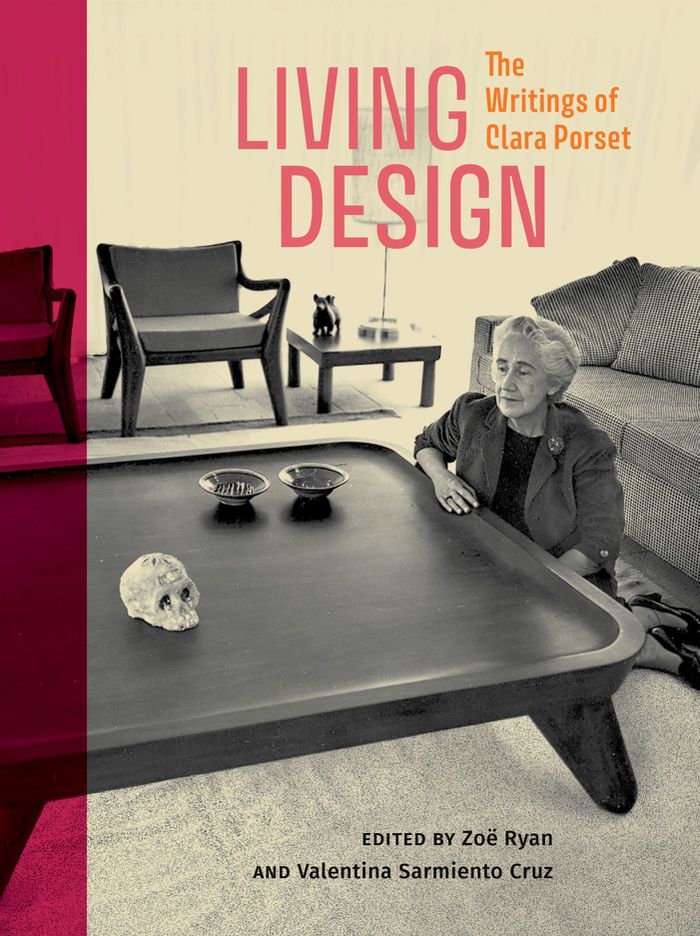
Cuban-born, Mexico-based designer Clara Porset is renowned for her mid-century modern furniture and interior design and for her collaborations with architects such as Luis Barragán and Mario Pani. She was also an accomplished critic and writer. ''Living Design'' collects Porset’s essays, reviews, and lectures to highlight her role as an influential thinker, educator, and practitioner. This volume insightfully contextualizes the politics that shaped Porset’s design principles, charts the influence of the Bauhaus and Black Mountain College on her work, and reveals the period’s fusion of local adaptations and modernist principles that made Mexico a major center of modernist design. At a time when many practitioners believed that design could only be modernized by replacing hand craftsmanship with mechanization, Porset valued both approaches for their distinctive qualities and urged others to do the same. Through her writings, she encouraged efforts to catalyze local design communities during a period of rapid technological and social change. With essays by historian Randal Sheppard and design curator and scholar Ana Elena Mallet, an introduction by volume editors Zoë Ryan and Valentina Sarmiento Cruz, and explanatory notes on the people and publishing forums in Porset’s circle, ''Living Design'' makes available works never before published in English, and with only limited circulation in the Spanish language, in order to recover an important and neglected voice in global modernism.
Living design: The writings of Clara Porset
Actions:
Price:
$39.95
(available in store)
Summary:
Cuban-born, Mexico-based designer Clara Porset is renowned for her mid-century modern furniture and interior design and for her collaborations with architects such as Luis Barragán and Mario Pani. She was also an accomplished critic and writer. ''Living Design'' collects Porset’s essays, reviews, and lectures to highlight her role as an influential thinker, educator, and practitioner. This volume insightfully contextualizes the politics that shaped Porset’s design principles, charts the influence of the Bauhaus and Black Mountain College on her work, and reveals the period’s fusion of local adaptations and modernist principles that made Mexico a major center of modernist design. At a time when many practitioners believed that design could only be modernized by replacing hand craftsmanship with mechanization, Porset valued both approaches for their distinctive qualities and urged others to do the same. Through her writings, she encouraged efforts to catalyze local design communities during a period of rapid technological and social change. With essays by historian Randal Sheppard and design curator and scholar Ana Elena Mallet, an introduction by volume editors Zoë Ryan and Valentina Sarmiento Cruz, and explanatory notes on the people and publishing forums in Porset’s circle, ''Living Design'' makes available works never before published in English, and with only limited circulation in the Spanish language, in order to recover an important and neglected voice in global modernism.
Form:
books
books
Publication:
November 2024
November 2024
Subject:
Design Monographs
Design Monographs
Form:
books
books
Actions:
Price:
$30.00
(available to order)
Summary:
Urban parks such as New York City's Central park provide vital public spaces where city dwellers of all races and classes can mingle safely while enjoying a variety of recreations. By coming together in these relaxed settings, different groups become comfortable with each other, thereby strengthening their communities and the democratic fabric of society. But just the(...)
$30.00
(available to order)
Summary:
Urban parks such as New York City's Central park provide vital public spaces where city dwellers of all races and classes can mingle safely while enjoying a variety of recreations. By coming together in these relaxed settings, different groups become comfortable with each other, thereby strengthening their communities and the democratic fabric of society. But just the(...)
Subject:
Landscape Theory
Landscape Theory
Publication:
November 2005, Austin
November 2005, Austin
Title:
Rethinking urban parks : public space and cultural diversity
Actions:
Price:
$30.00
(available to order)
Summary:
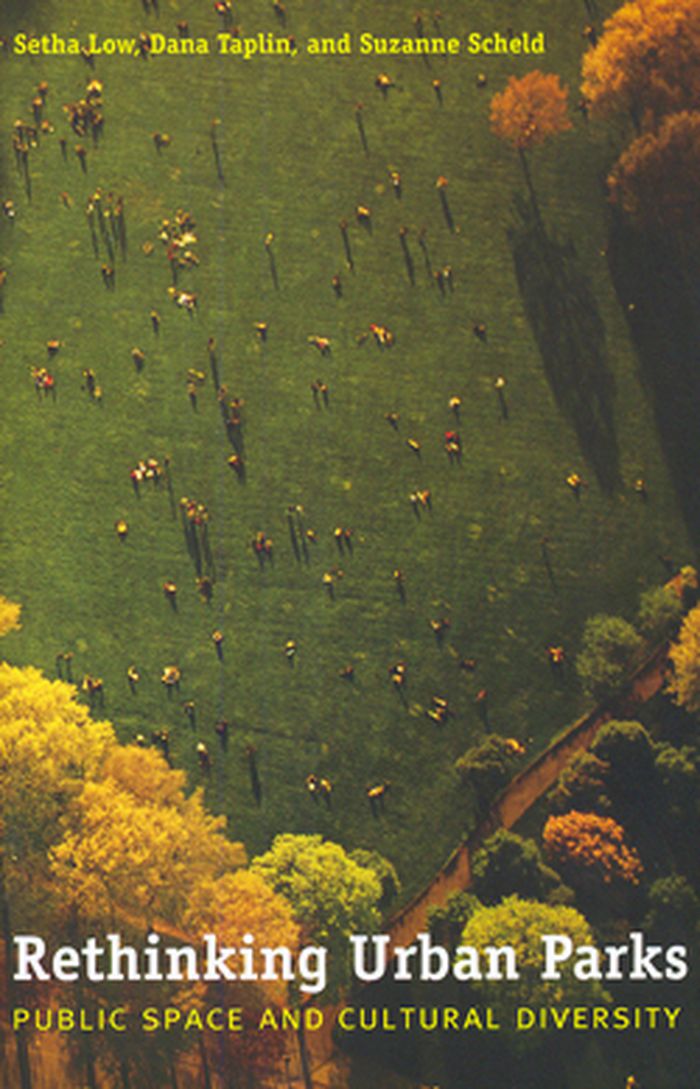
Urban parks such as New York City's Central park provide vital public spaces where city dwellers of all races and classes can mingle safely while enjoying a variety of recreations. By coming together in these relaxed settings, different groups become comfortable with each other, thereby strengthening their communities and the democratic fabric of society. But just the opposite happens when, by design or in ignorance, parks are made inhospitable to certain groups of people. This pathfinding book argues that cultural diversity should be a key goal in designing and maintaining urban parks. Using case studies of New York City's Prospect park, Orchard beach in Pelham Bay park, and Jacob Riis park in the Gateway national recreation area, as well as New York's Ellis Island bridge proposal and Philadelphia's Independence national historical park, the authors identify specific ways to promote, maintain, and manage cultural diversity in urban parks. They also uncover the factors that can limit park use, including historical interpretive materials that ignore the contributions of different ethnic groups, high entrance or access fees, park usage rules that restrict ethnic activities, and park "restorations" that focus only on historical or aesthetic values. With the wealth of data in this book, urban planners, park professionals, and all concerned citizens will have the tools to create and maintain public parks that serve the needs and interests of all the public.
Rethinking urban parks : public space and cultural diversity
Actions:
Price:
$30.00
(available to order)
Summary:
Urban parks such as New York City's Central park provide vital public spaces where city dwellers of all races and classes can mingle safely while enjoying a variety of recreations. By coming together in these relaxed settings, different groups become comfortable with each other, thereby strengthening their communities and the democratic fabric of society. But just the opposite happens when, by design or in ignorance, parks are made inhospitable to certain groups of people. This pathfinding book argues that cultural diversity should be a key goal in designing and maintaining urban parks. Using case studies of New York City's Prospect park, Orchard beach in Pelham Bay park, and Jacob Riis park in the Gateway national recreation area, as well as New York's Ellis Island bridge proposal and Philadelphia's Independence national historical park, the authors identify specific ways to promote, maintain, and manage cultural diversity in urban parks. They also uncover the factors that can limit park use, including historical interpretive materials that ignore the contributions of different ethnic groups, high entrance or access fees, park usage rules that restrict ethnic activities, and park "restorations" that focus only on historical or aesthetic values. With the wealth of data in this book, urban planners, park professionals, and all concerned citizens will have the tools to create and maintain public parks that serve the needs and interests of all the public.
Form:
books
books
Publication:
November 2005, Austin
November 2005, Austin
Subject:
Landscape Theory
Landscape Theory
Form:
books
books
Title:
Sprawl and suburbia
Sprawl and suburbia
Actions:
Price:
$28.95
(available to order)
Summary:
Sprawl is the single most significant and urgent issue in American land use at the turn of the twenty-first century. Efforts to limit and reform sprawl through legislative “Smart Growth” initiatives have been enacted around the country while the neotraditionalist New Urbanism has been embraced by many architects and urban planners. Yet most Americans persist in their(...)
$28.95
(available to order)
Summary:
Sprawl is the single most significant and urgent issue in American land use at the turn of the twenty-first century. Efforts to limit and reform sprawl through legislative “Smart Growth” initiatives have been enacted around the country while the neotraditionalist New Urbanism has been embraced by many architects and urban planners. Yet most Americans persist in their(...)
Title:
Sprawl and suburbia
Actions:
Price:
$28.95
(available to order)
Summary:
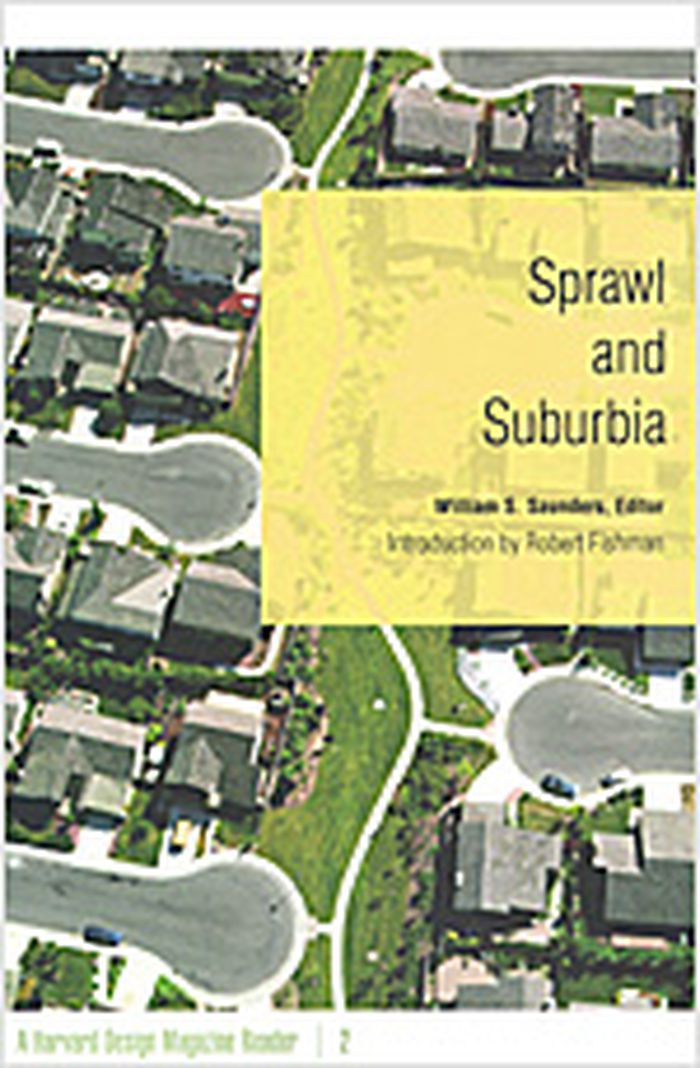
Sprawl is the single most significant and urgent issue in American land use at the turn of the twenty-first century. Efforts to limit and reform sprawl through legislative “Smart Growth” initiatives have been enacted around the country while the neotraditionalist New Urbanism has been embraced by many architects and urban planners. Yet most Americans persist in their desire to live farther and farther away from urban centers, moving to exurbs made up almost entirely of single-family residential houses and stand-alone shopping areas. "Sprawl and suburbia" brings together some of the foremost thinkers in the field to present in-depth diagnosis and critical analysis of the physical and social realities of exurban sprawl. Along with an introduction by Robert Fishman, these essays call for architects, urban planners, and landscape designers to work at mitigating the impact of sprawl on land and resources and improving the residential and commercial built environment as a whole. In place of vast residential exurbs, these writers offer visions of a fresh urbanism—appealing and persuasive models of life at greater density, with greater diversity, and within genuine communities. With sprawl losing the support of suburban citizens themselves as economic, environmental, and social costs are being paid, "Sprawl and suburbia" appears at a moment when design might achieve some critical influence over development—if architects and planners accept the challenge.
Sprawl and suburbia
Actions:
Price:
$28.95
(available to order)
Summary:
Sprawl is the single most significant and urgent issue in American land use at the turn of the twenty-first century. Efforts to limit and reform sprawl through legislative “Smart Growth” initiatives have been enacted around the country while the neotraditionalist New Urbanism has been embraced by many architects and urban planners. Yet most Americans persist in their desire to live farther and farther away from urban centers, moving to exurbs made up almost entirely of single-family residential houses and stand-alone shopping areas. "Sprawl and suburbia" brings together some of the foremost thinkers in the field to present in-depth diagnosis and critical analysis of the physical and social realities of exurban sprawl. Along with an introduction by Robert Fishman, these essays call for architects, urban planners, and landscape designers to work at mitigating the impact of sprawl on land and resources and improving the residential and commercial built environment as a whole. In place of vast residential exurbs, these writers offer visions of a fresh urbanism—appealing and persuasive models of life at greater density, with greater diversity, and within genuine communities. With sprawl losing the support of suburban citizens themselves as economic, environmental, and social costs are being paid, "Sprawl and suburbia" appears at a moment when design might achieve some critical influence over development—if architects and planners accept the challenge.
Form:
books
books
Publication:
November 2005, Minneapolis
November 2005, Minneapolis
Subject:
Suburbs
Suburbs
Form:
books
books
Actions:
Price:
$85.00
(available to order)
Summary:
In "The Nature of Order," Alexander delves into the essential properties of life itself, highlighting a common set of well-defined structures that he believes are present in all order--and in all life--from micro-organisms and mountain ranges to the creation of good houses and vibrant communities. In "The Phenomenon of Life," the first volume in this masterwork, Alexander(...)
$85.00
(available to order)
Summary:
In "The Nature of Order," Alexander delves into the essential properties of life itself, highlighting a common set of well-defined structures that he believes are present in all order--and in all life--from micro-organisms and mountain ranges to the creation of good houses and vibrant communities. In "The Phenomenon of Life," the first volume in this masterwork, Alexander(...)
Title:
The nature of order - an essay on the art of building and the nature of the universe. Book one : the phenomenon of life.
Actions:
Price:
$85.00
(available to order)
Summary:
In "The Nature of Order," Alexander delves into the essential properties of life itself, highlighting a common set of well-defined structures that he believes are present in all order--and in all life--from micro-organisms and mountain ranges to the creation of good houses and vibrant communities. In "The Phenomenon of Life," the first volume in this masterwork, Alexander ponders the nature of order as an intellectual basis for a new architecture, proposing a well-defined scientific view of the world in which all space-matter has perceptible degrees of life. With this view as foundation, we can ask precise questions about what must be done to create life in the world--"whether in a single room...a doorknob...a neighborhood...even in a vast region." He presents the basic tenets of the concept, expanding on his theories of centers and of wholeness as a structure, and describes the fifteen properties from which he feels wholeness may be built. He also argues that living structure is at once both personal and structural, related not only to the geometry of space and how things work, but to human beings whose lives are ultimately based on feeling. Thus order, as the foundation of all things and as the foundation of all architecture, is both rooted in substance and rooted in feeling.
The nature of order - an essay on the art of building and the nature of the universe. Book one : the phenomenon of life.
Actions:
Price:
$85.00
(available to order)
Summary:
In "The Nature of Order," Alexander delves into the essential properties of life itself, highlighting a common set of well-defined structures that he believes are present in all order--and in all life--from micro-organisms and mountain ranges to the creation of good houses and vibrant communities. In "The Phenomenon of Life," the first volume in this masterwork, Alexander ponders the nature of order as an intellectual basis for a new architecture, proposing a well-defined scientific view of the world in which all space-matter has perceptible degrees of life. With this view as foundation, we can ask precise questions about what must be done to create life in the world--"whether in a single room...a doorknob...a neighborhood...even in a vast region." He presents the basic tenets of the concept, expanding on his theories of centers and of wholeness as a structure, and describes the fifteen properties from which he feels wholeness may be built. He also argues that living structure is at once both personal and structural, related not only to the geometry of space and how things work, but to human beings whose lives are ultimately based on feeling. Thus order, as the foundation of all things and as the foundation of all architecture, is both rooted in substance and rooted in feeling.
Form:
books
books
Publication:
June 2003, Berkeley
June 2003, Berkeley
Subject:
Architectural Theory
Architectural Theory
Form:
books
books
Actions:
Price:
$75.00
(available to order)
Summary:
The grand exhibitions of the Victorian and Edwardian eras are the lens through which Peter Hoffenberg examines the economic, cultural, and social forces that helped define Britain and the British Empire. He focuses on major exhibitions in England, Australia, and India between the Great Exhibition of 1851 and the Festival of Empire sixty years later, taking special(...)
$75.00
(available to order)
Summary:
The grand exhibitions of the Victorian and Edwardian eras are the lens through which Peter Hoffenberg examines the economic, cultural, and social forces that helped define Britain and the British Empire. He focuses on major exhibitions in England, Australia, and India between the Great Exhibition of 1851 and the Festival of Empire sixty years later, taking special(...)
Subject:
Museums and Universal Exhibitions
Museums and Universal Exhibitions
Publication:
January 1900, Berkeley
January 1900, Berkeley
Title:
An empire on display : English, Indian, and Australian exhibitions from the Crystal Palace to the Great War
Actions:
Price:
$75.00
(available to order)
Summary:
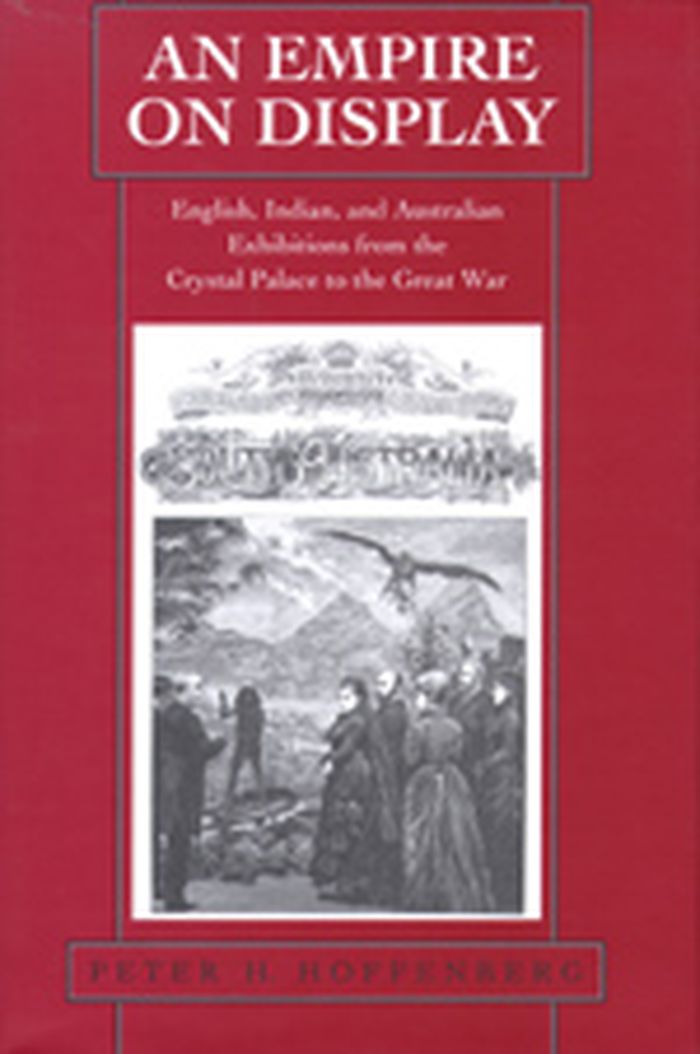
The grand exhibitions of the Victorian and Edwardian eras are the lens through which Peter Hoffenberg examines the economic, cultural, and social forces that helped define Britain and the British Empire. He focuses on major exhibitions in England, Australia, and India between the Great Exhibition of 1851 and the Festival of Empire sixty years later, taking special interest in the interactive nature of the exhibition experience, the long-term consequences for the participants and host societies, and the ways in which such popular gatherings revealed dissent as well as celebration. Hoffenberg shows how exhibitions shaped culture and society within and across borders in the transnational working of the British Empire. The exhibitions were central to establishing and developing a participatory imperial world, and each polity in that world provided distinctive information, visitors, and exhibits. Among the displays were commercial goods, working machines, and ethnographic scenes. Exhibits were intended to promote external commonwealth and internal nationalism. The imperial overlay did not erase significant differences but explained and used them in economic and cultural terms. The exhibitions in cities such as London, Sydney, and Calcutta were living and active public inventories of the Empire and its national political communities. The process of building and consuming such inventories persists today in the cultural bureaucracies, museums, and festivals of modern nation-states, the appeal to tradition and social order, and the actions of transnational bodies.
An empire on display : English, Indian, and Australian exhibitions from the Crystal Palace to the Great War
Actions:
Price:
$75.00
(available to order)
Summary:
The grand exhibitions of the Victorian and Edwardian eras are the lens through which Peter Hoffenberg examines the economic, cultural, and social forces that helped define Britain and the British Empire. He focuses on major exhibitions in England, Australia, and India between the Great Exhibition of 1851 and the Festival of Empire sixty years later, taking special interest in the interactive nature of the exhibition experience, the long-term consequences for the participants and host societies, and the ways in which such popular gatherings revealed dissent as well as celebration. Hoffenberg shows how exhibitions shaped culture and society within and across borders in the transnational working of the British Empire. The exhibitions were central to establishing and developing a participatory imperial world, and each polity in that world provided distinctive information, visitors, and exhibits. Among the displays were commercial goods, working machines, and ethnographic scenes. Exhibits were intended to promote external commonwealth and internal nationalism. The imperial overlay did not erase significant differences but explained and used them in economic and cultural terms. The exhibitions in cities such as London, Sydney, and Calcutta were living and active public inventories of the Empire and its national political communities. The process of building and consuming such inventories persists today in the cultural bureaucracies, museums, and festivals of modern nation-states, the appeal to tradition and social order, and the actions of transnational bodies.
Form:
books
books
Publication:
January 1900, Berkeley
January 1900, Berkeley
Subject:
Museums and Universal Exhibitions
Museums and Universal Exhibitions
Form:
books
books
Title:
Public space? Lost and found
Public space? Lost and found
Actions:
Price:
$52.50
(available to order)
Summary:
“Public space” is a potent and contentious topic among artists, architects, and cultural producers. Public Space? Lost and Found considers the role of aesthetic practices within the construction, identification, and critique of shared territories, and how artists or architects—the “antennae of the race”—can heighten our awareness of rapidly changing formulations of public(...)
$52.50
(available to order)
Summary:
“Public space” is a potent and contentious topic among artists, architects, and cultural producers. Public Space? Lost and Found considers the role of aesthetic practices within the construction, identification, and critique of shared territories, and how artists or architects—the “antennae of the race”—can heighten our awareness of rapidly changing formulations of public(...)
Subject:
Architectural Theory
Architectural Theory
Publication:
July 2017
July 2017
Title:
Public space? Lost and found
Actions:
Price:
$52.50
(available to order)
Summary:
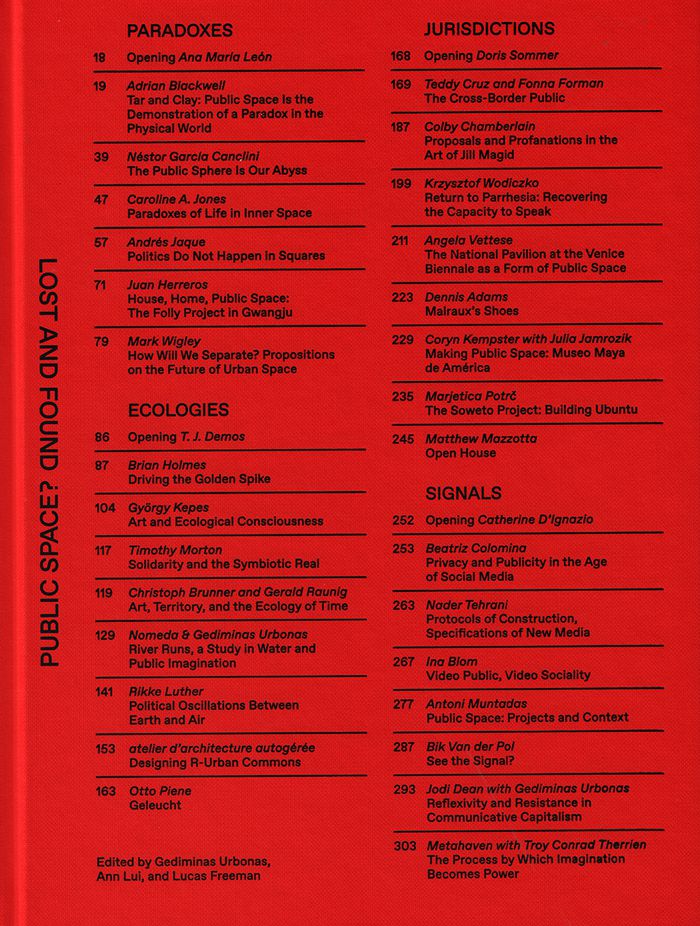
“Public space” is a potent and contentious topic among artists, architects, and cultural producers. Public Space? Lost and Found considers the role of aesthetic practices within the construction, identification, and critique of shared territories, and how artists or architects—the “antennae of the race”—can heighten our awareness of rapidly changing formulations of public space in the age of digital media, vast ecological crises, and civic uprisings. "Public Space? Lost and found" combines significant recent projects in art and architecture with writings by historians and theorists. Contributors investigate strategies for responding to underrepresented communities and areas of conflict through the work of Marjetica Potrc in Johannesburg and Teddy Cruz on the Mexico-U.S. border, among others. They explore our collective stakes in ecological catastrophe through artistic research such as atelier d’architecture autogérée’s hubs for community action and recycling in Colombes, France, and Brian Holmes’s theoretical investigation of new forms of aesthetic perception in the age of the Anthropocene. Inspired by artist and MIT professor Antoni Muntadas’ early coining of the term “media landscape,” contributors also look ahead, casting a critical eye on the fraught impact of digital media and the internet on public space. This book is the first in a new series of volumes produced by the MIT School of Architecture and Planning’s Program in Art, Culture and Technology.
Public space? Lost and found
Actions:
Price:
$52.50
(available to order)
Summary:
“Public space” is a potent and contentious topic among artists, architects, and cultural producers. Public Space? Lost and Found considers the role of aesthetic practices within the construction, identification, and critique of shared territories, and how artists or architects—the “antennae of the race”—can heighten our awareness of rapidly changing formulations of public space in the age of digital media, vast ecological crises, and civic uprisings. "Public Space? Lost and found" combines significant recent projects in art and architecture with writings by historians and theorists. Contributors investigate strategies for responding to underrepresented communities and areas of conflict through the work of Marjetica Potrc in Johannesburg and Teddy Cruz on the Mexico-U.S. border, among others. They explore our collective stakes in ecological catastrophe through artistic research such as atelier d’architecture autogérée’s hubs for community action and recycling in Colombes, France, and Brian Holmes’s theoretical investigation of new forms of aesthetic perception in the age of the Anthropocene. Inspired by artist and MIT professor Antoni Muntadas’ early coining of the term “media landscape,” contributors also look ahead, casting a critical eye on the fraught impact of digital media and the internet on public space. This book is the first in a new series of volumes produced by the MIT School of Architecture and Planning’s Program in Art, Culture and Technology.
Form:
books
books
Publication:
July 2017
July 2017
Subject:
Architectural Theory
Architectural Theory
Form:
books
books
Title:
Mute magazine graphic design
Mute magazine graphic design
Actions:
Price:
$37.00
(available to order)
Summary:
In the early 1990s, long before the internet became an integral part of life, a handful of pioneering magazines took it upon themselves to imagine the web into existence. Using fiction, interviews, speculative theory and experimental graphic design, these titles helped create a lexicon and iconography every bit as powerful as the architecture of the World Wide Web.(...)
$37.00
(available to order)
Summary:
In the early 1990s, long before the internet became an integral part of life, a handful of pioneering magazines took it upon themselves to imagine the web into existence. Using fiction, interviews, speculative theory and experimental graphic design, these titles helped create a lexicon and iconography every bit as powerful as the architecture of the World Wide Web.(...)
Subject:
Graphic Design and Typography
Graphic Design and Typography
Publication:
August 2008, London
August 2008, London
Title:
Mute magazine graphic design
Actions:
Price:
$37.00
(available to order)
Summary:
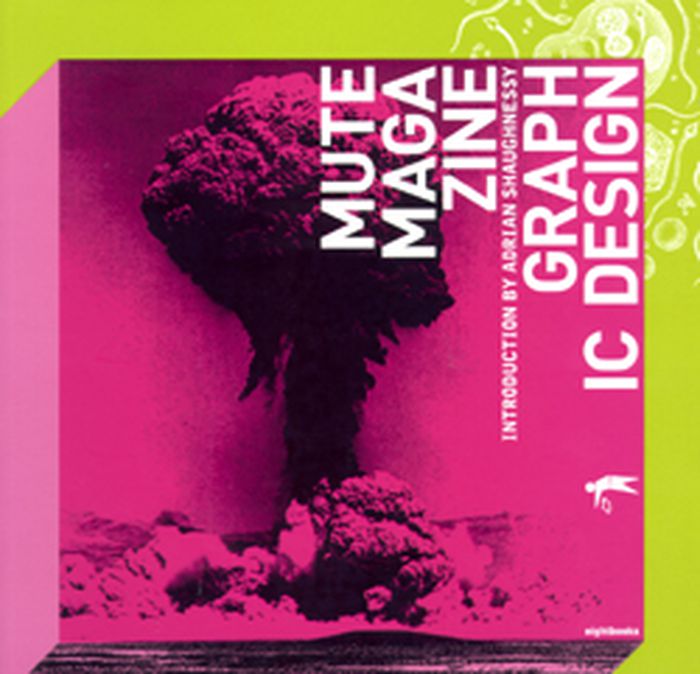
In the early 1990s, long before the internet became an integral part of life, a handful of pioneering magazines took it upon themselves to imagine the web into existence. Using fiction, interviews, speculative theory and experimental graphic design, these titles helped create a lexicon and iconography every bit as powerful as the architecture of the World Wide Web. London-based Mute occupied a central position here, wielding an influence vastly disproportionate to its size. The product of a period of intense creative ferment, Mute engaged boldly with allcomers. The magazine offered a platform to authors Bruce Sterling, Arthur Kroker, Mark Dery, Geert Lovink, Hari Kunzru, James Flint and Lev Manovich, just as it did to artists Keith Tyson, VNS Matrix and the Bureau of Inverse Technology. As new technologies forced a collapse of disciplinary boundaries and the intermingling of communities, Mute became part of a dynamic London scene, featuring many of the artists, writers and photographers who came to epitomise London’s status as a creative hotbed. The resulting collection of magazines defines an era, telling the fascinating tale of one publisher's relationship with the ‘digital revolution’ – the nineties’ very own Big Bang. This book presents a full overview of the magazine over a decade, showing its entire output – logos, covers and spreads. Using generous illustrations and in-depth captions, it details recurrent graphic themes and places Mute's evolution in perspective
Mute magazine graphic design
Actions:
Price:
$37.00
(available to order)
Summary:
In the early 1990s, long before the internet became an integral part of life, a handful of pioneering magazines took it upon themselves to imagine the web into existence. Using fiction, interviews, speculative theory and experimental graphic design, these titles helped create a lexicon and iconography every bit as powerful as the architecture of the World Wide Web. London-based Mute occupied a central position here, wielding an influence vastly disproportionate to its size. The product of a period of intense creative ferment, Mute engaged boldly with allcomers. The magazine offered a platform to authors Bruce Sterling, Arthur Kroker, Mark Dery, Geert Lovink, Hari Kunzru, James Flint and Lev Manovich, just as it did to artists Keith Tyson, VNS Matrix and the Bureau of Inverse Technology. As new technologies forced a collapse of disciplinary boundaries and the intermingling of communities, Mute became part of a dynamic London scene, featuring many of the artists, writers and photographers who came to epitomise London’s status as a creative hotbed. The resulting collection of magazines defines an era, telling the fascinating tale of one publisher's relationship with the ‘digital revolution’ – the nineties’ very own Big Bang. This book presents a full overview of the magazine over a decade, showing its entire output – logos, covers and spreads. Using generous illustrations and in-depth captions, it details recurrent graphic themes and places Mute's evolution in perspective
Form:
books
books
Publication:
August 2008, London
August 2008, London
Subject:
Graphic Design and Typography
Graphic Design and Typography
Form:
books
books
Actions:
Price:
$27.95
(available to order)
Summary:
In postapartheid Johannesburg, tensions of race and class manifest themselves starkly in struggles over "rights to the city." Real-estate developers and the very poor fight for control of space as the municipal administration steps aside, almost powerless to shape the direction of change. Having ceded control of development to the private sector, the Johannesburg city(...)
$27.95
(available to order)
Summary:
In postapartheid Johannesburg, tensions of race and class manifest themselves starkly in struggles over "rights to the city." Real-estate developers and the very poor fight for control of space as the municipal administration steps aside, almost powerless to shape the direction of change. Having ceded control of development to the private sector, the Johannesburg city(...)
Subject:
History until 1900, Middle East
History until 1900, Middle East
Publication:
June 2008, Ithaca, London
June 2008, Ithaca, London
Title:
Taming the disorderly city: the spatial landscape of Johannesburg after Apartheid
Actions:
Price:
$27.95
(available to order)
Summary:
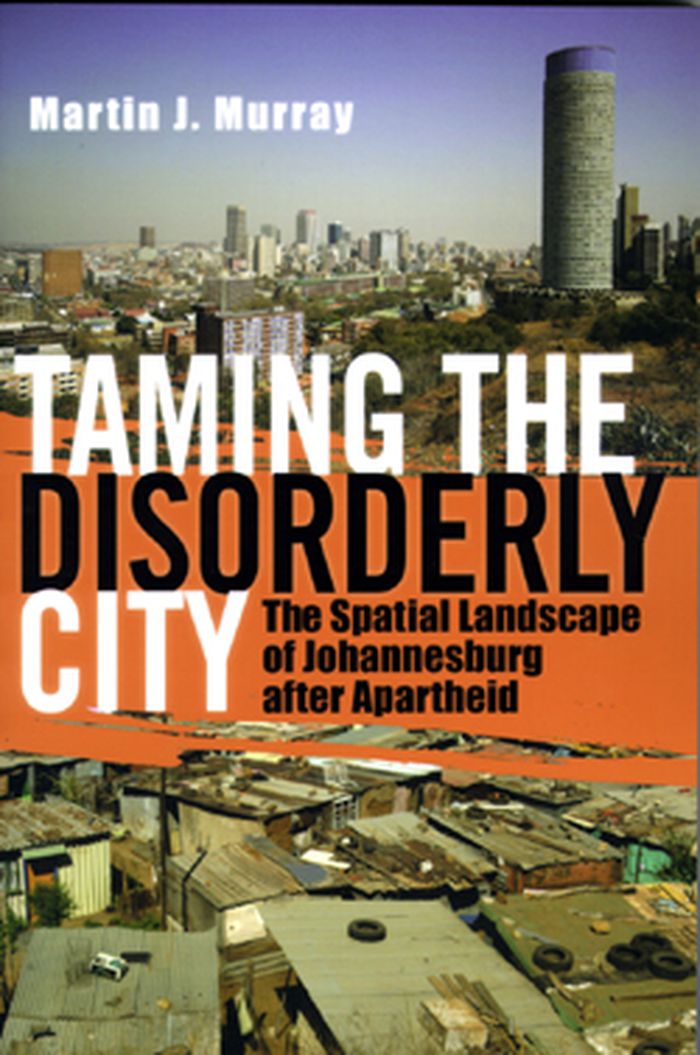
In postapartheid Johannesburg, tensions of race and class manifest themselves starkly in struggles over "rights to the city." Real-estate developers and the very poor fight for control of space as the municipal administration steps aside, almost powerless to shape the direction of change. Having ceded control of development to the private sector, the Johannesburg city government has all but abandoned residential planning to the unpredictability of market forces. This failure to plan for the civic good--and the resulting confusion--is a perfect example of the entrepreneurial approaches to urban governance that are sweeping much of the Global South as well as the cities of the North. Martin J. Murray brings together a wide range of urban theory and local knowledge to draw a nuanced portrait of contemporary Johannesburg. In Taming the Disorderly City, he provides a focused intellectual and political critique of the often-ambivalent urban dynamics that have emerged after the end of apartheid. Exploring the behaviors of the rich and poor, each empowered in their own way, as they rebuild a new Johannesburg, we see the entrepreneurial city: high-rises, shopping districts, and gated communities surrounded by and intermingled with poverty. In graceful prose, Murray offers a compelling portrait of the everyday lives of the urban poor as seen through the lens of real-estate capitalism and revitalization efforts.
Taming the disorderly city: the spatial landscape of Johannesburg after Apartheid
Actions:
Price:
$27.95
(available to order)
Summary:
In postapartheid Johannesburg, tensions of race and class manifest themselves starkly in struggles over "rights to the city." Real-estate developers and the very poor fight for control of space as the municipal administration steps aside, almost powerless to shape the direction of change. Having ceded control of development to the private sector, the Johannesburg city government has all but abandoned residential planning to the unpredictability of market forces. This failure to plan for the civic good--and the resulting confusion--is a perfect example of the entrepreneurial approaches to urban governance that are sweeping much of the Global South as well as the cities of the North. Martin J. Murray brings together a wide range of urban theory and local knowledge to draw a nuanced portrait of contemporary Johannesburg. In Taming the Disorderly City, he provides a focused intellectual and political critique of the often-ambivalent urban dynamics that have emerged after the end of apartheid. Exploring the behaviors of the rich and poor, each empowered in their own way, as they rebuild a new Johannesburg, we see the entrepreneurial city: high-rises, shopping districts, and gated communities surrounded by and intermingled with poverty. In graceful prose, Murray offers a compelling portrait of the everyday lives of the urban poor as seen through the lens of real-estate capitalism and revitalization efforts.
Form:
books
books
Publication:
June 2008, Ithaca, London
June 2008, Ithaca, London
Subject:
History until 1900, Middle East
History until 1900, Middle East
Form:
books
books
Price:
$24.95
(available to order)
Summary:
Le creusement des inégalités sociales est un des défis majeurs du 21e siècle. En saisir les causes réclame toutefois de dépasser la seule grille d’analyse économique et d’appréhender ce creusement dans le lieu de son inscription la plus concrète, la ville. Considérée depuis tout temps comme l’espace de l’intégration sociale et culturelle, la ville a également été, tout au(...)
$24.95
(available to order)
Summary:
Le creusement des inégalités sociales est un des défis majeurs du 21e siècle. En saisir les causes réclame toutefois de dépasser la seule grille d’analyse économique et d’appréhender ce creusement dans le lieu de son inscription la plus concrète, la ville. Considérée depuis tout temps comme l’espace de l’intégration sociale et culturelle, la ville a également été, tout au(...)
Title:
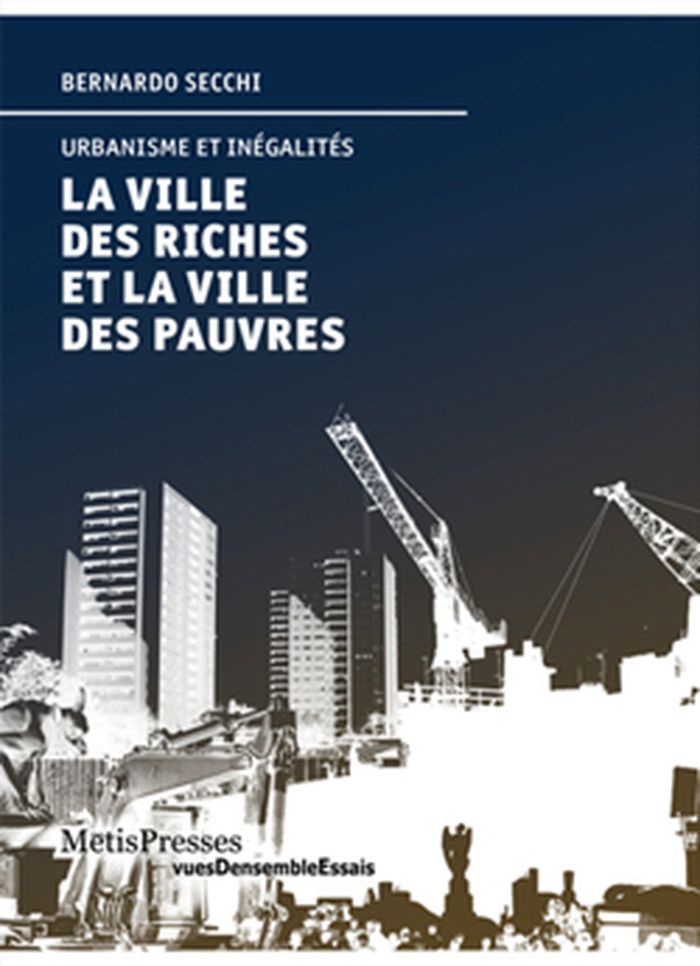
La ville des riches et la ville des pauvres : urbanisme et inégalités
Actions:
Price:
$24.95
(available to order)
Summary:
Le creusement des inégalités sociales est un des défis majeurs du 21e siècle. En saisir les causes réclame toutefois de dépasser la seule grille d’analyse économique et d’appréhender ce creusement dans le lieu de son inscription la plus concrète, la ville. Considérée depuis tout temps comme l’espace de l’intégration sociale et culturelle, la ville a également été, tout au long de son histoire, le théâtre de stratégies de distinction de plus en plus complexes. Les gated communities cernées de favelas, pour extrême que soit cet exemple, en sont la matérialisation actuelle la plus significative. Influencées par la double rhétorique de la sécurité et de la différence et guidées par le marché et sa rationalité unilatérale, les stratégies de distinction contemporaines impriment leurs marques au cœur de l’espace urbain: de sociales, les inégalités deviennent spatiales, et toutes deux, se renforçant mutuellement, favorisent des régimes de ségrégation territoriale dévastateurs. Les urbanistes portent, selon Bernardo Secchi, de lourdes responsabilités quant à cette dérive. Il livre dans cet ouvrage une réflexion lucide et claire sur l’histoire et les mutations récentes de la ville et avance des solutions pour faire face à ce qu’il nomme la «nouvelle question urbaine». Il plaide pour une ville poreuse, perméable et accessible. Son projet se veut ambitieux: il doit tenir compte des qualités des villes qui nous ont précédés et donner forme à une nouvelle conception du collectif.
La ville des riches et la ville des pauvres : urbanisme et inégalités
Actions:
Price:
$24.95
(available to order)
Summary:
Le creusement des inégalités sociales est un des défis majeurs du 21e siècle. En saisir les causes réclame toutefois de dépasser la seule grille d’analyse économique et d’appréhender ce creusement dans le lieu de son inscription la plus concrète, la ville. Considérée depuis tout temps comme l’espace de l’intégration sociale et culturelle, la ville a également été, tout au long de son histoire, le théâtre de stratégies de distinction de plus en plus complexes. Les gated communities cernées de favelas, pour extrême que soit cet exemple, en sont la matérialisation actuelle la plus significative. Influencées par la double rhétorique de la sécurité et de la différence et guidées par le marché et sa rationalité unilatérale, les stratégies de distinction contemporaines impriment leurs marques au cœur de l’espace urbain: de sociales, les inégalités deviennent spatiales, et toutes deux, se renforçant mutuellement, favorisent des régimes de ségrégation territoriale dévastateurs. Les urbanistes portent, selon Bernardo Secchi, de lourdes responsabilités quant à cette dérive. Il livre dans cet ouvrage une réflexion lucide et claire sur l’histoire et les mutations récentes de la ville et avance des solutions pour faire face à ce qu’il nomme la «nouvelle question urbaine». Il plaide pour une ville poreuse, perméable et accessible. Son projet se veut ambitieux: il doit tenir compte des qualités des villes qui nous ont précédés et donner forme à une nouvelle conception du collectif.
Form:
books
books
Publication:
May 2015
May 2015
Subject:
Urban Theory
Urban Theory


