


5813 Results
Form:
books
books
Price:
$67.95
(available to order)
Summary:
The uncertain state of Europe is the primary concern of Multiplicity : a multidisciplinary group of Europeans architects, photographers, urban developers and artists who met to explore and develop a series of studies focusing on contemporary European cities and their ongoing changes. The group uses on-site investigations, documented with beautiful photographs by(...)
$67.95
(available to order)
Summary:
The uncertain state of Europe is the primary concern of Multiplicity : a multidisciplinary group of Europeans architects, photographers, urban developers and artists who met to explore and develop a series of studies focusing on contemporary European cities and their ongoing changes. The group uses on-site investigations, documented with beautiful photographs by(...)
Title:
USE- Uncertain states of Europe : a trip through a changing Europe
Actions:
Price:
$67.95
(available to order)
Summary:
The uncertain state of Europe is the primary concern of Multiplicity : a multidisciplinary group of Europeans architects, photographers, urban developers and artists who met to explore and develop a series of studies focusing on contemporary European cities and their ongoing changes. The group uses on-site investigations, documented with beautiful photographs by Francesco Jodice and Gabriele Basilico, to illustrate the radical and dramatic changes occurring on European land and in its cities. Traditional spaces are slowly, yet forcefully, transforming due to the constant economic, political, and social upheavals and alterations. With an introduction by prominent political and intellectual figures such as Etienne Balibar, Rem Koolhas and Jeremy Rifkin, this volume analyses 24 cases of urban transformation. The cases cover geographical locations from Paris to Pristina, Helsinki to Bucharest, and show the extraordinary riches a modern city can offer while, at the same time, highlighting the abnormal spaces created by the existence of a so-called secondary world. The final section is dedicated to a series of ideas which view Europe as a single entity : a network of relations, trade, encounters, migration, transportation, construction, and offers an absolutely novel view of the ‘old’ world. Richly illustrated, this tome includes passages by architectural critics such as Stefano Boeri, Yorgos Semiforidis, Eduard Bru, Bart Lootsma.
USE- Uncertain states of Europe : a trip through a changing Europe
Actions:
Price:
$67.95
(available to order)
Summary:
The uncertain state of Europe is the primary concern of Multiplicity : a multidisciplinary group of Europeans architects, photographers, urban developers and artists who met to explore and develop a series of studies focusing on contemporary European cities and their ongoing changes. The group uses on-site investigations, documented with beautiful photographs by Francesco Jodice and Gabriele Basilico, to illustrate the radical and dramatic changes occurring on European land and in its cities. Traditional spaces are slowly, yet forcefully, transforming due to the constant economic, political, and social upheavals and alterations. With an introduction by prominent political and intellectual figures such as Etienne Balibar, Rem Koolhas and Jeremy Rifkin, this volume analyses 24 cases of urban transformation. The cases cover geographical locations from Paris to Pristina, Helsinki to Bucharest, and show the extraordinary riches a modern city can offer while, at the same time, highlighting the abnormal spaces created by the existence of a so-called secondary world. The final section is dedicated to a series of ideas which view Europe as a single entity : a network of relations, trade, encounters, migration, transportation, construction, and offers an absolutely novel view of the ‘old’ world. Richly illustrated, this tome includes passages by architectural critics such as Stefano Boeri, Yorgos Semiforidis, Eduard Bru, Bart Lootsma.
Form:
books
books
Publication:
May 2002, Milano
May 2002, Milano
Subject:
Urban Theory
Urban Theory
Form:
books
books
Actions:
Price:
$31.50
(available to order)
Summary:
An investigation into Shanghai’s rise from peripheral port to urban center. Even before the romanticized golden era of Shanghai in the 1930s, the famed Asian city was remarkable for its uniqueness and East-meets-West cosmopolitanism. Meng Yue analyzes a century-long shift of urbanity from China’s heartland to its shore. During the period between the decline of Jiangnan(...)
$31.50
(available to order)
Summary:
An investigation into Shanghai’s rise from peripheral port to urban center. Even before the romanticized golden era of Shanghai in the 1930s, the famed Asian city was remarkable for its uniqueness and East-meets-West cosmopolitanism. Meng Yue analyzes a century-long shift of urbanity from China’s heartland to its shore. During the period between the decline of Jiangnan(...)
Title:
Shanghai and the edges of empires
Actions:
Price:
$31.50
(available to order)
Summary:
An investigation into Shanghai’s rise from peripheral port to urban center. Even before the romanticized golden era of Shanghai in the 1930s, the famed Asian city was remarkable for its uniqueness and East-meets-West cosmopolitanism. Meng Yue analyzes a century-long shift of urbanity from China’s heartland to its shore. During the period between the decline of Jiangnan cities such as Suzhou and Yangzhou and Shanghai’s early twentieth-century rise, the overlapping cultural edges of a failing Chinese royal order and the encroachment of Western imperialists converged. Simultaneously appropriating and resisting imposing forces, Shanghai opened itself to unruly, subversive practices, becoming a crucible of creativity and modernism. Calling into question conventional ways of conceptualizing modernity, colonialism, and intercultural relations, Meng Yue examines such cultural practices as the work of the commercial press, street theater, and literary arts, and shows that what appear to be minor cultural changes often signal the presence of larger political and economic developments. Engaging theories of modernity and postcolonial and global cultural studies, Meng Yue reveals the paradoxical interdependence between imperial and imperialist histories and the retranslation of culture that characterized the most notable result of China’s urban relocation—the emergence of the international city of Shanghai.
Shanghai and the edges of empires
Actions:
Price:
$31.50
(available to order)
Summary:
An investigation into Shanghai’s rise from peripheral port to urban center. Even before the romanticized golden era of Shanghai in the 1930s, the famed Asian city was remarkable for its uniqueness and East-meets-West cosmopolitanism. Meng Yue analyzes a century-long shift of urbanity from China’s heartland to its shore. During the period between the decline of Jiangnan cities such as Suzhou and Yangzhou and Shanghai’s early twentieth-century rise, the overlapping cultural edges of a failing Chinese royal order and the encroachment of Western imperialists converged. Simultaneously appropriating and resisting imposing forces, Shanghai opened itself to unruly, subversive practices, becoming a crucible of creativity and modernism. Calling into question conventional ways of conceptualizing modernity, colonialism, and intercultural relations, Meng Yue examines such cultural practices as the work of the commercial press, street theater, and literary arts, and shows that what appear to be minor cultural changes often signal the presence of larger political and economic developments. Engaging theories of modernity and postcolonial and global cultural studies, Meng Yue reveals the paradoxical interdependence between imperial and imperialist histories and the retranslation of culture that characterized the most notable result of China’s urban relocation—the emergence of the international city of Shanghai.
Form:
books
books
Publication:
January 2006, Minneapolis
January 2006, Minneapolis
Subject:
Contemporary Asian Architecture
Contemporary Asian Architecture
Form:
books
books
Price:
$66.00
(available to order)
Summary:
''Lost Days, Endless Nights'' tells a history from below—an account of the lives of the forgotten and dispossessed of Los Angeles: the unemployed, the precariously employed, the evicted, the alienated, the unhoused, the anxious, the exhausted. Through an analysis of abandoned archival works, experimental films, and other projects, Andrew Witt offers an expansive account(...)
$66.00
(available to order)
Summary:
''Lost Days, Endless Nights'' tells a history from below—an account of the lives of the forgotten and dispossessed of Los Angeles: the unemployed, the precariously employed, the evicted, the alienated, the unhoused, the anxious, the exhausted. Through an analysis of abandoned archival works, experimental films, and other projects, Andrew Witt offers an expansive account(...)
Title:
Lost days, endless nights: Photography and film from Los Angeles
Actions:
Price:
$66.00
(available to order)
Summary:
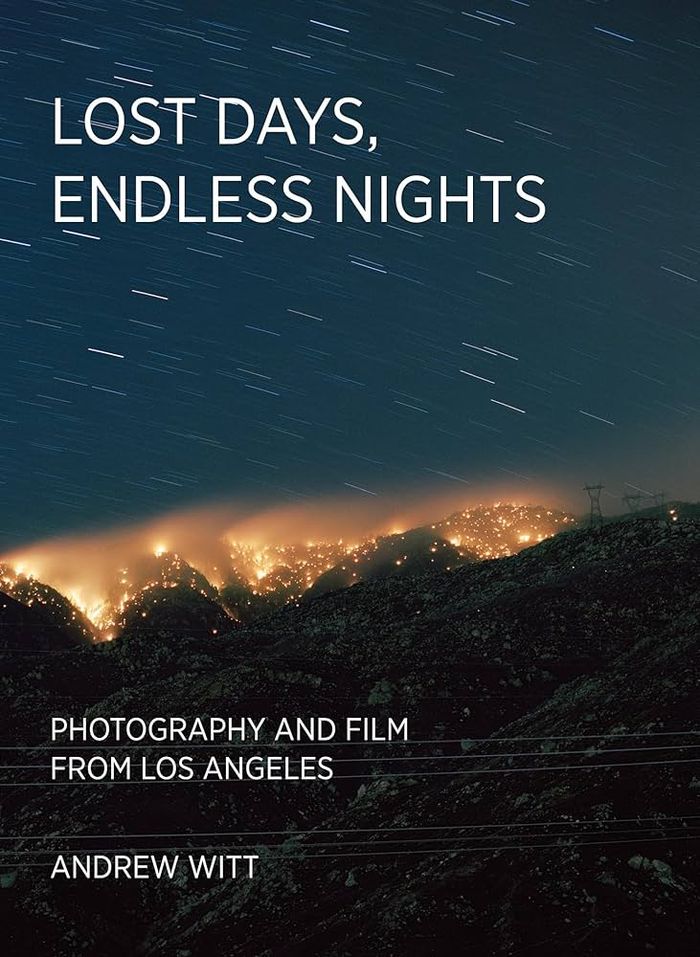
''Lost Days, Endless Nights'' tells a history from below—an account of the lives of the forgotten and dispossessed of Los Angeles: the unemployed, the precariously employed, the evicted, the alienated, the unhoused, the anxious, the exhausted. Through an analysis of abandoned archival works, experimental films, and other projects, Andrew Witt offers an expansive account of the artists who have lived or worked in Los Angeles, delving into the region's history and geography, highlighting its racial, gender, and class conflicts. Presented as a series of nine case studies, Witt explores how artists as diverse as Agnès Varda, Dana Lixenberg, Allan Sekula, Catherine Opie, John Divola, Gregory Halpern, Paul Sepuya, and Guadalupe Rosales have reimagined and reshaped our understanding of contemporary Los Angeles. The book features portraits of those who struggle and attempt to get by in the city: dock workers, students, bus riders, petty criminals, office workers, immigrants, queer and trans activists. Set against the landscape of economic turmoil and environmental crises that shadowed the 1970s, Witt highlights the urgent need for a historical perspective of cultural retrieval and counternarrative. Extending into the present, ''Lost Days, Endless Nights'' advocates for an approach that actively embraces the works and projects that have been overlooked and evicted from the historical imaginary
Lost days, endless nights: Photography and film from Los Angeles
Actions:
Price:
$66.00
(available to order)
Summary:
''Lost Days, Endless Nights'' tells a history from below—an account of the lives of the forgotten and dispossessed of Los Angeles: the unemployed, the precariously employed, the evicted, the alienated, the unhoused, the anxious, the exhausted. Through an analysis of abandoned archival works, experimental films, and other projects, Andrew Witt offers an expansive account of the artists who have lived or worked in Los Angeles, delving into the region's history and geography, highlighting its racial, gender, and class conflicts. Presented as a series of nine case studies, Witt explores how artists as diverse as Agnès Varda, Dana Lixenberg, Allan Sekula, Catherine Opie, John Divola, Gregory Halpern, Paul Sepuya, and Guadalupe Rosales have reimagined and reshaped our understanding of contemporary Los Angeles. The book features portraits of those who struggle and attempt to get by in the city: dock workers, students, bus riders, petty criminals, office workers, immigrants, queer and trans activists. Set against the landscape of economic turmoil and environmental crises that shadowed the 1970s, Witt highlights the urgent need for a historical perspective of cultural retrieval and counternarrative. Extending into the present, ''Lost Days, Endless Nights'' advocates for an approach that actively embraces the works and projects that have been overlooked and evicted from the historical imaginary
Form:
books
books
Publication:
December 2024
December 2024
Subject:
Architecture and Film, Set Design
Architecture and Film, Set Design
Form:
books
books

Actions:
Price:
$62.00
(available to order)
Summary:
LaToya Ruby Frazier’s award-winning first book, "The notion of family", offers an incisive exploration of the legacy of racism and economic decline in America’s small towns, as embodied by her hometown of Braddock, Pennsylvania. The work also considers the impact of that decline on the community and on her family, creating a statement both personal and truly political—an(...)
$62.00
(available to order)
Summary:
LaToya Ruby Frazier’s award-winning first book, "The notion of family", offers an incisive exploration of the legacy of racism and economic decline in America’s small towns, as embodied by her hometown of Braddock, Pennsylvania. The work also considers the impact of that decline on the community and on her family, creating a statement both personal and truly political—an(...)
Subject:
Photography monographs
Photography monographs
Publication:
October 2016
October 2016
Title:
LaToya Ruby Frazier: The notion of family
Actions:
Price:
$62.00
(available to order)
Summary:
LaToya Ruby Frazier’s award-winning first book, "The notion of family", offers an incisive exploration of the legacy of racism and economic decline in America’s small towns, as embodied by her hometown of Braddock, Pennsylvania. The work also considers the impact of that decline on the community and on her family, creating a statement both personal and truly political—an intervention in the histories and narratives of the region. Frazier has compellingly set her story of three generations—her Grandma Ruby, her mother, and herself—against larger questions of civic belonging and responsibility. The work documents her own struggles and interactions with family and the expectations of community, and includes the documentation of the demise of Braddock’s only hospital, reinforcing the idea that the history of a place is frequently written on the body as well as the landscape. With The Notion of Family, Frazier knowingly acknowledges and expands upon the traditions of classic black-and-white documentary photography, enlisting the participation of her family, and her mother in particular. In the creation of these collaborative works, Frazier reinforces the idea of art and image-making as a transformative act, a means of resetting traditional power dynamics and narratives—both those of her family and of the community at large.
LaToya Ruby Frazier: The notion of family
Actions:
Price:
$62.00
(available to order)
Summary:
LaToya Ruby Frazier’s award-winning first book, "The notion of family", offers an incisive exploration of the legacy of racism and economic decline in America’s small towns, as embodied by her hometown of Braddock, Pennsylvania. The work also considers the impact of that decline on the community and on her family, creating a statement both personal and truly political—an intervention in the histories and narratives of the region. Frazier has compellingly set her story of three generations—her Grandma Ruby, her mother, and herself—against larger questions of civic belonging and responsibility. The work documents her own struggles and interactions with family and the expectations of community, and includes the documentation of the demise of Braddock’s only hospital, reinforcing the idea that the history of a place is frequently written on the body as well as the landscape. With The Notion of Family, Frazier knowingly acknowledges and expands upon the traditions of classic black-and-white documentary photography, enlisting the participation of her family, and her mother in particular. In the creation of these collaborative works, Frazier reinforces the idea of art and image-making as a transformative act, a means of resetting traditional power dynamics and narratives—both those of her family and of the community at large.
Form:
books
books
Publication:
October 2016
October 2016
Subject:
Photography monographs
Photography monographs
Form:
books
books
Actions:
Price:
$72.99
(available to order)
Summary:
The Barbican Estate is one of the most berated and beloved architectural projects in London. Taking over 20 years to complete from its inception in 1963, it was widely condemned in the 1980s for its acreage of relentless concrete and lack of clear entrances. Since then, however, it has inspired passion and enthusiasm from residents and visitors alike. With its penthouses(...)
$72.99
(available to order)
Summary:
The Barbican Estate is one of the most berated and beloved architectural projects in London. Taking over 20 years to complete from its inception in 1963, it was widely condemned in the 1980s for its acreage of relentless concrete and lack of clear entrances. Since then, however, it has inspired passion and enthusiasm from residents and visitors alike. With its penthouses(...)
Title:
Barbican : penthouse over the city
Actions:
Price:
$72.99
(available to order)
Summary:
The Barbican Estate is one of the most berated and beloved architectural projects in London. Taking over 20 years to complete from its inception in 1963, it was widely condemned in the 1980s for its acreage of relentless concrete and lack of clear entrances. Since then, however, it has inspired passion and enthusiasm from residents and visitors alike. With its penthouses and tower apartments, it provided one of the earliest prototypes for loft living in England. Located close to the City and Clerkenwell, it is now one of the most desirable addresses for politicians, financiers, creative professionals and media figures alike. In the book, the author, David Heathcote traces the development of the Barbican from pre-war planning to present day. Built on the largest blitzed site in the City of London, it was conceived as a new Belgravia to bring the professional classes back to the heart of the City. The project overcame all sorts of difficulties, from the challenges of London's geology to the economic problems that beset Britain in the 1960s and 1970s. The final scheme involved the construction of the highest apartments in Europe, with elements derived from the elegant squares of Georgian London , contemporary architects like Le Corbusier and Scharoun, and the Baroque architecture and gardens of Italy.
Barbican : penthouse over the city
Actions:
Price:
$72.99
(available to order)
Summary:
The Barbican Estate is one of the most berated and beloved architectural projects in London. Taking over 20 years to complete from its inception in 1963, it was widely condemned in the 1980s for its acreage of relentless concrete and lack of clear entrances. Since then, however, it has inspired passion and enthusiasm from residents and visitors alike. With its penthouses and tower apartments, it provided one of the earliest prototypes for loft living in England. Located close to the City and Clerkenwell, it is now one of the most desirable addresses for politicians, financiers, creative professionals and media figures alike. In the book, the author, David Heathcote traces the development of the Barbican from pre-war planning to present day. Built on the largest blitzed site in the City of London, it was conceived as a new Belgravia to bring the professional classes back to the heart of the City. The project overcame all sorts of difficulties, from the challenges of London's geology to the economic problems that beset Britain in the 1960s and 1970s. The final scheme involved the construction of the highest apartments in Europe, with elements derived from the elegant squares of Georgian London , contemporary architects like Le Corbusier and Scharoun, and the Baroque architecture and gardens of Italy.
Form:
books
books
Publication:
August 2004, Chichester
August 2004, Chichester
Subject:
Residential Architecture
Residential Architecture
Form:
books
books
Actions:
Price:
$72.00
(available to order)
Summary:
"Designing Detroit: Wirt Rowland and the Rise of Modern American Architecture" begins with a brief overview of Rowland’s early life and career. Author Michael G. Smith goes on to analyze Rowland’s achievements in building design and as a leader of Detroit’s architectural community throughout both World Wars and the Great Depression. The interdependence of architecture(...)
$72.00
(available to order)
Summary:
"Designing Detroit: Wirt Rowland and the Rise of Modern American Architecture" begins with a brief overview of Rowland’s early life and career. Author Michael G. Smith goes on to analyze Rowland’s achievements in building design and as a leader of Detroit’s architectural community throughout both World Wars and the Great Depression. The interdependence of architecture(...)
Title:
Designing Detroit: Wirt Rowland and the rise of modern American architecture
Actions:
Price:
$72.00
(available to order)
Summary:
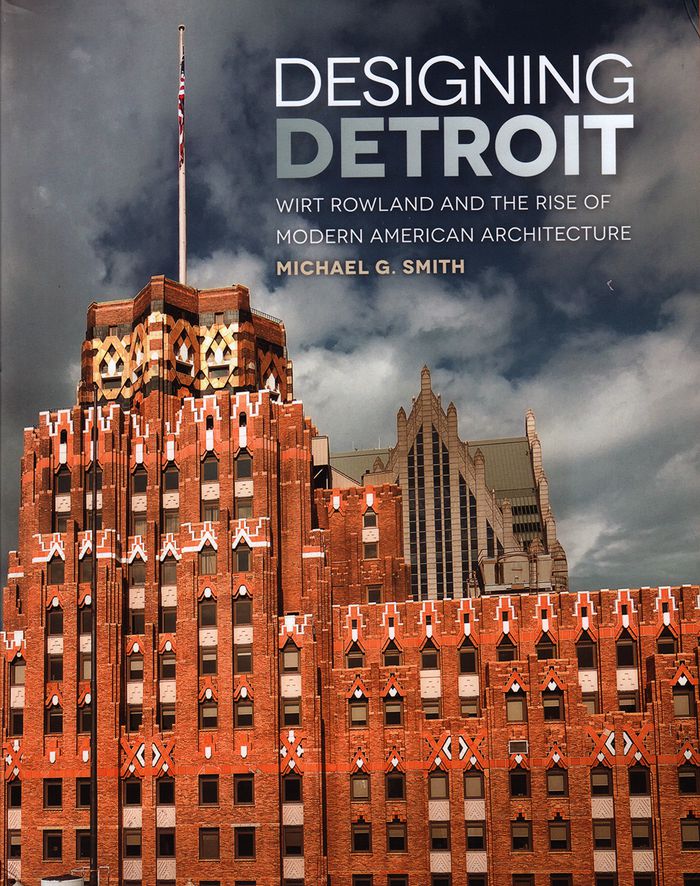
"Designing Detroit: Wirt Rowland and the Rise of Modern American Architecture" begins with a brief overview of Rowland’s early life and career. Author Michael G. Smith goes on to analyze Rowland’s achievements in building design and as a leader of Detroit’s architectural community throughout both World Wars and the Great Depression. The interdependence of architecture with the city’s fluctuating economic prosperity and population growth is explored, illuminating the conditions for good architecture and the arts in general. The author identifies the influence of Jay Hambidge’s "dynamic symmetry" in Rowland’s work and how it allowed him to employ color as a modern replacement for traditional ornamentation, leading to the revolutionary design of the Union Trust (Guardian) Building, for which he receives nearly unanimous praise in national media. This book is concerned primarily with Rowland’s influence on Detroit architecture, but spans beyond his work in Michigan to include the designer’s broad reach from New York to Miami. A comprehensive appendix includes extensive lists of Rowland’s publications, locations he had designed, and jobs taken on by his firm during his tenure. This book represents new research and insights not previously discussed in either scholarly or general audience texts and will be of interest to casual readers of Detroit history, as well as architecture historians.
Designing Detroit: Wirt Rowland and the rise of modern American architecture
Actions:
Price:
$72.00
(available to order)
Summary:
"Designing Detroit: Wirt Rowland and the Rise of Modern American Architecture" begins with a brief overview of Rowland’s early life and career. Author Michael G. Smith goes on to analyze Rowland’s achievements in building design and as a leader of Detroit’s architectural community throughout both World Wars and the Great Depression. The interdependence of architecture with the city’s fluctuating economic prosperity and population growth is explored, illuminating the conditions for good architecture and the arts in general. The author identifies the influence of Jay Hambidge’s "dynamic symmetry" in Rowland’s work and how it allowed him to employ color as a modern replacement for traditional ornamentation, leading to the revolutionary design of the Union Trust (Guardian) Building, for which he receives nearly unanimous praise in national media. This book is concerned primarily with Rowland’s influence on Detroit architecture, but spans beyond his work in Michigan to include the designer’s broad reach from New York to Miami. A comprehensive appendix includes extensive lists of Rowland’s publications, locations he had designed, and jobs taken on by his firm during his tenure. This book represents new research and insights not previously discussed in either scholarly or general audience texts and will be of interest to casual readers of Detroit history, as well as architecture historians.
Form:
books
books
Publication:
April 2017
April 2017
Subject:
Architecture since 1900, Americas
Architecture since 1900, Americas
Form:
books
books
Price:
$42.95
(available to order)
Summary:
“All too often,” wrote disabled architect Ronald Mace, “designers don’t take the needs of disabled and elderly people into account.” Building Access investigates twentieth-century strategies for designing the world with disability in mind. Commonly understood in terms of curb cuts, automatic doors, Braille signs, and flexible kitchens, Universal Design purported to create(...)
$42.95
(available to order)
Summary:
“All too often,” wrote disabled architect Ronald Mace, “designers don’t take the needs of disabled and elderly people into account.” Building Access investigates twentieth-century strategies for designing the world with disability in mind. Commonly understood in terms of curb cuts, automatic doors, Braille signs, and flexible kitchens, Universal Design purported to create(...)
Title:
Building access: universal design and the politics of disability
Actions:
Price:
$42.95
(available to order)
Summary:
“All too often,” wrote disabled architect Ronald Mace, “designers don’t take the needs of disabled and elderly people into account.” Building Access investigates twentieth-century strategies for designing the world with disability in mind. Commonly understood in terms of curb cuts, automatic doors, Braille signs, and flexible kitchens, Universal Design purported to create a built environment for everyone, not only the average citizen. But who counts as “everyone,” Aimi Hamraie asks, and how can designers know? Blending technoscience studies and design history with critical disability, race, and feminist theories, Building Access interrogates the historical, cultural, and theoretical contexts for these questions, offering a groundbreaking critical history of Universal Design. Hamraie reveals that the twentieth-century shift from “design for the average” to “design for all” took place through liberal political, economic, and scientific structures concerned with defining the disabled user and designing in its name. Tracing the co-evolution of accessible design for disabled veterans, a radical disability maker movement, disability rights law, and strategies for diversifying the architecture profession, Hamraie shows that Universal Design was not just an approach to creating new products or spaces, but also a sustained, understated activist movement challenging dominant understandings of disability in architecture, medicine, and society.
Building access: universal design and the politics of disability
Actions:
Price:
$42.95
(available to order)
Summary:
“All too often,” wrote disabled architect Ronald Mace, “designers don’t take the needs of disabled and elderly people into account.” Building Access investigates twentieth-century strategies for designing the world with disability in mind. Commonly understood in terms of curb cuts, automatic doors, Braille signs, and flexible kitchens, Universal Design purported to create a built environment for everyone, not only the average citizen. But who counts as “everyone,” Aimi Hamraie asks, and how can designers know? Blending technoscience studies and design history with critical disability, race, and feminist theories, Building Access interrogates the historical, cultural, and theoretical contexts for these questions, offering a groundbreaking critical history of Universal Design. Hamraie reveals that the twentieth-century shift from “design for the average” to “design for all” took place through liberal political, economic, and scientific structures concerned with defining the disabled user and designing in its name. Tracing the co-evolution of accessible design for disabled veterans, a radical disability maker movement, disability rights law, and strategies for diversifying the architecture profession, Hamraie shows that Universal Design was not just an approach to creating new products or spaces, but also a sustained, understated activist movement challenging dominant understandings of disability in architecture, medicine, and society.
Form:
books
books
Publication:
November 2017
November 2017
Subject:
Architectural Theory
Architectural Theory
Form:
books
books
Price:
$56.50
(available to order)
Summary:
In an effort to create a secure urban environment in which residents can work, live, and prosper with minimal disruption, New York and London established a network of laws, policing, and municipal government in the nineteenth century aimed at building the confidence of the citizenry and creating stability for economic growth. At the same time, these two world cities(...)
$56.50
(available to order)
Summary:
In an effort to create a secure urban environment in which residents can work, live, and prosper with minimal disruption, New York and London established a network of laws, policing, and municipal government in the nineteenth century aimed at building the confidence of the citizenry and creating stability for economic growth. At the same time, these two world cities(...)
Title:
Triumph of order, democracy and public space in New York and London
Actions:
Price:
$56.50
(available to order)
Summary:
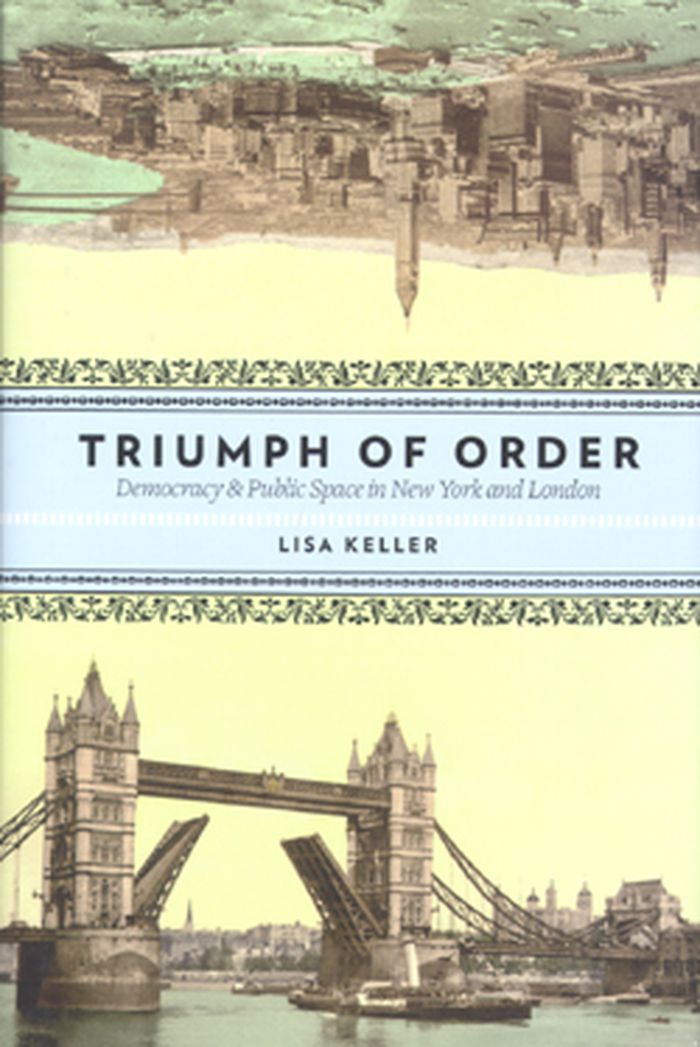
In an effort to create a secure urban environment in which residents can work, live, and prosper with minimal disruption, New York and London established a network of laws, policing, and municipal government in the nineteenth century aimed at building the confidence of the citizenry and creating stability for economic growth. At the same time, these two world cities attempted to maintain an expansive level of free speech and assembly, concepts deeply ingrained in both national cultures. As democracy expanded in tandem with the size of the cities themselves, the two goals clashed, resulting in tensions over their compatibility. The results of this clash continue to resonate in our society today. Treating nineteenth-century London and New York as case studies, Lisa Keller examines the critical development of sanctioned free speech, controlled public assembly, new urban regulations, and the quelling of riots, all in the name of a proper regard for order. Drawing on rich archival sources that include the unpublished correspondence of government officials and ordinary citizens, Keller paints an intimate portrait of daily life in these two cities and the intricacies of their emerging bureaucracies. She finds that New York eventually settled on a policy of preempting disruption before it occurred, while London chose a path of greater tolerance toward street activities.
Triumph of order, democracy and public space in New York and London
Actions:
Price:
$56.50
(available to order)
Summary:
In an effort to create a secure urban environment in which residents can work, live, and prosper with minimal disruption, New York and London established a network of laws, policing, and municipal government in the nineteenth century aimed at building the confidence of the citizenry and creating stability for economic growth. At the same time, these two world cities attempted to maintain an expansive level of free speech and assembly, concepts deeply ingrained in both national cultures. As democracy expanded in tandem with the size of the cities themselves, the two goals clashed, resulting in tensions over their compatibility. The results of this clash continue to resonate in our society today. Treating nineteenth-century London and New York as case studies, Lisa Keller examines the critical development of sanctioned free speech, controlled public assembly, new urban regulations, and the quelling of riots, all in the name of a proper regard for order. Drawing on rich archival sources that include the unpublished correspondence of government officials and ordinary citizens, Keller paints an intimate portrait of daily life in these two cities and the intricacies of their emerging bureaucracies. She finds that New York eventually settled on a policy of preempting disruption before it occurred, while London chose a path of greater tolerance toward street activities.
Form:
books
books
Publication:
November 2008, New -York
November 2008, New -York
Subject:
Urban Theory
Urban Theory
Form:
books
books
Title:
The network society
The network society
Actions:
Price:
$28.99
(available to order)
Summary:
In The Network Society, Darin Barney provides a compelling examination of the social, political and economic implications of network technologies and their application across a wide range of practices and institutions. Are we in the midst of a digital revolution? Have new information and communication technologies given birth to a new form of society, or do they(...)
$28.99
(available to order)
Summary:
In The Network Society, Darin Barney provides a compelling examination of the social, political and economic implications of network technologies and their application across a wide range of practices and institutions. Are we in the midst of a digital revolution? Have new information and communication technologies given birth to a new form of society, or do they(...)
Title:
The network society
Actions:
Price:
$28.99
(available to order)
Summary:
In The Network Society, Darin Barney provides a compelling examination of the social, political and economic implications of network technologies and their application across a wide range of practices and institutions. Are we in the midst of a digital revolution? Have new information and communication technologies given birth to a new form of society, or do they reinforce and extend existing patterns and relationships? This book provides a clear and engaging discussion of these and other questions. Using a sophisticated model of the relationship between technology and society, Barney investigates both what has changed, and what has remained the same, in the age of the Internet. Among the issues discussed are debates concerning the emergence of a 'knowledge economy'; digital restructuring of employment and work; globalization and the status of the nation-state; the prospects of digital democracy; the digital divide; new social movements; and culture, community and identity in the age of new media. This book provides an accessible resource for a thoughtful engagement with life in the network society. It will be essential reading for students in sociology and media and communication studies. This will be a valuable textbook for undergraduate students of sociology and media and communication studies.
The network society
Actions:
Price:
$28.99
(available to order)
Summary:
In The Network Society, Darin Barney provides a compelling examination of the social, political and economic implications of network technologies and their application across a wide range of practices and institutions. Are we in the midst of a digital revolution? Have new information and communication technologies given birth to a new form of society, or do they reinforce and extend existing patterns and relationships? This book provides a clear and engaging discussion of these and other questions. Using a sophisticated model of the relationship between technology and society, Barney investigates both what has changed, and what has remained the same, in the age of the Internet. Among the issues discussed are debates concerning the emergence of a 'knowledge economy'; digital restructuring of employment and work; globalization and the status of the nation-state; the prospects of digital democracy; the digital divide; new social movements; and culture, community and identity in the age of new media. This book provides an accessible resource for a thoughtful engagement with life in the network society. It will be essential reading for students in sociology and media and communication studies. This will be a valuable textbook for undergraduate students of sociology and media and communication studies.
Form:
books
books
Publication:
September 2004, Cambridge
September 2004, Cambridge
Subject:
Epistemology
Epistemology
Form:
books
books
Actions:
Price:
$31.50
(available to order)
Summary:
Despite a modest revival in city living, Americans are spreading out more than ever—into "exurbs" and "boomburbs" miles from anywhere, in big houses in big subdivisions. We cling to the notion of safer neighborhoods and better schools, but what we get, argues Anthony Flint, is long commutes, crushing gas prices and higher taxes—and a landscape of strip malls and office(...)
$31.50
(available to order)
Summary:
Despite a modest revival in city living, Americans are spreading out more than ever—into "exurbs" and "boomburbs" miles from anywhere, in big houses in big subdivisions. We cling to the notion of safer neighborhoods and better schools, but what we get, argues Anthony Flint, is long commutes, crushing gas prices and higher taxes—and a landscape of strip malls and office(...)
Title:
This land : the battle over sprawl and the future of America
Actions:
Price:
$31.50
(available to order)
Summary:
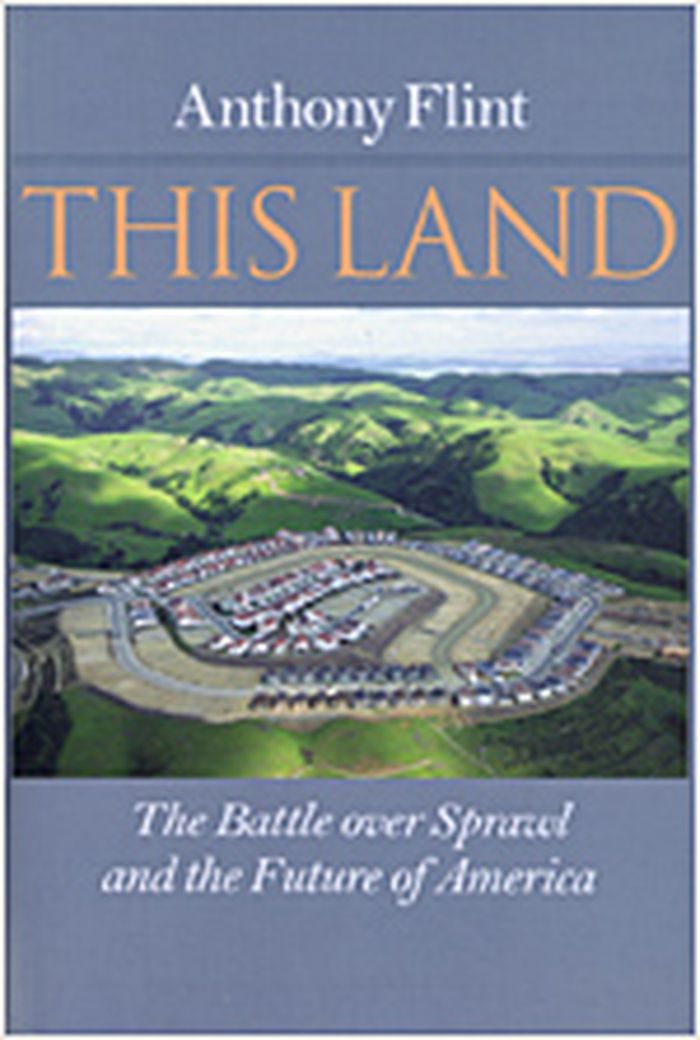
Despite a modest revival in city living, Americans are spreading out more than ever—into "exurbs" and "boomburbs" miles from anywhere, in big houses in big subdivisions. We cling to the notion of safer neighborhoods and better schools, but what we get, argues Anthony Flint, is long commutes, crushing gas prices and higher taxes—and a landscape of strip malls and office parks badly in need of a makeover. "This land" tells the untold story of development in America—how the landscape is shaped by a furious clash of political, economic and cultural forces. It is the story of burgeoning anti-sprawl movement, a 1960s-style revolution of New Urbanism, smart growth, and green building. And it is the story of landowners fighting back on the basis of property rights, with free-market libertarians, homebuilders, road pavers, financial institutions, and even the lawn-care industry right alongside them. The subdivisions and extra-wide roadways are encroaching into the wetlands of Florida, ranchlands in Texas, and the desert outside Phoenix and Las Vegas. But with up to 120 million more people in the country by 2050, will the spread-out pattern cave in on itself? Could Americans embrace a new approach to development if it made sense for them?
This land : the battle over sprawl and the future of America
Actions:
Price:
$31.50
(available to order)
Summary:
Despite a modest revival in city living, Americans are spreading out more than ever—into "exurbs" and "boomburbs" miles from anywhere, in big houses in big subdivisions. We cling to the notion of safer neighborhoods and better schools, but what we get, argues Anthony Flint, is long commutes, crushing gas prices and higher taxes—and a landscape of strip malls and office parks badly in need of a makeover. "This land" tells the untold story of development in America—how the landscape is shaped by a furious clash of political, economic and cultural forces. It is the story of burgeoning anti-sprawl movement, a 1960s-style revolution of New Urbanism, smart growth, and green building. And it is the story of landowners fighting back on the basis of property rights, with free-market libertarians, homebuilders, road pavers, financial institutions, and even the lawn-care industry right alongside them. The subdivisions and extra-wide roadways are encroaching into the wetlands of Florida, ranchlands in Texas, and the desert outside Phoenix and Las Vegas. But with up to 120 million more people in the country by 2050, will the spread-out pattern cave in on itself? Could Americans embrace a new approach to development if it made sense for them?
Form:
books
books
Publication:
June 2006, Baltimore
June 2006, Baltimore
Subject:
Urban Theory
Urban Theory


