


5813 Results
Form:
books
books
Actions:
Holdings:
Description:
xii, 274 pages : illustrations ; 28 cm
Description:
xii, 274 pages : illustrations ; 28 cm
Author:
Subject:
Publication:
London : H.M.S.O., 1992.
London : H.M.S.O., 1992.
Title:
Yorkshire textile mills : the buildings of the Yorkshire textile industry, 1770-1930 / Colum Giles, Ian H. Goodall.
Actions:
Holdings:
Description:
xii, 274 pages : illustrations ; 28 cm
Yorkshire textile mills : the buildings of the Yorkshire textile industry, 1770-1930 / Colum Giles, Ian H. Goodall.
Actions:
Holdings:
Description:
xii, 274 pages : illustrations ; 28 cm
Form:
books
books
Publication:
London : H.M.S.O., 1992.
London : H.M.S.O., 1992.
Author:
Subject:
Form:
books
books
Actions:
Holdings:
Description:
95 pages : illustrations ; 24 cm
Description:
95 pages : illustrations ; 24 cm
Author:
Subject:
Publication:
[Stockholm?] : [publisher not identified], [1960?]
[Stockholm?] : [publisher not identified], [1960?]
Title:
Stockholm : structure and development / prepared with the aid of the Swedish Social Research Council, the city of Stockholm, and the Stockholm School of Economics.
Actions:
Holdings:
Description:
95 pages : illustrations ; 24 cm
Stockholm : structure and development / prepared with the aid of the Swedish Social Research Council, the city of Stockholm, and the Stockholm School of Economics.
Actions:
Holdings:
Description:
95 pages : illustrations ; 24 cm
Form:
books
books
Publication:
[Stockholm?] : [publisher not identified], [1960?]
[Stockholm?] : [publisher not identified], [1960?]
Author:
Subject:
Form:
books
books
Price:
$33.50
(available in store)
Summary:
This book is an account of modern architecture in Turkey, placing architecture's history in the larger social, political and cultural context of Turkey's development in the twentieth century. It takes the reader from the end of World War I, when the new Turkish Republic was born out of the disintegration of the Ottoman Empire, to the country's democratization after the(...)
$33.50
(available in store)
Summary:
This book is an account of modern architecture in Turkey, placing architecture's history in the larger social, political and cultural context of Turkey's development in the twentieth century. It takes the reader from the end of World War I, when the new Turkish Republic was born out of the disintegration of the Ottoman Empire, to the country's democratization after the(...)
Subject:
Architecture since 1900, Middle-East
Architecture since 1900, Middle-East
Publication:
November 2011
November 2011
Title:
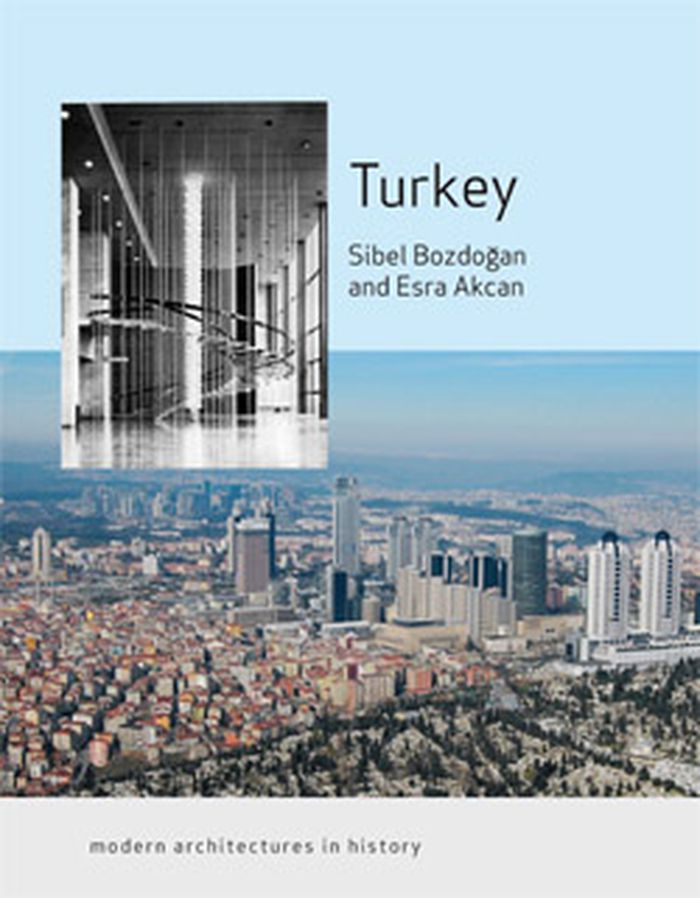
Turkey
Actions:
Price:
$33.50
(available in store)
Summary:
This book is an account of modern architecture in Turkey, placing architecture's history in the larger social, political and cultural context of Turkey's development in the twentieth century. It takes the reader from the end of World War I, when the new Turkish Republic was born out of the disintegration of the Ottoman Empire, to the country's democratization after the 1950s in the midst of the Cold War's competing ideological forces, and finally to the present, with Turkey continuing to be dramatically transformed through globalization, economic integration with the world market and transnational cultural influences, as well as with its renewed preoccupations with identity, including its Islamic and Ottoman heritage. Turkey explores a country on Europe's most eastern margin, and it is unique in tackling the issue of the modern and contemporary periods typically omitted in traditional surveys of modern architecture and Islamic art and architecture. The authors investigate how and why young Turkish architects adopted modernism early in the twentieth century and explore institutional and architect-designed buildings through the decades down to the present day, from government buildings, hotels and factories to apartment blocks and individual homes both urban and rural. They also focus on informal residential areas, and explain how some that have evolved from small settlements to colossal urban quarters exist at a slippery threshold between legality and illegality.
Turkey
Actions:
Price:
$33.50
(available in store)
Summary:
This book is an account of modern architecture in Turkey, placing architecture's history in the larger social, political and cultural context of Turkey's development in the twentieth century. It takes the reader from the end of World War I, when the new Turkish Republic was born out of the disintegration of the Ottoman Empire, to the country's democratization after the 1950s in the midst of the Cold War's competing ideological forces, and finally to the present, with Turkey continuing to be dramatically transformed through globalization, economic integration with the world market and transnational cultural influences, as well as with its renewed preoccupations with identity, including its Islamic and Ottoman heritage. Turkey explores a country on Europe's most eastern margin, and it is unique in tackling the issue of the modern and contemporary periods typically omitted in traditional surveys of modern architecture and Islamic art and architecture. The authors investigate how and why young Turkish architects adopted modernism early in the twentieth century and explore institutional and architect-designed buildings through the decades down to the present day, from government buildings, hotels and factories to apartment blocks and individual homes both urban and rural. They also focus on informal residential areas, and explain how some that have evolved from small settlements to colossal urban quarters exist at a slippery threshold between legality and illegality.
Form:
books
books
Publication:
November 2011
November 2011
Subject:
Architecture since 1900, Middle-East
Architecture since 1900, Middle-East
Form:
books
books
Actions:
Price:
$78.00
(available to order)
Summary:
For centuries, the cardinals, popes, and rulers of Italy have devoted themselves to creating vast villa gardens that represent their wealth and power, provide a calm refuge from city life, and showcase lavish plantings and rare flowers. Here, in over two hundred photographs — taken during the Edwardian era when these historic gardens were at their peak — twenty-two of(...)
$78.00
(available to order)
Summary:
For centuries, the cardinals, popes, and rulers of Italy have devoted themselves to creating vast villa gardens that represent their wealth and power, provide a calm refuge from city life, and showcase lavish plantings and rare flowers. Here, in over two hundred photographs — taken during the Edwardian era when these historic gardens were at their peak — twenty-two of(...)
Title:
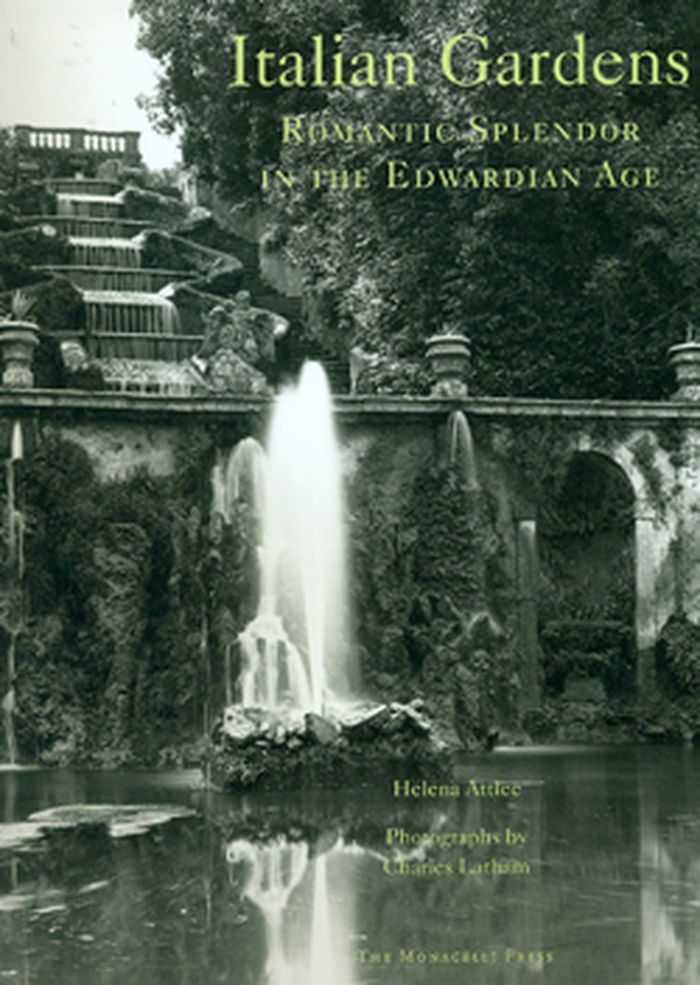
Italian gardens : romantic splendor in the Edwardian age
Actions:
Price:
$78.00
(available to order)
Summary:
For centuries, the cardinals, popes, and rulers of Italy have devoted themselves to creating vast villa gardens that represent their wealth and power, provide a calm refuge from city life, and showcase lavish plantings and rare flowers. Here, in over two hundred photographs — taken during the Edwardian era when these historic gardens were at their peak — twenty-two of central Italy's most ornate and spectacular palace gardens are presented. This publication reveals the vanished magnificence of the aristocracy's landscapes in images from the archives of Britain's Country Life magazine. Classic photographs display patterned grottoes, elaborate terraces, sophisticated fountains, antique statuary, and sun-dappled arbors to provide an important record of these gardens at a nostalgic moment in time, before the two World Wars provoked irrevocable changes in Italy's political and economic climate and many gardens fell into neglect. Discussing the history and design of each garden, author Helena Attlee brings to life the personalities responsible for such extravagant creations as the Alley of a Hundred Fountains at the Villa d'Este in Tivoli, the swirling parterres de broderie of Villa Doria Pamphili in Rome, the broad terraces and majestic staircases of the Vatican Gardens, the frescoed loggia of the Villa Medici in Fiesole, and the border of innumerable citrus trees circling the Isolotto in Florence's famous Boboli Gardens.
Italian gardens : romantic splendor in the Edwardian age
Actions:
Price:
$78.00
(available to order)
Summary:
For centuries, the cardinals, popes, and rulers of Italy have devoted themselves to creating vast villa gardens that represent their wealth and power, provide a calm refuge from city life, and showcase lavish plantings and rare flowers. Here, in over two hundred photographs — taken during the Edwardian era when these historic gardens were at their peak — twenty-two of central Italy's most ornate and spectacular palace gardens are presented. This publication reveals the vanished magnificence of the aristocracy's landscapes in images from the archives of Britain's Country Life magazine. Classic photographs display patterned grottoes, elaborate terraces, sophisticated fountains, antique statuary, and sun-dappled arbors to provide an important record of these gardens at a nostalgic moment in time, before the two World Wars provoked irrevocable changes in Italy's political and economic climate and many gardens fell into neglect. Discussing the history and design of each garden, author Helena Attlee brings to life the personalities responsible for such extravagant creations as the Alley of a Hundred Fountains at the Villa d'Este in Tivoli, the swirling parterres de broderie of Villa Doria Pamphili in Rome, the broad terraces and majestic staircases of the Vatican Gardens, the frescoed loggia of the Villa Medici in Fiesole, and the border of innumerable citrus trees circling the Isolotto in Florence's famous Boboli Gardens.
Form:
books
books
Publication:
August 2009
August 2009
Subject:
Gardens
Gardens
Form:
books
books
Price:
$29.95
(available to order)
Summary:
This publication illuminates the dynamic relationship between the visual media, particularly film and theater, and the planning and development of cities in China and Taiwan, from the emergence of the People’s Republic in 1949 to the staging of the Beijing Olympics in 2008. Yomi Braester argues that the transformation of Chinese cities in recent decades is a result not(...)
$29.95
(available to order)
Summary:
This publication illuminates the dynamic relationship between the visual media, particularly film and theater, and the planning and development of cities in China and Taiwan, from the emergence of the People’s Republic in 1949 to the staging of the Beijing Olympics in 2008. Yomi Braester argues that the transformation of Chinese cities in recent decades is a result not(...)
Publication:
April 2010
April 2010
Title:
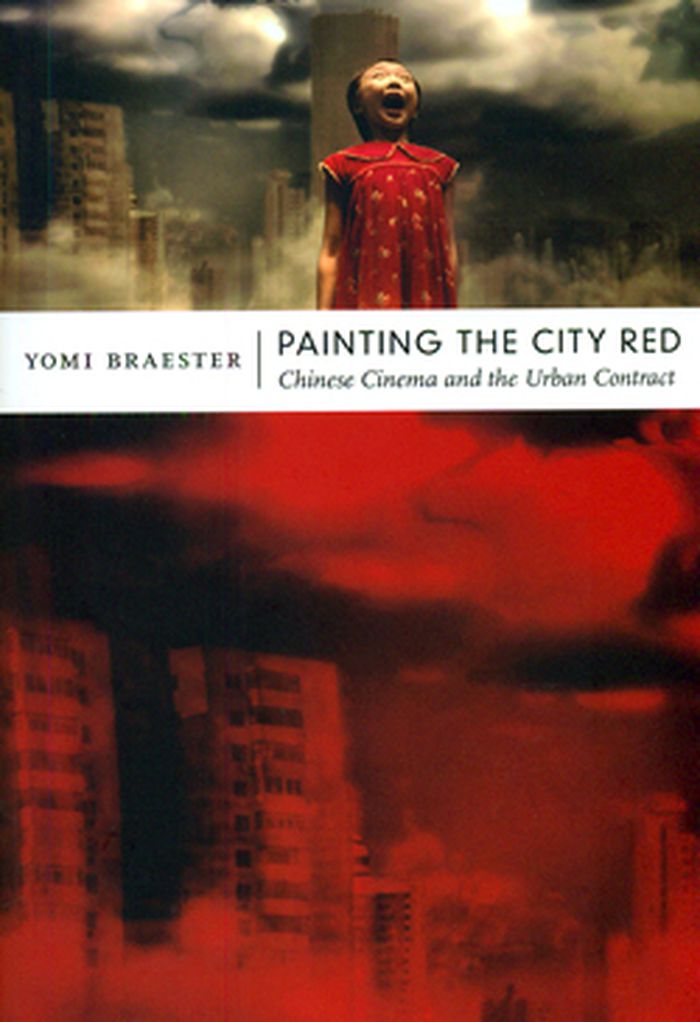
Painting the city red : Chinese cinema and the urban contract
Actions:
Price:
$29.95
(available to order)
Summary:
This publication illuminates the dynamic relationship between the visual media, particularly film and theater, and the planning and development of cities in China and Taiwan, from the emergence of the People’s Republic in 1949 to the staging of the Beijing Olympics in 2008. Yomi Braester argues that the transformation of Chinese cities in recent decades is a result not only of China’s abandonment of Maoist economic planning in favor of capitalist globalization but also of a shift in visual practices. Rather than simply reflect urban culture, movies and stage dramas have facilitated the development of new perceptions of space and time, representing the future city variously as an ideal socialist city, a metropolis integrated into the global economy, and a site for preserving cultural heritage. Drawing on extensive archival research, interviews with leading filmmakers and urban planners, and close readings of scripts and images, Braester describes how films and stage plays have promoted and opposed official urban plans and policies as they have addressed issues such as demolition-and-relocation plans, the preservation of vernacular architecture, and the global real estate market. He shows how the cinematic rewriting of historical narratives has accompanied the spatial reorganization of specific urban sites, including Nanjing Road in Shanghai; veterans’ villages in Taipei; and Tiananmen Square, centuries-old courtyards, and postmodern architectural landmarks in Beijing.
Painting the city red : Chinese cinema and the urban contract
Actions:
Price:
$29.95
(available to order)
Summary:
This publication illuminates the dynamic relationship between the visual media, particularly film and theater, and the planning and development of cities in China and Taiwan, from the emergence of the People’s Republic in 1949 to the staging of the Beijing Olympics in 2008. Yomi Braester argues that the transformation of Chinese cities in recent decades is a result not only of China’s abandonment of Maoist economic planning in favor of capitalist globalization but also of a shift in visual practices. Rather than simply reflect urban culture, movies and stage dramas have facilitated the development of new perceptions of space and time, representing the future city variously as an ideal socialist city, a metropolis integrated into the global economy, and a site for preserving cultural heritage. Drawing on extensive archival research, interviews with leading filmmakers and urban planners, and close readings of scripts and images, Braester describes how films and stage plays have promoted and opposed official urban plans and policies as they have addressed issues such as demolition-and-relocation plans, the preservation of vernacular architecture, and the global real estate market. He shows how the cinematic rewriting of historical narratives has accompanied the spatial reorganization of specific urban sites, including Nanjing Road in Shanghai; veterans’ villages in Taipei; and Tiananmen Square, centuries-old courtyards, and postmodern architectural landmarks in Beijing.
Form:
books
books
Publication:
April 2010
April 2010
Form:
books
books
Actions:
Price:
$33.95
(available to order)
Summary:
American cities, once economic and social launch pads for their residents, are all too often plagued by poverty and decay. One need only to look at the ruins of Detroit to see how far some once-great cities have fallen, or to Boston and San Francisco for evidence that such decline is reversible. In Boom Towns, Stephen J.K. Walters diagnoses the root causes of urban(...)
$33.95
(available to order)
Summary:
American cities, once economic and social launch pads for their residents, are all too often plagued by poverty and decay. One need only to look at the ruins of Detroit to see how far some once-great cities have fallen, or to Boston and San Francisco for evidence that such decline is reversible. In Boom Towns, Stephen J.K. Walters diagnoses the root causes of urban(...)
Title:
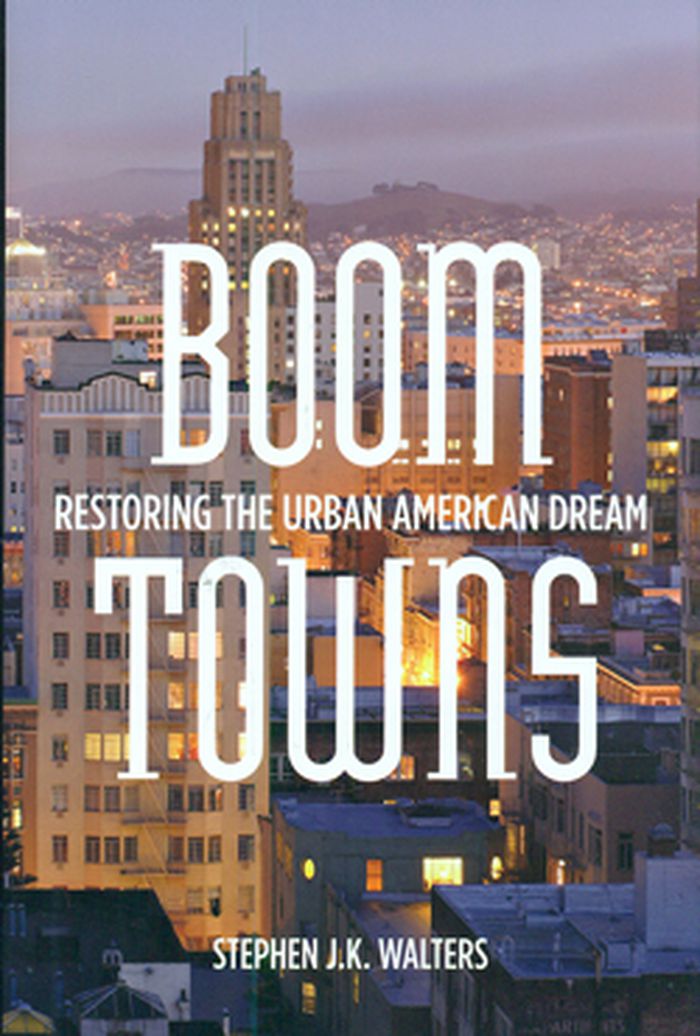
Boom towns: restoring the urban american dream
Actions:
Price:
$33.95
(available to order)
Summary:
American cities, once economic and social launch pads for their residents, are all too often plagued by poverty and decay. One need only to look at the ruins of Detroit to see how far some once-great cities have fallen, or to Boston and San Francisco for evidence that such decline is reversible. In Boom Towns, Stephen J.K. Walters diagnoses the root causes of urban decline in order to prescribe remedies that will enable cities to thrive once again. Arguing that commonplace explanations for urban decay misunderstand the nature our towns, Walters reconceives of cities as dense accumulations of capital in all of its forms — places that attract people by making their labor more productive and their leisure more pleasurable. Policymakers, therefore, must properly define and enforce property rights in order to prevent the flight of capital and the resulting demise of urban centers. Using vivid evocations of iconic towns and the people who crucially affected their destinies, Walters shows how public policy measures which aim to revitalize often do more harm than good. He then outlines a more promising set of policies to remedy the capital shortage that continues to afflict many cities and needlessly limit their residents' opportunities. With its fresh interpretation of one of the American quandaries of our day, Boom Towns offers a novel contribution to the debate about American cities and a program for their restoration.
Boom towns: restoring the urban american dream
Actions:
Price:
$33.95
(available to order)
Summary:
American cities, once economic and social launch pads for their residents, are all too often plagued by poverty and decay. One need only to look at the ruins of Detroit to see how far some once-great cities have fallen, or to Boston and San Francisco for evidence that such decline is reversible. In Boom Towns, Stephen J.K. Walters diagnoses the root causes of urban decline in order to prescribe remedies that will enable cities to thrive once again. Arguing that commonplace explanations for urban decay misunderstand the nature our towns, Walters reconceives of cities as dense accumulations of capital in all of its forms — places that attract people by making their labor more productive and their leisure more pleasurable. Policymakers, therefore, must properly define and enforce property rights in order to prevent the flight of capital and the resulting demise of urban centers. Using vivid evocations of iconic towns and the people who crucially affected their destinies, Walters shows how public policy measures which aim to revitalize often do more harm than good. He then outlines a more promising set of policies to remedy the capital shortage that continues to afflict many cities and needlessly limit their residents' opportunities. With its fresh interpretation of one of the American quandaries of our day, Boom Towns offers a novel contribution to the debate about American cities and a program for their restoration.
Form:
books
books
Publication:
September 2014
September 2014
Subject:
Urban Theory
Urban Theory
Form:
books
books
Actions:
Price:
$25.95
(available to order)
Summary:
Today's urban riverfronts are changing. The decline of river commerce and riverside industry has made riverfront land once used for warehouses, factories, and loading docks available for open space, parks, housing, and nonindustrial uses. Urban rivers, which once functioned as open sewers for cities, are now seen as part of larger watershed ecosystems. Rivertown examines(...)
$25.95
(available to order)
Summary:
Today's urban riverfronts are changing. The decline of river commerce and riverside industry has made riverfront land once used for warehouses, factories, and loading docks available for open space, parks, housing, and nonindustrial uses. Urban rivers, which once functioned as open sewers for cities, are now seen as part of larger watershed ecosystems. Rivertown examines(...)
Title:
Rivertown : Rethinking urban rivers
Actions:
Price:
$25.95
(available to order)
Summary:
Today's urban riverfronts are changing. The decline of river commerce and riverside industry has made riverfront land once used for warehouses, factories, and loading docks available for open space, parks, housing, and nonindustrial uses. Urban rivers, which once functioned as open sewers for cities, are now seen as part of larger watershed ecosystems. Rivertown examines urban river restoration efforts across the United States, presenting case studies from Los Angeles; Washington, D.C.; Portland, Oregon; Chicago; Salt Lake City; and San Jose. It also analyzes the roles of the federal government (in particular, the U.S. Army Corps of Engineers) and citizen activism in urban river politics. A postscript places New Orleans's experience with Hurricane Katrina in the broader context of the national riverside land-use debate. Each case study in Rivertown considers the critical questions of who makes decisions about our urban rivers, who pays to implement these decisions, and who ultimately benefits or suffers from these decisions. In Los Angeles, for example, local nonprofit and academic research groups played crucial roles, whereas Chicago relied on a series of engineering interventions. In each case, authors evaluate the ecological issues and consider urban river restoration projects in relation to other urban economic and environmental initiatives in the region. Rivertown is a valuable resource for urban planners and citizen groups as well as for scholars.
Rivertown : Rethinking urban rivers
Actions:
Price:
$25.95
(available to order)
Summary:
Today's urban riverfronts are changing. The decline of river commerce and riverside industry has made riverfront land once used for warehouses, factories, and loading docks available for open space, parks, housing, and nonindustrial uses. Urban rivers, which once functioned as open sewers for cities, are now seen as part of larger watershed ecosystems. Rivertown examines urban river restoration efforts across the United States, presenting case studies from Los Angeles; Washington, D.C.; Portland, Oregon; Chicago; Salt Lake City; and San Jose. It also analyzes the roles of the federal government (in particular, the U.S. Army Corps of Engineers) and citizen activism in urban river politics. A postscript places New Orleans's experience with Hurricane Katrina in the broader context of the national riverside land-use debate. Each case study in Rivertown considers the critical questions of who makes decisions about our urban rivers, who pays to implement these decisions, and who ultimately benefits or suffers from these decisions. In Los Angeles, for example, local nonprofit and academic research groups played crucial roles, whereas Chicago relied on a series of engineering interventions. In each case, authors evaluate the ecological issues and consider urban river restoration projects in relation to other urban economic and environmental initiatives in the region. Rivertown is a valuable resource for urban planners and citizen groups as well as for scholars.
Form:
books
books
Publication:
September 2007, Cambridge, London
September 2007, Cambridge, London
Subject:
Landscape Theory
Landscape Theory
Form:
books
books

Title:
Planet of slums
Planet of slums
Actions:
Price:
$25.00
(available to order)
Summary:
Urban theorist Davis takes a global approach to documenting the astonishing depth of squalid poverty that dominates the lives of the planet's increasingly urban population, detailing poor urban communities from Cape Town and Caracas to Casablanca and Khartoum. Davis argues health, justice and social issues associated with gargantuan slums (the largest, in Mexico City, has(...)
$25.00
(available to order)
Summary:
Urban theorist Davis takes a global approach to documenting the astonishing depth of squalid poverty that dominates the lives of the planet's increasingly urban population, detailing poor urban communities from Cape Town and Caracas to Casablanca and Khartoum. Davis argues health, justice and social issues associated with gargantuan slums (the largest, in Mexico City, has(...)
Title:
Planet of slums
Actions:
Price:
$25.00
(available to order)
Summary:
Urban theorist Davis takes a global approach to documenting the astonishing depth of squalid poverty that dominates the lives of the planet's increasingly urban population, detailing poor urban communities from Cape Town and Caracas to Casablanca and Khartoum. Davis argues health, justice and social issues associated with gargantuan slums (the largest, in Mexico City, has an estimated population of 4 million) get overlooked in world politics: "The demonizing rhetorics of the various international 'wars' on terrorism, drugs, and crime are so much semantic apartheid: they construct epistemological walls around gecekondus, favelas, and chawls that disable any honest debate about the daily violence of economic exclusion." Though Davis focuses on individual communities, he presents statistics showing the skyrocketing population and number of "megaslums" (informally, "stinking mountains of shit" or, formally, "when shanty-towns and squatter communities merge in continuous belts of informal housing and poverty, usually on the urban periphery") since the 1960s. Layered over the hard numbers are a fascinating grid of specific area studies and sub-topics ranging from how the Olympics has spurred the forceful relocation of thousands (and, sometimes, hundreds of thousands) of the urban poor, to the conversion of formerly second world countries to third world status. Davis paints a bleak picture of the upward trend in urbanization and maintains a stark outlook for slum-dwellers' futures
Planet of slums
Actions:
Price:
$25.00
(available to order)
Summary:
Urban theorist Davis takes a global approach to documenting the astonishing depth of squalid poverty that dominates the lives of the planet's increasingly urban population, detailing poor urban communities from Cape Town and Caracas to Casablanca and Khartoum. Davis argues health, justice and social issues associated with gargantuan slums (the largest, in Mexico City, has an estimated population of 4 million) get overlooked in world politics: "The demonizing rhetorics of the various international 'wars' on terrorism, drugs, and crime are so much semantic apartheid: they construct epistemological walls around gecekondus, favelas, and chawls that disable any honest debate about the daily violence of economic exclusion." Though Davis focuses on individual communities, he presents statistics showing the skyrocketing population and number of "megaslums" (informally, "stinking mountains of shit" or, formally, "when shanty-towns and squatter communities merge in continuous belts of informal housing and poverty, usually on the urban periphery") since the 1960s. Layered over the hard numbers are a fascinating grid of specific area studies and sub-topics ranging from how the Olympics has spurred the forceful relocation of thousands (and, sometimes, hundreds of thousands) of the urban poor, to the conversion of formerly second world countries to third world status. Davis paints a bleak picture of the upward trend in urbanization and maintains a stark outlook for slum-dwellers' futures
Form:
books
books
Publication:
August 2007, London New York
August 2007, London New York
Subject:
Urban Theory
Urban Theory
Form:
books
books
Price:
$63.95
(available to order)
Summary:
First built in Europe and grandly imported to the United States in the mid-nineteenth century, the classic multiway boulevard has been in decline for many years, victim of a narrowly focused approach to street design that views unencumbered vehicular traffic flow as the highest priority. The American preoccupation with destination and speed has made multiway boulevards(...)
$63.95
(available to order)
Summary:
First built in Europe and grandly imported to the United States in the mid-nineteenth century, the classic multiway boulevard has been in decline for many years, victim of a narrowly focused approach to street design that views unencumbered vehicular traffic flow as the highest priority. The American preoccupation with destination and speed has made multiway boulevards(...)
Subject:
Urban Theory
Urban Theory
Publication:
October 2001, Cambridge, Mass.
October 2001, Cambridge, Mass.
Title:
The boulevard book : history, evolution, design of multiway boulevards
Actions:
Price:
$63.95
(available to order)
Summary:
First built in Europe and grandly imported to the United States in the mid-nineteenth century, the classic multiway boulevard has been in decline for many years, victim of a narrowly focused approach to street design that views unencumbered vehicular traffic flow as the highest priority. The American preoccupation with destination and speed has made multiway boulevards increasingly rare as artifacts of the urban landscape. This book reintroduces the boulevard, tree-lined and with separate realms for through traffic and for slow-paced vehicular-pedestrian movement, as an important and often crucial feature of both historic and contemporary cities. It presents more than fifty boulevards—-as varied as Avenue Montaigne, in Paris; C. G. Road, in Ahmedabad, India; and The Esplanade, in Chico, California--celebrating their usefulness and beauty. It discusses their history and evolution, the misconceptions that led to their near-demise in the United States, and their potential as a modern street type. Based on wide research, "The Boulevard Book" examines the safety of these streets and offers design guidelines for professionals, scholars, and community decision makers. Extensive plans, cross sections, and perspective drawings permit visual comparisons. The book shows how multiway boulevards respond to many issues that are central to urban life, including livability, mobility, safety, interest, economic opportunity, mass transit, and open space.
The boulevard book : history, evolution, design of multiway boulevards
Actions:
Price:
$63.95
(available to order)
Summary:
First built in Europe and grandly imported to the United States in the mid-nineteenth century, the classic multiway boulevard has been in decline for many years, victim of a narrowly focused approach to street design that views unencumbered vehicular traffic flow as the highest priority. The American preoccupation with destination and speed has made multiway boulevards increasingly rare as artifacts of the urban landscape. This book reintroduces the boulevard, tree-lined and with separate realms for through traffic and for slow-paced vehicular-pedestrian movement, as an important and often crucial feature of both historic and contemporary cities. It presents more than fifty boulevards—-as varied as Avenue Montaigne, in Paris; C. G. Road, in Ahmedabad, India; and The Esplanade, in Chico, California--celebrating their usefulness and beauty. It discusses their history and evolution, the misconceptions that led to their near-demise in the United States, and their potential as a modern street type. Based on wide research, "The Boulevard Book" examines the safety of these streets and offers design guidelines for professionals, scholars, and community decision makers. Extensive plans, cross sections, and perspective drawings permit visual comparisons. The book shows how multiway boulevards respond to many issues that are central to urban life, including livability, mobility, safety, interest, economic opportunity, mass transit, and open space.
Form:
books
books
Publication:
October 2001, Cambridge, Mass.
October 2001, Cambridge, Mass.
Subject:
Urban Theory
Urban Theory
Form:
books
books
Title:
Sprawl and suburbia
Sprawl and suburbia
Actions:
Price:
$28.95
(available to order)
Summary:
Sprawl is the single most significant and urgent issue in American land use at the turn of the twenty-first century. Efforts to limit and reform sprawl through legislative “Smart Growth” initiatives have been enacted around the country while the neotraditionalist New Urbanism has been embraced by many architects and urban planners. Yet most Americans persist in their(...)
$28.95
(available to order)
Summary:
Sprawl is the single most significant and urgent issue in American land use at the turn of the twenty-first century. Efforts to limit and reform sprawl through legislative “Smart Growth” initiatives have been enacted around the country while the neotraditionalist New Urbanism has been embraced by many architects and urban planners. Yet most Americans persist in their(...)
Title:
Sprawl and suburbia
Actions:
Price:
$28.95
(available to order)
Summary:
Sprawl is the single most significant and urgent issue in American land use at the turn of the twenty-first century. Efforts to limit and reform sprawl through legislative “Smart Growth” initiatives have been enacted around the country while the neotraditionalist New Urbanism has been embraced by many architects and urban planners. Yet most Americans persist in their desire to live farther and farther away from urban centers, moving to exurbs made up almost entirely of single-family residential houses and stand-alone shopping areas. "Sprawl and suburbia" brings together some of the foremost thinkers in the field to present in-depth diagnosis and critical analysis of the physical and social realities of exurban sprawl. Along with an introduction by Robert Fishman, these essays call for architects, urban planners, and landscape designers to work at mitigating the impact of sprawl on land and resources and improving the residential and commercial built environment as a whole. In place of vast residential exurbs, these writers offer visions of a fresh urbanism—appealing and persuasive models of life at greater density, with greater diversity, and within genuine communities. With sprawl losing the support of suburban citizens themselves as economic, environmental, and social costs are being paid, "Sprawl and suburbia" appears at a moment when design might achieve some critical influence over development—if architects and planners accept the challenge.
Sprawl and suburbia
Actions:
Price:
$28.95
(available to order)
Summary:
Sprawl is the single most significant and urgent issue in American land use at the turn of the twenty-first century. Efforts to limit and reform sprawl through legislative “Smart Growth” initiatives have been enacted around the country while the neotraditionalist New Urbanism has been embraced by many architects and urban planners. Yet most Americans persist in their desire to live farther and farther away from urban centers, moving to exurbs made up almost entirely of single-family residential houses and stand-alone shopping areas. "Sprawl and suburbia" brings together some of the foremost thinkers in the field to present in-depth diagnosis and critical analysis of the physical and social realities of exurban sprawl. Along with an introduction by Robert Fishman, these essays call for architects, urban planners, and landscape designers to work at mitigating the impact of sprawl on land and resources and improving the residential and commercial built environment as a whole. In place of vast residential exurbs, these writers offer visions of a fresh urbanism—appealing and persuasive models of life at greater density, with greater diversity, and within genuine communities. With sprawl losing the support of suburban citizens themselves as economic, environmental, and social costs are being paid, "Sprawl and suburbia" appears at a moment when design might achieve some critical influence over development—if architects and planners accept the challenge.
Form:
books
books
Publication:
November 2005, Minneapolis
November 2005, Minneapolis
Subject:
Suburbs
Suburbs


