


13794 Results
Form:
books
books
Actions:
Holdings:
Description:
96 pages : illustrations (some color) ; 18 x 25 cm
Description:
96 pages : illustrations (some color) ; 18 x 25 cm
Author:
Subject:
Publication:
Tarrytown, N.Y. : Sleepy Hollow Press, ©1988.
Tarrytown, N.Y. : Sleepy Hollow Press, ©1988.
Title:
Pleasure grounds : Andrew Jackson Downing and Montgomery Place / with illustrations by Alexander Jackson Davis ; edited, with an introduction, by Jacquetta M. Haley.
Actions:
Holdings:
Description:
96 pages : illustrations (some color) ; 18 x 25 cm
Pleasure grounds : Andrew Jackson Downing and Montgomery Place / with illustrations by Alexander Jackson Davis ; edited, with an introduction, by Jacquetta M. Haley.
Actions:
Holdings:
Description:
96 pages : illustrations (some color) ; 18 x 25 cm
Form:
books
books
Publication:
Tarrytown, N.Y. : Sleepy Hollow Press, ©1988.
Tarrytown, N.Y. : Sleepy Hollow Press, ©1988.
Author:
Subject:
Form:
born digital
born digital
Actions:
Holdings:
Description:
1 computer optical disc : color ; 4 3/4 in.
Description:
1 computer optical disc : color ; 4 3/4 in.
Author:
Subject:
Publication:
Los Angeles, CA : In-D, ©1998.
Los Angeles, CA : In-D, ©1998.
Title:
Will Bruder, Eric Moss, RoTo, Scogin, Elam, Bray / photography by Wayne N.T. Fujii ; editors, Wayne Fujii, Timothy Sakamoto, Su-fei Wang.
Actions:
Holdings:
Description:
1 computer optical disc : color ; 4 3/4 in.
Will Bruder, Eric Moss, RoTo, Scogin, Elam, Bray / photography by Wayne N.T. Fujii ; editors, Wayne Fujii, Timothy Sakamoto, Su-fei Wang.
Actions:
Holdings:
Description:
1 computer optical disc : color ; 4 3/4 in.
Form:
born digital
born digital
Publication:
Los Angeles, CA : In-D, ©1998.
Los Angeles, CA : In-D, ©1998.
Author:
Subject:
Form:
books
books
Title:
Roman house--Renaissance palaces : inventing antiquity in fifteenth century Italy / Georgia Clarke.
Roman house--Renaissance palaces : inventing antiquity in fifteenth century Italy / Georgia Clarke.
Actions:
Holdings:
Description:
xxvi, 382 pages : illustrations ; 29 cm.
Description:
xxvi, 382 pages : illustrations ; 29 cm.
Author:
Subject:
Publication:
New York ; Cambridge : Cambridge University Press, 2003.
New York ; Cambridge : Cambridge University Press, 2003.
Title:
Roman house--Renaissance palaces : inventing antiquity in fifteenth century Italy / Georgia Clarke.
Actions:
Holdings:
Description:
xxvi, 382 pages : illustrations ; 29 cm.
Roman house--Renaissance palaces : inventing antiquity in fifteenth century Italy / Georgia Clarke.
Actions:
Holdings:
Description:
xxvi, 382 pages : illustrations ; 29 cm.
Form:
books
books
Publication:
New York ; Cambridge : Cambridge University Press, 2003.
New York ; Cambridge : Cambridge University Press, 2003.
Author:
Subject:
Form:
books
books
Title:
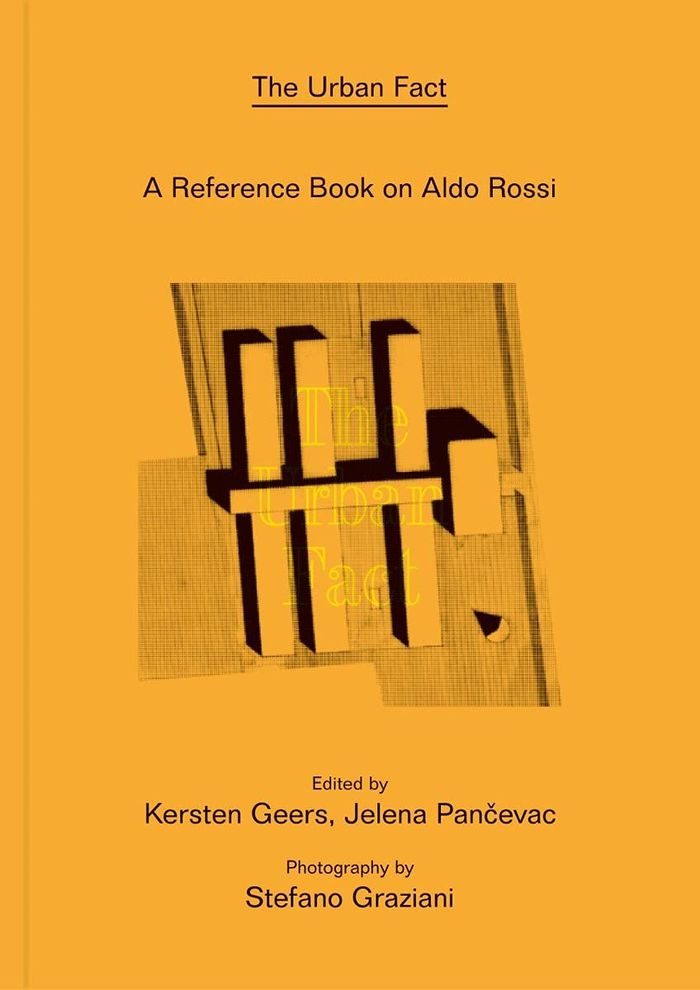
Aldo Rossi: The urban fact
Aldo Rossi: The urban fact
Actions:
Price:
$88.00
(available to order)
Summary:
The great Italian architect, designer, theorist and printmaker Aldo Rossi (1931–97) galvanized the postmodernist architectural movement in the middle of the 20th century with his unique synthesis of influences such as Adolf Loos, Giorgio de Chirico and Soviet architecture. From his publication Architecture of the City (1966) to his 1976 exhibition Analogous City, Rossi(...)
$88.00
(available to order)
Summary:
The great Italian architect, designer, theorist and printmaker Aldo Rossi (1931–97) galvanized the postmodernist architectural movement in the middle of the 20th century with his unique synthesis of influences such as Adolf Loos, Giorgio de Chirico and Soviet architecture. From his publication Architecture of the City (1966) to his 1976 exhibition Analogous City, Rossi(...)
Subject:
Architecture Monographs
Architecture Monographs
Publication:
November 2021
November 2021
Title:
Aldo Rossi: The urban fact
Actions:
Price:
$88.00
(available to order)
Summary:
The great Italian architect, designer, theorist and printmaker Aldo Rossi (1931–97) galvanized the postmodernist architectural movement in the middle of the 20th century with his unique synthesis of influences such as Adolf Loos, Giorgio de Chirico and Soviet architecture. From his publication Architecture of the City (1966) to his 1976 exhibition Analogous City, Rossi spent a decade developing a theory of urban design that focused on the “collective memory” of a city as an essential element of its urban planning and gave consideration to how buildings and urban areas age over time. Here, Rossi’s theory is applied to his own works from that period, both built and unbuilt, in a careful selection of 23 projects that express this memory-based paradigm of civic existence and construction. Aldo Rossi: The Urban Fact thus unifies Rossi’s theory and practice, demonstrating the visionary dimension driving his singular brand of postmodernism.
Aldo Rossi: The urban fact
Actions:
Price:
$88.00
(available to order)
Summary:
The great Italian architect, designer, theorist and printmaker Aldo Rossi (1931–97) galvanized the postmodernist architectural movement in the middle of the 20th century with his unique synthesis of influences such as Adolf Loos, Giorgio de Chirico and Soviet architecture. From his publication Architecture of the City (1966) to his 1976 exhibition Analogous City, Rossi spent a decade developing a theory of urban design that focused on the “collective memory” of a city as an essential element of its urban planning and gave consideration to how buildings and urban areas age over time. Here, Rossi’s theory is applied to his own works from that period, both built and unbuilt, in a careful selection of 23 projects that express this memory-based paradigm of civic existence and construction. Aldo Rossi: The Urban Fact thus unifies Rossi’s theory and practice, demonstrating the visionary dimension driving his singular brand of postmodernism.
Form:
books
books
Publication:
November 2021
November 2021
Subject:
Architecture Monographs
Architecture Monographs
Form:
books
books
Actions:
Holdings:
Description:
208 pages : illustrations (some color), plans ; 33 cm.
Description:
208 pages : illustrations (some color), plans ; 33 cm.
Author:
Subject:
Publication:
Zurich : Park Books, ©2012.
Zurich : Park Books, ©2012.
Title:
Typology : Hong Kong, Rome, New York, Buenos Aires / [editors, Emanuel Christ, Victoria Easton, Christoph Gantenbein ; translations, David Koralek, Marina Mercer, Paul Blackmore].
Actions:
Holdings:
Description:
208 pages : illustrations (some color), plans ; 33 cm.
Typology : Hong Kong, Rome, New York, Buenos Aires / [editors, Emanuel Christ, Victoria Easton, Christoph Gantenbein ; translations, David Koralek, Marina Mercer, Paul Blackmore].
Actions:
Holdings:
Description:
208 pages : illustrations (some color), plans ; 33 cm.
Form:
books
books
Publication:
Zurich : Park Books, ©2012.
Zurich : Park Books, ©2012.
Author:
Subject:
Form:
books
books
Holdings:
Description:
180 pages : illustrations ; 29 cm
Description:
180 pages : illustrations ; 29 cm
Author:
Subject:
Publication:
[London] : MACK, [2023], ©2023
[London] : MACK, [2023], ©2023
Title:
Grundkurs : what is architecture about? / Pier Paolo Tamburelli.
Actions:
Holdings:
Description:
180 pages : illustrations ; 29 cm
Grundkurs : what is architecture about? / Pier Paolo Tamburelli.
Actions:
Holdings:
Description:
180 pages : illustrations ; 29 cm
Form:
books
books
Publication:
[London] : MACK, [2023], ©2023
[London] : MACK, [2023], ©2023
Author:
Subject:
Form:
books
books
Actions:
Price:
$30.00
(available to order)
Summary:
Compiled here for the first time, the selected writings of Aria Dean (b. 1993, Los Angeles) mount a trenchant critique of representational systems. A visual artist and filmmaker, Dean has also emerged as one of the leading critical voices of her generation through a body of writing that maps the forces of aesthetic theory, image regimes, and visibility onto questions of(...)
$30.00
(available to order)
Summary:
Compiled here for the first time, the selected writings of Aria Dean (b. 1993, Los Angeles) mount a trenchant critique of representational systems. A visual artist and filmmaker, Dean has also emerged as one of the leading critical voices of her generation through a body of writing that maps the forces of aesthetic theory, image regimes, and visibility onto questions of(...)
Title:
Bad infinity: Selected writings
Actions:
Price:
$30.00
(available to order)
Summary:
Compiled here for the first time, the selected writings of Aria Dean (b. 1993, Los Angeles) mount a trenchant critique of representational systems. A visual artist and filmmaker, Dean has also emerged as one of the leading critical voices of her generation through a body of writing that maps the forces of aesthetic theory, image regimes, and visibility onto questions of race and power. Dean’s work across media has long been defined by what she calls a “fixation on the subject and its borders,” and the texts collected here filter that inquiry through digital networks, art history, and Black radical thought. Equally at home discussing artists who embrace difficulty—from Robert Morris to David Hammons, Lorna Simpson, and Ulysses Jenkins—and conceptual frameworks such as Afropessimism, Dean often contends with how theoretical positions brush against the grain of lived reality: how the Structuralism handed down from the academy, for instance, can be commingled with critiques of structural racism, or how Georges Bataille’s notion of base matter transforms through an encounter with Blackness.
Bad infinity: Selected writings
Actions:
Price:
$30.00
(available to order)
Summary:
Compiled here for the first time, the selected writings of Aria Dean (b. 1993, Los Angeles) mount a trenchant critique of representational systems. A visual artist and filmmaker, Dean has also emerged as one of the leading critical voices of her generation through a body of writing that maps the forces of aesthetic theory, image regimes, and visibility onto questions of race and power. Dean’s work across media has long been defined by what she calls a “fixation on the subject and its borders,” and the texts collected here filter that inquiry through digital networks, art history, and Black radical thought. Equally at home discussing artists who embrace difficulty—from Robert Morris to David Hammons, Lorna Simpson, and Ulysses Jenkins—and conceptual frameworks such as Afropessimism, Dean often contends with how theoretical positions brush against the grain of lived reality: how the Structuralism handed down from the academy, for instance, can be commingled with critiques of structural racism, or how Georges Bataille’s notion of base matter transforms through an encounter with Blackness.
Form:
books
books
Publication:
May 2023
May 2023
Subject:
Art Theory
Art Theory
Form:
books
books

Actions:
Price:
$25.00
(available in store)
Summary:
What makes a good listener? There are a number of commonsensical ideas about what constitutes doing it well — patience, tolerance, availability, responsiveness, lack of moral judgement — but is it really so simple? Is it a skill one can easily learn or more of a quirk or talent? And why do some people seem to be so much better at it than others? Written by a psychoanalyst(...)
$25.00
(available in store)
Summary:
What makes a good listener? There are a number of commonsensical ideas about what constitutes doing it well — patience, tolerance, availability, responsiveness, lack of moral judgement — but is it really so simple? Is it a skill one can easily learn or more of a quirk or talent? And why do some people seem to be so much better at it than others? Written by a psychoanalyst(...)
Title:
Uneasy listening: notes on hearing and being heard
Actions:
Price:
$25.00
(available in store)
Summary:
What makes a good listener? There are a number of commonsensical ideas about what constitutes doing it well — patience, tolerance, availability, responsiveness, lack of moral judgement — but is it really so simple? Is it a skill one can easily learn or more of a quirk or talent? And why do some people seem to be so much better at it than others? Written by a psychoanalyst and a violin maker, Uneasy Listening is a dialogue between two very different kinds of professional listener: the former working with speech, the latter with musical instruments. Beginning as total strangers, Anouchka Grose and Robert Brewer Young embark on an engaging, entertaining, and winding meditation on communication that weaves together wide-ranging references from across psychoanalytic theory, philosophy, contemporary politics and culture. As they discuss the differences, similarities, and resonances between their practices, they run up against some of the illuminating difficulties of dialogue itself. The result is a kind of awkward duet in which two thinkers and practitioners accommodate, interrupt, and perplex each other in an attempt to say something about what listening means.
Uneasy listening: notes on hearing and being heard
Actions:
Price:
$25.00
(available in store)
Summary:
What makes a good listener? There are a number of commonsensical ideas about what constitutes doing it well — patience, tolerance, availability, responsiveness, lack of moral judgement — but is it really so simple? Is it a skill one can easily learn or more of a quirk or talent? And why do some people seem to be so much better at it than others? Written by a psychoanalyst and a violin maker, Uneasy Listening is a dialogue between two very different kinds of professional listener: the former working with speech, the latter with musical instruments. Beginning as total strangers, Anouchka Grose and Robert Brewer Young embark on an engaging, entertaining, and winding meditation on communication that weaves together wide-ranging references from across psychoanalytic theory, philosophy, contemporary politics and culture. As they discuss the differences, similarities, and resonances between their practices, they run up against some of the illuminating difficulties of dialogue itself. The result is a kind of awkward duet in which two thinkers and practitioners accommodate, interrupt, and perplex each other in an attempt to say something about what listening means.
Form:
books
books
Publication:
June 2022
June 2022
Subject:
Critical Theory
Critical Theory
Form:
books
books
Title:
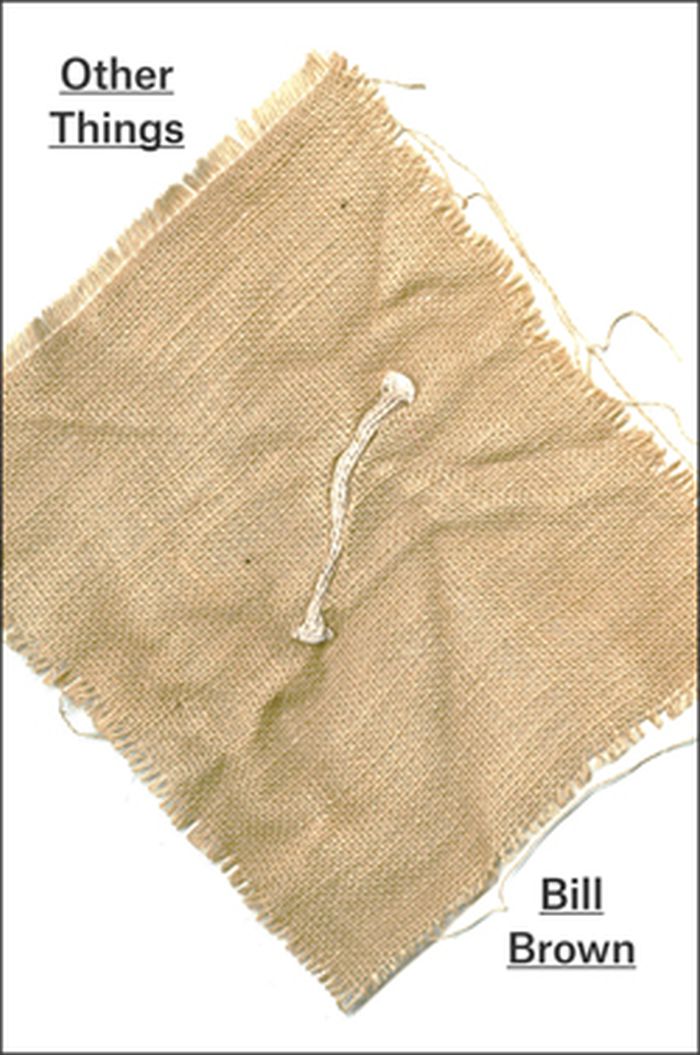
Other things
Other things
Actions:
Price:
$59.95
(available to order)
Summary:
From the pencil to the puppet to the drone, the humanities and the social sciences continue to ride a wave of interest in material culture and the world of things. How should we understand the force and figure of that wave as it shapes different disciplines? Other Things explores this question by considering a wide assortment of objects—from beach glass to cell phones,(...)
$59.95
(available to order)
Summary:
From the pencil to the puppet to the drone, the humanities and the social sciences continue to ride a wave of interest in material culture and the world of things. How should we understand the force and figure of that wave as it shapes different disciplines? Other Things explores this question by considering a wide assortment of objects—from beach glass to cell phones,(...)
Title:
Other things
Actions:
Price:
$59.95
(available to order)
Summary:
From the pencil to the puppet to the drone, the humanities and the social sciences continue to ride a wave of interest in material culture and the world of things. How should we understand the force and figure of that wave as it shapes different disciplines? Other Things explores this question by considering a wide assortment of objects—from beach glass to cell phones, sneakers to skyscrapers—that have fascinated a range of writers and artists, including Virginia Woolf, Man Ray, Spike Lee, and Don DeLillo. The book ranges across the literary, visual, and plastic arts to depict the curious lives of things. Beginning with Achilles’s Shield, then tracking the object/thing distinction as it appears in the work of Martin Heidegger and Jacques Lacan, Bill Brown ultimately focuses on the thingness disclosed by specific literary and artistic works. Combining history and literature, criticism and theory, Other Things provides a new way of understanding the inanimate object world and the place of the human within it, encouraging us to think anew about what we mean by materiality itself.
Other things
Actions:
Price:
$59.95
(available to order)
Summary:
From the pencil to the puppet to the drone, the humanities and the social sciences continue to ride a wave of interest in material culture and the world of things. How should we understand the force and figure of that wave as it shapes different disciplines? Other Things explores this question by considering a wide assortment of objects—from beach glass to cell phones, sneakers to skyscrapers—that have fascinated a range of writers and artists, including Virginia Woolf, Man Ray, Spike Lee, and Don DeLillo. The book ranges across the literary, visual, and plastic arts to depict the curious lives of things. Beginning with Achilles’s Shield, then tracking the object/thing distinction as it appears in the work of Martin Heidegger and Jacques Lacan, Bill Brown ultimately focuses on the thingness disclosed by specific literary and artistic works. Combining history and literature, criticism and theory, Other Things provides a new way of understanding the inanimate object world and the place of the human within it, encouraging us to think anew about what we mean by materiality itself.
Form:
books
books
Publication:
November 2015
November 2015
Subject:
Design Theory
Design Theory
Form:
books
books

Price:
$35.95
(available in store)
Summary:
No other art movement has so profoundly influenced radical politics as the Situationist International. But beyond the clichés about its purported leader Guy Debord, the "society of the spectacle," détournement and dérive, lies a more complex story about key historical shifts in the composition of capital, work, labor, art, and revolutionary theory during the 1950s and(...)
$35.95
(available in store)
Summary:
No other art movement has so profoundly influenced radical politics as the Situationist International. But beyond the clichés about its purported leader Guy Debord, the "society of the spectacle," détournement and dérive, lies a more complex story about key historical shifts in the composition of capital, work, labor, art, and revolutionary theory during the 1950s and(...)
Title:
With and against: TheSituationist International in the age of automation
Actions:
Price:
$35.95
(available in store)
Summary:
No other art movement has so profoundly influenced radical politics as the Situationist International. But beyond the clichés about its purported leader Guy Debord, the "society of the spectacle," détournement and dérive, lies a more complex story about key historical shifts in the composition of capital, work, labor, art, and revolutionary theory during the 1950s and 60s. ''With and Against'' reframes the history of the Situationist International as a struggle to come to terms with the then-emerging ideologies of cybernetics and automation. Through each of the book's four chapters, Dominique Routhier dissects Situationist pamphlets, documents, artworks, and objects that refract elements of a "cybernetic hypothesis": the theoretically hyperbolic belief that technological progress, computers and automation make class struggle and the idea of revolution obsolete. With equal attention to aesthetic detail and to the broader contours of political economy, this book serves as a critical intervention in art history as well a call to reconsider, more broadly, the contemporary lessons of the most political of all artistic avantgardes.
With and against: TheSituationist International in the age of automation
Actions:
Price:
$35.95
(available in store)
Summary:
No other art movement has so profoundly influenced radical politics as the Situationist International. But beyond the clichés about its purported leader Guy Debord, the "society of the spectacle," détournement and dérive, lies a more complex story about key historical shifts in the composition of capital, work, labor, art, and revolutionary theory during the 1950s and 60s. ''With and Against'' reframes the history of the Situationist International as a struggle to come to terms with the then-emerging ideologies of cybernetics and automation. Through each of the book's four chapters, Dominique Routhier dissects Situationist pamphlets, documents, artworks, and objects that refract elements of a "cybernetic hypothesis": the theoretically hyperbolic belief that technological progress, computers and automation make class struggle and the idea of revolution obsolete. With equal attention to aesthetic detail and to the broader contours of political economy, this book serves as a critical intervention in art history as well a call to reconsider, more broadly, the contemporary lessons of the most political of all artistic avantgardes.
Form:
books
books
Publication:
October 2023
October 2023
Subject:
Critical Theory
Critical Theory


