


5778 Results
Form:
books
books
Actions:
Price:
$56.50
(available to order)
Summary:
Landscape ecology focuses on spatial heterogeneity, or the idea that where things are and where they are in relation to other things can have important consequences for a wide range of phenomena. Landscape ecology integrates humans with natural ecosystems and brings a spatial perspective to such fields as natural resource management, conservation, and urban planning.(...)
$56.50
(available to order)
Summary:
Landscape ecology focuses on spatial heterogeneity, or the idea that where things are and where they are in relation to other things can have important consequences for a wide range of phenomena. Landscape ecology integrates humans with natural ecosystems and brings a spatial perspective to such fields as natural resource management, conservation, and urban planning.(...)
Subject:
Landscape Theory
Landscape Theory
Publication:
September 2006, New York / Chichester
September 2006, New York / Chichester
Title:
Foundation papers in landscape ecology
Actions:
Price:
$56.50
(available to order)
Summary:
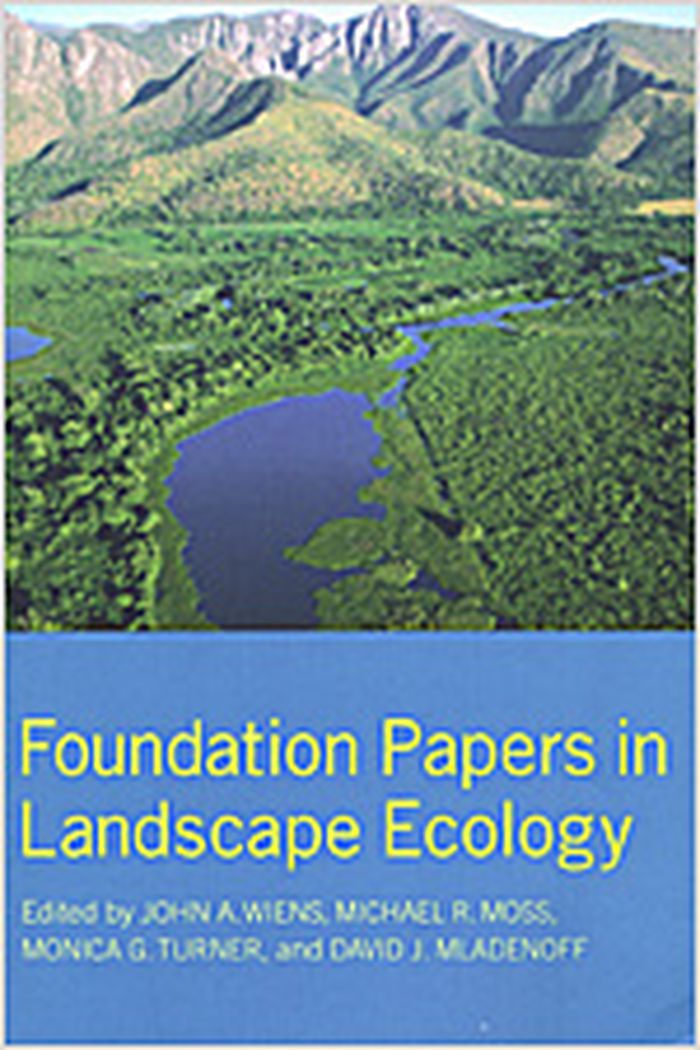
Landscape ecology focuses on spatial heterogeneity, or the idea that where things are and where they are in relation to other things can have important consequences for a wide range of phenomena. Landscape ecology integrates humans with natural ecosystems and brings a spatial perspective to such fields as natural resource management, conservation, and urban planning. The thirty-seven papers included in this volume present the origins and development of landscape ecology and encompass a variety of perspectives, approaches, and geographies. The editors begin with articles that illuminate the discipline's diverse scientific foundations, such as L. S. Berg's keystone paper outlining a geoecological analysis based on soil science, physical geography, and geology. Next they include selections exemplifying landscape ecologists' growing awareness of spatial pattern, the different ways they incorporated scale into their work, the progression of landscape ecology from a qualitative to a quantitative discipline, and how concepts from landscape ecology have come to permeate ecological research and influence land-use policy, conservation practices, landscape architecture, and geography. Together these articles provide a solid introduction to what is now widely recognized as an important area of research and application that encourages new ways of thinking about natural and human-dominated ecosystems.
Foundation papers in landscape ecology
Actions:
Price:
$56.50
(available to order)
Summary:
Landscape ecology focuses on spatial heterogeneity, or the idea that where things are and where they are in relation to other things can have important consequences for a wide range of phenomena. Landscape ecology integrates humans with natural ecosystems and brings a spatial perspective to such fields as natural resource management, conservation, and urban planning. The thirty-seven papers included in this volume present the origins and development of landscape ecology and encompass a variety of perspectives, approaches, and geographies. The editors begin with articles that illuminate the discipline's diverse scientific foundations, such as L. S. Berg's keystone paper outlining a geoecological analysis based on soil science, physical geography, and geology. Next they include selections exemplifying landscape ecologists' growing awareness of spatial pattern, the different ways they incorporated scale into their work, the progression of landscape ecology from a qualitative to a quantitative discipline, and how concepts from landscape ecology have come to permeate ecological research and influence land-use policy, conservation practices, landscape architecture, and geography. Together these articles provide a solid introduction to what is now widely recognized as an important area of research and application that encourages new ways of thinking about natural and human-dominated ecosystems.
Form:
books
books
Publication:
September 2006, New York / Chichester
September 2006, New York / Chichester
Subject:
Landscape Theory
Landscape Theory
Form:
books
books
Price:
$48.00
(available in store)
Summary:
Idealized representations of America, as both an aspiration and a menace, played an important role in shaping Russian architecture and urban design from the American Revolution until the fall of the Soviet Union. In Building a new New World, Jean-Louis Cohen traces the concept of “Amerikanizm” and its impact on Russia’s built environment from early czarist interest in(...)
$48.00
(available in store)
Summary:
Idealized representations of America, as both an aspiration and a menace, played an important role in shaping Russian architecture and urban design from the American Revolution until the fall of the Soviet Union. In Building a new New World, Jean-Louis Cohen traces the concept of “Amerikanizm” and its impact on Russia’s built environment from early czarist interest in(...)
Title:
Building a new New World: Amerikanizm in Russian Architecture
Actions:
Price:
$48.00
(available in store)
Summary:
Idealized representations of America, as both an aspiration and a menace, played an important role in shaping Russian architecture and urban design from the American Revolution until the fall of the Soviet Union. In Building a new New World, Jean-Louis Cohen traces the concept of “Amerikanizm” and its impact on Russia’s built environment from early czarist interest in Revolutionary America, through the spectacular World’s Fairs of the nineteenth century, to department stores, skyscrapers, and factories built in Russia using American methods during the twentieth century. Visions of America also captivated the Russian avant-garde, from El Lissitzky to Moisei Ginzburg, and Cohen explores the ongoing artistic dialogue maintained between the two countries at the mid-century and in the late Soviet era, when the Cold War induced a strategic competition. Tracing the many journeys of Russian writers, politicians, and planners through the American territory, foregrounding the constant streams of cultural and technological transfer from the U.S.A. to Russia, and revealing the parallel fascination among Russian and American intellectuals with the ongoing pursuit of land occupation and development within their respective borders, this study of Amerikanizm in the architecture and urban design of Russia makes a timely contribution to our understanding of modern architecture and its broader geopolitics.
Building a new New World: Amerikanizm in Russian Architecture
Actions:
Price:
$48.00
(available in store)
Summary:
Idealized representations of America, as both an aspiration and a menace, played an important role in shaping Russian architecture and urban design from the American Revolution until the fall of the Soviet Union. In Building a new New World, Jean-Louis Cohen traces the concept of “Amerikanizm” and its impact on Russia’s built environment from early czarist interest in Revolutionary America, through the spectacular World’s Fairs of the nineteenth century, to department stores, skyscrapers, and factories built in Russia using American methods during the twentieth century. Visions of America also captivated the Russian avant-garde, from El Lissitzky to Moisei Ginzburg, and Cohen explores the ongoing artistic dialogue maintained between the two countries at the mid-century and in the late Soviet era, when the Cold War induced a strategic competition. Tracing the many journeys of Russian writers, politicians, and planners through the American territory, foregrounding the constant streams of cultural and technological transfer from the U.S.A. to Russia, and revealing the parallel fascination among Russian and American intellectuals with the ongoing pursuit of land occupation and development within their respective borders, this study of Amerikanizm in the architecture and urban design of Russia makes a timely contribution to our understanding of modern architecture and its broader geopolitics.
Form:
books
books
Publication:
December 2019
December 2019
Subject:
CCA Publications
CCA Publications
Form:
books
books
Title:
Blind maps and blue dots: the blurring of the producer-user divide in the production of visual
Blind maps and blue dots: the blurring of the producer-user divide in the production of visual
Actions:
Price:
$56.00
(available to order)
Summary:
Mapmaking has been an essential part of human development since ancient times: through the art of cartography, people have been able to record geographical explorations and communicate spatial information in relation to themselves and the land around them, using fixed points and lived experiences as references. In the digital age, maps are just as likely to convey the(...)
$56.00
(available to order)
Summary:
Mapmaking has been an essential part of human development since ancient times: through the art of cartography, people have been able to record geographical explorations and communicate spatial information in relation to themselves and the land around them, using fixed points and lived experiences as references. In the digital age, maps are just as likely to convey the(...)
Title:
Blind maps and blue dots: the blurring of the producer-user divide in the production of visual
Actions:
Price:
$56.00
(available to order)
Summary:
Mapmaking has been an essential part of human development since ancient times: through the art of cartography, people have been able to record geographical explorations and communicate spatial information in relation to themselves and the land around them, using fixed points and lived experiences as references. In the digital age, maps are just as likely to convey the relationships between individual users and amorphous data as they are to depict the relationships between human beings and the stars and planets above. "Blind maps and blue dots" examines the impact of the omnipresent computer on current understandings of data visualization and graphic design, in which the boundaries between producers and users of maps has become increasingly blurred. This text is structured around three contemporary mapmaking practices: Google Maps' location function, referred to as the Blue Dot; a global map that displays the physical activity of users of the fitness app Strava; and the 'Situation in Syria' maps series, a regularly updated map of the Syrian conflict designed by an Amsterdam teenager. Like every other field, graphic design must evolve to reflect the modern world and the needs of its people. "Blind maps and blue dots" offers a new approach that acknowledges and even encourages the breakdown of the binary between producer and user.
Blind maps and blue dots: the blurring of the producer-user divide in the production of visual
Actions:
Price:
$56.00
(available to order)
Summary:
Mapmaking has been an essential part of human development since ancient times: through the art of cartography, people have been able to record geographical explorations and communicate spatial information in relation to themselves and the land around them, using fixed points and lived experiences as references. In the digital age, maps are just as likely to convey the relationships between individual users and amorphous data as they are to depict the relationships between human beings and the stars and planets above. "Blind maps and blue dots" examines the impact of the omnipresent computer on current understandings of data visualization and graphic design, in which the boundaries between producers and users of maps has become increasingly blurred. This text is structured around three contemporary mapmaking practices: Google Maps' location function, referred to as the Blue Dot; a global map that displays the physical activity of users of the fitness app Strava; and the 'Situation in Syria' maps series, a regularly updated map of the Syrian conflict designed by an Amsterdam teenager. Like every other field, graphic design must evolve to reflect the modern world and the needs of its people. "Blind maps and blue dots" offers a new approach that acknowledges and even encourages the breakdown of the binary between producer and user.
Form:
books
books
Publication:
June 2021
June 2021
Subject:
Graphic Design and Typography
Graphic Design and Typography
Form:
books
books
Actions:
Price:
$55.00
(available to order)
Summary:
Photographer Mariana Cook (born 1955) is best known for her intimate character studies of persons both in and out of the public eye, as published in her much-acclaimed collections "Fathers and Daughters, Mothers and Sons, Generations of Women, Couples, Faces of Science and Mathematicians." Cook departs from her portrait work with "Stone Walls: Personal Boundaries", a(...)
$55.00
(available to order)
Summary:
Photographer Mariana Cook (born 1955) is best known for her intimate character studies of persons both in and out of the public eye, as published in her much-acclaimed collections "Fathers and Daughters, Mothers and Sons, Generations of Women, Couples, Faces of Science and Mathematicians." Cook departs from her portrait work with "Stone Walls: Personal Boundaries", a(...)
Title:
Stone walls: personal boundaries
Actions:
Price:
$55.00
(available to order)
Summary:
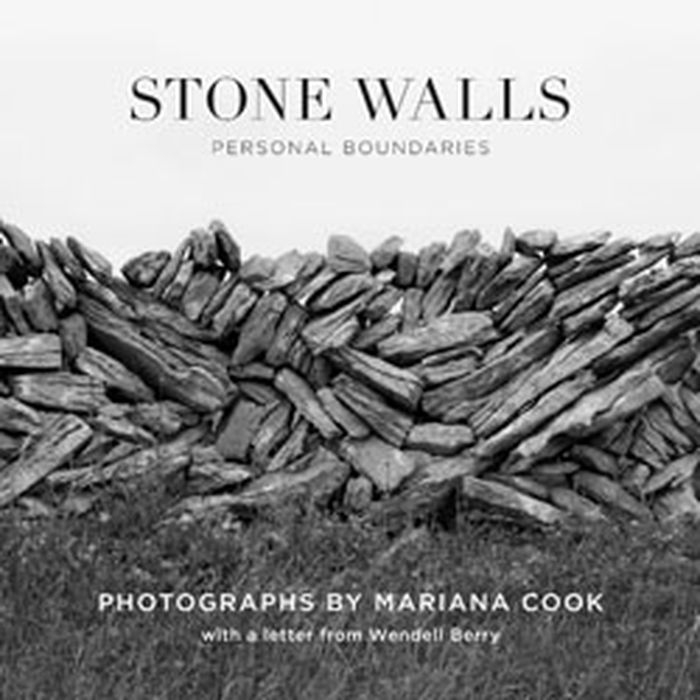
Photographer Mariana Cook (born 1955) is best known for her intimate character studies of persons both in and out of the public eye, as published in her much-acclaimed collections "Fathers and Daughters, Mothers and Sons, Generations of Women, Couples, Faces of Science and Mathematicians." Cook departs from her portrait work with "Stone Walls: Personal Boundaries", a project that was conceived one day at her home on Martha's Vineyard, when 56 cows strayed through a crumbling section of the stone wall she shares with her neighbor. From this moment, Cook embarked on an eight-year journey, travelling from New England to the American South, Britain, Ireland, the Mediterranean and Peru in pursuit of dry stone walls. Far from being a conventional travelogue, these black-and-white photographs portray the wall in landscape, the wall as abstract form, and the return of rocks to nature. Cook is fascinated with the juxtaposition of stones as an instance of geometric composition, as well as with the resonance between walls of different cultures. With a tribute from Wendell Berry and essays providing a context for the walls of each region, the resulting collection captures a fundamental aspect of the relationship human beings forge with the land they inhabit.
Stone walls: personal boundaries
Actions:
Price:
$55.00
(available to order)
Summary:
Photographer Mariana Cook (born 1955) is best known for her intimate character studies of persons both in and out of the public eye, as published in her much-acclaimed collections "Fathers and Daughters, Mothers and Sons, Generations of Women, Couples, Faces of Science and Mathematicians." Cook departs from her portrait work with "Stone Walls: Personal Boundaries", a project that was conceived one day at her home on Martha's Vineyard, when 56 cows strayed through a crumbling section of the stone wall she shares with her neighbor. From this moment, Cook embarked on an eight-year journey, travelling from New England to the American South, Britain, Ireland, the Mediterranean and Peru in pursuit of dry stone walls. Far from being a conventional travelogue, these black-and-white photographs portray the wall in landscape, the wall as abstract form, and the return of rocks to nature. Cook is fascinated with the juxtaposition of stones as an instance of geometric composition, as well as with the resonance between walls of different cultures. With a tribute from Wendell Berry and essays providing a context for the walls of each region, the resulting collection captures a fundamental aspect of the relationship human beings forge with the land they inhabit.
Form:
books
books
Publication:
September 2011
September 2011
Subject:
Photography monographs
Photography monographs
Form:
books
books
Price:
$28.95
(available to order)
Summary:
Nature, as both subject and object, has been repeatedly rejected and reclaimed by artists over the last half century. With the dislocation of disciplinary boundaries in visual culture, art that is engaged with nature has also forged connections with a new range of scientific, historical, and philosophical ideas. Developing technologies make our interventions into natural(...)
$28.95
(available to order)
Summary:
Nature, as both subject and object, has been repeatedly rejected and reclaimed by artists over the last half century. With the dislocation of disciplinary boundaries in visual culture, art that is engaged with nature has also forged connections with a new range of scientific, historical, and philosophical ideas. Developing technologies make our interventions into natural(...)
Title:
Nature
Actions:
Price:
$28.95
(available to order)
Summary:
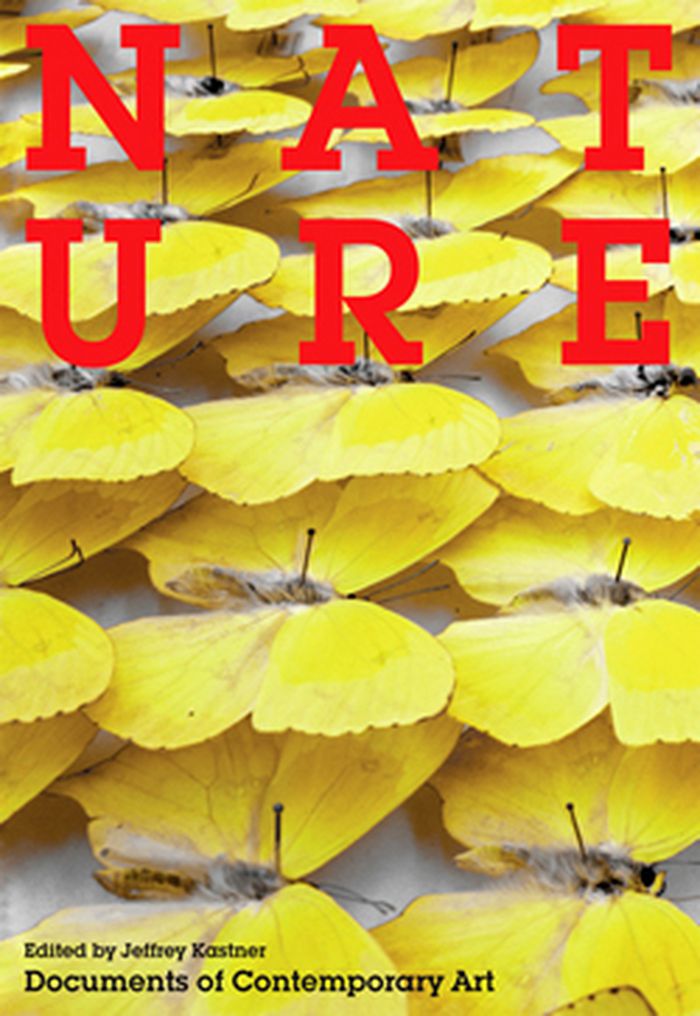
Nature, as both subject and object, has been repeatedly rejected and reclaimed by artists over the last half century. With the dislocation of disciplinary boundaries in visual culture, art that is engaged with nature has also forged connections with a new range of scientific, historical, and philosophical ideas. Developing technologies make our interventions into natural systems both increasingly refined and profound. Advances in biological and telecommunication technology continually modify the way we present ourselves. So too are artistic representations of nature (human and otherwise) being transformed. This anthology addresses these issues by considering how the rise of transdisciplinary practices in the postwar era allowed for new kinds of artistic engagement with nature. These include the postminimalist inscriptions associated with Land art; environmentally engaged practices designed to propose novel forms of stewardship; and more recent projects concerned with relationships between the most subtle and minute components of life and the large-scale appearance of the world. These projects unsettle the most basic operations of “natural” personhood and identity. Including a wide range of writings by and about artists, juxtaposed with influential texts from diverse theoretical bases, this collection provides an overview of the eclectic scientific and philosophical sources that inform contemporary art’s investigations of nature.
Nature
Actions:
Price:
$28.95
(available to order)
Summary:
Nature, as both subject and object, has been repeatedly rejected and reclaimed by artists over the last half century. With the dislocation of disciplinary boundaries in visual culture, art that is engaged with nature has also forged connections with a new range of scientific, historical, and philosophical ideas. Developing technologies make our interventions into natural systems both increasingly refined and profound. Advances in biological and telecommunication technology continually modify the way we present ourselves. So too are artistic representations of nature (human and otherwise) being transformed. This anthology addresses these issues by considering how the rise of transdisciplinary practices in the postwar era allowed for new kinds of artistic engagement with nature. These include the postminimalist inscriptions associated with Land art; environmentally engaged practices designed to propose novel forms of stewardship; and more recent projects concerned with relationships between the most subtle and minute components of life and the large-scale appearance of the world. These projects unsettle the most basic operations of “natural” personhood and identity. Including a wide range of writings by and about artists, juxtaposed with influential texts from diverse theoretical bases, this collection provides an overview of the eclectic scientific and philosophical sources that inform contemporary art’s investigations of nature.
Form:
books
books
Publication:
March 2012
March 2012
Subject:
Art Theory
Art Theory
Form:
books
books
Actions:
Price:
$19.95
(available to order)
Summary:
Japan today protects one-seventh of its land surface in parks, which are visited by well over a billion people each year. Parkscapes analyzes the origins, development, and distinctive features of these public spaces. Green zones were created by the government beginning in the late nineteenth century for state purposes but eventually evolved into sites of negotiation(...)
$19.95
(available to order)
Summary:
Japan today protects one-seventh of its land surface in parks, which are visited by well over a billion people each year. Parkscapes analyzes the origins, development, and distinctive features of these public spaces. Green zones were created by the government beginning in the late nineteenth century for state purposes but eventually evolved into sites of negotiation(...)
Title:
Parkscapes: green spaces in modern Japan
Actions:
Price:
$19.95
(available to order)
Summary:
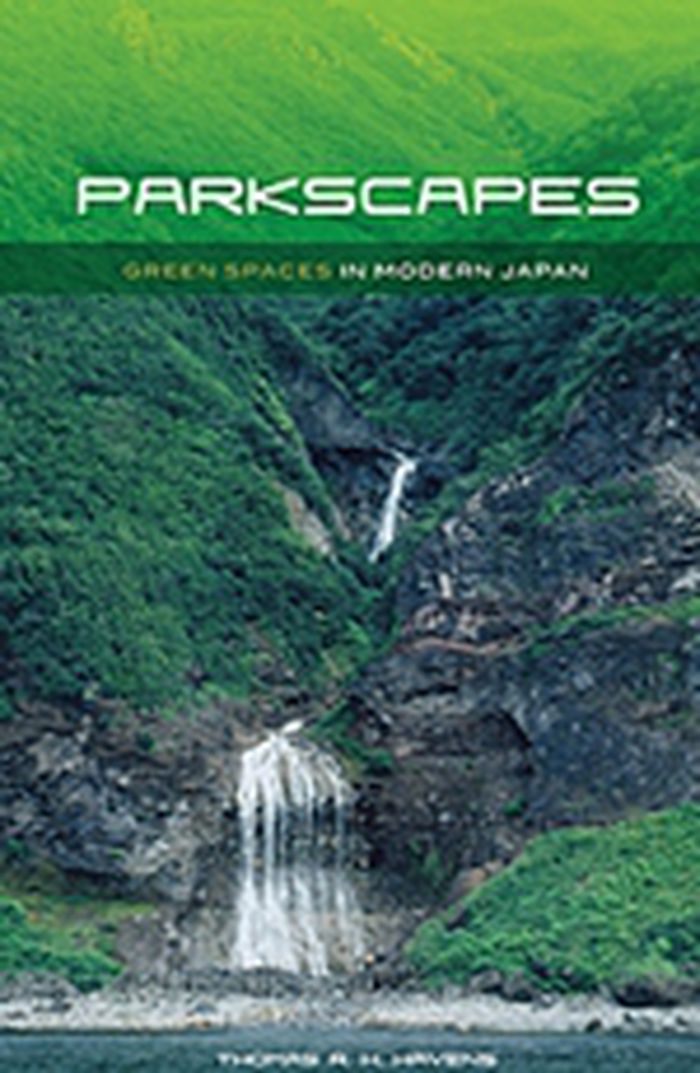
Japan today protects one-seventh of its land surface in parks, which are visited by well over a billion people each year. Parkscapes analyzes the origins, development, and distinctive features of these public spaces. Green zones were created by the government beginning in the late nineteenth century for state purposes but eventually evolved into sites of negotiation between bureaucrats and ordinary citizens who use them for demonstrations, riots, and shelters, as well as recreation. Thomas Havens shows how revolutionary officials in the 1870s seized private properties and converted them into public parks for educating and managing citizens in the new emperor-sanctioned state. Rebuilding Tokyo and Yokohama after the earthquake and fires of 1923 spurred the spread of urban parklands both in the capital and other cities. According to Havens, the growth of suburbs, the national mobilization of World War II, and the post-1945 American occupation helped speed the creation of more urban parks, setting the stage for vast increases in public green spaces during Japan’s golden age of affluence from the 1960s through the 1980s. Since the 1990s the Japanese public has embraced a heightened ecological consciousness and become deeply involved in the design and management of both city and natural parks—realms once monopolized by government bureaucrats.
Parkscapes: green spaces in modern Japan
Actions:
Price:
$19.95
(available to order)
Summary:
Japan today protects one-seventh of its land surface in parks, which are visited by well over a billion people each year. Parkscapes analyzes the origins, development, and distinctive features of these public spaces. Green zones were created by the government beginning in the late nineteenth century for state purposes but eventually evolved into sites of negotiation between bureaucrats and ordinary citizens who use them for demonstrations, riots, and shelters, as well as recreation. Thomas Havens shows how revolutionary officials in the 1870s seized private properties and converted them into public parks for educating and managing citizens in the new emperor-sanctioned state. Rebuilding Tokyo and Yokohama after the earthquake and fires of 1923 spurred the spread of urban parklands both in the capital and other cities. According to Havens, the growth of suburbs, the national mobilization of World War II, and the post-1945 American occupation helped speed the creation of more urban parks, setting the stage for vast increases in public green spaces during Japan’s golden age of affluence from the 1960s through the 1980s. Since the 1990s the Japanese public has embraced a heightened ecological consciousness and become deeply involved in the design and management of both city and natural parks—realms once monopolized by government bureaucrats.
Form:
books
books
Publication:
April 2011
April 2011
Subject:
Landscape Theory
Landscape Theory
Form:
books
books
Price:
$110.00
(available to order)
Summary:
Cet ouvrage rend compte de la naissance et du développement du livre d'artiste aux États-Unis et en Europe en relation étroite avec les avant-gardes des années...› Lire la suite soixante et soixante-dix : poésie concrète et visuelle, Fluxus, Art minimal, Art conceptuel, Arte povera, Art narratif, Land Art, art de la performance ou du happening, notamment. Parce qu'il est(...)
$110.00
(available to order)
Summary:
Cet ouvrage rend compte de la naissance et du développement du livre d'artiste aux États-Unis et en Europe en relation étroite avec les avant-gardes des années...› Lire la suite soixante et soixante-dix : poésie concrète et visuelle, Fluxus, Art minimal, Art conceptuel, Arte povera, Art narratif, Land Art, art de la performance ou du happening, notamment. Parce qu'il est(...)
Title:
Esthétique du livre d'artiste:une introduction à l'art contemporain
Actions:
Price:
$110.00
(available to order)
Summary:
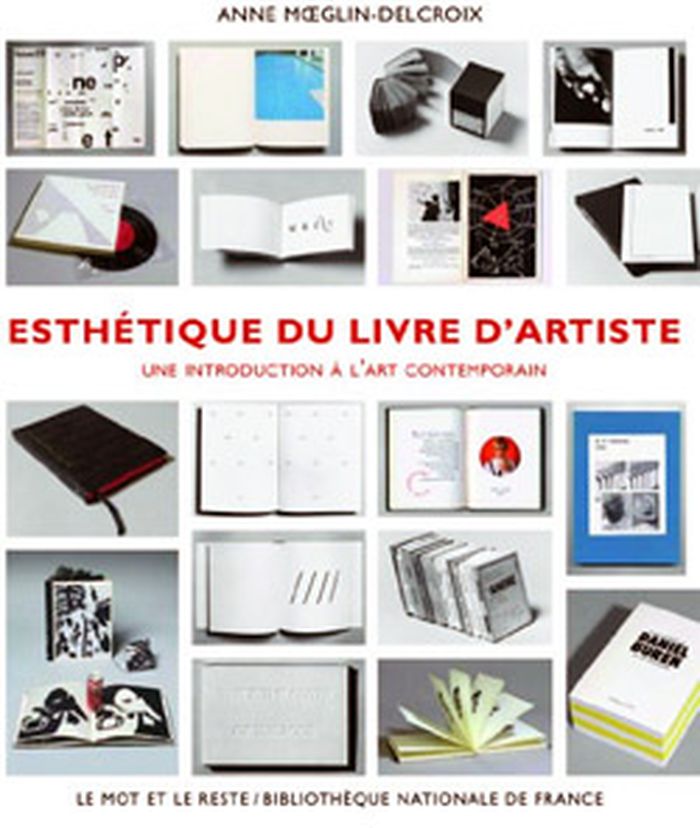
Cet ouvrage rend compte de la naissance et du développement du livre d'artiste aux États-Unis et en Europe en relation étroite avec les avant-gardes des années...› Lire la suite soixante et soixante-dix : poésie concrète et visuelle, Fluxus, Art minimal, Art conceptuel, Arte povera, Art narratif, Land Art, art de la performance ou du happening, notamment. Parce qu'il est inséparable de l'émergence de ces formes inédites de la création qui vont constituer l'art dit "contemporain", le livre d'artiste est une excellente introduction à la compréhension de ses principaux enjeux comme à la diversité de ses manifestations. Ce livre constitue la synthèse la plus large à ce jour de la production internationale. Depuis sa première édition en 1997, il s'est imposé en France et à l'étranger comme l'étude de référence sur le sujet. Pour cette nouvelle édition, le texte, mis à jour et augmenté, s'est enrichi de nombreuses reproductions. Plus de sept cents livres y sont analysés, par près de quatre cents artistes dont les pionniers Ben, Robert Barry, Christian Boltanski, Marcel Broodthaers, Herman de Vries, Robert Filliou, Ian Hamilton Finlay, Allan Kaprow, Sol LeWitt, Richard Long, Maurizio Nannucci, Dieter Roth, Edward Ruscha, Daniel Spoerri, Wolf Vostell, Lawrence Weiner.
Esthétique du livre d'artiste:une introduction à l'art contemporain
Actions:
Price:
$110.00
(available to order)
Summary:
Cet ouvrage rend compte de la naissance et du développement du livre d'artiste aux États-Unis et en Europe en relation étroite avec les avant-gardes des années...› Lire la suite soixante et soixante-dix : poésie concrète et visuelle, Fluxus, Art minimal, Art conceptuel, Arte povera, Art narratif, Land Art, art de la performance ou du happening, notamment. Parce qu'il est inséparable de l'émergence de ces formes inédites de la création qui vont constituer l'art dit "contemporain", le livre d'artiste est une excellente introduction à la compréhension de ses principaux enjeux comme à la diversité de ses manifestations. Ce livre constitue la synthèse la plus large à ce jour de la production internationale. Depuis sa première édition en 1997, il s'est imposé en France et à l'étranger comme l'étude de référence sur le sujet. Pour cette nouvelle édition, le texte, mis à jour et augmenté, s'est enrichi de nombreuses reproductions. Plus de sept cents livres y sont analysés, par près de quatre cents artistes dont les pionniers Ben, Robert Barry, Christian Boltanski, Marcel Broodthaers, Herman de Vries, Robert Filliou, Ian Hamilton Finlay, Allan Kaprow, Sol LeWitt, Richard Long, Maurizio Nannucci, Dieter Roth, Edward Ruscha, Daniel Spoerri, Wolf Vostell, Lawrence Weiner.
Form:
books
books
Publication:
June 2012
June 2012
Subject:
Printed Matter
Printed Matter
Form:
books
books
Title:
What is landscape?
What is landscape?
Actions:
Price:
$29.50
(available to order)
Summary:
Landscape, John Stilgoe tells us, is a noun. From the old Frisian language (once spoken in coastal parts of the Netherlands and Germany), it meant shoveled land: landschop. Sixteenth-century Englishmen misheard or mispronounced this as landskep, which became landskip, then landscape, designating the surface of the earth shaped for human habitation. In What Is Landscape?(...)
$29.50
(available to order)
Summary:
Landscape, John Stilgoe tells us, is a noun. From the old Frisian language (once spoken in coastal parts of the Netherlands and Germany), it meant shoveled land: landschop. Sixteenth-century Englishmen misheard or mispronounced this as landskep, which became landskip, then landscape, designating the surface of the earth shaped for human habitation. In What Is Landscape?(...)
Title:
What is landscape?
Actions:
Price:
$29.50
(available to order)
Summary:
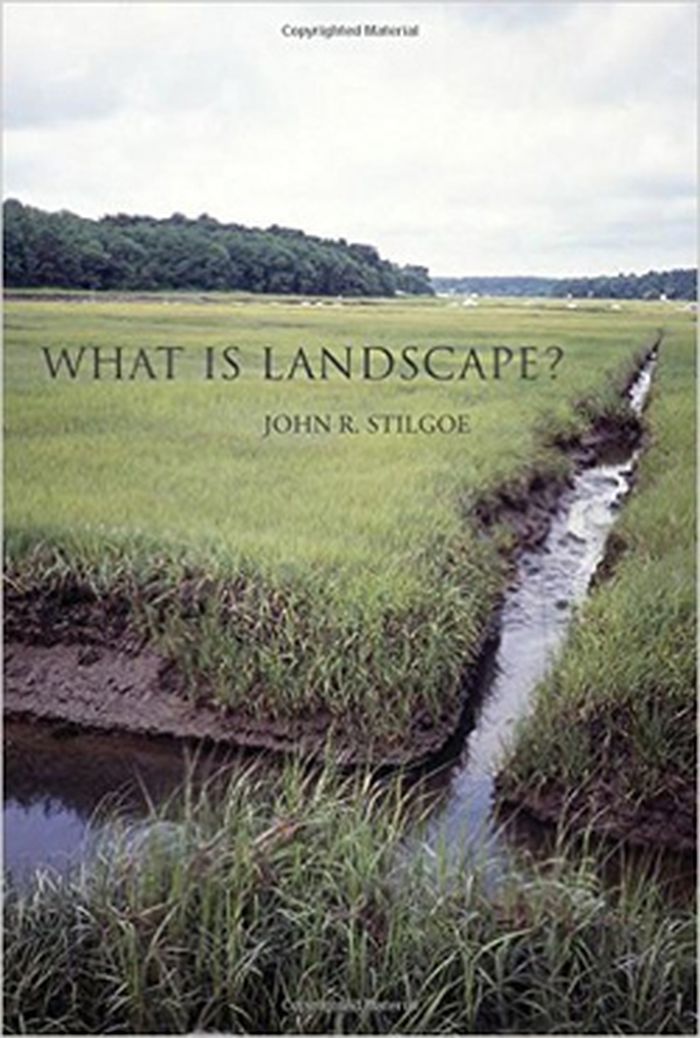
Landscape, John Stilgoe tells us, is a noun. From the old Frisian language (once spoken in coastal parts of the Netherlands and Germany), it meant shoveled land: landschop. Sixteenth-century Englishmen misheard or mispronounced this as landskep, which became landskip, then landscape, designating the surface of the earth shaped for human habitation. In What Is Landscape? Stilgoe maps the discovery of landscape by putting words to things, zeroing in on landscape’s essence but also leading sideways expeditions through such sources as children’s picture books, folklore, deeds, antique terminology, out-of-print dictionaries, and conversations with locals. (“What is that?” “Well, it’s not really a slough, not really, it’s a bayou . . .”) He offers a written narrative lexicon of landscape as word, concept, and path to discoveries. What Is Landscape? is an invitation to walk, to notice, to ask: to see a sandcastle with a pinwheel at the beach and think of Dutch windmills—icons of triumph, markers of territory won from the sea; to walk in the woods and be amused by the Elizabethans’ misuse of the Latin silvaticus (people of the woods) to coin the word savages; to see in a suburban front lawn a representation of the meadow of a medieval freehold.
What is landscape?
Actions:
Price:
$29.50
(available to order)
Summary:
Landscape, John Stilgoe tells us, is a noun. From the old Frisian language (once spoken in coastal parts of the Netherlands and Germany), it meant shoveled land: landschop. Sixteenth-century Englishmen misheard or mispronounced this as landskep, which became landskip, then landscape, designating the surface of the earth shaped for human habitation. In What Is Landscape? Stilgoe maps the discovery of landscape by putting words to things, zeroing in on landscape’s essence but also leading sideways expeditions through such sources as children’s picture books, folklore, deeds, antique terminology, out-of-print dictionaries, and conversations with locals. (“What is that?” “Well, it’s not really a slough, not really, it’s a bayou . . .”) He offers a written narrative lexicon of landscape as word, concept, and path to discoveries. What Is Landscape? is an invitation to walk, to notice, to ask: to see a sandcastle with a pinwheel at the beach and think of Dutch windmills—icons of triumph, markers of territory won from the sea; to walk in the woods and be amused by the Elizabethans’ misuse of the Latin silvaticus (people of the woods) to coin the word savages; to see in a suburban front lawn a representation of the meadow of a medieval freehold.
Form:
books
books
Publication:
August 2015
August 2015
Subject:
Landscape Theory
Landscape Theory
Form:
books
books
Actions:
Holdings:
Description:
xii, 262 pages, 16 unnumbered pages of plates : illustrations (some color), maps, plans ; 27 cm.
Description:
xii, 262 pages, 16 unnumbered pages of plates : illustrations (some color), maps, plans ; 27 cm.
Author:
Subject:
Publication:
Philadelphia : University of Pennsylvania Press, ©2008.
Philadelphia : University of Pennsylvania Press, ©2008.
Title:
Islamic gardens and landscapes / D. Fairchild Ruggles.
Actions:
Holdings:
Description:
xii, 262 pages, 16 unnumbered pages of plates : illustrations (some color), maps, plans ; 27 cm.
Islamic gardens and landscapes / D. Fairchild Ruggles.
Actions:
Holdings:
Description:
xii, 262 pages, 16 unnumbered pages of plates : illustrations (some color), maps, plans ; 27 cm.
Form:
books
books
Publication:
Philadelphia : University of Pennsylvania Press, ©2008.
Philadelphia : University of Pennsylvania Press, ©2008.
Author:
Subject:
Form:
books
books
Title:
Aki-wayn-zih
Aki-wayn-zih
Actions:
Price:
$27.95
(available to order)
Summary:
Members of Eli Baxter’s generation are the last of the hunting and gathering societies living on Turtle Island. They are also among the last fluent speakers of the Anishinaabay language known as Anishinaabaymowin. 'Aki-wayn-zih' is a story about the land and its spiritual relationship with the Anishinaabayg, from the beginning of their life on Miss-koh-tay-sih Minis(...)
$27.95
(available to order)
Summary:
Members of Eli Baxter’s generation are the last of the hunting and gathering societies living on Turtle Island. They are also among the last fluent speakers of the Anishinaabay language known as Anishinaabaymowin. 'Aki-wayn-zih' is a story about the land and its spiritual relationship with the Anishinaabayg, from the beginning of their life on Miss-koh-tay-sih Minis(...)
Title:
Aki-wayn-zih
Actions:
Price:
$27.95
(available to order)
Summary:
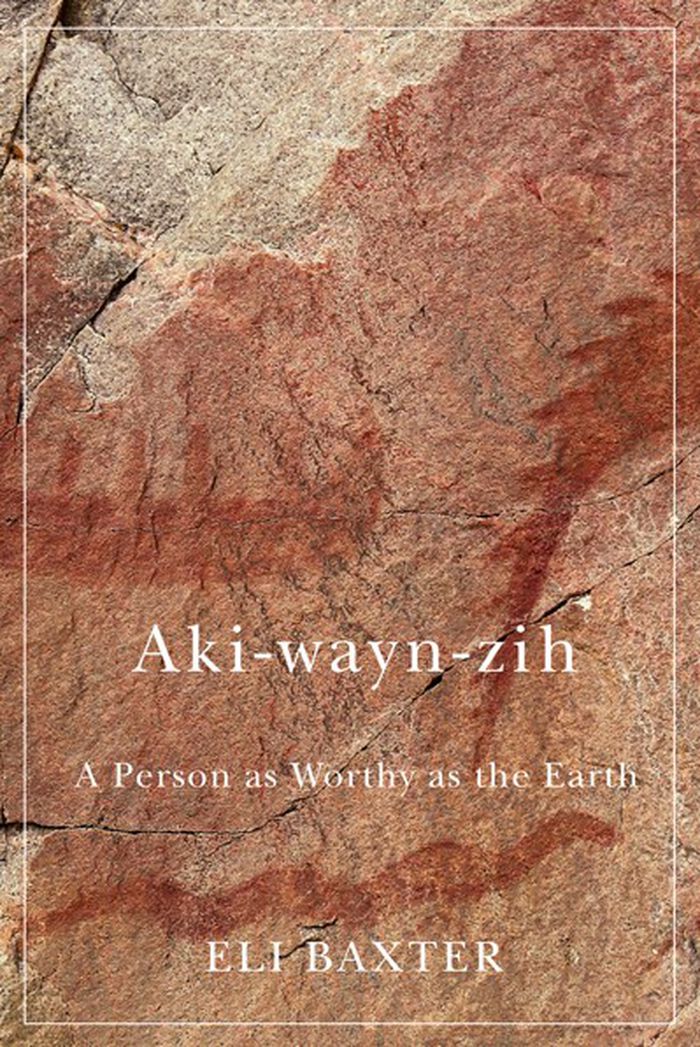
Members of Eli Baxter’s generation are the last of the hunting and gathering societies living on Turtle Island. They are also among the last fluent speakers of the Anishinaabay language known as Anishinaabaymowin. 'Aki-wayn-zih' is a story about the land and its spiritual relationship with the Anishinaabayg, from the beginning of their life on Miss-koh-tay-sih Minis (Turtle Island) to the present day. Baxter writes about Anishinaabay life before European contact, his childhood memories of trapping, hunting, and fishing with his family on traditional lands in Treaty 9 territory, and his personal experience surviving the residential school system. Examining how Anishinaabay Kih-kayn-daa-soh-win (knowledge) is an elemental concept embedded in the Anishinaabay language, 'Aki-wayn-zih' explores history, science, math, education, philosophy, law, and spiritual teachings, outlining the cultural significance of language to Anishinaabay identity. Recounting traditional Ojibway legends in their original language, fables in which moral virtues double as survival techniques, and detailed guidelines for expertly trapping or ensnaring animals, Baxter reveals how the residential school system shaped him as an individual, transformed his family, and forever disrupted his reserve community and those like it. Through spiritual teachings, historical accounts, and autobiographical anecdotes, 'Aki-wayn-zih' offers a new form of storytelling from the Anishinaabay point of view.
Aki-wayn-zih
Actions:
Price:
$27.95
(available to order)
Summary:
Members of Eli Baxter’s generation are the last of the hunting and gathering societies living on Turtle Island. They are also among the last fluent speakers of the Anishinaabay language known as Anishinaabaymowin. 'Aki-wayn-zih' is a story about the land and its spiritual relationship with the Anishinaabayg, from the beginning of their life on Miss-koh-tay-sih Minis (Turtle Island) to the present day. Baxter writes about Anishinaabay life before European contact, his childhood memories of trapping, hunting, and fishing with his family on traditional lands in Treaty 9 territory, and his personal experience surviving the residential school system. Examining how Anishinaabay Kih-kayn-daa-soh-win (knowledge) is an elemental concept embedded in the Anishinaabay language, 'Aki-wayn-zih' explores history, science, math, education, philosophy, law, and spiritual teachings, outlining the cultural significance of language to Anishinaabay identity. Recounting traditional Ojibway legends in their original language, fables in which moral virtues double as survival techniques, and detailed guidelines for expertly trapping or ensnaring animals, Baxter reveals how the residential school system shaped him as an individual, transformed his family, and forever disrupted his reserve community and those like it. Through spiritual teachings, historical accounts, and autobiographical anecdotes, 'Aki-wayn-zih' offers a new form of storytelling from the Anishinaabay point of view.
Form:
books
books
Publication:
September 2021
September 2021
Subject:
Environment and environmental theory
Environment and environmental theory


