


13794 Results
Form:
books
books
Actions:
Price:
$41.00
(available in store)
Summary:
Published for the first time in English, 'The Complete Essays 1973–1991' comprises sixty-eight texts in which Luigi Ghirri explores the same subjects at the core of his photographs – the themes of identity, time, memory, vision, representation, and sense of place. As a voracious reader with a particular taste for the eclectic, Ghirri also reaches outwards from his own(...)
$41.00
(available in store)
Summary:
Published for the first time in English, 'The Complete Essays 1973–1991' comprises sixty-eight texts in which Luigi Ghirri explores the same subjects at the core of his photographs – the themes of identity, time, memory, vision, representation, and sense of place. As a voracious reader with a particular taste for the eclectic, Ghirri also reaches outwards from his own(...)
Title:
Luigi Ghirri: the complete essays, 1973-1991
Actions:
Price:
$41.00
(available in store)
Summary:
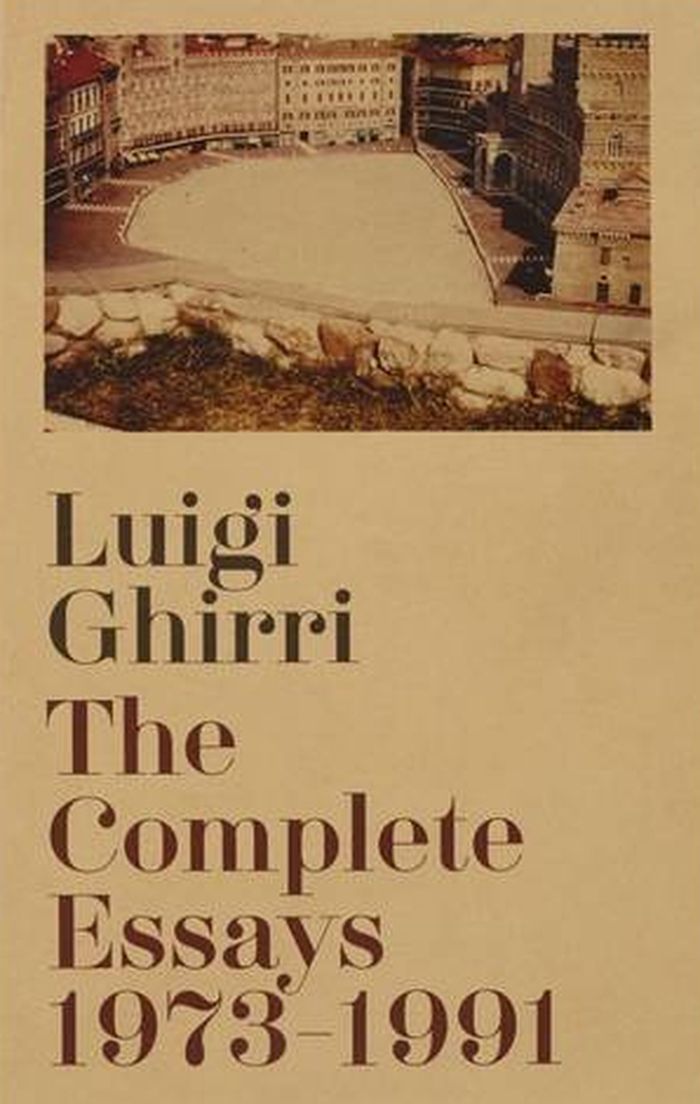
Published for the first time in English, 'The Complete Essays 1973–1991' comprises sixty-eight texts in which Luigi Ghirri explores the same subjects at the core of his photographs – the themes of identity, time, memory, vision, representation, and sense of place. As a voracious reader with a particular taste for the eclectic, Ghirri also reaches outwards from his own practice to explore the history of photography as he considers the work of Walker Evans, William Eggleston, Robert Adams and John Gossage, weaving in references to musicians, writers and painters alike. As themes and ideas overlap, the compilation of texts create a sort of dialectic chamber of curiosities that includes Gulliver, Van Gogh’s yellow house, Cézanne, Morandi’s studio, Mallarmé, the fireworks above Trani Cathedral, neo-realist films, lots of music, Francis Bacon, McLuhan’s global village, Pessoa, poetry. Together, the essays offer an unintentional yet comprehensive treatise on the history and theory of photography, and above all, they constitute a special form of autobiography.
Luigi Ghirri: the complete essays, 1973-1991
Actions:
Price:
$41.00
(available in store)
Summary:
Published for the first time in English, 'The Complete Essays 1973–1991' comprises sixty-eight texts in which Luigi Ghirri explores the same subjects at the core of his photographs – the themes of identity, time, memory, vision, representation, and sense of place. As a voracious reader with a particular taste for the eclectic, Ghirri also reaches outwards from his own practice to explore the history of photography as he considers the work of Walker Evans, William Eggleston, Robert Adams and John Gossage, weaving in references to musicians, writers and painters alike. As themes and ideas overlap, the compilation of texts create a sort of dialectic chamber of curiosities that includes Gulliver, Van Gogh’s yellow house, Cézanne, Morandi’s studio, Mallarmé, the fireworks above Trani Cathedral, neo-realist films, lots of music, Francis Bacon, McLuhan’s global village, Pessoa, poetry. Together, the essays offer an unintentional yet comprehensive treatise on the history and theory of photography, and above all, they constitute a special form of autobiography.
Form:
books
books
Publication:
July 2016
July 2016
Subject:
Theory of Photography
Theory of Photography
Form:
books
books
Actions:
Price:
$39.95
(available to order)
Summary:
"Our Voices: Indigeneity and Architecture" is an exciting advance in the field of architecture offering multiple indigenous perspectives on architecture and design theory and practice. Indigenous authors from Aotearoa NZ, Canada, Australia, and the USA explore the making and keeping of places and spaces which are informed by indigenous values and identities. The lack of(...)
$39.95
(available to order)
Summary:
"Our Voices: Indigeneity and Architecture" is an exciting advance in the field of architecture offering multiple indigenous perspectives on architecture and design theory and practice. Indigenous authors from Aotearoa NZ, Canada, Australia, and the USA explore the making and keeping of places and spaces which are informed by indigenous values and identities. The lack of(...)
Publication:
August 2018
August 2018
Title:
Our voices: indigeneity and architecture
Actions:
Price:
$39.95
(available to order)
Summary:
"Our Voices: Indigeneity and Architecture" is an exciting advance in the field of architecture offering multiple indigenous perspectives on architecture and design theory and practice. Indigenous authors from Aotearoa NZ, Canada, Australia, and the USA explore the making and keeping of places and spaces which are informed by indigenous values and identities. The lack of publications to date offering an indigenous lens on the field of architecture belies the rich expertise found in indigenous communities in all four countries. This expertise is made richer by the fact that this indigenous expertise combines both architecture and design professional practice, that for the most part is informed by Western thought and practice, with a frame of reference that roots this architecture in the indigenous places in which it sits.
Our voices: indigeneity and architecture
Actions:
Price:
$39.95
(available to order)
Summary:
"Our Voices: Indigeneity and Architecture" is an exciting advance in the field of architecture offering multiple indigenous perspectives on architecture and design theory and practice. Indigenous authors from Aotearoa NZ, Canada, Australia, and the USA explore the making and keeping of places and spaces which are informed by indigenous values and identities. The lack of publications to date offering an indigenous lens on the field of architecture belies the rich expertise found in indigenous communities in all four countries. This expertise is made richer by the fact that this indigenous expertise combines both architecture and design professional practice, that for the most part is informed by Western thought and practice, with a frame of reference that roots this architecture in the indigenous places in which it sits.
Form:
books
books
Publication:
August 2018
August 2018
Form:
books
books
Actions:
Holdings:
Description:
xiv, 475 pages : illustrations, maps ; 28 cm
Description:
xiv, 475 pages : illustrations, maps ; 28 cm
Author:
Subject:
Publication:
Cambridge, Massachusetts : The Belknap Press of Harvard University Press, 2019.
Cambridge, Massachusetts : The Belknap Press of Harvard University Press, 2019.
Title:
The art of classic planning : building beautiful and enduring communities / Nir Haim Buras.
Actions:
Holdings:
Description:
xiv, 475 pages : illustrations, maps ; 28 cm
The art of classic planning : building beautiful and enduring communities / Nir Haim Buras.
Actions:
Holdings:
Description:
xiv, 475 pages : illustrations, maps ; 28 cm
Form:
books
books
Publication:
Cambridge, Massachusetts : The Belknap Press of Harvard University Press, 2019.
Cambridge, Massachusetts : The Belknap Press of Harvard University Press, 2019.
Author:
Subject:
Form:
books
books
Actions:
Holdings:
Description:
118 pages : illustrations, photographs, folded maps ; 19 cm
Description:
118 pages : illustrations, photographs, folded maps ; 19 cm
Author:
Subject:
Publication:
Hong Kong ; London ; New York : Oxford University Press, 1963.
Hong Kong ; London ; New York : Oxford University Press, 1963.
Title:
Angkor : an introduction / translated and edited by Emily Floyd Gardiner. Photographys by George Bliss.
Actions:
Holdings:
Description:
118 pages : illustrations, photographs, folded maps ; 19 cm
Angkor : an introduction / translated and edited by Emily Floyd Gardiner. Photographys by George Bliss.
Actions:
Holdings:
Description:
118 pages : illustrations, photographs, folded maps ; 19 cm
Form:
books
books
Publication:
Hong Kong ; London ; New York : Oxford University Press, 1963.
Hong Kong ; London ; New York : Oxford University Press, 1963.
Author:
Subject:
Form:
books
books
Actions:
Holdings:
Description:
viii, 312 pages : illustrations ; 25 cm
Description:
viii, 312 pages : illustrations ; 25 cm
Author:
Subject:
Publication:
Cambridge, Mass. : Harvard University Press, 1994.
Cambridge, Mass. : Harvard University Press, 1994.
Title:
The cultures of collecting / edited by John Elsner and Roger Cardinal.
Actions:
Holdings:
Description:
viii, 312 pages : illustrations ; 25 cm
The cultures of collecting / edited by John Elsner and Roger Cardinal.
Actions:
Holdings:
Description:
viii, 312 pages : illustrations ; 25 cm
Form:
books
books
Publication:
Cambridge, Mass. : Harvard University Press, 1994.
Cambridge, Mass. : Harvard University Press, 1994.
Author:
Subject:
Form:
books
books
Actions:
Holdings:
Description:
171 pages illustrations, plans 26 cm
Description:
171 pages illustrations, plans 26 cm
Author:
Subject:
Publication:
New York, A.S. Barnes [1965]
New York, A.S. Barnes [1965]
Title:
Romanticism and American architecture.
Actions:
Holdings:
Description:
171 pages illustrations, plans 26 cm
Romanticism and American architecture.
Actions:
Holdings:
Description:
171 pages illustrations, plans 26 cm
Form:
books
books
Publication:
New York, A.S. Barnes [1965]
New York, A.S. Barnes [1965]
Author:
Subject:
Form:
books
books
Actions:
Holdings:
Description:
xi, 203 pages : illustrations ; 22 cm.
Description:
xi, 203 pages : illustrations ; 22 cm.
Author:
Subject:
Publication:
Cambridge, UK ; Malden, MA : Polity, 2013.
Cambridge, UK ; Malden, MA : Polity, 2013.
Title:
The city / Deborah Stevenson.
Actions:
Holdings:
Description:
xi, 203 pages : illustrations ; 22 cm.
The city / Deborah Stevenson.
Actions:
Holdings:
Description:
xi, 203 pages : illustrations ; 22 cm.
Form:
books
books
Publication:
Cambridge, UK ; Malden, MA : Polity, 2013.
Cambridge, UK ; Malden, MA : Polity, 2013.
Author:
Subject:
Form:
books
books
Title:
Grafts: writings on plants
Grafts: writings on plants
Actions:
Price:
$32.50
(available to order)
Summary:
Taking as his starting point the simple vegetal conception of grafting, Michael Marder guides the reader through his concise and numerous reflections on what could be described as a vegetal philosophy. Grafts are transplants either of a shoot inserted into the trunk of another tree or, surgically, of skin (among other living tissues). They are delicate operations intended(...)
$32.50
(available to order)
Summary:
Taking as his starting point the simple vegetal conception of grafting, Michael Marder guides the reader through his concise and numerous reflections on what could be described as a vegetal philosophy. Grafts are transplants either of a shoot inserted into the trunk of another tree or, surgically, of skin (among other living tissues). They are delicate operations intended(...)
Title:
Grafts: writings on plants
Actions:
Price:
$32.50
(available to order)
Summary:
Taking as his starting point the simple vegetal conception of grafting, Michael Marder guides the reader through his concise and numerous reflections on what could be described as a vegetal philosophy. Grafts are transplants either of a shoot inserted into the trunk of another tree or, surgically, of skin (among other living tissues). They are delicate operations intended to preserve, improve, and modify both the grafted materials and the body that receives them. To graft is to create unlikely encounters, hybrid mixes, and novel surfaces. Moving across disciplinary lines, "Grafts" combines the lessons of plant science with the history of philosophy, semiotics, literary compositions, and political theory. Co-authoring some of the texts with other philosophers, plant scientists and artists, Marder allows their insights to be grafted onto his own, and vice versa.
Grafts: writings on plants
Actions:
Price:
$32.50
(available to order)
Summary:
Taking as his starting point the simple vegetal conception of grafting, Michael Marder guides the reader through his concise and numerous reflections on what could be described as a vegetal philosophy. Grafts are transplants either of a shoot inserted into the trunk of another tree or, surgically, of skin (among other living tissues). They are delicate operations intended to preserve, improve, and modify both the grafted materials and the body that receives them. To graft is to create unlikely encounters, hybrid mixes, and novel surfaces. Moving across disciplinary lines, "Grafts" combines the lessons of plant science with the history of philosophy, semiotics, literary compositions, and political theory. Co-authoring some of the texts with other philosophers, plant scientists and artists, Marder allows their insights to be grafted onto his own, and vice versa.
Form:
books
books
Publication:
August 2016
August 2016
Subject:
Environment and environmental theory
Environment and environmental theory
Form:
books
books
Actions:
Price:
$54.00
(available in store)
Summary:
The term 'style' has fallen spectacularly out of fashion in architectural circles. Once a conceptual key to understanding architecture’s inner workings, today style seems to be associated with superficiality, formalism, and obsolete periodization. But how did style—once defined by German sociologist Georg Simmel as a place where one is 'no longer alone'—in architecture(...)
$54.00
(available in store)
Summary:
The term 'style' has fallen spectacularly out of fashion in architectural circles. Once a conceptual key to understanding architecture’s inner workings, today style seems to be associated with superficiality, formalism, and obsolete periodization. But how did style—once defined by German sociologist Georg Simmel as a place where one is 'no longer alone'—in architecture(...)
Title:
Style and solitude: The history of an architectural problem
Actions:
Price:
$54.00
(available in store)
Summary:
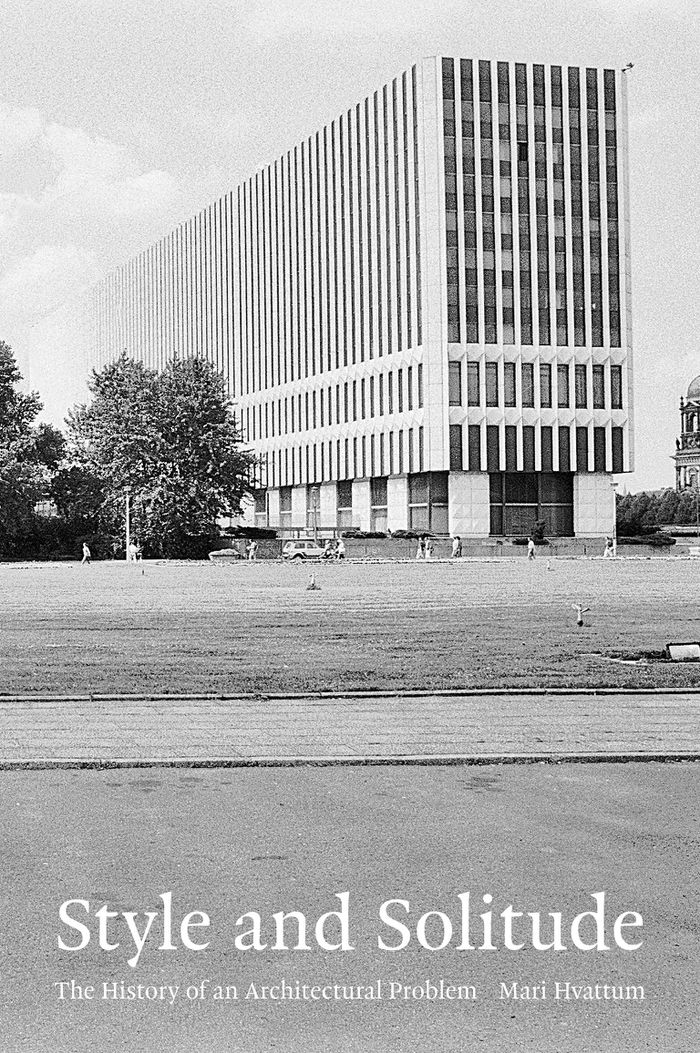
The term 'style' has fallen spectacularly out of fashion in architectural circles. Once a conceptual key to understanding architecture’s inner workings, today style seems to be associated with superficiality, formalism, and obsolete periodization. But how did style—once defined by German sociologist Georg Simmel as a place where one is 'no longer alone'—in architecture actually work? How was it used and what did it mean? In ''Style and solitude,'' Mari Hvattum seeks to understand the apparent death of style, returning to its birthplace in the late eighteenth century, and charting how it grew to influence modern architectural discourse and practice. As Hvattum explains, German thinkers of the eighteenth and nineteenth century offered competing ideas of what style was and how it should be applied in architecture. From Karl Friedrich Schinkel’s thoughtful eclecticism to King Maximilian II’s attempt to capture the zeitgeist in an architectural competition, style was at the center of fascinating experiments and furious disputes. Starting with Johann Joachim Winckelmann’s invention of the period style and ending a century later with Gottfried Semper’s generative theory of style, Hvattum explores critical debates that are still ongoing today.
Style and solitude: The history of an architectural problem
Actions:
Price:
$54.00
(available in store)
Summary:
The term 'style' has fallen spectacularly out of fashion in architectural circles. Once a conceptual key to understanding architecture’s inner workings, today style seems to be associated with superficiality, formalism, and obsolete periodization. But how did style—once defined by German sociologist Georg Simmel as a place where one is 'no longer alone'—in architecture actually work? How was it used and what did it mean? In ''Style and solitude,'' Mari Hvattum seeks to understand the apparent death of style, returning to its birthplace in the late eighteenth century, and charting how it grew to influence modern architectural discourse and practice. As Hvattum explains, German thinkers of the eighteenth and nineteenth century offered competing ideas of what style was and how it should be applied in architecture. From Karl Friedrich Schinkel’s thoughtful eclecticism to King Maximilian II’s attempt to capture the zeitgeist in an architectural competition, style was at the center of fascinating experiments and furious disputes. Starting with Johann Joachim Winckelmann’s invention of the period style and ending a century later with Gottfried Semper’s generative theory of style, Hvattum explores critical debates that are still ongoing today.
Form:
books
books
Publication:
June 2023
June 2023
Subject:
Architectural Theory
Architectural Theory
Form:
books
books
Title:
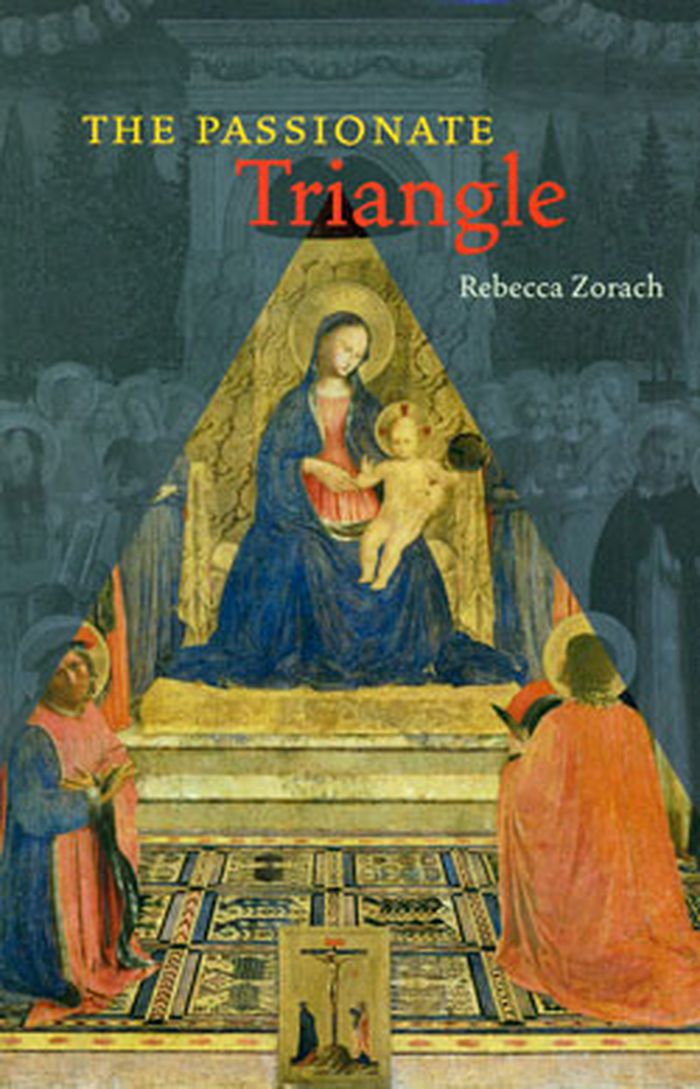
The passionate triangle
The passionate triangle
Actions:
Price:
$49.95
(available to order)
Summary:
Triangles abounded in the intellectual culture of early modern Europe—the Christian Trinity was often mapped as a triangle, for instance, and perspective, a characteristic artistic technique, is based on a triangular theory of vision. Renaissance artists, for their part, often used shapes and lines to arrange figures into a triangle on the surface of a painting—a practice(...)
$49.95
(available to order)
Summary:
Triangles abounded in the intellectual culture of early modern Europe—the Christian Trinity was often mapped as a triangle, for instance, and perspective, a characteristic artistic technique, is based on a triangular theory of vision. Renaissance artists, for their part, often used shapes and lines to arrange figures into a triangle on the surface of a painting—a practice(...)
Title:
The passionate triangle
Actions:
Price:
$49.95
(available to order)
Summary:
Triangles abounded in the intellectual culture of early modern Europe—the Christian Trinity was often mapped as a triangle, for instance, and perspective, a characteristic artistic technique, is based on a triangular theory of vision. Renaissance artists, for their part, often used shapes and lines to arrange figures into a triangle on the surface of a painting—a practice modern scholars call triangular composition. But is there secret meaning in the triangular arrangements artists used, or just a pleasing symmetry? What do triangles really tell us about the European Renaissance and its most beguiling works of art? In this book, Rebecca Zorach takes us on a lively hunt for the triangle’s embedded significance. From the leisure pursuits of Egyptian priests to Jacopo Tintoretto’s love triangles, Zorach explores how the visual and mathematical properties of triangles allowed them to express new ideas and to inspire surprisingly intense passions. Examining prints and paintings as well as literary, scientific, and philosophical texts, 'The Passionate Triangle' opens up an array of new ideas, presenting unexpected stories of the irrational, passionate, melancholic, and often erotic potential of mathematical thinking before the Scientific Revolution.
The passionate triangle
Actions:
Price:
$49.95
(available to order)
Summary:
Triangles abounded in the intellectual culture of early modern Europe—the Christian Trinity was often mapped as a triangle, for instance, and perspective, a characteristic artistic technique, is based on a triangular theory of vision. Renaissance artists, for their part, often used shapes and lines to arrange figures into a triangle on the surface of a painting—a practice modern scholars call triangular composition. But is there secret meaning in the triangular arrangements artists used, or just a pleasing symmetry? What do triangles really tell us about the European Renaissance and its most beguiling works of art? In this book, Rebecca Zorach takes us on a lively hunt for the triangle’s embedded significance. From the leisure pursuits of Egyptian priests to Jacopo Tintoretto’s love triangles, Zorach explores how the visual and mathematical properties of triangles allowed them to express new ideas and to inspire surprisingly intense passions. Examining prints and paintings as well as literary, scientific, and philosophical texts, 'The Passionate Triangle' opens up an array of new ideas, presenting unexpected stories of the irrational, passionate, melancholic, and often erotic potential of mathematical thinking before the Scientific Revolution.
Form:
books
books
Publication:
June 2011
June 2011
Subject:
Art Theory
Art Theory


