


5813 Results
Form:
books
books
Actions:
Holdings:
Description:
xii, 304 pages : illustrations ; 24 cm
Description:
xii, 304 pages : illustrations ; 24 cm
Author:
Subject:
Publication:
Tuscaloosa, Alabama : University of Alabama Press, 1990, ©1990
Tuscaloosa, Alabama : University of Alabama Press, 1990, ©1990
Title:
Curators and culture : The Museum Movement in America, 1740-1870 / Joel J. Orosz.
Actions:
Holdings:
Description:
xii, 304 pages : illustrations ; 24 cm
Curators and culture : The Museum Movement in America, 1740-1870 / Joel J. Orosz.
Actions:
Holdings:
Description:
xii, 304 pages : illustrations ; 24 cm
Form:
books
books
Publication:
Tuscaloosa, Alabama : University of Alabama Press, 1990, ©1990
Tuscaloosa, Alabama : University of Alabama Press, 1990, ©1990
Author:
Subject:
Form:
books
books
Price:
$32.00
(available to order)
Summary:
In this brilliantly written, fast-paced book, based on three years of uncompromising reporting, a bewildering age of global change and inequality is made human. Annawadi is a makeshift settlement in the shadow of luxury hotels near the Mumbai airport, and as India starts to prosper, Annawadians are electric with hope. Abdul, a reflective and enterprising Muslim(...)
$32.00
(available to order)
Summary:
In this brilliantly written, fast-paced book, based on three years of uncompromising reporting, a bewildering age of global change and inequality is made human. Annawadi is a makeshift settlement in the shadow of luxury hotels near the Mumbai airport, and as India starts to prosper, Annawadians are electric with hope. Abdul, a reflective and enterprising Muslim(...)
Title:
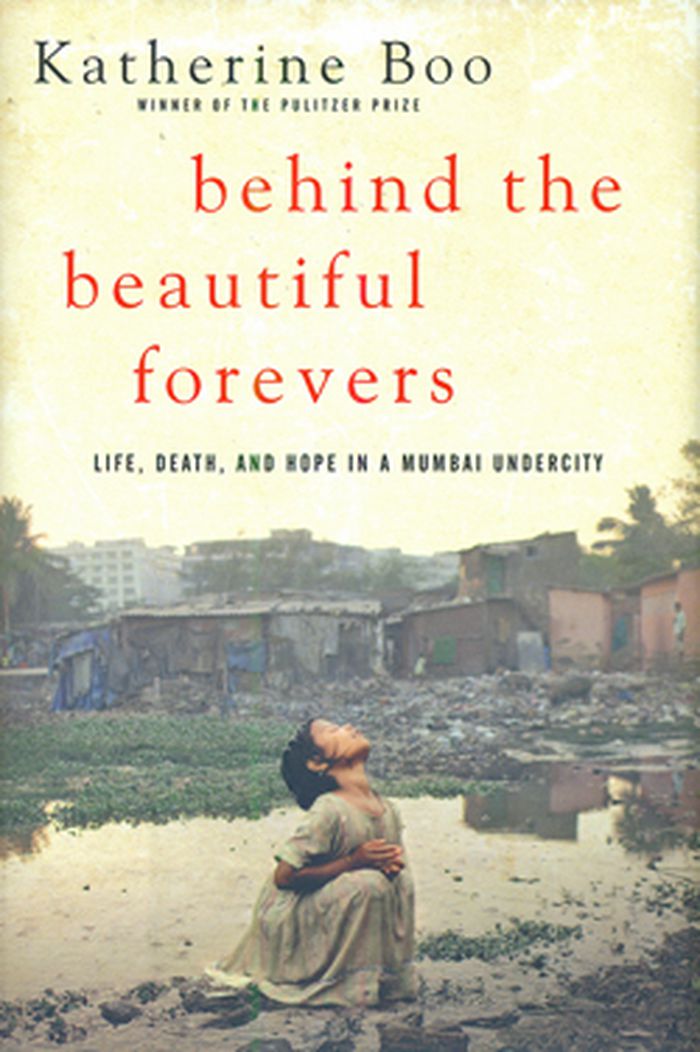
Behind the beautiful forevers : life, death and hope in a Mumbai undercity
Actions:
Price:
$32.00
(available to order)
Summary:
In this brilliantly written, fast-paced book, based on three years of uncompromising reporting, a bewildering age of global change and inequality is made human. Annawadi is a makeshift settlement in the shadow of luxury hotels near the Mumbai airport, and as India starts to prosper, Annawadians are electric with hope. Abdul, a reflective and enterprising Muslim teenager, sees “a fortune beyond counting” in the recyclable garbage that richer people throw away. Asha, a woman of formidable wit and deep scars from a childhood in rural poverty, has identified an alternate route to the middle class: political corruption. With a little luck, her sensitive, beautiful daughter—Annawadi’s “most-everything girl”—will soon become its first female college graduate. And even the poorest Annawadians, like Kalu, a fifteen-year-old scrap-metal thief, believe themselves inching closer to the good lives and good times they call “the full enjoy.” But then Abdul the garbage sorter is falsely accused in a shocking tragedy; terror and a global recession rock the city; and suppressed tensions over religion, caste, sex, power and economic envy turn brutal. As the tenderest individual hopes intersect with the greatest global truths, the true contours of a competitive age are revealed. And so, too, are the imaginations and courage of the people of Annawadi. With intelligence, humor, and deep insight into what connects human beings to one another in an era of tumultuous change, Behind the Beautiful Forevers carries the reader headlong into one of the twenty-first century’s hidden worlds, and into the lives of people impossible to forget.
Behind the beautiful forevers : life, death and hope in a Mumbai undercity
Actions:
Price:
$32.00
(available to order)
Summary:
In this brilliantly written, fast-paced book, based on three years of uncompromising reporting, a bewildering age of global change and inequality is made human. Annawadi is a makeshift settlement in the shadow of luxury hotels near the Mumbai airport, and as India starts to prosper, Annawadians are electric with hope. Abdul, a reflective and enterprising Muslim teenager, sees “a fortune beyond counting” in the recyclable garbage that richer people throw away. Asha, a woman of formidable wit and deep scars from a childhood in rural poverty, has identified an alternate route to the middle class: political corruption. With a little luck, her sensitive, beautiful daughter—Annawadi’s “most-everything girl”—will soon become its first female college graduate. And even the poorest Annawadians, like Kalu, a fifteen-year-old scrap-metal thief, believe themselves inching closer to the good lives and good times they call “the full enjoy.” But then Abdul the garbage sorter is falsely accused in a shocking tragedy; terror and a global recession rock the city; and suppressed tensions over religion, caste, sex, power and economic envy turn brutal. As the tenderest individual hopes intersect with the greatest global truths, the true contours of a competitive age are revealed. And so, too, are the imaginations and courage of the people of Annawadi. With intelligence, humor, and deep insight into what connects human beings to one another in an era of tumultuous change, Behind the Beautiful Forevers carries the reader headlong into one of the twenty-first century’s hidden worlds, and into the lives of people impossible to forget.
Form:
books
books
Publication:
February 2012
February 2012
Subject:
Arch Southwest Asia & North Africa
Arch Southwest Asia & North Africa
Form:
books
books

Title:
Daido Moriyama
Daido Moriyama
Actions:
Price:
$14.95
(available to order)
Summary:
This monograph on Moriyama follows a chronological order, identifying major themes and examining key works; a beautifully produced, affordable introduction to one of the most influential figures in photography today. Born in 1938 and brought up for a short while in Osaka, Japan, Daido Moriyama spent much of his childhood on the move, due to his father's profession as a(...)
$14.95
(available to order)
Summary:
This monograph on Moriyama follows a chronological order, identifying major themes and examining key works; a beautifully produced, affordable introduction to one of the most influential figures in photography today. Born in 1938 and brought up for a short while in Osaka, Japan, Daido Moriyama spent much of his childhood on the move, due to his father's profession as a(...)
Title:
Daido Moriyama
Actions:
Price:
$14.95
(available to order)
Summary:
This monograph on Moriyama follows a chronological order, identifying major themes and examining key works; a beautifully produced, affordable introduction to one of the most influential figures in photography today. Born in 1938 and brought up for a short while in Osaka, Japan, Daido Moriyama spent much of his childhood on the move, due to his father's profession as a travelling insurance salesman. Moriyama studied graphic design and, in the 1960s, moved to Tokyo to work with the VIVO group of photographers, which included Eikoh Hosoe and Shomei Tomatsu. Accompanied by a surge in Japanese economic growth and mass culture, Moriyama was published in several magazines and journals, earning him the accolade of Most Promising Photographer by the Japan Photography Critics Association. Moriyama was a member of PROVOKE Magazine at the time of international youth movements and unrest in 1968. The magazine, and Moriyama's photography, sought to assert an independence over the classically held notion of photography as purely a visual sign. He was aware that the camera can not offer a complete record and it is in this very partialness that the real excitement and enigma in his work arises. Exploring themes of self-expression, the disfiguration of urban landscapes, eroticism and fading Japanese traditions, Moriyama remarked that one of photography's essential qualities is its amateurism, and another its anonymity. These have numbered among his preoccupations from the beginning and most of Moriyama's images follow a snapshot aesthetic, often taken while running or from a moving car, without the use of a viewfinder.
Daido Moriyama
Actions:
Price:
$14.95
(available to order)
Summary:
This monograph on Moriyama follows a chronological order, identifying major themes and examining key works; a beautifully produced, affordable introduction to one of the most influential figures in photography today. Born in 1938 and brought up for a short while in Osaka, Japan, Daido Moriyama spent much of his childhood on the move, due to his father's profession as a travelling insurance salesman. Moriyama studied graphic design and, in the 1960s, moved to Tokyo to work with the VIVO group of photographers, which included Eikoh Hosoe and Shomei Tomatsu. Accompanied by a surge in Japanese economic growth and mass culture, Moriyama was published in several magazines and journals, earning him the accolade of Most Promising Photographer by the Japan Photography Critics Association. Moriyama was a member of PROVOKE Magazine at the time of international youth movements and unrest in 1968. The magazine, and Moriyama's photography, sought to assert an independence over the classically held notion of photography as purely a visual sign. He was aware that the camera can not offer a complete record and it is in this very partialness that the real excitement and enigma in his work arises. Exploring themes of self-expression, the disfiguration of urban landscapes, eroticism and fading Japanese traditions, Moriyama remarked that one of photography's essential qualities is its amateurism, and another its anonymity. These have numbered among his preoccupations from the beginning and most of Moriyama's images follow a snapshot aesthetic, often taken while running or from a moving car, without the use of a viewfinder.
Form:
books
books
Publication:
September 2012
September 2012
Subject:
Photography monographs
Photography monographs
Form:
books
books
Actions:
Price:
$29.99
(available to order)
Summary:
In this book the cultural critic Marita Sturken argues that over the past two decades, Americans have responded to national trauma through consumerism, kitsch sentiment, and tourist practices in ways that reveal a tenacious investment in the idea of America’s innocence. Sturken investigates the consumerism that followed from the September 11th attacks; the contentious,(...)
$29.99
(available to order)
Summary:
In this book the cultural critic Marita Sturken argues that over the past two decades, Americans have responded to national trauma through consumerism, kitsch sentiment, and tourist practices in ways that reveal a tenacious investment in the idea of America’s innocence. Sturken investigates the consumerism that followed from the September 11th attacks; the contentious,(...)
Subject:
Transportation, Tourism, Migration
Transportation, Tourism, Migration
Publication:
November 2007, Durham
November 2007, Durham
Title:
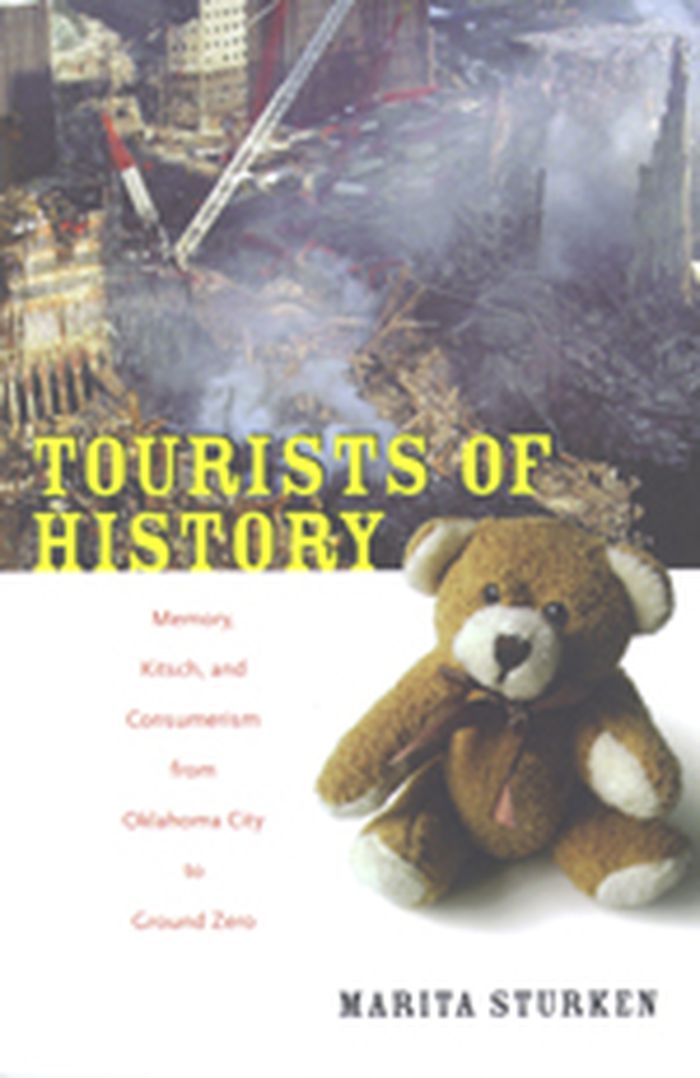
Tourists of History: memory, kitsch, and consumerism from Oklahoma City to Ground Zero
Actions:
Price:
$29.99
(available to order)
Summary:
In this book the cultural critic Marita Sturken argues that over the past two decades, Americans have responded to national trauma through consumerism, kitsch sentiment, and tourist practices in ways that reveal a tenacious investment in the idea of America’s innocence. Sturken investigates the consumerism that followed from the September 11th attacks; the contentious, ongoing debates about memorials and celebrity-architect designed buildings at Ground Zero; and two outcomes of the bombing of the Alfred P. Murrah Federal Building in Oklahoma City: the Oklahoma City National Memorial and the execution of Timothy McVeigh. Sturken contends that a consumer culture of comfort objects such as World Trade Center snow globes, FDNY teddy bears, and Oklahoma City Memorial t-shirts and branded water, as well as reenactments of traumatic events in memorial and architectural designs, enables a national tendency to see U.S. culture as distant from both history and world politics. A kitsch comfort culture contributes to a “tourist” relationship to history: Americans can feel good about visiting and buying souvenirs at sites of national mourning without having to engage with the economic, social, and political causes of the violent events. While arguing for the importance of remembering tragic losses of life, Sturken is urging attention to a dangerous confluence—of memory, tourism, consumerism, paranoia, security, and kitsch—that promulgates fear to sell safety, offers prepackaged emotion at the expense of critical thought, contains alternative politics, and facilitates public acquiescence in the federal government’s repressive measures at home and its aggressive political and military policies abroad.
Tourists of History: memory, kitsch, and consumerism from Oklahoma City to Ground Zero
Actions:
Price:
$29.99
(available to order)
Summary:
In this book the cultural critic Marita Sturken argues that over the past two decades, Americans have responded to national trauma through consumerism, kitsch sentiment, and tourist practices in ways that reveal a tenacious investment in the idea of America’s innocence. Sturken investigates the consumerism that followed from the September 11th attacks; the contentious, ongoing debates about memorials and celebrity-architect designed buildings at Ground Zero; and two outcomes of the bombing of the Alfred P. Murrah Federal Building in Oklahoma City: the Oklahoma City National Memorial and the execution of Timothy McVeigh. Sturken contends that a consumer culture of comfort objects such as World Trade Center snow globes, FDNY teddy bears, and Oklahoma City Memorial t-shirts and branded water, as well as reenactments of traumatic events in memorial and architectural designs, enables a national tendency to see U.S. culture as distant from both history and world politics. A kitsch comfort culture contributes to a “tourist” relationship to history: Americans can feel good about visiting and buying souvenirs at sites of national mourning without having to engage with the economic, social, and political causes of the violent events. While arguing for the importance of remembering tragic losses of life, Sturken is urging attention to a dangerous confluence—of memory, tourism, consumerism, paranoia, security, and kitsch—that promulgates fear to sell safety, offers prepackaged emotion at the expense of critical thought, contains alternative politics, and facilitates public acquiescence in the federal government’s repressive measures at home and its aggressive political and military policies abroad.
Form:
books
books
Publication:
November 2007, Durham
November 2007, Durham
Subject:
Transportation, Tourism, Migration
Transportation, Tourism, Migration
Form:
books
books
Actions:
Price:
$94.00
(available to order)
Summary:
On the occasion of the exhibition "Archilab 2006" dedicated to the Japenese architecture and entitled "Nested in the city", Hyx publish the catalog of the exhibition in french and english version. They present all the projects of thirty invited architects and a set of critical texts which put in perspective the stakes and the subjects of the exhibition. More than any(...)
$94.00
(available to order)
Summary:
On the occasion of the exhibition "Archilab 2006" dedicated to the Japenese architecture and entitled "Nested in the city", Hyx publish the catalog of the exhibition in french and english version. They present all the projects of thirty invited architects and a set of critical texts which put in perspective the stakes and the subjects of the exhibition. More than any(...)
Publication:
October 2006, Orléans
October 2006, Orléans
Title:
Archilab Japan, Orléans 2006 : nested in the city
Actions:
Price:
$94.00
(available to order)
Summary:
On the occasion of the exhibition "Archilab 2006" dedicated to the Japenese architecture and entitled "Nested in the city", Hyx publish the catalog of the exhibition in french and english version. They present all the projects of thirty invited architects and a set of critical texts which put in perspective the stakes and the subjects of the exhibition. More than any other country, Japan was interested at home, the space domesticates being perceived as a space privileging the thought. Hundred of projects presented in the catalog are built for the greater part. Selected by both curators (Akira Suzuki and Mariko Terada), they offer us a panorama of this architects' new generation which began in the 1990s. The most famous in France are doubtless Shigeru Ban presented to Archilab in 1999 and which was the first one to make approve tubes cardboard as support of his houses and also Kasujo Sejima who saw confiding with Ryue Nishizawa the construction of the Museum of the Louvre to Lens. Symbolic Bow Wow workshop is the Leader of this new generation. After the economic crisis of the end of the 90s, the construction of public establishments of average dimension and the competitions of architecture rarefied. The house thus becomes the space of creation privileged for these architects. That's why, in Tokyo, Jun Aoki, Kazuyo Sejima, Ryue Nishizawa, Takaharu and Yui Tezuka, Mitsuhiko Sato, Taira Nishizawa, Masao Koizumi, Yasuhiro Yamashita, Mikio Tai, Yuki Ishiguro, conceive small houses which embody the way of life of their inhabitants and maybe our future today.
Archilab Japan, Orléans 2006 : nested in the city
Actions:
Price:
$94.00
(available to order)
Summary:
On the occasion of the exhibition "Archilab 2006" dedicated to the Japenese architecture and entitled "Nested in the city", Hyx publish the catalog of the exhibition in french and english version. They present all the projects of thirty invited architects and a set of critical texts which put in perspective the stakes and the subjects of the exhibition. More than any other country, Japan was interested at home, the space domesticates being perceived as a space privileging the thought. Hundred of projects presented in the catalog are built for the greater part. Selected by both curators (Akira Suzuki and Mariko Terada), they offer us a panorama of this architects' new generation which began in the 1990s. The most famous in France are doubtless Shigeru Ban presented to Archilab in 1999 and which was the first one to make approve tubes cardboard as support of his houses and also Kasujo Sejima who saw confiding with Ryue Nishizawa the construction of the Museum of the Louvre to Lens. Symbolic Bow Wow workshop is the Leader of this new generation. After the economic crisis of the end of the 90s, the construction of public establishments of average dimension and the competitions of architecture rarefied. The house thus becomes the space of creation privileged for these architects. That's why, in Tokyo, Jun Aoki, Kazuyo Sejima, Ryue Nishizawa, Takaharu and Yui Tezuka, Mitsuhiko Sato, Taira Nishizawa, Masao Koizumi, Yasuhiro Yamashita, Mikio Tai, Yuki Ishiguro, conceive small houses which embody the way of life of their inhabitants and maybe our future today.
Form:
books
books
Publication:
October 2006, Orléans
October 2006, Orléans
Form:
books
books
Actions:
Price:
$45.00
(available to order)
Summary:
"The limitless city" offers an accessible examination of the predominant form of land use in the United States today - the all too familiar pattern of commercial and residential development know as sprawl. Oliver Gillham, an architect and planner with more than twenty-five years of experience in the field, considers the history and development of sprawl and examines(...)
$45.00
(available to order)
Summary:
"The limitless city" offers an accessible examination of the predominant form of land use in the United States today - the all too familiar pattern of commercial and residential development know as sprawl. Oliver Gillham, an architect and planner with more than twenty-five years of experience in the field, considers the history and development of sprawl and examines(...)
Title:
The limetless city : a primer in the urban sprawl debate
Actions:
Price:
$45.00
(available to order)
Summary:
"The limitless city" offers an accessible examination of the predominant form of land use in the United States today - the all too familiar pattern of commercial and residential development know as sprawl. Oliver Gillham, an architect and planner with more than twenty-five years of experience in the field, considers the history and development of sprawl and examines current debates about the issue. The book offers a comprehensive definition of sprawl in America; traces the roots of sprawl and considers the factors that led to its preeminence as an urban and suburban form reviews both its negative impacts (loss of open space, increased pollution, gridlock) as well as its positive aspects (economic development, personal freedom, privacy); considers responses to sprawl including "smart growth," urban growth boundaries, regional planning, and the New Urbanism; looks at what can be done to improve and counterbalance sprawl. The author argues that whether we like it or not, sprawl is here to stay, and only by understanding where it came from and why it developed will we be able to successfully address the problems it has created and is likely to create in the future. "The limitless city" provides a realistic look at sprawl, with a frank recognition of its status as the predominant urban form in America, now and into the near future. Rather than railing against it, Gillham charts its probable future course while describing critical efforts that can be undertaken to improve the future of sprawl and our existing urban core areas.
The limetless city : a primer in the urban sprawl debate
Actions:
Price:
$45.00
(available to order)
Summary:
"The limitless city" offers an accessible examination of the predominant form of land use in the United States today - the all too familiar pattern of commercial and residential development know as sprawl. Oliver Gillham, an architect and planner with more than twenty-five years of experience in the field, considers the history and development of sprawl and examines current debates about the issue. The book offers a comprehensive definition of sprawl in America; traces the roots of sprawl and considers the factors that led to its preeminence as an urban and suburban form reviews both its negative impacts (loss of open space, increased pollution, gridlock) as well as its positive aspects (economic development, personal freedom, privacy); considers responses to sprawl including "smart growth," urban growth boundaries, regional planning, and the New Urbanism; looks at what can be done to improve and counterbalance sprawl. The author argues that whether we like it or not, sprawl is here to stay, and only by understanding where it came from and why it developed will we be able to successfully address the problems it has created and is likely to create in the future. "The limitless city" provides a realistic look at sprawl, with a frank recognition of its status as the predominant urban form in America, now and into the near future. Rather than railing against it, Gillham charts its probable future course while describing critical efforts that can be undertaken to improve the future of sprawl and our existing urban core areas.
Form:
books
books
Publication:
March 2002, Washington
March 2002, Washington
Subject:
Urban Theory
Urban Theory
Form:
books
books
Price:
$55.95
(available to order)
Summary:
Built around snatches of discussion overheard in a Beijing design studio, this book explores attitudes toward architecture in China since the opening of the Treaty Ports in the 1840s. Central to the discussion are the concepts of ti and yong, or “essence” and “form,” Chinese characters that are used to define the proper arrangement of what should be considered modern and(...)
$55.95
(available to order)
Summary:
Built around snatches of discussion overheard in a Beijing design studio, this book explores attitudes toward architecture in China since the opening of the Treaty Ports in the 1840s. Central to the discussion are the concepts of ti and yong, or “essence” and “form,” Chinese characters that are used to define the proper arrangement of what should be considered modern and(...)
Publication:
April 2002, Cambridge, Mass.
April 2002, Cambridge, Mass.
Title:
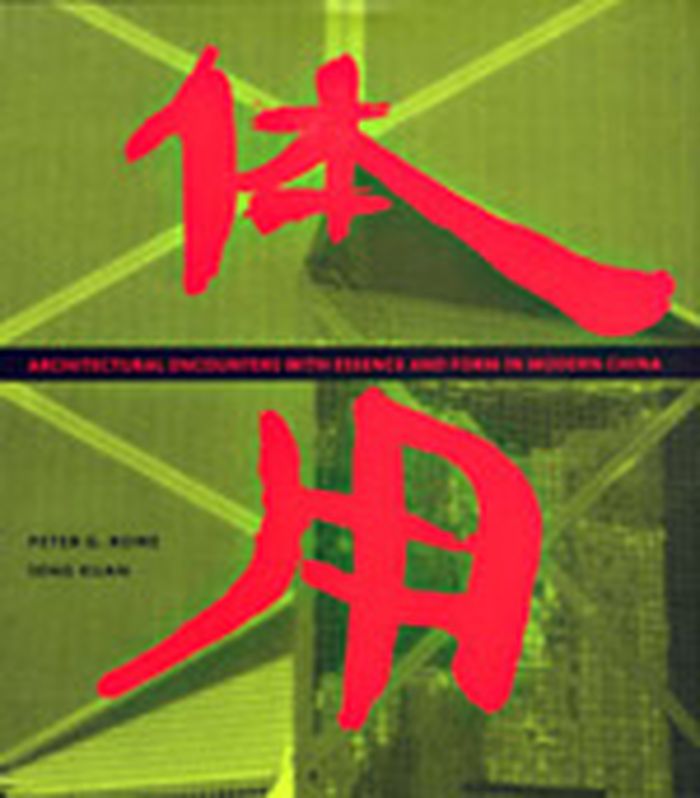
Architectural encounters with essence and form in modern China
Actions:
Price:
$55.95
(available to order)
Summary:
Built around snatches of discussion overheard in a Beijing design studio, this book explores attitudes toward architecture in China since the opening of the Treaty Ports in the 1840s. Central to the discussion are the concepts of ti and yong, or “essence” and “form,” Chinese characters that are used to define the proper arrangement of what should be considered modern and essentially Chinese. Ti and yong have gone through various transformations--for example, from “Chinese learning for essential principles and Western learning for practical application” to “socialist essence and cultural form” and an almost complete reversal to “modern essence and Chinese form.” The book opens with a discussion of cultural developments in China in response to the forced opening to the West in the mid-nineteenth century, efforts to reform the Qing dynasty, and the Nationalist and Communist regimes. It then considers the return of overseas-educated Chinese architects and foreign influences on Chinese architecture, four architectural orientations toward tradition and modernity in the 1920s and 1930s, and the controversy over the use of “big roofs” and other sinicizing aspects of Chinese architecture in the 1950s. The book then moves to the hard economic conditions of the Great Leap Forward and the Cultural Revolution, when architecture was almost abandoned, and the beginning of reform and opening up to the outside world in the late 1970s and 1980s. Finally, it looks at the present socialist market economy and Chinese architecture during the still incomplete process of modernization. It closes with a prognosis for the future.
Architectural encounters with essence and form in modern China
Actions:
Price:
$55.95
(available to order)
Summary:
Built around snatches of discussion overheard in a Beijing design studio, this book explores attitudes toward architecture in China since the opening of the Treaty Ports in the 1840s. Central to the discussion are the concepts of ti and yong, or “essence” and “form,” Chinese characters that are used to define the proper arrangement of what should be considered modern and essentially Chinese. Ti and yong have gone through various transformations--for example, from “Chinese learning for essential principles and Western learning for practical application” to “socialist essence and cultural form” and an almost complete reversal to “modern essence and Chinese form.” The book opens with a discussion of cultural developments in China in response to the forced opening to the West in the mid-nineteenth century, efforts to reform the Qing dynasty, and the Nationalist and Communist regimes. It then considers the return of overseas-educated Chinese architects and foreign influences on Chinese architecture, four architectural orientations toward tradition and modernity in the 1920s and 1930s, and the controversy over the use of “big roofs” and other sinicizing aspects of Chinese architecture in the 1950s. The book then moves to the hard economic conditions of the Great Leap Forward and the Cultural Revolution, when architecture was almost abandoned, and the beginning of reform and opening up to the outside world in the late 1970s and 1980s. Finally, it looks at the present socialist market economy and Chinese architecture during the still incomplete process of modernization. It closes with a prognosis for the future.
Form:
books
books
Publication:
April 2002, Cambridge, Mass.
April 2002, Cambridge, Mass.
Form:
books
books
Title:
Immaterialism
Immaterialism
Actions:
Price:
$13.95
(available in store)
Summary:
What objects exist in the social world and how should we understand them? Is a specific Pizza Hut restaurant as real as the employees, tables, napkins and pizzas of which it is composed, and as real as the Pizza Hut corporation with its headquarters in Wichita, the United States, the planet Earth and the social and economic impact of the restaurant on the lives of its(...)
$13.95
(available in store)
Summary:
What objects exist in the social world and how should we understand them? Is a specific Pizza Hut restaurant as real as the employees, tables, napkins and pizzas of which it is composed, and as real as the Pizza Hut corporation with its headquarters in Wichita, the United States, the planet Earth and the social and economic impact of the restaurant on the lives of its(...)
Title:
Immaterialism
Actions:
Price:
$13.95
(available in store)
Summary:
What objects exist in the social world and how should we understand them? Is a specific Pizza Hut restaurant as real as the employees, tables, napkins and pizzas of which it is composed, and as real as the Pizza Hut corporation with its headquarters in Wichita, the United States, the planet Earth and the social and economic impact of the restaurant on the lives of its employees and customers? In this book the founder of object-oriented philosophy develops his approach in order to shed light on the nature and status of objects in social life. While it is often assumed that an interest in objects amounts to a form of materialism, Harman rejects this view and develops instead an "immaterialist" method. By examining the work of leading contemporary thinkers such as Bruno Latour and Levi Bryant, he develops a forceful critique of "actor-network theory." In an extended discussion of Leibniz’s famous example of the Dutch East India Company, Harman argues that this company qualifies for objecthood neither through "what it is" or "what it does," but through its irreducibility to either of these forms. The phases of its life, argues Harman, are not demarcated primarily by dramatic incidents but by moments of symbiosis, a term he draws from the biologist Lynn Margulis. This book provides a key counterpoint to the now ubiquitous social theories of constant change, holistic networks, performative identities, and the construction of things by human practice. It will appeal to anyone interested in cutting-edge debates in philosophy and social and cultural theory.
Immaterialism
Actions:
Price:
$13.95
(available in store)
Summary:
What objects exist in the social world and how should we understand them? Is a specific Pizza Hut restaurant as real as the employees, tables, napkins and pizzas of which it is composed, and as real as the Pizza Hut corporation with its headquarters in Wichita, the United States, the planet Earth and the social and economic impact of the restaurant on the lives of its employees and customers? In this book the founder of object-oriented philosophy develops his approach in order to shed light on the nature and status of objects in social life. While it is often assumed that an interest in objects amounts to a form of materialism, Harman rejects this view and develops instead an "immaterialist" method. By examining the work of leading contemporary thinkers such as Bruno Latour and Levi Bryant, he develops a forceful critique of "actor-network theory." In an extended discussion of Leibniz’s famous example of the Dutch East India Company, Harman argues that this company qualifies for objecthood neither through "what it is" or "what it does," but through its irreducibility to either of these forms. The phases of its life, argues Harman, are not demarcated primarily by dramatic incidents but by moments of symbiosis, a term he draws from the biologist Lynn Margulis. This book provides a key counterpoint to the now ubiquitous social theories of constant change, holistic networks, performative identities, and the construction of things by human practice. It will appeal to anyone interested in cutting-edge debates in philosophy and social and cultural theory.
Form:
books
books
Publication:
February 2016
February 2016
Subject:
Critical Theory
Critical Theory
Form:
books
books
Title:
The case for open borders
The case for open borders
Actions:
Price:
$30.95
(available to order)
Summary:
Because of restrictive borders, human beings suffer and die. Closed borders force migrants seeking safety and dignity to journey across seas, trudge through deserts, and clamber over barbed wire. In the last five years alone, at least 60,000 people have died or gone missing while attempting to cross a border. As we deny, cast out, and crack down, we have stripped borders(...)
$30.95
(available to order)
Summary:
Because of restrictive borders, human beings suffer and die. Closed borders force migrants seeking safety and dignity to journey across seas, trudge through deserts, and clamber over barbed wire. In the last five years alone, at least 60,000 people have died or gone missing while attempting to cross a border. As we deny, cast out, and crack down, we have stripped borders(...)
Title:
The case for open borders
Actions:
Price:
$30.95
(available to order)
Summary:
Because of restrictive borders, human beings suffer and die. Closed borders force migrants seeking safety and dignity to journey across seas, trudge through deserts, and clamber over barbed wire. In the last five years alone, at least 60,000 people have died or gone missing while attempting to cross a border. As we deny, cast out, and crack down, we have stripped borders of their creative potential — as lines of contact, catalyst, and blend — turning our thresholds into barricades. Brilliant and provocative, ''The Case for Open Borders'' deflates the mythology of national security through border lockdowns by revisiting their historical origins; it counters the conspiracies of immigration’s economic consequences; it urgently considers the challenges of climate change beyond the boundaries of narrow national identities. This book grounds its argument in the experiences and thinking of those on the frontlines of the crisis, spanning the world to do so. In each chapter, through detailed reporting, journalist and translator John Washington profiles a character impacted by borders. He adds to those portraits provocative analyses of the economics and ethics of bordering, concluding that if we are to seek justice or sustainability we must fight for open borders. In recent years, important thinkers have begun to urge a profoundly different approach to migration, but no book has made the argument as accessible or as compelling. Washington’s case shines with the multitudinous voices of people on the move, a portrait in miniature of what a world with open borders will give to our common future.
The case for open borders
Actions:
Price:
$30.95
(available to order)
Summary:
Because of restrictive borders, human beings suffer and die. Closed borders force migrants seeking safety and dignity to journey across seas, trudge through deserts, and clamber over barbed wire. In the last five years alone, at least 60,000 people have died or gone missing while attempting to cross a border. As we deny, cast out, and crack down, we have stripped borders of their creative potential — as lines of contact, catalyst, and blend — turning our thresholds into barricades. Brilliant and provocative, ''The Case for Open Borders'' deflates the mythology of national security through border lockdowns by revisiting their historical origins; it counters the conspiracies of immigration’s economic consequences; it urgently considers the challenges of climate change beyond the boundaries of narrow national identities. This book grounds its argument in the experiences and thinking of those on the frontlines of the crisis, spanning the world to do so. In each chapter, through detailed reporting, journalist and translator John Washington profiles a character impacted by borders. He adds to those portraits provocative analyses of the economics and ethics of bordering, concluding that if we are to seek justice or sustainability we must fight for open borders. In recent years, important thinkers have begun to urge a profoundly different approach to migration, but no book has made the argument as accessible or as compelling. Washington’s case shines with the multitudinous voices of people on the move, a portrait in miniature of what a world with open borders will give to our common future.
Form:
books
books
Publication:
February 2024
February 2024
Subject:
Social
Social
Form:
books
books
Actions:
Price:
$41.95
(available to order)
Summary:
During the economic boom of the 1990's, art museums expanded dramatically in size, scope, and ambition. They came to be seen as new civic centers : on the one hand as places of entertainment, leisure, and commerce, on the other as socially therapeutic institutions. But museums were also criticized for everything from elitism to looting or illegally exporting works from(...)
$41.95
(available to order)
Summary:
During the economic boom of the 1990's, art museums expanded dramatically in size, scope, and ambition. They came to be seen as new civic centers : on the one hand as places of entertainment, leisure, and commerce, on the other as socially therapeutic institutions. But museums were also criticized for everything from elitism to looting or illegally exporting works from(...)
Subject:
Museums and Universal Exhibitions
Museums and Universal Exhibitions
Publication:
January 2004, Princeton / Cambridge, Mass.
January 2004, Princeton / Cambridge, Mass.
Title:
Whose muse? : art museums and the public trust
Actions:
Price:
$41.95
(available to order)
Summary:
During the economic boom of the 1990's, art museums expanded dramatically in size, scope, and ambition. They came to be seen as new civic centers : on the one hand as places of entertainment, leisure, and commerce, on the other as socially therapeutic institutions. But museums were also criticized for everything from elitism to looting or illegally exporting works from other countries, to exhibiting works offensive to the public taste. "Whose Muse?" brings together five directors of leading American and British art museums who together offer a forward-looking alternative to such prevailing views. While their approaches differ, certain themes recur : as museums have become increasingly complex and costly to manage, and as government support has waned, the temptation is great to follow policies driven not by a mission but by the market. However, the directors concur that public trust can be upheld only if museums continue to see their core mission as building collections that reflect a nation's artistic legacy and providing informed and unfettered access to them. The book, based on a lecture series of the same title held in 2000-2001 by the Harvard Program for Art Museum Directors, also includes an introduction by Cuno and a fascinating - and surprisingly frank - roundtable discussion among the participating directors. A rare collection of sustained reflections by prominent museum directors on the current state of affairs in their profession, this book is without equal. It will be read widely not only by museum professionals, trustees, critics, and scholars, but also by the art-loving public itself.
Whose muse? : art museums and the public trust
Actions:
Price:
$41.95
(available to order)
Summary:
During the economic boom of the 1990's, art museums expanded dramatically in size, scope, and ambition. They came to be seen as new civic centers : on the one hand as places of entertainment, leisure, and commerce, on the other as socially therapeutic institutions. But museums were also criticized for everything from elitism to looting or illegally exporting works from other countries, to exhibiting works offensive to the public taste. "Whose Muse?" brings together five directors of leading American and British art museums who together offer a forward-looking alternative to such prevailing views. While their approaches differ, certain themes recur : as museums have become increasingly complex and costly to manage, and as government support has waned, the temptation is great to follow policies driven not by a mission but by the market. However, the directors concur that public trust can be upheld only if museums continue to see their core mission as building collections that reflect a nation's artistic legacy and providing informed and unfettered access to them. The book, based on a lecture series of the same title held in 2000-2001 by the Harvard Program for Art Museum Directors, also includes an introduction by Cuno and a fascinating - and surprisingly frank - roundtable discussion among the participating directors. A rare collection of sustained reflections by prominent museum directors on the current state of affairs in their profession, this book is without equal. It will be read widely not only by museum professionals, trustees, critics, and scholars, but also by the art-loving public itself.
Form:
books
books
Publication:
January 2004, Princeton / Cambridge, Mass.
January 2004, Princeton / Cambridge, Mass.
Subject:
Museums and Universal Exhibitions
Museums and Universal Exhibitions


