


13794 Results
Form:
books
books
Actions:
Price:
$27.95
(available to order)
Summary:
This anthology investigates the turn in art not only towards archives and histories, the relics of modernities past, but toward the phenomena, in themselves, of "haunting" and the activation of memory. It looks at a wide array of artistic relationships to memory association, repetition and reappearance, as well as forms of "active" forgetting. Its discussions encompass(...)
$27.95
(available to order)
Summary:
This anthology investigates the turn in art not only towards archives and histories, the relics of modernities past, but toward the phenomena, in themselves, of "haunting" and the activation of memory. It looks at a wide array of artistic relationships to memory association, repetition and reappearance, as well as forms of "active" forgetting. Its discussions encompass(...)
Title:
Documents of contemporary art : Memory
Actions:
Price:
$27.95
(available to order)
Summary:
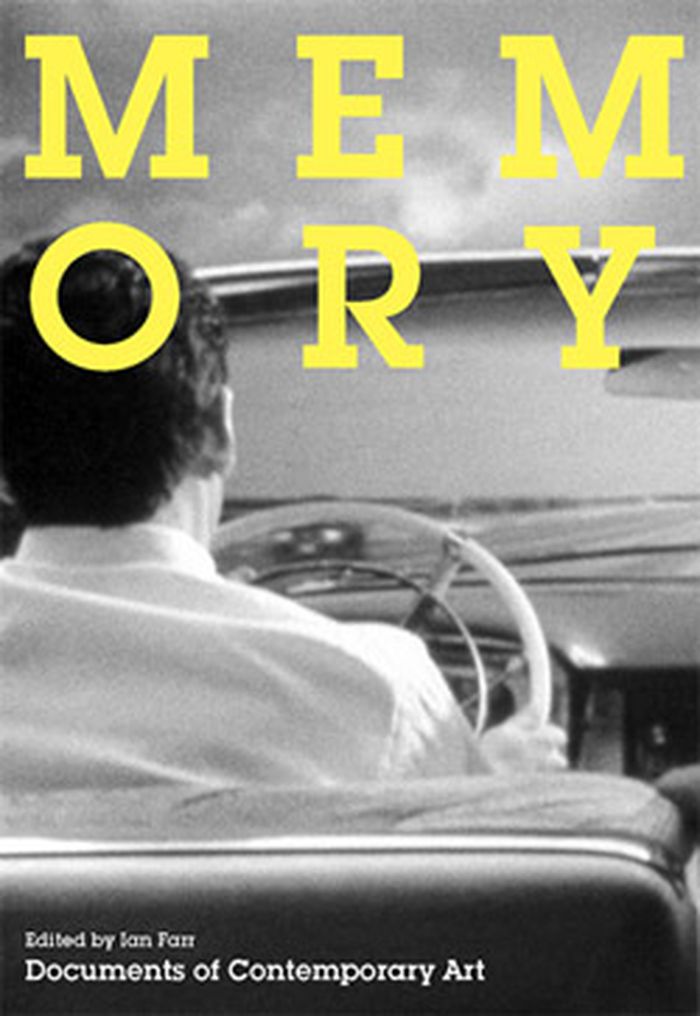
This anthology investigates the turn in art not only towards archives and histories, the relics of modernities past, but toward the phenomena, in themselves, of "haunting" and the activation of memory. It looks at a wide array of artistic relationships to memory association, repetition and reappearance, as well as forms of "active" forgetting. Its discussions encompass artworks from the late 1940s onward, ranging from reperformances such as Marina Abramovi's Seven Easy Pieces (embodied resurrections of decades-removed performance pieces by her contemporaries) to the inanimate trace of "memory" Robert Morris assigns to his free-form felt pieces, which "forget" in their present configurations their previous slides and falls. Contextualizing memory's role in visual theory and aesthetic politics--from Marcel Proust's optics to Bernard Stiegler's analysis of memory's "industrialization"--this collection also surveys the diversity of situations and registers in which contemporary artists explore memory. Art that engages with memory embodied in material and spatial conditions is examined beside works that reflect upon memory's effects through time, and yet others that enlist the agency of remembrance or forgetting to work through aspects of the numerous pasts by which the present is always haunted.
Documents of contemporary art : Memory
Actions:
Price:
$27.95
(available to order)
Summary:
This anthology investigates the turn in art not only towards archives and histories, the relics of modernities past, but toward the phenomena, in themselves, of "haunting" and the activation of memory. It looks at a wide array of artistic relationships to memory association, repetition and reappearance, as well as forms of "active" forgetting. Its discussions encompass artworks from the late 1940s onward, ranging from reperformances such as Marina Abramovi's Seven Easy Pieces (embodied resurrections of decades-removed performance pieces by her contemporaries) to the inanimate trace of "memory" Robert Morris assigns to his free-form felt pieces, which "forget" in their present configurations their previous slides and falls. Contextualizing memory's role in visual theory and aesthetic politics--from Marcel Proust's optics to Bernard Stiegler's analysis of memory's "industrialization"--this collection also surveys the diversity of situations and registers in which contemporary artists explore memory. Art that engages with memory embodied in material and spatial conditions is examined beside works that reflect upon memory's effects through time, and yet others that enlist the agency of remembrance or forgetting to work through aspects of the numerous pasts by which the present is always haunted.
Form:
books
books
Publication:
September 2012
September 2012
Subject:
Art Theory
Art Theory
Form:
books
books
Price:
$64.95
(available to order)
Summary:
The life and work of the outstanding Catalan-Majorcan philosopher, logician, and mystic Ramon Llull continues to fascinate thinkers, artists, and scholars worldwide The primary idea of Ramon Llull’s teachings—to enable rational and therefore trustworthy dialogue between cultures and religions through a universally valid system of symbols—is today still topical and of(...)
$64.95
(available to order)
Summary:
The life and work of the outstanding Catalan-Majorcan philosopher, logician, and mystic Ramon Llull continues to fascinate thinkers, artists, and scholars worldwide The primary idea of Ramon Llull’s teachings—to enable rational and therefore trustworthy dialogue between cultures and religions through a universally valid system of symbols—is today still topical and of(...)
Subject:
Critical Theory
Critical Theory
Publication:
April 2019
April 2019
Title:
Dia-logos:Ramon Llull's method of thought and artistic practice
Actions:
Price:
$64.95
(available to order)
Summary:
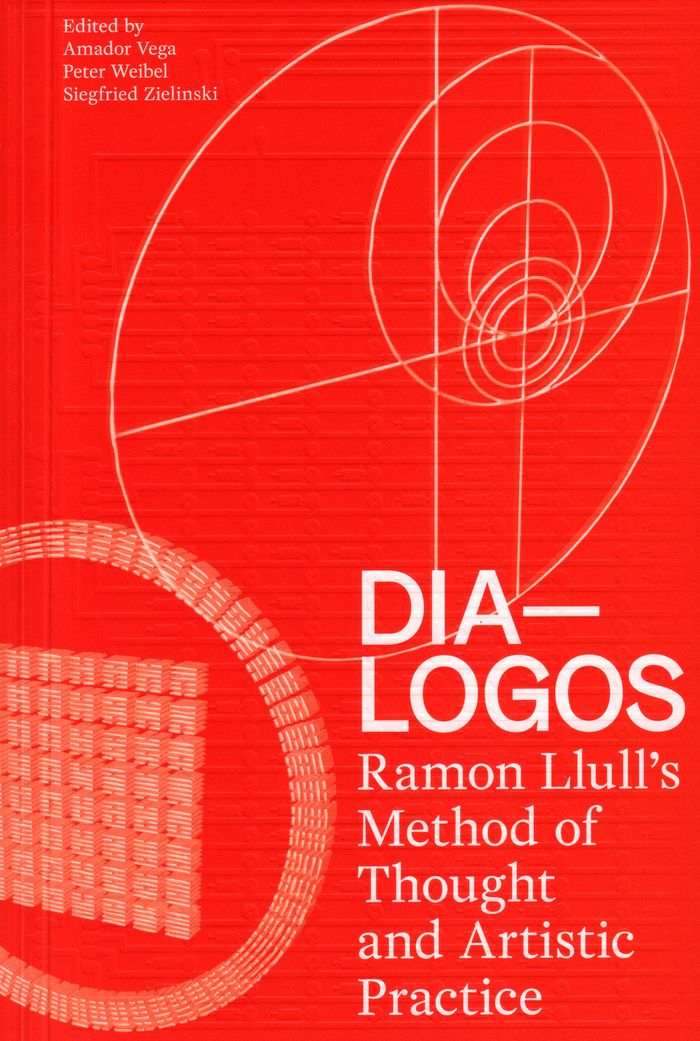
The life and work of the outstanding Catalan-Majorcan philosopher, logician, and mystic Ramon Llull continues to fascinate thinkers, artists, and scholars worldwide The primary idea of Ramon Llull’s teachings—to enable rational and therefore trustworthy dialogue between cultures and religions through a universally valid system of symbols—is today still topical and of great relevance, especially in the tensions prevailing in globalized spaces of possibility. This book addresses Lullism as a remarkable and distinctive method of thinking and experimenting. The origins and impact of Ramon Llull’s oeuvre as a modern thinker are presented, and their interdisciplinary and intercultural implications, which continue to this day, are explored. Ars combinatoria, generative and permutative generation of texts, the epistemic and poetic power of algorithmic systems, plus the principle of unconditional dialogue between cultural groups and their individual members, are the most important coordinates of this combinatorial–dialogical media and communication theory, which appeared very early in the history of science, technology, and art. It was developed in the work of Ramon Llull during the transition from the thirteenth to the fourteenth century when Arab-Islamic, Jewish, and Christian cultures intersected.
Dia-logos:Ramon Llull's method of thought and artistic practice
Actions:
Price:
$64.95
(available to order)
Summary:
The life and work of the outstanding Catalan-Majorcan philosopher, logician, and mystic Ramon Llull continues to fascinate thinkers, artists, and scholars worldwide The primary idea of Ramon Llull’s teachings—to enable rational and therefore trustworthy dialogue between cultures and religions through a universally valid system of symbols—is today still topical and of great relevance, especially in the tensions prevailing in globalized spaces of possibility. This book addresses Lullism as a remarkable and distinctive method of thinking and experimenting. The origins and impact of Ramon Llull’s oeuvre as a modern thinker are presented, and their interdisciplinary and intercultural implications, which continue to this day, are explored. Ars combinatoria, generative and permutative generation of texts, the epistemic and poetic power of algorithmic systems, plus the principle of unconditional dialogue between cultural groups and their individual members, are the most important coordinates of this combinatorial–dialogical media and communication theory, which appeared very early in the history of science, technology, and art. It was developed in the work of Ramon Llull during the transition from the thirteenth to the fourteenth century when Arab-Islamic, Jewish, and Christian cultures intersected.
Form:
books
books
Publication:
April 2019
April 2019
Subject:
Critical Theory
Critical Theory
Form:
books
books
Actions:
Price:
$24.50
(available to order)
Summary:
Set in the long-lost City of Victoria (a fictional world similar to Hong Kong), Atlas is written from the unified perspective of future archaeologists struggling to rebuild a thrilling metropolis. Divided into four sections — “Theory,” “The City,” “Streets,” and “Signs” — the novel reimagines Victoria through maps and other historical documents and artifacts, mixing(...)
$24.50
(available to order)
Summary:
Set in the long-lost City of Victoria (a fictional world similar to Hong Kong), Atlas is written from the unified perspective of future archaeologists struggling to rebuild a thrilling metropolis. Divided into four sections — “Theory,” “The City,” “Streets,” and “Signs” — the novel reimagines Victoria through maps and other historical documents and artifacts, mixing(...)
Title:
Atlas : the archaeology of an imaginary city
Actions:
Price:
$24.50
(available to order)
Summary:
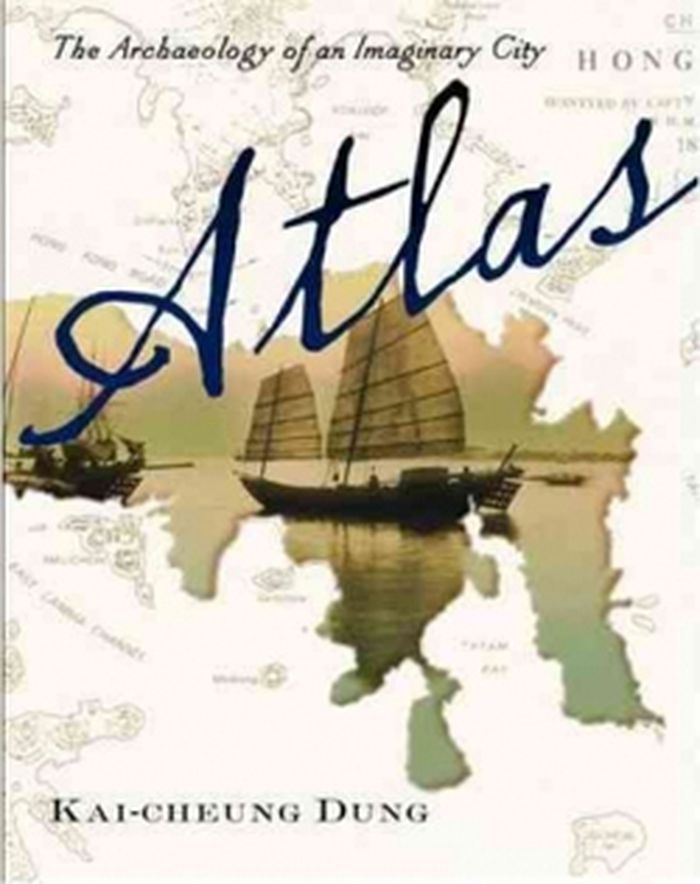
Set in the long-lost City of Victoria (a fictional world similar to Hong Kong), Atlas is written from the unified perspective of future archaeologists struggling to rebuild a thrilling metropolis. Divided into four sections — “Theory,” “The City,” “Streets,” and “Signs” — the novel reimagines Victoria through maps and other historical documents and artifacts, mixing real-world scenarios with purely imaginary people and events while incorporating anecdotes and actual and fictional social commentary and critique. Much like the quasi-fictional adventures in map-reading and remapping explored by Paul Auster, Jorge Luis Borges, and Italo Calvino, Dung Kai-cheung’s novel challenges the representation of place and history and the limits of technical and scientific media in reconstructing a history. It best exemplifies the author’s versatility and experimentation, along with China’s rapidly evolving literary culture, by blending fiction, nonfiction, and poetry in a story about succeeding and failing to recapture the things we lose. Playing with a variety of styles and subjects, Dung Kai-cheung inventively engages with the fate of Hong Kong since its British “handover” in 1997, which officially marked the end of colonial rule and the beginning of an uncharted future.
Atlas : the archaeology of an imaginary city
Actions:
Price:
$24.50
(available to order)
Summary:
Set in the long-lost City of Victoria (a fictional world similar to Hong Kong), Atlas is written from the unified perspective of future archaeologists struggling to rebuild a thrilling metropolis. Divided into four sections — “Theory,” “The City,” “Streets,” and “Signs” — the novel reimagines Victoria through maps and other historical documents and artifacts, mixing real-world scenarios with purely imaginary people and events while incorporating anecdotes and actual and fictional social commentary and critique. Much like the quasi-fictional adventures in map-reading and remapping explored by Paul Auster, Jorge Luis Borges, and Italo Calvino, Dung Kai-cheung’s novel challenges the representation of place and history and the limits of technical and scientific media in reconstructing a history. It best exemplifies the author’s versatility and experimentation, along with China’s rapidly evolving literary culture, by blending fiction, nonfiction, and poetry in a story about succeeding and failing to recapture the things we lose. Playing with a variety of styles and subjects, Dung Kai-cheung inventively engages with the fate of Hong Kong since its British “handover” in 1997, which officially marked the end of colonial rule and the beginning of an uncharted future.
Form:
books
books
Publication:
November 2012
November 2012
Subject:
Architectural Theory
Architectural Theory
Form:
books
books
Price:
$39.95
(available to order)
Summary:
''Feminist designer'' brings together a constellation of voices and perspectives to examine the intersection of design and feminist theory. For decades, the feminist refrain within design has hinged on the representation and inclusion of women in the field. This collection, edited by Alison Place, however, is a call to move beyond this narrow application. Feminist design(...)
$39.95
(available to order)
Summary:
''Feminist designer'' brings together a constellation of voices and perspectives to examine the intersection of design and feminist theory. For decades, the feminist refrain within design has hinged on the representation and inclusion of women in the field. This collection, edited by Alison Place, however, is a call to move beyond this narrow application. Feminist design(...)
Title:
Feminist designer: On the personal and the political in design
Actions:
Price:
$39.95
(available to order)
Summary:
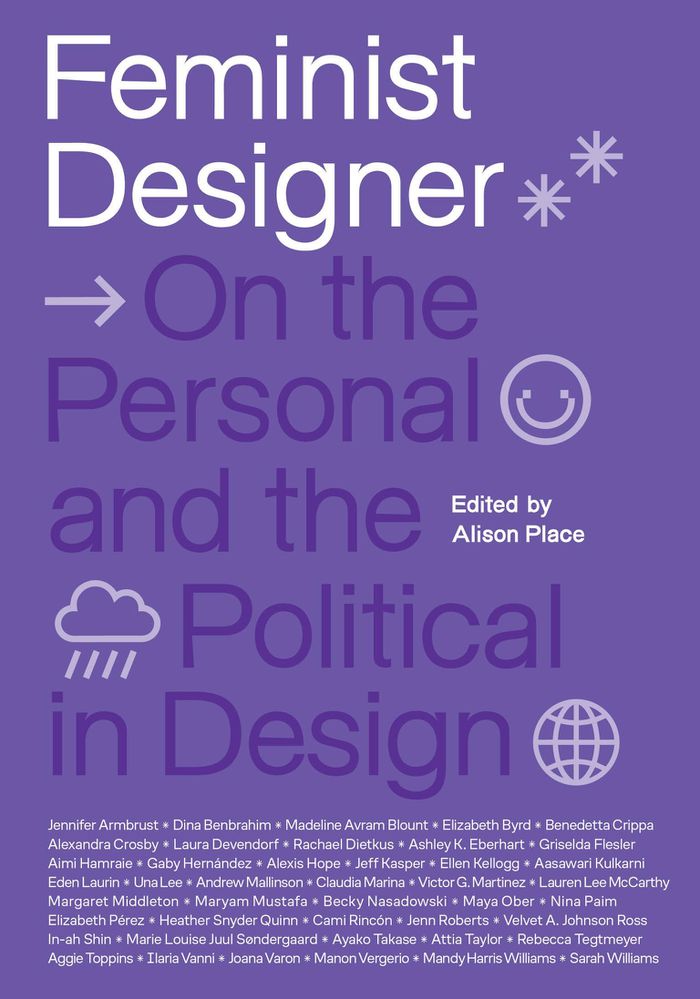
''Feminist designer'' brings together a constellation of voices and perspectives to examine the intersection of design and feminist theory. For decades, the feminist refrain within design has hinged on the representation and inclusion of women in the field. This collection, edited by Alison Place, however, is a call to move beyond this narrow application. Feminist design is not just about who does design—it is about how we do design and why. Feminist frameworks for design activism are now more relevant than ever, as they emphasize collaborative processes that aim to disrupt and dismantle power hierarchies while centering feminist ways of knowing and doing. ''Feminist designer'' contains essays, case studies, and dialogues by 43 contributors from 16 different countries. It engages a wide variety of design disciplines, from graphic design to disability design to algorithmic design, and explores key feminist themes, such as power, knowledge, care, plurality, liberation, and community. Through diverse, sometimes conflicting, intersectional perspectives, this book contributes new design methods informed by a multiplicity of feminisms that confront design’s patriarchal origins while ushering in new pathways for making critical and meaningful change.
Feminist designer: On the personal and the political in design
Actions:
Price:
$39.95
(available to order)
Summary:
''Feminist designer'' brings together a constellation of voices and perspectives to examine the intersection of design and feminist theory. For decades, the feminist refrain within design has hinged on the representation and inclusion of women in the field. This collection, edited by Alison Place, however, is a call to move beyond this narrow application. Feminist design is not just about who does design—it is about how we do design and why. Feminist frameworks for design activism are now more relevant than ever, as they emphasize collaborative processes that aim to disrupt and dismantle power hierarchies while centering feminist ways of knowing and doing. ''Feminist designer'' contains essays, case studies, and dialogues by 43 contributors from 16 different countries. It engages a wide variety of design disciplines, from graphic design to disability design to algorithmic design, and explores key feminist themes, such as power, knowledge, care, plurality, liberation, and community. Through diverse, sometimes conflicting, intersectional perspectives, this book contributes new design methods informed by a multiplicity of feminisms that confront design’s patriarchal origins while ushering in new pathways for making critical and meaningful change.
Form:
books
books
Publication:
September 2023
September 2023
Subject:
Design Theory
Design Theory
Form:
books
books
Actions:
Price:
$74.95
(available to order)
Summary:
The Unknown City takes its place in the emerging architectural literature that looks beyond design process and buildings to discover new ways of looking at the urban experience. A multistranded contemplation of the notion of "knowing a place," it is about both the existence and the possibilities of architecture and the city. An important inspiration for the book is the(...)
$74.95
(available to order)
Summary:
The Unknown City takes its place in the emerging architectural literature that looks beyond design process and buildings to discover new ways of looking at the urban experience. A multistranded contemplation of the notion of "knowing a place," it is about both the existence and the possibilities of architecture and the city. An important inspiration for the book is the(...)
Subject:
Urban Theory
Urban Theory
Publication:
June 2000, Cambridge, Mass.
June 2000, Cambridge, Mass.
Title:
The unknown city : contesting architecture and social space
Actions:
Price:
$74.95
(available to order)
Summary:
The Unknown City takes its place in the emerging architectural literature that looks beyond design process and buildings to discover new ways of looking at the urban experience. A multistranded contemplation of the notion of "knowing a place," it is about both the existence and the possibilities of architecture and the city. An important inspiration for the book is the work of Henri Lefebvre, in particular his ideas on space as a historical production. Many of the essays also draw on the social critique and tactics of the Situationist movement. The international gathering of contributors includes art, architectural, and urban historians and theorists; urban geographers; architects, artists, and filmmakers; and literary and cultural theorists. The essays range from abstract considerations of spatial production and representation to such concrete examples of urban domination as video surveillance and Regency London as the site of male pleasure. Although many of the essays are driven by social, cultural, and urban theory, they also tell real stories about real places. Each piece is in some way a critique of capitalism and a thought experiment about how designers and city dwellers working together can shape the cities of tomorrow.
The unknown city : contesting architecture and social space
Actions:
Price:
$74.95
(available to order)
Summary:
The Unknown City takes its place in the emerging architectural literature that looks beyond design process and buildings to discover new ways of looking at the urban experience. A multistranded contemplation of the notion of "knowing a place," it is about both the existence and the possibilities of architecture and the city. An important inspiration for the book is the work of Henri Lefebvre, in particular his ideas on space as a historical production. Many of the essays also draw on the social critique and tactics of the Situationist movement. The international gathering of contributors includes art, architectural, and urban historians and theorists; urban geographers; architects, artists, and filmmakers; and literary and cultural theorists. The essays range from abstract considerations of spatial production and representation to such concrete examples of urban domination as video surveillance and Regency London as the site of male pleasure. Although many of the essays are driven by social, cultural, and urban theory, they also tell real stories about real places. Each piece is in some way a critique of capitalism and a thought experiment about how designers and city dwellers working together can shape the cities of tomorrow.
Form:
books
books
Publication:
June 2000, Cambridge, Mass.
June 2000, Cambridge, Mass.
Subject:
Urban Theory
Urban Theory
Form:
books
books
Actions:
Price:
$37.50
(available to order)
Summary:
Since the publication of Edward Said's groundbreaking work Orientalism 35 years ago, numerous studies have explored the West's fraught and enduring fascination with the so-called Orient. Focusing their critical attention on the literary and pictorial arts, these studies have, to date, largely neglected the world of interior design. Oriental Interiors is the first book to(...)
$37.50
(available to order)
Summary:
Since the publication of Edward Said's groundbreaking work Orientalism 35 years ago, numerous studies have explored the West's fraught and enduring fascination with the so-called Orient. Focusing their critical attention on the literary and pictorial arts, these studies have, to date, largely neglected the world of interior design. Oriental Interiors is the first book to(...)
Title:
Oriental interiors: design, identity, space
Actions:
Price:
$37.50
(available to order)
Summary:
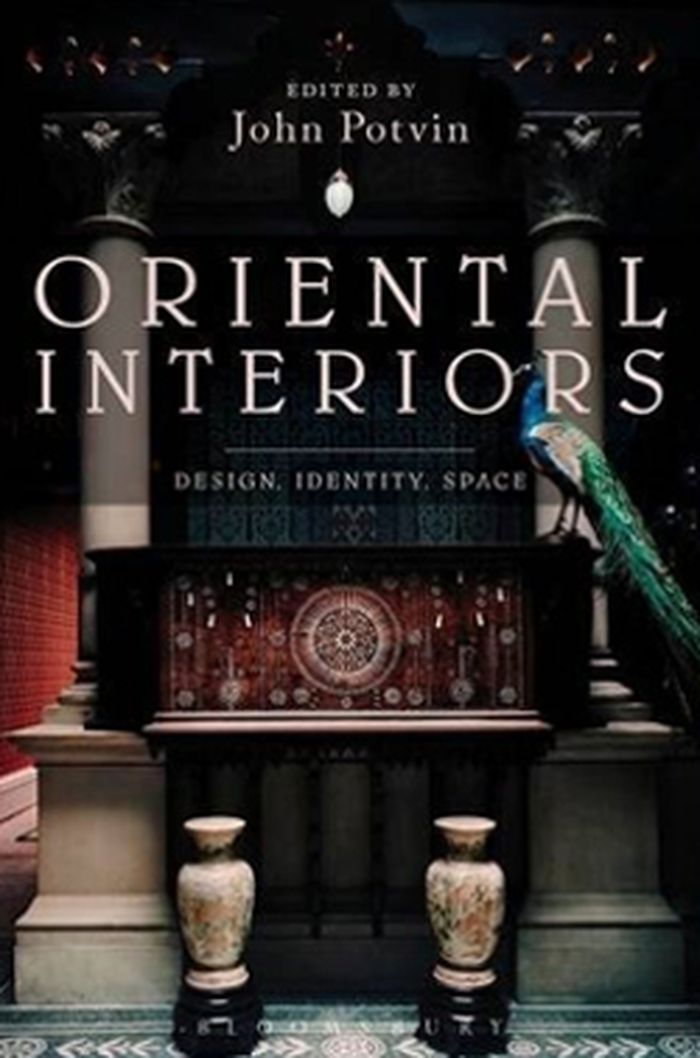
Since the publication of Edward Said's groundbreaking work Orientalism 35 years ago, numerous studies have explored the West's fraught and enduring fascination with the so-called Orient. Focusing their critical attention on the literary and pictorial arts, these studies have, to date, largely neglected the world of interior design. Oriental Interiors is the first book to fully explore the formation and perception of eastern-inspired interiors from an orientalist perspective. Orientalist spaces in the West have taken numerous forms since the 18th century to the present day, and the fifteen chapters in this collection reflect that diversity, dealing with subjects as varied and engaging as harems, Turkish baths on RMS Titanic, Parisian bachelor quarters, potted palms, and contemporary yoga studios. It explores how furnishings, surface treatments, ornament and music, for example, are deployed to enhance the exoticism and pleasures of oriental spaces, looking across a range of international locations. Organized into three parts, each introduced by the editor, the essays are grouped by theme to highlight critical paths into the intersections between orientalist studies, spatial theory, design studies, visual culture and gender studies, making this essential reading for students and researchers alike.
Oriental interiors: design, identity, space
Actions:
Price:
$37.50
(available to order)
Summary:
Since the publication of Edward Said's groundbreaking work Orientalism 35 years ago, numerous studies have explored the West's fraught and enduring fascination with the so-called Orient. Focusing their critical attention on the literary and pictorial arts, these studies have, to date, largely neglected the world of interior design. Oriental Interiors is the first book to fully explore the formation and perception of eastern-inspired interiors from an orientalist perspective. Orientalist spaces in the West have taken numerous forms since the 18th century to the present day, and the fifteen chapters in this collection reflect that diversity, dealing with subjects as varied and engaging as harems, Turkish baths on RMS Titanic, Parisian bachelor quarters, potted palms, and contemporary yoga studios. It explores how furnishings, surface treatments, ornament and music, for example, are deployed to enhance the exoticism and pleasures of oriental spaces, looking across a range of international locations. Organized into three parts, each introduced by the editor, the essays are grouped by theme to highlight critical paths into the intersections between orientalist studies, spatial theory, design studies, visual culture and gender studies, making this essential reading for students and researchers alike.
Form:
books
books
Publication:
December 2015
December 2015
Subject:
Architectural Theory
Architectural Theory
Form:
books
books
Actions:
Price:
$64.95
(available to order)
Summary:
Aeolian Winds and the Spirit in Renaissance Architecture introduces new dimensions of thinking about architectural theory. Investigating Renaissance pneumatic architecture with respect to other disciplines of arts and sciences, the collected essays substantiate the thesis that pneuma (air, wind, spirit, soul) is a fundamental link for establishing harmony among the human(...)
$64.95
(available to order)
Summary:
Aeolian Winds and the Spirit in Renaissance Architecture introduces new dimensions of thinking about architectural theory. Investigating Renaissance pneumatic architecture with respect to other disciplines of arts and sciences, the collected essays substantiate the thesis that pneuma (air, wind, spirit, soul) is a fundamental link for establishing harmony among the human(...)
Title:
Aeolian winds and the spirit in renaissance architecture
Actions:
Price:
$64.95
(available to order)
Summary:
Aeolian Winds and the Spirit in Renaissance Architecture introduces new dimensions of thinking about architectural theory. Investigating Renaissance pneumatic architecture with respect to other disciplines of arts and sciences, the collected essays substantiate the thesis that pneuma (air, wind, spirit, soul) is a fundamental link for establishing harmony among the human body, a building, and the cosmos. While much of sixteenth and seventeenth century scholarship has been devoted to the mathematics of ideal architecture, the book proves that essence, wind and ventilation are all part of the classical principles of building, and that one of the primary goals of Renaissance architects was to enhance the powers of pneuma so as to foster the art of well-being. This volume, written by leading architectural historians and scholars, delineates ancient and Renaissance theories and practice of pneumatology, and indicates a link to contemporary environmental questions. It examines Anaximenes, Hippocrates, Galen, Trento, Romano, Alberti, Serlio, Palladio, Scamozzi and other thinkers and humanists. Moreover, the essays illustrate the most famous examples of hygienico-therapeutic villas, including Rotonda, La Rocca Pisana and Eolia, a pneumatic model of Renaissance Venetian architecture.
Aeolian winds and the spirit in renaissance architecture
Actions:
Price:
$64.95
(available to order)
Summary:
Aeolian Winds and the Spirit in Renaissance Architecture introduces new dimensions of thinking about architectural theory. Investigating Renaissance pneumatic architecture with respect to other disciplines of arts and sciences, the collected essays substantiate the thesis that pneuma (air, wind, spirit, soul) is a fundamental link for establishing harmony among the human body, a building, and the cosmos. While much of sixteenth and seventeenth century scholarship has been devoted to the mathematics of ideal architecture, the book proves that essence, wind and ventilation are all part of the classical principles of building, and that one of the primary goals of Renaissance architects was to enhance the powers of pneuma so as to foster the art of well-being. This volume, written by leading architectural historians and scholars, delineates ancient and Renaissance theories and practice of pneumatology, and indicates a link to contemporary environmental questions. It examines Anaximenes, Hippocrates, Galen, Trento, Romano, Alberti, Serlio, Palladio, Scamozzi and other thinkers and humanists. Moreover, the essays illustrate the most famous examples of hygienico-therapeutic villas, including Rotonda, La Rocca Pisana and Eolia, a pneumatic model of Renaissance Venetian architecture.
Form:
books
books
Publication:
December 2006, London New York
December 2006, London New York
Subject:
Architectural Theory
Architectural Theory
Form:
books
books
Title:
Media art histories
Media art histories
Actions:
Price:
$44.95
(available to order)
Summary:
Digital art has become a major contemporary art form, but it has yet to achieve acceptance from mainstream cultural institutions; it is rarely collected, and seldom included in the study of art history or other academic disciplines. In MediaArtHistories, leading scholars seek to change this. They take a wider view of media art, placing it against the backdrop of art(...)
$44.95
(available to order)
Summary:
Digital art has become a major contemporary art form, but it has yet to achieve acceptance from mainstream cultural institutions; it is rarely collected, and seldom included in the study of art history or other academic disciplines. In MediaArtHistories, leading scholars seek to change this. They take a wider view of media art, placing it against the backdrop of art(...)
Title:
Media art histories
Actions:
Price:
$44.95
(available to order)
Summary:
Digital art has become a major contemporary art form, but it has yet to achieve acceptance from mainstream cultural institutions; it is rarely collected, and seldom included in the study of art history or other academic disciplines. In MediaArtHistories, leading scholars seek to change this. They take a wider view of media art, placing it against the backdrop of art history. Their essays demonstrate that today's media art cannot be understood by technological details alone; it cannot be understood without its history, and it must be understood in proximity to other disciplines--film, cultural and media studies, computer science, philosophy, and sciences dealing with images. Contributors trace the evolution of digital art, from thirteenth-century Islamic mechanical devices and eighteenth-century phantasmagoria, magic lanterns, and other multimedia illusions, to Marcel Duchamp's inventions and 1960s kinetic and op art. They reexamine and redefine key media art theory terms--machine, media, exhibition--and consider the blurred dividing lines between art products and consumer products and between art images and science images. Finally, MediaArtHistories offers an approach for an interdisciplinary, expanded image science, which needs the "trained eye" of art history.
Media art histories
Actions:
Price:
$44.95
(available to order)
Summary:
Digital art has become a major contemporary art form, but it has yet to achieve acceptance from mainstream cultural institutions; it is rarely collected, and seldom included in the study of art history or other academic disciplines. In MediaArtHistories, leading scholars seek to change this. They take a wider view of media art, placing it against the backdrop of art history. Their essays demonstrate that today's media art cannot be understood by technological details alone; it cannot be understood without its history, and it must be understood in proximity to other disciplines--film, cultural and media studies, computer science, philosophy, and sciences dealing with images. Contributors trace the evolution of digital art, from thirteenth-century Islamic mechanical devices and eighteenth-century phantasmagoria, magic lanterns, and other multimedia illusions, to Marcel Duchamp's inventions and 1960s kinetic and op art. They reexamine and redefine key media art theory terms--machine, media, exhibition--and consider the blurred dividing lines between art products and consumer products and between art images and science images. Finally, MediaArtHistories offers an approach for an interdisciplinary, expanded image science, which needs the "trained eye" of art history.
Form:
books
books
Publication:
March 2007, Cambridge
March 2007, Cambridge
Subject:
Architectural Theory
Architectural Theory
Form:
books
books
Title:
Cartographic cinema
Cartographic cinema
Actions:
Price:
$31.50
(available to order)
Summary:
Cartography and cinema are what might be called locational machinery. Maps and movies tell their viewers where they are situated, what they are doing, and, to a strong degree, who they are. In this work,scholar Tom Conley establishes the ideological power of maps in classic, contemporary, and avant-garde cinema to shape the imaginary and mediated relations we hold with(...)
$31.50
(available to order)
Summary:
Cartography and cinema are what might be called locational machinery. Maps and movies tell their viewers where they are situated, what they are doing, and, to a strong degree, who they are. In this work,scholar Tom Conley establishes the ideological power of maps in classic, contemporary, and avant-garde cinema to shape the imaginary and mediated relations we hold with(...)
Title:
Cartographic cinema
Actions:
Price:
$31.50
(available to order)
Summary:
Cartography and cinema are what might be called locational machinery. Maps and movies tell their viewers where they are situated, what they are doing, and, to a strong degree, who they are. In this work,scholar Tom Conley establishes the ideological power of maps in classic, contemporary, and avant-garde cinema to shape the imaginary and mediated relations we hold with the world. "Cartographic cinema" examines the affinities of maps and movies through comparative theory and close analysis of films from the silent era to the French New Wave to Hollywood blockbusters. In doing so, Conley reveals that most of the movies we see contain maps of various kinds and almost invariably constitute a projective apparatus similar to cartography. In addition, he demonstrates that spatial signs in film foster a critical relation with the prevailing narrative and mimetic registers of cinema. Conley convincingly argues that the very act of watching films, and cinema itself, is actually a form of cartography. Unlike its function in an atlas, a map in a movie often causes the spectator to entertain broader questions—not only about cinema but also of the nature of space and being.
Cartographic cinema
Actions:
Price:
$31.50
(available to order)
Summary:
Cartography and cinema are what might be called locational machinery. Maps and movies tell their viewers where they are situated, what they are doing, and, to a strong degree, who they are. In this work,scholar Tom Conley establishes the ideological power of maps in classic, contemporary, and avant-garde cinema to shape the imaginary and mediated relations we hold with the world. "Cartographic cinema" examines the affinities of maps and movies through comparative theory and close analysis of films from the silent era to the French New Wave to Hollywood blockbusters. In doing so, Conley reveals that most of the movies we see contain maps of various kinds and almost invariably constitute a projective apparatus similar to cartography. In addition, he demonstrates that spatial signs in film foster a critical relation with the prevailing narrative and mimetic registers of cinema. Conley convincingly argues that the very act of watching films, and cinema itself, is actually a form of cartography. Unlike its function in an atlas, a map in a movie often causes the spectator to entertain broader questions—not only about cinema but also of the nature of space and being.
Form:
books
books
Publication:
December 2006, Minneapolis, London
December 2006, Minneapolis, London
Subject:
Architectural Theory
Architectural Theory
Form:
books
books
Title:
Nietzsche for architects
Nietzsche for architects
Actions:
Price:
$48.95
(available to order)
Summary:
Nietzsche’s philosophy is provocative and complex and has been hugely influential on modern intellectual history and European culture. But his critical approach and writing style invites misunderstandings, sometimes with disastrous consequences. His ideas—or those loosely associated with him—are often briefly cited in scholarly studies in architectural theory and history.(...)
$48.95
(available to order)
Summary:
Nietzsche’s philosophy is provocative and complex and has been hugely influential on modern intellectual history and European culture. But his critical approach and writing style invites misunderstandings, sometimes with disastrous consequences. His ideas—or those loosely associated with him—are often briefly cited in scholarly studies in architectural theory and history.(...)
Title:
Nietzsche for architects
Actions:
Price:
$48.95
(available to order)
Summary:
Nietzsche’s philosophy is provocative and complex and has been hugely influential on modern intellectual history and European culture. But his critical approach and writing style invites misunderstandings, sometimes with disastrous consequences. His ideas—or those loosely associated with him—are often briefly cited in scholarly studies in architectural theory and history. His ideas are thought to have influenced the theories and designs of such iconic architects as Le Corbusier, Henry van de Velde, Bruno Taut, Louis H. Sullivan, Lebbeus Woods, and Peter Eisenman, as well as competing approaches to architecture and design, such as those adopted by the Bauhaus School and the Nazis. In the bewildering array of architectural positions that lay claim to Nietzsche as an influence, how can we begin to make sense of Nietzsche’s own approach to architecture? And how can we identify within his complex philosophy the key ideas and themes we require to make sense of his contribution to architecture? This first introduction to Nietzsche’s philosophy written specifically for architects locates his evaluation of appropriate and inappropriate architecture in the body of his writings and presents a clear overview of Nietzsche’s insights into architectural design alongside his advice for architects and designers.
Nietzsche for architects
Actions:
Price:
$48.95
(available to order)
Summary:
Nietzsche’s philosophy is provocative and complex and has been hugely influential on modern intellectual history and European culture. But his critical approach and writing style invites misunderstandings, sometimes with disastrous consequences. His ideas—or those loosely associated with him—are often briefly cited in scholarly studies in architectural theory and history. His ideas are thought to have influenced the theories and designs of such iconic architects as Le Corbusier, Henry van de Velde, Bruno Taut, Louis H. Sullivan, Lebbeus Woods, and Peter Eisenman, as well as competing approaches to architecture and design, such as those adopted by the Bauhaus School and the Nazis. In the bewildering array of architectural positions that lay claim to Nietzsche as an influence, how can we begin to make sense of Nietzsche’s own approach to architecture? And how can we identify within his complex philosophy the key ideas and themes we require to make sense of his contribution to architecture? This first introduction to Nietzsche’s philosophy written specifically for architects locates his evaluation of appropriate and inappropriate architecture in the body of his writings and presents a clear overview of Nietzsche’s insights into architectural design alongside his advice for architects and designers.
Form:
books
books
Publication:
November 2025
November 2025
Subject:
Critical Theory
Critical Theory


