


620 Results
Form:
books
books
Title:
The London town garden
The London town garden
Actions:
Price:
$96.00
(available to order)
Summary:
Much has been written about London’s terraced houses with their simple dignity, their economical use of space, and their sense of comfort and human scale. Yet the small gardens that lie before or behind the houses in this great city have until now been overlooked. In this groundbreaking (...)
$96.00
(available to order)
Summary:
Much has been written about London’s terraced houses with their simple dignity, their economical use of space, and their sense of comfort and human scale. Yet the small gardens that lie before or behind the houses in this great city have until now been overlooked. In this groundbreaking (...)
Title:
The London town garden
Actions:
Price:
$96.00
(available to order)
Summary:
Much has been written about London’s terraced houses with their simple dignity, their economical use of space, and their sense of comfort and human scale. Yet the small gardens that lie before or behind the houses in this great city have until now been overlooked. In this groundbreaking account of the development of the private garden in London, eminent garden historian Todd Longstaffe-Gowan provides a delightful remedy to the oversight. Recognizing the contribution of modest domestic gardens to the texture of eighteenth- and early nineteenth-century London, Longstaffe-Gowan explores in full detail the small gardens, their owners, and their significance to the development of the metropolis. Some two hundred illustrations enhance this rich and fascinating discussion. Town gardening was conventionally maligned as a trifling pursuit conducted within inhospitable and infertile enclosures. This view changed during the eighteenth century as middle class Londoners found in gardening activities an outlet for personal enjoyment and expression. This book describes how gardening affected the lives of many, becoming part of the ritual of the daily round and gratifying material aspirations.
The London town garden
Actions:
Price:
$96.00
(available to order)
Summary:
Much has been written about London’s terraced houses with their simple dignity, their economical use of space, and their sense of comfort and human scale. Yet the small gardens that lie before or behind the houses in this great city have until now been overlooked. In this groundbreaking account of the development of the private garden in London, eminent garden historian Todd Longstaffe-Gowan provides a delightful remedy to the oversight. Recognizing the contribution of modest domestic gardens to the texture of eighteenth- and early nineteenth-century London, Longstaffe-Gowan explores in full detail the small gardens, their owners, and their significance to the development of the metropolis. Some two hundred illustrations enhance this rich and fascinating discussion. Town gardening was conventionally maligned as a trifling pursuit conducted within inhospitable and infertile enclosures. This view changed during the eighteenth century as middle class Londoners found in gardening activities an outlet for personal enjoyment and expression. This book describes how gardening affected the lives of many, becoming part of the ritual of the daily round and gratifying material aspirations.
Form:
books
books
Publication:
June 2001, London / New Haven
June 2001, London / New Haven
Subject:
Gardens
Gardens
Form:
books
books

Price:
$41.95
(available to order)
Summary:
For some 20 years, Kunming, a provincial capital city in China - 3.2 million inhabitants - has been the twin town of the European metropolis Zurich. As a direct result of this partnership, Kunming now has the first inner-city bus line in China, the first large-scale conservation of a historical part of the town, and new concepts for urban development at a regional(...)
$41.95
(available to order)
Summary:
For some 20 years, Kunming, a provincial capital city in China - 3.2 million inhabitants - has been the twin town of the European metropolis Zurich. As a direct result of this partnership, Kunming now has the first inner-city bus line in China, the first large-scale conservation of a historical part of the town, and new concepts for urban development at a regional(...)
Subject:
Contemporary Asian Architecture
Contemporary Asian Architecture
Publication:
September 2002, Basel
September 2002, Basel
Title:
The Kunming project : urban development in China - a dialogue
Actions:
Price:
$41.95
(available to order)
Summary:
For some 20 years, Kunming, a provincial capital city in China - 3.2 million inhabitants - has been the twin town of the European metropolis Zurich. As a direct result of this partnership, Kunming now has the first inner-city bus line in China, the first large-scale conservation of a historical part of the town, and new concepts for urban development at a regional level. This pioneering collaboration between western and Chinese planning teams, and the ways in which urban planning has been managed, are not only significant for Kunming but are of importance for all countries which are interested in sharing the expertise and knowledge of professionals whether they be from East or West, North or South, for countries which wish to benefit from western building practice whilst avoiding their mistakes. The challenge of such joint projects surely lies in the confrontation resulting from the traditional and historical background in large Asian cities together with their sense of modernity which has often surpassed the modern western world not only in terms of progress but also problems. In English and Chinese
The Kunming project : urban development in China - a dialogue
Actions:
Price:
$41.95
(available to order)
Summary:
For some 20 years, Kunming, a provincial capital city in China - 3.2 million inhabitants - has been the twin town of the European metropolis Zurich. As a direct result of this partnership, Kunming now has the first inner-city bus line in China, the first large-scale conservation of a historical part of the town, and new concepts for urban development at a regional level. This pioneering collaboration between western and Chinese planning teams, and the ways in which urban planning has been managed, are not only significant for Kunming but are of importance for all countries which are interested in sharing the expertise and knowledge of professionals whether they be from East or West, North or South, for countries which wish to benefit from western building practice whilst avoiding their mistakes. The challenge of such joint projects surely lies in the confrontation resulting from the traditional and historical background in large Asian cities together with their sense of modernity which has often surpassed the modern western world not only in terms of progress but also problems. In English and Chinese
Form:
books
books
Publication:
September 2002, Basel
September 2002, Basel
Subject:
Contemporary Asian Architecture
Contemporary Asian Architecture
Form:
books
books
Actions:
Price:
$42.95
(available to order)
Summary:
Architects Jesse Reiser and Nanako Umemoto have been generating some of the most provocative thinking in the field for nearly twenty years. With "Atlas of novel tectonics", Reiser+Umemoto hone in on the many facets of architecture and illuminate their theories with thought and simplicity. The Atlas is organized as an accumulation of short chapters that address the(...)
$42.95
(available to order)
Summary:
Architects Jesse Reiser and Nanako Umemoto have been generating some of the most provocative thinking in the field for nearly twenty years. With "Atlas of novel tectonics", Reiser+Umemoto hone in on the many facets of architecture and illuminate their theories with thought and simplicity. The Atlas is organized as an accumulation of short chapters that address the(...)
Subject:
Architecture Monographs
Architecture Monographs
Publication:
February 2006, New York
February 2006, New York
Title:
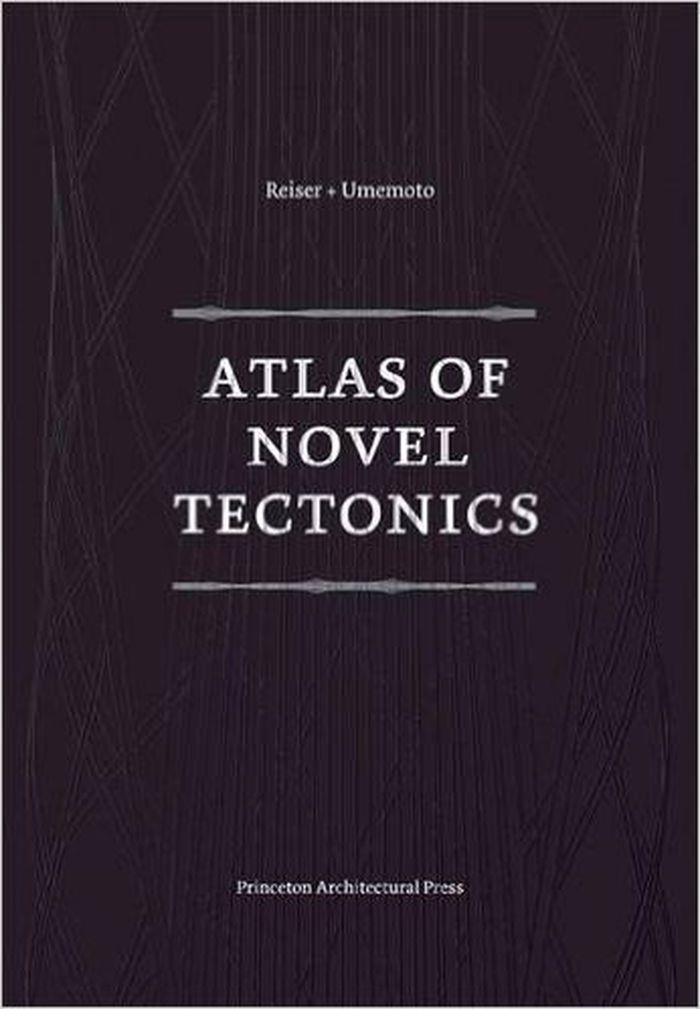
Reiser + Umemoto: Atlas of novel tectonics
Actions:
Price:
$42.95
(available to order)
Summary:
Architects Jesse Reiser and Nanako Umemoto have been generating some of the most provocative thinking in the field for nearly twenty years. With "Atlas of novel tectonics", Reiser+Umemoto hone in on the many facets of architecture and illuminate their theories with thought and simplicity. The Atlas is organized as an accumulation of short chapters that address the workings of matter and force, material science, the lessons of art and architectural history, and the influence of architecture on culture (and vice versa). Reiser+Umemoto see architectural design as a series of problem situations, and each chapter is an argument devoted to a specific condition or case. Influenced by a wide range of fields and phenomena —Brillat-Savarin's classic "The physiology of taste" is one of their primary models—the authors provide a cross-section of thinking and inspiration. The result is both an elucidation of the concepts that guide Reiser+Umemoto through their own design process and a series of meditations on topics that have formed their own sense as architects. "Atlas of novel tectonics" offers an entirely fresh perspective on subjects that are generally taken for granted, and does so with a welcome punch and energy. Jesse Reiser and Nanako Umemoto are the founding partners of Reiser+Umemoto RUR, an architectural firm based in New York City. Their work encompasses a wide range of scales, from furniture design to landscape and infrastructure.
Reiser + Umemoto: Atlas of novel tectonics
Actions:
Price:
$42.95
(available to order)
Summary:
Architects Jesse Reiser and Nanako Umemoto have been generating some of the most provocative thinking in the field for nearly twenty years. With "Atlas of novel tectonics", Reiser+Umemoto hone in on the many facets of architecture and illuminate their theories with thought and simplicity. The Atlas is organized as an accumulation of short chapters that address the workings of matter and force, material science, the lessons of art and architectural history, and the influence of architecture on culture (and vice versa). Reiser+Umemoto see architectural design as a series of problem situations, and each chapter is an argument devoted to a specific condition or case. Influenced by a wide range of fields and phenomena —Brillat-Savarin's classic "The physiology of taste" is one of their primary models—the authors provide a cross-section of thinking and inspiration. The result is both an elucidation of the concepts that guide Reiser+Umemoto through their own design process and a series of meditations on topics that have formed their own sense as architects. "Atlas of novel tectonics" offers an entirely fresh perspective on subjects that are generally taken for granted, and does so with a welcome punch and energy. Jesse Reiser and Nanako Umemoto are the founding partners of Reiser+Umemoto RUR, an architectural firm based in New York City. Their work encompasses a wide range of scales, from furniture design to landscape and infrastructure.
Form:
books
books
Publication:
February 2006, New York
February 2006, New York
Subject:
Architecture Monographs
Architecture Monographs
Form:
books
books
Title:
Victor Burgin : Venise
Victor Burgin : Venise
Actions:
Price:
$21.50
(available to order)
Summary:
In "Venise" Victor Burgin pursues ideas of “desire in and for a city, and in a sense, desire of a city”, ideas first explored in his video Venise, which was made for the city of Marseilles and reflects on the relationship between San Fransisco and Marseilles.
$21.50
(available to order)
Summary:
In "Venise" Victor Burgin pursues ideas of “desire in and for a city, and in a sense, desire of a city”, ideas first explored in his video Venise, which was made for the city of Marseilles and reflects on the relationship between San Fransisco and Marseilles.
Title:
Victor Burgin : Venise
Actions:
Price:
$21.50
(available to order)
Summary:
In "Venise" Victor Burgin pursues ideas of “desire in and for a city, and in a sense, desire of a city”, ideas first explored in his video Venise, which was made for the city of Marseilles and reflects on the relationship between San Fransisco and Marseilles.
Victor Burgin : Venise
Actions:
Price:
$21.50
(available to order)
Summary:
In "Venise" Victor Burgin pursues ideas of “desire in and for a city, and in a sense, desire of a city”, ideas first explored in his video Venise, which was made for the city of Marseilles and reflects on the relationship between San Fransisco and Marseilles.
Form:
books
books
Publication:
April 1997, London
April 1997, London
Subject:
Photography monographs
Photography monographs
Form:
books
books
Actions:
Price:
$32.00
(available to order)
Summary:
Published as a companion analysis to an exhibition on the topic of illegal architecture in Taipei and China, this book focuses on the work and insight of two architects, Wang Shu and Hsieh Ying-chun, in a search for a more positive meaning for architecture. With an eye toward opening new possibilities for city life and instilling a sense of aesthetics in residents who(...)
$32.00
(available to order)
Summary:
Published as a companion analysis to an exhibition on the topic of illegal architecture in Taipei and China, this book focuses on the work and insight of two architects, Wang Shu and Hsieh Ying-chun, in a search for a more positive meaning for architecture. With an eye toward opening new possibilities for city life and instilling a sense of aesthetics in residents who(...)
Title:
Illegal architecture Wang Shu Hsieh Ying-Chun
Actions:
Price:
$32.00
(available to order)
Summary:
Published as a companion analysis to an exhibition on the topic of illegal architecture in Taipei and China, this book focuses on the work and insight of two architects, Wang Shu and Hsieh Ying-chun, in a search for a more positive meaning for architecture. With an eye toward opening new possibilities for city life and instilling a sense of aesthetics in residents who take action in an architectural and urban sense, its purpose is to show the vital and organic qualities of the city while circumventing or breaking regulatory and technological barriers.
Illegal architecture Wang Shu Hsieh Ying-Chun
Actions:
Price:
$32.00
(available to order)
Summary:
Published as a companion analysis to an exhibition on the topic of illegal architecture in Taipei and China, this book focuses on the work and insight of two architects, Wang Shu and Hsieh Ying-chun, in a search for a more positive meaning for architecture. With an eye toward opening new possibilities for city life and instilling a sense of aesthetics in residents who take action in an architectural and urban sense, its purpose is to show the vital and organic qualities of the city while circumventing or breaking regulatory and technological barriers.
Form:
books
books
Publication:
August 2013
August 2013
Subject:
Contemporary Asian Architecture
Contemporary Asian Architecture
Form:
books
books
Actions:
Price:
$24.95
(available to order)
Summary:
Thousands of newcomers are pouring into Alberta from around the globe, bringing unexpected gifts. Many are writers and storytellers. What pulls them to Canada? What happens to them on the journey? What experiences have they deliberately left behind? What treasures do they bring? How do they describe their emerging sense of place and their creative aspirations in a new(...)
$24.95
(available to order)
Summary:
Thousands of newcomers are pouring into Alberta from around the globe, bringing unexpected gifts. Many are writers and storytellers. What pulls them to Canada? What happens to them on the journey? What experiences have they deliberately left behind? What treasures do they bring? How do they describe their emerging sense of place and their creative aspirations in a new(...)
Title:
The story that brought me here: to Alberta from everywhere
Actions:
Price:
$24.95
(available to order)
Summary:
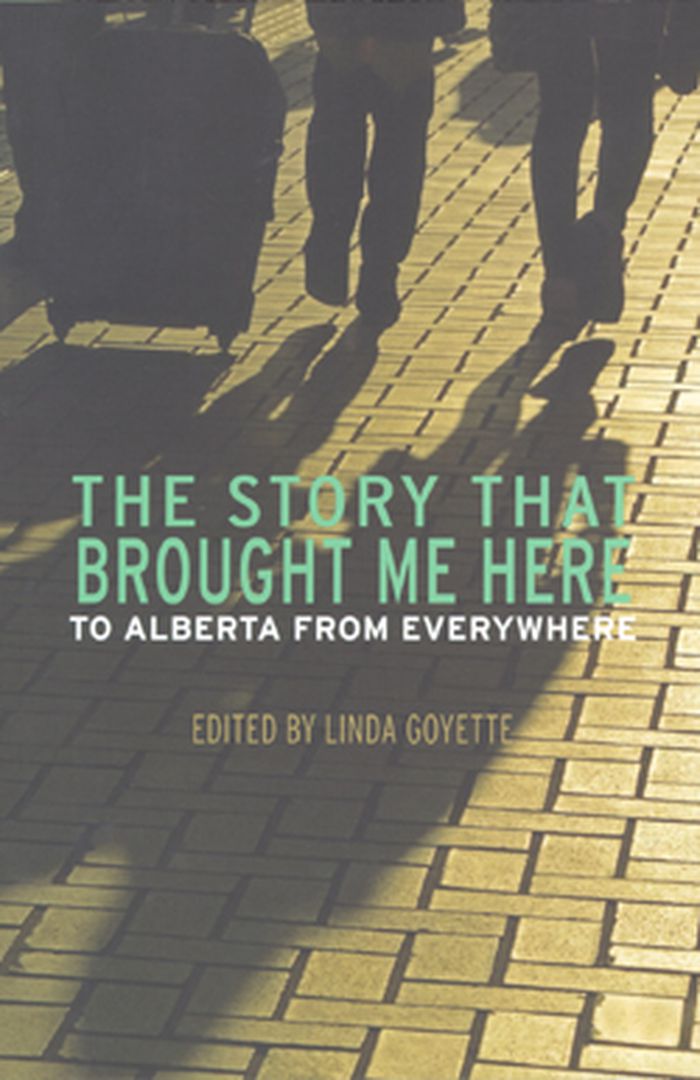
Thousands of newcomers are pouring into Alberta from around the globe, bringing unexpected gifts. Many are writers and storytellers. What pulls them to Canada? What happens to them on the journey? What experiences have they deliberately left behind? What treasures do they bring? How do they describe their emerging sense of place and their creative aspirations in a new home? In this moving collection of stories and poems, writers from around the world share their thoughts on creating a life in Alberta. Expressed with beauty and clarity, and sometimes translated from the writer's native tongue, these very personal accounts of joy and sadness, regret and humour, homesickness and exuberance, describe the defining moments of a departure and an arrival. Linda Goyette is an Edmonton writer and journalist with an interest in giving voice to a new Canadian dialogue. Her previous books include Rocky Mountain Kids, Kidmonton: True Stories of River City Kids; Edmonton in Our Own Words, which won the Grant MacEwan Authors Award in 2005; Standing Together: Women Speak Out About Violence and Abuse and Second Opinion.
The story that brought me here: to Alberta from everywhere
Actions:
Price:
$24.95
(available to order)
Summary:
Thousands of newcomers are pouring into Alberta from around the globe, bringing unexpected gifts. Many are writers and storytellers. What pulls them to Canada? What happens to them on the journey? What experiences have they deliberately left behind? What treasures do they bring? How do they describe their emerging sense of place and their creative aspirations in a new home? In this moving collection of stories and poems, writers from around the world share their thoughts on creating a life in Alberta. Expressed with beauty and clarity, and sometimes translated from the writer's native tongue, these very personal accounts of joy and sadness, regret and humour, homesickness and exuberance, describe the defining moments of a departure and an arrival. Linda Goyette is an Edmonton writer and journalist with an interest in giving voice to a new Canadian dialogue. Her previous books include Rocky Mountain Kids, Kidmonton: True Stories of River City Kids; Edmonton in Our Own Words, which won the Grant MacEwan Authors Award in 2005; Standing Together: Women Speak Out About Violence and Abuse and Second Opinion.
Form:
books
books
Publication:
September 2008, Edmonton
September 2008, Edmonton
Subject:
Architecture in Canada
Architecture in Canada
Form:
journals and magazines
journals and magazines
Title:
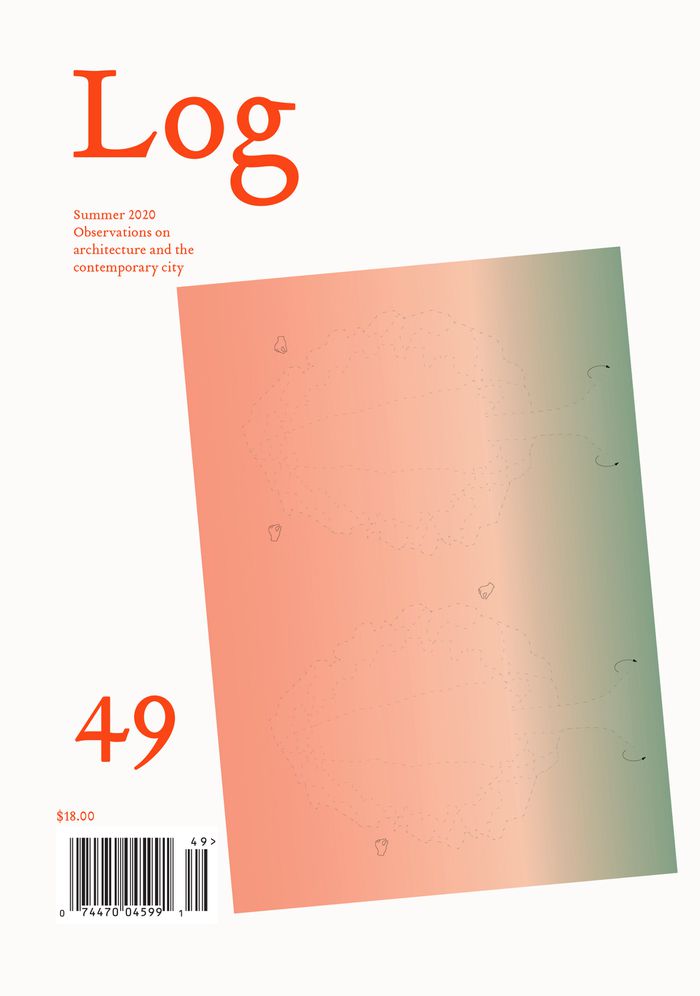
Log 49 Summer 2020
Log 49 Summer 2020
Actions:
Price:
$25.50
(available in store)
Summary:
As the world reckons with the compounding crises of a pandemic, racial unrest, a recession, and climate change, 'Log 49' compiles essays, interviews, observations, and manifestos by 29 authors in an effort to make sense of architecture, the city, and nature in the midst of turmoil.
$25.50
(available in store)
Summary:
As the world reckons with the compounding crises of a pandemic, racial unrest, a recession, and climate change, 'Log 49' compiles essays, interviews, observations, and manifestos by 29 authors in an effort to make sense of architecture, the city, and nature in the midst of turmoil.
Title:
Log 49 Summer 2020
Actions:
Price:
$25.50
(available in store)
Summary:
As the world reckons with the compounding crises of a pandemic, racial unrest, a recession, and climate change, 'Log 49' compiles essays, interviews, observations, and manifestos by 29 authors in an effort to make sense of architecture, the city, and nature in the midst of turmoil.
Log 49 Summer 2020
Actions:
Price:
$25.50
(available in store)
Summary:
As the world reckons with the compounding crises of a pandemic, racial unrest, a recession, and climate change, 'Log 49' compiles essays, interviews, observations, and manifestos by 29 authors in an effort to make sense of architecture, the city, and nature in the midst of turmoil.
Form:
journals and magazines
journals and magazines
Publication:
September 2020
September 2020
Subject:
Magazines
Magazines
Form:
books
books
Actions:
Price:
$34.95
(available to order)
Summary:
Modern Architecture is a landmark text - the first book in which this American architect put forth the principles of a fundamentally new, organic architecture that would reject the trappings of historical styles while avoiding the geometric abstraction of the machine aesthetic advocated by contemporary European modernists. One of the most important documents in the(...)
$34.95
(available to order)
Summary:
Modern Architecture is a landmark text - the first book in which this American architect put forth the principles of a fundamentally new, organic architecture that would reject the trappings of historical styles while avoiding the geometric abstraction of the machine aesthetic advocated by contemporary European modernists. One of the most important documents in the(...)
Subject:
Architecture Monographs
Architecture Monographs
Publication:
March 2008, Princeton, Oxford
March 2008, Princeton, Oxford
Title:
Modern architecture : being the Kahn Lectures for 1930
Actions:
Price:
$34.95
(available to order)
Summary:
Modern Architecture is a landmark text - the first book in which this American architect put forth the principles of a fundamentally new, organic architecture that would reject the trappings of historical styles while avoiding the geometric abstraction of the machine aesthetic advocated by contemporary European modernists. One of the most important documents in the development of modern architecture and the career of Frank Lloyd Wright, "Modern Architecture" is a provocative and profound polemic against America's architectural eclecticism, commercial skyscrapers, and misguided urban planning. The book is also a work of savvy self-promotion, in which Wright not only advanced his own concept of an organic architecture but also framed it as having anticipated by decades - and bettered -what he saw as the reductive modernism of his European counterparts. Based on the 1931 original, for which Wright supplied the cover illustration, this edition includes a new introduction that puts "Modern Architecture" in its broader architectural, historical, and intellectual context for the first time. The subjects of these lively lectures -from "Machinery, Materials and Men" to "The Tyranny of the Skyscraper" and "The City" - move from a general statement of the conditions of modern culture to particular applications in the fields of architecture and urbanism at ever broadening scales. Wright's vision in "Modern Architecture" is ultimately to equate the truly modern with romanticism, imagination, beauty, and nature - all of which he connects with an underlying sense of American democratic freedom and individualism.
Modern architecture : being the Kahn Lectures for 1930
Actions:
Price:
$34.95
(available to order)
Summary:
Modern Architecture is a landmark text - the first book in which this American architect put forth the principles of a fundamentally new, organic architecture that would reject the trappings of historical styles while avoiding the geometric abstraction of the machine aesthetic advocated by contemporary European modernists. One of the most important documents in the development of modern architecture and the career of Frank Lloyd Wright, "Modern Architecture" is a provocative and profound polemic against America's architectural eclecticism, commercial skyscrapers, and misguided urban planning. The book is also a work of savvy self-promotion, in which Wright not only advanced his own concept of an organic architecture but also framed it as having anticipated by decades - and bettered -what he saw as the reductive modernism of his European counterparts. Based on the 1931 original, for which Wright supplied the cover illustration, this edition includes a new introduction that puts "Modern Architecture" in its broader architectural, historical, and intellectual context for the first time. The subjects of these lively lectures -from "Machinery, Materials and Men" to "The Tyranny of the Skyscraper" and "The City" - move from a general statement of the conditions of modern culture to particular applications in the fields of architecture and urbanism at ever broadening scales. Wright's vision in "Modern Architecture" is ultimately to equate the truly modern with romanticism, imagination, beauty, and nature - all of which he connects with an underlying sense of American democratic freedom and individualism.
Form:
books
books
Publication:
March 2008, Princeton, Oxford
March 2008, Princeton, Oxford
Subject:
Architecture Monographs
Architecture Monographs
Form:
books
books
Title:
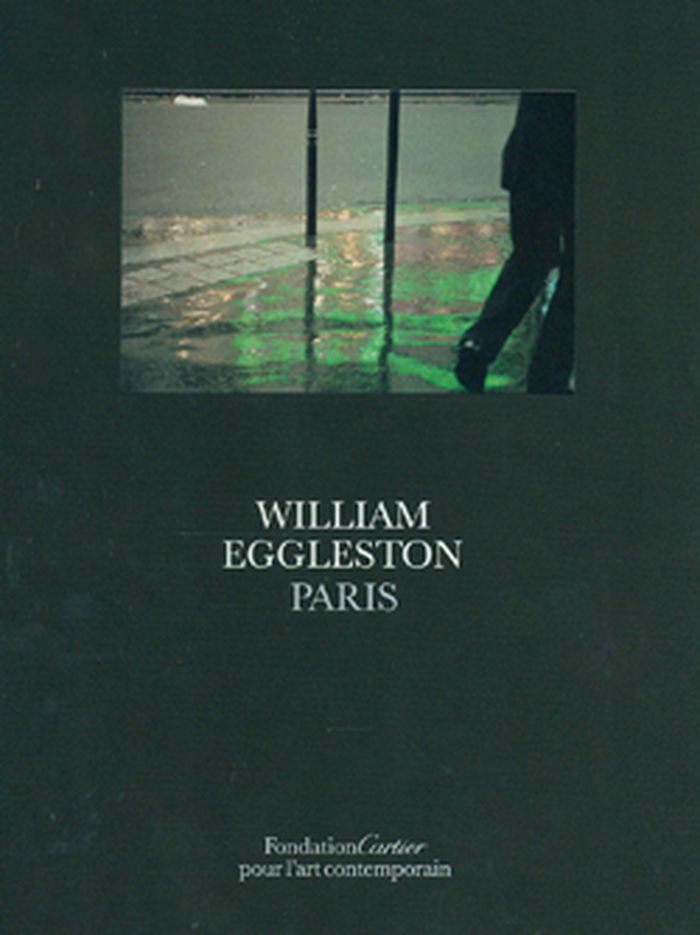
William Eggleston: Paris
William Eggleston: Paris
Actions:
Price:
$60.00
(available to order)
Summary:
For photographers, the city of Paris must constitute a genre of its own (alongside "nudes" or "botanical"), so perennially photogenic are its streets, skylines, storefronts and people. Here, William Eggleston--"The Father of Color Photography"--offers a brilliant, unusual take on Paris today, with depictions that completely revitalize our sense of this most picturesque of cities.
$60.00
(available to order)
Summary:
For photographers, the city of Paris must constitute a genre of its own (alongside "nudes" or "botanical"), so perennially photogenic are its streets, skylines, storefronts and people. Here, William Eggleston--"The Father of Color Photography"--offers a brilliant, unusual take on Paris today, with depictions that completely revitalize our sense of this most picturesque of cities.
Title:
William Eggleston: Paris
Actions:
Price:
$60.00
(available to order)
Summary:
For photographers, the city of Paris must constitute a genre of its own (alongside "nudes" or "botanical"), so perennially photogenic are its streets, skylines, storefronts and people. Here, William Eggleston--"The Father of Color Photography"--offers a brilliant, unusual take on Paris today, with depictions that completely revitalize our sense of this most picturesque of cities.
William Eggleston: Paris
Actions:
Price:
$60.00
(available to order)
Summary:
For photographers, the city of Paris must constitute a genre of its own (alongside "nudes" or "botanical"), so perennially photogenic are its streets, skylines, storefronts and people. Here, William Eggleston--"The Father of Color Photography"--offers a brilliant, unusual take on Paris today, with depictions that completely revitalize our sense of this most picturesque of cities.
Form:
books
books
Publication:
September 2009
September 2009
Subject:
Photography monographs
Photography monographs
Form:
books
books
Actions:
Price:
$34.95
(available to order)
Summary:
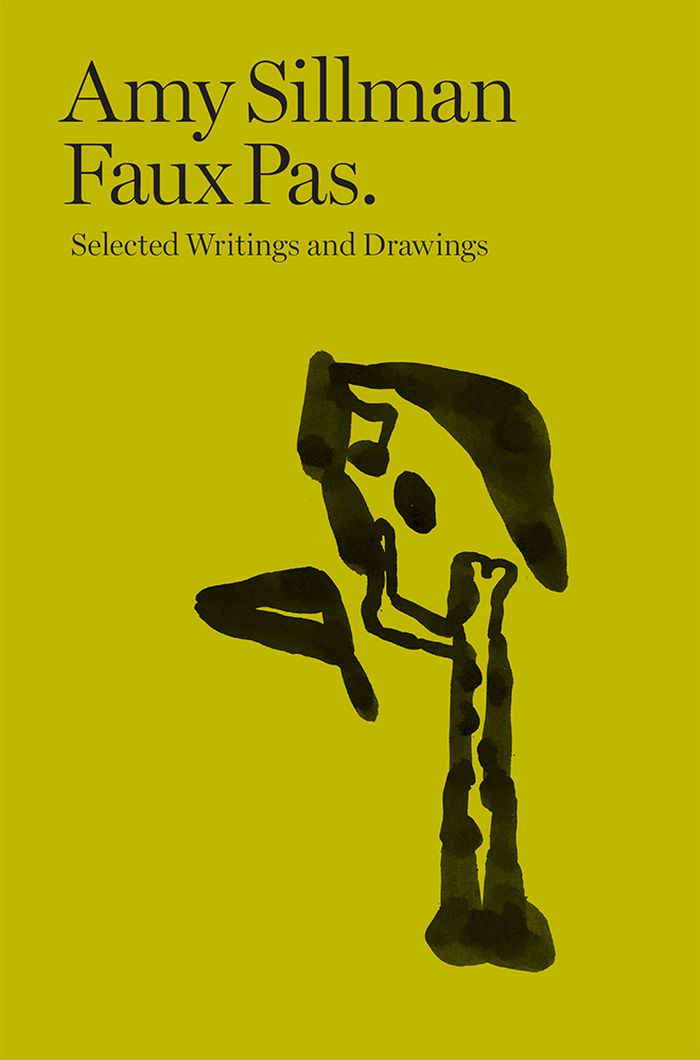
Based in New York City, Amy Sillman (born 1955) is an artist whose work consistently combines the visceral with the intellectual. 'Faux pas' aims at revealing the coherence and originality of Sillman’s reflection, as she addresses the possibilities of art today, favoring excess over good taste, wrestling over dandyism, forms over symbols, with as much critical sense as humor.
$34.95
(available to order)
Summary:
Based in New York City, Amy Sillman (born 1955) is an artist whose work consistently combines the visceral with the intellectual. 'Faux pas' aims at revealing the coherence and originality of Sillman’s reflection, as she addresses the possibilities of art today, favoring excess over good taste, wrestling over dandyism, forms over symbols, with as much critical sense as humor.
Title:
Amy Sillman : faux pas, selected writings and drawings
Actions:
Price:
$34.95
(available to order)
Summary:
Based in New York City, Amy Sillman (born 1955) is an artist whose work consistently combines the visceral with the intellectual. 'Faux pas' aims at revealing the coherence and originality of Sillman’s reflection, as she addresses the possibilities of art today, favoring excess over good taste, wrestling over dandyism, forms over symbols, with as much critical sense as humor.
Amy Sillman : faux pas, selected writings and drawings
Actions:
Price:
$34.95
(available to order)
Summary:
Based in New York City, Amy Sillman (born 1955) is an artist whose work consistently combines the visceral with the intellectual. 'Faux pas' aims at revealing the coherence and originality of Sillman’s reflection, as she addresses the possibilities of art today, favoring excess over good taste, wrestling over dandyism, forms over symbols, with as much critical sense as humor.
Form:
books
books
Publication:
October 2020
October 2020
Subject:
Art Theory
Art Theory


