


624 Results
Form:
books
books
Holdings:
Description:
xvii, 411 pages : illustrations, map ; 24 cm
Description:
xvii, 411 pages : illustrations, map ; 24 cm
Author:
Subject:
Publication:
Chicago : The Society of American Archivists, 1997.
Chicago : The Society of American Archivists, 1997.
Title:
The records of American business / edited by James M. O'Toole.
Actions:
Holdings:
Description:
xvii, 411 pages : illustrations, map ; 24 cm
The records of American business / edited by James M. O'Toole.
Actions:
Holdings:
Description:
xvii, 411 pages : illustrations, map ; 24 cm
Form:
books
books
Publication:
Chicago : The Society of American Archivists, 1997.
Chicago : The Society of American Archivists, 1997.
Author:
Subject:
Form:
books
books
Actions:
Price:
$47.00
(available to order)
Summary:
In post-colonial Africa, «White Elephant» was the name given to buildings erected with international money and never put to use; relic of an enormous waste. Europe has its own fair share of such mammoths: a pratically unused railway station designed by Santiago Calatrava near Lyon, the frame of an Aldo Rossi shopping mall in Berlin, a lonely feeder road in the middle of(...)
$47.00
(available to order)
Summary:
In post-colonial Africa, «White Elephant» was the name given to buildings erected with international money and never put to use; relic of an enormous waste. Europe has its own fair share of such mammoths: a pratically unused railway station designed by Santiago Calatrava near Lyon, the frame of an Aldo Rossi shopping mall in Berlin, a lonely feeder road in the middle of(...)
Title:
Weisse Elefanten / White Elephants
Actions:
Price:
$47.00
(available to order)
Summary:
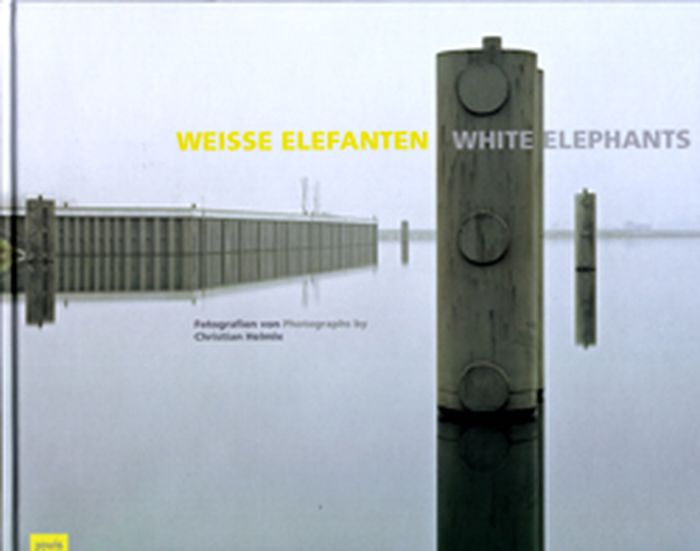
In post-colonial Africa, «White Elephant» was the name given to buildings erected with international money and never put to use; relic of an enormous waste. Europe has its own fair share of such mammoths: a pratically unused railway station designed by Santiago Calatrava near Lyon, the frame of an Aldo Rossi shopping mall in Berlin, a lonely feeder road in the middle of nowhere, now slowly being reclaimed by nature... On his search for new developments in ruins, the Swiss photographer Christian Helmle discovered a vast amount of monumental solitary buildings and complexes throughout Europe's cities and countrysides. Relieved of their original functions, the barren structures have lost any connection to their environments, appearing alien and surreal. Throught Christian Helmle's shots they develop their own individual, touchingly melancholic aesthetic.
Weisse Elefanten / White Elephants
Actions:
Price:
$47.00
(available to order)
Summary:
In post-colonial Africa, «White Elephant» was the name given to buildings erected with international money and never put to use; relic of an enormous waste. Europe has its own fair share of such mammoths: a pratically unused railway station designed by Santiago Calatrava near Lyon, the frame of an Aldo Rossi shopping mall in Berlin, a lonely feeder road in the middle of nowhere, now slowly being reclaimed by nature... On his search for new developments in ruins, the Swiss photographer Christian Helmle discovered a vast amount of monumental solitary buildings and complexes throughout Europe's cities and countrysides. Relieved of their original functions, the barren structures have lost any connection to their environments, appearing alien and surreal. Throught Christian Helmle's shots they develop their own individual, touchingly melancholic aesthetic.
Form:
books
books
Publication:
March 2008
March 2008
Subject:
Photography monographs
Photography monographs
Form:
books
books
Actions:
Price:
$45.95
(available to order)
Summary:
This book brings together visions of utopia from around the world, from the lowly caravan to grand city plans, and looks at the ideas and aims of the people who created them. For some, the possibilities offered by a technologically advanced future have led to the design of vast megastructures such as Arata Isozaki’s ‘Clusters in the Air’. Others have attempted to combine(...)
$45.95
(available to order)
Summary:
This book brings together visions of utopia from around the world, from the lowly caravan to grand city plans, and looks at the ideas and aims of the people who created them. For some, the possibilities offered by a technologically advanced future have led to the design of vast megastructures such as Arata Isozaki’s ‘Clusters in the Air’. Others have attempted to combine(...)
Title:
Impossible worlds : the architecture of perfection
Actions:
Price:
$45.95
(available to order)
Summary:
This book brings together visions of utopia from around the world, from the lowly caravan to grand city plans, and looks at the ideas and aims of the people who created them. For some, the possibilities offered by a technologically advanced future have led to the design of vast megastructures such as Arata Isozaki’s ‘Clusters in the Air’. Others have attempted to combine innovation and tradition in "planned communities" like the picture-perfect Seaside, in Florida. Some are motivated by money or politics, others by faith or philanthropy, like the factory owners who built houses and schools for their workers in suburban Britain. All share a conviction that a better world is not impossible. "Impossible Worlds" features historical essays, case studies and new photography, as well as contributions by artists, philosophers and architects.
Impossible worlds : the architecture of perfection
Actions:
Price:
$45.95
(available to order)
Summary:
This book brings together visions of utopia from around the world, from the lowly caravan to grand city plans, and looks at the ideas and aims of the people who created them. For some, the possibilities offered by a technologically advanced future have led to the design of vast megastructures such as Arata Isozaki’s ‘Clusters in the Air’. Others have attempted to combine innovation and tradition in "planned communities" like the picture-perfect Seaside, in Florida. Some are motivated by money or politics, others by faith or philanthropy, like the factory owners who built houses and schools for their workers in suburban Britain. All share a conviction that a better world is not impossible. "Impossible Worlds" features historical essays, case studies and new photography, as well as contributions by artists, philosophers and architects.
Form:
books
books
Publication:
October 2000, Basel/London
October 2000, Basel/London
Subject:
sale books
sale books
Form:
books
books
Title:
The ghost of Karl Marx
The ghost of Karl Marx
Actions:
Price:
$21.95
(available to order)
Summary:
At its most basic, philosophy is about learning how to think about the world around us. It should come as no surprise, then, that children make excellent philosophers! Naturally inquisitive, pint-size scholars need little prompting before being willing to consider life s big questions, however strange or impractical. Plato & Co. introduces children and curious grown-ups(...)
$21.95
(available to order)
Summary:
At its most basic, philosophy is about learning how to think about the world around us. It should come as no surprise, then, that children make excellent philosophers! Naturally inquisitive, pint-size scholars need little prompting before being willing to consider life s big questions, however strange or impractical. Plato & Co. introduces children and curious grown-ups(...)
Title:
The ghost of Karl Marx
Actions:
Price:
$21.95
(available to order)
Summary:
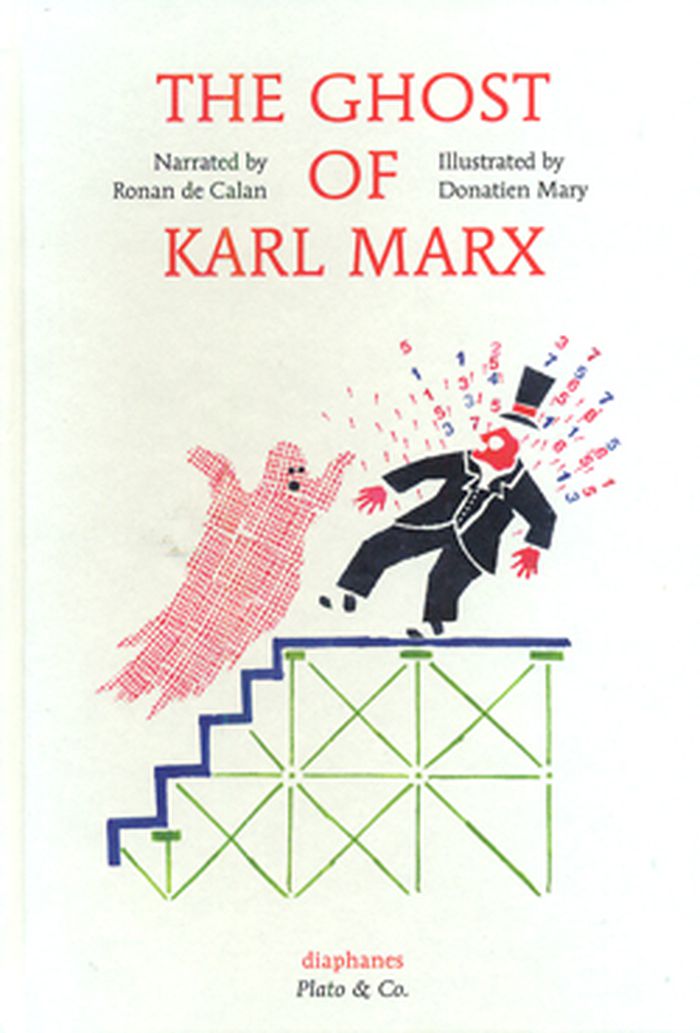
At its most basic, philosophy is about learning how to think about the world around us. It should come as no surprise, then, that children make excellent philosophers! Naturally inquisitive, pint-size scholars need little prompting before being willing to consider life s big questions, however strange or impractical. Plato & Co. introduces children and curious grown-ups to the lives and work of famous philosophers, from Descartes to Socrates, Einstein, Marx, and Wittgenstein. Each book in the series features an engaging and often funny story that presents basic tenets of philosophical thought alongside vibrant color illustrations. In The Ghost of Karl Marx, the philosopher is saddened when the town weavers must sell their cloth cheaply to compete with machines. The farmers too cannot sell their crops and have no money to buy new seeds.
The ghost of Karl Marx
Actions:
Price:
$21.95
(available to order)
Summary:
At its most basic, philosophy is about learning how to think about the world around us. It should come as no surprise, then, that children make excellent philosophers! Naturally inquisitive, pint-size scholars need little prompting before being willing to consider life s big questions, however strange or impractical. Plato & Co. introduces children and curious grown-ups to the lives and work of famous philosophers, from Descartes to Socrates, Einstein, Marx, and Wittgenstein. Each book in the series features an engaging and often funny story that presents basic tenets of philosophical thought alongside vibrant color illustrations. In The Ghost of Karl Marx, the philosopher is saddened when the town weavers must sell their cloth cheaply to compete with machines. The farmers too cannot sell their crops and have no money to buy new seeds.
Form:
books
books
Publication:
September 2015
September 2015
Form:
books
books

Actions:
Price:
$24.95
(available to order)
Summary:
A riveting investigation of a beloved library caught in the crosshairs of real estate, power, and the people's interests by the reporter who broke the story.In a series of cover stories for "The Nation" magazine, journalist Scott Sherman uncovered the ways in which Wall Street logic almost took down one of New York City's most beloved and iconic institutions: the New York(...)
$24.95
(available to order)
Summary:
A riveting investigation of a beloved library caught in the crosshairs of real estate, power, and the people's interests by the reporter who broke the story.In a series of cover stories for "The Nation" magazine, journalist Scott Sherman uncovered the ways in which Wall Street logic almost took down one of New York City's most beloved and iconic institutions: the New York(...)
Title:
Patience and fortitude: power, real estate, and the fight to save a public library
Actions:
Price:
$24.95
(available to order)
Summary:
A riveting investigation of a beloved library caught in the crosshairs of real estate, power, and the people's interests by the reporter who broke the story.In a series of cover stories for "The Nation" magazine, journalist Scott Sherman uncovered the ways in which Wall Street logic almost took down one of New York City's most beloved and iconic institutions: the New York Public Library. In the years preceding the 2008 financial crisis, the library's leaders forged an audacious plan to sell off multiple branch libraries, mutilate a historic building, and send millions of books to a storage facility in New Jersey. Patience and Fortitude is at once a readable history of the library's secret plans, and a stirring account of a rare triumph against the forces of money and power.
Patience and fortitude: power, real estate, and the fight to save a public library
Actions:
Price:
$24.95
(available to order)
Summary:
A riveting investigation of a beloved library caught in the crosshairs of real estate, power, and the people's interests by the reporter who broke the story.In a series of cover stories for "The Nation" magazine, journalist Scott Sherman uncovered the ways in which Wall Street logic almost took down one of New York City's most beloved and iconic institutions: the New York Public Library. In the years preceding the 2008 financial crisis, the library's leaders forged an audacious plan to sell off multiple branch libraries, mutilate a historic building, and send millions of books to a storage facility in New Jersey. Patience and Fortitude is at once a readable history of the library's secret plans, and a stirring account of a rare triumph against the forces of money and power.
Form:
books
books
Publication:
July 2015
July 2015
Subject:
Archive, library and the digital
Archive, library and the digital
Form:
books
books

Title:
Fashion retail
Fashion retail
Actions:
Price:
$85.99
(available to order)
Summary:
Shops are being refitted almost on an annual basis in a whole range of styles, from the most purist minimalism to fantastical 1970s-inspired futurism. The emphasis being on novelty, innovation and an ingenious use of new and classic materials. By investing millions of dollars of their money on flagship stores and employing the biggest names in architecture, the fashion(...)
$85.99
(available to order)
Summary:
Shops are being refitted almost on an annual basis in a whole range of styles, from the most purist minimalism to fantastical 1970s-inspired futurism. The emphasis being on novelty, innovation and an ingenious use of new and classic materials. By investing millions of dollars of their money on flagship stores and employing the biggest names in architecture, the fashion(...)
Subject:
Commercial interiors, Building types
Commercial interiors, Building types
Publication:
July 2004, Chichester
July 2004, Chichester
Title:
Fashion retail
Actions:
Price:
$85.99
(available to order)
Summary:
Shops are being refitted almost on an annual basis in a whole range of styles, from the most purist minimalism to fantastical 1970s-inspired futurism. The emphasis being on novelty, innovation and an ingenious use of new and classic materials. By investing millions of dollars of their money on flagship stores and employing the biggest names in architecture, the fashion houses are clearly demonstrating just how important they now consider store design to be. Who are the architects and interior designers behind these fabulous stores and what is the thinking and concepts behind them? Fashion Retail profiles in depth over 28 recent stores. It features the stunning work of renowned architects such as Renzo Piano, Rem Koolhaas and Herzog & de Meuron for Hermés and Prada, as well as that of Gabellini Associates and Claudio Silvestrin.
Fashion retail
Actions:
Price:
$85.99
(available to order)
Summary:
Shops are being refitted almost on an annual basis in a whole range of styles, from the most purist minimalism to fantastical 1970s-inspired futurism. The emphasis being on novelty, innovation and an ingenious use of new and classic materials. By investing millions of dollars of their money on flagship stores and employing the biggest names in architecture, the fashion houses are clearly demonstrating just how important they now consider store design to be. Who are the architects and interior designers behind these fabulous stores and what is the thinking and concepts behind them? Fashion Retail profiles in depth over 28 recent stores. It features the stunning work of renowned architects such as Renzo Piano, Rem Koolhaas and Herzog & de Meuron for Hermés and Prada, as well as that of Gabellini Associates and Claudio Silvestrin.
Form:
books
books
Publication:
July 2004, Chichester
July 2004, Chichester
Subject:
Commercial interiors, Building types
Commercial interiors, Building types
Form:
books
books
Actions:
Price:
$27.99
(available in store)
Summary:
A direct and fundamentally optimistic indictment of the short-sightedness and intellectual arrogance that has characterized much of urban planning in this century, The Death and Life of Great American Cities has, since its first publication in 1961, become the standard against which all endeavors in that field are measured. In prose of outstanding immediacy, Jane Jacobs(...)
$27.99
(available in store)
Summary:
A direct and fundamentally optimistic indictment of the short-sightedness and intellectual arrogance that has characterized much of urban planning in this century, The Death and Life of Great American Cities has, since its first publication in 1961, become the standard against which all endeavors in that field are measured. In prose of outstanding immediacy, Jane Jacobs(...)
Title:
The death and life of great American cities
Actions:
Price:
$27.99
(available in store)
Summary:
A direct and fundamentally optimistic indictment of the short-sightedness and intellectual arrogance that has characterized much of urban planning in this century, The Death and Life of Great American Cities has, since its first publication in 1961, become the standard against which all endeavors in that field are measured. In prose of outstanding immediacy, Jane Jacobs writes about what makes streets safe or unsafe; about what constitutes a neighborhood, and what function it serves within the larger organism of the city; about why some neighborhoods remain impoverished while others regenerate themselves. She writes about the salutary role of funeral parlors and tenement windows, the dangers of too much development money and too little diversity. Compassionate, bracingly indignant, and always keenly detailed, Jane Jacobs's monumental work provides an essential framework for assessing the vitality of all cities.
The death and life of great American cities
Actions:
Price:
$27.99
(available in store)
Summary:
A direct and fundamentally optimistic indictment of the short-sightedness and intellectual arrogance that has characterized much of urban planning in this century, The Death and Life of Great American Cities has, since its first publication in 1961, become the standard against which all endeavors in that field are measured. In prose of outstanding immediacy, Jane Jacobs writes about what makes streets safe or unsafe; about what constitutes a neighborhood, and what function it serves within the larger organism of the city; about why some neighborhoods remain impoverished while others regenerate themselves. She writes about the salutary role of funeral parlors and tenement windows, the dangers of too much development money and too little diversity. Compassionate, bracingly indignant, and always keenly detailed, Jane Jacobs's monumental work provides an essential framework for assessing the vitality of all cities.
Form:
books
books
Publication:
December 1992, New York
December 1992, New York
Subject:
Urban Theory
Urban Theory
Form:
books
books
Actions:
Price:
$20.00
(available to order)
Summary:
Antonin Artaud's journey to Ireland in 1937 marked an extraordinary—and apocalyptic—turning point in his life and career. After publishing the manifesto ''The New Revelations of Being'' about the 'catastrophic immediate-future,' Artaud abruptly left Paris for Ireland, remaining there for six weeks without money. Artaud was eventually arrested as an undesirable alien,(...)
$20.00
(available to order)
Summary:
Antonin Artaud's journey to Ireland in 1937 marked an extraordinary—and apocalyptic—turning point in his life and career. After publishing the manifesto ''The New Revelations of Being'' about the 'catastrophic immediate-future,' Artaud abruptly left Paris for Ireland, remaining there for six weeks without money. Artaud was eventually arrested as an undesirable alien,(...)
Title:
Artaud 1937 Apocalypse: letters from Ireland
Actions:
Price:
$20.00
(available to order)
Summary:
Antonin Artaud's journey to Ireland in 1937 marked an extraordinary—and apocalyptic—turning point in his life and career. After publishing the manifesto ''The New Revelations of Being'' about the 'catastrophic immediate-future,' Artaud abruptly left Paris for Ireland, remaining there for six weeks without money. Artaud was eventually arrested as an undesirable alien, beaten by the police, and summarily deported back to France. On his return, he spent nine years in asylums, remaining there through the entire span of World War II. During his fateful journey, Artaud wrote letters to friends in Paris which included several 'magic spells,' intended to curse his enemies and protect his friends from the city's forthcoming incineration and the Antichrist's appearance. This book collects all of Artaud's surviving correspondence from his time in Ireland, as well as photographs of the locations he traveled through.
Artaud 1937 Apocalypse: letters from Ireland
Actions:
Price:
$20.00
(available to order)
Summary:
Antonin Artaud's journey to Ireland in 1937 marked an extraordinary—and apocalyptic—turning point in his life and career. After publishing the manifesto ''The New Revelations of Being'' about the 'catastrophic immediate-future,' Artaud abruptly left Paris for Ireland, remaining there for six weeks without money. Artaud was eventually arrested as an undesirable alien, beaten by the police, and summarily deported back to France. On his return, he spent nine years in asylums, remaining there through the entire span of World War II. During his fateful journey, Artaud wrote letters to friends in Paris which included several 'magic spells,' intended to curse his enemies and protect his friends from the city's forthcoming incineration and the Antichrist's appearance. This book collects all of Artaud's surviving correspondence from his time in Ireland, as well as photographs of the locations he traveled through.
Form:
books
books
Publication:
May 2019
May 2019
Subject:
Journeys
Journeys
Form:
books
books
Actions:
Price:
$36.00
(available to order)
Summary:
During a time when pop stars become famous thanks to sex tapes that have been leaked online, it is clear that the Internet is not immune to the draw of the media. Yet art, academia and activism continue to promote the Internet as an untouched utopia. Animal Spirits: A Bestiary of the Commons addresses the double standard dominating contemporary media discourse and(...)
$36.00
(available to order)
Summary:
During a time when pop stars become famous thanks to sex tapes that have been leaked online, it is clear that the Internet is not immune to the draw of the media. Yet art, academia and activism continue to promote the Internet as an untouched utopia. Animal Spirits: A Bestiary of the Commons addresses the double standard dominating contemporary media discourse and(...)
Title:
Animal spirits: a bestiary of the commons
Actions:
Price:
$36.00
(available to order)
Summary:
During a time when pop stars become famous thanks to sex tapes that have been leaked online, it is clear that the Internet is not immune to the draw of the media. Yet art, academia and activism continue to promote the Internet as an untouched utopia. Animal Spirits: A Bestiary of the Commons addresses the double standard dominating contemporary media discourse and shatters the myths of creative commons, free software and open-source movements, suggesting that "free culture" is an economic parasite siphoning money through peer-to-peer networks. Theorist and digital fetishist Matteo Pasquinelli uses the metaphor of the animal body--which Paul Virilio has characterized as instinctual and reactionary--to counter what he sees as a capitalist exploitation of collective imagery, calling for a radical new understanding of the forces at work behind the digital economy and cultural production.
Animal spirits: a bestiary of the commons
Actions:
Price:
$36.00
(available to order)
Summary:
During a time when pop stars become famous thanks to sex tapes that have been leaked online, it is clear that the Internet is not immune to the draw of the media. Yet art, academia and activism continue to promote the Internet as an untouched utopia. Animal Spirits: A Bestiary of the Commons addresses the double standard dominating contemporary media discourse and shatters the myths of creative commons, free software and open-source movements, suggesting that "free culture" is an economic parasite siphoning money through peer-to-peer networks. Theorist and digital fetishist Matteo Pasquinelli uses the metaphor of the animal body--which Paul Virilio has characterized as instinctual and reactionary--to counter what he sees as a capitalist exploitation of collective imagery, calling for a radical new understanding of the forces at work behind the digital economy and cultural production.
Form:
books
books
Publication:
March 2009, Amsterdam
March 2009, Amsterdam
Subject:
Critical Theory
Critical Theory
Form:
books
books
Title:
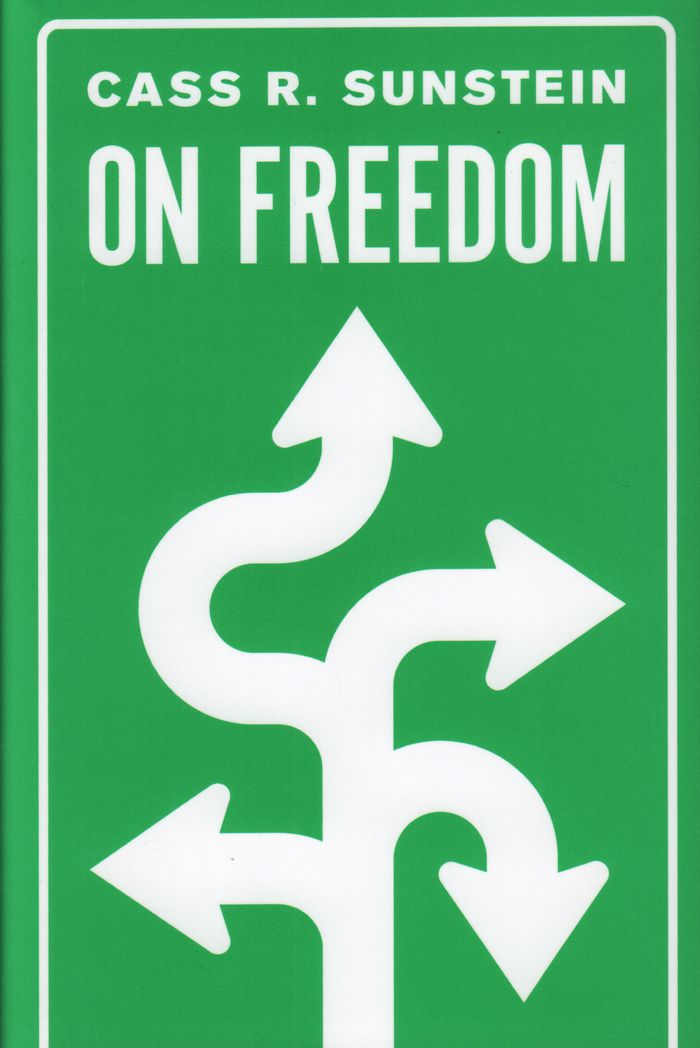
On freedom
On freedom
Actions:
Price:
$16.95
(available to order)
Summary:
In this book, New York Times bestselling author Cass Sunstein asks us to rethink freedom. He shows that freedom of choice isn't nearly enough. To be free, we must also be able to navigate life. People often need something like a GPS device to help them get where they want to go- whether the issue involves health, money, jobs, children, or relationships. In both rich and(...)
$16.95
(available to order)
Summary:
In this book, New York Times bestselling author Cass Sunstein asks us to rethink freedom. He shows that freedom of choice isn't nearly enough. To be free, we must also be able to navigate life. People often need something like a GPS device to help them get where they want to go- whether the issue involves health, money, jobs, children, or relationships. In both rich and(...)
Title:
On freedom
Actions:
Price:
$16.95
(available to order)
Summary:
In this book, New York Times bestselling author Cass Sunstein asks us to rethink freedom. He shows that freedom of choice isn't nearly enough. To be free, we must also be able to navigate life. People often need something like a GPS device to help them get where they want to go- whether the issue involves health, money, jobs, children, or relationships. In both rich and poor countries, citizens often have no idea how to get to their desired destination. That is why they are unfree. People also face serious problems of self-control, as many of them make decisions today that can make their lives worse tomorrow. And in some cases, we would be just as happy with other choices, whether a different partner, career, or place to live- which raises the difficult question of which outcome best promotes our well-being.
On freedom
Actions:
Price:
$16.95
(available to order)
Summary:
In this book, New York Times bestselling author Cass Sunstein asks us to rethink freedom. He shows that freedom of choice isn't nearly enough. To be free, we must also be able to navigate life. People often need something like a GPS device to help them get where they want to go- whether the issue involves health, money, jobs, children, or relationships. In both rich and poor countries, citizens often have no idea how to get to their desired destination. That is why they are unfree. People also face serious problems of self-control, as many of them make decisions today that can make their lives worse tomorrow. And in some cases, we would be just as happy with other choices, whether a different partner, career, or place to live- which raises the difficult question of which outcome best promotes our well-being.
Form:
books
books
Publication:
February 2019
February 2019


