


765 Results
Form:
books
books
Holdings:
Description:
12 unnumbered pages : illustrations (some color), plans ; 22 x 28 cm
Description:
12 unnumbered pages : illustrations (some color), plans ; 22 x 28 cm
Author:
Subject:
Publication:
Connersville, Ind. : American Central Division, AVCO Manufacturing Corp., [between 1945 and 1958]
Connersville, Ind. : American Central Division, AVCO Manufacturing Corp., [between 1945 and 1958]
Title:
American Kitchens : how you can save up to 2 hours work every day!.
Actions:
Holdings:
Description:
12 unnumbered pages : illustrations (some color), plans ; 22 x 28 cm
American Kitchens : how you can save up to 2 hours work every day!.
Actions:
Holdings:
Description:
12 unnumbered pages : illustrations (some color), plans ; 22 x 28 cm
Form:
books
books
Publication:
Connersville, Ind. : American Central Division, AVCO Manufacturing Corp., [between 1945 and 1958]
Connersville, Ind. : American Central Division, AVCO Manufacturing Corp., [between 1945 and 1958]
Author:
Subject:
Form:
books
books
Holdings:
Description:
14 pages ; 28 cm
Description:
14 pages ; 28 cm
Author:
Subject:
Publication:
Monticello, Ill. : Vance Bibliographies, 1983.
Monticello, Ill. : Vance Bibliographies, 1983.
Title:
Garden rooms and greenhouses : a bibliography / Mary Vance.
Actions:
Holdings:
Description:
14 pages ; 28 cm
Garden rooms and greenhouses : a bibliography / Mary Vance.
Actions:
Holdings:
Description:
14 pages ; 28 cm
Form:
books
books
Publication:
Monticello, Ill. : Vance Bibliographies, 1983.
Monticello, Ill. : Vance Bibliographies, 1983.
Author:
Subject:
Form:
journals and magazines
journals and magazines
Title:
Cabinet 35: dust
Cabinet 35: dust
Actions:
Price:
$14.00
(available in store)
Summary:
Dust is everywhere, a perennial presence in the corners of culture. Dust can be deathly (domestic dust is mostly desiccated human skin), deadly (poisonous dust is the product of industry and war) or beautiful (the dusty matte surface of make-up, a light dusting applied by the confectioner, glittering motes caught in a sunbeam). In British English, "dust" is another name(...)
$14.00
(available in store)
Summary:
Dust is everywhere, a perennial presence in the corners of culture. Dust can be deathly (domestic dust is mostly desiccated human skin), deadly (poisonous dust is the product of industry and war) or beautiful (the dusty matte surface of make-up, a light dusting applied by the confectioner, glittering motes caught in a sunbeam). In British English, "dust" is another name(...)
Subject:
Magazines
Magazines
Publication:
December 2009
December 2009
Title:
Cabinet 35: dust
Actions:
Price:
$14.00
(available in store)
Summary:
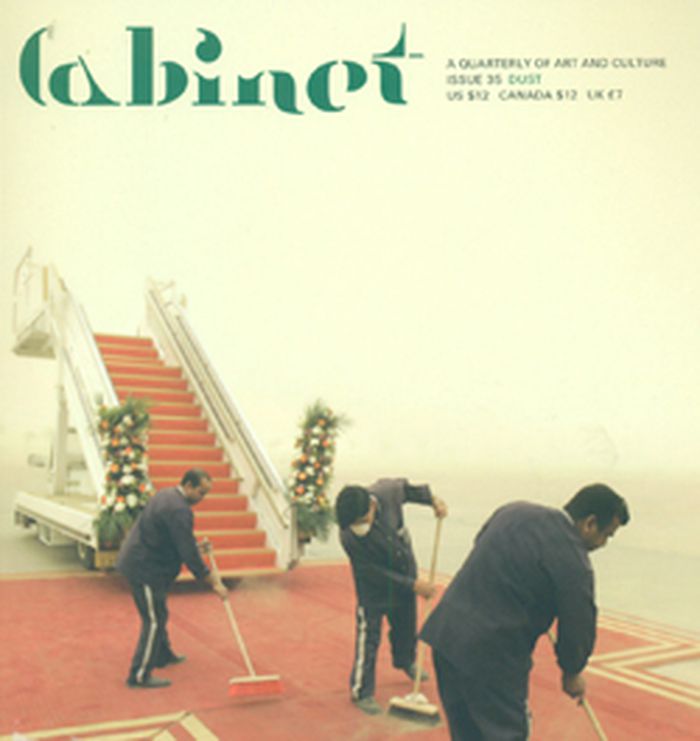
Dust is everywhere, a perennial presence in the corners of culture. Dust can be deathly (domestic dust is mostly desiccated human skin), deadly (poisonous dust is the product of industry and war) or beautiful (the dusty matte surface of make-up, a light dusting applied by the confectioner, glittering motes caught in a sunbeam). In British English, "dust" is another name for dirt, or matter in the wrong place, implying that it can be moved from one spot to another, but never--as with matter or metaphor--completely eradicated. Cabinet 35 examines dust's ubiquity. Features include Steven Connor on the manifold forms and patterns of magic dust; Brian Dillon on Proust's vacuum cleaner; and Valerie Smith and Matt Mullican on marble dust drawings. Elsewhere in the issue, Steve Reinke catalogues untimely deaths; Helen Polson muses over the fate of lost teeth; Jeff Dolven reviews Conlon Nancarrow's compositions for musical machines; and Margaret Wertheim takes on the mathematical structure known as E8.
Cabinet 35: dust
Actions:
Price:
$14.00
(available in store)
Summary:
Dust is everywhere, a perennial presence in the corners of culture. Dust can be deathly (domestic dust is mostly desiccated human skin), deadly (poisonous dust is the product of industry and war) or beautiful (the dusty matte surface of make-up, a light dusting applied by the confectioner, glittering motes caught in a sunbeam). In British English, "dust" is another name for dirt, or matter in the wrong place, implying that it can be moved from one spot to another, but never--as with matter or metaphor--completely eradicated. Cabinet 35 examines dust's ubiquity. Features include Steven Connor on the manifold forms and patterns of magic dust; Brian Dillon on Proust's vacuum cleaner; and Valerie Smith and Matt Mullican on marble dust drawings. Elsewhere in the issue, Steve Reinke catalogues untimely deaths; Helen Polson muses over the fate of lost teeth; Jeff Dolven reviews Conlon Nancarrow's compositions for musical machines; and Margaret Wertheim takes on the mathematical structure known as E8.
Form:
journals and magazines
journals and magazines
Publication:
December 2009
December 2009
Subject:
Magazines
Magazines
Form:
journals and magazines
journals and magazines
Title:
Cabinet 24 : shadows
Cabinet 24 : shadows
Actions:
Price:
$11.00
(available to order)
Summary:
The inherently contingent physics of shadows--never things in themselves but instead always "cast" signs of other things; tangible yet insubstantial--has long been a rich source of inspiration for thinkers and artists. From the Biblical valley where humanity is stalked by the "shadow of death" to the purported supernatural phenomenon of the shadow people, the idea has(...)
$11.00
(available to order)
Summary:
The inherently contingent physics of shadows--never things in themselves but instead always "cast" signs of other things; tangible yet insubstantial--has long been a rich source of inspiration for thinkers and artists. From the Biblical valley where humanity is stalked by the "shadow of death" to the purported supernatural phenomenon of the shadow people, the idea has(...)
Title:
Cabinet 24 : shadows
Actions:
Price:
$11.00
(available to order)
Summary:
The inherently contingent physics of shadows--never things in themselves but instead always "cast" signs of other things; tangible yet insubstantial--has long been a rich source of inspiration for thinkers and artists. From the Biblical valley where humanity is stalked by the "shadow of death" to the purported supernatural phenomenon of the shadow people, the idea has always suggested forces of the unseen, of the Other, its relational quality evoking a sense a duality that haunts our supposedly integral identities. Cabinet 24 includes interviews with Michael Baxandall on the Enlightenment's attitude toward shadows and with Victor Stoichita on the battle between light and dark, Kris Lee on Comte de Silhouette and the rise of phrenology, Julia Bryan-Wilson on the perpetually shaded Swiss town of Rattenberg, Trevor Paglen on the secret patches from clandestine divisions of the U.S. Armed Forces and George Pendle on Otto Neurath and his Everyman informational figures. Artist projects include a portfolio of shadow drawings and an unwitting contribution by a celebrated artist secretly trailed by a private detective hired by Cabinet. Plus, Jocko Weyland on the AP archive; Tony Wood on Konstantin Melnikov's proposal for a collectivized Soviet dormitory system; Amelie Hastie on eating at the cinema and Daniel Handler on the color violet.
Cabinet 24 : shadows
Actions:
Price:
$11.00
(available to order)
Summary:
The inherently contingent physics of shadows--never things in themselves but instead always "cast" signs of other things; tangible yet insubstantial--has long been a rich source of inspiration for thinkers and artists. From the Biblical valley where humanity is stalked by the "shadow of death" to the purported supernatural phenomenon of the shadow people, the idea has always suggested forces of the unseen, of the Other, its relational quality evoking a sense a duality that haunts our supposedly integral identities. Cabinet 24 includes interviews with Michael Baxandall on the Enlightenment's attitude toward shadows and with Victor Stoichita on the battle between light and dark, Kris Lee on Comte de Silhouette and the rise of phrenology, Julia Bryan-Wilson on the perpetually shaded Swiss town of Rattenberg, Trevor Paglen on the secret patches from clandestine divisions of the U.S. Armed Forces and George Pendle on Otto Neurath and his Everyman informational figures. Artist projects include a portfolio of shadow drawings and an unwitting contribution by a celebrated artist secretly trailed by a private detective hired by Cabinet. Plus, Jocko Weyland on the AP archive; Tony Wood on Konstantin Melnikov's proposal for a collectivized Soviet dormitory system; Amelie Hastie on eating at the cinema and Daniel Handler on the color violet.
Form:
journals and magazines
journals and magazines
Publication:
February 2007, New York
February 2007, New York
Subject:
Magazines
Magazines
Form:
books
books
Title:
Le cabinet de curiosités
Le cabinet de curiosités
Actions:
Price:
$10.95
(available to order)
Summary:
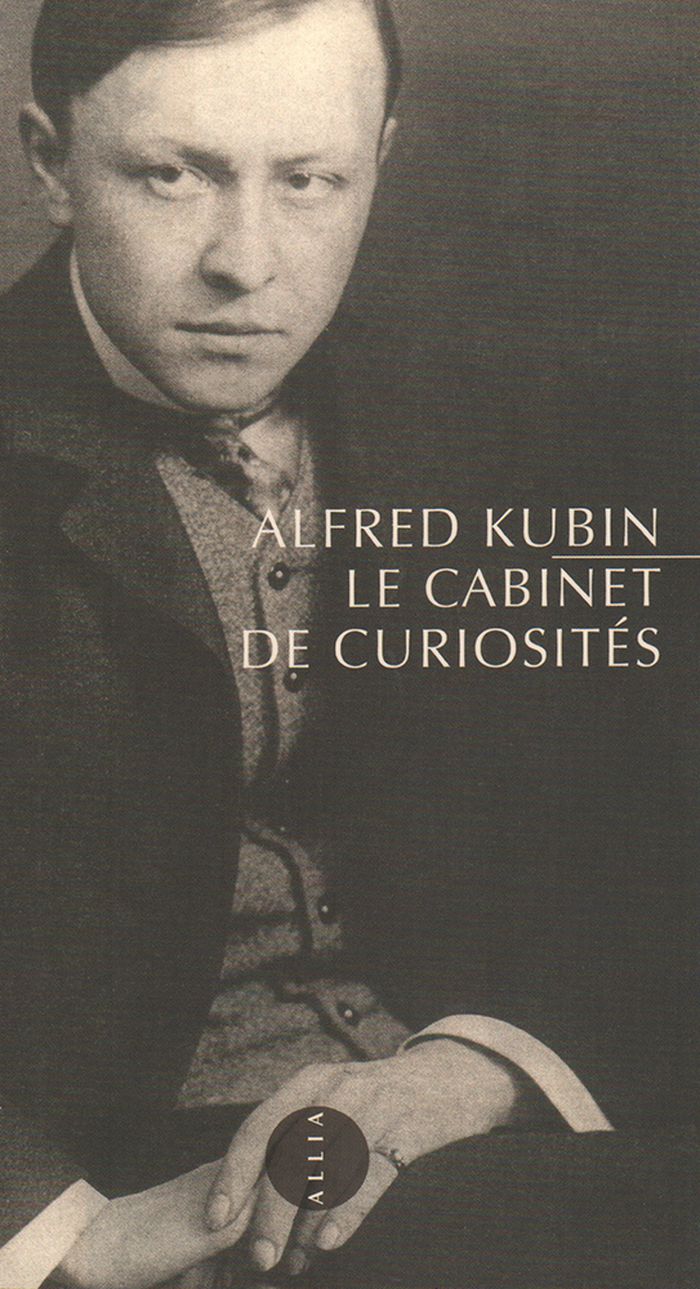
'Le Cabinet de curiosités' se compose de huit brèves nouvelles, qui s'inspirent chacune d'un dessin de l'auteur, reproduit en amont du récit. L'image accède ainsi à un statut tout à fait particulier, puisque c’est le texte qui vient l'illustrer et non l'inverse.
$10.95
(available to order)
Summary:
'Le Cabinet de curiosités' se compose de huit brèves nouvelles, qui s'inspirent chacune d'un dessin de l'auteur, reproduit en amont du récit. L'image accède ainsi à un statut tout à fait particulier, puisque c’est le texte qui vient l'illustrer et non l'inverse.
Title:
Le cabinet de curiosités
Actions:
Price:
$10.95
(available to order)
Summary:
'Le Cabinet de curiosités' se compose de huit brèves nouvelles, qui s'inspirent chacune d'un dessin de l'auteur, reproduit en amont du récit. L'image accède ainsi à un statut tout à fait particulier, puisque c’est le texte qui vient l'illustrer et non l'inverse.
Le cabinet de curiosités
Actions:
Price:
$10.95
(available to order)
Summary:
'Le Cabinet de curiosités' se compose de huit brèves nouvelles, qui s'inspirent chacune d'un dessin de l'auteur, reproduit en amont du récit. L'image accède ainsi à un statut tout à fait particulier, puisque c’est le texte qui vient l'illustrer et non l'inverse.
Form:
books
books
Publication:
January 1998
January 1998
Subject:
Literature and poetry
Literature and poetry
Form:
journals and magazines
journals and magazines
Title:
Cabinet 57: catastrophe
Cabinet 57: catastrophe
Actions:
Price:
$15.00
(available to order)
Summary:
Cabinet 57, with a special section on "Catastrophe," includes an interview with Anson Rabinbach on European intellectual responses to the catastrophes of two world wars; Matthew Spellman on St. Anthony the Hermit and the notion of retreating from a world marked by disaster; and Jonathan Hayes on the nineteenth-century roots of the ecological movement. Elsewhere in the(...)
$15.00
(available to order)
Summary:
Cabinet 57, with a special section on "Catastrophe," includes an interview with Anson Rabinbach on European intellectual responses to the catastrophes of two world wars; Matthew Spellman on St. Anthony the Hermit and the notion of retreating from a world marked by disaster; and Jonathan Hayes on the nineteenth-century roots of the ecological movement. Elsewhere in the(...)
Title:
Cabinet 57: catastrophe
Actions:
Price:
$15.00
(available to order)
Summary:
Cabinet 57, with a special section on "Catastrophe," includes an interview with Anson Rabinbach on European intellectual responses to the catastrophes of two world wars; Matthew Spellman on St. Anthony the Hermit and the notion of retreating from a world marked by disaster; and Jonathan Hayes on the nineteenth-century roots of the ecological movement. Elsewhere in the issue: Charlie Hale on the decline and (noncomedic) fall of Buster Keaton; Adam Morris on the history of the flume ride and its relationship to logging practices in the US; and more.
Cabinet 57: catastrophe
Actions:
Price:
$15.00
(available to order)
Summary:
Cabinet 57, with a special section on "Catastrophe," includes an interview with Anson Rabinbach on European intellectual responses to the catastrophes of two world wars; Matthew Spellman on St. Anthony the Hermit and the notion of retreating from a world marked by disaster; and Jonathan Hayes on the nineteenth-century roots of the ecological movement. Elsewhere in the issue: Charlie Hale on the decline and (noncomedic) fall of Buster Keaton; Adam Morris on the history of the flume ride and its relationship to logging practices in the US; and more.
Form:
journals and magazines
journals and magazines
Publication:
February 2015
February 2015
Subject:
Magazines
Magazines
Form:
books
books
Title:
Cabinet 58: theft
Cabinet 58: theft
Actions:
Price:
$15.00
(available to order)
Summary:
Across history, the morality of taking what belongs to another has been of concern to both theologians and lawmakers. Yet theft necessarily raises the question of what constitutes ownership, opening onto a longstanding philosophical debate about the relationship between property, freedom and virtue that stretches from Plato through Aquinas, Kant and Marx to contemporary(...)
$15.00
(available to order)
Summary:
Across history, the morality of taking what belongs to another has been of concern to both theologians and lawmakers. Yet theft necessarily raises the question of what constitutes ownership, opening onto a longstanding philosophical debate about the relationship between property, freedom and virtue that stretches from Plato through Aquinas, Kant and Marx to contemporary(...)
Title:
Cabinet 58: theft
Actions:
Price:
$15.00
(available to order)
Summary:
Across history, the morality of taking what belongs to another has been of concern to both theologians and lawmakers. Yet theft necessarily raises the question of what constitutes ownership, opening onto a longstanding philosophical debate about the relationship between property, freedom and virtue that stretches from Plato through Aquinas, Kant and Marx to contemporary theorists of intellectual property. 'Cabinet 58', with a special section on "Theft," includes Susan Brewer on intellectual property debates in the agricultural and pharmaceutical industries, Merle Harman on "beach theft" in the Caribbean, and more.
Cabinet 58: theft
Actions:
Price:
$15.00
(available to order)
Summary:
Across history, the morality of taking what belongs to another has been of concern to both theologians and lawmakers. Yet theft necessarily raises the question of what constitutes ownership, opening onto a longstanding philosophical debate about the relationship between property, freedom and virtue that stretches from Plato through Aquinas, Kant and Marx to contemporary theorists of intellectual property. 'Cabinet 58', with a special section on "Theft," includes Susan Brewer on intellectual property debates in the agricultural and pharmaceutical industries, Merle Harman on "beach theft" in the Caribbean, and more.
Form:
books
books
Publication:
June 2015
June 2015
Subject:
Magazines
Magazines
Form:
journals and magazines
journals and magazines
Actions:
Price:
$11.00
(available to order)
Summary:
Cabinet is an award-winning quarterly magazine of art and culture that confounds expectations of what is typically meant by the words "art," "culture," and sometimes even "magazine." Like the 17th-century cabinet of curiosities to which its name alludes, Cabinet is as interested in the margins of culture as its center. Presenting wide-ranging, multi-disciplinary content(...)
$11.00
(available to order)
Summary:
Cabinet is an award-winning quarterly magazine of art and culture that confounds expectations of what is typically meant by the words "art," "culture," and sometimes even "magazine." Like the 17th-century cabinet of curiosities to which its name alludes, Cabinet is as interested in the margins of culture as its center. Presenting wide-ranging, multi-disciplinary content(...)
Title:
Cabinet 18 : fictional states, 2005
Actions:
Price:
$11.00
(available to order)
Summary:
Cabinet is an award-winning quarterly magazine of art and culture that confounds expectations of what is typically meant by the words "art," "culture," and sometimes even "magazine." Like the 17th-century cabinet of curiosities to which its name alludes, Cabinet is as interested in the margins of culture as its center. Presenting wide-ranging, multi-disciplinary content in each issue through the varied formats of regular columns, essays, interviews, and special artist projects, Cabinet's hybrid sensibility merges the popular appeal of an arts periodical, the visually engaging style of a design magazine, and the in-depth exploration of a scholarly journal. Playful and serious, exuberant and committed, Cabinet's omnivorous appetite for understanding the world makes each of its issues a valuable sourcebook of ideas for a wide range of readers, from artists and designers to scientists and historians. In an age of increasing specialization, Cabinet looks to previous models of the well-rounded thinker to forge a new type of magazine for the intellectually curious reader of the future.
Cabinet 18 : fictional states, 2005
Actions:
Price:
$11.00
(available to order)
Summary:
Cabinet is an award-winning quarterly magazine of art and culture that confounds expectations of what is typically meant by the words "art," "culture," and sometimes even "magazine." Like the 17th-century cabinet of curiosities to which its name alludes, Cabinet is as interested in the margins of culture as its center. Presenting wide-ranging, multi-disciplinary content in each issue through the varied formats of regular columns, essays, interviews, and special artist projects, Cabinet's hybrid sensibility merges the popular appeal of an arts periodical, the visually engaging style of a design magazine, and the in-depth exploration of a scholarly journal. Playful and serious, exuberant and committed, Cabinet's omnivorous appetite for understanding the world makes each of its issues a valuable sourcebook of ideas for a wide range of readers, from artists and designers to scientists and historians. In an age of increasing specialization, Cabinet looks to previous models of the well-rounded thinker to forge a new type of magazine for the intellectually curious reader of the future.
Form:
journals and magazines
journals and magazines
Publication:
October 2005, New York
October 2005, New York
Subject:
Magazines
Magazines
Form:
journals and magazines
journals and magazines
Actions:
Price:
$12.00
(available to order)
Summary:
Cabinet is an award-winning quarterly magazine of art and culture that confounds expectations of what is typically meant by the words "art," "culture," and sometimes even "magazine." Like the 17th-century cabinet of curiosities to which its name alludes, Cabinet is as interested in the margins of culture as its center. Presenting wide-ranging, multi-disciplinary content(...)
$12.00
(available to order)
Summary:
Cabinet is an award-winning quarterly magazine of art and culture that confounds expectations of what is typically meant by the words "art," "culture," and sometimes even "magazine." Like the 17th-century cabinet of curiosities to which its name alludes, Cabinet is as interested in the margins of culture as its center. Presenting wide-ranging, multi-disciplinary content(...)
Title:
Cabinet 19: chance, fall 2005
Actions:
Price:
$12.00
(available to order)
Summary:
Cabinet is an award-winning quarterly magazine of art and culture that confounds expectations of what is typically meant by the words "art," "culture," and sometimes even "magazine." Like the 17th-century cabinet of curiosities to which its name alludes, Cabinet is as interested in the margins of culture as its center. Presenting wide-ranging, multi-disciplinary content in each issue through the varied formats of regular columns, essays, interviews, and special artist projects, Cabinet's hybrid sensibility merges the popular appeal of an arts periodical, the visually engaging style of a design magazine, and the in-depth exploration of a scholarly journal. Playful and serious, exuberant and committed, Cabinet's omnivorous appetite for understanding the world makes each of its issues a valuable sourcebook of ideas for a wide range of readers, from artists and designers to scientists and historians. In an age of increasing specialization, Cabinet looks to previous models of the well-rounded thinker to forge a new type of magazine for the intellectually curious reader of the future.
Cabinet 19: chance, fall 2005
Actions:
Price:
$12.00
(available to order)
Summary:
Cabinet is an award-winning quarterly magazine of art and culture that confounds expectations of what is typically meant by the words "art," "culture," and sometimes even "magazine." Like the 17th-century cabinet of curiosities to which its name alludes, Cabinet is as interested in the margins of culture as its center. Presenting wide-ranging, multi-disciplinary content in each issue through the varied formats of regular columns, essays, interviews, and special artist projects, Cabinet's hybrid sensibility merges the popular appeal of an arts periodical, the visually engaging style of a design magazine, and the in-depth exploration of a scholarly journal. Playful and serious, exuberant and committed, Cabinet's omnivorous appetite for understanding the world makes each of its issues a valuable sourcebook of ideas for a wide range of readers, from artists and designers to scientists and historians. In an age of increasing specialization, Cabinet looks to previous models of the well-rounded thinker to forge a new type of magazine for the intellectually curious reader of the future.
Form:
journals and magazines
journals and magazines
Publication:
January 2006, New York
January 2006, New York
Subject:
Magazines
Magazines
Form:
journals and magazines
journals and magazines
Actions:
Price:
$11.00
(available to order)
Summary:
Cabinet is an award-winning quarterly magazine of art and culture that confounds expectations of what is typically meant by the words "art," "culture," and sometimes even "magazine." Like the 17th-century cabinet of curiosities to which its name alludes, Cabinet is as interested in the margins of culture as its center. Presenting wide-ranging, multi-disciplinary content(...)
$11.00
(available to order)
Summary:
Cabinet is an award-winning quarterly magazine of art and culture that confounds expectations of what is typically meant by the words "art," "culture," and sometimes even "magazine." Like the 17th-century cabinet of curiosities to which its name alludes, Cabinet is as interested in the margins of culture as its center. Presenting wide-ranging, multi-disciplinary content(...)
Title:
Cabinet 17: laughter, spring 2005
Actions:
Price:
$11.00
(available to order)
Summary:
Cabinet is an award-winning quarterly magazine of art and culture that confounds expectations of what is typically meant by the words "art," "culture," and sometimes even "magazine." Like the 17th-century cabinet of curiosities to which its name alludes, Cabinet is as interested in the margins of culture as its center. Presenting wide-ranging, multi-disciplinary content in each issue through the varied formats of regular columns, essays, interviews, and special artist projects, Cabinet's hybrid sensibility merges the popular appeal of an arts periodical, the visually engaging style of a design magazine, and the in-depth exploration of a scholarly journal. Playful and serious, exuberant and committed, Cabinet's omnivorous appetite for understanding the world makes each of its issues a valuable sourcebook of ideas for a wide range of readers, from artists and designers to scientists and historians. In an age of increasing specialization, Cabinet looks to previous models of the well-rounded thinker to forge a new type of magazine for the intellectually curious reader of the future.
Cabinet 17: laughter, spring 2005
Actions:
Price:
$11.00
(available to order)
Summary:
Cabinet is an award-winning quarterly magazine of art and culture that confounds expectations of what is typically meant by the words "art," "culture," and sometimes even "magazine." Like the 17th-century cabinet of curiosities to which its name alludes, Cabinet is as interested in the margins of culture as its center. Presenting wide-ranging, multi-disciplinary content in each issue through the varied formats of regular columns, essays, interviews, and special artist projects, Cabinet's hybrid sensibility merges the popular appeal of an arts periodical, the visually engaging style of a design magazine, and the in-depth exploration of a scholarly journal. Playful and serious, exuberant and committed, Cabinet's omnivorous appetite for understanding the world makes each of its issues a valuable sourcebook of ideas for a wide range of readers, from artists and designers to scientists and historians. In an age of increasing specialization, Cabinet looks to previous models of the well-rounded thinker to forge a new type of magazine for the intellectually curious reader of the future.
Form:
journals and magazines
journals and magazines
Publication:
April 2005, New York
April 2005, New York
Subject:
Magazines
Magazines


