


13794 Results
Form:
books
books
Title:
In praise of copying
In praise of copying
Actions:
Price:
$24.95
(available to order)
Summary:
This book is devoted to a deceptively simple but original argument : that copying is an essential part of being human, that the ability to copy is worthy of celebration, and that, without recognizing how integral copying is to being human, we cannot understand ourselves or the world we live in. In spite of the laws, stigmas, and anxieties attached to it, the word(...)
$24.95
(available to order)
Summary:
This book is devoted to a deceptively simple but original argument : that copying is an essential part of being human, that the ability to copy is worthy of celebration, and that, without recognizing how integral copying is to being human, we cannot understand ourselves or the world we live in. In spite of the laws, stigmas, and anxieties attached to it, the word(...)
Title:
In praise of copying
Actions:
Price:
$24.95
(available to order)
Summary:
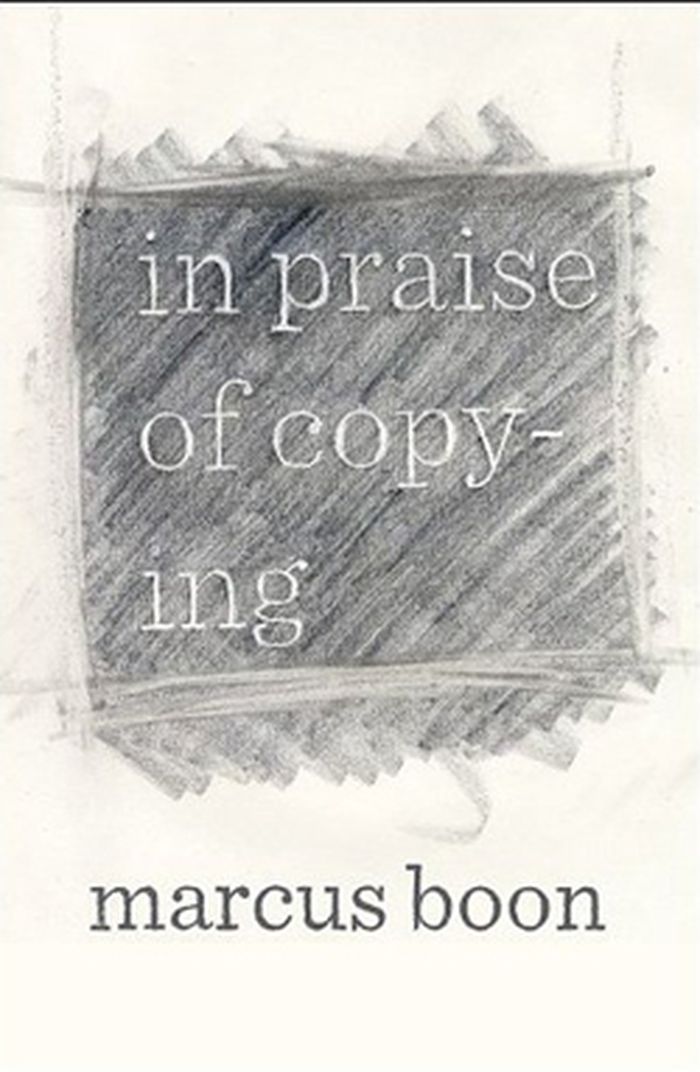
This book is devoted to a deceptively simple but original argument : that copying is an essential part of being human, that the ability to copy is worthy of celebration, and that, without recognizing how integral copying is to being human, we cannot understand ourselves or the world we live in. In spite of the laws, stigmas, and anxieties attached to it, the word “copying” permeates contemporary culture, shaping discourse on issues from hip hop to digitization to gender reassignment, and is particularly crucial in legal debates concerning intellectual property and copyright. Yet as a philosophical concept, copying remains poorly understood. Working comparatively across cultures and times, Marcus Boon undertakes an examination of what this word means — historically, culturally, philosophically — and why it fills us with fear and fascination. He argues that the dominant legal-political structures that define copying today obscure much broader processes of imitation that have constituted human communities for ages and continue to shape various subcultures today. Drawing on contemporary art, music and film, the history of aesthetics, critical theory, and Buddhist philosophy and practice, In Praise of Copying seeks to show how and why copying works, what the sources of its power are, and the political stakes of renegotiating the way we value copying in the age of globalization.
In praise of copying
Actions:
Price:
$24.95
(available to order)
Summary:
This book is devoted to a deceptively simple but original argument : that copying is an essential part of being human, that the ability to copy is worthy of celebration, and that, without recognizing how integral copying is to being human, we cannot understand ourselves or the world we live in. In spite of the laws, stigmas, and anxieties attached to it, the word “copying” permeates contemporary culture, shaping discourse on issues from hip hop to digitization to gender reassignment, and is particularly crucial in legal debates concerning intellectual property and copyright. Yet as a philosophical concept, copying remains poorly understood. Working comparatively across cultures and times, Marcus Boon undertakes an examination of what this word means — historically, culturally, philosophically — and why it fills us with fear and fascination. He argues that the dominant legal-political structures that define copying today obscure much broader processes of imitation that have constituted human communities for ages and continue to shape various subcultures today. Drawing on contemporary art, music and film, the history of aesthetics, critical theory, and Buddhist philosophy and practice, In Praise of Copying seeks to show how and why copying works, what the sources of its power are, and the political stakes of renegotiating the way we value copying in the age of globalization.
Form:
books
books
Publication:
March 2013
March 2013
Subject:
Critical Theory
Critical Theory
Form:
books
books
Price:
$47.50
(available to order)
Summary:
In times where global matters such as the climate, currencies and places of residence become increasingly volatile, the urban public space we live in is an area where power, identity and belonging are negotiated. Cities have always been melting pots of history, society, art and politics, which is why the way a city is shaped tells us a lot about the people who live in it.(...)
$47.50
(available to order)
Summary:
In times where global matters such as the climate, currencies and places of residence become increasingly volatile, the urban public space we live in is an area where power, identity and belonging are negotiated. Cities have always been melting pots of history, society, art and politics, which is why the way a city is shaped tells us a lot about the people who live in it.(...)
Title:
Ethics of the urban: the city and the spaces of the political
Actions:
Price:
$47.50
(available to order)
Summary:
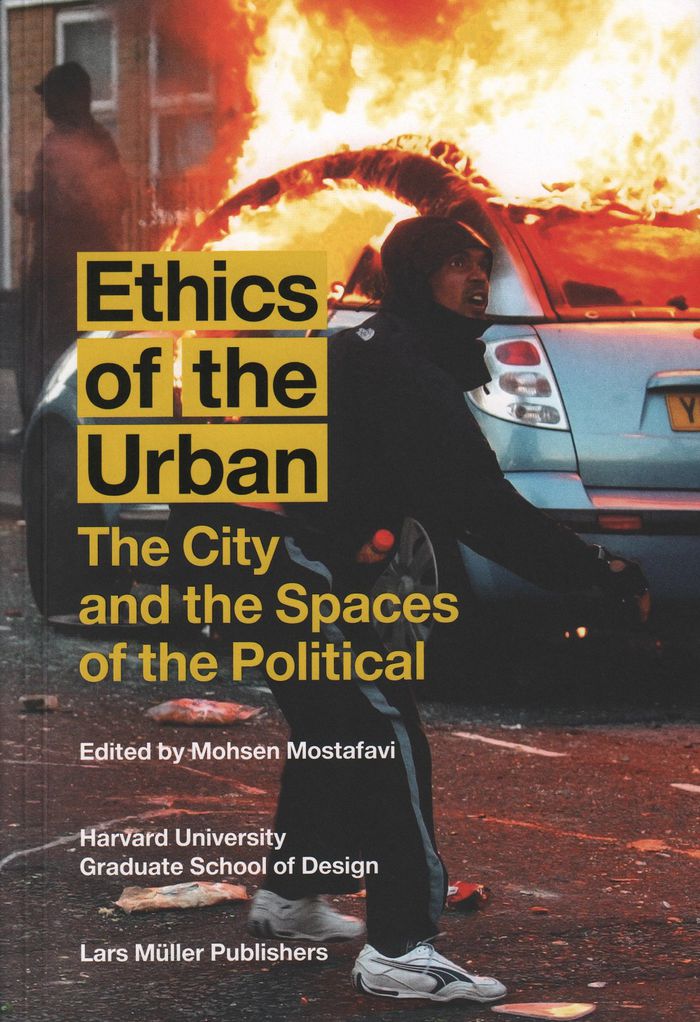
In times where global matters such as the climate, currencies and places of residence become increasingly volatile, the urban public space we live in is an area where power, identity and belonging are negotiated. Cities have always been melting pots of history, society, art and politics, which is why the way a city is shaped tells us a lot about the people who live in it. With contributors from a variety of fields, Ethics of the Urban discusses these urban spaces of the political. "How do we move about the city?", "How does memory of the past inspire the future of cities?" and "What makes a city a home?" are only some of the many questions that Ethics of the Urban addresses. The publication gathers experts from history, sociology, art, political theory, planning, law and design to emphasize the complexity of the meaning that urban space has today. Urban spaces are on one hand political spaces, since buildings, streets and people moving around all mirror political decisions in one way or another. On the other hand, the urban space is also a designed space, conceptualized, planned and sometimes gentrified. Complimented by stunning photography, Ethics of the Urban is a vibrant intellectual journey straight into the bone marrow of every contemporary city around the globe.
Ethics of the urban: the city and the spaces of the political
Actions:
Price:
$47.50
(available to order)
Summary:
In times where global matters such as the climate, currencies and places of residence become increasingly volatile, the urban public space we live in is an area where power, identity and belonging are negotiated. Cities have always been melting pots of history, society, art and politics, which is why the way a city is shaped tells us a lot about the people who live in it. With contributors from a variety of fields, Ethics of the Urban discusses these urban spaces of the political. "How do we move about the city?", "How does memory of the past inspire the future of cities?" and "What makes a city a home?" are only some of the many questions that Ethics of the Urban addresses. The publication gathers experts from history, sociology, art, political theory, planning, law and design to emphasize the complexity of the meaning that urban space has today. Urban spaces are on one hand political spaces, since buildings, streets and people moving around all mirror political decisions in one way or another. On the other hand, the urban space is also a designed space, conceptualized, planned and sometimes gentrified. Complimented by stunning photography, Ethics of the Urban is a vibrant intellectual journey straight into the bone marrow of every contemporary city around the globe.
Form:
books
books
Publication:
March 2017
March 2017
Subject:
Urban Theory
Urban Theory
Form:
books
books
Actions:
Price:
$71.95
(available to order)
Summary:
One of the most profound thinkers of the modern age, Friedrich Wilhelm Nietzsche (1844-1900) has been the subject of volumes of literature that document his life and work. Until now there has been no in-depth study devoted to Nietzsche's thoughts and impact on architecture, (...)
$71.95
(available to order)
Summary:
One of the most profound thinkers of the modern age, Friedrich Wilhelm Nietzsche (1844-1900) has been the subject of volumes of literature that document his life and work. Until now there has been no in-depth study devoted to Nietzsche's thoughts and impact on architecture, (...)
Title:
Nietzsche and an architecture of our minds
Actions:
Price:
$71.95
(available to order)
Summary:
One of the most profound thinkers of the modern age, Friedrich Wilhelm Nietzsche (1844-1900) has been the subject of volumes of literature that document his life and work. Until now there has been no in-depth study devoted to Nietzsche's thoughts and impact on architecture, specifically his far-reaching notion of an architecture commensurate with the modern mind. In the essays that comprise this book, thirteen contributors from a wide variety of disciplines (including art history, architecture and architectural theory, literature, philosophy, and city planning) assess the relationship of Nietzschean philosophy to art and architecture, elucidate frequent misunderstandings, and determine patterns of influence. The book is divided into three parts: "The Metaphors of Architecture," "Between Art, Literature, and Architecture," and "Nietzsche and the Architects." Contributors include Paolo Baldacci, the Giorgio and Isa de Chirico Foundation, Rome; Hanne Bergius, Hochschule fur Kunst und Design Burg Giebichenstein, Halle, Germany; Rolf Bothe, Kunstsammlungen zu Weimar, Germany; Claudia Brodsky Lacour, Princeton University; Tilmann Buddensieg, Humbolt-Universität Berlin; Jean-Louis Cohen, Université de Paris and Institute of Fine Arts, New York University; Karsten Harries, Yale University; Werner Hofmann, Germany; Fritz Neumeyer, Technische Universität Berlin; Léon Ploegaerts, University of Ottawa, Canada; and Anthony Vidler, University of California at Los Angeles. Edited by Alexandre Kostka and Irving Wohlfarth.
Nietzsche and an architecture of our minds
Actions:
Price:
$71.95
(available to order)
Summary:
One of the most profound thinkers of the modern age, Friedrich Wilhelm Nietzsche (1844-1900) has been the subject of volumes of literature that document his life and work. Until now there has been no in-depth study devoted to Nietzsche's thoughts and impact on architecture, specifically his far-reaching notion of an architecture commensurate with the modern mind. In the essays that comprise this book, thirteen contributors from a wide variety of disciplines (including art history, architecture and architectural theory, literature, philosophy, and city planning) assess the relationship of Nietzschean philosophy to art and architecture, elucidate frequent misunderstandings, and determine patterns of influence. The book is divided into three parts: "The Metaphors of Architecture," "Between Art, Literature, and Architecture," and "Nietzsche and the Architects." Contributors include Paolo Baldacci, the Giorgio and Isa de Chirico Foundation, Rome; Hanne Bergius, Hochschule fur Kunst und Design Burg Giebichenstein, Halle, Germany; Rolf Bothe, Kunstsammlungen zu Weimar, Germany; Claudia Brodsky Lacour, Princeton University; Tilmann Buddensieg, Humbolt-Universität Berlin; Jean-Louis Cohen, Université de Paris and Institute of Fine Arts, New York University; Karsten Harries, Yale University; Werner Hofmann, Germany; Fritz Neumeyer, Technische Universität Berlin; Léon Ploegaerts, University of Ottawa, Canada; and Anthony Vidler, University of California at Los Angeles. Edited by Alexandre Kostka and Irving Wohlfarth.
Form:
books
books
Publication:
July 1999, Los Angeles
July 1999, Los Angeles
Subject:
Architectural Theory
Architectural Theory
Form:
books
books
Actions:
Price:
$54.95
(available to order)
Summary:
Malcolm Quantrill made his first visit to Finland half a century ago as a young student from the University of Liverpool, England. Since 1983 Quantrill has published six books on Finnish modern architecture and, in recognition of his contributions to architectural history and theory, he has been the Distinguished Professor of Architecture at Texas A+M University in the(...)
$54.95
(available to order)
Summary:
Malcolm Quantrill made his first visit to Finland half a century ago as a young student from the University of Liverpool, England. Since 1983 Quantrill has published six books on Finnish modern architecture and, in recognition of his contributions to architectural history and theory, he has been the Distinguished Professor of Architecture at Texas A+M University in the(...)
Subject:
Architectural Theory
Architectural Theory
Publication:
January 1900, Helsinki
January 1900, Helsinki
Title:
The unmade bed of architecture : exchanges between Matti K. Mäkinen and Malcolm Quantrill
Actions:
Price:
$54.95
(available to order)
Summary:
Malcolm Quantrill made his first visit to Finland half a century ago as a young student from the University of Liverpool, England. Since 1983 Quantrill has published six books on Finnish modern architecture and, in recognition of his contributions to architectural history and theory, he has been the Distinguished Professor of Architecture at Texas A+M University in the USA since 1986. Quantrill and Mäkinen have collaborated since 1987, one result being Quantrill's book in honour of Academician Reima Pietilä, One Man's Odyssey in Search of Finnish Architecture (1988). Matti K. Mäkinen is a prominent Finnish architect who served as Director General of the National Board of Public Building from 1985 until 1994. He has published several books and articles on architecture and urban design. Professor Mäkinen is a former President of The Finnish Association of Architects SAFA and an honorary member of the professional institutes of architects in the USA (FAIA) and in Hungary (MÈSZ). Here the authors engage in dialogues as they explore the present state of architecture and its culture. Under such headings as The Balthusian Dilemma, Stealing a Gem, Heroes and Statues, The Elephant and the Butterfly, they address their theme of The Unmade Bed of Architecture.
The unmade bed of architecture : exchanges between Matti K. Mäkinen and Malcolm Quantrill
Actions:
Price:
$54.95
(available to order)
Summary:
Malcolm Quantrill made his first visit to Finland half a century ago as a young student from the University of Liverpool, England. Since 1983 Quantrill has published six books on Finnish modern architecture and, in recognition of his contributions to architectural history and theory, he has been the Distinguished Professor of Architecture at Texas A+M University in the USA since 1986. Quantrill and Mäkinen have collaborated since 1987, one result being Quantrill's book in honour of Academician Reima Pietilä, One Man's Odyssey in Search of Finnish Architecture (1988). Matti K. Mäkinen is a prominent Finnish architect who served as Director General of the National Board of Public Building from 1985 until 1994. He has published several books and articles on architecture and urban design. Professor Mäkinen is a former President of The Finnish Association of Architects SAFA and an honorary member of the professional institutes of architects in the USA (FAIA) and in Hungary (MÈSZ). Here the authors engage in dialogues as they explore the present state of architecture and its culture. Under such headings as The Balthusian Dilemma, Stealing a Gem, Heroes and Statues, The Elephant and the Butterfly, they address their theme of The Unmade Bed of Architecture.
Form:
books
books
Publication:
January 1900, Helsinki
January 1900, Helsinki
Subject:
Architectural Theory
Architectural Theory
Form:
books
books
Actions:
Price:
$37.95
(available to order)
Summary:
Accelerationism is the name of a contemporary political heresy: the insistence that the only radical political response to capitalism is not to protest, disrupt, critique, or détourne it, but to accelerate and exacerbate its uprooting, alienating, decoding, abstractive tendencies. "#Accelerate" presents a genealogy of accelerationism, tracking the impulse through 90s UK(...)
$37.95
(available to order)
Summary:
Accelerationism is the name of a contemporary political heresy: the insistence that the only radical political response to capitalism is not to protest, disrupt, critique, or détourne it, but to accelerate and exacerbate its uprooting, alienating, decoding, abstractive tendencies. "#Accelerate" presents a genealogy of accelerationism, tracking the impulse through 90s UK(...)
Title:
#Accelerate: the accelerationist reader
Actions:
Price:
$37.95
(available to order)
Summary:
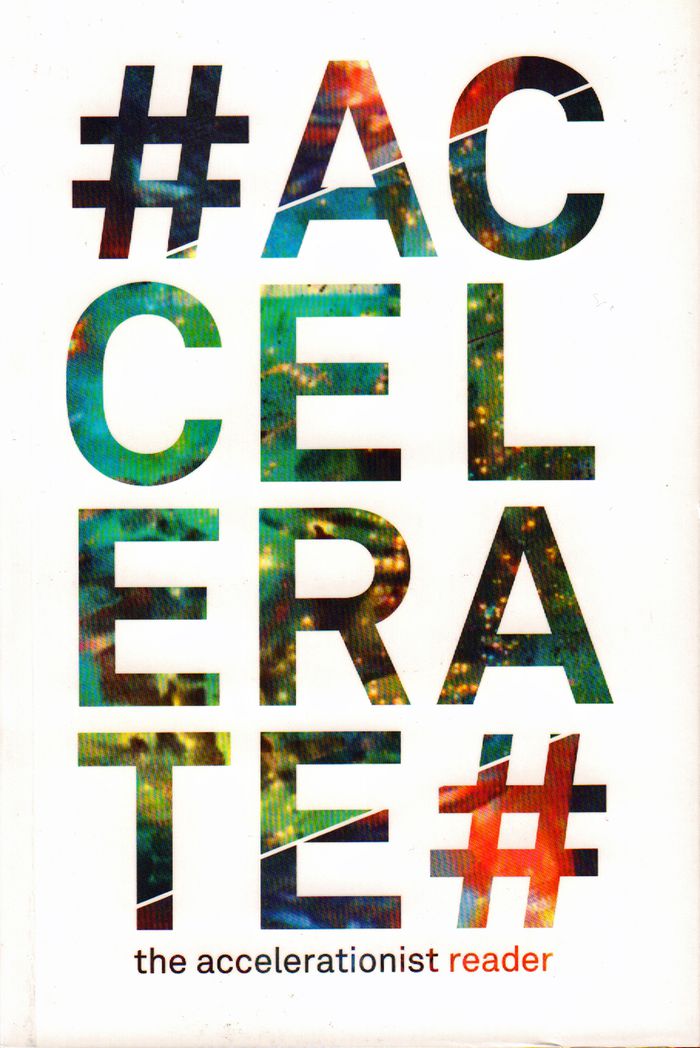
Accelerationism is the name of a contemporary political heresy: the insistence that the only radical political response to capitalism is not to protest, disrupt, critique, or détourne it, but to accelerate and exacerbate its uprooting, alienating, decoding, abstractive tendencies. "#Accelerate" presents a genealogy of accelerationism, tracking the impulse through 90s UK darkside cyberculture and the theory-fictions of Nick Land, Sadie Plant, Iain Grant, and CCRU, across the cultural underground of the 80s (rave, acid house, SF cinema) and back to its sources in delirious post-68 ferment, in texts whose searing nihilistic jouissance would later be disavowed by their authors and the marxist and academic establishment alike. On either side of this central sequence, the book includes texts by Marx that call attention to his own ‘Prometheanism’, and key works from recent years document the recent extraordinary emergence of new accelerationisms steeled against the onslaughts of neoliberal capitalist realism, and retooled for the twenty-first century. At the forefront of the energetic contemporary debate around this disputed, problematic term, "#Accelerate" activates a historical conversation about futurality, technology, politics, enjoyment and capital. This is a legacy shot through with contradictions, yet urgently galvanized today by the poverty of ‘reasonable’ contemporary political alternatives.
#Accelerate: the accelerationist reader
Actions:
Price:
$37.95
(available to order)
Summary:
Accelerationism is the name of a contemporary political heresy: the insistence that the only radical political response to capitalism is not to protest, disrupt, critique, or détourne it, but to accelerate and exacerbate its uprooting, alienating, decoding, abstractive tendencies. "#Accelerate" presents a genealogy of accelerationism, tracking the impulse through 90s UK darkside cyberculture and the theory-fictions of Nick Land, Sadie Plant, Iain Grant, and CCRU, across the cultural underground of the 80s (rave, acid house, SF cinema) and back to its sources in delirious post-68 ferment, in texts whose searing nihilistic jouissance would later be disavowed by their authors and the marxist and academic establishment alike. On either side of this central sequence, the book includes texts by Marx that call attention to his own ‘Prometheanism’, and key works from recent years document the recent extraordinary emergence of new accelerationisms steeled against the onslaughts of neoliberal capitalist realism, and retooled for the twenty-first century. At the forefront of the energetic contemporary debate around this disputed, problematic term, "#Accelerate" activates a historical conversation about futurality, technology, politics, enjoyment and capital. This is a legacy shot through with contradictions, yet urgently galvanized today by the poverty of ‘reasonable’ contemporary political alternatives.
Form:
books
books
Publication:
May 2014
May 2014
Subject:
Critical Theory
Critical Theory
Form:
books
books
Actions:
Price:
$18.95
(available to order)
Summary:
The fictitious hero of this 1984 installation is a lonely dreamer who develops an impossible project: to fly alone in cosmic space. But this dream is also an individual appropriation of a collective Soviet project and the official Soviet propaganda connected to it. Having built a makeshift slingshot, the hero apparently flies through the ceiling of his shabby room and(...)
$18.95
(available to order)
Summary:
The fictitious hero of this 1984 installation is a lonely dreamer who develops an impossible project: to fly alone in cosmic space. But this dream is also an individual appropriation of a collective Soviet project and the official Soviet propaganda connected to it. Having built a makeshift slingshot, the hero apparently flies through the ceiling of his shabby room and(...)
Title:
Ilka Kabakov: the man who flew into space from his apartment
Actions:
Price:
$18.95
(available to order)
Summary:
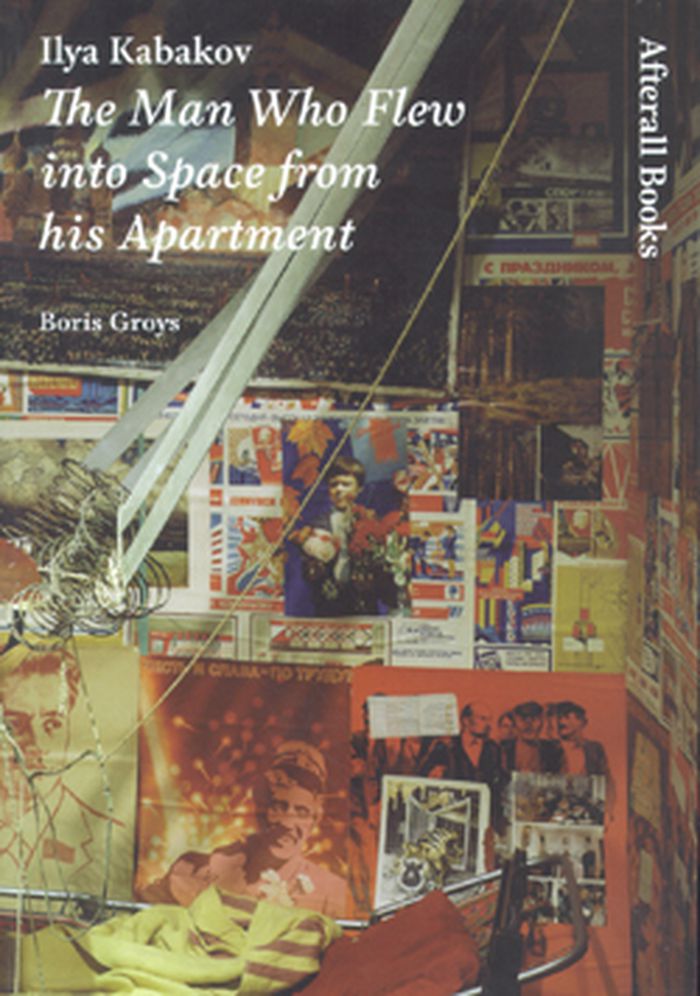
The fictitious hero of this 1984 installation is a lonely dreamer who develops an impossible project: to fly alone in cosmic space. But this dream is also an individual appropriation of a collective Soviet project and the official Soviet propaganda connected to it. Having built a makeshift slingshot, the hero apparently flies through the ceiling of his shabby room and vanishes into space. The miserable room and the primitive slingshot suggest the reality behind the Soviet utopia, in which where cosmic vision and the political project of the Communist revolution are seen as indissoluble. The Man who Flew into Space from His Apartment also raises questions of authorship in modernity. All of Kabakov's work is made in the name of other, fictitious artists. This reveals a hidden rule of the modern art system: only an artist who doesn't want to be an artist or who doesn't even know that he is an artist is a real artist—just as only an artwork that does not look like an artwork is a real artwork. The installation is a narrative, the documentation of a fictitious event. Boris Groys is Professor of Philosophy and Art Theory at the Academy for Design in Karlsruhe, Germany, and Global Professor at New York University.
Ilka Kabakov: the man who flew into space from his apartment
Actions:
Price:
$18.95
(available to order)
Summary:
The fictitious hero of this 1984 installation is a lonely dreamer who develops an impossible project: to fly alone in cosmic space. But this dream is also an individual appropriation of a collective Soviet project and the official Soviet propaganda connected to it. Having built a makeshift slingshot, the hero apparently flies through the ceiling of his shabby room and vanishes into space. The miserable room and the primitive slingshot suggest the reality behind the Soviet utopia, in which where cosmic vision and the political project of the Communist revolution are seen as indissoluble. The Man who Flew into Space from His Apartment also raises questions of authorship in modernity. All of Kabakov's work is made in the name of other, fictitious artists. This reveals a hidden rule of the modern art system: only an artist who doesn't want to be an artist or who doesn't even know that he is an artist is a real artist—just as only an artwork that does not look like an artwork is a real artwork. The installation is a narrative, the documentation of a fictitious event. Boris Groys is Professor of Philosophy and Art Theory at the Academy for Design in Karlsruhe, Germany, and Global Professor at New York University.
Form:
books
books
Publication:
May 2006, London
May 2006, London
Subject:
Art Theory
Art Theory
Form:
books
books
Actions:
Price:
$45.00
(available to order)
Summary:
In this book, Richard Hill examines the many-faceted relationship between aesthetic theory and architecture. Grounding his arguments in the practical issues related to building - the demands of site, materials, labor force, the nature of the commission - Hill expands our understanding and enjoyment of architecture. The book opens with an analysis of the relationship(...)
$45.00
(available to order)
Summary:
In this book, Richard Hill examines the many-faceted relationship between aesthetic theory and architecture. Grounding his arguments in the practical issues related to building - the demands of site, materials, labor force, the nature of the commission - Hill expands our understanding and enjoyment of architecture. The book opens with an analysis of the relationship(...)
Title:
Designs and their consequences
Actions:
Price:
$45.00
(available to order)
Summary:
In this book, Richard Hill examines the many-faceted relationship between aesthetic theory and architecture. Grounding his arguments in the practical issues related to building - the demands of site, materials, labor force, the nature of the commission - Hill expands our understanding and enjoyment of architecture. The book opens with an analysis of the relationship between buildings, drawings, and designs. Hill suggests that architectural drawings are essentially pictures of physical objects, although initially they may be imagined ones, and he considers the implications of this for architects and builders. He discusses the notion of "architectural experience" that has been important in the development of modern architecture, and the notion of "seeing as" that has been developed for other visual arts and that illuminates a range of architectural meaning. Asking how architecture can be expressive of a range of human states and qualities, Hill tests the idea that our ability to see the expressive aspects of buildings relates to our ability to see meaning in the faces and demeanor of other people. In the final section of the book, the author focuses on modern architecture's central aim to deepen the connection between usefulness and design, explores recent intense criticism of this outlook, and assesses the strengths and weaknesses of this body of criticism.
Designs and their consequences
Actions:
Price:
$45.00
(available to order)
Summary:
In this book, Richard Hill examines the many-faceted relationship between aesthetic theory and architecture. Grounding his arguments in the practical issues related to building - the demands of site, materials, labor force, the nature of the commission - Hill expands our understanding and enjoyment of architecture. The book opens with an analysis of the relationship between buildings, drawings, and designs. Hill suggests that architectural drawings are essentially pictures of physical objects, although initially they may be imagined ones, and he considers the implications of this for architects and builders. He discusses the notion of "architectural experience" that has been important in the development of modern architecture, and the notion of "seeing as" that has been developed for other visual arts and that illuminates a range of architectural meaning. Asking how architecture can be expressive of a range of human states and qualities, Hill tests the idea that our ability to see the expressive aspects of buildings relates to our ability to see meaning in the faces and demeanor of other people. In the final section of the book, the author focuses on modern architecture's central aim to deepen the connection between usefulness and design, explores recent intense criticism of this outlook, and assesses the strengths and weaknesses of this body of criticism.
Form:
books
books
Publication:
August 1999, New Haven
August 1999, New Haven
Subject:
Architectural Theory
Architectural Theory
Form:
books
books
Price:
$13.00
(available to order)
Summary:
At the turn of the millennium--the end of a calibrated period of time--it seems necessary to ask certain questions, foremost among them: Anymore? Anymore history and theory? Anymore architecture? Of particular concern are the last two hundred years, a self-conscious (...)
$13.00
(available to order)
Summary:
At the turn of the millennium--the end of a calibrated period of time--it seems necessary to ask certain questions, foremost among them: Anymore? Anymore history and theory? Anymore architecture? Of particular concern are the last two hundred years, a self-conscious (...)
Subject:
Architectural Theory
Architectural Theory
Publication:
September 2000, Cambridge, Mass.
September 2000, Cambridge, Mass.
Title:
Anymore
Actions:
Price:
$13.00
(available to order)
Summary:
At the turn of the millennium--the end of a calibrated period of time--it seems necessary to ask certain questions, foremost among them: Anymore? Anymore history and theory? Anymore architecture? Of particular concern are the last two hundred years, a self-conscious period known as modernism. Can we assume that a simple calendar change signals an end or a time of end? Is there anymore? The contributions in "Anymore" are by architects, critics, historians, philosophers, sociologists, urbanists, and others. They include Akira Asada, Hubert Damisch, Peter Eisenman, Arata Isozki, Rem Koolhaas, Rosalind Krauss, Ignasi de Solà-Morales, Mark C. Taylor, Bernard Tschumi, and Anthony Vidler, as well as young architects from France whose work many American readers will encounter here for the first time. Anymore is the ninth book in the ongoing series that began in 1991 with "Anyone" and was followed by "Anywhere", "Anyway", "Anyplace", "Anywise", "Anybody", "Anyhow", and "Anytime". Each volume is based on a conference at which architects and leaders in other fields come together to present papers and discuss a particular idea in architecture from a cross-cultural and multidisciplinary perspective. The conference upon which "Anymore" is based took place in Paris in June 1999 and will be followed by "Anything".
Anymore
Actions:
Price:
$13.00
(available to order)
Summary:
At the turn of the millennium--the end of a calibrated period of time--it seems necessary to ask certain questions, foremost among them: Anymore? Anymore history and theory? Anymore architecture? Of particular concern are the last two hundred years, a self-conscious period known as modernism. Can we assume that a simple calendar change signals an end or a time of end? Is there anymore? The contributions in "Anymore" are by architects, critics, historians, philosophers, sociologists, urbanists, and others. They include Akira Asada, Hubert Damisch, Peter Eisenman, Arata Isozki, Rem Koolhaas, Rosalind Krauss, Ignasi de Solà-Morales, Mark C. Taylor, Bernard Tschumi, and Anthony Vidler, as well as young architects from France whose work many American readers will encounter here for the first time. Anymore is the ninth book in the ongoing series that began in 1991 with "Anyone" and was followed by "Anywhere", "Anyway", "Anyplace", "Anywise", "Anybody", "Anyhow", and "Anytime". Each volume is based on a conference at which architects and leaders in other fields come together to present papers and discuss a particular idea in architecture from a cross-cultural and multidisciplinary perspective. The conference upon which "Anymore" is based took place in Paris in June 1999 and will be followed by "Anything".
Form:
books
books
Publication:
September 2000, Cambridge, Mass.
September 2000, Cambridge, Mass.
Subject:
Architectural Theory
Architectural Theory
Form:
books
books
Actions:
Price:
$22.00
(available to order)
Summary:
How does the world form itself? How does it create itself as a world? And how do we understand the role of the visual in this regard? Most responses to these questions within cultural theory and visual culture refer to the rise of globalization, thus highlighting the acceleration of exchanges, the proliferation of information and communication devices, and the(...)
$22.00
(available to order)
Summary:
How does the world form itself? How does it create itself as a world? And how do we understand the role of the visual in this regard? Most responses to these questions within cultural theory and visual culture refer to the rise of globalization, thus highlighting the acceleration of exchanges, the proliferation of information and communication devices, and the(...)
Title:
Visual cultures as world forming
Actions:
Price:
$22.00
(available to order)
Summary:
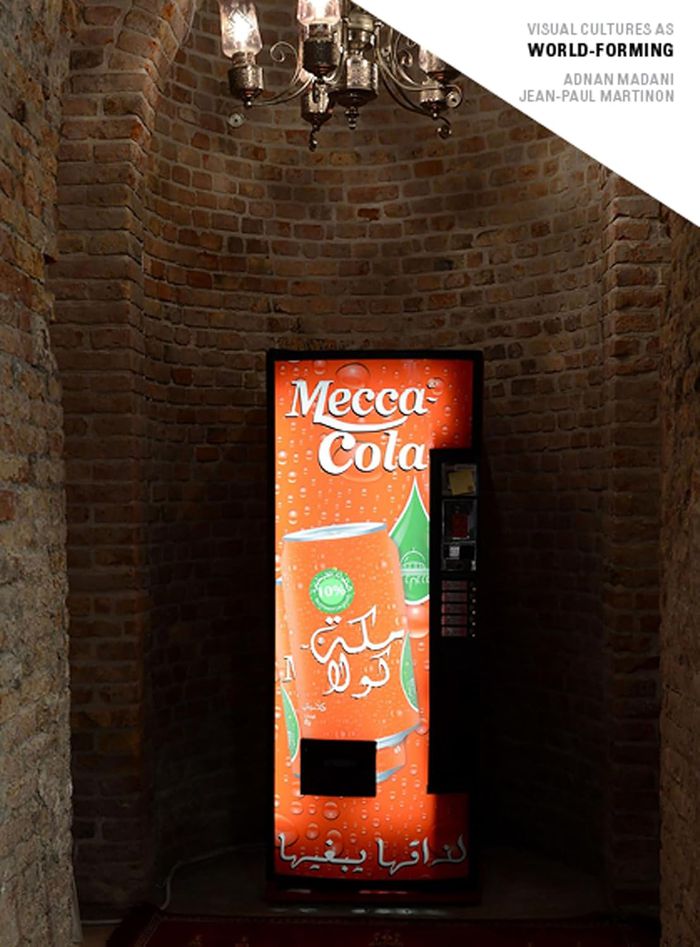
How does the world form itself? How does it create itself as a world? And how do we understand the role of the visual in this regard? Most responses to these questions within cultural theory and visual culture refer to the rise of globalization, thus highlighting the acceleration of exchanges, the proliferation of information and communication devices, and the multiplication of globally circulated goods and images that characterize the world we live in. "Visual cultures as world forming" takes a different approach by focusing on the taking place of the world, a creative act that knows no economic return. This taking place does not lead to more proliferation of goods, additional financial exchanges, further communications, or an increase in the distribution of visual material, but leads to the continued "worlding" of the world. This approach is predominantly, but not exclusively, inspired by the work of Jean-Luc Nancy. Through a reading of his work and of some of his contemporaries both inside and outside of the Western canon, Madani and Martinon attempt to expose how the world—and the world of visual culture in particular—creates itself and the ways in which each one of us is embodying this creation without economy.
Visual cultures as world forming
Actions:
Price:
$22.00
(available to order)
Summary:
How does the world form itself? How does it create itself as a world? And how do we understand the role of the visual in this regard? Most responses to these questions within cultural theory and visual culture refer to the rise of globalization, thus highlighting the acceleration of exchanges, the proliferation of information and communication devices, and the multiplication of globally circulated goods and images that characterize the world we live in. "Visual cultures as world forming" takes a different approach by focusing on the taking place of the world, a creative act that knows no economic return. This taking place does not lead to more proliferation of goods, additional financial exchanges, further communications, or an increase in the distribution of visual material, but leads to the continued "worlding" of the world. This approach is predominantly, but not exclusively, inspired by the work of Jean-Luc Nancy. Through a reading of his work and of some of his contemporaries both inside and outside of the Western canon, Madani and Martinon attempt to expose how the world—and the world of visual culture in particular—creates itself and the ways in which each one of us is embodying this creation without economy.
Form:
books
books
Publication:
August 2024
August 2024
Subject:
Critical Theory
Critical Theory
Form:
books
books
Actions:
Price:
$38.95
(available to order)
Summary:
Since its publication twenty years ago, Brian Massumi's pioneering ''Parables for the virtual'' has become an essential text for interdisciplinary scholars across the humanities. Massumi views the body and media such as television, film, and the internet as cultural formations that operate on multiple registers of sensation. Renewing and assessing William James's radical(...)
$38.95
(available to order)
Summary:
Since its publication twenty years ago, Brian Massumi's pioneering ''Parables for the virtual'' has become an essential text for interdisciplinary scholars across the humanities. Massumi views the body and media such as television, film, and the internet as cultural formations that operate on multiple registers of sensation. Renewing and assessing William James's radical(...)
Title:
Parables for the virtual: movement, affect, sensation
Actions:
Price:
$38.95
(available to order)
Summary:
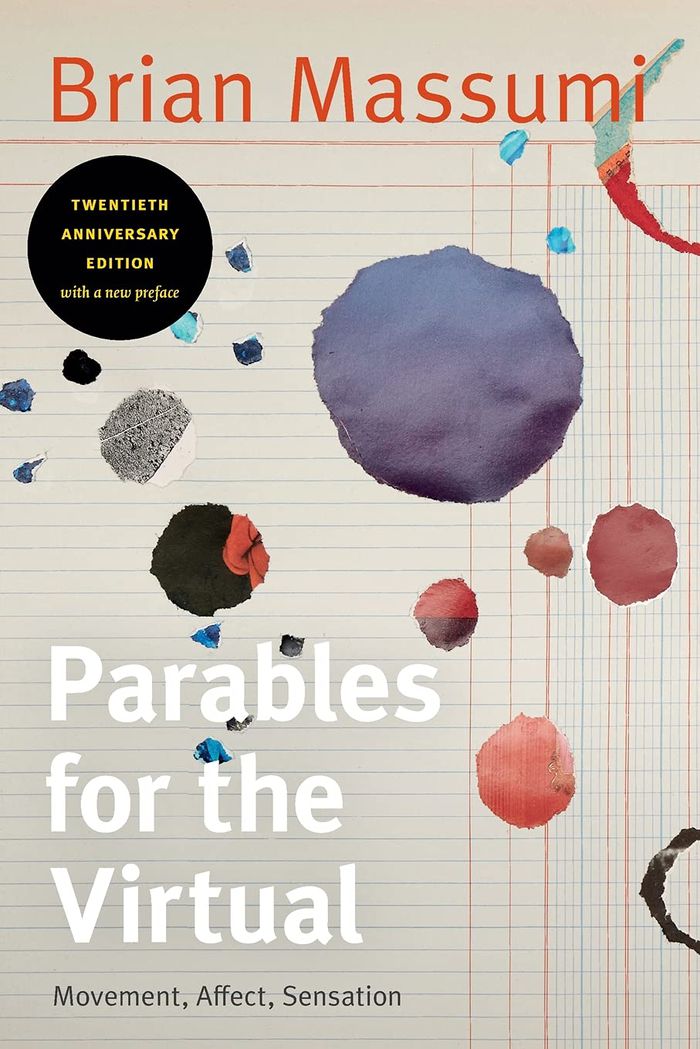
Since its publication twenty years ago, Brian Massumi's pioneering ''Parables for the virtual'' has become an essential text for interdisciplinary scholars across the humanities. Massumi views the body and media such as television, film, and the internet as cultural formations that operate on multiple registers of sensation. Renewing and assessing William James's radical empiricism and Henri Bergson's philosophy of perception through the filter of the postwar French philosophy of Deleuze, Guattari, and Foucault, Massumi links a cultural logic of variation to questions of movement, affect, and sensation. Replacing the traditional opposition of literal and figural with distinctions between stasis and motion and between actual and virtual, Massumi tackles related theoretical issues by applying them to cultural mediums as diverse as architecture, body art, the digital art of Stelarc, and Ronald Reagan's acting career. The result is an intriguing combination of cultural theory, science, and philosophy that asserts itself in a crystalline and multifaceted argument. This twentieth anniversary edition includes a new preface in which Massumi situates the book in relation to developments since its publication and outlines the evolution of its main concepts. It also includes two short texts, "Keywords for Affect" and "Missed Conceptions about Affect," in which Massumi explicates his approach to affect in ways that emphasize the book's political and philosophical stakes.
Parables for the virtual: movement, affect, sensation
Actions:
Price:
$38.95
(available to order)
Summary:
Since its publication twenty years ago, Brian Massumi's pioneering ''Parables for the virtual'' has become an essential text for interdisciplinary scholars across the humanities. Massumi views the body and media such as television, film, and the internet as cultural formations that operate on multiple registers of sensation. Renewing and assessing William James's radical empiricism and Henri Bergson's philosophy of perception through the filter of the postwar French philosophy of Deleuze, Guattari, and Foucault, Massumi links a cultural logic of variation to questions of movement, affect, and sensation. Replacing the traditional opposition of literal and figural with distinctions between stasis and motion and between actual and virtual, Massumi tackles related theoretical issues by applying them to cultural mediums as diverse as architecture, body art, the digital art of Stelarc, and Ronald Reagan's acting career. The result is an intriguing combination of cultural theory, science, and philosophy that asserts itself in a crystalline and multifaceted argument. This twentieth anniversary edition includes a new preface in which Massumi situates the book in relation to developments since its publication and outlines the evolution of its main concepts. It also includes two short texts, "Keywords for Affect" and "Missed Conceptions about Affect," in which Massumi explicates his approach to affect in ways that emphasize the book's political and philosophical stakes.
Form:
books
books
Publication:
September 2021
September 2021
Subject:
Critical Theory
Critical Theory


