


5813 Results
Form:
books
books
Title:
Photography and travel
Photography and travel
Actions:
Price:
$42.95
(available to order)
Summary:
Photography and travel have been linked since 1839, when Daguerre and Talbot first made their inventions known to the public. The inventors and their advocates immediately recognised photography’s capability to vividly represent the spectacles of the world, and make them accessible to the general public in the comfort of their homes. The unquestionable connection between(...)
$42.95
(available to order)
Summary:
Photography and travel have been linked since 1839, when Daguerre and Talbot first made their inventions known to the public. The inventors and their advocates immediately recognised photography’s capability to vividly represent the spectacles of the world, and make them accessible to the general public in the comfort of their homes. The unquestionable connection between(...)
Title:
Photography and travel
Actions:
Price:
$42.95
(available to order)
Summary:
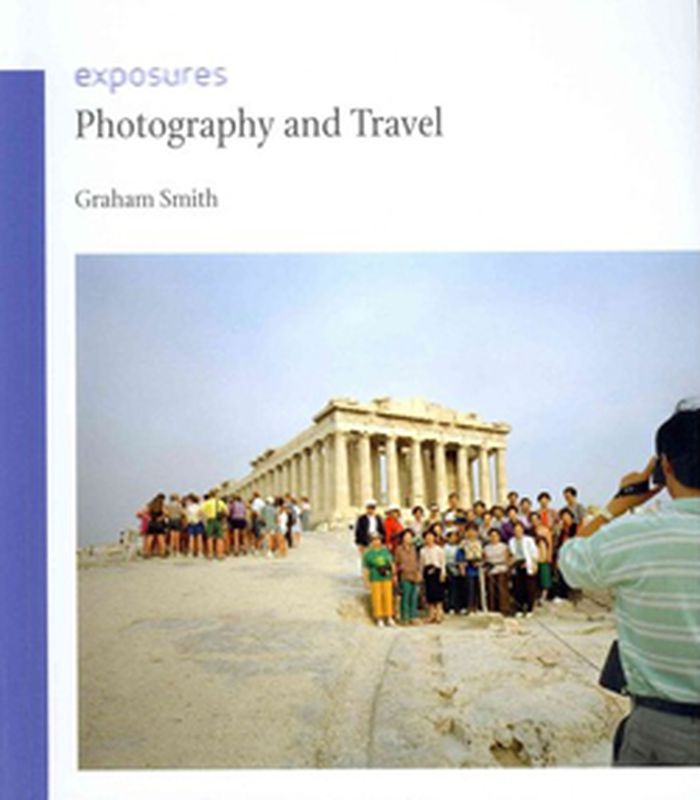
Photography and travel have been linked since 1839, when Daguerre and Talbot first made their inventions known to the public. The inventors and their advocates immediately recognised photography’s capability to vividly represent the spectacles of the world, and make them accessible to the general public in the comfort of their homes. The unquestionable connection between photography and travel remains vital today. In Photography and Travel, Graham Smith provides a lively account of this partnership, discussing the diverse applications of photography to travel during the nineteenth century, in destinations as exotic as France, Italy, Greece, Egypt, Japan and North America. He then moves to the twentieth century, ranging from seaside excursions to transcontinental travel by rail, road and air. As it has become more democratized, the methods and experiences of travel have developed in many unexpected directions, all of which have created their own new photographic narratives.Photography and Travel shows that photographers have often gone to great lengths – at considerable personal danger – to record exotic destinations, from the ice caves and crevasses of the Mer de Glace to the maw of Vesuvius, from the summit of Mount Everest to the pock-marked surface of the moon.
Photography and travel
Actions:
Price:
$42.95
(available to order)
Summary:
Photography and travel have been linked since 1839, when Daguerre and Talbot first made their inventions known to the public. The inventors and their advocates immediately recognised photography’s capability to vividly represent the spectacles of the world, and make them accessible to the general public in the comfort of their homes. The unquestionable connection between photography and travel remains vital today. In Photography and Travel, Graham Smith provides a lively account of this partnership, discussing the diverse applications of photography to travel during the nineteenth century, in destinations as exotic as France, Italy, Greece, Egypt, Japan and North America. He then moves to the twentieth century, ranging from seaside excursions to transcontinental travel by rail, road and air. As it has become more democratized, the methods and experiences of travel have developed in many unexpected directions, all of which have created their own new photographic narratives.Photography and Travel shows that photographers have often gone to great lengths – at considerable personal danger – to record exotic destinations, from the ice caves and crevasses of the Mer de Glace to the maw of Vesuvius, from the summit of Mount Everest to the pock-marked surface of the moon.
Form:
books
books
Publication:
June 2012
June 2012
Subject:
Theory of Photography
Theory of Photography
Form:
books
books
Actions:
Holdings:
Description:
xxii, 193 pages : illustrations ; 21 cm
Description:
xxii, 193 pages : illustrations ; 21 cm
Author:
Subject:
Publication:
Chicago : University of Chicago Press, 1988.
Chicago : University of Chicago Press, 1988.
Title:
The Nature of Frank Lloyd Wright / edited by Carol R. Bolon, Robert S. Nelson, and Linda Seidel ; introduction by Vincent Scully.
Actions:
Holdings:
Description:
xxii, 193 pages : illustrations ; 21 cm
The Nature of Frank Lloyd Wright / edited by Carol R. Bolon, Robert S. Nelson, and Linda Seidel ; introduction by Vincent Scully.
Actions:
Holdings:
Description:
xxii, 193 pages : illustrations ; 21 cm
Form:
books
books
Publication:
Chicago : University of Chicago Press, 1988.
Chicago : University of Chicago Press, 1988.
Author:
Subject:
Form:
books
books

Title:
Étapes : international 04
Étapes : international 04
Actions:
Price:
$45.50
(available to order)
Summary:
Summary in this issue : "Hot shots" - a portrait of contemporary French photography as represented by Morgane Le Gall, Léa Crespi, Grégoire Alexandre, Cindy Gravelat, Raphaël Dallaporta and Sandrine Expilly; "Brussels in focus" - low-profile but high-quality, Brussels’ graphics scene is surveyed here via five studios and a magazine; "On & roll" - wallpaper is back in(...)
$45.50
(available to order)
Summary:
Summary in this issue : "Hot shots" - a portrait of contemporary French photography as represented by Morgane Le Gall, Léa Crespi, Grégoire Alexandre, Cindy Gravelat, Raphaël Dallaporta and Sandrine Expilly; "Brussels in focus" - low-profile but high-quality, Brussels’ graphics scene is surveyed here via five studios and a magazine; "On & roll" - wallpaper is back in(...)
Subject:
Graphic Design and Typography
Graphic Design and Typography
Publication:
February 2006, Paris
February 2006, Paris
Title:
Étapes : international 04
Actions:
Price:
$45.50
(available to order)
Summary:
Summary in this issue : "Hot shots" - a portrait of contemporary French photography as represented by Morgane Le Gall, Léa Crespi, Grégoire Alexandre, Cindy Gravelat, Raphaël Dallaporta and Sandrine Expilly; "Brussels in focus" - low-profile but high-quality, Brussels’ graphics scene is surveyed here via five studios and a magazine; "On & roll" - wallpaper is back in fashion, with graphic designers crafting limited editions and playing manipulative games with forms and adhesives; "Chaumont, Graphic-Design lab" - the 16th Chaumont festival blended genres and relocated graphic design to the land of visual exploration; "Lines of inquiry" - adapter, Juliana Russo and Brice Domingues are developing three highly expressive ways with linework in Japan, Brazil and France; "Doma" - meet an Argentinian collective that likes taking over museums and streets with its vehicles of protest; "Swiss graphic design / the brand image" - in Switzerland, posters have a heritage value explored by generations of graphic designers, and tracked by the Museum für Gestaltung in Zurich via collections and commissions; "Swiss graphic design : is there such a thing ?" - after the historical background, the players in contemporary Swiss graphics take centre-stage; "Type in space" - é:i investigates the visual virtues displayed by the typographic objects of Israeli Oded Ezer.
Étapes : international 04
Actions:
Price:
$45.50
(available to order)
Summary:
Summary in this issue : "Hot shots" - a portrait of contemporary French photography as represented by Morgane Le Gall, Léa Crespi, Grégoire Alexandre, Cindy Gravelat, Raphaël Dallaporta and Sandrine Expilly; "Brussels in focus" - low-profile but high-quality, Brussels’ graphics scene is surveyed here via five studios and a magazine; "On & roll" - wallpaper is back in fashion, with graphic designers crafting limited editions and playing manipulative games with forms and adhesives; "Chaumont, Graphic-Design lab" - the 16th Chaumont festival blended genres and relocated graphic design to the land of visual exploration; "Lines of inquiry" - adapter, Juliana Russo and Brice Domingues are developing three highly expressive ways with linework in Japan, Brazil and France; "Doma" - meet an Argentinian collective that likes taking over museums and streets with its vehicles of protest; "Swiss graphic design / the brand image" - in Switzerland, posters have a heritage value explored by generations of graphic designers, and tracked by the Museum für Gestaltung in Zurich via collections and commissions; "Swiss graphic design : is there such a thing ?" - after the historical background, the players in contemporary Swiss graphics take centre-stage; "Type in space" - é:i investigates the visual virtues displayed by the typographic objects of Israeli Oded Ezer.
Form:
books
books
Publication:
February 2006, Paris
February 2006, Paris
Subject:
Graphic Design and Typography
Graphic Design and Typography
Form:
books
books
Actions:
Holdings:
Description:
221 pages : illustrations (chiefly color) ; 30 cm
Description:
221 pages : illustrations (chiefly color) ; 30 cm
Author:
Subject:
Publication:
Basel ; Boston : Birkhäuser, 2004.
Basel ; Boston : Birkhäuser, 2004.
Title:
Minimalist design / Franco Bertoni ; [translation into English, Lucinda Byatt].
Actions:
Holdings:
Description:
221 pages : illustrations (chiefly color) ; 30 cm
Minimalist design / Franco Bertoni ; [translation into English, Lucinda Byatt].
Actions:
Holdings:
Description:
221 pages : illustrations (chiefly color) ; 30 cm
Form:
books
books
Publication:
Basel ; Boston : Birkhäuser, 2004.
Basel ; Boston : Birkhäuser, 2004.
Author:
Subject:
Form:
books
books
Actions:
Price:
$104.00
(available to order)
Summary:
At last architects have discovered the free form shape – multiple curved surfaces, which do not exist in Cartesian geometry. What has long been usual in product design is now being adopted in architecture, these shapes are being generated by special software, and then they are subsequently built. Some young and innovative architectural firms have seized the(...)
$104.00
(available to order)
Summary:
At last architects have discovered the free form shape – multiple curved surfaces, which do not exist in Cartesian geometry. What has long been usual in product design is now being adopted in architecture, these shapes are being generated by special software, and then they are subsequently built. Some young and innovative architectural firms have seized the(...)
Subject:
Architecture since 1900, Europe
Architecture since 1900, Europe
Publication:
August 2001, Basel
August 2001, Basel
Title:
digital / real – blobmeister, first built projects
Actions:
Price:
$104.00
(available to order)
Summary:
At last architects have discovered the free form shape – multiple curved surfaces, which do not exist in Cartesian geometry. What has long been usual in product design is now being adopted in architecture, these shapes are being generated by special software, and then they are subsequently built. Some young and innovative architectural firms have seized the opportunity to expand the boundaries of architectural space, showing a willingness to experiment with the new technology, and these young architects, or "blobmeister" as Wes Jones rather negatively called them, are now moving on to built examples. In this book, 11 examples from Europe, the USA and Japan are presented, showing that far from being out of touch with reality, cyber-architects do transform their dreams into actual buildings, thus concluding the endless alternatives and possibilities implicit in every design. For it is only built architecture which shows true mastery. This volume extensively documents the complex design process, from the digital conception of the designs, the creation of models, to the final photographs of the building sites and the finished structures. Thematic essays give the reader an insight into the history of the digital scene, assessing its influence on architectural culture to date and evaluating its future potential. The accompanying CD-ROM shows dynamic animations.
digital / real – blobmeister, first built projects
Actions:
Price:
$104.00
(available to order)
Summary:
At last architects have discovered the free form shape – multiple curved surfaces, which do not exist in Cartesian geometry. What has long been usual in product design is now being adopted in architecture, these shapes are being generated by special software, and then they are subsequently built. Some young and innovative architectural firms have seized the opportunity to expand the boundaries of architectural space, showing a willingness to experiment with the new technology, and these young architects, or "blobmeister" as Wes Jones rather negatively called them, are now moving on to built examples. In this book, 11 examples from Europe, the USA and Japan are presented, showing that far from being out of touch with reality, cyber-architects do transform their dreams into actual buildings, thus concluding the endless alternatives and possibilities implicit in every design. For it is only built architecture which shows true mastery. This volume extensively documents the complex design process, from the digital conception of the designs, the creation of models, to the final photographs of the building sites and the finished structures. Thematic essays give the reader an insight into the history of the digital scene, assessing its influence on architectural culture to date and evaluating its future potential. The accompanying CD-ROM shows dynamic animations.
Form:
books
books
Publication:
August 2001, Basel
August 2001, Basel
Subject:
Architecture since 1900, Europe
Architecture since 1900, Europe
Form:
books
books
Price:
$72.00
(available to order)
Summary:
Andy Goldsworthy's Passage focuses on the journeys that people, rivers, landscapes, and even stones take through space and time. A cairn made by the renowned sculptor in the Scottish village where he lives reveals the influence that his work close to home has on projects he creates elsewhere. A series involving elm trees, from glowing yellow leaves to dead branches,(...)
$72.00
(available to order)
Summary:
Andy Goldsworthy's Passage focuses on the journeys that people, rivers, landscapes, and even stones take through space and time. A cairn made by the renowned sculptor in the Scottish village where he lives reveals the influence that his work close to home has on projects he creates elsewhere. A series involving elm trees, from glowing yellow leaves to dead branches,(...)
Title:
Passage
Actions:
Price:
$72.00
(available to order)
Summary:
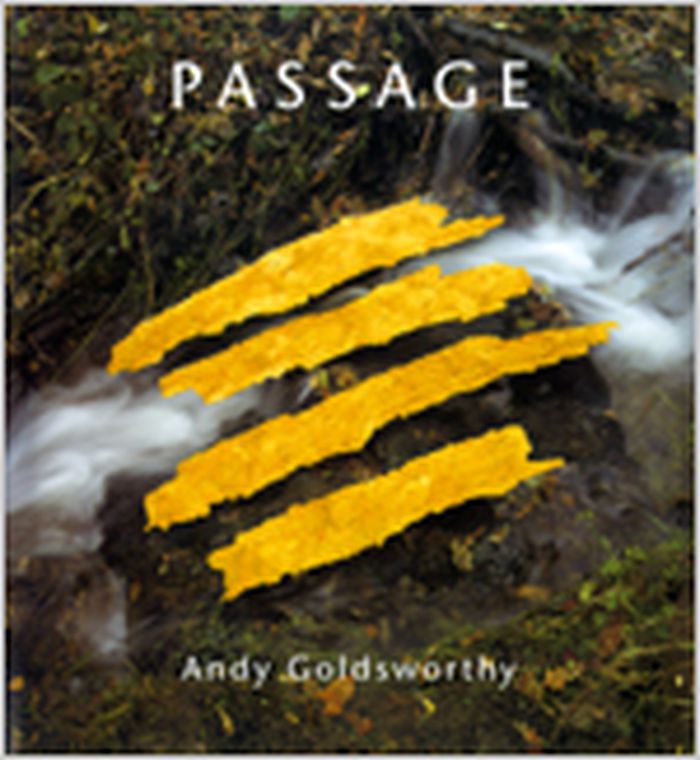
Andy Goldsworthy's Passage focuses on the journeys that people, rivers, landscapes, and even stones take through space and time. A cairn made by the renowned sculptor in the Scottish village where he lives reveals the influence that his work close to home has on projects he creates elsewhere. A series involving elm trees, from glowing yellow leaves to dead branches, exemplifies his work's vigorous beauty as well as its association with death and decay. Creations on the beach and in rivers explore the passage of time, while a white chalk path investigates the passing from day into night. Passage also includes the Garden of Stones, a Holocaust memorial at the Museum of Jewish Heritage in New York, where the artist planted 18 oak trees through holes in hollowed-out, earth-filled boulders. Documenting these and other recent works, this beautiful book is an eloquent testament to Goldsworthy's determination to deepen his understanding of the world around him, and his relationship with it, through his art. Andy Goldsworthy's work is regularly exhibited in Britain, France, the United States, Japan, and elsewhere. Although commissions take him all over the world, the landscape around his home in Dumfriesshire, Scotland, remains at the heart of his work.
Passage
Actions:
Price:
$72.00
(available to order)
Summary:
Andy Goldsworthy's Passage focuses on the journeys that people, rivers, landscapes, and even stones take through space and time. A cairn made by the renowned sculptor in the Scottish village where he lives reveals the influence that his work close to home has on projects he creates elsewhere. A series involving elm trees, from glowing yellow leaves to dead branches, exemplifies his work's vigorous beauty as well as its association with death and decay. Creations on the beach and in rivers explore the passage of time, while a white chalk path investigates the passing from day into night. Passage also includes the Garden of Stones, a Holocaust memorial at the Museum of Jewish Heritage in New York, where the artist planted 18 oak trees through holes in hollowed-out, earth-filled boulders. Documenting these and other recent works, this beautiful book is an eloquent testament to Goldsworthy's determination to deepen his understanding of the world around him, and his relationship with it, through his art. Andy Goldsworthy's work is regularly exhibited in Britain, France, the United States, Japan, and elsewhere. Although commissions take him all over the world, the landscape around his home in Dumfriesshire, Scotland, remains at the heart of his work.
Form:
books
books
Publication:
November 2004, New York
November 2004, New York
Subject:
Land Art
Land Art
Form:
books
books
Actions:
Price:
$84.50
(available in store)
Summary:
Christo and Jeanne-Claude are renowned for their dramatic and innovative public projects. Their installations often feature fabric, sometimes wrapped around existing structures or used to create large-scale temporary environments. Some of their most influential projects include Running Fence in Sonoma and Marin Counties, California, Surrounded Islands in Miami, the Pont(...)
$84.50
(available in store)
Summary:
Christo and Jeanne-Claude are renowned for their dramatic and innovative public projects. Their installations often feature fabric, sometimes wrapped around existing structures or used to create large-scale temporary environments. Some of their most influential projects include Running Fence in Sonoma and Marin Counties, California, Surrounded Islands in Miami, the Pont(...)
Publication:
May 2004, New Haven / London
May 2004, New Haven / London
Title:
Christo & Jeanne-Claude : on the way to The Gates, Central Park, New York City
Actions:
Price:
$84.50
(available in store)
Summary:
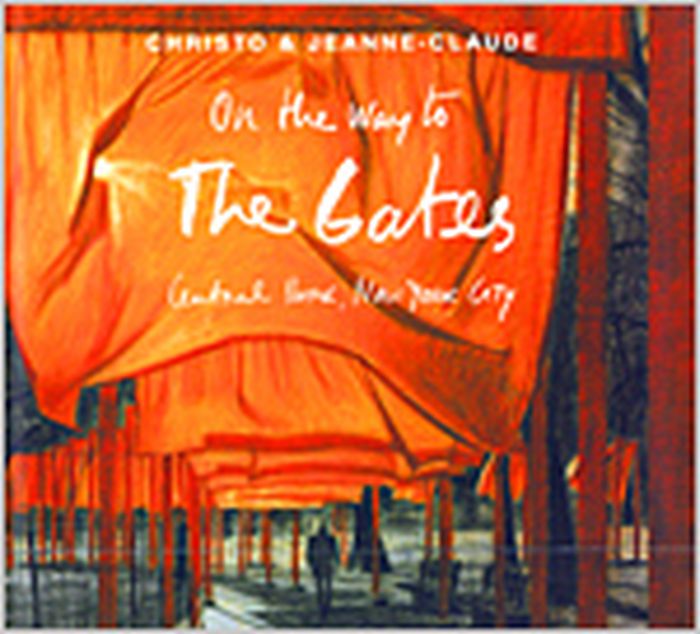
Christo and Jeanne-Claude are renowned for their dramatic and innovative public projects. Their installations often feature fabric, sometimes wrapped around existing structures or used to create large-scale temporary environments. Some of their most influential projects include Running Fence in Sonoma and Marin Counties, California, Surrounded Islands in Miami, the Pont Neuf Wrapped in Paris, the Wrapped Reichstag in Berlin, and The Umbrellas simultaneously in Japan and California. Now New York City, where they have lived and worked for forty years, will be the site for a much-anticipated Christo and Jeanne-Claude project. The Gates will consist of saffron-coloured fabric panels suspended from the horizontal tops of over 7,500 sixteen-foot-tall vinyl gates, positioned at regular intervals throughout 23 miles of walkways of Central Park. The installation will be on view for sixteen days, beginning February 12, 2005 (weather permitting). This book, published in conjunction with a major exhibition that opens in April 2004 at The Metropolitan Museum of Art, celebrates the culmination of the artists' vision for The Gates, a project that began in 1979. It includes an illustrated introduction by Jonathan Fineberg that surveys the career of Christo and Jeanne-Claude and assesses their contribution to contemporary art and culture.
Christo & Jeanne-Claude : on the way to The Gates, Central Park, New York City
Actions:
Price:
$84.50
(available in store)
Summary:
Christo and Jeanne-Claude are renowned for their dramatic and innovative public projects. Their installations often feature fabric, sometimes wrapped around existing structures or used to create large-scale temporary environments. Some of their most influential projects include Running Fence in Sonoma and Marin Counties, California, Surrounded Islands in Miami, the Pont Neuf Wrapped in Paris, the Wrapped Reichstag in Berlin, and The Umbrellas simultaneously in Japan and California. Now New York City, where they have lived and worked for forty years, will be the site for a much-anticipated Christo and Jeanne-Claude project. The Gates will consist of saffron-coloured fabric panels suspended from the horizontal tops of over 7,500 sixteen-foot-tall vinyl gates, positioned at regular intervals throughout 23 miles of walkways of Central Park. The installation will be on view for sixteen days, beginning February 12, 2005 (weather permitting). This book, published in conjunction with a major exhibition that opens in April 2004 at The Metropolitan Museum of Art, celebrates the culmination of the artists' vision for The Gates, a project that began in 1979. It includes an illustrated introduction by Jonathan Fineberg that surveys the career of Christo and Jeanne-Claude and assesses their contribution to contemporary art and culture.
Form:
books
books
Publication:
May 2004, New Haven / London
May 2004, New Haven / London
Form:
books
books
Actions:
Price:
$99.00
(available to order)
Summary:
This paradigm shift is reflected in architecture as well: in recent years, increasingly innovative collective housing projects, organized around the principle of trading-in private spaces for larger, more luxurious shared spaces, have been emerging across the globe—many of them realized through bottom-up grassroots initiatives. The return of the collective in architecture(...)
$99.00
(available to order)
Summary:
This paradigm shift is reflected in architecture as well: in recent years, increasingly innovative collective housing projects, organized around the principle of trading-in private spaces for larger, more luxurious shared spaces, have been emerging across the globe—many of them realized through bottom-up grassroots initiatives. The return of the collective in architecture(...)
Title:
Together! The new architecture of the collective
Actions:
Price:
$99.00
(available to order)
Summary:
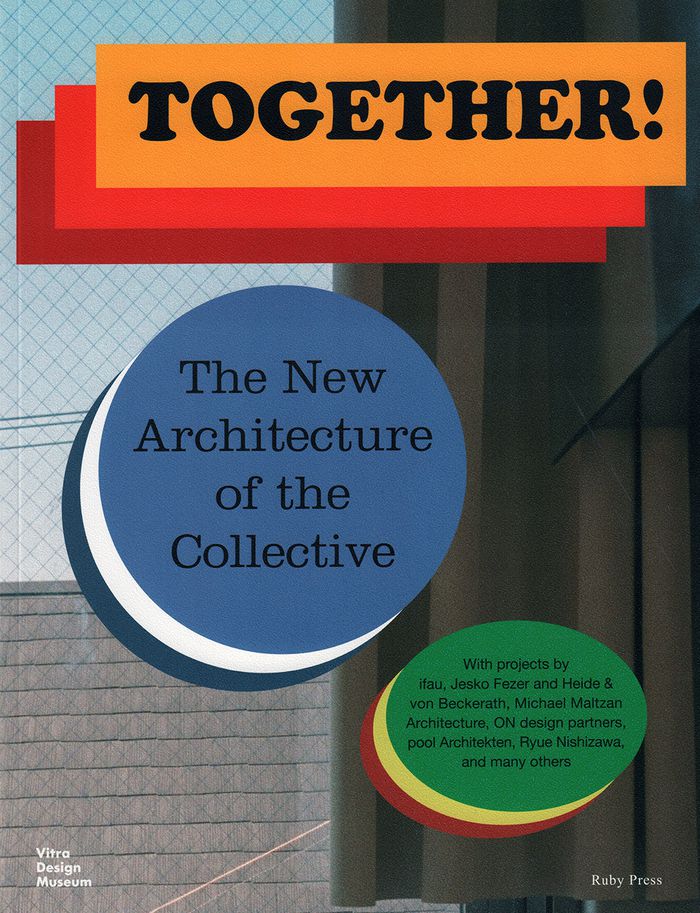
This paradigm shift is reflected in architecture as well: in recent years, increasingly innovative collective housing projects, organized around the principle of trading-in private spaces for larger, more luxurious shared spaces, have been emerging across the globe—many of them realized through bottom-up grassroots initiatives. The return of the collective in architecture has resulted in surprising architectural solutions that also create new urban spaces. "Together! The new architecture of the collective" presents around 20 international building projects from Europe, Japan and the US that provide innovative platforms for collective living in the present day. A selection of projects is discussed in detail, and extensive photo essays offer vivid impressions of the daily collective and private life and everyday routines in these buildings. Interviews with movers and shakers from the collective housing scene, written by international journalists, offer insights and background information on the processes and people that have made each project possible. All this is complemented by theoretical and historical context, including analytical essays by experts in the field, infographics providing facts and figures, diagrams explaining how different collective housing models work and an extensive timeline detailing the genealogy of the collective housing movement in the 20th century.
Together! The new architecture of the collective
Actions:
Price:
$99.00
(available to order)
Summary:
This paradigm shift is reflected in architecture as well: in recent years, increasingly innovative collective housing projects, organized around the principle of trading-in private spaces for larger, more luxurious shared spaces, have been emerging across the globe—many of them realized through bottom-up grassroots initiatives. The return of the collective in architecture has resulted in surprising architectural solutions that also create new urban spaces. "Together! The new architecture of the collective" presents around 20 international building projects from Europe, Japan and the US that provide innovative platforms for collective living in the present day. A selection of projects is discussed in detail, and extensive photo essays offer vivid impressions of the daily collective and private life and everyday routines in these buildings. Interviews with movers and shakers from the collective housing scene, written by international journalists, offer insights and background information on the processes and people that have made each project possible. All this is complemented by theoretical and historical context, including analytical essays by experts in the field, infographics providing facts and figures, diagrams explaining how different collective housing models work and an extensive timeline detailing the genealogy of the collective housing movement in the 20th century.
Form:
books
books
Publication:
August 2017
August 2017
Subject:
Collective Housing
Collective Housing
Form:
books
books
Actions:
Price:
$26.95
(available to order)
Summary:
Matsutake is the most valuable mushroom in the world—and a weed that grows in human-disturbed forests across the northern hemisphere. Through its ability to nurture trees, matsutake helps forests to grow in daunting places. It is also an edible delicacy in Japan, where it sometimes commands astronomical prices. In all its contradictions, matsutake offers insights into(...)
$26.95
(available to order)
Summary:
Matsutake is the most valuable mushroom in the world—and a weed that grows in human-disturbed forests across the northern hemisphere. Through its ability to nurture trees, matsutake helps forests to grow in daunting places. It is also an edible delicacy in Japan, where it sometimes commands astronomical prices. In all its contradictions, matsutake offers insights into(...)
Publication:
September 2017
September 2017
Title:
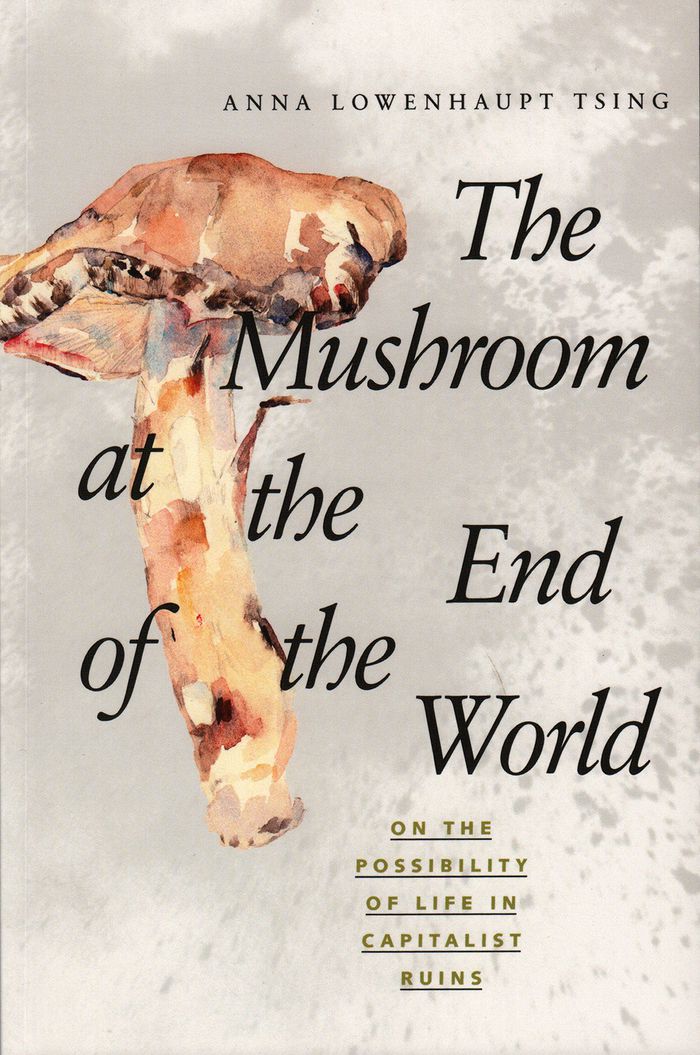
The mushroom at the end of the world: on the possiblity of life in capitalist ruins
Actions:
Price:
$26.95
(available to order)
Summary:
Matsutake is the most valuable mushroom in the world—and a weed that grows in human-disturbed forests across the northern hemisphere. Through its ability to nurture trees, matsutake helps forests to grow in daunting places. It is also an edible delicacy in Japan, where it sometimes commands astronomical prices. In all its contradictions, matsutake offers insights into areas far beyond just mushrooms and addresses a crucial question: what manages to live in the ruins we have made? A tale of diversity within our damaged landscapes, "The mushroom at the end of the world" follows one of the strangest commodity chains of our times to explore the unexpected corners of capitalism. Here, we witness the varied and peculiar worlds of matsutake commerce: the worlds of Japanese gourmets, capitalist traders, Hmong jungle fighters, industrial forests, Yi Chinese goat herders, Finnish nature guides, and more. These companions also lead us into fungal ecologies and forest histories to better understand the promise of cohabitation in a time of massive human destruction. By investigating one of the world's most sought-after fungi, The Mushroom at the End of the World presents an original examination into the relation between capitalist destruction and collaborative survival within multispecies landscapes, the prerequisite for continuing life on earth.
The mushroom at the end of the world: on the possiblity of life in capitalist ruins
Actions:
Price:
$26.95
(available to order)
Summary:
Matsutake is the most valuable mushroom in the world—and a weed that grows in human-disturbed forests across the northern hemisphere. Through its ability to nurture trees, matsutake helps forests to grow in daunting places. It is also an edible delicacy in Japan, where it sometimes commands astronomical prices. In all its contradictions, matsutake offers insights into areas far beyond just mushrooms and addresses a crucial question: what manages to live in the ruins we have made? A tale of diversity within our damaged landscapes, "The mushroom at the end of the world" follows one of the strangest commodity chains of our times to explore the unexpected corners of capitalism. Here, we witness the varied and peculiar worlds of matsutake commerce: the worlds of Japanese gourmets, capitalist traders, Hmong jungle fighters, industrial forests, Yi Chinese goat herders, Finnish nature guides, and more. These companions also lead us into fungal ecologies and forest histories to better understand the promise of cohabitation in a time of massive human destruction. By investigating one of the world's most sought-after fungi, The Mushroom at the End of the World presents an original examination into the relation between capitalist destruction and collaborative survival within multispecies landscapes, the prerequisite for continuing life on earth.
Form:
books
books
Publication:
September 2017
September 2017
Form:
books
books
Title:
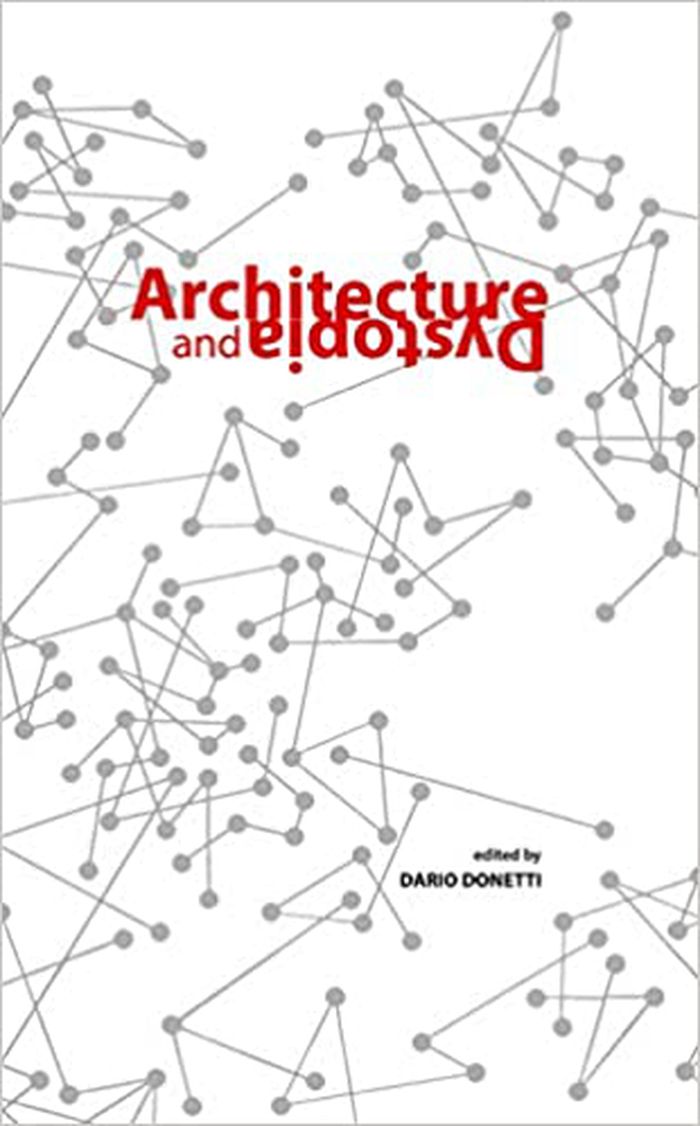
Architecture and dystopia
Architecture and dystopia
Actions:
Price:
$45.00
(available to order)
Summary:
As a response to the profound crisis of Western culture the emerged in the 1960s, radical artists from Italy, Austria, England and Japan called into question the foundations of modernist utopias. They transmuted the difficulties of capitalism into a repertory of startling images that revealed the disturbing realities of consumer society, even in those places still(...)
$45.00
(available to order)
Summary:
As a response to the profound crisis of Western culture the emerged in the 1960s, radical artists from Italy, Austria, England and Japan called into question the foundations of modernist utopias. They transmuted the difficulties of capitalism into a repertory of startling images that revealed the disturbing realities of consumer society, even in those places still(...)
Title:
Architecture and dystopia
Actions:
Price:
$45.00
(available to order)
Summary:
As a response to the profound crisis of Western culture the emerged in the 1960s, radical artists from Italy, Austria, England and Japan called into question the foundations of modernist utopias. They transmuted the difficulties of capitalism into a repertory of startling images that revealed the disturbing realities of consumer society, even in those places still resistant to the penetration of modern architecture, such as Superstudio and Archizoom’s Florence. Their model, though exhausted in the space of experimentation, went on to inspire a generation of architects, from the High Tech movement to Rem Koolhaas.. In the light of these examples, how to define a unified 'dystopian' method of design, i.e. a common ground for an architecture that, by its very nature, seems to resist systematization? Are the most recognizable architectural expressions of this theoretical framework — characterized by brazen displays of technology and structures of overwhelming scale — merely isolated cases, albeit of particular iconic power? Or do they belong to a wider landscape of antirational architectural projects? And to what extent are these disturbing expressions premised on the utopian tradition or, better yet, the conceptual model of 'negative thought'? The goal of this book is to respond to such questions, thus initiating an open dialogue about the legitimacy of this critical category.
Architecture and dystopia
Actions:
Price:
$45.00
(available to order)
Summary:
As a response to the profound crisis of Western culture the emerged in the 1960s, radical artists from Italy, Austria, England and Japan called into question the foundations of modernist utopias. They transmuted the difficulties of capitalism into a repertory of startling images that revealed the disturbing realities of consumer society, even in those places still resistant to the penetration of modern architecture, such as Superstudio and Archizoom’s Florence. Their model, though exhausted in the space of experimentation, went on to inspire a generation of architects, from the High Tech movement to Rem Koolhaas.. In the light of these examples, how to define a unified 'dystopian' method of design, i.e. a common ground for an architecture that, by its very nature, seems to resist systematization? Are the most recognizable architectural expressions of this theoretical framework — characterized by brazen displays of technology and structures of overwhelming scale — merely isolated cases, albeit of particular iconic power? Or do they belong to a wider landscape of antirational architectural projects? And to what extent are these disturbing expressions premised on the utopian tradition or, better yet, the conceptual model of 'negative thought'? The goal of this book is to respond to such questions, thus initiating an open dialogue about the legitimacy of this critical category.
Form:
books
books
Publication:
December 2019
December 2019
Subject:
Architectural Theory
Architectural Theory


