


13794 Results
Form:
books
books
Actions:
Holdings:
Description:
xiv, 342 pages ; 25 cm
Description:
xiv, 342 pages ; 25 cm
Author:
Subject:
Publication:
Abingdon, Oxon ; New York, NY : Routledge, Taylor & Francis Group, 2023., ©2023
Abingdon, Oxon ; New York, NY : Routledge, Taylor & Francis Group, 2023., ©2023
Title:
Disputed archival heritage / edited by James Lowry.
Actions:
Holdings:
Description:
xiv, 342 pages ; 25 cm
Disputed archival heritage / edited by James Lowry.
Actions:
Holdings:
Description:
xiv, 342 pages ; 25 cm
Form:
books
books
Publication:
Abingdon, Oxon ; New York, NY : Routledge, Taylor & Francis Group, 2023., ©2023
Abingdon, Oxon ; New York, NY : Routledge, Taylor & Francis Group, 2023., ©2023
Author:
Subject:
Form:
books
books
Actions:
Price:
$37.00
(available in store)
Summary:
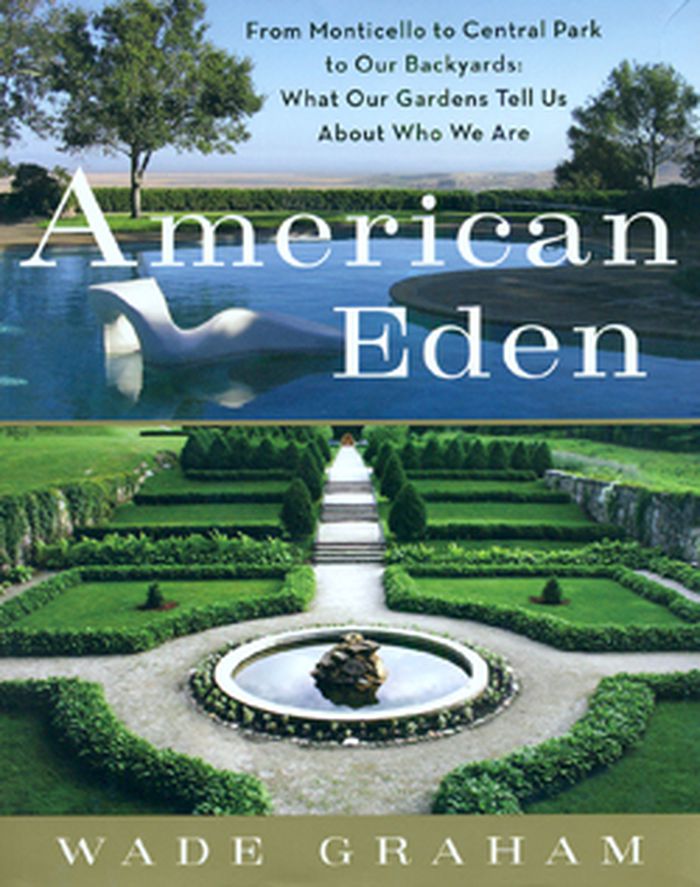
American Eden moves luminously through landscapes of history, literature, biography, and design theory. . . . fusing sharp-edged analysis and graceful American prose. Kevin Starr, author of Golden Gate: The Life and Times of America's Greatest Bridge Informative and absolutely engrossing.
$37.00
(available in store)
Summary:
American Eden moves luminously through landscapes of history, literature, biography, and design theory. . . . fusing sharp-edged analysis and graceful American prose. Kevin Starr, author of Golden Gate: The Life and Times of America's Greatest Bridge Informative and absolutely engrossing.
Title:
American Eden: from Monticello to Central Park to our backyards, what our gardens tell us about who we are
Actions:
Price:
$37.00
(available in store)
Summary:
American Eden moves luminously through landscapes of history, literature, biography, and design theory. . . . fusing sharp-edged analysis and graceful American prose. Kevin Starr, author of Golden Gate: The Life and Times of America's Greatest Bridge Informative and absolutely engrossing.
American Eden: from Monticello to Central Park to our backyards, what our gardens tell us about who we are
Actions:
Price:
$37.00
(available in store)
Summary:
American Eden moves luminously through landscapes of history, literature, biography, and design theory. . . . fusing sharp-edged analysis and graceful American prose. Kevin Starr, author of Golden Gate: The Life and Times of America's Greatest Bridge Informative and absolutely engrossing.
Form:
books
books
Publication:
May 2011
May 2011
Subject:
Gardens
Gardens
Form:
books
books
Title:
Modernist affect grid
Modernist affect grid
Actions:
Price:
$20.00
(available to order)
Summary:
In 1962, Place Ville Marie, Montreal’s cross-shaped office tower and underground shopping mall—named after the French Catholic settlement of unceded Mohawk territory that became the colonial city—opened to the public as the Commonwealth’s tallest ''nerve centre'' and ''breathing machine.'' The same year, Silvan Tomkins, the father of affect theory, published Volume I of(...)
$20.00
(available to order)
Summary:
In 1962, Place Ville Marie, Montreal’s cross-shaped office tower and underground shopping mall—named after the French Catholic settlement of unceded Mohawk territory that became the colonial city—opened to the public as the Commonwealth’s tallest ''nerve centre'' and ''breathing machine.'' The same year, Silvan Tomkins, the father of affect theory, published Volume I of(...)
Title:
Modernist affect grid
Actions:
Price:
$20.00
(available to order)
Summary:
In 1962, Place Ville Marie, Montreal’s cross-shaped office tower and underground shopping mall—named after the French Catholic settlement of unceded Mohawk territory that became the colonial city—opened to the public as the Commonwealth’s tallest ''nerve centre'' and ''breathing machine.'' The same year, Silvan Tomkins, the father of affect theory, published Volume I of ''Affect imagery consciousness'', which exuberantly draws on the then-sensational cybernetic brain-computer metaphor. 1962 also saw the publication of ''Story sequence analysis'' by Magda Arnold, a luddistic and devoutly Catholic psychologist who mothered the monumental cognitive appraisal theory of emotion. ''Modernist affect grid’s'' essay-poems triangulate these events as they emerge amidst the Cold War tech race’s paranoid and projective ambition.
Modernist affect grid
Actions:
Price:
$20.00
(available to order)
Summary:
In 1962, Place Ville Marie, Montreal’s cross-shaped office tower and underground shopping mall—named after the French Catholic settlement of unceded Mohawk territory that became the colonial city—opened to the public as the Commonwealth’s tallest ''nerve centre'' and ''breathing machine.'' The same year, Silvan Tomkins, the father of affect theory, published Volume I of ''Affect imagery consciousness'', which exuberantly draws on the then-sensational cybernetic brain-computer metaphor. 1962 also saw the publication of ''Story sequence analysis'' by Magda Arnold, a luddistic and devoutly Catholic psychologist who mothered the monumental cognitive appraisal theory of emotion. ''Modernist affect grid’s'' essay-poems triangulate these events as they emerge amidst the Cold War tech race’s paranoid and projective ambition.
Form:
books
books
Publication:
January 2022
January 2022
Subject:
Architecture de Montréal
Architecture de Montréal
Form:
books
books
Price:
$37.95
(available to order)
Summary:
In The City after Property, Sara Safransky examines how postindustrial decline generates new forms of urban land politics. In the 2010s, Detroit government officials classified a staggering 150,000 lots—more than a third of the city—as “vacant” or “abandoned.” Analyzing subsequent efforts to shrink the Motor City’s footprint and budget, Safransky presents a new way of(...)
$37.95
(available to order)
Summary:
In The City after Property, Sara Safransky examines how postindustrial decline generates new forms of urban land politics. In the 2010s, Detroit government officials classified a staggering 150,000 lots—more than a third of the city—as “vacant” or “abandoned.” Analyzing subsequent efforts to shrink the Motor City’s footprint and budget, Safransky presents a new way of(...)
Title:
The city after property: Abandonment and repair in postindustrial Detroit
Actions:
Price:
$37.95
(available to order)
Summary:
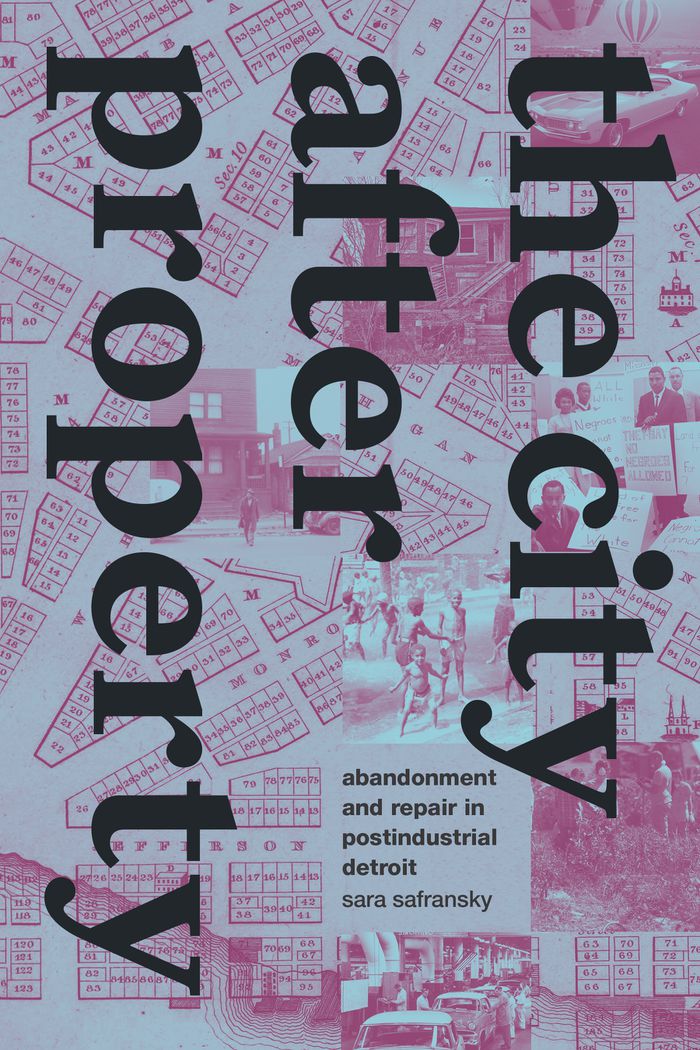
In The City after Property, Sara Safransky examines how postindustrial decline generates new forms of urban land politics. In the 2010s, Detroit government officials classified a staggering 150,000 lots—more than a third of the city—as “vacant” or “abandoned.” Analyzing subsequent efforts to shrink the Motor City’s footprint and budget, Safransky presents a new way of conceptualizing urban abandonment. She challenges popular myths that cast Detroit as empty along with narratives that reduce its historical decline to capital and white flight. In connecting contemporary debates over neoliberal urbanism to Cold War histories and the lasting political legacies of global movements for decolonization and Black liberation, she foregrounds how the making of—and challenges to—modern property regimes have shaped urban policy and politics. Drawing on critical geographical theory and community-based ethnography, Safransky shows how private property functions as a racialized construct, an ideology, and a moral force that shapes selves and worlds. By thinking the city “after property,” Safransky illuminates alternative ways of imagining and organizing urban life.
The city after property: Abandonment and repair in postindustrial Detroit
Actions:
Price:
$37.95
(available to order)
Summary:
In The City after Property, Sara Safransky examines how postindustrial decline generates new forms of urban land politics. In the 2010s, Detroit government officials classified a staggering 150,000 lots—more than a third of the city—as “vacant” or “abandoned.” Analyzing subsequent efforts to shrink the Motor City’s footprint and budget, Safransky presents a new way of conceptualizing urban abandonment. She challenges popular myths that cast Detroit as empty along with narratives that reduce its historical decline to capital and white flight. In connecting contemporary debates over neoliberal urbanism to Cold War histories and the lasting political legacies of global movements for decolonization and Black liberation, she foregrounds how the making of—and challenges to—modern property regimes have shaped urban policy and politics. Drawing on critical geographical theory and community-based ethnography, Safransky shows how private property functions as a racialized construct, an ideology, and a moral force that shapes selves and worlds. By thinking the city “after property,” Safransky illuminates alternative ways of imagining and organizing urban life.
Form:
books
books
Publication:
August 2023
August 2023
Form:
books
books

Actions:
Price:
$36.95
(available to order)
Summary:
What does it mean to say that Native peoples exist in the present? In ''Beyond settler time'' Mark Rifkin investigates the dangers of seeking to include Indigenous peoples within settler temporal frameworks. Claims that Native peoples should be recognized as coeval with Euro-Americans, Rifkin argues, implicitly treat dominant non-native ideologies and institutions as the(...)
$36.95
(available to order)
Summary:
What does it mean to say that Native peoples exist in the present? In ''Beyond settler time'' Mark Rifkin investigates the dangers of seeking to include Indigenous peoples within settler temporal frameworks. Claims that Native peoples should be recognized as coeval with Euro-Americans, Rifkin argues, implicitly treat dominant non-native ideologies and institutions as the(...)
Title:
Beyond settler time: temporal sovereignty and indigenous self-determination
Actions:
Price:
$36.95
(available to order)
Summary:
What does it mean to say that Native peoples exist in the present? In ''Beyond settler time'' Mark Rifkin investigates the dangers of seeking to include Indigenous peoples within settler temporal frameworks. Claims that Native peoples should be recognized as coeval with Euro-Americans, Rifkin argues, implicitly treat dominant non-native ideologies and institutions as the basis for defining time itself. How, though, can Native peoples be understood as dynamic and changing while also not assuming that they belong to a present inherently shared with non-natives? Drawing on physics, phenomenology, queer studies, and postcolonial theory, Rifkin develops the concept of "settler time" to address how Native peoples are both consigned to the past and inserted into the present in ways that normalize non-native histories, geographies, and expectations. Through analysis of various kinds of texts, including government documents, film, fiction, and autobiography, he explores how Native experiences of time exceed and defy such settler impositions. In underscoring the existence of multiple temporalities, Rifkin illustrates how time plays a crucial role in Indigenous peoples' expressions of sovereignty and struggles for self-determination.
Beyond settler time: temporal sovereignty and indigenous self-determination
Actions:
Price:
$36.95
(available to order)
Summary:
What does it mean to say that Native peoples exist in the present? In ''Beyond settler time'' Mark Rifkin investigates the dangers of seeking to include Indigenous peoples within settler temporal frameworks. Claims that Native peoples should be recognized as coeval with Euro-Americans, Rifkin argues, implicitly treat dominant non-native ideologies and institutions as the basis for defining time itself. How, though, can Native peoples be understood as dynamic and changing while also not assuming that they belong to a present inherently shared with non-natives? Drawing on physics, phenomenology, queer studies, and postcolonial theory, Rifkin develops the concept of "settler time" to address how Native peoples are both consigned to the past and inserted into the present in ways that normalize non-native histories, geographies, and expectations. Through analysis of various kinds of texts, including government documents, film, fiction, and autobiography, he explores how Native experiences of time exceed and defy such settler impositions. In underscoring the existence of multiple temporalities, Rifkin illustrates how time plays a crucial role in Indigenous peoples' expressions of sovereignty and struggles for self-determination.
Form:
books
books
Publication:
February 2017
February 2017
Form:
books
books
Actions:
Price:
$47.95
(available to order)
Summary:
Builders, Housewives and the Construction of Modern Athens reassesses the explosive growth of postwar Athens through its most distinctive building type, the polykatoikía, and its different connotations through the decades: from a monotonous and ugly element of the city to the role it might play in the urban sustainability. Sprawling beneath the Acropolis, modern Athens(...)
$47.95
(available to order)
Summary:
Builders, Housewives and the Construction of Modern Athens reassesses the explosive growth of postwar Athens through its most distinctive building type, the polykatoikía, and its different connotations through the decades: from a monotonous and ugly element of the city to the role it might play in the urban sustainability. Sprawling beneath the Acropolis, modern Athens(...)
Title:
Builders, housewives, and the construction of modern Athens
Actions:
Price:
$47.95
(available to order)
Summary:
Builders, Housewives and the Construction of Modern Athens reassesses the explosive growth of postwar Athens through its most distinctive building type, the polykatoikía, and its different connotations through the decades: from a monotonous and ugly element of the city to the role it might play in the urban sustainability. Sprawling beneath the Acropolis, modern Athens is commonly viewed in negative terms: congested, ugly and monotonous. Builders, Housewives and the Construction of Modern Athens questions this stereotype, reassessing the explosive growth of postwar Athens through its most distinctive building type: the polykatoikía (a small-scale multistory apartment block). Theocharopoulou re-evaluates the polykatoikía as a low-tech, easily constructible innovation that stimulated the postwar urban economy, triggering the city's social mid-twentieth-century transformation. The interiors of the polykatoikía apartments reflect a desire for modernity as marketed to housewives through film and magazines. Regular builders became unlikely allies in designing these polykatoikía interiors, enabling inhabitants to exert agency over their daily lives and the shape of the postwar city. This revised edition of Theocharopoulou's study draws on popular media as well as urban and regional planning theory, cultural studies and anthropology to examine the evolution of this phenomenon. Written in the light of Greece's recent financial crisis, the book's updated Postscript considers the role polykatoikía might play in building an equitable and sustainable twenty-first-century city.
Builders, housewives, and the construction of modern Athens
Actions:
Price:
$47.95
(available to order)
Summary:
Builders, Housewives and the Construction of Modern Athens reassesses the explosive growth of postwar Athens through its most distinctive building type, the polykatoikía, and its different connotations through the decades: from a monotonous and ugly element of the city to the role it might play in the urban sustainability. Sprawling beneath the Acropolis, modern Athens is commonly viewed in negative terms: congested, ugly and monotonous. Builders, Housewives and the Construction of Modern Athens questions this stereotype, reassessing the explosive growth of postwar Athens through its most distinctive building type: the polykatoikía (a small-scale multistory apartment block). Theocharopoulou re-evaluates the polykatoikía as a low-tech, easily constructible innovation that stimulated the postwar urban economy, triggering the city's social mid-twentieth-century transformation. The interiors of the polykatoikía apartments reflect a desire for modernity as marketed to housewives through film and magazines. Regular builders became unlikely allies in designing these polykatoikía interiors, enabling inhabitants to exert agency over their daily lives and the shape of the postwar city. This revised edition of Theocharopoulou's study draws on popular media as well as urban and regional planning theory, cultural studies and anthropology to examine the evolution of this phenomenon. Written in the light of Greece's recent financial crisis, the book's updated Postscript considers the role polykatoikía might play in building an equitable and sustainable twenty-first-century city.
Form:
books
books
Publication:
September 2022
September 2022
Subject:
Urban Theory
Urban Theory
Form:
books
books
Actions:
Price:
$39.95
(available to order)
Summary:
An epic project in both size and purview, Peter Sloterdijk's three-volume, 2,500-page Spheres is the late-twentieth-century bookend to Heidegger's Being and Time. Rejecting the century's predominant philosophical focus on temporality, Sloterdijk, a self-described "student of the air," reinterprets the history of Western metaphysics as an inherently spatial and(...)
$39.95
(available to order)
Summary:
An epic project in both size and purview, Peter Sloterdijk's three-volume, 2,500-page Spheres is the late-twentieth-century bookend to Heidegger's Being and Time. Rejecting the century's predominant philosophical focus on temporality, Sloterdijk, a self-described "student of the air," reinterprets the history of Western metaphysics as an inherently spatial and(...)
Title:
Spheres1 : Bubbles, microspherology
Actions:
Price:
$39.95
(available to order)
Summary:
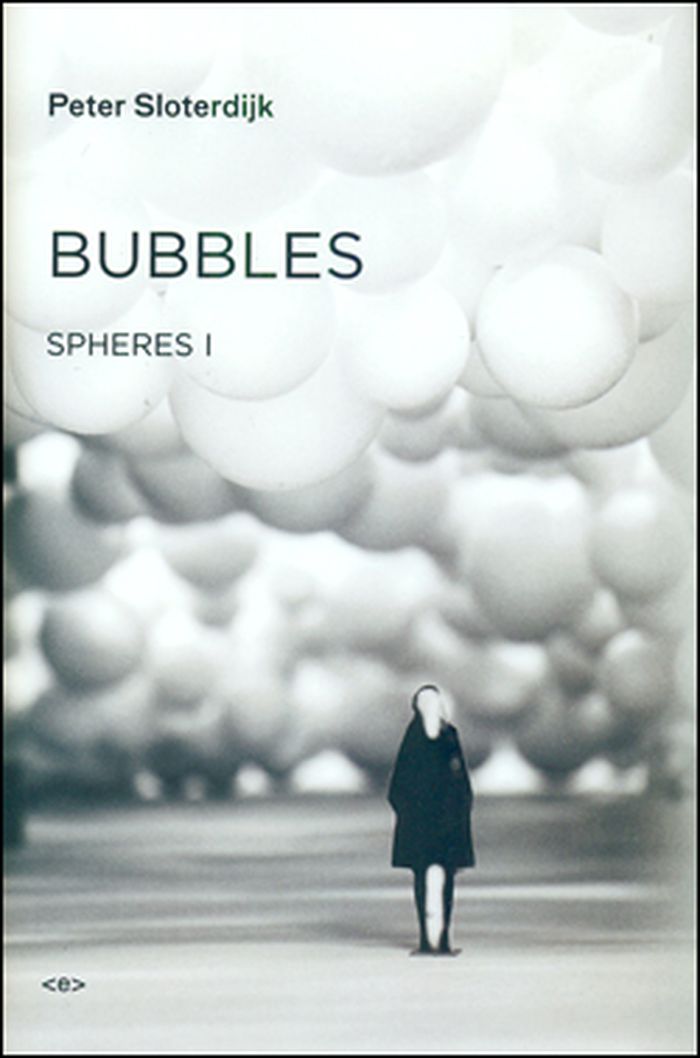
An epic project in both size and purview, Peter Sloterdijk's three-volume, 2,500-page Spheres is the late-twentieth-century bookend to Heidegger's Being and Time. Rejecting the century's predominant philosophical focus on temporality, Sloterdijk, a self-described "student of the air," reinterprets the history of Western metaphysics as an inherently spatial and immunological project, from the discovery of self (bubble) to the exploration of world (globe) to the poetics of plurality (foam). Exploring macro- and micro-space from the Greek agora to the contemporary urban apartment, Sloterdijk is able to synthesize, with immense erudition, the spatial theories of Aristotle, René Descartes, Gaston Bachelard, Walter Benjamin, and Georges Bataille into a morphology of shared, or multipolar, dwelling - identifying the question of being as one bound up with the aerial technology of architectonics and anthropogenesis. Sloterdijk describes Bubbles, the first volume of Spheres, as a general theory of the structures that allow couplings - or as the book's original intended subtitle put it, an "archeology of the intimate." Bubbles includes a wide array of images, not to illustrate Sloterdijk's discourse, but to offer a spatial and visual "parallel narrative" to his exploration of bubbles. Written over the course of a decade, the Spheres trilogy has waited another decade for its much-anticipated English translation from Semiotext(e). Volumes II, Globes, and III, Foam, will be published in the coming seasons.
Spheres1 : Bubbles, microspherology
Actions:
Price:
$39.95
(available to order)
Summary:
An epic project in both size and purview, Peter Sloterdijk's three-volume, 2,500-page Spheres is the late-twentieth-century bookend to Heidegger's Being and Time. Rejecting the century's predominant philosophical focus on temporality, Sloterdijk, a self-described "student of the air," reinterprets the history of Western metaphysics as an inherently spatial and immunological project, from the discovery of self (bubble) to the exploration of world (globe) to the poetics of plurality (foam). Exploring macro- and micro-space from the Greek agora to the contemporary urban apartment, Sloterdijk is able to synthesize, with immense erudition, the spatial theories of Aristotle, René Descartes, Gaston Bachelard, Walter Benjamin, and Georges Bataille into a morphology of shared, or multipolar, dwelling - identifying the question of being as one bound up with the aerial technology of architectonics and anthropogenesis. Sloterdijk describes Bubbles, the first volume of Spheres, as a general theory of the structures that allow couplings - or as the book's original intended subtitle put it, an "archeology of the intimate." Bubbles includes a wide array of images, not to illustrate Sloterdijk's discourse, but to offer a spatial and visual "parallel narrative" to his exploration of bubbles. Written over the course of a decade, the Spheres trilogy has waited another decade for its much-anticipated English translation from Semiotext(e). Volumes II, Globes, and III, Foam, will be published in the coming seasons.
Form:
books
books
Publication:
November 2011
November 2011
Subject:
Critical Theory
Critical Theory
Form:
books
books
Actions:
Price:
$54.00
(available to order)
Summary:
In ''Alien agency,'' Chris Salter tells three stories of art in the making. Salter examines three works in which the materials of art—the ''stuff of the world''—behave and perform in ways beyond the creator's intent, becoming unknown, surprising, alien. Studying these works—all three deeply embroiled in and enabled by science and technology—allows him to focus on practice(...)
$54.00
(available to order)
Summary:
In ''Alien agency,'' Chris Salter tells three stories of art in the making. Salter examines three works in which the materials of art—the ''stuff of the world''—behave and perform in ways beyond the creator's intent, becoming unknown, surprising, alien. Studying these works—all three deeply embroiled in and enabled by science and technology—allows him to focus on practice(...)
Title:
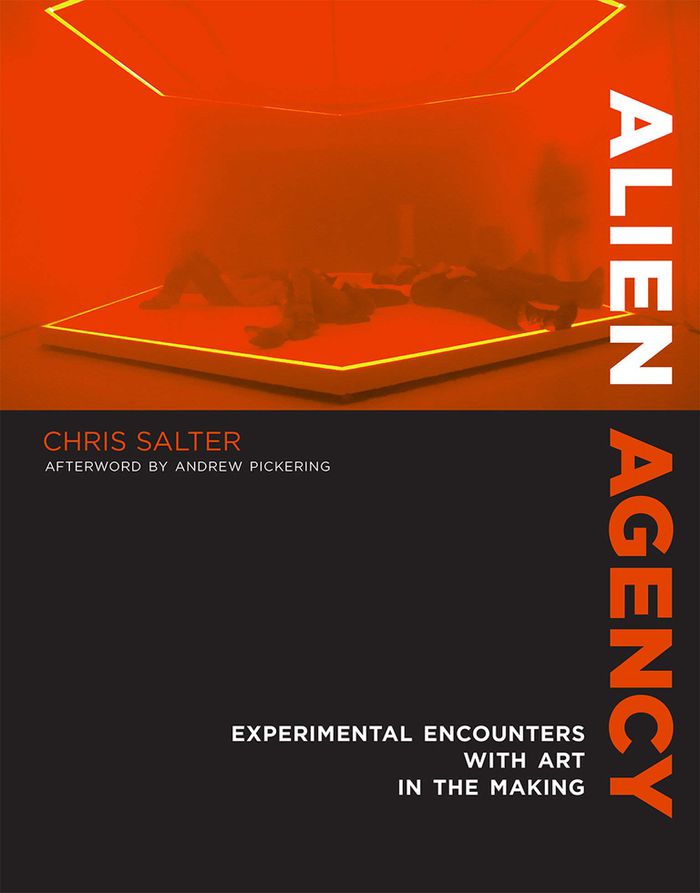
Alien agency: Experimental encounters with art in the making
Actions:
Price:
$54.00
(available to order)
Summary:
In ''Alien agency,'' Chris Salter tells three stories of art in the making. Salter examines three works in which the materials of art—the ''stuff of the world''—behave and perform in ways beyond the creator's intent, becoming unknown, surprising, alien. Studying these works—all three deeply embroiled in and enabled by science and technology—allows him to focus on practice through the experiential and affective elements of creation. Drawing on extensive ethnographic observation and on his own experience as an artist, Salter investigates how researcher-creators organize the conditions for these experimental, performative assemblages—assemblages that sidestep dichotomies between subjects and objects, human and nonhuman, mind and body, knowing and experiencing. Salter reports on the sound artists Bruce Odland and Sam Auinger (O+A) and their efforts to capture and then project unnoticed urban sounds; tracks the multi-year project TEMA (Tissue Engineered Muscle Actuators) at the art research lab SymbioticA and its construction of a hybrid ''semi-living'' machine from specially grown mouse muscle cells; and describes a research-creation project (which he himself initiated) that uses light, vibration, sound, smell, and other sensory stimuli to enable audiences to experience other cultures' ''ways of sensing.'' Combining theory, diary, history, and ethnography, Salter also explores a broader question: How do new things emerge into the world and what do they do?
Alien agency: Experimental encounters with art in the making
Actions:
Price:
$54.00
(available to order)
Summary:
In ''Alien agency,'' Chris Salter tells three stories of art in the making. Salter examines three works in which the materials of art—the ''stuff of the world''—behave and perform in ways beyond the creator's intent, becoming unknown, surprising, alien. Studying these works—all three deeply embroiled in and enabled by science and technology—allows him to focus on practice through the experiential and affective elements of creation. Drawing on extensive ethnographic observation and on his own experience as an artist, Salter investigates how researcher-creators organize the conditions for these experimental, performative assemblages—assemblages that sidestep dichotomies between subjects and objects, human and nonhuman, mind and body, knowing and experiencing. Salter reports on the sound artists Bruce Odland and Sam Auinger (O+A) and their efforts to capture and then project unnoticed urban sounds; tracks the multi-year project TEMA (Tissue Engineered Muscle Actuators) at the art research lab SymbioticA and its construction of a hybrid ''semi-living'' machine from specially grown mouse muscle cells; and describes a research-creation project (which he himself initiated) that uses light, vibration, sound, smell, and other sensory stimuli to enable audiences to experience other cultures' ''ways of sensing.'' Combining theory, diary, history, and ethnography, Salter also explores a broader question: How do new things emerge into the world and what do they do?
Form:
books
books
Publication:
February 2015
February 2015
Subject:
Critical Theory
Critical Theory
Form:
books
books
Title:
Mythologies
Mythologies
Actions:
Price:
$17.00
(available to order)
Summary:
"No denunciation without its proper instrument of close analysis," Roland Barthes wrote in his preface to Mythologies. There is no more proper instrument of analysis of our contemporary myths than this book—one of the most significant works in French theory, and one that has transformed the way readers and philosophers view the world around them. Our age is a triumph(...)
$17.00
(available to order)
Summary:
"No denunciation without its proper instrument of close analysis," Roland Barthes wrote in his preface to Mythologies. There is no more proper instrument of analysis of our contemporary myths than this book—one of the most significant works in French theory, and one that has transformed the way readers and philosophers view the world around them. Our age is a triumph(...)
Subject:
Critical Theory
Critical Theory
Publication:
November 2013
November 2013
Title:
Mythologies
Actions:
Price:
$17.00
(available to order)
Summary:
"No denunciation without its proper instrument of close analysis," Roland Barthes wrote in his preface to Mythologies. There is no more proper instrument of analysis of our contemporary myths than this book—one of the most significant works in French theory, and one that has transformed the way readers and philosophers view the world around them. Our age is a triumph of codification. We own devices that bring the world to the command of our fingertips. We have access to boundless information and prodigious quantities of stuff. We decide to like or not, to believe or not, to buy or not. We pick and choose. We think we are free. Yet all around us, in pop culture, politics, mainstream media, and advertising, there are codes and symbols that govern our choices. They are the fabrications of consumer society. They express myths of success, well-being, or happiness. As Barthes sees it, these myths must be carefully deciphered, and debunked. What Barthes discerned in mass media, the fashion of plastic, and the politics of postcolonial France applies with equal force to today's social networks, the iPhone, and the images of 9/11. This new edition of Mythologies, complete and beautifully rendered by the Pulitzer Prize–winning poet, critic, and translator Richard Howard, is a consecration of Barthes's classic—a lesson in clairvoyance that is more relevant now than ever.
Mythologies
Actions:
Price:
$17.00
(available to order)
Summary:
"No denunciation without its proper instrument of close analysis," Roland Barthes wrote in his preface to Mythologies. There is no more proper instrument of analysis of our contemporary myths than this book—one of the most significant works in French theory, and one that has transformed the way readers and philosophers view the world around them. Our age is a triumph of codification. We own devices that bring the world to the command of our fingertips. We have access to boundless information and prodigious quantities of stuff. We decide to like or not, to believe or not, to buy or not. We pick and choose. We think we are free. Yet all around us, in pop culture, politics, mainstream media, and advertising, there are codes and symbols that govern our choices. They are the fabrications of consumer society. They express myths of success, well-being, or happiness. As Barthes sees it, these myths must be carefully deciphered, and debunked. What Barthes discerned in mass media, the fashion of plastic, and the politics of postcolonial France applies with equal force to today's social networks, the iPhone, and the images of 9/11. This new edition of Mythologies, complete and beautifully rendered by the Pulitzer Prize–winning poet, critic, and translator Richard Howard, is a consecration of Barthes's classic—a lesson in clairvoyance that is more relevant now than ever.
Form:
books
books
Publication:
November 2013
November 2013
Subject:
Critical Theory
Critical Theory
Form:
books
books
Actions:
Price:
$35.95
(available to order)
Summary:
In ''The pulse of the earth'' Adam Bobbette tells the story of how modern theories of the earth emerged from the slopes of Indonesia’s volcanoes. Beginning in the late nineteenth century, scientists became concerned with protecting the colonial plantation economy from the unpredictable bursts and shudders of volcanoes. Bobbette follows Javanese knowledge traditions,(...)
$35.95
(available to order)
Summary:
In ''The pulse of the earth'' Adam Bobbette tells the story of how modern theories of the earth emerged from the slopes of Indonesia’s volcanoes. Beginning in the late nineteenth century, scientists became concerned with protecting the colonial plantation economy from the unpredictable bursts and shudders of volcanoes. Bobbette follows Javanese knowledge traditions,(...)
Title:
The pulse of the earth: Political geology in Java
Actions:
Price:
$35.95
(available to order)
Summary:
In ''The pulse of the earth'' Adam Bobbette tells the story of how modern theories of the earth emerged from the slopes of Indonesia’s volcanoes. Beginning in the late nineteenth century, scientists became concerned with protecting the colonial plantation economy from the unpredictable bursts and shudders of volcanoes. Bobbette follows Javanese knowledge traditions, colonial geologists, volcanologists, mystics, Theosophists, orientalists, and revolutionaries to show how the earth sciences originate from a fusion of Western and non-Western cosmology, theology, anthropology, and geology. Drawing on archival research, interviews, and fieldwork at Javanese volcanoes and in scientific observatories, he explores how Indonesian Islam shaped the theory of plate tectonics, how Dutch colonial volcanologists learned to see the earth in new ways from Javanese spiritual traditions, and how new scientific technologies radically recast notions of the human body, distance, and the earth. In this way, Bobbette decenters the significance of Western scientists to expand our understanding of the evolution of planetary thought and rethinks the politics of geological knowledge.
The pulse of the earth: Political geology in Java
Actions:
Price:
$35.95
(available to order)
Summary:
In ''The pulse of the earth'' Adam Bobbette tells the story of how modern theories of the earth emerged from the slopes of Indonesia’s volcanoes. Beginning in the late nineteenth century, scientists became concerned with protecting the colonial plantation economy from the unpredictable bursts and shudders of volcanoes. Bobbette follows Javanese knowledge traditions, colonial geologists, volcanologists, mystics, Theosophists, orientalists, and revolutionaries to show how the earth sciences originate from a fusion of Western and non-Western cosmology, theology, anthropology, and geology. Drawing on archival research, interviews, and fieldwork at Javanese volcanoes and in scientific observatories, he explores how Indonesian Islam shaped the theory of plate tectonics, how Dutch colonial volcanologists learned to see the earth in new ways from Javanese spiritual traditions, and how new scientific technologies radically recast notions of the human body, distance, and the earth. In this way, Bobbette decenters the significance of Western scientists to expand our understanding of the evolution of planetary thought and rethinks the politics of geological knowledge.
Form:
books
books
Publication:
August 2023
August 2023
Subject:
Environment and environmental theory
Environment and environmental theory


