


596 Results
Form:
books
books
Title:
Denis Wood: Everything sings
Denis Wood: Everything sings
Actions:
Price:
$31.00
(available to order)
Summary:
With artful wit and rigor, cartographer Denis Wood has written numerous books (including the influential bestseller The Power of Maps) that reorient his readers not only to our neighborhoods, homes and bodies, but also to our own very human instinct to understand where we live by mapmaking. At the heart of Wood's investigations is a near-legendary endeavor: the Boylan(...)
$31.00
(available to order)
Summary:
With artful wit and rigor, cartographer Denis Wood has written numerous books (including the influential bestseller The Power of Maps) that reorient his readers not only to our neighborhoods, homes and bodies, but also to our own very human instinct to understand where we live by mapmaking. At the heart of Wood's investigations is a near-legendary endeavor: the Boylan(...)
Title:
Denis Wood: Everything sings
Actions:
Price:
$31.00
(available to order)
Summary:
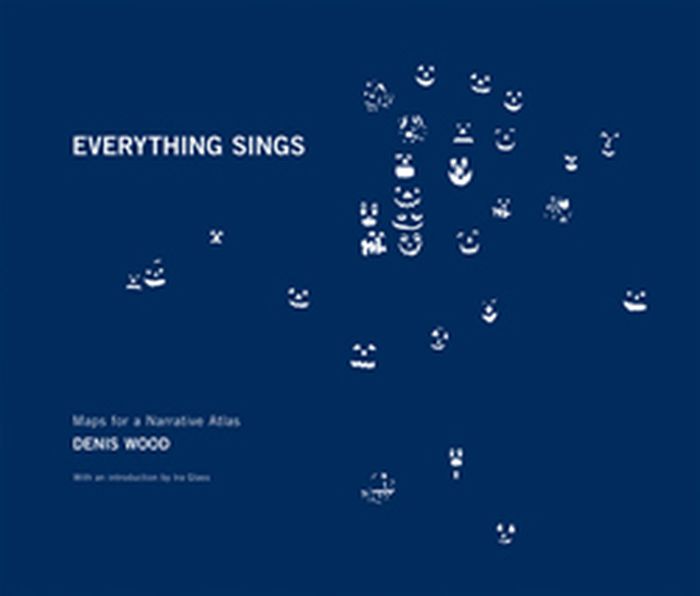
With artful wit and rigor, cartographer Denis Wood has written numerous books (including the influential bestseller The Power of Maps) that reorient his readers not only to our neighborhoods, homes and bodies, but also to our own very human instinct to understand where we live by mapmaking. At the heart of Wood's investigations is a near-legendary endeavor: the Boylan Heights maps, begun in 1982, and now published in Everything Sings. Surveying his century-old, half-square mile neighborhood Boylan Heights in Raleigh, North Carolina, Wood began by paring away the inessential "map crap" (scale, orientation, street grids) and, in searching for the revelatory in the unmapped and the unmappable, he ended up plotting such phenomena as radio waves permeating the air, the light cast by street lights and Halloween pumpkins on porches. Wood's maps accumulate into a multi-layered story about one neighborhood that tells the larger story of what constitutes the places we call home. With an introduction by Ira Glass.
Denis Wood: Everything sings
Actions:
Price:
$31.00
(available to order)
Summary:
With artful wit and rigor, cartographer Denis Wood has written numerous books (including the influential bestseller The Power of Maps) that reorient his readers not only to our neighborhoods, homes and bodies, but also to our own very human instinct to understand where we live by mapmaking. At the heart of Wood's investigations is a near-legendary endeavor: the Boylan Heights maps, begun in 1982, and now published in Everything Sings. Surveying his century-old, half-square mile neighborhood Boylan Heights in Raleigh, North Carolina, Wood began by paring away the inessential "map crap" (scale, orientation, street grids) and, in searching for the revelatory in the unmapped and the unmappable, he ended up plotting such phenomena as radio waves permeating the air, the light cast by street lights and Halloween pumpkins on porches. Wood's maps accumulate into a multi-layered story about one neighborhood that tells the larger story of what constitutes the places we call home. With an introduction by Ira Glass.
Form:
books
books
Publication:
February 2011
February 2011
Subject:
Architectural Plans and Cartography
Architectural Plans and Cartography
Form:
books
books
Actions:
Price:
$20.95
(available to order)
Summary:
A glimpse into the genesis of Harun Farocki’s film Images of the World and the Inscription of War (1988), which evolved from the unrealized project ''On the history of labor'' between 1985 and 1988. The booklet contains the project draft that Farocki wrote to apply for funding in the spring of 1986, a letter to Radio Free Berlin (SFB) editors Jürgen Tomm and Bernd(...)
$20.95
(available to order)
Summary:
A glimpse into the genesis of Harun Farocki’s film Images of the World and the Inscription of War (1988), which evolved from the unrealized project ''On the history of labor'' between 1985 and 1988. The booklet contains the project draft that Farocki wrote to apply for funding in the spring of 1986, a letter to Radio Free Berlin (SFB) editors Jürgen Tomm and Bernd(...)
Title:
HaFI 013 - Harun Farocki: On the history of labor
Actions:
Price:
$20.95
(available to order)
Summary:
A glimpse into the genesis of Harun Farocki’s film Images of the World and the Inscription of War (1988), which evolved from the unrealized project ''On the history of labor'' between 1985 and 1988. The booklet contains the project draft that Farocki wrote to apply for funding in the spring of 1986, a letter to Radio Free Berlin (SFB) editors Jürgen Tomm and Bernd Schauer, a list of research locations, a short report to ''Filmbüro NRW'' (Film office North Rhine-Westphalia), a newspaper article by Farocki on the ''Technology of vision'', and a research bibliography that Farocki drew on during this period. A commentary by Volker Pantenburg outlines how ''On the history of labor'' evolved into ''Images / History'', then Images-War (1987) and finally Images of the World. Stills from Images of the World and from unused footage make palpable how the focus of the project shifted and how, in the process, the 1944 aerial photographs of Auschwitz-Birkenau taken by the Allies increasingly attracted Farocki’s attention.
HaFI 013 - Harun Farocki: On the history of labor
Actions:
Price:
$20.95
(available to order)
Summary:
A glimpse into the genesis of Harun Farocki’s film Images of the World and the Inscription of War (1988), which evolved from the unrealized project ''On the history of labor'' between 1985 and 1988. The booklet contains the project draft that Farocki wrote to apply for funding in the spring of 1986, a letter to Radio Free Berlin (SFB) editors Jürgen Tomm and Bernd Schauer, a list of research locations, a short report to ''Filmbüro NRW'' (Film office North Rhine-Westphalia), a newspaper article by Farocki on the ''Technology of vision'', and a research bibliography that Farocki drew on during this period. A commentary by Volker Pantenburg outlines how ''On the history of labor'' evolved into ''Images / History'', then Images-War (1987) and finally Images of the World. Stills from Images of the World and from unused footage make palpable how the focus of the project shifted and how, in the process, the 1944 aerial photographs of Auschwitz-Birkenau taken by the Allies increasingly attracted Farocki’s attention.
Form:
books
books
Publication:
January 2020
January 2020
Subject:
Social
Social
Form:
books
books
Actions:
Price:
$37.50
(available to order)
Summary:
Art, Culture, and Media Under the Third Reich explores the ways in which Nazi Germany used art and media to portray their country as a champion of Kultur and civilization. Rather than focusing strictly on the role of the arts in state-supported propaganda as other studies do, this volume reveals how multiple domains of cultural activity served to conceptually dehumanize(...)
$37.50
(available to order)
Summary:
Art, Culture, and Media Under the Third Reich explores the ways in which Nazi Germany used art and media to portray their country as a champion of Kultur and civilization. Rather than focusing strictly on the role of the arts in state-supported propaganda as other studies do, this volume reveals how multiple domains of cultural activity served to conceptually dehumanize(...)
Title:
Art, culture, and media under the Third Reich
Actions:
Price:
$37.50
(available to order)
Summary:
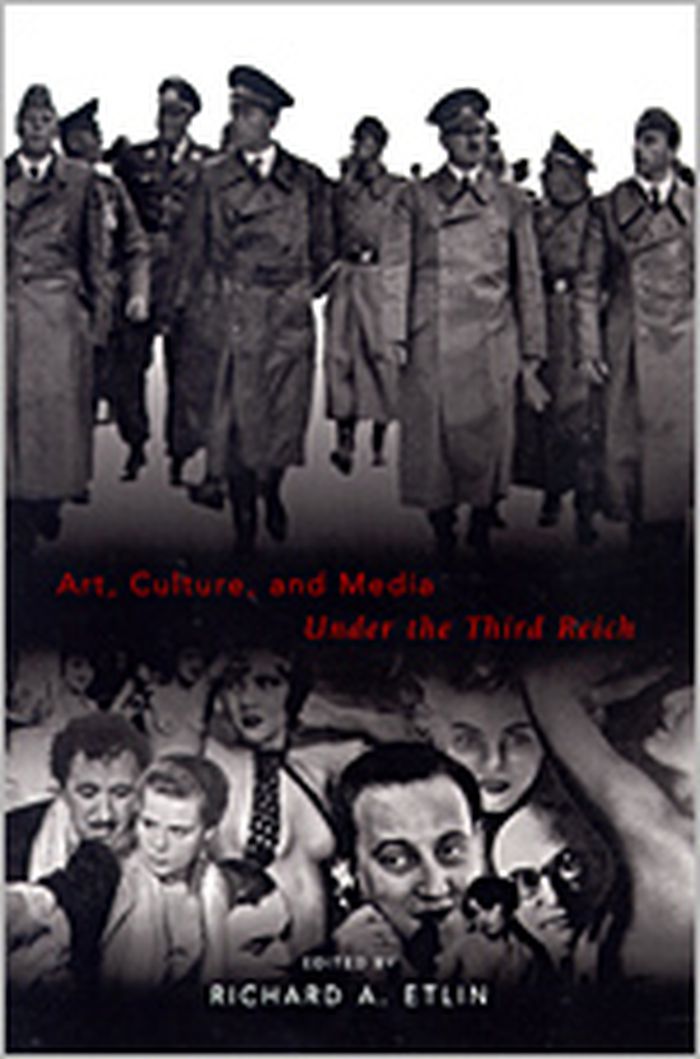
Art, Culture, and Media Under the Third Reich explores the ways in which Nazi Germany used art and media to portray their country as a champion of Kultur and civilization. Rather than focusing strictly on the role of the arts in state-supported propaganda as other studies do, this volume reveals how multiple domains of cultural activity served to conceptually dehumanize Jews and other groups, sowing the psychological seeds for the Holocaust to come. Topics covered by the essays range from the design of the Nuremberg Party Rally Grounds to Nazi experiments with radio. Contributors address nearly every facet of the arts and mass media under the Third Reich-efforts to define degenerate music; the promotion of race hatred and warfare through film, architecture, and public assemblies; visual iconography and style; views of the racially ideal garden and landscape; portrayal and reception of art and culture abroad; the treatment of exiled artists; and issues of territory, conquest, and cult. Anyone studying the history of Nazi Germany or the role of the arts in nationalist projects will benefit from this book.
Art, culture, and media under the Third Reich
Actions:
Price:
$37.50
(available to order)
Summary:
Art, Culture, and Media Under the Third Reich explores the ways in which Nazi Germany used art and media to portray their country as a champion of Kultur and civilization. Rather than focusing strictly on the role of the arts in state-supported propaganda as other studies do, this volume reveals how multiple domains of cultural activity served to conceptually dehumanize Jews and other groups, sowing the psychological seeds for the Holocaust to come. Topics covered by the essays range from the design of the Nuremberg Party Rally Grounds to Nazi experiments with radio. Contributors address nearly every facet of the arts and mass media under the Third Reich-efforts to define degenerate music; the promotion of race hatred and warfare through film, architecture, and public assemblies; visual iconography and style; views of the racially ideal garden and landscape; portrayal and reception of art and culture abroad; the treatment of exiled artists; and issues of territory, conquest, and cult. Anyone studying the history of Nazi Germany or the role of the arts in nationalist projects will benefit from this book.
Form:
books
books
Publication:
October 2002, Chicago
October 2002, Chicago
Subject:
Architectural Theory
Architectural Theory
Form:
books
books
Actions:
Price:
$30.95
(available to order)
Summary:
The rise of a prominent auditory culture, reveals the degree to which sound art is lending definition to the 21st Century. And yet sound art still lacks related literature to compliment, and expand, the realm of practice. Background Noise sets out an historical overview, while at the same time shaping that history according to what sound art reveals - the dynamics of art(...)
$30.95
(available to order)
Summary:
The rise of a prominent auditory culture, reveals the degree to which sound art is lending definition to the 21st Century. And yet sound art still lacks related literature to compliment, and expand, the realm of practice. Background Noise sets out an historical overview, while at the same time shaping that history according to what sound art reveals - the dynamics of art(...)
Title:
Background noise: perspectives on sound art
Actions:
Price:
$30.95
(available to order)
Summary:
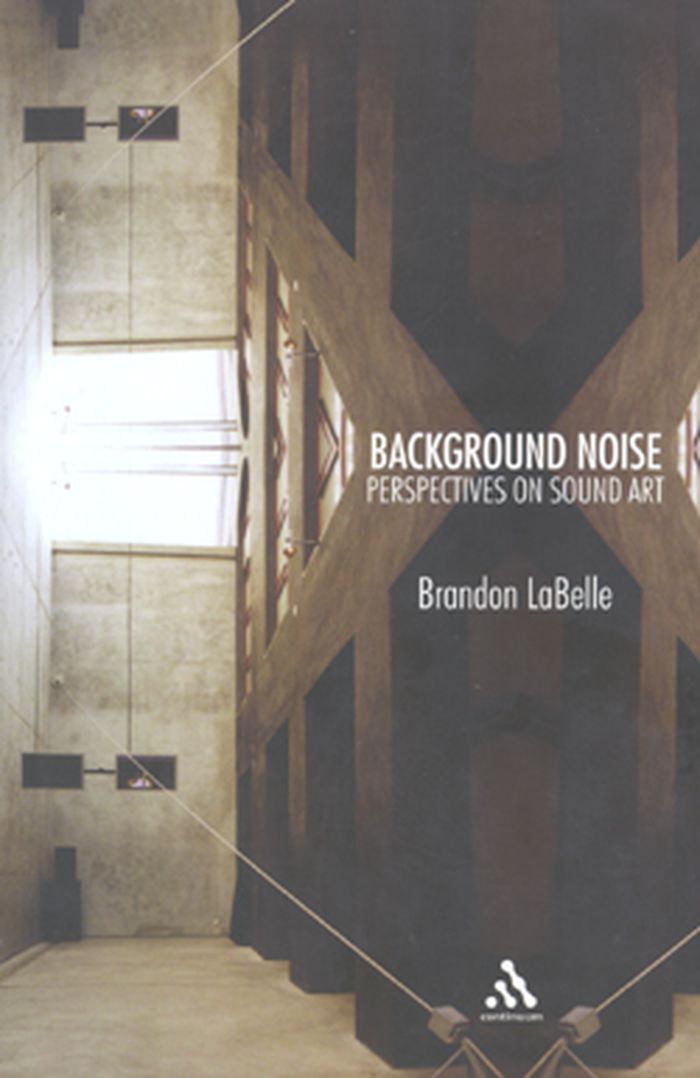
The rise of a prominent auditory culture, reveals the degree to which sound art is lending definition to the 21st Century. And yet sound art still lacks related literature to compliment, and expand, the realm of practice. Background Noise sets out an historical overview, while at the same time shaping that history according to what sound art reveals - the dynamics of art to operate spatially, through media of reproduction and broadcast, and in relation to the intensities of communication and its contextual framework Brandon LaBelle is a writer and curator who currently lives in Denmark. From 1998 to 2002 he developed and curated an international sound art festival in Los Angeles, Beyond Music; in 2001 he developed and organized Social Music, a series of radio works for Kunstradio in Vienna; in 2002 he curated Concrete Feedback, an exhibition of sound installations working with architecture, presented at the Southern California Institute of Architecture; and in 2002-03 he researched and curated the music section to the exhibition, Beyond Geometry: Experiments in Form, 1940s - 1970s for the Los Angeles County Museum of Art.
Background noise: perspectives on sound art
Actions:
Price:
$30.95
(available to order)
Summary:
The rise of a prominent auditory culture, reveals the degree to which sound art is lending definition to the 21st Century. And yet sound art still lacks related literature to compliment, and expand, the realm of practice. Background Noise sets out an historical overview, while at the same time shaping that history according to what sound art reveals - the dynamics of art to operate spatially, through media of reproduction and broadcast, and in relation to the intensities of communication and its contextual framework Brandon LaBelle is a writer and curator who currently lives in Denmark. From 1998 to 2002 he developed and curated an international sound art festival in Los Angeles, Beyond Music; in 2001 he developed and organized Social Music, a series of radio works for Kunstradio in Vienna; in 2002 he curated Concrete Feedback, an exhibition of sound installations working with architecture, presented at the Southern California Institute of Architecture; and in 2002-03 he researched and curated the music section to the exhibition, Beyond Geometry: Experiments in Form, 1940s - 1970s for the Los Angeles County Museum of Art.
Form:
books
books
Publication:
April 2006, New York, London
April 2006, New York, London
Subject:
Acoustics
Acoustics
Form:
books
books
Price:
$54.95
(available to order)
Summary:
Following the formation of the German National Socialist Party in the 1920s, various forms of sound (popular music, voice, noise and silence) and media technology (radio and loudspeaker systems) were configured as useful to the party's political programme. Focusing on the urban "soundscape" of Düsseldorf, the author makes a persuasive case for investigating such sound(...)
$54.95
(available to order)
Summary:
Following the formation of the German National Socialist Party in the 1920s, various forms of sound (popular music, voice, noise and silence) and media technology (radio and loudspeaker systems) were configured as useful to the party's political programme. Focusing on the urban "soundscape" of Düsseldorf, the author makes a persuasive case for investigating such sound(...)
Title:
Nazi soundscapes : sound, technology and urban space in Germany, 1933-1945
Actions:
Price:
$54.95
(available to order)
Summary:
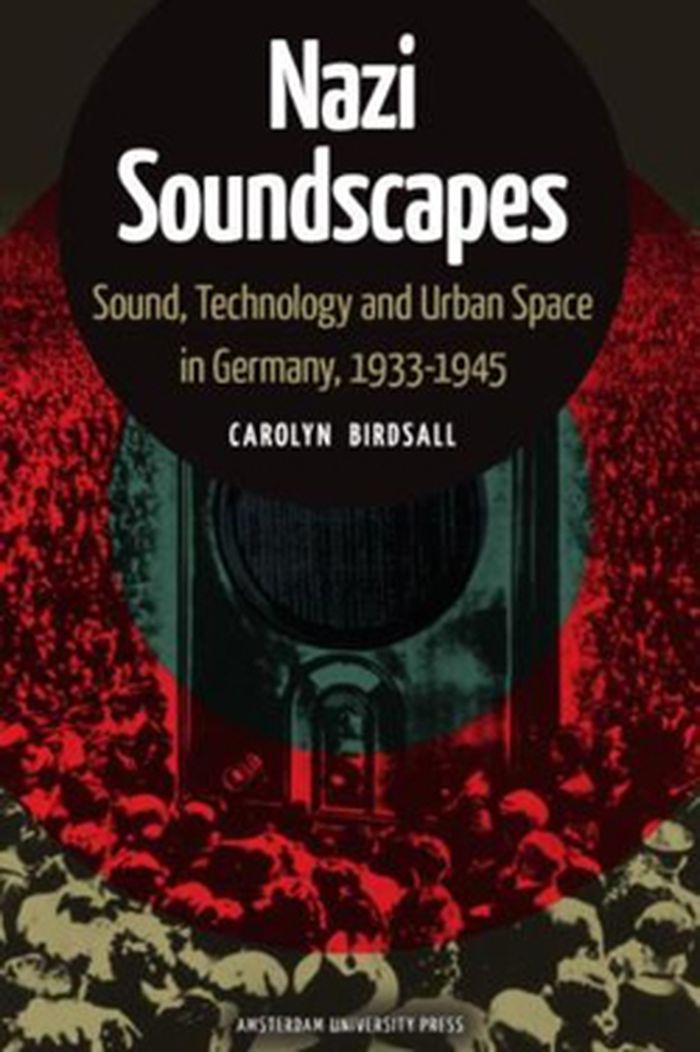
Following the formation of the German National Socialist Party in the 1920s, various forms of sound (popular music, voice, noise and silence) and media technology (radio and loudspeaker systems) were configured as useful to the party's political programme. Focusing on the urban "soundscape" of Düsseldorf, the author makes a persuasive case for investigating such sound events and technological devices in their specific contexts of production and reception. Nazi Soundscapes identifies strategies for controlling space and reworking identity patterns, but also the ongoing difficulties in manipulating mediated sounds and the spaces of listening reception, whether in the home, workplace, the cinema, public rituals or with wartime siren systems. The study revises visualist notions of social control, and reveals the disciplinary functions of listening (as eavesdropping) as well as the sonic dimensions to exclusion and violence during Nazism. An essential title for everyone interested in the links between German political culture, audiovisual media and urban history,Nazi Soundscapes provides a fascinating analysis of the cultural significance of sound between the 1920s and early 1940s.
Nazi soundscapes : sound, technology and urban space in Germany, 1933-1945
Actions:
Price:
$54.95
(available to order)
Summary:
Following the formation of the German National Socialist Party in the 1920s, various forms of sound (popular music, voice, noise and silence) and media technology (radio and loudspeaker systems) were configured as useful to the party's political programme. Focusing on the urban "soundscape" of Düsseldorf, the author makes a persuasive case for investigating such sound events and technological devices in their specific contexts of production and reception. Nazi Soundscapes identifies strategies for controlling space and reworking identity patterns, but also the ongoing difficulties in manipulating mediated sounds and the spaces of listening reception, whether in the home, workplace, the cinema, public rituals or with wartime siren systems. The study revises visualist notions of social control, and reveals the disciplinary functions of listening (as eavesdropping) as well as the sonic dimensions to exclusion and violence during Nazism. An essential title for everyone interested in the links between German political culture, audiovisual media and urban history,Nazi Soundscapes provides a fascinating analysis of the cultural significance of sound between the 1920s and early 1940s.
Form:
books
books
Publication:
September 2012
September 2012
Subject:
Architectural Theory
Architectural Theory
Form:
books
books
Title:
Modernism after Wagner
Modernism after Wagner
Actions:
Price:
$34.00
(available to order)
Summary:
In this publication, Juliet Koss explores the history and legacy of Wagner’s concept, laying out its genealogy and the political, aesthetic, and cultural context from which it emerged, and tracing its development and reception through the 1930s. Beginning with Wagner’s initial articulation of the Gesamtkunstwerk in the wake of the 1848–49 revolution, Koss addresses a(...)
$34.00
(available to order)
Summary:
In this publication, Juliet Koss explores the history and legacy of Wagner’s concept, laying out its genealogy and the political, aesthetic, and cultural context from which it emerged, and tracing its development and reception through the 1930s. Beginning with Wagner’s initial articulation of the Gesamtkunstwerk in the wake of the 1848–49 revolution, Koss addresses a(...)
Title:
Modernism after Wagner
Actions:
Price:
$34.00
(available to order)
Summary:
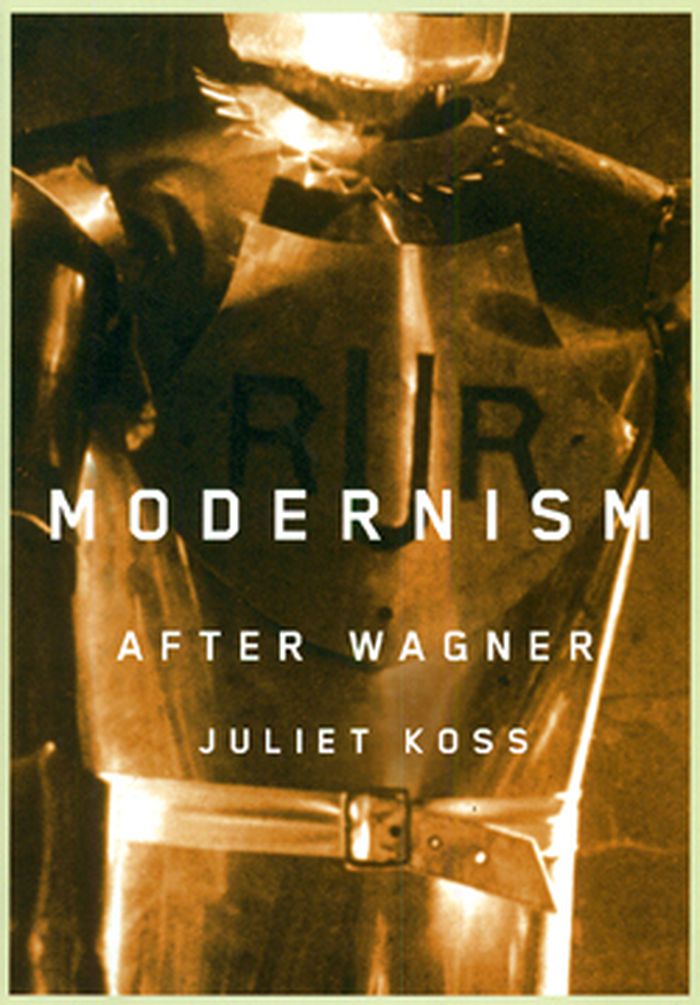
In this publication, Juliet Koss explores the history and legacy of Wagner’s concept, laying out its genealogy and the political, aesthetic, and cultural context from which it emerged, and tracing its development and reception through the 1930s. Beginning with Wagner’s initial articulation of the Gesamtkunstwerk in the wake of the 1848–49 revolution, Koss addresses a series of linked episodes in German aesthetic theory and artistic practice that include the composer’s efforts to build a theater to house his music dramas, culminating in the construction of the festival theater at Bayreuth in 1876; German aesthetic theory and criticism in the visual arts, theater, film, and radio from the 1870s to the 1920s; the founding of the Darmstadt Artists’ Colony in 1901 and that of the Munich Artists’ Theater in 1908; performances and parties at the Bauhaus in the 1920s and 1930s; and the legacy of the Gesamtkunstwerk under National Socialism. Attending to Wagner’s absorption into Fascist aesthetics, Koss foregrounds the revolutionary origins of the Gesamtkunstwerk and its emancipatory potential.
Modernism after Wagner
Actions:
Price:
$34.00
(available to order)
Summary:
In this publication, Juliet Koss explores the history and legacy of Wagner’s concept, laying out its genealogy and the political, aesthetic, and cultural context from which it emerged, and tracing its development and reception through the 1930s. Beginning with Wagner’s initial articulation of the Gesamtkunstwerk in the wake of the 1848–49 revolution, Koss addresses a series of linked episodes in German aesthetic theory and artistic practice that include the composer’s efforts to build a theater to house his music dramas, culminating in the construction of the festival theater at Bayreuth in 1876; German aesthetic theory and criticism in the visual arts, theater, film, and radio from the 1870s to the 1920s; the founding of the Darmstadt Artists’ Colony in 1901 and that of the Munich Artists’ Theater in 1908; performances and parties at the Bauhaus in the 1920s and 1930s; and the legacy of the Gesamtkunstwerk under National Socialism. Attending to Wagner’s absorption into Fascist aesthetics, Koss foregrounds the revolutionary origins of the Gesamtkunstwerk and its emancipatory potential.
Form:
books
books
Publication:
March 2010
March 2010
Subject:
Architectural Theory
Architectural Theory
Form:
books
books
Title:
Silent Blocks
Silent Blocks
Actions:
Price:
$42.95
(available to order)
Summary:
Au printemps 2020, à Toronto, David Cayley, ancien journaliste scientifique pour la radio publique canadienne et écrivain, s'interroge sur la pandémie. En s'appuyant sur sa connaissance des travaux philosophiques de son ami Ivan illich, il se demande si ' l'ontologie de systèmes' dans laquelle nous vivons n'aurait-elle pas créé cet état de crise ? Il alerte sur une forme(...)
$42.95
(available to order)
Summary:
Au printemps 2020, à Toronto, David Cayley, ancien journaliste scientifique pour la radio publique canadienne et écrivain, s'interroge sur la pandémie. En s'appuyant sur sa connaissance des travaux philosophiques de son ami Ivan illich, il se demande si ' l'ontologie de systèmes' dans laquelle nous vivons n'aurait-elle pas créé cet état de crise ? Il alerte sur une forme(...)
Title:
Silent Blocks
Actions:
Price:
$42.95
(available to order)
Summary:
Au printemps 2020, à Toronto, David Cayley, ancien journaliste scientifique pour la radio publique canadienne et écrivain, s'interroge sur la pandémie. En s'appuyant sur sa connaissance des travaux philosophiques de son ami Ivan illich, il se demande si ' l'ontologie de systèmes' dans laquelle nous vivons n'aurait-elle pas créé cet état de crise ? Il alerte sur une forme de négation de la mort, laquelle 'dissimule tout le reste, à savoir l'expérimentation à grande échelle du contrôle social et de l'obéissance sociale, la légitimation de la téléprésence comme mode de sociabilité et d'enseignement, l'accroissement de la surveillance, la normalisation de la biopolitique et le renforcement des mesures préventives comme fondements de la vie sociale. À Paris au printemps de cette même année, avec l'instauration du confinement pour juguler la pandémie du coronavirus, la rue s'est soudainement vidée. Le dispositif sanitaire adossé à un dispositif policier aura permis au pouvoir une montée en régime – sans rencontrer de grande résistance – dans sa politique sécuritaire initiée des années plus tôt avec notamment le plan Vigipirate. Le photographe Myr Muratet a documenté, à sa façon, la ville silencieuse.
Silent Blocks
Actions:
Price:
$42.95
(available to order)
Summary:
Au printemps 2020, à Toronto, David Cayley, ancien journaliste scientifique pour la radio publique canadienne et écrivain, s'interroge sur la pandémie. En s'appuyant sur sa connaissance des travaux philosophiques de son ami Ivan illich, il se demande si ' l'ontologie de systèmes' dans laquelle nous vivons n'aurait-elle pas créé cet état de crise ? Il alerte sur une forme de négation de la mort, laquelle 'dissimule tout le reste, à savoir l'expérimentation à grande échelle du contrôle social et de l'obéissance sociale, la légitimation de la téléprésence comme mode de sociabilité et d'enseignement, l'accroissement de la surveillance, la normalisation de la biopolitique et le renforcement des mesures préventives comme fondements de la vie sociale. À Paris au printemps de cette même année, avec l'instauration du confinement pour juguler la pandémie du coronavirus, la rue s'est soudainement vidée. Le dispositif sanitaire adossé à un dispositif policier aura permis au pouvoir une montée en régime – sans rencontrer de grande résistance – dans sa politique sécuritaire initiée des années plus tôt avec notamment le plan Vigipirate. Le photographe Myr Muratet a documenté, à sa façon, la ville silencieuse.
Form:
books
books
Publication:
April 2021
April 2021
Subject:
Photography monographs
Photography monographs
Form:
books
books
Price:
$25.00
(available to order)
Summary:
Since the 1980s, Colin Sackett, a book artist, designer and printer based in Axminster, has been publishing books which take peripheral information as a source material, and rejuvenate it so as to make it newly intelligible and vital. Sources as diverse as book indexes, Ordnance Survey maps, watercress labels and radio commentaries are singled out. These texts are edited(...)
$25.00
(available to order)
Summary:
Since the 1980s, Colin Sackett, a book artist, designer and printer based in Axminster, has been publishing books which take peripheral information as a source material, and rejuvenate it so as to make it newly intelligible and vital. Sources as diverse as book indexes, Ordnance Survey maps, watercress labels and radio commentaries are singled out. These texts are edited(...)
Title:
Englshpublshing : Colin Sackett writing and readings, 1991-2002
Actions:
Price:
$25.00
(available to order)
Summary:
Since the 1980s, Colin Sackett, a book artist, designer and printer based in Axminster, has been publishing books which take peripheral information as a source material, and rejuvenate it so as to make it newly intelligible and vital. Sources as diverse as book indexes, Ordnance Survey maps, watercress labels and radio commentaries are singled out. These texts are edited and rearranged, sifted and panned and sieved, so that language comes to the surface new and raw and untarnished. The art here is typographical, and the end product of these explorations is a backlist of impeccable publications of simplicity and plainness. Englshpublshing sees a body of work published discretely in the 1990s, with essays, commentaries and unpublished pieces, compiled into a single volume with a standardised format. An opportunity, then, to concentrate on content, rather than product, and what is striking is the consistent wit and audacity charging this assault on an unsuspected hotchpotch of source material. Unrelated words and works strike off each other in counterpoint, building a compelling impression of some coherent whole from the parts, like the variations of a Bach suite.
Englshpublshing : Colin Sackett writing and readings, 1991-2002
Actions:
Price:
$25.00
(available to order)
Summary:
Since the 1980s, Colin Sackett, a book artist, designer and printer based in Axminster, has been publishing books which take peripheral information as a source material, and rejuvenate it so as to make it newly intelligible and vital. Sources as diverse as book indexes, Ordnance Survey maps, watercress labels and radio commentaries are singled out. These texts are edited and rearranged, sifted and panned and sieved, so that language comes to the surface new and raw and untarnished. The art here is typographical, and the end product of these explorations is a backlist of impeccable publications of simplicity and plainness. Englshpublshing sees a body of work published discretely in the 1990s, with essays, commentaries and unpublished pieces, compiled into a single volume with a standardised format. An opportunity, then, to concentrate on content, rather than product, and what is striking is the consistent wit and audacity charging this assault on an unsuspected hotchpotch of source material. Unrelated words and works strike off each other in counterpoint, building a compelling impression of some coherent whole from the parts, like the variations of a Bach suite.
Form:
books
books
Publication:
May 2004, Exeter
May 2004, Exeter
Subject:
Graphic Design and Typography
Graphic Design and Typography
Form:
journals and magazines
journals and magazines

Actions:
Price:
$36.00
(available to order)
Summary:
Sound is everywhere and plays a crucial role in the experience and perception of public space. Nevertheless, in the reflection about that space and its organization, the visual image usually takes centre stage. Over recent years, however, there seems to have been a sensitization to the auditory aspects of daily life and the public domain. In the visual arts in particular,(...)
$36.00
(available to order)
Summary:
Sound is everywhere and plays a crucial role in the experience and perception of public space. Nevertheless, in the reflection about that space and its organization, the visual image usually takes centre stage. Over recent years, however, there seems to have been a sensitization to the auditory aspects of daily life and the public domain. In the visual arts in particular,(...)
Title:
Open 9 Sound : sound in art and culture
Actions:
Price:
$36.00
(available to order)
Summary:
Sound is everywhere and plays a crucial role in the experience and perception of public space. Nevertheless, in the reflection about that space and its organization, the visual image usually takes centre stage. Over recent years, however, there seems to have been a sensitization to the auditory aspects of daily life and the public domain. In the visual arts in particular, but also in architecture and landscape architecture, people are studying the potential of sound as an element that can lend meaning in relation to social or spatial surroundings. The medium of radio seems to be undergoing a cultural revival, and research into image-sound relationships has become an important subject within the field of 'cultural studies'. What is the role of sound and the sense of hearing in the public domain? An investigation of the topicality and the effects of sound, from the perspectives of cultural philosophy, art theory and media theory, could provide fresh insights into the current conditions of the public domain. With contributions by Jonathan Sterne, Dirk van Weelden, Edwin Carels, Moniek Toebosch, Suzanne van de Ven, Studio Popcorn, RadioDays and many others.
Open 9 Sound : sound in art and culture
Actions:
Price:
$36.00
(available to order)
Summary:
Sound is everywhere and plays a crucial role in the experience and perception of public space. Nevertheless, in the reflection about that space and its organization, the visual image usually takes centre stage. Over recent years, however, there seems to have been a sensitization to the auditory aspects of daily life and the public domain. In the visual arts in particular, but also in architecture and landscape architecture, people are studying the potential of sound as an element that can lend meaning in relation to social or spatial surroundings. The medium of radio seems to be undergoing a cultural revival, and research into image-sound relationships has become an important subject within the field of 'cultural studies'. What is the role of sound and the sense of hearing in the public domain? An investigation of the topicality and the effects of sound, from the perspectives of cultural philosophy, art theory and media theory, could provide fresh insights into the current conditions of the public domain. With contributions by Jonathan Sterne, Dirk van Weelden, Edwin Carels, Moniek Toebosch, Suzanne van de Ven, Studio Popcorn, RadioDays and many others.
Form:
journals and magazines
journals and magazines
Publication:
January 1900
January 1900
Subject:
Magazines
Magazines
Form:
books
books
Actions:
Price:
$29.95
(available to order)
Summary:
This book explores the experience of driving cars as a way of encountering landscapes and cities around the world. A richly illustrated cultural history, drawing on social and urban history, art, literature and music, Drive explores in particular how car driving is portrayed in cinema and other moving images, from America to Europe and Asia, and from Hollywood to the(...)
$29.95
(available to order)
Summary:
This book explores the experience of driving cars as a way of encountering landscapes and cities around the world. A richly illustrated cultural history, drawing on social and urban history, art, literature and music, Drive explores in particular how car driving is portrayed in cinema and other moving images, from America to Europe and Asia, and from Hollywood to the(...)
Title:
Drive : journeys through film, cities and landscapes
Actions:
Price:
$29.95
(available to order)
Summary:
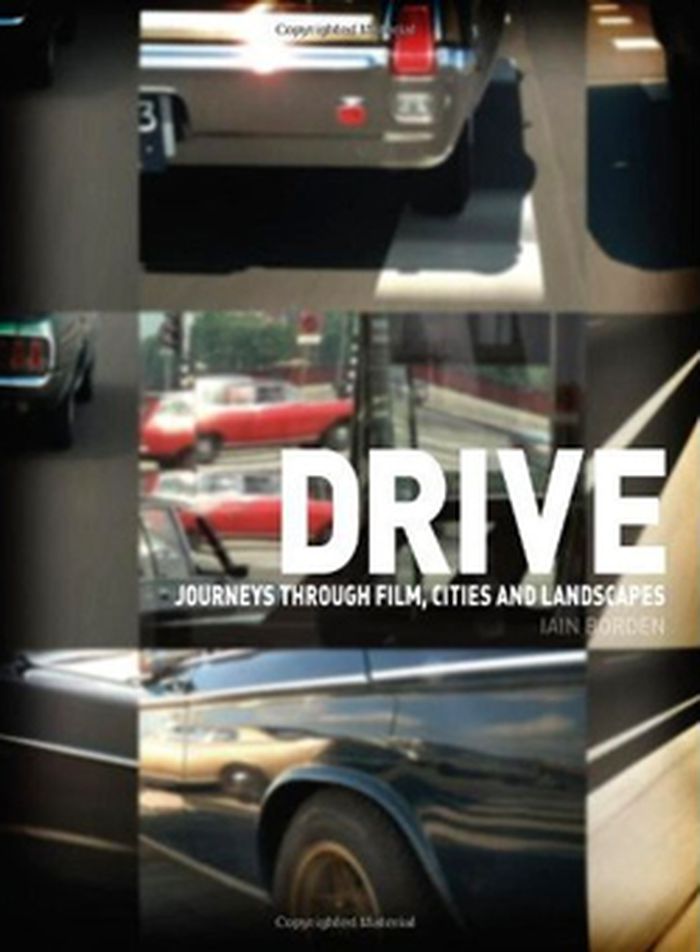
This book explores the experience of driving cars as a way of encountering landscapes and cities around the world. A richly illustrated cultural history, drawing on social and urban history, art, literature and music, Drive explores in particular how car driving is portrayed in cinema and other moving images, from America to Europe and Asia, and from Hollywood to the avant-garde. Drive is about dynamic journeys, experiences and speeds, rooted in specific places and roads, and expanded into the realm of cinema, art and video games. It moves from the gentle deserts of The Grapes of Wrath to the adventurous city streets of The Italian Job, from the aesthetic delights of Rain Man and Traffic to the existential musings of Two-Lane Blacktop, Thelma and Louise and Vanishing Point, from the contemplative freeway pleasures of Lift to the Scaffold, Radio On and London Orbital to the hallucinatory high-speed dangers of Crash, Bullitt, Death Proof and C’était un Rendezvous. It shows how various kinds of driving – with different speeds, cars, attitudes, roads and cities – provide experiences and values that we ignore at our peril.
Drive : journeys through film, cities and landscapes
Actions:
Price:
$29.95
(available to order)
Summary:
This book explores the experience of driving cars as a way of encountering landscapes and cities around the world. A richly illustrated cultural history, drawing on social and urban history, art, literature and music, Drive explores in particular how car driving is portrayed in cinema and other moving images, from America to Europe and Asia, and from Hollywood to the avant-garde. Drive is about dynamic journeys, experiences and speeds, rooted in specific places and roads, and expanded into the realm of cinema, art and video games. It moves from the gentle deserts of The Grapes of Wrath to the adventurous city streets of The Italian Job, from the aesthetic delights of Rain Man and Traffic to the existential musings of Two-Lane Blacktop, Thelma and Louise and Vanishing Point, from the contemplative freeway pleasures of Lift to the Scaffold, Radio On and London Orbital to the hallucinatory high-speed dangers of Crash, Bullitt, Death Proof and C’était un Rendezvous. It shows how various kinds of driving – with different speeds, cars, attitudes, roads and cities – provide experiences and values that we ignore at our peril.
Form:
books
books
Publication:
September 2012
September 2012
Subject:
Architecture and Film, Set Design
Architecture and Film, Set Design


