


13794 Results
Form:
books
books
Actions:
Price:
$50.00
(available to order)
Summary:
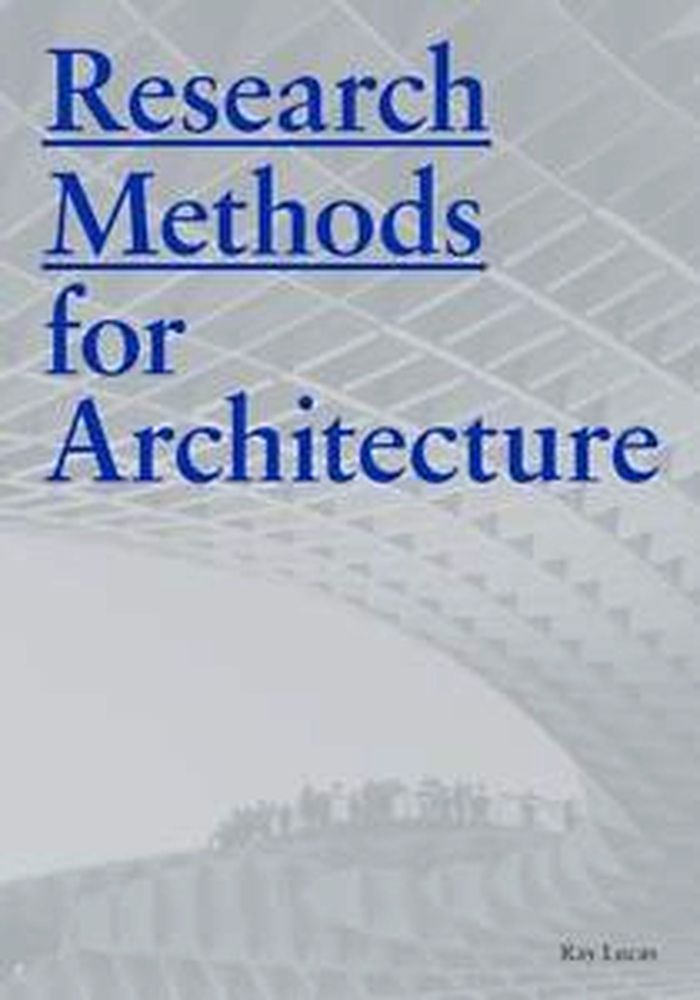
While fundamentally a design discipline, architectural education requires an element of history and theory, grouped under the term "research." However, many students struggle with this part of their course. This practical handbook provides the necessary grounding in this subject, addressing essential questions about what research in architecture can be.
$50.00
(available to order)
Summary:
While fundamentally a design discipline, architectural education requires an element of history and theory, grouped under the term "research." However, many students struggle with this part of their course. This practical handbook provides the necessary grounding in this subject, addressing essential questions about what research in architecture can be.
Title:
Research methods for architecture
Actions:
Price:
$50.00
(available to order)
Summary:
While fundamentally a design discipline, architectural education requires an element of history and theory, grouped under the term "research." However, many students struggle with this part of their course. This practical handbook provides the necessary grounding in this subject, addressing essential questions about what research in architecture can be.
Research methods for architecture
Actions:
Price:
$50.00
(available to order)
Summary:
While fundamentally a design discipline, architectural education requires an element of history and theory, grouped under the term "research." However, many students struggle with this part of their course. This practical handbook provides the necessary grounding in this subject, addressing essential questions about what research in architecture can be.
Form:
books
books
Publication:
March 2016
March 2016
Form:
books
books
Actions:
Price:
$49.95
(available to order)
Summary:
This publication examines design solutions to signage and graphics that allow seamless navigation through commercial establishments and public facilities. Aesthetically integrating a building's architecture and interiors with branding, color theory, typography, symbols or pictograms, product design, and more, designers provide new directional systems while creating unique(...)
$49.95
(available to order)
Summary:
This publication examines design solutions to signage and graphics that allow seamless navigation through commercial establishments and public facilities. Aesthetically integrating a building's architecture and interiors with branding, color theory, typography, symbols or pictograms, product design, and more, designers provide new directional systems while creating unique(...)
Title:
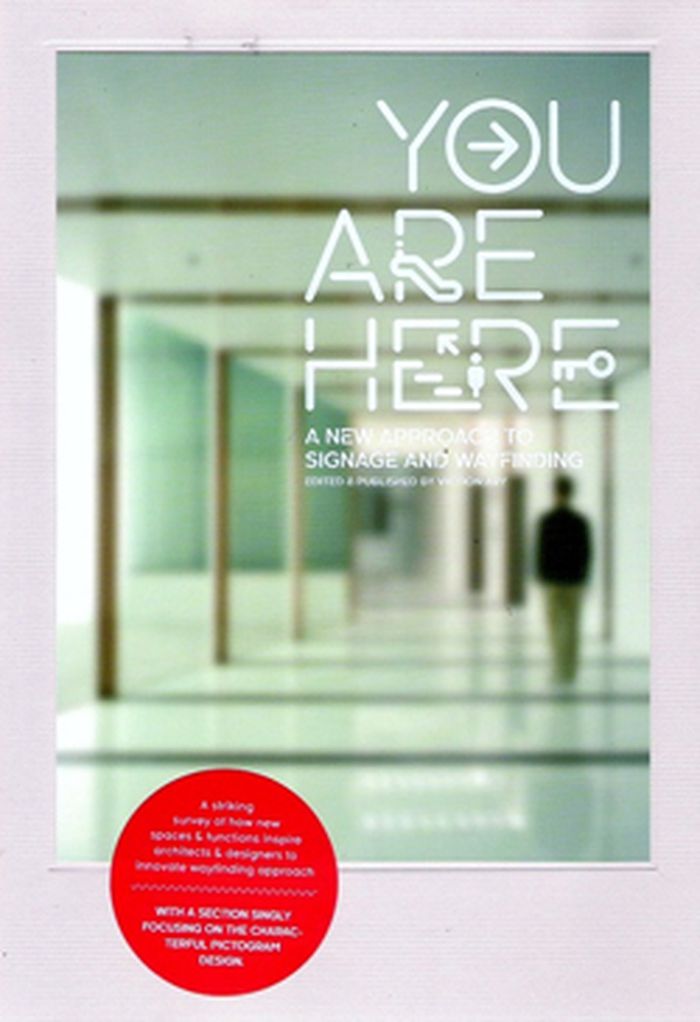
You are here: a new approach to signage and wayfinding
Actions:
Price:
$49.95
(available to order)
Summary:
This publication examines design solutions to signage and graphics that allow seamless navigation through commercial establishments and public facilities. Aesthetically integrating a building's architecture and interiors with branding, color theory, typography, symbols or pictograms, product design, and more, designers provide new directional systems while creating unique experiences for visitors.
You are here: a new approach to signage and wayfinding
Actions:
Price:
$49.95
(available to order)
Summary:
This publication examines design solutions to signage and graphics that allow seamless navigation through commercial establishments and public facilities. Aesthetically integrating a building's architecture and interiors with branding, color theory, typography, symbols or pictograms, product design, and more, designers provide new directional systems while creating unique experiences for visitors.
Form:
books
books
Publication:
December 2014
December 2014
Subject:
Signage
Signage
Form:
books
books
Actions:
Holdings:
Description:
167 pages : illustrations (some color), maps ; 26 cm.
Description:
167 pages : illustrations (some color), maps ; 26 cm.
Author:
Subject:
Publication:
Cambridge, Mass. : Aga Khan Program at the Harvard University Graduate School of Design, 2013.
Cambridge, Mass. : Aga Khan Program at the Harvard University Graduate School of Design, 2013.
Title:
The superlative city : Dubai and the urban condition in the early twenty-first century / edited by Ahmed Kanna.
Actions:
Holdings:
Description:
167 pages : illustrations (some color), maps ; 26 cm.
The superlative city : Dubai and the urban condition in the early twenty-first century / edited by Ahmed Kanna.
Actions:
Holdings:
Description:
167 pages : illustrations (some color), maps ; 26 cm.
Form:
books
books
Publication:
Cambridge, Mass. : Aga Khan Program at the Harvard University Graduate School of Design, 2013.
Cambridge, Mass. : Aga Khan Program at the Harvard University Graduate School of Design, 2013.
Author:
Subject:
Form:
books
books
Holdings:
Description:
x, 234 pages : illustrations, maps ; 24 cm
Description:
x, 234 pages : illustrations, maps ; 24 cm
Author:
Subject:
Publication:
Cambridge, Mass. : MIT Press, ©2008.
Cambridge, Mass. : MIT Press, ©2008.
Title:
I am a monument : on Learning from Las Vegas / Aron Vinegar.
Actions:
Holdings:
Description:
x, 234 pages : illustrations, maps ; 24 cm
I am a monument : on Learning from Las Vegas / Aron Vinegar.
Actions:
Holdings:
Description:
x, 234 pages : illustrations, maps ; 24 cm
Form:
books
books
Publication:
Cambridge, Mass. : MIT Press, ©2008.
Cambridge, Mass. : MIT Press, ©2008.
Author:
Subject:
Form:
books
books
Title:
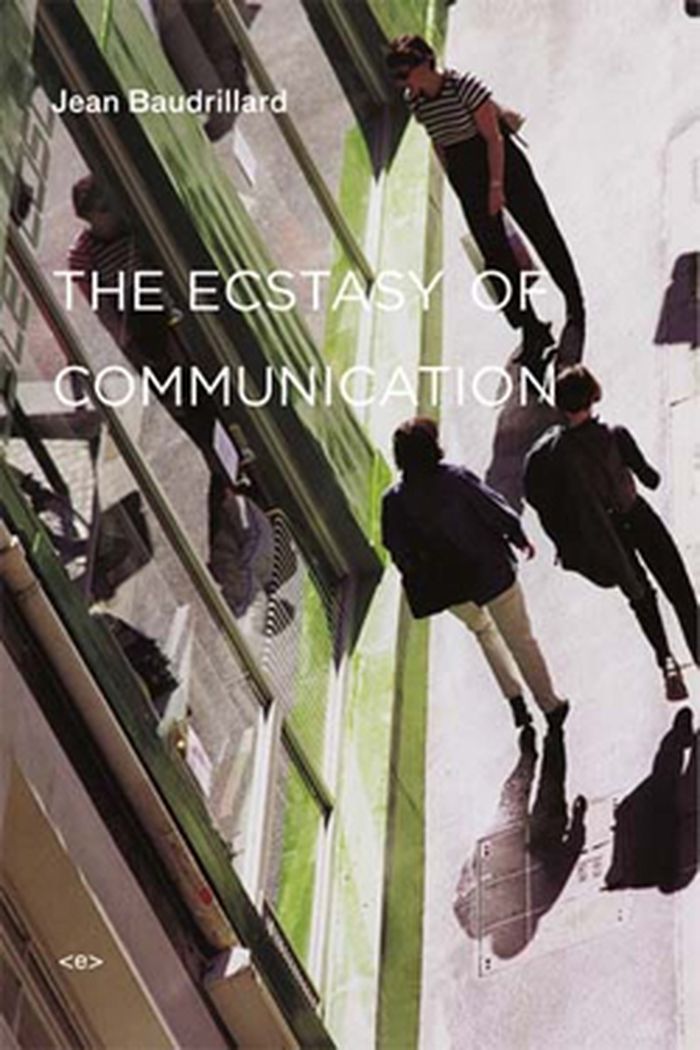
The ecstasy of communication
The ecstasy of communication
Actions:
Price:
$16.95
(available to order)
Summary:
First published in France in 1987, The Ecstasy of Communication was Baudrillard’s summarization of his work for a postdoctoral degree at the Sorbonne : a dense, poetically crystalline essay that boiled down two decades of radical, provocative theory into an aphoristically eloquent swan song to twentieth-century alienation. Baudrillard’s quixotic effort to be recognized by(...)
$16.95
(available to order)
Summary:
First published in France in 1987, The Ecstasy of Communication was Baudrillard’s summarization of his work for a postdoctoral degree at the Sorbonne : a dense, poetically crystalline essay that boiled down two decades of radical, provocative theory into an aphoristically eloquent swan song to twentieth-century alienation. Baudrillard’s quixotic effort to be recognized by(...)
Title:
The ecstasy of communication
Actions:
Price:
$16.95
(available to order)
Summary:
First published in France in 1987, The Ecstasy of Communication was Baudrillard’s summarization of his work for a postdoctoral degree at the Sorbonne : a dense, poetically crystalline essay that boiled down two decades of radical, provocative theory into an aphoristically eloquent swan song to twentieth-century alienation. Baudrillard’s quixotic effort to be recognized by the French intellectual establishment may have been doomed to failure, but this text immediately became a pinnacle to his work, a mid-career assessment that looked both forward and back. By carefully distilling the most radical elements of his previous books, Baudrillard constructed the skeleton key to all of the work that was to come in the second half of his career, and set the scene for what he termed the “obscene”: a world in which alienation has been succeeded by ceaseless communication and information. The Ecstasy of Communication is a decisive, compact description of what it means to be “wired” in our braver-than-brave new world, where sexuality has been superseded by pornography, knowledge by information, hysteria by schizophrenia, subject by object, and violence by terror. The Ecstasy of Communication is an anti-manifesto that confronted and dispensed with such influences as Marshall McLuhan, Guy Debord, and Georges Bataille. It is an essential crib-book, lexicon, and companion piece to any and all of Baudrillard’s books. Twenty-five years after its original publication, it remains not only a prescient portrait of our contemporary condition, but also a dark mirror into which we have not yet dared to look.
The ecstasy of communication
Actions:
Price:
$16.95
(available to order)
Summary:
First published in France in 1987, The Ecstasy of Communication was Baudrillard’s summarization of his work for a postdoctoral degree at the Sorbonne : a dense, poetically crystalline essay that boiled down two decades of radical, provocative theory into an aphoristically eloquent swan song to twentieth-century alienation. Baudrillard’s quixotic effort to be recognized by the French intellectual establishment may have been doomed to failure, but this text immediately became a pinnacle to his work, a mid-career assessment that looked both forward and back. By carefully distilling the most radical elements of his previous books, Baudrillard constructed the skeleton key to all of the work that was to come in the second half of his career, and set the scene for what he termed the “obscene”: a world in which alienation has been succeeded by ceaseless communication and information. The Ecstasy of Communication is a decisive, compact description of what it means to be “wired” in our braver-than-brave new world, where sexuality has been superseded by pornography, knowledge by information, hysteria by schizophrenia, subject by object, and violence by terror. The Ecstasy of Communication is an anti-manifesto that confronted and dispensed with such influences as Marshall McLuhan, Guy Debord, and Georges Bataille. It is an essential crib-book, lexicon, and companion piece to any and all of Baudrillard’s books. Twenty-five years after its original publication, it remains not only a prescient portrait of our contemporary condition, but also a dark mirror into which we have not yet dared to look.
Form:
books
books
Publication:
November 2012
November 2012
Subject:
Critical Theory
Critical Theory
Form:
books
books

Price:
$50.95
(available to order)
Summary:
Over the past several decades, scholars in both the social sciences and humanities have moved beyond the idea that there is a "body proper": a singular, discrete biological organism with an individual psyche. They have begun to perceive embodiment as dynamic rather than static, as experiences that vary over time and across the world as they are shaped by discourses,(...)
$50.95
(available to order)
Summary:
Over the past several decades, scholars in both the social sciences and humanities have moved beyond the idea that there is a "body proper": a singular, discrete biological organism with an individual psyche. They have begun to perceive embodiment as dynamic rather than static, as experiences that vary over time and across the world as they are shaped by discourses,(...)
Title:
Beyond the body proper: Reading the anthropology of material life
Actions:
Price:
$50.95
(available to order)
Summary:
Over the past several decades, scholars in both the social sciences and humanities have moved beyond the idea that there is a "body proper": a singular, discrete biological organism with an individual psyche. They have begun to perceive embodiment as dynamic rather than static, as experiences that vary over time and across the world as they are shaped by discourses, institutions, practices, technologies, and ideologies. What has emerged is a multiplicity of bodies, inviting a great many disciplinary points of view and modes of interpretation. The forty-seven readings presented in this volume range from classic works of social theory, history, and ethnography to more recent investigations into historical and contemporary modes of embodiment. "Beyond the body proper" includes nine sections conceptually organized around themes such as everyday life, sex and gender, and science. Each section is preceded by interpretive commentary by the volume’s editors. Within the collection are articles and book excerpts focused on bodies using tools and participating in rituals, on bodies walking and eating, and on the female circumcision controversy, as well as pieces on medical classifications, spirit possession, the commodification of body parts, in vitro fertilization, and an artist/anatomist’s "plastination" of cadavers for display. Materialist, phenomenological, and feminist perspectives on embodiment appear along with writings on interpretations of pain and the changing meanings of sexual intercourse. Essays on these topics and many others challenge Eurocentric assumptions about the body as they speak to each other and to the most influential contemporary trends in the human sciences.
Beyond the body proper: Reading the anthropology of material life
Actions:
Price:
$50.95
(available to order)
Summary:
Over the past several decades, scholars in both the social sciences and humanities have moved beyond the idea that there is a "body proper": a singular, discrete biological organism with an individual psyche. They have begun to perceive embodiment as dynamic rather than static, as experiences that vary over time and across the world as they are shaped by discourses, institutions, practices, technologies, and ideologies. What has emerged is a multiplicity of bodies, inviting a great many disciplinary points of view and modes of interpretation. The forty-seven readings presented in this volume range from classic works of social theory, history, and ethnography to more recent investigations into historical and contemporary modes of embodiment. "Beyond the body proper" includes nine sections conceptually organized around themes such as everyday life, sex and gender, and science. Each section is preceded by interpretive commentary by the volume’s editors. Within the collection are articles and book excerpts focused on bodies using tools and participating in rituals, on bodies walking and eating, and on the female circumcision controversy, as well as pieces on medical classifications, spirit possession, the commodification of body parts, in vitro fertilization, and an artist/anatomist’s "plastination" of cadavers for display. Materialist, phenomenological, and feminist perspectives on embodiment appear along with writings on interpretations of pain and the changing meanings of sexual intercourse. Essays on these topics and many others challenge Eurocentric assumptions about the body as they speak to each other and to the most influential contemporary trends in the human sciences.
Form:
books
books
Publication:
April 2008
April 2008
Subject:
Critical Theory
Critical Theory
Form:
books
books

Actions:
Price:
$25.95
(available to order)
Summary:
We surround ourselves with material things that are invested with memories but can only stand for what we have lost. Physical objects—such as one’s own body—situate and define us; yet at the same time they are fundamentally indifferent to us. The melancholy of this rift is a rich source of inspiration for artists. Peter Schwenger deftly weaves together philosophical(...)
$25.95
(available to order)
Summary:
We surround ourselves with material things that are invested with memories but can only stand for what we have lost. Physical objects—such as one’s own body—situate and define us; yet at the same time they are fundamentally indifferent to us. The melancholy of this rift is a rich source of inspiration for artists. Peter Schwenger deftly weaves together philosophical(...)
Title:
The tears of things : Melancholy and physical objects
Actions:
Price:
$25.95
(available to order)
Summary:
We surround ourselves with material things that are invested with memories but can only stand for what we have lost. Physical objects—such as one’s own body—situate and define us; yet at the same time they are fundamentally indifferent to us. The melancholy of this rift is a rich source of inspiration for artists. Peter Schwenger deftly weaves together philosophical and psychoanalytical theory with artistic practice. Concerned in part with the act of collecting, The Tears of Things is itself a collection of exemplary art objects—literary and cultural attempts to control and possess things—including paintings by Georgia O’Keeffe and René Magritte; sculpture by Louise Bourgeois and Marcel Duchamp; Joseph Cornell’s boxes; Edward Gorey’s graphic art; fiction by Virginia Woolf, Georges Perec, and Louise Erdrich; the hallucinatory encyclopedias of Jorge Luis Borges and Luigi Serafini; and the corpse photographs of Joel Peter Witkin. However, these representations of objects perpetually fall short of our aspirations. Schwenger examines what is left over—debris and waste—and asks what art can make of these. What emerges is not an art that reassembles but one that questions what it means to assemble in the first place. Contained in this catalog of waste is that ultimate still life, the cadaver, where the subject-object dichotomy receives its final ironic reconciliation. Peter Schwenger is professor of English at Mount St. Vincent University in Halifax, Nova Scotia. He is the author of Fantasm and Fiction: On Textual Envisioning, Letter Bomb: Nuclear Holocaust and the Exploding Word, and Phallic Critiques: Masculinity and Twentieth-Century Literature.
The tears of things : Melancholy and physical objects
Actions:
Price:
$25.95
(available to order)
Summary:
We surround ourselves with material things that are invested with memories but can only stand for what we have lost. Physical objects—such as one’s own body—situate and define us; yet at the same time they are fundamentally indifferent to us. The melancholy of this rift is a rich source of inspiration for artists. Peter Schwenger deftly weaves together philosophical and psychoanalytical theory with artistic practice. Concerned in part with the act of collecting, The Tears of Things is itself a collection of exemplary art objects—literary and cultural attempts to control and possess things—including paintings by Georgia O’Keeffe and René Magritte; sculpture by Louise Bourgeois and Marcel Duchamp; Joseph Cornell’s boxes; Edward Gorey’s graphic art; fiction by Virginia Woolf, Georges Perec, and Louise Erdrich; the hallucinatory encyclopedias of Jorge Luis Borges and Luigi Serafini; and the corpse photographs of Joel Peter Witkin. However, these representations of objects perpetually fall short of our aspirations. Schwenger examines what is left over—debris and waste—and asks what art can make of these. What emerges is not an art that reassembles but one that questions what it means to assemble in the first place. Contained in this catalog of waste is that ultimate still life, the cadaver, where the subject-object dichotomy receives its final ironic reconciliation. Peter Schwenger is professor of English at Mount St. Vincent University in Halifax, Nova Scotia. He is the author of Fantasm and Fiction: On Textual Envisioning, Letter Bomb: Nuclear Holocaust and the Exploding Word, and Phallic Critiques: Masculinity and Twentieth-Century Literature.
Form:
books
books
Publication:
May 2006, Minnesota
May 2006, Minnesota
Subject:
Architectural Theory
Architectural Theory
Form:
books
books
Title:
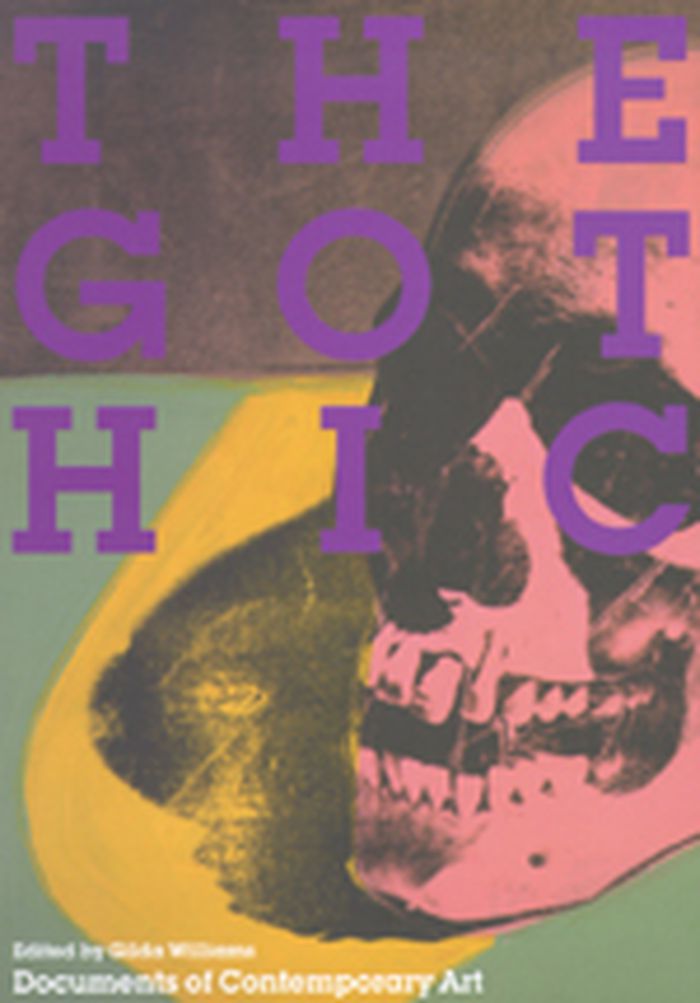
The gothic
The gothic
Actions:
Price:
$23.95
(available to order)
Summary:
This collection of writings examines the pervasive and influential role of "the Gothic" in contemporary visual culture. The contemporary Gothic in art is informed as much by the stock themes of the eighteenth- and nineteenth-century Gothic novel as it is by more recent permutations of the Gothic in horror film theory, Lacanian psychoanalysis, and Goth subcultures. This(...)
$23.95
(available to order)
Summary:
This collection of writings examines the pervasive and influential role of "the Gothic" in contemporary visual culture. The contemporary Gothic in art is informed as much by the stock themes of the eighteenth- and nineteenth-century Gothic novel as it is by more recent permutations of the Gothic in horror film theory, Lacanian psychoanalysis, and Goth subcultures. This(...)
Title:
The gothic
Actions:
Price:
$23.95
(available to order)
Summary:
This collection of writings examines the pervasive and influential role of "the Gothic" in contemporary visual culture. The contemporary Gothic in art is informed as much by the stock themes of the eighteenth- and nineteenth-century Gothic novel as it is by more recent permutations of the Gothic in horror film theory, Lacanian psychoanalysis, and Goth subcultures. This reader from London's Whitechapel Gallery brings together artists as different as Matthew Barney, Gregor Schneider, Louise Bourgeois, and Douglas Gordon; its intent is not to use "the Gothic" to group together dissimilar artists but rather to shed light on a particular understanding of their practice. Anthony Vidler looks at ideas of the uncanny to explore Rachel Whiteread's House, and Jeff Wall uses the motif of vampirism to analyze fellow artist Dan Graham's Kammerspell; Hal Foster considers Robert Gober's recent work--laden with Christian symbolism, criticism of America as a nexus of power, and fragmented bodies--as an updated American Gothic, and Kobena Mercer examines the Gothic's depiction of the Other in relation to Michael Jackson's pop video Thriller. Texts by artists including Mike Kelley, Damien Hirst, Tacita Dean, Jonathan Meese, and Catherine Sullivan are complemented by extracts from Walpole's genre-establishing gothic novel The Castle of Otranto, William Gibson, Bret Easton Ellis, and Stephen King, among others, and theoretical writings by such key thinkers as Carol Clover, Beatriz Colomina, Julia Kristeva, Eve Kosofsky Sedgwick, Marina Warner, and Slavoj Zizek. The Gothic provides the first comprehensive overview of the uses of Gothic in contemporary visual culture.
The gothic
Actions:
Price:
$23.95
(available to order)
Summary:
This collection of writings examines the pervasive and influential role of "the Gothic" in contemporary visual culture. The contemporary Gothic in art is informed as much by the stock themes of the eighteenth- and nineteenth-century Gothic novel as it is by more recent permutations of the Gothic in horror film theory, Lacanian psychoanalysis, and Goth subcultures. This reader from London's Whitechapel Gallery brings together artists as different as Matthew Barney, Gregor Schneider, Louise Bourgeois, and Douglas Gordon; its intent is not to use "the Gothic" to group together dissimilar artists but rather to shed light on a particular understanding of their practice. Anthony Vidler looks at ideas of the uncanny to explore Rachel Whiteread's House, and Jeff Wall uses the motif of vampirism to analyze fellow artist Dan Graham's Kammerspell; Hal Foster considers Robert Gober's recent work--laden with Christian symbolism, criticism of America as a nexus of power, and fragmented bodies--as an updated American Gothic, and Kobena Mercer examines the Gothic's depiction of the Other in relation to Michael Jackson's pop video Thriller. Texts by artists including Mike Kelley, Damien Hirst, Tacita Dean, Jonathan Meese, and Catherine Sullivan are complemented by extracts from Walpole's genre-establishing gothic novel The Castle of Otranto, William Gibson, Bret Easton Ellis, and Stephen King, among others, and theoretical writings by such key thinkers as Carol Clover, Beatriz Colomina, Julia Kristeva, Eve Kosofsky Sedgwick, Marina Warner, and Slavoj Zizek. The Gothic provides the first comprehensive overview of the uses of Gothic in contemporary visual culture.
Form:
books
books
Publication:
October 2007, Whitechapel London Cambridge
October 2007, Whitechapel London Cambridge
Subject:
Art Theory
Art Theory
Form:
books
books
Actions:
Price:
$31.50
(available to order)
Summary:
In "Chaos and cosmos", Karen Lang addresses the power of art to resist the pressures of the transcendental vantage point-history. Uncovering the intellectual and cultural richness of the early years of academic art history in Germany -the period from the 1880s to 1940 - she explores various attempts within art history to transform aesthetic phenomena -chaos- into the(...)
$31.50
(available to order)
Summary:
In "Chaos and cosmos", Karen Lang addresses the power of art to resist the pressures of the transcendental vantage point-history. Uncovering the intellectual and cultural richness of the early years of academic art history in Germany -the period from the 1880s to 1940 - she explores various attempts within art history to transform aesthetic phenomena -chaos- into the(...)
Title:
Chaos in cosmos : on the image in aesthetics and art history
Actions:
Price:
$31.50
(available to order)
Summary:
In "Chaos and cosmos", Karen Lang addresses the power of art to resist the pressures of the transcendental vantage point-history. Uncovering the intellectual and cultural richness of the early years of academic art history in Germany -the period from the 1880s to 1940 - she explores various attempts within art history to transform aesthetic phenomena -chaos- into the cosmos of a systematic, unified field of inquiry. Lang starts by examining Panofsky's approach to aesthetic phenomena in his early theoretical essays alongside Ernst Cassirer's contemporaneous publications on the substance and function of scientific concepts (and on Einstein's theory of relativity). She then turns to the subject of aesthetic judgment through a rereading of Kantian subjectivity and Kant's uneasy legacy in art history. From here, Lang considers the different organizing theories of symbolic form proposed by Aby Warburg and Cassirer, as well as Goethe's inspiration for both; Alois Riegl's notion of age value and Walter Benjamin's conceptions of the aura; concluding with an extended examination of objectivity and the figure of the art connoisseur. Illustrated with works of art from the Enlightenment to the present day, this book illuminates an intellectual legacy that has profoundly shaped the study of the history of art in ways that have, until now, been largely unacknowledged. Addressing the interplay of chaos and cosmos in terms of history, art history, philosophy, and epistemology, Lang traces shifts in point of view in art history and the way these shifts change aesthetic objects into historical objects, and even objects of knowledge.
Chaos in cosmos : on the image in aesthetics and art history
Actions:
Price:
$31.50
(available to order)
Summary:
In "Chaos and cosmos", Karen Lang addresses the power of art to resist the pressures of the transcendental vantage point-history. Uncovering the intellectual and cultural richness of the early years of academic art history in Germany -the period from the 1880s to 1940 - she explores various attempts within art history to transform aesthetic phenomena -chaos- into the cosmos of a systematic, unified field of inquiry. Lang starts by examining Panofsky's approach to aesthetic phenomena in his early theoretical essays alongside Ernst Cassirer's contemporaneous publications on the substance and function of scientific concepts (and on Einstein's theory of relativity). She then turns to the subject of aesthetic judgment through a rereading of Kantian subjectivity and Kant's uneasy legacy in art history. From here, Lang considers the different organizing theories of symbolic form proposed by Aby Warburg and Cassirer, as well as Goethe's inspiration for both; Alois Riegl's notion of age value and Walter Benjamin's conceptions of the aura; concluding with an extended examination of objectivity and the figure of the art connoisseur. Illustrated with works of art from the Enlightenment to the present day, this book illuminates an intellectual legacy that has profoundly shaped the study of the history of art in ways that have, until now, been largely unacknowledged. Addressing the interplay of chaos and cosmos in terms of history, art history, philosophy, and epistemology, Lang traces shifts in point of view in art history and the way these shifts change aesthetic objects into historical objects, and even objects of knowledge.
Form:
books
books
Publication:
September 2006, Ithaca, London
September 2006, Ithaca, London
Subject:
Architectural Theory
Architectural Theory
Form:
books
books
Actions:
Price:
$43.95
(available to order)
Summary:
Why do we have such extraordinarily powerful responses toward the images and pictures we see in everyday life? Why do we behave as if pictures were alive, possessing the power to influence us, to demand things from us, to persuade us, seduce us, or even lead us astray? According to W. J. T. Mitchell, we need to reckon with images not just as inert objects that convey(...)
$43.95
(available to order)
Summary:
Why do we have such extraordinarily powerful responses toward the images and pictures we see in everyday life? Why do we behave as if pictures were alive, possessing the power to influence us, to demand things from us, to persuade us, seduce us, or even lead us astray? According to W. J. T. Mitchell, we need to reckon with images not just as inert objects that convey(...)
Title:
What do pictures want? : the lives and loves of images
Actions:
Price:
$43.95
(available to order)
Summary:
Why do we have such extraordinarily powerful responses toward the images and pictures we see in everyday life? Why do we behave as if pictures were alive, possessing the power to influence us, to demand things from us, to persuade us, seduce us, or even lead us astray? According to W. J. T. Mitchell, we need to reckon with images not just as inert objects that convey meaning but as animated beings with desires, needs, appetites, demands, and drives of their own. "What Do Pictures Want?" explores this idea and highlights Mitchell's innovative and profoundly influential thinking on picture theory and the lives and loves of images. Ranging across the visual arts, literature, and mass media, Mitchell applies characteristically brilliant and wry analyses to Byzantine icons and cyberpunk films, racial stereotypes and public monuments, ancient idols and modern clones, offensive images and found objects, American photography and aboriginal painting. Opening new vistas in iconology and the emergent field of visual culture, he also considers the importance of Dolly the Sheep - who, as a clone, fulfills the ancient dream of creating a living image - and the destruction of the World Trade Center on 9/11, which, among other things, signifies a new and virulent form of iconoclasm. "What Do Pictures Want?" offers an immensely rich and suggestive account of the interplay between the visible and the readable. A work by one of our leading theorists of visual representation, it will be a touchstone for art historians, literary critics, anthropologists, and philosophers alike.
What do pictures want? : the lives and loves of images
Actions:
Price:
$43.95
(available to order)
Summary:
Why do we have such extraordinarily powerful responses toward the images and pictures we see in everyday life? Why do we behave as if pictures were alive, possessing the power to influence us, to demand things from us, to persuade us, seduce us, or even lead us astray? According to W. J. T. Mitchell, we need to reckon with images not just as inert objects that convey meaning but as animated beings with desires, needs, appetites, demands, and drives of their own. "What Do Pictures Want?" explores this idea and highlights Mitchell's innovative and profoundly influential thinking on picture theory and the lives and loves of images. Ranging across the visual arts, literature, and mass media, Mitchell applies characteristically brilliant and wry analyses to Byzantine icons and cyberpunk films, racial stereotypes and public monuments, ancient idols and modern clones, offensive images and found objects, American photography and aboriginal painting. Opening new vistas in iconology and the emergent field of visual culture, he also considers the importance of Dolly the Sheep - who, as a clone, fulfills the ancient dream of creating a living image - and the destruction of the World Trade Center on 9/11, which, among other things, signifies a new and virulent form of iconoclasm. "What Do Pictures Want?" offers an immensely rich and suggestive account of the interplay between the visible and the readable. A work by one of our leading theorists of visual representation, it will be a touchstone for art historians, literary critics, anthropologists, and philosophers alike.
Form:
books
books
Publication:
June 2005, Chicago
June 2005, Chicago
Subject:
Architectural Theory
Architectural Theory


