


7547 Results
Form:
books
books
Actions:
Price:
$18.95
(available to order)
Summary:
From the Introduction: "The Veronica Rudge Green Prize in Urban Design has been awarded every other year since 1986. Its objective is to recognize the remarkable value of urban design projects around the globe. This time, the prize goes to the City of Aleppo, for the rehabilitation of its historic town. The project has been carried out by the Old City Department of the(...)
$18.95
(available to order)
Summary:
From the Introduction: "The Veronica Rudge Green Prize in Urban Design has been awarded every other year since 1986. Its objective is to recognize the remarkable value of urban design projects around the globe. This time, the prize goes to the City of Aleppo, for the rehabilitation of its historic town. The project has been carried out by the Old City Department of the(...)
Title:
Aleppo : rehabilitation of the Old City
Actions:
Price:
$18.95
(available to order)
Summary:
From the Introduction: "The Veronica Rudge Green Prize in Urban Design has been awarded every other year since 1986. Its objective is to recognize the remarkable value of urban design projects around the globe. This time, the prize goes to the City of Aleppo, for the rehabilitation of its historic town. The project has been carried out by the Old City Department of the City of Aleppo, in collaboration with GTZ (German Technical Cooperation) and the efforts of many individual citizens. This recent experience in central Aleppo shows us how urban rehabilitation in a historic setting can transmit a vital new meaning when the main focus of the project is restoring urban fabric rather than rebuilding monuments; key to improving current conditions is understanding that the city's physical layout synthesizes its evolution. Furthermore, the effort demonstrates that the city's inhabitants can be the protagonists of such improvements."
Aleppo : rehabilitation of the Old City
Actions:
Price:
$18.95
(available to order)
Summary:
From the Introduction: "The Veronica Rudge Green Prize in Urban Design has been awarded every other year since 1986. Its objective is to recognize the remarkable value of urban design projects around the globe. This time, the prize goes to the City of Aleppo, for the rehabilitation of its historic town. The project has been carried out by the Old City Department of the City of Aleppo, in collaboration with GTZ (German Technical Cooperation) and the efforts of many individual citizens. This recent experience in central Aleppo shows us how urban rehabilitation in a historic setting can transmit a vital new meaning when the main focus of the project is restoring urban fabric rather than rebuilding monuments; key to improving current conditions is understanding that the city's physical layout synthesizes its evolution. Furthermore, the effort demonstrates that the city's inhabitants can be the protagonists of such improvements."
Form:
books
books
Publication:
September 2006, Cambridge (MA)
September 2006, Cambridge (MA)
Subject:
Urban Theory
Urban Theory
Form:
books
books
Price:
$68.95
(available to order)
Summary:
Since its founding in 1898, the Art Commission of the City of New York (ACNY) has served as the city’s aesthetic gatekeeper, evaluating all works of art intended for display on city property. And over the years, the commission’s domain has expanded dramatically to include everything from parks and courthouses to trash cans and sidewalks. In "The politics of urban beauty",(...)
$68.95
(available to order)
Summary:
Since its founding in 1898, the Art Commission of the City of New York (ACNY) has served as the city’s aesthetic gatekeeper, evaluating all works of art intended for display on city property. And over the years, the commission’s domain has expanded dramatically to include everything from parks and courthouses to trash cans and sidewalks. In "The politics of urban beauty",(...)
Title:
The politics of urban beauty : New York and its art commission
Actions:
Price:
$68.95
(available to order)
Summary:
Since its founding in 1898, the Art Commission of the City of New York (ACNY) has served as the city’s aesthetic gatekeeper, evaluating all works of art intended for display on city property. And over the years, the commission’s domain has expanded dramatically to include everything from parks and courthouses to trash cans and sidewalks. In "The politics of urban beauty", Michele H. Bogart argues that this unprecedented authority has made the commission host to some complex negotiations — involving artists, architects, business leaders, activists, and politicians — about not only the role of art in urban design, but also the shape and meaning of the city and its public spaces. A former vice president of the ACNY, Bogart tells its story here from an insider’s perspective, tracing the commission’s history from its origins as an outgrowth of progressive reform to its role in New York’s reconstruction after 9/11. Drawing on archival correspondence, drawings, and photographs from commission collections, Bogart presents examples of works — ranging from New Deal murals to Louis Kahn’s unbuilt Memorial to Six Million Jewish Martyrs — that illuminate the ACNY’s role in shaping New York’s identity. The Politics of Urban Beauty is thus a fascinating history of a New York art world that paralleled—and sometimes unpredictably intersected with—the more familiar realm of prominent architects, painters, galleries, and museums. Bogart’s fresh view adds a critical dimension to our understanding of “the city beautiful” and makes an important and lively contribution to the study of art history, urban design, and New York City itself.
The politics of urban beauty : New York and its art commission
Actions:
Price:
$68.95
(available to order)
Summary:
Since its founding in 1898, the Art Commission of the City of New York (ACNY) has served as the city’s aesthetic gatekeeper, evaluating all works of art intended for display on city property. And over the years, the commission’s domain has expanded dramatically to include everything from parks and courthouses to trash cans and sidewalks. In "The politics of urban beauty", Michele H. Bogart argues that this unprecedented authority has made the commission host to some complex negotiations — involving artists, architects, business leaders, activists, and politicians — about not only the role of art in urban design, but also the shape and meaning of the city and its public spaces. A former vice president of the ACNY, Bogart tells its story here from an insider’s perspective, tracing the commission’s history from its origins as an outgrowth of progressive reform to its role in New York’s reconstruction after 9/11. Drawing on archival correspondence, drawings, and photographs from commission collections, Bogart presents examples of works — ranging from New Deal murals to Louis Kahn’s unbuilt Memorial to Six Million Jewish Martyrs — that illuminate the ACNY’s role in shaping New York’s identity. The Politics of Urban Beauty is thus a fascinating history of a New York art world that paralleled—and sometimes unpredictably intersected with—the more familiar realm of prominent architects, painters, galleries, and museums. Bogart’s fresh view adds a critical dimension to our understanding of “the city beautiful” and makes an important and lively contribution to the study of art history, urban design, and New York City itself.
Form:
books
books
Publication:
November 2006, Chicago, London
November 2006, Chicago, London
Subject:
Urban Theory
Urban Theory
Form:
books
books
Title:
The plan of Chicago
The plan of Chicago
Actions:
Price:
$27.50
(available to order)
Summary:
Arguably the most influential document in the history of urban planning, Daniel Burnham’s 1909 Plan of Chicago, coauthored by Edward Bennett and produced in collaboration with the Commercial Club of Chicago, proposed many of the city’s most distinctive features, including its lakefront parks and roadways, the Magnificent Mile, and Navy Pier. Carl Smith’s history reveals(...)
$27.50
(available to order)
Summary:
Arguably the most influential document in the history of urban planning, Daniel Burnham’s 1909 Plan of Chicago, coauthored by Edward Bennett and produced in collaboration with the Commercial Club of Chicago, proposed many of the city’s most distinctive features, including its lakefront parks and roadways, the Magnificent Mile, and Navy Pier. Carl Smith’s history reveals(...)
Title:
The plan of Chicago
Actions:
Price:
$27.50
(available to order)
Summary:
Arguably the most influential document in the history of urban planning, Daniel Burnham’s 1909 Plan of Chicago, coauthored by Edward Bennett and produced in collaboration with the Commercial Club of Chicago, proposed many of the city’s most distinctive features, including its lakefront parks and roadways, the Magnificent Mile, and Navy Pier. Carl Smith’s history reveals the Plan’s central role in shaping the ways people envision the cityscape and urban life itself. Smith’s narrative begins with a survey of Chicago’s stunning rise from a tiny frontier settlement to the nation’s second-largest city. He then offers an illuminating exploration of the Plan’s creation and reveals how it embodies the renowned architect’s belief that cities can and must be remade for the better. The Plan defined the City Beautiful movement and was the first comprehensive attempt to reimagine a major American city. Smith points out the ways the Plan continues to influence debates, even a century after its publication, about how to create a vibrant and habitable urban environment.
The plan of Chicago
Actions:
Price:
$27.50
(available to order)
Summary:
Arguably the most influential document in the history of urban planning, Daniel Burnham’s 1909 Plan of Chicago, coauthored by Edward Bennett and produced in collaboration with the Commercial Club of Chicago, proposed many of the city’s most distinctive features, including its lakefront parks and roadways, the Magnificent Mile, and Navy Pier. Carl Smith’s history reveals the Plan’s central role in shaping the ways people envision the cityscape and urban life itself. Smith’s narrative begins with a survey of Chicago’s stunning rise from a tiny frontier settlement to the nation’s second-largest city. He then offers an illuminating exploration of the Plan’s creation and reveals how it embodies the renowned architect’s belief that cities can and must be remade for the better. The Plan defined the City Beautiful movement and was the first comprehensive attempt to reimagine a major American city. Smith points out the ways the Plan continues to influence debates, even a century after its publication, about how to create a vibrant and habitable urban environment.
Form:
books
books
Publication:
October 2006, Chicago, London
October 2006, Chicago, London
Subject:
Urban Theory
Urban Theory
Form:
books
books
Actions:
Price:
$26.95
(available to order)
Summary:
Rapid urban growth and suburban sprawl have heightened concern in many quarters about sustainable development. Are economic growth and environmental health always mutually exclusive goals? Nearly everyone would choose to pursue both given the chance, but many believe that it would be overly optimistic — perhaps naïve — to expect both. "Green city" proponents, however, do(...)
$26.95
(available to order)
Summary:
Rapid urban growth and suburban sprawl have heightened concern in many quarters about sustainable development. Are economic growth and environmental health always mutually exclusive goals? Nearly everyone would choose to pursue both given the chance, but many believe that it would be overly optimistic — perhaps naïve — to expect both. "Green city" proponents, however, do(...)
Title:
Green cities : urban growth and the environment
Actions:
Price:
$26.95
(available to order)
Summary:
Rapid urban growth and suburban sprawl have heightened concern in many quarters about sustainable development. Are economic growth and environmental health always mutually exclusive goals? Nearly everyone would choose to pursue both given the chance, but many believe that it would be overly optimistic — perhaps naïve — to expect both. "Green city" proponents, however, do hope to realize both ambitions. What exactly is a green city? What does it mean to say that San Francisco is greener than Houston, or that Vancouver is a green city while Beijing is not? When does urban growth lower environmental quality, and when does it produce environmental gains? These are the questions that drive this smart and engaging book. In "Green cities", Matthew Kahn surveys the burgeoning economic literature on the environmental consequences of urban growth. He discusses the environmental Kuznets curve, which theorizes that the relationship between environmental quality and per capita income follows a bell-shaped curve. The heart of the book unpacks and expands this notion by tracing the environmental effects of economic growth, population growth, and suburban sprawl. Kahn considers how cities can deal with the environmental challenges produced by growth. His concluding chapter addresses the role of cities in promoting climate change and asks how cities in turn are likely to be affected by this trend. Kahn considers the evidence for and against rival perspectives throughout the book. Despite being labeled as purveyors of a "dismal science," economists are often quite optimistic about the relationship between urban development and the environment. In contrast, many ecologists remain wary of the environmental consequences of free-market growth. "Green cities" does not try to settle this dispute. Instead, it marshals data and arguments to convey the excitement of an ongoing debate, enabling readers to formulate well-informed opinions and priorities on this critically important issue.
Green cities : urban growth and the environment
Actions:
Price:
$26.95
(available to order)
Summary:
Rapid urban growth and suburban sprawl have heightened concern in many quarters about sustainable development. Are economic growth and environmental health always mutually exclusive goals? Nearly everyone would choose to pursue both given the chance, but many believe that it would be overly optimistic — perhaps naïve — to expect both. "Green city" proponents, however, do hope to realize both ambitions. What exactly is a green city? What does it mean to say that San Francisco is greener than Houston, or that Vancouver is a green city while Beijing is not? When does urban growth lower environmental quality, and when does it produce environmental gains? These are the questions that drive this smart and engaging book. In "Green cities", Matthew Kahn surveys the burgeoning economic literature on the environmental consequences of urban growth. He discusses the environmental Kuznets curve, which theorizes that the relationship between environmental quality and per capita income follows a bell-shaped curve. The heart of the book unpacks and expands this notion by tracing the environmental effects of economic growth, population growth, and suburban sprawl. Kahn considers how cities can deal with the environmental challenges produced by growth. His concluding chapter addresses the role of cities in promoting climate change and asks how cities in turn are likely to be affected by this trend. Kahn considers the evidence for and against rival perspectives throughout the book. Despite being labeled as purveyors of a "dismal science," economists are often quite optimistic about the relationship between urban development and the environment. In contrast, many ecologists remain wary of the environmental consequences of free-market growth. "Green cities" does not try to settle this dispute. Instead, it marshals data and arguments to convey the excitement of an ongoing debate, enabling readers to formulate well-informed opinions and priorities on this critically important issue.
Form:
books
books
Publication:
August 2006, Washington, D.C.
August 2006, Washington, D.C.
Subject:
Urban Theory
Urban Theory
Form:
books
books
Title:
La revanche des villes
La revanche des villes
Actions:
Price:
$34.95
(available to order)
Summary:
"On a longtemps pensé que l’ère des villes était close : victimes de la postmodernité et de la fin de l’industrialisation, rendues caduques par l’avènement de la communication en réseaux, elles auraient été supplantées par la souplesse des flux. Or notre époque est au contraire celle de la revanche des villes : non seulement les villes persistent, mais elles renforcent(...)
$34.95
(available to order)
Summary:
"On a longtemps pensé que l’ère des villes était close : victimes de la postmodernité et de la fin de l’industrialisation, rendues caduques par l’avènement de la communication en réseaux, elles auraient été supplantées par la souplesse des flux. Or notre époque est au contraire celle de la revanche des villes : non seulement les villes persistent, mais elles renforcent(...)
Title:
La revanche des villes
Actions:
Price:
$34.95
(available to order)
Summary:
"On a longtemps pensé que l’ère des villes était close : victimes de la postmodernité et de la fin de l’industrialisation, rendues caduques par l’avènement de la communication en réseaux, elles auraient été supplantées par la souplesse des flux. Or notre époque est au contraire celle de la revanche des villes : non seulement les villes persistent, mais elles renforcent leur identité et leur emprise. Plus que jamais s’impose une nouvelle civilisation urbaine : il y avait 800 millions d’urbains en 1950, 5 milliards sont prévus en 2030. Si la ville est bien l’un des acteurs majeurs de la mondialisation, le développement de l’emploi, l’équilibre social résidentiel, la sécurité des habitants, la gestion des mobilités, la sauvegarde de l’environnement s’affirment comme des objectifs communs à toutes les grandes villes contemporaines, du Nord comme du Sud. Plus centrales, davantage soumises à une exigence de participation des habitants, nos villes sont en outre plus vulnérables, au point de devenir parfois la cible de nouvelles formes de terrorisme. Comment dès lors parvenir à un gouvernement de la ville qui puisse assumer ces défis tout en faisant droit à une exigence démocratique renouvelée?"
La revanche des villes
Actions:
Price:
$34.95
(available to order)
Summary:
"On a longtemps pensé que l’ère des villes était close : victimes de la postmodernité et de la fin de l’industrialisation, rendues caduques par l’avènement de la communication en réseaux, elles auraient été supplantées par la souplesse des flux. Or notre époque est au contraire celle de la revanche des villes : non seulement les villes persistent, mais elles renforcent leur identité et leur emprise. Plus que jamais s’impose une nouvelle civilisation urbaine : il y avait 800 millions d’urbains en 1950, 5 milliards sont prévus en 2030. Si la ville est bien l’un des acteurs majeurs de la mondialisation, le développement de l’emploi, l’équilibre social résidentiel, la sécurité des habitants, la gestion des mobilités, la sauvegarde de l’environnement s’affirment comme des objectifs communs à toutes les grandes villes contemporaines, du Nord comme du Sud. Plus centrales, davantage soumises à une exigence de participation des habitants, nos villes sont en outre plus vulnérables, au point de devenir parfois la cible de nouvelles formes de terrorisme. Comment dès lors parvenir à un gouvernement de la ville qui puisse assumer ces défis tout en faisant droit à une exigence démocratique renouvelée?"
Form:
books
books
Publication:
June 2006, Paris
June 2006, Paris
Subject:
Urban Theory
Urban Theory
Form:
books
books
Actions:
Price:
$67.95
(available to order)
Summary:
Les journées rencontre «Réinventer le territoire par l'architecture» ont été portées par le refus de l'autisme, cette maladie maligne des établissements de formation tentés par le repli sur eux-mêmes. En partageant un bout de chemin, l'Ecole Nationale Supérieure d'Architecture de Bretagne et la Région Bretagne ont découvert qu'elles avaient partie liée : un territoire(...)
$67.95
(available to order)
Summary:
Les journées rencontre «Réinventer le territoire par l'architecture» ont été portées par le refus de l'autisme, cette maladie maligne des établissements de formation tentés par le repli sur eux-mêmes. En partageant un bout de chemin, l'Ecole Nationale Supérieure d'Architecture de Bretagne et la Région Bretagne ont découvert qu'elles avaient partie liée : un territoire(...)
Subject:
Urban Theory
Urban Theory
Publication:
November 2006, Rennes
November 2006, Rennes
Title:
Réinventer le territoire par l'architecture
Actions:
Price:
$67.95
(available to order)
Summary:
Les journées rencontre «Réinventer le territoire par l'architecture» ont été portées par le refus de l'autisme, cette maladie maligne des établissements de formation tentés par le repli sur eux-mêmes. En partageant un bout de chemin, l'Ecole Nationale Supérieure d'Architecture de Bretagne et la Région Bretagne ont découvert qu'elles avaient partie liée : un territoire commun, l'ardente obligation de l'investir de projets. S'est ainsi forgée une volonté partagée : côté institution de formation de contribuer à concevoir autrement les littoraux et les territoires régionaux, côté gouvernement régional de mobiliser les viviers de concepteurs et d'experts que constituent les univers des enseignants professionnels et des chercheurs. Le terme rencontre retenu vise à désigner une ambition démocratique de débats sur l'aménagement, souhaitée par les élus. Rencontre qui ne consacre ni à un quelconque retour à la bretonnité, ni au régionalisme ; elle saisit le fait littoral armoricain comme une situation limite mais non exceptionnelle : la disponibilité des espaces y est plus parcimonieuse qu'ailleurs. Rencontre fédératrice de compétences et foyer de diffusion, elle a vocation à stimuler réciproquement ceux qui pensent et ceux qui agissent sur le futur des territoires.
Réinventer le territoire par l'architecture
Actions:
Price:
$67.95
(available to order)
Summary:
Les journées rencontre «Réinventer le territoire par l'architecture» ont été portées par le refus de l'autisme, cette maladie maligne des établissements de formation tentés par le repli sur eux-mêmes. En partageant un bout de chemin, l'Ecole Nationale Supérieure d'Architecture de Bretagne et la Région Bretagne ont découvert qu'elles avaient partie liée : un territoire commun, l'ardente obligation de l'investir de projets. S'est ainsi forgée une volonté partagée : côté institution de formation de contribuer à concevoir autrement les littoraux et les territoires régionaux, côté gouvernement régional de mobiliser les viviers de concepteurs et d'experts que constituent les univers des enseignants professionnels et des chercheurs. Le terme rencontre retenu vise à désigner une ambition démocratique de débats sur l'aménagement, souhaitée par les élus. Rencontre qui ne consacre ni à un quelconque retour à la bretonnité, ni au régionalisme ; elle saisit le fait littoral armoricain comme une situation limite mais non exceptionnelle : la disponibilité des espaces y est plus parcimonieuse qu'ailleurs. Rencontre fédératrice de compétences et foyer de diffusion, elle a vocation à stimuler réciproquement ceux qui pensent et ceux qui agissent sur le futur des territoires.
Form:
books
books
Publication:
November 2006, Rennes
November 2006, Rennes
Subject:
Urban Theory
Urban Theory
Form:
books
books
Actions:
Price:
$22.95
(available to order)
Summary:
For Siegfried Kracauer, the urban ornament was not just an aspect of design; it was the medium through which city dwellers interpreted the metropolis itself. In "Ornaments of the metropolis", Henrik Reeh traces variations on the theme of the ornament in Kracauer's writings on urbanism, from his early journalism in Germany between the wars to his "sociobiography" of(...)
$22.95
(available to order)
Summary:
For Siegfried Kracauer, the urban ornament was not just an aspect of design; it was the medium through which city dwellers interpreted the metropolis itself. In "Ornaments of the metropolis", Henrik Reeh traces variations on the theme of the ornament in Kracauer's writings on urbanism, from his early journalism in Germany between the wars to his "sociobiography" of(...)
Title:
Ornaments of the metropolis : Siegfried Kracuaer and the Modern urban culture
Actions:
Price:
$22.95
(available to order)
Summary:
For Siegfried Kracauer, the urban ornament was not just an aspect of design; it was the medium through which city dwellers interpreted the metropolis itself. In "Ornaments of the metropolis", Henrik Reeh traces variations on the theme of the ornament in Kracauer's writings on urbanism, from his early journalism in Germany between the wars to his "sociobiography" of Jacques Offenbach in Paris. Kracauer (1889-1966), often associated with the Frankfurt School and the intellectual milieu of Walter Benjamin, is best known for his writings on cinema and the philosophy of history. Reeh examines Kracauer's lesser-known early work, much of it written for the trendsetting newspaper Frankfurter Zeitung in the 1920s and early 1930s, and analyzes Kracauer's continuing reflections on modern urban life, through the pivotal idea of ornament. Kracauer deciphers the subjective experience of the city by viewing fragments of the city as dynamic ornaments; an employment exchange, a day shelter for the homeless, a movie theater, and an amusement park become urban microcosms. Reeh focuses on three substantial works written by Kracauer before his emigration to the United States in 1940. In the early autobiographical novel "Ginster, written by himself", a young architect finds aesthetic pleasure in the ornamental forms that are largely unused in the profession of the time. The collection "Streets of Berlin and elsewhere", with many essays from Kracauer's years in Berlin, documents the subjectiveness of urban life. Finally, "Jacques Offenbach and the Paris of his time" shows how the superficial - in a sense, ornamental - milieu of the operetta evolved into a critical force during the Second Empire. Reeh argues that Kracauer's novel, essays, and historiography all suggest ways in which the subjective can reappropriate urban life. The book also includes a series of photographs by the author that reflect the ornamental experience of the metropolis in Paris, Frankfurt, and other cities.
Ornaments of the metropolis : Siegfried Kracuaer and the Modern urban culture
Actions:
Price:
$22.95
(available to order)
Summary:
For Siegfried Kracauer, the urban ornament was not just an aspect of design; it was the medium through which city dwellers interpreted the metropolis itself. In "Ornaments of the metropolis", Henrik Reeh traces variations on the theme of the ornament in Kracauer's writings on urbanism, from his early journalism in Germany between the wars to his "sociobiography" of Jacques Offenbach in Paris. Kracauer (1889-1966), often associated with the Frankfurt School and the intellectual milieu of Walter Benjamin, is best known for his writings on cinema and the philosophy of history. Reeh examines Kracauer's lesser-known early work, much of it written for the trendsetting newspaper Frankfurter Zeitung in the 1920s and early 1930s, and analyzes Kracauer's continuing reflections on modern urban life, through the pivotal idea of ornament. Kracauer deciphers the subjective experience of the city by viewing fragments of the city as dynamic ornaments; an employment exchange, a day shelter for the homeless, a movie theater, and an amusement park become urban microcosms. Reeh focuses on three substantial works written by Kracauer before his emigration to the United States in 1940. In the early autobiographical novel "Ginster, written by himself", a young architect finds aesthetic pleasure in the ornamental forms that are largely unused in the profession of the time. The collection "Streets of Berlin and elsewhere", with many essays from Kracauer's years in Berlin, documents the subjectiveness of urban life. Finally, "Jacques Offenbach and the Paris of his time" shows how the superficial - in a sense, ornamental - milieu of the operetta evolved into a critical force during the Second Empire. Reeh argues that Kracauer's novel, essays, and historiography all suggest ways in which the subjective can reappropriate urban life. The book also includes a series of photographs by the author that reflect the ornamental experience of the metropolis in Paris, Frankfurt, and other cities.
Form:
books
books
Publication:
October 2006, Cambridge (MA), London
October 2006, Cambridge (MA), London
Subject:
Urban Theory
Urban Theory
Form:
books
books
Title:
A field guide to sprawl
A field guide to sprawl
Actions:
Price:
$28.50
(available to order)
Summary:
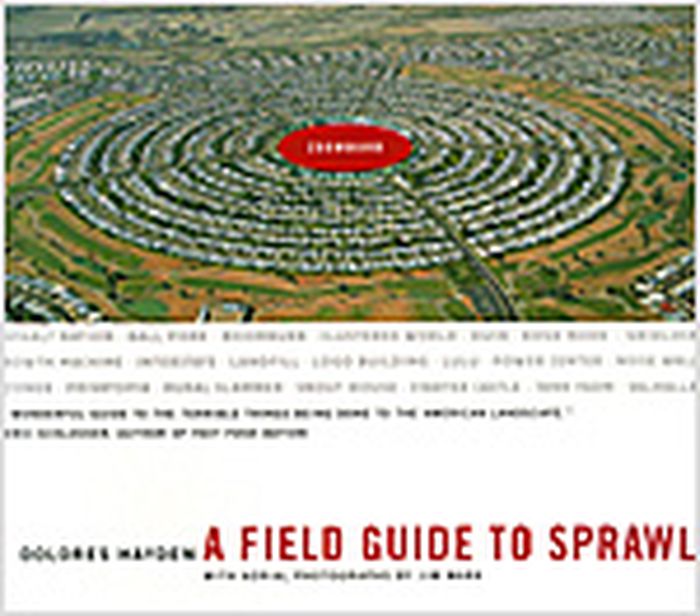
Duck, ruburb, tower farm, big box, and pig-in-a-python are among dozens of zany terms invented to characterize land use practices and the physical elements of sprawl. This book provides the verbal and visual vocabulary needed by professionals, public officials, and citizens to critique uncontrolled growth in the American landscape.
$28.50
(available to order)
Summary:
Duck, ruburb, tower farm, big box, and pig-in-a-python are among dozens of zany terms invented to characterize land use practices and the physical elements of sprawl. This book provides the verbal and visual vocabulary needed by professionals, public officials, and citizens to critique uncontrolled growth in the American landscape.
Title:
A field guide to sprawl
Actions:
Price:
$28.50
(available to order)
Summary:
Duck, ruburb, tower farm, big box, and pig-in-a-python are among dozens of zany terms invented to characterize land use practices and the physical elements of sprawl. This book provides the verbal and visual vocabulary needed by professionals, public officials, and citizens to critique uncontrolled growth in the American landscape.
A field guide to sprawl
Actions:
Price:
$28.50
(available to order)
Summary:
Duck, ruburb, tower farm, big box, and pig-in-a-python are among dozens of zany terms invented to characterize land use practices and the physical elements of sprawl. This book provides the verbal and visual vocabulary needed by professionals, public officials, and citizens to critique uncontrolled growth in the American landscape.
Form:
books
books
Publication:
June 2006, New York, London
June 2006, New York, London
Subject:
Urban Theory
Urban Theory
Form:
books
books
Price:
$26.95
(available to order)
Summary:
This new edition of Mike Davis’s work gives an update on Los Angeles as the city hits the 21st century. No metropolis has been more loved or more hated. To its official boosters, “Los Angeles brings it all together.” To detractors, LA is a sunlit mortuary where “you can rot without feeling it.” To Mike Davis, the author of this wide-ranging work of social history, Los(...)
$26.95
(available to order)
Summary:
This new edition of Mike Davis’s work gives an update on Los Angeles as the city hits the 21st century. No metropolis has been more loved or more hated. To its official boosters, “Los Angeles brings it all together.” To detractors, LA is a sunlit mortuary where “you can rot without feeling it.” To Mike Davis, the author of this wide-ranging work of social history, Los(...)
Title:
City of quartz : excavating the future in Los Angeles, new edition
Actions:
Price:
$26.95
(available to order)
Summary:
This new edition of Mike Davis’s work gives an update on Los Angeles as the city hits the 21st century. No metropolis has been more loved or more hated. To its official boosters, “Los Angeles brings it all together.” To detractors, LA is a sunlit mortuary where “you can rot without feeling it.” To Mike Davis, the author of this wide-ranging work of social history, Los Angeles is both utopia and dystopia, a place where the last Joshua trees are being plowed under to make room for model communities in the desert, where the rich have hired their own police to fend off street gangs, as well as armed Beirut militias. In "City of quartz", Davis reconstructs LA’s shadow history and dissects its ethereal economy. He tells us who has the power and how they hold on to it. He gives us a city of Dickensian extremes, Pynchonesque conspiracies, and a desperation straight out of Nathaniel West—a city in which we may glimpse our own future mirrored with terrifying clarity. In this new edition, Davis provides an update on the city’s current status.
City of quartz : excavating the future in Los Angeles, new edition
Actions:
Price:
$26.95
(available to order)
Summary:
This new edition of Mike Davis’s work gives an update on Los Angeles as the city hits the 21st century. No metropolis has been more loved or more hated. To its official boosters, “Los Angeles brings it all together.” To detractors, LA is a sunlit mortuary where “you can rot without feeling it.” To Mike Davis, the author of this wide-ranging work of social history, Los Angeles is both utopia and dystopia, a place where the last Joshua trees are being plowed under to make room for model communities in the desert, where the rich have hired their own police to fend off street gangs, as well as armed Beirut militias. In "City of quartz", Davis reconstructs LA’s shadow history and dissects its ethereal economy. He tells us who has the power and how they hold on to it. He gives us a city of Dickensian extremes, Pynchonesque conspiracies, and a desperation straight out of Nathaniel West—a city in which we may glimpse our own future mirrored with terrifying clarity. In this new edition, Davis provides an update on the city’s current status.
Form:
books
books
Publication:
September 2006, London, New York
September 2006, London, New York
Subject:
Urban Theory
Urban Theory
Form:
books
books
Price:
$40.00
(available to order)
Summary:
Europan is a biennial competition for architects and architecture students under the age of 40 that looks for innovative housing designs for real, specific sites across Europe. Guidelines encourage participants to address social and economic changes occurring around their sites, and, for this eighth Europan, that’s 74 properties across the continent. This year’s theme of(...)
$40.00
(available to order)
Summary:
Europan is a biennial competition for architects and architecture students under the age of 40 that looks for innovative housing designs for real, specific sites across Europe. Guidelines encourage participants to address social and economic changes occurring around their sites, and, for this eighth Europan, that’s 74 properties across the continent. This year’s theme of(...)
Subject:
Urban Theory
Urban Theory
Publication:
January 1900, Rotterdam
January 1900, Rotterdam
Title:
Europan 8 in the Netherland : European urbanity and strategic projects
Actions:
Price:
$40.00
(available to order)
Summary:
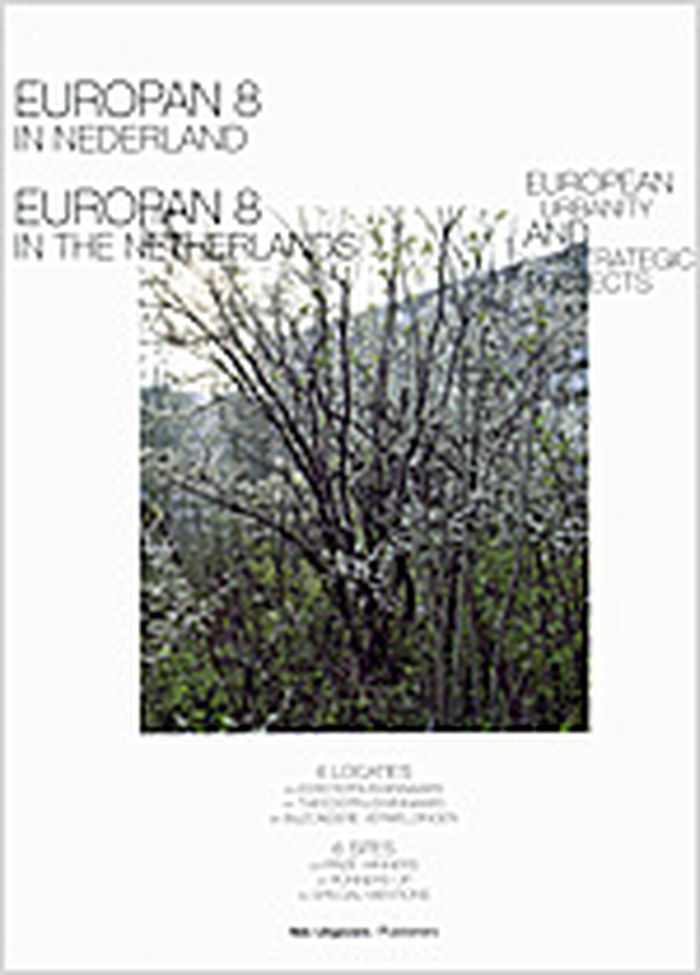
Europan is a biennial competition for architects and architecture students under the age of 40 that looks for innovative housing designs for real, specific sites across Europe. Guidelines encourage participants to address social and economic changes occurring around their sites, and, for this eighth Europan, that’s 74 properties across the continent. This year’s theme of "European urbanity and strategic projects" drew, for the six sites in the Netherlands alone, nearly 160 designs. Europan 8 offers a complete overview of the winning plans for the Dutch sites, including models, plans, sketches and interviews with the designers. The project section is complemented by descriptions of the six sites, an essay about the central theme, and a critique of the entries from a European perspective. An additional CD-ROM contains all other entries along with the prizewinning designs.
Europan 8 in the Netherland : European urbanity and strategic projects
Actions:
Price:
$40.00
(available to order)
Summary:
Europan is a biennial competition for architects and architecture students under the age of 40 that looks for innovative housing designs for real, specific sites across Europe. Guidelines encourage participants to address social and economic changes occurring around their sites, and, for this eighth Europan, that’s 74 properties across the continent. This year’s theme of "European urbanity and strategic projects" drew, for the six sites in the Netherlands alone, nearly 160 designs. Europan 8 offers a complete overview of the winning plans for the Dutch sites, including models, plans, sketches and interviews with the designers. The project section is complemented by descriptions of the six sites, an essay about the central theme, and a critique of the entries from a European perspective. An additional CD-ROM contains all other entries along with the prizewinning designs.
Form:
books
books
Publication:
January 1900, Rotterdam
January 1900, Rotterdam
Subject:
Urban Theory
Urban Theory


