


6062 Results
Form:
books
books
Actions:
Price:
$32.95
(available to order)
Summary:
Dystopic imagery has figured prominently in modern depictions of the urban landscape. The city is often portrayed as a terrifying world of darkness, crisis, and catastrophe. Noir Urbanisms traces the history of the modern city through its critical representations in art, cinema, print journalism, literature, sociology, and architecture. It focuses on visual forms of(...)
$32.95
(available to order)
Summary:
Dystopic imagery has figured prominently in modern depictions of the urban landscape. The city is often portrayed as a terrifying world of darkness, crisis, and catastrophe. Noir Urbanisms traces the history of the modern city through its critical representations in art, cinema, print journalism, literature, sociology, and architecture. It focuses on visual forms of(...)
Title:
Noir urbanisms: Dystopic images of the modern city
Actions:
Price:
$32.95
(available to order)
Summary:
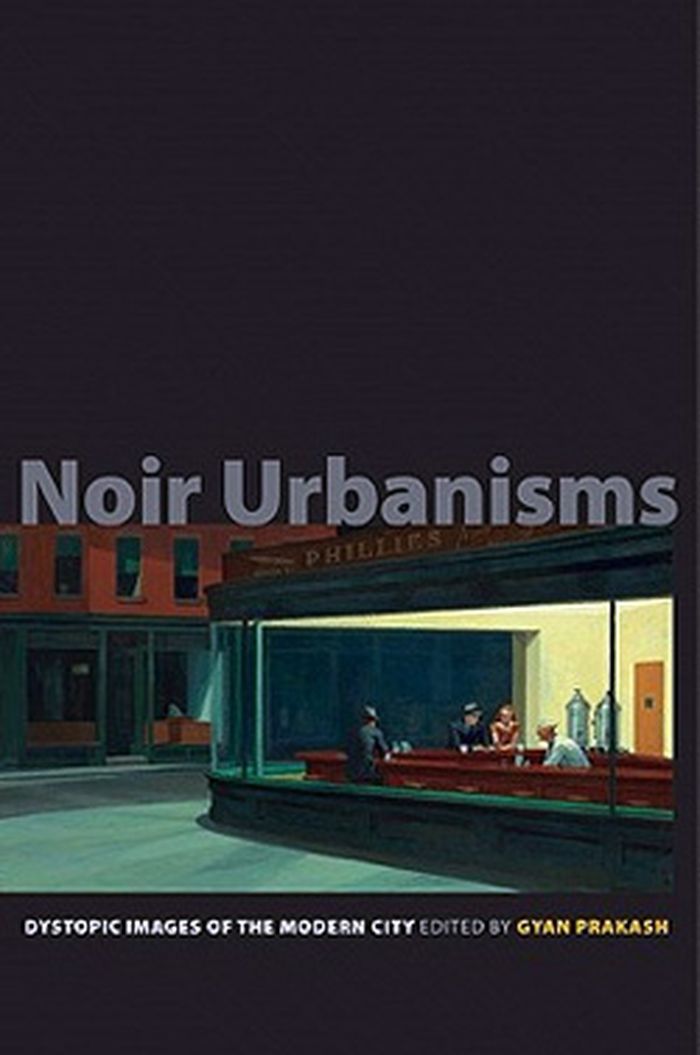
Dystopic imagery has figured prominently in modern depictions of the urban landscape. The city is often portrayed as a terrifying world of darkness, crisis, and catastrophe. Noir Urbanisms traces the history of the modern city through its critical representations in art, cinema, print journalism, literature, sociology, and architecture. It focuses on visual forms of dystopic representation--because the history of the modern city is inseparable from the production and circulation of images--and examines their strengths and limits as urban criticism. Contributors explore dystopic images of the modern city in Germany, Mexico, Japan, India, South Africa, China, and the United States. Their topics include Weimar representations of urban dystopia in Fritz Lang's 1927 film Metropolis; 1960s modernist architecture in Mexico City; Hollywood film noir of the 1940s and 1950s; the recurring fictional destruction of Tokyo in postwar Japan's sci-fi doom culture; the urban fringe in Bombay cinema; fictional explorations of urban dystopia in postapartheid Johannesburg; and Delhi's out-of-control and media-saturated urbanism in the 1980s and 1990s. What emerges in Noir Urbanisms is the unsettling and disorienting alchemy between dark representations and the modern urban experience.
Noir urbanisms: Dystopic images of the modern city
Actions:
Price:
$32.95
(available to order)
Summary:
Dystopic imagery has figured prominently in modern depictions of the urban landscape. The city is often portrayed as a terrifying world of darkness, crisis, and catastrophe. Noir Urbanisms traces the history of the modern city through its critical representations in art, cinema, print journalism, literature, sociology, and architecture. It focuses on visual forms of dystopic representation--because the history of the modern city is inseparable from the production and circulation of images--and examines their strengths and limits as urban criticism. Contributors explore dystopic images of the modern city in Germany, Mexico, Japan, India, South Africa, China, and the United States. Their topics include Weimar representations of urban dystopia in Fritz Lang's 1927 film Metropolis; 1960s modernist architecture in Mexico City; Hollywood film noir of the 1940s and 1950s; the recurring fictional destruction of Tokyo in postwar Japan's sci-fi doom culture; the urban fringe in Bombay cinema; fictional explorations of urban dystopia in postapartheid Johannesburg; and Delhi's out-of-control and media-saturated urbanism in the 1980s and 1990s. What emerges in Noir Urbanisms is the unsettling and disorienting alchemy between dark representations and the modern urban experience.
Form:
books
books
Publication:
October 2010
October 2010
Subject:
Architecture and Film, Set Design
Architecture and Film, Set Design
Form:
books
books

Actions:
Price:
$24.50
(available to order)
Summary:
Set in the long-lost City of Victoria (a fictional world similar to Hong Kong), Atlas is written from the unified perspective of future archaeologists struggling to rebuild a thrilling metropolis. Divided into four sections — “Theory,” “The City,” “Streets,” and “Signs” — the novel reimagines Victoria through maps and other historical documents and artifacts, mixing(...)
$24.50
(available to order)
Summary:
Set in the long-lost City of Victoria (a fictional world similar to Hong Kong), Atlas is written from the unified perspective of future archaeologists struggling to rebuild a thrilling metropolis. Divided into four sections — “Theory,” “The City,” “Streets,” and “Signs” — the novel reimagines Victoria through maps and other historical documents and artifacts, mixing(...)
Title:
Atlas : the archaeology of an imaginary city
Actions:
Price:
$24.50
(available to order)
Summary:
Set in the long-lost City of Victoria (a fictional world similar to Hong Kong), Atlas is written from the unified perspective of future archaeologists struggling to rebuild a thrilling metropolis. Divided into four sections — “Theory,” “The City,” “Streets,” and “Signs” — the novel reimagines Victoria through maps and other historical documents and artifacts, mixing real-world scenarios with purely imaginary people and events while incorporating anecdotes and actual and fictional social commentary and critique. Much like the quasi-fictional adventures in map-reading and remapping explored by Paul Auster, Jorge Luis Borges, and Italo Calvino, Dung Kai-cheung’s novel challenges the representation of place and history and the limits of technical and scientific media in reconstructing a history. It best exemplifies the author’s versatility and experimentation, along with China’s rapidly evolving literary culture, by blending fiction, nonfiction, and poetry in a story about succeeding and failing to recapture the things we lose. Playing with a variety of styles and subjects, Dung Kai-cheung inventively engages with the fate of Hong Kong since its British “handover” in 1997, which officially marked the end of colonial rule and the beginning of an uncharted future.
Atlas : the archaeology of an imaginary city
Actions:
Price:
$24.50
(available to order)
Summary:
Set in the long-lost City of Victoria (a fictional world similar to Hong Kong), Atlas is written from the unified perspective of future archaeologists struggling to rebuild a thrilling metropolis. Divided into four sections — “Theory,” “The City,” “Streets,” and “Signs” — the novel reimagines Victoria through maps and other historical documents and artifacts, mixing real-world scenarios with purely imaginary people and events while incorporating anecdotes and actual and fictional social commentary and critique. Much like the quasi-fictional adventures in map-reading and remapping explored by Paul Auster, Jorge Luis Borges, and Italo Calvino, Dung Kai-cheung’s novel challenges the representation of place and history and the limits of technical and scientific media in reconstructing a history. It best exemplifies the author’s versatility and experimentation, along with China’s rapidly evolving literary culture, by blending fiction, nonfiction, and poetry in a story about succeeding and failing to recapture the things we lose. Playing with a variety of styles and subjects, Dung Kai-cheung inventively engages with the fate of Hong Kong since its British “handover” in 1997, which officially marked the end of colonial rule and the beginning of an uncharted future.
Form:
books
books
Publication:
November 2012
November 2012
Subject:
Architectural Theory
Architectural Theory
Form:
books
books
Actions:
Price:
$85.95
(available to order)
Summary:
Using materials such as earth, wind, water, fire, wood, salt, rocks, mirrors and explosives, American artists of the 1960s began to move beyond the white cube gallery space to work directly in the land. With ties to Minimal and Conceptual art, these artists placed less emphasis on the discrete object and turned their attention to the experience of the artwork—however(...)
$85.95
(available to order)
Summary:
Using materials such as earth, wind, water, fire, wood, salt, rocks, mirrors and explosives, American artists of the 1960s began to move beyond the white cube gallery space to work directly in the land. With ties to Minimal and Conceptual art, these artists placed less emphasis on the discrete object and turned their attention to the experience of the artwork—however(...)
Title:
Groundswell: Women of land art
Actions:
Price:
$85.95
(available to order)
Summary:
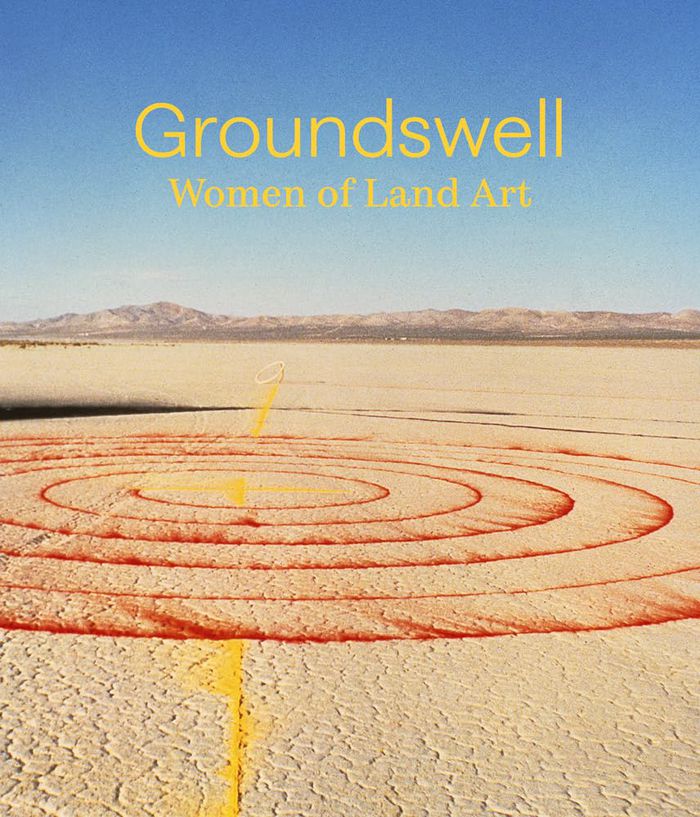
Using materials such as earth, wind, water, fire, wood, salt, rocks, mirrors and explosives, American artists of the 1960s began to move beyond the white cube gallery space to work directly in the land. With ties to Minimal and Conceptual art, these artists placed less emphasis on the discrete object and turned their attention to the experience of the artwork—however fleeting or permanent that might be—foregrounding natural materials and the site itself to create large-scale works located outside of typical urban art-world circuits. Histories of Land art have long been dominated by men, but "Groundswell: Women of Land Art" shifts that focus to shed new light on the vast number of earthworks by women artists. While their careers ran parallel to those of their better-known male counterparts, they have received less recognition and representation in museum presentations—until now. This book includes five scholarly essays, as well as a detailed chronology, exhibition checklist and illustrated biographies of exhibition artists. "Groundswell" is a resource for readers interested in understanding the historical Land art movement and our own relationship to the earth.
Groundswell: Women of land art
Actions:
Price:
$85.95
(available to order)
Summary:
Using materials such as earth, wind, water, fire, wood, salt, rocks, mirrors and explosives, American artists of the 1960s began to move beyond the white cube gallery space to work directly in the land. With ties to Minimal and Conceptual art, these artists placed less emphasis on the discrete object and turned their attention to the experience of the artwork—however fleeting or permanent that might be—foregrounding natural materials and the site itself to create large-scale works located outside of typical urban art-world circuits. Histories of Land art have long been dominated by men, but "Groundswell: Women of Land Art" shifts that focus to shed new light on the vast number of earthworks by women artists. While their careers ran parallel to those of their better-known male counterparts, they have received less recognition and representation in museum presentations—until now. This book includes five scholarly essays, as well as a detailed chronology, exhibition checklist and illustrated biographies of exhibition artists. "Groundswell" is a resource for readers interested in understanding the historical Land art movement and our own relationship to the earth.
Form:
books
books
Publication:
November 2023
November 2023
Subject:
Land Art
Land Art
Form:
books
books
Price:
$39.95
(available to order)
Summary:
''Feminist designer'' brings together a constellation of voices and perspectives to examine the intersection of design and feminist theory. For decades, the feminist refrain within design has hinged on the representation and inclusion of women in the field. This collection, edited by Alison Place, however, is a call to move beyond this narrow application. Feminist design(...)
$39.95
(available to order)
Summary:
''Feminist designer'' brings together a constellation of voices and perspectives to examine the intersection of design and feminist theory. For decades, the feminist refrain within design has hinged on the representation and inclusion of women in the field. This collection, edited by Alison Place, however, is a call to move beyond this narrow application. Feminist design(...)
Title:
Feminist designer: On the personal and the political in design
Actions:
Price:
$39.95
(available to order)
Summary:
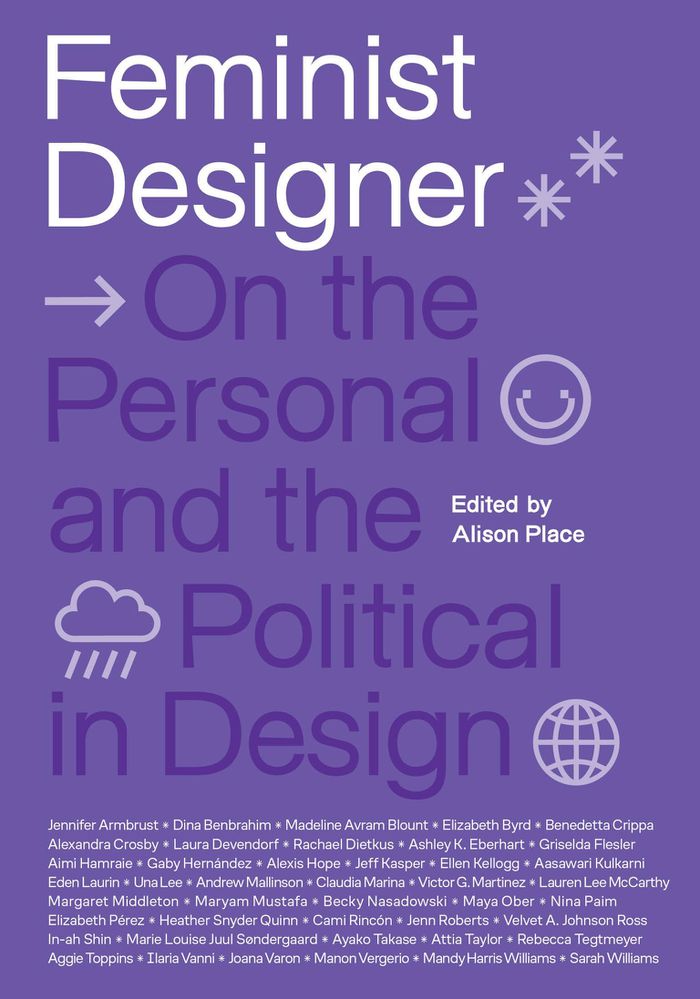
''Feminist designer'' brings together a constellation of voices and perspectives to examine the intersection of design and feminist theory. For decades, the feminist refrain within design has hinged on the representation and inclusion of women in the field. This collection, edited by Alison Place, however, is a call to move beyond this narrow application. Feminist design is not just about who does design—it is about how we do design and why. Feminist frameworks for design activism are now more relevant than ever, as they emphasize collaborative processes that aim to disrupt and dismantle power hierarchies while centering feminist ways of knowing and doing. ''Feminist designer'' contains essays, case studies, and dialogues by 43 contributors from 16 different countries. It engages a wide variety of design disciplines, from graphic design to disability design to algorithmic design, and explores key feminist themes, such as power, knowledge, care, plurality, liberation, and community. Through diverse, sometimes conflicting, intersectional perspectives, this book contributes new design methods informed by a multiplicity of feminisms that confront design’s patriarchal origins while ushering in new pathways for making critical and meaningful change.
Feminist designer: On the personal and the political in design
Actions:
Price:
$39.95
(available to order)
Summary:
''Feminist designer'' brings together a constellation of voices and perspectives to examine the intersection of design and feminist theory. For decades, the feminist refrain within design has hinged on the representation and inclusion of women in the field. This collection, edited by Alison Place, however, is a call to move beyond this narrow application. Feminist design is not just about who does design—it is about how we do design and why. Feminist frameworks for design activism are now more relevant than ever, as they emphasize collaborative processes that aim to disrupt and dismantle power hierarchies while centering feminist ways of knowing and doing. ''Feminist designer'' contains essays, case studies, and dialogues by 43 contributors from 16 different countries. It engages a wide variety of design disciplines, from graphic design to disability design to algorithmic design, and explores key feminist themes, such as power, knowledge, care, plurality, liberation, and community. Through diverse, sometimes conflicting, intersectional perspectives, this book contributes new design methods informed by a multiplicity of feminisms that confront design’s patriarchal origins while ushering in new pathways for making critical and meaningful change.
Form:
books
books
Publication:
September 2023
September 2023
Subject:
Design Theory
Design Theory
Form:
books
books
Actions:
Price:
$43.95
(available to order)
Summary:
''An anthology of Blackness'' examines the intersection of Black identity and practice, probing why the design field has failed to attract Black professionals, how Eurocentric hegemony impacts Black professionals, and how Black designers can create an anti-racist design industry. Contributing authors and creators demonstrate how to develop a pro-Black design practice of(...)
$43.95
(available to order)
Summary:
''An anthology of Blackness'' examines the intersection of Black identity and practice, probing why the design field has failed to attract Black professionals, how Eurocentric hegemony impacts Black professionals, and how Black designers can create an anti-racist design industry. Contributing authors and creators demonstrate how to develop a pro-Black design practice of(...)
Title:
An anthology of Blackness: the state of Black design
Actions:
Price:
$43.95
(available to order)
Summary:
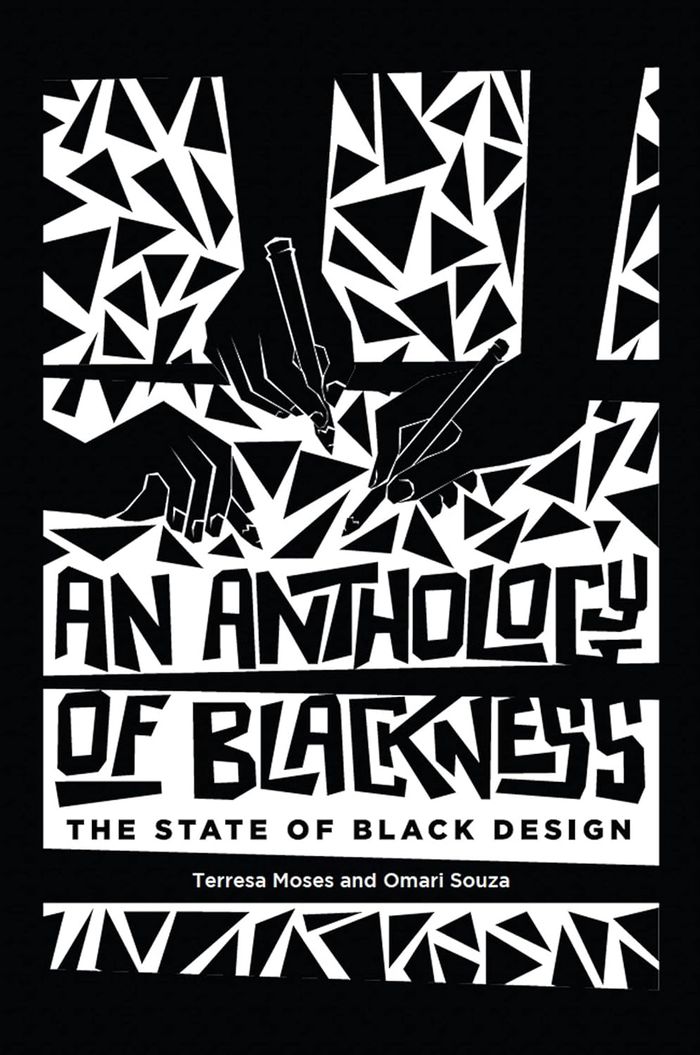
''An anthology of Blackness'' examines the intersection of Black identity and practice, probing why the design field has failed to attract Black professionals, how Eurocentric hegemony impacts Black professionals, and how Black designers can create an anti-racist design industry. Contributing authors and creators demonstrate how to develop a pro-Black design practice of inclusivity, including Black representation in designed media, anti-racist pedagogy, and radical self-care. Through autoethnography, lived experience, scholarship, and applied research, these contributors share proven methods for creating an anti-racist and inclusive design practice. The contributions in ''An anthology of Blackness'' include essays, opinion pieces, case studies, and visual narratives. Many contributors write from an intersectional perspective on race, gender, sexuality, ethnicity, and ability. Each section of the book expands on community-driven concerns about the state of the design industry, design pedagogy, and design activism. Ultimately, this articulated intersection of Black identity and Black design practice reveals the power of resistance, community, and solidarity—and the hope for a more equitable future. With a foreword written by design luminary Elizabeth (Dori) Tunstall, ''An anthology of Blackness'' is a pioneering contribution to the literature of social justice.
An anthology of Blackness: the state of Black design
Actions:
Price:
$43.95
(available to order)
Summary:
''An anthology of Blackness'' examines the intersection of Black identity and practice, probing why the design field has failed to attract Black professionals, how Eurocentric hegemony impacts Black professionals, and how Black designers can create an anti-racist design industry. Contributing authors and creators demonstrate how to develop a pro-Black design practice of inclusivity, including Black representation in designed media, anti-racist pedagogy, and radical self-care. Through autoethnography, lived experience, scholarship, and applied research, these contributors share proven methods for creating an anti-racist and inclusive design practice. The contributions in ''An anthology of Blackness'' include essays, opinion pieces, case studies, and visual narratives. Many contributors write from an intersectional perspective on race, gender, sexuality, ethnicity, and ability. Each section of the book expands on community-driven concerns about the state of the design industry, design pedagogy, and design activism. Ultimately, this articulated intersection of Black identity and Black design practice reveals the power of resistance, community, and solidarity—and the hope for a more equitable future. With a foreword written by design luminary Elizabeth (Dori) Tunstall, ''An anthology of Blackness'' is a pioneering contribution to the literature of social justice.
Form:
books
books
Publication:
October 2023
October 2023
Subject:
Design Theory
Design Theory
Form:
books
books
Actions:
Price:
$108.75
(available to order)
Summary:
For those who have ever wondered why we have trees in cities or what makes the layout of cities like Paris and Amsterdam seem so memorable, "City trees: a historical geography from the Renaissance through the nineteenth century" by Henry W. Lawrence provides a comprehensive guide to the history of trees in urban landscapes. Covering four centuries of development in the(...)
$108.75
(available to order)
Summary:
For those who have ever wondered why we have trees in cities or what makes the layout of cities like Paris and Amsterdam seem so memorable, "City trees: a historical geography from the Renaissance through the nineteenth century" by Henry W. Lawrence provides a comprehensive guide to the history of trees in urban landscapes. Covering four centuries of development in the(...)
Title:
City Trees : a historical geography from the Renaissance through the nineteenth century
Actions:
Price:
$108.75
(available to order)
Summary:
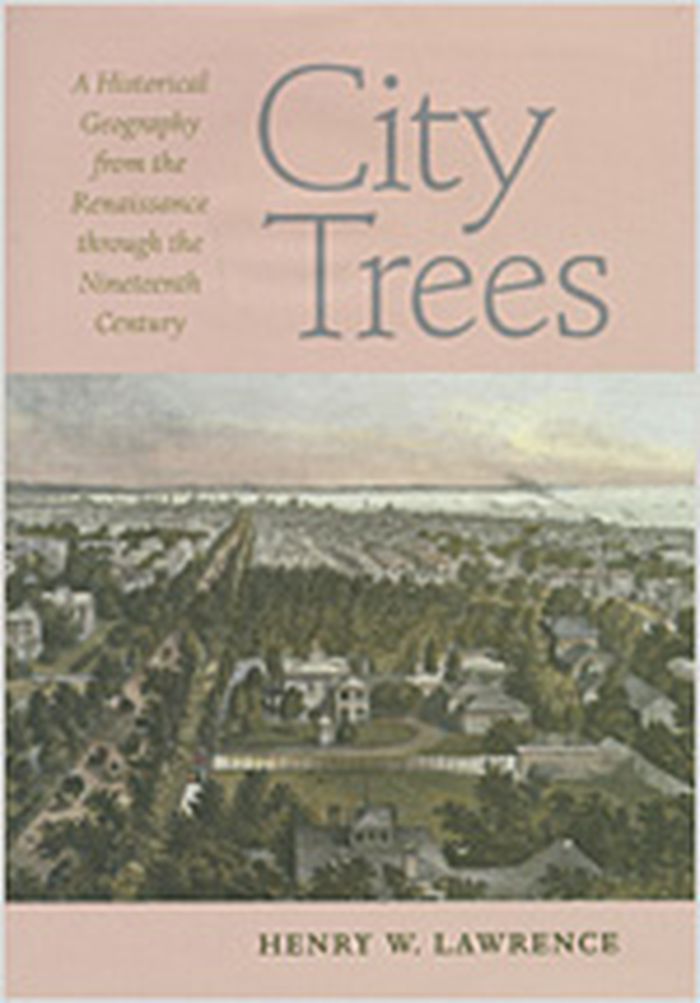
For those who have ever wondered why we have trees in cities or what makes the layout of cities like Paris and Amsterdam seem so memorable, "City trees: a historical geography from the Renaissance through the nineteenth century" by Henry W. Lawrence provides a comprehensive guide to the history of trees in urban landscapes. Covering four centuries of development in the cities of Europe and America, this book shows how trees became integral to urban landscapes by looking at the historical evolution of the spaces in which they were planted and how these spaces were used. Reflecting on the impact trees have had on what many consider to be the fundamental aspects of city life — people, buildings, social and economic activity — Lawrence draws on graphic materials, written descriptions, local histories, and archival research to provide a unique look at the treeís role in urban landscape history. Primarily concerned with aesthetics, power, and national traditions, Lawrence reflects on the differing impacts city trees have had on multiple aspects of culture, from their roles as symbols and their representation of economic prosperity to the differing ways nations planted their trees, which gradually blended into an international style of urban planting.
City Trees : a historical geography from the Renaissance through the nineteenth century
Actions:
Price:
$108.75
(available to order)
Summary:
For those who have ever wondered why we have trees in cities or what makes the layout of cities like Paris and Amsterdam seem so memorable, "City trees: a historical geography from the Renaissance through the nineteenth century" by Henry W. Lawrence provides a comprehensive guide to the history of trees in urban landscapes. Covering four centuries of development in the cities of Europe and America, this book shows how trees became integral to urban landscapes by looking at the historical evolution of the spaces in which they were planted and how these spaces were used. Reflecting on the impact trees have had on what many consider to be the fundamental aspects of city life — people, buildings, social and economic activity — Lawrence draws on graphic materials, written descriptions, local histories, and archival research to provide a unique look at the treeís role in urban landscape history. Primarily concerned with aesthetics, power, and national traditions, Lawrence reflects on the differing impacts city trees have had on multiple aspects of culture, from their roles as symbols and their representation of economic prosperity to the differing ways nations planted their trees, which gradually blended into an international style of urban planting.
Form:
books
books
Publication:
June 2006, Charlottesville, London
June 2006, Charlottesville, London
Subject:
Gardens
Gardens
Form:
books
books
Actions:
Price:
$62.95
(available to order)
Summary:
"Picturing the city" takes a look at the group of urban realists known as the Ashcan School, and at the booming cultures of vision and representation in early twentieth-century New York. Offering insights into the development of modern cities and modern art in America, Rebecca Zurier considers what it meant to live in a city where strangers habitually watched each other(...)
$62.95
(available to order)
Summary:
"Picturing the city" takes a look at the group of urban realists known as the Ashcan School, and at the booming cultures of vision and representation in early twentieth-century New York. Offering insights into the development of modern cities and modern art in America, Rebecca Zurier considers what it meant to live in a city where strangers habitually watched each other(...)
Subject:
Urban Theory
Urban Theory
Publication:
June 2006, Berkeley / Los Angeles / London
June 2006, Berkeley / Los Angeles / London
Title:
Picturing the city : urban vision and the Ashcan school
Actions:
Price:
$62.95
(available to order)
Summary:
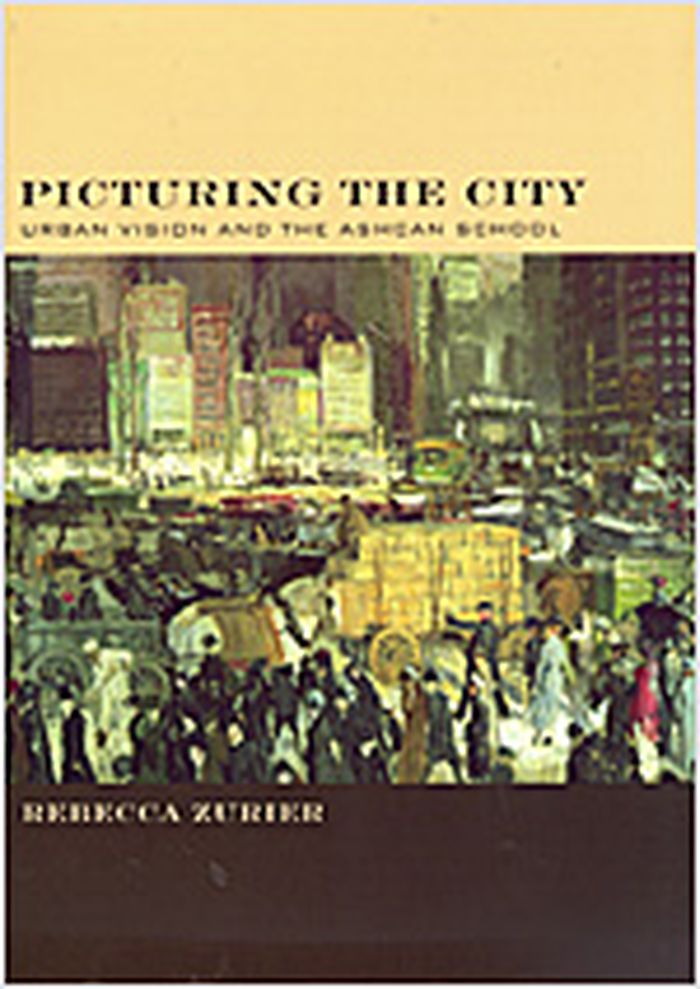
"Picturing the city" takes a look at the group of urban realists known as the Ashcan School, and at the booming cultures of vision and representation in early twentieth-century New York. Offering insights into the development of modern cities and modern art in America, Rebecca Zurier considers what it meant to live in a city where strangers habitually watched each other and public life seemed to consist of continual display, as new classes of immigrants and working women claimed their places in the metropolis. Through her study of six artists - George Bellows, William Glackens, Robert Henri, George Luks, Everett Shinn, and John Sloan, Zurier illuminates the quest for new forms of realism to describe changes in urban life, commercial culture, and codes of social conduct in the early 1900s. Synthesizing visual and literary analysis with urban cultural history, "Picturing the city" focuses new attention on the materiality and design process of pictures. The author scrutinizes many manner of visual activity, from the pandemonium of comics to the mise-en-scene of early movies, from the mark of an individual pen stroke to a glance on the street, from illustrators' manuals to ambitious paintings that became icons of American art.
Picturing the city : urban vision and the Ashcan school
Actions:
Price:
$62.95
(available to order)
Summary:
"Picturing the city" takes a look at the group of urban realists known as the Ashcan School, and at the booming cultures of vision and representation in early twentieth-century New York. Offering insights into the development of modern cities and modern art in America, Rebecca Zurier considers what it meant to live in a city where strangers habitually watched each other and public life seemed to consist of continual display, as new classes of immigrants and working women claimed their places in the metropolis. Through her study of six artists - George Bellows, William Glackens, Robert Henri, George Luks, Everett Shinn, and John Sloan, Zurier illuminates the quest for new forms of realism to describe changes in urban life, commercial culture, and codes of social conduct in the early 1900s. Synthesizing visual and literary analysis with urban cultural history, "Picturing the city" focuses new attention on the materiality and design process of pictures. The author scrutinizes many manner of visual activity, from the pandemonium of comics to the mise-en-scene of early movies, from the mark of an individual pen stroke to a glance on the street, from illustrators' manuals to ambitious paintings that became icons of American art.
Form:
books
books
Publication:
June 2006, Berkeley / Los Angeles / London
June 2006, Berkeley / Los Angeles / London
Subject:
Urban Theory
Urban Theory
Form:
books
books

Title:
Daniel Shea: Distribution
Daniel Shea: Distribution
Actions:
Price:
$125.00
(available to order)
Summary:
This vast artist’s book began with a deceptively simple question: how do you photograph a forest? Daniel Shea found that forests presented a revealing challenge: that of capturing the whole – the immersive totality of being in nature – when photography so relentlessly pulls us to the fragment. Over several years and across varied geographies, he made photographs with(...)
$125.00
(available to order)
Summary:
This vast artist’s book began with a deceptively simple question: how do you photograph a forest? Daniel Shea found that forests presented a revealing challenge: that of capturing the whole – the immersive totality of being in nature – when photography so relentlessly pulls us to the fragment. Over several years and across varied geographies, he made photographs with(...)
Title:
Daniel Shea: Distribution
Actions:
Price:
$125.00
(available to order)
Summary:
This vast artist’s book began with a deceptively simple question: how do you photograph a forest? Daniel Shea found that forests presented a revealing challenge: that of capturing the whole – the immersive totality of being in nature – when photography so relentlessly pulls us to the fragment. Over several years and across varied geographies, he made photographs with deliberately constrained methods – rendering dense woodlands with a telephoto lens, capturing cities only through the window of a moving car – as if to invert the old adage about not seeing the forest for the trees. These working constraints foregrounded what resists representation: ecological complexity, social entanglement, and the architectures that influence both. The resulting book, ''Distribution'', explores the tension between environments that overwhelm with density and patterns that slowly emerge through repetition, accumulation, and framing. It opens with a series of portraits of Jessica, a woman who represents the statistical median of a person living in the United States, before expanding outward to surfaces, buildings, trees, and eventually groups of people. It asks how we locate subjects and attendant problems in a world shaped by competing density and dispersion.
Daniel Shea: Distribution
Actions:
Price:
$125.00
(available to order)
Summary:
This vast artist’s book began with a deceptively simple question: how do you photograph a forest? Daniel Shea found that forests presented a revealing challenge: that of capturing the whole – the immersive totality of being in nature – when photography so relentlessly pulls us to the fragment. Over several years and across varied geographies, he made photographs with deliberately constrained methods – rendering dense woodlands with a telephoto lens, capturing cities only through the window of a moving car – as if to invert the old adage about not seeing the forest for the trees. These working constraints foregrounded what resists representation: ecological complexity, social entanglement, and the architectures that influence both. The resulting book, ''Distribution'', explores the tension between environments that overwhelm with density and patterns that slowly emerge through repetition, accumulation, and framing. It opens with a series of portraits of Jessica, a woman who represents the statistical median of a person living in the United States, before expanding outward to surfaces, buildings, trees, and eventually groups of people. It asks how we locate subjects and attendant problems in a world shaped by competing density and dispersion.
Form:
books
books
Publication:
September 2025
September 2025
Subject:
Photography monographs
Photography monographs
Form:
books
books
Actions:
Price:
$25.00
(available in store)
Summary:
''The Devouring Eye: Photography and the Mouth'' is a provocative essay by Swiss photographer and academic Olivier Richon which rethinks the act of looking through the language of appetite, taste, and consumption. Drawn from a series of influential lectures delivered during his twenty-five-year tenure as Head of the Photography programme at the Royal College of Art(...)
$25.00
(available in store)
Summary:
''The Devouring Eye: Photography and the Mouth'' is a provocative essay by Swiss photographer and academic Olivier Richon which rethinks the act of looking through the language of appetite, taste, and consumption. Drawn from a series of influential lectures delivered during his twenty-five-year tenure as Head of the Photography programme at the Royal College of Art(...)
Title:
The devouring eye: Photography and the mouth
Actions:
Price:
$25.00
(available in store)
Summary:
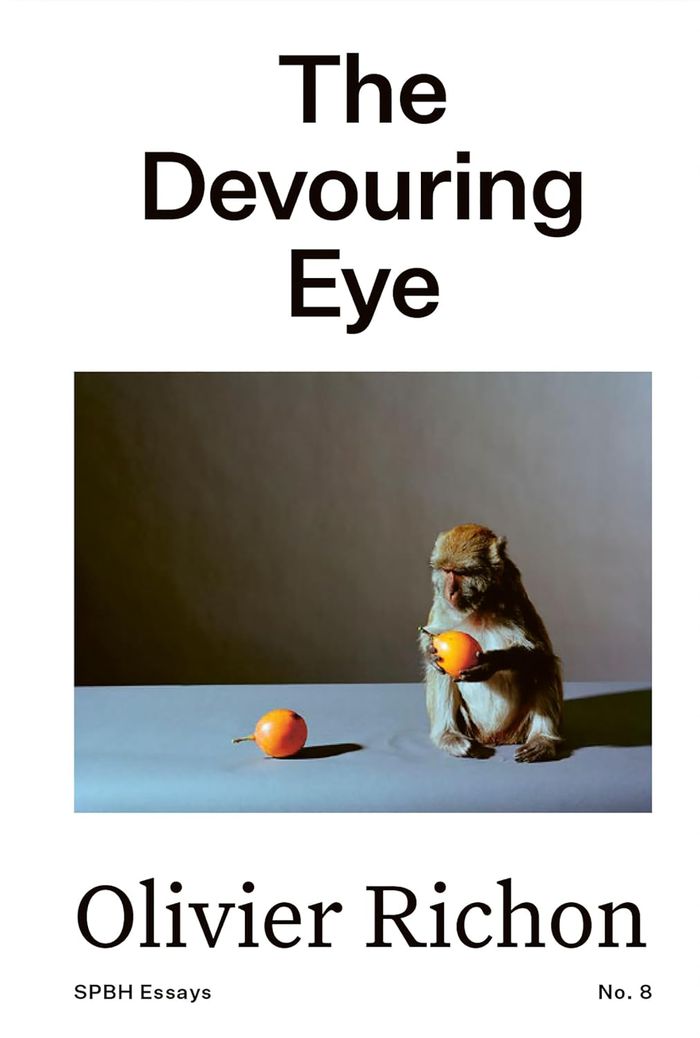
''The Devouring Eye: Photography and the Mouth'' is a provocative essay by Swiss photographer and academic Olivier Richon which rethinks the act of looking through the language of appetite, taste, and consumption. Drawn from a series of influential lectures delivered during his twenty-five-year tenure as Head of the Photography programme at the Royal College of Art (1997–2022) – a period during which the course shaped an entire generation of photographers – the book presents a meditation on the camera as both eye and mouth: an apparatus that ingests the world in order to produce images. Framed through a psychoanalytic lens, Richon proposes that photography is less a neutral act of observation than a form of visual incorporation. If looking maintains distance, the mouth abolishes it. The camera becomes a devouring organ, where the object is dissolved, digested, and made into an image. The desire to see becomes entangled with the desire to consume. Through this reading, photography is revealed as an insatiable medium – one that satisfies and frustrates our appetite for representation in equal measure. ''The Devouring Eye'' invites us to reconsider how we relate to images, and how deeply they live in us.
The devouring eye: Photography and the mouth
Actions:
Price:
$25.00
(available in store)
Summary:
''The Devouring Eye: Photography and the Mouth'' is a provocative essay by Swiss photographer and academic Olivier Richon which rethinks the act of looking through the language of appetite, taste, and consumption. Drawn from a series of influential lectures delivered during his twenty-five-year tenure as Head of the Photography programme at the Royal College of Art (1997–2022) – a period during which the course shaped an entire generation of photographers – the book presents a meditation on the camera as both eye and mouth: an apparatus that ingests the world in order to produce images. Framed through a psychoanalytic lens, Richon proposes that photography is less a neutral act of observation than a form of visual incorporation. If looking maintains distance, the mouth abolishes it. The camera becomes a devouring organ, where the object is dissolved, digested, and made into an image. The desire to see becomes entangled with the desire to consume. Through this reading, photography is revealed as an insatiable medium – one that satisfies and frustrates our appetite for representation in equal measure. ''The Devouring Eye'' invites us to reconsider how we relate to images, and how deeply they live in us.
Form:
books
books
Publication:
March 2026
March 2026
Subject:
Theory of Photography
Theory of Photography
Form:
books
books
Actions:
Price:
$42.00
(available to order)
Summary:
"The Unknown City" takes its place in the emerging architectural literature that looks beyond design process and buildings to discover new ways of looking at the urban experience. A multistranded contemplation of the notion of "knowing a place," it is about both the existence and the possibilities of architecture and the city. An important inspiration for the book is(...)
$42.00
(available to order)
Summary:
"The Unknown City" takes its place in the emerging architectural literature that looks beyond design process and buildings to discover new ways of looking at the urban experience. A multistranded contemplation of the notion of "knowing a place," it is about both the existence and the possibilities of architecture and the city. An important inspiration for the book is(...)
Subject:
Urban Theory
Urban Theory
Publication:
October 2002, Cambridge, Massachusetts
October 2002, Cambridge, Massachusetts
Title:
The unknown city : contesting architecture and social space
Actions:
Price:
$42.00
(available to order)
Summary:
"The Unknown City" takes its place in the emerging architectural literature that looks beyond design process and buildings to discover new ways of looking at the urban experience. A multistranded contemplation of the notion of "knowing a place," it is about both the existence and the possibilities of architecture and the city. An important inspiration for the book is the work of Henri Lefebvre, in particular his ideas on space as a historical production. Many of the essays also draw on the social critique and tactics of the Situationist movement. The international gathering of contributors includes art, architectural, and urban historians and theorists; urban geographers; architects, artists, and filmmakers; and literary and cultural theorists. The essays range from abstract considerations of spatial production and representation to such concrete examples of urban domination as video surveillance and Regency London as the site of male pleasure. Although many of the essays are driven by social, cultural, and urban theory, they also tell real stories about real places. Each piece is in some way a critique of capitalism and a thought experiment about how designers and city dwellers working together can shape the cities of tomorrow.
The unknown city : contesting architecture and social space
Actions:
Price:
$42.00
(available to order)
Summary:
"The Unknown City" takes its place in the emerging architectural literature that looks beyond design process and buildings to discover new ways of looking at the urban experience. A multistranded contemplation of the notion of "knowing a place," it is about both the existence and the possibilities of architecture and the city. An important inspiration for the book is the work of Henri Lefebvre, in particular his ideas on space as a historical production. Many of the essays also draw on the social critique and tactics of the Situationist movement. The international gathering of contributors includes art, architectural, and urban historians and theorists; urban geographers; architects, artists, and filmmakers; and literary and cultural theorists. The essays range from abstract considerations of spatial production and representation to such concrete examples of urban domination as video surveillance and Regency London as the site of male pleasure. Although many of the essays are driven by social, cultural, and urban theory, they also tell real stories about real places. Each piece is in some way a critique of capitalism and a thought experiment about how designers and city dwellers working together can shape the cities of tomorrow.
Form:
books
books
Publication:
October 2002, Cambridge, Massachusetts
October 2002, Cambridge, Massachusetts
Subject:
Urban Theory
Urban Theory


