


765 Results
Form:
books
books

Title:
Cabinet 62 : milk
Cabinet 62 : milk
Actions:
Price:
$15.00
(available to order)
Summary:
One of only a handful of substances produced in nature expressly as food, milk is fundamental for infant mammalian nutrition, but is also foundational in human myth and religion. Cabinet issue 62, with a special section on “Milk,” includes Renata Salecl on the psychoanalytical implications of the recent death of a child solely breastfed for the first five years of his(...)
$15.00
(available to order)
Summary:
One of only a handful of substances produced in nature expressly as food, milk is fundamental for infant mammalian nutrition, but is also foundational in human myth and religion. Cabinet issue 62, with a special section on “Milk,” includes Renata Salecl on the psychoanalytical implications of the recent death of a child solely breastfed for the first five years of his(...)
Title:
Cabinet 62 : milk
Actions:
Price:
$15.00
(available to order)
Summary:
One of only a handful of substances produced in nature expressly as food, milk is fundamental for infant mammalian nutrition, but is also foundational in human myth and religion. Cabinet issue 62, with a special section on “Milk,” includes Renata Salecl on the psychoanalytical implications of the recent death of a child solely breastfed for the first five years of his life; Jeff Dolven on milk and luminosity; Esther Leslie and Melanie Jackson on the ways in which milk is transformed from primary material to metaphorical excess; and Melanie Tyson on the colonial history of condensed milk. Elsewhere in the issue: Daniel Rosenberg on Maurice Sendak’s beloved “Nutshell Library” and the fantasies of book classification; Richard Cooke on the history of live sex shows in Europe and their sudden decline in the 1980s; and an artist project by S. Billie Mandle exploring the varieties of Catholic confessionals.
Cabinet 62 : milk
Actions:
Price:
$15.00
(available to order)
Summary:
One of only a handful of substances produced in nature expressly as food, milk is fundamental for infant mammalian nutrition, but is also foundational in human myth and religion. Cabinet issue 62, with a special section on “Milk,” includes Renata Salecl on the psychoanalytical implications of the recent death of a child solely breastfed for the first five years of his life; Jeff Dolven on milk and luminosity; Esther Leslie and Melanie Jackson on the ways in which milk is transformed from primary material to metaphorical excess; and Melanie Tyson on the colonial history of condensed milk. Elsewhere in the issue: Daniel Rosenberg on Maurice Sendak’s beloved “Nutshell Library” and the fantasies of book classification; Richard Cooke on the history of live sex shows in Europe and their sudden decline in the 1980s; and an artist project by S. Billie Mandle exploring the varieties of Catholic confessionals.
Form:
books
books
Publication:
June 2017
June 2017
Subject:
Magazines
Magazines
Form:
books
books
Title:
Cabinet 45: Games
Cabinet 45: Games
Actions:
Price:
$12.00
(available to order)
Summary:
In the nineteenth century, Marx rejected the notion of homo sapiens, offering instead homo faber to indicate how consciousness follows from the primary activity of making. Against this, a certain ludic tradition has imagined a homo ludens, humans defined through their relationship with games and play. Cabinet 45 features Joshua Glenn on H.G. Wells’ “Floor Games”; D.(...)
$12.00
(available to order)
Summary:
In the nineteenth century, Marx rejected the notion of homo sapiens, offering instead homo faber to indicate how consciousness follows from the primary activity of making. Against this, a certain ludic tradition has imagined a homo ludens, humans defined through their relationship with games and play. Cabinet 45 features Joshua Glenn on H.G. Wells’ “Floor Games”; D.(...)
Title:
Cabinet 45: Games
Actions:
Price:
$12.00
(available to order)
Summary:
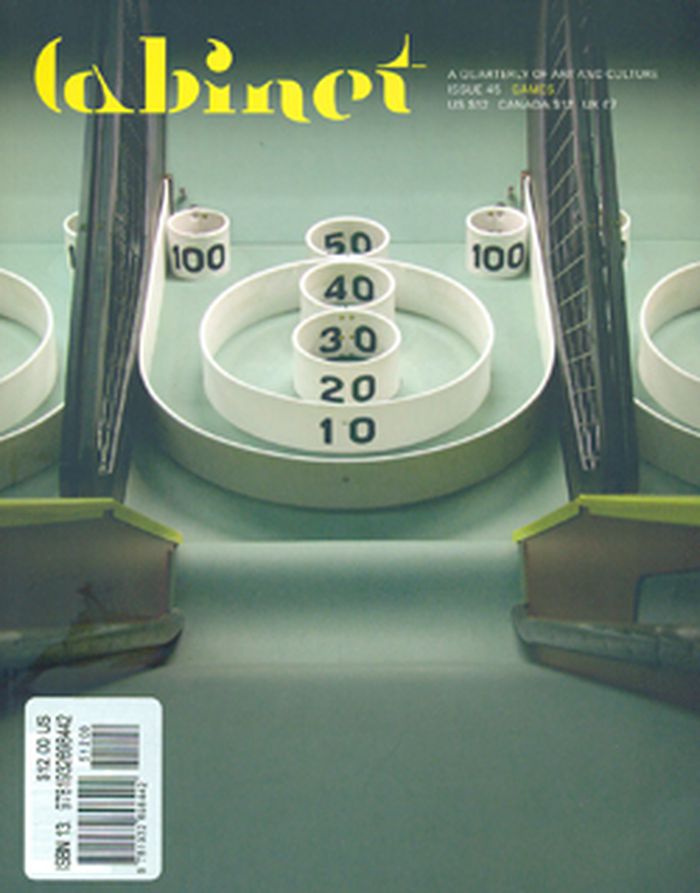
In the nineteenth century, Marx rejected the notion of homo sapiens, offering instead homo faber to indicate how consciousness follows from the primary activity of making. Against this, a certain ludic tradition has imagined a homo ludens, humans defined through their relationship with games and play. Cabinet 45 features Joshua Glenn on H.G. Wells’ “Floor Games”; D. Graham Burnett on games played by game theorists; Barbara Levine and Jessica Helfand on dexterity games; James Trainor on the lost world of “adventure” playgrounds; Dana Katz on Brian Eno and Peter Schmidt’s “Oblique Strategies”; an interview with Bertell Ollman, inventor of the board game “Class Struggle”; and Jeff Dolven on poems as games. Elsewhere in the issue: Helen Larsson on the history of applause; Wayne Koestenbaum’s legendary “Legend” column; Naomi Muller on eating the zoo animals in Berlin during World War II; Jeremy Crichton on “spite” houses; and much more.
Cabinet 45: Games
Actions:
Price:
$12.00
(available to order)
Summary:
In the nineteenth century, Marx rejected the notion of homo sapiens, offering instead homo faber to indicate how consciousness follows from the primary activity of making. Against this, a certain ludic tradition has imagined a homo ludens, humans defined through their relationship with games and play. Cabinet 45 features Joshua Glenn on H.G. Wells’ “Floor Games”; D. Graham Burnett on games played by game theorists; Barbara Levine and Jessica Helfand on dexterity games; James Trainor on the lost world of “adventure” playgrounds; Dana Katz on Brian Eno and Peter Schmidt’s “Oblique Strategies”; an interview with Bertell Ollman, inventor of the board game “Class Struggle”; and Jeff Dolven on poems as games. Elsewhere in the issue: Helen Larsson on the history of applause; Wayne Koestenbaum’s legendary “Legend” column; Naomi Muller on eating the zoo animals in Berlin during World War II; Jeremy Crichton on “spite” houses; and much more.
Form:
books
books
Publication:
June 2012
June 2012
Subject:
Magazines
Magazines
Form:
books
books
Title:
Cabinet 46: punishment
Cabinet 46: punishment
Actions:
Price:
$12.00
(available to order)
Summary:
From the rule of "an eye for an eye" in the Code of Hammurabi and the Old Testament to the rise of the reforming "penitentiary" in the nineteenth century, from Kant's notion of the right of retaliation to historical-philosophical explorations by Michel Foucault and John Rawls, the question of punishment has long been central to religious, political and philosophical(...)
$12.00
(available to order)
Summary:
From the rule of "an eye for an eye" in the Code of Hammurabi and the Old Testament to the rise of the reforming "penitentiary" in the nineteenth century, from Kant's notion of the right of retaliation to historical-philosophical explorations by Michel Foucault and John Rawls, the question of punishment has long been central to religious, political and philosophical(...)
Title:
Cabinet 46: punishment
Actions:
Price:
$12.00
(available to order)
Summary:
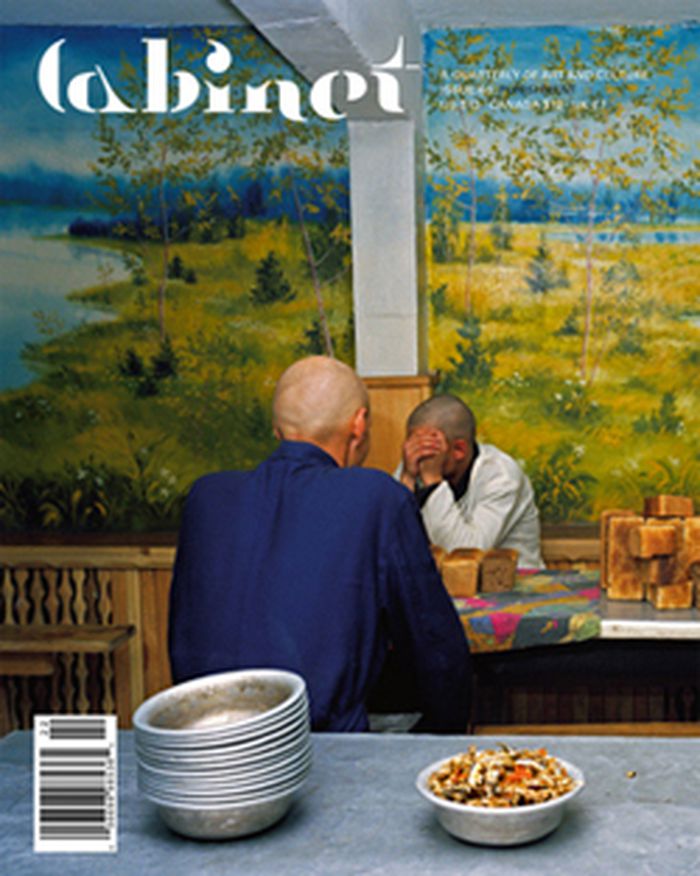
From the rule of "an eye for an eye" in the Code of Hammurabi and the Old Testament to the rise of the reforming "penitentiary" in the nineteenth century, from Kant's notion of the right of retaliation to historical-philosophical explorations by Michel Foucault and John Rawls, the question of punishment has long been central to religious, political and philosophical discourse. Cabinet issue 46, with a special section on Punishment, features Gregory Whitehead on the legacy of Philip Zimbardo's controversial "prison experiments" at Stanford University; Justin E.H. Smith on punishment and sacrifice; Johan Lindqvist on music and torture; and a multi-generational conversation about corporal punishment in the home. Elsewhere in the issue: an interview with Robert N. Proctor on how diamonds were made into the most precious of gems; George Prochnik on the history of tattoos; and Marius Kwint on the Cornell Brain Club.
Cabinet 46: punishment
Actions:
Price:
$12.00
(available to order)
Summary:
From the rule of "an eye for an eye" in the Code of Hammurabi and the Old Testament to the rise of the reforming "penitentiary" in the nineteenth century, from Kant's notion of the right of retaliation to historical-philosophical explorations by Michel Foucault and John Rawls, the question of punishment has long been central to religious, political and philosophical discourse. Cabinet issue 46, with a special section on Punishment, features Gregory Whitehead on the legacy of Philip Zimbardo's controversial "prison experiments" at Stanford University; Justin E.H. Smith on punishment and sacrifice; Johan Lindqvist on music and torture; and a multi-generational conversation about corporal punishment in the home. Elsewhere in the issue: an interview with Robert N. Proctor on how diamonds were made into the most precious of gems; George Prochnik on the history of tattoos; and Marius Kwint on the Cornell Brain Club.
Form:
books
books
Publication:
September 2012
September 2012
Subject:
Magazines
Magazines
Form:
journals and magazines
journals and magazines
Actions:
Price:
$12.00
(available to order)
Summary:
Cabinet is an award-winning quarterly magazine of art and culture that confounds expectations of what is typically meant by the words "art," "culture," and sometimes even "magazine." Like the 17th-century cabinet of curiosities to which its name alludes, Cabinet is as interested in the margins of culture as its center. Presenting wide-ranging, multi-disciplinary content(...)
$12.00
(available to order)
Summary:
Cabinet is an award-winning quarterly magazine of art and culture that confounds expectations of what is typically meant by the words "art," "culture," and sometimes even "magazine." Like the 17th-century cabinet of curiosities to which its name alludes, Cabinet is as interested in the margins of culture as its center. Presenting wide-ranging, multi-disciplinary content(...)
Title:
Cabinet 15: the average, fall 2004
Actions:
Price:
$12.00
(available to order)
Summary:
Cabinet is an award-winning quarterly magazine of art and culture that confounds expectations of what is typically meant by the words "art," "culture," and sometimes even "magazine." Like the 17th-century cabinet of curiosities to which its name alludes, Cabinet is as interested in the margins of culture as its center. Presenting wide-ranging, multi-disciplinary content in each issue through the varied formats of regular columns, essays, interviews, and special artist projects, Cabinet's hybrid sensibility merges the popular appeal of an arts periodical, the visually engaging style of a design magazine, and the in-depth exploration of a scholarly journal. Playful and serious, exuberant and committed, Cabinet's omnivorous appetite for understanding the world makes each of its issues a valuable sourcebook of ideas for a wide range of readers, from artists and designers to scientists and historians. In an age of increasing specialization, Cabinet looks to previous models of the well-rounded thinker to forge a new type of magazine for the intellectually curious reader of the future.
Cabinet 15: the average, fall 2004
Actions:
Price:
$12.00
(available to order)
Summary:
Cabinet is an award-winning quarterly magazine of art and culture that confounds expectations of what is typically meant by the words "art," "culture," and sometimes even "magazine." Like the 17th-century cabinet of curiosities to which its name alludes, Cabinet is as interested in the margins of culture as its center. Presenting wide-ranging, multi-disciplinary content in each issue through the varied formats of regular columns, essays, interviews, and special artist projects, Cabinet's hybrid sensibility merges the popular appeal of an arts periodical, the visually engaging style of a design magazine, and the in-depth exploration of a scholarly journal. Playful and serious, exuberant and committed, Cabinet's omnivorous appetite for understanding the world makes each of its issues a valuable sourcebook of ideas for a wide range of readers, from artists and designers to scientists and historians. In an age of increasing specialization, Cabinet looks to previous models of the well-rounded thinker to forge a new type of magazine for the intellectually curious reader of the future.
Form:
journals and magazines
journals and magazines
Publication:
February 2004, New York
February 2004, New York
Subject:
Magazines
Magazines
Form:
journals and magazines
journals and magazines
Actions:
Price:
$11.00
(available to order)
Summary:
Cabinet is an award-winning quarterly magazine of art and culture that confounds expectations of what is typically meant by the words "art," "culture," and sometimes even "magazine." Like the 17th-century cabinet of curiosities to which its name alludes, Cabinet is as interested in the margins of culture as its center. Presenting wide-ranging, multi-disciplinary content(...)
$11.00
(available to order)
Summary:
Cabinet is an award-winning quarterly magazine of art and culture that confounds expectations of what is typically meant by the words "art," "culture," and sometimes even "magazine." Like the 17th-century cabinet of curiosities to which its name alludes, Cabinet is as interested in the margins of culture as its center. Presenting wide-ranging, multi-disciplinary content(...)
Title:
Cabinet 16: the sea, winter 2005
Actions:
Price:
$11.00
(available to order)
Summary:
Cabinet is an award-winning quarterly magazine of art and culture that confounds expectations of what is typically meant by the words "art," "culture," and sometimes even "magazine." Like the 17th-century cabinet of curiosities to which its name alludes, Cabinet is as interested in the margins of culture as its center. Presenting wide-ranging, multi-disciplinary content in each issue through the varied formats of regular columns, essays, interviews, and special artist projects, Cabinet's hybrid sensibility merges the popular appeal of an arts periodical, the visually engaging style of a design magazine, and the in-depth exploration of a scholarly journal. Playful and serious, exuberant and committed, Cabinet's omnivorous appetite for understanding the world makes each of its issues a valuable sourcebook of ideas for a wide range of readers, from artists and designers to scientists and historians. In an age of increasing specialization, Cabinet looks to previous models of the well-rounded thinker to forge a new type of magazine for the intellectually curious reader of the future.
Cabinet 16: the sea, winter 2005
Actions:
Price:
$11.00
(available to order)
Summary:
Cabinet is an award-winning quarterly magazine of art and culture that confounds expectations of what is typically meant by the words "art," "culture," and sometimes even "magazine." Like the 17th-century cabinet of curiosities to which its name alludes, Cabinet is as interested in the margins of culture as its center. Presenting wide-ranging, multi-disciplinary content in each issue through the varied formats of regular columns, essays, interviews, and special artist projects, Cabinet's hybrid sensibility merges the popular appeal of an arts periodical, the visually engaging style of a design magazine, and the in-depth exploration of a scholarly journal. Playful and serious, exuberant and committed, Cabinet's omnivorous appetite for understanding the world makes each of its issues a valuable sourcebook of ideas for a wide range of readers, from artists and designers to scientists and historians. In an age of increasing specialization, Cabinet looks to previous models of the well-rounded thinker to forge a new type of magazine for the intellectually curious reader of the future.
Form:
journals and magazines
journals and magazines
Publication:
January 2005, New York
January 2005, New York
Subject:
Magazines
Magazines
Form:
books
books
Actions:
Holdings:
Description:
xxv, 560 pages, 39 pages of plates : illustrations, plans ; 25 cm.
Description:
xxv, 560 pages, 39 pages of plates : illustrations, plans ; 25 cm.
Author:
Subject:
Publication:
Rome : Institutum Historicum S.I., 1960.
Rome : Institutum Historicum S.I., 1960.
Title:
Le recueil de plans d'édifices de la Compagnie de Jésus conservé à la Bibliothèque nationale de Paris : suivi de l'inventaire du recueil de Quimper / par Jean Vallery-Radot et de l'inventaire des plans des archives romaines de la Compagnie, par Edmond Lamalle.
Actions:
Holdings:
Description:
xxv, 560 pages, 39 pages of plates : illustrations, plans ; 25 cm.
Le recueil de plans d'édifices de la Compagnie de Jésus conservé à la Bibliothèque nationale de Paris : suivi de l'inventaire du recueil de Quimper / par Jean Vallery-Radot et de l'inventaire des plans des archives romaines de la Compagnie, par Edmond Lamalle.
Actions:
Holdings:
Description:
xxv, 560 pages, 39 pages of plates : illustrations, plans ; 25 cm.
Form:
books
books
Publication:
Rome : Institutum Historicum S.I., 1960.
Rome : Institutum Historicum S.I., 1960.
Author:
Subject:
Form:
books
books

Title:
Cabinet 37: Bubbles
Cabinet 37: Bubbles
Actions:
Price:
$14.00
(available in store)
Summary:
A child's plaything and an object of study for scientists; a space of protection but also of isolation: the “bubble” has a cultural significance far more substantial than its fleeting form suggests. Bubbles percolate through the hydrology studies of Leonardo da Vinci, the optical experiments of Newton and the architectural theories of Buckminster Fuller. Cabinet issue 37,(...)
$14.00
(available in store)
Summary:
A child's plaything and an object of study for scientists; a space of protection but also of isolation: the “bubble” has a cultural significance far more substantial than its fleeting form suggests. Bubbles percolate through the hydrology studies of Leonardo da Vinci, the optical experiments of Newton and the architectural theories of Buckminster Fuller. Cabinet issue 37,(...)
Title:
Cabinet 37: Bubbles
Actions:
Price:
$14.00
(available in store)
Summary:
A child's plaything and an object of study for scientists; a space of protection but also of isolation: the “bubble” has a cultural significance far more substantial than its fleeting form suggests. Bubbles percolate through the hydrology studies of Leonardo da Vinci, the optical experiments of Newton and the architectural theories of Buckminster Fuller. Cabinet issue 37, with its special section on “Bubbles,” features an interview with Richard Julin, the world's foremost authority on champagne; Susan Schuppli on Michael Jackson's orphaned chimpanzee Bubbles; Eben Klemm on the culinary applications of fizz; and Simon Schaffer on rationality and the physics of bubbles. Elsewhere in the issue: Paul Maliszewski on the color green; an interview with “nasalnaut” George Aldrich, the NASA employee whose nose has to approve every item sent into space; Adam Jasper on the cat paintings of schizophrenic artist Louis Wain; Jocko Weyland on the history of U.S. highway dividers; and an interview with Catalin Avramescu on the intellectual history of cannibalism.
Cabinet 37: Bubbles
Actions:
Price:
$14.00
(available in store)
Summary:
A child's plaything and an object of study for scientists; a space of protection but also of isolation: the “bubble” has a cultural significance far more substantial than its fleeting form suggests. Bubbles percolate through the hydrology studies of Leonardo da Vinci, the optical experiments of Newton and the architectural theories of Buckminster Fuller. Cabinet issue 37, with its special section on “Bubbles,” features an interview with Richard Julin, the world's foremost authority on champagne; Susan Schuppli on Michael Jackson's orphaned chimpanzee Bubbles; Eben Klemm on the culinary applications of fizz; and Simon Schaffer on rationality and the physics of bubbles. Elsewhere in the issue: Paul Maliszewski on the color green; an interview with “nasalnaut” George Aldrich, the NASA employee whose nose has to approve every item sent into space; Adam Jasper on the cat paintings of schizophrenic artist Louis Wain; Jocko Weyland on the history of U.S. highway dividers; and an interview with Catalin Avramescu on the intellectual history of cannibalism.
Form:
books
books
Publication:
May 2010
May 2010
Subject:
Magazines
Magazines
Form:
journals and magazines
journals and magazines

Title:
Cabinet 27 : mountains
Cabinet 27 : mountains
Actions:
Price:
$12.00
(available to order)
Summary:
Looming large in both geological fact and sociocultural significance, mountains promise grandeur, picturesque natural beauty, good health and the chance to literally rise above the everyday - yet they also menace our imaginations with their harsh conditions, dangerous terrain and deep sense of isolation. These multivalent moods have proved an enticement to sportsmen,(...)
$12.00
(available to order)
Summary:
Looming large in both geological fact and sociocultural significance, mountains promise grandeur, picturesque natural beauty, good health and the chance to literally rise above the everyday - yet they also menace our imaginations with their harsh conditions, dangerous terrain and deep sense of isolation. These multivalent moods have proved an enticement to sportsmen,(...)
Title:
Cabinet 27 : mountains
Actions:
Price:
$12.00
(available to order)
Summary:
Looming large in both geological fact and sociocultural significance, mountains promise grandeur, picturesque natural beauty, good health and the chance to literally rise above the everyday - yet they also menace our imaginations with their harsh conditions, dangerous terrain and deep sense of isolation. These multivalent moods have proved an enticement to sportsmen, scientists, poets and philosophers. Indeed, our modern notion of the "sublime" was born in the Alps - where, as the English critic John Dennis wrote in 1693, nature was revealed as not solely a "delight that is consistent with reason," but also an experience "mingled with Horrours, and sometimes almost with despair." Cabinet 27 features Brian Dillon on the Cold War fact and Faustian fiction of Germany's Brocken; Allen S. Weiss on Petrarch and the winds of Mount Ventoux; and Jeffrey Kastner on the eighteenth-century Alpine panoramas of Hans Conrad Escher von der Linth. It also features Christopher Turner on the "lunar photographs" of James Nasmyth; Viktoria Tkaczyk on scientist Robert Hooke; biologist J.S.B. Haldane on being the right size; artist projects by Casey Logan and Walead Beshty; and Peter Lamborn Wilson's examination of the alchemical properties of building materials.
Cabinet 27 : mountains
Actions:
Price:
$12.00
(available to order)
Summary:
Looming large in both geological fact and sociocultural significance, mountains promise grandeur, picturesque natural beauty, good health and the chance to literally rise above the everyday - yet they also menace our imaginations with their harsh conditions, dangerous terrain and deep sense of isolation. These multivalent moods have proved an enticement to sportsmen, scientists, poets and philosophers. Indeed, our modern notion of the "sublime" was born in the Alps - where, as the English critic John Dennis wrote in 1693, nature was revealed as not solely a "delight that is consistent with reason," but also an experience "mingled with Horrours, and sometimes almost with despair." Cabinet 27 features Brian Dillon on the Cold War fact and Faustian fiction of Germany's Brocken; Allen S. Weiss on Petrarch and the winds of Mount Ventoux; and Jeffrey Kastner on the eighteenth-century Alpine panoramas of Hans Conrad Escher von der Linth. It also features Christopher Turner on the "lunar photographs" of James Nasmyth; Viktoria Tkaczyk on scientist Robert Hooke; biologist J.S.B. Haldane on being the right size; artist projects by Casey Logan and Walead Beshty; and Peter Lamborn Wilson's examination of the alchemical properties of building materials.
Form:
journals and magazines
journals and magazines
Publication:
October 2007, Brooklyn
October 2007, Brooklyn
Subject:
Magazines
Magazines
Form:
journals and magazines
journals and magazines
Title:
Cabinet 21 : electricity
Cabinet 21 : electricity
Actions:
Price:
$12.00
(available to order)
Summary:
Electricity manifests itself in every facet of our lives--from the tiny shock received by touching a doorknob to the explosive power of a lightning strike, from the modest Hoover dustbuster to the industrial grandeur of the Hoover Dam. As a force that has given human beings seemingly unlimited power over nature and refashioned our understanding of day and night, and as a(...)
$12.00
(available to order)
Summary:
Electricity manifests itself in every facet of our lives--from the tiny shock received by touching a doorknob to the explosive power of a lightning strike, from the modest Hoover dustbuster to the industrial grandeur of the Hoover Dam. As a force that has given human beings seemingly unlimited power over nature and refashioned our understanding of day and night, and as a(...)
Title:
Cabinet 21 : electricity
Actions:
Price:
$12.00
(available to order)
Summary:
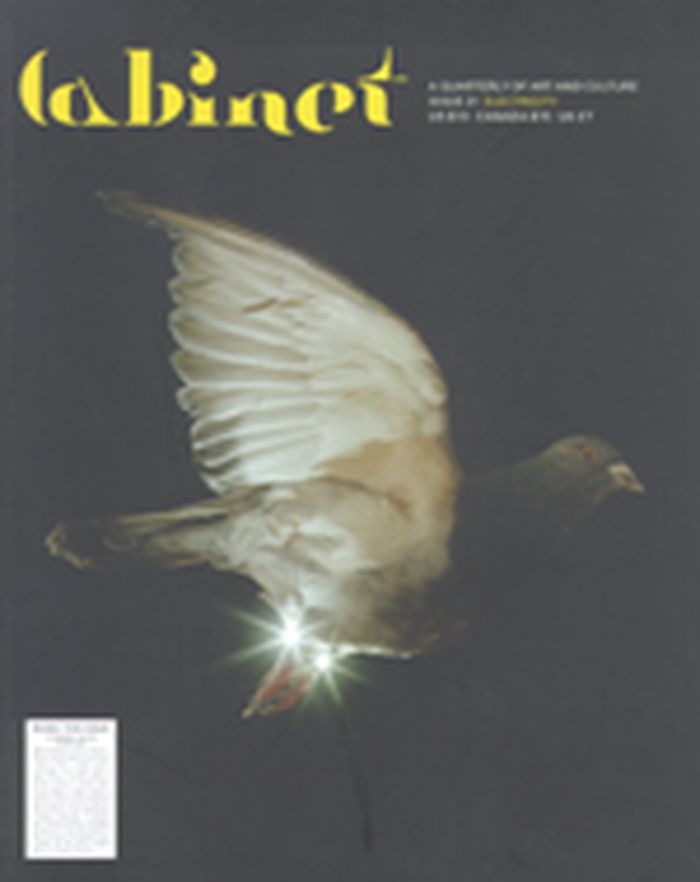
Electricity manifests itself in every facet of our lives--from the tiny shock received by touching a doorknob to the explosive power of a lightning strike, from the modest Hoover dustbuster to the industrial grandeur of the Hoover Dam. As a force that has given human beings seemingly unlimited power over nature and refashioned our understanding of day and night, and as a metaphor for the social currents flowing among individuals and communities, electricity has been our invisible yet ubiquitous ally in the creation of a contemporary "technological sublime." Cabinet No. 21 includes an interview with Sharon Beder on electricity and modernity in America; Margaret Wertheim on Lichtenberg figures, frozen lightning captured in acrylic blocks; Michael Sanchez on Francisco Salva's shocking proposal for an eighteenth-century human telegraphy system; an interview with Marcello Pera on how a frog triggered a decisive scientific debate between Enlightenment "electricians" Galvani and Volta; an essay on Benjamin Franklin's promotion of Ebenezer Kinnersley's electrified "magical picture"; and a firsthand account by a survivor of multiple lightning strikes. Also Tom Vanderbilt on Stasi scent samples; an interview with Sam Chwat, the foremost accent elimination coach in the United States; and artist projects by Andrea Geyer and Rachel Watson.
Cabinet 21 : electricity
Actions:
Price:
$12.00
(available to order)
Summary:
Electricity manifests itself in every facet of our lives--from the tiny shock received by touching a doorknob to the explosive power of a lightning strike, from the modest Hoover dustbuster to the industrial grandeur of the Hoover Dam. As a force that has given human beings seemingly unlimited power over nature and refashioned our understanding of day and night, and as a metaphor for the social currents flowing among individuals and communities, electricity has been our invisible yet ubiquitous ally in the creation of a contemporary "technological sublime." Cabinet No. 21 includes an interview with Sharon Beder on electricity and modernity in America; Margaret Wertheim on Lichtenberg figures, frozen lightning captured in acrylic blocks; Michael Sanchez on Francisco Salva's shocking proposal for an eighteenth-century human telegraphy system; an interview with Marcello Pera on how a frog triggered a decisive scientific debate between Enlightenment "electricians" Galvani and Volta; an essay on Benjamin Franklin's promotion of Ebenezer Kinnersley's electrified "magical picture"; and a firsthand account by a survivor of multiple lightning strikes. Also Tom Vanderbilt on Stasi scent samples; an interview with Sam Chwat, the foremost accent elimination coach in the United States; and artist projects by Andrea Geyer and Rachel Watson.
Form:
journals and magazines
journals and magazines
Publication:
April 2006, New York
April 2006, New York
Subject:
Magazines
Magazines
Form:
books
books
Actions:
Holdings:
Description:
240 pages, 14 unnumbered leaves of plates : illustrations (some color), map ; 26 cm
Description:
240 pages, 14 unnumbered leaves of plates : illustrations (some color), map ; 26 cm
Author:
Subject:
Publication:
Berkeley : University of California Press, ©1978.
Berkeley : University of California Press, ©1978.
Title:
The illustrated Pepys : extracts from the diary / [Samuel Pepys] ; selected & edited by Robert Latham ; [picture researcher, Barbara Fraser].
Actions:
Holdings:
Description:
240 pages, 14 unnumbered leaves of plates : illustrations (some color), map ; 26 cm
The illustrated Pepys : extracts from the diary / [Samuel Pepys] ; selected & edited by Robert Latham ; [picture researcher, Barbara Fraser].
Actions:
Holdings:
Description:
240 pages, 14 unnumbered leaves of plates : illustrations (some color), map ; 26 cm
Form:
books
books
Publication:
Berkeley : University of California Press, ©1978.
Berkeley : University of California Press, ©1978.
Author:
Subject:


