


10588 Results
Form:
books
books
Actions:
Price:
$79.95
(available to order)
Summary:
Edited by Professor Maia Engeli and with a contribution by Professor Gerhard Schmitt, both of the Swiss Federal Institute of Technology (ETH Zürich), this book presents 33 exciting new(...)
$79.95
(available to order)
Summary:
Edited by Professor Maia Engeli and with a contribution by Professor Gerhard Schmitt, both of the Swiss Federal Institute of Technology (ETH Zürich), this book presents 33 exciting new(...)
Title:
Bits and spaces : architecture and computing for physical, virtual, hybrid realms
Actions:
Price:
$79.95
(available to order)
Summary:
Edited by Professor Maia Engeli and with a contribution by Professor Gerhard Schmitt, both of the Swiss Federal Institute of Technology (ETH Zürich), this book presents 33 exciting new projects which demonstrate the growing significance of CAAD for today's architects. Divided into 5 main chapters: Design in Space and Time; Learning and Creative Collaboration; Virtual Environments; IT and Practice; and Blurring Boundaries, the projects illustrate how computers can be used innovatively and creatively in designing physical, virtual and hybrid architecture. Particular emphasis is placed on the interaction between man and computer, and also on the aesthetic aspects. The book is accompanied by a CD-Rom which documents the design processes through animation sequences, demonstrating the dynamic features of the projects. Whilst these tools, installations and multi-media projects have arisen out of the field of architecture, they exceed the narrow confines of this discipline to touch upon areas such as interior design, graphic design and information technology. The designs presented are colourful and complex, seeking to fire the imagination in creating a fitting environment for today's society.
Bits and spaces : architecture and computing for physical, virtual, hybrid realms
Actions:
Price:
$79.95
(available to order)
Summary:
Edited by Professor Maia Engeli and with a contribution by Professor Gerhard Schmitt, both of the Swiss Federal Institute of Technology (ETH Zürich), this book presents 33 exciting new projects which demonstrate the growing significance of CAAD for today's architects. Divided into 5 main chapters: Design in Space and Time; Learning and Creative Collaboration; Virtual Environments; IT and Practice; and Blurring Boundaries, the projects illustrate how computers can be used innovatively and creatively in designing physical, virtual and hybrid architecture. Particular emphasis is placed on the interaction between man and computer, and also on the aesthetic aspects. The book is accompanied by a CD-Rom which documents the design processes through animation sequences, demonstrating the dynamic features of the projects. Whilst these tools, installations and multi-media projects have arisen out of the field of architecture, they exceed the narrow confines of this discipline to touch upon areas such as interior design, graphic design and information technology. The designs presented are colourful and complex, seeking to fire the imagination in creating a fitting environment for today's society.
Form:
books
books
Publication:
March 2001, Basel
March 2001, Basel
Subject:
Architectural Theory
Architectural Theory
Form:
books
books
Actions:
Price:
$90.50
(available to order)
Summary:
When it comes to questions like these, making decisions about what ought to be done—or what is the "best" or "right" solution—requires more than sound technical knowledge and strong design talent. It demands a solid understanding of the ethical issues that lie at the heart of architectural practice. (...)
$90.50
(available to order)
Summary:
When it comes to questions like these, making decisions about what ought to be done—or what is the "best" or "right" solution—requires more than sound technical knowledge and strong design talent. It demands a solid understanding of the ethical issues that lie at the heart of architectural practice. (...)
Subject:
Architectural Theory
Architectural Theory
Publication:
January 1900, New York
January 1900, New York
Title:
Ethics and the practice of architecture
Actions:
Price:
$90.50
(available to order)
Summary:
When it comes to questions like these, making decisions about what ought to be done—or what is the "best" or "right" solution—requires more than sound technical knowledge and strong design talent. It demands a solid understanding of the ethical issues that lie at the heart of architectural practice. Ethics and the Practice of Architecture offers a complete, broad-based introduction to this crucial subject. First, it examines basic ethical theories and their application to architecture, and discusses different ways of identifying ethical content in architecture. Bridging the gap between theory and practice, the second part of the book surveys different professional settings and building project processes that frequently hold ethical concerns, and charts the ethical mandates that arise from them. In the final section of the book, thirty case studies explore a wide range of ethical dilemmas encountered in architectural practice, with useful guidance on how to work through them effectively. Arranged by topics that span the key phases of a project from pre-design through post-occupancy evaluation, these case studies allow a detailed look at ethical concerns in real-life situations where multiple issues are often at stake.
Ethics and the practice of architecture
Actions:
Price:
$90.50
(available to order)
Summary:
When it comes to questions like these, making decisions about what ought to be done—or what is the "best" or "right" solution—requires more than sound technical knowledge and strong design talent. It demands a solid understanding of the ethical issues that lie at the heart of architectural practice. Ethics and the Practice of Architecture offers a complete, broad-based introduction to this crucial subject. First, it examines basic ethical theories and their application to architecture, and discusses different ways of identifying ethical content in architecture. Bridging the gap between theory and practice, the second part of the book surveys different professional settings and building project processes that frequently hold ethical concerns, and charts the ethical mandates that arise from them. In the final section of the book, thirty case studies explore a wide range of ethical dilemmas encountered in architectural practice, with useful guidance on how to work through them effectively. Arranged by topics that span the key phases of a project from pre-design through post-occupancy evaluation, these case studies allow a detailed look at ethical concerns in real-life situations where multiple issues are often at stake.
Form:
books
books
Publication:
January 1900, New York
January 1900, New York
Subject:
Architectural Theory
Architectural Theory
Form:
books
books
Title:
Splintering urbanism
Splintering urbanism
Actions:
Price:
$69.99
(available to order)
Summary:
This work offers a path-breaking analysis of the nature of the urban condition at the start of the new millennium. Adopting a global and interdisciplinary perspective, it reveals how new technologies and increasingly privatised systems of infrastructure provision--telecommunications, highways, urban streets, energy, and water--are supporting the splintering of(...)
$69.99
(available to order)
Summary:
This work offers a path-breaking analysis of the nature of the urban condition at the start of the new millennium. Adopting a global and interdisciplinary perspective, it reveals how new technologies and increasingly privatised systems of infrastructure provision--telecommunications, highways, urban streets, energy, and water--are supporting the splintering of(...)
Title:
Splintering urbanism
Actions:
Price:
$69.99
(available to order)
Summary:
This work offers a path-breaking analysis of the nature of the urban condition at the start of the new millennium. Adopting a global and interdisciplinary perspective, it reveals how new technologies and increasingly privatised systems of infrastructure provision--telecommunications, highways, urban streets, energy, and water--are supporting the splintering of metropolitan areas across the world.
Splintering urbanism
Actions:
Price:
$69.99
(available to order)
Summary:
This work offers a path-breaking analysis of the nature of the urban condition at the start of the new millennium. Adopting a global and interdisciplinary perspective, it reveals how new technologies and increasingly privatised systems of infrastructure provision--telecommunications, highways, urban streets, energy, and water--are supporting the splintering of metropolitan areas across the world.
Form:
books
books
Publication:
June 2001, London
June 2001, London
Subject:
Urban Theory
Urban Theory
Form:
books
books
Actions:
Price:
$44.95
(available to order)
Summary:
The Nature of Landscape offers an inspiring, personal account of a quest into the meaning and background of the term ‘landscape’. The author, a landscape planner and designer currently teaching at Eindhoven University of Technology, researches the origins of landscape in our civilization and describes different points of view that have helped shape our opinions on(...)
$44.95
(available to order)
Summary:
The Nature of Landscape offers an inspiring, personal account of a quest into the meaning and background of the term ‘landscape’. The author, a landscape planner and designer currently teaching at Eindhoven University of Technology, researches the origins of landscape in our civilization and describes different points of view that have helped shape our opinions on(...)
Title:
The nature of landscape : a personal quest
Actions:
Price:
$44.95
(available to order)
Summary:
The Nature of Landscape offers an inspiring, personal account of a quest into the meaning and background of the term ‘landscape’. The author, a landscape planner and designer currently teaching at Eindhoven University of Technology, researches the origins of landscape in our civilization and describes different points of view that have helped shape our opinions on landscape. For the author, our notion of landscape is focused around the terms 'nature versus culture' and 'native versus foreign'. These counterparts make up his 'mindscape diamond', a modified matrix that not only explains trends in landscape perception and design, but also helps to define developments in land use, architecture, urban planning and environmental art. On a more metaphorical level, the author's abundantly illustrated quest is symbolized by a number of personal impressions, such as the discovery of a stone circle in the desert, a lesson in the peculiarities of the Russian language, a journey along the industrial heritage of the German Ruhrgebiet and a visit to a town where ‘Bavaria comes to Washington’. Offering an unexpected reading experience, these and other descriptions demonstrate how varied ‘landscape’ can be. In a worldwide overview of 30 landscape related artworks and 30 park designs, the author discusses landscape attitudes past and present. In a final chapter, he brings together recent developments in society, architecture and art to make a forecast of landscape trends in the near future. Themes such as man-made nature and reinvented heritage conclude this unusual book on the essence of landscape.
The nature of landscape : a personal quest
Actions:
Price:
$44.95
(available to order)
Summary:
The Nature of Landscape offers an inspiring, personal account of a quest into the meaning and background of the term ‘landscape’. The author, a landscape planner and designer currently teaching at Eindhoven University of Technology, researches the origins of landscape in our civilization and describes different points of view that have helped shape our opinions on landscape. For the author, our notion of landscape is focused around the terms 'nature versus culture' and 'native versus foreign'. These counterparts make up his 'mindscape diamond', a modified matrix that not only explains trends in landscape perception and design, but also helps to define developments in land use, architecture, urban planning and environmental art. On a more metaphorical level, the author's abundantly illustrated quest is symbolized by a number of personal impressions, such as the discovery of a stone circle in the desert, a lesson in the peculiarities of the Russian language, a journey along the industrial heritage of the German Ruhrgebiet and a visit to a town where ‘Bavaria comes to Washington’. Offering an unexpected reading experience, these and other descriptions demonstrate how varied ‘landscape’ can be. In a worldwide overview of 30 landscape related artworks and 30 park designs, the author discusses landscape attitudes past and present. In a final chapter, he brings together recent developments in society, architecture and art to make a forecast of landscape trends in the near future. Themes such as man-made nature and reinvented heritage conclude this unusual book on the essence of landscape.
Form:
books
books
Publication:
March 2001, Rotterdam
March 2001, Rotterdam
Subject:
Landscape Theory
Landscape Theory
Form:
books
books
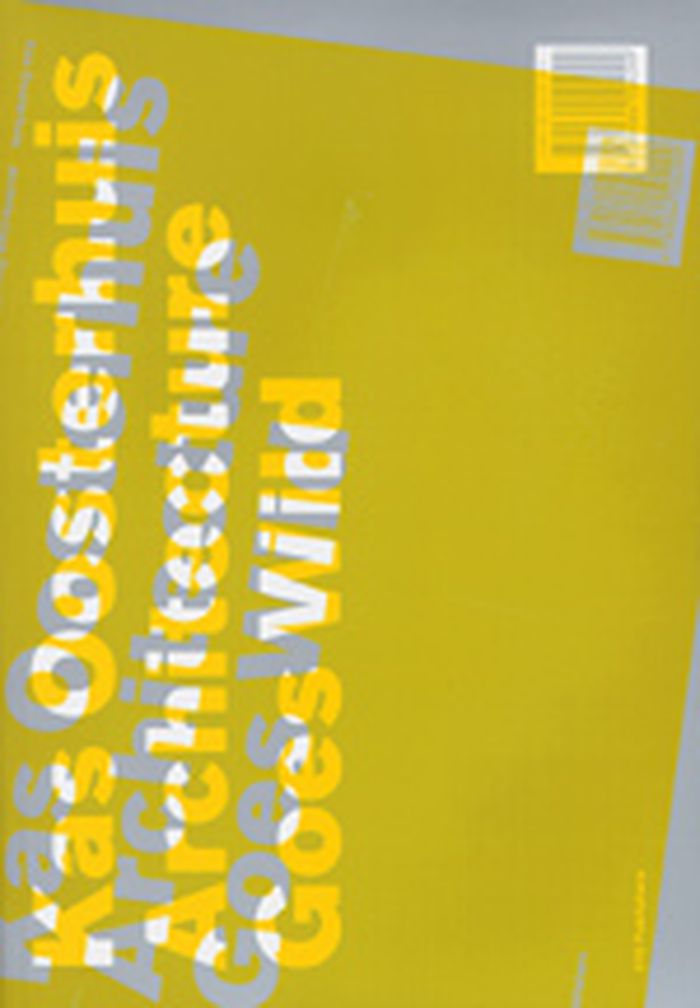
Title:
Architecture goes wild
Architecture goes wild
Actions:
Price:
$29.95
(available to order)
Summary:
In his writings, architect Kas Oosterhuis bridges the gap between theory and practice. His observations are based on the principle of concrete science fiction. He is convinced that every construct - hardware or software - that can be formulated as a consistent set of rules is realizable within the social constraints of our present-day culture. In his essay(...)
$29.95
(available to order)
Summary:
In his writings, architect Kas Oosterhuis bridges the gap between theory and practice. His observations are based on the principle of concrete science fiction. He is convinced that every construct - hardware or software - that can be formulated as a consistent set of rules is realizable within the social constraints of our present-day culture. In his essay(...)
Title:
Architecture goes wild
Actions:
Price:
$29.95
(available to order)
Summary:
In his writings, architect Kas Oosterhuis bridges the gap between theory and practice. His observations are based on the principle of concrete science fiction. He is convinced that every construct - hardware or software - that can be formulated as a consistent set of rules is realizable within the social constraints of our present-day culture. In his essay 'Space_Time_Volume' Kas Oosterhuis places himself in the local and temporary delamination point between the micro- and macroworlds. He speculates on a seamless continuity of these worlds where the instrumental human position is only one of many possible positions. Our perception of the universe is based on observations made by instruments. Language is seen as such an instrument. In 'Wild Bodies' Oosterhuis asserts that all true architecture inevitably will be programmed to perform in real time. This point of view is based on the observation that traditional fixed and static architecture is a highly unlikely state among all possible ones. An architectural construct is regarded as a body with real-time behaviour that is always in motion. Computer programs speak the new instrumental language in which potential new worlds are described. 'Automotive Styling' declares the human driver of the automobile to be the voluntary prisoner of the physical car-road communications network. In 'Vectorial Bodies' the human driver is nothing less than fuzzy software programming the car to lead it to his destinations. There is no place for romantic ideas such as freedom of movement, but there is the overwhelming desire of carbon-based life forms to exchange data with industrial and digital life forms.
Architecture goes wild
Actions:
Price:
$29.95
(available to order)
Summary:
In his writings, architect Kas Oosterhuis bridges the gap between theory and practice. His observations are based on the principle of concrete science fiction. He is convinced that every construct - hardware or software - that can be formulated as a consistent set of rules is realizable within the social constraints of our present-day culture. In his essay 'Space_Time_Volume' Kas Oosterhuis places himself in the local and temporary delamination point between the micro- and macroworlds. He speculates on a seamless continuity of these worlds where the instrumental human position is only one of many possible positions. Our perception of the universe is based on observations made by instruments. Language is seen as such an instrument. In 'Wild Bodies' Oosterhuis asserts that all true architecture inevitably will be programmed to perform in real time. This point of view is based on the observation that traditional fixed and static architecture is a highly unlikely state among all possible ones. An architectural construct is regarded as a body with real-time behaviour that is always in motion. Computer programs speak the new instrumental language in which potential new worlds are described. 'Automotive Styling' declares the human driver of the automobile to be the voluntary prisoner of the physical car-road communications network. In 'Vectorial Bodies' the human driver is nothing less than fuzzy software programming the car to lead it to his destinations. There is no place for romantic ideas such as freedom of movement, but there is the overwhelming desire of carbon-based life forms to exchange data with industrial and digital life forms.
Form:
books
books
Publication:
March 2001, Rotterdam
March 2001, Rotterdam
Subject:
Architectural Theory
Architectural Theory
Form:
books
books
Title:
Cities in transition
Cities in transition
Actions:
Price:
$51.95
(available to order)
Summary:
***ÉPUISÉE / OUT OF PRINT*** "Cities in transition" deals with the effects of globalization and internationalization in relation to urbanism and critical assessment in contemporary theory. The book brings together internationally known authors from many countries including England, the USA, Germany, Greece, Italy, Japan and the Netherlands. A diversity of critical(...)
$51.95
(available to order)
Summary:
***ÉPUISÉE / OUT OF PRINT*** "Cities in transition" deals with the effects of globalization and internationalization in relation to urbanism and critical assessment in contemporary theory. The book brings together internationally known authors from many countries including England, the USA, Germany, Greece, Italy, Japan and the Netherlands. A diversity of critical(...)
Title:
Cities in transition
Actions:
Price:
$51.95
(available to order)
Summary:
***ÉPUISÉE / OUT OF PRINT*** "Cities in transition" deals with the effects of globalization and internationalization in relation to urbanism and critical assessment in contemporary theory. The book brings together internationally known authors from many countries including England, the USA, Germany, Greece, Italy, Japan and the Netherlands. A diversity of critical positions on spatial and social questions is discussed on an international level. The theme of globalization is queried concerning the relation of urban and port developments in Tokyo's Bay Area and in Rotterdam. Cities have historically allowed the coming about of national economies, politics and societies we can think of as centralized. In several contributions this aspect is examined from the viewpoint of the flâneur, a creature of the metropolis, Parisian above all. As for their present day economic function, cities provide agglomeration economies, with a massive concentration of information on the latest developments. The book argues for a new reflexivity related to both economic and cultural understanding of our world. Cities in Transition is the third volume in the "Stylos critical landscape" series, issued by the Faculty of architecture of Delft university of technology.
Cities in transition
Actions:
Price:
$51.95
(available to order)
Summary:
***ÉPUISÉE / OUT OF PRINT*** "Cities in transition" deals with the effects of globalization and internationalization in relation to urbanism and critical assessment in contemporary theory. The book brings together internationally known authors from many countries including England, the USA, Germany, Greece, Italy, Japan and the Netherlands. A diversity of critical positions on spatial and social questions is discussed on an international level. The theme of globalization is queried concerning the relation of urban and port developments in Tokyo's Bay Area and in Rotterdam. Cities have historically allowed the coming about of national economies, politics and societies we can think of as centralized. In several contributions this aspect is examined from the viewpoint of the flâneur, a creature of the metropolis, Parisian above all. As for their present day economic function, cities provide agglomeration economies, with a massive concentration of information on the latest developments. The book argues for a new reflexivity related to both economic and cultural understanding of our world. Cities in Transition is the third volume in the "Stylos critical landscape" series, issued by the Faculty of architecture of Delft university of technology.
Form:
books
books
Publication:
March 2001, Rotterdam
March 2001, Rotterdam
Subject:
Urban Theory
Urban Theory
Form:
books
books
Actions:
Price:
$24.95
(available to order)
Summary:
"The lonely crowd" is considered by many to be the most influential book of the twentieth century. Its now-classic analysis of the “new middle class” in terms of inner-directed and other-directed social character opened exciting new dimensions in our understanding of the psychological, political, and economic problems that confront the individual in contemporary American(...)
$24.95
(available to order)
Summary:
"The lonely crowd" is considered by many to be the most influential book of the twentieth century. Its now-classic analysis of the “new middle class” in terms of inner-directed and other-directed social character opened exciting new dimensions in our understanding of the psychological, political, and economic problems that confront the individual in contemporary American(...)
Title:
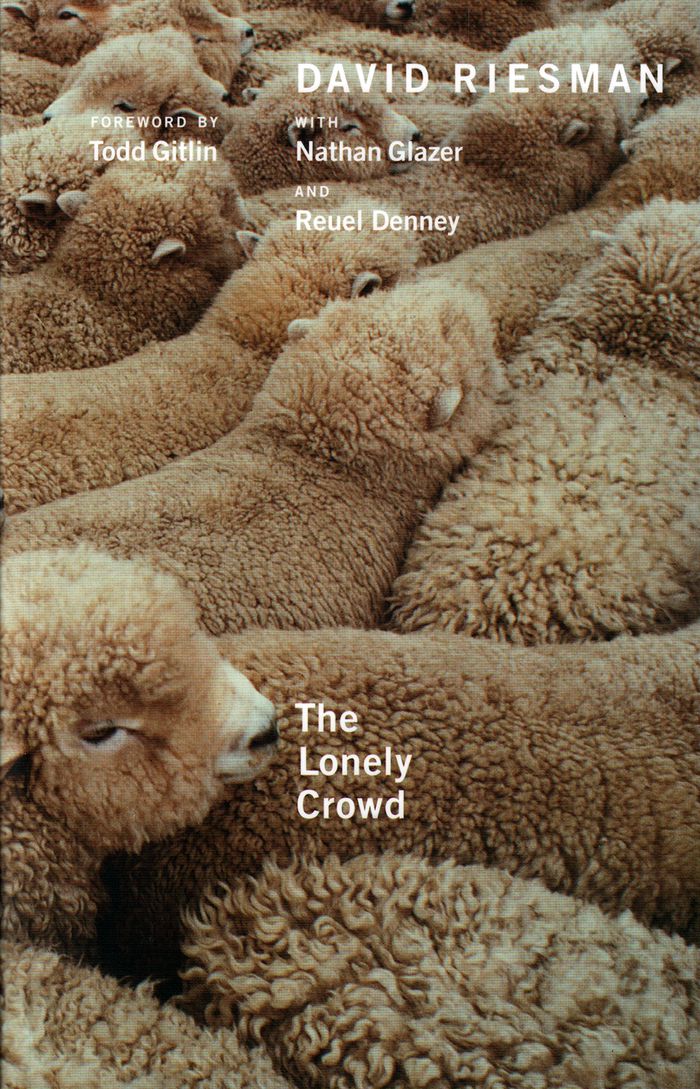
The lonely crowd: a study of the changing American character
Actions:
Price:
$24.95
(available to order)
Summary:
"The lonely crowd" is considered by many to be the most influential book of the twentieth century. Its now-classic analysis of the “new middle class” in terms of inner-directed and other-directed social character opened exciting new dimensions in our understanding of the psychological, political, and economic problems that confront the individual in contemporary American society. The 1969 abridged and revised edition of the book is now reissued with a new foreword by Todd Gitlin that explains why the book is still relevant to our own era.
The lonely crowd: a study of the changing American character
Actions:
Price:
$24.95
(available to order)
Summary:
"The lonely crowd" is considered by many to be the most influential book of the twentieth century. Its now-classic analysis of the “new middle class” in terms of inner-directed and other-directed social character opened exciting new dimensions in our understanding of the psychological, political, and economic problems that confront the individual in contemporary American society. The 1969 abridged and revised edition of the book is now reissued with a new foreword by Todd Gitlin that explains why the book is still relevant to our own era.
Form:
books
books
Publication:
February 2001
February 2001
Subject:
Architectural Theory
Architectural Theory
Form:
books
books
Actions:
Price:
$52.50
(available to order)
Summary:
In "The Building in the Text", Roy Eriksen shows that Renaissance writers conceived of their texts in accordance with architectural principles. His approach opens the way to wide-ranging discussions of the structure and meaning of a variety of literary texts and also provides new insights into the famed architectural ekphrases of Alberti and Vasari. Analyzing such(...)
$52.50
(available to order)
Summary:
In "The Building in the Text", Roy Eriksen shows that Renaissance writers conceived of their texts in accordance with architectural principles. His approach opens the way to wide-ranging discussions of the structure and meaning of a variety of literary texts and also provides new insights into the famed architectural ekphrases of Alberti and Vasari. Analyzing such(...)
Title:
The building in the text : Alberti to Shakespeare and Milton
Actions:
Price:
$52.50
(available to order)
Summary:
In "The Building in the Text", Roy Eriksen shows that Renaissance writers conceived of their texts in accordance with architectural principles. His approach opens the way to wide-ranging discussions of the structure and meaning of a variety of literary texts and also provides new insights into the famed architectural ekphrases of Alberti and Vasari. Analyzing such words as "plot," "topos," "fabrica," and "stanza," Eriksen discloses the fundamental spatial symmetries and complexities in the writings of Ariosto, Shakespeare, and Milton, among other major figures. Ultimately, his book uncovers and clarifies a tradition of literary architecture that is rooted in antiquity and based on correspondences regarded as ordering principles of the cosmos.
The building in the text : Alberti to Shakespeare and Milton
Actions:
Price:
$52.50
(available to order)
Summary:
In "The Building in the Text", Roy Eriksen shows that Renaissance writers conceived of their texts in accordance with architectural principles. His approach opens the way to wide-ranging discussions of the structure and meaning of a variety of literary texts and also provides new insights into the famed architectural ekphrases of Alberti and Vasari. Analyzing such words as "plot," "topos," "fabrica," and "stanza," Eriksen discloses the fundamental spatial symmetries and complexities in the writings of Ariosto, Shakespeare, and Milton, among other major figures. Ultimately, his book uncovers and clarifies a tradition of literary architecture that is rooted in antiquity and based on correspondences regarded as ordering principles of the cosmos.
Form:
books
books
Publication:
January 1900, University Park
January 1900, University Park
Subject:
Architectural Theory
Architectural Theory
Form:
books
books
Title:
The language of landscape
The language of landscape
Actions:
Price:
$25.95
(available to order)
Summary:
Offering examples that range across thousands of years and five continents, Spirn examines urban, rural, and natural landscapes. She discusses the thought of renowned landscape authors--Thomas Jefferson, Frank Lloyd Wright, Frederick Law Olmsted, Lawrence Halprin--and of less well known pioneers, including Australian architect Glenn Murcutt and Danish landscape artist C.(...)
$25.95
(available to order)
Summary:
Offering examples that range across thousands of years and five continents, Spirn examines urban, rural, and natural landscapes. She discusses the thought of renowned landscape authors--Thomas Jefferson, Frank Lloyd Wright, Frederick Law Olmsted, Lawrence Halprin--and of less well known pioneers, including Australian architect Glenn Murcutt and Danish landscape artist C.(...)
Title:
The language of landscape
Actions:
Price:
$25.95
(available to order)
Summary:
Offering examples that range across thousands of years and five continents, Spirn examines urban, rural, and natural landscapes. She discusses the thought of renowned landscape authors--Thomas Jefferson, Frank Lloyd Wright, Frederick Law Olmsted, Lawrence Halprin--and of less well known pioneers, including Australian architect Glenn Murcutt and Danish landscape artist C. Th. Sørensen. She discusses instances of great landscape designers using landscape fluently, masterfully, and sometimes cynically. And, in a probing analysis of the many meanings of landscape, Spirn shows how one person’s ideal landscape may be another’s nightmare, how Utopian landscapes can be dark. There is danger when we lose the connection between a place and our understanding of it, Spirn warns, and she calls for change in the way we shape our environment, based on the notions of nature as a set of ideas and landscape as the expression of action and ideas in place.
The language of landscape
Actions:
Price:
$25.95
(available to order)
Summary:
Offering examples that range across thousands of years and five continents, Spirn examines urban, rural, and natural landscapes. She discusses the thought of renowned landscape authors--Thomas Jefferson, Frank Lloyd Wright, Frederick Law Olmsted, Lawrence Halprin--and of less well known pioneers, including Australian architect Glenn Murcutt and Danish landscape artist C. Th. Sørensen. She discusses instances of great landscape designers using landscape fluently, masterfully, and sometimes cynically. And, in a probing analysis of the many meanings of landscape, Spirn shows how one person’s ideal landscape may be another’s nightmare, how Utopian landscapes can be dark. There is danger when we lose the connection between a place and our understanding of it, Spirn warns, and she calls for change in the way we shape our environment, based on the notions of nature as a set of ideas and landscape as the expression of action and ideas in place.
Form:
books
books
Publication:
May 2000, New haven
May 2000, New haven
Subject:
Landscape Theory
Landscape Theory
Form:
books
books
Price:
$67.95
(available to order)
Summary:
The dream of the twentieth century was the construction of mass utopia. As the century closes, this dream is being left behind; the belief that industrial modernization can bring about the good society by overcoming material scarcity for all has been challenged by the disintegration(...)
$67.95
(available to order)
Summary:
The dream of the twentieth century was the construction of mass utopia. As the century closes, this dream is being left behind; the belief that industrial modernization can bring about the good society by overcoming material scarcity for all has been challenged by the disintegration(...)
Title:
Dreamworld and catastrophe : the passing of mass utopia in East and West
Actions:
Price:
$67.95
(available to order)
Summary:
The dream of the twentieth century was the construction of mass utopia. As the century closes, this dream is being left behind; the belief that industrial modernization can bring about the good society by overcoming material scarcity for all has been challenged by the disintegration of European socialism, capitalist restructuring, and ecological constraints. The larger social vision has given way to private dreams of material happiness and to political cynicism. Developing the notion of dreamworld as both a poetic description of a collective mental state and an analytical concept, Susan Buck-Morss attempts to come to terms with mass dreamworlds at the moment of their passing. She shows how dreamworlds became dangerous when their energy was used by the structures of power as an instrument of force against the masses. Stressing the similarities between the East and West and using the end of the Cold War as her point of departure, she examines both extremes of mass utopia, dreamworld and catastrophe. The book is in four parts. "Dreamworlds of Democracy" asks whether collective sovereignty can ever be democratic. "Dreamworlds of History" calls for a rethinking of revolution by political and artistic avant-gardes. "Dreamworlds of Mass Culture" explores the affinities between mass culture's socialist and capitalist forms. An "Afterward" places the book in the historical context of the author's collaboration with a group of Moscow philosophers and artists over the past two tumultuous decades. The book is an experiment in visual culture, using images as philosophy, presenting, literally, a way of seeing the past. Its pictorial narratives rescue historical data that with the end of the Cold War are threatened with oblivion and challenge common conceptions of what this century was all about.
Dreamworld and catastrophe : the passing of mass utopia in East and West
Actions:
Price:
$67.95
(available to order)
Summary:
The dream of the twentieth century was the construction of mass utopia. As the century closes, this dream is being left behind; the belief that industrial modernization can bring about the good society by overcoming material scarcity for all has been challenged by the disintegration of European socialism, capitalist restructuring, and ecological constraints. The larger social vision has given way to private dreams of material happiness and to political cynicism. Developing the notion of dreamworld as both a poetic description of a collective mental state and an analytical concept, Susan Buck-Morss attempts to come to terms with mass dreamworlds at the moment of their passing. She shows how dreamworlds became dangerous when their energy was used by the structures of power as an instrument of force against the masses. Stressing the similarities between the East and West and using the end of the Cold War as her point of departure, she examines both extremes of mass utopia, dreamworld and catastrophe. The book is in four parts. "Dreamworlds of Democracy" asks whether collective sovereignty can ever be democratic. "Dreamworlds of History" calls for a rethinking of revolution by political and artistic avant-gardes. "Dreamworlds of Mass Culture" explores the affinities between mass culture's socialist and capitalist forms. An "Afterward" places the book in the historical context of the author's collaboration with a group of Moscow philosophers and artists over the past two tumultuous decades. The book is an experiment in visual culture, using images as philosophy, presenting, literally, a way of seeing the past. Its pictorial narratives rescue historical data that with the end of the Cold War are threatened with oblivion and challenge common conceptions of what this century was all about.
Form:
books
books
Publication:
January 1900, Cambridge
January 1900, Cambridge
Subject:
Architectural Theory
Architectural Theory


