


6235 Results
Form:
books
books
Title:
Sprawl and suburbia
Sprawl and suburbia
Actions:
Price:
$28.95
(available to order)
Summary:
Sprawl is the single most significant and urgent issue in American land use at the turn of the twenty-first century. Efforts to limit and reform sprawl through legislative “Smart Growth” initiatives have been enacted around the country while the neotraditionalist New Urbanism has been embraced by many architects and urban planners. Yet most Americans persist in their(...)
$28.95
(available to order)
Summary:
Sprawl is the single most significant and urgent issue in American land use at the turn of the twenty-first century. Efforts to limit and reform sprawl through legislative “Smart Growth” initiatives have been enacted around the country while the neotraditionalist New Urbanism has been embraced by many architects and urban planners. Yet most Americans persist in their(...)
Title:
Sprawl and suburbia
Actions:
Price:
$28.95
(available to order)
Summary:
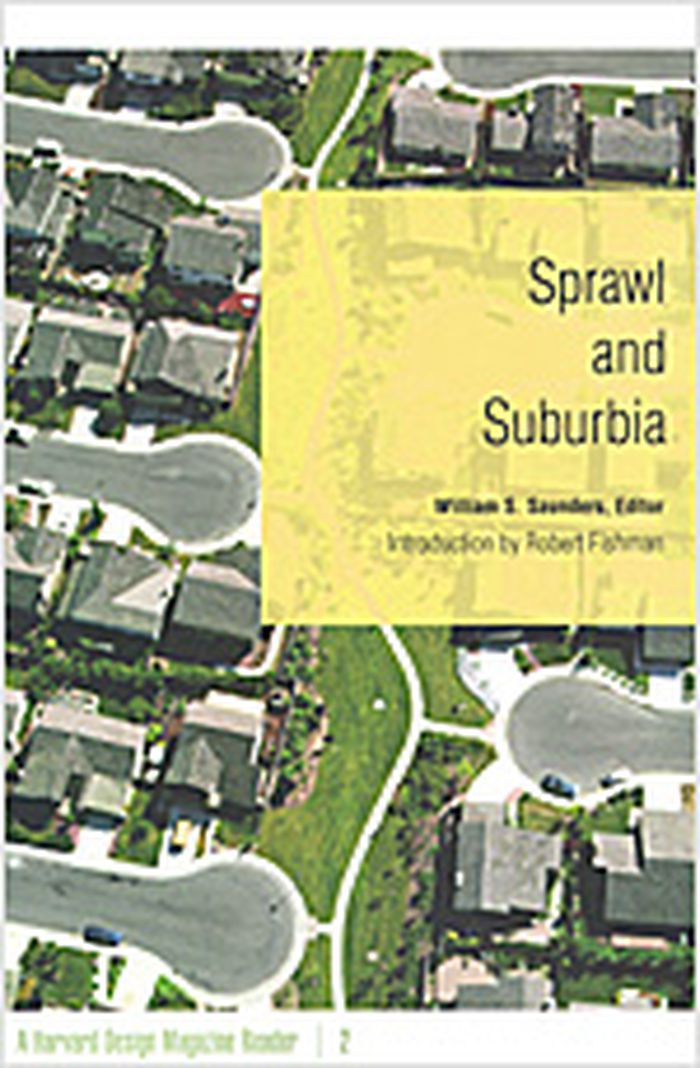
Sprawl is the single most significant and urgent issue in American land use at the turn of the twenty-first century. Efforts to limit and reform sprawl through legislative “Smart Growth” initiatives have been enacted around the country while the neotraditionalist New Urbanism has been embraced by many architects and urban planners. Yet most Americans persist in their desire to live farther and farther away from urban centers, moving to exurbs made up almost entirely of single-family residential houses and stand-alone shopping areas. "Sprawl and suburbia" brings together some of the foremost thinkers in the field to present in-depth diagnosis and critical analysis of the physical and social realities of exurban sprawl. Along with an introduction by Robert Fishman, these essays call for architects, urban planners, and landscape designers to work at mitigating the impact of sprawl on land and resources and improving the residential and commercial built environment as a whole. In place of vast residential exurbs, these writers offer visions of a fresh urbanism—appealing and persuasive models of life at greater density, with greater diversity, and within genuine communities. With sprawl losing the support of suburban citizens themselves as economic, environmental, and social costs are being paid, "Sprawl and suburbia" appears at a moment when design might achieve some critical influence over development—if architects and planners accept the challenge.
Sprawl and suburbia
Actions:
Price:
$28.95
(available to order)
Summary:
Sprawl is the single most significant and urgent issue in American land use at the turn of the twenty-first century. Efforts to limit and reform sprawl through legislative “Smart Growth” initiatives have been enacted around the country while the neotraditionalist New Urbanism has been embraced by many architects and urban planners. Yet most Americans persist in their desire to live farther and farther away from urban centers, moving to exurbs made up almost entirely of single-family residential houses and stand-alone shopping areas. "Sprawl and suburbia" brings together some of the foremost thinkers in the field to present in-depth diagnosis and critical analysis of the physical and social realities of exurban sprawl. Along with an introduction by Robert Fishman, these essays call for architects, urban planners, and landscape designers to work at mitigating the impact of sprawl on land and resources and improving the residential and commercial built environment as a whole. In place of vast residential exurbs, these writers offer visions of a fresh urbanism—appealing and persuasive models of life at greater density, with greater diversity, and within genuine communities. With sprawl losing the support of suburban citizens themselves as economic, environmental, and social costs are being paid, "Sprawl and suburbia" appears at a moment when design might achieve some critical influence over development—if architects and planners accept the challenge.
Form:
books
books
Publication:
November 2005, Minneapolis
November 2005, Minneapolis
Subject:
Suburbs
Suburbs
Form:
books
books
Actions:
Price:
$74.00
(available to order)
Summary:
Once the world’s tallest skyscraper, the Woolworth Building is noted for its striking but incongruous synthesis of Beaux-Arts architecture, fanciful Gothic ornamentation, and audacious steel-framed engineering. Here, in the first history of this great urban landmark, Gail Fenske argues that its design serves as a compelling lens through which to view the distinctive urban(...)
$74.00
(available to order)
Summary:
Once the world’s tallest skyscraper, the Woolworth Building is noted for its striking but incongruous synthesis of Beaux-Arts architecture, fanciful Gothic ornamentation, and audacious steel-framed engineering. Here, in the first history of this great urban landmark, Gail Fenske argues that its design serves as a compelling lens through which to view the distinctive urban(...)
Title:
The skyscraper and the city: the woolworth building and the making of modern New York
Actions:
Price:
$74.00
(available to order)
Summary:
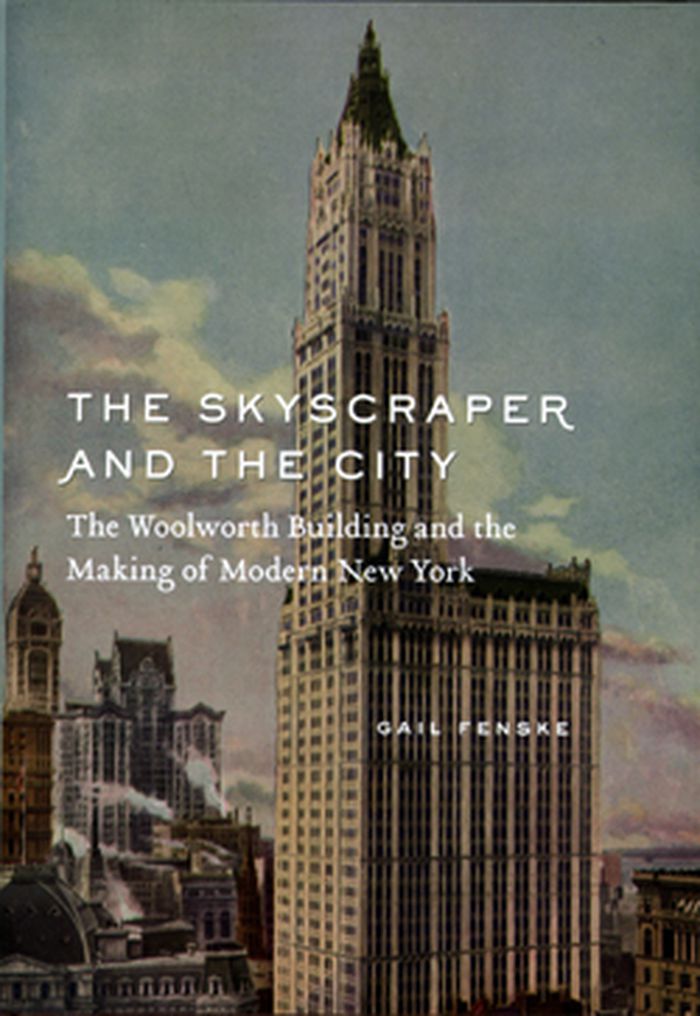
Once the world’s tallest skyscraper, the Woolworth Building is noted for its striking but incongruous synthesis of Beaux-Arts architecture, fanciful Gothic ornamentation, and audacious steel-framed engineering. Here, in the first history of this great urban landmark, Gail Fenske argues that its design serves as a compelling lens through which to view the distinctive urban culture of Progressive-era New York. Fenske shows here that the building’s multiplicity of meanings reflected the cultural contradictions that defined New York City’s modernity. For Frank Woolworth—founder of the famous five-and-dime store chain—the building served as a towering trademark, for advocates of the City Beautiful movement it suggested a majestic hotel de ville, for technological enthusiasts it represented the boldest of experiments in vertical construction, and for tenants it provided an evocative setting for high-style consumption. Tourists, meanwhile, experienced a spectacular sightseeing destination and avant-garde artists discovered a twentieth-century future. In emphasizing this faceted significance, Fenske illuminates the process of conceiving, financing, and constructing skyscrapers as well as the mass phenomena of consumerism, marketing, news media, and urban spectatorship that surround them. As the representative example of the skyscraper as a “cathedral of commerce,” the Woolworth Building remains a commanding presence in the skyline of lower Manhattan, and the generously illustrated Skyscraper and the City is a worthy testament to its importance in American culture.
The skyscraper and the city: the woolworth building and the making of modern New York
Actions:
Price:
$74.00
(available to order)
Summary:
Once the world’s tallest skyscraper, the Woolworth Building is noted for its striking but incongruous synthesis of Beaux-Arts architecture, fanciful Gothic ornamentation, and audacious steel-framed engineering. Here, in the first history of this great urban landmark, Gail Fenske argues that its design serves as a compelling lens through which to view the distinctive urban culture of Progressive-era New York. Fenske shows here that the building’s multiplicity of meanings reflected the cultural contradictions that defined New York City’s modernity. For Frank Woolworth—founder of the famous five-and-dime store chain—the building served as a towering trademark, for advocates of the City Beautiful movement it suggested a majestic hotel de ville, for technological enthusiasts it represented the boldest of experiments in vertical construction, and for tenants it provided an evocative setting for high-style consumption. Tourists, meanwhile, experienced a spectacular sightseeing destination and avant-garde artists discovered a twentieth-century future. In emphasizing this faceted significance, Fenske illuminates the process of conceiving, financing, and constructing skyscrapers as well as the mass phenomena of consumerism, marketing, news media, and urban spectatorship that surround them. As the representative example of the skyscraper as a “cathedral of commerce,” the Woolworth Building remains a commanding presence in the skyline of lower Manhattan, and the generously illustrated Skyscraper and the City is a worthy testament to its importance in American culture.
Form:
books
books
Publication:
May 2008, Chicago, London
May 2008, Chicago, London
Subject:
Gratte-ciels
Gratte-ciels
Form:
journals and magazines
journals and magazines
Title:
New Geographies 12: Commons
New Geographies 12: Commons
Actions:
Price:
$45.00
(available to order)
Summary:
The commons as a contested political idea has been continually articulated and reproduced in many disciplines and in relation to specific historical and geographical contexts. Since the 1960s, the concept of commons has started to play an increasingly important role in the field of urban studies. While commons are usually perceived as the material spaces of the city such(...)
$45.00
(available to order)
Summary:
The commons as a contested political idea has been continually articulated and reproduced in many disciplines and in relation to specific historical and geographical contexts. Since the 1960s, the concept of commons has started to play an increasingly important role in the field of urban studies. While commons are usually perceived as the material spaces of the city such(...)
Title:
New Geographies 12: Commons
Actions:
Price:
$45.00
(available to order)
Summary:
The commons as a contested political idea has been continually articulated and reproduced in many disciplines and in relation to specific historical and geographical contexts. Since the 1960s, the concept of commons has started to play an increasingly important role in the field of urban studies. While commons are usually perceived as the material spaces of the city such as streets, parks, public spaces, etc., they are also perceived as the immaterial public realm- including subaltern and mainstream culture, knowledge, language, and modes of sociality. As the commoning process continuously involves the substance of urban spaces, be it physical or virtual, the concept of commons has actively contributed to reshaping spatial imaginaries such as urban islands, archipelagos, and thresholds. This issue of 'New Geographies' proposes the concept of commons as a mode of thinking that challenges assumptions in the design disciplines such as public and private spaces, local and regional geographies, and capital and state interventions. It expands the production of space as the commons into a planetary territory all the way from the intimate and subjective scale of the body to the connected material and immaterial spaces. In doing so, NG 12 aims to foreground the significance of political thinking in the process of space production, and invites to imagine alternative social relations and modes of urbanization.
New Geographies 12: Commons
Actions:
Price:
$45.00
(available to order)
Summary:
The commons as a contested political idea has been continually articulated and reproduced in many disciplines and in relation to specific historical and geographical contexts. Since the 1960s, the concept of commons has started to play an increasingly important role in the field of urban studies. While commons are usually perceived as the material spaces of the city such as streets, parks, public spaces, etc., they are also perceived as the immaterial public realm- including subaltern and mainstream culture, knowledge, language, and modes of sociality. As the commoning process continuously involves the substance of urban spaces, be it physical or virtual, the concept of commons has actively contributed to reshaping spatial imaginaries such as urban islands, archipelagos, and thresholds. This issue of 'New Geographies' proposes the concept of commons as a mode of thinking that challenges assumptions in the design disciplines such as public and private spaces, local and regional geographies, and capital and state interventions. It expands the production of space as the commons into a planetary territory all the way from the intimate and subjective scale of the body to the connected material and immaterial spaces. In doing so, NG 12 aims to foreground the significance of political thinking in the process of space production, and invites to imagine alternative social relations and modes of urbanization.
Form:
journals and magazines
journals and magazines
Publication:
April 2022
April 2022
Subject:
Magazines
Magazines
Form:
books
books
Price:
$59.99
(available to order)
Summary:
Featuring 40 essays by U.S. and European historians, designers, cultural critics, geographers and social scientists, illustrated with over 250 color images in extensive visual "gazetteers" — including specially-commissioned portfolios by artists and designers — "Else/where mapping" investigates : how new technologies of navigation and location are emerging to chart(...)
$59.99
(available to order)
Summary:
Featuring 40 essays by U.S. and European historians, designers, cultural critics, geographers and social scientists, illustrated with over 250 color images in extensive visual "gazetteers" — including specially-commissioned portfolios by artists and designers — "Else/where mapping" investigates : how new technologies of navigation and location are emerging to chart(...)
Subject:
Architectural Plans and Cartography
Architectural Plans and Cartography
Publication:
October 2005, Minneapolis
October 2005, Minneapolis
Title:
Else/where : mapping new cartographies of networks and territories
Actions:
Price:
$59.99
(available to order)
Summary:
Featuring 40 essays by U.S. and European historians, designers, cultural critics, geographers and social scientists, illustrated with over 250 color images in extensive visual "gazetteers" — including specially-commissioned portfolios by artists and designers — "Else/where mapping" investigates : how new technologies of navigation and location are emerging to chart "virtual" terrain such as social networks and online conversations; how these new mapping strategies borrow and reinvent metaphors adapted from the cartography of physical terrain, considered at various scales — urban, regional, continental, global ; how new modes of representation of spatial data are evolving to explore the potential for collective "bottom-up" (rather than "top-down") mapping ; how cities, communities and social networks are being re-envisioned, as artists and designers use technologies such as GPS, GIS and digital interface design to devise alternative mappings of social and spatial relationships. Authors : Janet Abrams, Ole Bouman, Andrea Codrington, Denis Cosgrove, Steve Dietz, Paul Elliman, Yuri Engelhardt, Peter Hall, Brian Holmes, J.J. King, Cathy Lang Ho, Andrea Moed, David Pescovitz, Rebecca Ross, Ben Schouten, Alex Terzich, Alice Twemlow, Dirk van Weelden, Tom Vanderbilt, Peter Walsh and Stephen Zacks. Featured artists and designers included : Antenna Design New York, Julian Bleecker, Bureau d'Etudes, Sulki Choi, Layla Curtis, Judith Donath, Entropy8Zuper!, Michael Frumin, Ben Fry, De Geuzen, govcom.org, Marti Guixe, Mark Hansen, Robert Horn, Natalie Jeremijenko, Lisa Jevbratt, Nina Katchadourian, Valdis Krebs, Laura Kurgan, Mark Lombardi, The London Particular, Lumeta.org, Barrett Lyon, Brian McGrath, Julie Mehretu, Paul Mijksenaar, Sigi Moeslinger, MUST Architects, MVRDV, Josh On, W. Bradford Paley, Scott Paterson, Esther Polak, Richard Rogers, Ben Rubin, Warren Sack, Mike Silver, Marco Susani, Terraswarm, UN Studio, Urban Tapestries, Waag Society for Old and New Media, Ronald Wall, Kimberlee Whaley, Jeremy Wood and Marina Zurkow. Book design : Deborah Littlejohn.
Else/where : mapping new cartographies of networks and territories
Actions:
Price:
$59.99
(available to order)
Summary:
Featuring 40 essays by U.S. and European historians, designers, cultural critics, geographers and social scientists, illustrated with over 250 color images in extensive visual "gazetteers" — including specially-commissioned portfolios by artists and designers — "Else/where mapping" investigates : how new technologies of navigation and location are emerging to chart "virtual" terrain such as social networks and online conversations; how these new mapping strategies borrow and reinvent metaphors adapted from the cartography of physical terrain, considered at various scales — urban, regional, continental, global ; how new modes of representation of spatial data are evolving to explore the potential for collective "bottom-up" (rather than "top-down") mapping ; how cities, communities and social networks are being re-envisioned, as artists and designers use technologies such as GPS, GIS and digital interface design to devise alternative mappings of social and spatial relationships. Authors : Janet Abrams, Ole Bouman, Andrea Codrington, Denis Cosgrove, Steve Dietz, Paul Elliman, Yuri Engelhardt, Peter Hall, Brian Holmes, J.J. King, Cathy Lang Ho, Andrea Moed, David Pescovitz, Rebecca Ross, Ben Schouten, Alex Terzich, Alice Twemlow, Dirk van Weelden, Tom Vanderbilt, Peter Walsh and Stephen Zacks. Featured artists and designers included : Antenna Design New York, Julian Bleecker, Bureau d'Etudes, Sulki Choi, Layla Curtis, Judith Donath, Entropy8Zuper!, Michael Frumin, Ben Fry, De Geuzen, govcom.org, Marti Guixe, Mark Hansen, Robert Horn, Natalie Jeremijenko, Lisa Jevbratt, Nina Katchadourian, Valdis Krebs, Laura Kurgan, Mark Lombardi, The London Particular, Lumeta.org, Barrett Lyon, Brian McGrath, Julie Mehretu, Paul Mijksenaar, Sigi Moeslinger, MUST Architects, MVRDV, Josh On, W. Bradford Paley, Scott Paterson, Esther Polak, Richard Rogers, Ben Rubin, Warren Sack, Mike Silver, Marco Susani, Terraswarm, UN Studio, Urban Tapestries, Waag Society for Old and New Media, Ronald Wall, Kimberlee Whaley, Jeremy Wood and Marina Zurkow. Book design : Deborah Littlejohn.
Form:
books
books
Publication:
October 2005, Minneapolis
October 2005, Minneapolis
Subject:
Architectural Plans and Cartography
Architectural Plans and Cartography
Form:
books
books
Title:
Cultural cues
Cultural cues
Actions:
Price:
$48.95
(available to order)
Summary:
Cutural Cues is the sixth book featured the work of the Louis I. Kahn Visiting Assistant Professorship, which brings young innovators in architectural design to the Yale School of Architecture. This book includes the studio research and projects of Joe Day of Deegan Day Design in “NOWplex” a cinema in L.A., Tom Wiscombe of Tom Wiscombe Architecture in “The Broad Redux,”(...)
$48.95
(available to order)
Summary:
Cutural Cues is the sixth book featured the work of the Louis I. Kahn Visiting Assistant Professorship, which brings young innovators in architectural design to the Yale School of Architecture. This book includes the studio research and projects of Joe Day of Deegan Day Design in “NOWplex” a cinema in L.A., Tom Wiscombe of Tom Wiscombe Architecture in “The Broad Redux,”(...)
Subject:
Contemporary Architecture
Contemporary Architecture
Publication:
September 2015
September 2015
Title:
Cultural cues
Actions:
Price:
$48.95
(available to order)
Summary:
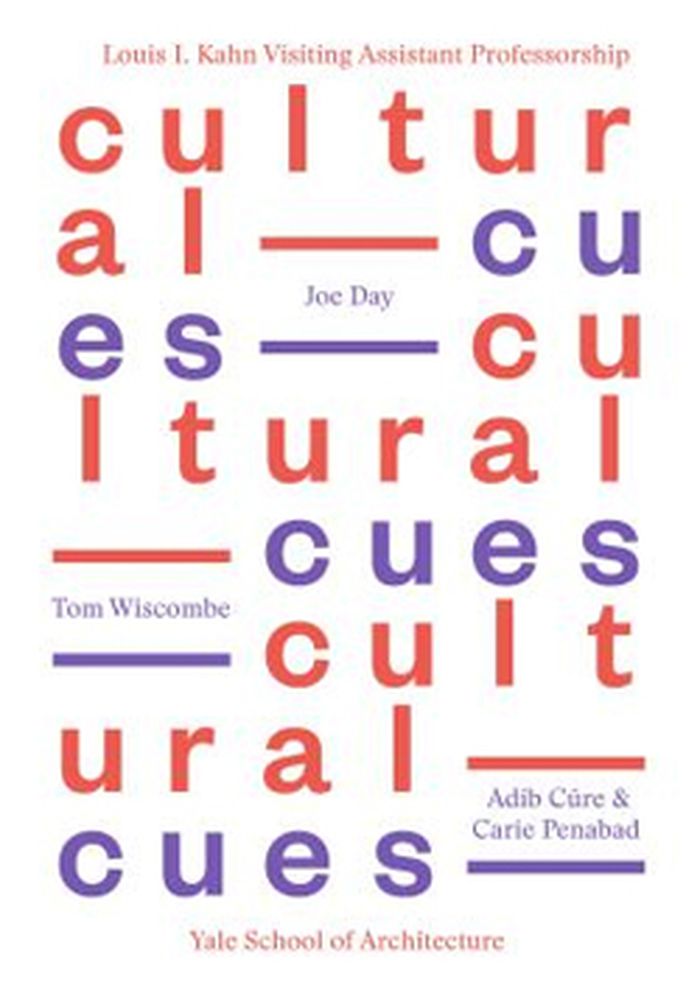
Cutural Cues is the sixth book featured the work of the Louis I. Kahn Visiting Assistant Professorship, which brings young innovators in architectural design to the Yale School of Architecture. This book includes the studio research and projects of Joe Day of Deegan Day Design in “NOWplex” a cinema in L.A., Tom Wiscombe of Tom Wiscombe Architecture in “The Broad Redux,” for a new interpretation of the Broad Museum in L.A., and Adib Cure & Carie Penabad of Cure Penabade in the studio “Havana: Housing in the Historic Center.” The studios explore contemporary interpretations of the implications of cinema, the museum, and housing, taking cues from their complex cultural and urban contexts. Along with student work, interviews with the architects about the work of their professional offices and essays framing the themes of the work are combined with insight into the pedagogical approach of these practitioner-educators.
Cultural cues
Actions:
Price:
$48.95
(available to order)
Summary:
Cutural Cues is the sixth book featured the work of the Louis I. Kahn Visiting Assistant Professorship, which brings young innovators in architectural design to the Yale School of Architecture. This book includes the studio research and projects of Joe Day of Deegan Day Design in “NOWplex” a cinema in L.A., Tom Wiscombe of Tom Wiscombe Architecture in “The Broad Redux,” for a new interpretation of the Broad Museum in L.A., and Adib Cure & Carie Penabad of Cure Penabade in the studio “Havana: Housing in the Historic Center.” The studios explore contemporary interpretations of the implications of cinema, the museum, and housing, taking cues from their complex cultural and urban contexts. Along with student work, interviews with the architects about the work of their professional offices and essays framing the themes of the work are combined with insight into the pedagogical approach of these practitioner-educators.
Form:
books
books
Publication:
September 2015
September 2015
Subject:
Contemporary Architecture
Contemporary Architecture
Form:
books
books
Actions:
Price:
$54.95
(available to order)
Summary:
Bringing together the reflections of an architectural theorist and a philosopher, this book encourages philosophers and architects, scholars and designers alike, to reconsider what they do as well as what they can do in the face of challenging times. It does so by exploring the notion that architecture and design can make for a distinctive form of ethical(...)
$54.95
(available to order)
Summary:
Bringing together the reflections of an architectural theorist and a philosopher, this book encourages philosophers and architects, scholars and designers alike, to reconsider what they do as well as what they can do in the face of challenging times. It does so by exploring the notion that architecture and design can make for a distinctive form of ethical(...)
Title:
Prospects for an ethics of architecture
Actions:
Price:
$54.95
(available to order)
Summary:
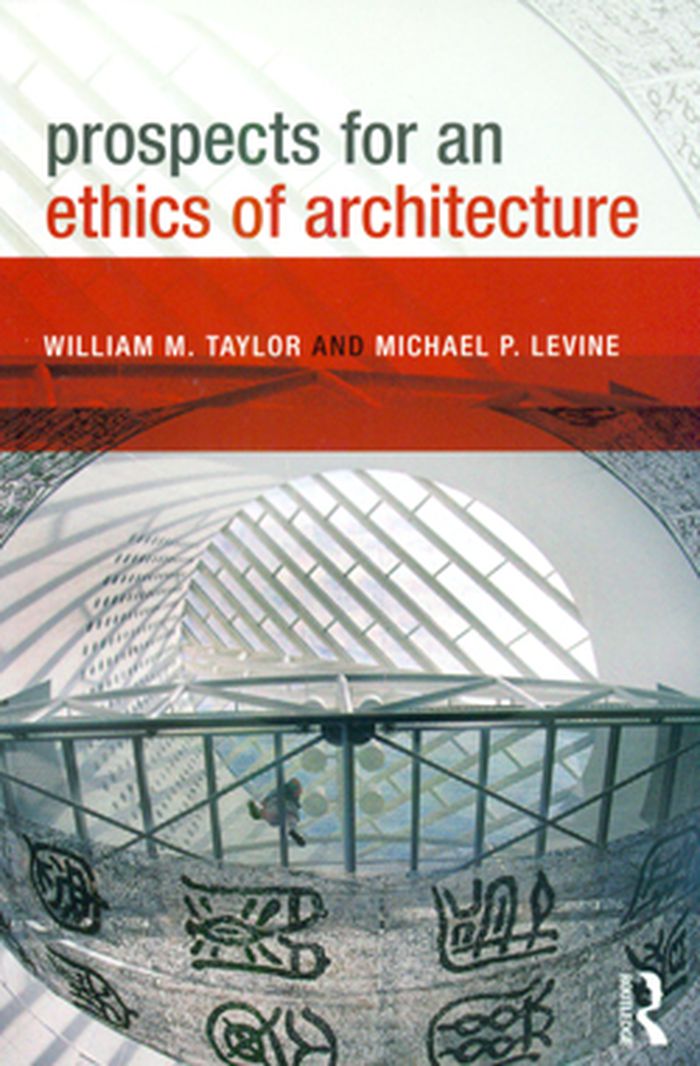
Bringing together the reflections of an architectural theorist and a philosopher, this book encourages philosophers and architects, scholars and designers alike, to reconsider what they do as well as what they can do in the face of challenging times. It does so by exploring the notion that architecture and design can make for a distinctive form of ethical investigation. The book is less concerned with absolutist understandings of the two components of ethics, a theory of ‘the good’ and a theory of ‘the right’, than with remaining open to multiple relations between ideas about the built environment, design practices and the plurality of kinds of human subjects (inhabitants, individuals and communities) accommodated by buildings and urban spaces. This book aims to change the way people commonly think about ethics, not only in relation to the built environment, but to themselves, their ways of thinking and modes of behaviour.
Prospects for an ethics of architecture
Actions:
Price:
$54.95
(available to order)
Summary:
Bringing together the reflections of an architectural theorist and a philosopher, this book encourages philosophers and architects, scholars and designers alike, to reconsider what they do as well as what they can do in the face of challenging times. It does so by exploring the notion that architecture and design can make for a distinctive form of ethical investigation. The book is less concerned with absolutist understandings of the two components of ethics, a theory of ‘the good’ and a theory of ‘the right’, than with remaining open to multiple relations between ideas about the built environment, design practices and the plurality of kinds of human subjects (inhabitants, individuals and communities) accommodated by buildings and urban spaces. This book aims to change the way people commonly think about ethics, not only in relation to the built environment, but to themselves, their ways of thinking and modes of behaviour.
Form:
books
books
Publication:
March 2011
March 2011
Subject:
Architectural Theory
Architectural Theory
Form:
journals and magazines
journals and magazines
Actions:
Price:
$160.00
(available in store)
Summary:
This monographic issue examines recent work by Belgian architects Kersten Geers and David Van Severen and their Brussels-based firm, OFFICE, which was established in 2002 as a means of exploring the prospect of architecture within the contemporary culture and urban environment. Currently a team of about 40 architects, it has evolved a practical and pragmatic approach to(...)
$160.00
(available in store)
Summary:
This monographic issue examines recent work by Belgian architects Kersten Geers and David Van Severen and their Brussels-based firm, OFFICE, which was established in 2002 as a means of exploring the prospect of architecture within the contemporary culture and urban environment. Currently a team of about 40 architects, it has evolved a practical and pragmatic approach to(...)
Title:
El Croquis 226 : OFFICE 2017-2024
Actions:
Price:
$160.00
(available in store)
Summary:
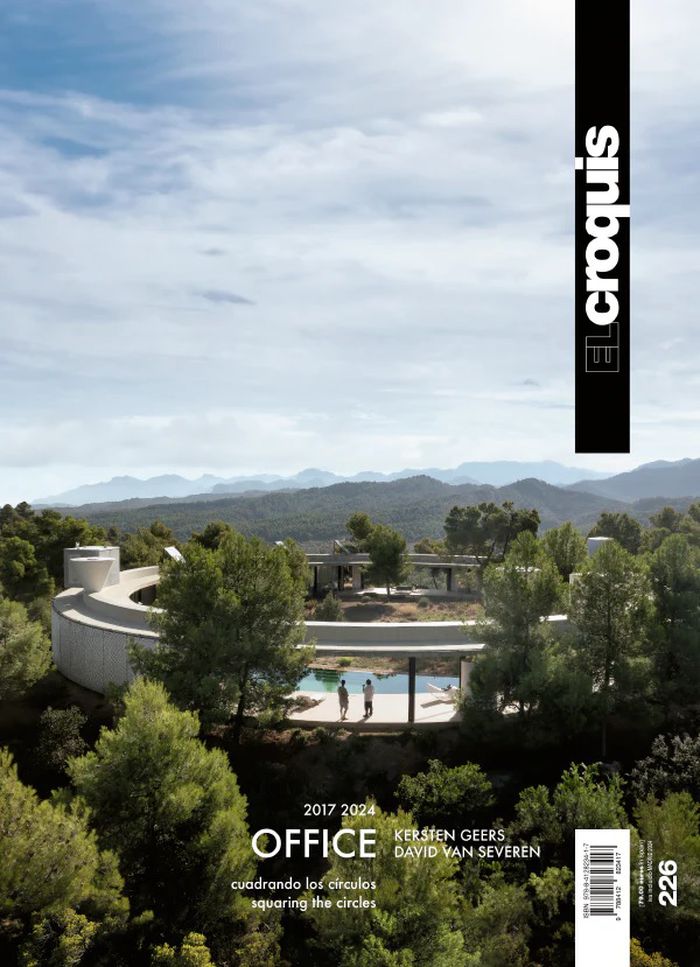
This monographic issue examines recent work by Belgian architects Kersten Geers and David Van Severen and their Brussels-based firm, OFFICE, which was established in 2002 as a means of exploring the prospect of architecture within the contemporary culture and urban environment. Currently a team of about 40 architects, it has evolved a practical and pragmatic approach to design in which architecture becomes nothing less than a civic obligation. An overview of 25 projects, including a crematorium, dental clinic, and art gallery, is introduced by a conversation with Giovanna Borasi, director of the Canadian Centre for Architecture in Montreal, and the two founding architects.
El Croquis 226 : OFFICE 2017-2024
Actions:
Price:
$160.00
(available in store)
Summary:
This monographic issue examines recent work by Belgian architects Kersten Geers and David Van Severen and their Brussels-based firm, OFFICE, which was established in 2002 as a means of exploring the prospect of architecture within the contemporary culture and urban environment. Currently a team of about 40 architects, it has evolved a practical and pragmatic approach to design in which architecture becomes nothing less than a civic obligation. An overview of 25 projects, including a crematorium, dental clinic, and art gallery, is introduced by a conversation with Giovanna Borasi, director of the Canadian Centre for Architecture in Montreal, and the two founding architects.
Form:
journals and magazines
journals and magazines
Publication:
July 2024
July 2024
Subject:
Magazines
Magazines
Form:
books
books
Actions:
Holdings:
Description:
342 pages : illustrations (some color), maps (some color), plans ; 26 x 22 cm
Description:
342 pages : illustrations (some color), maps (some color), plans ; 26 x 22 cm
Author:
Subject:
Publication:
Portland, Oregon : Timber Press, 2022., ©2022
Portland, Oregon : Timber Press, 2022., ©2022
Title:
Experiencing Olmsted : the enduring legacy of Frederick Law Olmsted's North American landscapes / The Cultural Landscape Foundation ; Charles A. Birnbaum, Arleyn A. Levee, and Dena Tasse-Winter.
Actions:
Holdings:
Description:
342 pages : illustrations (some color), maps (some color), plans ; 26 x 22 cm
Experiencing Olmsted : the enduring legacy of Frederick Law Olmsted's North American landscapes / The Cultural Landscape Foundation ; Charles A. Birnbaum, Arleyn A. Levee, and Dena Tasse-Winter.
Actions:
Holdings:
Description:
342 pages : illustrations (some color), maps (some color), plans ; 26 x 22 cm
Form:
books
books
Publication:
Portland, Oregon : Timber Press, 2022., ©2022
Portland, Oregon : Timber Press, 2022., ©2022
Author:
Subject:
Form:
books
books
Actions:
Price:
$123.00
(available in store)
Summary:
Iwan Baan is one of today’s leading photographers of architecture and urban design. His images document the growth of global megacities and portray buildings by prominent contemporary architects including Herzog & de Meuron, Rem Koolhaas and Zaha Hadid. Baan’s vibrant realism presents architecture not as an abstract ideal, but as the setting of everyday life, an organic(...)
$123.00
(available in store)
Summary:
Iwan Baan is one of today’s leading photographers of architecture and urban design. His images document the growth of global megacities and portray buildings by prominent contemporary architects including Herzog & de Meuron, Rem Koolhaas and Zaha Hadid. Baan’s vibrant realism presents architecture not as an abstract ideal, but as the setting of everyday life, an organic(...)
Title:
Iwan Baan: Moments in architecture
Actions:
Price:
$123.00
(available in store)
Summary:
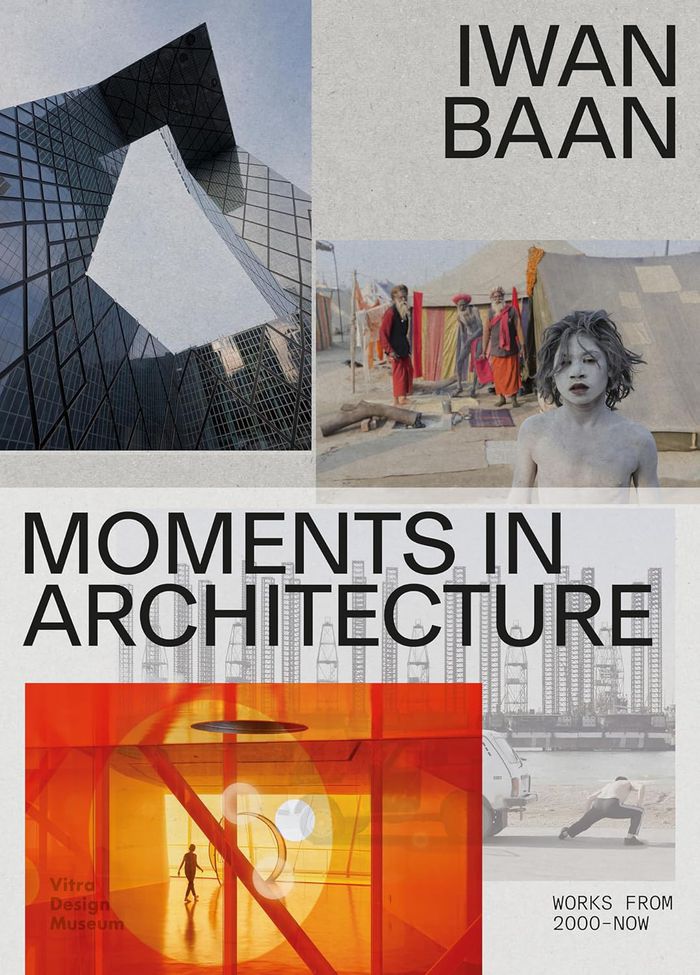
Iwan Baan is one of today’s leading photographers of architecture and urban design. His images document the growth of global megacities and portray buildings by prominent contemporary architects including Herzog & de Meuron, Rem Koolhaas and Zaha Hadid. Baan’s vibrant realism presents architecture not as an abstract ideal, but as the setting of everyday life, an organic part of the urban fabric- be it suburban sprawl or the booming metropoles of Africa and Asia. This first comprehensive publication on the Dutch photographer’s work includes a number of Baan’s iconic works, many of which are familiar from magazines and books, as well as photographs of vernacular and informal architecture all around the world, from the round Tulou of southern China to the rock-hewn churches of Ethiopia. In addition to extensive image plates, the publication includes several text contributions on topics such as the current discourse on architectural photography and the classification and contextualization of Baan's work within it. Interviews and narrative text elements offer insight into the artist’s creative process.
Iwan Baan: Moments in architecture
Actions:
Price:
$123.00
(available in store)
Summary:
Iwan Baan is one of today’s leading photographers of architecture and urban design. His images document the growth of global megacities and portray buildings by prominent contemporary architects including Herzog & de Meuron, Rem Koolhaas and Zaha Hadid. Baan’s vibrant realism presents architecture not as an abstract ideal, but as the setting of everyday life, an organic part of the urban fabric- be it suburban sprawl or the booming metropoles of Africa and Asia. This first comprehensive publication on the Dutch photographer’s work includes a number of Baan’s iconic works, many of which are familiar from magazines and books, as well as photographs of vernacular and informal architecture all around the world, from the round Tulou of southern China to the rock-hewn churches of Ethiopia. In addition to extensive image plates, the publication includes several text contributions on topics such as the current discourse on architectural photography and the classification and contextualization of Baan's work within it. Interviews and narrative text elements offer insight into the artist’s creative process.
Form:
books
books
Publication:
January 2024
January 2024
Subject:
Photography monographs
Photography monographs
Form:
books
books
Price:
$78.00
(available to order)
Summary:
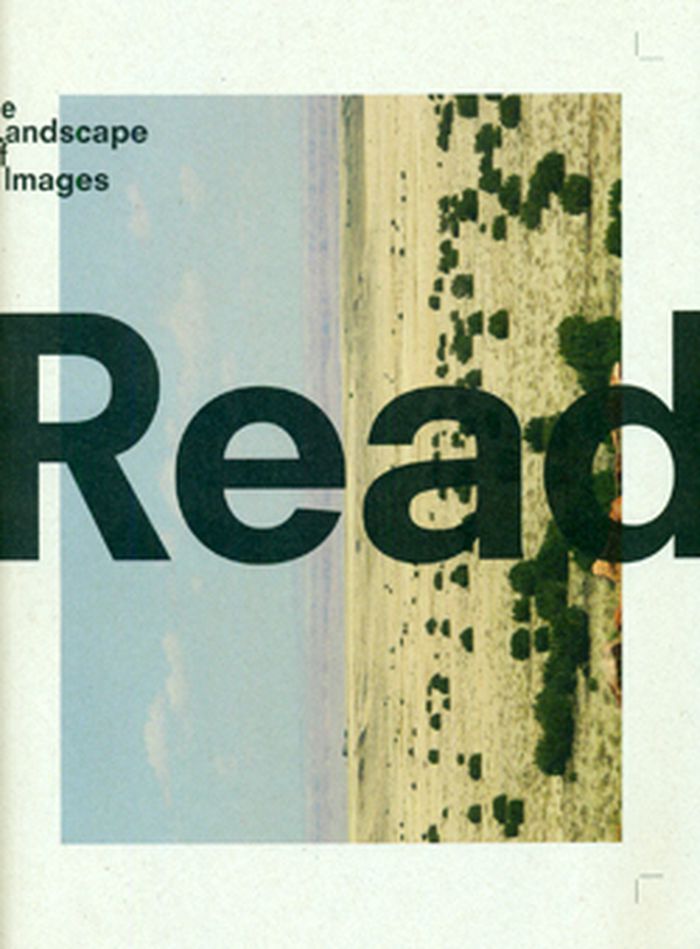
From high-rise to desert, urban sprawl to empty canyons, the American landscape is incredibly various : how does one even begin to take stock of its endlessly proliferating cityscapes and vast horizons? Reading the American Landscape rises marvelously to the challenge. For this anthropological epic, 25 landscape architects, urban designers, visual artists, photographers(...)
$78.00
(available to order)
Summary:
From high-rise to desert, urban sprawl to empty canyons, the American landscape is incredibly various : how does one even begin to take stock of its endlessly proliferating cityscapes and vast horizons? Reading the American Landscape rises marvelously to the challenge. For this anthropological epic, 25 landscape architects, urban designers, visual artists, photographers(...)
Subject:
Landscape Architecture, Monographs
Landscape Architecture, Monographs
Publication:
March 2010
March 2010
Title:
Reading the American landscape : an index of books and images
Actions:
Price:
$78.00
(available to order)
Summary:
From high-rise to desert, urban sprawl to empty canyons, the American landscape is incredibly various : how does one even begin to take stock of its endlessly proliferating cityscapes and vast horizons? Reading the American Landscape rises marvelously to the challenge. For this anthropological epic, 25 landscape architects, urban designers, visual artists, photographers and commentators on the American landscape were invited by The Netherlands Foundation for Visual Arts, Design and Architecture to undertake a journey through the United States, to study and record its history and development. Their study revolved around three themes or types of location : the city park as a social space in densely developed cities; landscapes on the periphery of expanding cities; and the development of large-scale rural areas as exercises in conservation. The writers for this project were each given a bibliography, from which they selected a single title as a starting point for their essays, on subjects ranging from parks and gardens to more general speculations on the unique features of the American landscape.
Reading the American landscape : an index of books and images
Actions:
Price:
$78.00
(available to order)
Summary:
From high-rise to desert, urban sprawl to empty canyons, the American landscape is incredibly various : how does one even begin to take stock of its endlessly proliferating cityscapes and vast horizons? Reading the American Landscape rises marvelously to the challenge. For this anthropological epic, 25 landscape architects, urban designers, visual artists, photographers and commentators on the American landscape were invited by The Netherlands Foundation for Visual Arts, Design and Architecture to undertake a journey through the United States, to study and record its history and development. Their study revolved around three themes or types of location : the city park as a social space in densely developed cities; landscapes on the periphery of expanding cities; and the development of large-scale rural areas as exercises in conservation. The writers for this project were each given a bibliography, from which they selected a single title as a starting point for their essays, on subjects ranging from parks and gardens to more general speculations on the unique features of the American landscape.
Form:
books
books
Publication:
March 2010
March 2010
Subject:
Landscape Architecture, Monographs
Landscape Architecture, Monographs


