


65 Results
Form:
books
books
Actions:
Holdings:
Description:
xxi, 821 pages, 16 unnumbered pages of plates : illustrations (some color) ; 25 cm
Description:
xxi, 821 pages, 16 unnumbered pages of plates : illustrations (some color) ; 25 cm
Author:
Subject:
Publication:
New York : Alfred A. Knopf, 2008.
New York : Alfred A. Knopf, 2008.
Title:
Le Corbusier : a life / Nicholas Fox Weber.
Actions:
Holdings:
Description:
xxi, 821 pages, 16 unnumbered pages of plates : illustrations (some color) ; 25 cm
Le Corbusier : a life / Nicholas Fox Weber.
Actions:
Holdings:
Description:
xxi, 821 pages, 16 unnumbered pages of plates : illustrations (some color) ; 25 cm
Form:
books
books
Publication:
New York : Alfred A. Knopf, 2008.
New York : Alfred A. Knopf, 2008.
Author:
Subject:
Form:
books
books
Price:
$45.00
(available to order)
Summary:
This well illustrated book provides a complete overview of current knowledge about the sculptures of the Parthenon and suggests new interpretations of the ancient temple's sculptural creations. Margaretha Lagerlöf steps back from viewing the fragments of the sculptures that remain today to focus more clearly on their meanings in the light of classical(...)
$45.00
(available to order)
Summary:
This well illustrated book provides a complete overview of current knowledge about the sculptures of the Parthenon and suggests new interpretations of the ancient temple's sculptural creations. Margaretha Lagerlöf steps back from viewing the fragments of the sculptures that remain today to focus more clearly on their meanings in the light of classical(...)
Subject:
History until 1900
History until 1900
Publication:
January 1960, New Haven
January 1960, New Haven
Title:
The Sculptures of the Parthenon: Aesthetics and Interpretation
Actions:
Price:
$45.00
(available to order)
Summary:
This well illustrated book provides a complete overview of current knowledge about the sculptures of the Parthenon and suggests new interpretations of the ancient temple's sculptural creations. Margaretha Lagerlöf steps back from viewing the fragments of the sculptures that remain today to focus more clearly on their meanings in the light of classical Athenian knowledge and society. She considers what the sculptures reveal about the Greek sense of democracy and how they characterize women's lives in a warrior culture. Using Plato's philosophy and the visually oriented similes of his myths, Lagerlöf offers a new decoding of the aesthetic structure of the Parthenon's entire sculptural ensemble. The book compares the sculptures of the pediments to those of the metopes and the frieze, uncovering subtle differences in both the nature and the content of their images. Whereas the pediments represent divine elements, for example, the frieze is seen as the domain of human beings, representing events and also the stage of history when humans no longer have direct access to the presence of the gods. The frieze can be interpreted as an invocation of this presence, a means of regaining closeness with the gods. Using a multifaceted and imaginative approach to the sculptures of the Parthenon, Lagerlöf finds powerful new meaning in them as well as an enhanced appreciation of their Athenian creators.
The Sculptures of the Parthenon: Aesthetics and Interpretation
Actions:
Price:
$45.00
(available to order)
Summary:
This well illustrated book provides a complete overview of current knowledge about the sculptures of the Parthenon and suggests new interpretations of the ancient temple's sculptural creations. Margaretha Lagerlöf steps back from viewing the fragments of the sculptures that remain today to focus more clearly on their meanings in the light of classical Athenian knowledge and society. She considers what the sculptures reveal about the Greek sense of democracy and how they characterize women's lives in a warrior culture. Using Plato's philosophy and the visually oriented similes of his myths, Lagerlöf offers a new decoding of the aesthetic structure of the Parthenon's entire sculptural ensemble. The book compares the sculptures of the pediments to those of the metopes and the frieze, uncovering subtle differences in both the nature and the content of their images. Whereas the pediments represent divine elements, for example, the frieze is seen as the domain of human beings, representing events and also the stage of history when humans no longer have direct access to the presence of the gods. The frieze can be interpreted as an invocation of this presence, a means of regaining closeness with the gods. Using a multifaceted and imaginative approach to the sculptures of the Parthenon, Lagerlöf finds powerful new meaning in them as well as an enhanced appreciation of their Athenian creators.
Form:
books
books
Publication:
January 1960, New Haven
January 1960, New Haven
Subject:
History until 1900
History until 1900
Form:
books
books
Actions:
Price:
$25.95
(available to order)
Summary:
What if we were no longer allowed to build new structures? Questions like this — and many others — are raised in the exhibition "What If: A Change of Perspective by the German Sustainable Building Council (DGNB)." The DGNB is a non-profit association based in Stuttgart that has been advocating for future-oriented and responsible building for 18 years. With the DGNB(...)
$25.95
(available to order)
Summary:
What if we were no longer allowed to build new structures? Questions like this — and many others — are raised in the exhibition "What If: A Change of Perspective by the German Sustainable Building Council (DGNB)." The DGNB is a non-profit association based in Stuttgart that has been advocating for future-oriented and responsible building for 18 years. With the DGNB(...)
Title:
What if: A change of perspective. Deutsche Gesellschaft für Nachhaltiges Bauen DGNB
Actions:
Price:
$25.95
(available to order)
Summary:
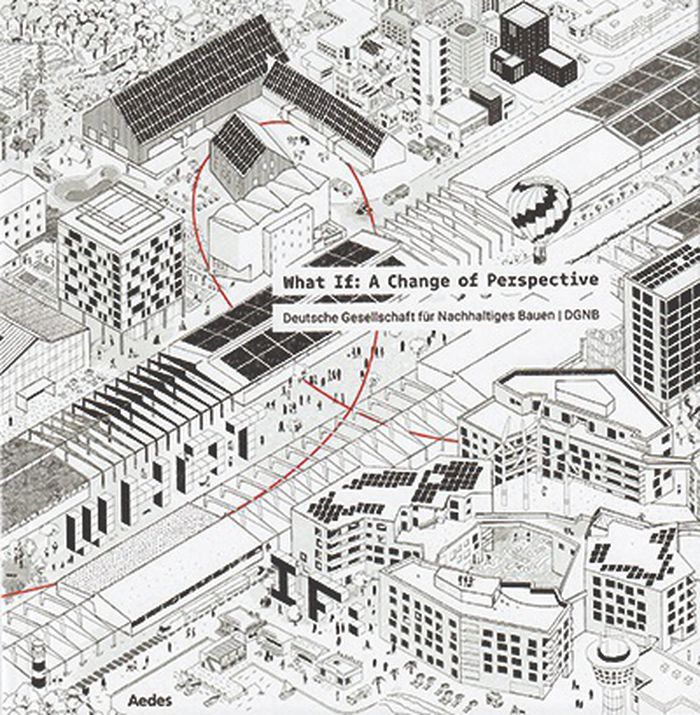
What if we were no longer allowed to build new structures? Questions like this — and many others — are raised in the exhibition "What If: A Change of Perspective by the German Sustainable Building Council (DGNB)." The DGNB is a non-profit association based in Stuttgart that has been advocating for future-oriented and responsible building for 18 years. With the DGNB Certification System, it has developed an internationally recognised planning and optimisation tool for assessing sustainable buildings and districts. The exhibition invites visitors to question conventional ways of thinking and to rediscover the essence of sustainable architecture: buildings and districts that offer people a good home, remain affordable, and provide design-driven answers to the climate crisis. A central narrative traces the evolution of sustainable building, accompanied by six thematic sections and the award-winning projects of the German Sustainability Award for Architecture.
What if: A change of perspective. Deutsche Gesellschaft für Nachhaltiges Bauen DGNB
Actions:
Price:
$25.95
(available to order)
Summary:
What if we were no longer allowed to build new structures? Questions like this — and many others — are raised in the exhibition "What If: A Change of Perspective by the German Sustainable Building Council (DGNB)." The DGNB is a non-profit association based in Stuttgart that has been advocating for future-oriented and responsible building for 18 years. With the DGNB Certification System, it has developed an internationally recognised planning and optimisation tool for assessing sustainable buildings and districts. The exhibition invites visitors to question conventional ways of thinking and to rediscover the essence of sustainable architecture: buildings and districts that offer people a good home, remain affordable, and provide design-driven answers to the climate crisis. A central narrative traces the evolution of sustainable building, accompanied by six thematic sections and the award-winning projects of the German Sustainability Award for Architecture.
Form:
books
books
Publication:
December 2025
December 2025
Subject:
Green Architecture
Green Architecture
Form:
books
books
Actions:
Price:
$35.95
(available in store)
Summary:
Architecture, as we know it, is in crisis. The authority of architects is crumbling, their methods no longer tenable. In a highly critical introspection, architect and writer Reinier de Graaf explores the tough choices ahead and the course of action that must follow. ''Architecture Against Architecture'' demands we rethink both how and why we build. With wit and(...)
$35.95
(available in store)
Summary:
Architecture, as we know it, is in crisis. The authority of architects is crumbling, their methods no longer tenable. In a highly critical introspection, architect and writer Reinier de Graaf explores the tough choices ahead and the course of action that must follow. ''Architecture Against Architecture'' demands we rethink both how and why we build. With wit and(...)
Title:
Architecture against architecture: A manifesto
Actions:
Price:
$35.95
(available in store)
Summary:
Architecture, as we know it, is in crisis. The authority of architects is crumbling, their methods no longer tenable. In a highly critical introspection, architect and writer Reinier de Graaf explores the tough choices ahead and the course of action that must follow. ''Architecture Against Architecture'' demands we rethink both how and why we build. With wit and insight, De Graaf lays out the future of the profession, challenging readers to question the fundamental assumptions of the discipline. How do we end the feudal veneration of starchitects? When will architects finally recognize that it is in their own best interest to unionize? Why aren’t more practices collectively owned? Why do so many architects over sixty-seven refuse to retire? How do we stop buildings from being copy-righted? What will remain of architecture after AI? What can prevent iconic structures from being embroiled in money laundering? And the vital question: What projects should architects refuse on moral grounds?
Architecture against architecture: A manifesto
Actions:
Price:
$35.95
(available in store)
Summary:
Architecture, as we know it, is in crisis. The authority of architects is crumbling, their methods no longer tenable. In a highly critical introspection, architect and writer Reinier de Graaf explores the tough choices ahead and the course of action that must follow. ''Architecture Against Architecture'' demands we rethink both how and why we build. With wit and insight, De Graaf lays out the future of the profession, challenging readers to question the fundamental assumptions of the discipline. How do we end the feudal veneration of starchitects? When will architects finally recognize that it is in their own best interest to unionize? Why aren’t more practices collectively owned? Why do so many architects over sixty-seven refuse to retire? How do we stop buildings from being copy-righted? What will remain of architecture after AI? What can prevent iconic structures from being embroiled in money laundering? And the vital question: What projects should architects refuse on moral grounds?
Form:
books
books
Publication:
March 2026
March 2026
Subject:
Architectural Theory
Architectural Theory
Form:
journals and magazines
journals and magazines
Actions:
Price:
$52.00
(available in store)
Summary:
We humans long for daylight, a view of greenery, and a sense of connection. Yet today, transparent building envelopes seem less in demand. Instead of granting views in and out, we create retreats. What forms of transparency remain desirable amid social uncertainty and urban densification? And do transparent or translucent envelopes still make sense when contemporary(...)
$52.00
(available in store)
Summary:
We humans long for daylight, a view of greenery, and a sense of connection. Yet today, transparent building envelopes seem less in demand. Instead of granting views in and out, we create retreats. What forms of transparency remain desirable amid social uncertainty and urban densification? And do transparent or translucent envelopes still make sense when contemporary(...)
Title:
Detail 12 2025 : Transparency translucency
Actions:
Price:
$52.00
(available in store)
Summary:
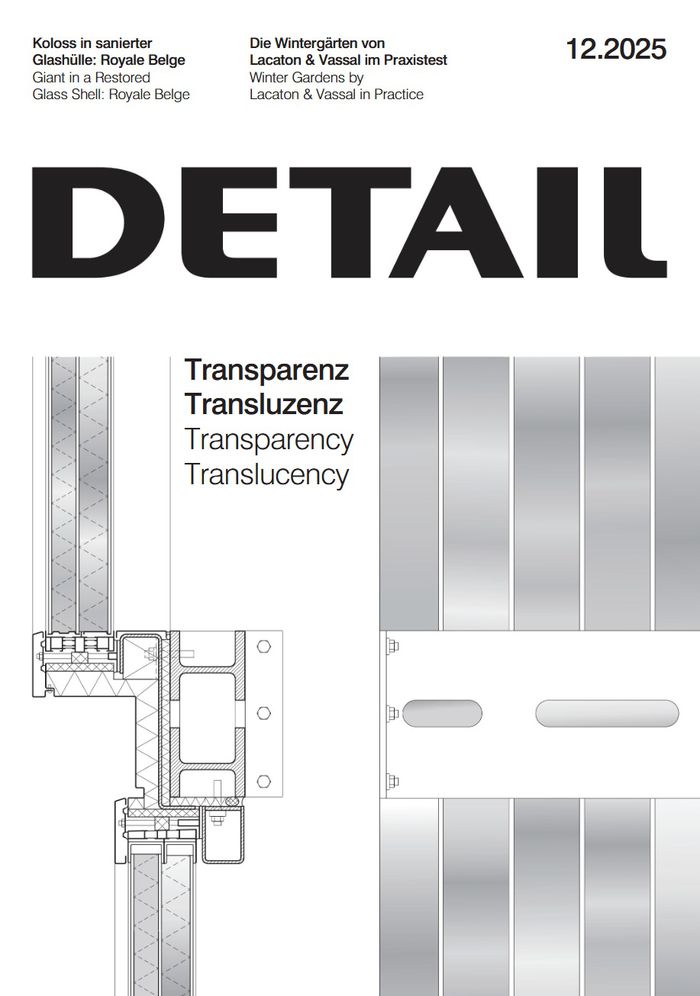
We humans long for daylight, a view of greenery, and a sense of connection. Yet today, transparent building envelopes seem less in demand. Instead of granting views in and out, we create retreats. What forms of transparency remain desirable amid social uncertainty and urban densification? And do transparent or translucent envelopes still make sense when contemporary energy concepts are applied? Light, air, and sun are no longer universally welcome. The spaces behind the climate envelope must be protected from solar gains and heat loss. Limited opening ratios, smart building technology, and algorithm-driven facade design have become the norm. In such scenarios, people are treated as disruptive elements, better kept passive. Anne Lacaton and Jean-Philippe Vassal show that another way is possible. Working with 51N4E in Brussels, Lacaton & Vassal recently extended a residential block in the Peterbos district using their familiar approach: adding new winter gardens. Transparent and translucent sliding panels alternate, while curtains provide shade or privacy when needed. The result is adaptable space that responds to changing conditions – yet always leaves the final decision to the human user. A drawn curtain can create a sense of withdrawal, but it can just as easily be opened again
Detail 12 2025 : Transparency translucency
Actions:
Price:
$52.00
(available in store)
Summary:
We humans long for daylight, a view of greenery, and a sense of connection. Yet today, transparent building envelopes seem less in demand. Instead of granting views in and out, we create retreats. What forms of transparency remain desirable amid social uncertainty and urban densification? And do transparent or translucent envelopes still make sense when contemporary energy concepts are applied? Light, air, and sun are no longer universally welcome. The spaces behind the climate envelope must be protected from solar gains and heat loss. Limited opening ratios, smart building technology, and algorithm-driven facade design have become the norm. In such scenarios, people are treated as disruptive elements, better kept passive. Anne Lacaton and Jean-Philippe Vassal show that another way is possible. Working with 51N4E in Brussels, Lacaton & Vassal recently extended a residential block in the Peterbos district using their familiar approach: adding new winter gardens. Transparent and translucent sliding panels alternate, while curtains provide shade or privacy when needed. The result is adaptable space that responds to changing conditions – yet always leaves the final decision to the human user. A drawn curtain can create a sense of withdrawal, but it can just as easily be opened again
Form:
journals and magazines
journals and magazines
Publication:
December 2025
December 2025
Subject:
Magazines
Magazines


