


6299 Results
Form:
books
books
Actions:
Price:
$65.00
(available to order)
Summary:
Since making his earliest documentary photographs in the 1950s, David Plowden has honored those proud structures and places that America has discarded — from brawny commercial and industrial centers to small towns and farms. He reveres the honest work and spirit that built them. But the scene has changed much in the last five decades, and what's left of the honesty of(...)
$65.00
(available to order)
Summary:
Since making his earliest documentary photographs in the 1950s, David Plowden has honored those proud structures and places that America has discarded — from brawny commercial and industrial centers to small towns and farms. He reveres the honest work and spirit that built them. But the scene has changed much in the last five decades, and what's left of the honesty of(...)
Title:
A handful of dust : photographs of disappearing America
Actions:
Price:
$65.00
(available to order)
Summary:
Since making his earliest documentary photographs in the 1950s, David Plowden has honored those proud structures and places that America has discarded — from brawny commercial and industrial centers to small towns and farms. He reveres the honest work and spirit that built them. But the scene has changed much in the last five decades, and what's left of the honesty of small communities and the working of the land is all but gone, dealt a death blow by outsourcing, conglomerization, and our incessant drive to buy cheap at any cost. The America of these photographs is a bittersweet reminder of things once cherished and a life no longer possible. Deserted Main Streets and crumbling facades stare at us blindly. Abandoned houses and buildings reach back to ground. Plowden's work is a sad symphony — incomparably and irresistibly beautiful, while reminding us of our loss.
A handful of dust : photographs of disappearing America
Actions:
Price:
$65.00
(available to order)
Summary:
Since making his earliest documentary photographs in the 1950s, David Plowden has honored those proud structures and places that America has discarded — from brawny commercial and industrial centers to small towns and farms. He reveres the honest work and spirit that built them. But the scene has changed much in the last five decades, and what's left of the honesty of small communities and the working of the land is all but gone, dealt a death blow by outsourcing, conglomerization, and our incessant drive to buy cheap at any cost. The America of these photographs is a bittersweet reminder of things once cherished and a life no longer possible. Deserted Main Streets and crumbling facades stare at us blindly. Abandoned houses and buildings reach back to ground. Plowden's work is a sad symphony — incomparably and irresistibly beautiful, while reminding us of our loss.
Form:
books
books
Publication:
January 2006, New York, London
January 2006, New York, London
Subject:
Photography monographs
Photography monographs
Form:
books
books
Title:
Empire, state & building
Empire, state & building
Actions:
Price:
$43.95
(available to order)
Summary:
This book considers the material basis of building as a key impetus of both urbanization and the energetics of urban life. The otherwise externalized material geographies and thermodynamics of building’s material basis reveal much about the dynamics and efficacy of how we build. This book plots the material history and geography for one plot of land in Manhattan—the(...)
$43.95
(available to order)
Summary:
This book considers the material basis of building as a key impetus of both urbanization and the energetics of urban life. The otherwise externalized material geographies and thermodynamics of building’s material basis reveal much about the dynamics and efficacy of how we build. This book plots the material history and geography for one plot of land in Manhattan—the(...)
Title:
Empire, state & building
Actions:
Price:
$43.95
(available to order)
Summary:
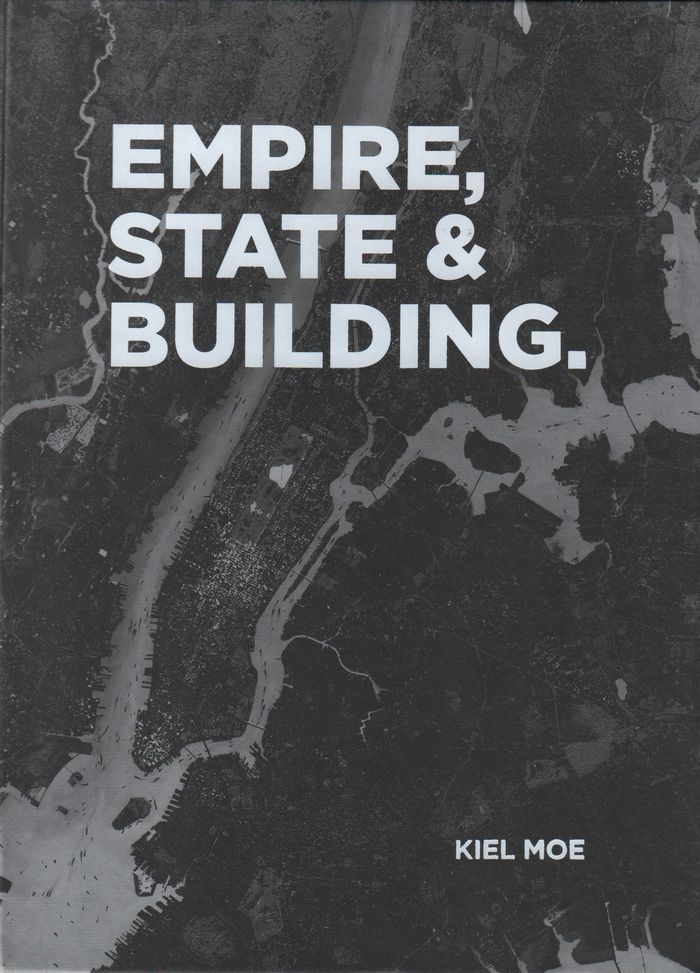
This book considers the material basis of building as a key impetus of both urbanization and the energetics of urban life. The otherwise externalized material geographies and thermodynamics of building’s material basis reveal much about the dynamics and efficacy of how we build. This book plots the material history and geography for one plot of land in Manhattan—the parcel of land under the Empire State Building—over the past two hundred years. Through rich illustrations, it tracks all the building material that have passed through this parcel or remain it in geographic and ecological dynamics: spatially (in terms of their geographic material footprints and industrial processes) and quantitatively (in terms of embodied energy, embodied carbon, and emergy flow). In successive chapters, the book articulates the empire and states that are inherent to building, but remain unconsidered—abstract and unknown—by architects.
Empire, state & building
Actions:
Price:
$43.95
(available to order)
Summary:
This book considers the material basis of building as a key impetus of both urbanization and the energetics of urban life. The otherwise externalized material geographies and thermodynamics of building’s material basis reveal much about the dynamics and efficacy of how we build. This book plots the material history and geography for one plot of land in Manhattan—the parcel of land under the Empire State Building—over the past two hundred years. Through rich illustrations, it tracks all the building material that have passed through this parcel or remain it in geographic and ecological dynamics: spatially (in terms of their geographic material footprints and industrial processes) and quantitatively (in terms of embodied energy, embodied carbon, and emergy flow). In successive chapters, the book articulates the empire and states that are inherent to building, but remain unconsidered—abstract and unknown—by architects.
Form:
books
books
Publication:
July 2017
July 2017
Subject:
Urban Theory
Urban Theory
Form:
books
books
Actions:
Price:
$46.00
(available to order)
Summary:
The pressure is on: people move to cities in ever-growing numbers. So we build new neighborhoods, we transform old industrial areas and renew the existing city. Right now, the focus lies on energy-neutral neighborhoods. But in order for these new neighborhoods to really work, residents need to be engaged and the tactics need to be embedded within a larger social policy.(...)
$46.00
(available to order)
Summary:
The pressure is on: people move to cities in ever-growing numbers. So we build new neighborhoods, we transform old industrial areas and renew the existing city. Right now, the focus lies on energy-neutral neighborhoods. But in order for these new neighborhoods to really work, residents need to be engaged and the tactics need to be embedded within a larger social policy.(...)
Title:
Neighbourhoods for the future: a plea for a sociological and ecological urbanism
Actions:
Price:
$46.00
(available to order)
Summary:
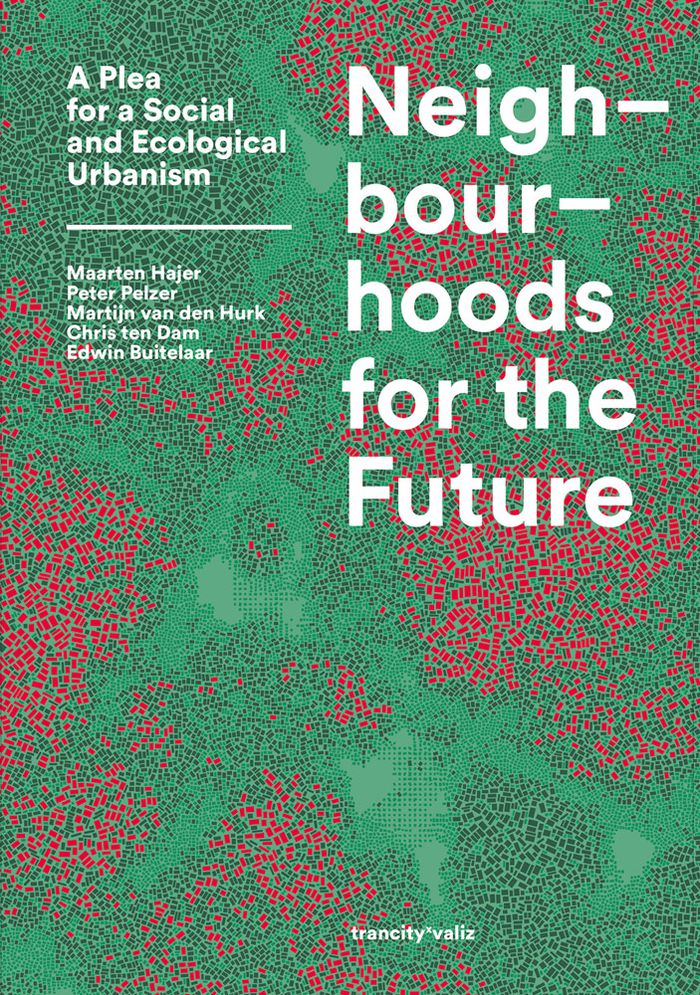
The pressure is on: people move to cities in ever-growing numbers. So we build new neighborhoods, we transform old industrial areas and renew the existing city. Right now, the focus lies on energy-neutral neighborhoods. But in order for these new neighborhoods to really work, residents need to be engaged and the tactics need to be embedded within a larger social policy. Only then do thriving cities arise. ''Neighbourhoods for the future'' revisits the neighborhood as the designated scale and arena to build our urban futures. The neighborhood is small enough to be tangible, yet big enough to make an actual difference. Introducing the concepts of neighborhood arrangements and ecologies, this book provides a new perspective on the relation between participants, resources and rules to spark change and prepare urbanites and policymakers for realizing their own sustainable neighborhoods for the future.
Neighbourhoods for the future: a plea for a sociological and ecological urbanism
Actions:
Price:
$46.00
(available to order)
Summary:
The pressure is on: people move to cities in ever-growing numbers. So we build new neighborhoods, we transform old industrial areas and renew the existing city. Right now, the focus lies on energy-neutral neighborhoods. But in order for these new neighborhoods to really work, residents need to be engaged and the tactics need to be embedded within a larger social policy. Only then do thriving cities arise. ''Neighbourhoods for the future'' revisits the neighborhood as the designated scale and arena to build our urban futures. The neighborhood is small enough to be tangible, yet big enough to make an actual difference. Introducing the concepts of neighborhood arrangements and ecologies, this book provides a new perspective on the relation between participants, resources and rules to spark change and prepare urbanites and policymakers for realizing their own sustainable neighborhoods for the future.
Form:
books
books
Publication:
February 2021
February 2021
Form:
books
books

Title:
Chroma: John Divola
Chroma: John Divola
Actions:
Price:
$70.00
(available to order)
Summary:
''Chroma'' is the name Californian artist John Divola has given to a large body of work made in the early 1980s that brought together a number of his interests – unnatural color (from gels covering his flash); geometry and nature; and the way photographs slip between symbolic meanings and actuality. At the same time, Divola was switching from color negative that he was(...)
$70.00
(available to order)
Summary:
''Chroma'' is the name Californian artist John Divola has given to a large body of work made in the early 1980s that brought together a number of his interests – unnatural color (from gels covering his flash); geometry and nature; and the way photographs slip between symbolic meanings and actuality. At the same time, Divola was switching from color negative that he was(...)
Title:
Chroma: John Divola
Actions:
Price:
$70.00
(available to order)
Summary:
''Chroma'' is the name Californian artist John Divola has given to a large body of work made in the early 1980s that brought together a number of his interests – unnatural color (from gels covering his flash); geometry and nature; and the way photographs slip between symbolic meanings and actuality. At the same time, Divola was switching from color negative that he was using for Zuma to large format color transparency. He became aware that the early C-type color prints faded badly and was trying to use a new, more stable material. This was Cibachrome, which printed from transparencies. It was very industrial and artificial, with deep color saturation and contrast. It was a very flawed material for conventional images but with unique properties that he ended up embracing for the Chroma images. Edition of 800 copies.
Chroma: John Divola
Actions:
Price:
$70.00
(available to order)
Summary:
''Chroma'' is the name Californian artist John Divola has given to a large body of work made in the early 1980s that brought together a number of his interests – unnatural color (from gels covering his flash); geometry and nature; and the way photographs slip between symbolic meanings and actuality. At the same time, Divola was switching from color negative that he was using for Zuma to large format color transparency. He became aware that the early C-type color prints faded badly and was trying to use a new, more stable material. This was Cibachrome, which printed from transparencies. It was very industrial and artificial, with deep color saturation and contrast. It was a very flawed material for conventional images but with unique properties that he ended up embracing for the Chroma images. Edition of 800 copies.
Form:
books
books
Publication:
January 2020
January 2020
Subject:
Photography monographs
Photography monographs
Form:
books
books
Actions:
Price:
$46.95
(available to order)
Summary:
In 'The Topography of Wellness', Sara Jensen Carr offers a chronological narrative of how six epidemics transformed the American urban landscape, reflecting changing views of the power of design, pathology of disease, and the epidemiology of the environment. From the infectious diseases of cholera and tuberculosis, to so-called social diseases of idleness and crime, to(...)
$46.95
(available to order)
Summary:
In 'The Topography of Wellness', Sara Jensen Carr offers a chronological narrative of how six epidemics transformed the American urban landscape, reflecting changing views of the power of design, pathology of disease, and the epidemiology of the environment. From the infectious diseases of cholera and tuberculosis, to so-called social diseases of idleness and crime, to(...)
Title:
The topography of wellness: how health and disease shaped the American landscape
Actions:
Price:
$46.95
(available to order)
Summary:
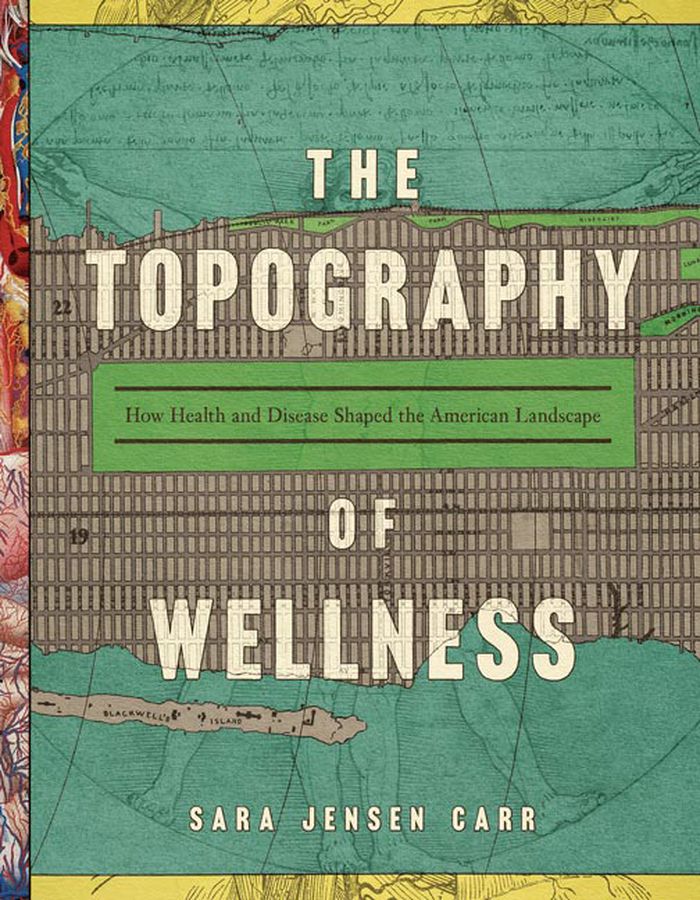
In 'The Topography of Wellness', Sara Jensen Carr offers a chronological narrative of how six epidemics transformed the American urban landscape, reflecting changing views of the power of design, pathology of disease, and the epidemiology of the environment. From the infectious diseases of cholera and tuberculosis, to so-called social diseases of idleness and crime, to the more complicated origins of today’s chronic diseases, each illness and its associated combat strategies has left its mark on our surroundings. While each solution succeeded in eliminating the disease on some level, sweeping environmental changes often came with significant social and physical consequences. Even more unexpectedly, some adaptations inadvertently incubated future epidemics. From the Industrial Revolution to present day, this book illuminates the constant evolution of our relationship to wellness and the environment by documenting the shifting grounds of illness and the urban landscape.
The topography of wellness: how health and disease shaped the American landscape
Actions:
Price:
$46.95
(available to order)
Summary:
In 'The Topography of Wellness', Sara Jensen Carr offers a chronological narrative of how six epidemics transformed the American urban landscape, reflecting changing views of the power of design, pathology of disease, and the epidemiology of the environment. From the infectious diseases of cholera and tuberculosis, to so-called social diseases of idleness and crime, to the more complicated origins of today’s chronic diseases, each illness and its associated combat strategies has left its mark on our surroundings. While each solution succeeded in eliminating the disease on some level, sweeping environmental changes often came with significant social and physical consequences. Even more unexpectedly, some adaptations inadvertently incubated future epidemics. From the Industrial Revolution to present day, this book illuminates the constant evolution of our relationship to wellness and the environment by documenting the shifting grounds of illness and the urban landscape.
Form:
books
books
Publication:
October 2021
October 2021
Subject:
Urban Theory
Urban Theory
Form:
books
books
Title:
Han Sungpil
Han Sungpil
Actions:
Price:
$76.50
(available to order)
Summary:
In his works of art the Korean photographer Han Sungpil confronts the themes of environment, energy production, and humankind’s impact on nature. The three series in this book of photographs are distinguished by their surprising perspective, which goes beyond the visual vocabulary normally found in environmental documentations. Whether it’s a painterly French landscape(...)
$76.50
(available to order)
Summary:
In his works of art the Korean photographer Han Sungpil confronts the themes of environment, energy production, and humankind’s impact on nature. The three series in this book of photographs are distinguished by their surprising perspective, which goes beyond the visual vocabulary normally found in environmental documentations. Whether it’s a painterly French landscape(...)
Title:
Han Sungpil
Actions:
Price:
$76.50
(available to order)
Summary:
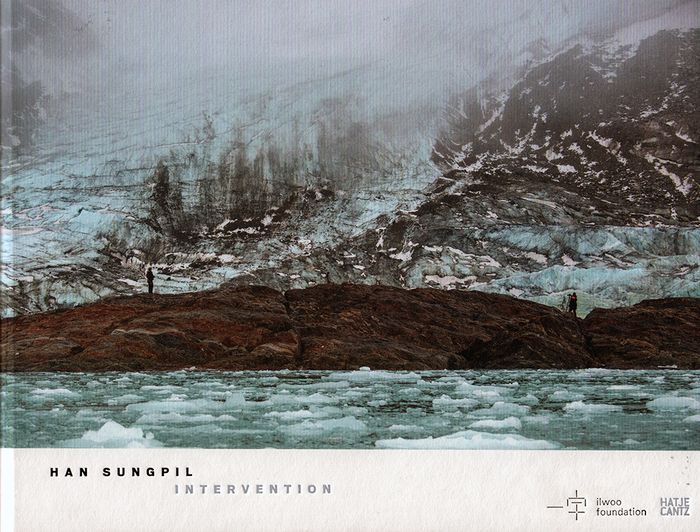
In his works of art the Korean photographer Han Sungpil confronts the themes of environment, energy production, and humankind’s impact on nature. The three series in this book of photographs are distinguished by their surprising perspective, which goes beyond the visual vocabulary normally found in environmental documentations. Whether it’s a painterly French landscape featuring nuclear power plants, presented as a scene of idyllic perfection, or a search for the relics of whale hunting and coal mining in the Arctic and Antarctic, Sungpil’s photographs tell, artfully and critically, of nature’s sublimity and humankind’s overexploitation of it. Photographs of abandoned trawlers, whaling stations, and industrial ruins set in front of monumental, ice-covered landscapes shift the focus to the exploitation of ecological resources, leaving the viewer speechless. Sungpil was awarded the Ilwoo Foundation’s prize for his moving works of art.
Han Sungpil
Actions:
Price:
$76.50
(available to order)
Summary:
In his works of art the Korean photographer Han Sungpil confronts the themes of environment, energy production, and humankind’s impact on nature. The three series in this book of photographs are distinguished by their surprising perspective, which goes beyond the visual vocabulary normally found in environmental documentations. Whether it’s a painterly French landscape featuring nuclear power plants, presented as a scene of idyllic perfection, or a search for the relics of whale hunting and coal mining in the Arctic and Antarctic, Sungpil’s photographs tell, artfully and critically, of nature’s sublimity and humankind’s overexploitation of it. Photographs of abandoned trawlers, whaling stations, and industrial ruins set in front of monumental, ice-covered landscapes shift the focus to the exploitation of ecological resources, leaving the viewer speechless. Sungpil was awarded the Ilwoo Foundation’s prize for his moving works of art.
Form:
books
books
Publication:
July 2017
July 2017
Subject:
Photography monographs
Photography monographs
Form:
books
books

Actions:
Price:
$27.95
(available to order)
Summary:
Confounded by global warming and in search of an affirmative politics that links ecology with social change, Matt Hern and Am Johal set off on a series of road trips to the tar sands of northern Alberta—perhaps the world's largest industrial site, dedicated to the dirty work of extracting oil from Alberta's vast reserves. Seamlessly combining travelogue, sophisticated(...)
$27.95
(available to order)
Summary:
Confounded by global warming and in search of an affirmative politics that links ecology with social change, Matt Hern and Am Johal set off on a series of road trips to the tar sands of northern Alberta—perhaps the world's largest industrial site, dedicated to the dirty work of extracting oil from Alberta's vast reserves. Seamlessly combining travelogue, sophisticated(...)
Title:
Global warming and the sweetness of life: a Tar Sands tale
Actions:
Price:
$27.95
(available to order)
Summary:
Confounded by global warming and in search of an affirmative politics that links ecology with social change, Matt Hern and Am Johal set off on a series of road trips to the tar sands of northern Alberta—perhaps the world's largest industrial site, dedicated to the dirty work of extracting oil from Alberta's vast reserves. Seamlessly combining travelogue, sophisticated political analysis, and ecological theory, speaking both to local residents and to leading scholars, the authors propose a new understanding of ecology that links the domination of the other-than-human world to the domination of humans by humans. They argue that any definition of ecology has to start with decolonization and that confronting global warming requires a politics that speaks to a different way of being in the world—a reconstituted understanding of the sweetness of life.
Global warming and the sweetness of life: a Tar Sands tale
Actions:
Price:
$27.95
(available to order)
Summary:
Confounded by global warming and in search of an affirmative politics that links ecology with social change, Matt Hern and Am Johal set off on a series of road trips to the tar sands of northern Alberta—perhaps the world's largest industrial site, dedicated to the dirty work of extracting oil from Alberta's vast reserves. Seamlessly combining travelogue, sophisticated political analysis, and ecological theory, speaking both to local residents and to leading scholars, the authors propose a new understanding of ecology that links the domination of the other-than-human world to the domination of humans by humans. They argue that any definition of ecology has to start with decolonization and that confronting global warming requires a politics that speaks to a different way of being in the world—a reconstituted understanding of the sweetness of life.
Form:
books
books
Publication:
March 2018
March 2018
Subject:
Environment and environmental theory
Environment and environmental theory
Form:
books
books
Title:
Designing modern Germany
Designing modern Germany
Actions:
Price:
$40.95
(available to order)
Summary:
This publication reveals how German attitudes toward national identity, modernity and technology are crucial to understanding German design. Aynsley traces the historical development of German design, beginning in the 1870s with the first dedicated Arts and Crafts schools and stretching through to the famous institutions of the Bauhaus and the Ulm Hochschule für(...)
$40.95
(available to order)
Summary:
This publication reveals how German attitudes toward national identity, modernity and technology are crucial to understanding German design. Aynsley traces the historical development of German design, beginning in the 1870s with the first dedicated Arts and Crafts schools and stretching through to the famous institutions of the Bauhaus and the Ulm Hochschule für(...)
Title:
Designing modern Germany
Actions:
Price:
$40.95
(available to order)
Summary:
This publication reveals how German attitudes toward national identity, modernity and technology are crucial to understanding German design. Aynsley traces the historical development of German design, beginning in the 1870s with the first dedicated Arts and Crafts schools and stretching through to the famous institutions of the Bauhaus and the Ulm Hochschule für Gestaltung. He analyses the works of leading figures such as Peter Behrens and Hannes Meyer, through to Ingo Maurer and Jil Sander, and many others in design specialties, including graphics, industrial products and furniture, fashion and architecture. He also offers the first consideration of the contrasting traditions of East and West Germany between 1945 and 1989. Whether examining the pre-First World War department store, the National Socialist fashion system or East Germany’s official design culture, German design significantly affected citizens’ daily lives.
Designing modern Germany
Actions:
Price:
$40.95
(available to order)
Summary:
This publication reveals how German attitudes toward national identity, modernity and technology are crucial to understanding German design. Aynsley traces the historical development of German design, beginning in the 1870s with the first dedicated Arts and Crafts schools and stretching through to the famous institutions of the Bauhaus and the Ulm Hochschule für Gestaltung. He analyses the works of leading figures such as Peter Behrens and Hannes Meyer, through to Ingo Maurer and Jil Sander, and many others in design specialties, including graphics, industrial products and furniture, fashion and architecture. He also offers the first consideration of the contrasting traditions of East and West Germany between 1945 and 1989. Whether examining the pre-First World War department store, the National Socialist fashion system or East Germany’s official design culture, German design significantly affected citizens’ daily lives.
Form:
books
books
Publication:
November 2008
November 2008
Subject:
Architecture since 1900, Europe
Architecture since 1900, Europe
Form:
books
books
Actions:
Price:
$41.95
(available to order)
Summary:
Although 3D printing promises a revolution in many industries, primarily industrial manufacturing, nowhere are the possibilities greater than in the field of product design and modular architecture. Ronald Rael and Virginia San Fratello, of the cutting-edge San Francisco Bay Area-based design firm Emerging Objects, have developed remarkable techniques for "printing" from(...)
$41.95
(available to order)
Summary:
Although 3D printing promises a revolution in many industries, primarily industrial manufacturing, nowhere are the possibilities greater than in the field of product design and modular architecture. Ronald Rael and Virginia San Fratello, of the cutting-edge San Francisco Bay Area-based design firm Emerging Objects, have developed remarkable techniques for "printing" from(...)
Title:
Printing architecture: innovative recipes for 3D printing
Actions:
Price:
$41.95
(available to order)
Summary:
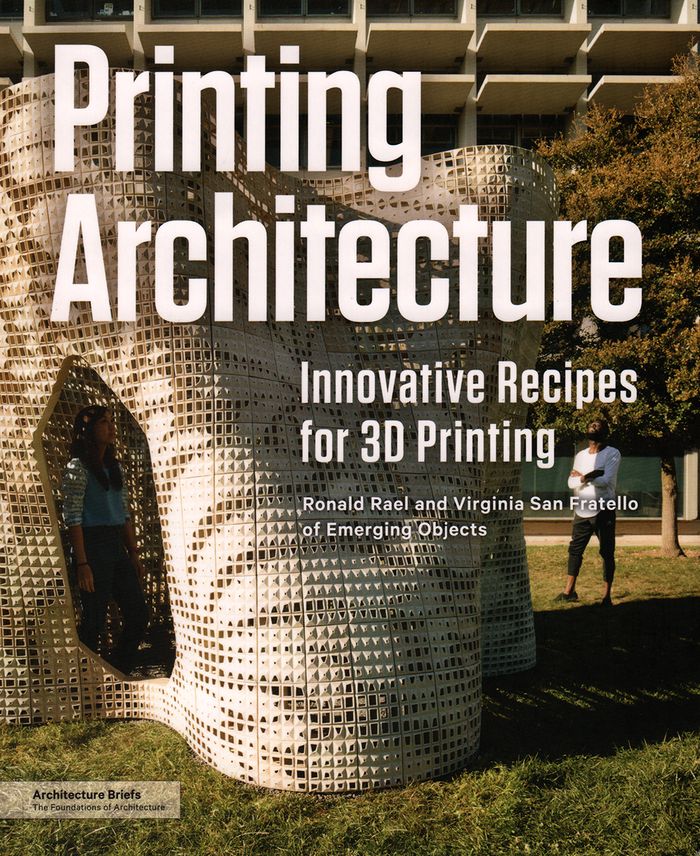
Although 3D printing promises a revolution in many industries, primarily industrial manufacturing, nowhere are the possibilities greater than in the field of product design and modular architecture. Ronald Rael and Virginia San Fratello, of the cutting-edge San Francisco Bay Area-based design firm Emerging Objects, have developed remarkable techniques for "printing" from a wide variety of powders, including sawdust, clay, cement, rubber, concrete, salt, and even coffee grounds, opening an entire realm of material, phenomenological, and ecological possibilities to designers. In addition to case studies and illustrations of their own work, Rael and San Fratello offer guidance for sourcing alternative materials, specific recipes for mixing compounds, and step-by-step instructions for conducting bench tests and setting parameters for material testing, to help readers understand the process of developing powder-based materials and their unique qualities.
Printing architecture: innovative recipes for 3D printing
Actions:
Price:
$41.95
(available to order)
Summary:
Although 3D printing promises a revolution in many industries, primarily industrial manufacturing, nowhere are the possibilities greater than in the field of product design and modular architecture. Ronald Rael and Virginia San Fratello, of the cutting-edge San Francisco Bay Area-based design firm Emerging Objects, have developed remarkable techniques for "printing" from a wide variety of powders, including sawdust, clay, cement, rubber, concrete, salt, and even coffee grounds, opening an entire realm of material, phenomenological, and ecological possibilities to designers. In addition to case studies and illustrations of their own work, Rael and San Fratello offer guidance for sourcing alternative materials, specific recipes for mixing compounds, and step-by-step instructions for conducting bench tests and setting parameters for material testing, to help readers understand the process of developing powder-based materials and their unique qualities.
Form:
books
books
Publication:
May 2018
May 2018
Subject:
Digital Architecture
Digital Architecture
Form:
books
books
Price:
$53.50
(available to order)
Summary:
In the 1920s, an unprecedented program of architectural and cultural renewal was established in the German city of Frankfurt am Main. This scheme became inscribed in cultural history under the name ''The New Frankfurt.'' As part of the housing and urban development initiative decided in 1925, more than 10,000 new residential units were planned. The Building Ministry’s(...)
$53.50
(available to order)
Summary:
In the 1920s, an unprecedented program of architectural and cultural renewal was established in the German city of Frankfurt am Main. This scheme became inscribed in cultural history under the name ''The New Frankfurt.'' As part of the housing and urban development initiative decided in 1925, more than 10,000 new residential units were planned. The Building Ministry’s(...)
Publication:
July 2019
July 2019
Title:
New human, new housing: architecture of the New Frankfurt 1925-1933
Actions:
Price:
$53.50
(available to order)
Summary:
In the 1920s, an unprecedented program of architectural and cultural renewal was established in the German city of Frankfurt am Main. This scheme became inscribed in cultural history under the name ''The New Frankfurt.'' As part of the housing and urban development initiative decided in 1925, more than 10,000 new residential units were planned. The Building Ministry’s architects, recruited from home and abroad, created pioneering work in many areas. Examples include the typification of family-oriented flats, plans for affordable apartments for those on low incomes, the first standard kitchen, the industrial prefabrication of building shells, the construction of schools designed around children’s needs, and integrated urban and green planning. In this book, four essays delve into the cultural background of the scheme and provide illuminating insights into the context of the work of its many actors.
New human, new housing: architecture of the New Frankfurt 1925-1933
Actions:
Price:
$53.50
(available to order)
Summary:
In the 1920s, an unprecedented program of architectural and cultural renewal was established in the German city of Frankfurt am Main. This scheme became inscribed in cultural history under the name ''The New Frankfurt.'' As part of the housing and urban development initiative decided in 1925, more than 10,000 new residential units were planned. The Building Ministry’s architects, recruited from home and abroad, created pioneering work in many areas. Examples include the typification of family-oriented flats, plans for affordable apartments for those on low incomes, the first standard kitchen, the industrial prefabrication of building shells, the construction of schools designed around children’s needs, and integrated urban and green planning. In this book, four essays delve into the cultural background of the scheme and provide illuminating insights into the context of the work of its many actors.
Form:
books
books
Publication:
July 2019
July 2019


