


6052 Results
Form:
books
books

Title:
The sun as error
The sun as error
Actions:
Price:
$75.50
(available to order)
Summary:
The Los Angeles based artist Shannon Ebner extends her exploration of photography, sculpture and language in this book. In collaboration with Dexter Sinister (design duo David Reinfurt and Stuart Bailey), "The Sun as Error" re-investigates the meaning and language of photographs, creating both an open-ended reading of her practice and also rethinking the idea of an(...)
$75.50
(available to order)
Summary:
The Los Angeles based artist Shannon Ebner extends her exploration of photography, sculpture and language in this book. In collaboration with Dexter Sinister (design duo David Reinfurt and Stuart Bailey), "The Sun as Error" re-investigates the meaning and language of photographs, creating both an open-ended reading of her practice and also rethinking the idea of an(...)
Title:
The sun as error
Actions:
Price:
$75.50
(available to order)
Summary:
The Los Angeles based artist Shannon Ebner extends her exploration of photography, sculpture and language in this book. In collaboration with Dexter Sinister (design duo David Reinfurt and Stuart Bailey), "The Sun as Error" re-investigates the meaning and language of photographs, creating both an open-ended reading of her practice and also rethinking the idea of an artist’s monograph. Far from straightforward, the book interweaves her bodies of work, previously unseen one-off pieces, with the language of technical diagrams, optical illusions, and graphic design. One of the persistent motifs through the book’s sequence is an asterisk and, specifically, one imbued with the legacy of the graphic designer Muriel Cooper. As the first design director for MIT Press and the cofounder of the Visible Language Workshop, Cooper’s legacy for reorienting and repositioning the direction of an artist’s monograph is imaginatively explored in the creative partnership of Dexter Sinister and Shannon Ebner. Shannon Ebner’s work has been shown in exhibitions including Trace at The Whitney Museum of American Art at Altria (2006), The 2006 California Biennial at The Orange County Museum of Art, Uncertain States of America, at The Serpentine Gallery, London (2006), Learn to Read, at the Tate Modern, London (2007), and the 2008 Whitney Biennial at The Whitney Museum of American Art.
The sun as error
Actions:
Price:
$75.50
(available to order)
Summary:
The Los Angeles based artist Shannon Ebner extends her exploration of photography, sculpture and language in this book. In collaboration with Dexter Sinister (design duo David Reinfurt and Stuart Bailey), "The Sun as Error" re-investigates the meaning and language of photographs, creating both an open-ended reading of her practice and also rethinking the idea of an artist’s monograph. Far from straightforward, the book interweaves her bodies of work, previously unseen one-off pieces, with the language of technical diagrams, optical illusions, and graphic design. One of the persistent motifs through the book’s sequence is an asterisk and, specifically, one imbued with the legacy of the graphic designer Muriel Cooper. As the first design director for MIT Press and the cofounder of the Visible Language Workshop, Cooper’s legacy for reorienting and repositioning the direction of an artist’s monograph is imaginatively explored in the creative partnership of Dexter Sinister and Shannon Ebner. Shannon Ebner’s work has been shown in exhibitions including Trace at The Whitney Museum of American Art at Altria (2006), The 2006 California Biennial at The Orange County Museum of Art, Uncertain States of America, at The Serpentine Gallery, London (2006), Learn to Read, at the Tate Modern, London (2007), and the 2008 Whitney Biennial at The Whitney Museum of American Art.
Form:
books
books
Publication:
October 2009
October 2009
Subject:
Photography monographs
Photography monographs
Form:
books
books
Title:
The arts and crafts movement
The arts and crafts movement
Actions:
Price:
$89.95
(available to order)
Summary:
Dating from the 1850s to the First World War, the Arts and Crafts movement was an international phenomenon of enormous scope and influence. It encompassed everything from architecture to town planning, metalwork and embroidery, in places as diverse as California and Budapest. Born of thinkers and practitioners in Victorian England its ideological currents reflect the(...)
$89.95
(available to order)
Summary:
Dating from the 1850s to the First World War, the Arts and Crafts movement was an international phenomenon of enormous scope and influence. It encompassed everything from architecture to town planning, metalwork and embroidery, in places as diverse as California and Budapest. Born of thinkers and practitioners in Victorian England its ideological currents reflect the(...)
Title:
The arts and crafts movement
Actions:
Price:
$89.95
(available to order)
Summary:
Dating from the 1850s to the First World War, the Arts and Crafts movement was an international phenomenon of enormous scope and influence. It encompassed everything from architecture to town planning, metalwork and embroidery, in places as diverse as California and Budapest. Born of thinkers and practitioners in Victorian England its ideological currents reflect the era’s most pressing social, political and artistic concerns. In this book Rosalind Blakesley explores the common ideas that give cohesion to a movement of otherwise bewildering breadth and stylistic heterogeneity. At the origins of the movement was a reaction against industrialization, the long-standing division between traditional crafts and fine art and the over-elaborate ornamentation which disguised an object or building’s true 'function'. Early British Arts and Crafts practitioners campaigned for a revival of old craft techniques, for the elevation of the applied arts and for 'honesty' in design, ideas that were picked up and developed across Europe and the United States, with national variants quickly emerging. Germany, for example, recognized the potential of industrial techniques and experimented with standardization in design; in Finland, then annexed to Russia, Arts and Crafts was allied to the search for self-expression and a national style in art. Examining both acknowledged Arts and Crafts centres and lesser-known communities, Rosalind Blakesley concludes her survey with an evaluation of the Movement’s significance in the twenty-first century.
The arts and crafts movement
Actions:
Price:
$89.95
(available to order)
Summary:
Dating from the 1850s to the First World War, the Arts and Crafts movement was an international phenomenon of enormous scope and influence. It encompassed everything from architecture to town planning, metalwork and embroidery, in places as diverse as California and Budapest. Born of thinkers and practitioners in Victorian England its ideological currents reflect the era’s most pressing social, political and artistic concerns. In this book Rosalind Blakesley explores the common ideas that give cohesion to a movement of otherwise bewildering breadth and stylistic heterogeneity. At the origins of the movement was a reaction against industrialization, the long-standing division between traditional crafts and fine art and the over-elaborate ornamentation which disguised an object or building’s true 'function'. Early British Arts and Crafts practitioners campaigned for a revival of old craft techniques, for the elevation of the applied arts and for 'honesty' in design, ideas that were picked up and developed across Europe and the United States, with national variants quickly emerging. Germany, for example, recognized the potential of industrial techniques and experimented with standardization in design; in Finland, then annexed to Russia, Arts and Crafts was allied to the search for self-expression and a national style in art. Examining both acknowledged Arts and Crafts centres and lesser-known communities, Rosalind Blakesley concludes her survey with an evaluation of the Movement’s significance in the twenty-first century.
Form:
books
books
Publication:
October 2006, London
October 2006, London
Subject:
Interior Design
Interior Design
Form:
books
books
Price:
$49.95
(available to order)
Summary:
Born into a large French-Canadian family in 1926, Mariette Rousseau embraced her passion for creative expression through wool and weaving at an early age. She studied art and weaving at l'École des beaux-arts in Quebec City and then worked at the California studio of ground-breaking American textile designer Dorothy Liebes. Back in Canada after an art-inspired trip to(...)
$49.95
(available to order)
Summary:
Born into a large French-Canadian family in 1926, Mariette Rousseau embraced her passion for creative expression through wool and weaving at an early age. She studied art and weaving at l'École des beaux-arts in Quebec City and then worked at the California studio of ground-breaking American textile designer Dorothy Liebes. Back in Canada after an art-inspired trip to(...)
Title:
Weaving modernist art: The life and work of Mariette Rousseau-Vermette
Actions:
Price:
$49.95
(available to order)
Summary:
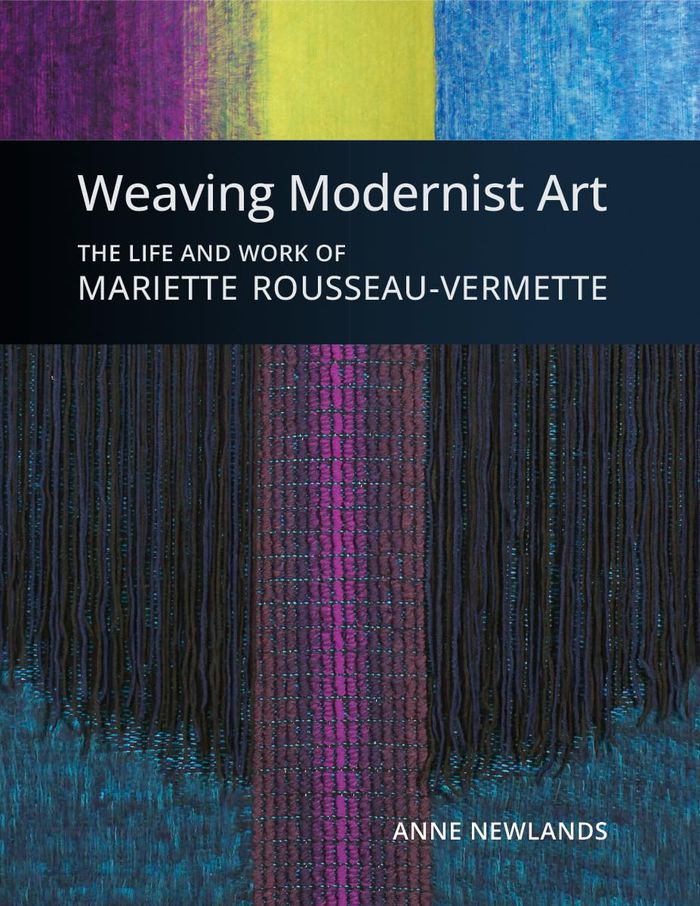
Born into a large French-Canadian family in 1926, Mariette Rousseau embraced her passion for creative expression through wool and weaving at an early age. She studied art and weaving at l'École des beaux-arts in Quebec City and then worked at the California studio of ground-breaking American textile designer Dorothy Liebes. Back in Canada after an art-inspired trip to Europe, she and her husband, artist and ceramist Claude Vermette, joined the growing movement of young French-Canadian artists in their embrace of abstraction and new forms of art and their rejection of the conservatism of Maurice Duplessis' mid-century Quebec. By the early 1960s, Rousseau-Vermette had forged collaborations with fellow artists, designers and architects with like ideas about public art. Over the next 40 years, she scaled the heights of her profession, weaving hundreds of radiant large-scale tapestries that complemented the cool interiors of modern architecture. She exhibited across Canada and internationally and attracted prestigious commissions from the private and public sectors, including commissions for theater curtains at the National Arts Centre, Ottawa and the Kennedy Center in Washington, DC. Yet three years after Rousseau-Vermette's death in 2006, Newlands discovered there wasn't a single book that told her story as a pioneer of modernist tapestry and one of Canada's most prolific and influential artist-weavers.
Weaving modernist art: The life and work of Mariette Rousseau-Vermette
Actions:
Price:
$49.95
(available to order)
Summary:
Born into a large French-Canadian family in 1926, Mariette Rousseau embraced her passion for creative expression through wool and weaving at an early age. She studied art and weaving at l'École des beaux-arts in Quebec City and then worked at the California studio of ground-breaking American textile designer Dorothy Liebes. Back in Canada after an art-inspired trip to Europe, she and her husband, artist and ceramist Claude Vermette, joined the growing movement of young French-Canadian artists in their embrace of abstraction and new forms of art and their rejection of the conservatism of Maurice Duplessis' mid-century Quebec. By the early 1960s, Rousseau-Vermette had forged collaborations with fellow artists, designers and architects with like ideas about public art. Over the next 40 years, she scaled the heights of her profession, weaving hundreds of radiant large-scale tapestries that complemented the cool interiors of modern architecture. She exhibited across Canada and internationally and attracted prestigious commissions from the private and public sectors, including commissions for theater curtains at the National Arts Centre, Ottawa and the Kennedy Center in Washington, DC. Yet three years after Rousseau-Vermette's death in 2006, Newlands discovered there wasn't a single book that told her story as a pioneer of modernist tapestry and one of Canada's most prolific and influential artist-weavers.
Form:
books
books
Publication:
March 2023
March 2023
Subject:
Current Exhibitions
Current Exhibitions
Form:
books
books
Price:
$63.95
(available to order)
Summary:
First built in Europe and grandly imported to the United States in the mid-nineteenth century, the classic multiway boulevard has been in decline for many years, victim of a narrowly focused approach to street design that views unencumbered vehicular traffic flow as the highest priority. The American preoccupation with destination and speed has made multiway boulevards(...)
$63.95
(available to order)
Summary:
First built in Europe and grandly imported to the United States in the mid-nineteenth century, the classic multiway boulevard has been in decline for many years, victim of a narrowly focused approach to street design that views unencumbered vehicular traffic flow as the highest priority. The American preoccupation with destination and speed has made multiway boulevards(...)
Subject:
Urban Theory
Urban Theory
Publication:
October 2001, Cambridge, Mass.
October 2001, Cambridge, Mass.
Title:
The boulevard book : history, evolution, design of multiway boulevards
Actions:
Price:
$63.95
(available to order)
Summary:
First built in Europe and grandly imported to the United States in the mid-nineteenth century, the classic multiway boulevard has been in decline for many years, victim of a narrowly focused approach to street design that views unencumbered vehicular traffic flow as the highest priority. The American preoccupation with destination and speed has made multiway boulevards increasingly rare as artifacts of the urban landscape. This book reintroduces the boulevard, tree-lined and with separate realms for through traffic and for slow-paced vehicular-pedestrian movement, as an important and often crucial feature of both historic and contemporary cities. It presents more than fifty boulevards—-as varied as Avenue Montaigne, in Paris; C. G. Road, in Ahmedabad, India; and The Esplanade, in Chico, California--celebrating their usefulness and beauty. It discusses their history and evolution, the misconceptions that led to their near-demise in the United States, and their potential as a modern street type. Based on wide research, "The Boulevard Book" examines the safety of these streets and offers design guidelines for professionals, scholars, and community decision makers. Extensive plans, cross sections, and perspective drawings permit visual comparisons. The book shows how multiway boulevards respond to many issues that are central to urban life, including livability, mobility, safety, interest, economic opportunity, mass transit, and open space.
The boulevard book : history, evolution, design of multiway boulevards
Actions:
Price:
$63.95
(available to order)
Summary:
First built in Europe and grandly imported to the United States in the mid-nineteenth century, the classic multiway boulevard has been in decline for many years, victim of a narrowly focused approach to street design that views unencumbered vehicular traffic flow as the highest priority. The American preoccupation with destination and speed has made multiway boulevards increasingly rare as artifacts of the urban landscape. This book reintroduces the boulevard, tree-lined and with separate realms for through traffic and for slow-paced vehicular-pedestrian movement, as an important and often crucial feature of both historic and contemporary cities. It presents more than fifty boulevards—-as varied as Avenue Montaigne, in Paris; C. G. Road, in Ahmedabad, India; and The Esplanade, in Chico, California--celebrating their usefulness and beauty. It discusses their history and evolution, the misconceptions that led to their near-demise in the United States, and their potential as a modern street type. Based on wide research, "The Boulevard Book" examines the safety of these streets and offers design guidelines for professionals, scholars, and community decision makers. Extensive plans, cross sections, and perspective drawings permit visual comparisons. The book shows how multiway boulevards respond to many issues that are central to urban life, including livability, mobility, safety, interest, economic opportunity, mass transit, and open space.
Form:
books
books
Publication:
October 2001, Cambridge, Mass.
October 2001, Cambridge, Mass.
Subject:
Urban Theory
Urban Theory
Form:
books
books
Title:
The Sea Ranch
The Sea Ranch
Actions:
Price:
$73.00
(available to order)
Summary:
A hundred miles north of San Francisco on California Coast Highway 1, the Sonoma County coast meets the Pacific Ocean in a magnificent display of nature. Waves crash upon the rocks or wash up on beautiful stretches of sandy beaches. This is the location of The Sea Ranch, an area covering several thousand acres of large, open meadows and forested natural settings(...)
$73.00
(available to order)
Summary:
A hundred miles north of San Francisco on California Coast Highway 1, the Sonoma County coast meets the Pacific Ocean in a magnificent display of nature. Waves crash upon the rocks or wash up on beautiful stretches of sandy beaches. This is the location of The Sea Ranch, an area covering several thousand acres of large, open meadows and forested natural settings(...)
Title:
The Sea Ranch
Actions:
Price:
$73.00
(available to order)
Summary:
A hundred miles north of San Francisco on California Coast Highway 1, the Sonoma County coast meets the Pacific Ocean in a magnificent display of nature. Waves crash upon the rocks or wash up on beautiful stretches of sandy beaches. This is the location of The Sea Ranch, an area covering several thousand acres of large, open meadows and forested natural settings interspersed with award-winning architecture. When the area, a sheep ranch well into the last century, was rediscovered for its beauty in the 1960's, it came to be envisioned as a home community that harmonized with the environment. Renowned landscape designer Lawrence Halprin's master plan for The Sea Ranch community accordingly incorporated a set of building guidelines that minimized the visual as well as physical impact upon the landscape. Subsequent buildings by architects such as Joseph Esherick, Charles Moore, William Turnbull, Obie Bowman, Donlyn Lyndon, and others have been recognized worldwide for environmentally sensitive planning and architecture. They sparked a generation of imitators that became part of what is known as "The Sea Ranch style," epitomizing what many people imagine when they think of Northern Californian architecture. This beautiful monograph, lavishly illustrated with over 300 newly commissioned photographs and including maps, plans, detailed descriptions of the houses, and essays by Donald Canty and Lawrence Halprin, presents the definitive record of The Sea Ranch community.
The Sea Ranch
Actions:
Price:
$73.00
(available to order)
Summary:
A hundred miles north of San Francisco on California Coast Highway 1, the Sonoma County coast meets the Pacific Ocean in a magnificent display of nature. Waves crash upon the rocks or wash up on beautiful stretches of sandy beaches. This is the location of The Sea Ranch, an area covering several thousand acres of large, open meadows and forested natural settings interspersed with award-winning architecture. When the area, a sheep ranch well into the last century, was rediscovered for its beauty in the 1960's, it came to be envisioned as a home community that harmonized with the environment. Renowned landscape designer Lawrence Halprin's master plan for The Sea Ranch community accordingly incorporated a set of building guidelines that minimized the visual as well as physical impact upon the landscape. Subsequent buildings by architects such as Joseph Esherick, Charles Moore, William Turnbull, Obie Bowman, Donlyn Lyndon, and others have been recognized worldwide for environmentally sensitive planning and architecture. They sparked a generation of imitators that became part of what is known as "The Sea Ranch style," epitomizing what many people imagine when they think of Northern Californian architecture. This beautiful monograph, lavishly illustrated with over 300 newly commissioned photographs and including maps, plans, detailed descriptions of the houses, and essays by Donald Canty and Lawrence Halprin, presents the definitive record of The Sea Ranch community.
Form:
books
books
Publication:
February 2004, New York
February 2004, New York
Subject:
Residential Architecture
Residential Architecture
Form:
books
books

Actions:
Price:
$78.00
(available to order)
Summary:
The need to personalize our surroundings is a defining human characteristic. For some this need becomes a compulsion to transform their personal surroundings into works of art. The John Michael Kohler Arts Center in Sheboygan, Wisconsin, has undertaken the mission to preserve these environments, which are presented for the first time in Sublime Spaces and Visionary(...)
$78.00
(available to order)
Summary:
The need to personalize our surroundings is a defining human characteristic. For some this need becomes a compulsion to transform their personal surroundings into works of art. The John Michael Kohler Arts Center in Sheboygan, Wisconsin, has undertaken the mission to preserve these environments, which are presented for the first time in Sublime Spaces and Visionary(...)
Subject:
Architecture since 1900, Europe
Architecture since 1900, Europe
Publication:
November 2007, New York
November 2007, New York
Title:
Sublime spaces & visionary worlds : Built environments of vernacular artists
Actions:
Price:
$78.00
(available to order)
Summary:
The need to personalize our surroundings is a defining human characteristic. For some this need becomes a compulsion to transform their personal surroundings into works of art. The John Michael Kohler Arts Center in Sheboygan, Wisconsin, has undertaken the mission to preserve these environments, which are presented for the first time in Sublime Spaces and Visionary Worlds. This colorful and inspiring book features the work of twenty-two vernacular artists whose locales, personal histories, and reasons for art-making vary widely but who all share a powerful connection to home-as-art environments. Featured projects range from art environments that remain intact, such as Simon Rodia’s Watts Towers in California, to sites lost over the years such as Emery Blagdon’s six hundred elaborate "Healing Machines," made of copper, aluminum, tinfoil, magnets, ribbons, farm machinery parts, painted light bulbs, beads, coffee can lids, and more. Sublime Spaces and Visionary Worlds is the first book to explore these spectacularly offbeat spaces in detail. From the "Original Rhinestone Cowboy" Loy Bowlin’s wall-to-wall glitter-and-foil living room to the concrete bestiary of the "witch of Fox Point" Mary Nohl, each artist and project is described in detail through a wealth of visuals and text. Sublime Spaces and Visionary Worlds reminds us that our decorative choices tell the world not just what we like but who we are.
Sublime spaces & visionary worlds : Built environments of vernacular artists
Actions:
Price:
$78.00
(available to order)
Summary:
The need to personalize our surroundings is a defining human characteristic. For some this need becomes a compulsion to transform their personal surroundings into works of art. The John Michael Kohler Arts Center in Sheboygan, Wisconsin, has undertaken the mission to preserve these environments, which are presented for the first time in Sublime Spaces and Visionary Worlds. This colorful and inspiring book features the work of twenty-two vernacular artists whose locales, personal histories, and reasons for art-making vary widely but who all share a powerful connection to home-as-art environments. Featured projects range from art environments that remain intact, such as Simon Rodia’s Watts Towers in California, to sites lost over the years such as Emery Blagdon’s six hundred elaborate "Healing Machines," made of copper, aluminum, tinfoil, magnets, ribbons, farm machinery parts, painted light bulbs, beads, coffee can lids, and more. Sublime Spaces and Visionary Worlds is the first book to explore these spectacularly offbeat spaces in detail. From the "Original Rhinestone Cowboy" Loy Bowlin’s wall-to-wall glitter-and-foil living room to the concrete bestiary of the "witch of Fox Point" Mary Nohl, each artist and project is described in detail through a wealth of visuals and text. Sublime Spaces and Visionary Worlds reminds us that our decorative choices tell the world not just what we like but who we are.
Form:
books
books
Publication:
November 2007, New York
November 2007, New York
Subject:
Architecture since 1900, Europe
Architecture since 1900, Europe
Form:
books
books
Title:
Generation X
Generation X
Actions:
Price:
$21.99
(available to order)
Summary:
"Generation X" is Douglas Coupland's acclaimed salute to the generation born in the late 1950s and 1960s - a generation known vaguely up to then as "twentysomething." Andy, Claire, and Dag, each in their twenties, have quit "pointless jobs done grudgingly to little applause" in their respective hometowns and cut themselves adrift on the California desert. In search of the(...)
$21.99
(available to order)
Summary:
"Generation X" is Douglas Coupland's acclaimed salute to the generation born in the late 1950s and 1960s - a generation known vaguely up to then as "twentysomething." Andy, Claire, and Dag, each in their twenties, have quit "pointless jobs done grudgingly to little applause" in their respective hometowns and cut themselves adrift on the California desert. In search of the(...)
Title:
Generation X
Actions:
Price:
$21.99
(available to order)
Summary:
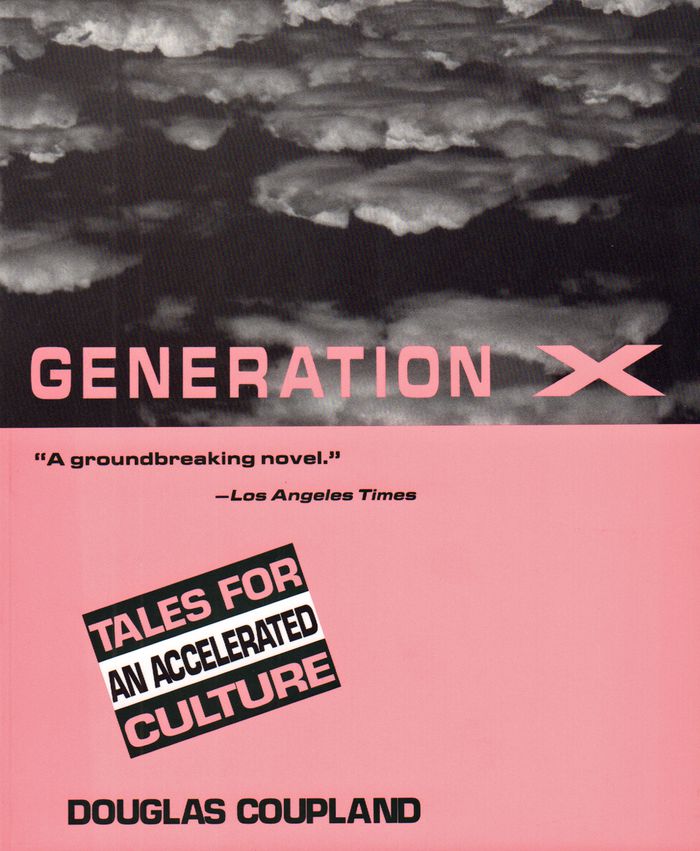
"Generation X" is Douglas Coupland's acclaimed salute to the generation born in the late 1950s and 1960s - a generation known vaguely up to then as "twentysomething." Andy, Claire, and Dag, each in their twenties, have quit "pointless jobs done grudgingly to little applause" in their respective hometowns and cut themselves adrift on the California desert. In search of the drastic changes that will lend meaning to their lives, they've mired themselves in the detritus of American cultural memory. Refugees from history, the three develop an ascetic regime of story-telling, boozing, and working McJobs - "low-pay, low-prestige, low-benefit, no-future jobs in the service industry." They create modern fables of love and death among the cosmetic surgery parlors and cocktail bars of Palm Springs, disturbingly funny tales of nuclear waste, historical overdosing, and mall culture. A dark snapshot of the trio's highly fortressed inner world quickly emerges - landscapes peopled with dead TV shows, "Elvis moments," and semi-disposable Swedish furniture. And from these landscapes, deeper portraits emerge, those of fanatically independent individuals, pathologically ambivalent about the future and brimming with unsatisfied longings for permanence, for love, and for their own home. Andy, Dag, and Claire are underemployed, overeducated, intensely private, and unpredictable. Like the group they mirror, they have nowhere to assuage their fears, and no culture to replace their anomie.
Generation X
Actions:
Price:
$21.99
(available to order)
Summary:
"Generation X" is Douglas Coupland's acclaimed salute to the generation born in the late 1950s and 1960s - a generation known vaguely up to then as "twentysomething." Andy, Claire, and Dag, each in their twenties, have quit "pointless jobs done grudgingly to little applause" in their respective hometowns and cut themselves adrift on the California desert. In search of the drastic changes that will lend meaning to their lives, they've mired themselves in the detritus of American cultural memory. Refugees from history, the three develop an ascetic regime of story-telling, boozing, and working McJobs - "low-pay, low-prestige, low-benefit, no-future jobs in the service industry." They create modern fables of love and death among the cosmetic surgery parlors and cocktail bars of Palm Springs, disturbingly funny tales of nuclear waste, historical overdosing, and mall culture. A dark snapshot of the trio's highly fortressed inner world quickly emerges - landscapes peopled with dead TV shows, "Elvis moments," and semi-disposable Swedish furniture. And from these landscapes, deeper portraits emerge, those of fanatically independent individuals, pathologically ambivalent about the future and brimming with unsatisfied longings for permanence, for love, and for their own home. Andy, Dag, and Claire are underemployed, overeducated, intensely private, and unpredictable. Like the group they mirror, they have nowhere to assuage their fears, and no culture to replace their anomie.
Form:
books
books
Publication:
March 1991
March 1991
Subject:
Literature and poetry
Literature and poetry
Form:
books
books
Actions:
Price:
$95.00
(available to order)
Summary:
This book presents three independent bodies of work by Henry Wessel, each being a precise sequence arranged to give the viewer the experience of what it felt like to pass through the territory described. The first series “Traffic” shows Wessel’s photos of drivers stuck in traffic as he commuted in the early 1980s from Richmond, California, to San Francisco in the morning(...)
$95.00
(available to order)
Summary:
This book presents three independent bodies of work by Henry Wessel, each being a precise sequence arranged to give the viewer the experience of what it felt like to pass through the territory described. The first series “Traffic” shows Wessel’s photos of drivers stuck in traffic as he commuted in the early 1980s from Richmond, California, to San Francisco in the morning(...)
Title:
Henry Wessel: Traffic / Sunset Park / Continental Divide
Actions:
Price:
$95.00
(available to order)
Summary:
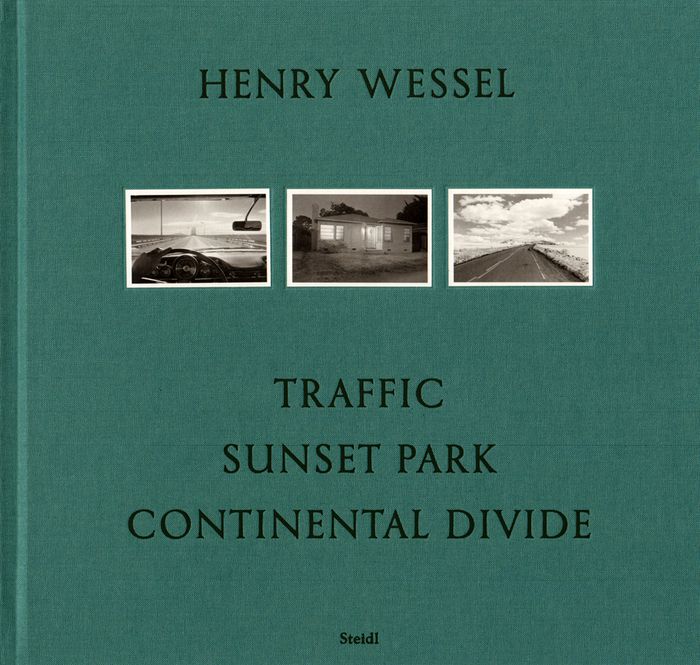
This book presents three independent bodies of work by Henry Wessel, each being a precise sequence arranged to give the viewer the experience of what it felt like to pass through the territory described. The first series “Traffic” shows Wessel’s photos of drivers stuck in traffic as he commuted in the early 1980s from Richmond, California, to San Francisco in the morning rush hour. Wessel records the determination, impatience and blank boredom of his fellow drivers as they navigate a daily drill that seems at times daunting and hopeless. “Sunset Park” is Wessel’s series of night photos of the modest working-class neighborhood of Sunset Park in Santa Monica. Over four years in the mid-1990s, Wessel captured the nocturnal transformation of suburbia into a strange, sometimes eerie,landscape. In his words: “You can’t help but notice how the world is reconfigured by the lights at night. The spot lighting of particular areas, the lack of ambient light, the unnatural way that shadows are cast, all take us to an unfamiliar place…” Wessel’s final series “Continental Divide” takes the viewer on a ride from the dense, suburban flatlands of the Midwest, up across the Rocky Mountains, and down into the sparse desert landscape of the American West. Wessel depicts its houses, shacks, street corners, and the highway, reminding us of the inherent aesthetics of the everyday.
Henry Wessel: Traffic / Sunset Park / Continental Divide
Actions:
Price:
$95.00
(available to order)
Summary:
This book presents three independent bodies of work by Henry Wessel, each being a precise sequence arranged to give the viewer the experience of what it felt like to pass through the territory described. The first series “Traffic” shows Wessel’s photos of drivers stuck in traffic as he commuted in the early 1980s from Richmond, California, to San Francisco in the morning rush hour. Wessel records the determination, impatience and blank boredom of his fellow drivers as they navigate a daily drill that seems at times daunting and hopeless. “Sunset Park” is Wessel’s series of night photos of the modest working-class neighborhood of Sunset Park in Santa Monica. Over four years in the mid-1990s, Wessel captured the nocturnal transformation of suburbia into a strange, sometimes eerie,landscape. In his words: “You can’t help but notice how the world is reconfigured by the lights at night. The spot lighting of particular areas, the lack of ambient light, the unnatural way that shadows are cast, all take us to an unfamiliar place…” Wessel’s final series “Continental Divide” takes the viewer on a ride from the dense, suburban flatlands of the Midwest, up across the Rocky Mountains, and down into the sparse desert landscape of the American West. Wessel depicts its houses, shacks, street corners, and the highway, reminding us of the inherent aesthetics of the everyday.
Form:
books
books
Publication:
January 2017
January 2017
Subject:
Photography monographs
Photography monographs
Form:
books
books
Holdings:
Description:
144 pages : illustrations (chiefly color), charts, map ; 24 cm
Description:
144 pages : illustrations (chiefly color), charts, map ; 24 cm
Author:
Subject:
Publication:
Berlin : Hatje Cantz Verlag GmbH ; Cambridge, Massachusetts : The MIT Press, [2022], ©2022
Berlin : Hatje Cantz Verlag GmbH ; Cambridge, Massachusetts : The MIT Press, [2022], ©2022
Title:
Spatializing justice : building blocks / Teddy Cruz and Fonna Forman.
Actions:
Holdings:
Description:
144 pages : illustrations (chiefly color), charts, map ; 24 cm
Spatializing justice : building blocks / Teddy Cruz and Fonna Forman.
Actions:
Holdings:
Description:
144 pages : illustrations (chiefly color), charts, map ; 24 cm
Form:
books
books
Publication:
Berlin : Hatje Cantz Verlag GmbH ; Cambridge, Massachusetts : The MIT Press, [2022], ©2022
Berlin : Hatje Cantz Verlag GmbH ; Cambridge, Massachusetts : The MIT Press, [2022], ©2022
Author:
Subject:
Form:
books
books

Price:
$29.00
(available to order)
Summary:
Preface by Fritz Haeg. Texts by Fritz Haeg, Diana Balmori, Rosalind Creasy, Michael Pollan, Lesley Stern, Michelle Christman, Stan Cox, Michael Foti. The Edible Estates project proposes the replacement of the domestic front lawn with a highly productive edible landscape. It was initiated by architect and artist Fritz Haeg on Independence Day, 2005, with the planting of(...)
$29.00
(available to order)
Summary:
Preface by Fritz Haeg. Texts by Fritz Haeg, Diana Balmori, Rosalind Creasy, Michael Pollan, Lesley Stern, Michelle Christman, Stan Cox, Michael Foti. The Edible Estates project proposes the replacement of the domestic front lawn with a highly productive edible landscape. It was initiated by architect and artist Fritz Haeg on Independence Day, 2005, with the planting of(...)
Title:
Edible estates: Attack on the front lawn. A project by Fritz Haeg
Actions:
Price:
$29.00
(available to order)
Summary:
Preface by Fritz Haeg. Texts by Fritz Haeg, Diana Balmori, Rosalind Creasy, Michael Pollan, Lesley Stern, Michelle Christman, Stan Cox, Michael Foti. The Edible Estates project proposes the replacement of the domestic front lawn with a highly productive edible landscape. It was initiated by architect and artist Fritz Haeg on Independence Day, 2005, with the planting of the first regional prototype garden in the geographic center of the United States, Salina, Kansas. Since then three more prototype gardens have been created, in Lakewood, California; Maplewood, New Jersey and London, England. Edible Estates regional prototype gardens will ultimately be established in nine cities across the United States. Edible Estates: Attack on the Front Lawn documents the first four gardens with personal accounts written by the owners, garden plans and photographs illustrating the creation of the gardens--from ripping up the grass to harvesting a wide variety of fruits, vegetables and herbs. Essays by Haeg, landscape architect Diana Balmori, garden and food writer Rosalind Creasy, author Michael Pollan and artist and writer Lesley Stern set the Edible Estates project in the context of larger issues concerning the environment, global food production and the imperative to generate a sense of community in our urban and suburban neighborhoods. This smart, affordable and well-designed book also includes reports and photographs from the owners of other edible front yards around the country, as well as helpful resources to guide you in making your own Edible Estate.
Edible estates: Attack on the front lawn. A project by Fritz Haeg
Actions:
Price:
$29.00
(available to order)
Summary:
Preface by Fritz Haeg. Texts by Fritz Haeg, Diana Balmori, Rosalind Creasy, Michael Pollan, Lesley Stern, Michelle Christman, Stan Cox, Michael Foti. The Edible Estates project proposes the replacement of the domestic front lawn with a highly productive edible landscape. It was initiated by architect and artist Fritz Haeg on Independence Day, 2005, with the planting of the first regional prototype garden in the geographic center of the United States, Salina, Kansas. Since then three more prototype gardens have been created, in Lakewood, California; Maplewood, New Jersey and London, England. Edible Estates regional prototype gardens will ultimately be established in nine cities across the United States. Edible Estates: Attack on the Front Lawn documents the first four gardens with personal accounts written by the owners, garden plans and photographs illustrating the creation of the gardens--from ripping up the grass to harvesting a wide variety of fruits, vegetables and herbs. Essays by Haeg, landscape architect Diana Balmori, garden and food writer Rosalind Creasy, author Michael Pollan and artist and writer Lesley Stern set the Edible Estates project in the context of larger issues concerning the environment, global food production and the imperative to generate a sense of community in our urban and suburban neighborhoods. This smart, affordable and well-designed book also includes reports and photographs from the owners of other edible front yards around the country, as well as helpful resources to guide you in making your own Edible Estate.
Form:
books
books
Publication:
February 2008, New York
February 2008, New York
Subject:
Landscape Theory
Landscape Theory


