


10588 Results
Form:
books
books
Price:
$38.50
(available in store)
Summary:
In ''The Aesthetics of Ambiguity: Understanding and Addressing Monoculture'' Pascal Gielen and Nav Haq argue that multiculturalism is paradoxically based on monocultural thinking. The publication explores this paradox by exploring monoculture in a variety of contemporary contexts. The book sets out to analyse monoculture using a multifaceted approach, by bringing together(...)
$38.50
(available in store)
Summary:
In ''The Aesthetics of Ambiguity: Understanding and Addressing Monoculture'' Pascal Gielen and Nav Haq argue that multiculturalism is paradoxically based on monocultural thinking. The publication explores this paradox by exploring monoculture in a variety of contemporary contexts. The book sets out to analyse monoculture using a multifaceted approach, by bringing together(...)
Title:
The aesthetics of ambiguity: Understanding and adressing monoculture
Actions:
Price:
$38.50
(available in store)
Summary:
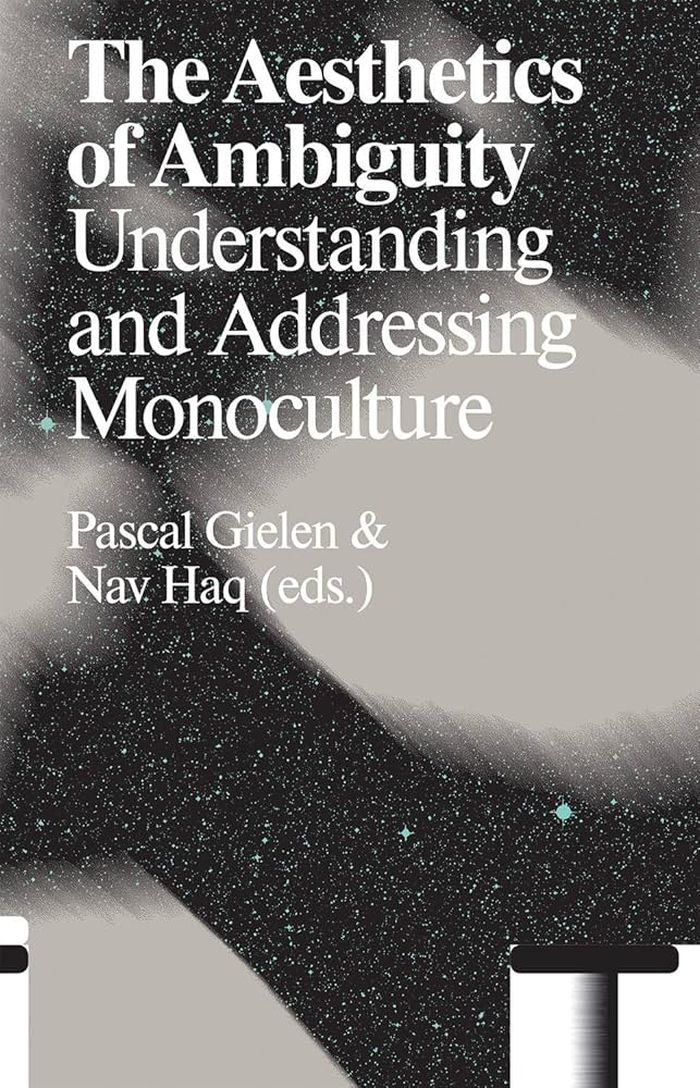
In ''The Aesthetics of Ambiguity: Understanding and Addressing Monoculture'' Pascal Gielen and Nav Haq argue that multiculturalism is paradoxically based on monocultural thinking. The publication explores this paradox by exploring monoculture in a variety of contemporary contexts. The book sets out to analyse monoculture using a multifaceted approach, by bringing together historical, social, cultural and ideological perspectives, using the dual role of art as tool for reconciliation and division in societies. ''The Aesthetics of Ambiguity'' gives stage to artists, thinkers and institutional practices who dare to play with the rules of a broader society and thus generate ambiguity ‘at large’. The book represents a quest for (more) ambiguity in order to avoid rigid borders or black-and-white polarities between cultures, as well as between practices of art and scientific thinking. By doing so, the artists, activists and researchers featured in this book plea for a politics and aesthetics of ambiguity to deal with the complexity of our living together on Earth.
The aesthetics of ambiguity: Understanding and adressing monoculture
Actions:
Price:
$38.50
(available in store)
Summary:
In ''The Aesthetics of Ambiguity: Understanding and Addressing Monoculture'' Pascal Gielen and Nav Haq argue that multiculturalism is paradoxically based on monocultural thinking. The publication explores this paradox by exploring monoculture in a variety of contemporary contexts. The book sets out to analyse monoculture using a multifaceted approach, by bringing together historical, social, cultural and ideological perspectives, using the dual role of art as tool for reconciliation and division in societies. ''The Aesthetics of Ambiguity'' gives stage to artists, thinkers and institutional practices who dare to play with the rules of a broader society and thus generate ambiguity ‘at large’. The book represents a quest for (more) ambiguity in order to avoid rigid borders or black-and-white polarities between cultures, as well as between practices of art and scientific thinking. By doing so, the artists, activists and researchers featured in this book plea for a politics and aesthetics of ambiguity to deal with the complexity of our living together on Earth.
Form:
books
books
Publication:
December 2024
December 2024
Subject:
Art Theory
Art Theory
Form:
books
books

Title:
Smaller architecture
Smaller architecture
Actions:
Price:
$15.00
(available in store)
Summary:
In this book, Michael Meredith speculates on the possibilities of what Robin Evans once described as a "smaller architecture." "Smaller Architecture" rejects the Larger Architecture that has come to dominate in the last thirty years, with the globalization of architecture, with what Rem Koolhaas celebrated as "Bigness," and with the embrace of new forms of large-scale(...)
$15.00
(available in store)
Summary:
In this book, Michael Meredith speculates on the possibilities of what Robin Evans once described as a "smaller architecture." "Smaller Architecture" rejects the Larger Architecture that has come to dominate in the last thirty years, with the globalization of architecture, with what Rem Koolhaas celebrated as "Bigness," and with the embrace of new forms of large-scale(...)
Title:
Smaller architecture
Actions:
Price:
$15.00
(available in store)
Summary:
In this book, Michael Meredith speculates on the possibilities of what Robin Evans once described as a "smaller architecture." "Smaller Architecture" rejects the Larger Architecture that has come to dominate in the last thirty years, with the globalization of architecture, with what Rem Koolhaas celebrated as "Bigness," and with the embrace of new forms of large-scale finance and corporate management. Against the speculative financial models that define Larger Architecture and its rapacious mechanisms of real estate development, Meredith's vision for a "Smaller Architecture" proposes economic and social forms along the lines sketched out by the economist E. F. Schumacher and the urban theorist Jane Jacobs, and inspired by the philosophical writings of Emanuele Coccia, Edouard Glissant and Cornell West. Against the abstract and hierarchical business management models of large corporate firms, "Smaller Architecture" imagines local, radically inclusive, and anarchist forms of organization in smaller practices.
Smaller architecture
Actions:
Price:
$15.00
(available in store)
Summary:
In this book, Michael Meredith speculates on the possibilities of what Robin Evans once described as a "smaller architecture." "Smaller Architecture" rejects the Larger Architecture that has come to dominate in the last thirty years, with the globalization of architecture, with what Rem Koolhaas celebrated as "Bigness," and with the embrace of new forms of large-scale finance and corporate management. Against the speculative financial models that define Larger Architecture and its rapacious mechanisms of real estate development, Meredith's vision for a "Smaller Architecture" proposes economic and social forms along the lines sketched out by the economist E. F. Schumacher and the urban theorist Jane Jacobs, and inspired by the philosophical writings of Emanuele Coccia, Edouard Glissant and Cornell West. Against the abstract and hierarchical business management models of large corporate firms, "Smaller Architecture" imagines local, radically inclusive, and anarchist forms of organization in smaller practices.
Form:
books
books
Publication:
September 2025
September 2025
Subject:
Architectural Theory
Architectural Theory
Form:
books
books
Actions:
Price:
$89.95
(available to order)
Summary:
This book uncovers the overlooked material practices that were crucial to architectural production in the eighteenth century. Centred on the architecture of England and Ireland, it examines the facing materials that define the distinctive character of cities and regions. Focusing on the final stages of construction—the external façade and interior finishes in stone,(...)
$89.95
(available to order)
Summary:
This book uncovers the overlooked material practices that were crucial to architectural production in the eighteenth century. Centred on the architecture of England and Ireland, it examines the facing materials that define the distinctive character of cities and regions. Focusing on the final stages of construction—the external façade and interior finishes in stone,(...)
Title:
Architecture and artifice: The Crafted Surface in Eighteenth-Century Building Practice
Actions:
Price:
$89.95
(available to order)
Summary:
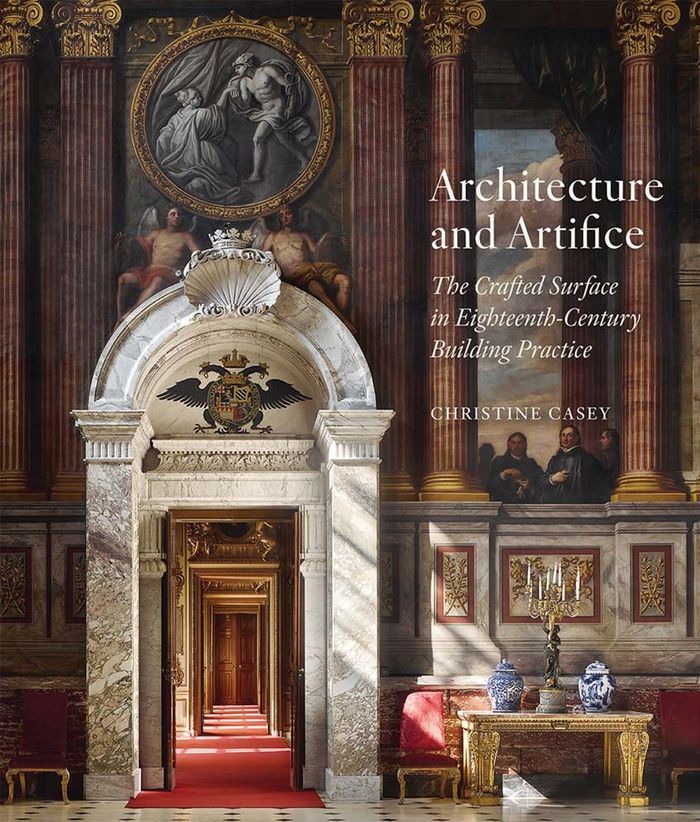
This book uncovers the overlooked material practices that were crucial to architectural production in the eighteenth century. Centred on the architecture of England and Ireland, it examines the facing materials that define the distinctive character of cities and regions. Focusing on the final stages of construction—the external façade and interior finishes in stone, plaster, and wood—Architecture and Artifice combines archival research with insights from architectural conservation to reveal the hidden techniques behind these structures. It explores the lives of craftsmen, uncovering the unwritten standards that guided their work and argues for the agency of materials and craft in shaping the meanings of eighteenth-century buildings. Featuring a cast of lesser-known craftsmen alongside new perspectives on iconic structures such as Chatsworth, the Cambridge Senate House, and Dublin’s Parliament House, the book introduces a wealth of previously unpublished archival material uncovering the intricate processes and people behind the era’s most enduring buildings.
Architecture and artifice: The Crafted Surface in Eighteenth-Century Building Practice
Actions:
Price:
$89.95
(available to order)
Summary:
This book uncovers the overlooked material practices that were crucial to architectural production in the eighteenth century. Centred on the architecture of England and Ireland, it examines the facing materials that define the distinctive character of cities and regions. Focusing on the final stages of construction—the external façade and interior finishes in stone, plaster, and wood—Architecture and Artifice combines archival research with insights from architectural conservation to reveal the hidden techniques behind these structures. It explores the lives of craftsmen, uncovering the unwritten standards that guided their work and argues for the agency of materials and craft in shaping the meanings of eighteenth-century buildings. Featuring a cast of lesser-known craftsmen alongside new perspectives on iconic structures such as Chatsworth, the Cambridge Senate House, and Dublin’s Parliament House, the book introduces a wealth of previously unpublished archival material uncovering the intricate processes and people behind the era’s most enduring buildings.
Form:
books
books
Publication:
October 2025
October 2025
Subject:
Architectural Theory
Architectural Theory
Form:
books
books
Actions:
Price:
$55.00
(available in store)
Summary:
« Nous sommes aujourd’hui confrontés à un paradoxe majeur: il faudrait construire un monde nouveau mais nous n’avons plus les moyens de le faire. Le changement climatique impose à lui seul une conception entièrement renouvelée du bâti; l’élévation du niveau de la mer et l’augmentation des catastrophes naturelles exigent de repenser la position et l’organisation des(...)
$55.00
(available in store)
Summary:
« Nous sommes aujourd’hui confrontés à un paradoxe majeur: il faudrait construire un monde nouveau mais nous n’avons plus les moyens de le faire. Le changement climatique impose à lui seul une conception entièrement renouvelée du bâti; l’élévation du niveau de la mer et l’augmentation des catastrophes naturelles exigent de repenser la position et l’organisation des(...)
Title:
Post-démolition, l'architecture face aux ruines
Actions:
Price:
$55.00
(available in store)
Summary:
« Nous sommes aujourd’hui confrontés à un paradoxe majeur: il faudrait construire un monde nouveau mais nous n’avons plus les moyens de le faire. Le changement climatique impose à lui seul une conception entièrement renouvelée du bâti; l’élévation du niveau de la mer et l’augmentation des catastrophes naturelles exigent de repenser la position et l’organisation des établissements humains; les limites planétaires appellent une réorganisation profonde du territoire et du construit. Seulement voilà: le monde, accablé par deux siècles d’intense production, a besoin de répit; il ne peut accepter la démolition des existants et l’édification de nouvelles installations, lesquelles alourdiraient son bilan carbone et épuiseraient davantage ses ressources. Nous devons donc utiliser les situations déjà construites et non plus les étendre ou les remplacer... »
Post-démolition, l'architecture face aux ruines
Actions:
Price:
$55.00
(available in store)
Summary:
« Nous sommes aujourd’hui confrontés à un paradoxe majeur: il faudrait construire un monde nouveau mais nous n’avons plus les moyens de le faire. Le changement climatique impose à lui seul une conception entièrement renouvelée du bâti; l’élévation du niveau de la mer et l’augmentation des catastrophes naturelles exigent de repenser la position et l’organisation des établissements humains; les limites planétaires appellent une réorganisation profonde du territoire et du construit. Seulement voilà: le monde, accablé par deux siècles d’intense production, a besoin de répit; il ne peut accepter la démolition des existants et l’édification de nouvelles installations, lesquelles alourdiraient son bilan carbone et épuiseraient davantage ses ressources. Nous devons donc utiliser les situations déjà construites et non plus les étendre ou les remplacer... »
Form:
books
books
Publication:
November 2025
November 2025
Subject:
Architectural Theory
Architectural Theory
Form:
books
books
Title:
Adapter la ville aux changements climatiques : Des experimentations de concertation à Montréal
Adapter la ville aux changements climatiques : Des experimentations de concertation à Montréal
Actions:
Price:
$45.00
(available to order)
Summary:
Cet ouvrage discute des transformations dans la gouvernance et la planification urbaine en contexte de changements climatiques, à partir d’une friche urbaine en réaménagement à Montréal. Lachine-Est est un espace de multiples expérimentations évoluant en parallèle, parfois en convergence ou en porte-à-faux, qui permettent de comprendre les enjeux de l’adaptation et de la(...)
$45.00
(available to order)
Summary:
Cet ouvrage discute des transformations dans la gouvernance et la planification urbaine en contexte de changements climatiques, à partir d’une friche urbaine en réaménagement à Montréal. Lachine-Est est un espace de multiples expérimentations évoluant en parallèle, parfois en convergence ou en porte-à-faux, qui permettent de comprendre les enjeux de l’adaptation et de la(...)
Title:
Adapter la ville aux changements climatiques : Des experimentations de concertation à Montréal
Actions:
Price:
$45.00
(available to order)
Summary:
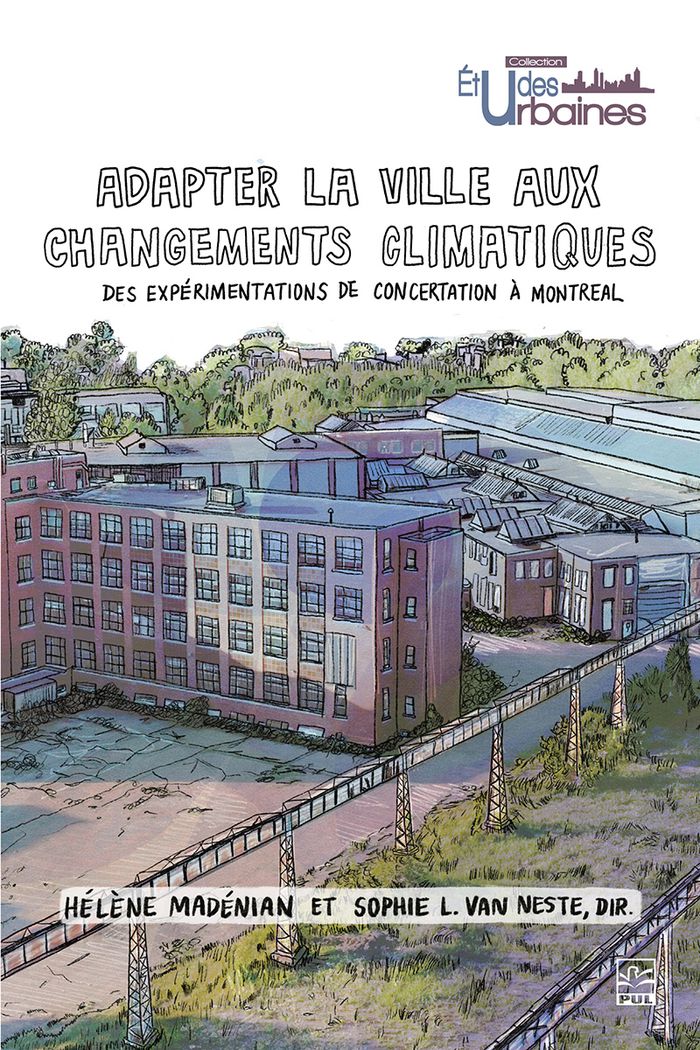
Cet ouvrage discute des transformations dans la gouvernance et la planification urbaine en contexte de changements climatiques, à partir d’une friche urbaine en réaménagement à Montréal. Lachine-Est est un espace de multiples expérimentations évoluant en parallèle, parfois en convergence ou en porte-à-faux, qui permettent de comprendre les enjeux de l’adaptation et de la gouvernance partagée à Montréal et ailleurs. Dans ses trois parties – transformer la gouvernance urbaine, l’urbanisme, l’intervention urbaine –, l’ambition est de sortir l’adaptation aux changement s climatiques des cadres trop étroits qui limitent sa portée. En plus des analyses issues de la recherche-action du Labo Climat Montréal, l’ouvrage propose des voix plurielles, avec des perspectives citoyennes, communautaires et de planificateurs. Le livre met l’accent sur un moteur d’ambitions renouvelées dans l’adaptation aux changements climatiques : des expérimentations de concertation. Il est question du développement de dispositifs de travail concerté rassemblant des acteurs peu habitués à travailler ensemble, dans des institutions et hors de celles-ci, avec un plus grand partage de pouvoirs, ainsi que la construction de sens et de leviers collectifs pour agir.
Adapter la ville aux changements climatiques : Des experimentations de concertation à Montréal
Actions:
Price:
$45.00
(available to order)
Summary:
Cet ouvrage discute des transformations dans la gouvernance et la planification urbaine en contexte de changements climatiques, à partir d’une friche urbaine en réaménagement à Montréal. Lachine-Est est un espace de multiples expérimentations évoluant en parallèle, parfois en convergence ou en porte-à-faux, qui permettent de comprendre les enjeux de l’adaptation et de la gouvernance partagée à Montréal et ailleurs. Dans ses trois parties – transformer la gouvernance urbaine, l’urbanisme, l’intervention urbaine –, l’ambition est de sortir l’adaptation aux changement s climatiques des cadres trop étroits qui limitent sa portée. En plus des analyses issues de la recherche-action du Labo Climat Montréal, l’ouvrage propose des voix plurielles, avec des perspectives citoyennes, communautaires et de planificateurs. Le livre met l’accent sur un moteur d’ambitions renouvelées dans l’adaptation aux changements climatiques : des expérimentations de concertation. Il est question du développement de dispositifs de travail concerté rassemblant des acteurs peu habitués à travailler ensemble, dans des institutions et hors de celles-ci, avec un plus grand partage de pouvoirs, ainsi que la construction de sens et de leviers collectifs pour agir.
Form:
books
books
Publication:
November 2025
November 2025
Subject:
Urban Theory
Urban Theory
Form:
books
books

Title:
Patrimoine et développement : De l'attractivité des territoires à la qualité des miclieix de vies
Patrimoine et développement : De l'attractivité des territoires à la qualité des miclieix de vies
Actions:
Price:
$35.00
(available to order)
Summary:
La formulation récente d’approches critiques du patrimoine et du développement invite à prendre en compte des formes plus diverses de patrimoine et à considérer des options de développement local qui privilégient la qualité des milieux de vie, l’usage des territoires et la participation citoyenne. C’est ce que se proposent de faire les autrices et auteurs de cet ouvrage.(...)
$35.00
(available to order)
Summary:
La formulation récente d’approches critiques du patrimoine et du développement invite à prendre en compte des formes plus diverses de patrimoine et à considérer des options de développement local qui privilégient la qualité des milieux de vie, l’usage des territoires et la participation citoyenne. C’est ce que se proposent de faire les autrices et auteurs de cet ouvrage.(...)
Title:
Patrimoine et développement : De l'attractivité des territoires à la qualité des miclieix de vies
Actions:
Price:
$35.00
(available to order)
Summary:
La formulation récente d’approches critiques du patrimoine et du développement invite à prendre en compte des formes plus diverses de patrimoine et à considérer des options de développement local qui privilégient la qualité des milieux de vie, l’usage des territoires et la participation citoyenne. C’est ce que se proposent de faire les autrices et auteurs de cet ouvrage. S’éloignant de conceptions traditionnelles dans lesquelles les pouvoirs publics prenaient en charge les processus patrimoniaux et ceux de développement local, les expériences rassemblées ici explorent diverses initiatives dans lesquelles des communautés – en Europe, au Canada, en Amérique Latine et en Afrique – se saisissent d’éléments de leur passé pour bâtir, par elles-mêmes, des futurs désirables. « Patrimoine et développement local?: de l’attractivité des territoires à la qualité des milieux de vie » s’adresse à celles et ceux qui s’intéressent au patrimoine et qui s’interrogent sur ses effets et son rôle dans le développement des territoires.
Patrimoine et développement : De l'attractivité des territoires à la qualité des miclieix de vies
Actions:
Price:
$35.00
(available to order)
Summary:
La formulation récente d’approches critiques du patrimoine et du développement invite à prendre en compte des formes plus diverses de patrimoine et à considérer des options de développement local qui privilégient la qualité des milieux de vie, l’usage des territoires et la participation citoyenne. C’est ce que se proposent de faire les autrices et auteurs de cet ouvrage. S’éloignant de conceptions traditionnelles dans lesquelles les pouvoirs publics prenaient en charge les processus patrimoniaux et ceux de développement local, les expériences rassemblées ici explorent diverses initiatives dans lesquelles des communautés – en Europe, au Canada, en Amérique Latine et en Afrique – se saisissent d’éléments de leur passé pour bâtir, par elles-mêmes, des futurs désirables. « Patrimoine et développement local?: de l’attractivité des territoires à la qualité des milieux de vie » s’adresse à celles et ceux qui s’intéressent au patrimoine et qui s’interrogent sur ses effets et son rôle dans le développement des territoires.
Form:
books
books
Publication:
June 2024
June 2024
Subject:
Urban Theory
Urban Theory
Form:
books
books
Price:
$25.00
(available in store)
Summary:
Tout le monde les aime, les célèbre et les croit éternels. Avec leurs étals bien garnis et leurs commerçants gouailleurs, les marchés alimentaires n’assurent pas seulement un acheminement régulier en produits frais, locaux et de saison, ils génèrent aussi une joyeuse animation de rue et suscitent de précieux échanges humains. Et malgré la concurrence des supermarchés, des(...)
$25.00
(available in store)
Summary:
Tout le monde les aime, les célèbre et les croit éternels. Avec leurs étals bien garnis et leurs commerçants gouailleurs, les marchés alimentaires n’assurent pas seulement un acheminement régulier en produits frais, locaux et de saison, ils génèrent aussi une joyeuse animation de rue et suscitent de précieux échanges humains. Et malgré la concurrence des supermarchés, des(...)
Title:
On n'a que du beau ! Le marché, un ingrédient d'une société heureuse
Actions:
Price:
$25.00
(available in store)
Summary:
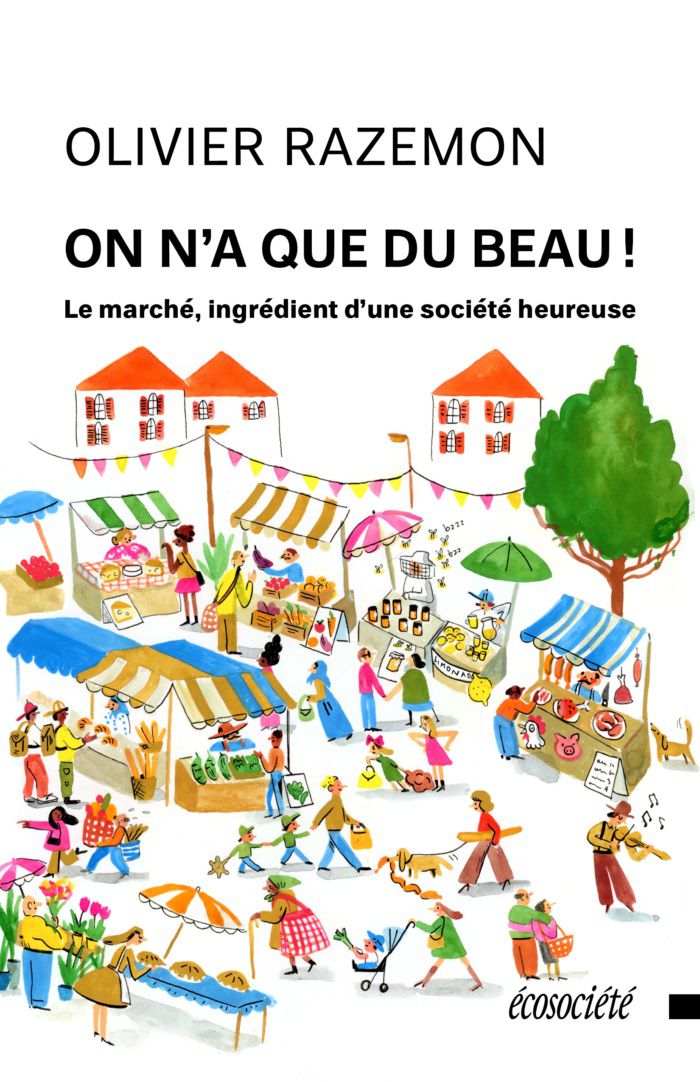
Tout le monde les aime, les célèbre et les croit éternels. Avec leurs étals bien garnis et leurs commerçants gouailleurs, les marchés alimentaires n’assurent pas seulement un acheminement régulier en produits frais, locaux et de saison, ils génèrent aussi une joyeuse animation de rue et suscitent de précieux échanges humains. Et malgré la concurrence des supermarchés, des zones commerciales et de la livraison express à domicile, ils semblent avoir résisté à tous les assauts. Pendant longtemps, en France comme ailleurs, il n’y a pas eu de marché sans ville, et pas de ville sans marché. Puisque bon nombre de gens préfèrent toujours s’approvisionner une ou deux matinées par semaine au grand air, ce lieu, héritier indirect des foires du Moyen Âge, paraît immuable. Pourtant, le marché est à la croisée des chemins. Son fonctionnement demeure méconnu, la grande distribution lorgne sur son succès et, lorsque vient le temps de penser des projets de revitalisation urbaine, il est rarement pris en compte.
On n'a que du beau ! Le marché, un ingrédient d'une société heureuse
Actions:
Price:
$25.00
(available in store)
Summary:
Tout le monde les aime, les célèbre et les croit éternels. Avec leurs étals bien garnis et leurs commerçants gouailleurs, les marchés alimentaires n’assurent pas seulement un acheminement régulier en produits frais, locaux et de saison, ils génèrent aussi une joyeuse animation de rue et suscitent de précieux échanges humains. Et malgré la concurrence des supermarchés, des zones commerciales et de la livraison express à domicile, ils semblent avoir résisté à tous les assauts. Pendant longtemps, en France comme ailleurs, il n’y a pas eu de marché sans ville, et pas de ville sans marché. Puisque bon nombre de gens préfèrent toujours s’approvisionner une ou deux matinées par semaine au grand air, ce lieu, héritier indirect des foires du Moyen Âge, paraît immuable. Pourtant, le marché est à la croisée des chemins. Son fonctionnement demeure méconnu, la grande distribution lorgne sur son succès et, lorsque vient le temps de penser des projets de revitalisation urbaine, il est rarement pris en compte.
Form:
books
books
Publication:
November 2025
November 2025
Subject:
Urban Theory
Urban Theory
Form:
books
books
Actions:
Price:
$39.95
(available in store)
Summary:
In ''Water of the Sky'', artist Miya Ando offers us a beautifully rich, bilingual visual dictionary for rain. Through a collection of 2,000 Japanese words, their English interpretations, and 100 drawings, Ando describes the breadth and diversity of rain’s many expressions: when it falls, how it falls, and how its observer might be transformed physically or emotionally by(...)
$39.95
(available in store)
Summary:
In ''Water of the Sky'', artist Miya Ando offers us a beautifully rich, bilingual visual dictionary for rain. Through a collection of 2,000 Japanese words, their English interpretations, and 100 drawings, Ando describes the breadth and diversity of rain’s many expressions: when it falls, how it falls, and how its observer might be transformed physically or emotionally by(...)
Title:
Water of the sky: A dictionary of 2000 Japanese rain words
Actions:
Price:
$39.95
(available in store)
Summary:
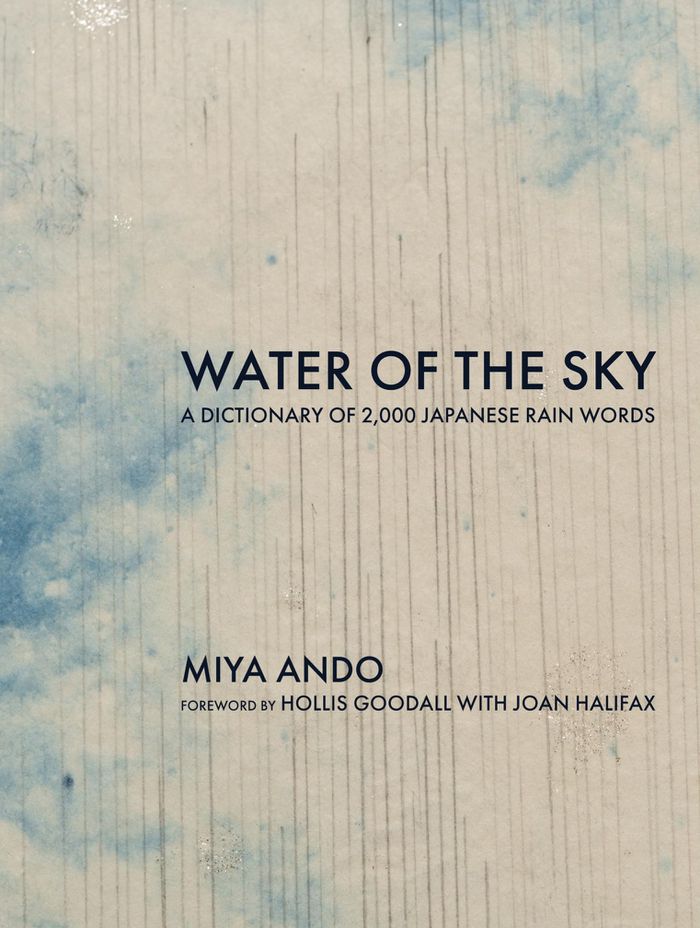
In ''Water of the Sky'', artist Miya Ando offers us a beautifully rich, bilingual visual dictionary for rain. Through a collection of 2,000 Japanese words, their English interpretations, and 100 drawings, Ando describes the breadth and diversity of rain’s many expressions: when it falls, how it falls, and how its observer might be transformed physically or emotionally by its presence. The words range from prosaic to esoteric, extending from the meteorological (mukaame, or “very fine rain that falls in spring”) to the mystical (bunryuu, or “rain that splits a dragon's body in half”) and from the minute (kisame, or “raindrops that fall off the leaves and branches of trees”) to the vast (takuu, or “blessed rain that quenches all things in the universe”).
Water of the sky: A dictionary of 2000 Japanese rain words
Actions:
Price:
$39.95
(available in store)
Summary:
In ''Water of the Sky'', artist Miya Ando offers us a beautifully rich, bilingual visual dictionary for rain. Through a collection of 2,000 Japanese words, their English interpretations, and 100 drawings, Ando describes the breadth and diversity of rain’s many expressions: when it falls, how it falls, and how its observer might be transformed physically or emotionally by its presence. The words range from prosaic to esoteric, extending from the meteorological (mukaame, or “very fine rain that falls in spring”) to the mystical (bunryuu, or “rain that splits a dragon's body in half”) and from the minute (kisame, or “raindrops that fall off the leaves and branches of trees”) to the vast (takuu, or “blessed rain that quenches all things in the universe”).
Form:
books
books
Publication:
December 2025
December 2025
Subject:
Art Theory
Art Theory
Form:
books
books
Price:
$49.95
(available in store)
Summary:
Where is sexuality, especially queer sexuality, in architecture? "The house is (not) a prison" approaches this question from a radically new position, looking not for a theory of queer architecture, but rather for a queer theory of architecture. Starting from a reconsideration of the foundational principles of architecture, Colin Ripley demonstrates how the division of(...)
$49.95
(available in store)
Summary:
Where is sexuality, especially queer sexuality, in architecture? "The house is (not) a prison" approaches this question from a radically new position, looking not for a theory of queer architecture, but rather for a queer theory of architecture. Starting from a reconsideration of the foundational principles of architecture, Colin Ripley demonstrates how the division of(...)
Title:
The house is (not) a prison: On the queerness of architecture
Actions:
Price:
$49.95
(available in store)
Summary:
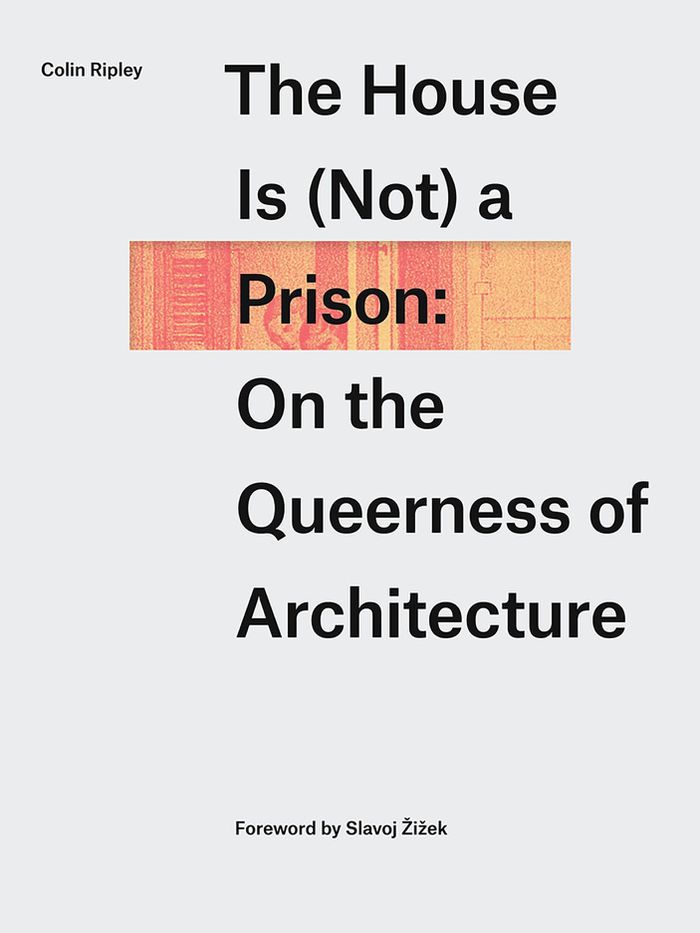
Where is sexuality, especially queer sexuality, in architecture? "The house is (not) a prison" approaches this question from a radically new position, looking not for a theory of queer architecture, but rather for a queer theory of architecture. Starting from a reconsideration of the foundational principles of architecture, Colin Ripley demonstrates how the division of space steals land from the commons and forces separations and categories. In the process, queerness is created as an indispensable outside to architecture’s disciplinary interior.
The house is (not) a prison: On the queerness of architecture
Actions:
Price:
$49.95
(available in store)
Summary:
Where is sexuality, especially queer sexuality, in architecture? "The house is (not) a prison" approaches this question from a radically new position, looking not for a theory of queer architecture, but rather for a queer theory of architecture. Starting from a reconsideration of the foundational principles of architecture, Colin Ripley demonstrates how the division of space steals land from the commons and forces separations and categories. In the process, queerness is created as an indispensable outside to architecture’s disciplinary interior.
Form:
books
books
Publication:
December 2025
December 2025
Subject:
Architectural Theory
Architectural Theory
Form:
books
books
Actions:
Price:
$17.50
(available to order)
Summary:
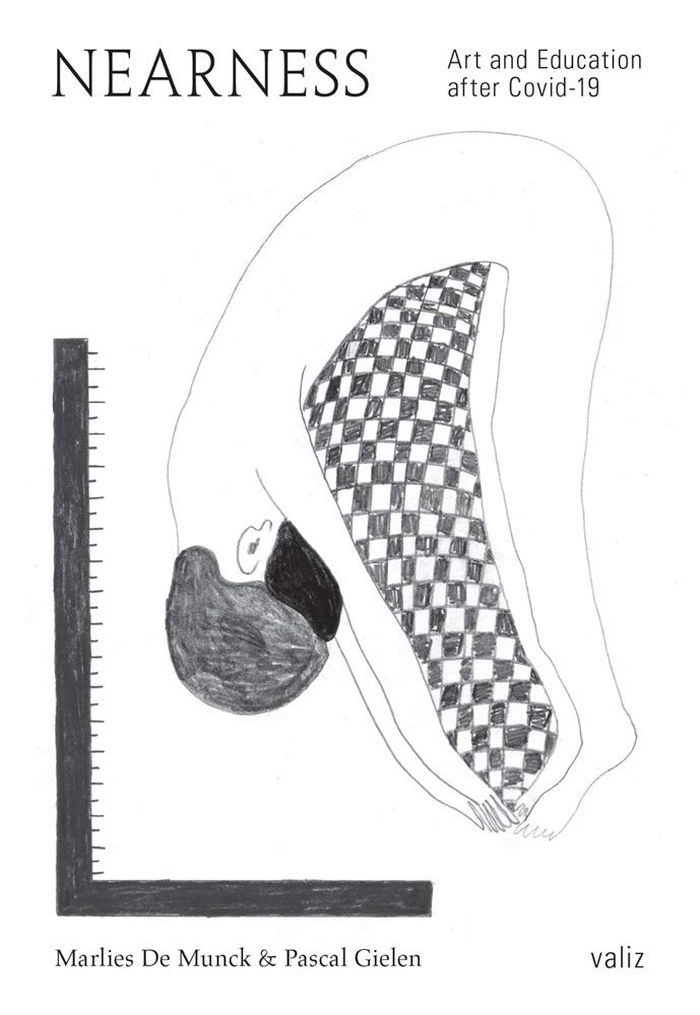
The Covid-19 crisis teaches us how priceless human nearness is. Art and education can't do without it either. Like works of art, people lose their aura when kept at digital arm's length. Art is lifeless when it can't resonate with bodies. In ''Nearness'', Marlies De Munck and Pascal Gielen diagnose a new reality. Only culture marks the difference between surviving and living.
$17.50
(available to order)
Summary:
The Covid-19 crisis teaches us how priceless human nearness is. Art and education can't do without it either. Like works of art, people lose their aura when kept at digital arm's length. Art is lifeless when it can't resonate with bodies. In ''Nearness'', Marlies De Munck and Pascal Gielen diagnose a new reality. Only culture marks the difference between surviving and living.
Title:
Nearness: Art and Education after COVID-19
Actions:
Price:
$17.50
(available to order)
Summary:
The Covid-19 crisis teaches us how priceless human nearness is. Art and education can't do without it either. Like works of art, people lose their aura when kept at digital arm's length. Art is lifeless when it can't resonate with bodies. In ''Nearness'', Marlies De Munck and Pascal Gielen diagnose a new reality. Only culture marks the difference between surviving and living.
Nearness: Art and Education after COVID-19
Actions:
Price:
$17.50
(available to order)
Summary:
The Covid-19 crisis teaches us how priceless human nearness is. Art and education can't do without it either. Like works of art, people lose their aura when kept at digital arm's length. Art is lifeless when it can't resonate with bodies. In ''Nearness'', Marlies De Munck and Pascal Gielen diagnose a new reality. Only culture marks the difference between surviving and living.
Form:
books
books
Publication:
November 2020
November 2020
Subject:
Art Theory
Art Theory


