


6235 Results
Form:
books
books
Actions:
Price:
$71.95
(available to order)
Summary:
At the peak of the 1968/69 students' riots at American Universities, Robert Venturi and Denise Scott Brown, together with Steven Izenour, pursued their Design and Research Studio on the topic of Las Vegas at Yale School of Architecture. The results of this were condensed into the book 'Learning from Las Vegas' that became a classic almost instantly upon its first(...)
$71.95
(available to order)
Summary:
At the peak of the 1968/69 students' riots at American Universities, Robert Venturi and Denise Scott Brown, together with Steven Izenour, pursued their Design and Research Studio on the topic of Las Vegas at Yale School of Architecture. The results of this were condensed into the book 'Learning from Las Vegas' that became a classic almost instantly upon its first(...)
Title:
Eyes that saw: Architecture after Las Vegas
Actions:
Price:
$71.95
(available to order)
Summary:
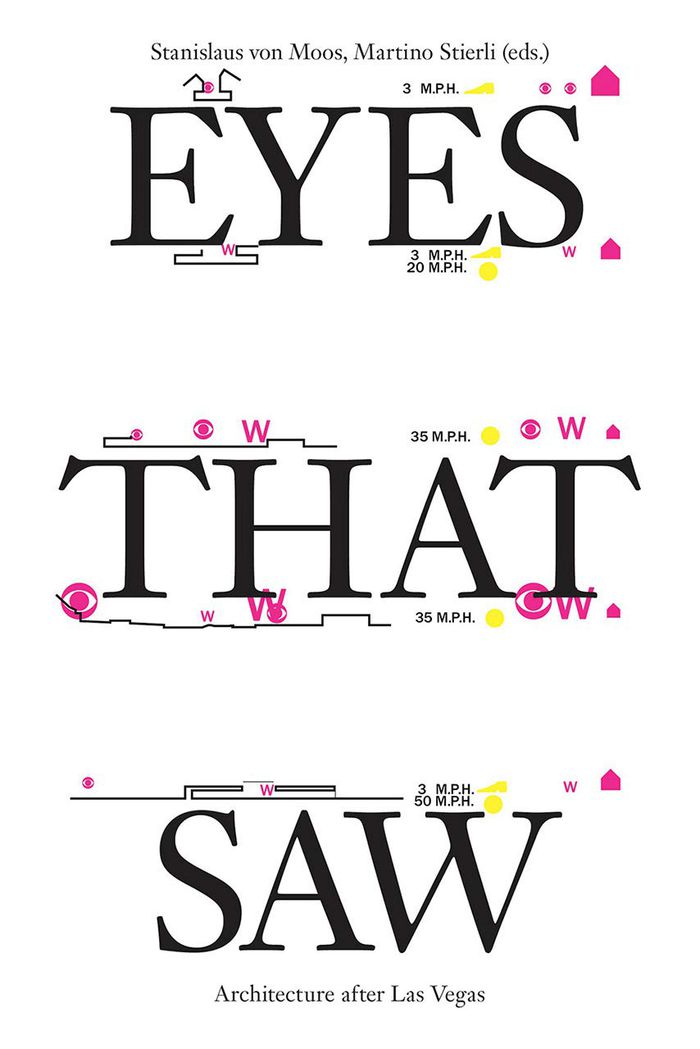
At the peak of the 1968/69 students' riots at American Universities, Robert Venturi and Denise Scott Brown, together with Steven Izenour, pursued their Design and Research Studio on the topic of Las Vegas at Yale School of Architecture. The results of this were condensed into the book 'Learning from Las Vegas' that became a classic almost instantly upon its first publication in 1972. The treatise excited the 1970s architecture world and has remained influential to architects, teachers and theoreticians to the present day. Some forty years later, 'Eyes that Saw: Architecture after Las Vegas' offers a richly illustrated collection of essays by renowned scholars of art and architectural history, eminent architects, and artists, investigating Learning from Las Vegas and its heritage from various perspectives. Each chapter builds on the knowledge of the radical influence it had on architecture and urban design, visual art, and even on history more generally. Published alongside are documents from the Venturi, Scott Brown & Associates Archive at the University of Pennsylvania, as well as an illustrated chronology of the resonance in international media following the publication of Learning from Las Vegas in 1972.
Eyes that saw: Architecture after Las Vegas
Actions:
Price:
$71.95
(available to order)
Summary:
At the peak of the 1968/69 students' riots at American Universities, Robert Venturi and Denise Scott Brown, together with Steven Izenour, pursued their Design and Research Studio on the topic of Las Vegas at Yale School of Architecture. The results of this were condensed into the book 'Learning from Las Vegas' that became a classic almost instantly upon its first publication in 1972. The treatise excited the 1970s architecture world and has remained influential to architects, teachers and theoreticians to the present day. Some forty years later, 'Eyes that Saw: Architecture after Las Vegas' offers a richly illustrated collection of essays by renowned scholars of art and architectural history, eminent architects, and artists, investigating Learning from Las Vegas and its heritage from various perspectives. Each chapter builds on the knowledge of the radical influence it had on architecture and urban design, visual art, and even on history more generally. Published alongside are documents from the Venturi, Scott Brown & Associates Archive at the University of Pennsylvania, as well as an illustrated chronology of the resonance in international media following the publication of Learning from Las Vegas in 1972.
Form:
books
books
Publication:
June 2019
June 2019
Subject:
Architectural Theory
Architectural Theory
Form:
books
books
Title:
The Architecture of Parking
The Architecture of Parking
Actions:
Price:
$57.00
(available to order)
Summary:
Since the invention of the car, the buildings that house them have been a source of inspiration and consternation to architects. Although many dreary car parks and garages do exist, the challenge of efficiently housing a maximum number of cars in a well-designed space has attracted a stellar array of contemporary architects. From the classic circular Marina City tower in(...)
$57.00
(available to order)
Summary:
Since the invention of the car, the buildings that house them have been a source of inspiration and consternation to architects. Although many dreary car parks and garages do exist, the challenge of efficiently housing a maximum number of cars in a well-designed space has attracted a stellar array of contemporary architects. From the classic circular Marina City tower in(...)
Subject:
Transportation, Tourism, Migration
Transportation, Tourism, Migration
Publication:
October 2007, New York
October 2007, New York
Title:
The Architecture of Parking
Actions:
Price:
$57.00
(available to order)
Summary:
Since the invention of the car, the buildings that house them have been a source of inspiration and consternation to architects. Although many dreary car parks and garages do exist, the challenge of efficiently housing a maximum number of cars in a well-designed space has attracted a stellar array of contemporary architects. From the classic circular Marina City tower in Chicago to the Parcheggio Nuovo Salario under construction in Rome, from Frank Gehry to Rem Koolhaas to Zaha Hadid, the form and function of the parking garage have been hugely influential not only on contemporary architects but also on popular culture. This book is at once a survey of the finest examples of parking garages and a presentation of exciting and innovative design. An introduction covers the history and architectural significance of these buildings and their relevance today, and is followed by chapters that define the most influential aspects of parking design: elevations, materials, the use of light, and innovation and experimentation. Featuring detailed plans plus case studies of iconic buildings, this is an indispensable and inspirational resource for professional architects, engineers, urban planners, and developers. 300 illustrations and photographs, 150 in color.
The Architecture of Parking
Actions:
Price:
$57.00
(available to order)
Summary:
Since the invention of the car, the buildings that house them have been a source of inspiration and consternation to architects. Although many dreary car parks and garages do exist, the challenge of efficiently housing a maximum number of cars in a well-designed space has attracted a stellar array of contemporary architects. From the classic circular Marina City tower in Chicago to the Parcheggio Nuovo Salario under construction in Rome, from Frank Gehry to Rem Koolhaas to Zaha Hadid, the form and function of the parking garage have been hugely influential not only on contemporary architects but also on popular culture. This book is at once a survey of the finest examples of parking garages and a presentation of exciting and innovative design. An introduction covers the history and architectural significance of these buildings and their relevance today, and is followed by chapters that define the most influential aspects of parking design: elevations, materials, the use of light, and innovation and experimentation. Featuring detailed plans plus case studies of iconic buildings, this is an indispensable and inspirational resource for professional architects, engineers, urban planners, and developers. 300 illustrations and photographs, 150 in color.
Form:
books
books
Publication:
October 2007, New York
October 2007, New York
Subject:
Transportation, Tourism, Migration
Transportation, Tourism, Migration
Form:
books
books
Price:
$27.00
(available to order)
Summary:
Whether a humble string of planks swaying across a trickling stream or the soaring towers of the Golden Gate Bridge, bridges are one of man’s great engineering feats. Now in Bridge, Peter Bishop provides a comprehensive historical account of their role in the advancement of human culture. From ancient Roman arches to the rail bridge of Lhasa to the suspension bridge(...)
$27.00
(available to order)
Summary:
Whether a humble string of planks swaying across a trickling stream or the soaring towers of the Golden Gate Bridge, bridges are one of man’s great engineering feats. Now in Bridge, Peter Bishop provides a comprehensive historical account of their role in the advancement of human culture. From ancient Roman arches to the rail bridge of Lhasa to the suspension bridge(...)
Title:
Bridge
Actions:
Price:
$27.00
(available to order)
Summary:
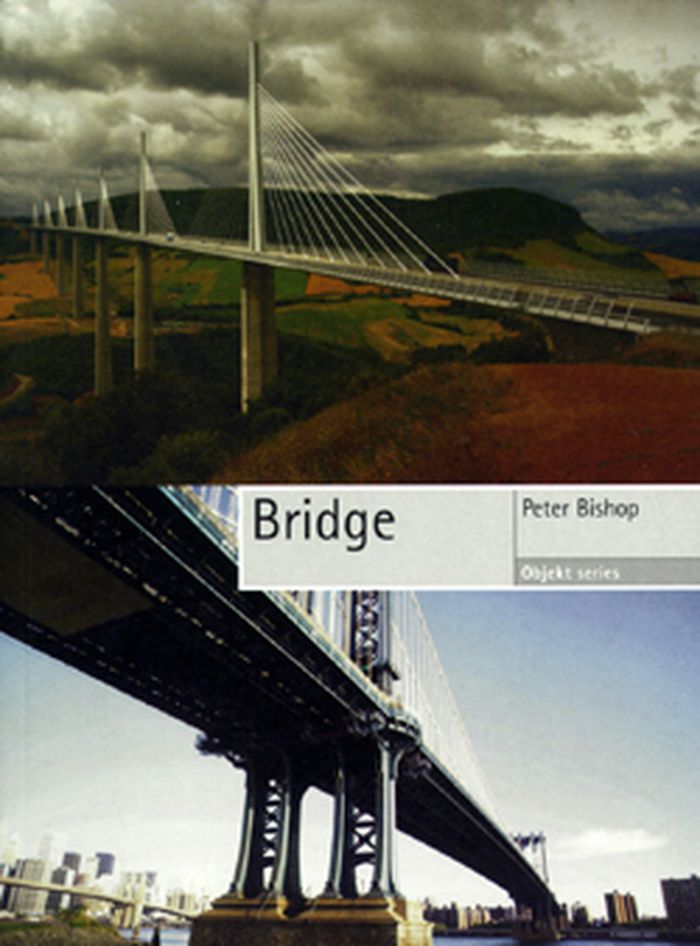
Whether a humble string of planks swaying across a trickling stream or the soaring towers of the Golden Gate Bridge, bridges are one of man’s great engineering feats. Now in Bridge, Peter Bishop provides a comprehensive historical account of their role in the advancement of human culture. From ancient Roman arches to the rail bridge of Lhasa to the suspension bridge over Niagara Falls, Bishop traverses the full span of the globe to examine numerous incarnations and their diverse architectural styles. The book tackles a wide range of issues, including the design and construction of “mega-spans” such as Hong Kong’s Tsing Ma Bridge; the integral role of bridges in railroad networks; and the social dynamics of class and mobility that surround urban bridges in cities such as New York. Drawing upon sources in art, politics, science, philosophy, and the media, Bishop argues that the cultural meaning of bridges today revolves around the idea of expanding geographical claims, rather than connecting to others, and he explores the implications of that idea for the future. A fascinating and richly illustrated study, Bridge will engage enthusiasts of planning, architecture, and design alike.
Bridge
Actions:
Price:
$27.00
(available to order)
Summary:
Whether a humble string of planks swaying across a trickling stream or the soaring towers of the Golden Gate Bridge, bridges are one of man’s great engineering feats. Now in Bridge, Peter Bishop provides a comprehensive historical account of their role in the advancement of human culture. From ancient Roman arches to the rail bridge of Lhasa to the suspension bridge over Niagara Falls, Bishop traverses the full span of the globe to examine numerous incarnations and their diverse architectural styles. The book tackles a wide range of issues, including the design and construction of “mega-spans” such as Hong Kong’s Tsing Ma Bridge; the integral role of bridges in railroad networks; and the social dynamics of class and mobility that surround urban bridges in cities such as New York. Drawing upon sources in art, politics, science, philosophy, and the media, Bishop argues that the cultural meaning of bridges today revolves around the idea of expanding geographical claims, rather than connecting to others, and he explores the implications of that idea for the future. A fascinating and richly illustrated study, Bridge will engage enthusiasts of planning, architecture, and design alike.
Form:
books
books
Publication:
June 2008, London
June 2008, London
Subject:
Engineering Structures
Engineering Structures
Form:
books
books
Title:
Lefebvre for architects
Lefebvre for architects
Actions:
Price:
$51.70
(available in store)
Summary:
Contemporary discomfort with romanticism and Utopia arguably obstructs the shift of Lefebvre’s thinking from being objects of theoretical interest into positions of actually influencing practices. Attempting to understand and act upon architecture and the city with Lefebvre but without Utopia and romanticism risks muting the impact of his ideas. Although Utopia may seem(...)
$51.70
(available in store)
Summary:
Contemporary discomfort with romanticism and Utopia arguably obstructs the shift of Lefebvre’s thinking from being objects of theoretical interest into positions of actually influencing practices. Attempting to understand and act upon architecture and the city with Lefebvre but without Utopia and romanticism risks muting the impact of his ideas. Although Utopia may seem(...)
Title:
Lefebvre for architects
Actions:
Price:
$51.70
(available in store)
Summary:
Contemporary discomfort with romanticism and Utopia arguably obstructs the shift of Lefebvre’s thinking from being objects of theoretical interest into positions of actually influencing practices. Attempting to understand and act upon architecture and the city with Lefebvre but without Utopia and romanticism risks muting the impact of his ideas. Although Utopia may seem to have no place in the present, Lefebvre reveals this as little more than a self-serving affirmation that ‘there is no alternative’ to social and political detachment. Demanding the impossible may end in failure but as Lefebvre shows us, doing so is the first step towards other possibilities. To think with Lefebvre is to think about Utopia, doing so makes contact with what is most enduring about his project for the city and its inhabitants, and with what is most radical about it as well. "Lefebvre for architects" offers a concise account of the relevance of Henri Lefebvre’s writing for the theory and practice of architecture, planning and urban design. This book is accessible for students and practitioners who wish to fully engage with the design possibilities offered by Lefebvre’s philosophy.
Lefebvre for architects
Actions:
Price:
$51.70
(available in store)
Summary:
Contemporary discomfort with romanticism and Utopia arguably obstructs the shift of Lefebvre’s thinking from being objects of theoretical interest into positions of actually influencing practices. Attempting to understand and act upon architecture and the city with Lefebvre but without Utopia and romanticism risks muting the impact of his ideas. Although Utopia may seem to have no place in the present, Lefebvre reveals this as little more than a self-serving affirmation that ‘there is no alternative’ to social and political detachment. Demanding the impossible may end in failure but as Lefebvre shows us, doing so is the first step towards other possibilities. To think with Lefebvre is to think about Utopia, doing so makes contact with what is most enduring about his project for the city and its inhabitants, and with what is most radical about it as well. "Lefebvre for architects" offers a concise account of the relevance of Henri Lefebvre’s writing for the theory and practice of architecture, planning and urban design. This book is accessible for students and practitioners who wish to fully engage with the design possibilities offered by Lefebvre’s philosophy.
Form:
books
books
Publication:
February 1993
February 1993
Subject:
Architectural Theory
Architectural Theory
Form:
books
books
Actions:
Price:
$69.95
(available to order)
Summary:
"The architecture of Duany Plater-Zyberk and Company is a monograph on the urban design and architecture firm started by Andrés Duany and Elizabeth Plater-Zyberk in 1980 and is now known simply as DPZ. Credited with popularizing small towns and villages as welcome alternatives to the bleak monotony of the suburbs, DPZ champions vernacular architecture (traditional(...)
$69.95
(available to order)
Summary:
"The architecture of Duany Plater-Zyberk and Company is a monograph on the urban design and architecture firm started by Andrés Duany and Elizabeth Plater-Zyberk in 1980 and is now known simply as DPZ. Credited with popularizing small towns and villages as welcome alternatives to the bleak monotony of the suburbs, DPZ champions vernacular architecture (traditional(...)
Subject:
Architecture Monographs
Architecture Monographs
Publication:
August 2004, New York
August 2004, New York
Title:
The architecture of Duany Plater-Zyberk and Company
Actions:
Price:
$69.95
(available to order)
Summary:
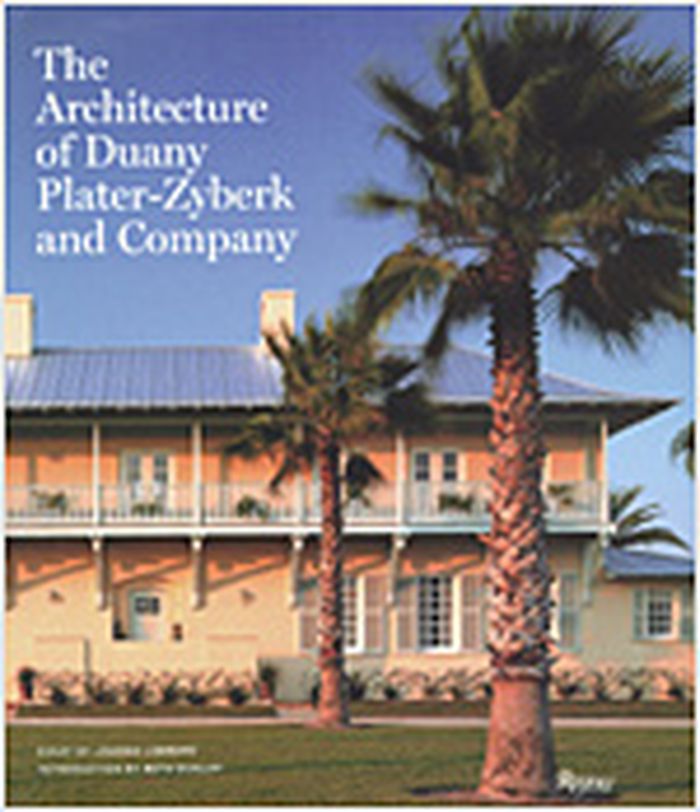
"The architecture of Duany Plater-Zyberk and Company is a monograph on the urban design and architecture firm started by Andrés Duany and Elizabeth Plater-Zyberk in 1980 and is now known simply as DPZ. Credited with popularizing small towns and villages as welcome alternatives to the bleak monotony of the suburbs, DPZ champions vernacular architecture (traditional buildings with ties to local culture) in neighborhoods that share the same common features that made small-town living so livable. This book illustrates representative buildings, mainly houses, that make up some of these communities in such places as Seaside, Florida, Kentlands, Maryland, and Markham, Ontario. In addition, the book showcases individual buildings that demonstrate DPZ’s reinvigoration of a simple vernacular architecture, including the Hibiscus House in Coconut Grove, Florida, and the Carambola Villas in St. Croix.
The architecture of Duany Plater-Zyberk and Company
Actions:
Price:
$69.95
(available to order)
Summary:
"The architecture of Duany Plater-Zyberk and Company is a monograph on the urban design and architecture firm started by Andrés Duany and Elizabeth Plater-Zyberk in 1980 and is now known simply as DPZ. Credited with popularizing small towns and villages as welcome alternatives to the bleak monotony of the suburbs, DPZ champions vernacular architecture (traditional buildings with ties to local culture) in neighborhoods that share the same common features that made small-town living so livable. This book illustrates representative buildings, mainly houses, that make up some of these communities in such places as Seaside, Florida, Kentlands, Maryland, and Markham, Ontario. In addition, the book showcases individual buildings that demonstrate DPZ’s reinvigoration of a simple vernacular architecture, including the Hibiscus House in Coconut Grove, Florida, and the Carambola Villas in St. Croix.
Form:
books
books
Publication:
August 2004, New York
August 2004, New York
Subject:
Architecture Monographs
Architecture Monographs
Form:
books
books
Actions:
Price:
$55.00
(available to order)
Summary:
In ''The Villa'', James Ackerman explores villa building in the West from ancient Rome to twentieth-century France and America. In this wide-ranging book, he illuminates such topics as the early villas of the Medici, the rise of the Palladian villa in England, and the modern villas of Frank Lloyd Wright and Le Corbusier. Ackerman uses the phenomenon of the 'country place'(...)
$55.00
(available to order)
Summary:
In ''The Villa'', James Ackerman explores villa building in the West from ancient Rome to twentieth-century France and America. In this wide-ranging book, he illuminates such topics as the early villas of the Medici, the rise of the Palladian villa in England, and the modern villas of Frank Lloyd Wright and Le Corbusier. Ackerman uses the phenomenon of the 'country place'(...)
Title:
The Villa: Form and ideology of country houses
Actions:
Price:
$55.00
(available to order)
Summary:
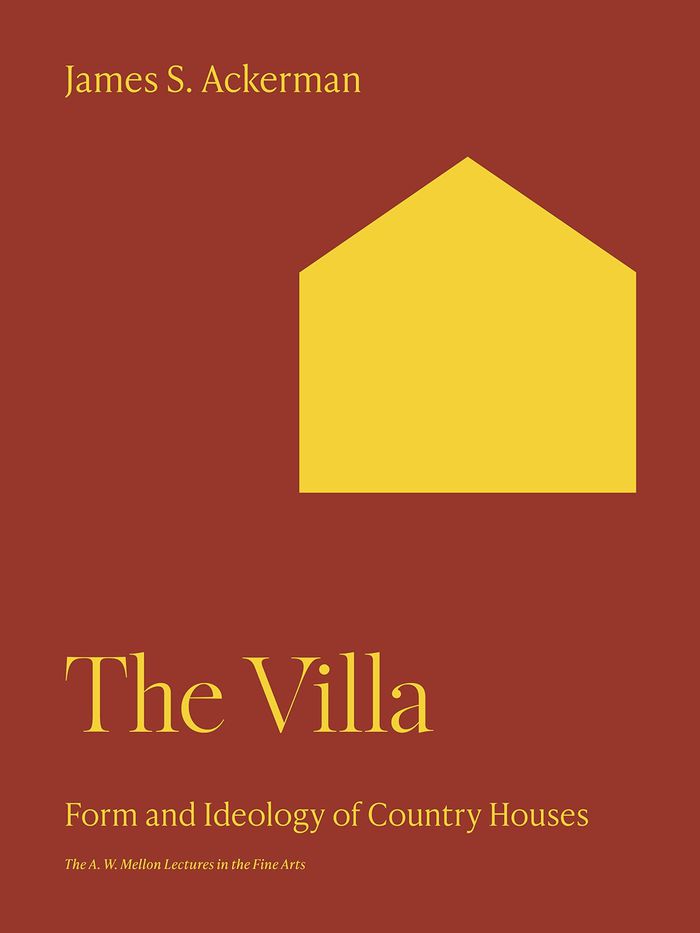
In ''The Villa'', James Ackerman explores villa building in the West from ancient Rome to twentieth-century France and America. In this wide-ranging book, he illuminates such topics as the early villas of the Medici, the rise of the Palladian villa in England, and the modern villas of Frank Lloyd Wright and Le Corbusier. Ackerman uses the phenomenon of the 'country place' as a focus for examining the relationships between urban and rural life, between building and the natural environment, and between architectural design and social, cultural, economic, and political forces. ''The villa,'' he reminds us, ''accommodates a fantasy which is impervious to reality.'' As city dwellers idealized country life, the villa, unlike the farmhouse, became associated with pleasure and asserted its modernity and status as a product of the architect’s imagination.
The Villa: Form and ideology of country houses
Actions:
Price:
$55.00
(available to order)
Summary:
In ''The Villa'', James Ackerman explores villa building in the West from ancient Rome to twentieth-century France and America. In this wide-ranging book, he illuminates such topics as the early villas of the Medici, the rise of the Palladian villa in England, and the modern villas of Frank Lloyd Wright and Le Corbusier. Ackerman uses the phenomenon of the 'country place' as a focus for examining the relationships between urban and rural life, between building and the natural environment, and between architectural design and social, cultural, economic, and political forces. ''The villa,'' he reminds us, ''accommodates a fantasy which is impervious to reality.'' As city dwellers idealized country life, the villa, unlike the farmhouse, became associated with pleasure and asserted its modernity and status as a product of the architect’s imagination.
Form:
books
books
Publication:
August 2023
August 2023
Subject:
Architectural Theory
Architectural Theory
Form:
books
books
Actions:
Price:
$60.00
(available to order)
Summary:
Jeanne Gang, one of America’s most distinguished contemporary architects, proposes applying the plant cultivation technique of grafting to architecture and urban design as a way of rethinking adaptive reuse and combatting climate change. Grafting is the process of connecting two separate living plants—one old and one new—so they can grow and thrive as one. This ancient(...)
$60.00
(available to order)
Summary:
Jeanne Gang, one of America’s most distinguished contemporary architects, proposes applying the plant cultivation technique of grafting to architecture and urban design as a way of rethinking adaptive reuse and combatting climate change. Grafting is the process of connecting two separate living plants—one old and one new—so they can grow and thrive as one. This ancient(...)
Title:
The art of architectural grafting
Actions:
Price:
$60.00
(available to order)
Summary:
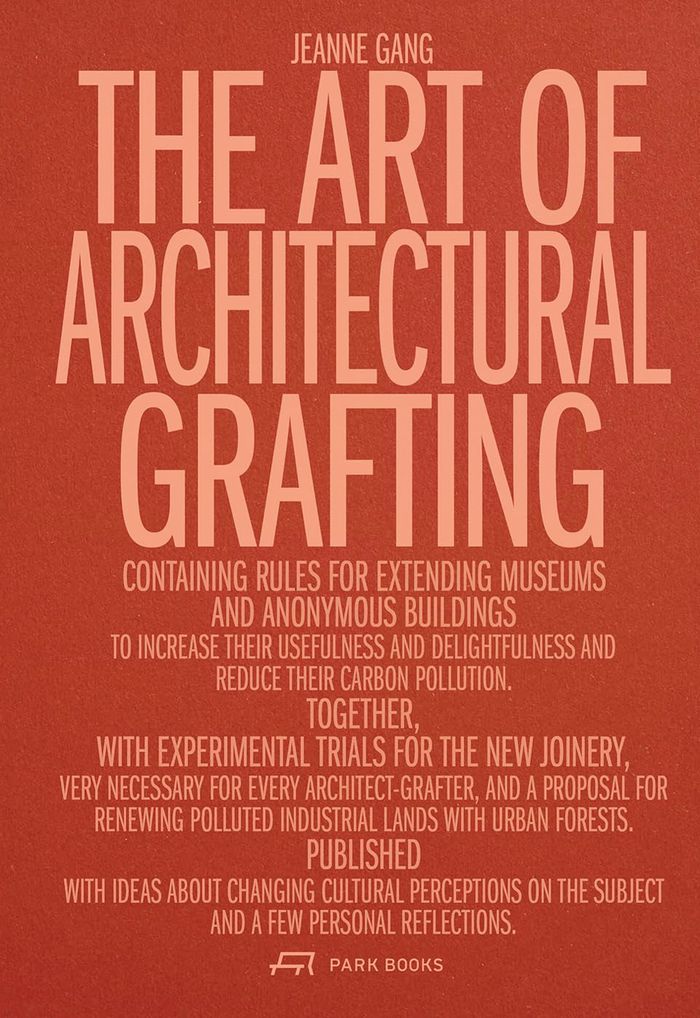
Jeanne Gang, one of America’s most distinguished contemporary architects, proposes applying the plant cultivation technique of grafting to architecture and urban design as a way of rethinking adaptive reuse and combatting climate change. Grafting is the process of connecting two separate living plants—one old and one new—so they can grow and thrive as one. This ancient practice continues to be performed today in search of more fruitful, palatable, and resilient varieties of plants. Grafting is also a useful paradigm for how architecture can address climate change on a broadly impactful scale by reusing and expanding older structures. Addressing both the environmental and cultural value of reuse, Gang shows how the concept of grafting can inform architecture across many scales, provoking the imagination and shaping tectonic, programmatic, formal, and regenerative adaptations.
The art of architectural grafting
Actions:
Price:
$60.00
(available to order)
Summary:
Jeanne Gang, one of America’s most distinguished contemporary architects, proposes applying the plant cultivation technique of grafting to architecture and urban design as a way of rethinking adaptive reuse and combatting climate change. Grafting is the process of connecting two separate living plants—one old and one new—so they can grow and thrive as one. This ancient practice continues to be performed today in search of more fruitful, palatable, and resilient varieties of plants. Grafting is also a useful paradigm for how architecture can address climate change on a broadly impactful scale by reusing and expanding older structures. Addressing both the environmental and cultural value of reuse, Gang shows how the concept of grafting can inform architecture across many scales, provoking the imagination and shaping tectonic, programmatic, formal, and regenerative adaptations.
Form:
books
books
Publication:
April 2024
April 2024
Subject:
Contemporary Architecture
Contemporary Architecture
Form:
books
books
Title:
Passing through moving in and getting away with it: Gordon Matta-Clark New York city graffiti
Passing through moving in and getting away with it: Gordon Matta-Clark New York city graffiti
Actions:
Price:
$128.99
(available in store)
Summary:
From 1972 to 1973, Gordon Matta-Clark took over fifteen hundred photographs of gra?ti in New York City. These pictures are some of the earliest documentation of an emerging art form, and are an under-recognized body of work from Matta-Clark—an artist who used the city’s crumbling infrastructure to reveal the social and political implications of architecture and urban(...)
$128.99
(available in store)
Summary:
From 1972 to 1973, Gordon Matta-Clark took over fifteen hundred photographs of gra?ti in New York City. These pictures are some of the earliest documentation of an emerging art form, and are an under-recognized body of work from Matta-Clark—an artist who used the city’s crumbling infrastructure to reveal the social and political implications of architecture and urban(...)
Title:
Passing through moving in and getting away with it: Gordon Matta-Clark New York city graffiti
Actions:
Price:
$128.99
(available in store)
Summary:
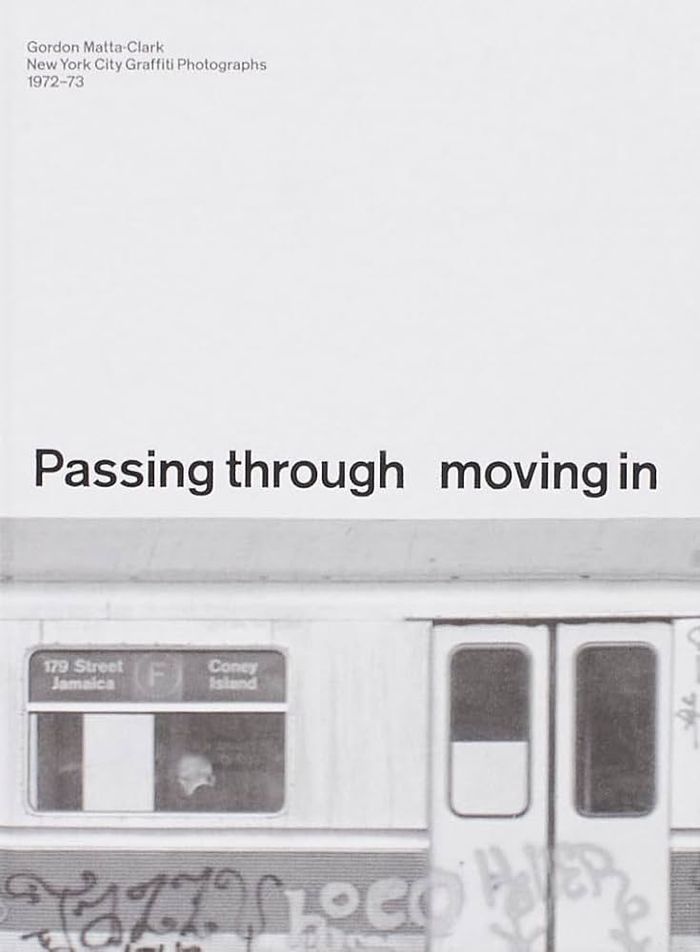
From 1972 to 1973, Gordon Matta-Clark took over fifteen hundred photographs of gra?ti in New York City. These pictures are some of the earliest documentation of an emerging art form, and are an under-recognized body of work from Matta-Clark—an artist who used the city’s crumbling infrastructure to reveal the social and political implications of architecture and urban design. This publication features every frame from every roll of film Matta-Clark shot, organized according to the sequence of contact sheets in the artist’s archive. Taken together, these pictures demonstrate Matta-Clark’s obsession with the gra?ti that had exploded across the city’s walls, subways, and buses, and show him growing bolder as he moved from photographing on the streets and subway platforms, to trespassing in outer borough train yards.
Passing through moving in and getting away with it: Gordon Matta-Clark New York city graffiti
Actions:
Price:
$128.99
(available in store)
Summary:
From 1972 to 1973, Gordon Matta-Clark took over fifteen hundred photographs of gra?ti in New York City. These pictures are some of the earliest documentation of an emerging art form, and are an under-recognized body of work from Matta-Clark—an artist who used the city’s crumbling infrastructure to reveal the social and political implications of architecture and urban design. This publication features every frame from every roll of film Matta-Clark shot, organized according to the sequence of contact sheets in the artist’s archive. Taken together, these pictures demonstrate Matta-Clark’s obsession with the gra?ti that had exploded across the city’s walls, subways, and buses, and show him growing bolder as he moved from photographing on the streets and subway platforms, to trespassing in outer borough train yards.
Form:
books
books
Publication:
September 2025
September 2025
Subject:
Photography monographs
Photography monographs
Form:
books
books
Title:
Space settlements
Space settlements
Actions:
Price:
$29.95
(available to order)
Summary:
In the summer of 1975, NASA brought together a team of physicists, engineers, and space scientists—along with architects, urban planners, and artists—to design large-scale space habitats for millions of people. This Summer Study was led by Princeton physicist Gerard O’Neill, whose work on this topic had previously been funded by countercultural icon Stewart Brand’s Point(...)
$29.95
(available to order)
Summary:
In the summer of 1975, NASA brought together a team of physicists, engineers, and space scientists—along with architects, urban planners, and artists—to design large-scale space habitats for millions of people. This Summer Study was led by Princeton physicist Gerard O’Neill, whose work on this topic had previously been funded by countercultural icon Stewart Brand’s Point(...)
Title:
Space settlements
Actions:
Price:
$29.95
(available to order)
Summary:
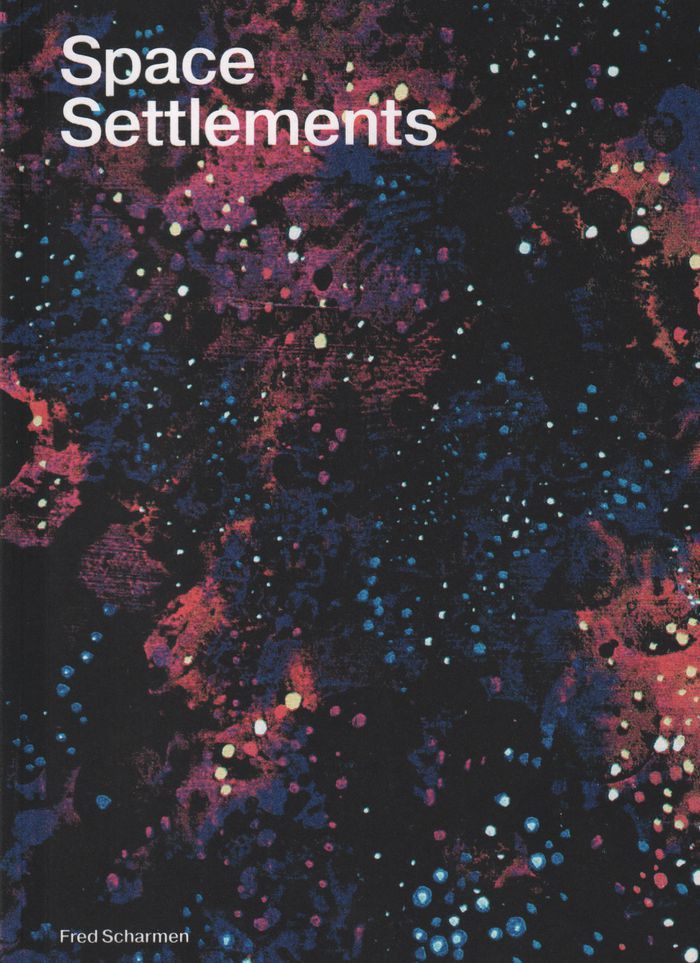
In the summer of 1975, NASA brought together a team of physicists, engineers, and space scientists—along with architects, urban planners, and artists—to design large-scale space habitats for millions of people. This Summer Study was led by Princeton physicist Gerard O’Neill, whose work on this topic had previously been funded by countercultural icon Stewart Brand’s Point Foundation. Two painters, the artist and architect Rick Guidice and the planetary science illustrator Don Davis, created renderings for the project that would be widely circulated over the next years and decades and even included in testimony before a Congressional subcommittee. A product of its time, this work is nevertheless relevant to contemporary modes of thinking about architecture. ''Space Settlements'' examines these plans for life in space as serious architectural and spatial proposals.
Space settlements
Actions:
Price:
$29.95
(available to order)
Summary:
In the summer of 1975, NASA brought together a team of physicists, engineers, and space scientists—along with architects, urban planners, and artists—to design large-scale space habitats for millions of people. This Summer Study was led by Princeton physicist Gerard O’Neill, whose work on this topic had previously been funded by countercultural icon Stewart Brand’s Point Foundation. Two painters, the artist and architect Rick Guidice and the planetary science illustrator Don Davis, created renderings for the project that would be widely circulated over the next years and decades and even included in testimony before a Congressional subcommittee. A product of its time, this work is nevertheless relevant to contemporary modes of thinking about architecture. ''Space Settlements'' examines these plans for life in space as serious architectural and spatial proposals.
Form:
books
books
Publication:
July 2019
July 2019
Subject:
Environment and environmental theory
Environment and environmental theory
Form:
books
books
Price:
$120.99
(available to order)
Summary:
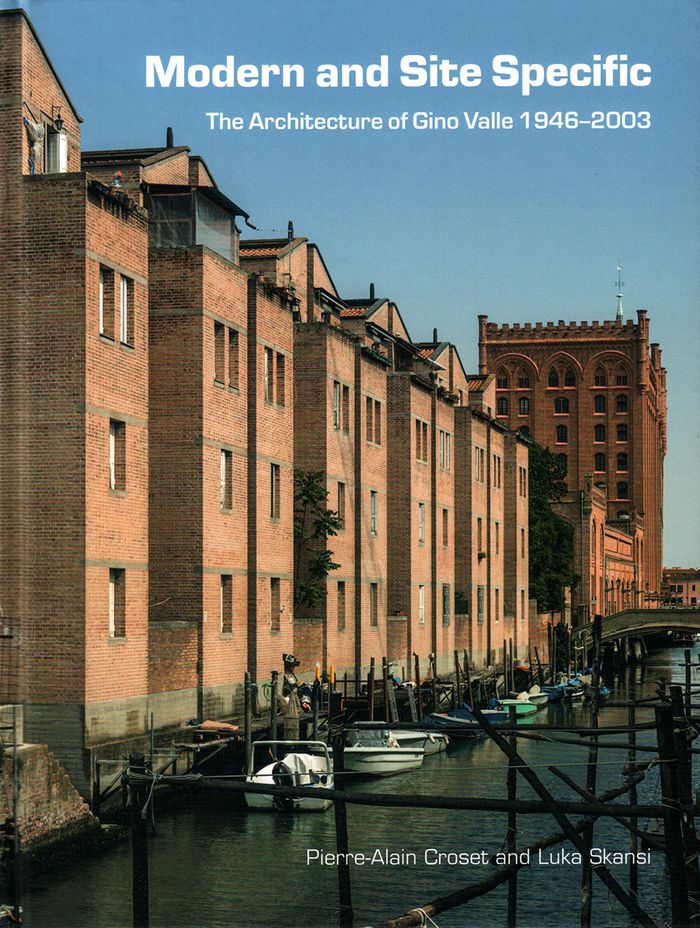
Since the early buildings in the 1950s at Udine in Friuli, Gino Valle has been recognised by international critics as one of the most original and creative European architects of the post-war period. His artistic talent, associated with a great intellectual curiosity and with a genuine passion for the experimentation of new construction systems, led Valle to develop an(...)
$120.99
(available to order)
Summary:
Since the early buildings in the 1950s at Udine in Friuli, Gino Valle has been recognised by international critics as one of the most original and creative European architects of the post-war period. His artistic talent, associated with a great intellectual curiosity and with a genuine passion for the experimentation of new construction systems, led Valle to develop an(...)
Title:
Modern and site-specfic: the architecture of Gino Valle 1923-2003
Actions:
Price:
$120.99
(available to order)
Summary:
Since the early buildings in the 1950s at Udine in Friuli, Gino Valle has been recognised by international critics as one of the most original and creative European architects of the post-war period. His artistic talent, associated with a great intellectual curiosity and with a genuine passion for the experimentation of new construction systems, led Valle to develop an architectural work resolutely open and multiform. Whether in the smaller towns of Friuli and Veneto or in metropolitan centres as New York, Paris or Berlin, Valle realised a wide range of important works: social housing and banks, factories and offices, town halls and courthouses. These buildings make valuable contributions to debates concerning the relationship between new architecture and historic surroundings, between industrial and open landscape, between urban design and architectural intervention.
Modern and site-specfic: the architecture of Gino Valle 1923-2003
Actions:
Price:
$120.99
(available to order)
Summary:
Since the early buildings in the 1950s at Udine in Friuli, Gino Valle has been recognised by international critics as one of the most original and creative European architects of the post-war period. His artistic talent, associated with a great intellectual curiosity and with a genuine passion for the experimentation of new construction systems, led Valle to develop an architectural work resolutely open and multiform. Whether in the smaller towns of Friuli and Veneto or in metropolitan centres as New York, Paris or Berlin, Valle realised a wide range of important works: social housing and banks, factories and offices, town halls and courthouses. These buildings make valuable contributions to debates concerning the relationship between new architecture and historic surroundings, between industrial and open landscape, between urban design and architectural intervention.
Form:
books
books
Publication:
November 2018
November 2018
Subject:
Architecture Monographs
Architecture Monographs


