


643 Results
Form:
journals and magazines
journals and magazines
Title:
AV proyectos 050: Lorca
AV proyectos 050: Lorca
Actions:
Price:
$24.95
(available to order)
Summary:
Beginning with a close look at the strategy for the rebuilding of Lorca after a devastating earthquake in 2011, this instalment goes on to highlight this year's Serpentine Pavilion by Herzog & de Meuron and Ai Weiwei, OMA's concept for Garage Gorky Park, Moscow, and Dominique Perrault's design for the New Longchamp Racecourse, plus competitions for the Yenikapi Transfer(...)
$24.95
(available to order)
Summary:
Beginning with a close look at the strategy for the rebuilding of Lorca after a devastating earthquake in 2011, this instalment goes on to highlight this year's Serpentine Pavilion by Herzog & de Meuron and Ai Weiwei, OMA's concept for Garage Gorky Park, Moscow, and Dominique Perrault's design for the New Longchamp Racecourse, plus competitions for the Yenikapi Transfer(...)
Title:
AV proyectos 050: Lorca
Actions:
Price:
$24.95
(available to order)
Summary:
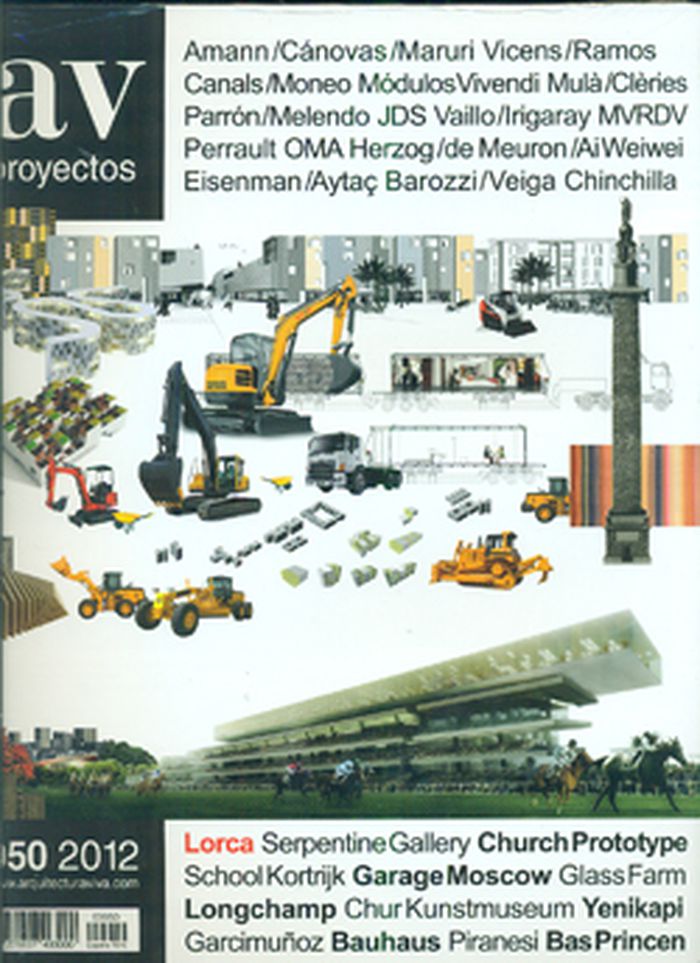
Beginning with a close look at the strategy for the rebuilding of Lorca after a devastating earthquake in 2011, this instalment goes on to highlight this year's Serpentine Pavilion by Herzog & de Meuron and Ai Weiwei, OMA's concept for Garage Gorky Park, Moscow, and Dominique Perrault's design for the New Longchamp Racecourse, plus competitions for the Yenikapi Transfer Point, Istanbul, and the Bünder Kunstmuseum, Chur. It also includes an extensive feature on Izaskun Chinchilla's rehabilitation of Castillo de Garcimuñoz in Cuenca and the photography of Bas Princen, which contrasts the duality between natural and artificial, “understanding the landscape as a place that will be transformed and later colonized.”
AV proyectos 050: Lorca
Actions:
Price:
$24.95
(available to order)
Summary:
Beginning with a close look at the strategy for the rebuilding of Lorca after a devastating earthquake in 2011, this instalment goes on to highlight this year's Serpentine Pavilion by Herzog & de Meuron and Ai Weiwei, OMA's concept for Garage Gorky Park, Moscow, and Dominique Perrault's design for the New Longchamp Racecourse, plus competitions for the Yenikapi Transfer Point, Istanbul, and the Bünder Kunstmuseum, Chur. It also includes an extensive feature on Izaskun Chinchilla's rehabilitation of Castillo de Garcimuñoz in Cuenca and the photography of Bas Princen, which contrasts the duality between natural and artificial, “understanding the landscape as a place that will be transformed and later colonized.”
Form:
journals and magazines
journals and magazines
Publication:
October 2012
October 2012
Subject:
Magazines
Magazines
Form:
books
books
Title:
Jason Schmidt: artists II
Jason Schmidt: artists II
Actions:
Price:
$85.00
(available to order)
Summary:
Artists II is the second volume of Jason Schmidt's ongoing photographic documentation of today's most significant artists. From young to old creative forces, emerging to career-peaking, world-famous or as yet unknown, Schmidt's images, captured over a period of twelve years, are an incisive look into the art world of today. Artists II depicts 166 artists, including John(...)
$85.00
(available to order)
Summary:
Artists II is the second volume of Jason Schmidt's ongoing photographic documentation of today's most significant artists. From young to old creative forces, emerging to career-peaking, world-famous or as yet unknown, Schmidt's images, captured over a period of twelve years, are an incisive look into the art world of today. Artists II depicts 166 artists, including John(...)
Title:
Jason Schmidt: artists II
Actions:
Price:
$85.00
(available to order)
Summary:
Artists II is the second volume of Jason Schmidt's ongoing photographic documentation of today's most significant artists. From young to old creative forces, emerging to career-peaking, world-famous or as yet unknown, Schmidt's images, captured over a period of twelve years, are an incisive look into the art world of today. Artists II depicts 166 artists, including John Baldessari, Ai Weiwei, Glenn Ligon and Cindy Sherman, in their studios or work environments, showing the practitioners in their most intimate moments-in the process of creation. A revealing text by each artist accompanies his or her portrait; some are literal descriptions of the encounter, others are poetic or enigmatic.
Jason Schmidt: artists II
Actions:
Price:
$85.00
(available to order)
Summary:
Artists II is the second volume of Jason Schmidt's ongoing photographic documentation of today's most significant artists. From young to old creative forces, emerging to career-peaking, world-famous or as yet unknown, Schmidt's images, captured over a period of twelve years, are an incisive look into the art world of today. Artists II depicts 166 artists, including John Baldessari, Ai Weiwei, Glenn Ligon and Cindy Sherman, in their studios or work environments, showing the practitioners in their most intimate moments-in the process of creation. A revealing text by each artist accompanies his or her portrait; some are literal descriptions of the encounter, others are poetic or enigmatic.
Form:
books
books
Publication:
March 2015
March 2015
Subject:
Photography monographs
Photography monographs
Form:
books
books
Actions:
Price:
$60.00
(available to order)
Summary:
What if every vista, every island—indeed, every geographical feature on Earth—could be viewed as an art object? In ''Living Surfaces'', Abelardo Gil-Fournier and Jussi Parikka explore how the surface of the Earth has, over the last two centuries, become known and perceived as an environment of images. ''Living Surfaces'' features a range of case studies from(...)
$60.00
(available to order)
Summary:
What if every vista, every island—indeed, every geographical feature on Earth—could be viewed as an art object? In ''Living Surfaces'', Abelardo Gil-Fournier and Jussi Parikka explore how the surface of the Earth has, over the last two centuries, become known and perceived as an environment of images. ''Living Surfaces'' features a range of case studies from(...)
Subject:
Environment and environmental theory
Environment and environmental theory
Publication:
June 2024
June 2024
Title:
Living surfaces: Images, plants and environments of media
Actions:
Price:
$60.00
(available to order)
Summary:
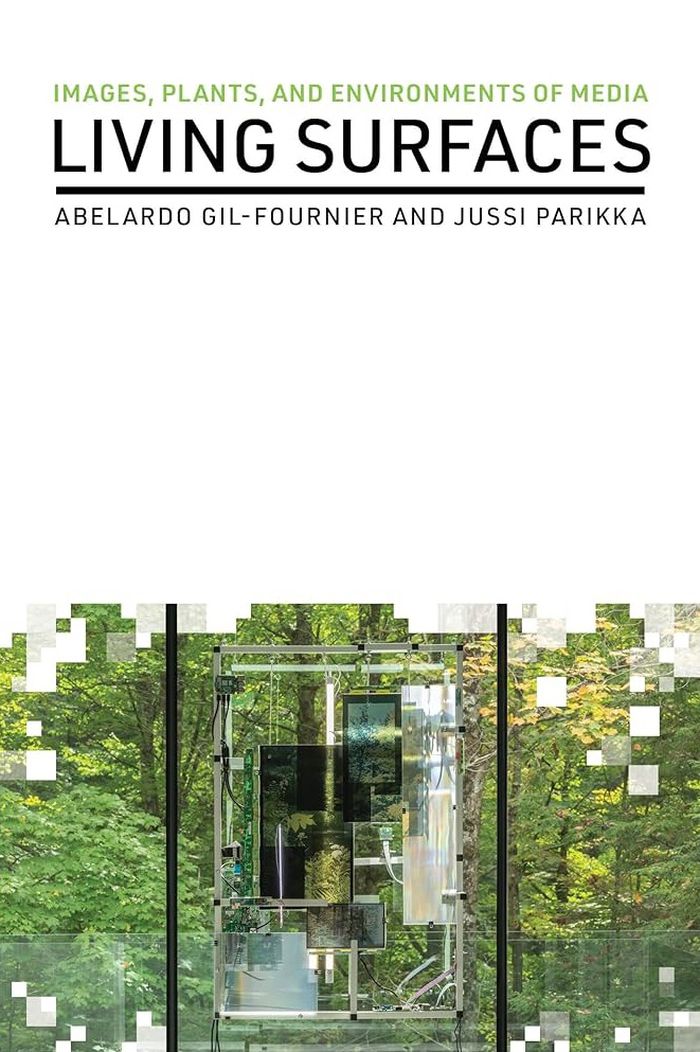
What if every vista, every island—indeed, every geographical feature on Earth—could be viewed as an art object? In ''Living Surfaces'', Abelardo Gil-Fournier and Jussi Parikka explore how the surface of the Earth has, over the last two centuries, become known and perceived as an environment of images. ''Living Surfaces'' features a range of case studies from eighteenth-century experiments with and observations of vegetal matter, photosynthesis, and plant physiology to twenty-first-century machine vision and AI techniques of calculating agricultural and other landscape surfaces. Mapping these different scales of vegetal images, Gil-Fournier and Parikka help us understand core questions that pertain to the artistic and architectural reference points for the Anthropocene.
Living surfaces: Images, plants and environments of media
Actions:
Price:
$60.00
(available to order)
Summary:
What if every vista, every island—indeed, every geographical feature on Earth—could be viewed as an art object? In ''Living Surfaces'', Abelardo Gil-Fournier and Jussi Parikka explore how the surface of the Earth has, over the last two centuries, become known and perceived as an environment of images. ''Living Surfaces'' features a range of case studies from eighteenth-century experiments with and observations of vegetal matter, photosynthesis, and plant physiology to twenty-first-century machine vision and AI techniques of calculating agricultural and other landscape surfaces. Mapping these different scales of vegetal images, Gil-Fournier and Parikka help us understand core questions that pertain to the artistic and architectural reference points for the Anthropocene.
Form:
books
books
Publication:
June 2024
June 2024
Subject:
Environment and environmental theory
Environment and environmental theory
Form:
books
books
Actions:
Price:
$74.95
(available in store)
Summary:
Amancio Williams (1913-1989) è uno degli esponenti più importanti e originali della cultura argentina e del movimento moderno; tuttavia la sua architettura rimane in parte ancora inesplorata. La produzione critica in Italia non sempre ha garantito una sufficiente diffusione della sua rara quanto inusuale dimensione progettuale, fondata su antitesi capaci di dar vita a(...)
$74.95
(available in store)
Summary:
Amancio Williams (1913-1989) è uno degli esponenti più importanti e originali della cultura argentina e del movimento moderno; tuttavia la sua architettura rimane in parte ancora inesplorata. La produzione critica in Italia non sempre ha garantito una sufficiente diffusione della sua rara quanto inusuale dimensione progettuale, fondata su antitesi capaci di dar vita a(...)
Title:
Amancio Williams: Progettare per antisi
Actions:
Price:
$74.95
(available in store)
Summary:
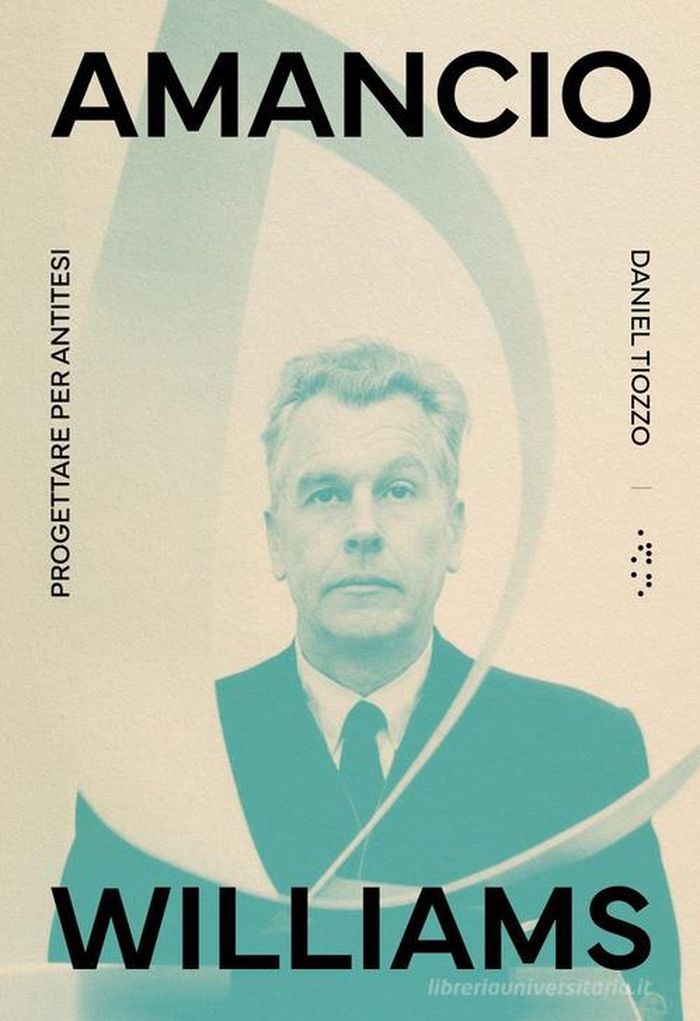
Amancio Williams (1913-1989) è uno degli esponenti più importanti e originali della cultura argentina e del movimento moderno; tuttavia la sua architettura rimane in parte ancora inesplorata. La produzione critica in Italia non sempre ha garantito una sufficiente diffusione della sua rara quanto inusuale dimensione progettuale, fondata su antitesi capaci di dar vita a soluzioni sorprendenti e uniche. Questo volume è un‘occasione per riscoprire le strategie tecniche e compositive di Williams, in grado di rispondere ai temi e alle esigenze della contemporaneità. Il libro conta su un repertorio di immagini inedite, su un ricco contributo teorico e su una esegesi critica del suo modus operandi, accompagnata da schemi e analisi re-interpretative.
Amancio Williams: Progettare per antisi
Actions:
Price:
$74.95
(available in store)
Summary:
Amancio Williams (1913-1989) è uno degli esponenti più importanti e originali della cultura argentina e del movimento moderno; tuttavia la sua architettura rimane in parte ancora inesplorata. La produzione critica in Italia non sempre ha garantito una sufficiente diffusione della sua rara quanto inusuale dimensione progettuale, fondata su antitesi capaci di dar vita a soluzioni sorprendenti e uniche. Questo volume è un‘occasione per riscoprire le strategie tecniche e compositive di Williams, in grado di rispondere ai temi e alle esigenze della contemporaneità. Il libro conta su un repertorio di immagini inedite, su un ricco contributo teorico e su una esegesi critica del suo modus operandi, accompagnata da schemi e analisi re-interpretative.
Form:
books
books
Publication:
April 2024
April 2024
Subject:
Architecture Monographs
Architecture Monographs
Form:
books
books
Actions:
Price:
$29.95
(available to order)
Summary:
In this perceptive book, Myria Georgiou sets out to investigate the new configuration of social order that is taking shape in today’s cities. Although routed through extractive datafication, compulsive connectivity, and regulatory AI technologies, this digital order nonetheless displaces technocentrism and instead promotes new visions of humanism, all in the name of(...)
$29.95
(available to order)
Summary:
In this perceptive book, Myria Georgiou sets out to investigate the new configuration of social order that is taking shape in today’s cities. Although routed through extractive datafication, compulsive connectivity, and regulatory AI technologies, this digital order nonetheless displaces technocentrism and instead promotes new visions of humanism, all in the name of(...)
Title:
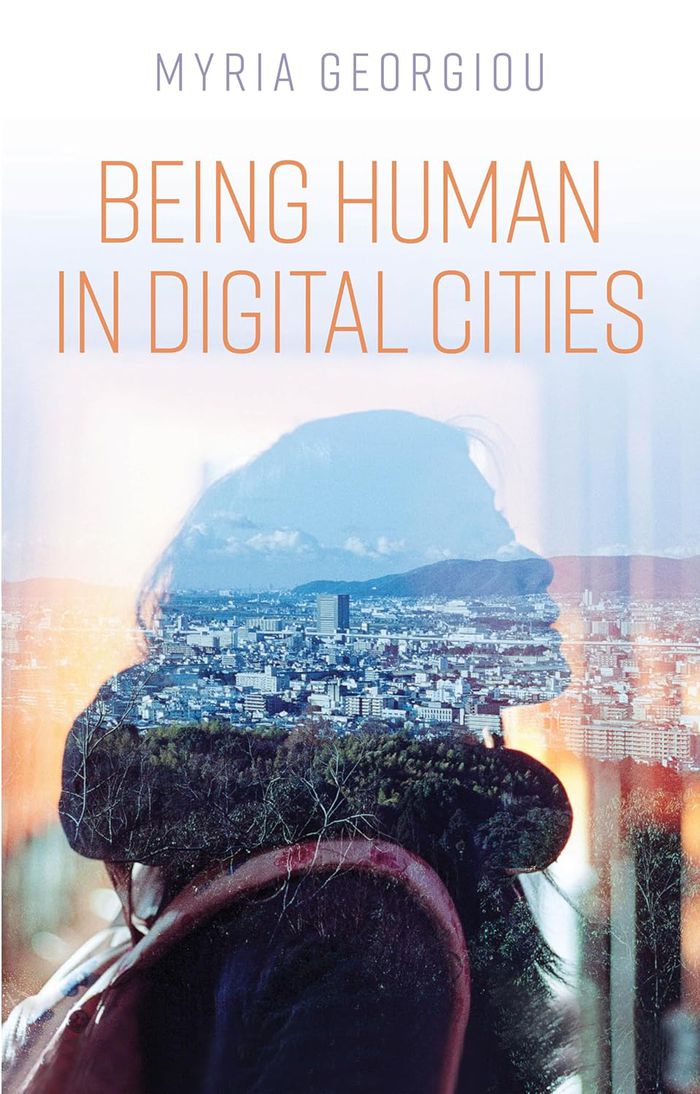
Being human in digital cities
Actions:
Price:
$29.95
(available to order)
Summary:
In this perceptive book, Myria Georgiou sets out to investigate the new configuration of social order that is taking shape in today’s cities. Although routed through extractive datafication, compulsive connectivity, and regulatory AI technologies, this digital order nonetheless displaces technocentrism and instead promotes new visions of humanism, all in the name of freedom, diversity, and sustainability. But the digital order emerges in the midst of neoliberal instability and crises, resulting in a plurality of contrasting responses to securing digitally mediated human progress. While corporate, media, and state actors mobilize such positive sociotechnical imaginaries to promise digitally mediated human progress, urban citizens and social movements propose alternative pathways to autonomy and dignity through and sometimes against digital technologies.
Being human in digital cities
Actions:
Price:
$29.95
(available to order)
Summary:
In this perceptive book, Myria Georgiou sets out to investigate the new configuration of social order that is taking shape in today’s cities. Although routed through extractive datafication, compulsive connectivity, and regulatory AI technologies, this digital order nonetheless displaces technocentrism and instead promotes new visions of humanism, all in the name of freedom, diversity, and sustainability. But the digital order emerges in the midst of neoliberal instability and crises, resulting in a plurality of contrasting responses to securing digitally mediated human progress. While corporate, media, and state actors mobilize such positive sociotechnical imaginaries to promise digitally mediated human progress, urban citizens and social movements propose alternative pathways to autonomy and dignity through and sometimes against digital technologies.
Form:
books
books
Publication:
February 2024
February 2024
Subject:
Urban Theory
Urban Theory
Form:
books
books
Price:
$72.95
(available to order)
Summary:
This publication presents the various garden types from the perspective of contemporary landscape and garden design. They point the way toward the essential compositional principles, the plants most commonly utilized and their most characteristic uses, and the possibilities for employing them in contemporary projects, thus providing readers with a source of inspiration(...)
$72.95
(available to order)
Summary:
This publication presents the various garden types from the perspective of contemporary landscape and garden design. They point the way toward the essential compositional principles, the plants most commonly utilized and their most characteristic uses, and the possibilities for employing them in contemporary projects, thus providing readers with a source of inspiration(...)
Title:
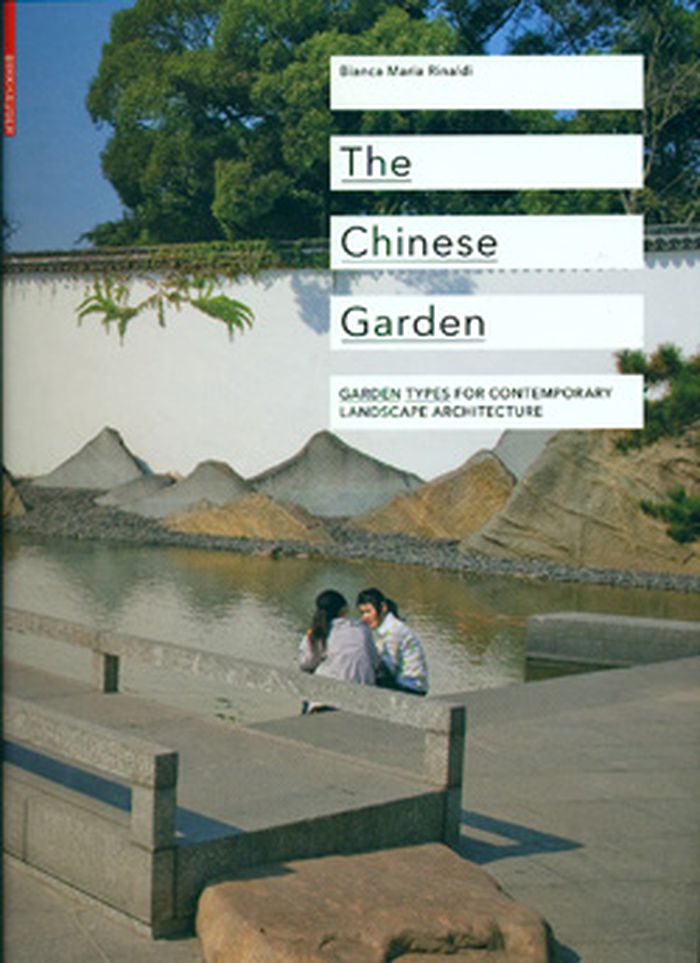
The chinese garden: garden types for contemporary landscape architecture
Actions:
Price:
$72.95
(available to order)
Summary:
This publication presents the various garden types from the perspective of contemporary landscape and garden design. They point the way toward the essential compositional principles, the plants most commonly utilized and their most characteristic uses, and the possibilities for employing them in contemporary projects, thus providing readers with a source of inspiration for their own designs and creations. The panorama of The Chinese Garden stretches from the surviving historical gardens all the way to modern examples as the garden at the Bank of China in Hong Kong (designed by I. M. Pei), Ai Weiwei s Yiwu Riverbank Park, the Garden of Flowering Fragrance in the area of Los Angeles, California, and the Garden of Awakening Orchids in Portland, Oregon.
The chinese garden: garden types for contemporary landscape architecture
Actions:
Price:
$72.95
(available to order)
Summary:
This publication presents the various garden types from the perspective of contemporary landscape and garden design. They point the way toward the essential compositional principles, the plants most commonly utilized and their most characteristic uses, and the possibilities for employing them in contemporary projects, thus providing readers with a source of inspiration for their own designs and creations. The panorama of The Chinese Garden stretches from the surviving historical gardens all the way to modern examples as the garden at the Bank of China in Hong Kong (designed by I. M. Pei), Ai Weiwei s Yiwu Riverbank Park, the Garden of Flowering Fragrance in the area of Los Angeles, California, and the Garden of Awakening Orchids in Portland, Oregon.
Form:
books
books
Publication:
May 2011
May 2011
Subject:
Gardens
Gardens
Form:
books
books
Actions:
Price:
$14.95
(available to order)
Summary:
"You Had Better Make Some Noise" brings together the words of social activists, revolutionaries, artists, writers, musicians, philosophers, politicians, and more - galvanizing us all to do the same. Familiar figures - Thomas Paine to Bertrand Russell, Augustine to Gloria Steinem, Harvey Milk to Ai Weiwei, James Baldwin to Margaret Mead - are joined by a chorus of voices(...)
$14.95
(available to order)
Summary:
"You Had Better Make Some Noise" brings together the words of social activists, revolutionaries, artists, writers, musicians, philosophers, politicians, and more - galvanizing us all to do the same. Familiar figures - Thomas Paine to Bertrand Russell, Augustine to Gloria Steinem, Harvey Milk to Ai Weiwei, James Baldwin to Margaret Mead - are joined by a chorus of voices(...)
Title:
You had better make some noise: words to change the world
Actions:
Price:
$14.95
(available to order)
Summary:
"You Had Better Make Some Noise" brings together the words of social activists, revolutionaries, artists, writers, musicians, philosophers, politicians, and more - galvanizing us all to do the same. Familiar figures - Thomas Paine to Bertrand Russell, Augustine to Gloria Steinem, Harvey Milk to Ai Weiwei, James Baldwin to Margaret Mead - are joined by a chorus of voices that have made their own indelible marks on the legacy of protest and progress. "When the history of our times is written, will we be remembered as the generation that turned our backs in a moment of global crisis or will it be recorded that we did the right thing?" Nelson Mandela asked that question, and this positive and reinforcing book urges us to heed the call.
You had better make some noise: words to change the world
Actions:
Price:
$14.95
(available to order)
Summary:
"You Had Better Make Some Noise" brings together the words of social activists, revolutionaries, artists, writers, musicians, philosophers, politicians, and more - galvanizing us all to do the same. Familiar figures - Thomas Paine to Bertrand Russell, Augustine to Gloria Steinem, Harvey Milk to Ai Weiwei, James Baldwin to Margaret Mead - are joined by a chorus of voices that have made their own indelible marks on the legacy of protest and progress. "When the history of our times is written, will we be remembered as the generation that turned our backs in a moment of global crisis or will it be recorded that we did the right thing?" Nelson Mandela asked that question, and this positive and reinforcing book urges us to heed the call.
Form:
books
books
Publication:
May 2018
May 2018
Subject:
CAISSE
CAISSE
Form:
books
books
Actions:
Price:
$48.95
(available in store)
Summary:
Driving the Human is a catalyst for experimentation, shaping sustainable and collective futures that combine science, technology, and the arts in a transdisciplinary and collaborative approach. This publication documents all milestones of the three-year project, contextualizing and expanding its discourse through expert voices and emerging creative visions. At its(...)
$48.95
(available in store)
Summary:
Driving the Human is a catalyst for experimentation, shaping sustainable and collective futures that combine science, technology, and the arts in a transdisciplinary and collaborative approach. This publication documents all milestones of the three-year project, contextualizing and expanding its discourse through expert voices and emerging creative visions. At its(...)
Title:
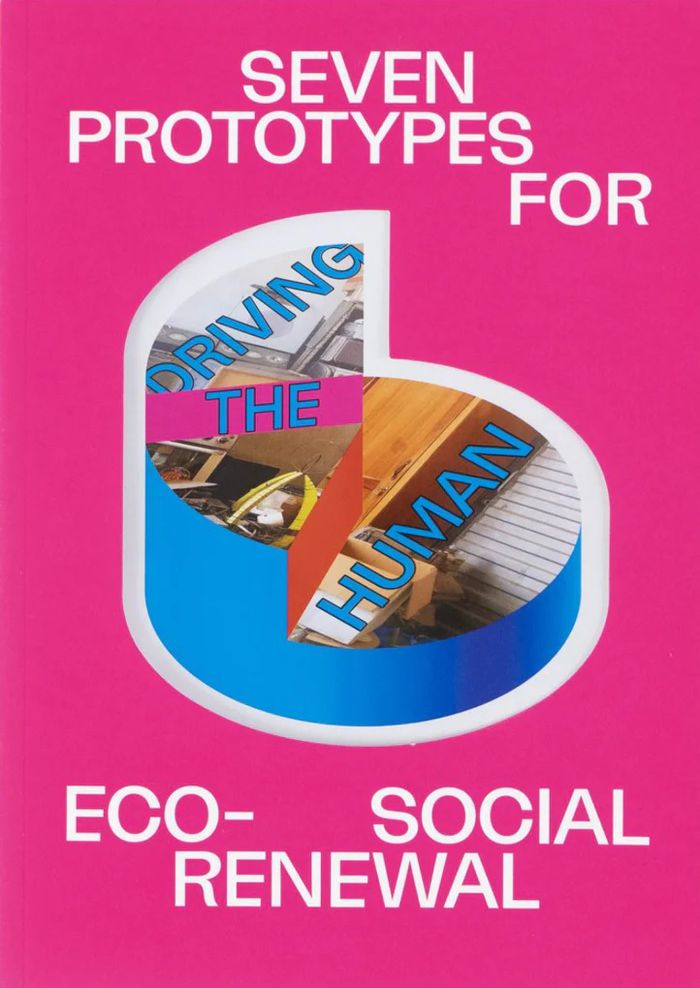
Driving the Human: Seven Prototypes For Eco-Social Renewal
Actions:
Price:
$48.95
(available in store)
Summary:
Driving the Human is a catalyst for experimentation, shaping sustainable and collective futures that combine science, technology, and the arts in a transdisciplinary and collaborative approach. This publication documents all milestones of the three-year project, contextualizing and expanding its discourse through expert voices and emerging creative visions. At its heart are seven prototypes for eco-social renewal, each proposing new ways to engage with one another and with what surrounds us, at the surface of the planet and beyond. They explore ways in which AI could mitigate climate change; immerse us in new forms of community through ancestral agricultural knowledge; employ fiction as a tool for new modes of multispecies conviviality; or create embodied connections to understand human impact in endangered territories.
Driving the Human: Seven Prototypes For Eco-Social Renewal
Actions:
Price:
$48.95
(available in store)
Summary:
Driving the Human is a catalyst for experimentation, shaping sustainable and collective futures that combine science, technology, and the arts in a transdisciplinary and collaborative approach. This publication documents all milestones of the three-year project, contextualizing and expanding its discourse through expert voices and emerging creative visions. At its heart are seven prototypes for eco-social renewal, each proposing new ways to engage with one another and with what surrounds us, at the surface of the planet and beyond. They explore ways in which AI could mitigate climate change; immerse us in new forms of community through ancestral agricultural knowledge; employ fiction as a tool for new modes of multispecies conviviality; or create embodied connections to understand human impact in endangered territories.
Form:
books
books
Publication:
July 2023
July 2023
Subject:
Social
Social
Form:
books
books
Actions:
Price:
$40.00
(available in store)
Summary:
The Gwangju Folly project began in 2011 as part of the first Gwangju Design Biennale led by co-artistic directors Seung H-Sang and Ai Weiwei. Following its second edition in 2013 with Nikolaus Hirsch, 2016 Gwangju Folly III is conceived by Eui-Young Chunand and introduces a look at new follies in the urban space of Gwangju in South Korea. “See, Play, Eat, Walk”, presents(...)
$40.00
(available in store)
Summary:
The Gwangju Folly project began in 2011 as part of the first Gwangju Design Biennale led by co-artistic directors Seung H-Sang and Ai Weiwei. Following its second edition in 2013 with Nikolaus Hirsch, 2016 Gwangju Folly III is conceived by Eui-Young Chunand and introduces a look at new follies in the urban space of Gwangju in South Korea. “See, Play, Eat, Walk”, presents(...)
Title:
See play eat walk: Gwangiu Folly III: where the everyday and the unexpected intersect
Actions:
Price:
$40.00
(available in store)
Summary:
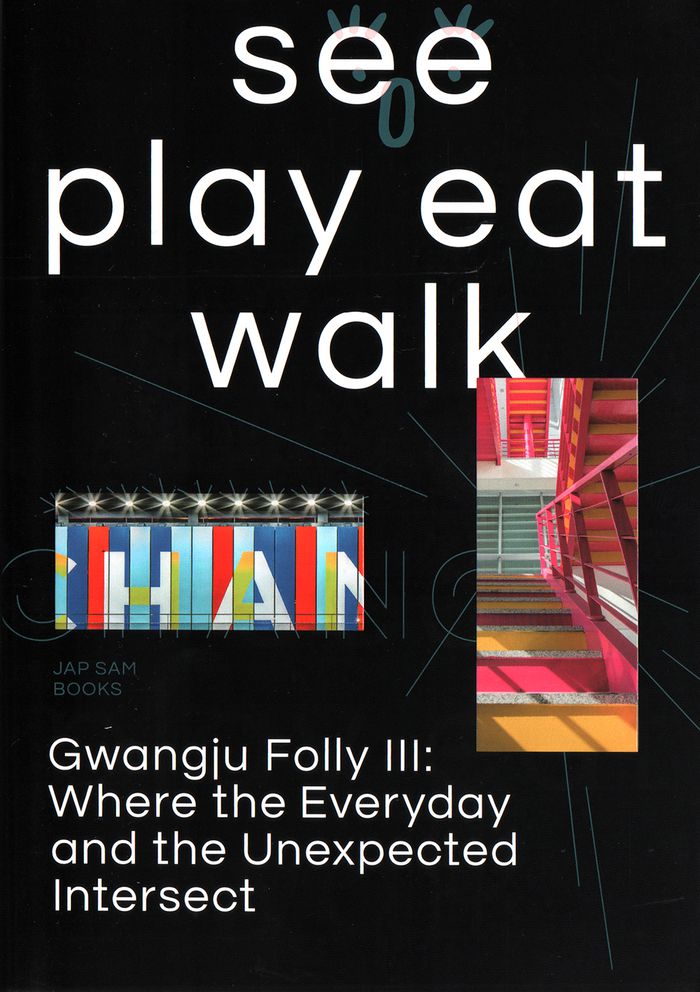
The Gwangju Folly project began in 2011 as part of the first Gwangju Design Biennale led by co-artistic directors Seung H-Sang and Ai Weiwei. Following its second edition in 2013 with Nikolaus Hirsch, 2016 Gwangju Folly III is conceived by Eui-Young Chunand and introduces a look at new follies in the urban space of Gwangju in South Korea. “See, Play, Eat, Walk”, presents four follies, all newly commissioned works from architects and artists challenging the perception of public space: View Folly, GD (Gwangju Dutch) Folly, Cook Folly, Fun Pun Folly and Mini Folly as a sub-folly. Gwangju Folly III perceives follies as a new and creative spatial alternative that is able to overcome the contextual limitations of existing urban cities and facilitate greater communication with the public.
See play eat walk: Gwangiu Folly III: where the everyday and the unexpected intersect
Actions:
Price:
$40.00
(available in store)
Summary:
The Gwangju Folly project began in 2011 as part of the first Gwangju Design Biennale led by co-artistic directors Seung H-Sang and Ai Weiwei. Following its second edition in 2013 with Nikolaus Hirsch, 2016 Gwangju Folly III is conceived by Eui-Young Chunand and introduces a look at new follies in the urban space of Gwangju in South Korea. “See, Play, Eat, Walk”, presents four follies, all newly commissioned works from architects and artists challenging the perception of public space: View Folly, GD (Gwangju Dutch) Folly, Cook Folly, Fun Pun Folly and Mini Folly as a sub-folly. Gwangju Folly III perceives follies as a new and creative spatial alternative that is able to overcome the contextual limitations of existing urban cities and facilitate greater communication with the public.
Form:
books
books
Publication:
August 2018
August 2018
Subject:
Contemporary Architecture
Contemporary Architecture
Form:
books
books
Actions:
Price:
$33.00
(available in store)
Summary:
How does media architecture distribute suspicion and trust? What is a collage of media architecture? How is media architecture vectored? How can media architecture address privilege? These questions and conceptual provocations aim to challenge the binary of techno-optimism and technological agoraphobia, offering a platform for developing new, critically and contextually(...)
$33.00
(available in store)
Summary:
How does media architecture distribute suspicion and trust? What is a collage of media architecture? How is media architecture vectored? How can media architecture address privilege? These questions and conceptual provocations aim to challenge the binary of techno-optimism and technological agoraphobia, offering a platform for developing new, critically and contextually(...)
Subject:
Archive, library and the digital
Archive, library and the digital
Publication:
November 2023
November 2023
Title:
Provocations on media architecture
Actions:
Price:
$33.00
(available in store)
Summary:
How does media architecture distribute suspicion and trust? What is a collage of media architecture? How is media architecture vectored? How can media architecture address privilege? These questions and conceptual provocations aim to challenge the binary of techno-optimism and technological agoraphobia, offering a platform for developing new, critically and contextually rooted theories that media architecture might grab hold of. Intentionally open-ended, ''Provocations on Media Architecture'' brings together 21 thought leaders across architecture, visual arts, design, curation, academia and public policy to address these ideas and themes. Authors respond with images and brief texts incorporating the perspective of their own creative and scholarly practice. Entries range from descriptions of relevant artworks and design projects to reflections spawned from first-person encounters with media architecture in situ, scholarly analyses and AI-assisted theory.
Provocations on media architecture
Actions:
Price:
$33.00
(available in store)
Summary:
How does media architecture distribute suspicion and trust? What is a collage of media architecture? How is media architecture vectored? How can media architecture address privilege? These questions and conceptual provocations aim to challenge the binary of techno-optimism and technological agoraphobia, offering a platform for developing new, critically and contextually rooted theories that media architecture might grab hold of. Intentionally open-ended, ''Provocations on Media Architecture'' brings together 21 thought leaders across architecture, visual arts, design, curation, academia and public policy to address these ideas and themes. Authors respond with images and brief texts incorporating the perspective of their own creative and scholarly practice. Entries range from descriptions of relevant artworks and design projects to reflections spawned from first-person encounters with media architecture in situ, scholarly analyses and AI-assisted theory.
Form:
books
books
Publication:
November 2023
November 2023
Subject:
Archive, library and the digital
Archive, library and the digital


