


691 Results
Form:
books
books
Actions:
Price:
$18.00
(available to order)
Summary:
In 1946, Buckminster Fuller patented a map of Earth which presents geographic information without breaks in any of the continental contours, or any visible distortion of the relative shapes or sizes of the land masses. In 1954, the Dymaxion Projection as we know it today was hand drawn by architect, Shoji Sadao, the cartographer and collaborator behind the map. Designer(...)
$18.00
(available to order)
Summary:
In 1946, Buckminster Fuller patented a map of Earth which presents geographic information without breaks in any of the continental contours, or any visible distortion of the relative shapes or sizes of the land masses. In 1954, the Dymaxion Projection as we know it today was hand drawn by architect, Shoji Sadao, the cartographer and collaborator behind the map. Designer(...)
Subject:
Toys
Toys
Publication:
December 2016
December 2016
Title:
Dymaxion folding globe, black and white
Actions:
Price:
$18.00
(available to order)
Summary:
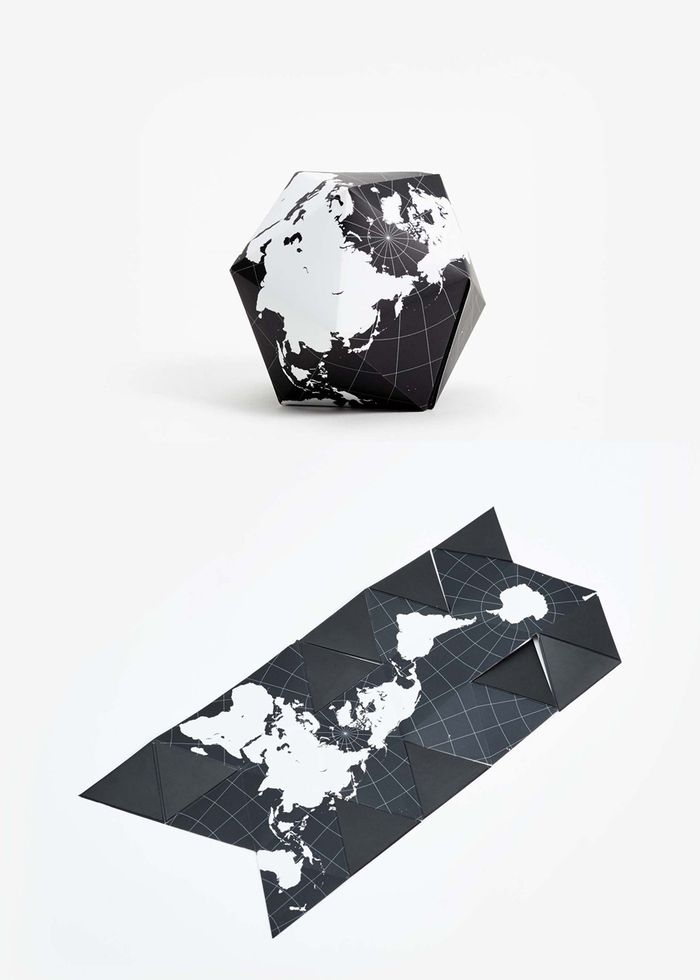
In 1946, Buckminster Fuller patented a map of Earth which presents geographic information without breaks in any of the continental contours, or any visible distortion of the relative shapes or sizes of the land masses. In 1954, the Dymaxion Projection as we know it today was hand drawn by architect, Shoji Sadao, the cartographer and collaborator behind the map. Designer Brendan Ravenhill has configured Fuller’s projection as a magnetic folding globe, a representation of Earth that easily transitions from flat to three dimensional. Fold it to form a geometric globe or unfold to reveal our flattened planet.
Dymaxion folding globe, black and white
Actions:
Price:
$18.00
(available to order)
Summary:
In 1946, Buckminster Fuller patented a map of Earth which presents geographic information without breaks in any of the continental contours, or any visible distortion of the relative shapes or sizes of the land masses. In 1954, the Dymaxion Projection as we know it today was hand drawn by architect, Shoji Sadao, the cartographer and collaborator behind the map. Designer Brendan Ravenhill has configured Fuller’s projection as a magnetic folding globe, a representation of Earth that easily transitions from flat to three dimensional. Fold it to form a geometric globe or unfold to reveal our flattened planet.
Form:
books
books
Publication:
December 2016
December 2016
Subject:
Toys
Toys
Form:
books
books
Actions:
Holdings:
Description:
296 pages : illustrations (some color), maps (some color) ; 24 cm
Description:
296 pages : illustrations (some color), maps (some color) ; 24 cm
Author:
Subject:
Publication:
New York, NY : Columbia Books on Architecture and the City, [2017], ©2017
New York, NY : Columbia Books on Architecture and the City, [2017], ©2017
Title:
Architecture is all over / edited by Esther Choi and Marrikka Trotter.
Actions:
Holdings:
Description:
296 pages : illustrations (some color), maps (some color) ; 24 cm
Architecture is all over / edited by Esther Choi and Marrikka Trotter.
Actions:
Holdings:
Description:
296 pages : illustrations (some color), maps (some color) ; 24 cm
Form:
books
books
Publication:
New York, NY : Columbia Books on Architecture and the City, [2017], ©2017
New York, NY : Columbia Books on Architecture and the City, [2017], ©2017
Author:
Subject:
Form:
books
books
Price:
$46.95
(available to order)
Summary:
Philippe Rahm & Alain Robbe-Grillet: Météorologie d'intérieur Christine Macel: Nouvelles temporalités dans l'architecture, entretien avec Philippe Rahm Olivier Lugon: La conférence, Parole, dessin et projection chez Le Corbusier Maria Stavrinaki: Dada inhumain; l'artiste et son milieu Éric Michaud: Portrait du juif en négateur de l'Incarnation
$46.95
(available to order)
Summary:
Philippe Rahm & Alain Robbe-Grillet: Météorologie d'intérieur Christine Macel: Nouvelles temporalités dans l'architecture, entretien avec Philippe Rahm Olivier Lugon: La conférence, Parole, dessin et projection chez Le Corbusier Maria Stavrinaki: Dada inhumain; l'artiste et son milieu Éric Michaud: Portrait du juif en négateur de l'Incarnation
Title:
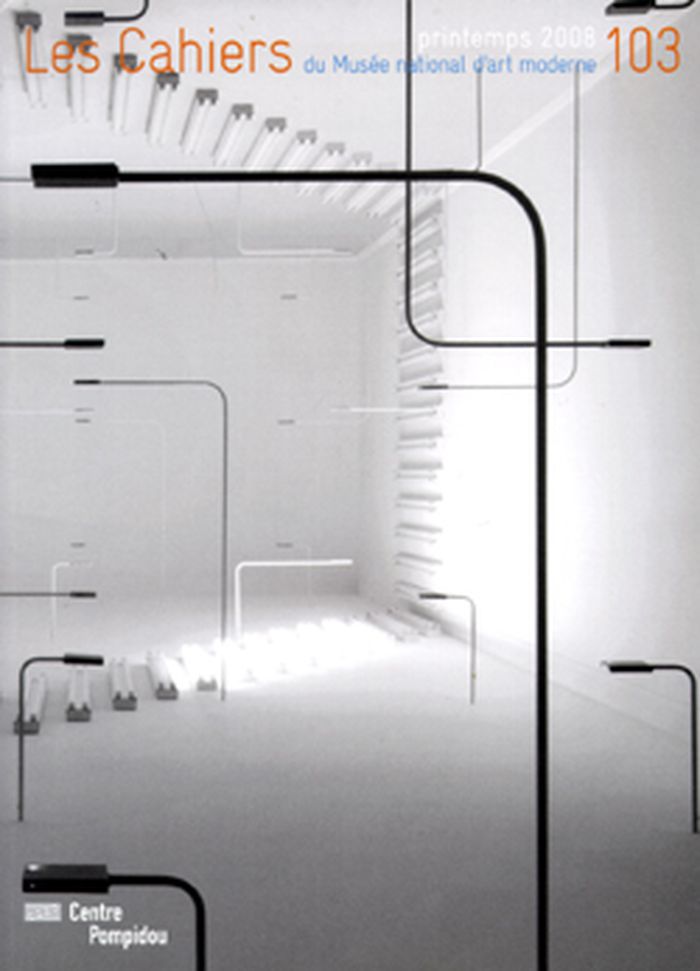
Les Cahiers du Musée national d'art moderne 103, printemps 2008
Actions:
Price:
$46.95
(available to order)
Summary:
Philippe Rahm & Alain Robbe-Grillet: Météorologie d'intérieur Christine Macel: Nouvelles temporalités dans l'architecture, entretien avec Philippe Rahm Olivier Lugon: La conférence, Parole, dessin et projection chez Le Corbusier Maria Stavrinaki: Dada inhumain; l'artiste et son milieu Éric Michaud: Portrait du juif en négateur de l'Incarnation
Les Cahiers du Musée national d'art moderne 103, printemps 2008
Actions:
Price:
$46.95
(available to order)
Summary:
Philippe Rahm & Alain Robbe-Grillet: Météorologie d'intérieur Christine Macel: Nouvelles temporalités dans l'architecture, entretien avec Philippe Rahm Olivier Lugon: La conférence, Parole, dessin et projection chez Le Corbusier Maria Stavrinaki: Dada inhumain; l'artiste et son milieu Éric Michaud: Portrait du juif en négateur de l'Incarnation
Form:
books
books
Publication:
January 1900
January 1900
Subject:
Contemporary Art Monographs
Contemporary Art Monographs
Form:
books
books
Actions:
Holdings:
Description:
[52] pages : illustrations ; 27 x 20 cm.
Description:
[52] pages : illustrations ; 27 x 20 cm.
Author:
Subject:
Publication:
New York : E.P. Dutton & Company, Inc., 1930 (United States of America : Stratford Press)
New York : E.P. Dutton & Company, Inc., 1930 (United States of America : Stratford Press)
Title:
Ultimo : an imaginative narration of life under the earth / with projections by John Vassos and the text by Ruth Vassos.
Actions:
Holdings:
Description:
[52] pages : illustrations ; 27 x 20 cm.
Ultimo : an imaginative narration of life under the earth / with projections by John Vassos and the text by Ruth Vassos.
Actions:
Holdings:
Description:
[52] pages : illustrations ; 27 x 20 cm.
Form:
books
books
Publication:
New York : E.P. Dutton & Company, Inc., 1930 (United States of America : Stratford Press)
New York : E.P. Dutton & Company, Inc., 1930 (United States of America : Stratford Press)
Author:
Subject:
Form:
books
books
Actions:
Price:
$36.95
(available to order)
Summary:
Anonymous snapshots are the ideal projection screen: they inspire the imagination to invent stories. The photographer and artist Luciano Rigolini demonstrates, however, that these images, freed from their context, can also convey a visual experience. Rigolini pieces together his findings from flea markets, archives, or the Internet to create a new, independent work - a(...)
$36.95
(available to order)
Summary:
Anonymous snapshots are the ideal projection screen: they inspire the imagination to invent stories. The photographer and artist Luciano Rigolini demonstrates, however, that these images, freed from their context, can also convey a visual experience. Rigolini pieces together his findings from flea markets, archives, or the Internet to create a new, independent work - a(...)
Title:
What you see- Luciano Rigolini
Actions:
Price:
$36.95
(available to order)
Summary:
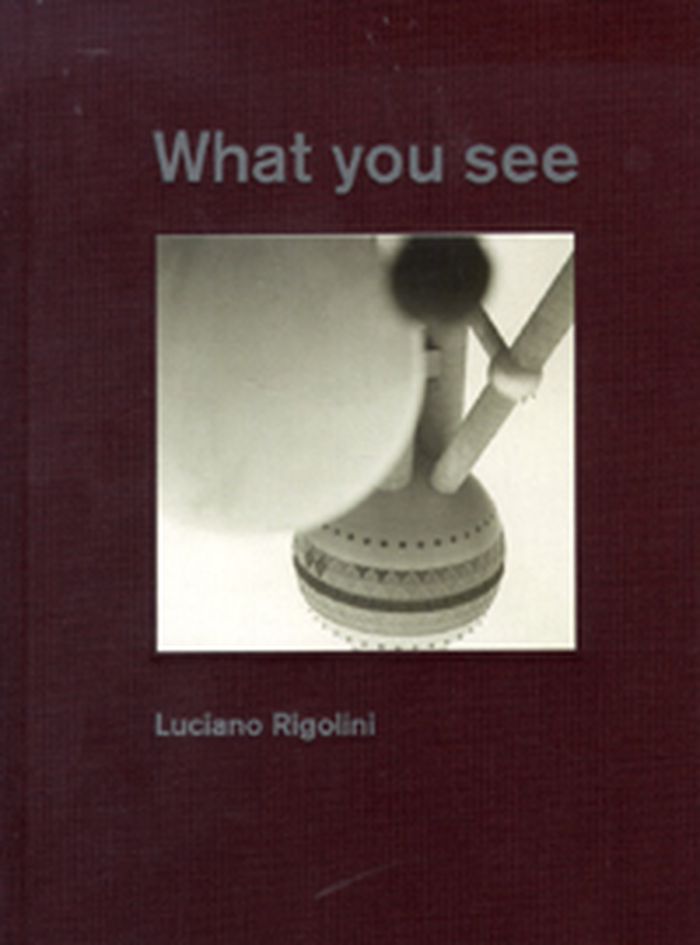
Anonymous snapshots are the ideal projection screen: they inspire the imagination to invent stories. The photographer and artist Luciano Rigolini demonstrates, however, that these images, freed from their context, can also convey a visual experience. Rigolini pieces together his findings from flea markets, archives, or the Internet to create a new, independent work - a grammar of seeing and perception. Les instantanés anonymes sont des surfaces de projection idéales : ils incitent l'imagination à inventer des histoires. Artiste photographe, Luciano Rigolini révèle que, même détachées de leur contexte, ces images peuvent transmettre une expérience visuelle. En fouillant dans les marchés aux puces, les archives et l'Internet, il trouve tout un matériel qu'il assemble ensuite pour en faire une œuvre nouvelle, autonome, une grammaire de la vision et de la perception.
What you see- Luciano Rigolini
Actions:
Price:
$36.95
(available to order)
Summary:
Anonymous snapshots are the ideal projection screen: they inspire the imagination to invent stories. The photographer and artist Luciano Rigolini demonstrates, however, that these images, freed from their context, can also convey a visual experience. Rigolini pieces together his findings from flea markets, archives, or the Internet to create a new, independent work - a grammar of seeing and perception. Les instantanés anonymes sont des surfaces de projection idéales : ils incitent l'imagination à inventer des histoires. Artiste photographe, Luciano Rigolini révèle que, même détachées de leur contexte, ces images peuvent transmettre une expérience visuelle. En fouillant dans les marchés aux puces, les archives et l'Internet, il trouve tout un matériel qu'il assemble ensuite pour en faire une œuvre nouvelle, autonome, une grammaire de la vision et de la perception.
Form:
books
books
Publication:
November 2008, Baden
November 2008, Baden
Subject:
Photography Periods and Styles
Photography Periods and Styles
Form:
books
books
Price:
$55.95
(available to order)
Summary:
In this long-awaited translation of "La Règle et le Modèle" (1980), a seminal work on architectural and urban theory, Francoise Choay elucidates the entwined fate of two theoretical genres, one represented by Alberti's architectural rule book De re asdificatoria, the other by Thomas More's idealizing projection of Utopia.
$55.95
(available to order)
Summary:
In this long-awaited translation of "La Règle et le Modèle" (1980), a seminal work on architectural and urban theory, Francoise Choay elucidates the entwined fate of two theoretical genres, one represented by Alberti's architectural rule book De re asdificatoria, the other by Thomas More's idealizing projection of Utopia.
Title:
The rule and the model : on the theory of architecture and urbanism
Actions:
Price:
$55.95
(available to order)
Summary:
In this long-awaited translation of "La Règle et le Modèle" (1980), a seminal work on architectural and urban theory, Francoise Choay elucidates the entwined fate of two theoretical genres, one represented by Alberti's architectural rule book De re asdificatoria, the other by Thomas More's idealizing projection of Utopia.
The rule and the model : on the theory of architecture and urbanism
Actions:
Price:
$55.95
(available to order)
Summary:
In this long-awaited translation of "La Règle et le Modèle" (1980), a seminal work on architectural and urban theory, Francoise Choay elucidates the entwined fate of two theoretical genres, one represented by Alberti's architectural rule book De re asdificatoria, the other by Thomas More's idealizing projection of Utopia.
Form:
books
books
Publication:
January 1997, Cambridge, Mass.
January 1997, Cambridge, Mass.
Subject:
Urban Theory
Urban Theory
Form:
books
books
Actions:
Holdings:
Description:
79 pages : illustrations (chiefly color) ; 30 cm
Description:
79 pages : illustrations (chiefly color) ; 30 cm
Author:
Subject:
Publication:
[Ghent, Belgium] : Art Paper Editions, [2019], ©2019
[Ghent, Belgium] : Art Paper Editions, [2019], ©2019
Title:
Virtuous situations from the industrial past and some ideas for the 'climatic metropolis' to come : cases of Brussels and Paris = Situations vertueuses du passé industriel et quelques idées pour la métropole climatique à venir : les cas de Bruxelles et Paris = Deugdelijke situaties uit het industriële verleden en een aantal ideeën voor de klimaatmetropool van de toekomst : Brussel en Parijs / CENTRAL office for architecture and urbanism, Maxime Delvaux.
Actions:
Holdings:
Description:
79 pages : illustrations (chiefly color) ; 30 cm
Virtuous situations from the industrial past and some ideas for the 'climatic metropolis' to come : cases of Brussels and Paris = Situations vertueuses du passé industriel et quelques idées pour la métropole climatique à venir : les cas de Bruxelles et Paris = Deugdelijke situaties uit het industriële verleden en een aantal ideeën voor de klimaatmetropool van de toekomst : Brussel en Parijs / CENTRAL office for architecture and urbanism, Maxime Delvaux.
Actions:
Holdings:
Description:
79 pages : illustrations (chiefly color) ; 30 cm
Form:
books
books
Publication:
[Ghent, Belgium] : Art Paper Editions, [2019], ©2019
[Ghent, Belgium] : Art Paper Editions, [2019], ©2019
Author:
Subject:
Form:
audio
audio
Actions:
Description:
1 online resource.
Author:
Subject:
Publication:
[Place of publication not identified] : Lateral Addition, 2018.
[Place of publication not identified] : Lateral Addition, 2018.
Form:
audio
audio
Publication:
[Place of publication not identified] : Lateral Addition, 2018.
[Place of publication not identified] : Lateral Addition, 2018.
Author:
Subject:
Form:
books
books
Actions:
Price:
$89.95
(available to order)
Summary:
Présentation d'un corpus d'oeuvres exécutées depuis les années 1970, représentatives des recherches de l'artiste sur la lumière, la couleur, la transparence et la projection. En plus des créations pour la Fondation Louis Vuitton, ce catalogue recense d'autres travaux sur ces mêmes thématiques, réalisés notamment in situ dans des galeries françaises, américaines ou italiennes.
$89.95
(available to order)
Summary:
Présentation d'un corpus d'oeuvres exécutées depuis les années 1970, représentatives des recherches de l'artiste sur la lumière, la couleur, la transparence et la projection. En plus des créations pour la Fondation Louis Vuitton, ce catalogue recense d'autres travaux sur ces mêmes thématiques, réalisés notamment in situ dans des galeries françaises, américaines ou italiennes.
Title:
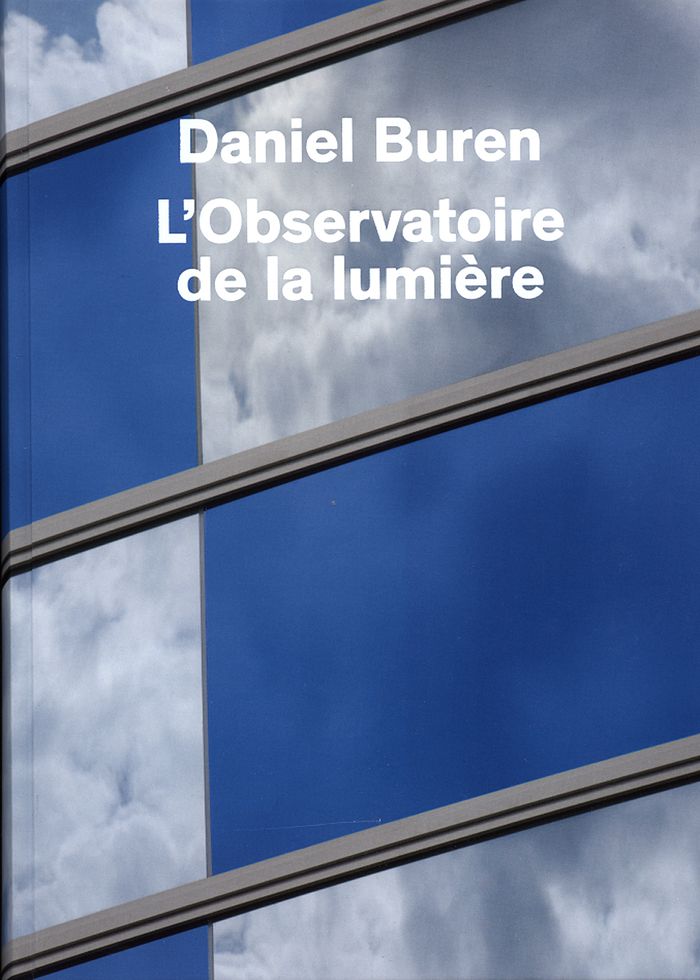
Daniel Buren: L'observatoire de la lumière
Actions:
Price:
$89.95
(available to order)
Summary:
Présentation d'un corpus d'oeuvres exécutées depuis les années 1970, représentatives des recherches de l'artiste sur la lumière, la couleur, la transparence et la projection. En plus des créations pour la Fondation Louis Vuitton, ce catalogue recense d'autres travaux sur ces mêmes thématiques, réalisés notamment in situ dans des galeries françaises, américaines ou italiennes.
Daniel Buren: L'observatoire de la lumière
Actions:
Price:
$89.95
(available to order)
Summary:
Présentation d'un corpus d'oeuvres exécutées depuis les années 1970, représentatives des recherches de l'artiste sur la lumière, la couleur, la transparence et la projection. En plus des créations pour la Fondation Louis Vuitton, ce catalogue recense d'autres travaux sur ces mêmes thématiques, réalisés notamment in situ dans des galeries françaises, américaines ou italiennes.
Form:
books
books
Publication:
June 2016
June 2016
Subject:
Contemporary Art Monographs
Contemporary Art Monographs
Form:
books
books
Title:
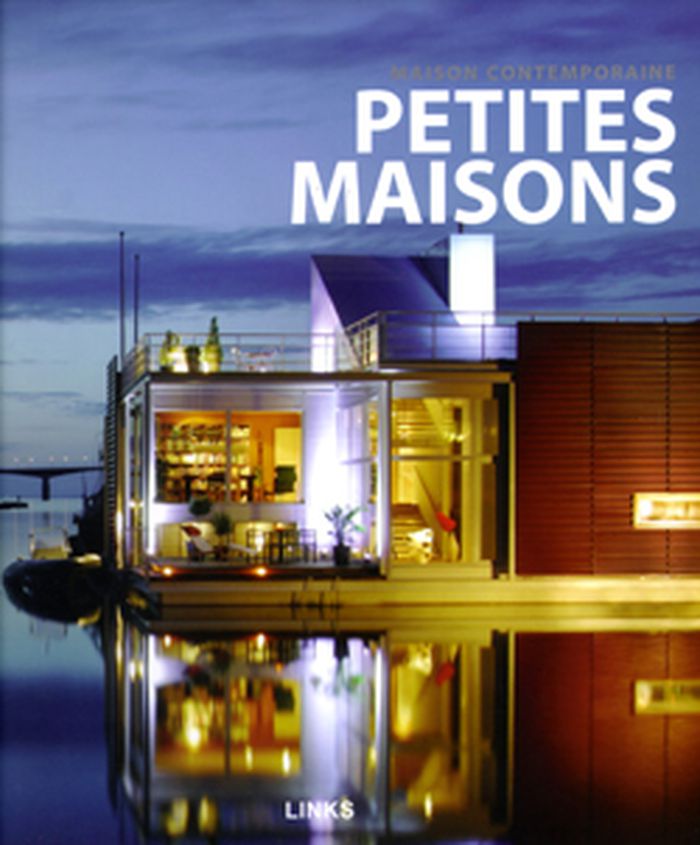
Petites maisons
Petites maisons
Actions:
Price:
$69.95
(available to order)
Summary:
Ce livre, manigiquement illustré, analyse 22 projects de maisons, soigneusement sélectionés pour leurs créativité et leur ingéniosité au moment de maximiser un espace. Fournissant toute les données nécessaires a la compréhension -Plans, coupes, matéeriaux, détailles spécifiques du mobilier et de ses compléments -ce livre offre l'ensemble des information concernant tout(...)
$69.95
(available to order)
Summary:
Ce livre, manigiquement illustré, analyse 22 projects de maisons, soigneusement sélectionés pour leurs créativité et leur ingéniosité au moment de maximiser un espace. Fournissant toute les données nécessaires a la compréhension -Plans, coupes, matéeriaux, détailles spécifiques du mobilier et de ses compléments -ce livre offre l'ensemble des information concernant tout(...)
Title:
Petites maisons
Actions:
Price:
$69.95
(available to order)
Summary:
Ce livre, manigiquement illustré, analyse 22 projects de maisons, soigneusement sélectionés pour leurs créativité et leur ingéniosité au moment de maximiser un espace. Fournissant toute les données nécessaires a la compréhension -Plans, coupes, matéeriaux, détailles spécifiques du mobilier et de ses compléments -ce livre offre l'ensemble des information concernant tout les aspects du prcessus de projection.
Petites maisons
Actions:
Price:
$69.95
(available to order)
Summary:
Ce livre, manigiquement illustré, analyse 22 projects de maisons, soigneusement sélectionés pour leurs créativité et leur ingéniosité au moment de maximiser un espace. Fournissant toute les données nécessaires a la compréhension -Plans, coupes, matéeriaux, détailles spécifiques du mobilier et de ses compléments -ce livre offre l'ensemble des information concernant tout les aspects du prcessus de projection.
Form:
books
books
Publication:
January 1900, Barcelona
January 1900, Barcelona
Subject:
Residential Architecture
Residential Architecture


