


6640 Results
Form:
journals and magazines
journals and magazines
Price:
$19.50
(available in store)
Summary:
Log 41 both observes the state of architecture today and devotes 114 pages to a special section called Working Queer, guest-edited by architect Jaffer Kolb. From Hans Tursack’s commentary on “shape architecture” to Michael Young’s valuation of parafiction as a critique of realism; from Lisa Hsieh’s examination of modernology in Japan to Cynthia Davidson’s conversation(...)
$19.50
(available in store)
Summary:
Log 41 both observes the state of architecture today and devotes 114 pages to a special section called Working Queer, guest-edited by architect Jaffer Kolb. From Hans Tursack’s commentary on “shape architecture” to Michael Young’s valuation of parafiction as a critique of realism; from Lisa Hsieh’s examination of modernology in Japan to Cynthia Davidson’s conversation(...)
Title:
Log 41
Actions:
Price:
$19.50
(available in store)
Summary:
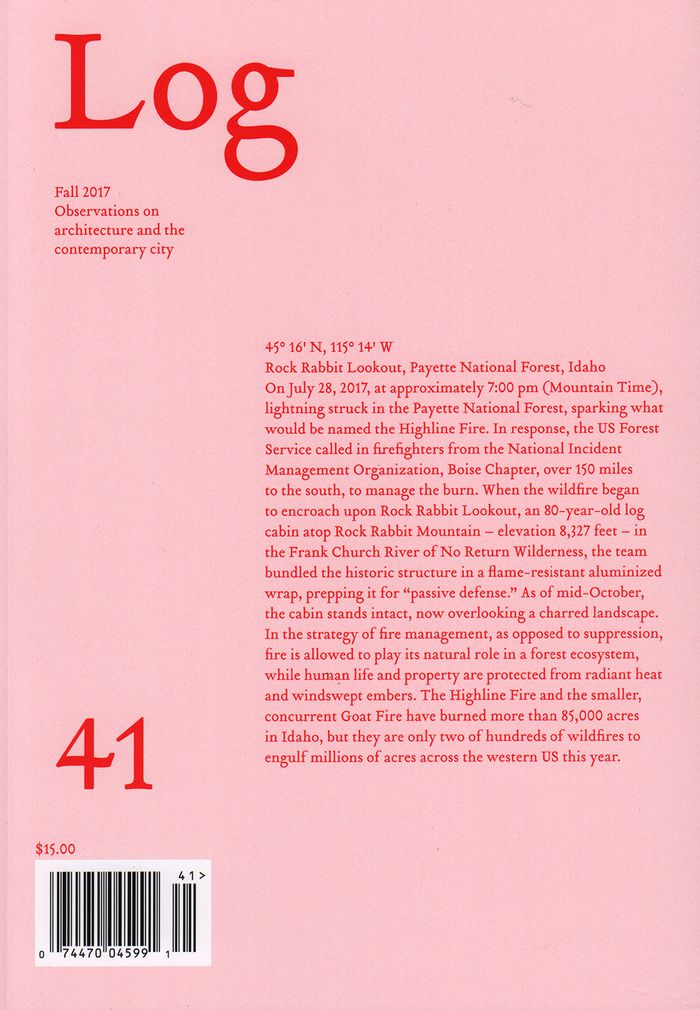
Log 41 both observes the state of architecture today and devotes 114 pages to a special section called Working Queer, guest-edited by architect Jaffer Kolb. From Hans Tursack’s commentary on “shape architecture” to Michael Young’s valuation of parafiction as a critique of realism; from Lisa Hsieh’s examination of modernology in Japan to Cynthia Davidson’s conversation with Martino Stierli, Log 41 considers both history and the contemporary. In Working Queer, nineteen authors take a similar look at history and the contemporary in articles ranging from homo-fascism in early 20th-century aesthetics to trans gender bathroom typologies for today, as well as methods of work, materials, and mediation that can all be considered queer, or queering, in our pluralist, mediated world.
Log 41
Actions:
Price:
$19.50
(available in store)
Summary:
Log 41 both observes the state of architecture today and devotes 114 pages to a special section called Working Queer, guest-edited by architect Jaffer Kolb. From Hans Tursack’s commentary on “shape architecture” to Michael Young’s valuation of parafiction as a critique of realism; from Lisa Hsieh’s examination of modernology in Japan to Cynthia Davidson’s conversation with Martino Stierli, Log 41 considers both history and the contemporary. In Working Queer, nineteen authors take a similar look at history and the contemporary in articles ranging from homo-fascism in early 20th-century aesthetics to trans gender bathroom typologies for today, as well as methods of work, materials, and mediation that can all be considered queer, or queering, in our pluralist, mediated world.
Form:
journals and magazines
journals and magazines
Publication:
December 2017
December 2017
Subject:
Magazines
Magazines
Form:
books
books
Title:
What black is this you say?
What black is this you say?
Actions:
Price:
$59.95
(available in store)
Summary:
"What black is this you say?", by Amanda Williams, convenes a broad set of contributors to respond to her own eponymous public artwork at Storefront for Art and Architecture in New York City (2021–2023). In this collection, the 17 colors and captions that appeared on the facade of Storefront—the project began as a series of Instagram posts of different hues of black,(...)
$59.95
(available in store)
Summary:
"What black is this you say?", by Amanda Williams, convenes a broad set of contributors to respond to her own eponymous public artwork at Storefront for Art and Architecture in New York City (2021–2023). In this collection, the 17 colors and captions that appeared on the facade of Storefront—the project began as a series of Instagram posts of different hues of black,(...)
Title:
What black is this you say?
Actions:
Price:
$59.95
(available in store)
Summary:
"What black is this you say?", by Amanda Williams, convenes a broad set of contributors to respond to her own eponymous public artwork at Storefront for Art and Architecture in New York City (2021–2023). In this collection, the 17 colors and captions that appeared on the facade of Storefront—the project began as a series of Instagram posts of different hues of black, paired with witty and incisive comments on the multiplicity of Black culture—are expounded upon in poems, essays, and prose. With this anthology, Williams deliberately departs from traditional art criticism by gathering an intimate ensemble of her peers, friends, and collaborators, including Roxane Gay, Corinne Bailey Rae, and J Wortham, to comment on her work.
What black is this you say?
Actions:
Price:
$59.95
(available in store)
Summary:
"What black is this you say?", by Amanda Williams, convenes a broad set of contributors to respond to her own eponymous public artwork at Storefront for Art and Architecture in New York City (2021–2023). In this collection, the 17 colors and captions that appeared on the facade of Storefront—the project began as a series of Instagram posts of different hues of black, paired with witty and incisive comments on the multiplicity of Black culture—are expounded upon in poems, essays, and prose. With this anthology, Williams deliberately departs from traditional art criticism by gathering an intimate ensemble of her peers, friends, and collaborators, including Roxane Gay, Corinne Bailey Rae, and J Wortham, to comment on her work.
Form:
books
books
Publication:
April 2025
April 2025
Subject:
Contemporary Art Monographs
Contemporary Art Monographs
Form:
books
books
Title:
What's left
What's left
Actions:
Price:
$38.00
(available to order)
Summary:
The author sees connections that others do not, and uses those insights to make speculative proposals that often involve urban land use. This book is a collection of what he calls "detritus"; from the link he created between the historic Dutch city of Utrecht and a homeless camp in the California desert called Slab City. The mixed narratives of individual freedom and(...)
$38.00
(available to order)
Summary:
The author sees connections that others do not, and uses those insights to make speculative proposals that often involve urban land use. This book is a collection of what he calls "detritus"; from the link he created between the historic Dutch city of Utrecht and a homeless camp in the California desert called Slab City. The mixed narratives of individual freedom and(...)
Title:
What's left
Actions:
Price:
$38.00
(available to order)
Summary:
The author sees connections that others do not, and uses those insights to make speculative proposals that often involve urban land use. This book is a collection of what he calls "detritus"; from the link he created between the historic Dutch city of Utrecht and a homeless camp in the California desert called Slab City. The mixed narratives of individual freedom and communal living meet in both places, as diverse as they may seem, as do other places drawn together using non-linear, multi-layered methods to explore subjects like the history of the Colorado River, the social functions of books and libraries, and disciplines as diverse as chemistry, architecture, social psychology, agriculture, language and disaster response.
What's left
Actions:
Price:
$38.00
(available to order)
Summary:
The author sees connections that others do not, and uses those insights to make speculative proposals that often involve urban land use. This book is a collection of what he calls "detritus"; from the link he created between the historic Dutch city of Utrecht and a homeless camp in the California desert called Slab City. The mixed narratives of individual freedom and communal living meet in both places, as diverse as they may seem, as do other places drawn together using non-linear, multi-layered methods to explore subjects like the history of the Colorado River, the social functions of books and libraries, and disciplines as diverse as chemistry, architecture, social psychology, agriculture, language and disaster response.
Form:
books
books
Publication:
January 2008
January 2008
Subject:
Contemporary Art Monographs
Contemporary Art Monographs
Form:
books
books
Actions:
Price:
$42.00
(available to order)
Summary:
From their Southeastern European bases in Bucharest and Sofia, artists Dan Perjovschi and Nedko Solakov have taken the international art world by storm over the course of the last 15 years, showing their work either solo or jointly at such prestigious venues as the 2007 Venice Biennale, Documenta 12 in Kassel, Germany and The Museum of Modern Art, New York. Both artists(...)
$42.00
(available to order)
Summary:
From their Southeastern European bases in Bucharest and Sofia, artists Dan Perjovschi and Nedko Solakov have taken the international art world by storm over the course of the last 15 years, showing their work either solo or jointly at such prestigious venues as the 2007 Venice Biennale, Documenta 12 in Kassel, Germany and The Museum of Modern Art, New York. Both artists(...)
Title:
Dan Perjovschi, Nedko Solakov
Actions:
Price:
$42.00
(available to order)
Summary:
From their Southeastern European bases in Bucharest and Sofia, artists Dan Perjovschi and Nedko Solakov have taken the international art world by storm over the course of the last 15 years, showing their work either solo or jointly at such prestigious venues as the 2007 Venice Biennale, Documenta 12 in Kassel, Germany and The Museum of Modern Art, New York. Both artists work with pictures, texts and biting irony to comment on the social, political and cultural status quo. Early this year, Perjovschi and Solakov took over Vienna's BA-CA-Kunstforum, drawing all over the walls, floors and surrounding architecture with felt-tipped markers and pencils. Political, witty, subversive and fresh, this winning exhibition is documented here.
Dan Perjovschi, Nedko Solakov
Actions:
Price:
$42.00
(available to order)
Summary:
From their Southeastern European bases in Bucharest and Sofia, artists Dan Perjovschi and Nedko Solakov have taken the international art world by storm over the course of the last 15 years, showing their work either solo or jointly at such prestigious venues as the 2007 Venice Biennale, Documenta 12 in Kassel, Germany and The Museum of Modern Art, New York. Both artists work with pictures, texts and biting irony to comment on the social, political and cultural status quo. Early this year, Perjovschi and Solakov took over Vienna's BA-CA-Kunstforum, drawing all over the walls, floors and surrounding architecture with felt-tipped markers and pencils. Political, witty, subversive and fresh, this winning exhibition is documented here.
Form:
books
books
Publication:
September 2008, Vienna
September 2008, Vienna
Subject:
Contemporary Art Monographs
Contemporary Art Monographs
Form:
books
books
Price:
$80.00
(available to order)
Summary:
During a tumultuous period in the 1960s and 70s, a new generation of architects began their careers amidst a period of profound social change, new conditions for architecture and the city and lasting changes to popular and critical forms of cultural production. First Works tells the story of this period and reassesses the conditions of architecture and the beginnings of(...)
$80.00
(available to order)
Summary:
During a tumultuous period in the 1960s and 70s, a new generation of architects began their careers amidst a period of profound social change, new conditions for architecture and the city and lasting changes to popular and critical forms of cultural production. First Works tells the story of this period and reassesses the conditions of architecture and the beginnings of(...)
Publication:
December 2009
December 2009
Title:
First works: emerging architectural experimentation of the 1960s and 1970s
Actions:
Price:
$80.00
(available to order)
Summary:
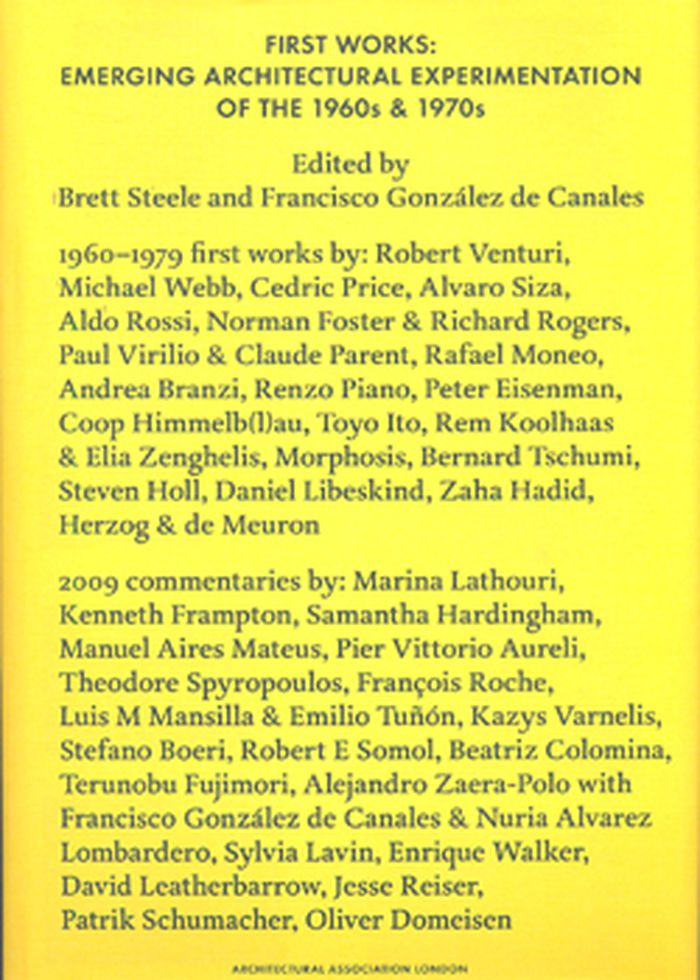
During a tumultuous period in the 1960s and 70s, a new generation of architects began their careers amidst a period of profound social change, new conditions for architecture and the city and lasting changes to popular and critical forms of cultural production. First Works tells the story of this period and reassesses the conditions of architecture and the beginnings of architectural careers through a selection of projects undertaken during the 60s and 70s. The book, accompanying a major travelling exhibition, presents a single key early project, in the form of models, sketches, photographs and drawings, by 20 young architectural practices, including Archigram, Aldo Rossi, Robert Venturi, Renzo Piano, Peter Eisenman, Herzog & de Meuron and Zaha Hadid. Alongside these ‘first works’, 20 invited critics, including Kenneth Frampton, Sylvia Lavin and Pier Vittorio Aureli, offer contemporary commentaries on these projects and their place within the architects’ subsequent careers.
First works: emerging architectural experimentation of the 1960s and 1970s
Actions:
Price:
$80.00
(available to order)
Summary:
During a tumultuous period in the 1960s and 70s, a new generation of architects began their careers amidst a period of profound social change, new conditions for architecture and the city and lasting changes to popular and critical forms of cultural production. First Works tells the story of this period and reassesses the conditions of architecture and the beginnings of architectural careers through a selection of projects undertaken during the 60s and 70s. The book, accompanying a major travelling exhibition, presents a single key early project, in the form of models, sketches, photographs and drawings, by 20 young architectural practices, including Archigram, Aldo Rossi, Robert Venturi, Renzo Piano, Peter Eisenman, Herzog & de Meuron and Zaha Hadid. Alongside these ‘first works’, 20 invited critics, including Kenneth Frampton, Sylvia Lavin and Pier Vittorio Aureli, offer contemporary commentaries on these projects and their place within the architects’ subsequent careers.
Form:
books
books
Publication:
December 2009
December 2009
Form:
books
books
Actions:
Price:
$54.00
(available to order)
Summary:
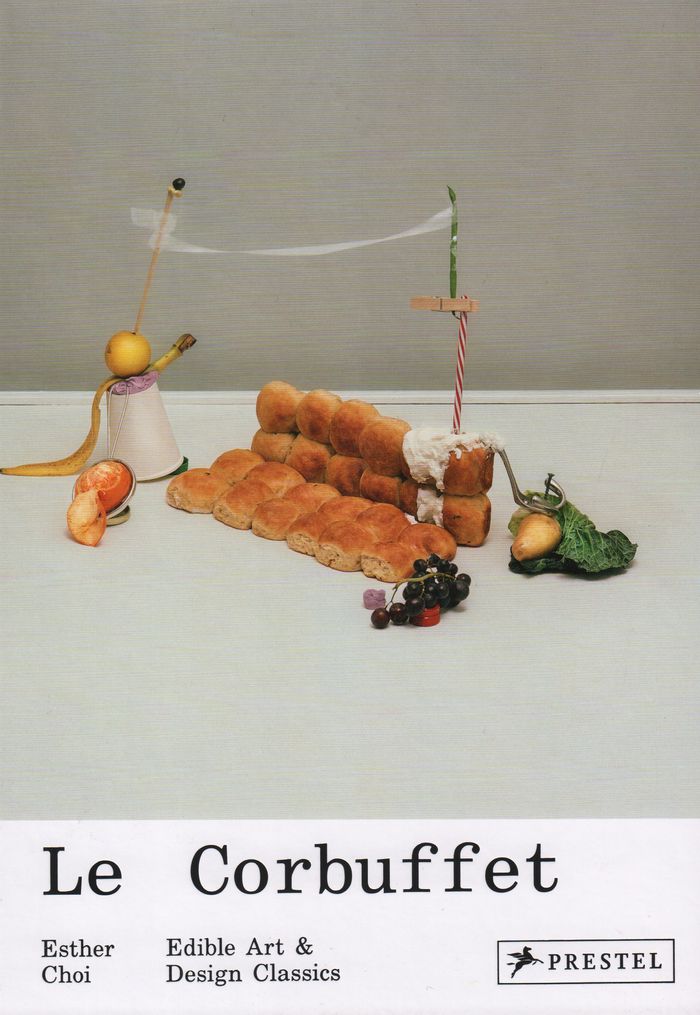
Home-cooking meets highbrow art in this one-of-a-kind cookbook that uses food to create edible interpretations of modern and contemporary sculptures, paintings, architecture, and design. Try Quiche Haring with the Frida Kale-o Salad, or the Robert Rauschenburger followed by Flan Flavin.
$54.00
(available to order)
Summary:
Home-cooking meets highbrow art in this one-of-a-kind cookbook that uses food to create edible interpretations of modern and contemporary sculptures, paintings, architecture, and design. Try Quiche Haring with the Frida Kale-o Salad, or the Robert Rauschenburger followed by Flan Flavin.
Title:
Le Corbuffet: edible art and design classics
Actions:
Price:
$54.00
(available to order)
Summary:
Home-cooking meets highbrow art in this one-of-a-kind cookbook that uses food to create edible interpretations of modern and contemporary sculptures, paintings, architecture, and design. Try Quiche Haring with the Frida Kale-o Salad, or the Robert Rauschenburger followed by Flan Flavin.
Le Corbuffet: edible art and design classics
Actions:
Price:
$54.00
(available to order)
Summary:
Home-cooking meets highbrow art in this one-of-a-kind cookbook that uses food to create edible interpretations of modern and contemporary sculptures, paintings, architecture, and design. Try Quiche Haring with the Frida Kale-o Salad, or the Robert Rauschenburger followed by Flan Flavin.
Form:
books
books
Publication:
October 2019
October 2019
Subject:
Food
Food
Form:
books
books
Price:
$58.95
(available to order)
Summary:
After seizing Jerusalem's eastern precincts from Jordan at the conclusion of the Six-Day War in 1967, Israel unilaterally unified the city and plunged into an ambitious building program, eager to transform the very meaning of one of the world's most emotionally charged urban spaces. The goal was as simple as it was controversial: to both Judaize and modernize Jerusalem.(...)
$58.95
(available to order)
Summary:
After seizing Jerusalem's eastern precincts from Jordan at the conclusion of the Six-Day War in 1967, Israel unilaterally unified the city and plunged into an ambitious building program, eager to transform the very meaning of one of the world's most emotionally charged urban spaces. The goal was as simple as it was controversial: to both Judaize and modernize Jerusalem.(...)
Title:
Seizing Jerusalem: the architectures of unilateral unification
Actions:
Price:
$58.95
(available to order)
Summary:
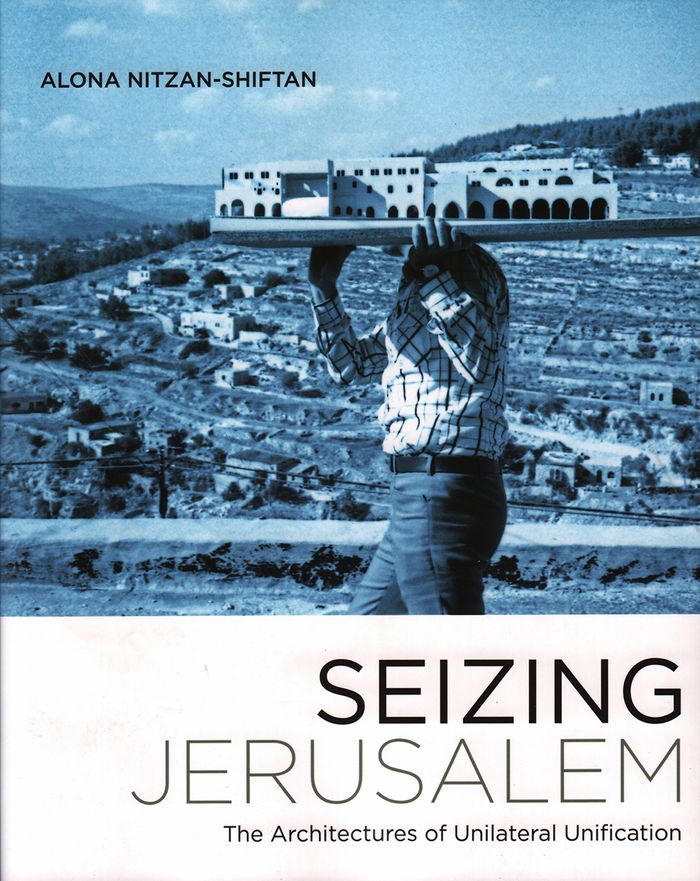
After seizing Jerusalem's eastern precincts from Jordan at the conclusion of the Six-Day War in 1967, Israel unilaterally unified the city and plunged into an ambitious building program, eager to transform the very meaning of one of the world's most emotionally charged urban spaces. The goal was as simple as it was controversial: to both Judaize and modernize Jerusalem. Seizing Jerusalem, the first architectural history of "united Jerusalem," chronicles how numerous disciplines, including architecture, landscape design, and urban planning, as well as everyone from municipal politicians to state bureaucrats, from Israeli-born architects to international luminaries such as Louis Kahn, Buckminster Fuller, and Bruno Zevi, competed to create Jerusalem's new image. This decade-long competition happened with the Palestinian residents still living in the city, even as the new image was inspired by the city's Arab legacy. The politics of space in the Holy City, still contested today, were shaped in this post-1967 decade not only by the legacy of the war and the politics of dispossession, but curiously also by emerging trends in postwar architectural culture.Drawing on previously unexamined archival documents and in-depth interviews with architects, planners, and politicians, Alona Nitzan-Shiftan analyzes the cultural politics of the Israeli state and, in particular, of Jerusalem's influential mayor, Teddy Kollek, whose efforts to legitimate Israeli rule over Jerusalem provided architects a unique, real-world laboratory to explore the possibilities and limits of modernist design--as built form as well as political and social action. Seizing Jerusalem reveals architecture as an active agent in the formation of urban and national identity, and demonstrates how contemporary debates about Zionism, and the crisis within the discipline of architecture over postwar modernism, affected Jerusalem's built environment in ways that continue to resonate today.
Seizing Jerusalem: the architectures of unilateral unification
Actions:
Price:
$58.95
(available to order)
Summary:
After seizing Jerusalem's eastern precincts from Jordan at the conclusion of the Six-Day War in 1967, Israel unilaterally unified the city and plunged into an ambitious building program, eager to transform the very meaning of one of the world's most emotionally charged urban spaces. The goal was as simple as it was controversial: to both Judaize and modernize Jerusalem. Seizing Jerusalem, the first architectural history of "united Jerusalem," chronicles how numerous disciplines, including architecture, landscape design, and urban planning, as well as everyone from municipal politicians to state bureaucrats, from Israeli-born architects to international luminaries such as Louis Kahn, Buckminster Fuller, and Bruno Zevi, competed to create Jerusalem's new image. This decade-long competition happened with the Palestinian residents still living in the city, even as the new image was inspired by the city's Arab legacy. The politics of space in the Holy City, still contested today, were shaped in this post-1967 decade not only by the legacy of the war and the politics of dispossession, but curiously also by emerging trends in postwar architectural culture.Drawing on previously unexamined archival documents and in-depth interviews with architects, planners, and politicians, Alona Nitzan-Shiftan analyzes the cultural politics of the Israeli state and, in particular, of Jerusalem's influential mayor, Teddy Kollek, whose efforts to legitimate Israeli rule over Jerusalem provided architects a unique, real-world laboratory to explore the possibilities and limits of modernist design--as built form as well as political and social action. Seizing Jerusalem reveals architecture as an active agent in the formation of urban and national identity, and demonstrates how contemporary debates about Zionism, and the crisis within the discipline of architecture over postwar modernism, affected Jerusalem's built environment in ways that continue to resonate today.
Form:
books
books
Publication:
June 2017
June 2017
Subject:
Arch Southwest Asia & North Africa
Arch Southwest Asia & North Africa
Form:
books
books
Price:
$33.00
(available to order)
Summary:
Architecture, we like to believe, is an elevated art form that shapes the world as it pleases. Four Walls and a Roof challenges this notion, presenting a candid account of what it is really like to work as an architect. Drawing on his own tragicomic experiences in the field, Reinier de Graaf reveals the world of contemporary architecture in vivid snapshots: from suburban(...)
$33.00
(available to order)
Summary:
Architecture, we like to believe, is an elevated art form that shapes the world as it pleases. Four Walls and a Roof challenges this notion, presenting a candid account of what it is really like to work as an architect. Drawing on his own tragicomic experiences in the field, Reinier de Graaf reveals the world of contemporary architecture in vivid snapshots: from suburban(...)
Title:
Four walls and a roof: the complex nature of a simple profession
Actions:
Price:
$33.00
(available to order)
Summary:
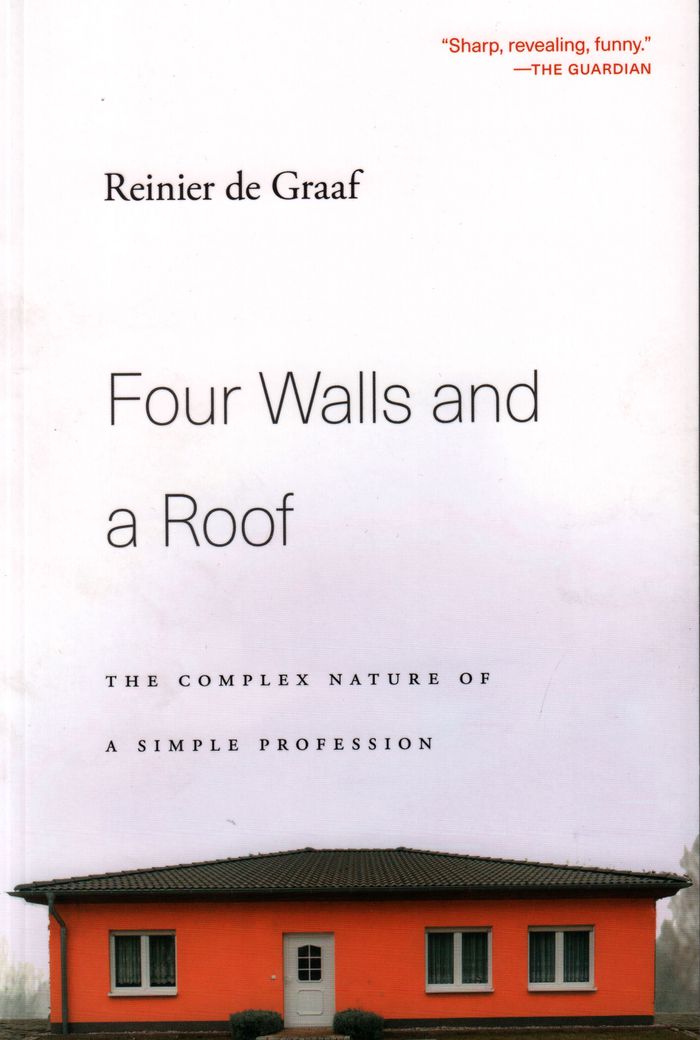
Architecture, we like to believe, is an elevated art form that shapes the world as it pleases. Four Walls and a Roof challenges this notion, presenting a candid account of what it is really like to work as an architect. Drawing on his own tragicomic experiences in the field, Reinier de Graaf reveals the world of contemporary architecture in vivid snapshots: from suburban New York to the rubble of northern Iraq, from the corridors of wealth in London, Moscow, and Dubai to garbage-strewn wastelands that represent the demolished hopes of postwar social housing. We meet oligarchs determined to translate ambitions into concrete and steel, developers for whom architecture is mere investment, and the layers of politicians, bureaucrats, consultants, and mysterious hangers-on who lie between any architectural idea and the chance of its execution. Four Walls and a Roof tells the story of a profession buffeted by external forces that determine—at least as much as individual inspiration—what architects design. Perhaps the most important myth debunked is success itself. To achieve anything, architects must serve the powers they strive to critique, finding themselves in a perpetual conflict of interest. Together, architects, developers, politicians, and consultants form an improvised world of contest and compromise that none alone can control.
Four walls and a roof: the complex nature of a simple profession
Actions:
Price:
$33.00
(available to order)
Summary:
Architecture, we like to believe, is an elevated art form that shapes the world as it pleases. Four Walls and a Roof challenges this notion, presenting a candid account of what it is really like to work as an architect. Drawing on his own tragicomic experiences in the field, Reinier de Graaf reveals the world of contemporary architecture in vivid snapshots: from suburban New York to the rubble of northern Iraq, from the corridors of wealth in London, Moscow, and Dubai to garbage-strewn wastelands that represent the demolished hopes of postwar social housing. We meet oligarchs determined to translate ambitions into concrete and steel, developers for whom architecture is mere investment, and the layers of politicians, bureaucrats, consultants, and mysterious hangers-on who lie between any architectural idea and the chance of its execution. Four Walls and a Roof tells the story of a profession buffeted by external forces that determine—at least as much as individual inspiration—what architects design. Perhaps the most important myth debunked is success itself. To achieve anything, architects must serve the powers they strive to critique, finding themselves in a perpetual conflict of interest. Together, architects, developers, politicians, and consultants form an improvised world of contest and compromise that none alone can control.
Form:
books
books
Publication:
October 2019
October 2019
Subject:
Architectural Theory
Architectural Theory
Form:
books
books
Title:
The gray cloth
The gray cloth
Actions:
Price:
$44.95
(available to order)
Summary:
The German expressionist, architectural visionary, author, inventor, and artist Paul Scheerbart (1863-1915) wrote several fictional utopian narratives related to glass architecture. In "The Gray Cloth", the first of his novels to be translated into English, Scheerbart uses subtle irony and the structural simplicity of a fairy tale to present the theories of coloured glass(...)
$44.95
(available to order)
Summary:
The German expressionist, architectural visionary, author, inventor, and artist Paul Scheerbart (1863-1915) wrote several fictional utopian narratives related to glass architecture. In "The Gray Cloth", the first of his novels to be translated into English, Scheerbart uses subtle irony and the structural simplicity of a fairy tale to present the theories of coloured glass(...)
Title:
The gray cloth
Actions:
Price:
$44.95
(available to order)
Summary:
The German expressionist, architectural visionary, author, inventor, and artist Paul Scheerbart (1863-1915) wrote several fictional utopian narratives related to glass architecture. In "The Gray Cloth", the first of his novels to be translated into English, Scheerbart uses subtle irony and the structural simplicity of a fairy tale to present the theories of coloured glass outlined in his well-known treatise "Glass Architecture". The novel is set forward in time to the mid-twentieth century. The protagonist, a Swiss architect named Edgar Krug, circumnavigates the globe by airship with his wife, constructing wildly varied, colored-glass buildings. His projects include a high-rise and exhibition/concert hall in Chicago, a retirement complex for air pilots on the Fiji Islands, the structure for an elevated train across a zoological park in northern India, and a suspended residential villa on the Kuria Muria Islands off the coast of Oman in the Arabian Sea. Fearing that his architecture is challenged by the colourfulness of women’s clothing, Krug insists that his wife wear all gray clothing with the addition of ten percent white. This odd demand brings him notoriety and sensationalizes his international building campaign. For the reader, it underlines the confluence of architecture with fashion, gender, and global media. In his introduction John Stuart surveys Scheerbart’s career and role in German avant-garde circles, as well as his architectural and social ideas. He shows how Scheerbart strove to integrate his spiritual and romantic leanings with the modern world, often relying on glass architecture to do so. In addition to discussing the novel’s reception and its rediscovery by contemporary architects and critics, Stuart shows fiction to be a resource for the study of architecture and places "The Gray Cloth" in the context of German Expressionism.
The gray cloth
Actions:
Price:
$44.95
(available to order)
Summary:
The German expressionist, architectural visionary, author, inventor, and artist Paul Scheerbart (1863-1915) wrote several fictional utopian narratives related to glass architecture. In "The Gray Cloth", the first of his novels to be translated into English, Scheerbart uses subtle irony and the structural simplicity of a fairy tale to present the theories of coloured glass outlined in his well-known treatise "Glass Architecture". The novel is set forward in time to the mid-twentieth century. The protagonist, a Swiss architect named Edgar Krug, circumnavigates the globe by airship with his wife, constructing wildly varied, colored-glass buildings. His projects include a high-rise and exhibition/concert hall in Chicago, a retirement complex for air pilots on the Fiji Islands, the structure for an elevated train across a zoological park in northern India, and a suspended residential villa on the Kuria Muria Islands off the coast of Oman in the Arabian Sea. Fearing that his architecture is challenged by the colourfulness of women’s clothing, Krug insists that his wife wear all gray clothing with the addition of ten percent white. This odd demand brings him notoriety and sensationalizes his international building campaign. For the reader, it underlines the confluence of architecture with fashion, gender, and global media. In his introduction John Stuart surveys Scheerbart’s career and role in German avant-garde circles, as well as his architectural and social ideas. He shows how Scheerbart strove to integrate his spiritual and romantic leanings with the modern world, often relying on glass architecture to do so. In addition to discussing the novel’s reception and its rediscovery by contemporary architects and critics, Stuart shows fiction to be a resource for the study of architecture and places "The Gray Cloth" in the context of German Expressionism.
Form:
books
books
Publication:
October 2001, Cambridge, Mass.
October 2001, Cambridge, Mass.
Subject:
Architectural Theory
Architectural Theory
Form:
books
books
Title:
The gray cloth
The gray cloth
Actions:
Price:
$24.95
(available to order)
Summary:
The German expressionist, architectural visionary, author, inventor, and artist Paul Scheerbart (1863-1915) wrote several fictional utopian narratives related to glass architecture. In "The Gray Cloth", the first of his novels to be translated into English, Scheerbart uses subtle irony and the structural simplicity of a fairy tale to present the theories of coloured glass(...)
$24.95
(available to order)
Summary:
The German expressionist, architectural visionary, author, inventor, and artist Paul Scheerbart (1863-1915) wrote several fictional utopian narratives related to glass architecture. In "The Gray Cloth", the first of his novels to be translated into English, Scheerbart uses subtle irony and the structural simplicity of a fairy tale to present the theories of coloured glass(...)
Title:
The gray cloth
Actions:
Price:
$24.95
(available to order)
Summary:
The German expressionist, architectural visionary, author, inventor, and artist Paul Scheerbart (1863-1915) wrote several fictional utopian narratives related to glass architecture. In "The Gray Cloth", the first of his novels to be translated into English, Scheerbart uses subtle irony and the structural simplicity of a fairy tale to present the theories of coloured glass outlined in his well-known treatise "Glass Architecture". The novel is set forward in time to the mid-twentieth century. The protagonist, a Swiss architect named Edgar Krug, circumnavigates the globe by airship with his wife, constructing wildly varied, colored-glass buildings. His projects include a high-rise and exhibition/concert hall in Chicago, a retirement complex for air pilots on the Fiji Islands, the structure for an elevated train across a zoological park in northern India, and a suspended residential villa on the Kuria Muria Islands off the coast of Oman in the Arabian Sea. Fearing that his architecture is challenged by the colourfulness of women’s clothing, Krug insists that his wife wear all gray clothing with the addition of ten percent white. This odd demand brings him notoriety and sensationalizes his international building campaign. For the reader, it underlines the confluence of architecture with fashion, gender, and global media. In his introduction John Stuart surveys Scheerbart’s career and role in German avant-garde circles, as well as his architectural and social ideas. He shows how Scheerbart strove to integrate his spiritual and romantic leanings with the modern world, often relying on glass architecture to do so. In addition to discussing the novel’s reception and its rediscovery by contemporary architects and critics, Stuart shows fiction to be a resource for the study of architecture and places "The Gray Cloth" in the context of German Expressionism.
The gray cloth
Actions:
Price:
$24.95
(available to order)
Summary:
The German expressionist, architectural visionary, author, inventor, and artist Paul Scheerbart (1863-1915) wrote several fictional utopian narratives related to glass architecture. In "The Gray Cloth", the first of his novels to be translated into English, Scheerbart uses subtle irony and the structural simplicity of a fairy tale to present the theories of coloured glass outlined in his well-known treatise "Glass Architecture". The novel is set forward in time to the mid-twentieth century. The protagonist, a Swiss architect named Edgar Krug, circumnavigates the globe by airship with his wife, constructing wildly varied, colored-glass buildings. His projects include a high-rise and exhibition/concert hall in Chicago, a retirement complex for air pilots on the Fiji Islands, the structure for an elevated train across a zoological park in northern India, and a suspended residential villa on the Kuria Muria Islands off the coast of Oman in the Arabian Sea. Fearing that his architecture is challenged by the colourfulness of women’s clothing, Krug insists that his wife wear all gray clothing with the addition of ten percent white. This odd demand brings him notoriety and sensationalizes his international building campaign. For the reader, it underlines the confluence of architecture with fashion, gender, and global media. In his introduction John Stuart surveys Scheerbart’s career and role in German avant-garde circles, as well as his architectural and social ideas. He shows how Scheerbart strove to integrate his spiritual and romantic leanings with the modern world, often relying on glass architecture to do so. In addition to discussing the novel’s reception and its rediscovery by contemporary architects and critics, Stuart shows fiction to be a resource for the study of architecture and places "The Gray Cloth" in the context of German Expressionism.
Form:
books
books
Publication:
October 2003, Cambridge / London
October 2003, Cambridge / London
Subject:
Architectural Theory
Architectural Theory


