


629 Results
Form:
books
books
Title:
Jeff Wall: the crooked path
Jeff Wall: the crooked path
Actions:
Price:
$55.00
(available to order)
Summary:
The photography of Jeff Wall (born 1946) is consciously and profoundly saturated in the social: in the Vancouver art community from which he first emerged, fully formed, in the late 1970s; in the racial and gender politics of our times, which he analyses with marvelous clarity in his huge photographic light boxes that declare an equal status with painting through their(...)
$55.00
(available to order)
Summary:
The photography of Jeff Wall (born 1946) is consciously and profoundly saturated in the social: in the Vancouver art community from which he first emerged, fully formed, in the late 1970s; in the racial and gender politics of our times, which he analyses with marvelous clarity in his huge photographic light boxes that declare an equal status with painting through their(...)
Title:
Jeff Wall: the crooked path
Actions:
Price:
$55.00
(available to order)
Summary:
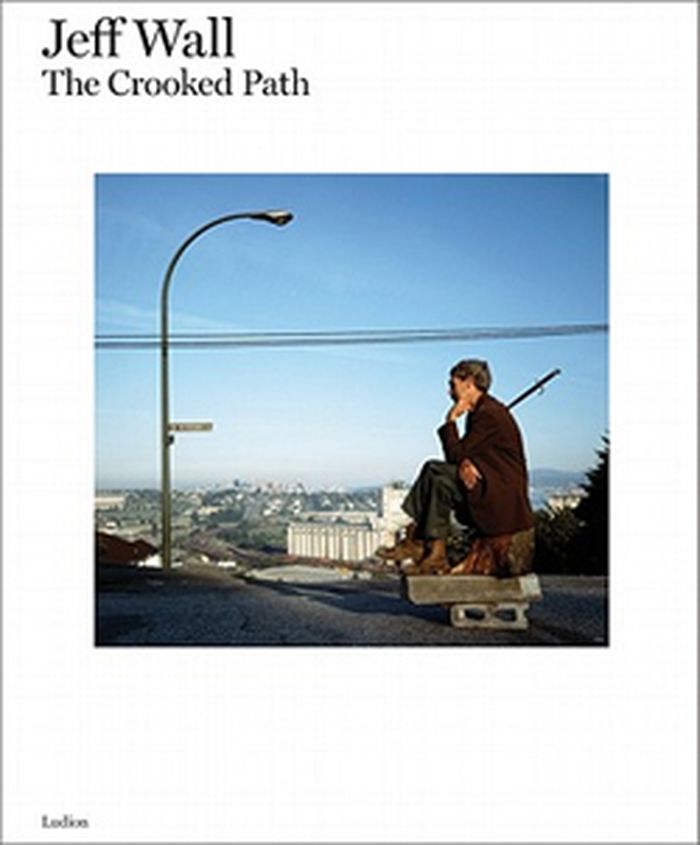
The photography of Jeff Wall (born 1946) is consciously and profoundly saturated in the social: in the Vancouver art community from which he first emerged, fully formed, in the late 1970s; in the racial and gender politics of our times, which he analyses with marvelous clarity in his huge photographic light boxes that declare an equal status with painting through their scale and their carefully plotted depth and grandeur; in the art history pantheon that informs his staged compositions, from Hokusai to Velásquez and Manet; and in his influence on at least two generations of photographers, most notably the Düsseldorf school (Andreas Gursky once cited Wall as “a great model for me” ). This publication examines the cultural context for Wall's tremendous achievement in photography. Wall himself has chosen 25 of his own photographs, taken between the late 1970s and the present, and has constellated them among the visionary company his work keeps, alongside reproductions of works by Marcel Duchamp, Diane Arbus, Eugene Atget, Wols, Andreas Gursky, David Claerbout, Thomas Struth, Frank Stella, Robert Smithson, Rodney Graham, Ian Wallace, Lawrence Wiener and R.W. Fassbinder. This book orients Wall's photography across ten themed chapters, each of which is prefaced with an interview with Wall by Hans De Wolf. Also included are testimonies and essays by fellow artists and art historians, such as Luc Tuymans, Lawrence Weiner, Michael Fried and David Campany.
Jeff Wall: the crooked path
Actions:
Price:
$55.00
(available to order)
Summary:
The photography of Jeff Wall (born 1946) is consciously and profoundly saturated in the social: in the Vancouver art community from which he first emerged, fully formed, in the late 1970s; in the racial and gender politics of our times, which he analyses with marvelous clarity in his huge photographic light boxes that declare an equal status with painting through their scale and their carefully plotted depth and grandeur; in the art history pantheon that informs his staged compositions, from Hokusai to Velásquez and Manet; and in his influence on at least two generations of photographers, most notably the Düsseldorf school (Andreas Gursky once cited Wall as “a great model for me” ). This publication examines the cultural context for Wall's tremendous achievement in photography. Wall himself has chosen 25 of his own photographs, taken between the late 1970s and the present, and has constellated them among the visionary company his work keeps, alongside reproductions of works by Marcel Duchamp, Diane Arbus, Eugene Atget, Wols, Andreas Gursky, David Claerbout, Thomas Struth, Frank Stella, Robert Smithson, Rodney Graham, Ian Wallace, Lawrence Wiener and R.W. Fassbinder. This book orients Wall's photography across ten themed chapters, each of which is prefaced with an interview with Wall by Hans De Wolf. Also included are testimonies and essays by fellow artists and art historians, such as Luc Tuymans, Lawrence Weiner, Michael Fried and David Campany.
Form:
books
books
Publication:
September 2011
September 2011
Subject:
Photography monographs
Photography monographs
Form:
books
books
Actions:
Price:
$62.50
(available in store)
Summary:
In "LAB – Building a home for scientists" Mark C. Fishman describes how to build labs as homes for scientists, to accommodate not just their fancy tools, but also their personalities. Laboratories are both monasteries and space stations, redolent of the great ideas of generations past and of technologies to propel the future. Yet standard lab design has changed only(...)
$62.50
(available in store)
Summary:
In "LAB – Building a home for scientists" Mark C. Fishman describes how to build labs as homes for scientists, to accommodate not just their fancy tools, but also their personalities. Laboratories are both monasteries and space stations, redolent of the great ideas of generations past and of technologies to propel the future. Yet standard lab design has changed only(...)
Title:
LAB: building a home for scientists
Actions:
Price:
$62.50
(available in store)
Summary:
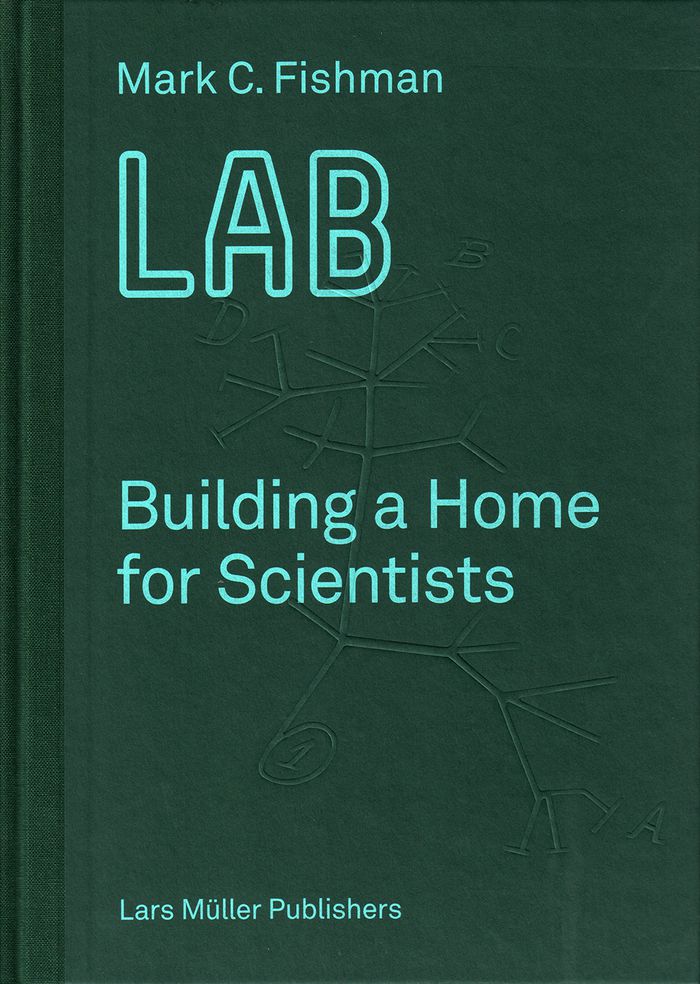
In "LAB – Building a home for scientists" Mark C. Fishman describes how to build labs as homes for scientists, to accommodate not just their fancy tools, but also their personalities. Laboratories are both monasteries and space stations, redolent of the great ideas of generations past and of technologies to propel the future. Yet standard lab design has changed only little over recent years. Since a lab becomes a scientist's home for most of their waking hours, the question arises if design and aesthetics of a lab can influence the creativity and effectiveness of its inhabitants. Although the support of the creative process is a compelling feature of a contemporary lab, it also has to be built flexibly enough to accommodate introvert solo researchers as well as large interdisciplinary teams, while an immediate connection to fellow researchers across the globe has to be at disposal as well. Anyone who works in, or plans to build a lab, will enjoy this book, which will encourage them to think about how this special environment drives or impedes their important work. This richly illustrated publication explores the roles of labs through history, from the alchemists of the Middle Ages to the chemists of the 19th and 20th centuries and to the geneticists and structural biologists of today, and then turns to the special features of the laboratories Fishman helped to design in Cambridge, Shanghai and Basel.
LAB: building a home for scientists
Actions:
Price:
$62.50
(available in store)
Summary:
In "LAB – Building a home for scientists" Mark C. Fishman describes how to build labs as homes for scientists, to accommodate not just their fancy tools, but also their personalities. Laboratories are both monasteries and space stations, redolent of the great ideas of generations past and of technologies to propel the future. Yet standard lab design has changed only little over recent years. Since a lab becomes a scientist's home for most of their waking hours, the question arises if design and aesthetics of a lab can influence the creativity and effectiveness of its inhabitants. Although the support of the creative process is a compelling feature of a contemporary lab, it also has to be built flexibly enough to accommodate introvert solo researchers as well as large interdisciplinary teams, while an immediate connection to fellow researchers across the globe has to be at disposal as well. Anyone who works in, or plans to build a lab, will enjoy this book, which will encourage them to think about how this special environment drives or impedes their important work. This richly illustrated publication explores the roles of labs through history, from the alchemists of the Middle Ages to the chemists of the 19th and 20th centuries and to the geneticists and structural biologists of today, and then turns to the special features of the laboratories Fishman helped to design in Cambridge, Shanghai and Basel.
Form:
books
books
Publication:
April 2017
April 2017
Subject:
Commercial interiors, Building types
Commercial interiors, Building types
Form:
books
books
Title:
The gothic
The gothic
Actions:
Price:
$23.95
(available to order)
Summary:
This collection of writings examines the pervasive and influential role of "the Gothic" in contemporary visual culture. The contemporary Gothic in art is informed as much by the stock themes of the eighteenth- and nineteenth-century Gothic novel as it is by more recent permutations of the Gothic in horror film theory, Lacanian psychoanalysis, and Goth subcultures. This(...)
$23.95
(available to order)
Summary:
This collection of writings examines the pervasive and influential role of "the Gothic" in contemporary visual culture. The contemporary Gothic in art is informed as much by the stock themes of the eighteenth- and nineteenth-century Gothic novel as it is by more recent permutations of the Gothic in horror film theory, Lacanian psychoanalysis, and Goth subcultures. This(...)
Title:
The gothic
Actions:
Price:
$23.95
(available to order)
Summary:
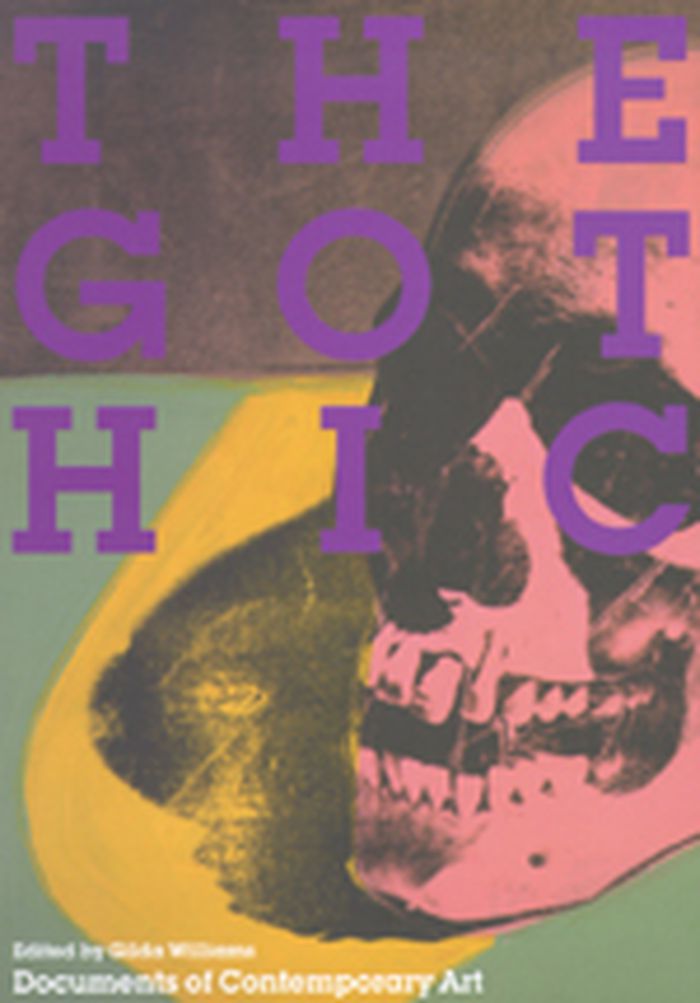
This collection of writings examines the pervasive and influential role of "the Gothic" in contemporary visual culture. The contemporary Gothic in art is informed as much by the stock themes of the eighteenth- and nineteenth-century Gothic novel as it is by more recent permutations of the Gothic in horror film theory, Lacanian psychoanalysis, and Goth subcultures. This reader from London's Whitechapel Gallery brings together artists as different as Matthew Barney, Gregor Schneider, Louise Bourgeois, and Douglas Gordon; its intent is not to use "the Gothic" to group together dissimilar artists but rather to shed light on a particular understanding of their practice. Anthony Vidler looks at ideas of the uncanny to explore Rachel Whiteread's House, and Jeff Wall uses the motif of vampirism to analyze fellow artist Dan Graham's Kammerspell; Hal Foster considers Robert Gober's recent work--laden with Christian symbolism, criticism of America as a nexus of power, and fragmented bodies--as an updated American Gothic, and Kobena Mercer examines the Gothic's depiction of the Other in relation to Michael Jackson's pop video Thriller. Texts by artists including Mike Kelley, Damien Hirst, Tacita Dean, Jonathan Meese, and Catherine Sullivan are complemented by extracts from Walpole's genre-establishing gothic novel The Castle of Otranto, William Gibson, Bret Easton Ellis, and Stephen King, among others, and theoretical writings by such key thinkers as Carol Clover, Beatriz Colomina, Julia Kristeva, Eve Kosofsky Sedgwick, Marina Warner, and Slavoj Zizek. The Gothic provides the first comprehensive overview of the uses of Gothic in contemporary visual culture.
The gothic
Actions:
Price:
$23.95
(available to order)
Summary:
This collection of writings examines the pervasive and influential role of "the Gothic" in contemporary visual culture. The contemporary Gothic in art is informed as much by the stock themes of the eighteenth- and nineteenth-century Gothic novel as it is by more recent permutations of the Gothic in horror film theory, Lacanian psychoanalysis, and Goth subcultures. This reader from London's Whitechapel Gallery brings together artists as different as Matthew Barney, Gregor Schneider, Louise Bourgeois, and Douglas Gordon; its intent is not to use "the Gothic" to group together dissimilar artists but rather to shed light on a particular understanding of their practice. Anthony Vidler looks at ideas of the uncanny to explore Rachel Whiteread's House, and Jeff Wall uses the motif of vampirism to analyze fellow artist Dan Graham's Kammerspell; Hal Foster considers Robert Gober's recent work--laden with Christian symbolism, criticism of America as a nexus of power, and fragmented bodies--as an updated American Gothic, and Kobena Mercer examines the Gothic's depiction of the Other in relation to Michael Jackson's pop video Thriller. Texts by artists including Mike Kelley, Damien Hirst, Tacita Dean, Jonathan Meese, and Catherine Sullivan are complemented by extracts from Walpole's genre-establishing gothic novel The Castle of Otranto, William Gibson, Bret Easton Ellis, and Stephen King, among others, and theoretical writings by such key thinkers as Carol Clover, Beatriz Colomina, Julia Kristeva, Eve Kosofsky Sedgwick, Marina Warner, and Slavoj Zizek. The Gothic provides the first comprehensive overview of the uses of Gothic in contemporary visual culture.
Form:
books
books
Publication:
October 2007, Whitechapel London Cambridge
October 2007, Whitechapel London Cambridge
Subject:
Art Theory
Art Theory
Form:
books
books
Actions:
Price:
$63.95
(available to order)
Summary:
Robert Smithson (1938–1973) produced his best-known work during the 1960s and early 1970s, a period in which the boundaries of the art world and the objectives of art-making were questioned perhaps more consistently and thoroughly than any time before or since. In "Robert Smithson", Ann Reynolds elucidates the complexity of Smithson’s work and thought by placing them in(...)
$63.95
(available to order)
Summary:
Robert Smithson (1938–1973) produced his best-known work during the 1960s and early 1970s, a period in which the boundaries of the art world and the objectives of art-making were questioned perhaps more consistently and thoroughly than any time before or since. In "Robert Smithson", Ann Reynolds elucidates the complexity of Smithson’s work and thought by placing them in(...)
Publication:
November 2002, Cambridge, Mass.
November 2002, Cambridge, Mass.
Title:
Robert Smithson : learning from New Jersey and elsewhere
Actions:
Price:
$63.95
(available to order)
Summary:
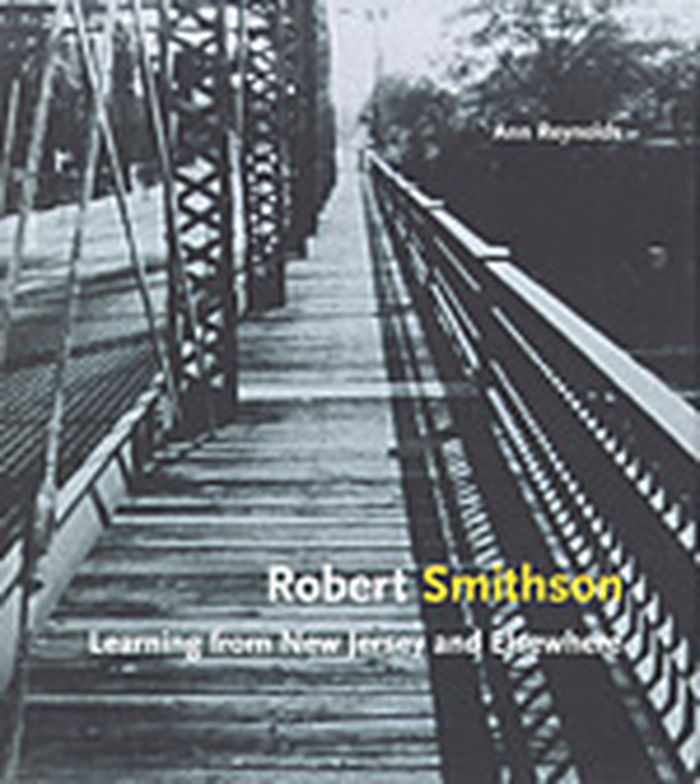
Robert Smithson (1938–1973) produced his best-known work during the 1960s and early 1970s, a period in which the boundaries of the art world and the objectives of art-making were questioned perhaps more consistently and thoroughly than any time before or since. In "Robert Smithson", Ann Reynolds elucidates the complexity of Smithson’s work and thought by placing them in their historical context, a context greatly enhanced by the vast archival materials that Smithson’s widow, Nancy Holt, donated to the Archives of American Art in 1987. The archive provides Reynolds with the remnants of Smithson’s working life--magazines, postcards from other artists, notebooks, and perhaps most important, his library--from which she reconstructs the physical and conceptual world that Smithson inhabited. Reynolds explores the relation of Smithson’s art-making, thinking about art-making, writing, and interaction with other artists to the articulated ideology and discreet assumptions that determined the parameters of artistic practice of the time. A central focus of Reynolds’s analysis is Smithson’s fascination with the blind spots at the center of established ways of seeing and thinking about culture. For Smithson, New Jersey was such a blind spot, and he returned there again and again, alone and with fellow artists, to make art that, through its location alone, undermined assumptions about what and, more important, where, art should be. For those who guarded the integrity of the established art world, New Jersey was "elsewhere"; but for Smithson, "elsewheres" were the defining, if often forgotten, locations on the map of contemporary culture.
Robert Smithson : learning from New Jersey and elsewhere
Actions:
Price:
$63.95
(available to order)
Summary:
Robert Smithson (1938–1973) produced his best-known work during the 1960s and early 1970s, a period in which the boundaries of the art world and the objectives of art-making were questioned perhaps more consistently and thoroughly than any time before or since. In "Robert Smithson", Ann Reynolds elucidates the complexity of Smithson’s work and thought by placing them in their historical context, a context greatly enhanced by the vast archival materials that Smithson’s widow, Nancy Holt, donated to the Archives of American Art in 1987. The archive provides Reynolds with the remnants of Smithson’s working life--magazines, postcards from other artists, notebooks, and perhaps most important, his library--from which she reconstructs the physical and conceptual world that Smithson inhabited. Reynolds explores the relation of Smithson’s art-making, thinking about art-making, writing, and interaction with other artists to the articulated ideology and discreet assumptions that determined the parameters of artistic practice of the time. A central focus of Reynolds’s analysis is Smithson’s fascination with the blind spots at the center of established ways of seeing and thinking about culture. For Smithson, New Jersey was such a blind spot, and he returned there again and again, alone and with fellow artists, to make art that, through its location alone, undermined assumptions about what and, more important, where, art should be. For those who guarded the integrity of the established art world, New Jersey was "elsewhere"; but for Smithson, "elsewheres" were the defining, if often forgotten, locations on the map of contemporary culture.
Form:
books
books
Publication:
November 2002, Cambridge, Mass.
November 2002, Cambridge, Mass.
Form:
books
books
Actions:
Holdings:
Description:
294 p. ; 23 cm.
Description:
294 p. ; 23 cm.
Author:
Subject:
Publication:
London, Ont. : Althouse Press, 2003.
London, Ont. : Althouse Press, 2003.
Title:
The best teacher I ever had : personal reports from highly productive scholars / edited by Alex C. Michalos.
Actions:
Holdings:
Description:
294 p. ; 23 cm.
The best teacher I ever had : personal reports from highly productive scholars / edited by Alex C. Michalos.
Actions:
Holdings:
Description:
294 p. ; 23 cm.
Form:
books
books
Publication:
London, Ont. : Althouse Press, 2003.
London, Ont. : Althouse Press, 2003.
Author:
Subject:
Form:
books
books
Title:
Aleksandr Rodchenko
Aleksandr Rodchenko
Actions:
Price:
$55.00
(available to order)
Summary:
A leading representative of the Russian avant-garde, Alexander Rodchenko (1891- 1956) revolutionized the world of graphic art, design and photography. The over 250 illustrations featured in this volume allow the reader to grasp the full force of this innovator and to appreciate the charisma he exerted on fellow artists as much as on the men of letters, directors and(...)
$55.00
(available to order)
Summary:
A leading representative of the Russian avant-garde, Alexander Rodchenko (1891- 1956) revolutionized the world of graphic art, design and photography. The over 250 illustrations featured in this volume allow the reader to grasp the full force of this innovator and to appreciate the charisma he exerted on fellow artists as much as on the men of letters, directors and(...)
Title:
Aleksandr Rodchenko
Actions:
Price:
$55.00
(available to order)
Summary:
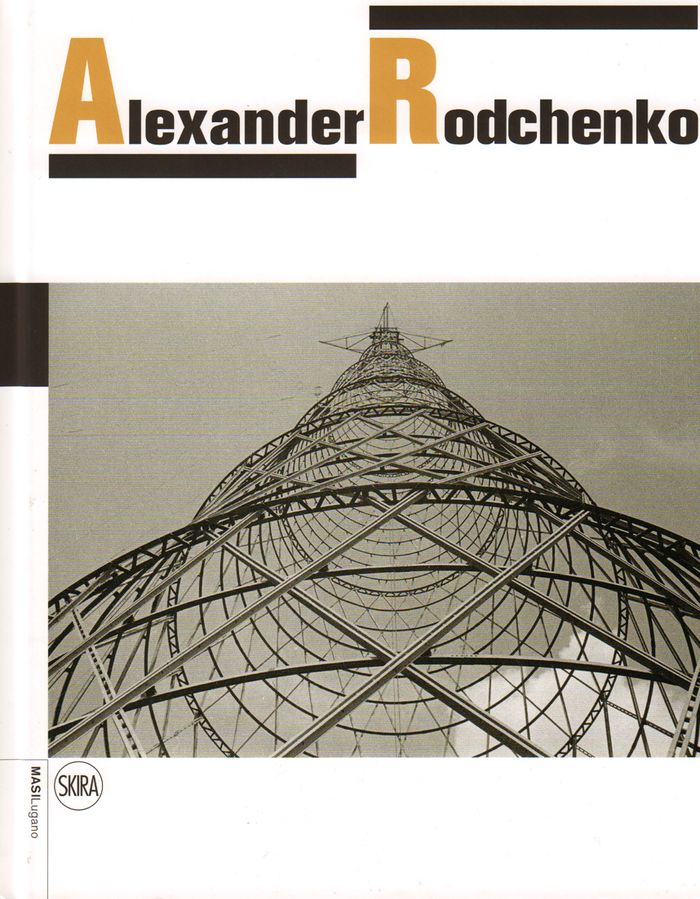
A leading representative of the Russian avant-garde, Alexander Rodchenko (1891- 1956) revolutionized the world of graphic art, design and photography. The over 250 illustrations featured in this volume allow the reader to grasp the full force of this innovator and to appreciate the charisma he exerted on fellow artists as much as on the men of letters, directors and intellectuals who shared his path. Whether it is the photomontages he created for Vladimir Mayakovsky's poem Pro Eto (About That), the covers designed for the magazine Novy LEF (New LEF) - a veritable point of reference for the revolutionary intelligentsia - or cinema posters and book illustrations, Rodchenko's works bear witness to his many collaborations and friendships, evoking not just the image of a brilliantly creative personality but a unique phase in twentieth-century history. The remarkable photographic portraits by the artist, his pictures of urban landscapes and architectures, as well as his photo-reportages in factories and building sites bring back both the faces and spirit of an age of great hopes and equally great contradictions. To this day, the style of Rodchenko the photographer, marked by unusual perspectives, sharp angles and diagonals, stands as the purest witness not just to the talent of an artist but to his eagerness to modernise art and the world at large. Complementing the volume are contributions by Olga Sviblova, the director of the House of Photography / Multimedia Art Museum of Moscow, by the grandson of the artist and leading scholar of his work Alexander Lavrentiev, in addition to writings and testimonies by Rodchenko himself and his daughter Varvara.
Aleksandr Rodchenko
Actions:
Price:
$55.00
(available to order)
Summary:
A leading representative of the Russian avant-garde, Alexander Rodchenko (1891- 1956) revolutionized the world of graphic art, design and photography. The over 250 illustrations featured in this volume allow the reader to grasp the full force of this innovator and to appreciate the charisma he exerted on fellow artists as much as on the men of letters, directors and intellectuals who shared his path. Whether it is the photomontages he created for Vladimir Mayakovsky's poem Pro Eto (About That), the covers designed for the magazine Novy LEF (New LEF) - a veritable point of reference for the revolutionary intelligentsia - or cinema posters and book illustrations, Rodchenko's works bear witness to his many collaborations and friendships, evoking not just the image of a brilliantly creative personality but a unique phase in twentieth-century history. The remarkable photographic portraits by the artist, his pictures of urban landscapes and architectures, as well as his photo-reportages in factories and building sites bring back both the faces and spirit of an age of great hopes and equally great contradictions. To this day, the style of Rodchenko the photographer, marked by unusual perspectives, sharp angles and diagonals, stands as the purest witness not just to the talent of an artist but to his eagerness to modernise art and the world at large. Complementing the volume are contributions by Olga Sviblova, the director of the House of Photography / Multimedia Art Museum of Moscow, by the grandson of the artist and leading scholar of his work Alexander Lavrentiev, in addition to writings and testimonies by Rodchenko himself and his daughter Varvara.
Form:
books
books
Publication:
November 2016
November 2016
Subject:
Photography monographs
Photography monographs
Form:
books
books
Actions:
Price:
$27.00
(available to order)
Summary:
Since the first edition of "Edible Estates : Attack on the Front Lawn" was published in 2008, interest in edible gardening has exploded across the United States and abroad. This greatly expanded second edition of the book documents the eight Edible Estates regional prototype gardens that author Fritz Haeg has planted in California, Kansas, Texas, Maryland, New Jersey, New(...)
$27.00
(available to order)
Summary:
Since the first edition of "Edible Estates : Attack on the Front Lawn" was published in 2008, interest in edible gardening has exploded across the United States and abroad. This greatly expanded second edition of the book documents the eight Edible Estates regional prototype gardens that author Fritz Haeg has planted in California, Kansas, Texas, Maryland, New Jersey, New(...)
Title:
Edible estates : attack on the front lawn, 2nd edition
Actions:
Price:
$27.00
(available to order)
Summary:
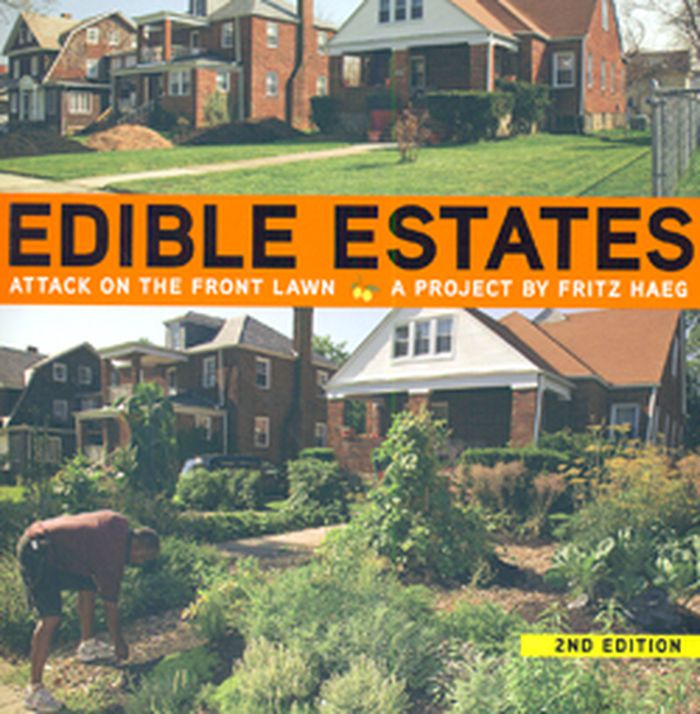
Since the first edition of "Edible Estates : Attack on the Front Lawn" was published in 2008, interest in edible gardening has exploded across the United States and abroad. This greatly expanded second edition of the book documents the eight Edible Estates regional prototype gardens that author Fritz Haeg has planted in California, Kansas, Texas, Maryland, New Jersey, New York and England, and includes personal accounts from the homeowner-gardeners about the pleasures and challenges of publicly growing food where they live. Ten "Reports from Coast to Coast" tell the stories of others who have planted their own edible front yards in towns and cities across the country. In addition to essays by landscape architect and scholar Diana Balmori, edible-landscaping pioneer Rosalind Creasy, bestselling author and sustainable-food advocate Michael Pollan and artist and writer Lesley Stern, this edition features updated text by Haeg (including his observations on the Obama White House vegetable garden); a contribution from Mannahatta author Eric W. Sanderson; and Growing Power founder, MacArthur Fellow and urban farmer Will Allen's never-before-published Declaration of the Good Food Revolution. This is not a comprehensive how-to book, nor a showcase of impossibly perfect gardens. The stories presented here are intended to reveal something about how we are living today and to inspire readers to plant their own versions of an Edible Estate. If we see that our neighbor's typical grassy lawn instead can be a beautiful food garden, perhaps we will begin to look at the city around us with new eyes. Our private land can be a public model for the world in which we would like to live.
Edible estates : attack on the front lawn, 2nd edition
Actions:
Price:
$27.00
(available to order)
Summary:
Since the first edition of "Edible Estates : Attack on the Front Lawn" was published in 2008, interest in edible gardening has exploded across the United States and abroad. This greatly expanded second edition of the book documents the eight Edible Estates regional prototype gardens that author Fritz Haeg has planted in California, Kansas, Texas, Maryland, New Jersey, New York and England, and includes personal accounts from the homeowner-gardeners about the pleasures and challenges of publicly growing food where they live. Ten "Reports from Coast to Coast" tell the stories of others who have planted their own edible front yards in towns and cities across the country. In addition to essays by landscape architect and scholar Diana Balmori, edible-landscaping pioneer Rosalind Creasy, bestselling author and sustainable-food advocate Michael Pollan and artist and writer Lesley Stern, this edition features updated text by Haeg (including his observations on the Obama White House vegetable garden); a contribution from Mannahatta author Eric W. Sanderson; and Growing Power founder, MacArthur Fellow and urban farmer Will Allen's never-before-published Declaration of the Good Food Revolution. This is not a comprehensive how-to book, nor a showcase of impossibly perfect gardens. The stories presented here are intended to reveal something about how we are living today and to inspire readers to plant their own versions of an Edible Estate. If we see that our neighbor's typical grassy lawn instead can be a beautiful food garden, perhaps we will begin to look at the city around us with new eyes. Our private land can be a public model for the world in which we would like to live.
Form:
books
books
Publication:
April 2010
April 2010
Form:
books
books
Title:
Building for hope
Building for hope
Actions:
Price:
$39.95
(available to order)
Summary:
This new book by Syrian architect Marwa al-Sabouni, seeks to understand how cities and buildings- scarred by conflict, blight, and pandemic- can be healed through design and urban mindfulness. When Marwa al-Sabouni published Battle for Home in 2016, she was a little-known architect, living in battle-ravaged Homs, Syria, unable to practice her profession. She turned her(...)
$39.95
(available to order)
Summary:
This new book by Syrian architect Marwa al-Sabouni, seeks to understand how cities and buildings- scarred by conflict, blight, and pandemic- can be healed through design and urban mindfulness. When Marwa al-Sabouni published Battle for Home in 2016, she was a little-known architect, living in battle-ravaged Homs, Syria, unable to practice her profession. She turned her(...)
Title:
Building for hope
Actions:
Price:
$39.95
(available to order)
Summary:
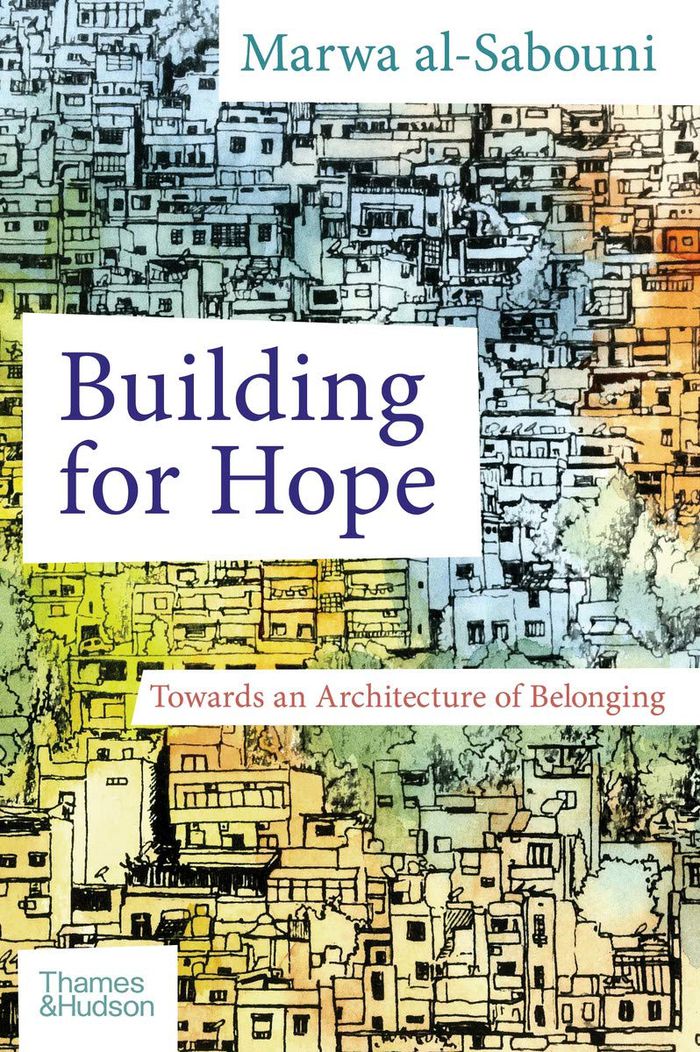
This new book by Syrian architect Marwa al-Sabouni, seeks to understand how cities and buildings- scarred by conflict, blight, and pandemic- can be healed through design and urban mindfulness. When Marwa al-Sabouni published Battle for Home in 2016, she was a little-known architect, living in battle-ravaged Homs, Syria, unable to practice her profession. She turned her fierce intelligence to chronicling how her city and country were undone through decades of architectural mismanagement and mistakes. Once published, Marwa al-Sabouni’s book and story attracted the attention of international media- CNN, The New York Times- and received critical acclaim worldwide. The United Nations called on her for insights and expertise. She became a TED fellow, was invited to speak to audiences around the world, and some suggested she be nominated for architecture’s highest honor, the Pritzker Prize. Al-Sabouni’s deep understanding of Middle Eastern heritage and architecture gives her insight into a wide range of cities, informing her views on how cities work best, how they might fail, and what can be done to harmonize the lives of all their inhabitants. In this new book, al-Sabouni draws together several narratives: her personal and professional observations of some of the world’s most fascinating cities, from Detroit to Helsinki; the lessons that Western societies might learn from Islamic culture and design; and philosophical reflections on how our personal and communal spaces can provide the basic foundations for happiness. Through this tapestry of personal experience, unblinking perspective, and insight, al-Sabouni offers real-world solutions- and hope- for how peace might be created through mindful urban planning.
Building for hope
Actions:
Price:
$39.95
(available to order)
Summary:
This new book by Syrian architect Marwa al-Sabouni, seeks to understand how cities and buildings- scarred by conflict, blight, and pandemic- can be healed through design and urban mindfulness. When Marwa al-Sabouni published Battle for Home in 2016, she was a little-known architect, living in battle-ravaged Homs, Syria, unable to practice her profession. She turned her fierce intelligence to chronicling how her city and country were undone through decades of architectural mismanagement and mistakes. Once published, Marwa al-Sabouni’s book and story attracted the attention of international media- CNN, The New York Times- and received critical acclaim worldwide. The United Nations called on her for insights and expertise. She became a TED fellow, was invited to speak to audiences around the world, and some suggested she be nominated for architecture’s highest honor, the Pritzker Prize. Al-Sabouni’s deep understanding of Middle Eastern heritage and architecture gives her insight into a wide range of cities, informing her views on how cities work best, how they might fail, and what can be done to harmonize the lives of all their inhabitants. In this new book, al-Sabouni draws together several narratives: her personal and professional observations of some of the world’s most fascinating cities, from Detroit to Helsinki; the lessons that Western societies might learn from Islamic culture and design; and philosophical reflections on how our personal and communal spaces can provide the basic foundations for happiness. Through this tapestry of personal experience, unblinking perspective, and insight, al-Sabouni offers real-world solutions- and hope- for how peace might be created through mindful urban planning.
Form:
books
books
Publication:
April 2021
April 2021
Subject:
Architectural Theory
Architectural Theory
Form:
audio
audio
Description:
1 online resource.
Author:
Subject:
Publication:
[Place of publication not identified] : Lateral Addition, 2018.
[Place of publication not identified] : Lateral Addition, 2018.
Title:
June 21, 2018 : Listening for Southwest Key in San Diego.
Actions:
Description:
1 online resource.
June 21, 2018 : Listening for Southwest Key in San Diego.
Actions:
Description:
1 online resource.
Form:
audio
audio
Publication:
[Place of publication not identified] : Lateral Addition, 2018.
[Place of publication not identified] : Lateral Addition, 2018.
Author:
Subject:


