


6300 Results
Form:
books
books

Price:
$90.00
(available to order)
Summary:
A true Renaissance man with a clear, unified aesthetic vision, the Swiss artist, designer, architect and writer Max Bill combined the virtues of homo faber and homo ludens throughout his intensely productive career, launching the Concrete art movement and establishing himself as the single most decisive influence on postwar Swiss graphic design. This gorgeously designed,(...)
$90.00
(available to order)
Summary:
A true Renaissance man with a clear, unified aesthetic vision, the Swiss artist, designer, architect and writer Max Bill combined the virtues of homo faber and homo ludens throughout his intensely productive career, launching the Concrete art movement and establishing himself as the single most decisive influence on postwar Swiss graphic design. This gorgeously designed,(...)
Title:
Max Bill
Actions:
Price:
$90.00
(available to order)
Summary:
A true Renaissance man with a clear, unified aesthetic vision, the Swiss artist, designer, architect and writer Max Bill combined the virtues of homo faber and homo ludens throughout his intensely productive career, launching the Concrete art movement and establishing himself as the single most decisive influence on postwar Swiss graphic design. This gorgeously designed, hefty volume—the most thorough Bill overview ever published in English, and the only monograph in print—presents Bill’s oeuvre both chronologically and thematically, across every facet of his multifaceted oeuvre: painting, graphic art, sculpture, architecture, book and magazine design, industrial and furniture design, graphic design and advertising typography—from large-format posters to small inserts in periodicals—as well as his designs for exhibition spaces. Bill stands out for his enormous influence on Latin American geometric art (through his 1951 retrospective at the São Paulo Museum of Modern Art), as well as for his essays, his work as an educator and his political and social concerns. All these aspects of his life and work are covered in this profusely illustrated catalogue, along with essays by scholars and a selection of previously unpublished essays by Bill himself.
Max Bill
Actions:
Price:
$90.00
(available to order)
Summary:
A true Renaissance man with a clear, unified aesthetic vision, the Swiss artist, designer, architect and writer Max Bill combined the virtues of homo faber and homo ludens throughout his intensely productive career, launching the Concrete art movement and establishing himself as the single most decisive influence on postwar Swiss graphic design. This gorgeously designed, hefty volume—the most thorough Bill overview ever published in English, and the only monograph in print—presents Bill’s oeuvre both chronologically and thematically, across every facet of his multifaceted oeuvre: painting, graphic art, sculpture, architecture, book and magazine design, industrial and furniture design, graphic design and advertising typography—from large-format posters to small inserts in periodicals—as well as his designs for exhibition spaces. Bill stands out for his enormous influence on Latin American geometric art (through his 1951 retrospective at the São Paulo Museum of Modern Art), as well as for his essays, his work as an educator and his political and social concerns. All these aspects of his life and work are covered in this profusely illustrated catalogue, along with essays by scholars and a selection of previously unpublished essays by Bill himself.
Form:
books
books
Publication:
February 2016
February 2016
Subject:
Design Monographs
Design Monographs
Form:
books
books
Actions:
Price:
$55.00
(available to order)
Summary:
What if we stopped dividing the US and Mexico, and instead saw the border as one region? This book envisions the cultural and industrial cohesion of the area. At a moment when migration has returned as a hot-button political issue and NAFTA is being renegotiated as the USMC, political discourse has exaggerated differences on either side of the shared US/Mexico border. But(...)
$55.00
(available to order)
Summary:
What if we stopped dividing the US and Mexico, and instead saw the border as one region? This book envisions the cultural and industrial cohesion of the area. At a moment when migration has returned as a hot-button political issue and NAFTA is being renegotiated as the USMC, political discourse has exaggerated differences on either side of the shared US/Mexico border. But(...)
Subject:
Architecture since 1900, Americas
Architecture since 1900, Americas
Publication:
December 2020
December 2020
Title:
Two sides of the border: reimagining the region
Actions:
Price:
$55.00
(available to order)
Summary:
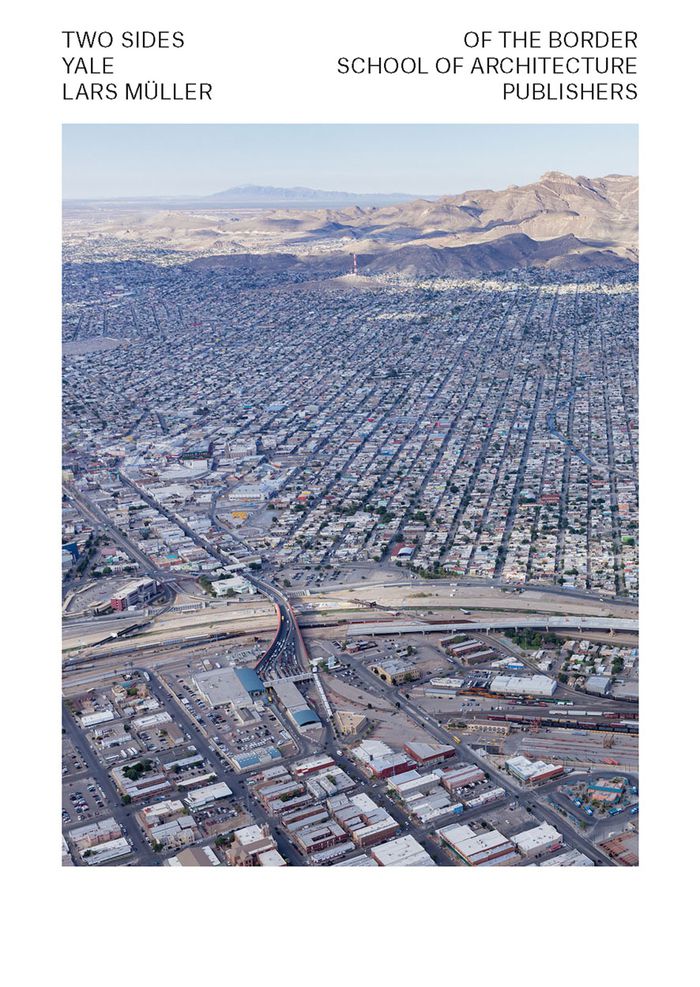
What if we stopped dividing the US and Mexico, and instead saw the border as one region? This book envisions the cultural and industrial cohesion of the area. At a moment when migration has returned as a hot-button political issue and NAFTA is being renegotiated as the USMC, political discourse has exaggerated differences on either side of the shared US/Mexico border. But what if we stopped dividing the United States and Mexico into two separate nations, and instead studied their shared histories, cultures and economies, acknowledging them as parts of a single region? In 2018, under the direction of Mexican architect Tatiana Bilbao, 13 architecture studios and their students across the United States and Mexico undertook the monumental task of attempting to rethink the US/Mexico border as a complex and dynamic, but also cohesive and integrated, region. ''Two sides of the border'' envisions the borderlands through five themes: creative industries and local production, migration, housing and cities, territorial economies and tourism. Building on a long shared history in the region, the projects in this volume use design and architecture to address social, political and ecological concerns along our shared border.
Two sides of the border: reimagining the region
Actions:
Price:
$55.00
(available to order)
Summary:
What if we stopped dividing the US and Mexico, and instead saw the border as one region? This book envisions the cultural and industrial cohesion of the area. At a moment when migration has returned as a hot-button political issue and NAFTA is being renegotiated as the USMC, political discourse has exaggerated differences on either side of the shared US/Mexico border. But what if we stopped dividing the United States and Mexico into two separate nations, and instead studied their shared histories, cultures and economies, acknowledging them as parts of a single region? In 2018, under the direction of Mexican architect Tatiana Bilbao, 13 architecture studios and their students across the United States and Mexico undertook the monumental task of attempting to rethink the US/Mexico border as a complex and dynamic, but also cohesive and integrated, region. ''Two sides of the border'' envisions the borderlands through five themes: creative industries and local production, migration, housing and cities, territorial economies and tourism. Building on a long shared history in the region, the projects in this volume use design and architecture to address social, political and ecological concerns along our shared border.
Form:
books
books
Publication:
December 2020
December 2020
Subject:
Architecture since 1900, Americas
Architecture since 1900, Americas
Form:
books
books
Actions:
Price:
$73.00
(available to order)
Summary:
Including newly commissioned essays by curators and scholars, this book explores how Sottsass’s art and philosophy presaged the dawn of PCs, the service industry, and the gig economy. Ettore Sottsass was an architect, industrial designer, painter, writer, photographer, and founder of the Memphis group, whose designs are undergoing an impressive renaissance. But Sottsass(...)
$73.00
(available to order)
Summary:
Including newly commissioned essays by curators and scholars, this book explores how Sottsass’s art and philosophy presaged the dawn of PCs, the service industry, and the gig economy. Ettore Sottsass was an architect, industrial designer, painter, writer, photographer, and founder of the Memphis group, whose designs are undergoing an impressive renaissance. But Sottsass(...)
Title:
Ettore Sottsass and the social factory
Actions:
Price:
$73.00
(available to order)
Summary:
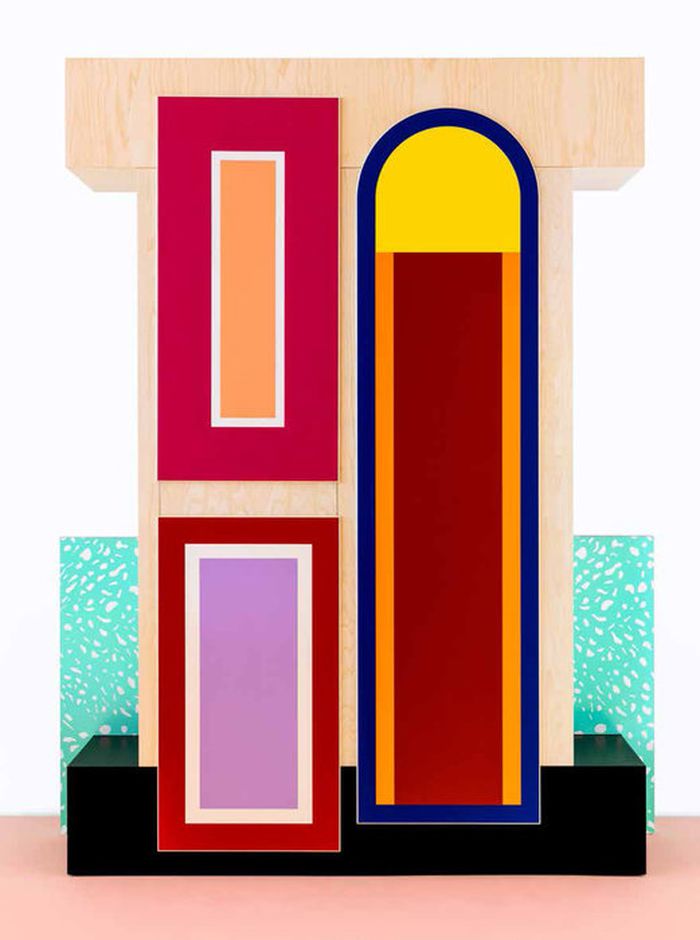
Including newly commissioned essays by curators and scholars, this book explores how Sottsass’s art and philosophy presaged the dawn of PCs, the service industry, and the gig economy. Ettore Sottsass was an architect, industrial designer, painter, writer, photographer, and founder of the Memphis group, whose designs are undergoing an impressive renaissance. But Sottsass was more than just an important designer. His approach to object design–marked by bold colors, tactility, and vitality–was a direct response to the world of mass production and the assembly-line economy. This revelatory collection of essays by leading thinkers in the fields of political theory, economics, the media, design history, and cultural theory contextualizes Sottsass’s work in unprecedented arguments that draw a line from his work at Olivetti to the iconoclastic designs he produced at the dawn of the 21st century. Divided into five chronological sections–from the late 1950s to Sottsass’s death in 2007– these essays are illustrated with vibrant images of his work and archival photographs. Deeply researched, the book makes crucial connections between postwar Europe and America, and the way we work and live today.
Ettore Sottsass and the social factory
Actions:
Price:
$73.00
(available to order)
Summary:
Including newly commissioned essays by curators and scholars, this book explores how Sottsass’s art and philosophy presaged the dawn of PCs, the service industry, and the gig economy. Ettore Sottsass was an architect, industrial designer, painter, writer, photographer, and founder of the Memphis group, whose designs are undergoing an impressive renaissance. But Sottsass was more than just an important designer. His approach to object design–marked by bold colors, tactility, and vitality–was a direct response to the world of mass production and the assembly-line economy. This revelatory collection of essays by leading thinkers in the fields of political theory, economics, the media, design history, and cultural theory contextualizes Sottsass’s work in unprecedented arguments that draw a line from his work at Olivetti to the iconoclastic designs he produced at the dawn of the 21st century. Divided into five chronological sections–from the late 1950s to Sottsass’s death in 2007– these essays are illustrated with vibrant images of his work and archival photographs. Deeply researched, the book makes crucial connections between postwar Europe and America, and the way we work and live today.
Form:
books
books
Publication:
July 2020
July 2020
Subject:
Design Monographs
Design Monographs
Form:
books
books
Actions:
Price:
$88.95
(available to order)
Summary:
For the sheer quantity and quality of his inventions, scientist and structural engineer Vladimir Shukhov (1853–1939) is sometimes referred to as the “Russian Thomas Edison.” Among his pioneering contributions are a number of innovations related to the oil industry, including the design and construction of the first Russian pipeline and the world’s first industrial plant(...)
$88.95
(available to order)
Summary:
For the sheer quantity and quality of his inventions, scientist and structural engineer Vladimir Shukhov (1853–1939) is sometimes referred to as the “Russian Thomas Edison.” Among his pioneering contributions are a number of innovations related to the oil industry, including the design and construction of the first Russian pipeline and the world’s first industrial plant(...)
Publication:
August 2016
August 2016
Title:
Networks of construction: Vladimir Shukohov
Actions:
Price:
$88.95
(available to order)
Summary:
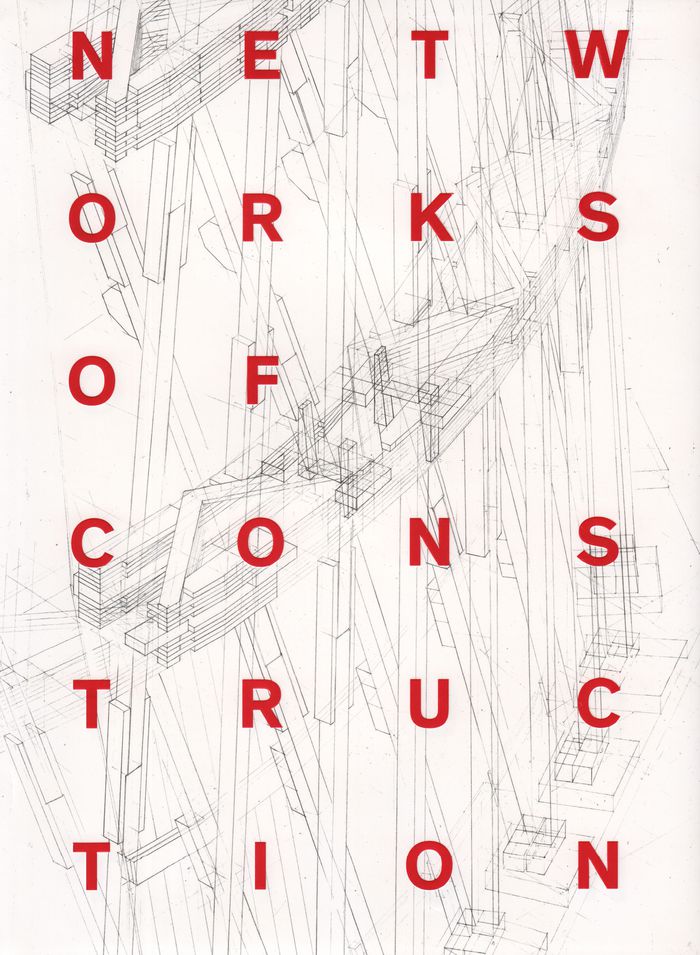
For the sheer quantity and quality of his inventions, scientist and structural engineer Vladimir Shukhov (1853–1939) is sometimes referred to as the “Russian Thomas Edison.” Among his pioneering contributions are a number of innovations related to the oil industry, including the design and construction of the first Russian pipeline and the world’s first industrial plant for oil cracking. His groundbreaking structural works include the cable-supported hanging roof and the hyperboloid lattice tower epitomized by the Shukhov Tower in Moscow, which bears his name. Networks of Construction collects Shukhov’s trailblazing achievements from the turn of the twentieth century, exploring his career and complicated creative process. Each of Shukhov’s projects, the book shows, was realized through an elaborate process beginning with an intense period of planning to account for the interconnections among a wide range of factors, from the technical background of the construction workers to technology transfer, the nomenclature of steel grades, and the scientification of construction knowledge. Ekaterina Nozhova and Uta Hassler of the Institute of Historic Building Research and Conservation at ETH Zurich have painstakingly reconstructed Shukhov’s process through a wealth of drawings, photographs, and documents.
Networks of construction: Vladimir Shukohov
Actions:
Price:
$88.95
(available to order)
Summary:
For the sheer quantity and quality of his inventions, scientist and structural engineer Vladimir Shukhov (1853–1939) is sometimes referred to as the “Russian Thomas Edison.” Among his pioneering contributions are a number of innovations related to the oil industry, including the design and construction of the first Russian pipeline and the world’s first industrial plant for oil cracking. His groundbreaking structural works include the cable-supported hanging roof and the hyperboloid lattice tower epitomized by the Shukhov Tower in Moscow, which bears his name. Networks of Construction collects Shukhov’s trailblazing achievements from the turn of the twentieth century, exploring his career and complicated creative process. Each of Shukhov’s projects, the book shows, was realized through an elaborate process beginning with an intense period of planning to account for the interconnections among a wide range of factors, from the technical background of the construction workers to technology transfer, the nomenclature of steel grades, and the scientification of construction knowledge. Ekaterina Nozhova and Uta Hassler of the Institute of Historic Building Research and Conservation at ETH Zurich have painstakingly reconstructed Shukhov’s process through a wealth of drawings, photographs, and documents.
Form:
books
books
Publication:
August 2016
August 2016
Form:
books
books
Title:
Buildings that feel good
Buildings that feel good
Actions:
Price:
$53.95
(available to order)
Summary:
What makes a building good? This central challenge facing architects and clients can only be answered by looking at what works well for those who know the buildings most intimately – the building's users. This book includes case studies of recent buildings that feel good. It is rooted in the physical but mediated by human experience, and may only be judged after the(...)
$53.95
(available to order)
Summary:
What makes a building good? This central challenge facing architects and clients can only be answered by looking at what works well for those who know the buildings most intimately – the building's users. This book includes case studies of recent buildings that feel good. It is rooted in the physical but mediated by human experience, and may only be judged after the(...)
Subject:
Commercial interiors, Building types
Commercial interiors, Building types
Publication:
October 2008
October 2008
Title:
Buildings that feel good
Actions:
Price:
$53.95
(available to order)
Summary:
What makes a building good? This central challenge facing architects and clients can only be answered by looking at what works well for those who know the buildings most intimately – the building's users. This book includes case studies of recent buildings that feel good. It is rooted in the physical but mediated by human experience, and may only be judged after the building has been ‘lived in' and stood the test of time. The trick is to identify the relevant characteristics that will inform new buildings before they are built. Written by a briefing and design evaluation expert who specialises in optimising the experience of building users, Buildings that Feel Good distils a set of hard-won lessons synthesised from years of empirical research. It argues that a powerful key to designing good buildings is to decipher consistent principles from users' positive experience of existing buildings. The case studies include many recent highly-rated projects that cover a wide range of building types – offices, retail, industrial, infrastructure, sport and education. The lessons extracted are universal and provide valuable generic insights into the critically important briefing process.
Buildings that feel good
Actions:
Price:
$53.95
(available to order)
Summary:
What makes a building good? This central challenge facing architects and clients can only be answered by looking at what works well for those who know the buildings most intimately – the building's users. This book includes case studies of recent buildings that feel good. It is rooted in the physical but mediated by human experience, and may only be judged after the building has been ‘lived in' and stood the test of time. The trick is to identify the relevant characteristics that will inform new buildings before they are built. Written by a briefing and design evaluation expert who specialises in optimising the experience of building users, Buildings that Feel Good distils a set of hard-won lessons synthesised from years of empirical research. It argues that a powerful key to designing good buildings is to decipher consistent principles from users' positive experience of existing buildings. The case studies include many recent highly-rated projects that cover a wide range of building types – offices, retail, industrial, infrastructure, sport and education. The lessons extracted are universal and provide valuable generic insights into the critically important briefing process.
Form:
books
books
Publication:
October 2008
October 2008
Subject:
Commercial interiors, Building types
Commercial interiors, Building types
Form:
books
books

Actions:
Price:
$32.95
(available to order)
Summary:
Over the past two decades, many books and articles have explored the larger meaning of public acts of remembrance. Although these studies have brought the links between public memory, imperialism, and nation building into focus, they overlook local expressions of memory that lie at the heart of our everyday experiences and identities. This publication maps a terrain in(...)
$32.95
(available to order)
Summary:
Over the past two decades, many books and articles have explored the larger meaning of public acts of remembrance. Although these studies have brought the links between public memory, imperialism, and nation building into focus, they overlook local expressions of memory that lie at the heart of our everyday experiences and identities. This publication maps a terrain in(...)
Publication:
July 2011
July 2011
Title:
Placing memory and remembering place in Canada
Actions:
Price:
$32.95
(available to order)
Summary:
Over the past two decades, many books and articles have explored the larger meaning of public acts of remembrance. Although these studies have brought the links between public memory, imperialism, and nation building into focus, they overlook local expressions of memory that lie at the heart of our everyday experiences and identities. This publication maps a terrain in memory studies by shifting the focus to local places that sit at the intersection of memory making and identity formation - the main street, the city square, the village museum, internment camps, industrial wastelands, and the rural landscape. Offering a perspective on the politics of place and memory across differing chronologies and geographies, the first part of the book traces how local expressions of memory such as celebrations, museums, statues, postcards, and plaques have contributed to a sense of place and belonging in twentieth-century Canada. The second part in turn explores how ordinary Canadians have embedded their memories of place in oral stories, photographs, and the landscape itself. With its focus on the materiality of image, text, and artefact, these essays argue for an understanding of place as imagined, made, claimed, fought for, and defended - always in a state of becoming.
Placing memory and remembering place in Canada
Actions:
Price:
$32.95
(available to order)
Summary:
Over the past two decades, many books and articles have explored the larger meaning of public acts of remembrance. Although these studies have brought the links between public memory, imperialism, and nation building into focus, they overlook local expressions of memory that lie at the heart of our everyday experiences and identities. This publication maps a terrain in memory studies by shifting the focus to local places that sit at the intersection of memory making and identity formation - the main street, the city square, the village museum, internment camps, industrial wastelands, and the rural landscape. Offering a perspective on the politics of place and memory across differing chronologies and geographies, the first part of the book traces how local expressions of memory such as celebrations, museums, statues, postcards, and plaques have contributed to a sense of place and belonging in twentieth-century Canada. The second part in turn explores how ordinary Canadians have embedded their memories of place in oral stories, photographs, and the landscape itself. With its focus on the materiality of image, text, and artefact, these essays argue for an understanding of place as imagined, made, claimed, fought for, and defended - always in a state of becoming.
Form:
books
books
Publication:
July 2011
July 2011
Form:
books
books
Actions:
Price:
$28.50
(available in store)
Summary:
Peter Reyner Banham, taught in the newly founded architecture program at the State University of New York at Buffalo between 1976 and 1980. During his tenure at Buffalo, inspired by the daylight factories and the grain silos of the region, he conducted research that led to his seminal book, A concrete Atlantis, illuminating the relationship between American industrial(...)
$28.50
(available in store)
Summary:
Peter Reyner Banham, taught in the newly founded architecture program at the State University of New York at Buffalo between 1976 and 1980. During his tenure at Buffalo, inspired by the daylight factories and the grain silos of the region, he conducted research that led to his seminal book, A concrete Atlantis, illuminating the relationship between American industrial(...)
Title:
Banham in Buffalo: 5 years of the Peter Reyner Banham Fellowship at the University at Buffalo Department of Architecture
Actions:
Price:
$28.50
(available in store)
Summary:
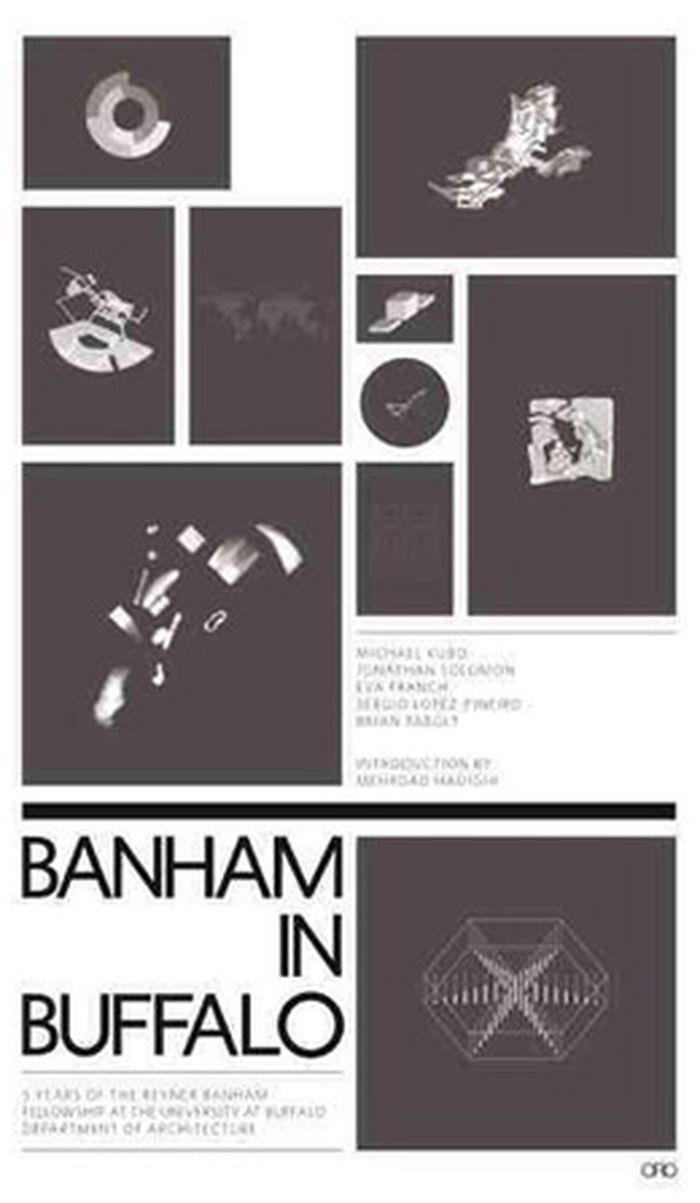
Peter Reyner Banham, taught in the newly founded architecture program at the State University of New York at Buffalo between 1976 and 1980. During his tenure at Buffalo, inspired by the daylight factories and the grain silos of the region, he conducted research that led to his seminal book, A concrete Atlantis, illuminating the relationship between American industrial buildings and European Modern Architecture. The Peter Reyner Banham Fellowship program at Buffalo was established in 2000 to celebrate Banham's legacy at Buffalo, and, most importantly, to project new work that is inspired by Banham's foundational body of scholarship on material and visual culture. Each year, the Banham Fellow engages the students and the faculty of the department through research, creative activity, and teaching, and presents that body of work through an exhibition and a lecture. In this publication, the projections of the past five Banham Fellows are documented: Jonathan Solomon (2005-2006), Sergio Lopez-Pineiro (2006-2007), Eva Franch-Gilabert (2007-2008), Michael Kubo (2008-2009), Brian Tabolt (2009-2010). This document is a testament to the reach of Banham's visions and to the visionary work of the Fellows at Buffalo.
Banham in Buffalo: 5 years of the Peter Reyner Banham Fellowship at the University at Buffalo Department of Architecture
Actions:
Price:
$28.50
(available in store)
Summary:
Peter Reyner Banham, taught in the newly founded architecture program at the State University of New York at Buffalo between 1976 and 1980. During his tenure at Buffalo, inspired by the daylight factories and the grain silos of the region, he conducted research that led to his seminal book, A concrete Atlantis, illuminating the relationship between American industrial buildings and European Modern Architecture. The Peter Reyner Banham Fellowship program at Buffalo was established in 2000 to celebrate Banham's legacy at Buffalo, and, most importantly, to project new work that is inspired by Banham's foundational body of scholarship on material and visual culture. Each year, the Banham Fellow engages the students and the faculty of the department through research, creative activity, and teaching, and presents that body of work through an exhibition and a lecture. In this publication, the projections of the past five Banham Fellows are documented: Jonathan Solomon (2005-2006), Sergio Lopez-Pineiro (2006-2007), Eva Franch-Gilabert (2007-2008), Michael Kubo (2008-2009), Brian Tabolt (2009-2010). This document is a testament to the reach of Banham's visions and to the visionary work of the Fellows at Buffalo.
Form:
books
books
Publication:
January 2012
January 2012
Subject:
Architectural Theory
Architectural Theory
Form:
archives
archives
Actions:
Holdings:
Description:
1 videocassette (VHS) (approximately 67 min.) : sound, color ; 1/2 in. master, 1 videocassette (Mini-DV) (approximately 62 min.) : sound, color ; 1/4 in. master, 1...
Description:
1 videocassette (VHS) (approximately 67 min.) : sound, color ; 1/2 in. master, 1 videocassette (Mini-DV) (approximately 62 min.) : sound, color ; 1/4 in. master, 1...
Author:
Subject:
Title:
Cartographie : recordings, 2002.
Actions:
Holdings:
Description:
1 videocassette (VHS) (approximately 67 min.) : sound, color ; 1/2 in. master, 1 videocassette (Mini-DV) (approximately 62 min.) : sound, color ; 1/4 in. master, 1...
Cartographie : recordings, 2002.
Actions:
Holdings:
Description:
1 videocassette (VHS) (approximately 67 min.) : sound, color ; 1/2 in. master, 1 videocassette (Mini-DV) (approximately 62 min.) : sound, color ; 1/4 in. master, 1...
Form:
archives
archives
Author:
Subject:
Form:
books
books
Actions:
Price:
$54.00
(available to order)
Summary:
First published by Oxford University Press in 1969, "A view of early typography" has long been out of print. It is a wonderful summary of what can be known about the production and use of type in the first 150 years of printing. By focusing on type, Carter goes to the heart of the matter: this is the point at which the material processes of printing meet the intellectual(...)
$54.00
(available to order)
Summary:
First published by Oxford University Press in 1969, "A view of early typography" has long been out of print. It is a wonderful summary of what can be known about the production and use of type in the first 150 years of printing. By focusing on type, Carter goes to the heart of the matter: this is the point at which the material processes of printing meet the intellectual(...)
Title:
A view of early typography up to about 1600
Actions:
Price:
$54.00
(available to order)
Summary:
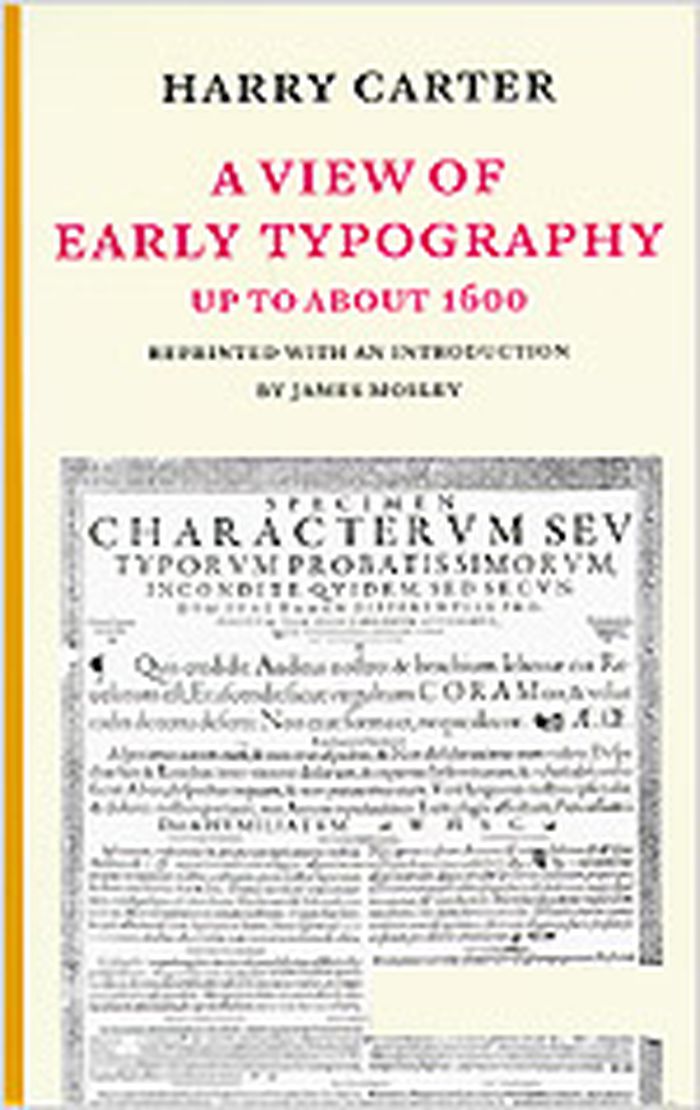
First published by Oxford University Press in 1969, "A view of early typography" has long been out of print. It is a wonderful summary of what can be known about the production and use of type in the first 150 years of printing. By focusing on type, Carter goes to the heart of the matter: this is the point at which the material processes of printing meet the intellectual concerns of the publishers and the nature of the texts that they published. Among the topics covered are the technicalities of type production, and the passage from craft to industrial manufacture; the diversity of letterforms (blackletter, roman, italic, and more); the tensions between Latin and the vernacular languages; the establishment of standards and norms in type design. Carter ranges widely and deftly over the field of European printing in the period 1450—1600, drawing principally on his own long experience of the materials surviving from that time in libraries and archives. The argument is illustrated with a large gathering of pictures, mainly of details from books, freshly taken for this purpose. This is a photo-reprint of the first edition, augmented by a new introduction in which James Mosley explains the significance of the book and gives a short account a Carter’s life and work.
A view of early typography up to about 1600
Actions:
Price:
$54.00
(available to order)
Summary:
First published by Oxford University Press in 1969, "A view of early typography" has long been out of print. It is a wonderful summary of what can be known about the production and use of type in the first 150 years of printing. By focusing on type, Carter goes to the heart of the matter: this is the point at which the material processes of printing meet the intellectual concerns of the publishers and the nature of the texts that they published. Among the topics covered are the technicalities of type production, and the passage from craft to industrial manufacture; the diversity of letterforms (blackletter, roman, italic, and more); the tensions between Latin and the vernacular languages; the establishment of standards and norms in type design. Carter ranges widely and deftly over the field of European printing in the period 1450—1600, drawing principally on his own long experience of the materials surviving from that time in libraries and archives. The argument is illustrated with a large gathering of pictures, mainly of details from books, freshly taken for this purpose. This is a photo-reprint of the first edition, augmented by a new introduction in which James Mosley explains the significance of the book and gives a short account a Carter’s life and work.
Form:
books
books
Publication:
August 2002, London
August 2002, London
Subject:
Graphic Design and Typography
Graphic Design and Typography
Form:
books
books
Actions:
Price:
$58.50
(available to order)
Summary:
In April 2003 010 Publishers of Rotterdam had been active for twenty years. During those two decades they have published five hundred books on architecture and design. This specialization reflects the enthusiasm of 010's founders, Hans Oldewarris and Peter de Winter, trained as an architect and an urban designer respectively at Delft University of Technology. Besides over(...)
$58.50
(available to order)
Summary:
In April 2003 010 Publishers of Rotterdam had been active for twenty years. During those two decades they have published five hundred books on architecture and design. This specialization reflects the enthusiasm of 010's founders, Hans Oldewarris and Peter de Winter, trained as an architect and an urban designer respectively at Delft University of Technology. Besides over(...)
Title:
20 jaar/years 010 : 1983-2003
Actions:
Price:
$58.50
(available to order)
Summary:
In April 2003 010 Publishers of Rotterdam had been active for twenty years. During those two decades they have published five hundred books on architecture and design. This specialization reflects the enthusiasm of 010's founders, Hans Oldewarris and Peter de Winter, trained as an architect and an urban designer respectively at Delft University of Technology. Besides over one hundred monographs by and about Dutch architects, with Rem Koolhaas's "S,M,L,XL" as a provisional peak, 010 have published books on more wide-ranging architecture, interior design, photography, industrial design, graphic design, and the visual arts. These aspects include a keen interest in the theory and history of architecture and design. The lion’s share of this book is taken up with a catalogue spanning the period 1983-2003. Exhaustively annotated and illustrated, it gives not just the technical details of each book such as size, format, and binding style but also the authors, editors, photographers, graphic designers and printers. A brief description of the contents rounds off each entry. Comprehensive indexes give insight into who contributed to which book and in what way. In their introductory essay Ed Taverne and Cor Wagenaar give a picture of the practice of architectural publishing in the Netherlands during those years.
20 jaar/years 010 : 1983-2003
Actions:
Price:
$58.50
(available to order)
Summary:
In April 2003 010 Publishers of Rotterdam had been active for twenty years. During those two decades they have published five hundred books on architecture and design. This specialization reflects the enthusiasm of 010's founders, Hans Oldewarris and Peter de Winter, trained as an architect and an urban designer respectively at Delft University of Technology. Besides over one hundred monographs by and about Dutch architects, with Rem Koolhaas's "S,M,L,XL" as a provisional peak, 010 have published books on more wide-ranging architecture, interior design, photography, industrial design, graphic design, and the visual arts. These aspects include a keen interest in the theory and history of architecture and design. The lion’s share of this book is taken up with a catalogue spanning the period 1983-2003. Exhaustively annotated and illustrated, it gives not just the technical details of each book such as size, format, and binding style but also the authors, editors, photographers, graphic designers and printers. A brief description of the contents rounds off each entry. Comprehensive indexes give insight into who contributed to which book and in what way. In their introductory essay Ed Taverne and Cor Wagenaar give a picture of the practice of architectural publishing in the Netherlands during those years.
Form:
books
books
Publication:
June 2003, Rotterdam
June 2003, Rotterdam
Subject:
Book Design
Book Design


