


6922 Results
Form:
books
books
Price:
$120.00
(available to order)
Summary:
A comprehensive textbook that integrates tools from technology, economics, markets, and policy to approach energy issues using a dynamic systems and capital-centric perspective. The global energy system is the vital foundation of modern human industrial society. Traditionally studied through separate disciplines of engineering, economics, environment, or public policy,(...)
$120.00
(available to order)
Summary:
A comprehensive textbook that integrates tools from technology, economics, markets, and policy to approach energy issues using a dynamic systems and capital-centric perspective. The global energy system is the vital foundation of modern human industrial society. Traditionally studied through separate disciplines of engineering, economics, environment, or public policy,(...)
Title:
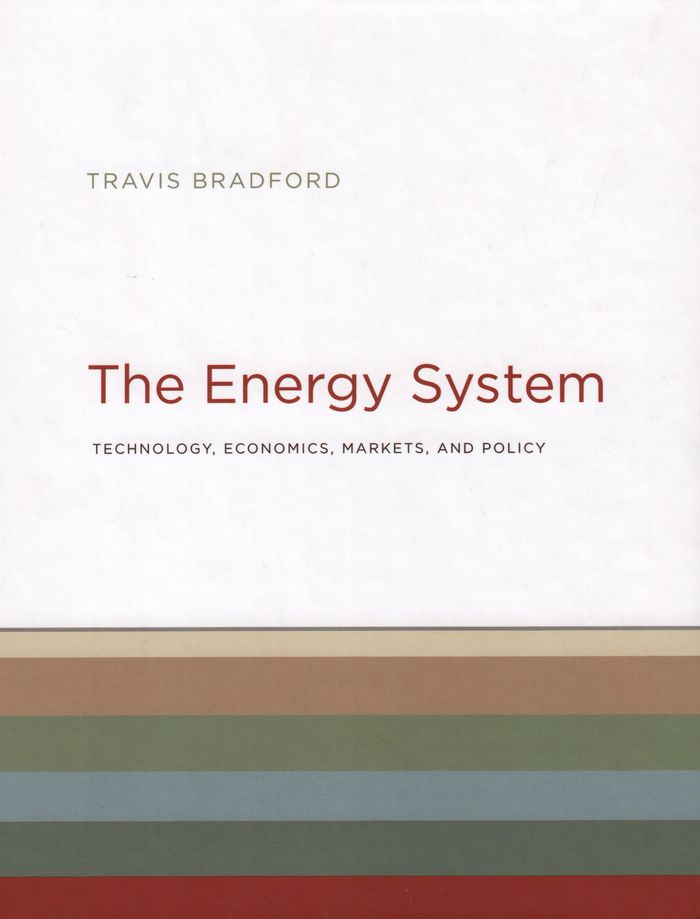
The energy system: technology, economics, markets, and policy
Actions:
Price:
$120.00
(available to order)
Summary:
A comprehensive textbook that integrates tools from technology, economics, markets, and policy to approach energy issues using a dynamic systems and capital-centric perspective. The global energy system is the vital foundation of modern human industrial society. Traditionally studied through separate disciplines of engineering, economics, environment, or public policy, this system can be fully understood only by using an approach that integrates these tools. This textbook is the first to take a dynamic systems perspective on understanding energy systems, tracking energy from primary resource to final energy services through a long and capital-intensive supply chain bounded by both macroeconomic and natural resource systems.
The energy system: technology, economics, markets, and policy
Actions:
Price:
$120.00
(available to order)
Summary:
A comprehensive textbook that integrates tools from technology, economics, markets, and policy to approach energy issues using a dynamic systems and capital-centric perspective. The global energy system is the vital foundation of modern human industrial society. Traditionally studied through separate disciplines of engineering, economics, environment, or public policy, this system can be fully understood only by using an approach that integrates these tools. This textbook is the first to take a dynamic systems perspective on understanding energy systems, tracking energy from primary resource to final energy services through a long and capital-intensive supply chain bounded by both macroeconomic and natural resource systems.
Form:
books
books
Publication:
May 2018
May 2018
Form:
books
books
Actions:
Price:
$78.00
(available to order)
Summary:
"The Bauhaus and Czechoslovakia 1919–1938" looks at the Central European context and legacy of Germany’s legendary Bauhaus school. This center of avant-garde learning, whose teachers included artists such as Walter Gropius, Paul Klee, Wassily Kandinsky, Josef Albers, László Moholy-Nagy and Adolf Meyer, was a place of meeting and mutual inspiration for artists, designers(...)
$78.00
(available to order)
Summary:
"The Bauhaus and Czechoslovakia 1919–1938" looks at the Central European context and legacy of Germany’s legendary Bauhaus school. This center of avant-garde learning, whose teachers included artists such as Walter Gropius, Paul Klee, Wassily Kandinsky, Josef Albers, László Moholy-Nagy and Adolf Meyer, was a place of meeting and mutual inspiration for artists, designers(...)
Publication:
February 2018
February 2018
Title:
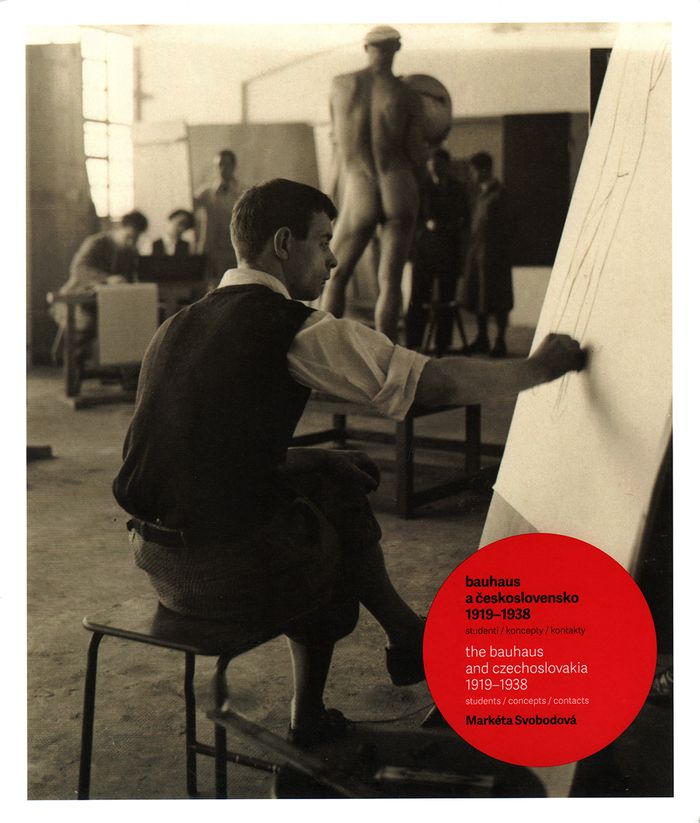
The Bauhaus and Czechoslovakia 1919-1938
Actions:
Price:
$78.00
(available to order)
Summary:
"The Bauhaus and Czechoslovakia 1919–1938" looks at the Central European context and legacy of Germany’s legendary Bauhaus school. This center of avant-garde learning, whose teachers included artists such as Walter Gropius, Paul Klee, Wassily Kandinsky, Josef Albers, László Moholy-Nagy and Adolf Meyer, was a place of meeting and mutual inspiration for artists, designers and architects. Czech students brought their own original ideas and progressive techniques into this heady atmosphere. This volume, the result of years of scholarly research by Czech art historian Markéta Svobodová, is the first publication to survey the contributions of Czech students in this creative environment, offering a student-centered perspective on the famed institution.
The Bauhaus and Czechoslovakia 1919-1938
Actions:
Price:
$78.00
(available to order)
Summary:
"The Bauhaus and Czechoslovakia 1919–1938" looks at the Central European context and legacy of Germany’s legendary Bauhaus school. This center of avant-garde learning, whose teachers included artists such as Walter Gropius, Paul Klee, Wassily Kandinsky, Josef Albers, László Moholy-Nagy and Adolf Meyer, was a place of meeting and mutual inspiration for artists, designers and architects. Czech students brought their own original ideas and progressive techniques into this heady atmosphere. This volume, the result of years of scholarly research by Czech art historian Markéta Svobodová, is the first publication to survey the contributions of Czech students in this creative environment, offering a student-centered perspective on the famed institution.
Form:
books
books
Publication:
February 2018
February 2018
Form:
books
books
Actions:
Price:
$78.30
(available to order)
Summary:
The sensing, processing, and visualizing that are currently in development within the environment boldly change the ways design and maintenance of landscapes are perceived and conceptualised. This is the first book to rationalize interactive architecture and responsive technologies through the lens of contemporary landscape architectural theory. 'Responsive Landscapes'(...)
$78.30
(available to order)
Summary:
The sensing, processing, and visualizing that are currently in development within the environment boldly change the ways design and maintenance of landscapes are perceived and conceptualised. This is the first book to rationalize interactive architecture and responsive technologies through the lens of contemporary landscape architectural theory. 'Responsive Landscapes'(...)
Title:
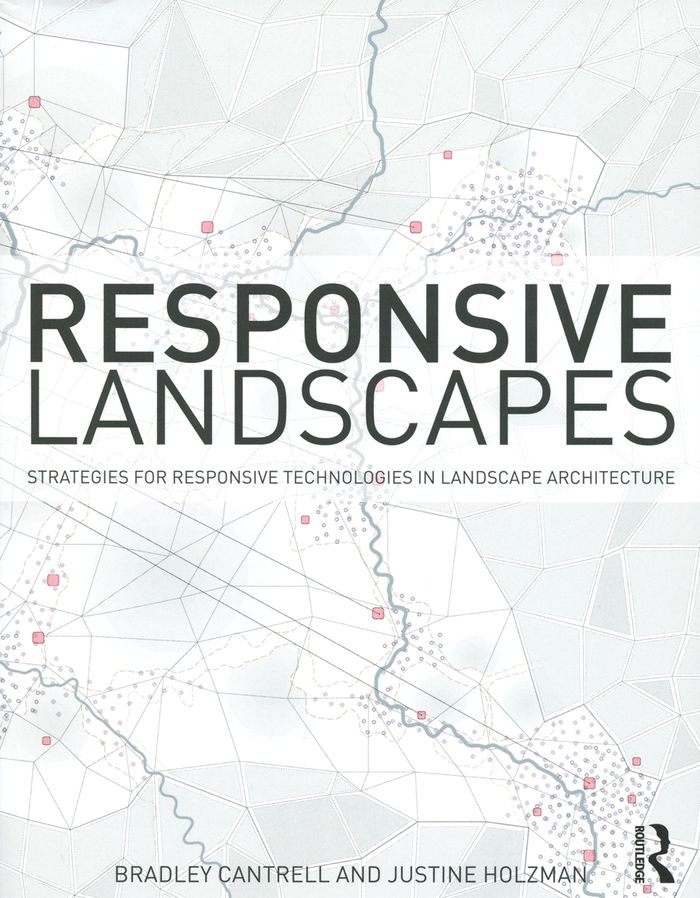
Responsive landscapes: strategies for responsive technologies in landscape architecture
Actions:
Price:
$78.30
(available to order)
Summary:
The sensing, processing, and visualizing that are currently in development within the environment boldly change the ways design and maintenance of landscapes are perceived and conceptualised. This is the first book to rationalize interactive architecture and responsive technologies through the lens of contemporary landscape architectural theory. 'Responsive Landscapes' frames a comprehensive view of design projects using responsive technologies and their relationship to landscape and environmental space. Divided into six insightful sections, the book frames the projects through the terms; elucidate, compress, displace, connect, ambient, and modify to present and construct a pragmatic framework in which to approach the integration of responsive technologies into landscape architecture.
Responsive landscapes: strategies for responsive technologies in landscape architecture
Actions:
Price:
$78.30
(available to order)
Summary:
The sensing, processing, and visualizing that are currently in development within the environment boldly change the ways design and maintenance of landscapes are perceived and conceptualised. This is the first book to rationalize interactive architecture and responsive technologies through the lens of contemporary landscape architectural theory. 'Responsive Landscapes' frames a comprehensive view of design projects using responsive technologies and their relationship to landscape and environmental space. Divided into six insightful sections, the book frames the projects through the terms; elucidate, compress, displace, connect, ambient, and modify to present and construct a pragmatic framework in which to approach the integration of responsive technologies into landscape architecture.
Form:
books
books
Publication:
March 2016
March 2016
Subject:
Landscape Theory
Landscape Theory
Form:
journals and magazines
journals and magazines
Title:
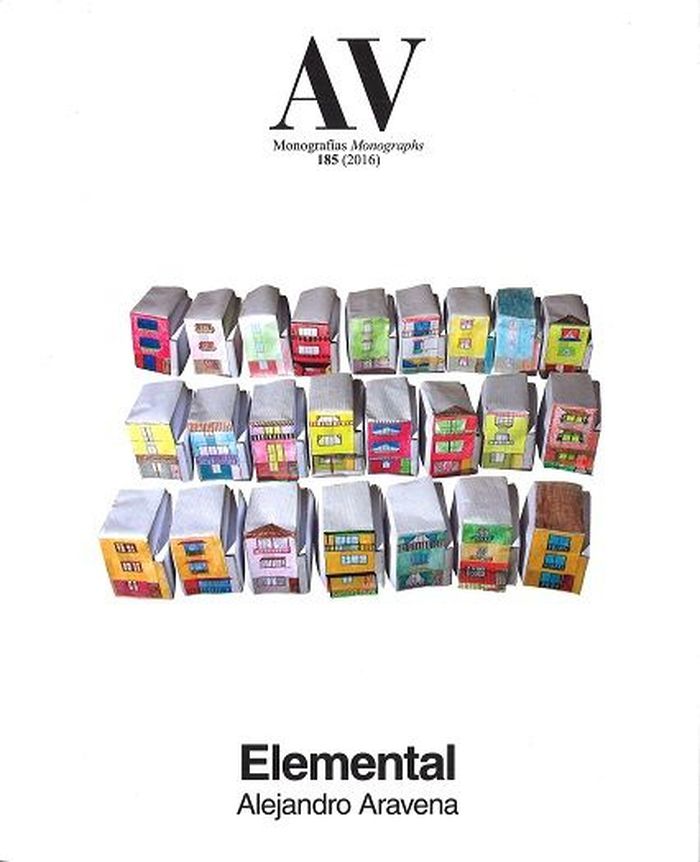
AV 185: Alejandro Aravena
AV 185: Alejandro Aravena
Actions:
Price:
$64.50
(available in store)
Summary:
The Chilean Pritzker Prize winner takes centre stage in this timely instalment. Remarkable for his drive to put into practice ideas that can bring improvement to the city and peoples’ lives, Alejandro Aravena is taking this one step further with his theme for the 15th Venice Architecture Biennale, “Reporting from the Front”. In keeping with this line of inquiry, the(...)
$64.50
(available in store)
Summary:
The Chilean Pritzker Prize winner takes centre stage in this timely instalment. Remarkable for his drive to put into practice ideas that can bring improvement to the city and peoples’ lives, Alejandro Aravena is taking this one step further with his theme for the 15th Venice Architecture Biennale, “Reporting from the Front”. In keeping with this line of inquiry, the(...)
Title:
AV 185: Alejandro Aravena
Actions:
Price:
$64.50
(available in store)
Summary:
The Chilean Pritzker Prize winner takes centre stage in this timely instalment. Remarkable for his drive to put into practice ideas that can bring improvement to the city and peoples’ lives, Alejandro Aravena is taking this one step further with his theme for the 15th Venice Architecture Biennale, “Reporting from the Front”. In keeping with this line of inquiry, the magazine offers readers the chance to discover the stories of many other architects from around the globe whose work has brought positive change to the built environment. Divided among participatory design, civic service, and sustainable landscape, the projects herein give an exemplary overview of Aravena’s distinctive practice.
AV 185: Alejandro Aravena
Actions:
Price:
$64.50
(available in store)
Summary:
The Chilean Pritzker Prize winner takes centre stage in this timely instalment. Remarkable for his drive to put into practice ideas that can bring improvement to the city and peoples’ lives, Alejandro Aravena is taking this one step further with his theme for the 15th Venice Architecture Biennale, “Reporting from the Front”. In keeping with this line of inquiry, the magazine offers readers the chance to discover the stories of many other architects from around the globe whose work has brought positive change to the built environment. Divided among participatory design, civic service, and sustainable landscape, the projects herein give an exemplary overview of Aravena’s distinctive practice.
Form:
journals and magazines
journals and magazines
Publication:
June 2016
June 2016
Subject:
Magazines
Magazines
Form:
journals and magazines
journals and magazines
Actions:
Price:
$60.95
(available to order)
Summary:
Built in the early 1950s in São Paulo, Lina Bo Bardi’s Casa de Vidro (Glass House) was the first real architectural project she completed after her arrival in Brazil. Built as a home for herself and her husband, it clearly demonstrates how architecture and design should keep a distance from individuals, society or community, and the natural environment – a stance that(...)
$60.95
(available to order)
Summary:
Built in the early 1950s in São Paulo, Lina Bo Bardi’s Casa de Vidro (Glass House) was the first real architectural project she completed after her arrival in Brazil. Built as a home for herself and her husband, it clearly demonstrates how architecture and design should keep a distance from individuals, society or community, and the natural environment – a stance that(...)
Title:
GA residential masterpieces 22: Lina Bo Bardi, Casa De Vidro, São Paulo, 1950-51
Actions:
Price:
$60.95
(available to order)
Summary:
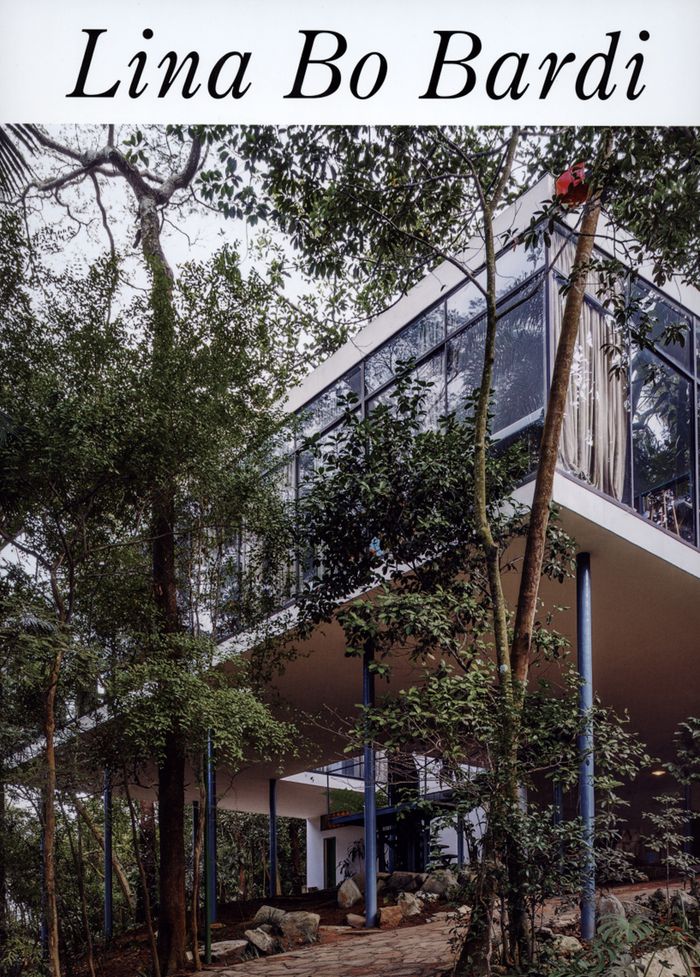
Built in the early 1950s in São Paulo, Lina Bo Bardi’s Casa de Vidro (Glass House) was the first real architectural project she completed after her arrival in Brazil. Built as a home for herself and her husband, it clearly demonstrates how architecture and design should keep a distance from individuals, society or community, and the natural environment – a stance that would come to underlie all of the Italian-born architect’s subsequent works. Photographed by master architectural photographer Yukio Futagawa, Casa de Vidro still appears as its designer intended, a prototype that responded to a new society, rising directly from the earth and embedded in the surrounding jungle.
GA residential masterpieces 22: Lina Bo Bardi, Casa De Vidro, São Paulo, 1950-51
Actions:
Price:
$60.95
(available to order)
Summary:
Built in the early 1950s in São Paulo, Lina Bo Bardi’s Casa de Vidro (Glass House) was the first real architectural project she completed after her arrival in Brazil. Built as a home for herself and her husband, it clearly demonstrates how architecture and design should keep a distance from individuals, society or community, and the natural environment – a stance that would come to underlie all of the Italian-born architect’s subsequent works. Photographed by master architectural photographer Yukio Futagawa, Casa de Vidro still appears as its designer intended, a prototype that responded to a new society, rising directly from the earth and embedded in the surrounding jungle.
Form:
journals and magazines
journals and magazines
Publication:
July 2016
July 2016
Subject:
Magazines
Magazines
Form:
books
books
Actions:
Price:
$79.95
(available to order)
Summary:
"Modern construction handbook" has become a modern classic of building construction literature. In the USA, it is used as a reference work for many architectural courses. With the chapters "Material", "Wall", "Roof", "Structure", "Environment" and "Applications" it systematically explores the subject and provides a clear and efficient structure to the reader. For the(...)
$79.95
(available to order)
Summary:
"Modern construction handbook" has become a modern classic of building construction literature. In the USA, it is used as a reference work for many architectural courses. With the chapters "Material", "Wall", "Roof", "Structure", "Environment" and "Applications" it systematically explores the subject and provides a clear and efficient structure to the reader. For the(...)
Title:
Modern construction handbook, 4th edition
Actions:
Price:
$79.95
(available to order)
Summary:
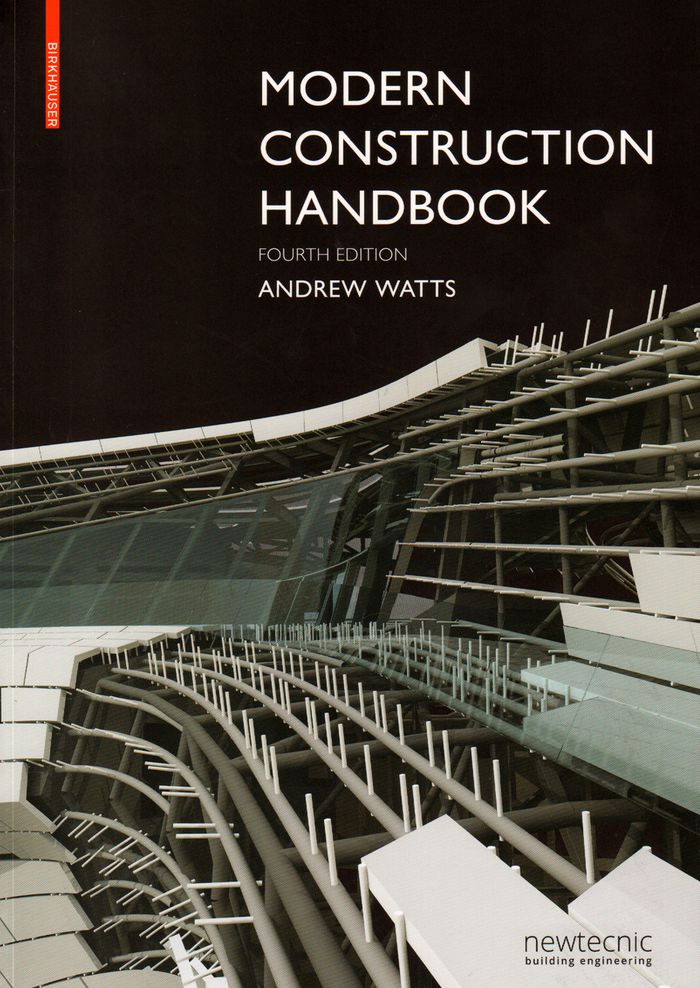
"Modern construction handbook" has become a modern classic of building construction literature. In the USA, it is used as a reference work for many architectural courses. With the chapters "Material", "Wall", "Roof", "Structure", "Environment" and "Applications" it systematically explores the subject and provides a clear and efficient structure to the reader. For the fourth edition, many of the 3D illustrations have been updated and, likewise, the technical information has been brought up to date. "Applications" showcases current developments, such as those relating to mass customization manufacture of components, and presents material and construction innovations. A compact and systematic handbook filled with information, produced for students and young architects alike.
Modern construction handbook, 4th edition
Actions:
Price:
$79.95
(available to order)
Summary:
"Modern construction handbook" has become a modern classic of building construction literature. In the USA, it is used as a reference work for many architectural courses. With the chapters "Material", "Wall", "Roof", "Structure", "Environment" and "Applications" it systematically explores the subject and provides a clear and efficient structure to the reader. For the fourth edition, many of the 3D illustrations have been updated and, likewise, the technical information has been brought up to date. "Applications" showcases current developments, such as those relating to mass customization manufacture of components, and presents material and construction innovations. A compact and systematic handbook filled with information, produced for students and young architects alike.
Form:
books
books
Publication:
May 2016
May 2016
Form:
journals and magazines
journals and magazines
Price:
$56.95
(available in store)
Summary:
This issue follows a tripartite trajectory regarding formal studies. On the one hand, it includes reflections on the way built form is produced, while, on the other, it gathers studies that examine how architectural form appears in discursive and communicative terms. Finally, it serves as an attractor for multiple inquiries into the different relations that can be(...)
$56.95
(available in store)
Summary:
This issue follows a tripartite trajectory regarding formal studies. On the one hand, it includes reflections on the way built form is produced, while, on the other, it gathers studies that examine how architectural form appears in discursive and communicative terms. Finally, it serves as an attractor for multiple inquiries into the different relations that can be(...)
Title:
Footprint 22: exploring architectural form, a configurative triad
Actions:
Price:
$56.95
(available in store)
Summary:
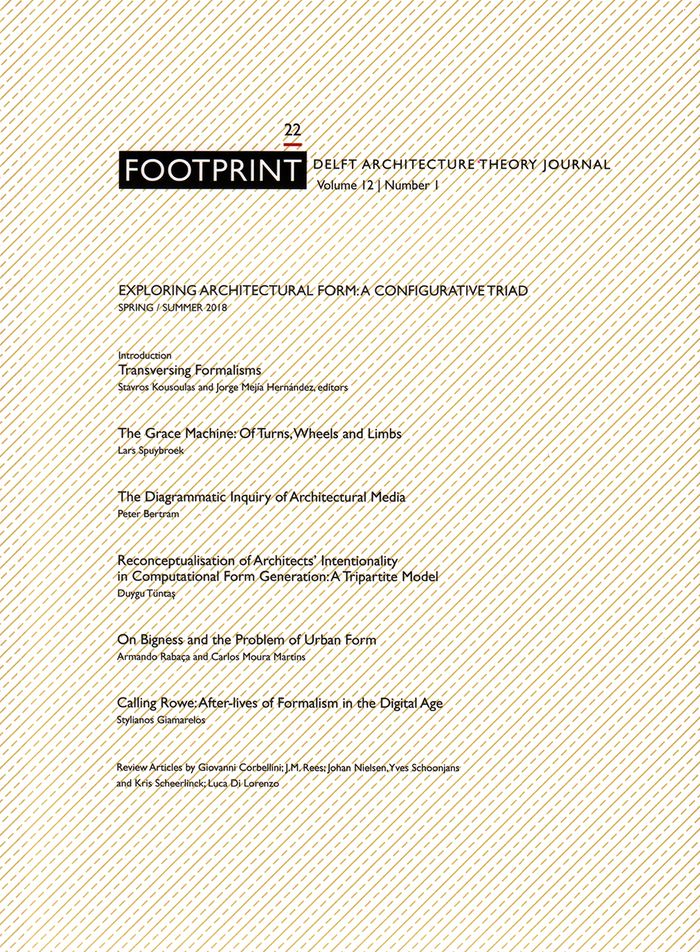
This issue follows a tripartite trajectory regarding formal studies. On the one hand, it includes reflections on the way built form is produced, while, on the other, it gathers studies that examine how architectural form appears in discursive and communicative terms. Finally, it serves as an attractor for multiple inquiries into the different relations that can be established between human actions, understood in the broadest possible terms, and the shape of the built environment. By interrelating these three approaches, the aim is to embrace and braid object-based approaches to form with approaches that examine the reciprocity of formal emergence and studies dealing with in-formation.
Footprint 22: exploring architectural form, a configurative triad
Actions:
Price:
$56.95
(available in store)
Summary:
This issue follows a tripartite trajectory regarding formal studies. On the one hand, it includes reflections on the way built form is produced, while, on the other, it gathers studies that examine how architectural form appears in discursive and communicative terms. Finally, it serves as an attractor for multiple inquiries into the different relations that can be established between human actions, understood in the broadest possible terms, and the shape of the built environment. By interrelating these three approaches, the aim is to embrace and braid object-based approaches to form with approaches that examine the reciprocity of formal emergence and studies dealing with in-formation.
Form:
journals and magazines
journals and magazines
Publication:
April 2018
April 2018
Subject:
Magazines
Magazines
Form:
books
books
Actions:
Price:
$69.95
(available to order)
Summary:
The product of an innovative research project realized in cooperation between three Swiss universities—École Polytechnique Fédérale de Lausanne’s School of Architecture, the College of Architecture and Technology in Fribourg, and the University of Fribourg—the smart living lab is a research and development center for the built environment of the future. This high-tech(...)
$69.95
(available to order)
Summary:
The product of an innovative research project realized in cooperation between three Swiss universities—École Polytechnique Fédérale de Lausanne’s School of Architecture, the College of Architecture and Technology in Fribourg, and the University of Fribourg—the smart living lab is a research and development center for the built environment of the future. This high-tech(...)
Title:
Thinking: visions for architectural design
Actions:
Price:
$69.95
(available to order)
Summary:
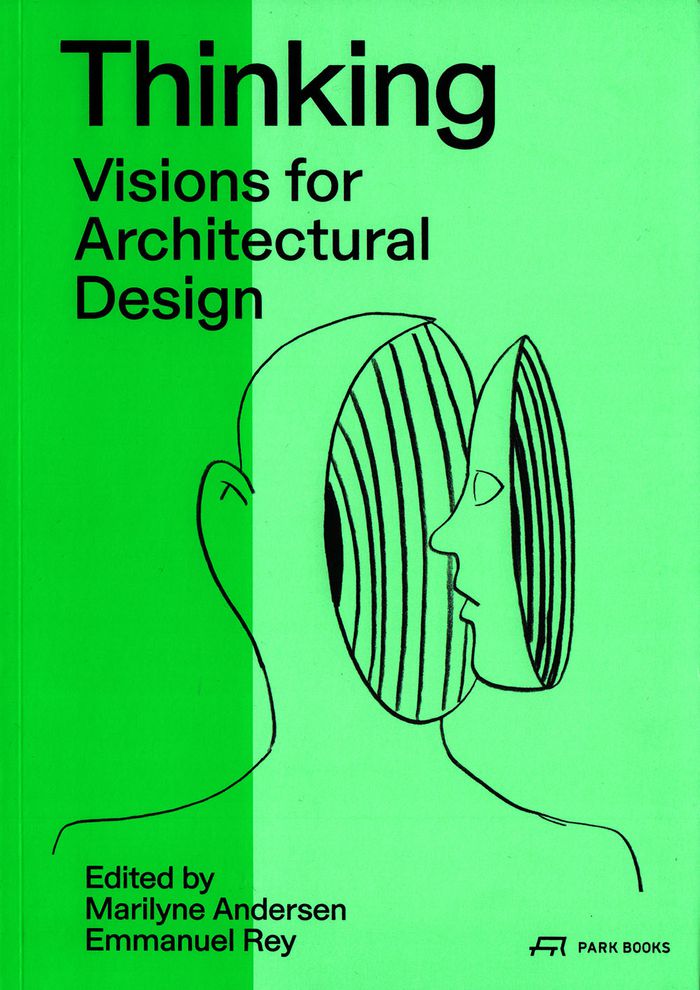
The product of an innovative research project realized in cooperation between three Swiss universities—École Polytechnique Fédérale de Lausanne’s School of Architecture, the College of Architecture and Technology in Fribourg, and the University of Fribourg—the smart living lab is a research and development center for the built environment of the future. This high-tech structure also serves as an emblem of the cooperative’s aim to translate academic research into actual buildings. A new series of books entitled ''Towards 2050'' will showcase the ambitious undertaking at various stages. The inaugural volume in the series, ''Thinking'' highlights preliminary research from the smart living lab and considers visions for sustainable buildings.
Thinking: visions for architectural design
Actions:
Price:
$69.95
(available to order)
Summary:
The product of an innovative research project realized in cooperation between three Swiss universities—École Polytechnique Fédérale de Lausanne’s School of Architecture, the College of Architecture and Technology in Fribourg, and the University of Fribourg—the smart living lab is a research and development center for the built environment of the future. This high-tech structure also serves as an emblem of the cooperative’s aim to translate academic research into actual buildings. A new series of books entitled ''Towards 2050'' will showcase the ambitious undertaking at various stages. The inaugural volume in the series, ''Thinking'' highlights preliminary research from the smart living lab and considers visions for sustainable buildings.
Form:
books
books
Publication:
July 2019
July 2019
Subject:
Contemporary Architecture
Contemporary Architecture
Form:
books
books
Price:
$74.00
(available to order)
Summary:
Winding its way southward through the Philadelphia communities of Chestnut Hill and Mount Airy, as well as the verdant rural countryside of Gwynedd, Whitemarsh, and Wyndmoor, the Wissahickon Creek flows through a region of both unsurpassed natural beauty and some of the nation’s most exquisite residential architecture. The marvelous landscape that attracted early(...)
$74.00
(available to order)
Summary:
Winding its way southward through the Philadelphia communities of Chestnut Hill and Mount Airy, as well as the verdant rural countryside of Gwynedd, Whitemarsh, and Wyndmoor, the Wissahickon Creek flows through a region of both unsurpassed natural beauty and some of the nation’s most exquisite residential architecture. The marvelous landscape that attracted early(...)
Subject:
Architecture since 1900, Europe
Architecture since 1900, Europe
Publication:
September 2008, New York
September 2008, New York
Title:
Houses of Philadelphia: Chestnut Hill and the Wissahickon Valley 1880-1930
Actions:
Price:
$74.00
(available to order)
Summary:
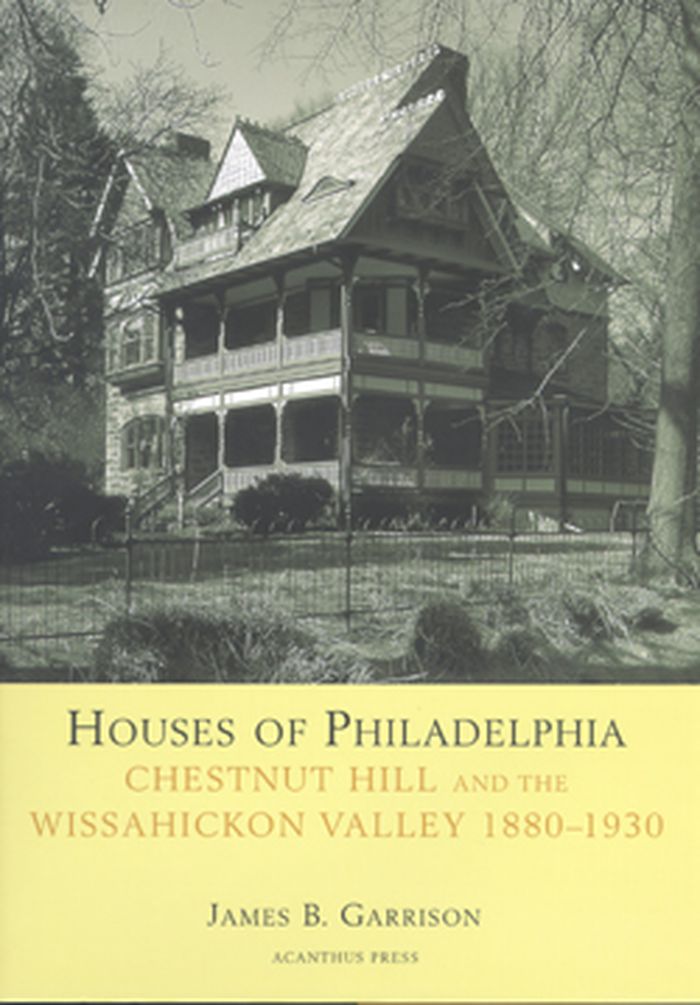
Winding its way southward through the Philadelphia communities of Chestnut Hill and Mount Airy, as well as the verdant rural countryside of Gwynedd, Whitemarsh, and Wyndmoor, the Wissahickon Creek flows through a region of both unsurpassed natural beauty and some of the nation’s most exquisite residential architecture. The marvelous landscape that attracted early travelers and settlers became the setting for glorious estates that celebrated the connection between the natural and the built environment. From the mid-19th through the mid-20th century, three generations of prominent regional and national architects designed houses that have endured as magnificent examples of their own time, and remain eminently livable homes to this day.
Houses of Philadelphia: Chestnut Hill and the Wissahickon Valley 1880-1930
Actions:
Price:
$74.00
(available to order)
Summary:
Winding its way southward through the Philadelphia communities of Chestnut Hill and Mount Airy, as well as the verdant rural countryside of Gwynedd, Whitemarsh, and Wyndmoor, the Wissahickon Creek flows through a region of both unsurpassed natural beauty and some of the nation’s most exquisite residential architecture. The marvelous landscape that attracted early travelers and settlers became the setting for glorious estates that celebrated the connection between the natural and the built environment. From the mid-19th through the mid-20th century, three generations of prominent regional and national architects designed houses that have endured as magnificent examples of their own time, and remain eminently livable homes to this day.
Form:
books
books
Publication:
September 2008, New York
September 2008, New York
Subject:
Architecture since 1900, Europe
Architecture since 1900, Europe
Form:
books
books
Title:
On architecture
On architecture
Actions:
Price:
$25.95
(available to order)
Summary:
In this publication, Fred Rush argues this is a consequence of neglecting the role of the body in architecture. Our encounter with a building is first and foremost a bodily one; buildings are lived-in, communal spaces and their construction reveals a lot about our relation to the environment as a whole. Drawing on examples from architects classic and contemporary such as(...)
$25.95
(available to order)
Summary:
In this publication, Fred Rush argues this is a consequence of neglecting the role of the body in architecture. Our encounter with a building is first and foremost a bodily one; buildings are lived-in, communal spaces and their construction reveals a lot about our relation to the environment as a whole. Drawing on examples from architects classic and contemporary such as(...)
Title:
On architecture
Actions:
Price:
$25.95
(available to order)
Summary:
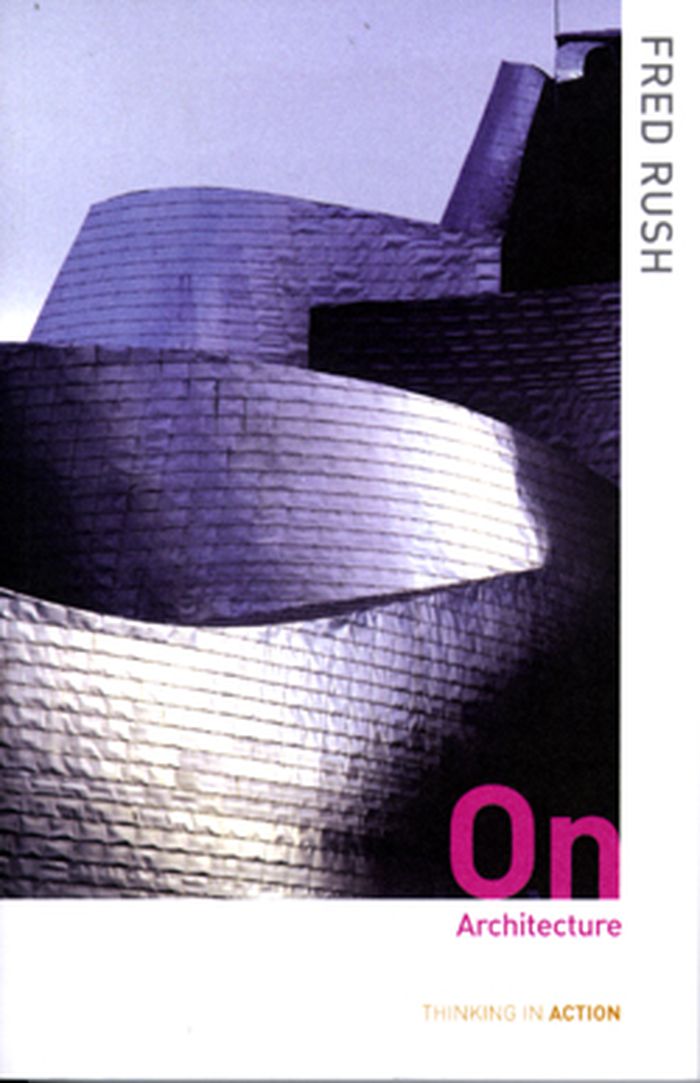
In this publication, Fred Rush argues this is a consequence of neglecting the role of the body in architecture. Our encounter with a building is first and foremost a bodily one; buildings are lived-in, communal spaces and their construction reveals a lot about our relation to the environment as a whole. Drawing on examples from architects classic and contemporary such as Le Corbusier and Frank Lloyd Wright, and exploring the significance of buildings in relation to film and music and philosophers such as Heidegger and Merleau-Ponty, Fred Rush argues that philosophical reflection on building can tell us something important about the human condition.
On architecture
Actions:
Price:
$25.95
(available to order)
Summary:
In this publication, Fred Rush argues this is a consequence of neglecting the role of the body in architecture. Our encounter with a building is first and foremost a bodily one; buildings are lived-in, communal spaces and their construction reveals a lot about our relation to the environment as a whole. Drawing on examples from architects classic and contemporary such as Le Corbusier and Frank Lloyd Wright, and exploring the significance of buildings in relation to film and music and philosophers such as Heidegger and Merleau-Ponty, Fred Rush argues that philosophical reflection on building can tell us something important about the human condition.
Form:
books
books
Publication:
July 2008, New York, London
July 2008, New York, London
Subject:
Architectural Theory
Architectural Theory


