


6653 Results
Form:
journals and magazines
journals and magazines
Title:
Texte zur kunst 121 : comedy
Texte zur kunst 121 : comedy
Actions:
Price:
$30.00
(available in store)
Summary:
The March issue of Texte zur Kunst, titled ''Comedy,'' investigates the comedic in art while also examining mass-media formats such as TV series and films. Comedy not only offers consolation and comfort by making the tragic seem comic; for the repressed, it also serves as a catalyst, addressing and thematizing repression through jokes, slapstick, or the grotesque.(...)
$30.00
(available in store)
Summary:
The March issue of Texte zur Kunst, titled ''Comedy,'' investigates the comedic in art while also examining mass-media formats such as TV series and films. Comedy not only offers consolation and comfort by making the tragic seem comic; for the repressed, it also serves as a catalyst, addressing and thematizing repression through jokes, slapstick, or the grotesque.(...)
Title:
Texte zur kunst 121 : comedy
Actions:
Price:
$30.00
(available in store)
Summary:
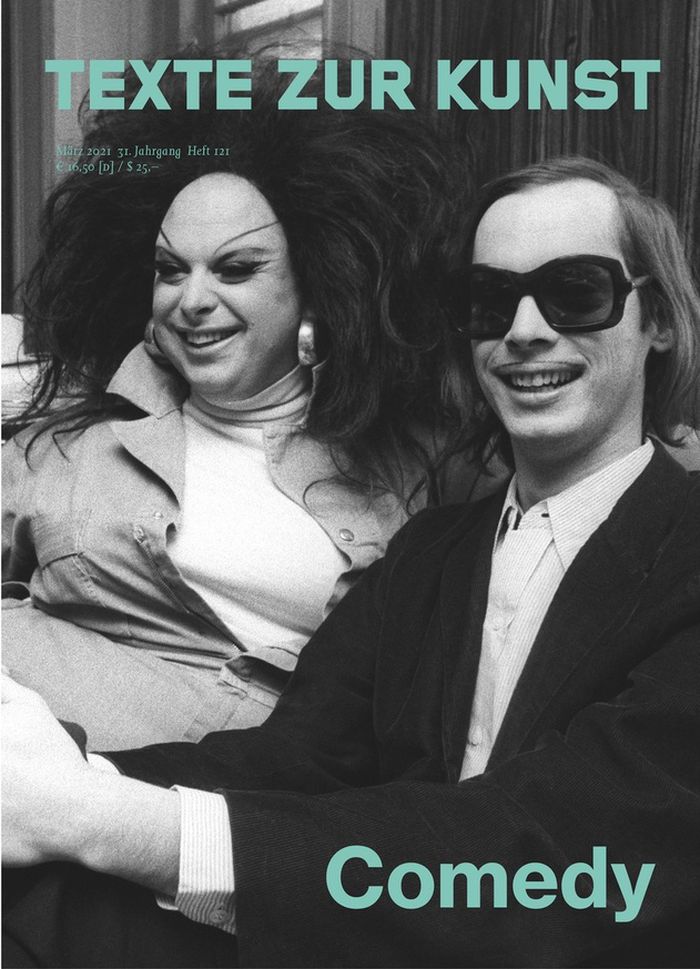
The March issue of Texte zur Kunst, titled ''Comedy,'' investigates the comedic in art while also examining mass-media formats such as TV series and films. Comedy not only offers consolation and comfort by making the tragic seem comic; for the repressed, it also serves as a catalyst, addressing and thematizing repression through jokes, slapstick, or the grotesque. However, at a time when audiences increasingly demand political commitment and authenticity from art, comedic speech, which is inherently disingenuous, has fallen into disrepute: ironically distanced rhetoric is accused of turning a blind eye to social inequality. Together with Bert Rebhandl, author and co-publisher of the film magazine cargo, the editors conceptualized an issue that examines the role of the joke in art, the psychoanalytic dimension of the comedic, and the limits of satire in the age of Donald Trump.
Texte zur kunst 121 : comedy
Actions:
Price:
$30.00
(available in store)
Summary:
The March issue of Texte zur Kunst, titled ''Comedy,'' investigates the comedic in art while also examining mass-media formats such as TV series and films. Comedy not only offers consolation and comfort by making the tragic seem comic; for the repressed, it also serves as a catalyst, addressing and thematizing repression through jokes, slapstick, or the grotesque. However, at a time when audiences increasingly demand political commitment and authenticity from art, comedic speech, which is inherently disingenuous, has fallen into disrepute: ironically distanced rhetoric is accused of turning a blind eye to social inequality. Together with Bert Rebhandl, author and co-publisher of the film magazine cargo, the editors conceptualized an issue that examines the role of the joke in art, the psychoanalytic dimension of the comedic, and the limits of satire in the age of Donald Trump.
Form:
journals and magazines
journals and magazines
Publication:
March 2021
March 2021
Subject:
Magazines
Magazines
Form:
books
books
Actions:
Price:
$21.95
(available to order)
Summary:
We live an age of nostalgia, incarnated by populist fantasies of "taking back control" and making nations "great again". In the long aftermath of the 2007-08 economic crisis, nostalgia has been established as the cultural zeitgeist of Western society. Populist fantasies of nostalgia represent a cry for help against the demise of the societal model of the postwar era,(...)
$21.95
(available to order)
Summary:
We live an age of nostalgia, incarnated by populist fantasies of "taking back control" and making nations "great again". In the long aftermath of the 2007-08 economic crisis, nostalgia has been established as the cultural zeitgeist of Western society. Populist fantasies of nostalgia represent a cry for help against the demise of the societal model of the postwar era,(...)
Title:
Zeitgeist nostalgia: On populism, work and the 'Good Life'
Actions:
Price:
$21.95
(available to order)
Summary:
We live an age of nostalgia, incarnated by populist fantasies of "taking back control" and making nations "great again". In the long aftermath of the 2007-08 economic crisis, nostalgia has been established as the cultural zeitgeist of Western society. Populist fantasies of nostalgia represent a cry for help against the demise of the societal model of the postwar era, based on stable employment and mass consumption. The promise of an impossible return to the "good life" of the 20th century, Gandini contends, particularly appeals to the older generations, who are incapable of making sense of the evolution of Western societies after decades of globalization and neoliberal policies. The younger generations, in the meantime, are instead trying to build a new "good life" based on another form of return, this time to old practices of craft production and consumption.
Zeitgeist nostalgia: On populism, work and the 'Good Life'
Actions:
Price:
$21.95
(available to order)
Summary:
We live an age of nostalgia, incarnated by populist fantasies of "taking back control" and making nations "great again". In the long aftermath of the 2007-08 economic crisis, nostalgia has been established as the cultural zeitgeist of Western society. Populist fantasies of nostalgia represent a cry for help against the demise of the societal model of the postwar era, based on stable employment and mass consumption. The promise of an impossible return to the "good life" of the 20th century, Gandini contends, particularly appeals to the older generations, who are incapable of making sense of the evolution of Western societies after decades of globalization and neoliberal policies. The younger generations, in the meantime, are instead trying to build a new "good life" based on another form of return, this time to old practices of craft production and consumption.
Form:
books
books
Publication:
January 2021
January 2021
Subject:
Social
Social
Form:
books
books
Title:
New grammar of ornament
New grammar of ornament
Actions:
Price:
$61.00
(available to order)
Summary:
Ornaments are omnipresent: they can be found on buildings, fabrics, jewelry, tiles, ceramics and wallpaper. Scorned at the outset of the modern age, ornament has long since returned to architecture and influences design drafts as much as tattoo motifs. In ''New grammar of ornament,'' German architect and designer Thomas Weil compares current ornamental objects with the(...)
$61.00
(available to order)
Summary:
Ornaments are omnipresent: they can be found on buildings, fabrics, jewelry, tiles, ceramics and wallpaper. Scorned at the outset of the modern age, ornament has long since returned to architecture and influences design drafts as much as tattoo motifs. In ''New grammar of ornament,'' German architect and designer Thomas Weil compares current ornamental objects with the(...)
Title:
New grammar of ornament
Actions:
Price:
$61.00
(available to order)
Summary:
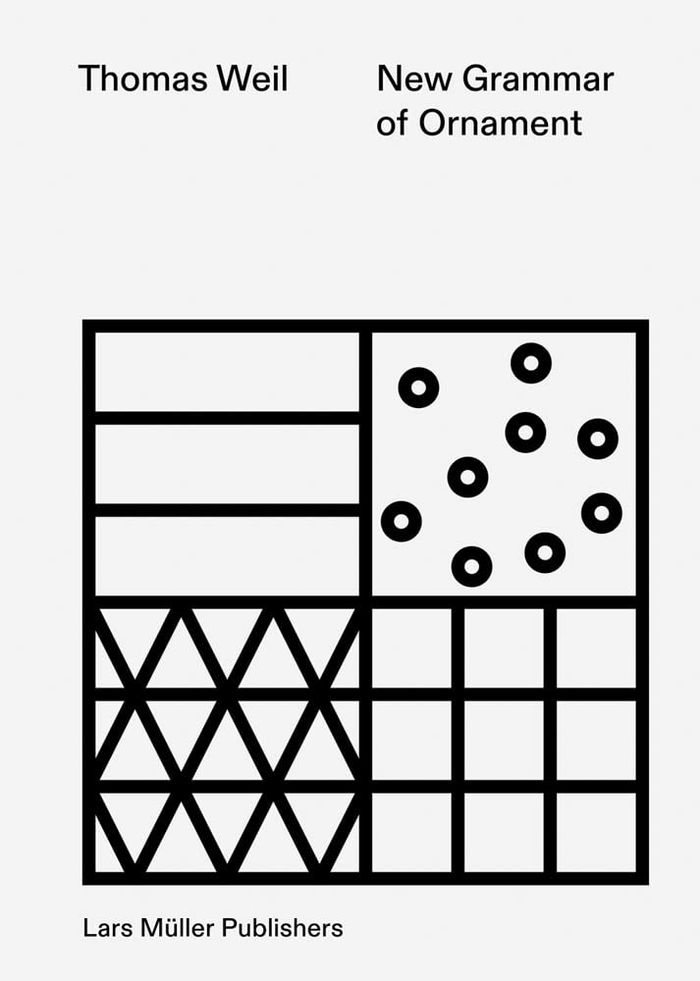
Ornaments are omnipresent: they can be found on buildings, fabrics, jewelry, tiles, ceramics and wallpaper. Scorned at the outset of the modern age, ornament has long since returned to architecture and influences design drafts as much as tattoo motifs. In ''New grammar of ornament,'' German architect and designer Thomas Weil compares current ornamental objects with the results of archaeological research on ornamental artifacts, and concludes that there is an anthropological constant. From the recurring arrangements of stripes, rectangles, triangles and dots and the frequency of the forms of floral ornaments used, he derives a new 'grammar of ornament.' More than 160 years after Owen Jones' publication of that name, ''New grammar of ornament'' is a new reference work. It categorizes the variety of ornamental forms used worldwide and places them in a major art and cultural-historical context.
New grammar of ornament
Actions:
Price:
$61.00
(available to order)
Summary:
Ornaments are omnipresent: they can be found on buildings, fabrics, jewelry, tiles, ceramics and wallpaper. Scorned at the outset of the modern age, ornament has long since returned to architecture and influences design drafts as much as tattoo motifs. In ''New grammar of ornament,'' German architect and designer Thomas Weil compares current ornamental objects with the results of archaeological research on ornamental artifacts, and concludes that there is an anthropological constant. From the recurring arrangements of stripes, rectangles, triangles and dots and the frequency of the forms of floral ornaments used, he derives a new 'grammar of ornament.' More than 160 years after Owen Jones' publication of that name, ''New grammar of ornament'' is a new reference work. It categorizes the variety of ornamental forms used worldwide and places them in a major art and cultural-historical context.
Form:
books
books
Publication:
December 2021
December 2021
Subject:
Design Theory
Design Theory
Form:
books
books
Actions:
Price:
$95.00
(available to order)
Summary:
Our time is an urban age. More people live in cities than ever before, cities are growing larger and denser than ever, and urbanity has reached unprecedented levels of complexity. This boom in urbanization began in earnest around the turn of the twentieth century when technological advancement and the extraction of seemingly endless supplies of natural resources propelled(...)
$95.00
(available to order)
Summary:
Our time is an urban age. More people live in cities than ever before, cities are growing larger and denser than ever, and urbanity has reached unprecedented levels of complexity. This boom in urbanization began in earnest around the turn of the twentieth century when technological advancement and the extraction of seemingly endless supplies of natural resources propelled(...)
Title:
Urban design in the 20th century
Actions:
Price:
$95.00
(available to order)
Summary:
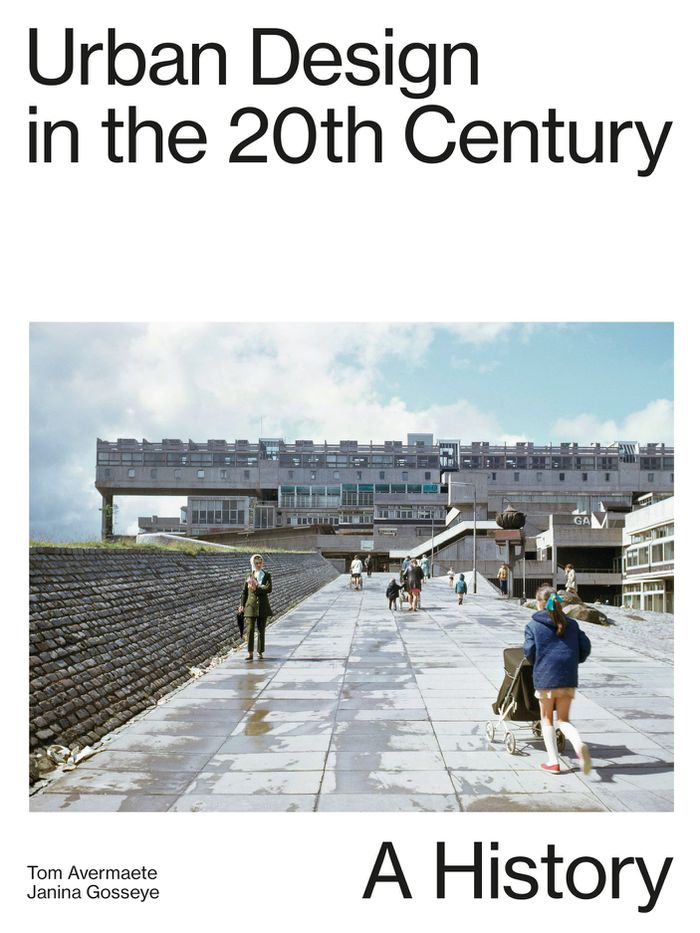
Our time is an urban age. More people live in cities than ever before, cities are growing larger and denser than ever, and urbanity has reached unprecedented levels of complexity. This boom in urbanization began in earnest around the turn of the twentieth century when technological advancement and the extraction of seemingly endless supplies of natural resources propelled urban development. As urban populations steadily increased, architects and planners were not only faced with designing housing and public space but also with responding to emerging societal challenges such as political tensions, reconstruction, decolonization, economic crises, growing climatic concerns, and cultural shifts. Through the analysis of more than one hundred richly illustrated urban design projects and initiatives, this book provides a comprehensive history of how these challenges have fomented new attitudes and approaches in the discipline of urban design.
Urban design in the 20th century
Actions:
Price:
$95.00
(available to order)
Summary:
Our time is an urban age. More people live in cities than ever before, cities are growing larger and denser than ever, and urbanity has reached unprecedented levels of complexity. This boom in urbanization began in earnest around the turn of the twentieth century when technological advancement and the extraction of seemingly endless supplies of natural resources propelled urban development. As urban populations steadily increased, architects and planners were not only faced with designing housing and public space but also with responding to emerging societal challenges such as political tensions, reconstruction, decolonization, economic crises, growing climatic concerns, and cultural shifts. Through the analysis of more than one hundred richly illustrated urban design projects and initiatives, this book provides a comprehensive history of how these challenges have fomented new attitudes and approaches in the discipline of urban design.
Form:
books
books
Publication:
March 2022
March 2022
Subject:
Urban Theory
Urban Theory
Form:
books
books
Price:
$46.50
(available to order)
Summary:
Julia Morgan was a lifelong trailblazer. She was the first woman admitted to study architecture at the École des Beaux-Arts in Paris and the first licensed to practice architecture in California. Over the first half of the 20th century, she left an indelible mark on the American West. Of her remarkable 700 creations, the most iconic is Hearst Castle. Morgan spent thirty(...)
$46.50
(available to order)
Summary:
Julia Morgan was a lifelong trailblazer. She was the first woman admitted to study architecture at the École des Beaux-Arts in Paris and the first licensed to practice architecture in California. Over the first half of the 20th century, she left an indelible mark on the American West. Of her remarkable 700 creations, the most iconic is Hearst Castle. Morgan spent thirty(...)
Publication:
February 2022
February 2022
Title:
Julia Morgan: An intimate biography of the trailblazing architect
Actions:
Price:
$46.50
(available to order)
Summary:
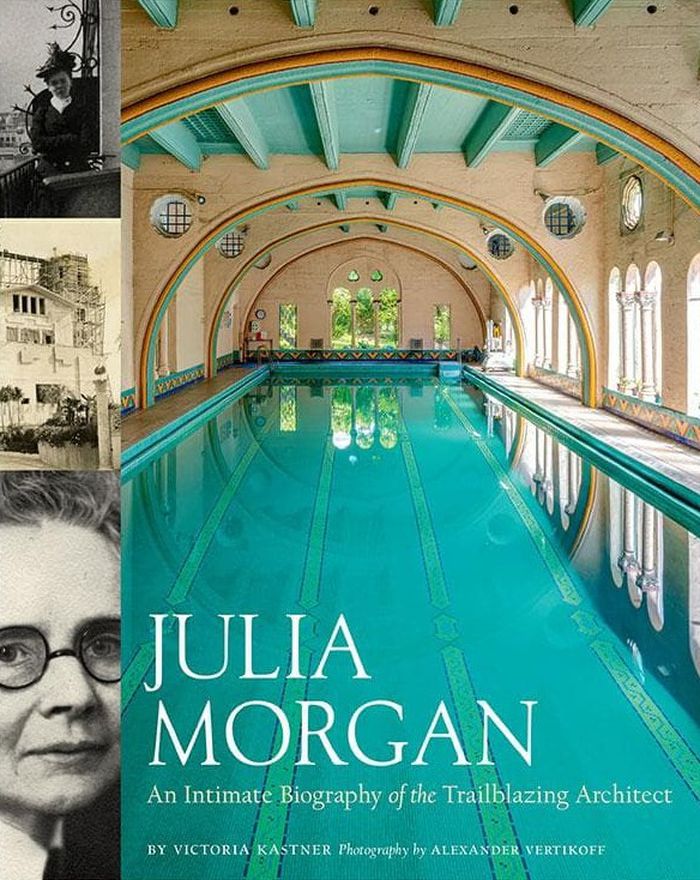
Julia Morgan was a lifelong trailblazer. She was the first woman admitted to study architecture at the École des Beaux-Arts in Paris and the first licensed to practice architecture in California. Over the first half of the 20th century, she left an indelible mark on the American West. Of her remarkable 700 creations, the most iconic is Hearst Castle. Morgan spent thirty years constructing this opulent estate on the California coast for the newspaper magnate William Randolph Hearst—forging a lifelong friendship and creative partnership with him. Together, they built a spectacular and unequalled residence that once hosted the biggest stars of Hollywood's golden age, and that now welcomes hundreds of thousands of visitors each year. This compelling biography draws on interviews, letters, and Morgan's diaries, including never-before-seen reflections on faith, art, and her life experiences.
Julia Morgan: An intimate biography of the trailblazing architect
Actions:
Price:
$46.50
(available to order)
Summary:
Julia Morgan was a lifelong trailblazer. She was the first woman admitted to study architecture at the École des Beaux-Arts in Paris and the first licensed to practice architecture in California. Over the first half of the 20th century, she left an indelible mark on the American West. Of her remarkable 700 creations, the most iconic is Hearst Castle. Morgan spent thirty years constructing this opulent estate on the California coast for the newspaper magnate William Randolph Hearst—forging a lifelong friendship and creative partnership with him. Together, they built a spectacular and unequalled residence that once hosted the biggest stars of Hollywood's golden age, and that now welcomes hundreds of thousands of visitors each year. This compelling biography draws on interviews, letters, and Morgan's diaries, including never-before-seen reflections on faith, art, and her life experiences.
Form:
books
books
Publication:
February 2022
February 2022
Form:
books
books
Actions:
Price:
$56.00
(available to order)
Summary:
This publication explores a series of urgent questions addressing architecture’s role in the welfare and everyday life of citizens, from the interdisciplinary perspectives of architecture, art history and anthropology. With Denmark as a case, it examines how the spatiality of the welfare system has transformed, since the end of the so-called “golden age of the welfare(...)
$56.00
(available to order)
Summary:
This publication explores a series of urgent questions addressing architecture’s role in the welfare and everyday life of citizens, from the interdisciplinary perspectives of architecture, art history and anthropology. With Denmark as a case, it examines how the spatiality of the welfare system has transformed, since the end of the so-called “golden age of the welfare(...)
Subject:
Architectural Theory
Architectural Theory
Publication:
September 2022
September 2022
Title:
Architectures of dismantling and restructuring: Spaces of Danish welfare, 1970-present
Actions:
Price:
$56.00
(available to order)
Summary:
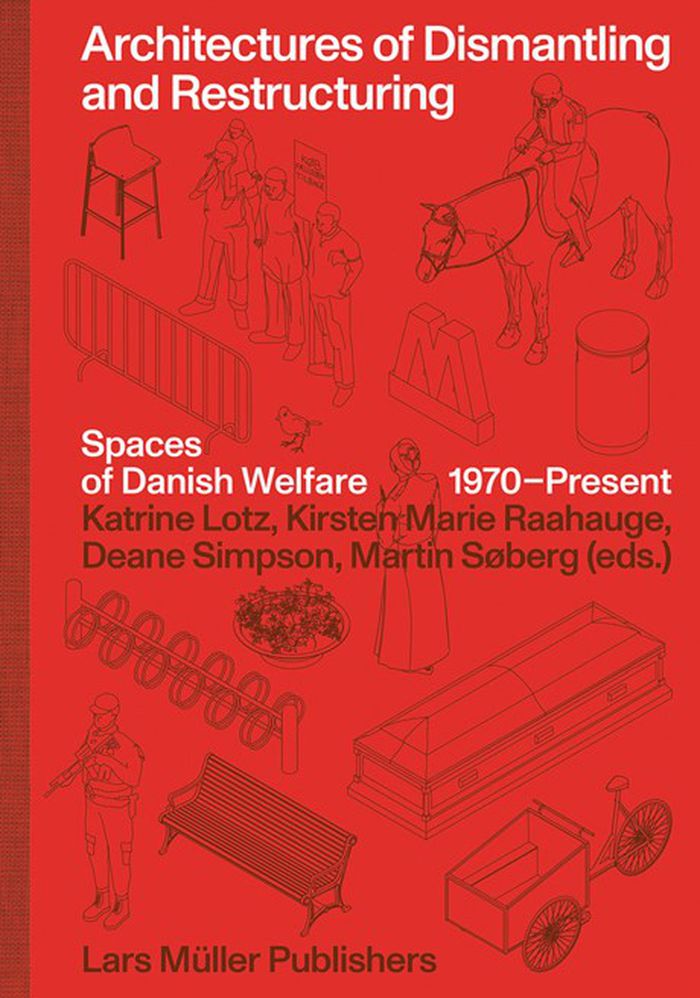
This publication explores a series of urgent questions addressing architecture’s role in the welfare and everyday life of citizens, from the interdisciplinary perspectives of architecture, art history and anthropology. With Denmark as a case, it examines how the spatiality of the welfare system has transformed, since the end of the so-called “golden age of the welfare state” in the early 1970s until today. Rather than unfolding a singular narrative of loss and nostalgia associated with welfare dismantlement – or one of triumphant humanization and restructuring of modernist planned environments – it describes shifting spatial materializations of welfare and the “good life” at the intersection of these two tendencies, under the influence of a Danish version of the neoliberal turn and other important societal transformations. A rich analytical sequence of drawn visualization supplements the book’s textual and photographic descriptions of welfare space transformation.
Architectures of dismantling and restructuring: Spaces of Danish welfare, 1970-present
Actions:
Price:
$56.00
(available to order)
Summary:
This publication explores a series of urgent questions addressing architecture’s role in the welfare and everyday life of citizens, from the interdisciplinary perspectives of architecture, art history and anthropology. With Denmark as a case, it examines how the spatiality of the welfare system has transformed, since the end of the so-called “golden age of the welfare state” in the early 1970s until today. Rather than unfolding a singular narrative of loss and nostalgia associated with welfare dismantlement – or one of triumphant humanization and restructuring of modernist planned environments – it describes shifting spatial materializations of welfare and the “good life” at the intersection of these two tendencies, under the influence of a Danish version of the neoliberal turn and other important societal transformations. A rich analytical sequence of drawn visualization supplements the book’s textual and photographic descriptions of welfare space transformation.
Form:
books
books
Publication:
September 2022
September 2022
Subject:
Architectural Theory
Architectural Theory
Form:
books
books

Title:
The story of architecture
The story of architecture
Actions:
Price:
$54.95
(available to order)
Summary:
In this sweeping history, from the Stone Age to the present day, Witold Rybczynski shows how architectural ideals have been affected by technological, economic, and social changes—and by changes in taste. The host of examples ranges from places of worship such as Hagia Sophia and Brunelleschi’s Duomo to living spaces such as the Katsura Imperial Villa and the Alhambra,(...)
$54.95
(available to order)
Summary:
In this sweeping history, from the Stone Age to the present day, Witold Rybczynski shows how architectural ideals have been affected by technological, economic, and social changes—and by changes in taste. The host of examples ranges from places of worship such as Hagia Sophia and Brunelleschi’s Duomo to living spaces such as the Katsura Imperial Villa and the Alhambra,(...)
Title:
The story of architecture
Actions:
Price:
$54.95
(available to order)
Summary:
In this sweeping history, from the Stone Age to the present day, Witold Rybczynski shows how architectural ideals have been affected by technological, economic, and social changes—and by changes in taste. The host of examples ranges from places of worship such as Hagia Sophia and Brunelleschi’s Duomo to living spaces such as the Katsura Imperial Villa and the Alhambra, national icons such as the Lincoln Memorial and the Sydney Opera House, and skyscrapers such as the Seagram Building and Beijing’s CCTV headquarters. Rybczynski’s narrative emphasizes the ways that buildings across time and space are united by the human desire for order, meaning, and beauty.This is the story of architecture’s physical manifestation of the universal aspiration to celebrate, honor, and commemorate, and an exploration of the ways that each building is a unique product of patrons, architects, and builders.
The story of architecture
Actions:
Price:
$54.95
(available to order)
Summary:
In this sweeping history, from the Stone Age to the present day, Witold Rybczynski shows how architectural ideals have been affected by technological, economic, and social changes—and by changes in taste. The host of examples ranges from places of worship such as Hagia Sophia and Brunelleschi’s Duomo to living spaces such as the Katsura Imperial Villa and the Alhambra, national icons such as the Lincoln Memorial and the Sydney Opera House, and skyscrapers such as the Seagram Building and Beijing’s CCTV headquarters. Rybczynski’s narrative emphasizes the ways that buildings across time and space are united by the human desire for order, meaning, and beauty.This is the story of architecture’s physical manifestation of the universal aspiration to celebrate, honor, and commemorate, and an exploration of the ways that each building is a unique product of patrons, architects, and builders.
Form:
books
books
Publication:
October 2022
October 2022
Subject:
History since 1900, Reference Books
History since 1900, Reference Books
Form:
books
books
Actions:
Price:
$63.00
(available in store)
Summary:
Homosexuality is still a taboo subject in architectural history. When historical architectural personalities have lived outside the heterosexual norm, their private lives are readily shrouded in obscurity. As long as penal laws endured, social existence was constantly threatened, and hiding was a necessity. Defensive strategies were needed to protect themselves. To track(...)
$63.00
(available in store)
Summary:
Homosexuality is still a taboo subject in architectural history. When historical architectural personalities have lived outside the heterosexual norm, their private lives are readily shrouded in obscurity. As long as penal laws endured, social existence was constantly threatened, and hiding was a necessity. Defensive strategies were needed to protect themselves. To track(...)
Title:
Gay architects: Silent biographies from 18th to 20th century
Actions:
Price:
$63.00
(available in store)
Summary:
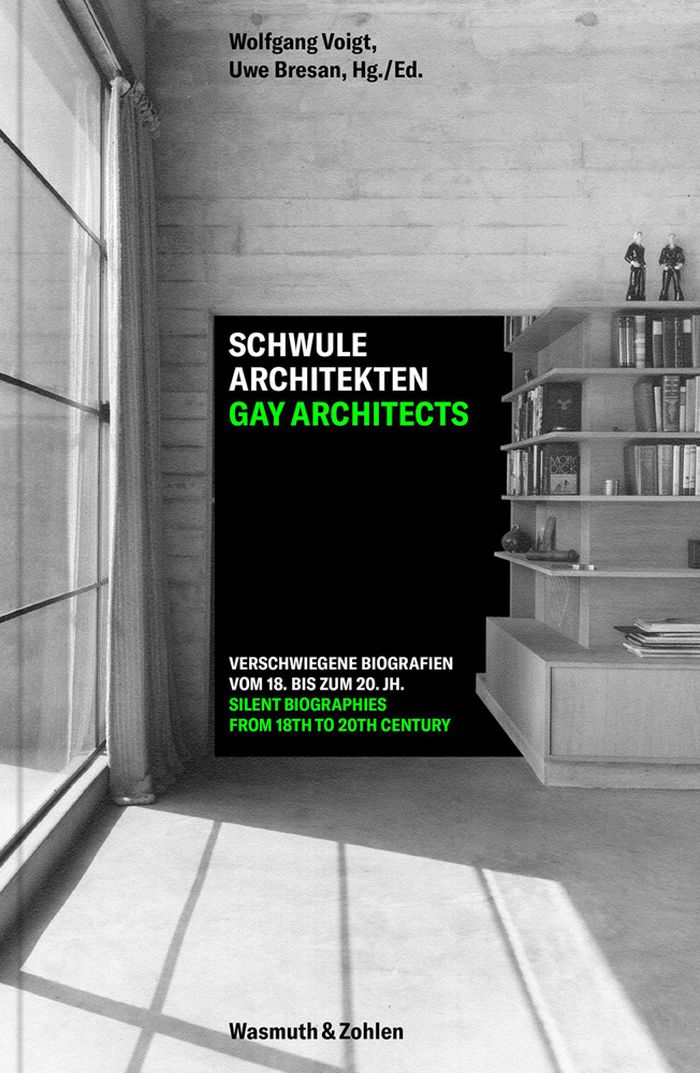
Homosexuality is still a taboo subject in architectural history. When historical architectural personalities have lived outside the heterosexual norm, their private lives are readily shrouded in obscurity. As long as penal laws endured, social existence was constantly threatened, and hiding was a necessity. Defensive strategies were needed to protect themselves. To track down these outsiders of the past, historical sources must be read queerly. This volume brings together 35 portraits of gay architects from the Baroque era to the modern age in North America, Europe and Palestine, presenting surprising biographies, admirable houses and, not infrequently, intelligently designed refuges with which the protagonists protected their private lives. Featured architects include: Stanford White, Ralph Adams Cram, Bertram Grosvenor Goodhue, Bruce Goff, Charles Moor, Lionel Pries, Barry Dierks, William Alexander Levy, Paul Rudolph, Horace Gifford, Luis Barragán, Geoffrey Bawa, Horace Walpole and more.
Gay architects: Silent biographies from 18th to 20th century
Actions:
Price:
$63.00
(available in store)
Summary:
Homosexuality is still a taboo subject in architectural history. When historical architectural personalities have lived outside the heterosexual norm, their private lives are readily shrouded in obscurity. As long as penal laws endured, social existence was constantly threatened, and hiding was a necessity. Defensive strategies were needed to protect themselves. To track down these outsiders of the past, historical sources must be read queerly. This volume brings together 35 portraits of gay architects from the Baroque era to the modern age in North America, Europe and Palestine, presenting surprising biographies, admirable houses and, not infrequently, intelligently designed refuges with which the protagonists protected their private lives. Featured architects include: Stanford White, Ralph Adams Cram, Bertram Grosvenor Goodhue, Bruce Goff, Charles Moor, Lionel Pries, Barry Dierks, William Alexander Levy, Paul Rudolph, Horace Gifford, Luis Barragán, Geoffrey Bawa, Horace Walpole and more.
Form:
books
books
Publication:
March 2023
March 2023
Subject:
Architectural Theory
Architectural Theory
Form:
books
books
Actions:
Price:
$21.00
(available to order)
Summary:
Bitterfeld’s county museum, Kreismuseum Bitterfeld, contains a black box with herbaria dating from 1931. This collection, compiled by botanist Hans Weber, is an inventory of the flora gathered in the nearby Goitzsche region, a forested area of floodplain. It was not long before the plant life collected here was forced to give way to society’s demand for brown coal. Taking(...)
$21.00
(available to order)
Summary:
Bitterfeld’s county museum, Kreismuseum Bitterfeld, contains a black box with herbaria dating from 1931. This collection, compiled by botanist Hans Weber, is an inventory of the flora gathered in the nearby Goitzsche region, a forested area of floodplain. It was not long before the plant life collected here was forced to give way to society’s demand for brown coal. Taking(...)
Title:
Vegetation under power: heat, breath, growth
Actions:
Price:
$21.00
(available to order)
Summary:
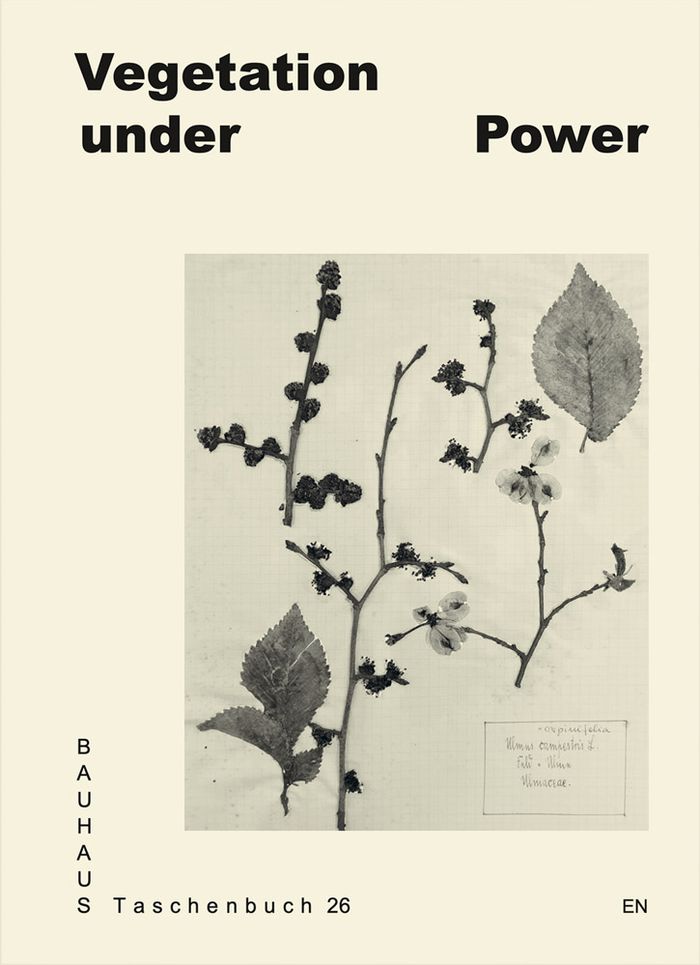
Bitterfeld’s county museum, Kreismuseum Bitterfeld, contains a black box with herbaria dating from 1931. This collection, compiled by botanist Hans Weber, is an inventory of the flora gathered in the nearby Goitzsche region, a forested area of floodplain. It was not long before the plant life collected here was forced to give way to society’s demand for brown coal. Taking the herbaria as its starting point, this book interweaves stories about Bitterfeld’s energy-defined landscape with the modern legacy of the Bauhaus. Using archival documents, physical interventions, and field studies, the book proposes a new reading of the Bauhaus’s modernist motto ”Light! Air! Sun!“ recast as ”Heat, Breath, Growth“. The book thus points up the downside of resource extraction and environmental destruction in the ”clean modern age“, while also identifying movements in search of a nature-based culture characterized by care and stewardship.
Vegetation under power: heat, breath, growth
Actions:
Price:
$21.00
(available to order)
Summary:
Bitterfeld’s county museum, Kreismuseum Bitterfeld, contains a black box with herbaria dating from 1931. This collection, compiled by botanist Hans Weber, is an inventory of the flora gathered in the nearby Goitzsche region, a forested area of floodplain. It was not long before the plant life collected here was forced to give way to society’s demand for brown coal. Taking the herbaria as its starting point, this book interweaves stories about Bitterfeld’s energy-defined landscape with the modern legacy of the Bauhaus. Using archival documents, physical interventions, and field studies, the book proposes a new reading of the Bauhaus’s modernist motto ”Light! Air! Sun!“ recast as ”Heat, Breath, Growth“. The book thus points up the downside of resource extraction and environmental destruction in the ”clean modern age“, while also identifying movements in search of a nature-based culture characterized by care and stewardship.
Form:
books
books
Publication:
October 2022
October 2022
Subject:
Contemporary Architecture
Contemporary Architecture
Form:
books
books
Actions:
Price:
$46.95
(available to order)
Summary:
From the dawn of European civilization to the twentieth century, the automaton—better known today as the robot—has captured the Western imagination and provided a vital lens into the nature of humanity. Historian Minsoo Kang argues that to properly understand the human-as-machine and the human-as-fundamentally-different-from-machine, we must trace the origins of these(...)
$46.95
(available to order)
Summary:
From the dawn of European civilization to the twentieth century, the automaton—better known today as the robot—has captured the Western imagination and provided a vital lens into the nature of humanity. Historian Minsoo Kang argues that to properly understand the human-as-machine and the human-as-fundamentally-different-from-machine, we must trace the origins of these(...)
Title:
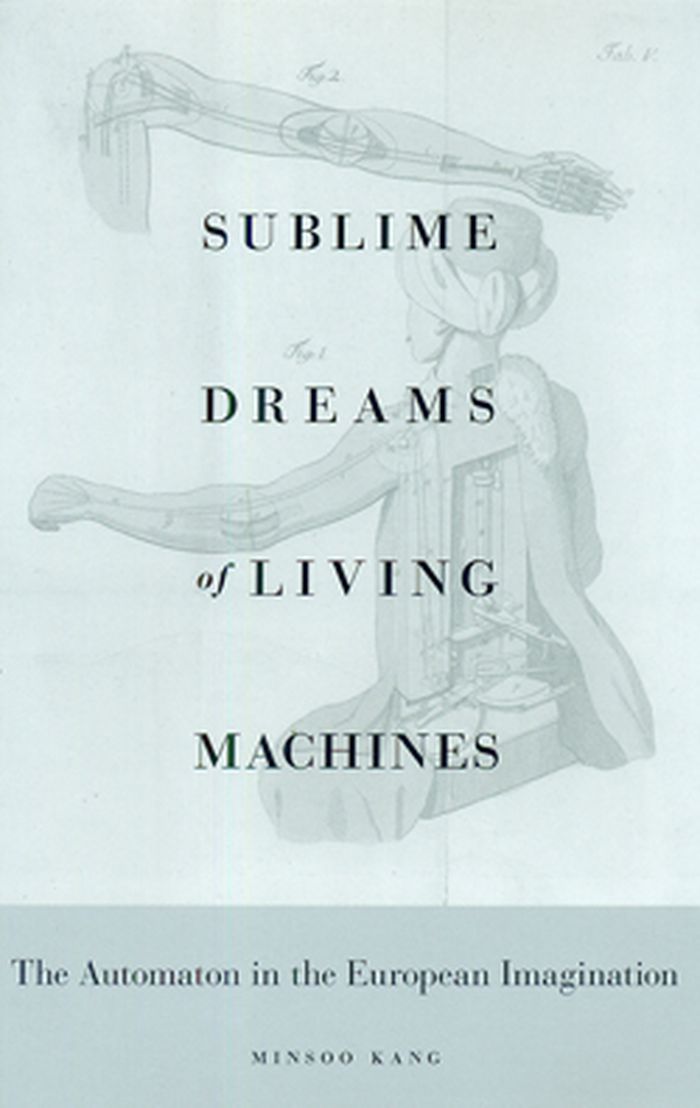
Sublime dreams of living machines: The automaton in the European imagination
Actions:
Price:
$46.95
(available to order)
Summary:
From the dawn of European civilization to the twentieth century, the automaton—better known today as the robot—has captured the Western imagination and provided a vital lens into the nature of humanity. Historian Minsoo Kang argues that to properly understand the human-as-machine and the human-as-fundamentally-different-from-machine, we must trace the origins of these ideas and examine how they were transformed by intellectual, cultural, and artistic appearances of the automaton throughout the history of the West. Kang tracks the first appearance of the automaton in ancient myths through the medieval and Renaissance periods, marks the proliferation of the automaton as a central intellectual concept in the Scientific Revolution and the subsequent backlash during the Enlightenment, and details appearances in Romantic literature and the introduction of the living machine in the Industrial Age.
Sublime dreams of living machines: The automaton in the European imagination
Actions:
Price:
$46.95
(available to order)
Summary:
From the dawn of European civilization to the twentieth century, the automaton—better known today as the robot—has captured the Western imagination and provided a vital lens into the nature of humanity. Historian Minsoo Kang argues that to properly understand the human-as-machine and the human-as-fundamentally-different-from-machine, we must trace the origins of these ideas and examine how they were transformed by intellectual, cultural, and artistic appearances of the automaton throughout the history of the West. Kang tracks the first appearance of the automaton in ancient myths through the medieval and Renaissance periods, marks the proliferation of the automaton as a central intellectual concept in the Scientific Revolution and the subsequent backlash during the Enlightenment, and details appearances in Romantic literature and the introduction of the living machine in the Industrial Age.
Form:
books
books
Publication:
February 2011
February 2011
Subject:
Critical Theory
Critical Theory


