


633 Results
Form:
books
books
Actions:
Price:
$29.95
(available to order)
Summary:
Moving the critical debate about photography away from its current Euro-American centre of gravity, "Photography’s Other Histories" breaks with the notion that photographic history is best seen as the explosion of a Western technology advanced by the work of singular individuals. This collection presents a different account, describing photography as a globally(...)
$29.95
(available to order)
Summary:
Moving the critical debate about photography away from its current Euro-American centre of gravity, "Photography’s Other Histories" breaks with the notion that photographic history is best seen as the explosion of a Western technology advanced by the work of singular individuals. This collection presents a different account, describing photography as a globally(...)
Subject:
Theory of Photography
Theory of Photography
Publication:
March 2003, Durham, N.C.
March 2003, Durham, N.C.
Title:
Photography's other histories
Actions:
Price:
$29.95
(available to order)
Summary:
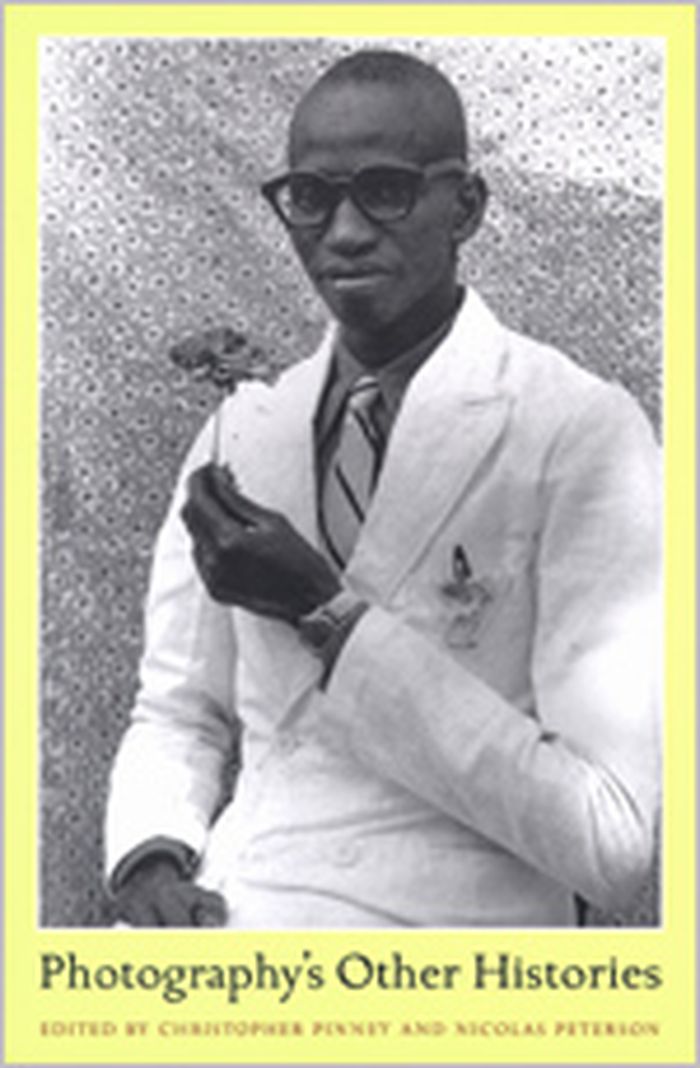
Moving the critical debate about photography away from its current Euro-American centre of gravity, "Photography’s Other Histories" breaks with the notion that photographic history is best seen as the explosion of a Western technology advanced by the work of singular individuals. This collection presents a different account, describing photography as a globally disseminated and locally appropriated medium. Essays firmly grounded in photographic practice — in the actual making of pictures — suggest the extraordinary diversity of nonwestern photography "Photography’s Other Histories" explores from a variety of geographic, cultural, and historic perspectives the role of photography in raising historical consciousness. It includes two first-person pieces by indigenous Australians and one by a Seminole/Muskogee/Diné artist. Some of the essays analyze representations of colonial subjects—from the limited ways Westerners have depicted Navajos to Japanese photos recording the occupation of Manchuria and from the changing nature of the "contract" between Aboriginal subjects and photographers to the surprising range of cultural influences evident in the photographs colonialist F. R. Barton took in New Guinea in the late 1800s and early 1900s. Focusing on photographic self-fashioning and the development of vernacular modernisms, other essays highlight the visionary quality of much popular photography. Case studies centered in early-twentieth-century Peru and contemporary India, Kenya, and Nigeria chronicle the diverse practices that have flourished in postcolonial societies. "Photography’s Other Histories" recasts popular photography around the world, as not simply reproducing culture but creating it.
Photography's other histories
Actions:
Price:
$29.95
(available to order)
Summary:
Moving the critical debate about photography away from its current Euro-American centre of gravity, "Photography’s Other Histories" breaks with the notion that photographic history is best seen as the explosion of a Western technology advanced by the work of singular individuals. This collection presents a different account, describing photography as a globally disseminated and locally appropriated medium. Essays firmly grounded in photographic practice — in the actual making of pictures — suggest the extraordinary diversity of nonwestern photography "Photography’s Other Histories" explores from a variety of geographic, cultural, and historic perspectives the role of photography in raising historical consciousness. It includes two first-person pieces by indigenous Australians and one by a Seminole/Muskogee/Diné artist. Some of the essays analyze representations of colonial subjects—from the limited ways Westerners have depicted Navajos to Japanese photos recording the occupation of Manchuria and from the changing nature of the "contract" between Aboriginal subjects and photographers to the surprising range of cultural influences evident in the photographs colonialist F. R. Barton took in New Guinea in the late 1800s and early 1900s. Focusing on photographic self-fashioning and the development of vernacular modernisms, other essays highlight the visionary quality of much popular photography. Case studies centered in early-twentieth-century Peru and contemporary India, Kenya, and Nigeria chronicle the diverse practices that have flourished in postcolonial societies. "Photography’s Other Histories" recasts popular photography around the world, as not simply reproducing culture but creating it.
Form:
books
books
Publication:
March 2003, Durham, N.C.
March 2003, Durham, N.C.
Subject:
Theory of Photography
Theory of Photography
Form:
books
books
Actions:
Price:
$36.95
(available to order)
Summary:
In Miniature Messages, Jack Child analyzes Latin American postage stamps, revealing the messages about history, culture, and politics encoded in their design and disseminated throughout the world. While postage stamps are a sanctioned product of official government agencies, Child argues that they accumulate popular cultural value and take on new meanings as they(...)
$36.95
(available to order)
Summary:
In Miniature Messages, Jack Child analyzes Latin American postage stamps, revealing the messages about history, culture, and politics encoded in their design and disseminated throughout the world. While postage stamps are a sanctioned product of official government agencies, Child argues that they accumulate popular cultural value and take on new meanings as they(...)
Title:
Miniature messages: the semiotics and politics of latin american postage stamps
Actions:
Price:
$36.95
(available to order)
Summary:
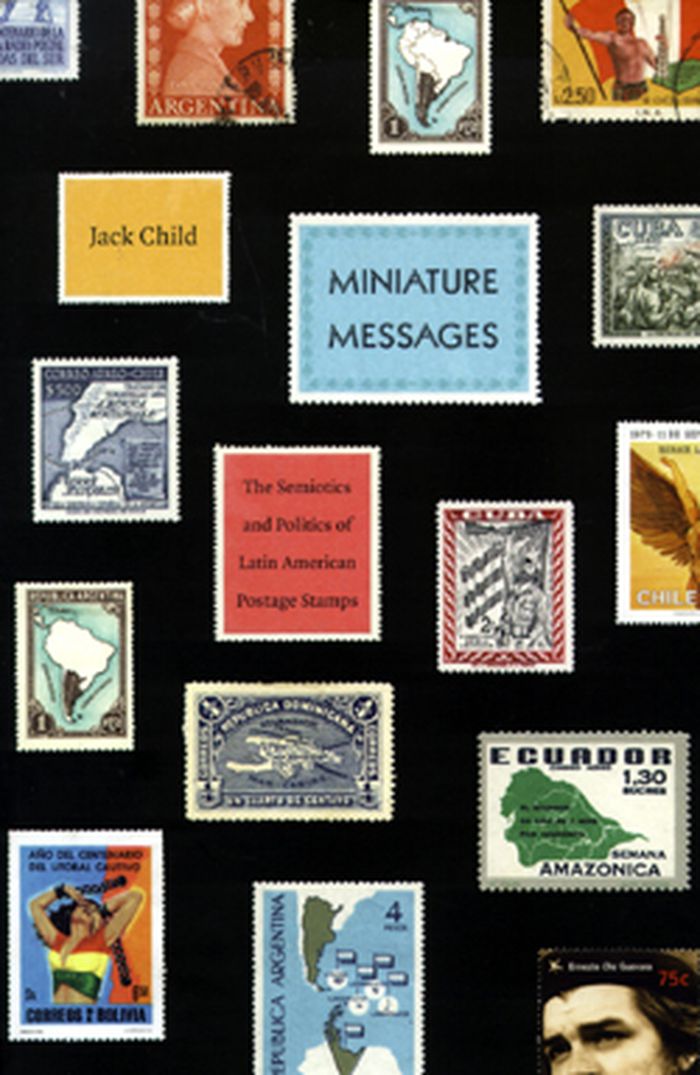
In Miniature Messages, Jack Child analyzes Latin American postage stamps, revealing the messages about history, culture, and politics encoded in their design and disseminated throughout the world. While postage stamps are a sanctioned product of official government agencies, Child argues that they accumulate popular cultural value and take on new meanings as they circulate in the public sphere. As he demonstrates in this richly illustrated study, the postage stamp conveys many of the contestations and triumphs of Latin American history. Child combines history and political science with philatelic research of nearly forty thousand Latin American stamps. He focuses on Argentina and the Southern Cone, highlighting stamps representing the consolidation of the Argentine republic and those produced under its Peronist regime. He compares Chilean stamps issued by the leftist government of Salvador Allende and by Augusto Pinochet’s dictatorship. Considering postage stamps produced under other dictatorial regimes, he examines stamps from the Dominican Republic, Guatemala, Nicaragua, and Paraguay. Child studies how international conflicts have been depicted on the stamps of Argentina, Chile, and Peru, and he pays particular attention to the role of South American and British stamps in establishing claims to the Malvinas/Falkland Islands and to Antarctica. He also covers the cultural and political history of stamps in Bolivia, Brazil, Colombia, Cuba, Grenada, Mexico, Uruguay, Venezuela and elsewhere. In Miniature Messages, Child finds the political history of modern Latin America in its “tiny posters.” Jack Child is a professor in the Department of Language and Foreign Studies at American University in Washington. He is the author of many books and articles on Latin American culture, translation, and geopolitics.
Miniature messages: the semiotics and politics of latin american postage stamps
Actions:
Price:
$36.95
(available to order)
Summary:
In Miniature Messages, Jack Child analyzes Latin American postage stamps, revealing the messages about history, culture, and politics encoded in their design and disseminated throughout the world. While postage stamps are a sanctioned product of official government agencies, Child argues that they accumulate popular cultural value and take on new meanings as they circulate in the public sphere. As he demonstrates in this richly illustrated study, the postage stamp conveys many of the contestations and triumphs of Latin American history. Child combines history and political science with philatelic research of nearly forty thousand Latin American stamps. He focuses on Argentina and the Southern Cone, highlighting stamps representing the consolidation of the Argentine republic and those produced under its Peronist regime. He compares Chilean stamps issued by the leftist government of Salvador Allende and by Augusto Pinochet’s dictatorship. Considering postage stamps produced under other dictatorial regimes, he examines stamps from the Dominican Republic, Guatemala, Nicaragua, and Paraguay. Child studies how international conflicts have been depicted on the stamps of Argentina, Chile, and Peru, and he pays particular attention to the role of South American and British stamps in establishing claims to the Malvinas/Falkland Islands and to Antarctica. He also covers the cultural and political history of stamps in Bolivia, Brazil, Colombia, Cuba, Grenada, Mexico, Uruguay, Venezuela and elsewhere. In Miniature Messages, Child finds the political history of modern Latin America in its “tiny posters.” Jack Child is a professor in the Department of Language and Foreign Studies at American University in Washington. He is the author of many books and articles on Latin American culture, translation, and geopolitics.
Form:
books
books
Publication:
June 2008, Durham
June 2008, Durham
Subject:
Printed Matter
Printed Matter
Form:
books
books
Price:
$49.00
(available to order)
Summary:
Buildings are more like us than we realize. They can be born into wealth or poverty, enjoying every privilege or struggling to make ends meet. They have parents - gods, kings and emperors, governments, visionaries and madmen - as well as friends and enemies. They have duties and responsibilities. They can endure crises of faith and purpose. They can succeed or fail. They(...)
$49.00
(available to order)
Summary:
Buildings are more like us than we realize. They can be born into wealth or poverty, enjoying every privilege or struggling to make ends meet. They have parents - gods, kings and emperors, governments, visionaries and madmen - as well as friends and enemies. They have duties and responsibilities. They can endure crises of faith and purpose. They can succeed or fail. They(...)
Title:
Fallen glory: the lives and deaths of history's greatest buildings
Actions:
Price:
$49.00
(available to order)
Summary:
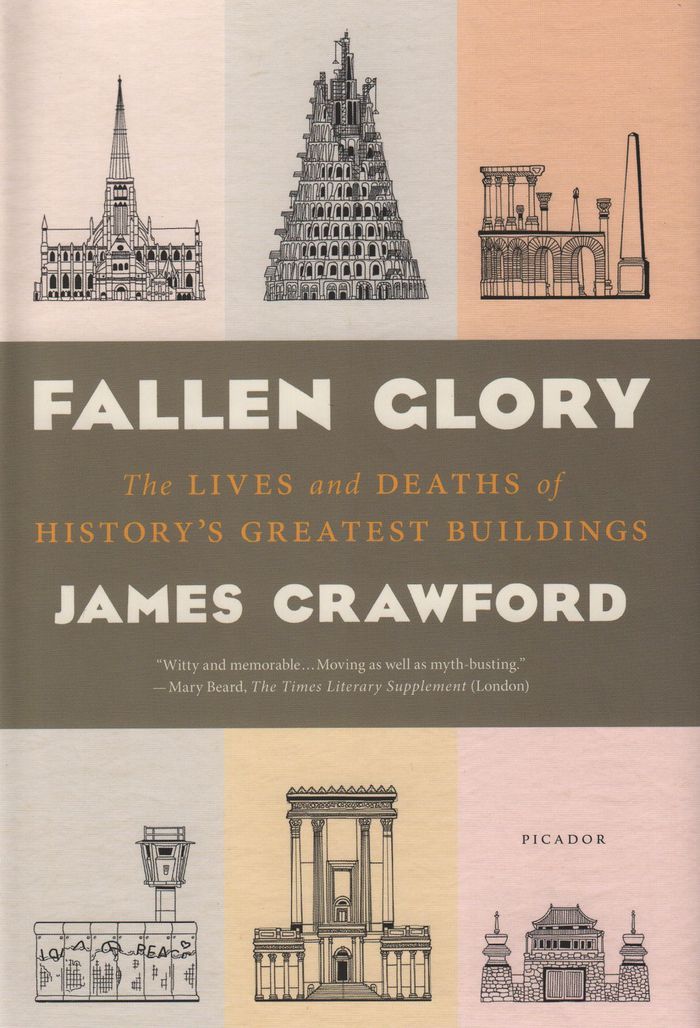
Buildings are more like us than we realize. They can be born into wealth or poverty, enjoying every privilege or struggling to make ends meet. They have parents - gods, kings and emperors, governments, visionaries and madmen - as well as friends and enemies. They have duties and responsibilities. They can endure crises of faith and purpose. They can succeed or fail. They can live. And, sooner or later, they die. In "Fallen glory", James Crawford uncovers the biographies of some of the world's most fascinating lost and ruined buildings, from the dawn of civilization to the cyber era. The lives of these iconic structures are packed with drama and intrigue. Soap operas on the grandest scale, they feature war and religion, politics and art, love and betrayal, catastrophe and hope. Frequently their afterlives have been no less dramatic - their memories used and abused down the millennia for purposes both sacred and profane. They provide the stage for a startling array of characters, including Gilgamesh, the Cretan Minotaur, Agamemnon, Nefertiti, Genghis Khan, Henry VIII, Catherine the Great, Adolf Hitler, and even Bruce Springsteen. The twenty-one structures Crawford focuses on include The Tower of Babel, The Temple of Jerusalem, The Library of Alexandria, The Bastille, Kowloon Walled City, the Berlin Wall, and the Twin Towers of the World Trade Center. Ranging from the deserts of Iraq, the banks of the Nile and the cloud forests of Peru, to the great cities of Jerusalem, Istanbul, Paris, Rome, London and New York, Fallen Glory is a unique guide to a world of vanished architecture. And, by picking through the fragments of our past, it asks what history's scattered ruins can tell us about our own future.
Fallen glory: the lives and deaths of history's greatest buildings
Actions:
Price:
$49.00
(available to order)
Summary:
Buildings are more like us than we realize. They can be born into wealth or poverty, enjoying every privilege or struggling to make ends meet. They have parents - gods, kings and emperors, governments, visionaries and madmen - as well as friends and enemies. They have duties and responsibilities. They can endure crises of faith and purpose. They can succeed or fail. They can live. And, sooner or later, they die. In "Fallen glory", James Crawford uncovers the biographies of some of the world's most fascinating lost and ruined buildings, from the dawn of civilization to the cyber era. The lives of these iconic structures are packed with drama and intrigue. Soap operas on the grandest scale, they feature war and religion, politics and art, love and betrayal, catastrophe and hope. Frequently their afterlives have been no less dramatic - their memories used and abused down the millennia for purposes both sacred and profane. They provide the stage for a startling array of characters, including Gilgamesh, the Cretan Minotaur, Agamemnon, Nefertiti, Genghis Khan, Henry VIII, Catherine the Great, Adolf Hitler, and even Bruce Springsteen. The twenty-one structures Crawford focuses on include The Tower of Babel, The Temple of Jerusalem, The Library of Alexandria, The Bastille, Kowloon Walled City, the Berlin Wall, and the Twin Towers of the World Trade Center. Ranging from the deserts of Iraq, the banks of the Nile and the cloud forests of Peru, to the great cities of Jerusalem, Istanbul, Paris, Rome, London and New York, Fallen Glory is a unique guide to a world of vanished architecture. And, by picking through the fragments of our past, it asks what history's scattered ruins can tell us about our own future.
Form:
books
books
Publication:
March 2017
March 2017
Subject:
Architectural Theory
Architectural Theory


