


746 Results
Form:
books
books
Actions:
Price:
$54.95
(available to order)
Summary:
This volume features many of the top submissions to the Land Art Generator Initiative, which aims to create sustainable design solutions that integrate art and technology into renewable energy infrastructure around the world. The book draws a much-needed connection between the two critical issues of sustainable development--energy generation and waste(...)
$54.95
(available to order)
Summary:
This volume features many of the top submissions to the Land Art Generator Initiative, which aims to create sustainable design solutions that integrate art and technology into renewable energy infrastructure around the world. The book draws a much-needed connection between the two critical issues of sustainable development--energy generation and waste(...)
Title:
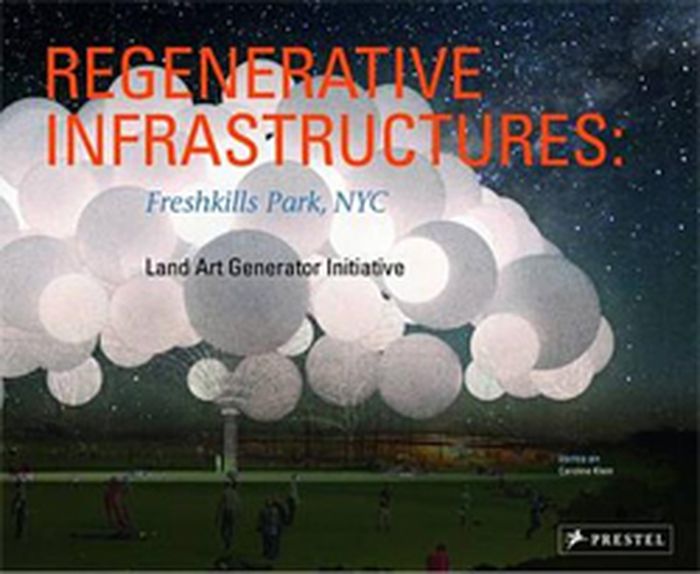
Regenerative infrastructures: Freshkills Park, NYC. Land Art Generator Initiative
Actions:
Price:
$54.95
(available to order)
Summary:
This volume features many of the top submissions to the Land Art Generator Initiative, which aims to create sustainable design solutions that integrate art and technology into renewable energy infrastructure around the world. The book draws a much-needed connection between the two critical issues of sustainable development--energy generation and waste management--highlighting solutions that address both problems at once, thereby creating economically beneficial hybrid utility installations.
Regenerative infrastructures: Freshkills Park, NYC. Land Art Generator Initiative
Actions:
Price:
$54.95
(available to order)
Summary:
This volume features many of the top submissions to the Land Art Generator Initiative, which aims to create sustainable design solutions that integrate art and technology into renewable energy infrastructure around the world. The book draws a much-needed connection between the two critical issues of sustainable development--energy generation and waste management--highlighting solutions that address both problems at once, thereby creating economically beneficial hybrid utility installations.
Form:
books
books
Publication:
May 2013
May 2013
Subject:
Urban Landscapes
Urban Landscapes
Form:
books
books
Price:
$60.00
(available to order)
Summary:
The formerly segregated countryside is now traversed by global and regional flows of people, goods, waste, energy and information, linking it to urban systems and enabling those systems to function in the first place. Ruralism is dedicated to the significance of rural spaces as a starting point for transformation. International experts explore the rural from(...)
$60.00
(available to order)
Summary:
The formerly segregated countryside is now traversed by global and regional flows of people, goods, waste, energy and information, linking it to urban systems and enabling those systems to function in the first place. Ruralism is dedicated to the significance of rural spaces as a starting point for transformation. International experts explore the rural from(...)
Title:
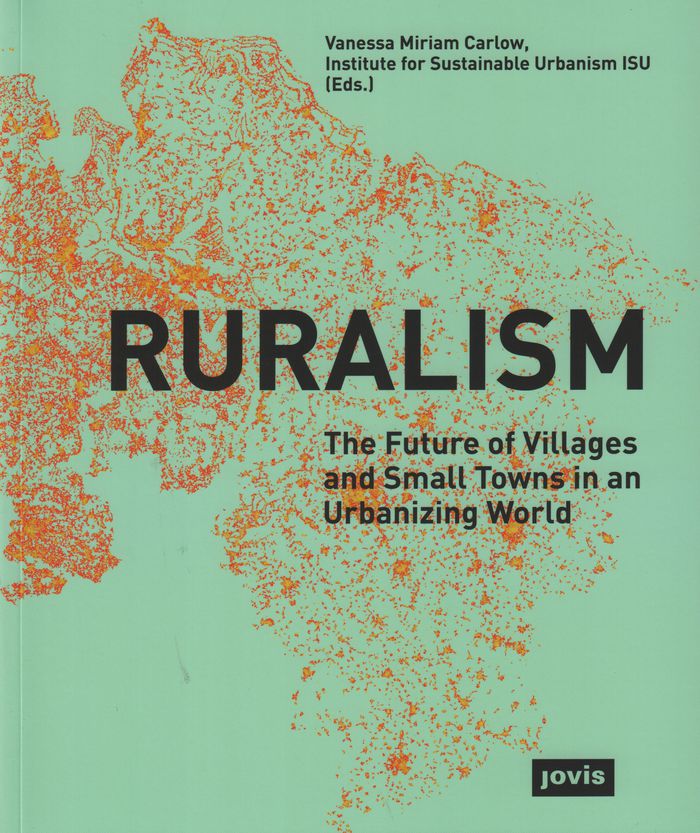
Ruralism : the future of villages and small towns in an urbanizing world
Actions:
Price:
$60.00
(available to order)
Summary:
The formerly segregated countryside is now traversed by global and regional flows of people, goods, waste, energy and information, linking it to urban systems and enabling those systems to function in the first place. Ruralism is dedicated to the significance of rural spaces as a starting point for transformation. International experts explore the rural from architectural, cultural, gender-oriented, ecological and political perspectives, and ask how a new vision of the rural can be formulated.
Ruralism : the future of villages and small towns in an urbanizing world
Actions:
Price:
$60.00
(available to order)
Summary:
The formerly segregated countryside is now traversed by global and regional flows of people, goods, waste, energy and information, linking it to urban systems and enabling those systems to function in the first place. Ruralism is dedicated to the significance of rural spaces as a starting point for transformation. International experts explore the rural from architectural, cultural, gender-oriented, ecological and political perspectives, and ask how a new vision of the rural can be formulated.
Form:
books
books
Publication:
March 2017
March 2017
Subject:
Urban Theory
Urban Theory
Form:
books
books
Price:
$37.95
(available to order)
Summary:
With growing concerns about the security, cost, and ecological consequences of energy use, people around the world are becoming more conscious of the systems that meet their daily needs for food, heat, cooling, light, transportation, communication, waste disposal, medicine, and goods. ''Powering Up Canada'' is the first book to examine in detail how various sources of(...)
$37.95
(available to order)
Summary:
With growing concerns about the security, cost, and ecological consequences of energy use, people around the world are becoming more conscious of the systems that meet their daily needs for food, heat, cooling, light, transportation, communication, waste disposal, medicine, and goods. ''Powering Up Canada'' is the first book to examine in detail how various sources of(...)
Title:
Powering up Canada : the history of power, fuel, and energy from 1600
Actions:
Price:
$37.95
(available to order)
Summary:
With growing concerns about the security, cost, and ecological consequences of energy use, people around the world are becoming more conscious of the systems that meet their daily needs for food, heat, cooling, light, transportation, communication, waste disposal, medicine, and goods. ''Powering Up Canada'' is the first book to examine in detail how various sources of power, fuel, and energy have sustained Canadians over time and played a pivotal role in their history.
Powering up Canada : the history of power, fuel, and energy from 1600
Actions:
Price:
$37.95
(available to order)
Summary:
With growing concerns about the security, cost, and ecological consequences of energy use, people around the world are becoming more conscious of the systems that meet their daily needs for food, heat, cooling, light, transportation, communication, waste disposal, medicine, and goods. ''Powering Up Canada'' is the first book to examine in detail how various sources of power, fuel, and energy have sustained Canadians over time and played a pivotal role in their history.
Form:
books
books
Publication:
September 2016
September 2016
Subject:
Environment and environmental theory
Environment and environmental theory
Form:
books
books
Actions:
Price:
$48.00
(available in store)
Summary:
This issue of AD explores the resurgence of ecological strategies in architectural imagination. As a symptom of a new sociopolitical reality inundated with environmental catastrophes, sudden climatic changes, garbage-packed metropolises and para-economies of nonrecyclable e-waste, environmental consciousness and the image of the earth re-emerges, after the 1960s, as an(...)
$48.00
(available in store)
Summary:
This issue of AD explores the resurgence of ecological strategies in architectural imagination. As a symptom of a new sociopolitical reality inundated with environmental catastrophes, sudden climatic changes, garbage-packed metropolises and para-economies of nonrecyclable e-waste, environmental consciousness and the image of the earth re-emerges, after the 1960s, as an(...)
Title:
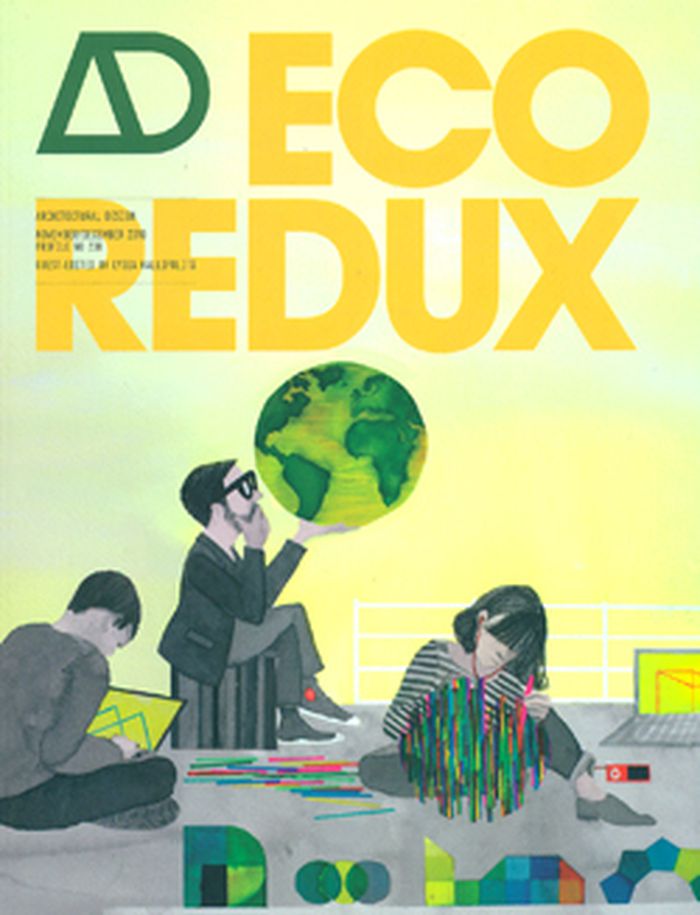
AD 80:06 Ecoredux, design remedies for an ailing planet
Actions:
Price:
$48.00
(available in store)
Summary:
This issue of AD explores the resurgence of ecological strategies in architectural imagination. As a symptom of a new sociopolitical reality inundated with environmental catastrophes, sudden climatic changes, garbage-packed metropolises and para-economies of nonrecyclable e-waste, environmental consciousness and the image of the earth re-emerges, after the 1960s, as an inevitable cultural armature for architects; now faced with the urgency to heal an ill-managed planet that is headed towards evolutionary bankruptcy.
AD 80:06 Ecoredux, design remedies for an ailing planet
Actions:
Price:
$48.00
(available in store)
Summary:
This issue of AD explores the resurgence of ecological strategies in architectural imagination. As a symptom of a new sociopolitical reality inundated with environmental catastrophes, sudden climatic changes, garbage-packed metropolises and para-economies of nonrecyclable e-waste, environmental consciousness and the image of the earth re-emerges, after the 1960s, as an inevitable cultural armature for architects; now faced with the urgency to heal an ill-managed planet that is headed towards evolutionary bankruptcy.
Form:
books
books
Publication:
November 2010
November 2010
Subject:
Magazines
Magazines
Form:
books
books

Actions:
Price:
$24.95
(available to order)
Summary:
The Edible City considers how one city eats. It includes dishes on peaches and poverty, on processing plants and public gardens, on rats and bees and bad restaurant service, on schnitzel and school lunches. There are incisive studies of food-safety policy, of feeding the poor, and of waste, and a happy tale about a hardy fig tree. Together they form a picture of how(...)
$24.95
(available to order)
Summary:
The Edible City considers how one city eats. It includes dishes on peaches and poverty, on processing plants and public gardens, on rats and bees and bad restaurant service, on schnitzel and school lunches. There are incisive studies of food-safety policy, of feeding the poor, and of waste, and a happy tale about a hardy fig tree. Together they form a picture of how(...)
Title:
The edible city: Toronto's food from farm to fork
Actions:
Price:
$24.95
(available to order)
Summary:
The Edible City considers how one city eats. It includes dishes on peaches and poverty, on processing plants and public gardens, on rats and bees and bad restaurant service, on schnitzel and school lunches. There are incisive studies of food-safety policy, of feeding the poor, and of waste, and a happy tale about a hardy fig tree. Together they form a picture of how Toronto - and, by extension, every city - sustains itself, from growing basil on balconies to four-star restaurants.
The edible city: Toronto's food from farm to fork
Actions:
Price:
$24.95
(available to order)
Summary:
The Edible City considers how one city eats. It includes dishes on peaches and poverty, on processing plants and public gardens, on rats and bees and bad restaurant service, on schnitzel and school lunches. There are incisive studies of food-safety policy, of feeding the poor, and of waste, and a happy tale about a hardy fig tree. Together they form a picture of how Toronto - and, by extension, every city - sustains itself, from growing basil on balconies to four-star restaurants.
Form:
books
books
Publication:
November 2010
November 2010
Subject:
Architecture in Canada
Architecture in Canada
Form:
books
books
Title:
Burtynsky : water
Burtynsky : water
Actions:
Price:
$159.95
(available to order)
Summary:
There is no life without water. Burtynsky’s book Water tells us the story of where water comes from, how we use it, distribute and waste it. Often using a bird’s-eye perspective, the photographer shows us its remote sources, remarkable ancient step-wells and mass bathing rituals, the transformation of desert into cities with waterfronts on each doorstep, the compromised(...)
$159.95
(available to order)
Summary:
There is no life without water. Burtynsky’s book Water tells us the story of where water comes from, how we use it, distribute and waste it. Often using a bird’s-eye perspective, the photographer shows us its remote sources, remarkable ancient step-wells and mass bathing rituals, the transformation of desert into cities with waterfronts on each doorstep, the compromised(...)
Title:
Burtynsky : water
Actions:
Price:
$159.95
(available to order)
Summary:
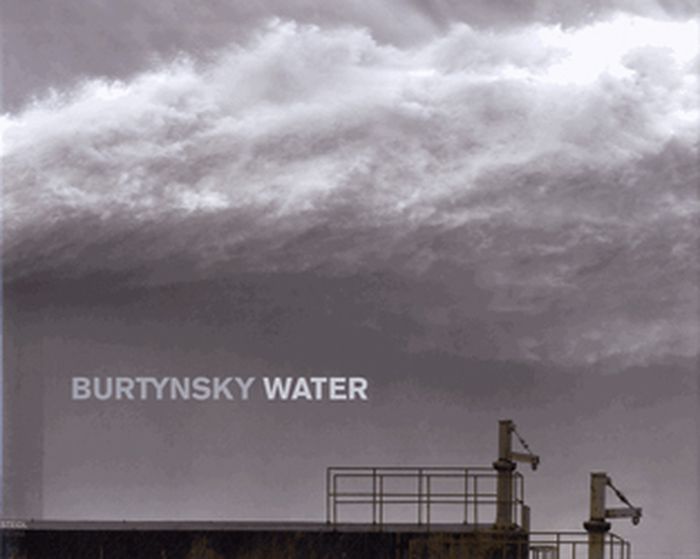
There is no life without water. Burtynsky’s book Water tells us the story of where water comes from, how we use it, distribute and waste it. Often using a bird’s-eye perspective, the photographer shows us its remote sources, remarkable ancient step-wells and mass bathing rituals, the transformation of desert into cities with waterfronts on each doorstep, the compromised landscapes of the American Southwest. The colour photographs in this book are poetic and at the same time highly relevant.
Burtynsky : water
Actions:
Price:
$159.95
(available to order)
Summary:
There is no life without water. Burtynsky’s book Water tells us the story of where water comes from, how we use it, distribute and waste it. Often using a bird’s-eye perspective, the photographer shows us its remote sources, remarkable ancient step-wells and mass bathing rituals, the transformation of desert into cities with waterfronts on each doorstep, the compromised landscapes of the American Southwest. The colour photographs in this book are poetic and at the same time highly relevant.
Form:
books
books
Publication:
October 2013
October 2013
Subject:
Photography monographs
Photography monographs
Form:
books
books
Actions:
Price:
$31.50
(available to order)
Summary:
A manifesto for a radically different philosophy and practice of manufacture and environmentalism. "Reduce, reuse, recycle" urge environmentalists; in other words, do more with less in order to minimize damage. As William McDonough and Michael Braungart argue in their provocative, visionary book, however, this approach perpetuates a one-way, "cradle to grave"(...)
$31.50
(available to order)
Summary:
A manifesto for a radically different philosophy and practice of manufacture and environmentalism. "Reduce, reuse, recycle" urge environmentalists; in other words, do more with less in order to minimize damage. As William McDonough and Michael Braungart argue in their provocative, visionary book, however, this approach perpetuates a one-way, "cradle to grave"(...)
Subject:
Green Architecture
Green Architecture
Publication:
January 1900, New York
January 1900, New York
Title:
Cradle to cradle : remaking the way we make things
Actions:
Price:
$31.50
(available to order)
Summary:
A manifesto for a radically different philosophy and practice of manufacture and environmentalism. "Reduce, reuse, recycle" urge environmentalists; in other words, do more with less in order to minimize damage. As William McDonough and Michael Braungart argue in their provocative, visionary book, however, this approach perpetuates a one-way, "cradle to grave" manufacturing model that dates to the industrial revolution and casts off as much as 90 percent of the materials it uses as waste, much of it toxic. Why not challenge the notion that human industry must inevitably damage the natural world, they ask. In fact, why not take nature itself as our model? A tree produces thousands of blossoms in order to create another tree, yet we do not consider its abundance wasteful but safe, beautiful, and highly effective; hence, "waste equals food" is the first principle the book sets forth. Products might be designed so that, after their useful life, they provide nourishment for something new-either as "biological nutrients" that safely re-enter the environment or as "technical nutrients" that circulate within closed-loop industrial cycles, without being "downcycled" into low-grade uses (as most "recyclables" now are). Elaborating their principles from experience (re)designing everything from carpeting to corporate campuses, the authors make an exciting and viable case for change.
Cradle to cradle : remaking the way we make things
Actions:
Price:
$31.50
(available to order)
Summary:
A manifesto for a radically different philosophy and practice of manufacture and environmentalism. "Reduce, reuse, recycle" urge environmentalists; in other words, do more with less in order to minimize damage. As William McDonough and Michael Braungart argue in their provocative, visionary book, however, this approach perpetuates a one-way, "cradle to grave" manufacturing model that dates to the industrial revolution and casts off as much as 90 percent of the materials it uses as waste, much of it toxic. Why not challenge the notion that human industry must inevitably damage the natural world, they ask. In fact, why not take nature itself as our model? A tree produces thousands of blossoms in order to create another tree, yet we do not consider its abundance wasteful but safe, beautiful, and highly effective; hence, "waste equals food" is the first principle the book sets forth. Products might be designed so that, after their useful life, they provide nourishment for something new-either as "biological nutrients" that safely re-enter the environment or as "technical nutrients" that circulate within closed-loop industrial cycles, without being "downcycled" into low-grade uses (as most "recyclables" now are). Elaborating their principles from experience (re)designing everything from carpeting to corporate campuses, the authors make an exciting and viable case for change.
Form:
books
books
Publication:
January 1900, New York
January 1900, New York
Subject:
Green Architecture
Green Architecture
Form:
books
books
Actions:
Holdings:
Description:
xii, 358 pages : illustrations ; 29 cm.
Description:
xii, 358 pages : illustrations ; 29 cm.
Author:
Subject:
Publication:
Albuquerque, N.M. : Center for Anthropological Studies, ©1983.
Albuquerque, N.M. : Center for Anthropological Studies, ©1983.
Title:
Forgotten places and things : archaeological perspectives on American history / compiled and edited by Albert E. Ward.
Actions:
Holdings:
Description:
xii, 358 pages : illustrations ; 29 cm.
Forgotten places and things : archaeological perspectives on American history / compiled and edited by Albert E. Ward.
Actions:
Holdings:
Description:
xii, 358 pages : illustrations ; 29 cm.
Form:
books
books
Publication:
Albuquerque, N.M. : Center for Anthropological Studies, ©1983.
Albuquerque, N.M. : Center for Anthropological Studies, ©1983.
Author:
Subject:
Form:
books
books
Actions:
Price:
$23.50
(available to order)
Summary:
This comprehensive book clearly explains every aspect of this endeavor, including design (siting, orientation, climate consideration), materials (sisal, cactus, bamboo, earth), and implementation. The author emphasizes throughout the book what is inexpensive and sustainable. Included are sections discussing urban planning, small-scale energy production, cleaning and(...)
$23.50
(available to order)
Summary:
This comprehensive book clearly explains every aspect of this endeavor, including design (siting, orientation, climate consideration), materials (sisal, cactus, bamboo, earth), and implementation. The author emphasizes throughout the book what is inexpensive and sustainable. Included are sections discussing urban planning, small-scale energy production, cleaning and(...)
Title:
The barefoot architect: a handbook for green building
Actions:
Price:
$23.50
(available to order)
Summary:
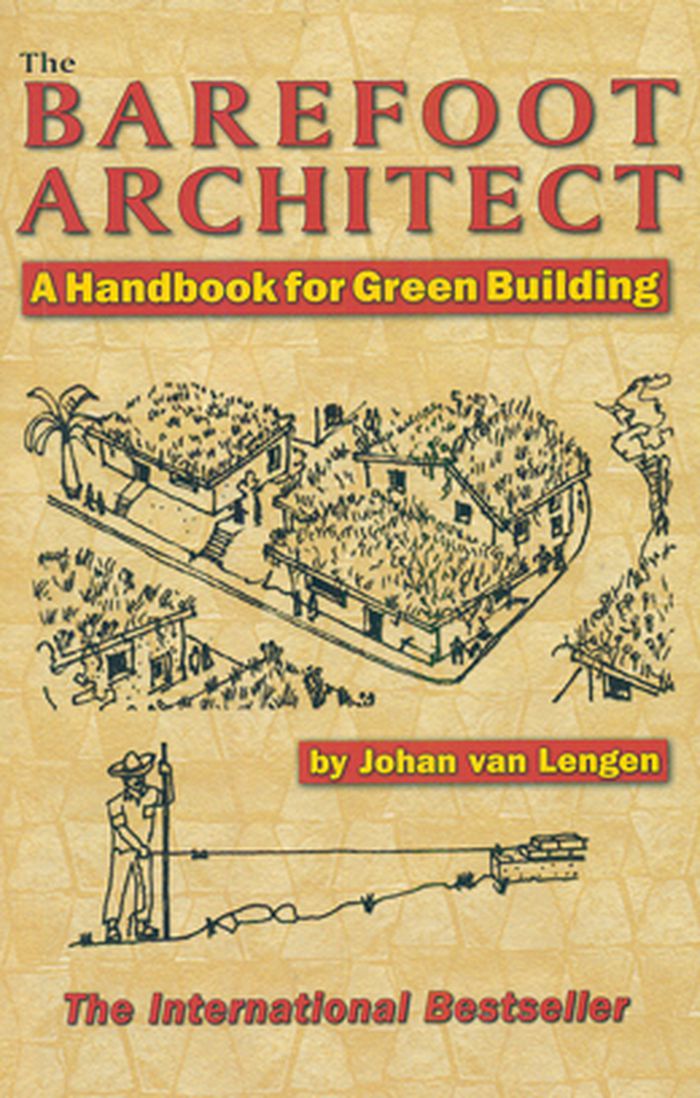
This comprehensive book clearly explains every aspect of this endeavor, including design (siting, orientation, climate consideration), materials (sisal, cactus, bamboo, earth), and implementation. The author emphasizes throughout the book what is inexpensive and sustainable. Included are sections discussing urban planning, small-scale energy production, cleaning and storing drinking water, and dealing with septic waste, and all information is applied to three distinct tropical regions: humid areas, temporate areas, and desert climates. Hundreds of explanatory drawings by van Lengen allow even novice builders to get started.
The barefoot architect: a handbook for green building
Actions:
Price:
$23.50
(available to order)
Summary:
This comprehensive book clearly explains every aspect of this endeavor, including design (siting, orientation, climate consideration), materials (sisal, cactus, bamboo, earth), and implementation. The author emphasizes throughout the book what is inexpensive and sustainable. Included are sections discussing urban planning, small-scale energy production, cleaning and storing drinking water, and dealing with septic waste, and all information is applied to three distinct tropical regions: humid areas, temporate areas, and desert climates. Hundreds of explanatory drawings by van Lengen allow even novice builders to get started.
Form:
books
books
Publication:
January 2012
January 2012
Subject:
Green Architecture
Green Architecture
Form:
books
books
Price:
$19.95
(available to order)
Summary:
The deceptively simple supermarket choice echoed in the title symbolizes the dilemma of a society on a collision course with the planet's life-support systems. About one-third of America's municipal solid waste is packaging - at least 300 pounds per person each year - and the "upstream" costs in energy and ressources used to make packaging are even more alarming. In(...)
$19.95
(available to order)
Summary:
The deceptively simple supermarket choice echoed in the title symbolizes the dilemma of a society on a collision course with the planet's life-support systems. About one-third of America's municipal solid waste is packaging - at least 300 pounds per person each year - and the "upstream" costs in energy and ressources used to make packaging are even more alarming. In(...)
Subject:
Environment and environmental theory
Environment and environmental theory
Publication:
April 2005, San Francisco
April 2005, San Francisco
Title:
Paper or plastic : searching for solutions to an overpackaged world
Actions:
Price:
$19.95
(available to order)
Summary:
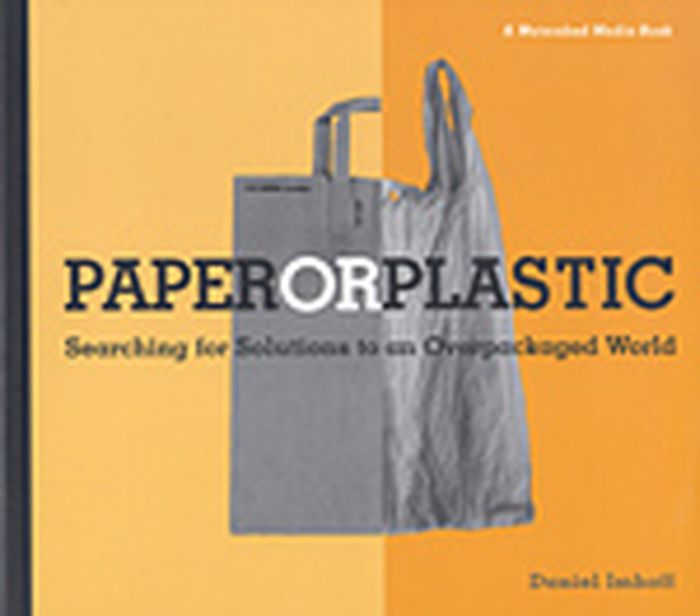
The deceptively simple supermarket choice echoed in the title symbolizes the dilemma of a society on a collision course with the planet's life-support systems. About one-third of America's municipal solid waste is packaging - at least 300 pounds per person each year - and the "upstream" costs in energy and ressources used to make packaging are even more alarming. In this book, author Daniel Imhoff unwraps the packaging problem and gives consummers, product designers, and policymakers the information they need to take steps toward a more sustainable future.
Paper or plastic : searching for solutions to an overpackaged world
Actions:
Price:
$19.95
(available to order)
Summary:
The deceptively simple supermarket choice echoed in the title symbolizes the dilemma of a society on a collision course with the planet's life-support systems. About one-third of America's municipal solid waste is packaging - at least 300 pounds per person each year - and the "upstream" costs in energy and ressources used to make packaging are even more alarming. In this book, author Daniel Imhoff unwraps the packaging problem and gives consummers, product designers, and policymakers the information they need to take steps toward a more sustainable future.
Form:
books
books
Publication:
April 2005, San Francisco
April 2005, San Francisco
Subject:
Environment and environmental theory
Environment and environmental theory


