


708 Results
Form:
books
books
Title:
Paul Andreu : architect
Paul Andreu : architect
Actions:
Price:
$20.00
(available to order)
Summary:
Paul Andreu is well known for the more than 50 airports in Europe, Asia and Africa which he designed as head architect of the Aeroports de Paris, and for the Grande Arche de la Defense in Paris. The French Channel Tunnel terminal with the adjacent Cite Europe shopping centre is one of his recent European achievements. For several years Andreu has been increasingly active(...)
$20.00
(available to order)
Summary:
Paul Andreu is well known for the more than 50 airports in Europe, Asia and Africa which he designed as head architect of the Aeroports de Paris, and for the Grande Arche de la Defense in Paris. The French Channel Tunnel terminal with the adjacent Cite Europe shopping centre is one of his recent European achievements. For several years Andreu has been increasingly active(...)
Title:
Paul Andreu : architect
Actions:
Price:
$20.00
(available to order)
Summary:
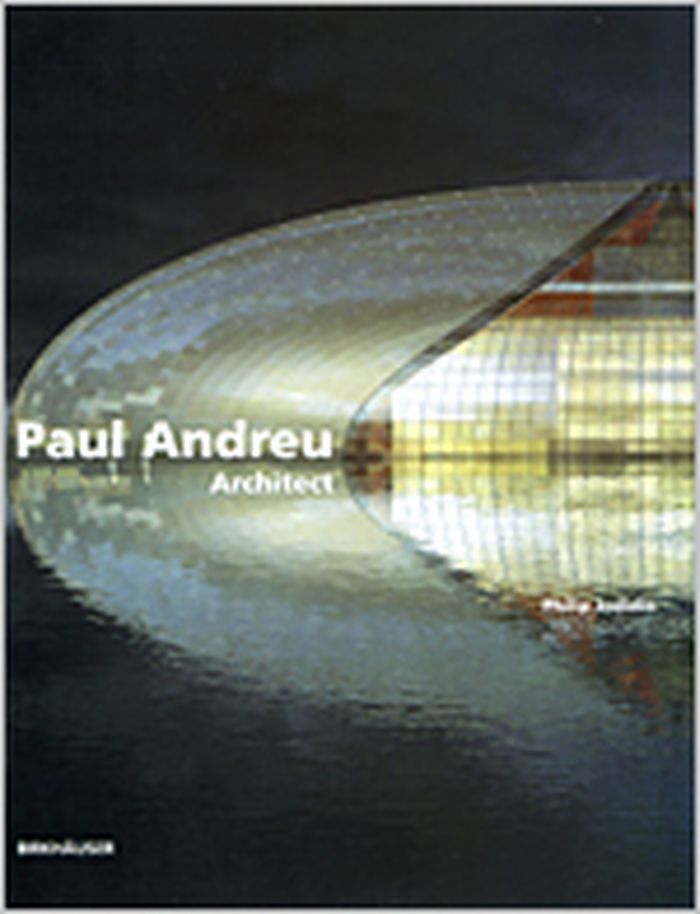
Paul Andreu is well known for the more than 50 airports in Europe, Asia and Africa which he designed as head architect of the Aeroports de Paris, and for the Grande Arche de la Defense in Paris. The French Channel Tunnel terminal with the adjacent Cite Europe shopping centre is one of his recent European achievements. For several years Andreu has been increasingly active in the Far East, responsible not only for the airport of Shanghai and the Guangzhou Gymnasium, but also the Canton Sports Centre, the Osaka Maritime Museum and the Shanghai Oriental Arts Centre. In 2004 the Beijing Opera house, a futuristic dome in Tianamen Square, will be opened, one of Andreu's most spectacular projects and crowning achievements.
Paul Andreu : architect
Actions:
Price:
$20.00
(available to order)
Summary:
Paul Andreu is well known for the more than 50 airports in Europe, Asia and Africa which he designed as head architect of the Aeroports de Paris, and for the Grande Arche de la Defense in Paris. The French Channel Tunnel terminal with the adjacent Cite Europe shopping centre is one of his recent European achievements. For several years Andreu has been increasingly active in the Far East, responsible not only for the airport of Shanghai and the Guangzhou Gymnasium, but also the Canton Sports Centre, the Osaka Maritime Museum and the Shanghai Oriental Arts Centre. In 2004 the Beijing Opera house, a futuristic dome in Tianamen Square, will be opened, one of Andreu's most spectacular projects and crowning achievements.
Form:
books
books
Publication:
May 2004, Basel
May 2004, Basel
Subject:
sale books
sale books
Form:
books
books
Actions:
Holdings:
Description:
xvi, 188 pages : illustrations (some color) ; 37 cm
Description:
xvi, 188 pages : illustrations (some color) ; 37 cm
Author:
Subject:
Publication:
Cambridge, Massachusetts ; London, England : The MIT Press, [1972], ©1972
Cambridge, Massachusetts ; London, England : The MIT Press, [1972], ©1972
Title:
Learning from Las Vegas / Robert Venturi, Denise Scott Brown, and Steven Izenour.
Actions:
Holdings:
Description:
xvi, 188 pages : illustrations (some color) ; 37 cm
Learning from Las Vegas / Robert Venturi, Denise Scott Brown, and Steven Izenour.
Actions:
Holdings:
Description:
xvi, 188 pages : illustrations (some color) ; 37 cm
Form:
books
books
Publication:
Cambridge, Massachusetts ; London, England : The MIT Press, [1972], ©1972
Cambridge, Massachusetts ; London, England : The MIT Press, [1972], ©1972
Author:
Subject:
Form:
books
books
Actions:
Price:
$25.95
(available in store)
Summary:
When the state recedes, the commune-form flourishes. This was as true in Paris in 1871 as it is now whenever ordinary people begin to manage their daily lives collectively. Contemporary struggles over land - from the zad at Notre-Dame-des-Landes to Cop City in Atlanta, from the pipeline battles in Canada to Soulèvements de la terre - have reinvented practices of(...)
$25.95
(available in store)
Summary:
When the state recedes, the commune-form flourishes. This was as true in Paris in 1871 as it is now whenever ordinary people begin to manage their daily lives collectively. Contemporary struggles over land - from the zad at Notre-Dame-des-Landes to Cop City in Atlanta, from the pipeline battles in Canada to Soulèvements de la terre - have reinvented practices of(...)
Title:
The Commune form: The transformation of everyday life
Actions:
Price:
$25.95
(available in store)
Summary:
When the state recedes, the commune-form flourishes. This was as true in Paris in 1871 as it is now whenever ordinary people begin to manage their daily lives collectively. Contemporary struggles over land - from the zad at Notre-Dame-des-Landes to Cop City in Atlanta, from the pipeline battles in Canada to Soulèvements de la terre - have reinvented practices of appropriating lived space and time. This transforms dramatically our perception of the recent past. Rural struggles of the 1960s and 70s, like the "Nantes Commune," the Larzac, and Sanrizuka in Japan, appear now as the defining battles of our era. In the defense of threatened territories against all manners of privatization, hoarding, and infrastructures of disaster, new ways of producing and inhabiting are devised that side-step the state and that give rise to unprecedented kinds of solidarity built on pleasurable, fruitful collaborations.
The Commune form: The transformation of everyday life
Actions:
Price:
$25.95
(available in store)
Summary:
When the state recedes, the commune-form flourishes. This was as true in Paris in 1871 as it is now whenever ordinary people begin to manage their daily lives collectively. Contemporary struggles over land - from the zad at Notre-Dame-des-Landes to Cop City in Atlanta, from the pipeline battles in Canada to Soulèvements de la terre - have reinvented practices of appropriating lived space and time. This transforms dramatically our perception of the recent past. Rural struggles of the 1960s and 70s, like the "Nantes Commune," the Larzac, and Sanrizuka in Japan, appear now as the defining battles of our era. In the defense of threatened territories against all manners of privatization, hoarding, and infrastructures of disaster, new ways of producing and inhabiting are devised that side-step the state and that give rise to unprecedented kinds of solidarity built on pleasurable, fruitful collaborations.
Form:
books
books
Publication:
September 2024
September 2024
Subject:
Social
Social
Form:
books
books
Title:
Fallen empires
Fallen empires
Actions:
Price:
$55.00
(available to order)
Summary:
Extensively covered by the media, debated by the governments of the world and claimed by vying religions, Israel is a remarkable case study for understanding the rise and fall of empires. By highlighting the country's historic architecture and its highly contentious ruins, Israeli photographer Shai Kremer (born 1974) questions how these sites figure today in the discourse(...)
$55.00
(available to order)
Summary:
Extensively covered by the media, debated by the governments of the world and claimed by vying religions, Israel is a remarkable case study for understanding the rise and fall of empires. By highlighting the country's historic architecture and its highly contentious ruins, Israeli photographer Shai Kremer (born 1974) questions how these sites figure today in the discourse(...)
Title:
Fallen empires
Actions:
Price:
$55.00
(available to order)
Summary:
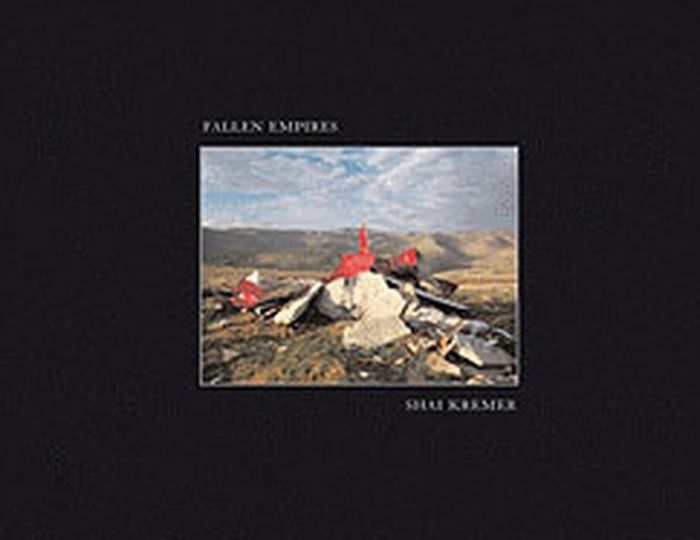
Extensively covered by the media, debated by the governments of the world and claimed by vying religions, Israel is a remarkable case study for understanding the rise and fall of empires. By highlighting the country's historic architecture and its highly contentious ruins, Israeli photographer Shai Kremer (born 1974) questions how these sites figure today in the discourse of the Israeli-Palestinian conflict and the future of the nation. This publication invites viewers to consider new relationships between the histories and identities assembled and disassembled in the creation of modern Israel. As Kremer explains, “Israel is overloaded with sediments of past empires. More than half of the current IDF (Israel Defense Forces) strongholds rest on the ruins of military sites of former empires. The recycling of these spaces, from one conqueror to the next, shows how most empires tried to conquer and rule this land, with one similar outcome: they eventually failed.”
Fallen empires
Actions:
Price:
$55.00
(available to order)
Summary:
Extensively covered by the media, debated by the governments of the world and claimed by vying religions, Israel is a remarkable case study for understanding the rise and fall of empires. By highlighting the country's historic architecture and its highly contentious ruins, Israeli photographer Shai Kremer (born 1974) questions how these sites figure today in the discourse of the Israeli-Palestinian conflict and the future of the nation. This publication invites viewers to consider new relationships between the histories and identities assembled and disassembled in the creation of modern Israel. As Kremer explains, “Israel is overloaded with sediments of past empires. More than half of the current IDF (Israel Defense Forces) strongholds rest on the ruins of military sites of former empires. The recycling of these spaces, from one conqueror to the next, shows how most empires tried to conquer and rule this land, with one similar outcome: they eventually failed.”
Form:
books
books
Publication:
July 2011
July 2011
Subject:
Photography monographs
Photography monographs
Form:
books
books
Price:
$27.95
(available in store)
Summary:
What fuels and sustains activism and organizing when it feels like our worlds are collapsing? ''Let This Radicalize You" is a practical and imaginative resource for activists and organizers building power in an era of destabilization and catastrophe. Longtime organizers and movement educators Mariame Kaba and Kelly Hayes examine some of the political lessons of the(...)
$27.95
(available in store)
Summary:
What fuels and sustains activism and organizing when it feels like our worlds are collapsing? ''Let This Radicalize You" is a practical and imaginative resource for activists and organizers building power in an era of destabilization and catastrophe. Longtime organizers and movement educators Mariame Kaba and Kelly Hayes examine some of the political lessons of the(...)
Title:
Let this radicalize you: organizing and the revolution of reciprocal care
Actions:
Price:
$27.95
(available in store)
Summary:
What fuels and sustains activism and organizing when it feels like our worlds are collapsing? ''Let This Radicalize You" is a practical and imaginative resource for activists and organizers building power in an era of destabilization and catastrophe. Longtime organizers and movement educators Mariame Kaba and Kelly Hayes examine some of the political lessons of the COVID-19 pandemic, including the convergence of mass protest and mass formations of mutual aid, and consider what this confluence of power can teach us about a future that will require mass acts of care, rescue and defense, in the face of both state violence and environmental disaster. The book is intended to aid and empower activists and organizers as they attempt to map their own journeys through the work of justice-making. It includes insights from a spectrum of experienced organizers, including Sharon Lungo, Carlos Saavedra, Ejeris Dixon, Barbara Ransby, and Ruth Wilson Gilmore about some of the difficult and joyous lessons they have learned in their work.
Let this radicalize you: organizing and the revolution of reciprocal care
Actions:
Price:
$27.95
(available in store)
Summary:
What fuels and sustains activism and organizing when it feels like our worlds are collapsing? ''Let This Radicalize You" is a practical and imaginative resource for activists and organizers building power in an era of destabilization and catastrophe. Longtime organizers and movement educators Mariame Kaba and Kelly Hayes examine some of the political lessons of the COVID-19 pandemic, including the convergence of mass protest and mass formations of mutual aid, and consider what this confluence of power can teach us about a future that will require mass acts of care, rescue and defense, in the face of both state violence and environmental disaster. The book is intended to aid and empower activists and organizers as they attempt to map their own journeys through the work of justice-making. It includes insights from a spectrum of experienced organizers, including Sharon Lungo, Carlos Saavedra, Ejeris Dixon, Barbara Ransby, and Ruth Wilson Gilmore about some of the difficult and joyous lessons they have learned in their work.
Form:
books
books
Publication:
May 2023
May 2023
Subject:
Social
Social
Form:
books
books
Title:
Art: an introduction
Art: an introduction
Actions:
Price:
$32.00
(available to order)
Summary:
This publication offers an original, clear, and wide-ranging introduction to the arts of painting and sculpture, to the principal artistic print media, and to the visual arts of modernism and post-modernism. Covering the entire history of art, from Paleolithic cave painting to contemporary art, it provides foundational guidance on the basic character and techniques of the(...)
$32.00
(available to order)
Summary:
This publication offers an original, clear, and wide-ranging introduction to the arts of painting and sculpture, to the principal artistic print media, and to the visual arts of modernism and post-modernism. Covering the entire history of art, from Paleolithic cave painting to contemporary art, it provides foundational guidance on the basic character and techniques of the(...)
Title:
Art: an introduction
Actions:
Price:
$32.00
(available to order)
Summary:
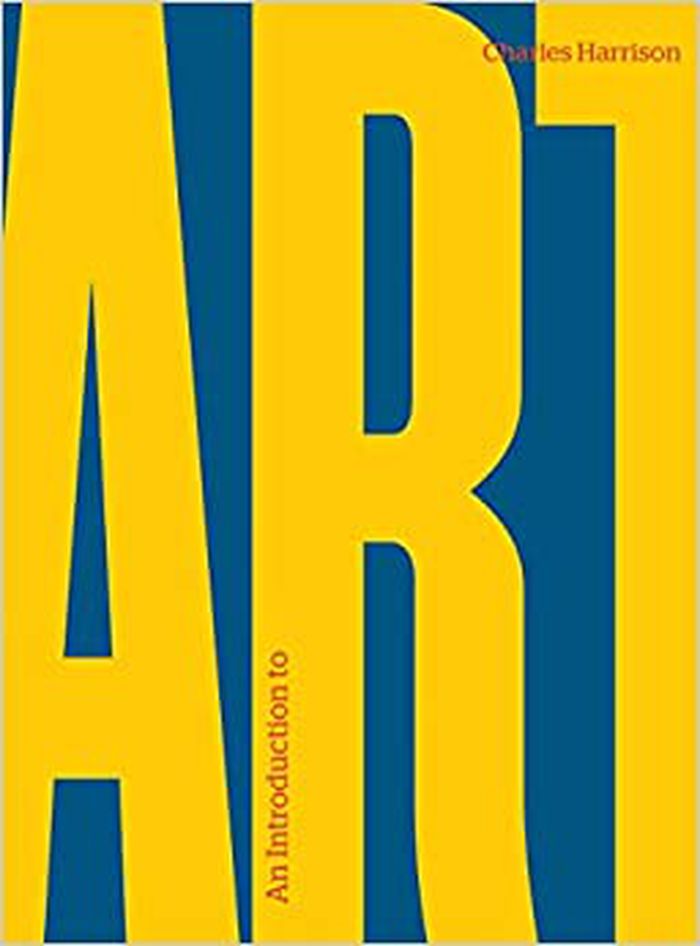
This publication offers an original, clear, and wide-ranging introduction to the arts of painting and sculpture, to the principal artistic print media, and to the visual arts of modernism and post-modernism. Covering the entire history of art, from Paleolithic cave painting to contemporary art, it provides foundational guidance on the basic character and techniques of the different art forms, on the various genres of painting in the Western tradition, and on the techniques of sculpture as they have been practiced over several millennia and across a wide range of cultures. Throughout the book, Harrison discusses the relative priorities of aesthetic appreciation and historical inquiry, and the importance of combining the two approaches. Written in a style that is at once graceful, engaging, and personal, as well as analytical and exact, this illuminating book offers an impassioned and timely defense of the importance and value of the firsthand encounter with works of art, whether in museums or in their original locations.
Art: an introduction
Actions:
Price:
$32.00
(available to order)
Summary:
This publication offers an original, clear, and wide-ranging introduction to the arts of painting and sculpture, to the principal artistic print media, and to the visual arts of modernism and post-modernism. Covering the entire history of art, from Paleolithic cave painting to contemporary art, it provides foundational guidance on the basic character and techniques of the different art forms, on the various genres of painting in the Western tradition, and on the techniques of sculpture as they have been practiced over several millennia and across a wide range of cultures. Throughout the book, Harrison discusses the relative priorities of aesthetic appreciation and historical inquiry, and the importance of combining the two approaches. Written in a style that is at once graceful, engaging, and personal, as well as analytical and exact, this illuminating book offers an impassioned and timely defense of the importance and value of the firsthand encounter with works of art, whether in museums or in their original locations.
Form:
books
books
Publication:
March 2020
March 2020
Subject:
Art Theory
Art Theory
Form:
books
books
Title:
Why architects still draw
Why architects still draw
Actions:
Price:
$26.95
(available to order)
Summary:
Why would an architect reach for a pencil when drawing software and AutoCAD are a click away? Use a ruler when 3D-scanners and GPS devices are close at hand? In Why Architects Still Draw, Paolo Belardi offers an elegant and ardent defense of drawing by hand as a way of thinking. Belardi is no Luddite; he doesn't urge architects to give up digital devices for watercolors(...)
$26.95
(available to order)
Summary:
Why would an architect reach for a pencil when drawing software and AutoCAD are a click away? Use a ruler when 3D-scanners and GPS devices are close at hand? In Why Architects Still Draw, Paolo Belardi offers an elegant and ardent defense of drawing by hand as a way of thinking. Belardi is no Luddite; he doesn't urge architects to give up digital devices for watercolors(...)
Title:
Why architects still draw
Actions:
Price:
$26.95
(available to order)
Summary:
Why would an architect reach for a pencil when drawing software and AutoCAD are a click away? Use a ruler when 3D-scanners and GPS devices are close at hand? In Why Architects Still Draw, Paolo Belardi offers an elegant and ardent defense of drawing by hand as a way of thinking. Belardi is no Luddite; he doesn't urge architects to give up digital devices for watercolors and a measuring tape. Rather, he makes a case for drawing as the interface between the idea and the work itself. A drawing, Belardi argues, holds within it the entire final design. It is the paradox of the acorn: a project emerges from a drawing-even from a sketch, rough and inchoate-just as an oak tree emerges from an acorn. Citing examples not just from architecture but also from literature, chemistry, music, archaeology, and art, Belardi shows how drawing is not a passive recording but a moment of invention pregnant with creative possibilities.
Why architects still draw
Actions:
Price:
$26.95
(available to order)
Summary:
Why would an architect reach for a pencil when drawing software and AutoCAD are a click away? Use a ruler when 3D-scanners and GPS devices are close at hand? In Why Architects Still Draw, Paolo Belardi offers an elegant and ardent defense of drawing by hand as a way of thinking. Belardi is no Luddite; he doesn't urge architects to give up digital devices for watercolors and a measuring tape. Rather, he makes a case for drawing as the interface between the idea and the work itself. A drawing, Belardi argues, holds within it the entire final design. It is the paradox of the acorn: a project emerges from a drawing-even from a sketch, rough and inchoate-just as an oak tree emerges from an acorn. Citing examples not just from architecture but also from literature, chemistry, music, archaeology, and art, Belardi shows how drawing is not a passive recording but a moment of invention pregnant with creative possibilities.
Form:
books
books
Publication:
March 2014
March 2014
Subject:
Architectural Theory
Architectural Theory
Form:
books
books
Title:
Unidentified flying object for contemporary architecture: ufo's experiments between political
Unidentified flying object for contemporary architecture: ufo's experiments between political
Actions:
Price:
$60.00
(available in store)
Summary:
The contemporary context is defined by a unique conjuncture. On one hand, we witness the revival of the radical architecture that from the avant-garde experiments of the origins recovers creative processes and iconographic fragments while nullifying the original ideological and political values. On the other hand, we see social protests in defense of fundamental rights(...)
$60.00
(available in store)
Summary:
The contemporary context is defined by a unique conjuncture. On one hand, we witness the revival of the radical architecture that from the avant-garde experiments of the origins recovers creative processes and iconographic fragments while nullifying the original ideological and political values. On the other hand, we see social protests in defense of fundamental rights(...)
Subject:
Architectural Theory
Architectural Theory
Publication:
May 2022
May 2022
Title:
Unidentified flying object for contemporary architecture: ufo's experiments between political
Actions:
Price:
$60.00
(available in store)
Summary:
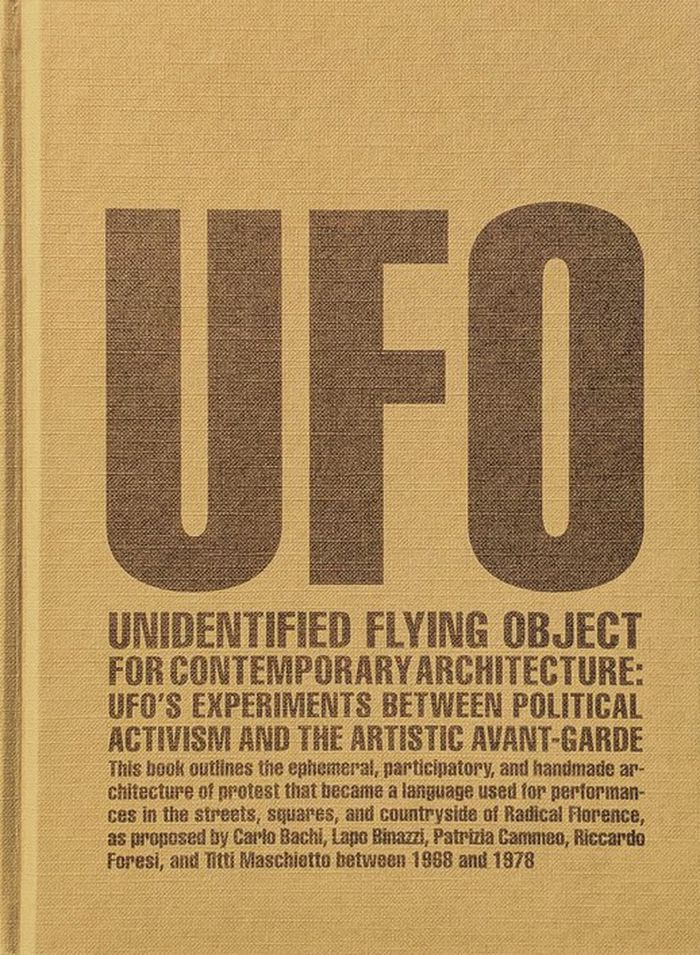
The contemporary context is defined by a unique conjuncture. On one hand, we witness the revival of the radical architecture that from the avant-garde experiments of the origins recovers creative processes and iconographic fragments while nullifying the original ideological and political values. On the other hand, we see social protests in defense of fundamental rights of democracy, as in 1968. Architecture is now reinvestigating those ephemeral experiments that have endured half a century as new "stone monuments" capable of indicating new perspectives for both research and design. Placing UFO group at the core of the contemporary debate means investigating their formal and seductive aspects, but also the ideological, political and social values with which objects, installations and happenings have been innervated, transforming them into devices of an architecture nourished by literature, art and political commitment for the foundation of an eloquent and activist project even more radical than the well-known Superstudio and Archizoom. The collaboration between Beatrice Lampariello and False Mirror Office lead to a monograph focused on the UFO’s work and an evaluation of their legacy relative to contemporary architecture.
Unidentified flying object for contemporary architecture: ufo's experiments between political
Actions:
Price:
$60.00
(available in store)
Summary:
The contemporary context is defined by a unique conjuncture. On one hand, we witness the revival of the radical architecture that from the avant-garde experiments of the origins recovers creative processes and iconographic fragments while nullifying the original ideological and political values. On the other hand, we see social protests in defense of fundamental rights of democracy, as in 1968. Architecture is now reinvestigating those ephemeral experiments that have endured half a century as new "stone monuments" capable of indicating new perspectives for both research and design. Placing UFO group at the core of the contemporary debate means investigating their formal and seductive aspects, but also the ideological, political and social values with which objects, installations and happenings have been innervated, transforming them into devices of an architecture nourished by literature, art and political commitment for the foundation of an eloquent and activist project even more radical than the well-known Superstudio and Archizoom. The collaboration between Beatrice Lampariello and False Mirror Office lead to a monograph focused on the UFO’s work and an evaluation of their legacy relative to contemporary architecture.
Form:
books
books
Publication:
May 2022
May 2022
Subject:
Architectural Theory
Architectural Theory
Form:
books
books
Title:
Machine art, 1934
Machine art, 1934
Actions:
Price:
$49.95
(available to order)
Summary:
In 1934, New York’s Museum of Modern Art staged a major exhibition of ball bearings, airplane propellers, pots and pans, cocktail tumblers, petri dishes, protractors, and other machine parts and products. The exhibition, titled Machine Art, explored these ordinary objects as works of modern art, teaching museumgoers about the nature of beauty and value in the era of mass(...)
$49.95
(available to order)
Summary:
In 1934, New York’s Museum of Modern Art staged a major exhibition of ball bearings, airplane propellers, pots and pans, cocktail tumblers, petri dishes, protractors, and other machine parts and products. The exhibition, titled Machine Art, explored these ordinary objects as works of modern art, teaching museumgoers about the nature of beauty and value in the era of mass(...)
Title:
Machine art, 1934
Actions:
Price:
$49.95
(available to order)
Summary:
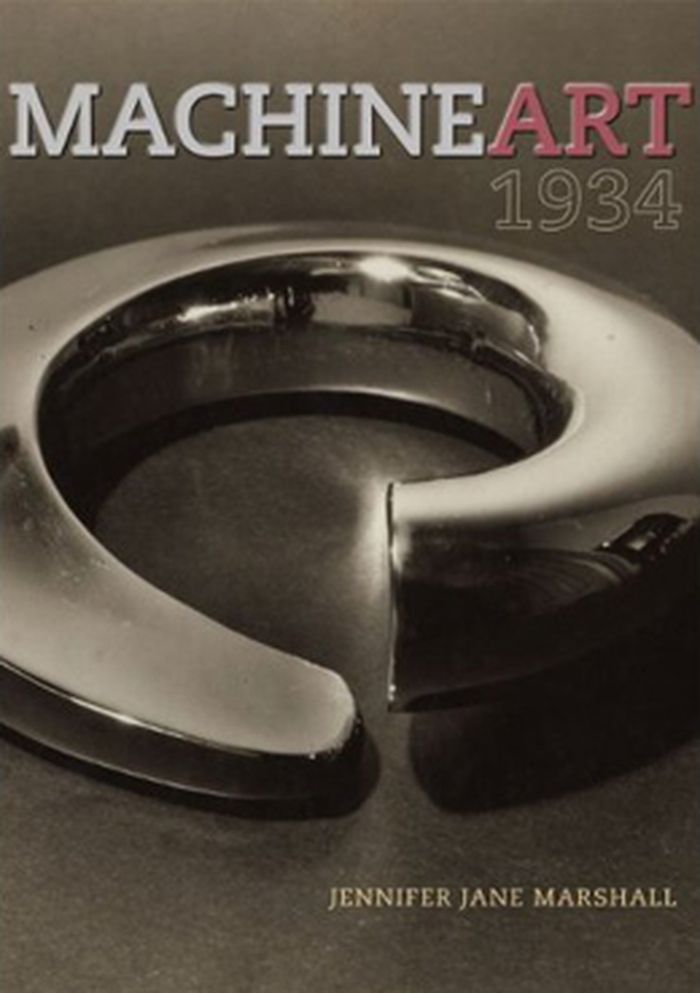
In 1934, New York’s Museum of Modern Art staged a major exhibition of ball bearings, airplane propellers, pots and pans, cocktail tumblers, petri dishes, protractors, and other machine parts and products. The exhibition, titled Machine Art, explored these ordinary objects as works of modern art, teaching museumgoers about the nature of beauty and value in the era of mass production. Telling the story of this popular but controversial show, Jennifer Jane Marshall examines its history and the relationship between the museum’s director, Alfred H. Barr Jr., and its curator, Philip Johnson, who oversaw it. She situates the show within the tumultuous climate of the interwar period and the Great Depression, considering how these unadorned objects served as a response to timely debates over photography, abstract art, the end of the American gold standard, and John Dewey’s insight that how a person experiences things depends on the context in which they are encountered. An engaging investigation of interwar American modernism, Machine Art, 1934 reveals how even simple things can serve as a defense against uncertainty.
Machine art, 1934
Actions:
Price:
$49.95
(available to order)
Summary:
In 1934, New York’s Museum of Modern Art staged a major exhibition of ball bearings, airplane propellers, pots and pans, cocktail tumblers, petri dishes, protractors, and other machine parts and products. The exhibition, titled Machine Art, explored these ordinary objects as works of modern art, teaching museumgoers about the nature of beauty and value in the era of mass production. Telling the story of this popular but controversial show, Jennifer Jane Marshall examines its history and the relationship between the museum’s director, Alfred H. Barr Jr., and its curator, Philip Johnson, who oversaw it. She situates the show within the tumultuous climate of the interwar period and the Great Depression, considering how these unadorned objects served as a response to timely debates over photography, abstract art, the end of the American gold standard, and John Dewey’s insight that how a person experiences things depends on the context in which they are encountered. An engaging investigation of interwar American modernism, Machine Art, 1934 reveals how even simple things can serve as a defense against uncertainty.
Form:
books
books
Publication:
April 2012
April 2012
Subject:
Museums and Universal Exhibitions
Museums and Universal Exhibitions
Form:
books
books
Actions:
Price:
$33.95
(available to order)
Summary:
'Darkness is not empty,' writes Teju Cole in ''Black Paper,'' a book that meditates on what it means to sustain our humanity—and witness the humanity of others—in a time of darkness. One of the most celebrated essayists of his generation, Cole here plays variations on the essay form, modeling ways to attend to experience—not just to take in but to think critically about(...)
$33.95
(available to order)
Summary:
'Darkness is not empty,' writes Teju Cole in ''Black Paper,'' a book that meditates on what it means to sustain our humanity—and witness the humanity of others—in a time of darkness. One of the most celebrated essayists of his generation, Cole here plays variations on the essay form, modeling ways to attend to experience—not just to take in but to think critically about(...)
Title:
Black paper : writing in a dark time
Actions:
Price:
$33.95
(available to order)
Summary:
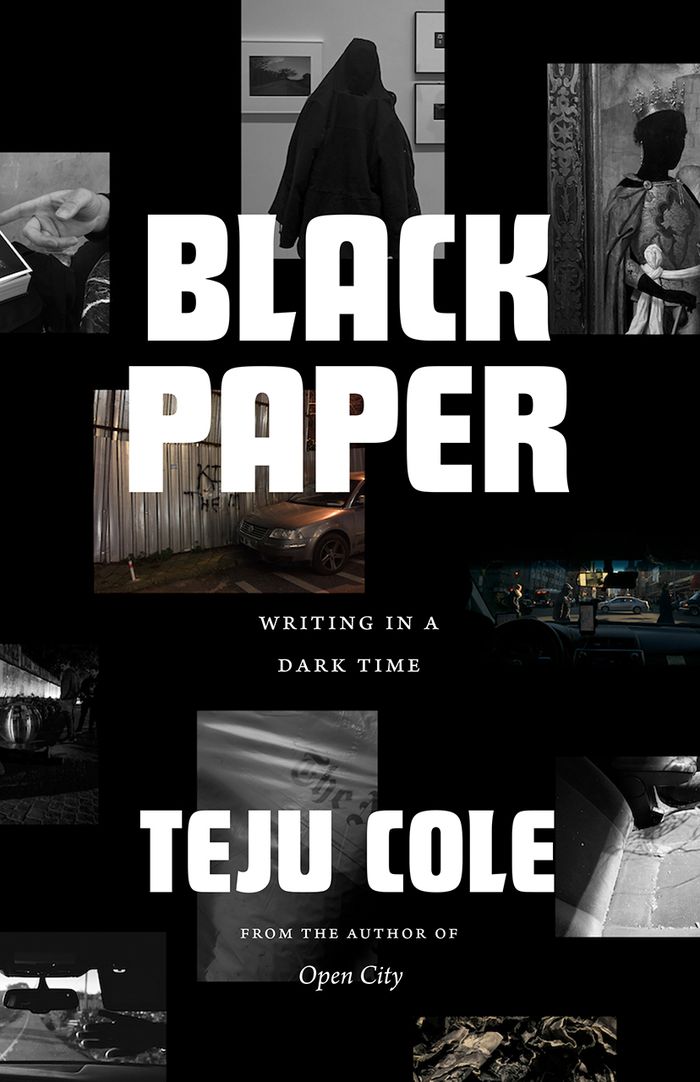
'Darkness is not empty,' writes Teju Cole in ''Black Paper,'' a book that meditates on what it means to sustain our humanity—and witness the humanity of others—in a time of darkness. One of the most celebrated essayists of his generation, Cole here plays variations on the essay form, modeling ways to attend to experience—not just to take in but to think critically about what we sense and what we don’t. Wide-ranging but thematically unified, the essays address ethical questions about what it means to be human and what it means to bear witness, recognizing how our individual present is informed by a collective past. Cole’s writings in ''Black Paper'' approach the fractured moment of our history through a constellation of interrelated concerns: confrontation with unsettling art, elegies both public and private, the defense of writing in a time of political upheaval, the role of the color black in the visual arts, the use of shadow in photography, and the links between literature and activism. Throughout, Cole gives us intriguing new ways of thinking about blackness and its numerous connotations. As he describes the carbon-copy process in his epilogue: 'Writing on the top white sheet would transfer the carbon from the black paper onto the bottom white sheet. Black transported the meaning.'
Black paper : writing in a dark time
Actions:
Price:
$33.95
(available to order)
Summary:
'Darkness is not empty,' writes Teju Cole in ''Black Paper,'' a book that meditates on what it means to sustain our humanity—and witness the humanity of others—in a time of darkness. One of the most celebrated essayists of his generation, Cole here plays variations on the essay form, modeling ways to attend to experience—not just to take in but to think critically about what we sense and what we don’t. Wide-ranging but thematically unified, the essays address ethical questions about what it means to be human and what it means to bear witness, recognizing how our individual present is informed by a collective past. Cole’s writings in ''Black Paper'' approach the fractured moment of our history through a constellation of interrelated concerns: confrontation with unsettling art, elegies both public and private, the defense of writing in a time of political upheaval, the role of the color black in the visual arts, the use of shadow in photography, and the links between literature and activism. Throughout, Cole gives us intriguing new ways of thinking about blackness and its numerous connotations. As he describes the carbon-copy process in his epilogue: 'Writing on the top white sheet would transfer the carbon from the black paper onto the bottom white sheet. Black transported the meaning.'
Form:
books
books
Publication:
October 2021
October 2021
Subject:
Social
Social


