


13794 Results
Form:
books
books
Actions:
Price:
$54.00
(available in store)
Summary:
In ''Vitruvius: Writing the body of architecture,'' Indra Kagis McEwen argued that Vitruvius's first-century BCE treatise ''De architectura'' was informed by imperial ideology, giving architecture a role in the imperial Roman project of world rule. In her sequel, ''All the King's Horses,'' McEwen focuses on the early Renaissance reception of Vitruvius's thought beginning(...)
$54.00
(available in store)
Summary:
In ''Vitruvius: Writing the body of architecture,'' Indra Kagis McEwen argued that Vitruvius's first-century BCE treatise ''De architectura'' was informed by imperial ideology, giving architecture a role in the imperial Roman project of world rule. In her sequel, ''All the King's Horses,'' McEwen focuses on the early Renaissance reception of Vitruvius's thought beginning(...)
Title:
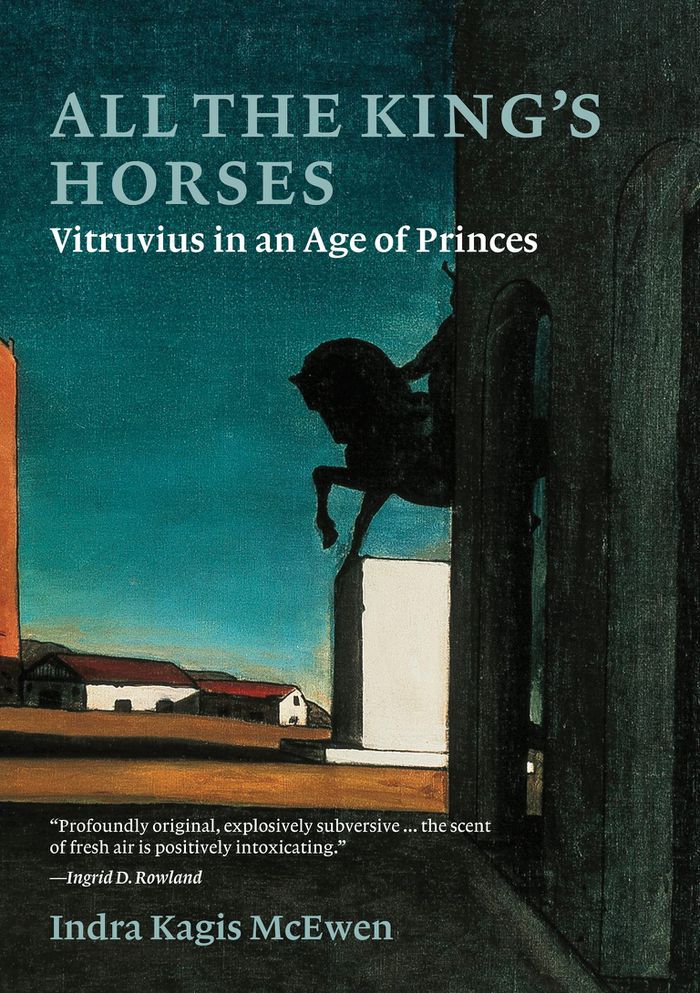
All the king's horses: Vitruvius in an age of princes
Actions:
Price:
$54.00
(available in store)
Summary:
In ''Vitruvius: Writing the body of architecture,'' Indra Kagis McEwen argued that Vitruvius's first-century BCE treatise ''De architectura'' was informed by imperial ideology, giving architecture a role in the imperial Roman project of world rule. In her sequel, ''All the King's Horses,'' McEwen focuses on the early Renaissance reception of Vitruvius's thought beginning with Petrarch—a political reception preoccupied with legitimating existing power structures. During this ''age of princes'' various signori took over Italian towns and cities, displacing independent communes and their avowed ideal of the common good. Architects, taking up Vitruvius's mantle, designed buildings and other structures for these princes with the intent of celebrating and making their power manifest. Through meticulous descriptions of the work of architects and artists from Alberti to Leonardo, McEwen explains how architecture became an instrument of control in the early Italian Renaissance. She shows how architectural magnificence supported claims to power, a phenomenon best displayed in one of the era's most prominent monumental themes: the equestrian statue of a prince, in which the horse became an emanation of the will of the rider, its strength the expression of his strength.
All the king's horses: Vitruvius in an age of princes
Actions:
Price:
$54.00
(available in store)
Summary:
In ''Vitruvius: Writing the body of architecture,'' Indra Kagis McEwen argued that Vitruvius's first-century BCE treatise ''De architectura'' was informed by imperial ideology, giving architecture a role in the imperial Roman project of world rule. In her sequel, ''All the King's Horses,'' McEwen focuses on the early Renaissance reception of Vitruvius's thought beginning with Petrarch—a political reception preoccupied with legitimating existing power structures. During this ''age of princes'' various signori took over Italian towns and cities, displacing independent communes and their avowed ideal of the common good. Architects, taking up Vitruvius's mantle, designed buildings and other structures for these princes with the intent of celebrating and making their power manifest. Through meticulous descriptions of the work of architects and artists from Alberti to Leonardo, McEwen explains how architecture became an instrument of control in the early Italian Renaissance. She shows how architectural magnificence supported claims to power, a phenomenon best displayed in one of the era's most prominent monumental themes: the equestrian statue of a prince, in which the horse became an emanation of the will of the rider, its strength the expression of his strength.
Form:
books
books
Publication:
April 2023
April 2023
Subject:
Architectural Theory
Architectural Theory
Form:
books
books
Actions:
Price:
$25.95
(available to order)
Summary:
Between 1979 and 1981, Alfredo Jaar asked Chileans a deceptively simple question: "Are you happy?" Through private interviews, sidewalk polls and video-recorded forums, among other interventions, Jaar's three-year and seven-phase project, ''Studies on happiness'', addressed a furtive and fearful population living under Augusto Pinochet's military dictatorship. It also(...)
$25.95
(available to order)
Summary:
Between 1979 and 1981, Alfredo Jaar asked Chileans a deceptively simple question: "Are you happy?" Through private interviews, sidewalk polls and video-recorded forums, among other interventions, Jaar's three-year and seven-phase project, ''Studies on happiness'', addressed a furtive and fearful population living under Augusto Pinochet's military dictatorship. It also(...)
Title:
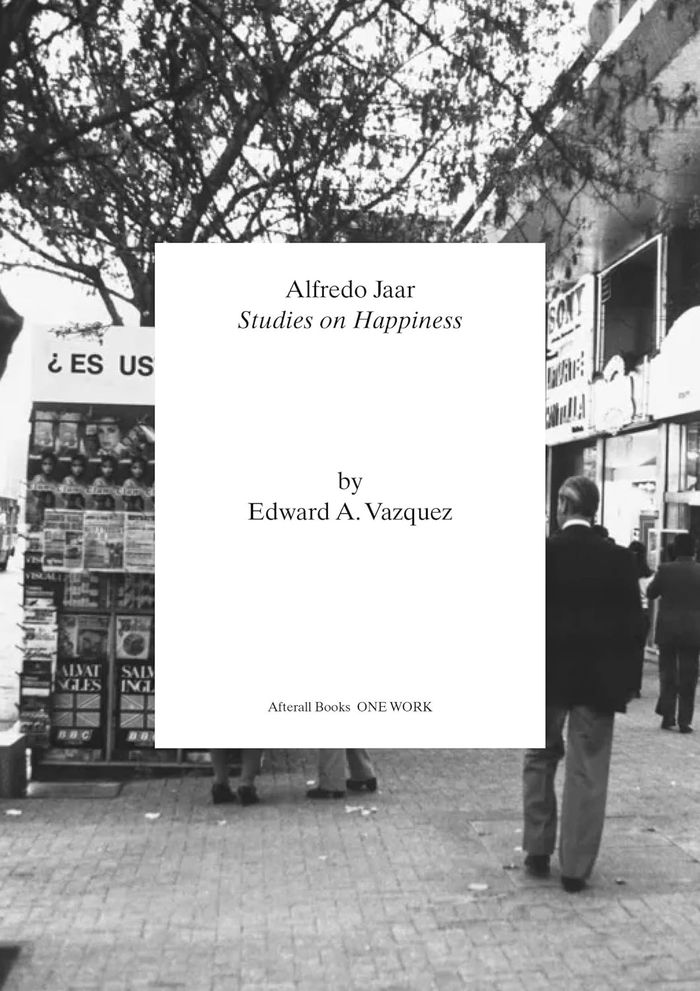
Alfredo Jaar: Studies on happiness
Actions:
Price:
$25.95
(available to order)
Summary:
Between 1979 and 1981, Alfredo Jaar asked Chileans a deceptively simple question: "Are you happy?" Through private interviews, sidewalk polls and video-recorded forums, among other interventions, Jaar's three-year and seven-phase project, ''Studies on happiness'', addressed a furtive and fearful population living under Augusto Pinochet's military dictatorship. It also spoke to a country in transition, as a newly adopted constitution remade Chile through privatisation and other neoliberal reforms. In its varied interventions and direct mode of address, ''Studies on happiness'' functioned as a feedback device meant to catalyse a critical awareness with its blunt questioning. Edward A. Vazquez contextualises Studies on Happiness within Jaar's early production and situates his practice within a Chilean art world haunted by the residues of political violence. This study foregrounds the project's historical embeddedness and the deep political stakes of its apparent sociality, recognising the crucial role that context has always played in Jaar's practice. By turning to the Santiago of Studies on Happiness, Vazquez explores the work's political and art historical environment and provides a wedge to realign current interpretations of Chilean art and hemispheric conceptualism with the openness central to Jaar's project.
Alfredo Jaar: Studies on happiness
Actions:
Price:
$25.95
(available to order)
Summary:
Between 1979 and 1981, Alfredo Jaar asked Chileans a deceptively simple question: "Are you happy?" Through private interviews, sidewalk polls and video-recorded forums, among other interventions, Jaar's three-year and seven-phase project, ''Studies on happiness'', addressed a furtive and fearful population living under Augusto Pinochet's military dictatorship. It also spoke to a country in transition, as a newly adopted constitution remade Chile through privatisation and other neoliberal reforms. In its varied interventions and direct mode of address, ''Studies on happiness'' functioned as a feedback device meant to catalyse a critical awareness with its blunt questioning. Edward A. Vazquez contextualises Studies on Happiness within Jaar's early production and situates his practice within a Chilean art world haunted by the residues of political violence. This study foregrounds the project's historical embeddedness and the deep political stakes of its apparent sociality, recognising the crucial role that context has always played in Jaar's practice. By turning to the Santiago of Studies on Happiness, Vazquez explores the work's political and art historical environment and provides a wedge to realign current interpretations of Chilean art and hemispheric conceptualism with the openness central to Jaar's project.
Form:
books
books
Publication:
November 2023
November 2023
Subject:
Art Theory
Art Theory
Form:
books
books
Title:
Relational aesthetics
Relational aesthetics
Actions:
Price:
$33.95
(available in store)
Summary:
First published in 1998, Nicolas Bourriaud's Relational Aesthetics laid out a thesis for art's turn toward participation, experience, and the whole of human relations. Now, over twenty years after its original release, this landmark work has been updated with a new translation by Denyse Beaulieu and a new foreword by the author. Where does our current obsession for(...)
$33.95
(available in store)
Summary:
First published in 1998, Nicolas Bourriaud's Relational Aesthetics laid out a thesis for art's turn toward participation, experience, and the whole of human relations. Now, over twenty years after its original release, this landmark work has been updated with a new translation by Denyse Beaulieu and a new foreword by the author. Where does our current obsession for(...)
Title:
Relational aesthetics
Actions:
Price:
$33.95
(available in store)
Summary:
First published in 1998, Nicolas Bourriaud's Relational Aesthetics laid out a thesis for art's turn toward participation, experience, and the whole of human relations. Now, over twenty years after its original release, this landmark work has been updated with a new translation by Denyse Beaulieu and a new foreword by the author. Where does our current obsession for interactivity stem from? After the consumer society and the communication era, does art still contribute to the emergence of a rational society? Nicolas Bourriaud attempts to renew our approach to contemporary art by getting as close as possible to the artists' works, and by revealing the principles that structure their thoughts: an aesthetic of the interhuman, of the encounter, of proximity, of resisting social formatting.
Relational aesthetics
Actions:
Price:
$33.95
(available in store)
Summary:
First published in 1998, Nicolas Bourriaud's Relational Aesthetics laid out a thesis for art's turn toward participation, experience, and the whole of human relations. Now, over twenty years after its original release, this landmark work has been updated with a new translation by Denyse Beaulieu and a new foreword by the author. Where does our current obsession for interactivity stem from? After the consumer society and the communication era, does art still contribute to the emergence of a rational society? Nicolas Bourriaud attempts to renew our approach to contemporary art by getting as close as possible to the artists' works, and by revealing the principles that structure their thoughts: an aesthetic of the interhuman, of the encounter, of proximity, of resisting social formatting.
Form:
books
books
Publication:
March 2023
March 2023
Subject:
Art Theory
Art Theory
Form:
books
books
Actions:
Price:
$36.95
(available to order)
Summary:
"Film X Autochthonous struggles today" brings together for the first time filmmakers, activists, film curators, and scholars who share a common interest in filmmaking practices that emerge from and participate in the various situations of struggle that the Autochthonous/Indigenous/Native/Aboriginal/First Nations peoples and communities are involved in worldwide. Starting(...)
$36.95
(available to order)
Summary:
"Film X Autochthonous struggles today" brings together for the first time filmmakers, activists, film curators, and scholars who share a common interest in filmmaking practices that emerge from and participate in the various situations of struggle that the Autochthonous/Indigenous/Native/Aboriginal/First Nations peoples and communities are involved in worldwide. Starting(...)
Title:
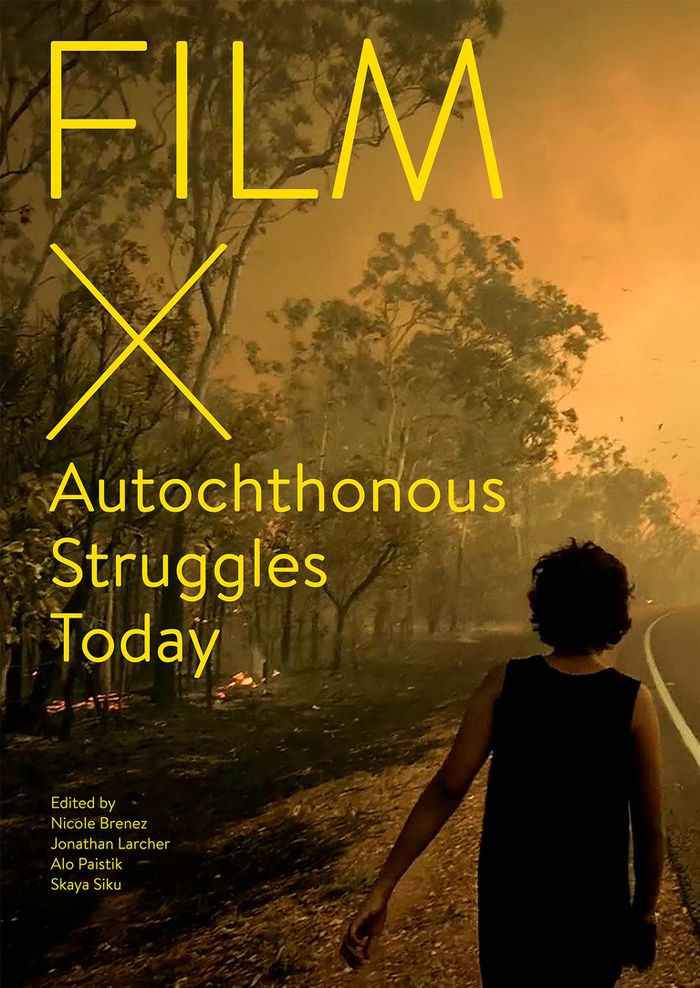
Film X Autochthonous struggles today
Actions:
Price:
$36.95
(available to order)
Summary:
"Film X Autochthonous struggles today" brings together for the first time filmmakers, activists, film curators, and scholars who share a common interest in filmmaking practices that emerge from and participate in the various situations of struggle that the Autochthonous/Indigenous/Native/Aboriginal/First Nations peoples and communities are involved in worldwide. Starting with the Edison Studio’s 1894 short films Buffalo Dance and Sioux Ghost Dance, representations of Autochthonous peoples have been part of cinema right from its inception. The vast majority of these representations, however, have not been produced by nor for Autochthonous peoples. In the wake of political and cultural self-determination movements of the 1960s and 1970s, and with the gradual democratization and accessibility of the tools of moving-image making, Autochthonous communities have displaced and renewed cinema’s forms and means of production, increasingly reclaiming their right for self-representation by way of film and video.
Film X Autochthonous struggles today
Actions:
Price:
$36.95
(available to order)
Summary:
"Film X Autochthonous struggles today" brings together for the first time filmmakers, activists, film curators, and scholars who share a common interest in filmmaking practices that emerge from and participate in the various situations of struggle that the Autochthonous/Indigenous/Native/Aboriginal/First Nations peoples and communities are involved in worldwide. Starting with the Edison Studio’s 1894 short films Buffalo Dance and Sioux Ghost Dance, representations of Autochthonous peoples have been part of cinema right from its inception. The vast majority of these representations, however, have not been produced by nor for Autochthonous peoples. In the wake of political and cultural self-determination movements of the 1960s and 1970s, and with the gradual democratization and accessibility of the tools of moving-image making, Autochthonous communities have displaced and renewed cinema’s forms and means of production, increasingly reclaiming their right for self-representation by way of film and video.
Form:
books
books
Publication:
October 2024
October 2024
Subject:
Art Theory
Art Theory
Form:
books
books
Title:
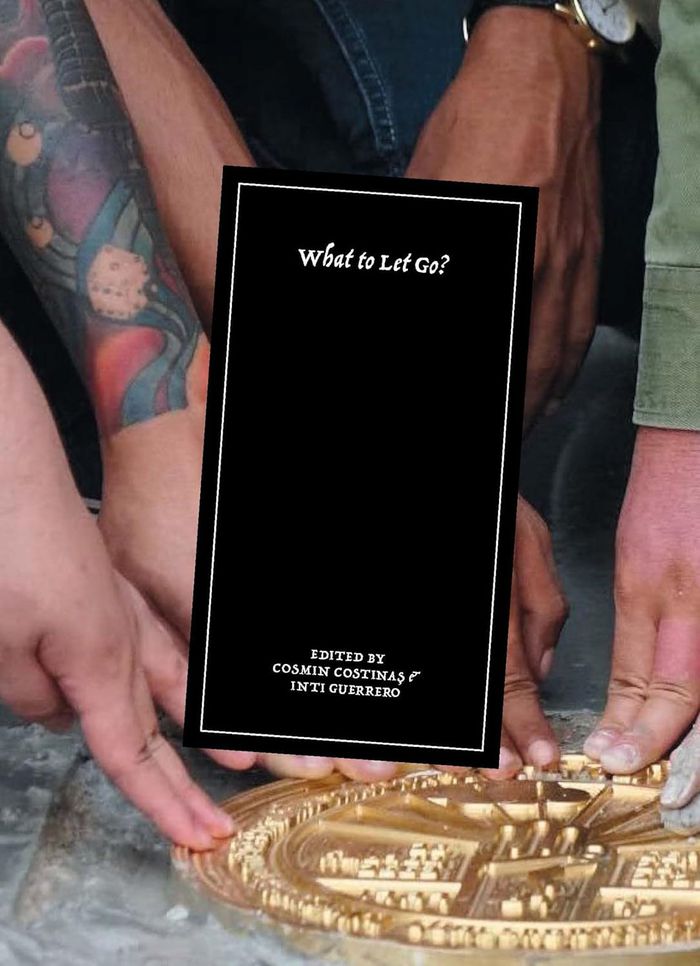
What to let go?
What to let go?
Actions:
Price:
$43.95
(available to order)
Summary:
"What to let go?" offers new contributions by and international roster of thinkers, authors, anthropologists, curators, artists, and poets addressing the question: what gets counted within the category of heritage, and who gets to do the counting? Addressing the increasing debate around repatriation of looted artefacts by colonial powers to the varied and dissimilar(...)
$43.95
(available to order)
Summary:
"What to let go?" offers new contributions by and international roster of thinkers, authors, anthropologists, curators, artists, and poets addressing the question: what gets counted within the category of heritage, and who gets to do the counting? Addressing the increasing debate around repatriation of looted artefacts by colonial powers to the varied and dissimilar(...)
Title:
What to let go?
Actions:
Price:
$43.95
(available to order)
Summary:
"What to let go?" offers new contributions by and international roster of thinkers, authors, anthropologists, curators, artists, and poets addressing the question: what gets counted within the category of heritage, and who gets to do the counting? Addressing the increasing debate around repatriation of looted artefacts by colonial powers to the varied and dissimilar processes of renaming and removing symbols of past eras, from India and Myanmar to Apartheid South Africa, the book will also look at how China's resurgent nationalism is placing a (still developing) version of its imperial heritage at the core of its twenty-first century self-image. As these processes appear to occupy an increasingly prominent segment of the political discourse, with history seemingly becoming the major battlefield both for the left and for the right, "What to let go?" asks: how can art reconfigure our collective foundational myths?
What to let go?
Actions:
Price:
$43.95
(available to order)
Summary:
"What to let go?" offers new contributions by and international roster of thinkers, authors, anthropologists, curators, artists, and poets addressing the question: what gets counted within the category of heritage, and who gets to do the counting? Addressing the increasing debate around repatriation of looted artefacts by colonial powers to the varied and dissimilar processes of renaming and removing symbols of past eras, from India and Myanmar to Apartheid South Africa, the book will also look at how China's resurgent nationalism is placing a (still developing) version of its imperial heritage at the core of its twenty-first century self-image. As these processes appear to occupy an increasingly prominent segment of the political discourse, with history seemingly becoming the major battlefield both for the left and for the right, "What to let go?" asks: how can art reconfigure our collective foundational myths?
Form:
books
books
Publication:
August 2024
August 2024
Subject:
Art Theory
Art Theory
Form:
books
books

Title:
And if I devoted my life to one of its feathers? Aesthetic responses to extraction, accumulation
And if I devoted my life to one of its feathers? Aesthetic responses to extraction, accumulation
Actions:
Price:
$27.00
(available to order)
Summary:
“And if I devoted my life to one of its feathers?” wrote the Chilean poet, artist, and feminist activist Cecilia Vicuña in the early 1970s. Vicuña countered anthropocentric and hetero-patriarchal urges with healing and appreciation, reviving the aesthetic and spiritual bonds between human and more-than-human entities and worlds. Revolving around this vision of(...)
$27.00
(available to order)
Summary:
“And if I devoted my life to one of its feathers?” wrote the Chilean poet, artist, and feminist activist Cecilia Vicuña in the early 1970s. Vicuña countered anthropocentric and hetero-patriarchal urges with healing and appreciation, reviving the aesthetic and spiritual bonds between human and more-than-human entities and worlds. Revolving around this vision of(...)
Title:
And if I devoted my life to one of its feathers? Aesthetic responses to extraction, accumulation
Actions:
Price:
$27.00
(available to order)
Summary:
“And if I devoted my life to one of its feathers?” wrote the Chilean poet, artist, and feminist activist Cecilia Vicuña in the early 1970s. Vicuña countered anthropocentric and hetero-patriarchal urges with healing and appreciation, reviving the aesthetic and spiritual bonds between human and more-than-human entities and worlds. Revolving around this vision of interconnectivity, this book, which accompanies a joint exhibition of the same name of Kunsthalle Wien and Wiener Festwochen, seeks to create a collective dialogue around unequal distribution of power, sovereignty, and social and ecological justice. The exhibited works and written contributions reflect on the rationale of exploitation, the fast-paced mining of raw materials, and environmental destruction as a colonial legacy. They deconstruct Western anthropocentric models and enduring colonial and racist discourses, trace the stories of indigenous struggles for collective survival, and celebrate encounters defined by solidarity in their resistance to capitalist extraction, misogyny, imperialist violence, and dispossession.
And if I devoted my life to one of its feathers? Aesthetic responses to extraction, accumulation
Actions:
Price:
$27.00
(available to order)
Summary:
“And if I devoted my life to one of its feathers?” wrote the Chilean poet, artist, and feminist activist Cecilia Vicuña in the early 1970s. Vicuña countered anthropocentric and hetero-patriarchal urges with healing and appreciation, reviving the aesthetic and spiritual bonds between human and more-than-human entities and worlds. Revolving around this vision of interconnectivity, this book, which accompanies a joint exhibition of the same name of Kunsthalle Wien and Wiener Festwochen, seeks to create a collective dialogue around unequal distribution of power, sovereignty, and social and ecological justice. The exhibited works and written contributions reflect on the rationale of exploitation, the fast-paced mining of raw materials, and environmental destruction as a colonial legacy. They deconstruct Western anthropocentric models and enduring colonial and racist discourses, trace the stories of indigenous struggles for collective survival, and celebrate encounters defined by solidarity in their resistance to capitalist extraction, misogyny, imperialist violence, and dispossession.
Form:
books
books
Publication:
April 2023
April 2023
Subject:
Art Theory
Art Theory
Form:
books
books
Actions:
Price:
$36.95
(available to order)
Summary:
Alors que le street art se monnaie dans les galeries d’art, dans les rues, les graffitis sont les cibles d’une lutte acharnée. Tous les ans, ce sont plusieurs milliards d’euros qui sont investis au niveau mondial dans des systèmes de sécurité, de nettoyage et de prévention. Graffeurs eux-mêmes, les auteurs ont ainsi vu leurs inscriptions disparaître de plus en plus(...)
$36.95
(available to order)
Summary:
Alors que le street art se monnaie dans les galeries d’art, dans les rues, les graffitis sont les cibles d’une lutte acharnée. Tous les ans, ce sont plusieurs milliards d’euros qui sont investis au niveau mondial dans des systèmes de sécurité, de nettoyage et de prévention. Graffeurs eux-mêmes, les auteurs ont ainsi vu leurs inscriptions disparaître de plus en plus(...)
Title:
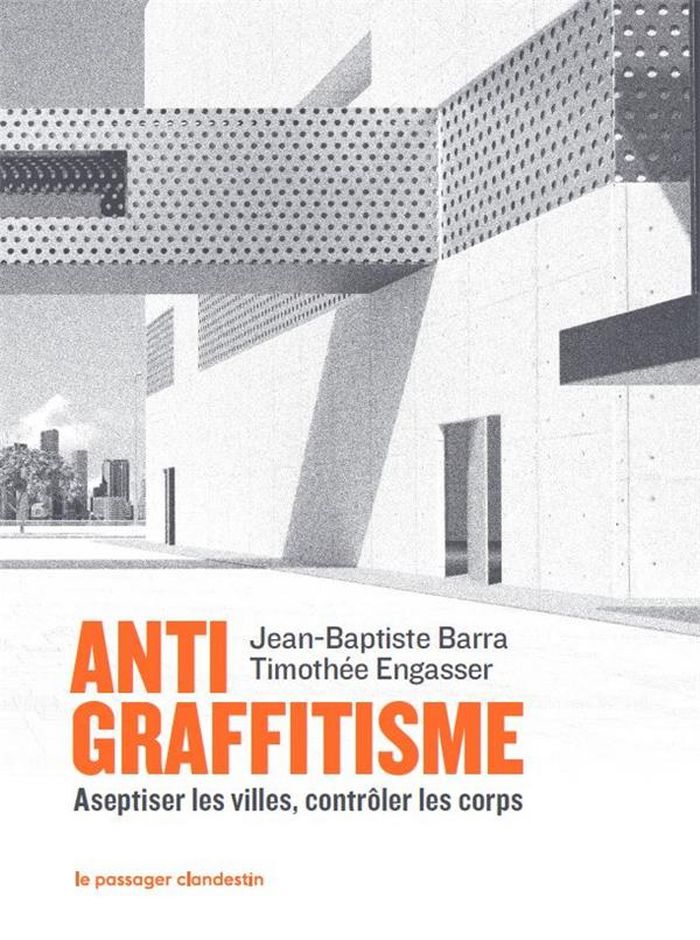
Antigraffitisme: aseptiser les villes, contrôler les corps
Actions:
Price:
$36.95
(available to order)
Summary:
Alors que le street art se monnaie dans les galeries d’art, dans les rues, les graffitis sont les cibles d’une lutte acharnée. Tous les ans, ce sont plusieurs milliards d’euros qui sont investis au niveau mondial dans des systèmes de sécurité, de nettoyage et de prévention. Graffeurs eux-mêmes, les auteurs ont ainsi vu leurs inscriptions disparaître de plus en plus rapidement. Leur regard s’est alors décalé : du graffiti, c’est sur son effacement qu’ils se sont penchés. De l’avènement de l’hygiénisme au XVIIIe siècle à la mise en place d’un véritable marché sécuritaire à partir des années 1980, les auteurs retracent l’histoire de la répression de ce geste d’apparence anodine. Ils cherchent ainsi à comprendre ce qui se joue dans la gouvernance des espaces urbains contemporains et alertent sur ces effacements, signes avant-coureurs de logiques de contrôle bien plus insidieuses, qui ne concernent plus seulement celles et ceux qui écrivent dans la ville.
Antigraffitisme: aseptiser les villes, contrôler les corps
Actions:
Price:
$36.95
(available to order)
Summary:
Alors que le street art se monnaie dans les galeries d’art, dans les rues, les graffitis sont les cibles d’une lutte acharnée. Tous les ans, ce sont plusieurs milliards d’euros qui sont investis au niveau mondial dans des systèmes de sécurité, de nettoyage et de prévention. Graffeurs eux-mêmes, les auteurs ont ainsi vu leurs inscriptions disparaître de plus en plus rapidement. Leur regard s’est alors décalé : du graffiti, c’est sur son effacement qu’ils se sont penchés. De l’avènement de l’hygiénisme au XVIIIe siècle à la mise en place d’un véritable marché sécuritaire à partir des années 1980, les auteurs retracent l’histoire de la répression de ce geste d’apparence anodine. Ils cherchent ainsi à comprendre ce qui se joue dans la gouvernance des espaces urbains contemporains et alertent sur ces effacements, signes avant-coureurs de logiques de contrôle bien plus insidieuses, qui ne concernent plus seulement celles et ceux qui écrivent dans la ville.
Form:
books
books
Publication:
January 2023
January 2023
Subject:
Urban Theory
Urban Theory
Form:
books
books
Title:
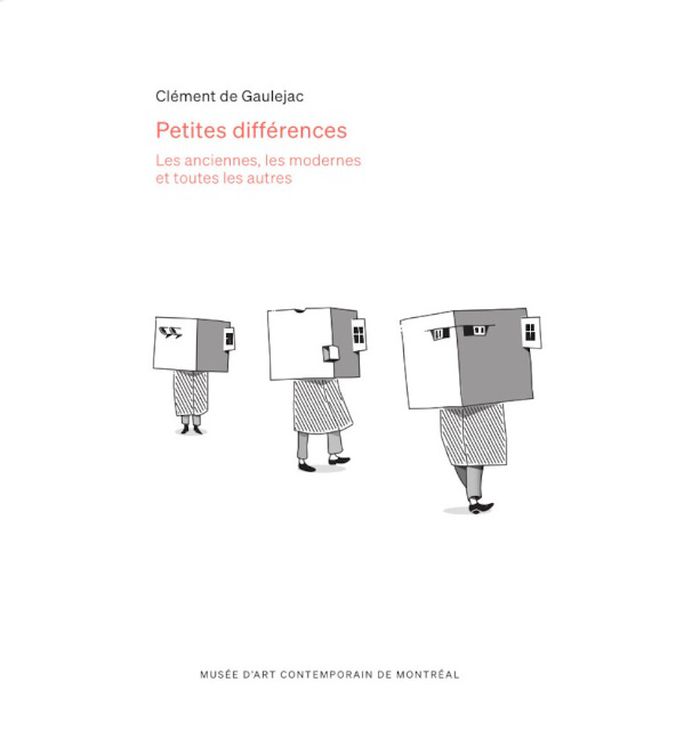
Petites différences
Petites différences
Actions:
Price:
$20.00
(available to order)
Summary:
Les dessins légendés exposés en ces pages ont été élaborés tel un hommage aux nombreuses mains qui façonnent les Histoires de l’art. La formation des artistes, leur filiation historique, les collaborations plurielles, le travail de recherche, de création et de conservation, ainsi que les diverses institutions qui les soutiennent sont mis à l’œuvre dans le travail de(...)
$20.00
(available to order)
Summary:
Les dessins légendés exposés en ces pages ont été élaborés tel un hommage aux nombreuses mains qui façonnent les Histoires de l’art. La formation des artistes, leur filiation historique, les collaborations plurielles, le travail de recherche, de création et de conservation, ainsi que les diverses institutions qui les soutiennent sont mis à l’œuvre dans le travail de(...)
Title:
Petites différences
Actions:
Price:
$20.00
(available to order)
Summary:
Les dessins légendés exposés en ces pages ont été élaborés tel un hommage aux nombreuses mains qui façonnent les Histoires de l’art. La formation des artistes, leur filiation historique, les collaborations plurielles, le travail de recherche, de création et de conservation, ainsi que les diverses institutions qui les soutiennent sont mis à l’œuvre dans le travail de Clément de Gaulejac. La création, aussi solitaire qu’elle puisse paraître, relève toujours d’un travail collectif. Comment s’organise la nécessaire solidarité entre artistes malgré les rivalités et l’asymétrie de relations parfois épineuses? Comment concilier l’individualisme de la création et la constitution de communautés interprétatives? Que se passe-t-il quand ces formations informelles se dotent de règles dont l’application ne pourra jamais être performée que par des individus? Composée de 38 dessins légendés faisant partie de la collection du Musée d’art contemporain de Montréal, cette œuvre conçue par l’artiste Clément de Gaulejac s’inscrit dans la continuité d’une série amorcée en 2011 avec Le livre noir de l’art conceptuel, poursuivie en 2012 avec Grande École, puis en 2017 avec Les artistes. Ce nouveau corpus prolonge sa réflexion sur les « règles de l’art », cet ensemble de lois qu’une actualisation permanente rend impossibles à énoncer, mais dont on sait pourtant qu’elles régissent le milieu de l’art. Bilingue, la publication comprend une documentation complète de l’œuvre accompagnée d’un texte de la conservatrice de la collection du musée, Marie-Eve Beaupré.
Petites différences
Actions:
Price:
$20.00
(available to order)
Summary:
Les dessins légendés exposés en ces pages ont été élaborés tel un hommage aux nombreuses mains qui façonnent les Histoires de l’art. La formation des artistes, leur filiation historique, les collaborations plurielles, le travail de recherche, de création et de conservation, ainsi que les diverses institutions qui les soutiennent sont mis à l’œuvre dans le travail de Clément de Gaulejac. La création, aussi solitaire qu’elle puisse paraître, relève toujours d’un travail collectif. Comment s’organise la nécessaire solidarité entre artistes malgré les rivalités et l’asymétrie de relations parfois épineuses? Comment concilier l’individualisme de la création et la constitution de communautés interprétatives? Que se passe-t-il quand ces formations informelles se dotent de règles dont l’application ne pourra jamais être performée que par des individus? Composée de 38 dessins légendés faisant partie de la collection du Musée d’art contemporain de Montréal, cette œuvre conçue par l’artiste Clément de Gaulejac s’inscrit dans la continuité d’une série amorcée en 2011 avec Le livre noir de l’art conceptuel, poursuivie en 2012 avec Grande École, puis en 2017 avec Les artistes. Ce nouveau corpus prolonge sa réflexion sur les « règles de l’art », cet ensemble de lois qu’une actualisation permanente rend impossibles à énoncer, mais dont on sait pourtant qu’elles régissent le milieu de l’art. Bilingue, la publication comprend une documentation complète de l’œuvre accompagnée d’un texte de la conservatrice de la collection du musée, Marie-Eve Beaupré.
Form:
books
books
Publication:
March 2023
March 2023
Subject:
Art Theory
Art Theory
Form:
books
books
Actions:
Price:
$46.00
(available to order)
Summary:
Si l'histoire des rapports entre Paris et New York est bien connue, celle des relations entre Paris et Dakar l'est beaucoup moins. Entre la France et le Sénégal, la circulation des objets, des artistes et des idées atteste des rapports de force qui agitèrent la scène artistique dans les années 1950 à 1970, marquées par le processus de décolonisation et la guerre froide.(...)
$46.00
(available to order)
Summary:
Si l'histoire des rapports entre Paris et New York est bien connue, celle des relations entre Paris et Dakar l'est beaucoup moins. Entre la France et le Sénégal, la circulation des objets, des artistes et des idées atteste des rapports de force qui agitèrent la scène artistique dans les années 1950 à 1970, marquées par le processus de décolonisation et la guerre froide.(...)
Title:
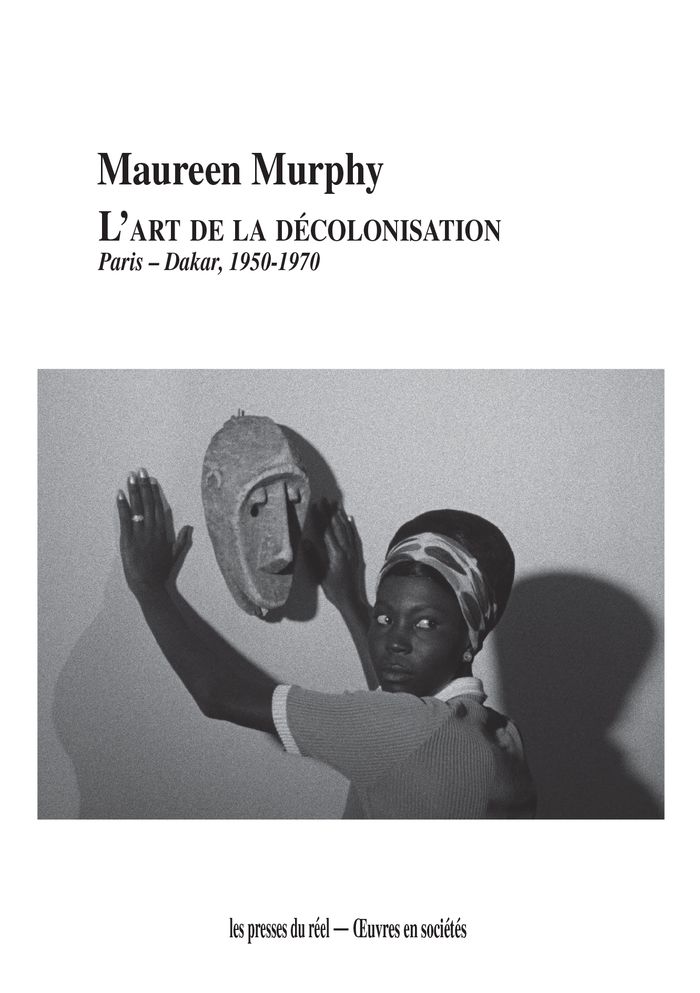
L'Art de la décolonisation : Paris-Dakar (1950-1970)
Actions:
Price:
$46.00
(available to order)
Summary:
Si l'histoire des rapports entre Paris et New York est bien connue, celle des relations entre Paris et Dakar l'est beaucoup moins. Entre la France et le Sénégal, la circulation des objets, des artistes et des idées atteste des rapports de force qui agitèrent la scène artistique dans les années 1950 à 1970, marquées par le processus de décolonisation et la guerre froide. De l'élaboration d'un art moderne national au Sénégal, à la contestation de la politique de coopération mise en place entre les deux pays, des expositions « Picasso » ou « Soulages » organisées à Dakar dans les années 1970, à l'exposition d'art contemporain sénégalais organisée à Paris en 1974, une géopolitique des arts se mettait en place, au cœur de laquelle plasticiens et cinéastes jouèrent un rôle actif. Transnational et transhistorique, cet ouvrage s'inscrit dans le champ d'une histoire de l'art mondialisée, et invite à décentrer les regards pour envisager l'histoire de l'art de ces années à nouveaux frais. Il permet également de repenser l'historiographie communément admise au sujet de la globalisation de l'art contemporain, en démontrant que « tout » ne commence pas dans les années 1990.
L'Art de la décolonisation : Paris-Dakar (1950-1970)
Actions:
Price:
$46.00
(available to order)
Summary:
Si l'histoire des rapports entre Paris et New York est bien connue, celle des relations entre Paris et Dakar l'est beaucoup moins. Entre la France et le Sénégal, la circulation des objets, des artistes et des idées atteste des rapports de force qui agitèrent la scène artistique dans les années 1950 à 1970, marquées par le processus de décolonisation et la guerre froide. De l'élaboration d'un art moderne national au Sénégal, à la contestation de la politique de coopération mise en place entre les deux pays, des expositions « Picasso » ou « Soulages » organisées à Dakar dans les années 1970, à l'exposition d'art contemporain sénégalais organisée à Paris en 1974, une géopolitique des arts se mettait en place, au cœur de laquelle plasticiens et cinéastes jouèrent un rôle actif. Transnational et transhistorique, cet ouvrage s'inscrit dans le champ d'une histoire de l'art mondialisée, et invite à décentrer les regards pour envisager l'histoire de l'art de ces années à nouveaux frais. Il permet également de repenser l'historiographie communément admise au sujet de la globalisation de l'art contemporain, en démontrant que « tout » ne commence pas dans les années 1990.
Form:
books
books
Publication:
January 2023
January 2023
Subject:
Art Theory
Art Theory
Form:
books
books
Actions:
Price:
$68.75
(available to order)
Summary:
Subversion does not belong to anyone. It can come from artists who outwit the state or from intelligence agencies who infiltrate the art scene on behalf of the state. But what happens when the two sides meet? After the old state security archives in many Eastern European countries were opened, it became possible for this interaction to be studied in detail. Drawing on(...)
$68.75
(available to order)
Summary:
Subversion does not belong to anyone. It can come from artists who outwit the state or from intelligence agencies who infiltrate the art scene on behalf of the state. But what happens when the two sides meet? After the old state security archives in many Eastern European countries were opened, it became possible for this interaction to be studied in detail. Drawing on(...)
Title:
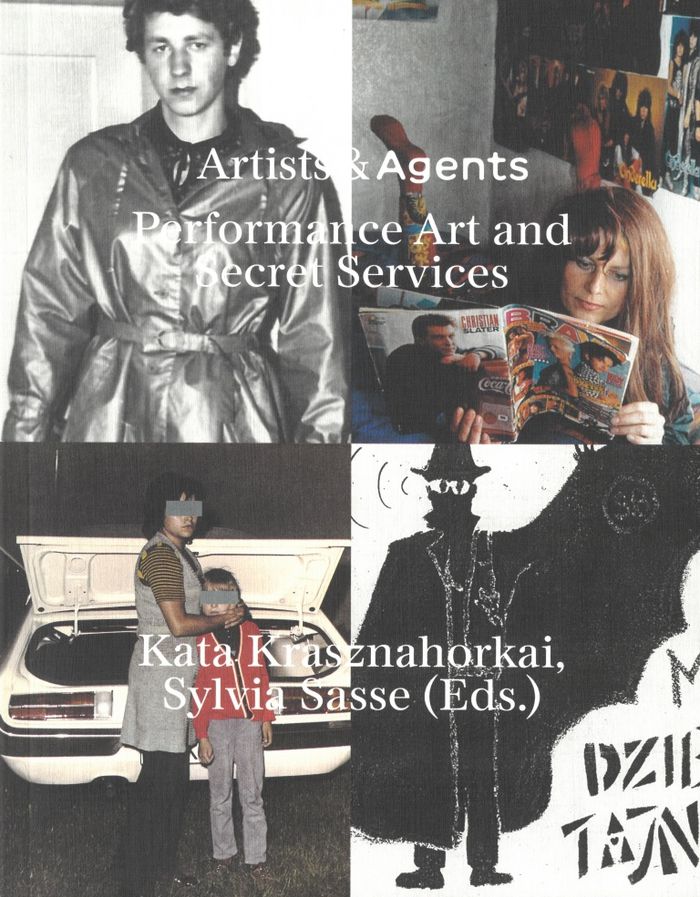
Artists & agents: Performance art and secret services
Actions:
Price:
$68.75
(available to order)
Summary:
Subversion does not belong to anyone. It can come from artists who outwit the state or from intelligence agencies who infiltrate the art scene on behalf of the state. But what happens when the two sides meet? After the old state security archives in many Eastern European countries were opened, it became possible for this interaction to be studied in detail. Drawing on scientific essays and artistic contributions, the book shows how the secret police monitored happenings, performance art, and action art and looks at the debates they had about the new art form; it also demonstrates not only how the police documented artistic actions in detail using forensic techniques but also how they manipulated them and sought to thwart them with counter-actions. In addition to this, the book also reveals how artists dealt with the possibility that they were being observed by the secret police and how they now work with the material stored in the archives maintained by the intelligence services.
Artists & agents: Performance art and secret services
Actions:
Price:
$68.75
(available to order)
Summary:
Subversion does not belong to anyone. It can come from artists who outwit the state or from intelligence agencies who infiltrate the art scene on behalf of the state. But what happens when the two sides meet? After the old state security archives in many Eastern European countries were opened, it became possible for this interaction to be studied in detail. Drawing on scientific essays and artistic contributions, the book shows how the secret police monitored happenings, performance art, and action art and looks at the debates they had about the new art form; it also demonstrates not only how the police documented artistic actions in detail using forensic techniques but also how they manipulated them and sought to thwart them with counter-actions. In addition to this, the book also reveals how artists dealt with the possibility that they were being observed by the secret police and how they now work with the material stored in the archives maintained by the intelligence services.
Form:
books
books
Publication:
January 2023
January 2023
Subject:
Art Theory
Art Theory


