


6653 Results
Form:
books
books
Price:
$41.95
(available to order)
Summary:
"If it isn't Electric, it isn't Modern." Such was the slogan of the Philadelphia Electric Company, developer of an unprecedented network of massive metropolitan power stations servicing greater Philadelphia at the turn of the twentieth century. These once-brilliant sentinels of civic utility and activity were designed to convey solidity and immensity in an age of deep(...)
$41.95
(available to order)
Summary:
"If it isn't Electric, it isn't Modern." Such was the slogan of the Philadelphia Electric Company, developer of an unprecedented network of massive metropolitan power stations servicing greater Philadelphia at the turn of the twentieth century. These once-brilliant sentinels of civic utility and activity were designed to convey solidity and immensity in an age of deep(...)
Subject:
Engineering Structures
Engineering Structures
Publication:
November 2016
November 2016
Title:
Palazzos of power : central station of the Phalidelphia Electric Company
Actions:
Price:
$41.95
(available to order)
Summary:
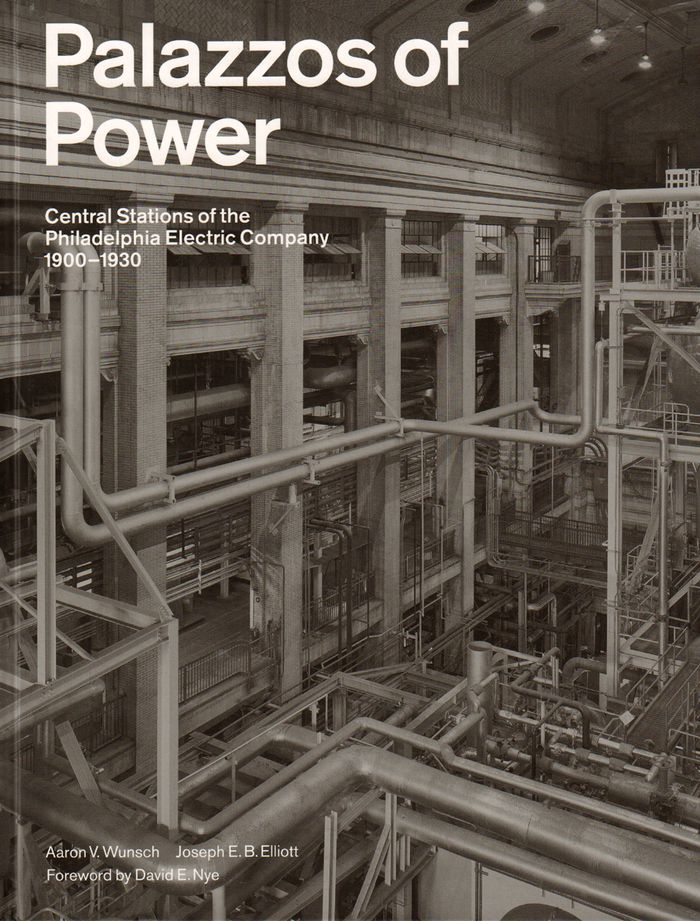
"If it isn't Electric, it isn't Modern." Such was the slogan of the Philadelphia Electric Company, developer of an unprecedented network of massive metropolitan power stations servicing greater Philadelphia at the turn of the twentieth century. These once-brilliant sentinels of civic utility and activity were designed to convey solidity and immensity in an age of deep public skepticism. They now stand vacant and decaying, a blight in the eyes of city planners and a beacon to urban explorers.'the first book on the buildings and machines that made possible the electrification of the United States, "Palazzos of power" offers a visual and analytical exploration of architecture, technology, place, loss, and reuse. With a foreword by David Nye, this collection of Joseph Elliott's large-format photographs reveal the urban landscape, monumental spaces, giant machinery, and intricate controls that made up the central station. Aaron Wunsch's essay provides historical context on the social and political climate.
Palazzos of power : central station of the Phalidelphia Electric Company
Actions:
Price:
$41.95
(available to order)
Summary:
"If it isn't Electric, it isn't Modern." Such was the slogan of the Philadelphia Electric Company, developer of an unprecedented network of massive metropolitan power stations servicing greater Philadelphia at the turn of the twentieth century. These once-brilliant sentinels of civic utility and activity were designed to convey solidity and immensity in an age of deep public skepticism. They now stand vacant and decaying, a blight in the eyes of city planners and a beacon to urban explorers.'the first book on the buildings and machines that made possible the electrification of the United States, "Palazzos of power" offers a visual and analytical exploration of architecture, technology, place, loss, and reuse. With a foreword by David Nye, this collection of Joseph Elliott's large-format photographs reveal the urban landscape, monumental spaces, giant machinery, and intricate controls that made up the central station. Aaron Wunsch's essay provides historical context on the social and political climate.
Form:
books
books
Publication:
November 2016
November 2016
Subject:
Engineering Structures
Engineering Structures
Form:
journals and magazines
journals and magazines
Actions:
Price:
$35.00
(available to order)
Summary:
Once there was life without books. It’s hard to imagine what that must have been like: an age of stories and knowledge of the world which stretched no farther than a day’s walk. The introduction of the written source constituted nothing less than the creation of a time and space capsule. The story, the idea, insight, knowledge were suddenly free of their messenger and(...)
$35.00
(available to order)
Summary:
Once there was life without books. It’s hard to imagine what that must have been like: an age of stories and knowledge of the world which stretched no farther than a day’s walk. The introduction of the written source constituted nothing less than the creation of a time and space capsule. The story, the idea, insight, knowledge were suddenly free of their messenger and(...)
Title:
Volume 15 Destination Library
Actions:
Price:
$35.00
(available to order)
Summary:
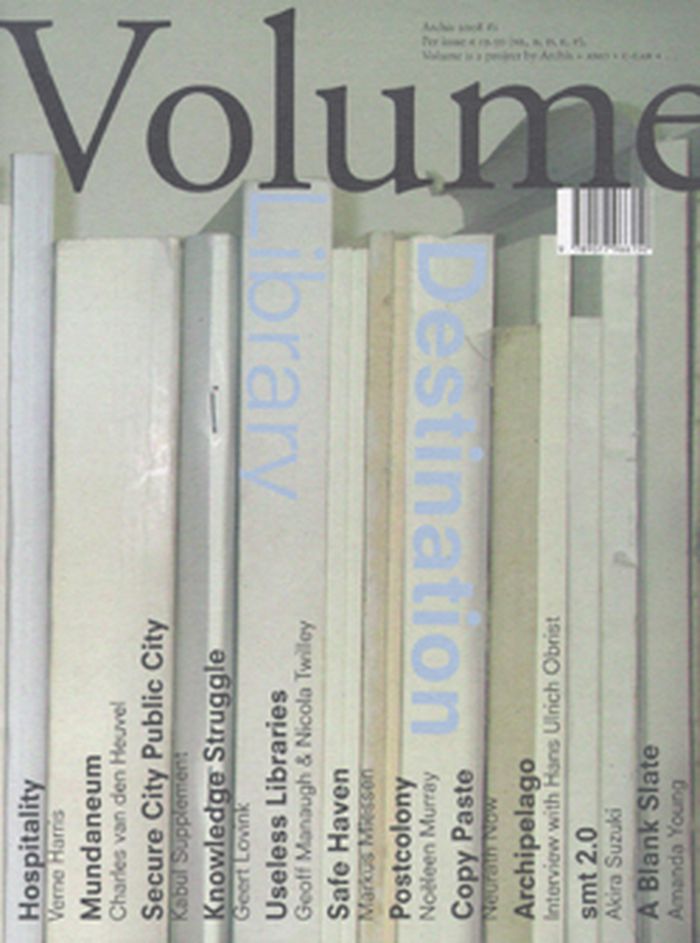
Once there was life without books. It’s hard to imagine what that must have been like: an age of stories and knowledge of the world which stretched no farther than a day’s walk. The introduction of the written source constituted nothing less than the creation of a time and space capsule. The story, the idea, insight, knowledge were suddenly free of their messenger and were all able to bridge distances, able to surface, vanish and reappear. Just as there was a time before the book, there will also be a time after it. In this issue ‘The Last Book’ project is taken up, but as to the consequences of publishing exclusively online – the loss of filters such as the publisher, editor and publication costs – we can only guess. Yet it is clear that our centuries old house of knowledge is undergoing a fundamental renovation, beginning with the solid base of the library.
Volume 15 Destination Library
Actions:
Price:
$35.00
(available to order)
Summary:
Once there was life without books. It’s hard to imagine what that must have been like: an age of stories and knowledge of the world which stretched no farther than a day’s walk. The introduction of the written source constituted nothing less than the creation of a time and space capsule. The story, the idea, insight, knowledge were suddenly free of their messenger and were all able to bridge distances, able to surface, vanish and reappear. Just as there was a time before the book, there will also be a time after it. In this issue ‘The Last Book’ project is taken up, but as to the consequences of publishing exclusively online – the loss of filters such as the publisher, editor and publication costs – we can only guess. Yet it is clear that our centuries old house of knowledge is undergoing a fundamental renovation, beginning with the solid base of the library.
Form:
journals and magazines
journals and magazines
Publication:
May 2008, Amsterdam
May 2008, Amsterdam
Subject:
Magazines
Magazines
Form:
books
books
Actions:
Price:
$18.95
(available to order)
Summary:
In 1971, at the height of the Vietnam War and at a time of great political and social instability, two of the world’s leading intellectuals, Noam Chomsky and Michel Foucault, were invited by Dutch philosopher Fons Elders to debate an age-old question: is there such a thing as "innate" human nature independent of our experiences and external influences? The resulting(...)
$18.95
(available to order)
Summary:
In 1971, at the height of the Vietnam War and at a time of great political and social instability, two of the world’s leading intellectuals, Noam Chomsky and Michel Foucault, were invited by Dutch philosopher Fons Elders to debate an age-old question: is there such a thing as "innate" human nature independent of our experiences and external influences? The resulting(...)
Subject:
Critical Theory
Critical Theory
Publication:
January 1900, New York, London
January 1900, New York, London
Title:
The Chomsky - Foucault debate on human nature
Actions:
Price:
$18.95
(available to order)
Summary:
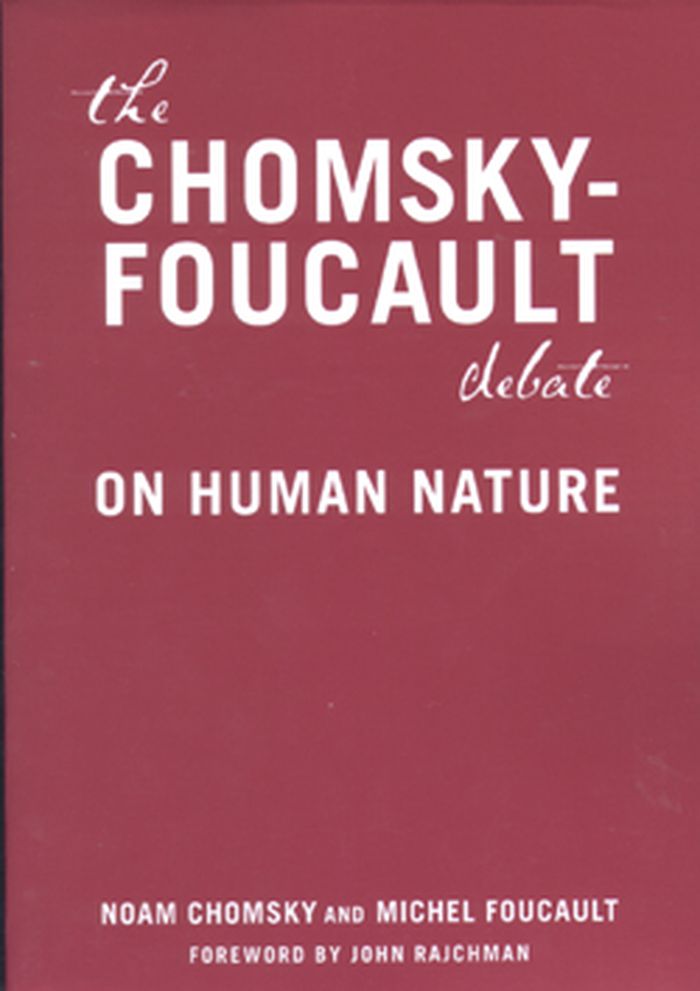
In 1971, at the height of the Vietnam War and at a time of great political and social instability, two of the world’s leading intellectuals, Noam Chomsky and Michel Foucault, were invited by Dutch philosopher Fons Elders to debate an age-old question: is there such a thing as "innate" human nature independent of our experiences and external influences? The resulting dialogue is one of the most original, provocative, and spontaneous exchanges to have occurred between contemporary philosophers, and above all serves as a concise introduction to their basic theories. What begins as a philosophical argument rooted in linguistics (Chomsky) and the theory of knowledge (Foucault), soon evolves into a broader discussion encompassing a wide range of topics, from science, history, and behaviorism to creativity, freedom, and the struggle for justice in the realm of politics. In addition to the debate itself, this volume features a newly written introduction by Foucault scholar John Rajchman and includes substantial additional texts by Chomsky and Foucault.
The Chomsky - Foucault debate on human nature
Actions:
Price:
$18.95
(available to order)
Summary:
In 1971, at the height of the Vietnam War and at a time of great political and social instability, two of the world’s leading intellectuals, Noam Chomsky and Michel Foucault, were invited by Dutch philosopher Fons Elders to debate an age-old question: is there such a thing as "innate" human nature independent of our experiences and external influences? The resulting dialogue is one of the most original, provocative, and spontaneous exchanges to have occurred between contemporary philosophers, and above all serves as a concise introduction to their basic theories. What begins as a philosophical argument rooted in linguistics (Chomsky) and the theory of knowledge (Foucault), soon evolves into a broader discussion encompassing a wide range of topics, from science, history, and behaviorism to creativity, freedom, and the struggle for justice in the realm of politics. In addition to the debate itself, this volume features a newly written introduction by Foucault scholar John Rajchman and includes substantial additional texts by Chomsky and Foucault.
Form:
books
books
Publication:
January 1900, New York, London
January 1900, New York, London
Subject:
Critical Theory
Critical Theory
Form:
books
books
Price:
$26.95
(available to order)
Summary:
In this first full-length study of a largely forgotten optical device from the eighteenth century, Arnaud Maillet reconfigures our historical understanding of visual experience and meaning in relation to notions of opacity, transparency, and imagination. Many are familiar with the Claude glass as a small black convex mirror used by artists and spectators of landscape to(...)
$26.95
(available to order)
Summary:
In this first full-length study of a largely forgotten optical device from the eighteenth century, Arnaud Maillet reconfigures our historical understanding of visual experience and meaning in relation to notions of opacity, transparency, and imagination. Many are familiar with the Claude glass as a small black convex mirror used by artists and spectators of landscape to(...)
Title:
The Claude glass: use and meaning of the black mirror in western art
Actions:
Price:
$26.95
(available to order)
Summary:
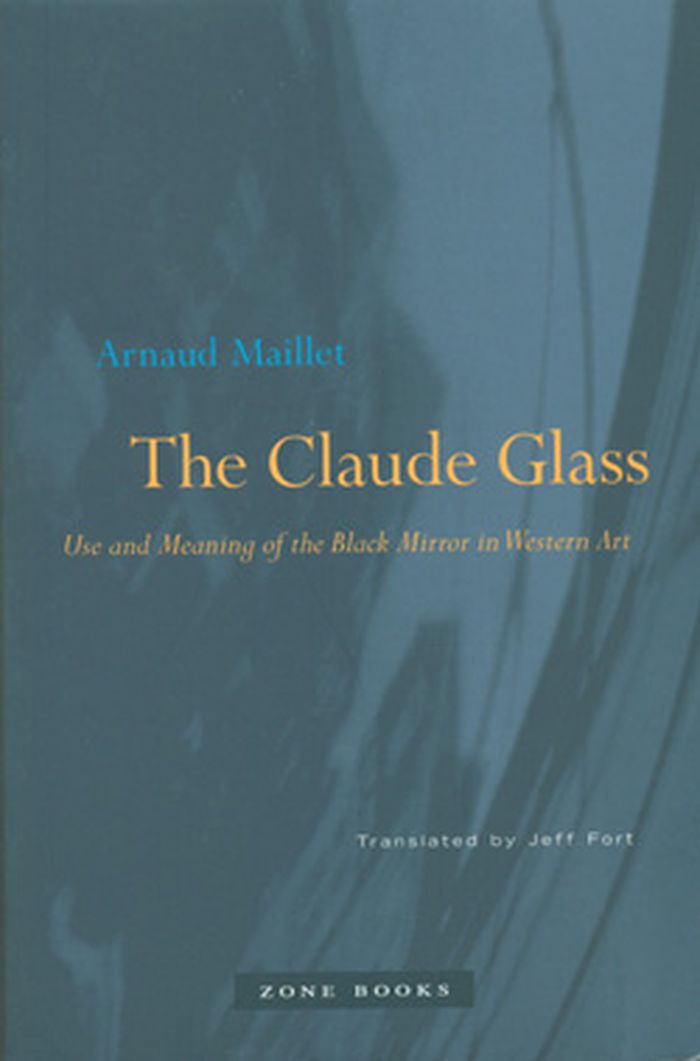
In this first full-length study of a largely forgotten optical device from the eighteenth century, Arnaud Maillet reconfigures our historical understanding of visual experience and meaning in relation to notions of opacity, transparency, and imagination. Many are familiar with the Claude glass as a small black convex mirror used by artists and spectators of landscape to reflect a view and make tonal values and areas of light and shade visible. In a groundbreaking account, Maillet goes well beyond this particular function of the glass and situates it within a richer archaeology of Western thought, exploring the uncertainties and anxieties about mirrors, reflections, and their potential distortions. He takes us from the magical and occult background of the 'black mirror', through a full evaluation of its importance in the age of the picturesque, to its persistence in a range of technological and representational practices, including photography, film, and contemporary art. "The Claude Glass" is a lasting contribution to the history of Western visual culture.
The Claude glass: use and meaning of the black mirror in western art
Actions:
Price:
$26.95
(available to order)
Summary:
In this first full-length study of a largely forgotten optical device from the eighteenth century, Arnaud Maillet reconfigures our historical understanding of visual experience and meaning in relation to notions of opacity, transparency, and imagination. Many are familiar with the Claude glass as a small black convex mirror used by artists and spectators of landscape to reflect a view and make tonal values and areas of light and shade visible. In a groundbreaking account, Maillet goes well beyond this particular function of the glass and situates it within a richer archaeology of Western thought, exploring the uncertainties and anxieties about mirrors, reflections, and their potential distortions. He takes us from the magical and occult background of the 'black mirror', through a full evaluation of its importance in the age of the picturesque, to its persistence in a range of technological and representational practices, including photography, film, and contemporary art. "The Claude Glass" is a lasting contribution to the history of Western visual culture.
Form:
books
books
Publication:
January 1900, New York
January 1900, New York
Subject:
Art Theory
Art Theory
Form:
books
books
Title:
The arcades project
The arcades project
Actions:
Price:
$59.95
(available to order)
Summary:
Conceived in Paris in 1927 and still in progress when Benjamin fled the Occupation in 1940, "The Arcades Project" (in German, "Das Passagen-Werk") is a monumental ruin, meticulously constructed over the course of thirteen years--"the theater," as Benjamin(...)
$59.95
(available to order)
Summary:
Conceived in Paris in 1927 and still in progress when Benjamin fled the Occupation in 1940, "The Arcades Project" (in German, "Das Passagen-Werk") is a monumental ruin, meticulously constructed over the course of thirteen years--"the theater," as Benjamin(...)
Title:
The arcades project
Actions:
Price:
$59.95
(available to order)
Summary:
Conceived in Paris in 1927 and still in progress when Benjamin fled the Occupation in 1940, "The Arcades Project" (in German, "Das Passagen-Werk") is a monumental ruin, meticulously constructed over the course of thirteen years--"the theater," as Benjamin called it, "of all my struggles and all my ideas." Focusing on the arcades of nineteenth-century Paris, glass-roofed rows of shops that were early centers of consumerism, Benjamin presents a montage of quotations from, and reflections on, hundreds of published sources, arranging them in thirty-six categories with descriptive rubrics such as "Fashion," "Boredom," "Dream City," "Photography," "Catacombs," "Advertising," "Prostitution," "Baudelaire," and "Theory of Progress." His central preoccupation is what he calls the commodification of things, a process in which he locates the decisive shift to the modern age. "The Arcades Project" is Benjamin's effort to represent and to critique the bourgeois experience of nineteenth-century history, and, in so doing, to liberate the suppressed "true history" that underlay the ideological mask.
The arcades project
Actions:
Price:
$59.95
(available to order)
Summary:
Conceived in Paris in 1927 and still in progress when Benjamin fled the Occupation in 1940, "The Arcades Project" (in German, "Das Passagen-Werk") is a monumental ruin, meticulously constructed over the course of thirteen years--"the theater," as Benjamin called it, "of all my struggles and all my ideas." Focusing on the arcades of nineteenth-century Paris, glass-roofed rows of shops that were early centers of consumerism, Benjamin presents a montage of quotations from, and reflections on, hundreds of published sources, arranging them in thirty-six categories with descriptive rubrics such as "Fashion," "Boredom," "Dream City," "Photography," "Catacombs," "Advertising," "Prostitution," "Baudelaire," and "Theory of Progress." His central preoccupation is what he calls the commodification of things, a process in which he locates the decisive shift to the modern age. "The Arcades Project" is Benjamin's effort to represent and to critique the bourgeois experience of nineteenth-century history, and, in so doing, to liberate the suppressed "true history" that underlay the ideological mask.
Form:
books
books
Publication:
November 1999, Cambridge, Mass.
November 1999, Cambridge, Mass.
Subject:
Architectural Theory
Architectural Theory
Form:
books
books
Actions:
Price:
$69.75
(available to order)
Summary:
In "Apollo's Eye", geographer Denis Cosgrove examines the historical implications for the West of conceiving and representing the earth as a globe: a unified, spherical body. Cosgrove traces how ideas of globalism and globalization have shifted historically in relation to changing images of the earth, from antiquity to the Space Age. He connects the evolving image(...)
$69.75
(available to order)
Summary:
In "Apollo's Eye", geographer Denis Cosgrove examines the historical implications for the West of conceiving and representing the earth as a globe: a unified, spherical body. Cosgrove traces how ideas of globalism and globalization have shifted historically in relation to changing images of the earth, from antiquity to the Space Age. He connects the evolving image(...)
Title:
Apollo's eye : a cartographic genealogy of the earth in the Western imagination
Actions:
Price:
$69.75
(available to order)
Summary:
In "Apollo's Eye", geographer Denis Cosgrove examines the historical implications for the West of conceiving and representing the earth as a globe: a unified, spherical body. Cosgrove traces how ideas of globalism and globalization have shifted historically in relation to changing images of the earth, from antiquity to the Space Age. He connects the evolving image of a unified globe to politically powerful conceptions of human unity. Cosgrove constructs a genealogy of global images from classical Greece and Rome to the present, giving special attention to the early sixteenth century, when Europeans circumnavigated the earth, relocated it within their understanding of the cosmos, and revolutionized its representation in models and maps. Each chapter focuses on specific images of the globe or whole earth, reproduced in a wealth of illustrations. Cosgrove's analysis traces a pattern of associations between global images and the formation of Western identities, paying tribute to the complex cosmographic tradition out of which today's geographical imagination has emerged.
Apollo's eye : a cartographic genealogy of the earth in the Western imagination
Actions:
Price:
$69.75
(available to order)
Summary:
In "Apollo's Eye", geographer Denis Cosgrove examines the historical implications for the West of conceiving and representing the earth as a globe: a unified, spherical body. Cosgrove traces how ideas of globalism and globalization have shifted historically in relation to changing images of the earth, from antiquity to the Space Age. He connects the evolving image of a unified globe to politically powerful conceptions of human unity. Cosgrove constructs a genealogy of global images from classical Greece and Rome to the present, giving special attention to the early sixteenth century, when Europeans circumnavigated the earth, relocated it within their understanding of the cosmos, and revolutionized its representation in models and maps. Each chapter focuses on specific images of the globe or whole earth, reproduced in a wealth of illustrations. Cosgrove's analysis traces a pattern of associations between global images and the formation of Western identities, paying tribute to the complex cosmographic tradition out of which today's geographical imagination has emerged.
Form:
books
books
Publication:
March 2001, Baltimore
March 2001, Baltimore
Subject:
Architectural Drawing
Architectural Drawing
Form:
books
books
Actions:
Price:
$67.50
(available in store)
Summary:
Linoleum is a natural material with quite an eventful history of use since its invention in 1864 by the British entrepreneur Frederik Walton. Its first golden age was between 1900 and 1930, when numerous renowned designers - among them Josef Hoffmann or Bruno Paul -(...)
$67.50
(available in store)
Summary:
Linoleum is a natural material with quite an eventful history of use since its invention in 1864 by the British entrepreneur Frederik Walton. Its first golden age was between 1900 and 1930, when numerous renowned designers - among them Josef Hoffmann or Bruno Paul -(...)
Title:
Linoleum : history, design, archtiecture 1882 - 2000
Actions:
Price:
$67.50
(available in store)
Summary:
Linoleum is a natural material with quite an eventful history of use since its invention in 1864 by the British entrepreneur Frederik Walton. Its first golden age was between 1900 and 1930, when numerous renowned designers - among them Josef Hoffmann or Bruno Paul - designed both collections and patterns. Even Peter Behrens - before he became the "artistic counselor" to AEG in Berlin in 1908 - tried his hand at designing linoleum patterns, to the point of developing a complete "corporate design" from stationary to catalogs to exhibition architecture for the Anker- Linoleum-Werke at Delmenhorst. Bauhaus architects such as Bruno Taut or Mies van der Rohe used linoleum in housing projects as an inexpensive and hardwearing but also decorative floor-covering. This book is the first to present this historically and ecologically equally important material in its various guises. Experts in the field contributed essays about the history of linoleum, its "discovery" by modernist designers and architects and its renaissance in contemporary design and architecture.
Linoleum : history, design, archtiecture 1882 - 2000
Actions:
Price:
$67.50
(available in store)
Summary:
Linoleum is a natural material with quite an eventful history of use since its invention in 1864 by the British entrepreneur Frederik Walton. Its first golden age was between 1900 and 1930, when numerous renowned designers - among them Josef Hoffmann or Bruno Paul - designed both collections and patterns. Even Peter Behrens - before he became the "artistic counselor" to AEG in Berlin in 1908 - tried his hand at designing linoleum patterns, to the point of developing a complete "corporate design" from stationary to catalogs to exhibition architecture for the Anker- Linoleum-Werke at Delmenhorst. Bauhaus architects such as Bruno Taut or Mies van der Rohe used linoleum in housing projects as an inexpensive and hardwearing but also decorative floor-covering. This book is the first to present this historically and ecologically equally important material in its various guises. Experts in the field contributed essays about the history of linoleum, its "discovery" by modernist designers and architects and its renaissance in contemporary design and architecture.
Form:
books
books
Publication:
March 2001, Ostfilden
March 2001, Ostfilden
Subject:
Materials and Lighting
Materials and Lighting
Form:
books
books
Actions:
Price:
$18.95
(available to order)
Summary:
Since their inception with New York's Crystal Palace Exhibition in the mid-nineteenth century, world's fairs have introduced Americans to “exotic” pleasures such as belly dancing and the Ferris Wheel; pathbreaking technologies such as telephones and X rays; and futuristic architectural, landscaping, and transportation schemes. Billed by their promoters as “encyclopedias(...)
$18.95
(available to order)
Summary:
Since their inception with New York's Crystal Palace Exhibition in the mid-nineteenth century, world's fairs have introduced Americans to “exotic” pleasures such as belly dancing and the Ferris Wheel; pathbreaking technologies such as telephones and X rays; and futuristic architectural, landscaping, and transportation schemes. Billed by their promoters as “encyclopedias(...)
Title:
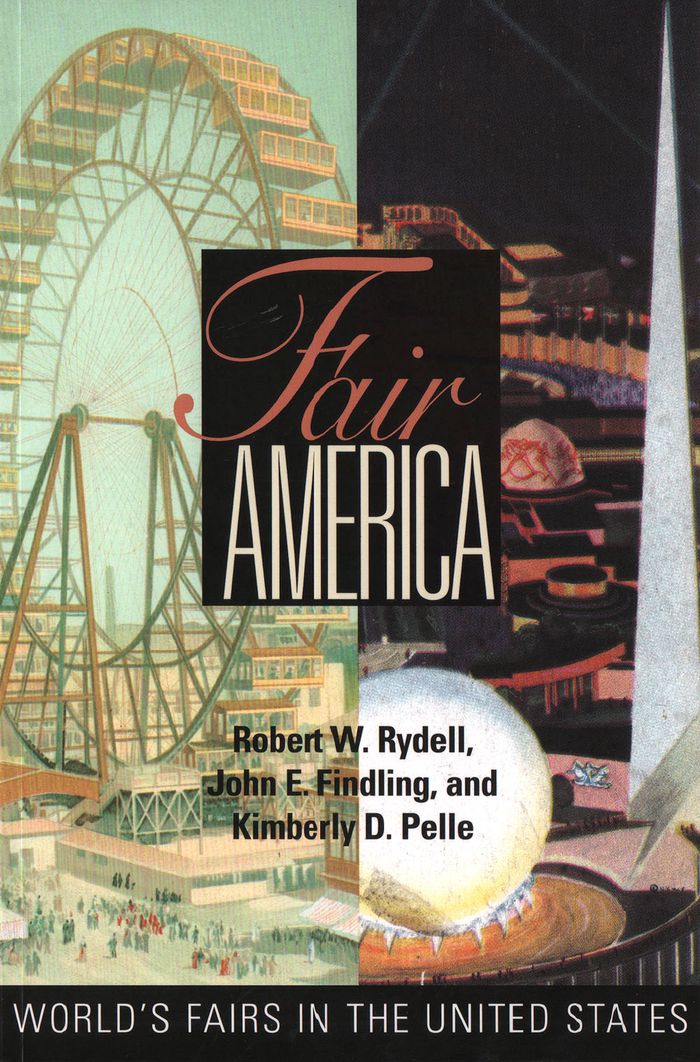
Fair America: world's fairs in the United States
Actions:
Price:
$18.95
(available to order)
Summary:
Since their inception with New York's Crystal Palace Exhibition in the mid-nineteenth century, world's fairs have introduced Americans to “exotic” pleasures such as belly dancing and the Ferris Wheel; pathbreaking technologies such as telephones and X rays; and futuristic architectural, landscaping, and transportation schemes. Billed by their promoters as “encyclopedias of civilization,” the expositions impressed tens of millions of fairgoers with model environments and utopian visions. Setting more than 30 world’s fairs from 1853 to 1984 in their historical context, the authors show that the expositions reflected and influenced not only the ideals but also the cultural tensions of their times. As mainstays rather than mere ornaments of American life, world’s fairs created national support for such issues as the social reunification of North and South after the Civil War, U.S. imperial expansion at the turn of the 20th-century, consumer optimism during the Great Depression, and the essential unity of humankind in a nuclear age.
Fair America: world's fairs in the United States
Actions:
Price:
$18.95
(available to order)
Summary:
Since their inception with New York's Crystal Palace Exhibition in the mid-nineteenth century, world's fairs have introduced Americans to “exotic” pleasures such as belly dancing and the Ferris Wheel; pathbreaking technologies such as telephones and X rays; and futuristic architectural, landscaping, and transportation schemes. Billed by their promoters as “encyclopedias of civilization,” the expositions impressed tens of millions of fairgoers with model environments and utopian visions. Setting more than 30 world’s fairs from 1853 to 1984 in their historical context, the authors show that the expositions reflected and influenced not only the ideals but also the cultural tensions of their times. As mainstays rather than mere ornaments of American life, world’s fairs created national support for such issues as the social reunification of North and South after the Civil War, U.S. imperial expansion at the turn of the 20th-century, consumer optimism during the Great Depression, and the essential unity of humankind in a nuclear age.
Form:
books
books
Publication:
March 2000
March 2000
Subject:
Museums and Universal Exhibitions
Museums and Universal Exhibitions
Form:
books
books
Actions:
Price:
$149.95
(available in store)
Summary:
The first of a unique series of translations of Scamozzi's L'Idea della Architettura Universale. The northern Italian architect, Vincenzo Scamozzi, (1548-1616) designed a number of important palaces, villas and churches in and around Vicenza, Padua and Venice. In addition, he completed a comprehensive study of ancient classical architecture. including the possibilities(...)
$149.95
(available in store)
Summary:
The first of a unique series of translations of Scamozzi's L'Idea della Architettura Universale. The northern Italian architect, Vincenzo Scamozzi, (1548-1616) designed a number of important palaces, villas and churches in and around Vicenza, Padua and Venice. In addition, he completed a comprehensive study of ancient classical architecture. including the possibilities(...)
Subject:
Architecture Monographs
Architecture Monographs
Publication:
January 2003, Amsterdam
January 2003, Amsterdam
Title:
Vincenzo Scamozzi, Venetian architect book III : the idea of a universal architecture, villas and country estates
Actions:
Price:
$149.95
(available in store)
Summary:
The first of a unique series of translations of Scamozzi's L'Idea della Architettura Universale. The northern Italian architect, Vincenzo Scamozzi, (1548-1616) designed a number of important palaces, villas and churches in and around Vicenza, Padua and Venice. In addition, he completed a comprehensive study of ancient classical architecture. including the possibilities for its application in a modern context. The first edition of the book was published in 1615. Scamozzi distinguishes himself from his predecessors Vitruvius and Palladio by the scientific approach he follows in his treatise, in which his own designs appear as examples. The clear and detailed account of the historical and geographical background to the principles of classical architecture led to the book's wide popularity in the Northern Netherlands throughout the 17th century. Scamozzi's text was regarded as the most suitable manual for mastering the rules of building, and his theories had a considerable impact upon classical architecture in the Dutch Golden Age.
Vincenzo Scamozzi, Venetian architect book III : the idea of a universal architecture, villas and country estates
Actions:
Price:
$149.95
(available in store)
Summary:
The first of a unique series of translations of Scamozzi's L'Idea della Architettura Universale. The northern Italian architect, Vincenzo Scamozzi, (1548-1616) designed a number of important palaces, villas and churches in and around Vicenza, Padua and Venice. In addition, he completed a comprehensive study of ancient classical architecture. including the possibilities for its application in a modern context. The first edition of the book was published in 1615. Scamozzi distinguishes himself from his predecessors Vitruvius and Palladio by the scientific approach he follows in his treatise, in which his own designs appear as examples. The clear and detailed account of the historical and geographical background to the principles of classical architecture led to the book's wide popularity in the Northern Netherlands throughout the 17th century. Scamozzi's text was regarded as the most suitable manual for mastering the rules of building, and his theories had a considerable impact upon classical architecture in the Dutch Golden Age.
Form:
books
books
Publication:
January 2003, Amsterdam
January 2003, Amsterdam
Subject:
Architecture Monographs
Architecture Monographs
Form:
books
books
Actions:
Price:
$59.95
(available to order)
Summary:
This book tells the intertwined stories of photography and the American West--a new medium and a new place that came of age together in the nineteenth century. The story begins just a few years after the invention of the daguerreotype in 1839, as pioneering photographers followed American troops into the Mexican-American War. Taking advantage of rapidly developing(...)
$59.95
(available to order)
Summary:
This book tells the intertwined stories of photography and the American West--a new medium and a new place that came of age together in the nineteenth century. The story begins just a few years after the invention of the daguerreotype in 1839, as pioneering photographers followed American troops into the Mexican-American War. Taking advantage of rapidly developing(...)
Subject:
Theory of Photography
Theory of Photography
Publication:
October 2002, New Haven / London
October 2002, New Haven / London
Title:
Print the legend : photography and the American West
Actions:
Price:
$59.95
(available to order)
Summary:
This book tells the intertwined stories of photography and the American West--a new medium and a new place that came of age together in the nineteenth century. The story begins just a few years after the invention of the daguerreotype in 1839, as pioneering photographers followed American troops into the Mexican-American War. Taking advantage of rapidly developing technology, photographers soon set out across the overland trails, recorded the shifting fortunes of California’s goldseekers, pictured native peoples, and documented the spectacular topography of the American West. The new medium of photography made vivid a landscape few Americans had seen for themselves. Resurrecting scores of little-known images of the nineteenth-century American West, "Print the legend" offers engaging tales of ambitious photographic adventurers, missing photographs, and misinterpreted images. Chronicling both the history of a place and the history of a medium, this book portrays how Americans first came to understand western photographs and, consequently, to envision their nation.
Print the legend : photography and the American West
Actions:
Price:
$59.95
(available to order)
Summary:
This book tells the intertwined stories of photography and the American West--a new medium and a new place that came of age together in the nineteenth century. The story begins just a few years after the invention of the daguerreotype in 1839, as pioneering photographers followed American troops into the Mexican-American War. Taking advantage of rapidly developing technology, photographers soon set out across the overland trails, recorded the shifting fortunes of California’s goldseekers, pictured native peoples, and documented the spectacular topography of the American West. The new medium of photography made vivid a landscape few Americans had seen for themselves. Resurrecting scores of little-known images of the nineteenth-century American West, "Print the legend" offers engaging tales of ambitious photographic adventurers, missing photographs, and misinterpreted images. Chronicling both the history of a place and the history of a medium, this book portrays how Americans first came to understand western photographs and, consequently, to envision their nation.
Form:
books
books
Publication:
October 2002, New Haven / London
October 2002, New Haven / London
Subject:
Theory of Photography
Theory of Photography


