


6624 Results
Form:
books
books
Actions:
Price:
$43.95
(available to order)
Summary:
''An anthology of Blackness'' examines the intersection of Black identity and practice, probing why the design field has failed to attract Black professionals, how Eurocentric hegemony impacts Black professionals, and how Black designers can create an anti-racist design industry. Contributing authors and creators demonstrate how to develop a pro-Black design practice of(...)
$43.95
(available to order)
Summary:
''An anthology of Blackness'' examines the intersection of Black identity and practice, probing why the design field has failed to attract Black professionals, how Eurocentric hegemony impacts Black professionals, and how Black designers can create an anti-racist design industry. Contributing authors and creators demonstrate how to develop a pro-Black design practice of(...)
Title:
An anthology of Blackness: the state of Black design
Actions:
Price:
$43.95
(available to order)
Summary:
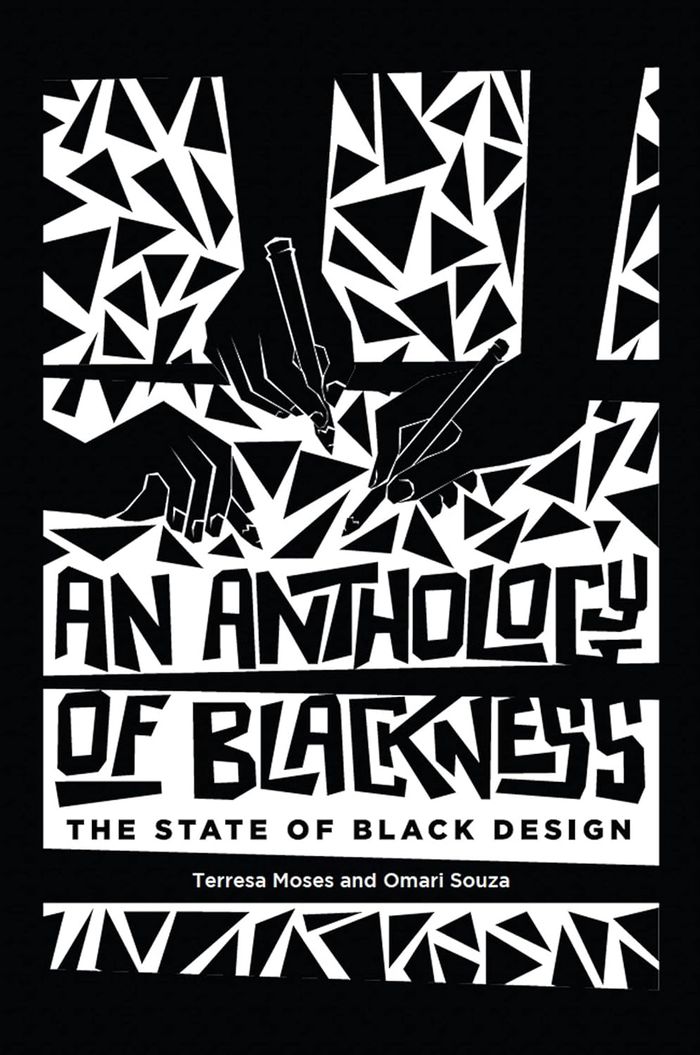
''An anthology of Blackness'' examines the intersection of Black identity and practice, probing why the design field has failed to attract Black professionals, how Eurocentric hegemony impacts Black professionals, and how Black designers can create an anti-racist design industry. Contributing authors and creators demonstrate how to develop a pro-Black design practice of inclusivity, including Black representation in designed media, anti-racist pedagogy, and radical self-care. Through autoethnography, lived experience, scholarship, and applied research, these contributors share proven methods for creating an anti-racist and inclusive design practice. The contributions in ''An anthology of Blackness'' include essays, opinion pieces, case studies, and visual narratives. Many contributors write from an intersectional perspective on race, gender, sexuality, ethnicity, and ability. Each section of the book expands on community-driven concerns about the state of the design industry, design pedagogy, and design activism. Ultimately, this articulated intersection of Black identity and Black design practice reveals the power of resistance, community, and solidarity—and the hope for a more equitable future. With a foreword written by design luminary Elizabeth (Dori) Tunstall, ''An anthology of Blackness'' is a pioneering contribution to the literature of social justice.
An anthology of Blackness: the state of Black design
Actions:
Price:
$43.95
(available to order)
Summary:
''An anthology of Blackness'' examines the intersection of Black identity and practice, probing why the design field has failed to attract Black professionals, how Eurocentric hegemony impacts Black professionals, and how Black designers can create an anti-racist design industry. Contributing authors and creators demonstrate how to develop a pro-Black design practice of inclusivity, including Black representation in designed media, anti-racist pedagogy, and radical self-care. Through autoethnography, lived experience, scholarship, and applied research, these contributors share proven methods for creating an anti-racist and inclusive design practice. The contributions in ''An anthology of Blackness'' include essays, opinion pieces, case studies, and visual narratives. Many contributors write from an intersectional perspective on race, gender, sexuality, ethnicity, and ability. Each section of the book expands on community-driven concerns about the state of the design industry, design pedagogy, and design activism. Ultimately, this articulated intersection of Black identity and Black design practice reveals the power of resistance, community, and solidarity—and the hope for a more equitable future. With a foreword written by design luminary Elizabeth (Dori) Tunstall, ''An anthology of Blackness'' is a pioneering contribution to the literature of social justice.
Form:
books
books
Publication:
October 2023
October 2023
Subject:
Design Theory
Design Theory
Form:
books
books
Actions:
Price:
$58.95
(available in store)
Summary:
''Who is the architect?'' explores how the figure of the architect has been constructed and challenged in recent years. Traditionally perceived as male, Western and individualistic, architects are now being urged to redefine themselves in a more diverse, inclusive manner. The publication discusses the need to challenge norms and establish caring as an essential quality in(...)
$58.95
(available in store)
Summary:
''Who is the architect?'' explores how the figure of the architect has been constructed and challenged in recent years. Traditionally perceived as male, Western and individualistic, architects are now being urged to redefine themselves in a more diverse, inclusive manner. The publication discusses the need to challenge norms and establish caring as an essential quality in(...)
Title:
Building diversity: Who is the architect?
Actions:
Price:
$58.95
(available in store)
Summary:
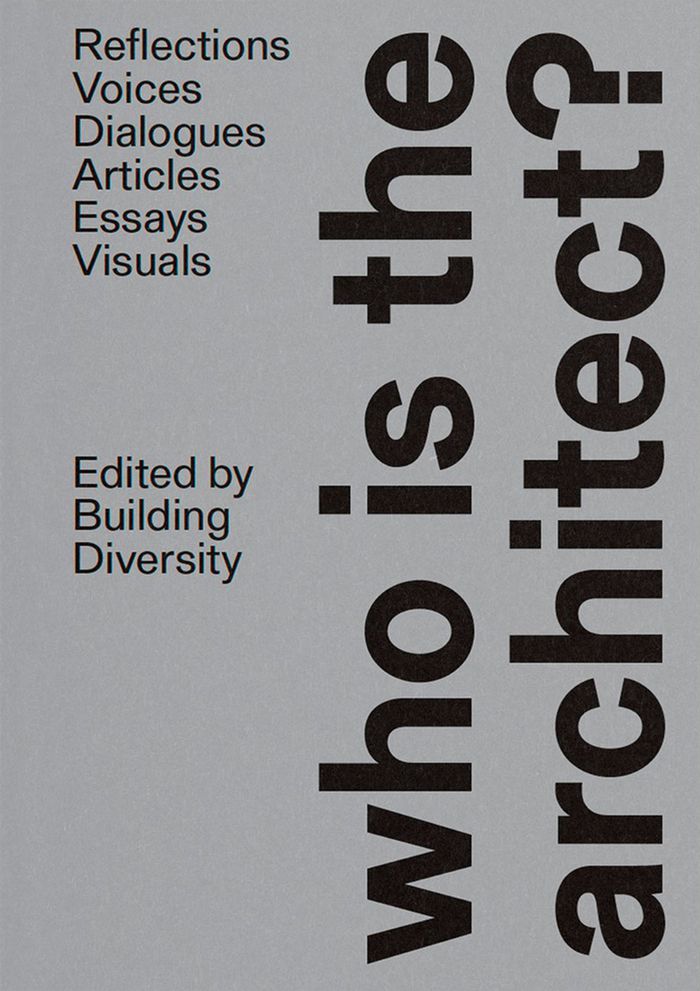
''Who is the architect?'' explores how the figure of the architect has been constructed and challenged in recent years. Traditionally perceived as male, Western and individualistic, architects are now being urged to redefine themselves in a more diverse, inclusive manner. The publication discusses the need to challenge norms and establish caring as an essential quality in the architectural discourse. With the threat of environmental collapse and other societal challenges, the need for collective teamwork and empathy has become central in establishing a common understanding that includes all beings. ''Building diversity'' aims to tackle these issues and explore topics on diversity and equality in the architectural field's past, present and future. The publication features thoughts and ideas from a broad range of countries and diverse perspectives on the architectural field, contributing to a wider dialogue about inclusion, intersectionality and progress. ''Building diversity'' is not intended to provide concrete solutions but aims to stimulate discussion and open up venues for hosting dialogues pointing to possible paths and the expansion of perspectives. It is an important contribution to the ongoing conversation about diversity and equality in the architectural field.
Building diversity: Who is the architect?
Actions:
Price:
$58.95
(available in store)
Summary:
''Who is the architect?'' explores how the figure of the architect has been constructed and challenged in recent years. Traditionally perceived as male, Western and individualistic, architects are now being urged to redefine themselves in a more diverse, inclusive manner. The publication discusses the need to challenge norms and establish caring as an essential quality in the architectural discourse. With the threat of environmental collapse and other societal challenges, the need for collective teamwork and empathy has become central in establishing a common understanding that includes all beings. ''Building diversity'' aims to tackle these issues and explore topics on diversity and equality in the architectural field's past, present and future. The publication features thoughts and ideas from a broad range of countries and diverse perspectives on the architectural field, contributing to a wider dialogue about inclusion, intersectionality and progress. ''Building diversity'' is not intended to provide concrete solutions but aims to stimulate discussion and open up venues for hosting dialogues pointing to possible paths and the expansion of perspectives. It is an important contribution to the ongoing conversation about diversity and equality in the architectural field.
Form:
books
books
Publication:
September 2023
September 2023
Subject:
Architectural Theory
Architectural Theory
Form:
books
books
Actions:
Price:
$29.95
(available to order)
Summary:
After World War II, concrete became increasingly popular as a building medium around the world. Brutalism, the fashion for plain, heavy design, reigned. Toronto was particularly affected. The city has concrete buildings of all stripes – international landmarks, metropolitan infrastructure and even the single family home. Hundreds of these structures were built,(...)
$29.95
(available to order)
Summary:
After World War II, concrete became increasingly popular as a building medium around the world. Brutalism, the fashion for plain, heavy design, reigned. Toronto was particularly affected. The city has concrete buildings of all stripes – international landmarks, metropolitan infrastructure and even the single family home. Hundreds of these structures were built,(...)
Subject:
Architecture in Canada
Architecture in Canada
Publication:
November 2007, Toronto
November 2007, Toronto
Title:
Concrete Toronto : a guidebook to concrete architecture from the fifties to the seventies
Actions:
Price:
$29.95
(available to order)
Summary:
After World War II, concrete became increasingly popular as a building medium around the world. Brutalism, the fashion for plain, heavy design, reigned. Toronto was particularly affected. The city has concrete buildings of all stripes – international landmarks, metropolitan infrastructure and even the single family home. Hundreds of these structures were built, including Viljo Revell’s groundbreaking New City Hall, John Andrew’s seminal Scarborough College and the record-smashing CN Tower. Toronto is a city cast in concrete. However, as architectural fashion has shifted from postmodernism to the glass-and-steel neomodernism of today, these concrete structures have been ignored, misunderstood and, in some cases, demolished. Concrete Toronto acts as a guide to the city’s extensive concrete heritage. A diverse group of experts has been assembled to re-examine the uniqueness and value of these buildings. Included are the insights of many of the original concrete architects, university faculty, local practitioners, journalists and industry experts. Together they explore the past and future of Toronto’s concrete buildings. Included is a wealth of new and archival photos, drawings, interviews, articles, as well as case studies of Toronto’s major concrete architecture.
Concrete Toronto : a guidebook to concrete architecture from the fifties to the seventies
Actions:
Price:
$29.95
(available to order)
Summary:
After World War II, concrete became increasingly popular as a building medium around the world. Brutalism, the fashion for plain, heavy design, reigned. Toronto was particularly affected. The city has concrete buildings of all stripes – international landmarks, metropolitan infrastructure and even the single family home. Hundreds of these structures were built, including Viljo Revell’s groundbreaking New City Hall, John Andrew’s seminal Scarborough College and the record-smashing CN Tower. Toronto is a city cast in concrete. However, as architectural fashion has shifted from postmodernism to the glass-and-steel neomodernism of today, these concrete structures have been ignored, misunderstood and, in some cases, demolished. Concrete Toronto acts as a guide to the city’s extensive concrete heritage. A diverse group of experts has been assembled to re-examine the uniqueness and value of these buildings. Included are the insights of many of the original concrete architects, university faculty, local practitioners, journalists and industry experts. Together they explore the past and future of Toronto’s concrete buildings. Included is a wealth of new and archival photos, drawings, interviews, articles, as well as case studies of Toronto’s major concrete architecture.
Form:
books
books
Publication:
November 2007, Toronto
November 2007, Toronto
Subject:
Architecture in Canada
Architecture in Canada
Form:
books
books
Actions:
Price:
$21.95
(available to order)
Summary:
In 1990 Jacques Chirac, the future president of France and a passionate fan of non-European art, met Jacques Kerchache, a maverick art collector with the lifelong ambition of displaying African sculpture in the holy temple of French culture, the Louvre. Together they began laying plans, and ten years later African fetishes were on view under the same roof as the Mona(...)
$21.95
(available to order)
Summary:
In 1990 Jacques Chirac, the future president of France and a passionate fan of non-European art, met Jacques Kerchache, a maverick art collector with the lifelong ambition of displaying African sculpture in the holy temple of French culture, the Louvre. Together they began laying plans, and ten years later African fetishes were on view under the same roof as the Mona(...)
Title:
Paris primitive : Jacques Chirac's museum on the quai branly
Actions:
Price:
$21.95
(available to order)
Summary:
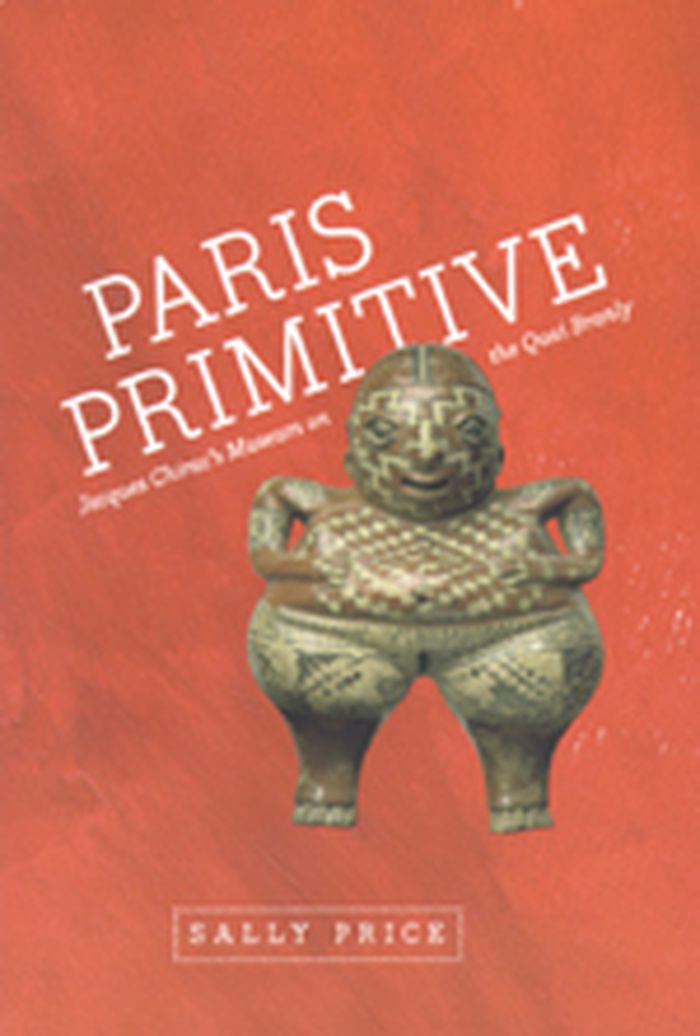
In 1990 Jacques Chirac, the future president of France and a passionate fan of non-European art, met Jacques Kerchache, a maverick art collector with the lifelong ambition of displaying African sculpture in the holy temple of French culture, the Louvre. Together they began laying plans, and ten years later African fetishes were on view under the same roof as the Mona Lisa. Then, in 2006, amidst a maelstrom of controversy and hype, Chirac presided over the opening of a new museum dedicated to primitive art in the shadow of the Eiffel Tower: the Musée du Quai Branly. Paris Primitive recounts the massive reconfiguration of Paris’s museum world that resulted from Chirac’s dream, set against a backdrop of personal and national politics, intellectual life, and the role of culture in French society. Along with exposing the machinations that led to the MQB’s creation, Sally Price addresses the thorny questions it raises about the legacy of colonialism, the balance between aesthetic judgments and ethnographic context, and the role of institutions of art and culture in an increasingly diverse France. Anyone with a stake in the myriad political, cultural, and anthropological issues raised by the MQB will find Price’s account fascinating.
Paris primitive : Jacques Chirac's museum on the quai branly
Actions:
Price:
$21.95
(available to order)
Summary:
In 1990 Jacques Chirac, the future president of France and a passionate fan of non-European art, met Jacques Kerchache, a maverick art collector with the lifelong ambition of displaying African sculpture in the holy temple of French culture, the Louvre. Together they began laying plans, and ten years later African fetishes were on view under the same roof as the Mona Lisa. Then, in 2006, amidst a maelstrom of controversy and hype, Chirac presided over the opening of a new museum dedicated to primitive art in the shadow of the Eiffel Tower: the Musée du Quai Branly. Paris Primitive recounts the massive reconfiguration of Paris’s museum world that resulted from Chirac’s dream, set against a backdrop of personal and national politics, intellectual life, and the role of culture in French society. Along with exposing the machinations that led to the MQB’s creation, Sally Price addresses the thorny questions it raises about the legacy of colonialism, the balance between aesthetic judgments and ethnographic context, and the role of institutions of art and culture in an increasingly diverse France. Anyone with a stake in the myriad political, cultural, and anthropological issues raised by the MQB will find Price’s account fascinating.
Form:
books
books
Publication:
September 2007, Chicago London
September 2007, Chicago London
Subject:
Museology
Museology
Form:
books
books
Price:
$27.00
(available to order)
Summary:
Whether a humble string of planks swaying across a trickling stream or the soaring towers of the Golden Gate Bridge, bridges are one of man’s great engineering feats. Now in Bridge, Peter Bishop provides a comprehensive historical account of their role in the advancement of human culture. From ancient Roman arches to the rail bridge of Lhasa to the suspension bridge(...)
$27.00
(available to order)
Summary:
Whether a humble string of planks swaying across a trickling stream or the soaring towers of the Golden Gate Bridge, bridges are one of man’s great engineering feats. Now in Bridge, Peter Bishop provides a comprehensive historical account of their role in the advancement of human culture. From ancient Roman arches to the rail bridge of Lhasa to the suspension bridge(...)
Title:
Bridge
Actions:
Price:
$27.00
(available to order)
Summary:
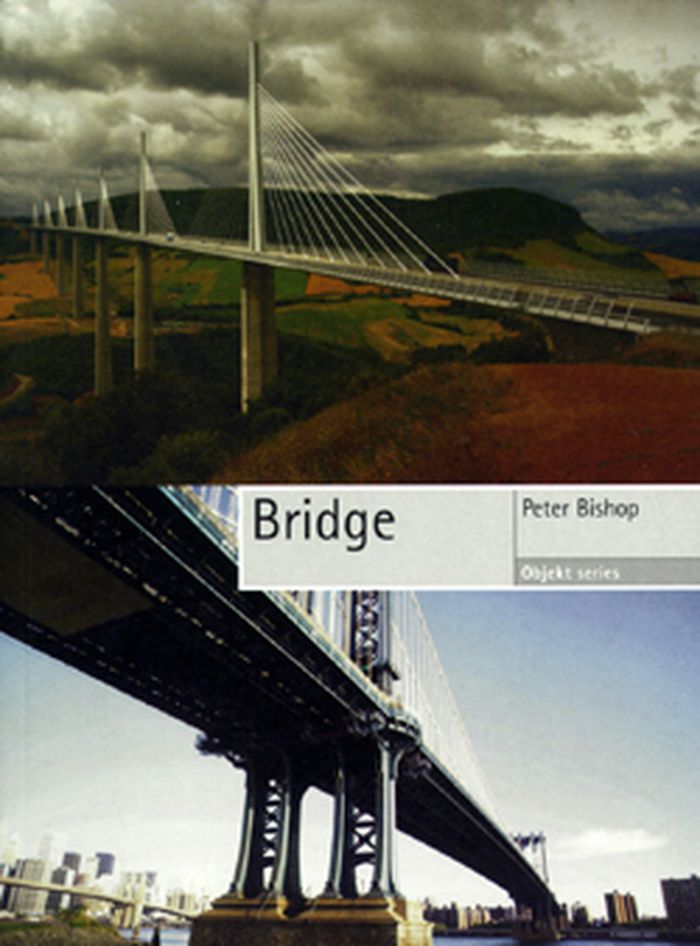
Whether a humble string of planks swaying across a trickling stream or the soaring towers of the Golden Gate Bridge, bridges are one of man’s great engineering feats. Now in Bridge, Peter Bishop provides a comprehensive historical account of their role in the advancement of human culture. From ancient Roman arches to the rail bridge of Lhasa to the suspension bridge over Niagara Falls, Bishop traverses the full span of the globe to examine numerous incarnations and their diverse architectural styles. The book tackles a wide range of issues, including the design and construction of “mega-spans” such as Hong Kong’s Tsing Ma Bridge; the integral role of bridges in railroad networks; and the social dynamics of class and mobility that surround urban bridges in cities such as New York. Drawing upon sources in art, politics, science, philosophy, and the media, Bishop argues that the cultural meaning of bridges today revolves around the idea of expanding geographical claims, rather than connecting to others, and he explores the implications of that idea for the future. A fascinating and richly illustrated study, Bridge will engage enthusiasts of planning, architecture, and design alike.
Bridge
Actions:
Price:
$27.00
(available to order)
Summary:
Whether a humble string of planks swaying across a trickling stream or the soaring towers of the Golden Gate Bridge, bridges are one of man’s great engineering feats. Now in Bridge, Peter Bishop provides a comprehensive historical account of their role in the advancement of human culture. From ancient Roman arches to the rail bridge of Lhasa to the suspension bridge over Niagara Falls, Bishop traverses the full span of the globe to examine numerous incarnations and their diverse architectural styles. The book tackles a wide range of issues, including the design and construction of “mega-spans” such as Hong Kong’s Tsing Ma Bridge; the integral role of bridges in railroad networks; and the social dynamics of class and mobility that surround urban bridges in cities such as New York. Drawing upon sources in art, politics, science, philosophy, and the media, Bishop argues that the cultural meaning of bridges today revolves around the idea of expanding geographical claims, rather than connecting to others, and he explores the implications of that idea for the future. A fascinating and richly illustrated study, Bridge will engage enthusiasts of planning, architecture, and design alike.
Form:
books
books
Publication:
June 2008, London
June 2008, London
Subject:
Engineering Structures
Engineering Structures
Form:
books
books
Actions:
Price:
$24.00
(available to order)
Summary:
Strategically situated at the gateway to the Mississippi River yet standing atop a former swamp, New Orleans was from the first what geographer Peirce Lewis called an "impossible but inevitable city." How New Orleans came to be, taking shape between the mutual and often contradictory forces of nature and urban development, is the subject of "An unnatural metropolis".(...)
$24.00
(available to order)
Summary:
Strategically situated at the gateway to the Mississippi River yet standing atop a former swamp, New Orleans was from the first what geographer Peirce Lewis called an "impossible but inevitable city." How New Orleans came to be, taking shape between the mutual and often contradictory forces of nature and urban development, is the subject of "An unnatural metropolis".(...)
Title:
An unatural metropolis : wresting New Orleans from nature
Actions:
Price:
$24.00
(available to order)
Summary:
Strategically situated at the gateway to the Mississippi River yet standing atop a former swamp, New Orleans was from the first what geographer Peirce Lewis called an "impossible but inevitable city." How New Orleans came to be, taking shape between the mutual and often contradictory forces of nature and urban development, is the subject of "An unnatural metropolis". Craig E. Colten traces engineered modifications to New Orleans's natural environment from 1800 to 2000 and demonstrates that, though all cities must contend with their physical settings, New Orleans may be the city most dependent on human-induced transformations of its precarious site. In a new preface, Colten shows how Hurricane Katrina exemplifies the inability of human artifice to exclude nature from cities and he urges city planners to keep the environment in mind as they contemplate New Orleans's future. Urban geographers frequently have portrayed cities as the antithesis of nature, but in "An unnatural metropolis", Colten introduces a critical environmental perspective to the history of urban areas. His amply illustrated work offers an in-depth look at a city and society uniquely shaped by the natural forces it has sought to harness.
An unatural metropolis : wresting New Orleans from nature
Actions:
Price:
$24.00
(available to order)
Summary:
Strategically situated at the gateway to the Mississippi River yet standing atop a former swamp, New Orleans was from the first what geographer Peirce Lewis called an "impossible but inevitable city." How New Orleans came to be, taking shape between the mutual and often contradictory forces of nature and urban development, is the subject of "An unnatural metropolis". Craig E. Colten traces engineered modifications to New Orleans's natural environment from 1800 to 2000 and demonstrates that, though all cities must contend with their physical settings, New Orleans may be the city most dependent on human-induced transformations of its precarious site. In a new preface, Colten shows how Hurricane Katrina exemplifies the inability of human artifice to exclude nature from cities and he urges city planners to keep the environment in mind as they contemplate New Orleans's future. Urban geographers frequently have portrayed cities as the antithesis of nature, but in "An unnatural metropolis", Colten introduces a critical environmental perspective to the history of urban areas. His amply illustrated work offers an in-depth look at a city and society uniquely shaped by the natural forces it has sought to harness.
Form:
books
books
Publication:
September 2006, Baton Rouge
September 2006, Baton Rouge
Subject:
Urban Theory
Urban Theory
Form:
books
books
Actions:
Price:
$56.50
(available to order)
Summary:
The Housing Divide examines the generational patterns in New York City's housing market and neighborhoods along the lines of race and ethnicity. The book provides an in-depth analysis of many immigrant groups in New York, especially providing an understanding of the opportunities and discriminatory practices at work from one generation to the next. Through a careful read(...)
$56.50
(available to order)
Summary:
The Housing Divide examines the generational patterns in New York City's housing market and neighborhoods along the lines of race and ethnicity. The book provides an in-depth analysis of many immigrant groups in New York, especially providing an understanding of the opportunities and discriminatory practices at work from one generation to the next. Through a careful read(...)
Subject:
Urban Theory
Urban Theory
Publication:
December 2006, New York / London
December 2006, New York / London
Title:
The housing divide : how generations of immigrants fare in New York's housing market
Actions:
Price:
$56.50
(available to order)
Summary:
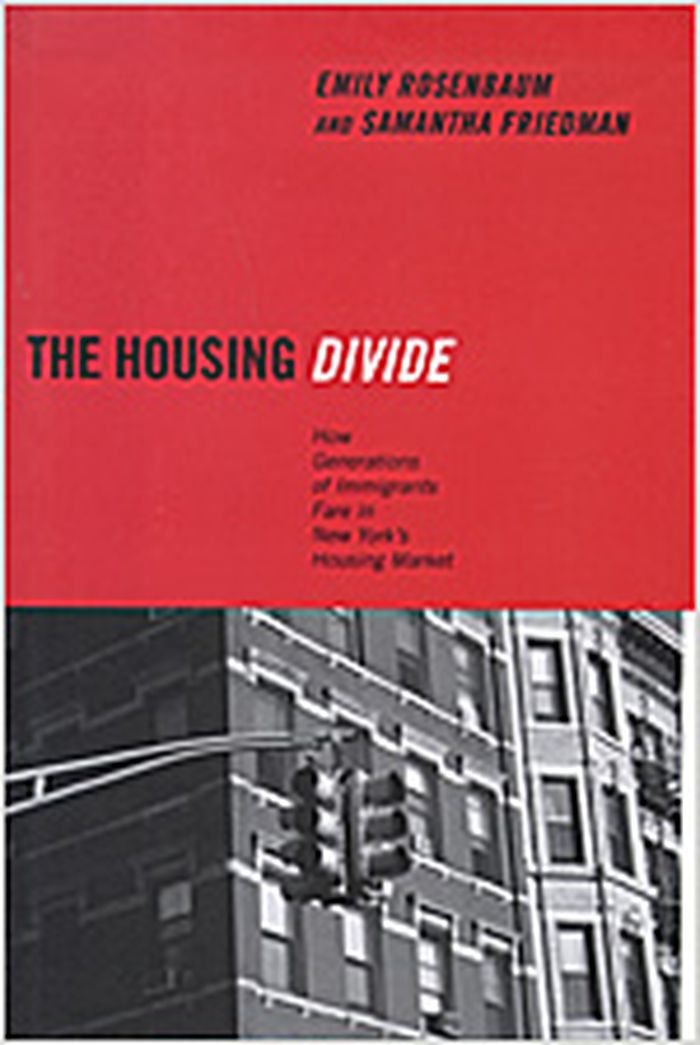
The Housing Divide examines the generational patterns in New York City's housing market and neighborhoods along the lines of race and ethnicity. The book provides an in-depth analysis of many immigrant groups in New York, especially providing an understanding of the opportunities and discriminatory practices at work from one generation to the next. Through a careful read of such factors as home ownership, housing quality, and neighborhood rates of crime, welfare enrollment, teenage pregnancy, and educational achievement, Emily Rosenbaum and Samantha Friedman provide a detailed portrait of neighborhood life and socio-economic status for the immigrants of New York. The book paints an important, if disturbing, picture. The authors argue that not only are Blacks—regardless of generation—disadvantaged relative to members of other racial/ethnic groups in their ability to obtain housing in high-quality neighborhoods, but that housing and neighborhood conditions actually decline over generations. Rosenbaum and Friedman's findings suggest that the future of racial inequality in this country will increasingly isolate Blacks from all other groups. In other words, the "color line" may be shifting from a line separating Blacks from Whites to one separating Blacks from all non-Blacks.
The housing divide : how generations of immigrants fare in New York's housing market
Actions:
Price:
$56.50
(available to order)
Summary:
The Housing Divide examines the generational patterns in New York City's housing market and neighborhoods along the lines of race and ethnicity. The book provides an in-depth analysis of many immigrant groups in New York, especially providing an understanding of the opportunities and discriminatory practices at work from one generation to the next. Through a careful read of such factors as home ownership, housing quality, and neighborhood rates of crime, welfare enrollment, teenage pregnancy, and educational achievement, Emily Rosenbaum and Samantha Friedman provide a detailed portrait of neighborhood life and socio-economic status for the immigrants of New York. The book paints an important, if disturbing, picture. The authors argue that not only are Blacks—regardless of generation—disadvantaged relative to members of other racial/ethnic groups in their ability to obtain housing in high-quality neighborhoods, but that housing and neighborhood conditions actually decline over generations. Rosenbaum and Friedman's findings suggest that the future of racial inequality in this country will increasingly isolate Blacks from all other groups. In other words, the "color line" may be shifting from a line separating Blacks from Whites to one separating Blacks from all non-Blacks.
Form:
books
books
Publication:
December 2006, New York / London
December 2006, New York / London
Subject:
Urban Theory
Urban Theory
Form:
books
books
Title:
Challenging social inequality: The Landless Rural Workers Moverment and agrarian reform in Brazil
Challenging social inequality: The Landless Rural Workers Moverment and agrarian reform in Brazil
Actions:
Price:
$51.95
(available to order)
Summary:
In ''Challenging Social Inequality'', an international and interdisciplinary group of scholars and development workers explores the causes, consequences, and contemporary reactions to Brazil's sharply unequal agrarian structure. They focus on the Landless Rural Workers Movement (MST)—Latin America's largest and most prominent social movement—and its ongoing efforts to(...)
$51.95
(available to order)
Summary:
In ''Challenging Social Inequality'', an international and interdisciplinary group of scholars and development workers explores the causes, consequences, and contemporary reactions to Brazil's sharply unequal agrarian structure. They focus on the Landless Rural Workers Movement (MST)—Latin America's largest and most prominent social movement—and its ongoing efforts to(...)
Title:
Challenging social inequality: The Landless Rural Workers Moverment and agrarian reform in Brazil
Actions:
Price:
$51.95
(available to order)
Summary:
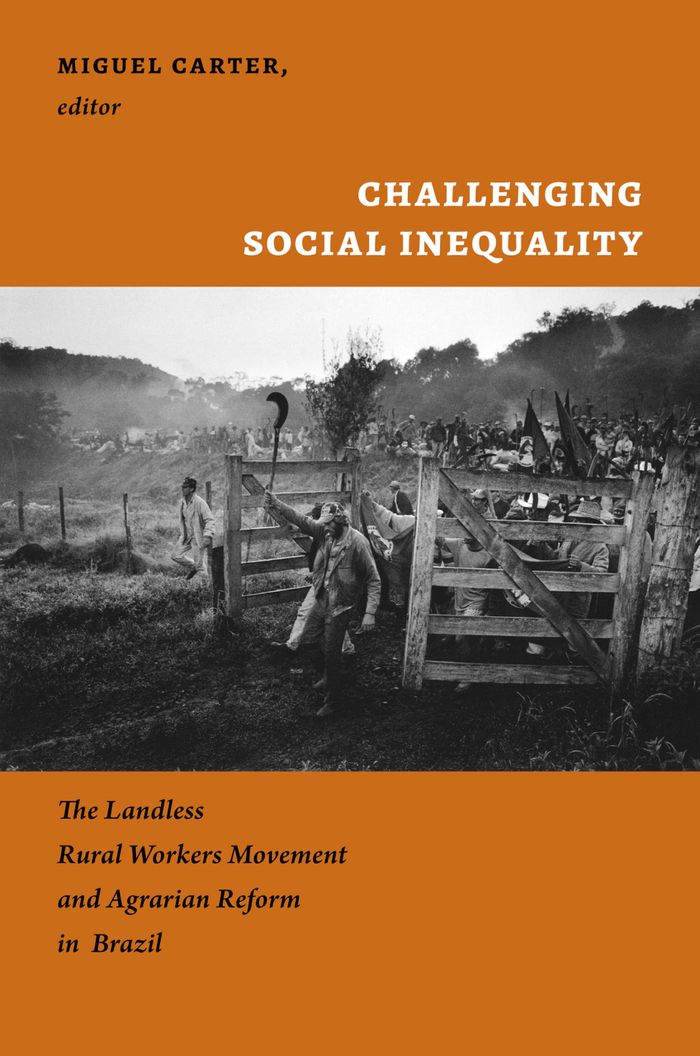
In ''Challenging Social Inequality'', an international and interdisciplinary group of scholars and development workers explores the causes, consequences, and contemporary reactions to Brazil's sharply unequal agrarian structure. They focus on the Landless Rural Workers Movement (MST)—Latin America's largest and most prominent social movement—and its ongoing efforts to confront historic patterns of inequality in the Brazilian countryside. Several essays provide essential historical background for understanding the MST. They examine Brazil's agrarian structure, state policies, and the formation of rural civil-society organizations. Other essays build on a frequently made distinction between the struggle for land and the struggle on the land. The first refers to the mobilization undertaken by landless peasants to demand government land redistribution. The struggle on the land takes place after the establishment of an official agricultural settlement. The main efforts during this phase are geared toward developing productive and meaningful rural communities. The last essays in the collection are wide-ranging analyses of the MST, which delve into the movement's relations with recent governments and its impact on other Brazilian social movements. In the conclusion, Miguel Carter appraises the future of agrarian reform in Brazil.
Challenging social inequality: The Landless Rural Workers Moverment and agrarian reform in Brazil
Actions:
Price:
$51.95
(available to order)
Summary:
In ''Challenging Social Inequality'', an international and interdisciplinary group of scholars and development workers explores the causes, consequences, and contemporary reactions to Brazil's sharply unequal agrarian structure. They focus on the Landless Rural Workers Movement (MST)—Latin America's largest and most prominent social movement—and its ongoing efforts to confront historic patterns of inequality in the Brazilian countryside. Several essays provide essential historical background for understanding the MST. They examine Brazil's agrarian structure, state policies, and the formation of rural civil-society organizations. Other essays build on a frequently made distinction between the struggle for land and the struggle on the land. The first refers to the mobilization undertaken by landless peasants to demand government land redistribution. The struggle on the land takes place after the establishment of an official agricultural settlement. The main efforts during this phase are geared toward developing productive and meaningful rural communities. The last essays in the collection are wide-ranging analyses of the MST, which delve into the movement's relations with recent governments and its impact on other Brazilian social movements. In the conclusion, Miguel Carter appraises the future of agrarian reform in Brazil.
Form:
books
books
Publication:
June 2015
June 2015
Subject:
Current Exhibitions
Current Exhibitions
Form:
books
books
Actions:
Price:
$52.00
(available in store)
Summary:
The cradle-to-cradle principle envisions buildings returning to the natural cycle after use. In practice, however, most are only partially composed of natural or compostable materials. One notable exception is Florian Nagler’s Garden House, winner of the Detail Award, which closely follows this principle. Another route is the reuse or refurbishment of components from(...)
$52.00
(available in store)
Summary:
The cradle-to-cradle principle envisions buildings returning to the natural cycle after use. In practice, however, most are only partially composed of natural or compostable materials. One notable exception is Florian Nagler’s Garden House, winner of the Detail Award, which closely follows this principle. Another route is the reuse or refurbishment of components from(...)
Title:
Detail 6 2025 : Circular construction
Actions:
Price:
$52.00
(available in store)
Summary:
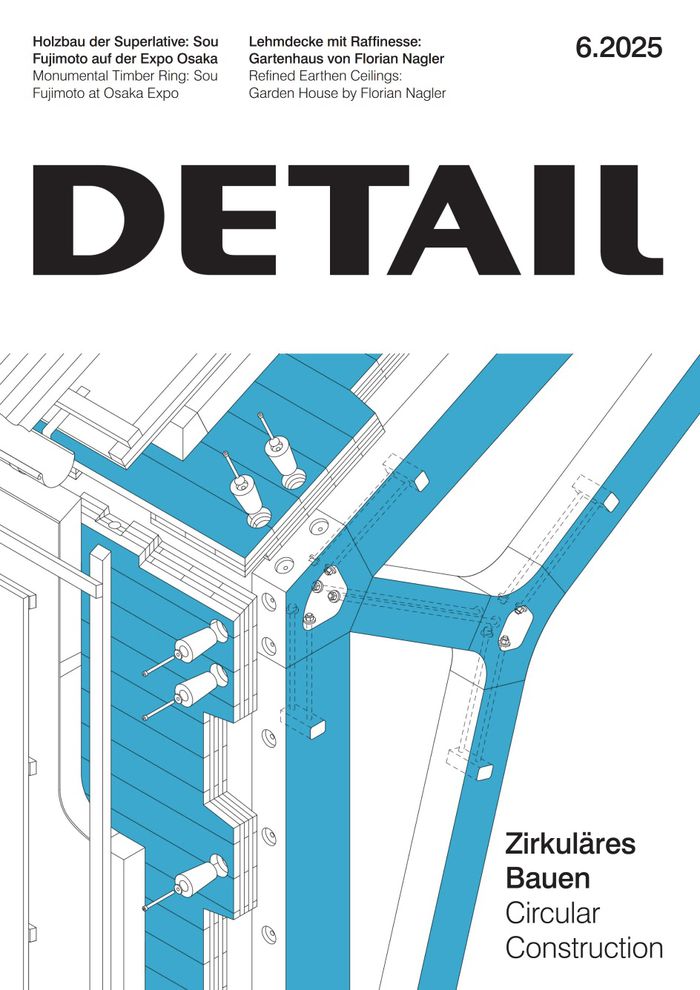
The cradle-to-cradle principle envisions buildings returning to the natural cycle after use. In practice, however, most are only partially composed of natural or compostable materials. One notable exception is Florian Nagler’s Garden House, winner of the Detail Award, which closely follows this principle. Another route is the reuse or refurbishment of components from demolished buildings. But this, too, is complex – components are often scarce and costly to extract and and make fit for new applications. To facilitate recycling, some structures are being designed for disassembly. Yet even timber joints fixed with screws can prove difficult to undo after years in place. A research group in Arles sees itself as a recycler of remnants, developing new materials from construction debris and agricultural waste: sunflower stalks become acoustic panels, while rice straw from cultivation is turned into insulation. The team also experiments with local resources: in nearby salt pans, salt crystallises on metal racks to form tiles, while algae are used to make lamps, vases, and wall finishes. Architecture made from rubble, clad in salt, rice, and seaweed – a compelling vision of the future. Perhaps the most promising path lies in combining these diverse strategies.
Detail 6 2025 : Circular construction
Actions:
Price:
$52.00
(available in store)
Summary:
The cradle-to-cradle principle envisions buildings returning to the natural cycle after use. In practice, however, most are only partially composed of natural or compostable materials. One notable exception is Florian Nagler’s Garden House, winner of the Detail Award, which closely follows this principle. Another route is the reuse or refurbishment of components from demolished buildings. But this, too, is complex – components are often scarce and costly to extract and and make fit for new applications. To facilitate recycling, some structures are being designed for disassembly. Yet even timber joints fixed with screws can prove difficult to undo after years in place. A research group in Arles sees itself as a recycler of remnants, developing new materials from construction debris and agricultural waste: sunflower stalks become acoustic panels, while rice straw from cultivation is turned into insulation. The team also experiments with local resources: in nearby salt pans, salt crystallises on metal racks to form tiles, while algae are used to make lamps, vases, and wall finishes. Architecture made from rubble, clad in salt, rice, and seaweed – a compelling vision of the future. Perhaps the most promising path lies in combining these diverse strategies.
Form:
books
books
Publication:
June 2025
June 2025
Subject:
Magazines
Magazines
Form:
books
books

Price:
$134.99
(available in store)
Summary:
The 1960s continue to hold an almost mythical place in Western culture, particularly in Britain, where change was widespread and infiltrated many aspects of life. This included architecture, whose role in a modern democracy and the form it should take were hotly debated. This book discusses the architectural thinking of the time through an examination of the design of(...)
$134.99
(available in store)
Summary:
The 1960s continue to hold an almost mythical place in Western culture, particularly in Britain, where change was widespread and infiltrated many aspects of life. This included architecture, whose role in a modern democracy and the form it should take were hotly debated. This book discusses the architectural thinking of the time through an examination of the design of(...)
Title:
1960s University buildings: The golden age of British modern architecture
Actions:
Price:
$134.99
(available in store)
Summary:
The 1960s continue to hold an almost mythical place in Western culture, particularly in Britain, where change was widespread and infiltrated many aspects of life. This included architecture, whose role in a modern democracy and the form it should take were hotly debated. This book discusses the architectural thinking of the time through an examination of the design of university buildings. While there were notable buildings being built in other spheres, no other field of architecture provided the opportunity to express those ideas as freely, while also reflecting innovative new thinking about education and society. Somehow, the university buildings of the 1960s seemed to represent the cutting edge of modern architecture in the UK. This book provides the first critical analysis and overview of these buildings, designed by some of the leading British architects of the period including Basil Spence, Leslie Martin, Alison and Peter Smithson, Denys Lasdun, Powell and Moya and James Stirling. By placing the buildings in a wider social, cultural and political context, it examines the combination of circumstances and attitudes that produced results that are equally admired and detested and allows us to understand how we might replicate or avoid them in the future.
1960s University buildings: The golden age of British modern architecture
Actions:
Price:
$134.99
(available in store)
Summary:
The 1960s continue to hold an almost mythical place in Western culture, particularly in Britain, where change was widespread and infiltrated many aspects of life. This included architecture, whose role in a modern democracy and the form it should take were hotly debated. This book discusses the architectural thinking of the time through an examination of the design of university buildings. While there were notable buildings being built in other spheres, no other field of architecture provided the opportunity to express those ideas as freely, while also reflecting innovative new thinking about education and society. Somehow, the university buildings of the 1960s seemed to represent the cutting edge of modern architecture in the UK. This book provides the first critical analysis and overview of these buildings, designed by some of the leading British architects of the period including Basil Spence, Leslie Martin, Alison and Peter Smithson, Denys Lasdun, Powell and Moya and James Stirling. By placing the buildings in a wider social, cultural and political context, it examines the combination of circumstances and attitudes that produced results that are equally admired and detested and allows us to understand how we might replicate or avoid them in the future.
Form:
books
books
Publication:
June 2025
June 2025
Subject:
Modernism
Modernism


