


6640 Results
Form:
books
books

Title:
Large parks
Large parks
Actions:
Price:
$38.95
(available to order)
Summary:
The discipline of landscape architecture encompasses many typologies, from domestic gardens and neighborhood playgrounds to urban designs and state parks. Most critical studies of the discipline tend to approach it from a historical or contemporary perspective organized around criteria such as built versus unbuilt, urban versus peripheral, or competition-sponsored versus(...)
$38.95
(available to order)
Summary:
The discipline of landscape architecture encompasses many typologies, from domestic gardens and neighborhood playgrounds to urban designs and state parks. Most critical studies of the discipline tend to approach it from a historical or contemporary perspective organized around criteria such as built versus unbuilt, urban versus peripheral, or competition-sponsored versus(...)
Title:
Large parks
Actions:
Price:
$38.95
(available to order)
Summary:
The discipline of landscape architecture encompasses many typologies, from domestic gardens and neighborhood playgrounds to urban designs and state parks. Most critical studies of the discipline tend to approach it from a historical or contemporary perspective organized around criteria such as built versus unbuilt, urban versus peripheral, or competition-sponsored versus commission-based. Very few analyses have been undertaken from the seemingly obvious jumping-off point of size. In "Large parks", Julia Czerniak and George Hargreaves present eight essays by scholars and practitioners that engage large urban parks in depth as complex cultural spaces, where key issues of landscape discourse, ecological challenges, social history, urban relations, and place-making are writ large. From historic parks such as New York's Central Park and Paris's Bois de Boulogne to contemporary projects such as Toronto's Downsview Park and Staten Island's Fresh Kills, to newly unveiled and yet-to-be-built projects such as Ken Smith's ambitious plans for the Orange County Great Park, "Large parks" highlights the complexities and unique considerations that go into designing these massive and culturally significant works.
Large parks
Actions:
Price:
$38.95
(available to order)
Summary:
The discipline of landscape architecture encompasses many typologies, from domestic gardens and neighborhood playgrounds to urban designs and state parks. Most critical studies of the discipline tend to approach it from a historical or contemporary perspective organized around criteria such as built versus unbuilt, urban versus peripheral, or competition-sponsored versus commission-based. Very few analyses have been undertaken from the seemingly obvious jumping-off point of size. In "Large parks", Julia Czerniak and George Hargreaves present eight essays by scholars and practitioners that engage large urban parks in depth as complex cultural spaces, where key issues of landscape discourse, ecological challenges, social history, urban relations, and place-making are writ large. From historic parks such as New York's Central Park and Paris's Bois de Boulogne to contemporary projects such as Toronto's Downsview Park and Staten Island's Fresh Kills, to newly unveiled and yet-to-be-built projects such as Ken Smith's ambitious plans for the Orange County Great Park, "Large parks" highlights the complexities and unique considerations that go into designing these massive and culturally significant works.
Form:
books
books
Publication:
July 2007, New York
July 2007, New York
Subject:
Food
Food
Form:
books
books

Actions:
Price:
$37.95
(available to order)
Summary:
In ''Beyond the World's End,'' T. J. Demos explores cultural practices that provide radical propositions for living in a world beset by environmental and political crises. Rethinking relationships between aesthetics and an expanded political ecology that foregrounds just futurity, Demos examines how contemporary artists are diversely addressing urgent themes, including(...)
$37.95
(available to order)
Summary:
In ''Beyond the World's End,'' T. J. Demos explores cultural practices that provide radical propositions for living in a world beset by environmental and political crises. Rethinking relationships between aesthetics and an expanded political ecology that foregrounds just futurity, Demos examines how contemporary artists are diversely addressing urgent themes, including(...)
Title:
Beyond the world's end: arts of living at the crossing
Actions:
Price:
$37.95
(available to order)
Summary:
In ''Beyond the World's End,'' T. J. Demos explores cultural practices that provide radical propositions for living in a world beset by environmental and political crises. Rethinking relationships between aesthetics and an expanded political ecology that foregrounds just futurity, Demos examines how contemporary artists are diversely addressing urgent themes, including John Akomfrah's cinematic entanglements of racial capitalism with current environmental threats, the visual politics of climate refugees in work by Forensic Architecture and Teddy Cruz and Fonna Forman, and moving images of Afrofuturist climate justice in projects by Arthur Jafa and Martine Syms. Demos considers video and mixed-media art that responds to resource extraction in works by Angela Melitopoulos, Allora & Calzadilla, and Ursula Biemann, as well as the multispecies ecologies of Terike Haapoja and Public Studio. Throughout Demos contends that contemporary intersections of aesthetics and politics, as exemplified in the Standing Rock #NoDAPL campaign and the Zad's autonomous zone in France, are creating the imaginaries that will be crucial to building a socially just and flourishing future.
Beyond the world's end: arts of living at the crossing
Actions:
Price:
$37.95
(available to order)
Summary:
In ''Beyond the World's End,'' T. J. Demos explores cultural practices that provide radical propositions for living in a world beset by environmental and political crises. Rethinking relationships between aesthetics and an expanded political ecology that foregrounds just futurity, Demos examines how contemporary artists are diversely addressing urgent themes, including John Akomfrah's cinematic entanglements of racial capitalism with current environmental threats, the visual politics of climate refugees in work by Forensic Architecture and Teddy Cruz and Fonna Forman, and moving images of Afrofuturist climate justice in projects by Arthur Jafa and Martine Syms. Demos considers video and mixed-media art that responds to resource extraction in works by Angela Melitopoulos, Allora & Calzadilla, and Ursula Biemann, as well as the multispecies ecologies of Terike Haapoja and Public Studio. Throughout Demos contends that contemporary intersections of aesthetics and politics, as exemplified in the Standing Rock #NoDAPL campaign and the Zad's autonomous zone in France, are creating the imaginaries that will be crucial to building a socially just and flourishing future.
Form:
books
books
Publication:
September 2020
September 2020
Subject:
Environment and environmental theory
Environment and environmental theory
Form:
books
books
Actions:
Price:
$45.95
(available to order)
Summary:
The German pavilion at the 9th Venice Architecture Biennale offers an overview of more than 35 contemporary architectural projects in Germany which have manifested in peripheral urban areas, suburban spaces, and de-industrialized zones. The projects reveal the transformation and reactivation of banal everyday architecture--business parks, switching stations, water(...)
$45.95
(available to order)
Summary:
The German pavilion at the 9th Venice Architecture Biennale offers an overview of more than 35 contemporary architectural projects in Germany which have manifested in peripheral urban areas, suburban spaces, and de-industrialized zones. The projects reveal the transformation and reactivation of banal everyday architecture--business parks, switching stations, water(...)
Title:
Deutschlandscape : epicentres at the periphery - German pavilion, Venice Biennale 2004
Actions:
Price:
$45.95
(available to order)
Summary:
The German pavilion at the 9th Venice Architecture Biennale offers an overview of more than 35 contemporary architectural projects in Germany which have manifested in peripheral urban areas, suburban spaces, and de-industrialized zones. The projects reveal the transformation and reactivation of banal everyday architecture--business parks, switching stations, water purification plants, and strictly coded and conventional housing types--to open up a new perception of the "deutschlandscape." Here, architectural norms are reworked and given a new aesthetic twist through ironic self-reflection. These built projects by a critical young generation of German architects reveal highly innovative use of new materials, generate suburban "plug-ins" (temporary and mobile architecture), and skillfully rework the familiar to create solutions for hitherto underrepresented yet vital areas on the urban fringe. Accompanying essays and interviews reveal the personal narratives behind the architecture. Contributions include: "urban therapist" Sonja Beeck on dealing with the psychological dimensions of shrinking cities in the former GDR; artist and urbanist Kai Vöckler on the German psychoscape; Omar Akbar of the Bauhaus Dessau on the wider implications of urban sprawl; Peter Cook on tuning suburbia; Angelika Fitz on strategic answers to restrictive building regulations; Peter Wilson on the marketing of place; and Rudolf Stegers on multi-layered meanings behind the architectural image.
Deutschlandscape : epicentres at the periphery - German pavilion, Venice Biennale 2004
Actions:
Price:
$45.95
(available to order)
Summary:
The German pavilion at the 9th Venice Architecture Biennale offers an overview of more than 35 contemporary architectural projects in Germany which have manifested in peripheral urban areas, suburban spaces, and de-industrialized zones. The projects reveal the transformation and reactivation of banal everyday architecture--business parks, switching stations, water purification plants, and strictly coded and conventional housing types--to open up a new perception of the "deutschlandscape." Here, architectural norms are reworked and given a new aesthetic twist through ironic self-reflection. These built projects by a critical young generation of German architects reveal highly innovative use of new materials, generate suburban "plug-ins" (temporary and mobile architecture), and skillfully rework the familiar to create solutions for hitherto underrepresented yet vital areas on the urban fringe. Accompanying essays and interviews reveal the personal narratives behind the architecture. Contributions include: "urban therapist" Sonja Beeck on dealing with the psychological dimensions of shrinking cities in the former GDR; artist and urbanist Kai Vöckler on the German psychoscape; Omar Akbar of the Bauhaus Dessau on the wider implications of urban sprawl; Peter Cook on tuning suburbia; Angelika Fitz on strategic answers to restrictive building regulations; Peter Wilson on the marketing of place; and Rudolf Stegers on multi-layered meanings behind the architectural image.
Form:
books
books
Publication:
November 2004, Ostfildern
November 2004, Ostfildern
Subject:
Urban Theory
Urban Theory
Form:
books
books
Actions:
Holdings:
Description:
373 pages : illustrations ; 33 cm
Description:
373 pages : illustrations ; 33 cm
Author:
Subject:
Publication:
London ; New York : Phaidon Press, 2013.
London ; New York : Phaidon Press, 2013.
Title:
Art & place : site-specific art of the Americas.
Actions:
Holdings:
Description:
373 pages : illustrations ; 33 cm
Art & place : site-specific art of the Americas.
Actions:
Holdings:
Description:
373 pages : illustrations ; 33 cm
Form:
books
books
Publication:
London ; New York : Phaidon Press, 2013.
London ; New York : Phaidon Press, 2013.
Author:
Subject:
Form:
books
books
Price:
$45.95
(available to order)
Summary:
This book, devoted to the contributions of the Austro-American artist and architect Friedrich Kiesler to the field of design, presents previously unpublished material relating to his innovative furniture designs and prototypes from the 1930s and 1940s. Letters, diary entries, and photographs document the New York cultural environment in which Friedrich Kiesler lived and(...)
$45.95
(available to order)
Summary:
This book, devoted to the contributions of the Austro-American artist and architect Friedrich Kiesler to the field of design, presents previously unpublished material relating to his innovative furniture designs and prototypes from the 1930s and 1940s. Letters, diary entries, and photographs document the New York cultural environment in which Friedrich Kiesler lived and(...)
Subject:
Design Monographs
Design Monographs
Publication:
May 2005, Ostfildern-Ruit
May 2005, Ostfildern-Ruit
Title:
Friedrich Kiesler designer : seating furniture of the 30s and 40s
Actions:
Price:
$45.95
(available to order)
Summary:
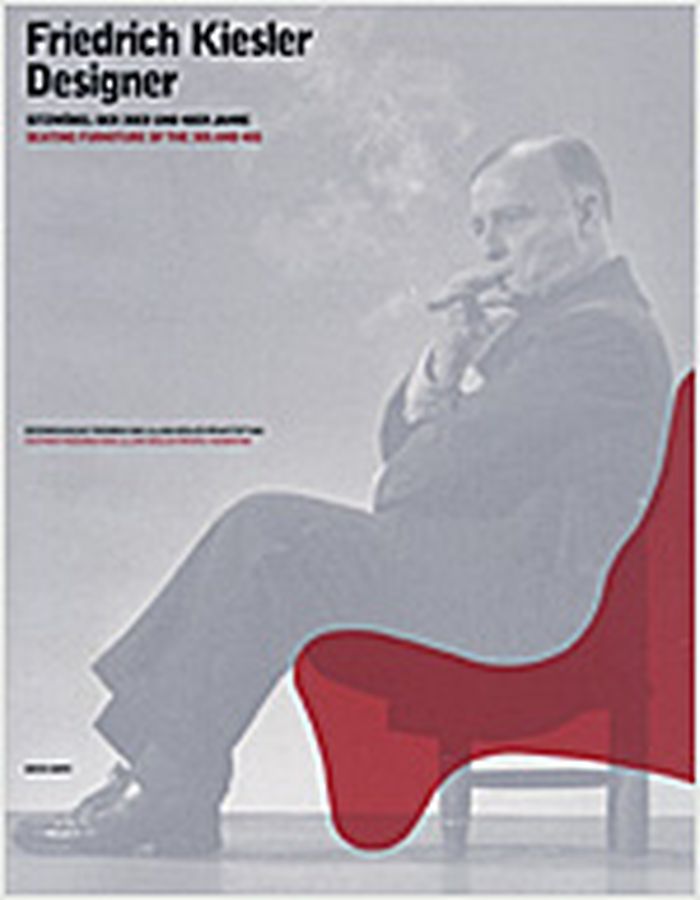
This book, devoted to the contributions of the Austro-American artist and architect Friedrich Kiesler to the field of design, presents previously unpublished material relating to his innovative furniture designs and prototypes from the 1930s and 1940s. Letters, diary entries, and photographs document the New York cultural environment in which Friedrich Kiesler lived and worked and illuminate the role he played in the contemporary design scene. After emigrating to New York in 1925, Kiesler soon became an important mediator between European and American positions in the fields of design and architecture. In the ensuing years, he designed furniture and exhibitions and articulated the fundamental principles of a critical theory of functional architecture and design. Such concepts as flexibility, dynamism, and multifunctionality were crucial elements of his theoretical constructs. With an introduction by Monika Pessler, texts by Tulga Beyerle, Harald Krejci, and a preface by Dieter Bogner and Heinz F. Hofer-Wittmann.
Friedrich Kiesler designer : seating furniture of the 30s and 40s
Actions:
Price:
$45.95
(available to order)
Summary:
This book, devoted to the contributions of the Austro-American artist and architect Friedrich Kiesler to the field of design, presents previously unpublished material relating to his innovative furniture designs and prototypes from the 1930s and 1940s. Letters, diary entries, and photographs document the New York cultural environment in which Friedrich Kiesler lived and worked and illuminate the role he played in the contemporary design scene. After emigrating to New York in 1925, Kiesler soon became an important mediator between European and American positions in the fields of design and architecture. In the ensuing years, he designed furniture and exhibitions and articulated the fundamental principles of a critical theory of functional architecture and design. Such concepts as flexibility, dynamism, and multifunctionality were crucial elements of his theoretical constructs. With an introduction by Monika Pessler, texts by Tulga Beyerle, Harald Krejci, and a preface by Dieter Bogner and Heinz F. Hofer-Wittmann.
Form:
books
books
Publication:
May 2005, Ostfildern-Ruit
May 2005, Ostfildern-Ruit
Subject:
Design Monographs
Design Monographs
Form:
books
books
Actions:
Price:
$92.50
(available to order)
Summary:
Julien-David Le Roy's Les ruines des plus beaux monuments de la Grece, initially issued in 1758, first revealed to European eyes the wonders of Greek classical architecture. Overnight, Greece became the rage, much to the chagrin of Giovanni Battista Piranesi and other defenders of the genius of Rome. The impact of the volume's splendid engravings of Athens's ancient ruins(...)
$92.50
(available to order)
Summary:
Julien-David Le Roy's Les ruines des plus beaux monuments de la Grece, initially issued in 1758, first revealed to European eyes the wonders of Greek classical architecture. Overnight, Greece became the rage, much to the chagrin of Giovanni Battista Piranesi and other defenders of the genius of Rome. The impact of the volume's splendid engravings of Athens's ancient ruins(...)
Title:
The ruins of the most beautiful monuments of Greece
Actions:
Price:
$92.50
(available to order)
Summary:
Julien-David Le Roy's Les ruines des plus beaux monuments de la Grece, initially issued in 1758, first revealed to European eyes the wonders of Greek classical architecture. Overnight, Greece became the rage, much to the chagrin of Giovanni Battista Piranesi and other defenders of the genius of Rome. The impact of the volume's splendid engravings of Athens's ancient ruins on contemporary aesthetics was heightened, particularly in the much-expanded edition of 1770, by its two highly provocative theoretical essays. In one, Le Roy set forth a compelling linear history of the conceptual forms of architecture that began in Egypt, moved to Greece, then Rome, and finally modern Europe. In the other, seeking to express the experience of architectural form and its effects, Le Roy gave new voice to feeling. Here the second edition of Les ruines is published in English for the first time.
The ruins of the most beautiful monuments of Greece
Actions:
Price:
$92.50
(available to order)
Summary:
Julien-David Le Roy's Les ruines des plus beaux monuments de la Grece, initially issued in 1758, first revealed to European eyes the wonders of Greek classical architecture. Overnight, Greece became the rage, much to the chagrin of Giovanni Battista Piranesi and other defenders of the genius of Rome. The impact of the volume's splendid engravings of Athens's ancient ruins on contemporary aesthetics was heightened, particularly in the much-expanded edition of 1770, by its two highly provocative theoretical essays. In one, Le Roy set forth a compelling linear history of the conceptual forms of architecture that began in Egypt, moved to Greece, then Rome, and finally modern Europe. In the other, seeking to express the experience of architectural form and its effects, Le Roy gave new voice to feeling. Here the second edition of Les ruines is published in English for the first time.
Form:
books
books
Publication:
February 2004, Los Angeles
February 2004, Los Angeles
Subject:
History until 1900
History until 1900
Form:
journals and magazines
journals and magazines
Title:
Bauhaus no.7: Collective
Bauhaus no.7: Collective
Actions:
Price:
$36.00
(available to order)
Summary:
The Bauhaus Dessau Foundation devoted its seventh issue to an international group of contemporary collectives, unorthodox thinkers and solo artists in architecture, design and art. The publication addresses communal and cooperative models established at the Bauhaus such as Hannes Meyer’s co-op principle in the USSR and Chile, and anonymity and conflict in Gropius’s(...)
$36.00
(available to order)
Summary:
The Bauhaus Dessau Foundation devoted its seventh issue to an international group of contemporary collectives, unorthodox thinkers and solo artists in architecture, design and art. The publication addresses communal and cooperative models established at the Bauhaus such as Hannes Meyer’s co-op principle in the USSR and Chile, and anonymity and conflict in Gropius’s(...)
Title:
Bauhaus no.7: Collective
Actions:
Price:
$36.00
(available to order)
Summary:
The Bauhaus Dessau Foundation devoted its seventh issue to an international group of contemporary collectives, unorthodox thinkers and solo artists in architecture, design and art. The publication addresses communal and cooperative models established at the Bauhaus such as Hannes Meyer’s co-op principle in the USSR and Chile, and anonymity and conflict in Gropius’s architects collaborative (TAC) in the USA while looking at the options and potentials of collective design today. It sheds light on the link between the Bauhaus and the upcoming Architecture Biennale in Venice, considers why architects in Spain currently invest more in collective design practices and discusses how current cooperative societies influence the collective identity around the world. Contributors include Pelin Tan, Alejandro Aravena, Vesna Meštric, David F. Maulen, Richard Anderson, Thomas Demand, Chris Dercon, DE - 9 architects, artists and urban planners in Berlin, Estudio SIC, Spain, plus many more.
Bauhaus no.7: Collective
Actions:
Price:
$36.00
(available to order)
Summary:
The Bauhaus Dessau Foundation devoted its seventh issue to an international group of contemporary collectives, unorthodox thinkers and solo artists in architecture, design and art. The publication addresses communal and cooperative models established at the Bauhaus such as Hannes Meyer’s co-op principle in the USSR and Chile, and anonymity and conflict in Gropius’s architects collaborative (TAC) in the USA while looking at the options and potentials of collective design today. It sheds light on the link between the Bauhaus and the upcoming Architecture Biennale in Venice, considers why architects in Spain currently invest more in collective design practices and discusses how current cooperative societies influence the collective identity around the world. Contributors include Pelin Tan, Alejandro Aravena, Vesna Meštric, David F. Maulen, Richard Anderson, Thomas Demand, Chris Dercon, DE - 9 architects, artists and urban planners in Berlin, Estudio SIC, Spain, plus many more.
Form:
journals and magazines
journals and magazines
Publication:
May 2016
May 2016
Subject:
Magazines
Magazines
Form:
books
books
Actions:
Price:
$42.00
(available to order)
Summary:
Across Europe, cities are rapidly changing. How to account for the requirements of culture and humanity amid urban planners' brisk intentions? Hans Venhuizen is a specialist in what he calls culture-based planning, which takes existing culture - architecture, art and the contemporary culture of an area's inhabitants - as the point of departure for planning efforts.(...)
$42.00
(available to order)
Summary:
Across Europe, cities are rapidly changing. How to account for the requirements of culture and humanity amid urban planners' brisk intentions? Hans Venhuizen is a specialist in what he calls culture-based planning, which takes existing culture - architecture, art and the contemporary culture of an area's inhabitants - as the point of departure for planning efforts.(...)
Title:
Game urbanism : manual for cultural spatial planning
Actions:
Price:
$42.00
(available to order)
Summary:
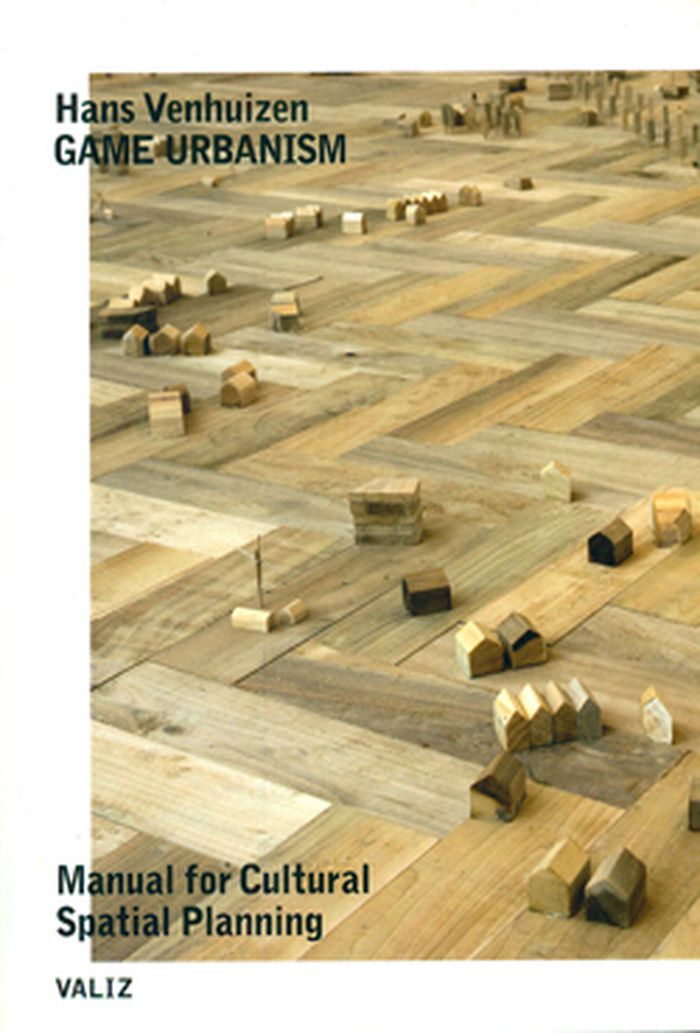
Across Europe, cities are rapidly changing. How to account for the requirements of culture and humanity amid urban planners' brisk intentions? Hans Venhuizen is a specialist in what he calls culture-based planning, which takes existing culture - architecture, art and the contemporary culture of an area's inhabitants - as the point of departure for planning efforts. Venhuizen is well known for his use of ingenious large-scale social games to identify the culture and explore the interests at stake: one such game, called "Life, the Game," involved 20 participants in reenacting the entire life cycle. This publication presents Venhuizen's working practices and shows how they can be applied by anybody (citizens, planners, artists, architects, local authorities, administrators) working in spatial planning, architecture, community arts or other creative industries. Charles Landry, author of The Creative City (2000) and The Art of City Making (2006), contributes an introduction.
Game urbanism : manual for cultural spatial planning
Actions:
Price:
$42.00
(available to order)
Summary:
Across Europe, cities are rapidly changing. How to account for the requirements of culture and humanity amid urban planners' brisk intentions? Hans Venhuizen is a specialist in what he calls culture-based planning, which takes existing culture - architecture, art and the contemporary culture of an area's inhabitants - as the point of departure for planning efforts. Venhuizen is well known for his use of ingenious large-scale social games to identify the culture and explore the interests at stake: one such game, called "Life, the Game," involved 20 participants in reenacting the entire life cycle. This publication presents Venhuizen's working practices and shows how they can be applied by anybody (citizens, planners, artists, architects, local authorities, administrators) working in spatial planning, architecture, community arts or other creative industries. Charles Landry, author of The Creative City (2000) and The Art of City Making (2006), contributes an introduction.
Form:
books
books
Publication:
November 2010
November 2010
Subject:
Urban Theory
Urban Theory
Form:
books
books
Price:
$31.00
(available to order)
Summary:
This collection of unpublished or rare texts by Frederick Kiesler written between 1927 and 1957 is published on the occasion of the exhibition 'Function Follows Vision, Vision Follows Reality' at Kunsthalle Wien (May 27 August 23, 2015), curated by Luca Lo Pinto and Vanessa Joan Mu ller. The exhibition, developed in cooperation with the Austrian Frederick and Lillian(...)
$31.00
(available to order)
Summary:
This collection of unpublished or rare texts by Frederick Kiesler written between 1927 and 1957 is published on the occasion of the exhibition 'Function Follows Vision, Vision Follows Reality' at Kunsthalle Wien (May 27 August 23, 2015), curated by Luca Lo Pinto and Vanessa Joan Mu ller. The exhibition, developed in cooperation with the Austrian Frederick and Lillian(...)
Title:
Frederick Kiesler: function follows form, vision follows reality
Actions:
Price:
$31.00
(available to order)
Summary:
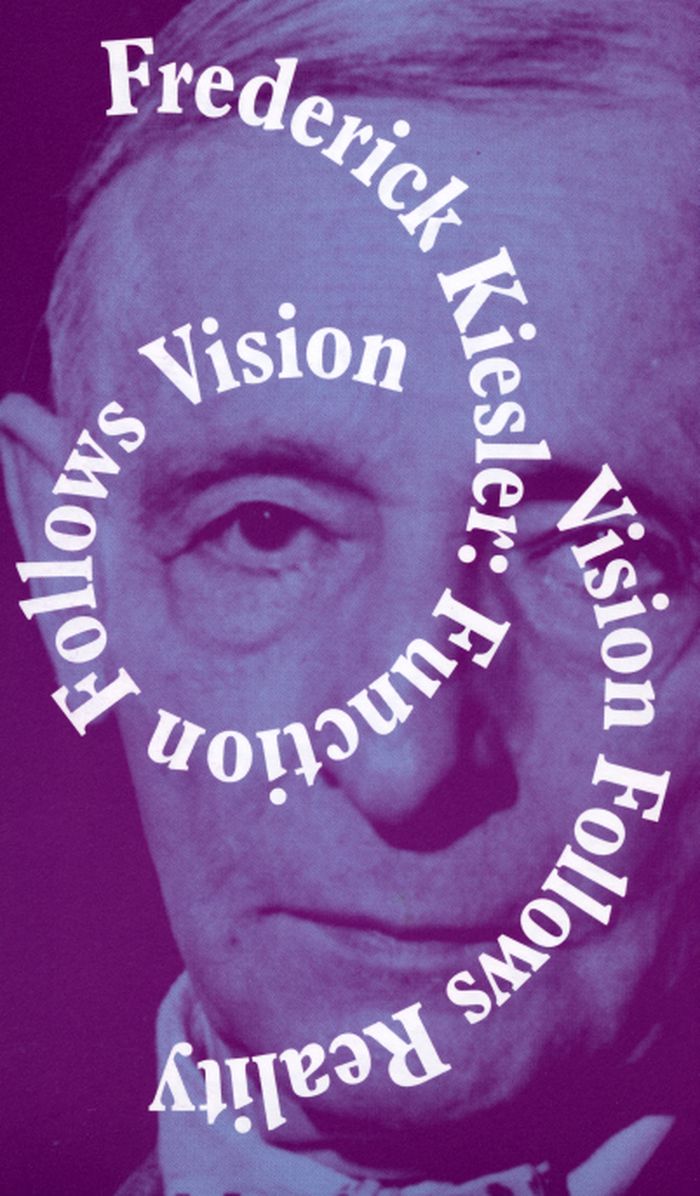
This collection of unpublished or rare texts by Frederick Kiesler written between 1927 and 1957 is published on the occasion of the exhibition 'Function Follows Vision, Vision Follows Reality' at Kunsthalle Wien (May 27 August 23, 2015), curated by Luca Lo Pinto and Vanessa Joan Mu ller. The exhibition, developed in cooperation with the Austrian Frederick and Lillian Kiesler Private Foundation, focuses on Kiesler's ideas on display, and juxtaposes works of contemporary artists with a number of original drawings by Kiesler. Views of the exhibition are included in the pages of this publication.
Frederick Kiesler: function follows form, vision follows reality
Actions:
Price:
$31.00
(available to order)
Summary:
This collection of unpublished or rare texts by Frederick Kiesler written between 1927 and 1957 is published on the occasion of the exhibition 'Function Follows Vision, Vision Follows Reality' at Kunsthalle Wien (May 27 August 23, 2015), curated by Luca Lo Pinto and Vanessa Joan Mu ller. The exhibition, developed in cooperation with the Austrian Frederick and Lillian Kiesler Private Foundation, focuses on Kiesler's ideas on display, and juxtaposes works of contemporary artists with a number of original drawings by Kiesler. Views of the exhibition are included in the pages of this publication.
Form:
books
books
Publication:
July 2016
July 2016
Subject:
Architectural Theory
Architectural Theory
Form:
books
books
Actions:
Price:
$24.95
(available to order)
Summary:
"The lonely crowd" is considered by many to be the most influential book of the twentieth century. Its now-classic analysis of the “new middle class” in terms of inner-directed and other-directed social character opened exciting new dimensions in our understanding of the psychological, political, and economic problems that confront the individual in contemporary American(...)
$24.95
(available to order)
Summary:
"The lonely crowd" is considered by many to be the most influential book of the twentieth century. Its now-classic analysis of the “new middle class” in terms of inner-directed and other-directed social character opened exciting new dimensions in our understanding of the psychological, political, and economic problems that confront the individual in contemporary American(...)
Title:
The lonely crowd: a study of the changing American character
Actions:
Price:
$24.95
(available to order)
Summary:
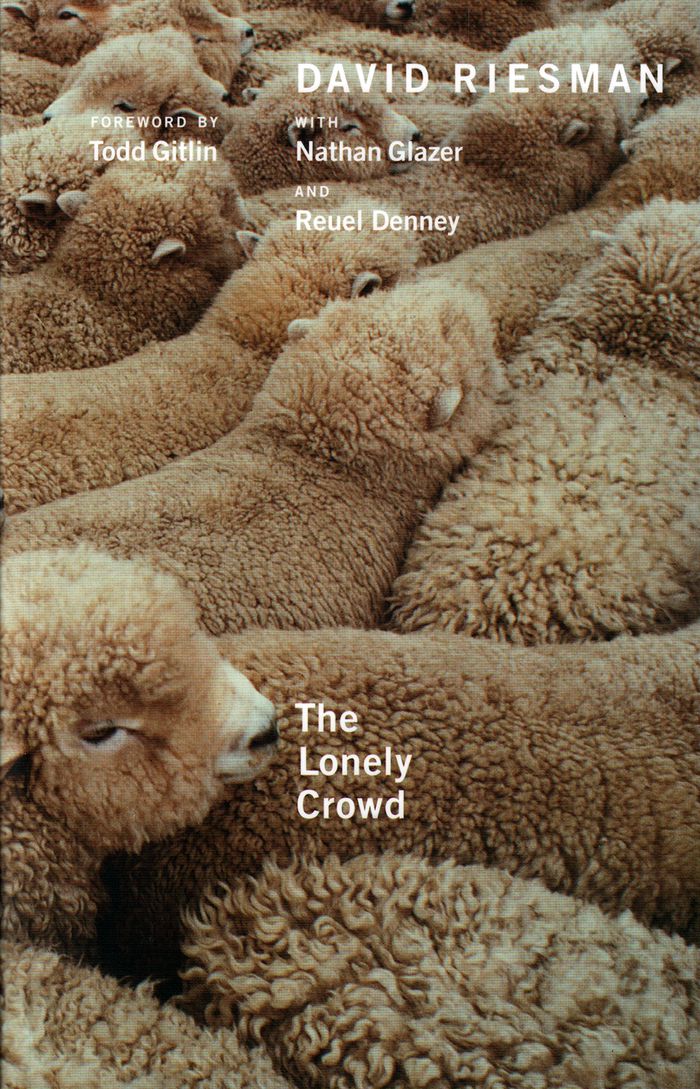
"The lonely crowd" is considered by many to be the most influential book of the twentieth century. Its now-classic analysis of the “new middle class” in terms of inner-directed and other-directed social character opened exciting new dimensions in our understanding of the psychological, political, and economic problems that confront the individual in contemporary American society. The 1969 abridged and revised edition of the book is now reissued with a new foreword by Todd Gitlin that explains why the book is still relevant to our own era.
The lonely crowd: a study of the changing American character
Actions:
Price:
$24.95
(available to order)
Summary:
"The lonely crowd" is considered by many to be the most influential book of the twentieth century. Its now-classic analysis of the “new middle class” in terms of inner-directed and other-directed social character opened exciting new dimensions in our understanding of the psychological, political, and economic problems that confront the individual in contemporary American society. The 1969 abridged and revised edition of the book is now reissued with a new foreword by Todd Gitlin that explains why the book is still relevant to our own era.
Form:
books
books
Publication:
February 2001
February 2001
Subject:
Architectural Theory
Architectural Theory


