


6624 Results
Form:
books
books
Actions:
Price:
$56.00
(available in store)
Summary:
''Collective Intelligence'' is an innovative monograph that documents the last ten years of Polish-born conceptual artist Agnieszka Kurant’s interdisciplinary practice. It includes newly commissioned texts by renowned thinkers in science, philosophy, art, technology, anthropology, and economics. Kurant’s experimental work investigates collective and nonhuman(...)
$56.00
(available in store)
Summary:
''Collective Intelligence'' is an innovative monograph that documents the last ten years of Polish-born conceptual artist Agnieszka Kurant’s interdisciplinary practice. It includes newly commissioned texts by renowned thinkers in science, philosophy, art, technology, anthropology, and economics. Kurant’s experimental work investigates collective and nonhuman(...)
Subject:
Contemporary Art Monographs
Contemporary Art Monographs
Publication:
December 2025
December 2025
Title:
Agnieszka Kurant: Collective intelligence
Actions:
Price:
$56.00
(available in store)
Summary:
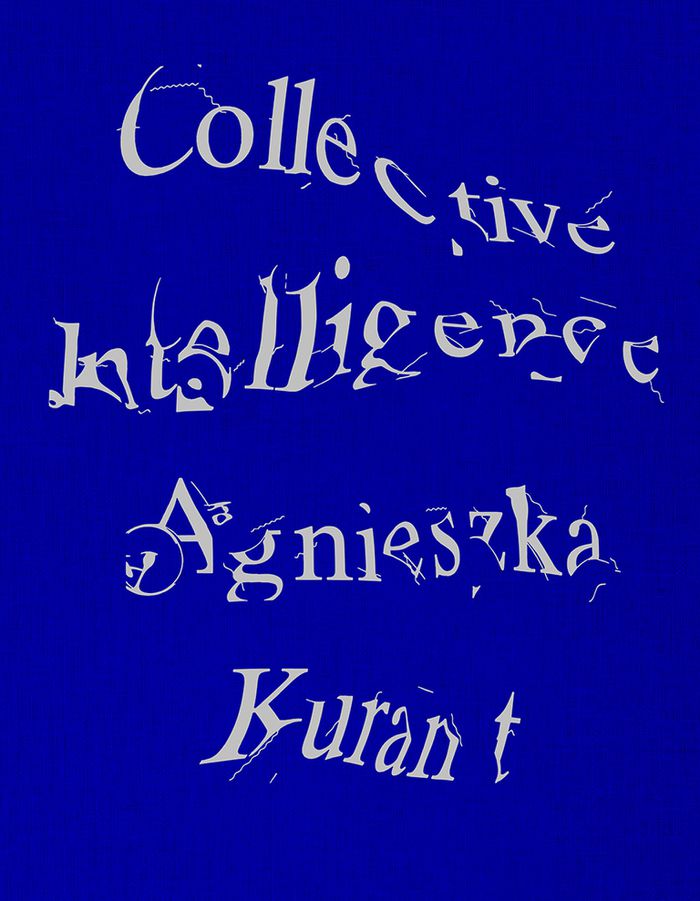
''Collective Intelligence'' is an innovative monograph that documents the last ten years of Polish-born conceptual artist Agnieszka Kurant’s interdisciplinary practice. It includes newly commissioned texts by renowned thinkers in science, philosophy, art, technology, anthropology, and economics. Kurant’s experimental work investigates collective and nonhuman intelligences and their impact on transformations of the human, the future of labor and creativity, and the exploitations within digital capitalism. Questioning the ideology of individualism, Kurant proposes that we rethink human and more-than-human worlds from a perspective of plural subjectivity, and, through this fundamental shift in perspective, posits the possibility of alternative political imaginaries. Her work probes the replacement of individual authorship with collective intelligence—a phenomenon observed in slime molds, termite colonies, social movements, cities, the internet, and inside our brains. In her collaborative practice, the artist investigates artificial intelligence, emergence, cybernetics, automation, artificial life, mining industries, and energy circuits to explore our collective evolution and the shifting status of objects in relation to agency, value, circulation, and redistribution. Through crowdsourcing the production of her artworks to thousands of humans and nonhumans, Kurant creates unstable, hybrid forms that constantly evolve. Her works, oscillating between biological, digital, and geological, embody the crumbling distinctions between what is natural and artificial, real and synthetic, and life and nonlife.
Agnieszka Kurant: Collective intelligence
Actions:
Price:
$56.00
(available in store)
Summary:
''Collective Intelligence'' is an innovative monograph that documents the last ten years of Polish-born conceptual artist Agnieszka Kurant’s interdisciplinary practice. It includes newly commissioned texts by renowned thinkers in science, philosophy, art, technology, anthropology, and economics. Kurant’s experimental work investigates collective and nonhuman intelligences and their impact on transformations of the human, the future of labor and creativity, and the exploitations within digital capitalism. Questioning the ideology of individualism, Kurant proposes that we rethink human and more-than-human worlds from a perspective of plural subjectivity, and, through this fundamental shift in perspective, posits the possibility of alternative political imaginaries. Her work probes the replacement of individual authorship with collective intelligence—a phenomenon observed in slime molds, termite colonies, social movements, cities, the internet, and inside our brains. In her collaborative practice, the artist investigates artificial intelligence, emergence, cybernetics, automation, artificial life, mining industries, and energy circuits to explore our collective evolution and the shifting status of objects in relation to agency, value, circulation, and redistribution. Through crowdsourcing the production of her artworks to thousands of humans and nonhumans, Kurant creates unstable, hybrid forms that constantly evolve. Her works, oscillating between biological, digital, and geological, embody the crumbling distinctions between what is natural and artificial, real and synthetic, and life and nonlife.
Form:
books
books
Publication:
December 2025
December 2025
Subject:
Contemporary Art Monographs
Contemporary Art Monographs
Form:
books
books
Actions:
Price:
$49.95
(available in store)
Summary:
''SHIFT: Architecture in Times of Radical Change'' is published in conjunction with the sixth Chicago Architecture Biennial (CAB 2025) under the artistic direction of Florencia Rodriguez. In a world defined by crisis and uncertainty, where architects are researching, relearning, and reimagining, the volume marks not only a change in direction but also presents provocative(...)
$49.95
(available in store)
Summary:
''SHIFT: Architecture in Times of Radical Change'' is published in conjunction with the sixth Chicago Architecture Biennial (CAB 2025) under the artistic direction of Florencia Rodriguez. In a world defined by crisis and uncertainty, where architects are researching, relearning, and reimagining, the volume marks not only a change in direction but also presents provocative(...)
Title:
SHIFT: Architecture in times of radical change
Actions:
Price:
$49.95
(available in store)
Summary:
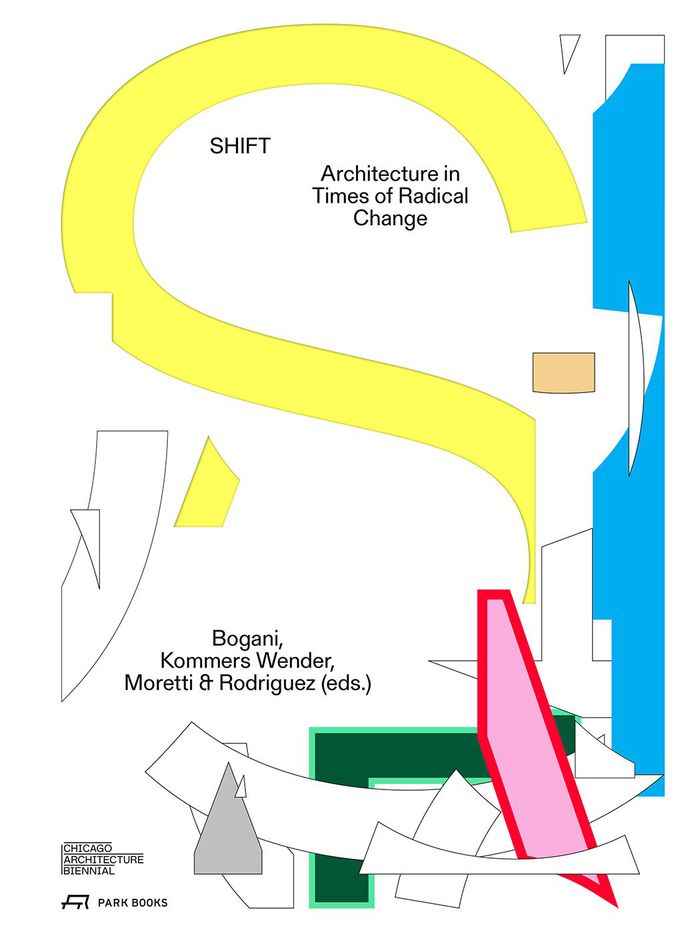
''SHIFT: Architecture in Times of Radical Change'' is published in conjunction with the sixth Chicago Architecture Biennial (CAB 2025) under the artistic direction of Florencia Rodriguez. In a world defined by crisis and uncertainty, where architects are researching, relearning, and reimagining, the volume marks not only a change in direction but also presents provocative inquiries about a redefinition in the substance and fundamentals of the field. It is an invitation to think with others, to project with intention, and to set new grounds for the interpretation and design of our built environments. In the same spirit, the book unfolds the many faces of ''SHIFT'' through collective, multilayered, and multidimensional conversations, visual essays, and manifestos. CAB 2025 participants’ voices are brought to print through a transcript of a five-hour conversation marathon that tackled topics such as new realism, the magic in the ordinary, pleasures in the urban, and the need to critically shift architecture’s language, as well as a repository of manifestos exploring other possible worlds. Beyond the exhibition, ''SHIFT: Architecture in Times of Radical Change'' also calls upon practitioners from different fields to discuss the current state of education in architecture schools, the challenges of material culture, the future of housing, and exhibitions as devices for change.
SHIFT: Architecture in times of radical change
Actions:
Price:
$49.95
(available in store)
Summary:
''SHIFT: Architecture in Times of Radical Change'' is published in conjunction with the sixth Chicago Architecture Biennial (CAB 2025) under the artistic direction of Florencia Rodriguez. In a world defined by crisis and uncertainty, where architects are researching, relearning, and reimagining, the volume marks not only a change in direction but also presents provocative inquiries about a redefinition in the substance and fundamentals of the field. It is an invitation to think with others, to project with intention, and to set new grounds for the interpretation and design of our built environments. In the same spirit, the book unfolds the many faces of ''SHIFT'' through collective, multilayered, and multidimensional conversations, visual essays, and manifestos. CAB 2025 participants’ voices are brought to print through a transcript of a five-hour conversation marathon that tackled topics such as new realism, the magic in the ordinary, pleasures in the urban, and the need to critically shift architecture’s language, as well as a repository of manifestos exploring other possible worlds. Beyond the exhibition, ''SHIFT: Architecture in Times of Radical Change'' also calls upon practitioners from different fields to discuss the current state of education in architecture schools, the challenges of material culture, the future of housing, and exhibitions as devices for change.
Form:
books
books
Publication:
April 2026
April 2026
Subject:
Biennial
Biennial
Form:
books
books
Price:
$84.95
(available to order)
Summary:
The all-out war in Ukraine, started by the Russian Federation in 2022 has disproportionally affected housing and residential infrastructure. The destruction is so targeted, and the damage so significant that it has disfigured entire neighborhoods and erased entire cities. With the scale of damage and loss in mind, and the future wide-ranging reconstruction that will(...)
$84.95
(available to order)
Summary:
The all-out war in Ukraine, started by the Russian Federation in 2022 has disproportionally affected housing and residential infrastructure. The destruction is so targeted, and the damage so significant that it has disfigured entire neighborhoods and erased entire cities. With the scale of damage and loss in mind, and the future wide-ranging reconstruction that will(...)
Title:
Mass Housing in Ukraine: Building Typologies and Catalogue of Series
Actions:
Price:
$84.95
(available to order)
Summary:
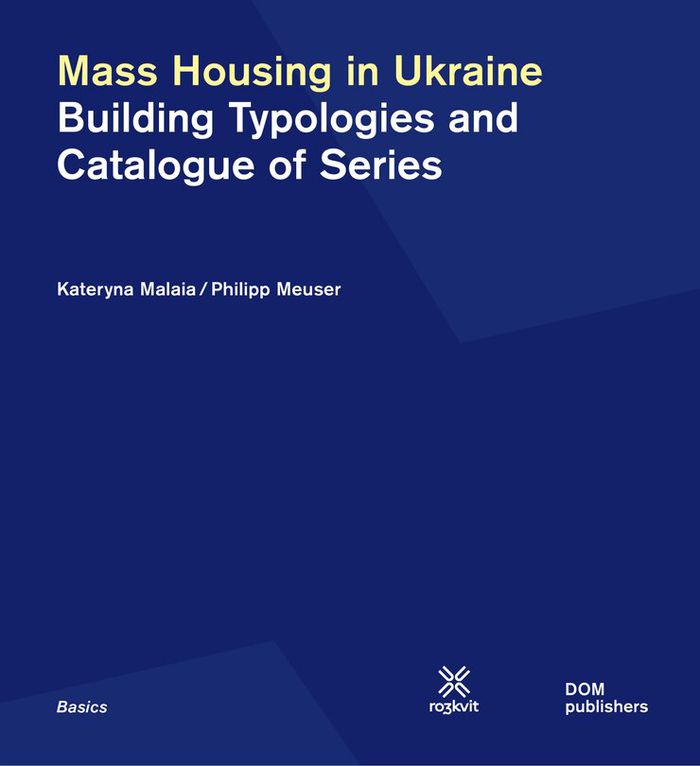
The all-out war in Ukraine, started by the Russian Federation in 2022 has disproportionally affected housing and residential infrastructure. The destruction is so targeted, and the damage so significant that it has disfigured entire neighborhoods and erased entire cities. With the scale of damage and loss in mind, and the future wide-ranging reconstruction that will inevitably take place after the war, this study examines the history and typologies of mass housing in Ukraine. It does so in order to evaluate what is lost, explain the diversity of modes of urban living that exist in Ukrainian cities, and finally, reconsider the narrative of how Ukrainian housing came about. The study covers the period of the last 100 years: the time of the most dramatic expansion and change in character of Ukrainian cities. It begins with the experimental buildings constructed in the Soviet Central and Eastern Ukraine and Polish Western Ukraine in the 1920s and 1930s, continues by looking at type projects from the Stalin era, as well as the serial apartment blocks built during the reigns of Khrushchev and Brezhnev and in the late USSR. Finally, it showcases individually designed, yet also typical residential buildings from the turbo-capitalist period of the 1990s and 2000s.
Mass Housing in Ukraine: Building Typologies and Catalogue of Series
Actions:
Price:
$84.95
(available to order)
Summary:
The all-out war in Ukraine, started by the Russian Federation in 2022 has disproportionally affected housing and residential infrastructure. The destruction is so targeted, and the damage so significant that it has disfigured entire neighborhoods and erased entire cities. With the scale of damage and loss in mind, and the future wide-ranging reconstruction that will inevitably take place after the war, this study examines the history and typologies of mass housing in Ukraine. It does so in order to evaluate what is lost, explain the diversity of modes of urban living that exist in Ukrainian cities, and finally, reconsider the narrative of how Ukrainian housing came about. The study covers the period of the last 100 years: the time of the most dramatic expansion and change in character of Ukrainian cities. It begins with the experimental buildings constructed in the Soviet Central and Eastern Ukraine and Polish Western Ukraine in the 1920s and 1930s, continues by looking at type projects from the Stalin era, as well as the serial apartment blocks built during the reigns of Khrushchev and Brezhnev and in the late USSR. Finally, it showcases individually designed, yet also typical residential buildings from the turbo-capitalist period of the 1990s and 2000s.
Form:
books
books
Publication:
November 2024
November 2024
Subject:
Collective Housing
Collective Housing
Form:
books
books
Actions:
Price:
$90.00
(available to order)
Summary:
The creation of park systems is a historically proven method for communities to stabilize and cultivate healthy ecological habitats in country dwellings as well as in dense urban areas. Park systems ensure clean soil, water, and air for all. Moreover, they offer intergenerational and inclusive recreational opportunities along ecological corridors. Between 1900 and 1950,(...)
$90.00
(available to order)
Summary:
The creation of park systems is a historically proven method for communities to stabilize and cultivate healthy ecological habitats in country dwellings as well as in dense urban areas. Park systems ensure clean soil, water, and air for all. Moreover, they offer intergenerational and inclusive recreational opportunities along ecological corridors. Between 1900 and 1950,(...)
Title:
Living cities: Three centuries of Park systems
Actions:
Price:
$90.00
(available to order)
Summary:
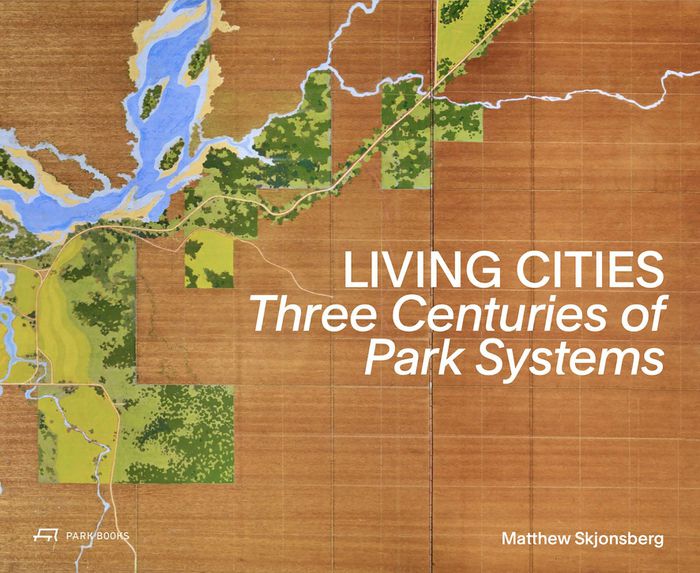
The creation of park systems is a historically proven method for communities to stabilize and cultivate healthy ecological habitats in country dwellings as well as in dense urban areas. Park systems ensure clean soil, water, and air for all. Moreover, they offer intergenerational and inclusive recreational opportunities along ecological corridors. Between 1900 and 1950, civic design—a practice in urban and landscape planning explicitly oriented towards the common good—experienced a heyday. Park systems were successfully used as “green armatures” hosting public facilities such as playgrounds, schools, administrative buildings, hospitals, and gardens. ''Living Cities'' offers a chronological survey of civic design based on more than 30 park systems on five continents. The examples range from Johann Wolfgang von Goethe's Park an der Ilm in Weimar (1778) and John Nash’s Regent Street in London (1806) to Chicago’s park system (1850), Albert Bodmer and Maurice Braillard’s plans for Geneva (1936), and Frank Lloyd Wright’s Taliesin Valley (1947), as well as to contemporary and future projects in Addis Ababa, Madrid, Medellín, New York, and Seoul. Matthew Skjonsberg’s book demonstrates the ecological and social impact of park systems and highlights the diverse challenges that communities face when implementing such projects. At the same time, it encourages a reevaluation of civic design as an intergenerational practice for creating human settlements.
Living cities: Three centuries of Park systems
Actions:
Price:
$90.00
(available to order)
Summary:
The creation of park systems is a historically proven method for communities to stabilize and cultivate healthy ecological habitats in country dwellings as well as in dense urban areas. Park systems ensure clean soil, water, and air for all. Moreover, they offer intergenerational and inclusive recreational opportunities along ecological corridors. Between 1900 and 1950, civic design—a practice in urban and landscape planning explicitly oriented towards the common good—experienced a heyday. Park systems were successfully used as “green armatures” hosting public facilities such as playgrounds, schools, administrative buildings, hospitals, and gardens. ''Living Cities'' offers a chronological survey of civic design based on more than 30 park systems on five continents. The examples range from Johann Wolfgang von Goethe's Park an der Ilm in Weimar (1778) and John Nash’s Regent Street in London (1806) to Chicago’s park system (1850), Albert Bodmer and Maurice Braillard’s plans for Geneva (1936), and Frank Lloyd Wright’s Taliesin Valley (1947), as well as to contemporary and future projects in Addis Ababa, Madrid, Medellín, New York, and Seoul. Matthew Skjonsberg’s book demonstrates the ecological and social impact of park systems and highlights the diverse challenges that communities face when implementing such projects. At the same time, it encourages a reevaluation of civic design as an intergenerational practice for creating human settlements.
Form:
books
books
Publication:
January 2025
January 2025
Subject:
Gardens
Gardens
Form:
books
books

Actions:
Price:
$60.00
(available in store)
Summary:
Paul Hutchinson’s work (b. Berlin, 1987; lives and works in Berlin) conveys an intimate and unvarnished perspective, rendering the imperfections, incidental details, and human facets of urban culture. Fleeting moments and encounters often act as a base for his critical photographic practice. The central protagonists in his most recent project, titled Stadt für Alle(...)
$60.00
(available in store)
Summary:
Paul Hutchinson’s work (b. Berlin, 1987; lives and works in Berlin) conveys an intimate and unvarnished perspective, rendering the imperfections, incidental details, and human facets of urban culture. Fleeting moments and encounters often act as a base for his critical photographic practice. The central protagonists in his most recent project, titled Stadt für Alle(...)
Title:
Paul Hutchinson: Stadt fur alle
Actions:
Price:
$60.00
(available in store)
Summary:
Paul Hutchinson’s work (b. Berlin, 1987; lives and works in Berlin) conveys an intimate and unvarnished perspective, rendering the imperfections, incidental details, and human facets of urban culture. Fleeting moments and encounters often act as a base for his critical photographic practice. The central protagonists in his most recent project, titled Stadt für Alle (transl. City for All), are countless cranes, excavators, and construction signs. They are the tools that power the remaking of any city’s urban fabric – here Berlin mostly sets the example. Building pits constitute the foundation for farewells and new beginnings. Advertising banners for luxury developments vie against protest placards hanging limply on the façades of older buildings. The artist has compiled a pictorial atlas that prompts reflections on the transformation of the city and thereby gives form to the advancing gentrification, the constant feeling of threat and the increasing loss of inner-city street culture. Hutchinson’s writing complements the deft visual analysis of these processes: "The way you look at me, smiling while I’m losing my vision" is one such observation that, in conjunction with his images, opens up a space for interpretation and a probing inquiry into what urban life will mean in the future.
Paul Hutchinson: Stadt fur alle
Actions:
Price:
$60.00
(available in store)
Summary:
Paul Hutchinson’s work (b. Berlin, 1987; lives and works in Berlin) conveys an intimate and unvarnished perspective, rendering the imperfections, incidental details, and human facets of urban culture. Fleeting moments and encounters often act as a base for his critical photographic practice. The central protagonists in his most recent project, titled Stadt für Alle (transl. City for All), are countless cranes, excavators, and construction signs. They are the tools that power the remaking of any city’s urban fabric – here Berlin mostly sets the example. Building pits constitute the foundation for farewells and new beginnings. Advertising banners for luxury developments vie against protest placards hanging limply on the façades of older buildings. The artist has compiled a pictorial atlas that prompts reflections on the transformation of the city and thereby gives form to the advancing gentrification, the constant feeling of threat and the increasing loss of inner-city street culture. Hutchinson’s writing complements the deft visual analysis of these processes: "The way you look at me, smiling while I’m losing my vision" is one such observation that, in conjunction with his images, opens up a space for interpretation and a probing inquiry into what urban life will mean in the future.
Form:
books
books
Publication:
September 2020
September 2020
Subject:
Photography monographs
Photography monographs
Form:
books
books
Price:
$58.95
(available to order)
Summary:
Forced to find beauty in mediocrity, poetry in pragmatism, history in the absence of monuments and the future in the past, Crimson has been shaped by the experience of living and working in Rotterdam, the city that never thinks. Over the past seven years they have produced research projects, plans and initiatives that range from purely historical studies, book reviews and(...)
$58.95
(available to order)
Summary:
Forced to find beauty in mediocrity, poetry in pragmatism, history in the absence of monuments and the future in the past, Crimson has been shaped by the experience of living and working in Rotterdam, the city that never thinks. Over the past seven years they have produced research projects, plans and initiatives that range from purely historical studies, book reviews and(...)
Subject:
Architecture since 1900, Europe
Architecture since 1900, Europe
Publication:
January 1900, Rotterdam
January 1900, Rotterdam
Title:
Too blessed to be depressed : Crimson architectural historians 1994-2002
Actions:
Price:
$58.95
(available to order)
Summary:
Forced to find beauty in mediocrity, poetry in pragmatism, history in the absence of monuments and the future in the past, Crimson has been shaped by the experience of living and working in Rotterdam, the city that never thinks. Over the past seven years they have produced research projects, plans and initiatives that range from purely historical studies, book reviews and critiques of contemporary architecture to exhibitions, panoramas and urban planning schemes. For them, history is not a clear-cut period in the past but a total panoramic experience in which mythology, truth, writing, building and demolition intermingle. The Crimson historians don’t keep their distance, they dive right in. Too Blessed To Be Depressed is a coming-of-age book, one that shows the development of a practice and an attitude towards the outside world based not on analysis and simplification but on an endless quest for all the narratives, contradi ctions, and obsessions that make the city what it is. It presents an initial selection of work by Crimson divided among three themes: History (what to make of it, how to deal with it), Obsession (theirs along with those of others) and Top Down (the impact of large-scale infrastructural and other interventions on the city).
Too blessed to be depressed : Crimson architectural historians 1994-2002
Actions:
Price:
$58.95
(available to order)
Summary:
Forced to find beauty in mediocrity, poetry in pragmatism, history in the absence of monuments and the future in the past, Crimson has been shaped by the experience of living and working in Rotterdam, the city that never thinks. Over the past seven years they have produced research projects, plans and initiatives that range from purely historical studies, book reviews and critiques of contemporary architecture to exhibitions, panoramas and urban planning schemes. For them, history is not a clear-cut period in the past but a total panoramic experience in which mythology, truth, writing, building and demolition intermingle. The Crimson historians don’t keep their distance, they dive right in. Too Blessed To Be Depressed is a coming-of-age book, one that shows the development of a practice and an attitude towards the outside world based not on analysis and simplification but on an endless quest for all the narratives, contradi ctions, and obsessions that make the city what it is. It presents an initial selection of work by Crimson divided among three themes: History (what to make of it, how to deal with it), Obsession (theirs along with those of others) and Top Down (the impact of large-scale infrastructural and other interventions on the city).
Form:
books
books
Publication:
January 1900, Rotterdam
January 1900, Rotterdam
Subject:
Architecture since 1900, Europe
Architecture since 1900, Europe
Form:
books
books
Actions:
Price:
$104.00
(available to order)
Summary:
At last architects have discovered the free form shape – multiple curved surfaces, which do not exist in Cartesian geometry. What has long been usual in product design is now being adopted in architecture, these shapes are being generated by special software, and then they are subsequently built. Some young and innovative architectural firms have seized the(...)
$104.00
(available to order)
Summary:
At last architects have discovered the free form shape – multiple curved surfaces, which do not exist in Cartesian geometry. What has long been usual in product design is now being adopted in architecture, these shapes are being generated by special software, and then they are subsequently built. Some young and innovative architectural firms have seized the(...)
Subject:
Architecture since 1900, Europe
Architecture since 1900, Europe
Publication:
August 2001, Basel
August 2001, Basel
Title:
digital / real – blobmeister, first built projects
Actions:
Price:
$104.00
(available to order)
Summary:
At last architects have discovered the free form shape – multiple curved surfaces, which do not exist in Cartesian geometry. What has long been usual in product design is now being adopted in architecture, these shapes are being generated by special software, and then they are subsequently built. Some young and innovative architectural firms have seized the opportunity to expand the boundaries of architectural space, showing a willingness to experiment with the new technology, and these young architects, or "blobmeister" as Wes Jones rather negatively called them, are now moving on to built examples. In this book, 11 examples from Europe, the USA and Japan are presented, showing that far from being out of touch with reality, cyber-architects do transform their dreams into actual buildings, thus concluding the endless alternatives and possibilities implicit in every design. For it is only built architecture which shows true mastery. This volume extensively documents the complex design process, from the digital conception of the designs, the creation of models, to the final photographs of the building sites and the finished structures. Thematic essays give the reader an insight into the history of the digital scene, assessing its influence on architectural culture to date and evaluating its future potential. The accompanying CD-ROM shows dynamic animations.
digital / real – blobmeister, first built projects
Actions:
Price:
$104.00
(available to order)
Summary:
At last architects have discovered the free form shape – multiple curved surfaces, which do not exist in Cartesian geometry. What has long been usual in product design is now being adopted in architecture, these shapes are being generated by special software, and then they are subsequently built. Some young and innovative architectural firms have seized the opportunity to expand the boundaries of architectural space, showing a willingness to experiment with the new technology, and these young architects, or "blobmeister" as Wes Jones rather negatively called them, are now moving on to built examples. In this book, 11 examples from Europe, the USA and Japan are presented, showing that far from being out of touch with reality, cyber-architects do transform their dreams into actual buildings, thus concluding the endless alternatives and possibilities implicit in every design. For it is only built architecture which shows true mastery. This volume extensively documents the complex design process, from the digital conception of the designs, the creation of models, to the final photographs of the building sites and the finished structures. Thematic essays give the reader an insight into the history of the digital scene, assessing its influence on architectural culture to date and evaluating its future potential. The accompanying CD-ROM shows dynamic animations.
Form:
books
books
Publication:
August 2001, Basel
August 2001, Basel
Subject:
Architecture since 1900, Europe
Architecture since 1900, Europe
Form:
books
books
Actions:
Price:
$84.00
(available to order)
Summary:
Arthur Brown Jr. (1874-1957) is celebrated by his peers for such masterpieces as the City Hall, War Memorial Opera House, Temple Emanu-El, and Coit Tower in San Francisco; the Pasadena City Hall; and the Labor-ICC block of the Federal Triangle in Washington, DC. Brown epitomized the idea that architecture not only houses society’s daily rituals and defining events but(...)
$84.00
(available to order)
Summary:
Arthur Brown Jr. (1874-1957) is celebrated by his peers for such masterpieces as the City Hall, War Memorial Opera House, Temple Emanu-El, and Coit Tower in San Francisco; the Pasadena City Hall; and the Labor-ICC block of the Federal Triangle in Washington, DC. Brown epitomized the idea that architecture not only houses society’s daily rituals and defining events but(...)
Title:
Arthur Brown, Jr. : progressive classicist
Actions:
Price:
$84.00
(available to order)
Summary:
Arthur Brown Jr. (1874-1957) is celebrated by his peers for such masterpieces as the City Hall, War Memorial Opera House, Temple Emanu-El, and Coit Tower in San Francisco; the Pasadena City Hall; and the Labor-ICC block of the Federal Triangle in Washington, DC. Brown epitomized the idea that architecture not only houses society’s daily rituals and defining events but also can itself shape the sociopolitical landscape of America. "Arthur Brown Jr.: progressive classicist" unifies the varied strands of the architect’s life, from the architectural forms and methods of the Ecole des Beaux-Arts in Paris to the reforming spirit and self-reliant confidence of San Francisco after the earthquake and fire of 1906 to the challenging economics and changing aesthetics of machine-age America. It details the development of Brown’s major works and many other civic, commercial, religious, academic, and residential buildings. It chronicles his unflagging commitment to the classical tradition, which he employed in contemporary, forward-looking institutional buildings that emphasized continuity with the past while meeting the needs of the future. To Brown, the classical tradition was not a sacrosanct, unchanging body of knowledge; it was an expanding and evolving set of ideas about architectural design that permitted, and even demanded, change as new conditions and technologies were developed.
Arthur Brown, Jr. : progressive classicist
Actions:
Price:
$84.00
(available to order)
Summary:
Arthur Brown Jr. (1874-1957) is celebrated by his peers for such masterpieces as the City Hall, War Memorial Opera House, Temple Emanu-El, and Coit Tower in San Francisco; the Pasadena City Hall; and the Labor-ICC block of the Federal Triangle in Washington, DC. Brown epitomized the idea that architecture not only houses society’s daily rituals and defining events but also can itself shape the sociopolitical landscape of America. "Arthur Brown Jr.: progressive classicist" unifies the varied strands of the architect’s life, from the architectural forms and methods of the Ecole des Beaux-Arts in Paris to the reforming spirit and self-reliant confidence of San Francisco after the earthquake and fire of 1906 to the challenging economics and changing aesthetics of machine-age America. It details the development of Brown’s major works and many other civic, commercial, religious, academic, and residential buildings. It chronicles his unflagging commitment to the classical tradition, which he employed in contemporary, forward-looking institutional buildings that emphasized continuity with the past while meeting the needs of the future. To Brown, the classical tradition was not a sacrosanct, unchanging body of knowledge; it was an expanding and evolving set of ideas about architectural design that permitted, and even demanded, change as new conditions and technologies were developed.
Form:
books
books
Publication:
November 2005, New York
November 2005, New York
Subject:
Architecture Monographs
Architecture Monographs
Form:
books
books
Title:
Unseen Europe : a survey of EU politics and its impact on spatial development in the Netherlands
Unseen Europe : a survey of EU politics and its impact on spatial development in the Netherlands
Actions:
Price:
$37.95
(available to order)
Summary:
The EU is involved, either directly or indirectly, in the most vital issues of national spatial policy. The indirect - and therefore usually unseen - consequences are often more significant, and will become increasingly so in the future. These are the most important findings in "Unseen Europe : a survey of EU politics and its impact on spatial development in the(...)
$37.95
(available to order)
Summary:
The EU is involved, either directly or indirectly, in the most vital issues of national spatial policy. The indirect - and therefore usually unseen - consequences are often more significant, and will become increasingly so in the future. These are the most important findings in "Unseen Europe : a survey of EU politics and its impact on spatial development in the(...)
Subject:
Architecture since 1900, Europe
Architecture since 1900, Europe
Publication:
January 2004, Rotterdam
January 2004, Rotterdam
Title:
Unseen Europe : a survey of EU politics and its impact on spatial development in the Netherlands
Actions:
Price:
$37.95
(available to order)
Summary:
The EU is involved, either directly or indirectly, in the most vital issues of national spatial policy. The indirect - and therefore usually unseen - consequences are often more significant, and will become increasingly so in the future. These are the most important findings in "Unseen Europe : a survey of EU politics and its impact on spatial development in the Netherlands". This study by the Netherlands Institute for Spatial Planning (Ruimtelijk Planbureau) was presented to the Dutch minister of Housing, Spatial Planning and the Environment, Sybilla M. Dekker. This study surveys a selected number of spatially relevant EU policy fields and their potential impacts in the Netherlands. Given this growing importance of European policy, those involved in spatial policy should keep abreast of developments to avoid being caught off-guard by new EU directives or initiatives. Where necessary position should be taken against the too uniform a character of European policy. Otherwise, the Dutch government should more actively anticipate the chances offered by the European context. Without this European perspective it is more and more difficult to conduct spatial policy. Instead of considering the EU as restrictive only, policy should therefore be formulated from a European perspective. In this respect the Netherlands still turns its back on Brussels too much.
Unseen Europe : a survey of EU politics and its impact on spatial development in the Netherlands
Actions:
Price:
$37.95
(available to order)
Summary:
The EU is involved, either directly or indirectly, in the most vital issues of national spatial policy. The indirect - and therefore usually unseen - consequences are often more significant, and will become increasingly so in the future. These are the most important findings in "Unseen Europe : a survey of EU politics and its impact on spatial development in the Netherlands". This study by the Netherlands Institute for Spatial Planning (Ruimtelijk Planbureau) was presented to the Dutch minister of Housing, Spatial Planning and the Environment, Sybilla M. Dekker. This study surveys a selected number of spatially relevant EU policy fields and their potential impacts in the Netherlands. Given this growing importance of European policy, those involved in spatial policy should keep abreast of developments to avoid being caught off-guard by new EU directives or initiatives. Where necessary position should be taken against the too uniform a character of European policy. Otherwise, the Dutch government should more actively anticipate the chances offered by the European context. Without this European perspective it is more and more difficult to conduct spatial policy. Instead of considering the EU as restrictive only, policy should therefore be formulated from a European perspective. In this respect the Netherlands still turns its back on Brussels too much.
Form:
books
books
Publication:
January 2004, Rotterdam
January 2004, Rotterdam
Subject:
Architecture since 1900, Europe
Architecture since 1900, Europe
Form:
books
books
Price:
$53.00
(available to order)
Summary:
"The city assembled" continues Kostof's unique study of urban landscape and process. Moving from the historical and cultural overviews of the city in a earlier book, Kostof descends into the streets, sidewalks, squares, markets, and waterfronts of the city and presents a detailed urban anatomy. The book is organized thematically around the structural phenomena of the(...)
$53.00
(available to order)
Summary:
"The city assembled" continues Kostof's unique study of urban landscape and process. Moving from the historical and cultural overviews of the city in a earlier book, Kostof descends into the streets, sidewalks, squares, markets, and waterfronts of the city and presents a detailed urban anatomy. The book is organized thematically around the structural phenomena of the(...)
Title:
The city assembled : the elements of urban form through history
Actions:
Price:
$53.00
(available to order)
Summary:
"The city assembled" continues Kostof's unique study of urban landscape and process. Moving from the historical and cultural overviews of the city in a earlier book, Kostof descends into the streets, sidewalks, squares, markets, and waterfronts of the city and presents a detailed urban anatomy. The book is organized thematically around the structural phenomena of the city-the city edge, street, public space, the marketplace, and the realities of cultural and ecomomic segregation-and explores the customs, practicalities, and biases behind the elements of the city. In every instance, Professor Kostof follows a far-ranging story up to the present to illustrate how fresh the discussion remains today. In the past, the various elements of a city evolved in response to a variety of pressures. Today, they are usually the result of planning decisions. In a final chapter, Kostof considers 'urban process' "the effect on cities of natural disasters, wars, and comprehensive redevelopment" compared with incremental growth and change. His book is thus an exercise in architectural and social history, a case study for the present, and a pointer for the future. The story is also told in over three hundred drawings, prints, paintings, and photographs that illustrate not only typical elements of a city but also specific uses of particular elements.
The city assembled : the elements of urban form through history
Actions:
Price:
$53.00
(available to order)
Summary:
"The city assembled" continues Kostof's unique study of urban landscape and process. Moving from the historical and cultural overviews of the city in a earlier book, Kostof descends into the streets, sidewalks, squares, markets, and waterfronts of the city and presents a detailed urban anatomy. The book is organized thematically around the structural phenomena of the city-the city edge, street, public space, the marketplace, and the realities of cultural and ecomomic segregation-and explores the customs, practicalities, and biases behind the elements of the city. In every instance, Professor Kostof follows a far-ranging story up to the present to illustrate how fresh the discussion remains today. In the past, the various elements of a city evolved in response to a variety of pressures. Today, they are usually the result of planning decisions. In a final chapter, Kostof considers 'urban process' "the effect on cities of natural disasters, wars, and comprehensive redevelopment" compared with incremental growth and change. His book is thus an exercise in architectural and social history, a case study for the present, and a pointer for the future. The story is also told in over three hundred drawings, prints, paintings, and photographs that illustrate not only typical elements of a city but also specific uses of particular elements.
Form:
books
books
Publication:
January 2005, New York
January 2005, New York
Subject:
Urban Theory
Urban Theory


