


6624 Results
Form:
books
books
Price:
$24.95
(available to order)
Summary:
During the two hundred millennia we've been on the planet, nothing has shaped us more profoundly than the city. In a fascinating narrative that ranges through cities famous and forgotten, acclaimed historian Ben Wilson tells the glorious story of how urban living has allowed human culture to flourish. Beginning with Uruk, the world's first city, he shows that cities(...)
$24.95
(available to order)
Summary:
During the two hundred millennia we've been on the planet, nothing has shaped us more profoundly than the city. In a fascinating narrative that ranges through cities famous and forgotten, acclaimed historian Ben Wilson tells the glorious story of how urban living has allowed human culture to flourish. Beginning with Uruk, the world's first city, he shows that cities(...)
Title:
Metropolis: a history of the city, mankind's greatest invention
Actions:
Price:
$24.95
(available to order)
Summary:
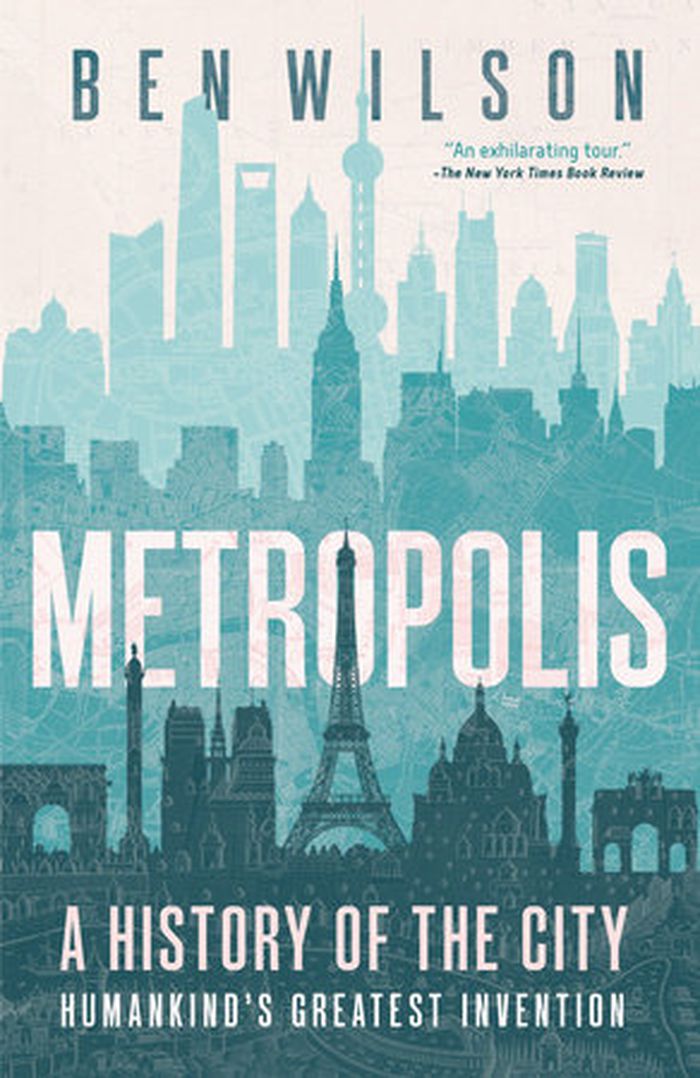
During the two hundred millennia we've been on the planet, nothing has shaped us more profoundly than the city. In a fascinating narrative that ranges through cities famous and forgotten, acclaimed historian Ben Wilson tells the glorious story of how urban living has allowed human culture to flourish. Beginning with Uruk, the world's first city, he shows that cities created such a blossoming of human endeavor--new professions, new forms of art, worship, and trade--that they kick-started civilization itself. Despite outbreaks of plague and war, and outlasting empires, the city endured and new cities sprang up to capture the inimitable energy of human beings together. Wilson reveals the innovations nurturned amid the density of urban centers over the centuries: civics in the agora of Athens, global trade in ninth-century Baghdad, finance in the coffeehouses of London, domestic comforts in the heart of Amsterdam, peacocking in Belle Epoque Paris. In the modern age, the skyscrapers of New York City inspired utopian visions of community design, while the trees of twenty-first-century Seattle and Shanghai point to a sustainable future in the age of climate change. Page turning and irresistible, ''Metropolis'' is a history of cities that is also a history of how humanity lives.
Metropolis: a history of the city, mankind's greatest invention
Actions:
Price:
$24.95
(available to order)
Summary:
During the two hundred millennia we've been on the planet, nothing has shaped us more profoundly than the city. In a fascinating narrative that ranges through cities famous and forgotten, acclaimed historian Ben Wilson tells the glorious story of how urban living has allowed human culture to flourish. Beginning with Uruk, the world's first city, he shows that cities created such a blossoming of human endeavor--new professions, new forms of art, worship, and trade--that they kick-started civilization itself. Despite outbreaks of plague and war, and outlasting empires, the city endured and new cities sprang up to capture the inimitable energy of human beings together. Wilson reveals the innovations nurturned amid the density of urban centers over the centuries: civics in the agora of Athens, global trade in ninth-century Baghdad, finance in the coffeehouses of London, domestic comforts in the heart of Amsterdam, peacocking in Belle Epoque Paris. In the modern age, the skyscrapers of New York City inspired utopian visions of community design, while the trees of twenty-first-century Seattle and Shanghai point to a sustainable future in the age of climate change. Page turning and irresistible, ''Metropolis'' is a history of cities that is also a history of how humanity lives.
Form:
books
books
Publication:
October 2021
October 2021
Subject:
Urban Theory
Urban Theory
Form:
books
books
Actions:
Price:
$23.50
(available to order)
Summary:
Has COVID-19 ushered in the end of the office? Or is it the office’s final triumph? For decades, futurologists have prophesied a boundaryless working world, freed from the cramped confines of the office. During the COVID-19 crisis, employees around the globe got a taste of it. Confined by lockdown to their homes, they met, mingled, collaborated, and created(...)
$23.50
(available to order)
Summary:
Has COVID-19 ushered in the end of the office? Or is it the office’s final triumph? For decades, futurologists have prophesied a boundaryless working world, freed from the cramped confines of the office. During the COVID-19 crisis, employees around the globe got a taste of it. Confined by lockdown to their homes, they met, mingled, collaborated, and created(...)
Title:
The momentous, uneventful day: A requiem for the office
Actions:
Price:
$23.50
(available to order)
Summary:
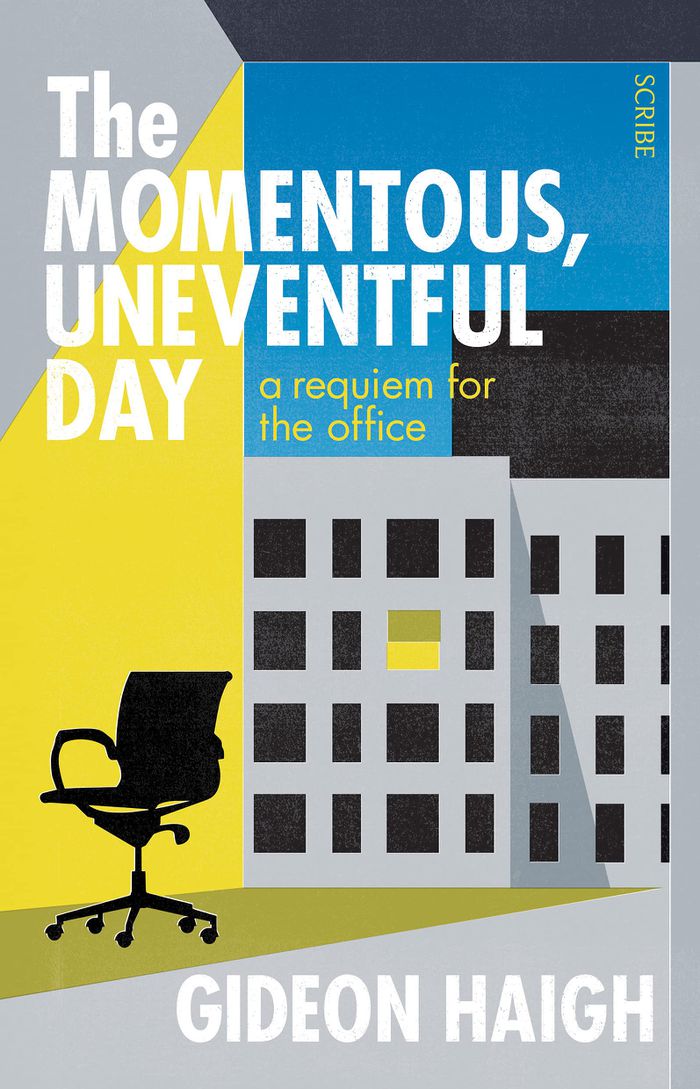
Has COVID-19 ushered in the end of the office? Or is it the office’s final triumph? For decades, futurologists have prophesied a boundaryless working world, freed from the cramped confines of the office. During the COVID-19 crisis, employees around the globe got a taste of it. Confined by lockdown to their homes, they met, mingled, collaborated, and created electronically. At length, they returned to something approaching normality. Or had they glimpsed the normal to come? In''The momentous, uneventful day,'' Gideon Haigh reflects on our ambivalent relationship to office work and office life, how we ended up with the offices we have, how they have reflected our best and worst instincts, and how these might be affected by a world in a time of contagion. Like the factory in the nineteenth century, the office was the characteristic building form of the twentieth, reshaping our cities, redirecting our lives. We all have a stake in how it will change in the twenty-first. Enlivened by copious citations from literature, film, memoir, and corporate history, and interspersed with relevant images,''The momentous, uneventful day'' is the ideal companion for a lively current debate about the role offices will play in the future.
The momentous, uneventful day: A requiem for the office
Actions:
Price:
$23.50
(available to order)
Summary:
Has COVID-19 ushered in the end of the office? Or is it the office’s final triumph? For decades, futurologists have prophesied a boundaryless working world, freed from the cramped confines of the office. During the COVID-19 crisis, employees around the globe got a taste of it. Confined by lockdown to their homes, they met, mingled, collaborated, and created electronically. At length, they returned to something approaching normality. Or had they glimpsed the normal to come? In''The momentous, uneventful day,'' Gideon Haigh reflects on our ambivalent relationship to office work and office life, how we ended up with the offices we have, how they have reflected our best and worst instincts, and how these might be affected by a world in a time of contagion. Like the factory in the nineteenth century, the office was the characteristic building form of the twentieth, reshaping our cities, redirecting our lives. We all have a stake in how it will change in the twenty-first. Enlivened by copious citations from literature, film, memoir, and corporate history, and interspersed with relevant images,''The momentous, uneventful day'' is the ideal companion for a lively current debate about the role offices will play in the future.
Form:
books
books
Publication:
September 2021
September 2021
Subject:
Critical Theory
Critical Theory
Form:
books
books

Price:
$50.00
(available in store)
Summary:
''Ad Astra'' is an artist book created as part of a public art project commissioned for the medical library of the University of Montreal Health Center (CHUM), in Montréal, Quebec. Involving the arts, science, and public participation, ''Ad Astra'' consists of an archive of messages that are poetically sent to the stars and to the future. The messages, collected from the(...)
$50.00
(available in store)
Summary:
''Ad Astra'' is an artist book created as part of a public art project commissioned for the medical library of the University of Montreal Health Center (CHUM), in Montréal, Quebec. Involving the arts, science, and public participation, ''Ad Astra'' consists of an archive of messages that are poetically sent to the stars and to the future. The messages, collected from the(...)
Publication:
September 2021
September 2021
Title:
Ad Astra
Actions:
Price:
$50.00
(available in store)
Summary:
''Ad Astra'' is an artist book created as part of a public art project commissioned for the medical library of the University of Montreal Health Center (CHUM), in Montréal, Quebec. Involving the arts, science, and public participation, ''Ad Astra'' consists of an archive of messages that are poetically sent to the stars and to the future. The messages, collected from the hospital community, are transformed by means of a collaboration between art and neuroscience to generate astral images, and ultimately, a collective artwork representing a collection of prayers, hopes and fears. Rooted in deep human experiences,''Ad Astra'' gives voice to the range of emotions and the cycle of life and death that the hospital context is witness to daily. In compliment to the permanent multimedia artwork installed in the library, the book presents a tightly knit set of relationships among the various elements that compose the project, including messages, portraits, neurological diagrams, video-stills, citations, and texts. An introductory essay by Claire Moeder creatively illuminates the core interests of the project while the graphic design by Criterium echoes the installation with material means. The book is a nomadic archive and tactile object that was created to travel beyond the primary site of medical library, and ultimately towards the stars.
Ad Astra
Actions:
Price:
$50.00
(available in store)
Summary:
''Ad Astra'' is an artist book created as part of a public art project commissioned for the medical library of the University of Montreal Health Center (CHUM), in Montréal, Quebec. Involving the arts, science, and public participation, ''Ad Astra'' consists of an archive of messages that are poetically sent to the stars and to the future. The messages, collected from the hospital community, are transformed by means of a collaboration between art and neuroscience to generate astral images, and ultimately, a collective artwork representing a collection of prayers, hopes and fears. Rooted in deep human experiences,''Ad Astra'' gives voice to the range of emotions and the cycle of life and death that the hospital context is witness to daily. In compliment to the permanent multimedia artwork installed in the library, the book presents a tightly knit set of relationships among the various elements that compose the project, including messages, portraits, neurological diagrams, video-stills, citations, and texts. An introductory essay by Claire Moeder creatively illuminates the core interests of the project while the graphic design by Criterium echoes the installation with material means. The book is a nomadic archive and tactile object that was created to travel beyond the primary site of medical library, and ultimately towards the stars.
Form:
books
books
Publication:
September 2021
September 2021
Form:
books
books
Actions:
Price:
$45.00
(available in store)
Summary:
In this book, Vladimir Belogolovsky reflects on nearly twenty years of conversations with leading creatives from around the world whose focus is on art, photography, architecture, design, critical theory, and more. His intimate dialogues are with prolific visionaries, the likes of Paul Andreu, Aaron Betsky, Tatiana Bilbao, Christo, Norman Foster, Zaha Hadid, Toyo Ito,(...)
$45.00
(available in store)
Summary:
In this book, Vladimir Belogolovsky reflects on nearly twenty years of conversations with leading creatives from around the world whose focus is on art, photography, architecture, design, critical theory, and more. His intimate dialogues are with prolific visionaries, the likes of Paul Andreu, Aaron Betsky, Tatiana Bilbao, Christo, Norman Foster, Zaha Hadid, Toyo Ito,(...)
Title:
Imagine buildings floating like clouds: Thoughts and visions of contemporary architecture from 101 key creatives
Actions:
Price:
$45.00
(available in store)
Summary:
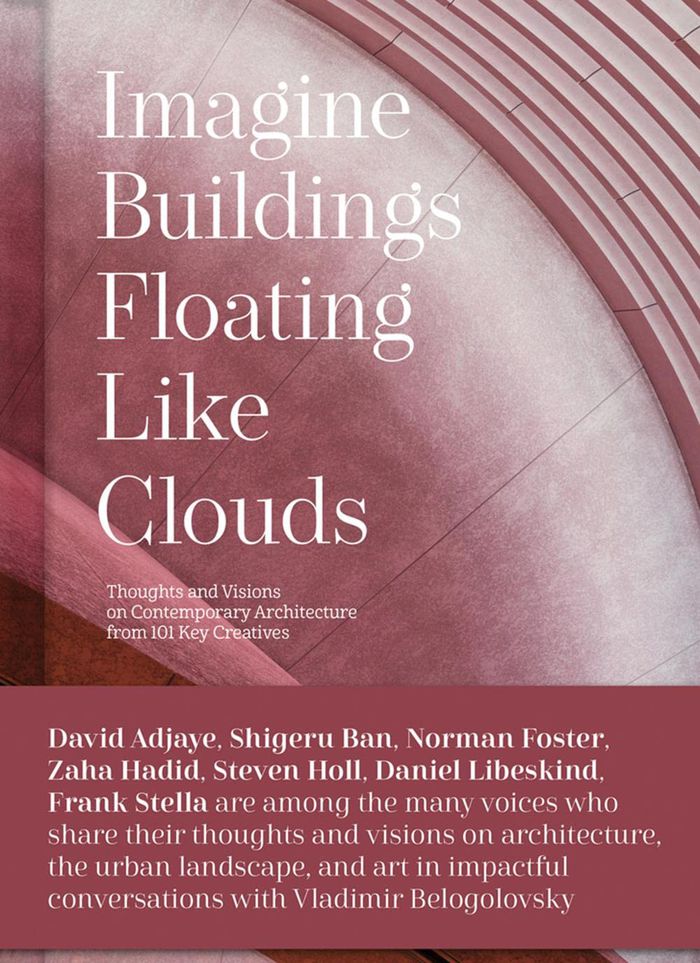
In this book, Vladimir Belogolovsky reflects on nearly twenty years of conversations with leading creatives from around the world whose focus is on art, photography, architecture, design, critical theory, and more. His intimate dialogues are with prolific visionaries, the likes of Paul Andreu, Aaron Betsky, Tatiana Bilbao, Christo, Norman Foster, Zaha Hadid, Toyo Ito, Glenn Murcutt, Renzo Piano, Moshe Safdie, Ric Scofido, Richard Serra, Frank Stella, Michael Sorkin, Stanley Tigerman, Bernard Tschumi, Lin Utzon, Massimo Vignelli, Madelon Vriesendorp, and so many others. He exposes the complexity of their thought processes, while comparing and contrasting them to one another to distill more than 101 ideas. His engaging narrative captures the stories behind every project and every personality while exploring many important questions, including: What makes a building architecture? How would a Futurist solve problems vs those whose focus is on nostalgia? The selection of interviews gathers many answers and intentions, but inevitably, also many more questions. ''Imagine buildings floating like clouds'' represents a diverse group of multitalented, creative people who work in disparate places culturally and climatically and came of age in very different times- from the revolutionary 1960s to our own time, when the future, for many, is being more feared than desired.
Imagine buildings floating like clouds: Thoughts and visions of contemporary architecture from 101 key creatives
Actions:
Price:
$45.00
(available in store)
Summary:
In this book, Vladimir Belogolovsky reflects on nearly twenty years of conversations with leading creatives from around the world whose focus is on art, photography, architecture, design, critical theory, and more. His intimate dialogues are with prolific visionaries, the likes of Paul Andreu, Aaron Betsky, Tatiana Bilbao, Christo, Norman Foster, Zaha Hadid, Toyo Ito, Glenn Murcutt, Renzo Piano, Moshe Safdie, Ric Scofido, Richard Serra, Frank Stella, Michael Sorkin, Stanley Tigerman, Bernard Tschumi, Lin Utzon, Massimo Vignelli, Madelon Vriesendorp, and so many others. He exposes the complexity of their thought processes, while comparing and contrasting them to one another to distill more than 101 ideas. His engaging narrative captures the stories behind every project and every personality while exploring many important questions, including: What makes a building architecture? How would a Futurist solve problems vs those whose focus is on nostalgia? The selection of interviews gathers many answers and intentions, but inevitably, also many more questions. ''Imagine buildings floating like clouds'' represents a diverse group of multitalented, creative people who work in disparate places culturally and climatically and came of age in very different times- from the revolutionary 1960s to our own time, when the future, for many, is being more feared than desired.
Form:
books
books
Publication:
June 2022
June 2022
Subject:
Contemporary Architecture
Contemporary Architecture
Form:
books
books
Price:
$27.95
(available to order)
Summary:
This book will be a resource for all who believe in the importance of art in the wider educational realm. Framing the recent "educational turn" in the arts within a broad historical and social context, this anthology raises fundamental questions about how and what should be taught in an era of distributive rather than media-based practices. Among the many sources and(...)
$27.95
(available to order)
Summary:
This book will be a resource for all who believe in the importance of art in the wider educational realm. Framing the recent "educational turn" in the arts within a broad historical and social context, this anthology raises fundamental questions about how and what should be taught in an era of distributive rather than media-based practices. Among the many sources and(...)
Title:
Education
Actions:
Price:
$27.95
(available to order)
Summary:
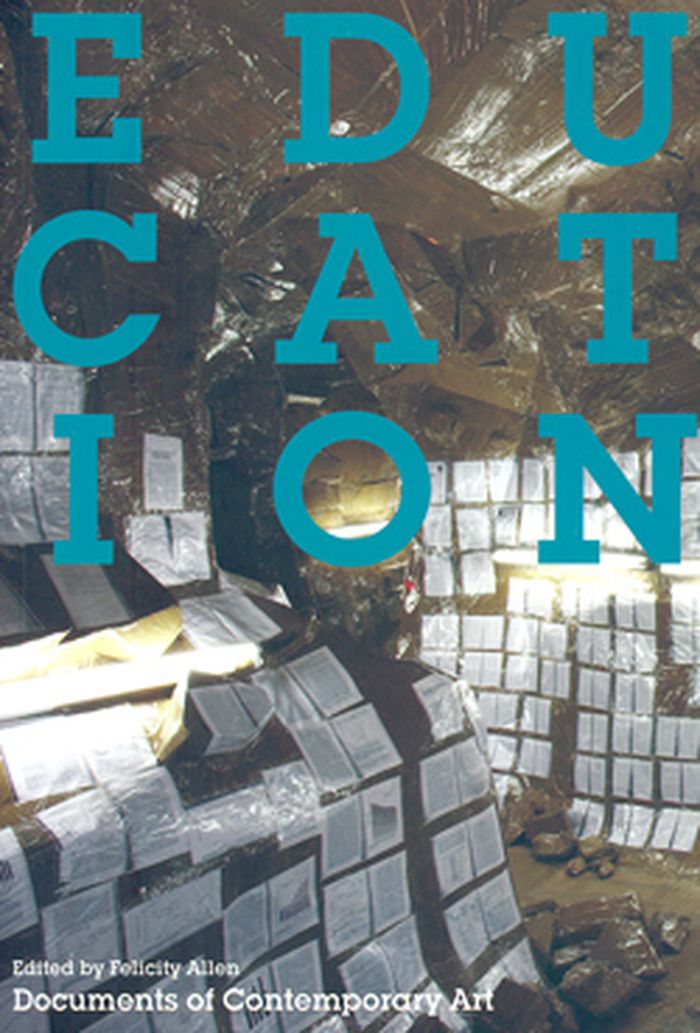
This book will be a resource for all who believe in the importance of art in the wider educational realm. Framing the recent "educational turn" in the arts within a broad historical and social context, this anthology raises fundamental questions about how and what should be taught in an era of distributive rather than media-based practices. Among the many sources and arguments traced here is second-wave feminism, which questioned dominant notions of personal and institutional freedom as enacted through art teaching and practice. Similarly, education-based responses by the art community to the catastrophes of World War II and postcolonial conflict critically inform contemporary art confronting the interrelationships of education, power, market capitalism, and--as Michael Hardt and Antonio Negri describe it--the global condition of war. These writings by artists, philosophers, educators, poets, and activists center on three recurring and interrelated themes: the notion of "indiscipline" in theories and practices that challenge boundaries of all kinds; the present and future role of the art school; and the turn to pedagogy as medium in a diverse range of recent projects. Other writings address such issues as instrumentalism and control, liberation and equality, the production and the politics of culture, and the roots of research-based practice and experimental participatory works.
Education
Actions:
Price:
$27.95
(available to order)
Summary:
This book will be a resource for all who believe in the importance of art in the wider educational realm. Framing the recent "educational turn" in the arts within a broad historical and social context, this anthology raises fundamental questions about how and what should be taught in an era of distributive rather than media-based practices. Among the many sources and arguments traced here is second-wave feminism, which questioned dominant notions of personal and institutional freedom as enacted through art teaching and practice. Similarly, education-based responses by the art community to the catastrophes of World War II and postcolonial conflict critically inform contemporary art confronting the interrelationships of education, power, market capitalism, and--as Michael Hardt and Antonio Negri describe it--the global condition of war. These writings by artists, philosophers, educators, poets, and activists center on three recurring and interrelated themes: the notion of "indiscipline" in theories and practices that challenge boundaries of all kinds; the present and future role of the art school; and the turn to pedagogy as medium in a diverse range of recent projects. Other writings address such issues as instrumentalism and control, liberation and equality, the production and the politics of culture, and the roots of research-based practice and experimental participatory works.
Form:
books
books
Publication:
September 2011
September 2011
Subject:
Art Theory
Art Theory
Form:
books
books
Actions:
Price:
$49.00
(available to order)
Summary:
The analysis of sanitary spaces and places dedicated to personal care, as in a privacy observatory, helps with the in-depth assessment of social changes, allowing us to determine how the lives of users can be improved, how conflicts of use in public places can be resolved between populations of different sexes and ages, and how the quality of public and private health can(...)
$49.00
(available to order)
Summary:
The analysis of sanitary spaces and places dedicated to personal care, as in a privacy observatory, helps with the in-depth assessment of social changes, allowing us to determine how the lives of users can be improved, how conflicts of use in public places can be resolved between populations of different sexes and ages, and how the quality of public and private health can(...)
Subject:
Commercial interiors, Building types
Commercial interiors, Building types
Publication:
January 2023
January 2023
Title:
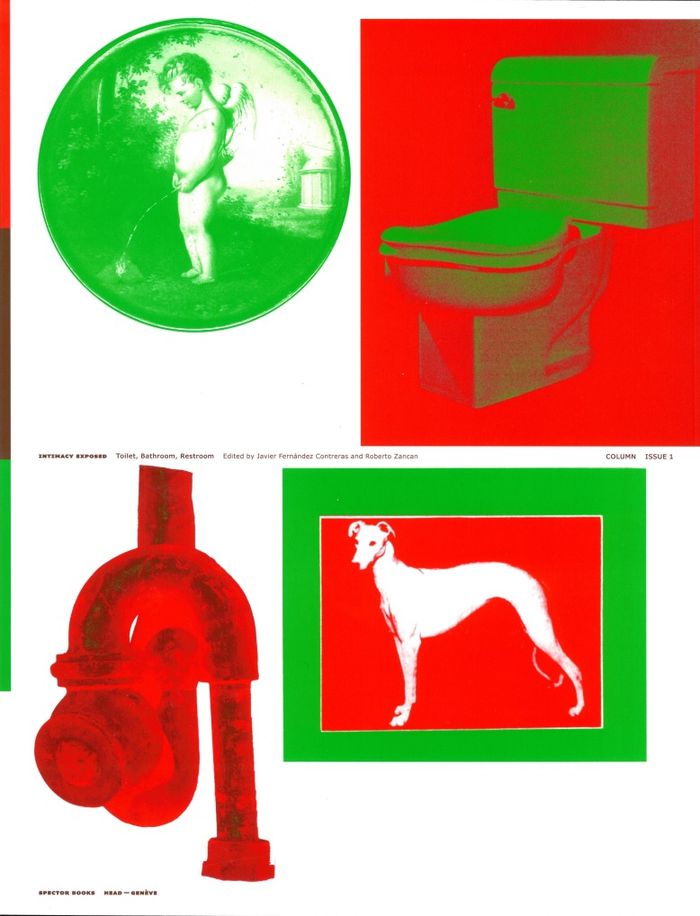
Intimacy exposed: toilets, bathrooms, restrooms
Actions:
Price:
$49.00
(available to order)
Summary:
The analysis of sanitary spaces and places dedicated to personal care, as in a privacy observatory, helps with the in-depth assessment of social changes, allowing us to determine how the lives of users can be improved, how conflicts of use in public places can be resolved between populations of different sexes and ages, and how the quality of public and private health can be enhanced. Observing these issues pushes us to explore the forms and meanings of bathrooms and private spaces in relation to their different functions, including those of transgressive and informal meeting places and spaces of inevitable and forced social coexistence. This book constitutes a new step in this field of research, presenting a series of scientific and artistic interventions that proves the diverse range of uses to which ''wet rooms'' can be put in social life, the evolution of the use of furniture, and the new meanings of details and objects in domestic bathrooms and public toilets. The texts, largely written for the 2018 symposium ''Intimacy Exposed: Toilet, Bathroom, Restroom'' (organized by the Department of Interior Architecture at HEAD – Genève) present a practice-based study of the recent past of modernist technologies and a vision of the future of personal and collective practices regarding the realm of the toilet.
Intimacy exposed: toilets, bathrooms, restrooms
Actions:
Price:
$49.00
(available to order)
Summary:
The analysis of sanitary spaces and places dedicated to personal care, as in a privacy observatory, helps with the in-depth assessment of social changes, allowing us to determine how the lives of users can be improved, how conflicts of use in public places can be resolved between populations of different sexes and ages, and how the quality of public and private health can be enhanced. Observing these issues pushes us to explore the forms and meanings of bathrooms and private spaces in relation to their different functions, including those of transgressive and informal meeting places and spaces of inevitable and forced social coexistence. This book constitutes a new step in this field of research, presenting a series of scientific and artistic interventions that proves the diverse range of uses to which ''wet rooms'' can be put in social life, the evolution of the use of furniture, and the new meanings of details and objects in domestic bathrooms and public toilets. The texts, largely written for the 2018 symposium ''Intimacy Exposed: Toilet, Bathroom, Restroom'' (organized by the Department of Interior Architecture at HEAD – Genève) present a practice-based study of the recent past of modernist technologies and a vision of the future of personal and collective practices regarding the realm of the toilet.
Form:
books
books
Publication:
January 2023
January 2023
Subject:
Commercial interiors, Building types
Commercial interiors, Building types
Form:
books
books

Actions:
Price:
$32.00
(available to order)
Summary:
DVD Release Date: June 21, 2009. Kamecke's film could be placed in a time capsule and removed some time in the distant future as an exact record of our feelings at the time." So said Kathleen Carroll of the New York Daily News in 1972. NASA commissioned director Theo Kamecke to make the documentary only six weeks before Apollo 11 s flight to the Moon in July 1969. But(...)
$32.00
(available to order)
Summary:
DVD Release Date: June 21, 2009. Kamecke's film could be placed in a time capsule and removed some time in the distant future as an exact record of our feelings at the time." So said Kathleen Carroll of the New York Daily News in 1972. NASA commissioned director Theo Kamecke to make the documentary only six weeks before Apollo 11 s flight to the Moon in July 1969. But(...)
Title:
Moonwalk one, the director's cut
Actions:
Price:
$32.00
(available to order)
Summary:
DVD Release Date: June 21, 2009. Kamecke's film could be placed in a time capsule and removed some time in the distant future as an exact record of our feelings at the time." So said Kathleen Carroll of the New York Daily News in 1972. NASA commissioned director Theo Kamecke to make the documentary only six weeks before Apollo 11 s flight to the Moon in July 1969. But instead of a simple documentary film, what transpired was a philosophical and poetic record of Man s first attempt to walk on another world. Opening dramatically with another of mankind s great achievements Stonehenge the film puts the triumph of the Moon shot into its proper historical context. Filmed across the World as the mission unfolded, Moonwalk One uniquely captured the essence of Apollo 11 in a way that subsequent documentaries could only mimic. Combined with Charles Morrow s breathtaking, avant-garde score and Laurence Luckinbill s inspiring narration this is a classic film for all time and makes for fascinating viewing today from the perspective of the early 21st Century. As Joseph Gelmis of the New York daily Newsday declared in 1969; Moonwalk One deserves to be a companion piece to Stanley Kubrik s masterwork 2001: A Space Odyssey .
Moonwalk one, the director's cut
Actions:
Price:
$32.00
(available to order)
Summary:
DVD Release Date: June 21, 2009. Kamecke's film could be placed in a time capsule and removed some time in the distant future as an exact record of our feelings at the time." So said Kathleen Carroll of the New York Daily News in 1972. NASA commissioned director Theo Kamecke to make the documentary only six weeks before Apollo 11 s flight to the Moon in July 1969. But instead of a simple documentary film, what transpired was a philosophical and poetic record of Man s first attempt to walk on another world. Opening dramatically with another of mankind s great achievements Stonehenge the film puts the triumph of the Moon shot into its proper historical context. Filmed across the World as the mission unfolded, Moonwalk One uniquely captured the essence of Apollo 11 in a way that subsequent documentaries could only mimic. Combined with Charles Morrow s breathtaking, avant-garde score and Laurence Luckinbill s inspiring narration this is a classic film for all time and makes for fascinating viewing today from the perspective of the early 21st Century. As Joseph Gelmis of the New York daily Newsday declared in 1969; Moonwalk One deserves to be a companion piece to Stanley Kubrik s masterwork 2001: A Space Odyssey .
Form:
books
books
Publication:
October 2009
October 2009
Subject:
DVDs
DVDs
Form:
books
books
Price:
$89.95
(available to order)
Summary:
La première chronologie des travaux formels de Yona Friedman a été publiée à Rotterdam en 1999. Ce nouveau livre reprend le même principe en augmentant et compilant, depuis 1945 jusqu'à aujourd'hui, l'ensemble de ses travaux. L'accent a été volontairement mis sur la qualité architecturale et les solutions constructives que Yona Friedman propose depuis plus de soixante(...)
$89.95
(available to order)
Summary:
La première chronologie des travaux formels de Yona Friedman a été publiée à Rotterdam en 1999. Ce nouveau livre reprend le même principe en augmentant et compilant, depuis 1945 jusqu'à aujourd'hui, l'ensemble de ses travaux. L'accent a été volontairement mis sur la qualité architecturale et les solutions constructives que Yona Friedman propose depuis plus de soixante(...)
Title:
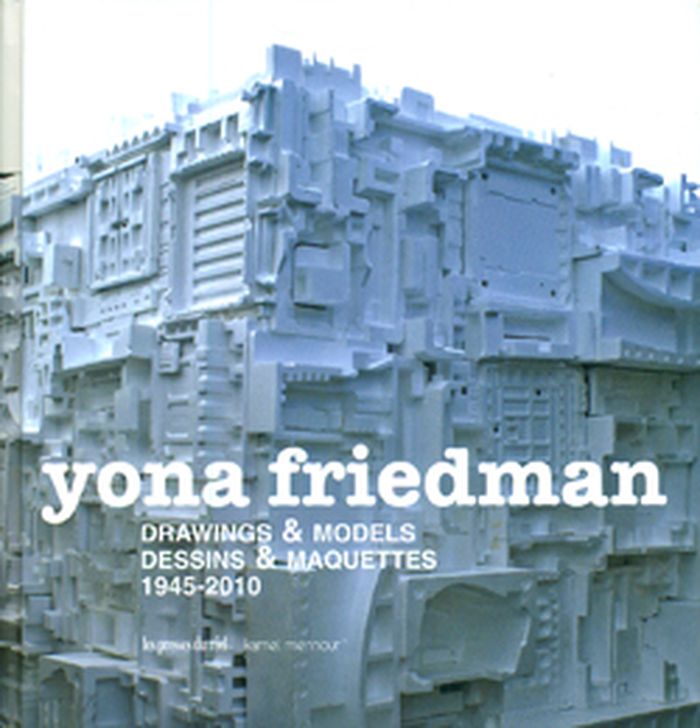
Yona Friedman: Drawings & Models, dessins & maquettes 1945-2010
Actions:
Price:
$89.95
(available to order)
Summary:
La première chronologie des travaux formels de Yona Friedman a été publiée à Rotterdam en 1999. Ce nouveau livre reprend le même principe en augmentant et compilant, depuis 1945 jusqu'à aujourd'hui, l'ensemble de ses travaux. L'accent a été volontairement mis sur la qualité architecturale et les solutions constructives que Yona Friedman propose depuis plus de soixante ans. Au total, plus de 1700 images, souvent inédites, viennent renforcer son rôle important en tant qu'architecte urbaniste. Tout a été généreusement pensé et détaillé pour l'homme, de son habitat à sa vie en groupe, de l'économie à l'écologie, du social au politique, au travers de plans, schémas, dessins, maquettes, collages, installations… Tous les documents proviennent des archives de Yona Friedman Budapest-born and resident in Paris, Yona Friedman has since the mid-twentieth century pioneered the concept of 'mobile architecture', whereby town planning and housing is conceived by users, and anticipates the flux and uncertainty of future users' needs. Friedman's concentration on 'mobile architecture' – a position gaining in popularity today – has imbued his work with great social generosity, and an improving ideology. This compilation of Friedman's output offers a comprehensive overview of one of today's most influential architects and urban theorists, and includes plans, sketches, drawings, models, collages and installations.
Yona Friedman: Drawings & Models, dessins & maquettes 1945-2010
Actions:
Price:
$89.95
(available to order)
Summary:
La première chronologie des travaux formels de Yona Friedman a été publiée à Rotterdam en 1999. Ce nouveau livre reprend le même principe en augmentant et compilant, depuis 1945 jusqu'à aujourd'hui, l'ensemble de ses travaux. L'accent a été volontairement mis sur la qualité architecturale et les solutions constructives que Yona Friedman propose depuis plus de soixante ans. Au total, plus de 1700 images, souvent inédites, viennent renforcer son rôle important en tant qu'architecte urbaniste. Tout a été généreusement pensé et détaillé pour l'homme, de son habitat à sa vie en groupe, de l'économie à l'écologie, du social au politique, au travers de plans, schémas, dessins, maquettes, collages, installations… Tous les documents proviennent des archives de Yona Friedman Budapest-born and resident in Paris, Yona Friedman has since the mid-twentieth century pioneered the concept of 'mobile architecture', whereby town planning and housing is conceived by users, and anticipates the flux and uncertainty of future users' needs. Friedman's concentration on 'mobile architecture' – a position gaining in popularity today – has imbued his work with great social generosity, and an improving ideology. This compilation of Friedman's output offers a comprehensive overview of one of today's most influential architects and urban theorists, and includes plans, sketches, drawings, models, collages and installations.
Form:
books
books
Publication:
June 2010
June 2010
Subject:
Architecture Monographs
Architecture Monographs
Form:
books
books
Price:
$47.50
(available to order)
Summary:
In times where global matters such as the climate, currencies and places of residence become increasingly volatile, the urban public space we live in is an area where power, identity and belonging are negotiated. Cities have always been melting pots of history, society, art and politics, which is why the way a city is shaped tells us a lot about the people who live in it.(...)
$47.50
(available to order)
Summary:
In times where global matters such as the climate, currencies and places of residence become increasingly volatile, the urban public space we live in is an area where power, identity and belonging are negotiated. Cities have always been melting pots of history, society, art and politics, which is why the way a city is shaped tells us a lot about the people who live in it.(...)
Title:
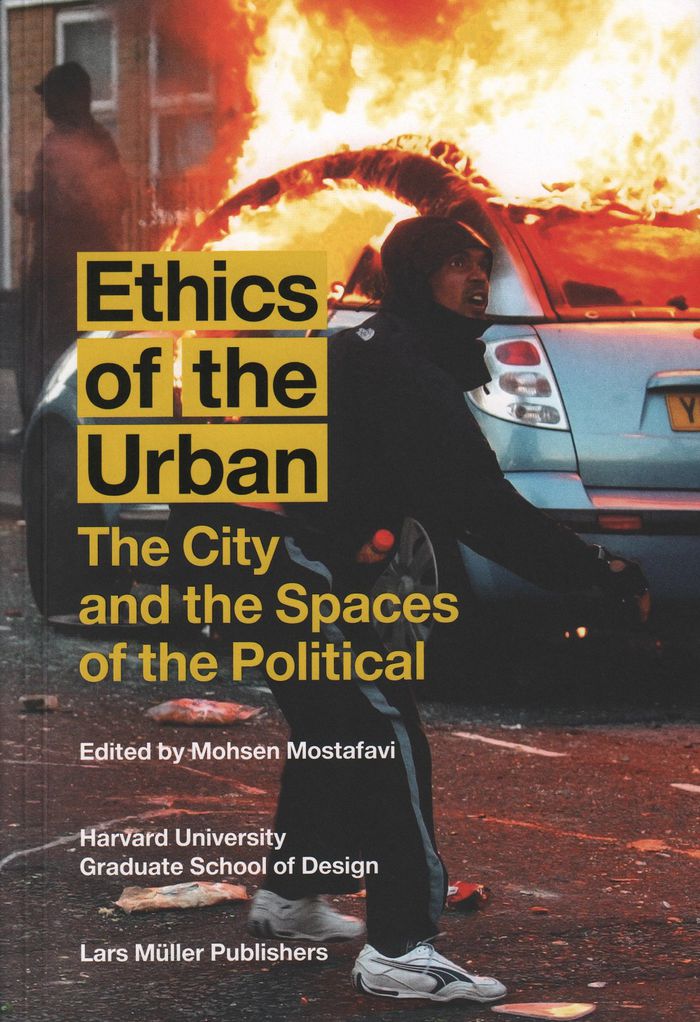
Ethics of the urban: the city and the spaces of the political
Actions:
Price:
$47.50
(available to order)
Summary:
In times where global matters such as the climate, currencies and places of residence become increasingly volatile, the urban public space we live in is an area where power, identity and belonging are negotiated. Cities have always been melting pots of history, society, art and politics, which is why the way a city is shaped tells us a lot about the people who live in it. With contributors from a variety of fields, Ethics of the Urban discusses these urban spaces of the political. "How do we move about the city?", "How does memory of the past inspire the future of cities?" and "What makes a city a home?" are only some of the many questions that Ethics of the Urban addresses. The publication gathers experts from history, sociology, art, political theory, planning, law and design to emphasize the complexity of the meaning that urban space has today. Urban spaces are on one hand political spaces, since buildings, streets and people moving around all mirror political decisions in one way or another. On the other hand, the urban space is also a designed space, conceptualized, planned and sometimes gentrified. Complimented by stunning photography, Ethics of the Urban is a vibrant intellectual journey straight into the bone marrow of every contemporary city around the globe.
Ethics of the urban: the city and the spaces of the political
Actions:
Price:
$47.50
(available to order)
Summary:
In times where global matters such as the climate, currencies and places of residence become increasingly volatile, the urban public space we live in is an area where power, identity and belonging are negotiated. Cities have always been melting pots of history, society, art and politics, which is why the way a city is shaped tells us a lot about the people who live in it. With contributors from a variety of fields, Ethics of the Urban discusses these urban spaces of the political. "How do we move about the city?", "How does memory of the past inspire the future of cities?" and "What makes a city a home?" are only some of the many questions that Ethics of the Urban addresses. The publication gathers experts from history, sociology, art, political theory, planning, law and design to emphasize the complexity of the meaning that urban space has today. Urban spaces are on one hand political spaces, since buildings, streets and people moving around all mirror political decisions in one way or another. On the other hand, the urban space is also a designed space, conceptualized, planned and sometimes gentrified. Complimented by stunning photography, Ethics of the Urban is a vibrant intellectual journey straight into the bone marrow of every contemporary city around the globe.
Form:
books
books
Publication:
March 2017
March 2017
Subject:
Urban Theory
Urban Theory
Form:
books
books
Title:
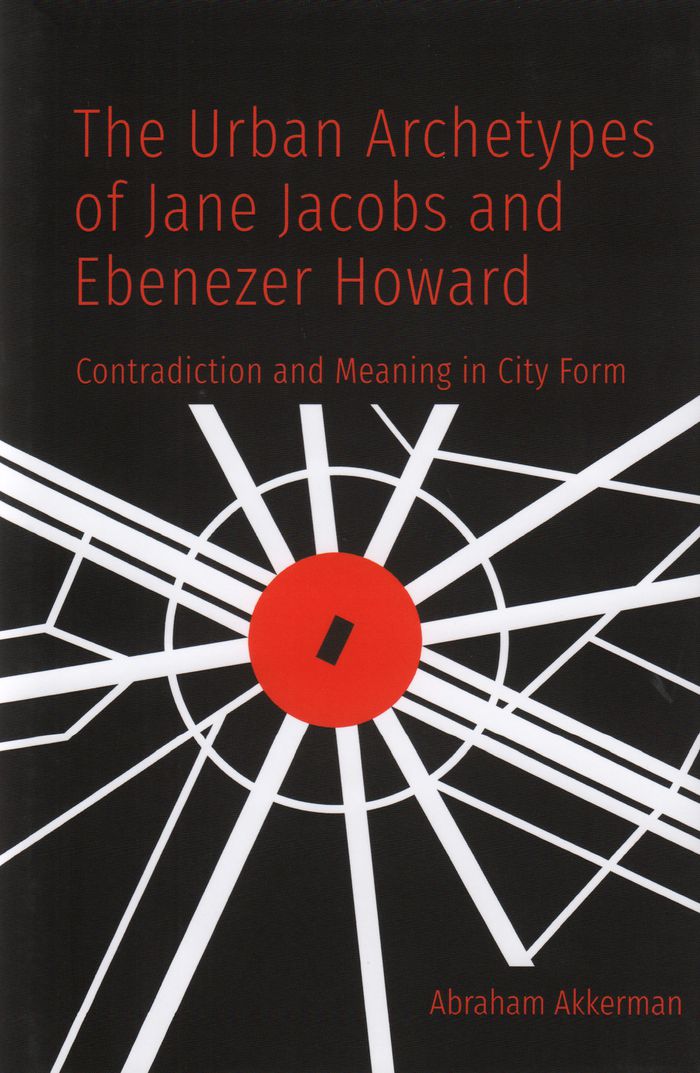
The Urban Archetypes of Jane Jacobs and Ebenezer Howard: Contradiction and meaning in city form
The Urban Archetypes of Jane Jacobs and Ebenezer Howard: Contradiction and meaning in city form
Actions:
Price:
$80.00
(available to order)
Summary:
Ebenezer Howard, an Englishman, and Jane Jacobs, a naturalized Canadian, personify the twentieth century’s opposing outlooks on cities. Howard had envisaged small towns, newly built from scratch, fashioned on single family homes with small gardens. Jacobs embraced existing inner-city neighbourhoods emphasizing the verve of the living street. From Howard’s idea, the(...)
$80.00
(available to order)
Summary:
Ebenezer Howard, an Englishman, and Jane Jacobs, a naturalized Canadian, personify the twentieth century’s opposing outlooks on cities. Howard had envisaged small towns, newly built from scratch, fashioned on single family homes with small gardens. Jacobs embraced existing inner-city neighbourhoods emphasizing the verve of the living street. From Howard’s idea, the(...)
Title:
The Urban Archetypes of Jane Jacobs and Ebenezer Howard: Contradiction and meaning in city form
Actions:
Price:
$80.00
(available to order)
Summary:
Ebenezer Howard, an Englishman, and Jane Jacobs, a naturalized Canadian, personify the twentieth century’s opposing outlooks on cities. Howard had envisaged small towns, newly built from scratch, fashioned on single family homes with small gardens. Jacobs embraced existing inner-city neighbourhoods emphasizing the verve of the living street. From Howard’s idea, the American Dream of garden suburbs had emerged, yet his conceptualization of a modern city received criticism for being uniform and alienated from the rest of the city. Similarly, at the turn of the new century, Jacobs’ inner-city neighbourhoods came to be recognized as the result of commodification, vacillating between poverty and newly discovered hubs of urban authenticity. Presenting Howard and Jacobs within a psychocultural context, ''The urban archetypes of Jane Jacobs and Ebenezer Howard'' addresses our urban crisis in the recognition that ''city form'' is a gendered, allegorical medium expressing femininity and masculinity within two founding features of the built environment: void and volume. Both founding contrasts bring tensions, but also the opportunities of fusion between pairs of urban polarities: human scale against superscale, gait against speed, and spontaneity against surveillance. Jacobs and Howard, in their respective attitudes, have come to embrace the two ancient archetypes, the Garden and the Citadel, leaving it to future generations to blend their two contrarian stances.
The Urban Archetypes of Jane Jacobs and Ebenezer Howard: Contradiction and meaning in city form
Actions:
Price:
$80.00
(available to order)
Summary:
Ebenezer Howard, an Englishman, and Jane Jacobs, a naturalized Canadian, personify the twentieth century’s opposing outlooks on cities. Howard had envisaged small towns, newly built from scratch, fashioned on single family homes with small gardens. Jacobs embraced existing inner-city neighbourhoods emphasizing the verve of the living street. From Howard’s idea, the American Dream of garden suburbs had emerged, yet his conceptualization of a modern city received criticism for being uniform and alienated from the rest of the city. Similarly, at the turn of the new century, Jacobs’ inner-city neighbourhoods came to be recognized as the result of commodification, vacillating between poverty and newly discovered hubs of urban authenticity. Presenting Howard and Jacobs within a psychocultural context, ''The urban archetypes of Jane Jacobs and Ebenezer Howard'' addresses our urban crisis in the recognition that ''city form'' is a gendered, allegorical medium expressing femininity and masculinity within two founding features of the built environment: void and volume. Both founding contrasts bring tensions, but also the opportunities of fusion between pairs of urban polarities: human scale against superscale, gait against speed, and spontaneity against surveillance. Jacobs and Howard, in their respective attitudes, have come to embrace the two ancient archetypes, the Garden and the Citadel, leaving it to future generations to blend their two contrarian stances.
Form:
books
books
Publication:
January 2020
January 2020
Subject:
Urban Theory
Urban Theory


