


13794 Results
Form:
books
books
Title:
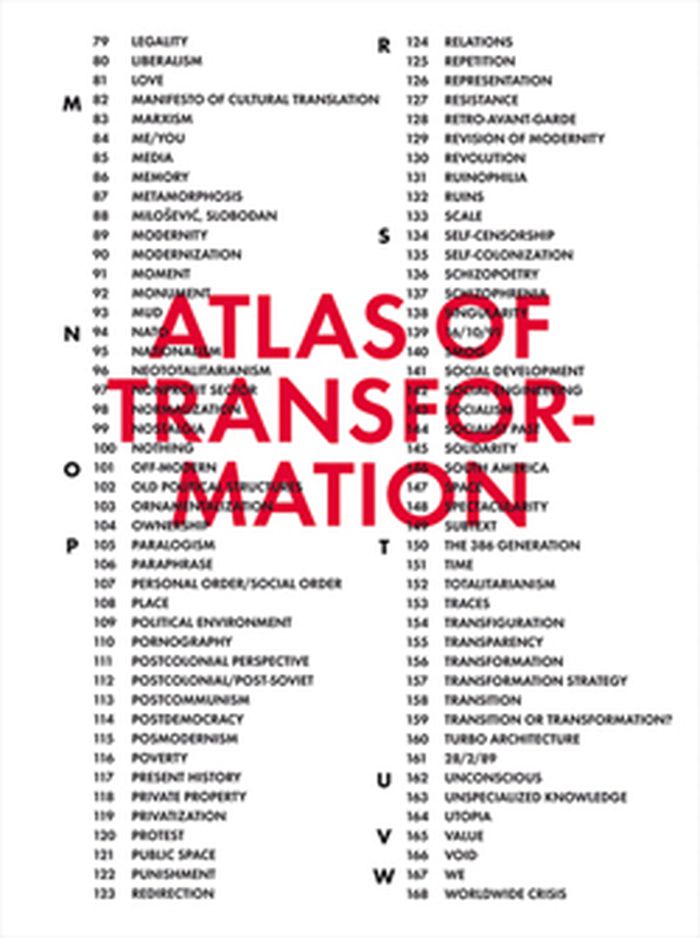
Atlas of transformation
Atlas of transformation
Actions:
Price:
$50.00
(available to order)
Summary:
What happens to a country when it undergoes change on a revolutionary scale? And how does one grasp such monumental transformation? In over 200 entries, the Atlas of Transformation offers a massive glossary of key terms for the effects and consequences of social political change, based on the transformations seen over the past two decades in Eastern Europe. Including(...)
$50.00
(available to order)
Summary:
What happens to a country when it undergoes change on a revolutionary scale? And how does one grasp such monumental transformation? In over 200 entries, the Atlas of Transformation offers a massive glossary of key terms for the effects and consequences of social political change, based on the transformations seen over the past two decades in Eastern Europe. Including(...)
Title:
Atlas of transformation
Actions:
Price:
$50.00
(available to order)
Summary:
What happens to a country when it undergoes change on a revolutionary scale? And how does one grasp such monumental transformation? In over 200 entries, the Atlas of Transformation offers a massive glossary of key terms for the effects and consequences of social political change, based on the transformations seen over the past two decades in Eastern Europe. Including relevant historical texts alongside new writing, among the authors contributing to the Atlas are Timothy Garton Ash, Hakim Bey, Homi K. Bhabha, Deleuze and Guattari, Boris Groys, Karl Holmqvist, Frederic Jameson, Franz Kafka and Slavoj Zizek.
Atlas of transformation
Actions:
Price:
$50.00
(available to order)
Summary:
What happens to a country when it undergoes change on a revolutionary scale? And how does one grasp such monumental transformation? In over 200 entries, the Atlas of Transformation offers a massive glossary of key terms for the effects and consequences of social political change, based on the transformations seen over the past two decades in Eastern Europe. Including relevant historical texts alongside new writing, among the authors contributing to the Atlas are Timothy Garton Ash, Hakim Bey, Homi K. Bhabha, Deleuze and Guattari, Boris Groys, Karl Holmqvist, Frederic Jameson, Franz Kafka and Slavoj Zizek.
Form:
books
books
Publication:
January 2011
January 2011
Subject:
Critical Theory
Critical Theory
Form:
books
books
Title:
Why architecture matters
Why architecture matters
Actions:
Price:
$19.95
(available to order)
Summary:
This book is not a work of architectural history or a guide to the styles or an architectural dictionary, though it contains elements of all three. The purpose of this book is to 'come to grips with how things feel to us when we stand before them, with how architecture affects us emotionally as well as intellectually' - with its impact on our lives. 'Architecture begins(...)
$19.95
(available to order)
Summary:
This book is not a work of architectural history or a guide to the styles or an architectural dictionary, though it contains elements of all three. The purpose of this book is to 'come to grips with how things feel to us when we stand before them, with how architecture affects us emotionally as well as intellectually' - with its impact on our lives. 'Architecture begins(...)
Title:
Why architecture matters
Actions:
Price:
$19.95
(available to order)
Summary:
This book is not a work of architectural history or a guide to the styles or an architectural dictionary, though it contains elements of all three. The purpose of this book is to 'come to grips with how things feel to us when we stand before them, with how architecture affects us emotionally as well as intellectually' - with its impact on our lives. 'Architecture begins to matter', writes Paul Goldberger, 'when it brings delight and sadness and perplexity and awe along with a roof over our heads'.
Why architecture matters
Actions:
Price:
$19.95
(available to order)
Summary:
This book is not a work of architectural history or a guide to the styles or an architectural dictionary, though it contains elements of all three. The purpose of this book is to 'come to grips with how things feel to us when we stand before them, with how architecture affects us emotionally as well as intellectually' - with its impact on our lives. 'Architecture begins to matter', writes Paul Goldberger, 'when it brings delight and sadness and perplexity and awe along with a roof over our heads'.
Form:
books
books
Publication:
March 2011
March 2011
Subject:
Architectural Theory
Architectural Theory
Form:
books
books
Actions:
Price:
$46.00
(available to order)
Summary:
In this book Michael Fried considers the work of four contemporary artists--video artist and photographer Anri Sala, sculptor Charles Ray, painter Joseph Marioni, and video artist and intervener in movies Douglas Gordon. He shows how their respective projects are best understood as engaging in a variety of ways with some of the core themes and issues associated with high(...)
$46.00
(available to order)
Summary:
In this book Michael Fried considers the work of four contemporary artists--video artist and photographer Anri Sala, sculptor Charles Ray, painter Joseph Marioni, and video artist and intervener in movies Douglas Gordon. He shows how their respective projects are best understood as engaging in a variety of ways with some of the core themes and issues associated with high(...)
Title:
Four honest outlaws: Sala, Ray, Marioni, Gordon
Actions:
Price:
$46.00
(available to order)
Summary:
In this book Michael Fried considers the work of four contemporary artists--video artist and photographer Anri Sala, sculptor Charles Ray, painter Joseph Marioni, and video artist and intervener in movies Douglas Gordon. He shows how their respective projects are best understood as engaging in a variety of ways with some of the core themes and issues associated with high modernism, and indeed with its prehistory in French painting and art criticism from Diderot on. 'Four Honest Outlaws' thus continues the author's exploration of the critical and philosophical territory opened up by his earlier book, 'Why Photography Matters as Art as Never Before.' It presents a vision of the most important contemporary art as not only not repudiating modernism in the name of postmodernism in any of the latter's many forms and manifestations, but also actually as committed to dialectically renewing certain crucial qualities and values that modernism and premodernism brought to the fore, above all those of presentness and anti-theatricality.
Four honest outlaws: Sala, Ray, Marioni, Gordon
Actions:
Price:
$46.00
(available to order)
Summary:
In this book Michael Fried considers the work of four contemporary artists--video artist and photographer Anri Sala, sculptor Charles Ray, painter Joseph Marioni, and video artist and intervener in movies Douglas Gordon. He shows how their respective projects are best understood as engaging in a variety of ways with some of the core themes and issues associated with high modernism, and indeed with its prehistory in French painting and art criticism from Diderot on. 'Four Honest Outlaws' thus continues the author's exploration of the critical and philosophical territory opened up by his earlier book, 'Why Photography Matters as Art as Never Before.' It presents a vision of the most important contemporary art as not only not repudiating modernism in the name of postmodernism in any of the latter's many forms and manifestations, but also actually as committed to dialectically renewing certain crucial qualities and values that modernism and premodernism brought to the fore, above all those of presentness and anti-theatricality.
Form:
books
books
Publication:
April 2011
April 2011
Subject:
Art Theory
Art Theory
Form:
books
books
Title:
Redesigning leadership
Redesigning leadership
Actions:
Price:
$21.95
(available to order)
Summary:
When designer and computer scientist John Maeda was tapped to be president of the celebrated Rhode Island School of Design in 2008, he had to learn how to be a leader quickly. He had to transform himself from a tenured professor into the head of a hierarchical organization. Maeda has had to teach himself, through trial and error, about leadership. In Redesigning(...)
$21.95
(available to order)
Summary:
When designer and computer scientist John Maeda was tapped to be president of the celebrated Rhode Island School of Design in 2008, he had to learn how to be a leader quickly. He had to transform himself from a tenured professor into the head of a hierarchical organization. Maeda has had to teach himself, through trial and error, about leadership. In Redesigning(...)
Title:
Redesigning leadership
Actions:
Price:
$21.95
(available to order)
Summary:
When designer and computer scientist John Maeda was tapped to be president of the celebrated Rhode Island School of Design in 2008, he had to learn how to be a leader quickly. He had to transform himself from a tenured professor into the head of a hierarchical organization. Maeda has had to teach himself, through trial and error, about leadership. In Redesigning Leadership, he shares his learning process. Maeda, writing as an artist and designer, a technologist, and a professor, discusses intuition and risk-taking, "transparency," and all the things that a conversation can do that an email can't. In his transition from MIT to RISD he finds that the most effective way to pull people together is not social networking but free food. Hhe uses his experience to reveal a new model of leadership for the next generation of leaders.
Redesigning leadership
Actions:
Price:
$21.95
(available to order)
Summary:
When designer and computer scientist John Maeda was tapped to be president of the celebrated Rhode Island School of Design in 2008, he had to learn how to be a leader quickly. He had to transform himself from a tenured professor into the head of a hierarchical organization. Maeda has had to teach himself, through trial and error, about leadership. In Redesigning Leadership, he shares his learning process. Maeda, writing as an artist and designer, a technologist, and a professor, discusses intuition and risk-taking, "transparency," and all the things that a conversation can do that an email can't. In his transition from MIT to RISD he finds that the most effective way to pull people together is not social networking but free food. Hhe uses his experience to reveal a new model of leadership for the next generation of leaders.
Form:
books
books
Publication:
May 2011
May 2011
Subject:
Design Theory
Design Theory
Form:
books
books
Title:
The ethics of sightseeing
The ethics of sightseeing
Actions:
Price:
$25.95
(available to order)
Summary:
The ethics of sightseeing identifies and overcomes common obstacles to ethical sightseeing. Through a combination of personal observation and in-depth scholarship, MacCannell ventures into specific tourist destinations and attractions: "picturesque" rural and natural landscapes, "hip" urban scenes, historic locations of tragic events, Disney theme parks, beaches, and(...)
$25.95
(available to order)
Summary:
The ethics of sightseeing identifies and overcomes common obstacles to ethical sightseeing. Through a combination of personal observation and in-depth scholarship, MacCannell ventures into specific tourist destinations and attractions: "picturesque" rural and natural landscapes, "hip" urban scenes, historic locations of tragic events, Disney theme parks, beaches, and(...)
Title:
The ethics of sightseeing
Actions:
Price:
$25.95
(available to order)
Summary:
The ethics of sightseeing identifies and overcomes common obstacles to ethical sightseeing. Through a combination of personal observation and in-depth scholarship, MacCannell ventures into specific tourist destinations and attractions: "picturesque" rural and natural landscapes, "hip" urban scenes, historic locations of tragic events, Disney theme parks, beaches, and travel poster ideals. Demonstrating each act of sightseeing as an ethical test, the book shows how tourists can realize the productive potential of their travel desires, penetrate the collective unconscious, and gain character, insight, and connection to the world.
The ethics of sightseeing
Actions:
Price:
$25.95
(available to order)
Summary:
The ethics of sightseeing identifies and overcomes common obstacles to ethical sightseeing. Through a combination of personal observation and in-depth scholarship, MacCannell ventures into specific tourist destinations and attractions: "picturesque" rural and natural landscapes, "hip" urban scenes, historic locations of tragic events, Disney theme parks, beaches, and travel poster ideals. Demonstrating each act of sightseeing as an ethical test, the book shows how tourists can realize the productive potential of their travel desires, penetrate the collective unconscious, and gain character, insight, and connection to the world.
Form:
books
books
Publication:
June 2011
June 2011
Subject:
Critical Theory
Critical Theory
Form:
books
books
Actions:
Price:
$48.00
(available in store)
Summary:
In The Possibility of an Absolute Architecture, Pier Vittorio Aureli proposes that a sharpened formal consciousness in architecture is a precondition for political, cultural, and social engagement with the city. Aureli revisits the work of four architects whose projects were advanced through the making of architectural form but whose concern was the city at large:(...)
$48.00
(available in store)
Summary:
In The Possibility of an Absolute Architecture, Pier Vittorio Aureli proposes that a sharpened formal consciousness in architecture is a precondition for political, cultural, and social engagement with the city. Aureli revisits the work of four architects whose projects were advanced through the making of architectural form but whose concern was the city at large:(...)
Title:
The possibility of an absolute architecture
Actions:
Price:
$48.00
(available in store)
Summary:
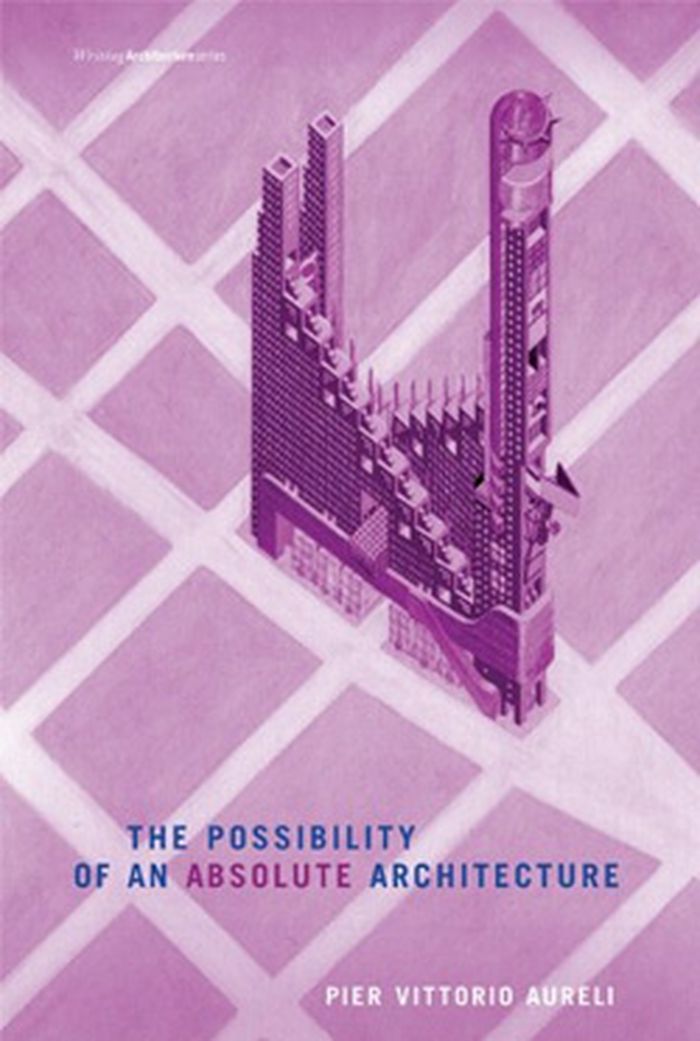
In The Possibility of an Absolute Architecture, Pier Vittorio Aureli proposes that a sharpened formal consciousness in architecture is a precondition for political, cultural, and social engagement with the city. Aureli revisits the work of four architects whose projects were advanced through the making of architectural form but whose concern was the city at large: Andrea Palladio, Giovanni Battista Piranesi, Etienne-Louis Boullée, and Oswald Mathias Ungers. The work of these architects, Aureli argues, addressed the transformations of the modern city and its urban implications through the elaboration of specific and strategic architectural forms.
The possibility of an absolute architecture
Actions:
Price:
$48.00
(available in store)
Summary:
In The Possibility of an Absolute Architecture, Pier Vittorio Aureli proposes that a sharpened formal consciousness in architecture is a precondition for political, cultural, and social engagement with the city. Aureli revisits the work of four architects whose projects were advanced through the making of architectural form but whose concern was the city at large: Andrea Palladio, Giovanni Battista Piranesi, Etienne-Louis Boullée, and Oswald Mathias Ungers. The work of these architects, Aureli argues, addressed the transformations of the modern city and its urban implications through the elaboration of specific and strategic architectural forms.
Form:
books
books
Publication:
March 2011
March 2011
Subject:
Architectural Theory
Architectural Theory
Form:
books
books
Actions:
Price:
$54.95
(available to order)
Summary:
This volume explores the conceptual "topography" of landscape: It examines the character of landscape as itself a mode of place as well as the modes of place that appear in relation to landscape. The essays demonstrate that the study of landscape cannot be restricted to any one genre, cannot be taken as the exclusive province of any one discipline, and cannot be(...)
$54.95
(available to order)
Summary:
This volume explores the conceptual "topography" of landscape: It examines the character of landscape as itself a mode of place as well as the modes of place that appear in relation to landscape. The essays demonstrate that the study of landscape cannot be restricted to any one genre, cannot be taken as the exclusive province of any one discipline, and cannot be(...)
Title:
The place of landscape: concepts, contexts, studies
Actions:
Price:
$54.95
(available to order)
Summary:
This volume explores the conceptual "topography" of landscape: It examines the character of landscape as itself a mode of place as well as the modes of place that appear in relation to landscape. The essays demonstrate that the study of landscape cannot be restricted to any one genre, cannot be taken as the exclusive province of any one discipline, and cannot be exhausted by any single form of analysis. What the place of landscape now evokes is itself a wide-ranging terrain encompassing issues concerning the nature of place, of human being in place, and of the structures that shape such being and are shaped by it.
The place of landscape: concepts, contexts, studies
Actions:
Price:
$54.95
(available to order)
Summary:
This volume explores the conceptual "topography" of landscape: It examines the character of landscape as itself a mode of place as well as the modes of place that appear in relation to landscape. The essays demonstrate that the study of landscape cannot be restricted to any one genre, cannot be taken as the exclusive province of any one discipline, and cannot be exhausted by any single form of analysis. What the place of landscape now evokes is itself a wide-ranging terrain encompassing issues concerning the nature of place, of human being in place, and of the structures that shape such being and are shaped by it.
Form:
books
books
Publication:
June 2011
June 2011
Subject:
Landscape Theory
Landscape Theory
Form:
books
books
Price:
$24.95
(available to order)
Summary:
Some cities seem destined to become major financial capitals, yet never do--Seville, for instance, was the centre of Spain's opulent New World Empire, but failed to become a financial metropolis. Others, like former colonial backwater Hong Kong, defy the odds by growing into major trading centres. What are the key factors distinguishing those cities that become wealthy(...)
$24.95
(available to order)
Summary:
Some cities seem destined to become major financial capitals, yet never do--Seville, for instance, was the centre of Spain's opulent New World Empire, but failed to become a financial metropolis. Others, like former colonial backwater Hong Kong, defy the odds by growing into major trading centres. What are the key factors distinguishing those cities that become wealthy(...)
Title:
The evolution of great world cities : urban wealth and economic growth
Actions:
Price:
$24.95
(available to order)
Summary:
Some cities seem destined to become major financial capitals, yet never do--Seville, for instance, was the centre of Spain's opulent New World Empire, but failed to become a financial metropolis. Others, like former colonial backwater Hong Kong, defy the odds by growing into major trading centres. What are the key factors distinguishing those cities that become wealthy from those that don't? Christopher Kennedy illuminates how geography, technology, and especially the infrastructure of urban economies allow cities to develop and thrive. The Evolution of Great World Cities unfolds through the tales of several urban centres -including Venice, Amsterdam, London, and New York City - at key junctures in their histories. Kennedy weaves together significant insights from urbanists such as Jane Jacobs and economists such as John Maynard Keynes, drawing striking parallels between the functioning of ecosystems and of wealthy capitals. The Evolution of Great World Cities offers an accessible introduction to urban economies that "will change the way you think about cities."
The evolution of great world cities : urban wealth and economic growth
Actions:
Price:
$24.95
(available to order)
Summary:
Some cities seem destined to become major financial capitals, yet never do--Seville, for instance, was the centre of Spain's opulent New World Empire, but failed to become a financial metropolis. Others, like former colonial backwater Hong Kong, defy the odds by growing into major trading centres. What are the key factors distinguishing those cities that become wealthy from those that don't? Christopher Kennedy illuminates how geography, technology, and especially the infrastructure of urban economies allow cities to develop and thrive. The Evolution of Great World Cities unfolds through the tales of several urban centres -including Venice, Amsterdam, London, and New York City - at key junctures in their histories. Kennedy weaves together significant insights from urbanists such as Jane Jacobs and economists such as John Maynard Keynes, drawing striking parallels between the functioning of ecosystems and of wealthy capitals. The Evolution of Great World Cities offers an accessible introduction to urban economies that "will change the way you think about cities."
Form:
books
books
Publication:
June 2011
June 2011
Subject:
Urban Theory
Urban Theory
Form:
books
books
Actions:
Price:
$22.95
(available to order)
Summary:
Some central questions in the natural and social sciences can’t be answered by controlled laboratory experiments, often considered to be the hallmark of the scientific method. This impossibility holds for any science concerned with the past. In addition, many manipulative experiments, while possible, would be considered immoral or illegal. One has to devise other methods(...)
$22.95
(available to order)
Summary:
Some central questions in the natural and social sciences can’t be answered by controlled laboratory experiments, often considered to be the hallmark of the scientific method. This impossibility holds for any science concerned with the past. In addition, many manipulative experiments, while possible, would be considered immoral or illegal. One has to devise other methods(...)
Title:
Natural experiments of history
Actions:
Price:
$22.95
(available to order)
Summary:
Some central questions in the natural and social sciences can’t be answered by controlled laboratory experiments, often considered to be the hallmark of the scientific method. This impossibility holds for any science concerned with the past. In addition, many manipulative experiments, while possible, would be considered immoral or illegal. One has to devise other methods of observing, describing, and explaining the world. In the historical disciplines, a fruitful approach has been to use natural experiments or the comparative method. This book consists of eight comparative studies drawn from history, archeology, economics, economic history, geography, and political science. The studies cover a spectrum of approaches, ranging from a non-quantitative narrative style in the early chapters to quantitative statistical analyses in the later chapters. The studies range from a simple two-way comparison of Haiti and the Dominican Republic, which share the island of Hispaniola, to comparisons of 81 Pacific islands and 233 areas of India. The societies discussed are contemporary ones, literate societies of recent centuries, and non-literate past societies. Geographically, they include the United States, Mexico, Brazil, western Europe, tropical Africa, India, Siberia, Australia, New Zealand, and other Pacific islands. In an Afterword, the editors discuss how to cope with methodological problems common to these and other natural experiments of history.
Natural experiments of history
Actions:
Price:
$22.95
(available to order)
Summary:
Some central questions in the natural and social sciences can’t be answered by controlled laboratory experiments, often considered to be the hallmark of the scientific method. This impossibility holds for any science concerned with the past. In addition, many manipulative experiments, while possible, would be considered immoral or illegal. One has to devise other methods of observing, describing, and explaining the world. In the historical disciplines, a fruitful approach has been to use natural experiments or the comparative method. This book consists of eight comparative studies drawn from history, archeology, economics, economic history, geography, and political science. The studies cover a spectrum of approaches, ranging from a non-quantitative narrative style in the early chapters to quantitative statistical analyses in the later chapters. The studies range from a simple two-way comparison of Haiti and the Dominican Republic, which share the island of Hispaniola, to comparisons of 81 Pacific islands and 233 areas of India. The societies discussed are contemporary ones, literate societies of recent centuries, and non-literate past societies. Geographically, they include the United States, Mexico, Brazil, western Europe, tropical Africa, India, Siberia, Australia, New Zealand, and other Pacific islands. In an Afterword, the editors discuss how to cope with methodological problems common to these and other natural experiments of history.
Form:
books
books
Publication:
April 2011
April 2011
Subject:
Urban Theory
Urban Theory
Form:
books
books
Title:
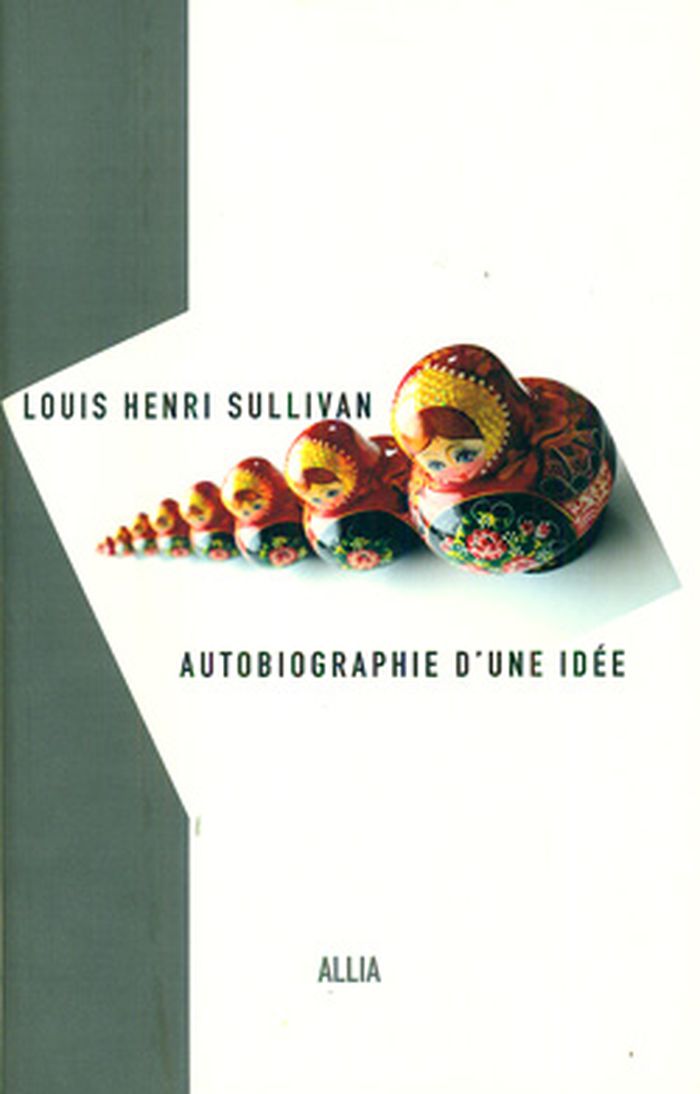
Autobiographie d'une idée
Autobiographie d'une idée
Actions:
Price:
$25.95
(available to order)
Summary:
"Inventeur" du gratte-ciel, père de l'architecture américaine, auteur de nombreux chefs-d'oeuvre comme l'Auditorium Building de Chicago, le Guaranty Building de Buffalo, le Bayard Building à NewYork ou les banques du Midwest, et bien d'autres, Louis Henri Sullivan (1856-1924) a aussi donné la formule par excellence de la théorie moderne : "Form ever follows function."(...)
$25.95
(available to order)
Summary:
"Inventeur" du gratte-ciel, père de l'architecture américaine, auteur de nombreux chefs-d'oeuvre comme l'Auditorium Building de Chicago, le Guaranty Building de Buffalo, le Bayard Building à NewYork ou les banques du Midwest, et bien d'autres, Louis Henri Sullivan (1856-1924) a aussi donné la formule par excellence de la théorie moderne : "Form ever follows function."(...)
Title:
Autobiographie d'une idée
Actions:
Price:
$25.95
(available to order)
Summary:
"Inventeur" du gratte-ciel, père de l'architecture américaine, auteur de nombreux chefs-d'oeuvre comme l'Auditorium Building de Chicago, le Guaranty Building de Buffalo, le Bayard Building à NewYork ou les banques du Midwest, et bien d'autres, Louis Henri Sullivan (1856-1924) a aussi donné la formule par excellence de la théorie moderne : "Form ever follows function." Idée-titre du dernier livre de l'architecte, cette formule fut diversement interprétée dans son concept. Cependant, sa célèbre allitération fait aussi entendre des bruits de végétaux en mouvement, feuilles et fleurs, ou flots : motifs qui constituent la base même des formulations ornementales dont Sullivan a été le grand inventeur. La formule apparut à la maturité de Sullivan (1896), mais l'Autobiographie montre qu'elle est née plus haut, dans les mille sources dont l'enfance est témoin. Et que sa poésie relève d'une expérience sensible du monde, entreprise par un garçon qui promena son imaginaire parmi les bois, les collines, les lacs du Massachussetts, et qu'il poursuivit dans la construction des villes.
Autobiographie d'une idée
Actions:
Price:
$25.95
(available to order)
Summary:
"Inventeur" du gratte-ciel, père de l'architecture américaine, auteur de nombreux chefs-d'oeuvre comme l'Auditorium Building de Chicago, le Guaranty Building de Buffalo, le Bayard Building à NewYork ou les banques du Midwest, et bien d'autres, Louis Henri Sullivan (1856-1924) a aussi donné la formule par excellence de la théorie moderne : "Form ever follows function." Idée-titre du dernier livre de l'architecte, cette formule fut diversement interprétée dans son concept. Cependant, sa célèbre allitération fait aussi entendre des bruits de végétaux en mouvement, feuilles et fleurs, ou flots : motifs qui constituent la base même des formulations ornementales dont Sullivan a été le grand inventeur. La formule apparut à la maturité de Sullivan (1896), mais l'Autobiographie montre qu'elle est née plus haut, dans les mille sources dont l'enfance est témoin. Et que sa poésie relève d'une expérience sensible du monde, entreprise par un garçon qui promena son imaginaire parmi les bois, les collines, les lacs du Massachussetts, et qu'il poursuivit dans la construction des villes.
Form:
books
books
Publication:
January 2011
January 2011
Subject:
Architectural Theory
Architectural Theory


