


6653 Results
Form:
books
books
Actions:
Price:
$99.00
(available in store)
Summary:
In an age of social and environmental crises, we need to critically rethink the role of the built environment and how best to put it to work. ''Measures and Meanings of Spatial Capital'' presents a new theory of spatial capital, arguing that spatial form is essential for building resilience into highly complex urban systems. Lars Marcus argues that the built environment(...)
$99.00
(available in store)
Summary:
In an age of social and environmental crises, we need to critically rethink the role of the built environment and how best to put it to work. ''Measures and Meanings of Spatial Capital'' presents a new theory of spatial capital, arguing that spatial form is essential for building resilience into highly complex urban systems. Lars Marcus argues that the built environment(...)
Title:
Measures and meanings of spatial capital
Actions:
Price:
$99.00
(available in store)
Summary:
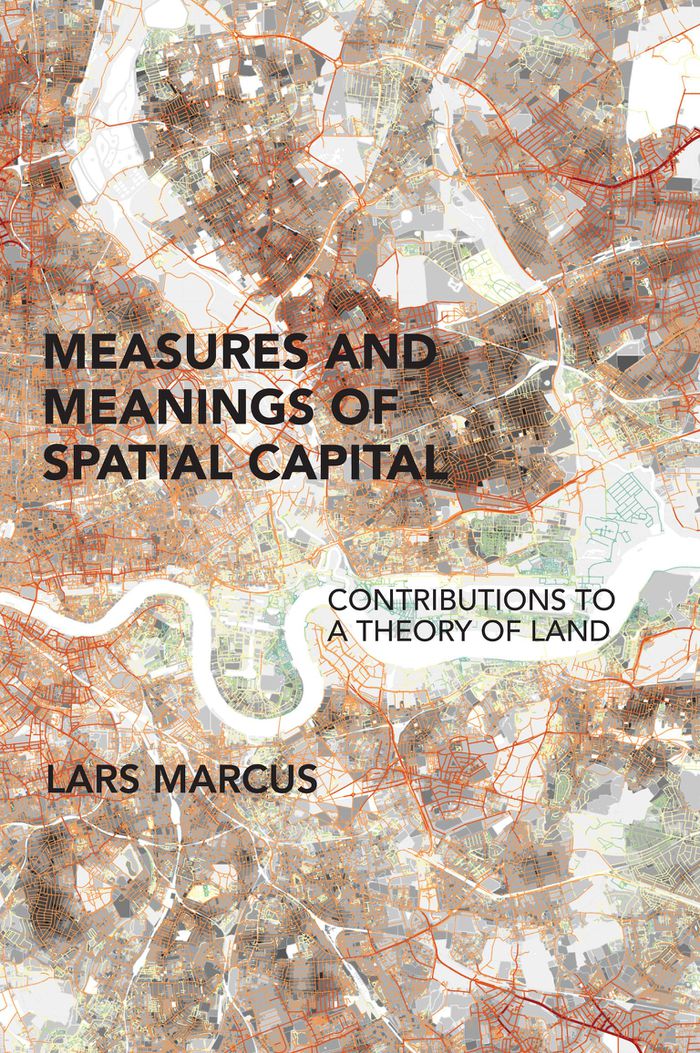
In an age of social and environmental crises, we need to critically rethink the role of the built environment and how best to put it to work. ''Measures and Meanings of Spatial Capital'' presents a new theory of spatial capital, arguing that spatial form is essential for building resilience into highly complex urban systems. Lars Marcus argues that the built environment constitutes a form of capital that enhances other forms of capital in cities (such as social, economic, and ecological capital), if designed with those goals in mind. This represents an important and necessary shift in how we approach urban space in the numerous studies of cities that are conducted in a range of disciplines today, such as urban sociology, urban economics, and urban ecology. In contemporary urban studies, land has oddly lost its position alongside labor and capital as one of the three fundamental production factors in economic theory, but as Marcus shows, misconceptions of land are at the root of social and environmental crises worldwide. By defining the challenges and modeling our use of spatial form to enhance/improve land, and then synthesizing data into a unified theory of spatial capital, Marcus provides a crucial reframing of how we can best plan and design our cities for the global challenges we are facing.
Measures and meanings of spatial capital
Actions:
Price:
$99.00
(available in store)
Summary:
In an age of social and environmental crises, we need to critically rethink the role of the built environment and how best to put it to work. ''Measures and Meanings of Spatial Capital'' presents a new theory of spatial capital, arguing that spatial form is essential for building resilience into highly complex urban systems. Lars Marcus argues that the built environment constitutes a form of capital that enhances other forms of capital in cities (such as social, economic, and ecological capital), if designed with those goals in mind. This represents an important and necessary shift in how we approach urban space in the numerous studies of cities that are conducted in a range of disciplines today, such as urban sociology, urban economics, and urban ecology. In contemporary urban studies, land has oddly lost its position alongside labor and capital as one of the three fundamental production factors in economic theory, but as Marcus shows, misconceptions of land are at the root of social and environmental crises worldwide. By defining the challenges and modeling our use of spatial form to enhance/improve land, and then synthesizing data into a unified theory of spatial capital, Marcus provides a crucial reframing of how we can best plan and design our cities for the global challenges we are facing.
Form:
books
books
Publication:
February 2025
February 2025
Subject:
Urban Theory
Urban Theory
Form:
books
books
Price:
$58.95
(available to order)
Summary:
Forced to find beauty in mediocrity, poetry in pragmatism, history in the absence of monuments and the future in the past, Crimson has been shaped by the experience of living and working in Rotterdam, the city that never thinks. Over the past seven years they have produced research projects, plans and initiatives that range from purely historical studies, book reviews and(...)
$58.95
(available to order)
Summary:
Forced to find beauty in mediocrity, poetry in pragmatism, history in the absence of monuments and the future in the past, Crimson has been shaped by the experience of living and working in Rotterdam, the city that never thinks. Over the past seven years they have produced research projects, plans and initiatives that range from purely historical studies, book reviews and(...)
Subject:
Architecture since 1900, Europe
Architecture since 1900, Europe
Publication:
January 1900, Rotterdam
January 1900, Rotterdam
Title:
Too blessed to be depressed : Crimson architectural historians 1994-2002
Actions:
Price:
$58.95
(available to order)
Summary:
Forced to find beauty in mediocrity, poetry in pragmatism, history in the absence of monuments and the future in the past, Crimson has been shaped by the experience of living and working in Rotterdam, the city that never thinks. Over the past seven years they have produced research projects, plans and initiatives that range from purely historical studies, book reviews and critiques of contemporary architecture to exhibitions, panoramas and urban planning schemes. For them, history is not a clear-cut period in the past but a total panoramic experience in which mythology, truth, writing, building and demolition intermingle. The Crimson historians don’t keep their distance, they dive right in. Too Blessed To Be Depressed is a coming-of-age book, one that shows the development of a practice and an attitude towards the outside world based not on analysis and simplification but on an endless quest for all the narratives, contradi ctions, and obsessions that make the city what it is. It presents an initial selection of work by Crimson divided among three themes: History (what to make of it, how to deal with it), Obsession (theirs along with those of others) and Top Down (the impact of large-scale infrastructural and other interventions on the city).
Too blessed to be depressed : Crimson architectural historians 1994-2002
Actions:
Price:
$58.95
(available to order)
Summary:
Forced to find beauty in mediocrity, poetry in pragmatism, history in the absence of monuments and the future in the past, Crimson has been shaped by the experience of living and working in Rotterdam, the city that never thinks. Over the past seven years they have produced research projects, plans and initiatives that range from purely historical studies, book reviews and critiques of contemporary architecture to exhibitions, panoramas and urban planning schemes. For them, history is not a clear-cut period in the past but a total panoramic experience in which mythology, truth, writing, building and demolition intermingle. The Crimson historians don’t keep their distance, they dive right in. Too Blessed To Be Depressed is a coming-of-age book, one that shows the development of a practice and an attitude towards the outside world based not on analysis and simplification but on an endless quest for all the narratives, contradi ctions, and obsessions that make the city what it is. It presents an initial selection of work by Crimson divided among three themes: History (what to make of it, how to deal with it), Obsession (theirs along with those of others) and Top Down (the impact of large-scale infrastructural and other interventions on the city).
Form:
books
books
Publication:
January 1900, Rotterdam
January 1900, Rotterdam
Subject:
Architecture since 1900, Europe
Architecture since 1900, Europe
Form:
books
books
Actions:
Price:
$84.00
(available to order)
Summary:
Arthur Brown Jr. (1874-1957) is celebrated by his peers for such masterpieces as the City Hall, War Memorial Opera House, Temple Emanu-El, and Coit Tower in San Francisco; the Pasadena City Hall; and the Labor-ICC block of the Federal Triangle in Washington, DC. Brown epitomized the idea that architecture not only houses society’s daily rituals and defining events but(...)
$84.00
(available to order)
Summary:
Arthur Brown Jr. (1874-1957) is celebrated by his peers for such masterpieces as the City Hall, War Memorial Opera House, Temple Emanu-El, and Coit Tower in San Francisco; the Pasadena City Hall; and the Labor-ICC block of the Federal Triangle in Washington, DC. Brown epitomized the idea that architecture not only houses society’s daily rituals and defining events but(...)
Title:
Arthur Brown, Jr. : progressive classicist
Actions:
Price:
$84.00
(available to order)
Summary:
Arthur Brown Jr. (1874-1957) is celebrated by his peers for such masterpieces as the City Hall, War Memorial Opera House, Temple Emanu-El, and Coit Tower in San Francisco; the Pasadena City Hall; and the Labor-ICC block of the Federal Triangle in Washington, DC. Brown epitomized the idea that architecture not only houses society’s daily rituals and defining events but also can itself shape the sociopolitical landscape of America. "Arthur Brown Jr.: progressive classicist" unifies the varied strands of the architect’s life, from the architectural forms and methods of the Ecole des Beaux-Arts in Paris to the reforming spirit and self-reliant confidence of San Francisco after the earthquake and fire of 1906 to the challenging economics and changing aesthetics of machine-age America. It details the development of Brown’s major works and many other civic, commercial, religious, academic, and residential buildings. It chronicles his unflagging commitment to the classical tradition, which he employed in contemporary, forward-looking institutional buildings that emphasized continuity with the past while meeting the needs of the future. To Brown, the classical tradition was not a sacrosanct, unchanging body of knowledge; it was an expanding and evolving set of ideas about architectural design that permitted, and even demanded, change as new conditions and technologies were developed.
Arthur Brown, Jr. : progressive classicist
Actions:
Price:
$84.00
(available to order)
Summary:
Arthur Brown Jr. (1874-1957) is celebrated by his peers for such masterpieces as the City Hall, War Memorial Opera House, Temple Emanu-El, and Coit Tower in San Francisco; the Pasadena City Hall; and the Labor-ICC block of the Federal Triangle in Washington, DC. Brown epitomized the idea that architecture not only houses society’s daily rituals and defining events but also can itself shape the sociopolitical landscape of America. "Arthur Brown Jr.: progressive classicist" unifies the varied strands of the architect’s life, from the architectural forms and methods of the Ecole des Beaux-Arts in Paris to the reforming spirit and self-reliant confidence of San Francisco after the earthquake and fire of 1906 to the challenging economics and changing aesthetics of machine-age America. It details the development of Brown’s major works and many other civic, commercial, religious, academic, and residential buildings. It chronicles his unflagging commitment to the classical tradition, which he employed in contemporary, forward-looking institutional buildings that emphasized continuity with the past while meeting the needs of the future. To Brown, the classical tradition was not a sacrosanct, unchanging body of knowledge; it was an expanding and evolving set of ideas about architectural design that permitted, and even demanded, change as new conditions and technologies were developed.
Form:
books
books
Publication:
November 2005, New York
November 2005, New York
Subject:
Architecture Monographs
Architecture Monographs
Form:
books
books
Actions:
Price:
$6.99
(available to order)
Summary:
"Design for life: the architecture of Sim Van der Ryn" surveys the work and principles of Sim Van der Ryn, a world leader in the field of sustainable architecture. Sharing his years of experience as a teacher and using his building designs as examples, the author shows us that buildings are not objects but organisms, and cities are not machines but complex ecosystems.(...)
$6.99
(available to order)
Summary:
"Design for life: the architecture of Sim Van der Ryn" surveys the work and principles of Sim Van der Ryn, a world leader in the field of sustainable architecture. Sharing his years of experience as a teacher and using his building designs as examples, the author shows us that buildings are not objects but organisms, and cities are not machines but complex ecosystems.(...)
Publication:
May 2005, Salt Lake City
May 2005, Salt Lake City
Title:
Design for life : the architecture of Sim Van der Ryn
Actions:
Price:
$6.99
(available to order)
Summary:
"Design for life: the architecture of Sim Van der Ryn" surveys the work and principles of Sim Van der Ryn, a world leader in the field of sustainable architecture. Sharing his years of experience as a teacher and using his building designs as examples, the author shows us that buildings are not objects but organisms, and cities are not machines but complex ecosystems. "Design for life" illustrates how Van der Ryn came to see the shifting patterns in nature and how these patterns profoundly affect how people live and work in the structures we build. Van der Ryn explores how architecture has created physical and mental barriers that separate people from the natural world, and how to recover the soul of architecture and reconnect with our natural surroundings. Appointed California State Architect by then-Governor Jerry Brown, Van der Ryn introduced the nation's first energy-efficient government building projects. His vision heralded a Golden Age of ecologically sensitive design and resulted in the adoption of strict energy standards and disability access standards for all state buildings and parks. Van der Ryn has helped inspire architects to see the myriad ways they can apply physical and social ecology to architecture and environmental design.
Design for life : the architecture of Sim Van der Ryn
Actions:
Price:
$6.99
(available to order)
Summary:
"Design for life: the architecture of Sim Van der Ryn" surveys the work and principles of Sim Van der Ryn, a world leader in the field of sustainable architecture. Sharing his years of experience as a teacher and using his building designs as examples, the author shows us that buildings are not objects but organisms, and cities are not machines but complex ecosystems. "Design for life" illustrates how Van der Ryn came to see the shifting patterns in nature and how these patterns profoundly affect how people live and work in the structures we build. Van der Ryn explores how architecture has created physical and mental barriers that separate people from the natural world, and how to recover the soul of architecture and reconnect with our natural surroundings. Appointed California State Architect by then-Governor Jerry Brown, Van der Ryn introduced the nation's first energy-efficient government building projects. His vision heralded a Golden Age of ecologically sensitive design and resulted in the adoption of strict energy standards and disability access standards for all state buildings and parks. Van der Ryn has helped inspire architects to see the myriad ways they can apply physical and social ecology to architecture and environmental design.
Form:
books
books
Publication:
May 2005, Salt Lake City
May 2005, Salt Lake City
Form:
books
books
Actions:
Price:
$26.95
(available to order)
Summary:
We see notebooks everywhere we go. But where did these indispensable implements come from? How did they revolutionize our lives? And how can using a notebook help change the way you think? In this wide-ranging history, Roland Allen reveals how the notebook became our most dependable and versatile tool for creative thinking. He tells the notebook stories of Leonardo and(...)
$26.95
(available to order)
Summary:
We see notebooks everywhere we go. But where did these indispensable implements come from? How did they revolutionize our lives? And how can using a notebook help change the way you think? In this wide-ranging history, Roland Allen reveals how the notebook became our most dependable and versatile tool for creative thinking. He tells the notebook stories of Leonardo and(...)
Title:
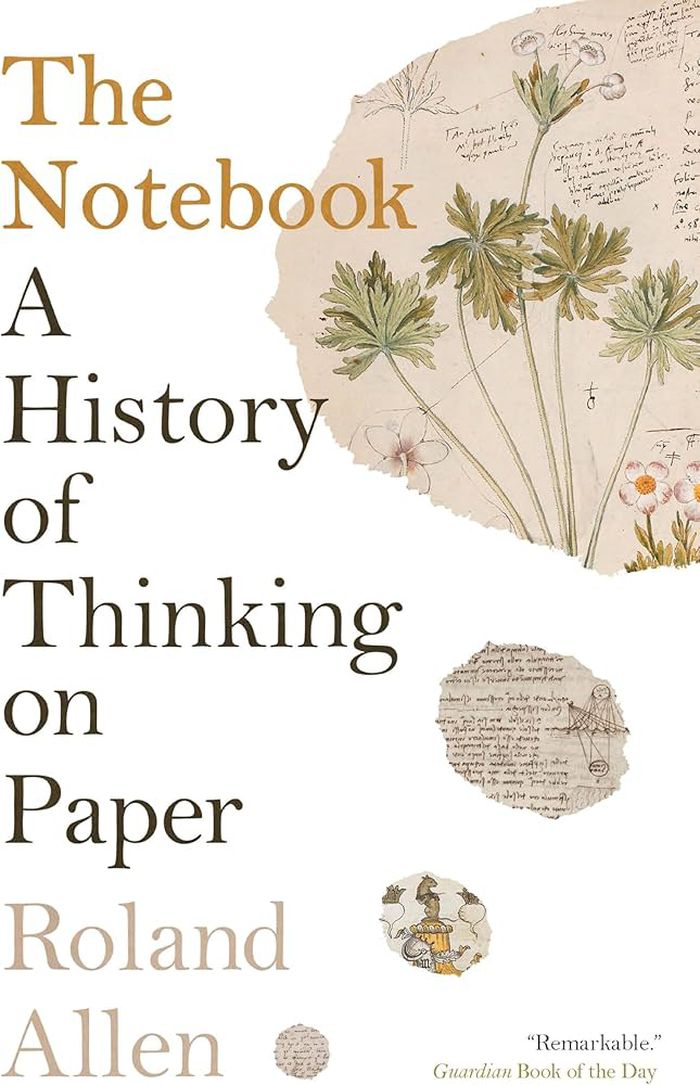
The notebook: A history of thinking on paper
Actions:
Price:
$26.95
(available to order)
Summary:
We see notebooks everywhere we go. But where did these indispensable implements come from? How did they revolutionize our lives? And how can using a notebook help change the way you think? In this wide-ranging history, Roland Allen reveals how the notebook became our most dependable and versatile tool for creative thinking. He tells the notebook stories of Leonardo and Frida Kahlo, Isaac Newton and Marie Curie, and writers from Chaucer to Henry James; shows how Darwin developed his theory of evolution in tiny pocket books and Agatha Christie plotted a hundred murders in scrappy exercise books; and introduces a host of cooks, kings, sailors, fishermen, musicians, engineers, politicians, adventurers, and mathematicians, all of whom used their notebooks as a space to think—and in doing so, shaped the modern world. In an age of AI and digital overload, the humble notebook is more relevant than ever. Allen shows how bullet points can combat ADHD, journals can ease PTSD, and patient diaries soften the trauma of reawakening from coma. The everyday act of moving a pen across paper, he finds, can have profound consequences, changing the way we think and feel: making us more creative, more productive—and maybe even happier.
The notebook: A history of thinking on paper
Actions:
Price:
$26.95
(available to order)
Summary:
We see notebooks everywhere we go. But where did these indispensable implements come from? How did they revolutionize our lives? And how can using a notebook help change the way you think? In this wide-ranging history, Roland Allen reveals how the notebook became our most dependable and versatile tool for creative thinking. He tells the notebook stories of Leonardo and Frida Kahlo, Isaac Newton and Marie Curie, and writers from Chaucer to Henry James; shows how Darwin developed his theory of evolution in tiny pocket books and Agatha Christie plotted a hundred murders in scrappy exercise books; and introduces a host of cooks, kings, sailors, fishermen, musicians, engineers, politicians, adventurers, and mathematicians, all of whom used their notebooks as a space to think—and in doing so, shaped the modern world. In an age of AI and digital overload, the humble notebook is more relevant than ever. Allen shows how bullet points can combat ADHD, journals can ease PTSD, and patient diaries soften the trauma of reawakening from coma. The everyday act of moving a pen across paper, he finds, can have profound consequences, changing the way we think and feel: making us more creative, more productive—and maybe even happier.
Form:
books
books
Publication:
September 2024
September 2024
Subject:
Literature and poetry
Literature and poetry
Form:
books
books
Actions:
Price:
$98.00
(available to order)
Summary:
Gilmore D. Clarke and Michael Rapuano were the foremost spatial designers of the American century. Their vast portfolio of public landscapes propelled the legacy of Frederick Law Olmsted and Calvert Vaux into the motor age, touching the lives of millions and changing the face of the nation. This book recovers the forgotten legacy of Clarke and Rapuano, whose parks and(...)
$98.00
(available to order)
Summary:
Gilmore D. Clarke and Michael Rapuano were the foremost spatial designers of the American century. Their vast portfolio of public landscapes propelled the legacy of Frederick Law Olmsted and Calvert Vaux into the motor age, touching the lives of millions and changing the face of the nation. This book recovers the forgotten legacy of Clarke and Rapuano, whose parks and(...)
Title:
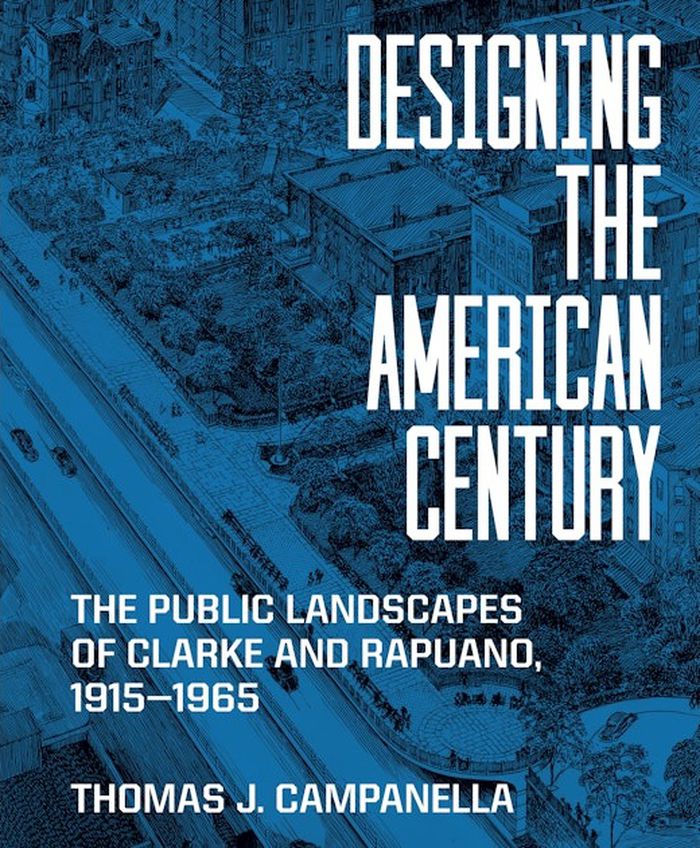
Designing the American century: The public landscapes of Clarke and Rapuano, 1915-1965
Actions:
Price:
$98.00
(available to order)
Summary:
Gilmore D. Clarke and Michael Rapuano were the foremost spatial designers of the American century. Their vast portfolio of public landscapes propelled the legacy of Frederick Law Olmsted and Calvert Vaux into the motor age, touching the lives of millions and changing the face of the nation. This book recovers the forgotten legacy of Clarke and Rapuano, whose parks and parkways, highways and housing estates helped modernize—for better or worse—the American metropolis. With the patronage of public-works titan Robert Moses, Clarke and Rapuano transformed New York over a span of fifty years, revitalizing the city’s immense park system but also planning expressways, public housing, and urban renewal projects that laid waste to entire sections of the city. In this work, Thomas J. Campanella describes how Clarke and Rapuano helped create some of the metropolitan region’s most iconic landscapes, from the Central Park Zoo and Conservatory Garden to the Henry Hudson Parkway and Riverside Park, Jones Beach, the Palisades and Taconic State Parkways, and the Brooklyn Heights Promenade. He shows how they left their mark far beyond Gotham as well, with projects as diverse as Yellowstone’s Mammoth Hot Springs, the Mount Vernon Memorial Highway, site plans for the Pentagon and CIA headquarters, and Montreal’s Olympic Park.
Designing the American century: The public landscapes of Clarke and Rapuano, 1915-1965
Actions:
Price:
$98.00
(available to order)
Summary:
Gilmore D. Clarke and Michael Rapuano were the foremost spatial designers of the American century. Their vast portfolio of public landscapes propelled the legacy of Frederick Law Olmsted and Calvert Vaux into the motor age, touching the lives of millions and changing the face of the nation. This book recovers the forgotten legacy of Clarke and Rapuano, whose parks and parkways, highways and housing estates helped modernize—for better or worse—the American metropolis. With the patronage of public-works titan Robert Moses, Clarke and Rapuano transformed New York over a span of fifty years, revitalizing the city’s immense park system but also planning expressways, public housing, and urban renewal projects that laid waste to entire sections of the city. In this work, Thomas J. Campanella describes how Clarke and Rapuano helped create some of the metropolitan region’s most iconic landscapes, from the Central Park Zoo and Conservatory Garden to the Henry Hudson Parkway and Riverside Park, Jones Beach, the Palisades and Taconic State Parkways, and the Brooklyn Heights Promenade. He shows how they left their mark far beyond Gotham as well, with projects as diverse as Yellowstone’s Mammoth Hot Springs, the Mount Vernon Memorial Highway, site plans for the Pentagon and CIA headquarters, and Montreal’s Olympic Park.
Form:
books
books
Publication:
July 2025
July 2025
Subject:
Landscape Architecture, Monographs
Landscape Architecture, Monographs
Form:
books
books
Title:
Designing the X
Designing the X
Actions:
Price:
$53.95
(available to order)
Summary:
As the pace of global change accelerates—ecologically, socially, and technologically—our traditional ways of understanding and responding to change fall short. We now live in an era of supercomplexity, where challenges like climate instability, migration, technological disruption, resource depletion, and systemic inequality converge and defy conventional(...)
$53.95
(available to order)
Summary:
As the pace of global change accelerates—ecologically, socially, and technologically—our traditional ways of understanding and responding to change fall short. We now live in an era of supercomplexity, where challenges like climate instability, migration, technological disruption, resource depletion, and systemic inequality converge and defy conventional(...)
Title:
Designing the X
Actions:
Price:
$53.95
(available to order)
Summary:
As the pace of global change accelerates—ecologically, socially, and technologically—our traditional ways of understanding and responding to change fall short. We now live in an era of supercomplexity, where challenges like climate instability, migration, technological disruption, resource depletion, and systemic inequality converge and defy conventional solutions. ''Designing the X'' meets this moment with a bold and timely proposition: when data, science, and analysis alone are insufficient to move us forward, we must turn to design as a powerful mode of reasoning through synthesis, where intuition meets insight and imagination drives action. Design enables us to move with complexity, not against it, and to shape futures beyond the limits of the present. Grounded in praxis and research—including 67 interviews with designers, technologists and scientists, innovators and entrepreneurs, urbanists, and educators— ''Designing the X'' makes a compelling case for design as an essential partner to science and technology: integrative, inventive, and profoundly human. The “X” stands for what’s missing in today’s analytic methods: the leap from parts to greater wholes, from current conditions to future potential. This book is for anyone seeking agency in an age of accelerating change. It’s a compass for those ready to imagine—and design—the future we cannot yet see.
Designing the X
Actions:
Price:
$53.95
(available to order)
Summary:
As the pace of global change accelerates—ecologically, socially, and technologically—our traditional ways of understanding and responding to change fall short. We now live in an era of supercomplexity, where challenges like climate instability, migration, technological disruption, resource depletion, and systemic inequality converge and defy conventional solutions. ''Designing the X'' meets this moment with a bold and timely proposition: when data, science, and analysis alone are insufficient to move us forward, we must turn to design as a powerful mode of reasoning through synthesis, where intuition meets insight and imagination drives action. Design enables us to move with complexity, not against it, and to shape futures beyond the limits of the present. Grounded in praxis and research—including 67 interviews with designers, technologists and scientists, innovators and entrepreneurs, urbanists, and educators— ''Designing the X'' makes a compelling case for design as an essential partner to science and technology: integrative, inventive, and profoundly human. The “X” stands for what’s missing in today’s analytic methods: the leap from parts to greater wholes, from current conditions to future potential. This book is for anyone seeking agency in an age of accelerating change. It’s a compass for those ready to imagine—and design—the future we cannot yet see.
Form:
books
books
Publication:
October 2025
October 2025
Subject:
Design Theory
Design Theory
Form:
books
books
Price:
$45.00
(available to order)
Summary:
Increasingly and forebodingly, contemporary artists are turning their attention to the subject of climate change, in poignant and often confrontational ways. "The edge of the Earth: climate change in photography and video" explores recent and historic work in the context of present-day environmental concerns, considering the future consequences of the age of the(...)
$45.00
(available to order)
Summary:
Increasingly and forebodingly, contemporary artists are turning their attention to the subject of climate change, in poignant and often confrontational ways. "The edge of the Earth: climate change in photography and video" explores recent and historic work in the context of present-day environmental concerns, considering the future consequences of the age of the(...)
Subject:
Environment and environmental theory
Environment and environmental theory
Publication:
November 2016
November 2016
Title:
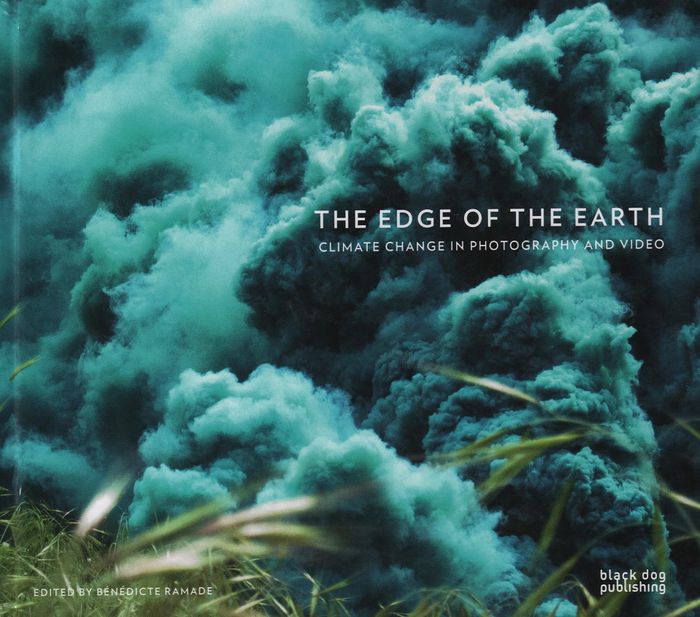
The edge of the earth: climate change in photography and video
Actions:
Price:
$45.00
(available to order)
Summary:
Increasingly and forebodingly, contemporary artists are turning their attention to the subject of climate change, in poignant and often confrontational ways. "The edge of the Earth: climate change in photography and video" explores recent and historic work in the context of present-day environmental concerns, considering the future consequences of the age of the anthropocene, and humanity's harsh imprint on our planet. "The edge of the Earth" accompanies a major exhibition at the Ryerson Image Centre in Toronto, and includes works by pioneering and renowned artists such as Edward Burtynsky, Naoya Hatakeyama, Richard Misrach and Robert Rauschenberg; critical propositions on present situations by Chris Jordan, Gideon Mendel and Brandi Merolla; plus visionary works by Jean-Pierre Aube, Adrien Missika, Evariste Richer and Andreas Rutkauskas. Photojournalism from the RIC s Black Star Collection is also included, contextualising artistic reflections within half a century of historical reportage on the environment. Produced as a large-format book with high-quality reproductions throughout, "The edge of the Earth" includes critical texts by Benedicte Ramade and TJ Demos and an introduction by Paul Roth. This critical overview offers the insight of artists into the present climate crisis, with the motive of prompting reconsideration of our increasingly perilous relationship to our planet.
The edge of the earth: climate change in photography and video
Actions:
Price:
$45.00
(available to order)
Summary:
Increasingly and forebodingly, contemporary artists are turning their attention to the subject of climate change, in poignant and often confrontational ways. "The edge of the Earth: climate change in photography and video" explores recent and historic work in the context of present-day environmental concerns, considering the future consequences of the age of the anthropocene, and humanity's harsh imprint on our planet. "The edge of the Earth" accompanies a major exhibition at the Ryerson Image Centre in Toronto, and includes works by pioneering and renowned artists such as Edward Burtynsky, Naoya Hatakeyama, Richard Misrach and Robert Rauschenberg; critical propositions on present situations by Chris Jordan, Gideon Mendel and Brandi Merolla; plus visionary works by Jean-Pierre Aube, Adrien Missika, Evariste Richer and Andreas Rutkauskas. Photojournalism from the RIC s Black Star Collection is also included, contextualising artistic reflections within half a century of historical reportage on the environment. Produced as a large-format book with high-quality reproductions throughout, "The edge of the Earth" includes critical texts by Benedicte Ramade and TJ Demos and an introduction by Paul Roth. This critical overview offers the insight of artists into the present climate crisis, with the motive of prompting reconsideration of our increasingly perilous relationship to our planet.
Form:
books
books
Publication:
November 2016
November 2016
Subject:
Environment and environmental theory
Environment and environmental theory
Form:
books
books
Actions:
Price:
$26.95
(available in store)
Summary:
Following Greenhouse Studies, Philippe Weisbecker's attention was drawn to other architectural structures, the ones visible on the outer walls of early 20th century industrial buildings. They are made of steel or concrete beams assembled together and holding an apparatus of bricks and mortar. Even though these structures may appear very similar for their overall shape,(...)
$26.95
(available in store)
Summary:
Following Greenhouse Studies, Philippe Weisbecker's attention was drawn to other architectural structures, the ones visible on the outer walls of early 20th century industrial buildings. They are made of steel or concrete beams assembled together and holding an apparatus of bricks and mortar. Even though these structures may appear very similar for their overall shape,(...)
Title:
Philippe Weisbecker: Structure series
Actions:
Price:
$26.95
(available in store)
Summary:
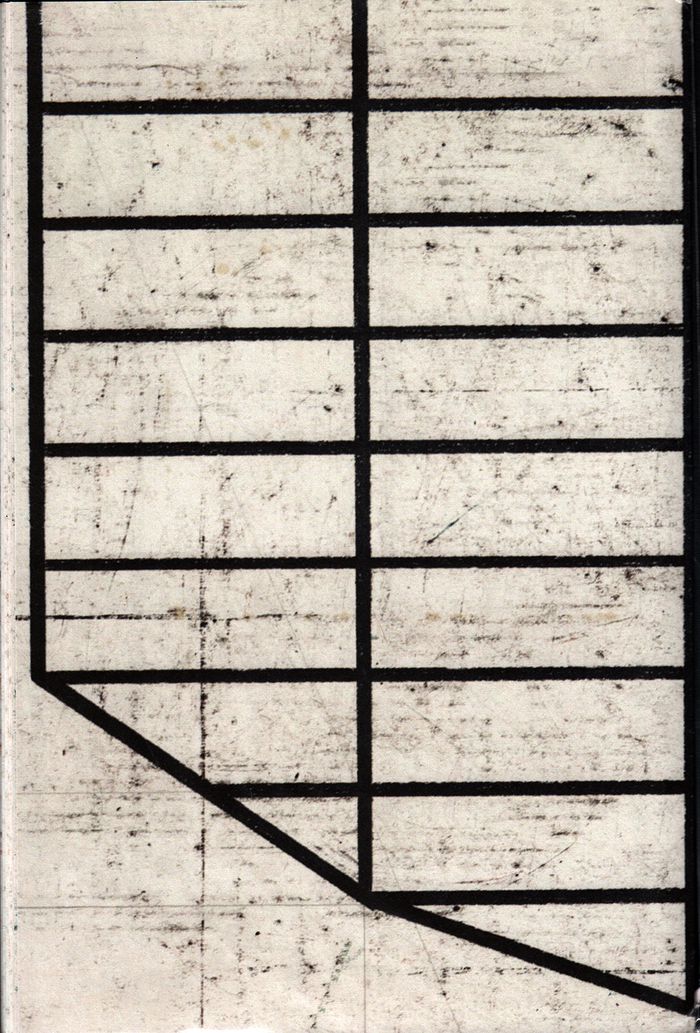
Following Greenhouse Studies, Philippe Weisbecker's attention was drawn to other architectural structures, the ones visible on the outer walls of early 20th century industrial buildings. They are made of steel or concrete beams assembled together and holding an apparatus of bricks and mortar. Even though these structures may appear very similar for their overall shape, they differ greatly in order to ensure the weight distribution necessary to the stability of the edifice. The present portfolio is a sampler of some various structural beam combinations. It can be viewed as a book, spread by spread, or pinned on the wall, according to taste, the way a kid might stack up building blocks. Born in 1942, Weisbecker studied interior design in Paris. By 1968 he moved to New York. First working as a draftsman in an architectural firm, he started a career as an illustrator at the age of 30. His work has been published in major american publications such as the New York Times, Time magazine and The New Yorker among others. In the late 90's he shifted gradually from commissioned work to his own original production which he is now showing in galeries worldwide. Moving back to France in 2006, he is now sharing his time between Paris and Barcelona.
Philippe Weisbecker: Structure series
Actions:
Price:
$26.95
(available in store)
Summary:
Following Greenhouse Studies, Philippe Weisbecker's attention was drawn to other architectural structures, the ones visible on the outer walls of early 20th century industrial buildings. They are made of steel or concrete beams assembled together and holding an apparatus of bricks and mortar. Even though these structures may appear very similar for their overall shape, they differ greatly in order to ensure the weight distribution necessary to the stability of the edifice. The present portfolio is a sampler of some various structural beam combinations. It can be viewed as a book, spread by spread, or pinned on the wall, according to taste, the way a kid might stack up building blocks. Born in 1942, Weisbecker studied interior design in Paris. By 1968 he moved to New York. First working as a draftsman in an architectural firm, he started a career as an illustrator at the age of 30. His work has been published in major american publications such as the New York Times, Time magazine and The New Yorker among others. In the late 90's he shifted gradually from commissioned work to his own original production which he is now showing in galeries worldwide. Moving back to France in 2006, he is now sharing his time between Paris and Barcelona.
Form:
books
books
Publication:
August 2015
August 2015
Subject:
Contemporary Art Monographs
Contemporary Art Monographs
Form:
books
books
Actions:
Price:
$87.95
(available to order)
Summary:
In an age of diminishing natural resources, architects and their clients need to know about an environmentally sustainable alternative to new construction: new life for old buildings. This book presents six case-study buildings, each more than a generation old, that were on the brink of oblivion. Mitchell Giurgola Architects worked closely with the client to determine(...)
$87.95
(available to order)
Summary:
In an age of diminishing natural resources, architects and their clients need to know about an environmentally sustainable alternative to new construction: new life for old buildings. This book presents six case-study buildings, each more than a generation old, that were on the brink of oblivion. Mitchell Giurgola Architects worked closely with the client to determine(...)
Subject:
Architecture since 1900, Europe
Architecture since 1900, Europe
Publication:
January 2005, Victoria (Australia)
January 2005, Victoria (Australia)
Title:
Boomer buildings : mid-century architecture reborn
Actions:
Price:
$87.95
(available to order)
Summary:
In an age of diminishing natural resources, architects and their clients need to know about an environmentally sustainable alternative to new construction: new life for old buildings. This book presents six case-study buildings, each more than a generation old, that were on the brink of oblivion. Mitchell Giurgola Architects worked closely with the client to determine how each project could be salvaged by incorporating updated program elements to serve a new generation of users. All six case studies present in detail how each project is analyzed, from its energy use and curtain-wall performance to its mechanical, electrical, and plumbing systems, and structural stability. The buildings often expand in size, with a seamless melding of new and old. Contemporary curtain walls not only improve building performance, but also lend a fresh aesthetic appeal. The results are born-again buildings created for a fraction of the cost and consuming far fewer materials than, a new facility built from scratch. Today, our cities and suburbs are peppered with buildings of the same era as those profiled here that are on the brink of failure and are excellent candidates for rebirth. Mitchell Giurgola documents a new, more sustainable approach to design and construction that builds on the past, and makes the old better than new.
Boomer buildings : mid-century architecture reborn
Actions:
Price:
$87.95
(available to order)
Summary:
In an age of diminishing natural resources, architects and their clients need to know about an environmentally sustainable alternative to new construction: new life for old buildings. This book presents six case-study buildings, each more than a generation old, that were on the brink of oblivion. Mitchell Giurgola Architects worked closely with the client to determine how each project could be salvaged by incorporating updated program elements to serve a new generation of users. All six case studies present in detail how each project is analyzed, from its energy use and curtain-wall performance to its mechanical, electrical, and plumbing systems, and structural stability. The buildings often expand in size, with a seamless melding of new and old. Contemporary curtain walls not only improve building performance, but also lend a fresh aesthetic appeal. The results are born-again buildings created for a fraction of the cost and consuming far fewer materials than, a new facility built from scratch. Today, our cities and suburbs are peppered with buildings of the same era as those profiled here that are on the brink of failure and are excellent candidates for rebirth. Mitchell Giurgola documents a new, more sustainable approach to design and construction that builds on the past, and makes the old better than new.
Form:
books
books
Publication:
January 2005, Victoria (Australia)
January 2005, Victoria (Australia)
Subject:
Architecture since 1900, Europe
Architecture since 1900, Europe


