


6624 Results
Form:
books
books
Price:
$29.95
(available to order)
Summary:
This publication illuminates the dynamic relationship between the visual media, particularly film and theater, and the planning and development of cities in China and Taiwan, from the emergence of the People’s Republic in 1949 to the staging of the Beijing Olympics in 2008. Yomi Braester argues that the transformation of Chinese cities in recent decades is a result not(...)
$29.95
(available to order)
Summary:
This publication illuminates the dynamic relationship between the visual media, particularly film and theater, and the planning and development of cities in China and Taiwan, from the emergence of the People’s Republic in 1949 to the staging of the Beijing Olympics in 2008. Yomi Braester argues that the transformation of Chinese cities in recent decades is a result not(...)
Publication:
April 2010
April 2010
Title:
Painting the city red : Chinese cinema and the urban contract
Actions:
Price:
$29.95
(available to order)
Summary:
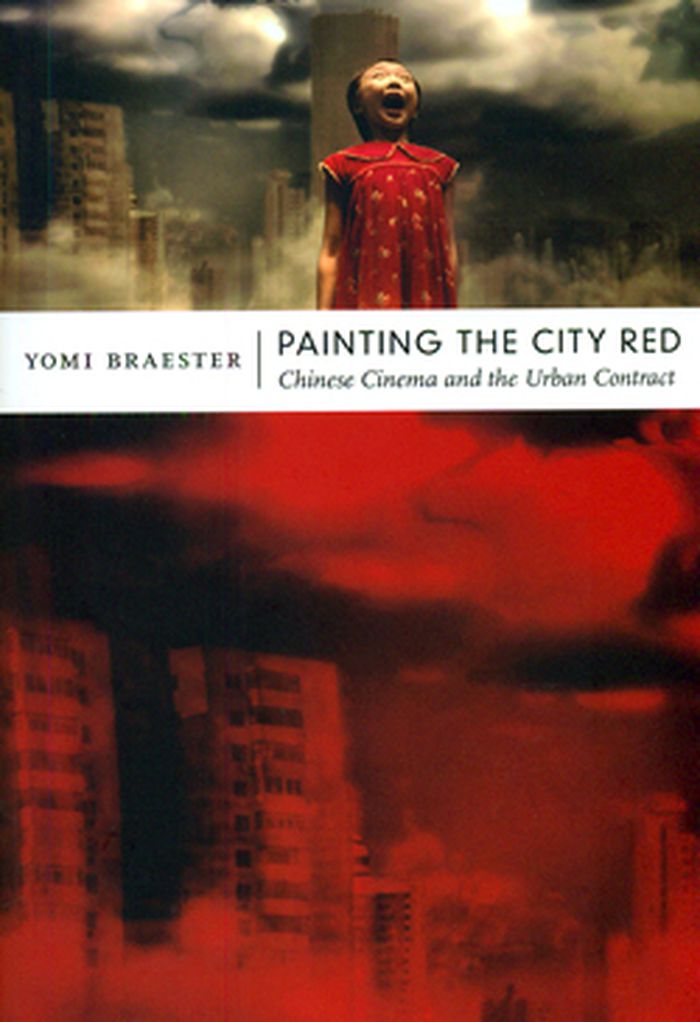
This publication illuminates the dynamic relationship between the visual media, particularly film and theater, and the planning and development of cities in China and Taiwan, from the emergence of the People’s Republic in 1949 to the staging of the Beijing Olympics in 2008. Yomi Braester argues that the transformation of Chinese cities in recent decades is a result not only of China’s abandonment of Maoist economic planning in favor of capitalist globalization but also of a shift in visual practices. Rather than simply reflect urban culture, movies and stage dramas have facilitated the development of new perceptions of space and time, representing the future city variously as an ideal socialist city, a metropolis integrated into the global economy, and a site for preserving cultural heritage. Drawing on extensive archival research, interviews with leading filmmakers and urban planners, and close readings of scripts and images, Braester describes how films and stage plays have promoted and opposed official urban plans and policies as they have addressed issues such as demolition-and-relocation plans, the preservation of vernacular architecture, and the global real estate market. He shows how the cinematic rewriting of historical narratives has accompanied the spatial reorganization of specific urban sites, including Nanjing Road in Shanghai; veterans’ villages in Taipei; and Tiananmen Square, centuries-old courtyards, and postmodern architectural landmarks in Beijing.
Painting the city red : Chinese cinema and the urban contract
Actions:
Price:
$29.95
(available to order)
Summary:
This publication illuminates the dynamic relationship between the visual media, particularly film and theater, and the planning and development of cities in China and Taiwan, from the emergence of the People’s Republic in 1949 to the staging of the Beijing Olympics in 2008. Yomi Braester argues that the transformation of Chinese cities in recent decades is a result not only of China’s abandonment of Maoist economic planning in favor of capitalist globalization but also of a shift in visual practices. Rather than simply reflect urban culture, movies and stage dramas have facilitated the development of new perceptions of space and time, representing the future city variously as an ideal socialist city, a metropolis integrated into the global economy, and a site for preserving cultural heritage. Drawing on extensive archival research, interviews with leading filmmakers and urban planners, and close readings of scripts and images, Braester describes how films and stage plays have promoted and opposed official urban plans and policies as they have addressed issues such as demolition-and-relocation plans, the preservation of vernacular architecture, and the global real estate market. He shows how the cinematic rewriting of historical narratives has accompanied the spatial reorganization of specific urban sites, including Nanjing Road in Shanghai; veterans’ villages in Taipei; and Tiananmen Square, centuries-old courtyards, and postmodern architectural landmarks in Beijing.
Form:
books
books
Publication:
April 2010
April 2010
Form:
books
books
Actions:
Price:
$85.00
(available to order)
Summary:
How can housing better meet people’s diverse and changing needs? Moving away from the focus on capsule architecture that dominates so many studies of Japan’s Metabolist architects, ''Digesting Metabolism'' investigates the impact on Japanese housing of Le Corbusier’s idea of 'artificial land,' perhaps architecture’s most famous concept that the fewest number of people(...)
$85.00
(available to order)
Summary:
How can housing better meet people’s diverse and changing needs? Moving away from the focus on capsule architecture that dominates so many studies of Japan’s Metabolist architects, ''Digesting Metabolism'' investigates the impact on Japanese housing of Le Corbusier’s idea of 'artificial land,' perhaps architecture’s most famous concept that the fewest number of people(...)
Title:
Digesting Metabolism: Artificial land in Japan 1954-2202
Actions:
Price:
$85.00
(available to order)
Summary:
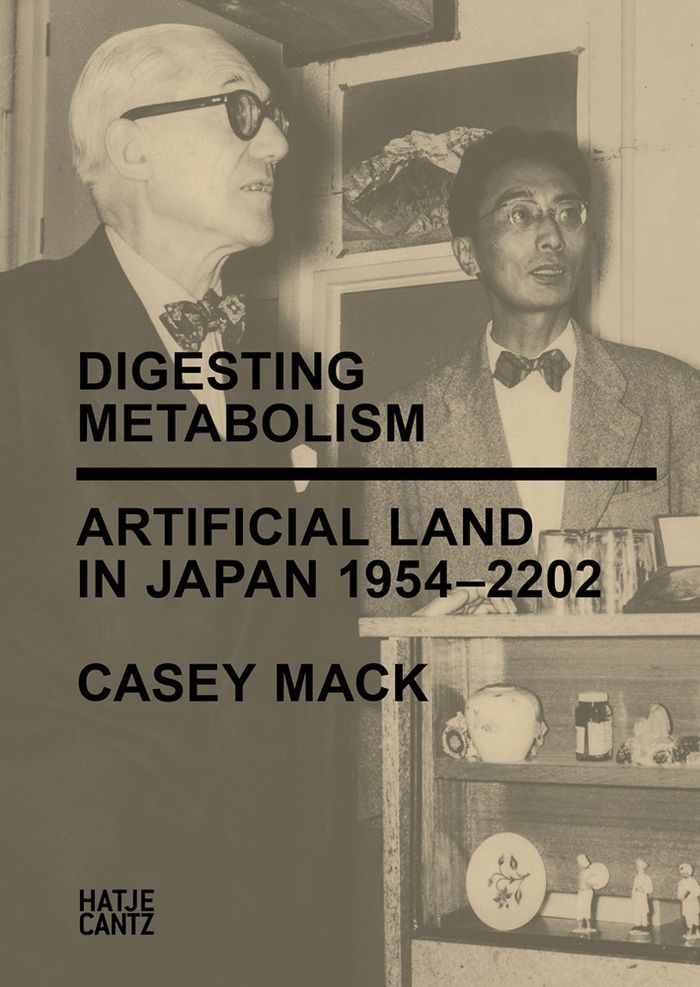
How can housing better meet people’s diverse and changing needs? Moving away from the focus on capsule architecture that dominates so many studies of Japan’s Metabolist architects, ''Digesting Metabolism'' investigates the impact on Japanese housing of Le Corbusier’s idea of 'artificial land,' perhaps architecture’s most famous concept that the fewest number of people have heard of. Long buried by the term 'megastructure' that it inspired, artificial land joins the individual and collective, envisioning housing as stacked platforms of plots for building freestanding homes of all variety. This book explores in detail 11 Japanese projects that translate this dream of durability combined with flexibility into built reality, illuminating its appeal for a nation whose existing land—from both earthquakes and cost—is highly unstable. First introduced to Japan in 1954 by Le Corbusier’s protégé, Takamasa Yosizaka, artificial land is essential to the Metabolists who debuted in Tokyo in 1960, with it sparking their desire to add ''a time factor into city planning.'' Yet artificial land has had a hold on Japan’s metabolic imagination well beyond the ‘60s, promising domestic satisfaction and environmental resilience from the postwar period to today’s government policies. ''Digesting Metabolism'' uncovers this unique Japanese history and its possible future, finding examples of infrastructure, adaptation and dweller control that challenge commodified models of housing around the world.
Digesting Metabolism: Artificial land in Japan 1954-2202
Actions:
Price:
$85.00
(available to order)
Summary:
How can housing better meet people’s diverse and changing needs? Moving away from the focus on capsule architecture that dominates so many studies of Japan’s Metabolist architects, ''Digesting Metabolism'' investigates the impact on Japanese housing of Le Corbusier’s idea of 'artificial land,' perhaps architecture’s most famous concept that the fewest number of people have heard of. Long buried by the term 'megastructure' that it inspired, artificial land joins the individual and collective, envisioning housing as stacked platforms of plots for building freestanding homes of all variety. This book explores in detail 11 Japanese projects that translate this dream of durability combined with flexibility into built reality, illuminating its appeal for a nation whose existing land—from both earthquakes and cost—is highly unstable. First introduced to Japan in 1954 by Le Corbusier’s protégé, Takamasa Yosizaka, artificial land is essential to the Metabolists who debuted in Tokyo in 1960, with it sparking their desire to add ''a time factor into city planning.'' Yet artificial land has had a hold on Japan’s metabolic imagination well beyond the ‘60s, promising domestic satisfaction and environmental resilience from the postwar period to today’s government policies. ''Digesting Metabolism'' uncovers this unique Japanese history and its possible future, finding examples of infrastructure, adaptation and dweller control that challenge commodified models of housing around the world.
Form:
books
books
Publication:
November 2022
November 2022
Subject:
Modernism
Modernism
Form:
books
books
Actions:
Price:
$22.00
(available to order)
Summary:
"Visual cultures as time travel" makes a case for cultural, aesthetic, and historical research that is oriented toward the future, not the past, actively constructing new categories of assembly that don't yet exist. Ayesha Hameed considers the relationship between climate change and plantation economies, proposing a watery plantationocene that revolves around two islands:(...)
$22.00
(available to order)
Summary:
"Visual cultures as time travel" makes a case for cultural, aesthetic, and historical research that is oriented toward the future, not the past, actively constructing new categories of assembly that don't yet exist. Ayesha Hameed considers the relationship between climate change and plantation economies, proposing a watery plantationocene that revolves around two islands:(...)
Title:
Visual cultures as time travel
Actions:
Price:
$22.00
(available to order)
Summary:
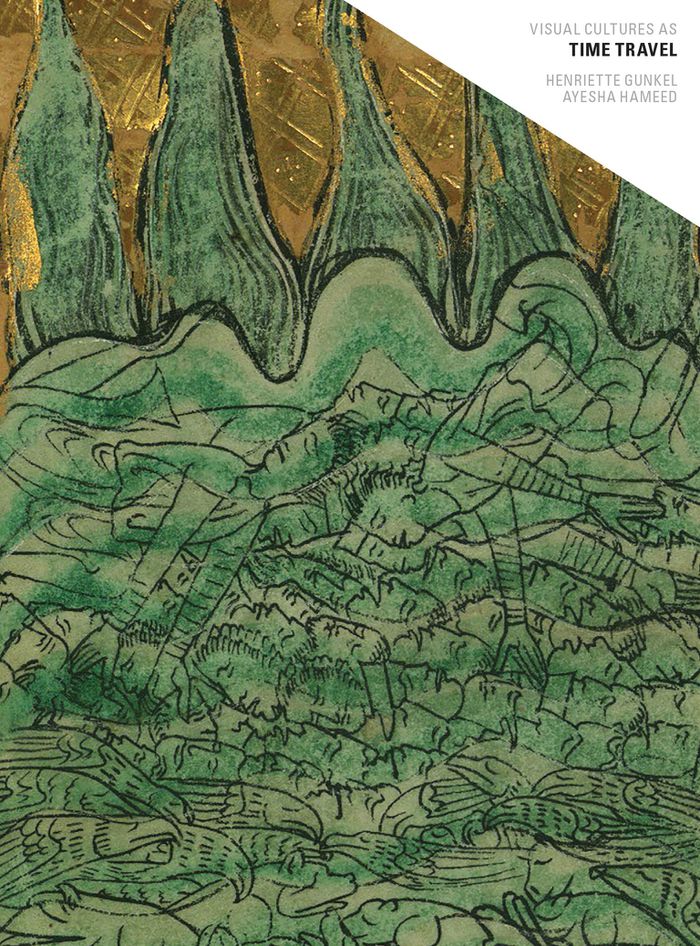
"Visual cultures as time travel" makes a case for cultural, aesthetic, and historical research that is oriented toward the future, not the past, actively constructing new categories of assembly that don't yet exist. Ayesha Hameed considers the relationship between climate change and plantation economies, proposing a watery plantationocene that revolves around two islands: a former plantation in St. George's Parish in Barbados, and the port city of Port of Spain in Trinidad. It visits a marine research institute on a third island, Seili in Finland, to consider how notions of temporality and adaptation are produced in the climate emergency we face. Henriette Gunkel introduces the idea of time travel through notions of dizziness, freefall, and of being in vertigo as set out in Octavia Butler's novel Kindred and Kitso Lynn Lelliott's multimedia installation South Atlantic Hauntings, exploring what counts as technology, how it operates in relation to time, including deep space time, and how it interacts with the different types of bodies—human, machine, planetary, spectral, ancestral—that inhabit the terrestrial and extraterrestrial worlds. In conversation, Hameed and Gunkel propose a notion of time travel marked by possibility and loss—in the aftermath of transatlantic slavery and in the moment of mass illegalized migration, of blackness and time, of wildfires and floods, of lost and co-opted futures, of deep geological time, and of falling.
Visual cultures as time travel
Actions:
Price:
$22.00
(available to order)
Summary:
"Visual cultures as time travel" makes a case for cultural, aesthetic, and historical research that is oriented toward the future, not the past, actively constructing new categories of assembly that don't yet exist. Ayesha Hameed considers the relationship between climate change and plantation economies, proposing a watery plantationocene that revolves around two islands: a former plantation in St. George's Parish in Barbados, and the port city of Port of Spain in Trinidad. It visits a marine research institute on a third island, Seili in Finland, to consider how notions of temporality and adaptation are produced in the climate emergency we face. Henriette Gunkel introduces the idea of time travel through notions of dizziness, freefall, and of being in vertigo as set out in Octavia Butler's novel Kindred and Kitso Lynn Lelliott's multimedia installation South Atlantic Hauntings, exploring what counts as technology, how it operates in relation to time, including deep space time, and how it interacts with the different types of bodies—human, machine, planetary, spectral, ancestral—that inhabit the terrestrial and extraterrestrial worlds. In conversation, Hameed and Gunkel propose a notion of time travel marked by possibility and loss—in the aftermath of transatlantic slavery and in the moment of mass illegalized migration, of blackness and time, of wildfires and floods, of lost and co-opted futures, of deep geological time, and of falling.
Form:
books
books
Publication:
September 2021
September 2021
Subject:
Critical Theory
Critical Theory
Form:
books
books
Price:
$32.00
(available to order)
Summary:
Things in life tend to fall apart. Cars break down. Buildings fall into disrepair. Personal items deteriorate. Yet today’s researchers are exploiting newly understood properties of matter to program materials that physically sense, adapt, and fall together instead of apart. These materials open new directions for industrial innovation and challenge us to rethink the way(...)
$32.00
(available to order)
Summary:
Things in life tend to fall apart. Cars break down. Buildings fall into disrepair. Personal items deteriorate. Yet today’s researchers are exploiting newly understood properties of matter to program materials that physically sense, adapt, and fall together instead of apart. These materials open new directions for industrial innovation and challenge us to rethink the way(...)
Title:
Things fall together: a guide to the new materials revolution
Actions:
Price:
$32.00
(available to order)
Summary:
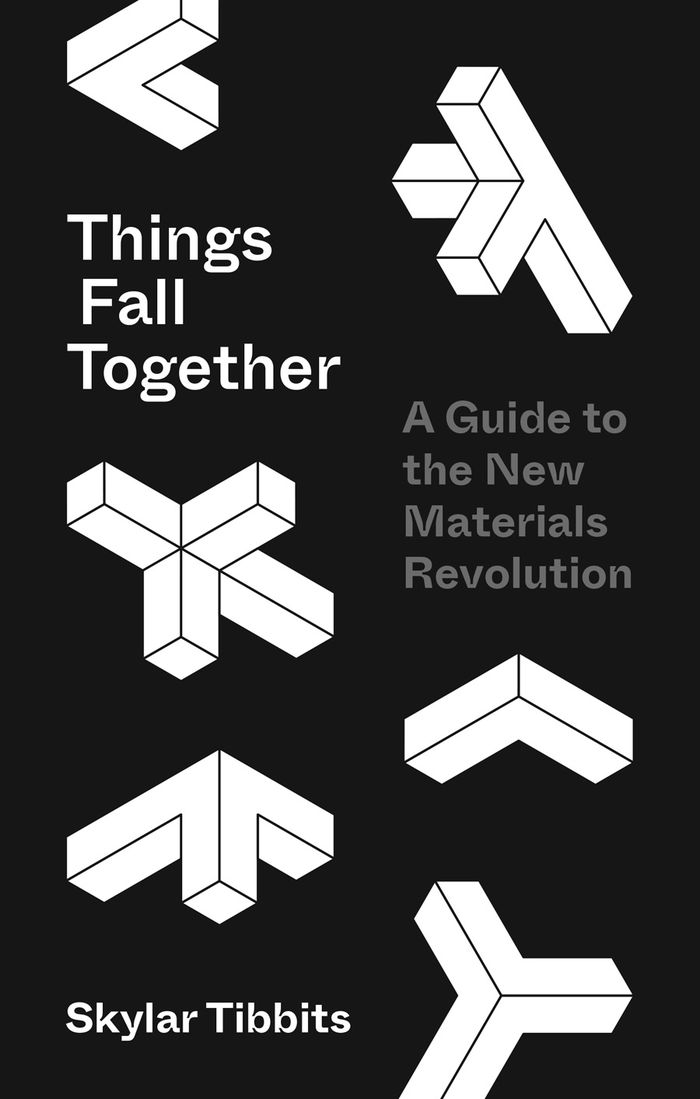
Things in life tend to fall apart. Cars break down. Buildings fall into disrepair. Personal items deteriorate. Yet today’s researchers are exploiting newly understood properties of matter to program materials that physically sense, adapt, and fall together instead of apart. These materials open new directions for industrial innovation and challenge us to rethink the way we build and collaborate with our environment. "Things fall together" is a provocative guide to this emerging, often mind-bending reality, presenting a bold vision for harnessing the intelligence embedded in the material world. Drawing on his pioneering work on self-assembly and programmable material technologies, Skylar Tibbits lays out the core, frequently counterintuitive ideas and strategies that animate this new approach to design and innovation. From furniture that builds itself to shoes printed flat that jump into shape to islands that grow themselves, he describes how matter can compute and exhibit behaviors that we typically associate with biological organisms, and challenges our fundamental assumptions about what physical materials can do and how we can interact with them. Intelligent products today often rely on electronics, batteries, and complicated mechanisms. Tibbits offers a different approach, showing how we can design simple and elegant material intelligence that may one day animate and improve itself—and along the way help us build a more sustainable future.
Things fall together: a guide to the new materials revolution
Actions:
Price:
$32.00
(available to order)
Summary:
Things in life tend to fall apart. Cars break down. Buildings fall into disrepair. Personal items deteriorate. Yet today’s researchers are exploiting newly understood properties of matter to program materials that physically sense, adapt, and fall together instead of apart. These materials open new directions for industrial innovation and challenge us to rethink the way we build and collaborate with our environment. "Things fall together" is a provocative guide to this emerging, often mind-bending reality, presenting a bold vision for harnessing the intelligence embedded in the material world. Drawing on his pioneering work on self-assembly and programmable material technologies, Skylar Tibbits lays out the core, frequently counterintuitive ideas and strategies that animate this new approach to design and innovation. From furniture that builds itself to shoes printed flat that jump into shape to islands that grow themselves, he describes how matter can compute and exhibit behaviors that we typically associate with biological organisms, and challenges our fundamental assumptions about what physical materials can do and how we can interact with them. Intelligent products today often rely on electronics, batteries, and complicated mechanisms. Tibbits offers a different approach, showing how we can design simple and elegant material intelligence that may one day animate and improve itself—and along the way help us build a more sustainable future.
Form:
books
books
Publication:
June 2021
June 2021
Subject:
Design Theory
Design Theory
Form:
books
books
Actions:
Price:
$39.95
(available to order)
Summary:
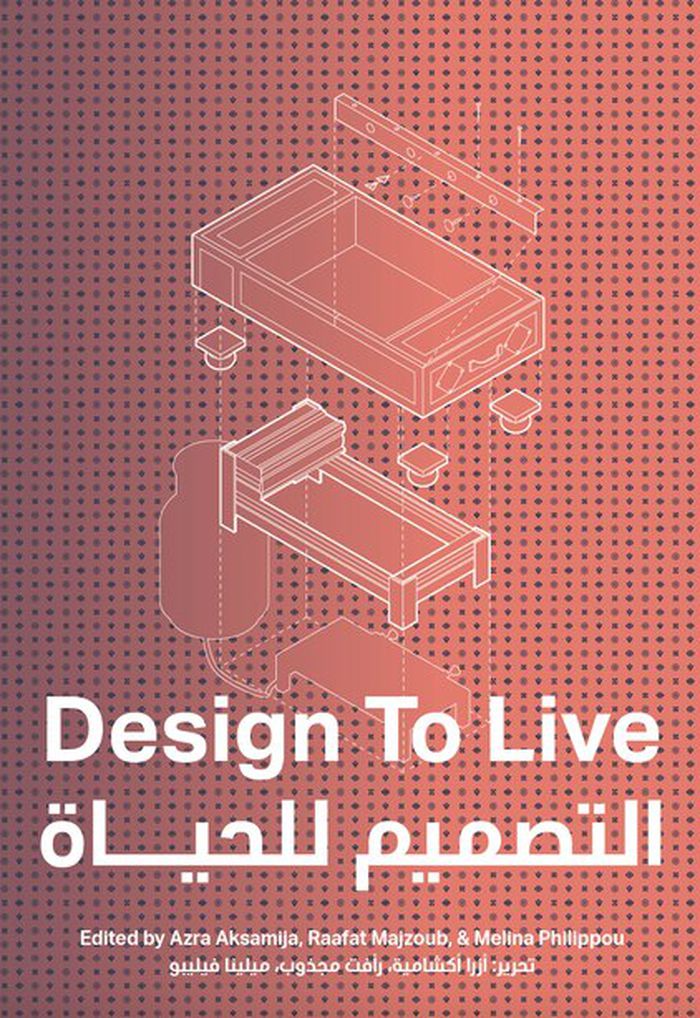
This book shows how, even in the most difficult conditions–forced displacement, trauma, and struggle–design can help create a life worth living. ''Design to live'' documents designs, inventions, and artworks created by Syrian refugees living in the Azraq Refugee Camp in Jordan. Through these ingenious and creative innovations–including the vertical garden, an arrangement(...)
$39.95
(available to order)
Summary:
This book shows how, even in the most difficult conditions–forced displacement, trauma, and struggle–design can help create a life worth living. ''Design to live'' documents designs, inventions, and artworks created by Syrian refugees living in the Azraq Refugee Camp in Jordan. Through these ingenious and creative innovations–including the vertical garden, an arrangement(...)
Publication:
October 2021
October 2021
Title:
Design to live: Everyday inventions from a refugee camp
Actions:
Price:
$39.95
(available to order)
Summary:
This book shows how, even in the most difficult conditions–forced displacement, trauma, and struggle–design can help create a life worth living. ''Design to live'' documents designs, inventions, and artworks created by Syrian refugees living in the Azraq Refugee Camp in Jordan. Through these ingenious and creative innovations–including the vertical garden, an arrangement necessitated by regulations that forbid planting in the ground; a front hall, fashioned to protect privacy; a baby swing made from recycled desks; and a chess set carved from a broomstick–refugees defy the material scarcity, unforgiving desert climate, and cultural isolation of the camp. Written in close collaboration with the residents of the camp, with text in both English and Arabic, ''Design to live,'' reflects two perspectives on the camp: people living and working in Azraq and designers reflecting on humanitarian architecture within the broader field of socially engaged art and design. Architectural drawings, illustrations, photographs, narratives, and stories offer vivid testimony to the imaginative and artful ways that residents alter and reconstruct the standardized humanitarian design of the camp–and provide models that can be replicated elsewhere. The book is the product of a three-year project undertaken by MIT Future Heritage Lab, researchers and students with Syrian refugees at the Azraq Refugee Camp, CARE, Jordan, and the German-Jordanian University.
Design to live: Everyday inventions from a refugee camp
Actions:
Price:
$39.95
(available to order)
Summary:
This book shows how, even in the most difficult conditions–forced displacement, trauma, and struggle–design can help create a life worth living. ''Design to live'' documents designs, inventions, and artworks created by Syrian refugees living in the Azraq Refugee Camp in Jordan. Through these ingenious and creative innovations–including the vertical garden, an arrangement necessitated by regulations that forbid planting in the ground; a front hall, fashioned to protect privacy; a baby swing made from recycled desks; and a chess set carved from a broomstick–refugees defy the material scarcity, unforgiving desert climate, and cultural isolation of the camp. Written in close collaboration with the residents of the camp, with text in both English and Arabic, ''Design to live,'' reflects two perspectives on the camp: people living and working in Azraq and designers reflecting on humanitarian architecture within the broader field of socially engaged art and design. Architectural drawings, illustrations, photographs, narratives, and stories offer vivid testimony to the imaginative and artful ways that residents alter and reconstruct the standardized humanitarian design of the camp–and provide models that can be replicated elsewhere. The book is the product of a three-year project undertaken by MIT Future Heritage Lab, researchers and students with Syrian refugees at the Azraq Refugee Camp, CARE, Jordan, and the German-Jordanian University.
Form:
books
books
Publication:
October 2021
October 2021
Form:
books
books
Actions:
Holdings:
Description:
223 pages : illustrations (some color), photographs ; 24 cm
Description:
223 pages : illustrations (some color), photographs ; 24 cm
Author:
Subject:
Publication:
New York : Actar Publishers, 2025.
New York : Actar Publishers, 2025.
Title:
/people : at home in more than one discipline / authors, Theo Lorenz, Tanja Siems [and 7 others] ; edited by Theo Lorenz, Tanja Siems.
Actions:
Holdings:
Description:
223 pages : illustrations (some color), photographs ; 24 cm
/people : at home in more than one discipline / authors, Theo Lorenz, Tanja Siems [and 7 others] ; edited by Theo Lorenz, Tanja Siems.
Actions:
Holdings:
Description:
223 pages : illustrations (some color), photographs ; 24 cm
Form:
books
books
Publication:
New York : Actar Publishers, 2025.
New York : Actar Publishers, 2025.
Author:
Subject:
Form:
books
books
Actions:
Holdings:
Description:
135 pages : illustrations (some color) ; 27 cm
Description:
135 pages : illustrations (some color) ; 27 cm
Author:
Subject:
Publication:
Antony : Éditions Le Moniteur, [2023]
Antony : Éditions Le Moniteur, [2023]
Title:
La réversibilité des bâtiments pour une ville décarbonée : rêver-civilité / Architectures Anne Démians.
Actions:
Holdings:
Description:
135 pages : illustrations (some color) ; 27 cm
La réversibilité des bâtiments pour une ville décarbonée : rêver-civilité / Architectures Anne Démians.
Actions:
Holdings:
Description:
135 pages : illustrations (some color) ; 27 cm
Form:
books
books
Publication:
Antony : Éditions Le Moniteur, [2023]
Antony : Éditions Le Moniteur, [2023]
Author:
Subject:
Form:
books
books
Actions:
Holdings:
Description:
ix, 83 pages : illustrations ; 18 cm.
Description:
ix, 83 pages : illustrations ; 18 cm.
Author:
Subject:
Publication:
Cambridge, MA : Wakefield Press ; New York : Available through Distributed Art Publishers, ©2011.
Cambridge, MA : Wakefield Press ; New York : Available through Distributed Art Publishers, ©2011.
Title:
The perpetual motion machine : the story of an invention / Paul Scheerbart ; translated by Andrew Joron.
Actions:
Holdings:
Description:
ix, 83 pages : illustrations ; 18 cm.
The perpetual motion machine : the story of an invention / Paul Scheerbart ; translated by Andrew Joron.
Actions:
Holdings:
Description:
ix, 83 pages : illustrations ; 18 cm.
Form:
books
books
Publication:
Cambridge, MA : Wakefield Press ; New York : Available through Distributed Art Publishers, ©2011.
Cambridge, MA : Wakefield Press ; New York : Available through Distributed Art Publishers, ©2011.
Author:
Subject:
Form:
books
books
Actions:
Holdings:
Description:
v, 122 pages illustrations (chiefly color), maps 27 cm
Description:
v, 122 pages illustrations (chiefly color), maps 27 cm
Author:
Subject:
Publication:
Johannesburg, South Africa : Jacana Media (Pty) Ltd, 2022.
Johannesburg, South Africa : Jacana Media (Pty) Ltd, 2022.
Title:
Archive of Forgetfulness / co-authored by Huda Tayob and Bongani Kona.
Actions:
Holdings:
Description:
v, 122 pages illustrations (chiefly color), maps 27 cm
Archive of Forgetfulness / co-authored by Huda Tayob and Bongani Kona.
Actions:
Holdings:
Description:
v, 122 pages illustrations (chiefly color), maps 27 cm
Form:
books
books
Publication:
Johannesburg, South Africa : Jacana Media (Pty) Ltd, 2022.
Johannesburg, South Africa : Jacana Media (Pty) Ltd, 2022.
Author:
Subject:
Form:
books
books
Actions:
Subject:
Publication:
dpr-barcelona 2022
dpr-barcelona 2022
Form:
books
books
Publication:
dpr-barcelona 2022
dpr-barcelona 2022
Subject:


