


6640 Results
Form:
books
books
Price:
$38.95
(available in store)
Summary:
This anthology presents work on cultures of assembly. It stresses the relevance of small-scale and decentralized spatial formats of local knowledge production to community building and embedded political decision-making in the context of the socio-ecological transition. It reinforces the role of both individual and collective action while proposing distributed assembly(...)
$38.95
(available in store)
Summary:
This anthology presents work on cultures of assembly. It stresses the relevance of small-scale and decentralized spatial formats of local knowledge production to community building and embedded political decision-making in the context of the socio-ecological transition. It reinforces the role of both individual and collective action while proposing distributed assembly(...)
Title:
Agonistic assemblies: On the spatial politics of horizontality
Actions:
Price:
$38.95
(available in store)
Summary:
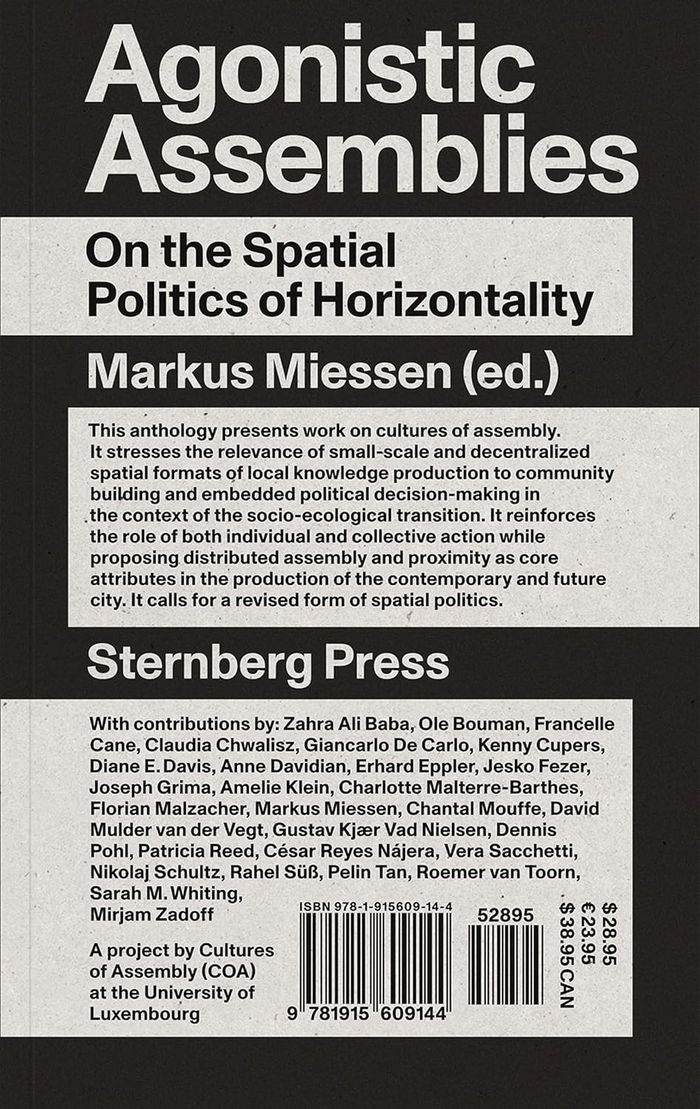
This anthology presents work on cultures of assembly. It stresses the relevance of small-scale and decentralized spatial formats of local knowledge production to community building and embedded political decision-making in the context of the socio-ecological transition. It reinforces the role of both individual and collective action while proposing distributed assembly and proximity as core attributes in the production of the contemporary and future city. It calls for a revised form of spatial politics. "Agonistic assemblies" asks: how can spaces—both physical and virtual—be envisaged to create publics? How is collectivity and society being generated spatially and in terms of policy? How do we “practice” society as a bodily, spatial form, and how does this practice contribute to spatial justice? Are there specific spatial settings that can intensify these practices? What kind of spatial design can we imagine as platforms for change?
Agonistic assemblies: On the spatial politics of horizontality
Actions:
Price:
$38.95
(available in store)
Summary:
This anthology presents work on cultures of assembly. It stresses the relevance of small-scale and decentralized spatial formats of local knowledge production to community building and embedded political decision-making in the context of the socio-ecological transition. It reinforces the role of both individual and collective action while proposing distributed assembly and proximity as core attributes in the production of the contemporary and future city. It calls for a revised form of spatial politics. "Agonistic assemblies" asks: how can spaces—both physical and virtual—be envisaged to create publics? How is collectivity and society being generated spatially and in terms of policy? How do we “practice” society as a bodily, spatial form, and how does this practice contribute to spatial justice? Are there specific spatial settings that can intensify these practices? What kind of spatial design can we imagine as platforms for change?
Form:
books
books
Publication:
June 2024
June 2024
Subject:
Architectural Theory
Architectural Theory
Form:
books
books
Actions:
Price:
$35.00
(available to order)
Summary:
In Empire of the Senses the senses are considered as cultural systems. Bringing together classic pieces by key thinkers--from Marshall McLuhan and Alain Corbin to Susan Stewart and Oliver Sacks--as well as newly commissioned articles, this path-breaking book provides a comprehensive overview of the "sensual revolution," where all manner of disciplines converge. Its aim is(...)
$35.00
(available to order)
Summary:
In Empire of the Senses the senses are considered as cultural systems. Bringing together classic pieces by key thinkers--from Marshall McLuhan and Alain Corbin to Susan Stewart and Oliver Sacks--as well as newly commissioned articles, this path-breaking book provides a comprehensive overview of the "sensual revolution," where all manner of disciplines converge. Its aim is(...)
Title:
Empire of the Senses : The sensual culture reader
Actions:
Price:
$35.00
(available to order)
Summary:
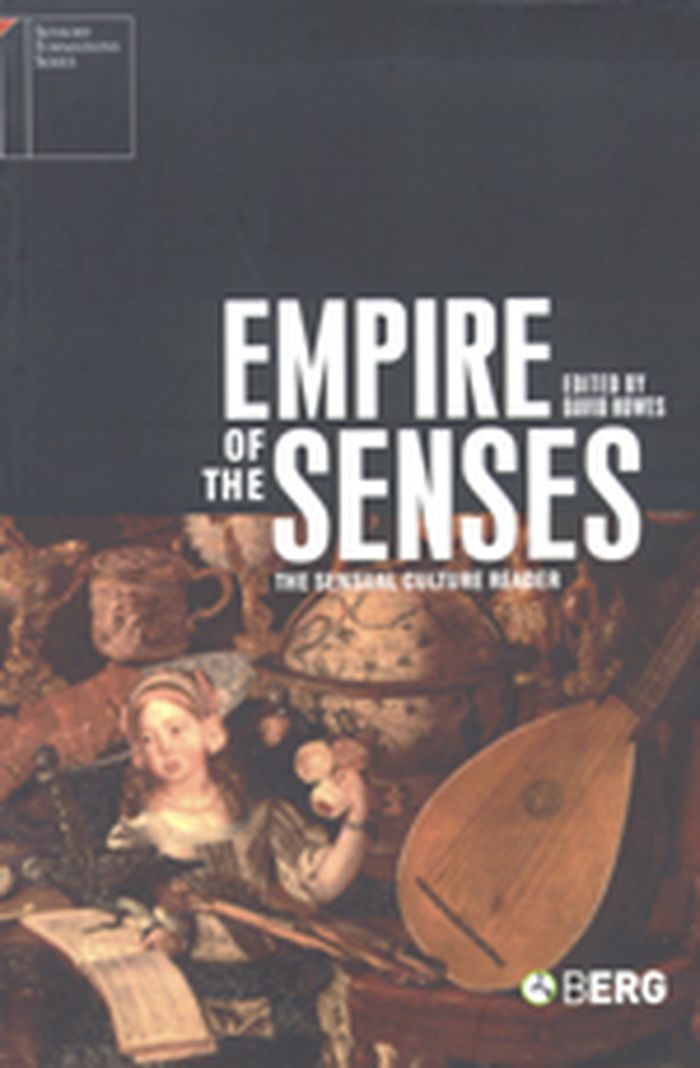
In Empire of the Senses the senses are considered as cultural systems. Bringing together classic pieces by key thinkers--from Marshall McLuhan and Alain Corbin to Susan Stewart and Oliver Sacks--as well as newly commissioned articles, this path-breaking book provides a comprehensive overview of the "sensual revolution," where all manner of disciplines converge. Its aim is to enhance our understanding of the role of the senses in history and across cultures by overturning the hegemony of vision in contemporary theory and demonstrating that all senses play a role in mediating cultural experience. It asks provocative questions that most of us take for granted. Are there, for example, only five senses, or is this assumption a Western construct? This radical contribution to revisioning cultural studies will be essential reading for anyone hoping to understand the full complexity of how we experience our world.
Empire of the Senses : The sensual culture reader
Actions:
Price:
$35.00
(available to order)
Summary:
In Empire of the Senses the senses are considered as cultural systems. Bringing together classic pieces by key thinkers--from Marshall McLuhan and Alain Corbin to Susan Stewart and Oliver Sacks--as well as newly commissioned articles, this path-breaking book provides a comprehensive overview of the "sensual revolution," where all manner of disciplines converge. Its aim is to enhance our understanding of the role of the senses in history and across cultures by overturning the hegemony of vision in contemporary theory and demonstrating that all senses play a role in mediating cultural experience. It asks provocative questions that most of us take for granted. Are there, for example, only five senses, or is this assumption a Western construct? This radical contribution to revisioning cultural studies will be essential reading for anyone hoping to understand the full complexity of how we experience our world.
Form:
books
books
Publication:
December 2004, Oxford New York
December 2004, Oxford New York
Subject:
Architectural Theory
Architectural Theory
Form:
books
books
Actions:
Price:
$33.95
(available to order)
Summary:
Since its publication in 1936, Walter Benjamin's "Artwork" essay has become a canonical text about the status and place of the fine arts in modern mass culture. Benjamin was especially concerned with the ability of new technologies--notably film, sound recording, and photography--to reproduce works of art in great number. Benjamin could not have foreseen the explosion of(...)
$33.95
(available to order)
Summary:
Since its publication in 1936, Walter Benjamin's "Artwork" essay has become a canonical text about the status and place of the fine arts in modern mass culture. Benjamin was especially concerned with the ability of new technologies--notably film, sound recording, and photography--to reproduce works of art in great number. Benjamin could not have foreseen the explosion of(...)
Subject:
Architectural Theory
Architectural Theory
Publication:
July 2003, Stanford
July 2003, Stanford
Title:
Mapping Benjamin : the work of art in the digital age
Actions:
Price:
$33.95
(available to order)
Summary:
Since its publication in 1936, Walter Benjamin's "Artwork" essay has become a canonical text about the status and place of the fine arts in modern mass culture. Benjamin was especially concerned with the ability of new technologies--notably film, sound recording, and photography--to reproduce works of art in great number. Benjamin could not have foreseen the explosion of imagery and media that has occurred during the past fifty years. Does Benjamin's famous essay still speak to this new situation? That is the question posed by the editors of this book to a wide range of leading scholars and thinkers across a spectrum of disciplines in the humanities. The essays gathered here do not hazard a univocal reply to that question; rather they offer a rich, wide-ranging critique of Benjamin's position that refracts and reflects contemporary thinking about the ethical, political, and aesthetic implications of life in the digital age.
Mapping Benjamin : the work of art in the digital age
Actions:
Price:
$33.95
(available to order)
Summary:
Since its publication in 1936, Walter Benjamin's "Artwork" essay has become a canonical text about the status and place of the fine arts in modern mass culture. Benjamin was especially concerned with the ability of new technologies--notably film, sound recording, and photography--to reproduce works of art in great number. Benjamin could not have foreseen the explosion of imagery and media that has occurred during the past fifty years. Does Benjamin's famous essay still speak to this new situation? That is the question posed by the editors of this book to a wide range of leading scholars and thinkers across a spectrum of disciplines in the humanities. The essays gathered here do not hazard a univocal reply to that question; rather they offer a rich, wide-ranging critique of Benjamin's position that refracts and reflects contemporary thinking about the ethical, political, and aesthetic implications of life in the digital age.
Form:
books
books
Publication:
July 2003, Stanford
July 2003, Stanford
Subject:
Architectural Theory
Architectural Theory
Form:
books
books
Actions:
Price:
$68.95
(available in store)
Summary:
Drawn from the contributions to the 9th international “Consciousness Reframed” research conference held at University of Applied Arts Vienna in 2008, this publication aims for a timely re-definition of contemporary syncretic inquiries into the fields of art, science, technology and society through theory and practice alike, reframing the concept of innovation in its(...)
$68.95
(available in store)
Summary:
Drawn from the contributions to the 9th international “Consciousness Reframed” research conference held at University of Applied Arts Vienna in 2008, this publication aims for a timely re-definition of contemporary syncretic inquiries into the fields of art, science, technology and society through theory and practice alike, reframing the concept of innovation in its(...)
Title:
New realities: being syncretic
Actions:
Price:
$68.95
(available in store)
Summary:
Drawn from the contributions to the 9th international “Consciousness Reframed” research conference held at University of Applied Arts Vienna in 2008, this publication aims for a timely re-definition of contemporary syncretic inquiries into the fields of art, science, technology and society through theory and practice alike, reframing the concept of innovation in its relationship to progress and change within the context of perception and its transformation. It comprises a wide range of outstanding expertise and insights of artists, architects, performers, musicians, writers, scientists, and scholars. Among the authors from at least 20 countries are most prominently Roy Ascott, Gerald Bast, Jim Gimzewski, Pierre Lévy, Ryohei Nakatsu, Michael Punt, Ruth Schnell, Barbara Maria Stafford, Alfred Vendl, Victoria Vesna and Peter Weibel. The publication includes full papers and a DVD, edited by Ruth Schnell, with short video extracts of the event and accompanying visual reference.
New realities: being syncretic
Actions:
Price:
$68.95
(available in store)
Summary:
Drawn from the contributions to the 9th international “Consciousness Reframed” research conference held at University of Applied Arts Vienna in 2008, this publication aims for a timely re-definition of contemporary syncretic inquiries into the fields of art, science, technology and society through theory and practice alike, reframing the concept of innovation in its relationship to progress and change within the context of perception and its transformation. It comprises a wide range of outstanding expertise and insights of artists, architects, performers, musicians, writers, scientists, and scholars. Among the authors from at least 20 countries are most prominently Roy Ascott, Gerald Bast, Jim Gimzewski, Pierre Lévy, Ryohei Nakatsu, Michael Punt, Ruth Schnell, Barbara Maria Stafford, Alfred Vendl, Victoria Vesna and Peter Weibel. The publication includes full papers and a DVD, edited by Ruth Schnell, with short video extracts of the event and accompanying visual reference.
Form:
books
books
Publication:
November 2008, New York
November 2008, New York
Subject:
Architectural Theory
Architectural Theory
Form:
books
books
Price:
$59.95
(available to order)
Summary:
SPOON is a comprehensive view of new product design, presenting the work of 100 international designers who have emerged on an international platform in the last five years, selected by 10 critics, designers and entrepreneurs who are highly respected for their informed opinion on the international contemporary design scene. It provides a unique opportunity to see a(...)
$59.95
(available to order)
Summary:
SPOON is a comprehensive view of new product design, presenting the work of 100 international designers who have emerged on an international platform in the last five years, selected by 10 critics, designers and entrepreneurs who are highly respected for their informed opinion on the international contemporary design scene. It provides a unique opportunity to see a(...)
Subject:
Interior Design
Interior Design
Publication:
September 2004, London, New York
September 2004, London, New York
Title:
Spoon
Actions:
Price:
$59.95
(available to order)
Summary:
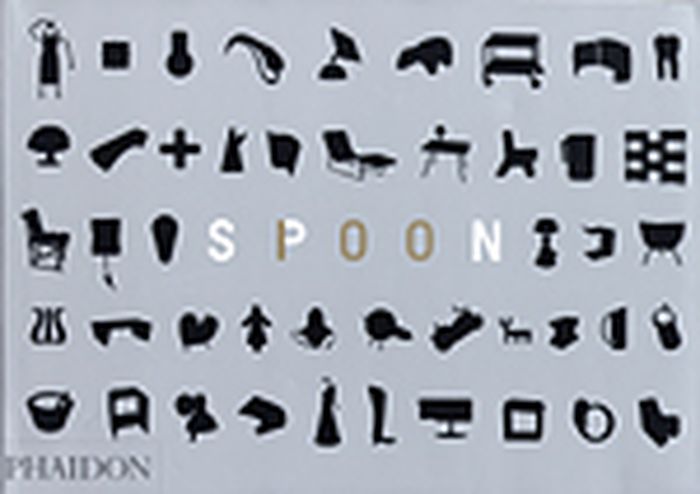
SPOON is a comprehensive view of new product design, presenting the work of 100 international designers who have emerged on an international platform in the last five years, selected by 10 critics, designers and entrepreneurs who are highly respected for their informed opinion on the international contemporary design scene. It provides a unique opportunity to see a diverse collection of recent design projects that includes a whole range of objects: furniture, lighting, tools, utensils, high-tech products, machinery and so on. The designers are listed in alphabetical order featuring two double-page spreads for each, with recent, exemplary products accompanied with sketches, drawings, computer renderings, model and prototypes that help to explain, together with the extensive captions, the process behind each project. A short explanatory text by the curator explains the designers’ work and the characteristics that make his/her projects forward-looking and ground breaking. SPOON also features, at the end of the book, 10 ‘classic’, industrially manufactured product designs, chosen by the curators as best examples of the concept of ‘good design’. These ‘classics’ are accompanied by text written by the curators that explains their choice of designers and generally what they see to be the concept of ‘good design’. SPOON takes its place in a series of surveys identifying 100 of the most interesting, cutting-edge practitioners of key art forms. Earlier surveys include cream and Fresh Cream, for contemporary art, 10x10 for architecture and BLINK for photography.
Spoon
Actions:
Price:
$59.95
(available to order)
Summary:
SPOON is a comprehensive view of new product design, presenting the work of 100 international designers who have emerged on an international platform in the last five years, selected by 10 critics, designers and entrepreneurs who are highly respected for their informed opinion on the international contemporary design scene. It provides a unique opportunity to see a diverse collection of recent design projects that includes a whole range of objects: furniture, lighting, tools, utensils, high-tech products, machinery and so on. The designers are listed in alphabetical order featuring two double-page spreads for each, with recent, exemplary products accompanied with sketches, drawings, computer renderings, model and prototypes that help to explain, together with the extensive captions, the process behind each project. A short explanatory text by the curator explains the designers’ work and the characteristics that make his/her projects forward-looking and ground breaking. SPOON also features, at the end of the book, 10 ‘classic’, industrially manufactured product designs, chosen by the curators as best examples of the concept of ‘good design’. These ‘classics’ are accompanied by text written by the curators that explains their choice of designers and generally what they see to be the concept of ‘good design’. SPOON takes its place in a series of surveys identifying 100 of the most interesting, cutting-edge practitioners of key art forms. Earlier surveys include cream and Fresh Cream, for contemporary art, 10x10 for architecture and BLINK for photography.
Form:
books
books
Publication:
September 2004, London, New York
September 2004, London, New York
Subject:
Interior Design
Interior Design
Form:
books
books
Actions:
Price:
$46.95
(available to order)
Summary:
Post, ex, sub and dis - these are but a few of the prefixes that have been used to compose neologisms for describing the contemporary cityscape in Western Europe and North America. Terms such as posturban space, postsuburbia, exurbia, exopolis, suburban downtown and disurbia are part of a dizzying collection of often hotly contested labels. The plethora of neologisms(...)
$46.95
(available to order)
Summary:
Post, ex, sub and dis - these are but a few of the prefixes that have been used to compose neologisms for describing the contemporary cityscape in Western Europe and North America. Terms such as posturban space, postsuburbia, exurbia, exopolis, suburban downtown and disurbia are part of a dizzying collection of often hotly contested labels. The plethora of neologisms(...)
Title:
Post ex sub dis : urban fragmentations and constructions
Actions:
Price:
$46.95
(available to order)
Summary:
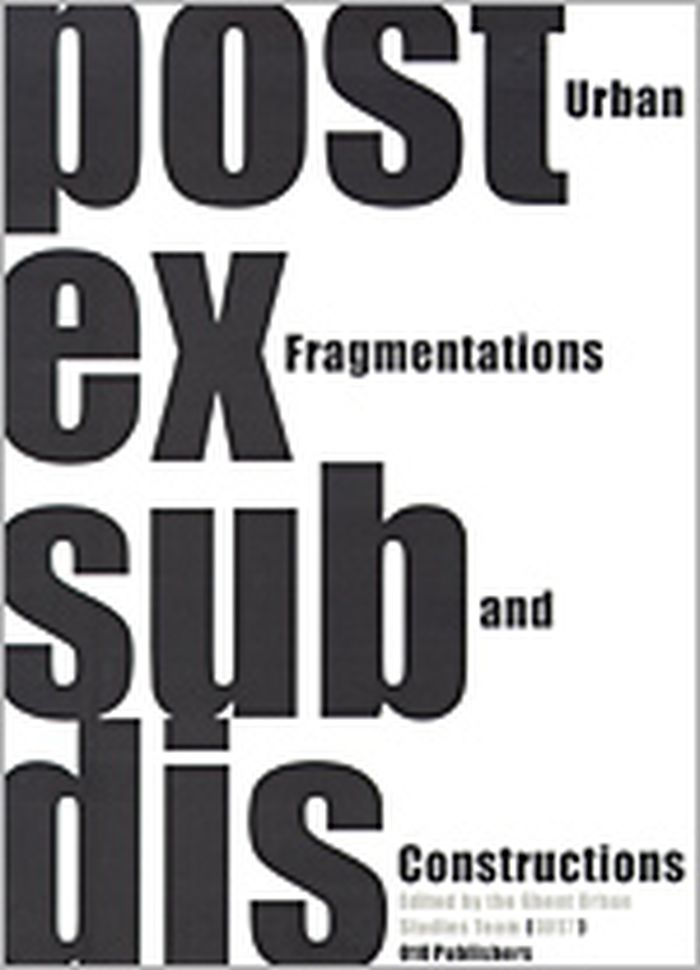
Post, ex, sub and dis - these are but a few of the prefixes that have been used to compose neologisms for describing the contemporary cityscape in Western Europe and North America. Terms such as posturban space, postsuburbia, exurbia, exopolis, suburban downtown and disurbia are part of a dizzying collection of often hotly contested labels. The plethora of neologisms demonstrates how difficult it has become to name, map and analyse the contemporary cityscape. To many observers, urban environments and urban society have come to evince a radically chaotic and fragmented structure. This book explores how in recent decades the notion of fragmentation - a mainstay already of reflections on urban modernity - has acquired new meanings and how, within the current decentralized and centrifugal context, the urban landscape is constantly being deconstructed and reconstructed, both materially and discursively. Richly illustrated with works by artists and photographers who have visualized various new kinds of urban fragmentation, the volume brings together a series of essays on spatial, social and cultural issues written by distinguished scholars and practitioners from an unusual variety of disciplines. It will be especially useful to students of urban planning, architecture, sociology, literature and the arts. With text contributions by Aaron Betsky, Sophie Body-Gendrot, Stefano Boeri, Lizabeth Cohen, Rosalyn Deutsche, Bart Eeckhout, Adriaan Geuze, Paul Gilroy, Steven Jacobs, Regine Leibinger, Scott Malcomson, Peter Marcuse, Bruce Robbins, Luc Sante, William Sharpe, Edward W. Soja and Mark Wigley.
Post ex sub dis : urban fragmentations and constructions
Actions:
Price:
$46.95
(available to order)
Summary:
Post, ex, sub and dis - these are but a few of the prefixes that have been used to compose neologisms for describing the contemporary cityscape in Western Europe and North America. Terms such as posturban space, postsuburbia, exurbia, exopolis, suburban downtown and disurbia are part of a dizzying collection of often hotly contested labels. The plethora of neologisms demonstrates how difficult it has become to name, map and analyse the contemporary cityscape. To many observers, urban environments and urban society have come to evince a radically chaotic and fragmented structure. This book explores how in recent decades the notion of fragmentation - a mainstay already of reflections on urban modernity - has acquired new meanings and how, within the current decentralized and centrifugal context, the urban landscape is constantly being deconstructed and reconstructed, both materially and discursively. Richly illustrated with works by artists and photographers who have visualized various new kinds of urban fragmentation, the volume brings together a series of essays on spatial, social and cultural issues written by distinguished scholars and practitioners from an unusual variety of disciplines. It will be especially useful to students of urban planning, architecture, sociology, literature and the arts. With text contributions by Aaron Betsky, Sophie Body-Gendrot, Stefano Boeri, Lizabeth Cohen, Rosalyn Deutsche, Bart Eeckhout, Adriaan Geuze, Paul Gilroy, Steven Jacobs, Regine Leibinger, Scott Malcomson, Peter Marcuse, Bruce Robbins, Luc Sante, William Sharpe, Edward W. Soja and Mark Wigley.
Form:
books
books
Publication:
November 2002, Rotterdam
November 2002, Rotterdam
Subject:
Urban Theory
Urban Theory
Form:
books
books

Actions:
Price:
$25.95
(available to order)
Summary:
Larry Bennett calls contemporary Chicago the third city to distinguish it from its two predecessors: the first city, a sprawling industrial center whose historical arc ran from the Civil War to the Great Depression; and the second city, the Rustbelt exemplar of the period from around 1950 to 1990. The third city features a dramatically revitalized urban core, a shifting(...)
$25.95
(available to order)
Summary:
Larry Bennett calls contemporary Chicago the third city to distinguish it from its two predecessors: the first city, a sprawling industrial center whose historical arc ran from the Civil War to the Great Depression; and the second city, the Rustbelt exemplar of the period from around 1950 to 1990. The third city features a dramatically revitalized urban core, a shifting(...)
Title:
The third city: Chicago and American urbanism
Actions:
Price:
$25.95
(available to order)
Summary:
Larry Bennett calls contemporary Chicago the third city to distinguish it from its two predecessors: the first city, a sprawling industrial center whose historical arc ran from the Civil War to the Great Depression; and the second city, the Rustbelt exemplar of the period from around 1950 to 1990. The third city features a dramatically revitalized urban core, a shifting population mix that includes new immigrant streams, and a growing number of middle-class professionals working in new economy sectors. It is also a city utterly transformed by the top-to-bottom reconstruction of public housing developments and the ambitious provision of public works like Millennium Park. It is, according to Bennett, a work in progress spearheaded by Richard M. Daley, a self-consciously innovative mayor whose strategy of neighborhood revitalization and urban renewal is a prototype of city governance for the twenty-first century. The Third City ultimately contends that to understand Chicago under Daley’s charge is to understand what metropolitan life across North America may well look like in the coming decades.
The third city: Chicago and American urbanism
Actions:
Price:
$25.95
(available to order)
Summary:
Larry Bennett calls contemporary Chicago the third city to distinguish it from its two predecessors: the first city, a sprawling industrial center whose historical arc ran from the Civil War to the Great Depression; and the second city, the Rustbelt exemplar of the period from around 1950 to 1990. The third city features a dramatically revitalized urban core, a shifting population mix that includes new immigrant streams, and a growing number of middle-class professionals working in new economy sectors. It is also a city utterly transformed by the top-to-bottom reconstruction of public housing developments and the ambitious provision of public works like Millennium Park. It is, according to Bennett, a work in progress spearheaded by Richard M. Daley, a self-consciously innovative mayor whose strategy of neighborhood revitalization and urban renewal is a prototype of city governance for the twenty-first century. The Third City ultimately contends that to understand Chicago under Daley’s charge is to understand what metropolitan life across North America may well look like in the coming decades.
Form:
books
books
Publication:
September 2010
September 2010
Subject:
History since 1900, Reference Books
History since 1900, Reference Books
Form:
books
books
Price:
$18.99
(available to order)
Summary:
Ferruccio Vitale is America's forgotten landscape architect. Though his works like Skylands and Longwood Gardens are well known, his name has been eclipsed by his contemporary, Frederick Law Olmsted, Jr. Yet Vitale's influence on the modern direction of landscape design and his promotion of it as a profession is arguably more significant than Olmsted's. His unique designs(...)
$18.99
(available to order)
Summary:
Ferruccio Vitale is America's forgotten landscape architect. Though his works like Skylands and Longwood Gardens are well known, his name has been eclipsed by his contemporary, Frederick Law Olmsted, Jr. Yet Vitale's influence on the modern direction of landscape design and his promotion of it as a profession is arguably more significant than Olmsted's. His unique designs(...)
Title:
Ferruccio Vitale : landscape architect of the country place Era
Actions:
Price:
$18.99
(available to order)
Summary:
Ferruccio Vitale is America's forgotten landscape architect. Though his works like Skylands and Longwood Gardens are well known, his name has been eclipsed by his contemporary, Frederick Law Olmsted, Jr. Yet Vitale's influence on the modern direction of landscape design and his promotion of it as a profession is arguably more significant than Olmsted's. His unique designs and philosophy, which challenged the then-dominant pictorial mode of landscape architecture, influenced generations of followerss, and is still felt today. Vitale (1875-1933) developed his rationale designs, based on the principles of composition from the fine arts and architecture, in both civic commissions and, most notably, at the country estates of captains of industry and finance, such as Rodman Wanamaker, Pierre S. DuPont, Solomon R. Guggenheim, and Condé Nast. He introduced an idealized and abstracted type of formal design that created beautiful spaces, structured large sites, and reflected informal and relaxed plant compositions. "Ferruccio Vitale" tours over 40 of his masterworks, photographed by some of the best landscape photographers of the time, including Samuel Gottscho. It recounts the compelling story of a life in the twentieth century, influenced by immigrant dreams, social clubs, and professional connections, and its culmination in some of the greatest landscapes of the 20th century.
Ferruccio Vitale : landscape architect of the country place Era
Actions:
Price:
$18.99
(available to order)
Summary:
Ferruccio Vitale is America's forgotten landscape architect. Though his works like Skylands and Longwood Gardens are well known, his name has been eclipsed by his contemporary, Frederick Law Olmsted, Jr. Yet Vitale's influence on the modern direction of landscape design and his promotion of it as a profession is arguably more significant than Olmsted's. His unique designs and philosophy, which challenged the then-dominant pictorial mode of landscape architecture, influenced generations of followerss, and is still felt today. Vitale (1875-1933) developed his rationale designs, based on the principles of composition from the fine arts and architecture, in both civic commissions and, most notably, at the country estates of captains of industry and finance, such as Rodman Wanamaker, Pierre S. DuPont, Solomon R. Guggenheim, and Condé Nast. He introduced an idealized and abstracted type of formal design that created beautiful spaces, structured large sites, and reflected informal and relaxed plant compositions. "Ferruccio Vitale" tours over 40 of his masterworks, photographed by some of the best landscape photographers of the time, including Samuel Gottscho. It recounts the compelling story of a life in the twentieth century, influenced by immigrant dreams, social clubs, and professional connections, and its culmination in some of the greatest landscapes of the 20th century.
Form:
books
books
Publication:
November 2001, New York
November 2001, New York
Subject:
Gardens
Gardens
Form:
books
books
Actions:
Price:
$42.00
(available in store)
Summary:
The focus of this issue of icamprint is on the 'market' for private archives. After all, collecting and managing the documentation of architecture history to conform to academic and scientific standards is a complex business, and a core task for most icam members. In this context, whether or not the 'originals' by star architects have an artistic value on the market is(...)
$42.00
(available in store)
Summary:
The focus of this issue of icamprint is on the 'market' for private archives. After all, collecting and managing the documentation of architecture history to conform to academic and scientific standards is a complex business, and a core task for most icam members. In this context, whether or not the 'originals' by star architects have an artistic value on the market is(...)
Title:
icam print 02 december 2007 International confederation of architectural museums
Actions:
Price:
$42.00
(available in store)
Summary:
The focus of this issue of icamprint is on the 'market' for private archives. After all, collecting and managing the documentation of architecture history to conform to academic and scientific standards is a complex business, and a core task for most icam members. In this context, whether or not the 'originals' by star architects have an artistic value on the market is only superficially a decisive issue. If one considers the lengths taken by the custodian's of Le Corbusier's estate to secure a suitable new home for what is without doubt a painting of artistic note, and so a market value and with it a place in an art history context, then it is worth waiting to see the place conceded on the art market one day to project-related sketches and drawings by contemporary star architects. The whole history of the conception and realisation of important works of architecture within a context of culture history ought to feature more prominently in the collection policy of icam members to ensure its suitability for research purposes. It remains to be seen what price is attributed to these comprehensive documents, these convolutes, in the competition between private collectors. This notwithstanding, the 'market' for collecting is just as crucial to icam members as the continuing debate on 'originals', and safeguarding them in times of digital architecture production. icamprint will focus increasingly on these and related issues, opening the discussion to all of the member institutions, to develop into an indispensable medium providing orientation on key issues for all icam members.
icam print 02 december 2007 International confederation of architectural museums
Actions:
Price:
$42.00
(available in store)
Summary:
The focus of this issue of icamprint is on the 'market' for private archives. After all, collecting and managing the documentation of architecture history to conform to academic and scientific standards is a complex business, and a core task for most icam members. In this context, whether or not the 'originals' by star architects have an artistic value on the market is only superficially a decisive issue. If one considers the lengths taken by the custodian's of Le Corbusier's estate to secure a suitable new home for what is without doubt a painting of artistic note, and so a market value and with it a place in an art history context, then it is worth waiting to see the place conceded on the art market one day to project-related sketches and drawings by contemporary star architects. The whole history of the conception and realisation of important works of architecture within a context of culture history ought to feature more prominently in the collection policy of icam members to ensure its suitability for research purposes. It remains to be seen what price is attributed to these comprehensive documents, these convolutes, in the competition between private collectors. This notwithstanding, the 'market' for collecting is just as crucial to icam members as the continuing debate on 'originals', and safeguarding them in times of digital architecture production. icamprint will focus increasingly on these and related issues, opening the discussion to all of the member institutions, to develop into an indispensable medium providing orientation on key issues for all icam members.
Form:
books
books
Publication:
October 2007, Vienna
October 2007, Vienna
Subject:
Museology
Museology
Form:
books
books
Actions:
Price:
$36.95
(available to order)
Summary:
Peter Eisenman, one of the greatest contemporary architects, taught in Italy in 1986 at the IUAV University of Venice. This book, edited by his students Raffaella Laezza and Shuli Beimel aims to be a lucid witness of a period of great cultural change in international architectural design that found at IUAV, in the academic year 1986-87, in Peter Eisenman’s Architectural(...)
$36.95
(available to order)
Summary:
Peter Eisenman, one of the greatest contemporary architects, taught in Italy in 1986 at the IUAV University of Venice. This book, edited by his students Raffaella Laezza and Shuli Beimel aims to be a lucid witness of a period of great cultural change in international architectural design that found at IUAV, in the academic year 1986-87, in Peter Eisenman’s Architectural(...)
Title:
Crash: Peter Eisenman. Iuav Venezia 1986-87
Actions:
Price:
$36.95
(available to order)
Summary:
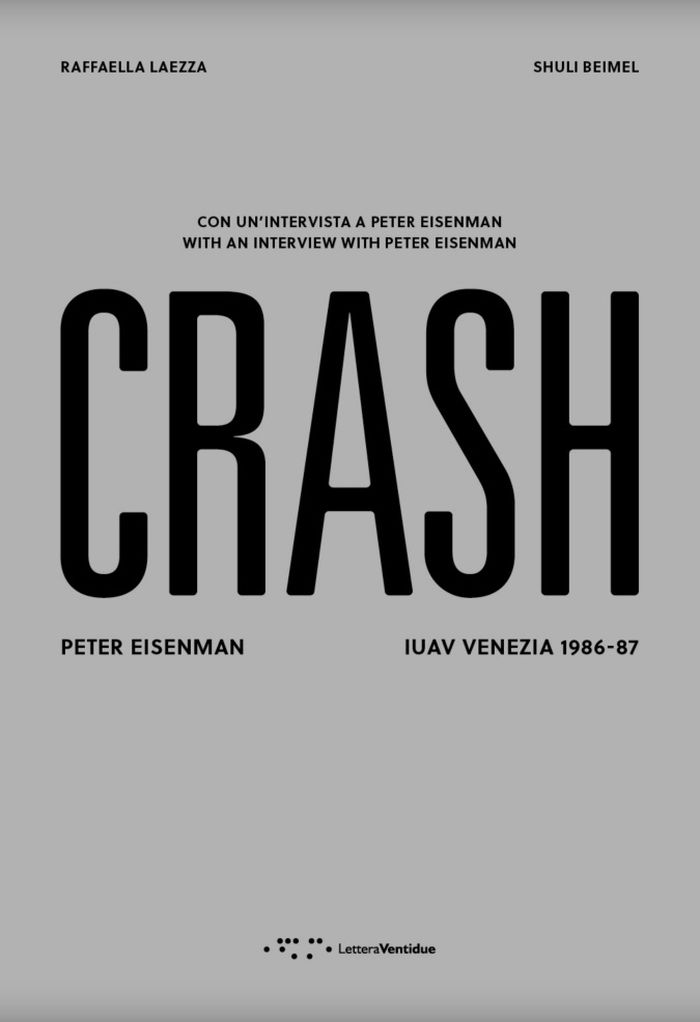
Peter Eisenman, one of the greatest contemporary architects, taught in Italy in 1986 at the IUAV University of Venice. This book, edited by his students Raffaella Laezza and Shuli Beimel aims to be a lucid witness of a period of great cultural change in international architectural design that found at IUAV, in the academic year 1986-87, in Peter Eisenman’s Architectural Composition III course one of its most significant moments. Twenty-five students, selected by the American professor, were introduced to new thinking and a new design method that confronted the concepts of ''time / site / space'' in a completely innovative way. This caused in each young student a real ''crash''. But wasn’t such a ''crash'' already an unstoppable, international wave? The book invites us into the thinking of the American architect who states in the interview, ''I have always loved Italy, the culture, the food, the people, so making this book was very important to me.''
Crash: Peter Eisenman. Iuav Venezia 1986-87
Actions:
Price:
$36.95
(available to order)
Summary:
Peter Eisenman, one of the greatest contemporary architects, taught in Italy in 1986 at the IUAV University of Venice. This book, edited by his students Raffaella Laezza and Shuli Beimel aims to be a lucid witness of a period of great cultural change in international architectural design that found at IUAV, in the academic year 1986-87, in Peter Eisenman’s Architectural Composition III course one of its most significant moments. Twenty-five students, selected by the American professor, were introduced to new thinking and a new design method that confronted the concepts of ''time / site / space'' in a completely innovative way. This caused in each young student a real ''crash''. But wasn’t such a ''crash'' already an unstoppable, international wave? The book invites us into the thinking of the American architect who states in the interview, ''I have always loved Italy, the culture, the food, the people, so making this book was very important to me.''
Form:
books
books
Publication:
December 2022
December 2022
Subject:
Architectural Theory
Architectural Theory


