


6653 Results
Form:
books
books
Price:
$49.95
(available to order)
Summary:
Born into a large French-Canadian family in 1926, Mariette Rousseau embraced her passion for creative expression through wool and weaving at an early age. She studied art and weaving at l'École des beaux-arts in Quebec City and then worked at the California studio of ground-breaking American textile designer Dorothy Liebes. Back in Canada after an art-inspired trip to(...)
$49.95
(available to order)
Summary:
Born into a large French-Canadian family in 1926, Mariette Rousseau embraced her passion for creative expression through wool and weaving at an early age. She studied art and weaving at l'École des beaux-arts in Quebec City and then worked at the California studio of ground-breaking American textile designer Dorothy Liebes. Back in Canada after an art-inspired trip to(...)
Title:
Weaving modernist art: The life and work of Mariette Rousseau-Vermette
Actions:
Price:
$49.95
(available to order)
Summary:
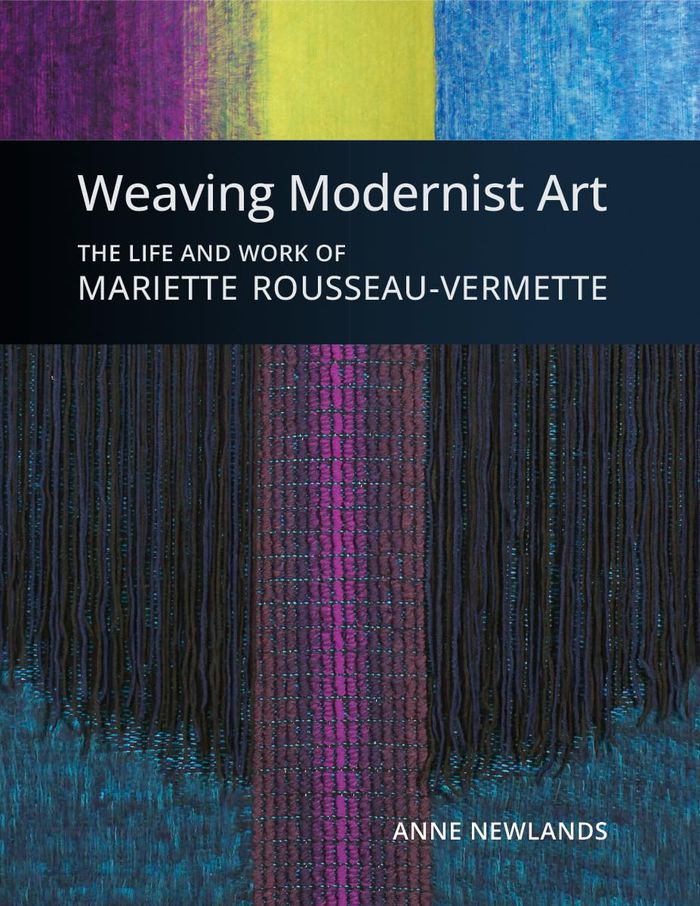
Born into a large French-Canadian family in 1926, Mariette Rousseau embraced her passion for creative expression through wool and weaving at an early age. She studied art and weaving at l'École des beaux-arts in Quebec City and then worked at the California studio of ground-breaking American textile designer Dorothy Liebes. Back in Canada after an art-inspired trip to Europe, she and her husband, artist and ceramist Claude Vermette, joined the growing movement of young French-Canadian artists in their embrace of abstraction and new forms of art and their rejection of the conservatism of Maurice Duplessis' mid-century Quebec. By the early 1960s, Rousseau-Vermette had forged collaborations with fellow artists, designers and architects with like ideas about public art. Over the next 40 years, she scaled the heights of her profession, weaving hundreds of radiant large-scale tapestries that complemented the cool interiors of modern architecture. She exhibited across Canada and internationally and attracted prestigious commissions from the private and public sectors, including commissions for theater curtains at the National Arts Centre, Ottawa and the Kennedy Center in Washington, DC. Yet three years after Rousseau-Vermette's death in 2006, Newlands discovered there wasn't a single book that told her story as a pioneer of modernist tapestry and one of Canada's most prolific and influential artist-weavers.
Weaving modernist art: The life and work of Mariette Rousseau-Vermette
Actions:
Price:
$49.95
(available to order)
Summary:
Born into a large French-Canadian family in 1926, Mariette Rousseau embraced her passion for creative expression through wool and weaving at an early age. She studied art and weaving at l'École des beaux-arts in Quebec City and then worked at the California studio of ground-breaking American textile designer Dorothy Liebes. Back in Canada after an art-inspired trip to Europe, she and her husband, artist and ceramist Claude Vermette, joined the growing movement of young French-Canadian artists in their embrace of abstraction and new forms of art and their rejection of the conservatism of Maurice Duplessis' mid-century Quebec. By the early 1960s, Rousseau-Vermette had forged collaborations with fellow artists, designers and architects with like ideas about public art. Over the next 40 years, she scaled the heights of her profession, weaving hundreds of radiant large-scale tapestries that complemented the cool interiors of modern architecture. She exhibited across Canada and internationally and attracted prestigious commissions from the private and public sectors, including commissions for theater curtains at the National Arts Centre, Ottawa and the Kennedy Center in Washington, DC. Yet three years after Rousseau-Vermette's death in 2006, Newlands discovered there wasn't a single book that told her story as a pioneer of modernist tapestry and one of Canada's most prolific and influential artist-weavers.
Form:
books
books
Publication:
March 2023
March 2023
Subject:
Current Exhibitions
Current Exhibitions
Form:
books
books
Actions:
Price:
$46.95
(available in store)
Summary:
In the ten years since the first edition of "A Guide to Canadian Architectural Styles" was published, the heritage movement has gained strength, sensitizing many to the value of our architectural legacy. This new edition reflects an enriched understanding of architecture that focuses more on the visual and cultural setting of the built environment and less on individual(...)
$46.95
(available in store)
Summary:
In the ten years since the first edition of "A Guide to Canadian Architectural Styles" was published, the heritage movement has gained strength, sensitizing many to the value of our architectural legacy. This new edition reflects an enriched understanding of architecture that focuses more on the visual and cultural setting of the built environment and less on individual(...)
Subject:
Architecture in Canada
Architecture in Canada
Publication:
September 2003, Peterborough, Ontario
September 2003, Peterborough, Ontario
Title:
A guide to Canadian architectural styles, second edition
Actions:
Price:
$46.95
(available in store)
Summary:
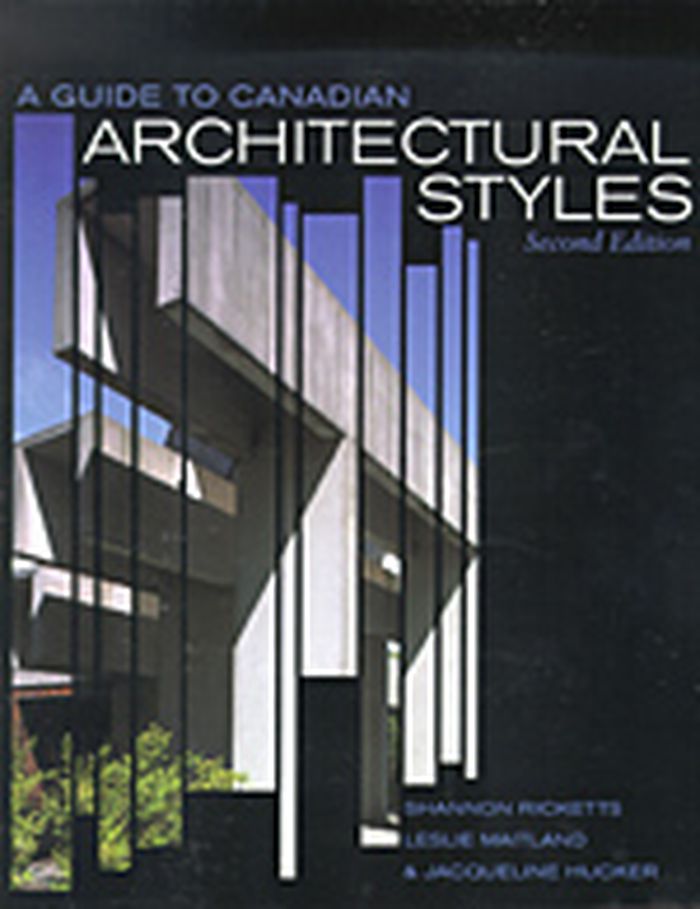
In the ten years since the first edition of "A Guide to Canadian Architectural Styles" was published, the heritage movement has gained strength, sensitizing many to the value of our architectural legacy. This new edition reflects an enriched understanding of architecture that focuses more on the visual and cultural setting of the built environment and less on individual works seen in isolation. Today, we cherish the buildings that characterize the original Main Street / rue Principale - the bank building, the shops, the old hotel, the post office, the city hall. There is more recognition for older inner-city neighbourhoods, with their row housing, churches, and community halls as well as for our often romantic attachment to vernacular rural architecture. This interest in more ordinary-looking architecture marks both the democratization of Canada's heritage movement and its coming of age, for the value of these more modest structures lies in their unique ability to sustain a sense of identity. This book provides an essential profile of the origins and development of the many architectural styles across Canada, from early settlement to the postmodern period, and discusses special forms such as religious, civic, domestic, commercial, and industrial design. While remaining true to the accessible format of the first edition, the second offers updated and considerably expanded text, as well as many more illustrations.
A guide to Canadian architectural styles, second edition
Actions:
Price:
$46.95
(available in store)
Summary:
In the ten years since the first edition of "A Guide to Canadian Architectural Styles" was published, the heritage movement has gained strength, sensitizing many to the value of our architectural legacy. This new edition reflects an enriched understanding of architecture that focuses more on the visual and cultural setting of the built environment and less on individual works seen in isolation. Today, we cherish the buildings that characterize the original Main Street / rue Principale - the bank building, the shops, the old hotel, the post office, the city hall. There is more recognition for older inner-city neighbourhoods, with their row housing, churches, and community halls as well as for our often romantic attachment to vernacular rural architecture. This interest in more ordinary-looking architecture marks both the democratization of Canada's heritage movement and its coming of age, for the value of these more modest structures lies in their unique ability to sustain a sense of identity. This book provides an essential profile of the origins and development of the many architectural styles across Canada, from early settlement to the postmodern period, and discusses special forms such as religious, civic, domestic, commercial, and industrial design. While remaining true to the accessible format of the first edition, the second offers updated and considerably expanded text, as well as many more illustrations.
Form:
books
books
Publication:
September 2003, Peterborough, Ontario
September 2003, Peterborough, Ontario
Subject:
Architecture in Canada
Architecture in Canada
Form:
books
books
Actions:
Price:
$50.95
(available to order)
Summary:
What is the role of architecture if not to realize a shared vision of the “good life,” a vision that in the age of architectural modernism shaped—and was shaped by—a range of ideas about the home? With "The good life", Iñaki Ábalos serves as our guide for a tour of seven iconic twentieth-century homes that represent various concepts for living. Some of the homes were(...)
$50.95
(available to order)
Summary:
What is the role of architecture if not to realize a shared vision of the “good life,” a vision that in the age of architectural modernism shaped—and was shaped by—a range of ideas about the home? With "The good life", Iñaki Ábalos serves as our guide for a tour of seven iconic twentieth-century homes that represent various concepts for living. Some of the homes were(...)
Title:
The good life: a guided visit to the houses of modernity
Actions:
Price:
$50.95
(available to order)
Summary:
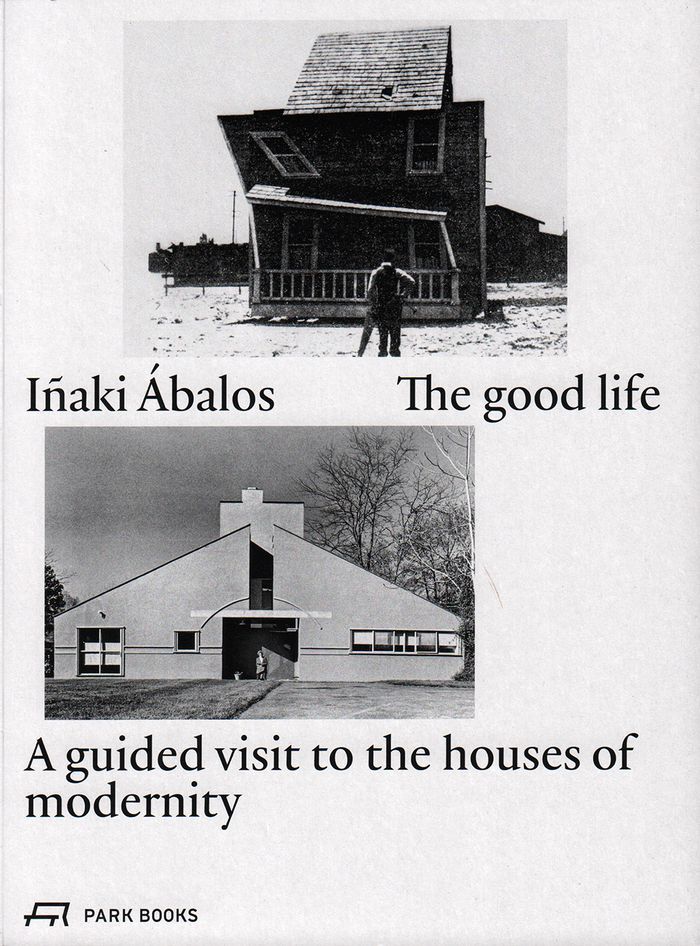
What is the role of architecture if not to realize a shared vision of the “good life,” a vision that in the age of architectural modernism shaped—and was shaped by—a range of ideas about the home? With "The good life", Iñaki Ábalos serves as our guide for a tour of seven iconic twentieth-century homes that represent various concepts for living. Some of the homes were actually built, while others were merely planned, painted, or created as part of a film set. We see Mies van der Rohe’s House with Three Patios, Martin Heidegger’s cabin in the Black Forest, Picasso’s Villa La Californie in Cannes, and the New York loft that Andy Warhol called The Factory. From the ultramodern geometric houses and gardens in Jacques Tati’s Mon Oncle, we travel to the famed hobby-kit house in Buster Keaton’s One Week and on to the sunny swimming pool and home in David Hockney’s painting A Bigger Splash. Ábalos guides readers through the key philosophical precepts that likely guided the creation of these homes, making insightful points about the relationship between ideas about a particular modern way of living and approaches to architecture and design. What he concludes is that modernism marks less a coherent triumph of positivism, as is often assumed, than a loose celebration of the radical pluralism of the twentieth century.
The good life: a guided visit to the houses of modernity
Actions:
Price:
$50.95
(available to order)
Summary:
What is the role of architecture if not to realize a shared vision of the “good life,” a vision that in the age of architectural modernism shaped—and was shaped by—a range of ideas about the home? With "The good life", Iñaki Ábalos serves as our guide for a tour of seven iconic twentieth-century homes that represent various concepts for living. Some of the homes were actually built, while others were merely planned, painted, or created as part of a film set. We see Mies van der Rohe’s House with Three Patios, Martin Heidegger’s cabin in the Black Forest, Picasso’s Villa La Californie in Cannes, and the New York loft that Andy Warhol called The Factory. From the ultramodern geometric houses and gardens in Jacques Tati’s Mon Oncle, we travel to the famed hobby-kit house in Buster Keaton’s One Week and on to the sunny swimming pool and home in David Hockney’s painting A Bigger Splash. Ábalos guides readers through the key philosophical precepts that likely guided the creation of these homes, making insightful points about the relationship between ideas about a particular modern way of living and approaches to architecture and design. What he concludes is that modernism marks less a coherent triumph of positivism, as is often assumed, than a loose celebration of the radical pluralism of the twentieth century.
Form:
books
books
Publication:
October 2017
October 2017
Subject:
Modernism
Modernism
Form:
books
books
Actions:
Price:
$37.95
(available to order)
Summary:
This first comprehensive architectural guide on Dessau-Roßlau and Wörlitz, compiled by the Stiftung Bauhaus Dessau and the Kulturstiftung DessauWörlitz, presents an expert overview of more than 120 buildings and rural expanses with great care and attention given to detail. A multifaceted overall picture arises of a region which not only draws on its rich cultural and(...)
$37.95
(available to order)
Summary:
This first comprehensive architectural guide on Dessau-Roßlau and Wörlitz, compiled by the Stiftung Bauhaus Dessau and the Kulturstiftung DessauWörlitz, presents an expert overview of more than 120 buildings and rural expanses with great care and attention given to detail. A multifaceted overall picture arises of a region which not only draws on its rich cultural and(...)
Title:
Dessau / Wörlitz architectural guide
Actions:
Price:
$37.95
(available to order)
Summary:
This first comprehensive architectural guide on Dessau-Roßlau and Wörlitz, compiled by the Stiftung Bauhaus Dessau and the Kulturstiftung DessauWörlitz, presents an expert overview of more than 120 buildings and rural expanses with great care and attention given to detail. A multifaceted overall picture arises of a region which not only draws on its rich cultural and historic heritage, but also plans for the future and ventures out into new terrain. In the shape of the Gartenreich Dessau-Wörlitz and the Bauhaus ensemble, the city of Dessau-Roßlau and its environs encompass two UNESCO World Heritage sites. These encompass architectural subjects and expanses, both urban and rural, which invite much attention beyond the region itself and have had a lasting impact on the international stage. Beyond this, however, there are a whole host of notable historic and contemporary buildings in Dessau and its surroundings. As the residence of the princes and dukes of Anhalt in the age of Enlightenment and a centre of intellectual and cultural expansion at European level, the city developed into a significant industrial location as of the second half of the nineteenth century. Today, Dessau’s architectural profile is marked by contrasts: alongside restored historic buildings and standard socialist dwellings, there are also experimental refurbishment projects and ambitious new developments to be found.
Dessau / Wörlitz architectural guide
Actions:
Price:
$37.95
(available to order)
Summary:
This first comprehensive architectural guide on Dessau-Roßlau and Wörlitz, compiled by the Stiftung Bauhaus Dessau and the Kulturstiftung DessauWörlitz, presents an expert overview of more than 120 buildings and rural expanses with great care and attention given to detail. A multifaceted overall picture arises of a region which not only draws on its rich cultural and historic heritage, but also plans for the future and ventures out into new terrain. In the shape of the Gartenreich Dessau-Wörlitz and the Bauhaus ensemble, the city of Dessau-Roßlau and its environs encompass two UNESCO World Heritage sites. These encompass architectural subjects and expanses, both urban and rural, which invite much attention beyond the region itself and have had a lasting impact on the international stage. Beyond this, however, there are a whole host of notable historic and contemporary buildings in Dessau and its surroundings. As the residence of the princes and dukes of Anhalt in the age of Enlightenment and a centre of intellectual and cultural expansion at European level, the city developed into a significant industrial location as of the second half of the nineteenth century. Today, Dessau’s architectural profile is marked by contrasts: alongside restored historic buildings and standard socialist dwellings, there are also experimental refurbishment projects and ambitious new developments to be found.
Form:
books
books
Publication:
December 2016
December 2016
Subject:
City Guides
City Guides
Form:
books
books
Price:
$34.95
(available in store)
Summary:
National historic sites commemorate decisive moments in the making of Canada. But seen through an environmental lens, these sites become artifacts of a bigger story: the occupation and transformation of nature into nation. In an age of pressing discussions about environmental sustainability, there is a growing need to know more about the history of our relationship with(...)
$34.95
(available in store)
Summary:
National historic sites commemorate decisive moments in the making of Canada. But seen through an environmental lens, these sites become artifacts of a bigger story: the occupation and transformation of nature into nation. In an age of pressing discussions about environmental sustainability, there is a growing need to know more about the history of our relationship with(...)
Title:
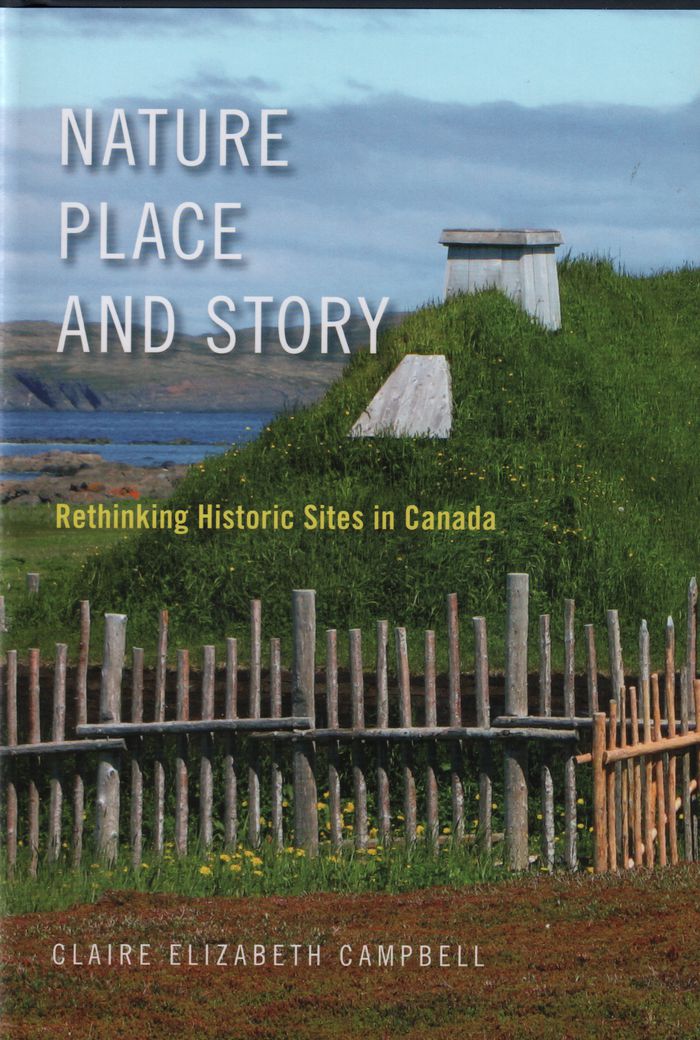
Nature, place, and story: rethinking historic sites in Canada
Actions:
Price:
$34.95
(available in store)
Summary:
National historic sites commemorate decisive moments in the making of Canada. But seen through an environmental lens, these sites become artifacts of a bigger story: the occupation and transformation of nature into nation. In an age of pressing discussions about environmental sustainability, there is a growing need to know more about the history of our relationship with the natural world and what lessons these places of public history, regional identity, and national narrative can teach us. "Nature, place, and story" provides new interpretations for five of Canada’s largest and most iconic historic sites (two of which are UNESCO World Heritage Sites): L’Anse aux Meadows, Newfoundland; Grand Pré, Nova Scotia; Fort William, Ontario; the Forks of the Red River, Manitoba; and the Bar U Ranch, Alberta. At each location, Claire Campbell rewrites public history as environmental history, revealing the country’s debt to the power and fragility of the natural world, and the relevance of the past to understanding climate change, agricultural sustainability, wilderness protection, urban reclamation, and fossil fuel extraction. From the medieval Atlantic to modern ranchlands, environmental history speaks directly to contemporary questions about the health of Canada’s habitat. Bringing together public and environmental history in an entirely new way, "Nature, place, and story" is a lively and ambitious call for a fresh perspective on natural heritage.
Nature, place, and story: rethinking historic sites in Canada
Actions:
Price:
$34.95
(available in store)
Summary:
National historic sites commemorate decisive moments in the making of Canada. But seen through an environmental lens, these sites become artifacts of a bigger story: the occupation and transformation of nature into nation. In an age of pressing discussions about environmental sustainability, there is a growing need to know more about the history of our relationship with the natural world and what lessons these places of public history, regional identity, and national narrative can teach us. "Nature, place, and story" provides new interpretations for five of Canada’s largest and most iconic historic sites (two of which are UNESCO World Heritage Sites): L’Anse aux Meadows, Newfoundland; Grand Pré, Nova Scotia; Fort William, Ontario; the Forks of the Red River, Manitoba; and the Bar U Ranch, Alberta. At each location, Claire Campbell rewrites public history as environmental history, revealing the country’s debt to the power and fragility of the natural world, and the relevance of the past to understanding climate change, agricultural sustainability, wilderness protection, urban reclamation, and fossil fuel extraction. From the medieval Atlantic to modern ranchlands, environmental history speaks directly to contemporary questions about the health of Canada’s habitat. Bringing together public and environmental history in an entirely new way, "Nature, place, and story" is a lively and ambitious call for a fresh perspective on natural heritage.
Form:
books
books
Publication:
August 2017
August 2017
Subject:
Architecture in Canada
Architecture in Canada
Form:
books
books
Actions:
Price:
$60.00
(available to order)
Summary:
Garden design in the twentieth century ranges from Victorian-era examples to the age of Land Art. This span results in an extraordinarily varied survey—from Europe to South America, from Japan to the United States—including work by garden and landscape designers whose names are familiar to both lovers and scholars of the modern garden: Robinson, Jekyll, Jensen, Farrand,(...)
$60.00
(available to order)
Summary:
Garden design in the twentieth century ranges from Victorian-era examples to the age of Land Art. This span results in an extraordinarily varied survey—from Europe to South America, from Japan to the United States—including work by garden and landscape designers whose names are familiar to both lovers and scholars of the modern garden: Robinson, Jekyll, Jensen, Farrand,(...)
Title:
Modern garden design : innovation since 1900
Actions:
Price:
$60.00
(available to order)
Summary:
Garden design in the twentieth century ranges from Victorian-era examples to the age of Land Art. This span results in an extraordinarily varied survey—from Europe to South America, from Japan to the United States—including work by garden and landscape designers whose names are familiar to both lovers and scholars of the modern garden: Robinson, Jekyll, Jensen, Farrand, Sessions, Mawson, Church, Sørensen, and Jellicoe. Janet Waymark traces the revolutionary changes brought about in the postwar period by the Harvard Rebels—Eckbo, Rose, and Kiley—and examines the impact of Noguchi, Burle Marx, Barragán, and others, as well as the powerful international influence of Scandinavian landscape architects and designers. The garden city is also given close attention, from its beginnings in late Victorian Britain, through the Greenbelt Towns in the American Midwest, to the latest regeneration of urban centers worldwide. A long line of artists and architects of international renown have earned a place in the history of the modern garden: Monet, Le Corbusier, Mondrian, Wright, Mies van der Rohe, and Gaudí, among others. Land artists, such as Michael Heizer, Robert Smithson, Patricia Johanson, and Kathryn Gustafson in America and Richard Long, Andy Goldsworthy, and Ian Hamilton Finlay in the UK, have brought new ways of thinking about landscape and the garden into the twenty-first century.
Modern garden design : innovation since 1900
Actions:
Price:
$60.00
(available to order)
Summary:
Garden design in the twentieth century ranges from Victorian-era examples to the age of Land Art. This span results in an extraordinarily varied survey—from Europe to South America, from Japan to the United States—including work by garden and landscape designers whose names are familiar to both lovers and scholars of the modern garden: Robinson, Jekyll, Jensen, Farrand, Sessions, Mawson, Church, Sørensen, and Jellicoe. Janet Waymark traces the revolutionary changes brought about in the postwar period by the Harvard Rebels—Eckbo, Rose, and Kiley—and examines the impact of Noguchi, Burle Marx, Barragán, and others, as well as the powerful international influence of Scandinavian landscape architects and designers. The garden city is also given close attention, from its beginnings in late Victorian Britain, through the Greenbelt Towns in the American Midwest, to the latest regeneration of urban centers worldwide. A long line of artists and architects of international renown have earned a place in the history of the modern garden: Monet, Le Corbusier, Mondrian, Wright, Mies van der Rohe, and Gaudí, among others. Land artists, such as Michael Heizer, Robert Smithson, Patricia Johanson, and Kathryn Gustafson in America and Richard Long, Andy Goldsworthy, and Ian Hamilton Finlay in the UK, have brought new ways of thinking about landscape and the garden into the twenty-first century.
Form:
books
books
Publication:
May 2003, New York
May 2003, New York
Subject:
Gardens
Gardens
Form:
books
books
Actions:
Price:
$45.00
(available to order)
Summary:
Contemporary artist Roni Horn first visited Iceland in 1975 at the age of nineteen, and since then, the island’s treeless expanse has had an enduring hold on Horn’s creative work. Through a series of remarkable and poetic reflections, vignettes, episodes, and illustrated essays, ''Island zombie'' distills the artist’s lifelong experience of Iceland’s natural environment.(...)
$45.00
(available to order)
Summary:
Contemporary artist Roni Horn first visited Iceland in 1975 at the age of nineteen, and since then, the island’s treeless expanse has had an enduring hold on Horn’s creative work. Through a series of remarkable and poetic reflections, vignettes, episodes, and illustrated essays, ''Island zombie'' distills the artist’s lifelong experience of Iceland’s natural environment.(...)
Title:
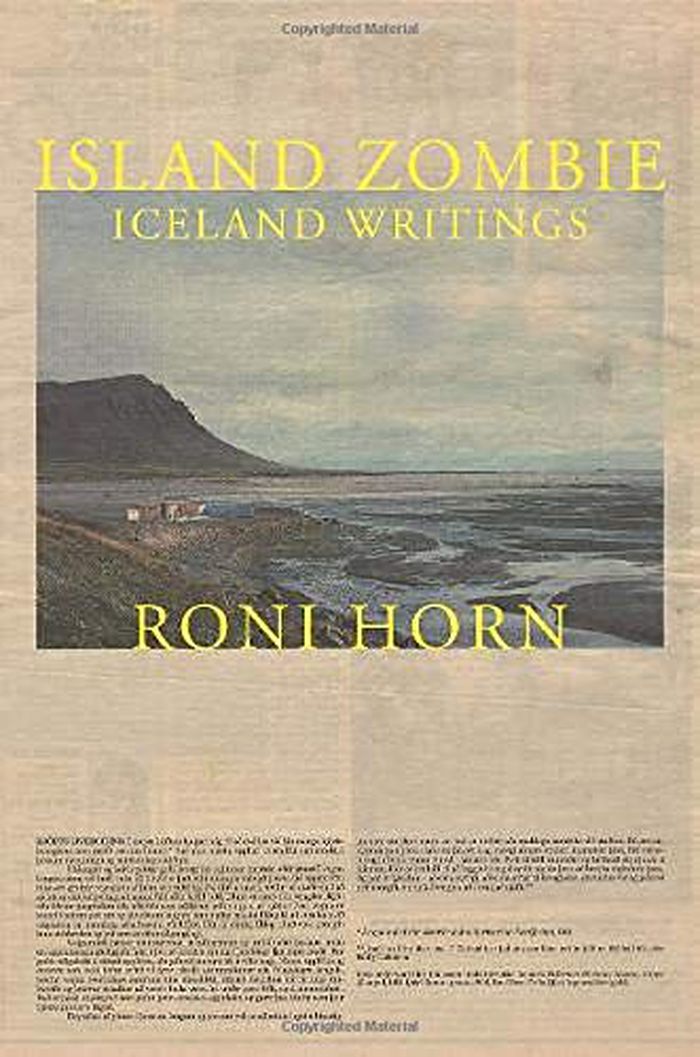
Island zombie: Iceland writings
Actions:
Price:
$45.00
(available to order)
Summary:
Contemporary artist Roni Horn first visited Iceland in 1975 at the age of nineteen, and since then, the island’s treeless expanse has had an enduring hold on Horn’s creative work. Through a series of remarkable and poetic reflections, vignettes, episodes, and illustrated essays, ''Island zombie'' distills the artist’s lifelong experience of Iceland’s natural environment. Together, these pieces offer an unforgettable exploration of the indefinable and inescapable force of remote, elemental places, and provide a sustained look at how an island and its atmosphere can take possession of the innermost self. ''Island zombie'' is a meditation on being present. It vividly conveys Horn’s experiences, from the deeply profound to the joyful and absurd. Through powerful evocations of the changing weather and other natural phenomena- the violence of the wind, the often aggressive birds, the imposing influence of glaciers, and the ubiquitous presence of water in all its variety- we come to understand the author’s abiding need for Iceland, a place uniquely essential to Horn’s creative and spiritual life. The dramatic surroundings provoke examinations of self-sufficiency and isolation, and these ruminations summon a range of cultural companions, including El Greco, Emily Dickinson, Judy Garland, Wallace Stevens, Edgar Allan Poe, William Morris, and Rachel Carson. While brilliantly portraying nature’s sublime energy, Horn also confronts issues of consumption, destruction, and loss, as the industrial and man-made encroach on Icelandic wilderness.
Island zombie: Iceland writings
Actions:
Price:
$45.00
(available to order)
Summary:
Contemporary artist Roni Horn first visited Iceland in 1975 at the age of nineteen, and since then, the island’s treeless expanse has had an enduring hold on Horn’s creative work. Through a series of remarkable and poetic reflections, vignettes, episodes, and illustrated essays, ''Island zombie'' distills the artist’s lifelong experience of Iceland’s natural environment. Together, these pieces offer an unforgettable exploration of the indefinable and inescapable force of remote, elemental places, and provide a sustained look at how an island and its atmosphere can take possession of the innermost self. ''Island zombie'' is a meditation on being present. It vividly conveys Horn’s experiences, from the deeply profound to the joyful and absurd. Through powerful evocations of the changing weather and other natural phenomena- the violence of the wind, the often aggressive birds, the imposing influence of glaciers, and the ubiquitous presence of water in all its variety- we come to understand the author’s abiding need for Iceland, a place uniquely essential to Horn’s creative and spiritual life. The dramatic surroundings provoke examinations of self-sufficiency and isolation, and these ruminations summon a range of cultural companions, including El Greco, Emily Dickinson, Judy Garland, Wallace Stevens, Edgar Allan Poe, William Morris, and Rachel Carson. While brilliantly portraying nature’s sublime energy, Horn also confronts issues of consumption, destruction, and loss, as the industrial and man-made encroach on Icelandic wilderness.
Form:
books
books
Publication:
December 2020
December 2020
Form:
books
books
Title:
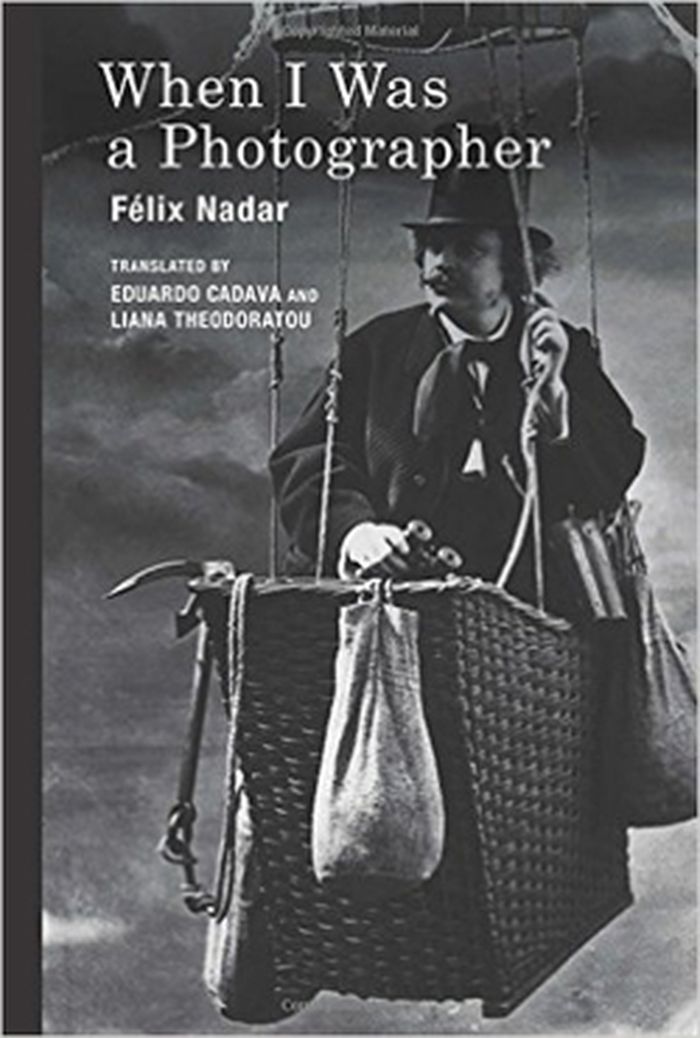
When I was a photographer
When I was a photographer
Actions:
Price:
$32.95
(available to order)
Summary:
Celebrated nineteenth-century photographer—and writer, actor, caricaturist, inventor, and balloonist—Félix Nadar published this memoir of his photographic life in 1900 at the age of eighty. Composed as a series of vignettes (we might view them as a series of “written photographs”), this intelligent and witty book offers stories of Nadar’s experiences in the early years of(...)
$32.95
(available to order)
Summary:
Celebrated nineteenth-century photographer—and writer, actor, caricaturist, inventor, and balloonist—Félix Nadar published this memoir of his photographic life in 1900 at the age of eighty. Composed as a series of vignettes (we might view them as a series of “written photographs”), this intelligent and witty book offers stories of Nadar’s experiences in the early years of(...)
Title:
When I was a photographer
Actions:
Price:
$32.95
(available to order)
Summary:
Celebrated nineteenth-century photographer—and writer, actor, caricaturist, inventor, and balloonist—Félix Nadar published this memoir of his photographic life in 1900 at the age of eighty. Composed as a series of vignettes (we might view them as a series of “written photographs”), this intelligent and witty book offers stories of Nadar’s experiences in the early years of photography, memorable character sketches, and meditations on history. It is a classic work, cited by writers from Walter Benjamin to Rosalind Krauss. This is its first and only complete English translation. In When I Was a Photographer, Nadar tells us about his descent into the sewers and catacombs of Paris, where he experimented with the use of artificial lighting, and his ascent into the skies over Paris in a hot air balloon, from which he took the first aerial photographs. He recounts his “postal photography” during the 1870-1871 Siege of Paris—an amazing scheme involving micrographic images and carrier pigeons. He describes technical innovations and important figures in photography, and offers a thoughtful consideration of society and culture; but he also writes entertainingly about such matters as Balzac’s terror of being photographed, the impact of a photograph on a celebrated murder case, and the difference between male and female clients. Nadar’s memoir captures, as surely as his photographs, traces of a vanished era.
When I was a photographer
Actions:
Price:
$32.95
(available to order)
Summary:
Celebrated nineteenth-century photographer—and writer, actor, caricaturist, inventor, and balloonist—Félix Nadar published this memoir of his photographic life in 1900 at the age of eighty. Composed as a series of vignettes (we might view them as a series of “written photographs”), this intelligent and witty book offers stories of Nadar’s experiences in the early years of photography, memorable character sketches, and meditations on history. It is a classic work, cited by writers from Walter Benjamin to Rosalind Krauss. This is its first and only complete English translation. In When I Was a Photographer, Nadar tells us about his descent into the sewers and catacombs of Paris, where he experimented with the use of artificial lighting, and his ascent into the skies over Paris in a hot air balloon, from which he took the first aerial photographs. He recounts his “postal photography” during the 1870-1871 Siege of Paris—an amazing scheme involving micrographic images and carrier pigeons. He describes technical innovations and important figures in photography, and offers a thoughtful consideration of society and culture; but he also writes entertainingly about such matters as Balzac’s terror of being photographed, the impact of a photograph on a celebrated murder case, and the difference between male and female clients. Nadar’s memoir captures, as surely as his photographs, traces of a vanished era.
Form:
books
books
Publication:
August 2015
August 2015
Subject:
Theory of Photography
Theory of Photography
Form:
audio
audio
Title:
Pulsar Threads.
Pulsar Threads.
Actions:
Description:
1 online resource.
Author:
Subject:
Publication:
[Place of publication not identified] : Lateral Addition, 2024.
[Place of publication not identified] : Lateral Addition, 2024.
Form:
audio
audio
Publication:
[Place of publication not identified] : Lateral Addition, 2024.
[Place of publication not identified] : Lateral Addition, 2024.
Author:
Subject:
Form:
books
books
Actions:
Holdings:
Description:
433 pages, 8 unnumbered pages of plates : illustrations (some color), maps, plans (some color) ; 24 cm.
Description:
433 pages, 8 unnumbered pages of plates : illustrations (some color), maps, plans (some color) ; 24 cm.
Author:
Subject:
Publication:
Paris : Publications de la Sorbonne : Comité d'histoire de la Ville de Paris, 2012.
Paris : Publications de la Sorbonne : Comité d'histoire de la Ville de Paris, 2012.
Title:
Agrandir Paris, 1860-1970 / sous la direction de Florence Bourillon et Annie Fourcaut.
Actions:
Holdings:
Description:
433 pages, 8 unnumbered pages of plates : illustrations (some color), maps, plans (some color) ; 24 cm.
Agrandir Paris, 1860-1970 / sous la direction de Florence Bourillon et Annie Fourcaut.
Actions:
Holdings:
Description:
433 pages, 8 unnumbered pages of plates : illustrations (some color), maps, plans (some color) ; 24 cm.
Form:
books
books
Publication:
Paris : Publications de la Sorbonne : Comité d'histoire de la Ville de Paris, 2012.
Paris : Publications de la Sorbonne : Comité d'histoire de la Ville de Paris, 2012.
Author:
Subject:


