


6653 Results
Form:
books
books
Price:
$41.99
(available in store)
Summary:
Americans spend, on average, 90 percent of their lives indoors, with two-thirds of that time spent in their homes. Globally, the construction and maintenance of residential buildings account for a staggering portion of carbon emissions. In this timely and fascinating work, architect and urban-planning scholar Stefan Al deftly weaves together archaeology, engineering,(...)
$41.99
(available in store)
Summary:
Americans spend, on average, 90 percent of their lives indoors, with two-thirds of that time spent in their homes. Globally, the construction and maintenance of residential buildings account for a staggering portion of carbon emissions. In this timely and fascinating work, architect and urban-planning scholar Stefan Al deftly weaves together archaeology, engineering,(...)
Title:
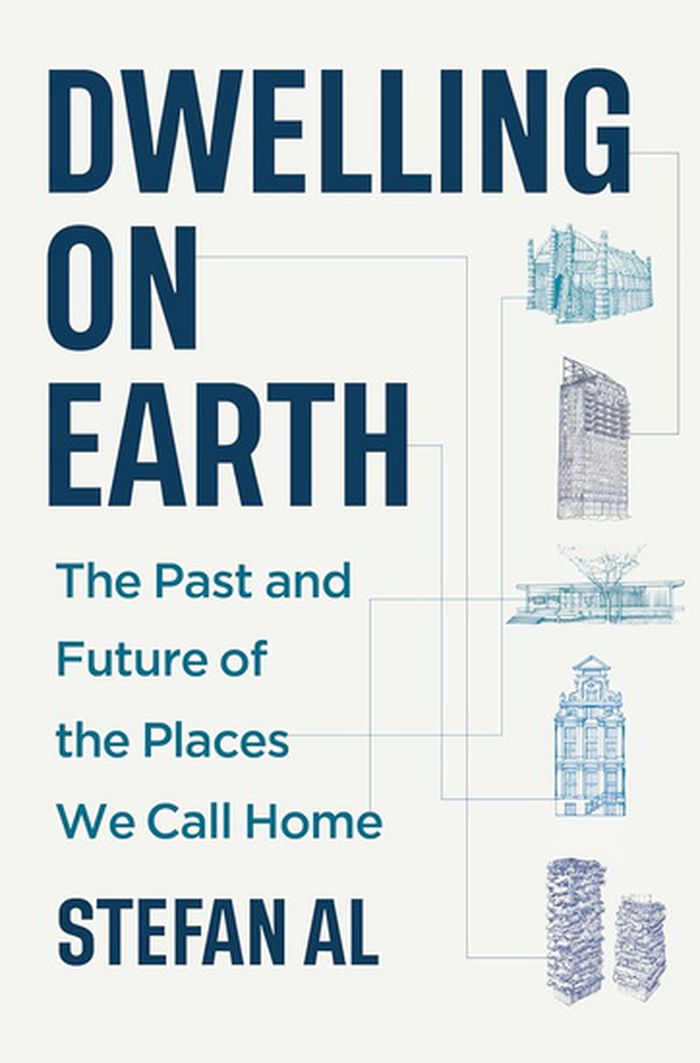
Dwelling on Earth: the past and future of the places we call home
Actions:
Price:
$41.99
(available in store)
Summary:
Americans spend, on average, 90 percent of their lives indoors, with two-thirds of that time spent in their homes. Globally, the construction and maintenance of residential buildings account for a staggering portion of carbon emissions. In this timely and fascinating work, architect and urban-planning scholar Stefan Al deftly weaves together archaeology, engineering, social history, and environmental science to explain how our homes have developed through the ages and in turn shaped civilization and the planet itself. From tiny pit-houses in the Levant and Mesoamerica thousands of years ago to soaring skyscrapers in Dubai, New York, and Shanghai today, ''Dwelling on Earth'' takes readers on a swift and absorbing tour of the evolution of human habitation. Whisking readers from ancient Pompeii to contemporary Hong Kong, industrial-age Liverpool to postwar Levittown, Al shows how our choices in housing have both reflected and affected ideas about gender roles, privacy, and comfort. Discover how seemingly mundane elements—like door-knockers and corridors—have altered everyday interactions, and how material choices have remade the planet's surface. He also confronts the darker side of domesticity, exposing the unintended consequences of our architectural choices across millennia, including smoke-filled Neolithic dwellings, deadly fires in crowded Roman apartment buildings, and worsening social isolation in car-dependent suburbs. Finally, he examines the myths and reality of future housing, including 3D-printed homes and space architecture built by robots.
Dwelling on Earth: the past and future of the places we call home
Actions:
Price:
$41.99
(available in store)
Summary:
Americans spend, on average, 90 percent of their lives indoors, with two-thirds of that time spent in their homes. Globally, the construction and maintenance of residential buildings account for a staggering portion of carbon emissions. In this timely and fascinating work, architect and urban-planning scholar Stefan Al deftly weaves together archaeology, engineering, social history, and environmental science to explain how our homes have developed through the ages and in turn shaped civilization and the planet itself. From tiny pit-houses in the Levant and Mesoamerica thousands of years ago to soaring skyscrapers in Dubai, New York, and Shanghai today, ''Dwelling on Earth'' takes readers on a swift and absorbing tour of the evolution of human habitation. Whisking readers from ancient Pompeii to contemporary Hong Kong, industrial-age Liverpool to postwar Levittown, Al shows how our choices in housing have both reflected and affected ideas about gender roles, privacy, and comfort. Discover how seemingly mundane elements—like door-knockers and corridors—have altered everyday interactions, and how material choices have remade the planet's surface. He also confronts the darker side of domesticity, exposing the unintended consequences of our architectural choices across millennia, including smoke-filled Neolithic dwellings, deadly fires in crowded Roman apartment buildings, and worsening social isolation in car-dependent suburbs. Finally, he examines the myths and reality of future housing, including 3D-printed homes and space architecture built by robots.
Form:
books
books
Publication:
April 2026
April 2026
Subject:
Social
Social
Form:
books
books
Price:
$24.95
(available to order)
Summary:
Le patrimoine culturel connaît actuellement un petit âge d'or qui se manifeste autant par la multiplication des objets et des héritages immatériels que par le développement des institutions patrimoniales ou encore par l'adoption de politiques du patrimoine.
$24.95
(available to order)
Summary:
Le patrimoine culturel connaît actuellement un petit âge d'or qui se manifeste autant par la multiplication des objets et des héritages immatériels que par le développement des institutions patrimoniales ou encore par l'adoption de politiques du patrimoine.
Subject:
Architecture du Québec
Architecture du Québec
Publication:
January 2012
January 2012
Title:
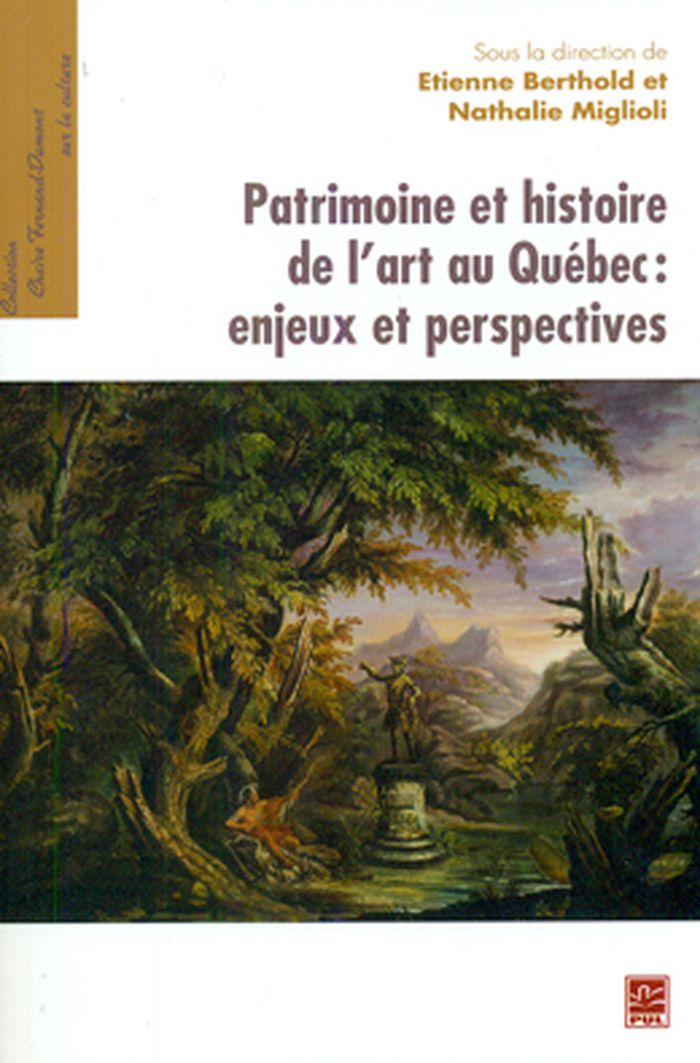
Patrimoine et histoire de l'art au Québec: enjeux et perspectives
Actions:
Price:
$24.95
(available to order)
Summary:
Le patrimoine culturel connaît actuellement un petit âge d'or qui se manifeste autant par la multiplication des objets et des héritages immatériels que par le développement des institutions patrimoniales ou encore par l'adoption de politiques du patrimoine.
Patrimoine et histoire de l'art au Québec: enjeux et perspectives
Actions:
Price:
$24.95
(available to order)
Summary:
Le patrimoine culturel connaît actuellement un petit âge d'or qui se manifeste autant par la multiplication des objets et des héritages immatériels que par le développement des institutions patrimoniales ou encore par l'adoption de politiques du patrimoine.
Form:
books
books
Publication:
January 2012
January 2012
Subject:
Architecture du Québec
Architecture du Québec
Form:
books
books
Title:
Le Mont-Saint-Michel
Le Mont-Saint-Michel
Actions:
Price:
$18.50
(available to order)
Summary:
Situé aux confins de la Normandie et de la Bretagne, l'abbaye du Mont-Saint-Michel a été l'un des plus fabuleux chantiers du Moyen Âge. Ce petit livre retrace l'histoire des lieux et sert également de guide de visite.
$18.50
(available to order)
Summary:
Situé aux confins de la Normandie et de la Bretagne, l'abbaye du Mont-Saint-Michel a été l'un des plus fabuleux chantiers du Moyen Âge. Ce petit livre retrace l'histoire des lieux et sert également de guide de visite.
Title:
Le Mont-Saint-Michel
Actions:
Price:
$18.50
(available to order)
Summary:
Situé aux confins de la Normandie et de la Bretagne, l'abbaye du Mont-Saint-Michel a été l'un des plus fabuleux chantiers du Moyen Âge. Ce petit livre retrace l'histoire des lieux et sert également de guide de visite.
Le Mont-Saint-Michel
Actions:
Price:
$18.50
(available to order)
Summary:
Situé aux confins de la Normandie et de la Bretagne, l'abbaye du Mont-Saint-Michel a été l'un des plus fabuleux chantiers du Moyen Âge. Ce petit livre retrace l'histoire des lieux et sert également de guide de visite.
Form:
books
books
Publication:
March 1998, Paris
March 1998, Paris
Subject:
History until 1900
History until 1900
Form:
books
books
Title:
London : bread and circuses
London : bread and circuses
Actions:
Price:
$29.00
(available to order)
Summary:
Wherever and whenever state and church, state and autocracy, political and architectural ambition have met and loved one another hungrily, domes have raised their imperious, lofty heads. At once magnificent and messy, old-fashioned and ultra-modern, opulent and squalid, London is something of a mongrel city, cross-bred over the centuries from cut-throat commerce, high(...)
$29.00
(available to order)
Summary:
Wherever and whenever state and church, state and autocracy, political and architectural ambition have met and loved one another hungrily, domes have raised their imperious, lofty heads. At once magnificent and messy, old-fashioned and ultra-modern, opulent and squalid, London is something of a mongrel city, cross-bred over the centuries from cut-throat commerce, high(...)
Subject:
Architecture since 1900, Europe
Architecture since 1900, Europe
Publication:
November 2001, London
November 2001, London
Title:
London : bread and circuses
Actions:
Price:
$29.00
(available to order)
Summary:
Wherever and whenever state and church, state and autocracy, political and architectural ambition have met and loved one another hungrily, domes have raised their imperious, lofty heads. At once magnificent and messy, old-fashioned and ultra-modern, opulent and squalid, London is something of a mongrel city, cross-bred over the centuries from cut-throat commerce, high finance and unrestrained creativity. For all its inventiveness, however, it is now also a city unable to provide its citizens with decent public transport, housing or services, beset and betrayed by governments who take from it but refuse to give back. In the lead-up to the much-hyped Millennium, a fortune was spent on lavish building projects—giant wheels, great courts, titanic art galleries, ambitious museums, a Brobdingnagian dome—but little in the way of public services, intelligent urban planning and infrastructure except by default. Has the right kind of money been spent on the wrong sort of projects? Who, in this pluralistic age, will cut through the layers of bureaucracy to restore some of the city’s unruly splendour? In this elegant and polemical book, the architecture critic Jonathan Glancey explores London’s Millennial follies and asks how and where London might now channel its energies. Combining anecdote and analysis with a sustained critique of the way the city is governed and financed, he draws a detailed picture of the state London’s in and speculates on how it might be transformed.
London : bread and circuses
Actions:
Price:
$29.00
(available to order)
Summary:
Wherever and whenever state and church, state and autocracy, political and architectural ambition have met and loved one another hungrily, domes have raised their imperious, lofty heads. At once magnificent and messy, old-fashioned and ultra-modern, opulent and squalid, London is something of a mongrel city, cross-bred over the centuries from cut-throat commerce, high finance and unrestrained creativity. For all its inventiveness, however, it is now also a city unable to provide its citizens with decent public transport, housing or services, beset and betrayed by governments who take from it but refuse to give back. In the lead-up to the much-hyped Millennium, a fortune was spent on lavish building projects—giant wheels, great courts, titanic art galleries, ambitious museums, a Brobdingnagian dome—but little in the way of public services, intelligent urban planning and infrastructure except by default. Has the right kind of money been spent on the wrong sort of projects? Who, in this pluralistic age, will cut through the layers of bureaucracy to restore some of the city’s unruly splendour? In this elegant and polemical book, the architecture critic Jonathan Glancey explores London’s Millennial follies and asks how and where London might now channel its energies. Combining anecdote and analysis with a sustained critique of the way the city is governed and financed, he draws a detailed picture of the state London’s in and speculates on how it might be transformed.
Form:
books
books
Publication:
November 2001, London
November 2001, London
Subject:
Architecture since 1900, Europe
Architecture since 1900, Europe
Form:
books
books
Title:
Shaping things
Shaping things
Actions:
Price:
$27.50
(available to order)
Summary:
Sterling offers a brilliant, often hilarious history of shaped things. We have moved from an age of artefacts, made by hand, through complex machines, to the current era of "gizmos." New forms of design and manufacture are appearing that lack historical precedent, he writes; but the production methods, using archaic forms of energy and materials that are finite and toxic,(...)
$27.50
(available to order)
Summary:
Sterling offers a brilliant, often hilarious history of shaped things. We have moved from an age of artefacts, made by hand, through complex machines, to the current era of "gizmos." New forms of design and manufacture are appearing that lack historical precedent, he writes; but the production methods, using archaic forms of energy and materials that are finite and toxic,(...)
Title:
Shaping things
Actions:
Price:
$27.50
(available to order)
Summary:
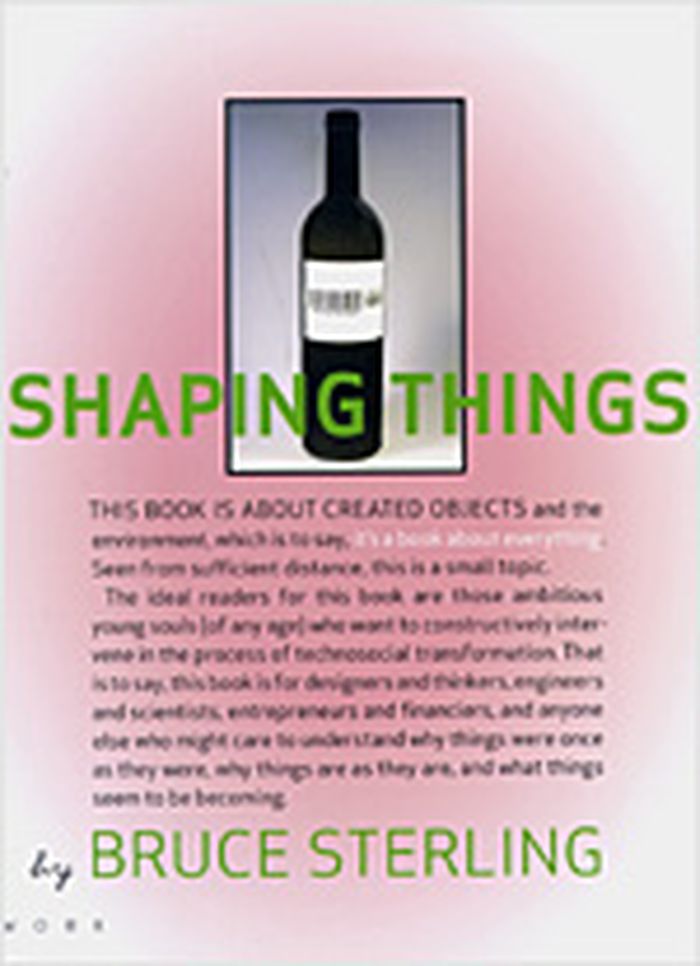
Sterling offers a brilliant, often hilarious history of shaped things. We have moved from an age of artefacts, made by hand, through complex machines, to the current era of "gizmos." New forms of design and manufacture are appearing that lack historical precedent, he writes; but the production methods, using archaic forms of energy and materials that are finite and toxic, are not sustainable. The future will see a new kind of object - we have the primitive forms of them now in our pockets and briefcases: user-alterable, baroquely multi-featured, and programmable - that will be sustainable, enhanceable, and uniquely identifiable. Sterling coins the term "spime" for them, these future manufactured objects with informational support so extensive and rich that they are regarded as material instantiations of an immaterial system. Spimes are designed on screens, fabricated by digital means, and precisely tracked through space and time. They are made of substances that can be folded back into the production stream of future spimes, challenging all of us to become involved in their production. Spimes are coming, says Sterling. We will need these objects in order to live; we won't be able to surrender their advantages without awful consequences. The vision of ‘Shaping Things’ is given material form by the intricate design of Lorraine Wild. ‘Shaping Things’ is for designers and thinkers, engineers and scientists, entrepreneurs and financiers - and anyone who wants to understand and be part of the process of techno-social transformation.
Shaping things
Actions:
Price:
$27.50
(available to order)
Summary:
Sterling offers a brilliant, often hilarious history of shaped things. We have moved from an age of artefacts, made by hand, through complex machines, to the current era of "gizmos." New forms of design and manufacture are appearing that lack historical precedent, he writes; but the production methods, using archaic forms of energy and materials that are finite and toxic, are not sustainable. The future will see a new kind of object - we have the primitive forms of them now in our pockets and briefcases: user-alterable, baroquely multi-featured, and programmable - that will be sustainable, enhanceable, and uniquely identifiable. Sterling coins the term "spime" for them, these future manufactured objects with informational support so extensive and rich that they are regarded as material instantiations of an immaterial system. Spimes are designed on screens, fabricated by digital means, and precisely tracked through space and time. They are made of substances that can be folded back into the production stream of future spimes, challenging all of us to become involved in their production. Spimes are coming, says Sterling. We will need these objects in order to live; we won't be able to surrender their advantages without awful consequences. The vision of ‘Shaping Things’ is given material form by the intricate design of Lorraine Wild. ‘Shaping Things’ is for designers and thinkers, engineers and scientists, entrepreneurs and financiers - and anyone who wants to understand and be part of the process of techno-social transformation.
Form:
books
books
Publication:
September 2005, Cambridge, Massachusetts
September 2005, Cambridge, Massachusetts
Subject:
Design Theory
Design Theory
Form:
books
books

Actions:
Price:
$22.00
(available to order)
Summary:
Cities participate in the production of meaning by providing places populated with objects for words to refer to. Inscriptions on these objects (labels, billboards, newspapers, graffiti) provide another layer of meaning. And today, the flow of digital information - from one device to another in the urban scene - creates a digital network that also exists in physical(...)
$22.00
(available to order)
Summary:
Cities participate in the production of meaning by providing places populated with objects for words to refer to. Inscriptions on these objects (labels, billboards, newspapers, graffiti) provide another layer of meaning. And today, the flow of digital information - from one device to another in the urban scene - creates a digital network that also exists in physical(...)
Subject:
Architectural Theory
Architectural Theory
Publication:
January 1900, Cambridge, Mass.
January 1900, Cambridge, Mass.
Title:
Placing words : symbols, space and the city
Actions:
Price:
$22.00
(available to order)
Summary:
Cities participate in the production of meaning by providing places populated with objects for words to refer to. Inscriptions on these objects (labels, billboards, newspapers, graffiti) provide another layer of meaning. And today, the flow of digital information - from one device to another in the urban scene - creates a digital network that also exists in physical space. "Placing Words" examines this emerging system of spaces, flows, and practices in a series of short essays - snapshots of the city in the twenty-first century. Mitchell questions the necessity of flashy downtown office towers in an age of corporate web sites. He casts the shocked-and-awed Baghdad as a contemporary Guernica. He describes architectural makeovers throughout history, listing Le Corbusier's Fab Five Points of difference between new and old architecture, and he discusses the architecture of Manolo Blahniks. He pens an open letter to the Secretary of Defense recommending architectural features to include in torture chambers. He compares Baudelaire, the Parisian flaneur, to Spiderman, the Manhattan traceur. He describes the iPod-like galleries of the renovated MoMA and he recognizes the camera phone as the latest step in a process of image mobilization that began when artists stopped painting on walls and began making pictures on small pieces of wood, canvas, or paper. The endless flow of information, he makes clear, is not only more pervasive and efficient than ever, it is also generating new cultural complexities.
Placing words : symbols, space and the city
Actions:
Price:
$22.00
(available to order)
Summary:
Cities participate in the production of meaning by providing places populated with objects for words to refer to. Inscriptions on these objects (labels, billboards, newspapers, graffiti) provide another layer of meaning. And today, the flow of digital information - from one device to another in the urban scene - creates a digital network that also exists in physical space. "Placing Words" examines this emerging system of spaces, flows, and practices in a series of short essays - snapshots of the city in the twenty-first century. Mitchell questions the necessity of flashy downtown office towers in an age of corporate web sites. He casts the shocked-and-awed Baghdad as a contemporary Guernica. He describes architectural makeovers throughout history, listing Le Corbusier's Fab Five Points of difference between new and old architecture, and he discusses the architecture of Manolo Blahniks. He pens an open letter to the Secretary of Defense recommending architectural features to include in torture chambers. He compares Baudelaire, the Parisian flaneur, to Spiderman, the Manhattan traceur. He describes the iPod-like galleries of the renovated MoMA and he recognizes the camera phone as the latest step in a process of image mobilization that began when artists stopped painting on walls and began making pictures on small pieces of wood, canvas, or paper. The endless flow of information, he makes clear, is not only more pervasive and efficient than ever, it is also generating new cultural complexities.
Form:
books
books
Publication:
January 1900, Cambridge, Mass.
January 1900, Cambridge, Mass.
Subject:
Architectural Theory
Architectural Theory
Form:
books
books
Actions:
Price:
$45.00
(available to order)
Summary:
"The Canadians" playfully and affectionately reimagines one of the most revered photography books of the 20th century, Robert Frank’s The Americans. The source for the imagery is the print archive of The Globe and Mail, which contains more than 500,000 prints—24,000 of which have been donated to the newly formed Canadian Institute of Photography, housed within the(...)
$45.00
(available to order)
Summary:
"The Canadians" playfully and affectionately reimagines one of the most revered photography books of the 20th century, Robert Frank’s The Americans. The source for the imagery is the print archive of The Globe and Mail, which contains more than 500,000 prints—24,000 of which have been donated to the newly formed Canadian Institute of Photography, housed within the(...)
Subject:
Photography Collections
Photography Collections
Publication:
September 2017
September 2017
Title:
The Canadians: photographs from the Globe and Mail archives
Actions:
Price:
$45.00
(available to order)
Summary:
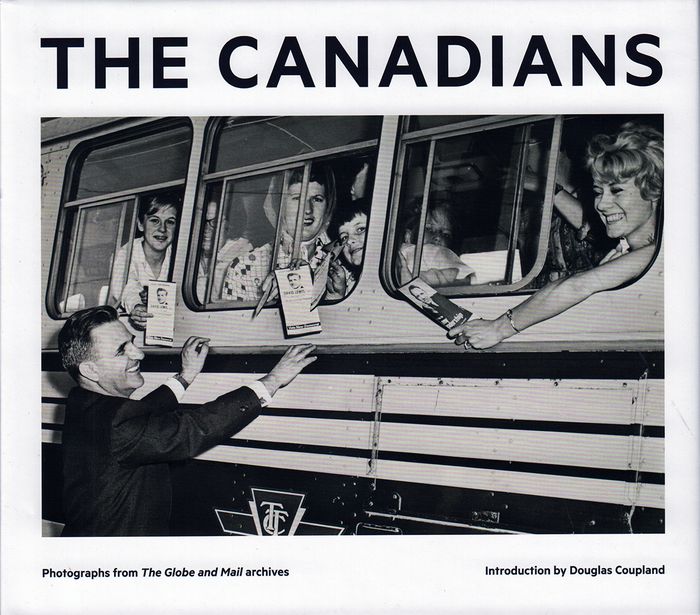
"The Canadians" playfully and affectionately reimagines one of the most revered photography books of the 20th century, Robert Frank’s The Americans. The source for the imagery is the print archive of The Globe and Mail, which contains more than 500,000 prints—24,000 of which have been donated to the newly formed Canadian Institute of Photography, housed within the National Gallery of Canada. Nearly 80 of these photographs have been selected for this book, and also form the basis for a national touring exhibition. These functionary press photographs, made to illustrate news stories—the state of the roads after a severe winter; a politician on the campaign trail; the opening of a new laundromat—hold no pretentions to be works of photographic art. However, taken together, they describe Canadian culture during an era of great transformation. Published in association with the Archive of Modern Conflict, the book begins with an insightful and irreverent introduction by Douglas Coupland, bringing together themes illuminated in these photographs, and taking us on a guided tour of a Canada gone, but not forgotten. "How strange it is to look at these photos of a Canada that was almost dead when I was a child," he writes, "the Canada of my parents and my grandparents, the Canada of the late 1950s and early ‘60s, a country in which, it would seem, people were born, became teenagers, and then, magically, at the age of 21, turned into chain-smoking 50-year olds with undiagnosed cancers."
The Canadians: photographs from the Globe and Mail archives
Actions:
Price:
$45.00
(available to order)
Summary:
"The Canadians" playfully and affectionately reimagines one of the most revered photography books of the 20th century, Robert Frank’s The Americans. The source for the imagery is the print archive of The Globe and Mail, which contains more than 500,000 prints—24,000 of which have been donated to the newly formed Canadian Institute of Photography, housed within the National Gallery of Canada. Nearly 80 of these photographs have been selected for this book, and also form the basis for a national touring exhibition. These functionary press photographs, made to illustrate news stories—the state of the roads after a severe winter; a politician on the campaign trail; the opening of a new laundromat—hold no pretentions to be works of photographic art. However, taken together, they describe Canadian culture during an era of great transformation. Published in association with the Archive of Modern Conflict, the book begins with an insightful and irreverent introduction by Douglas Coupland, bringing together themes illuminated in these photographs, and taking us on a guided tour of a Canada gone, but not forgotten. "How strange it is to look at these photos of a Canada that was almost dead when I was a child," he writes, "the Canada of my parents and my grandparents, the Canada of the late 1950s and early ‘60s, a country in which, it would seem, people were born, became teenagers, and then, magically, at the age of 21, turned into chain-smoking 50-year olds with undiagnosed cancers."
Form:
books
books
Publication:
September 2017
September 2017
Subject:
Photography Collections
Photography Collections
Form:
books
books
Title:
Privacy a manifesto
Privacy a manifesto
Actions:
Price:
$24.95
(available to order)
Summary:
What ever happened to privacy? The simple right to be left alone? Surveillance cameras track our movements. Governments monitor our phone calls, e-mails, and Internet habits. Insurance companies know what drugs we take. Banks and credit agencies keep tabs on our smallest purchases. And new technologies - which gather, store, and share information as never before - have(...)
$24.95
(available to order)
Summary:
What ever happened to privacy? The simple right to be left alone? Surveillance cameras track our movements. Governments monitor our phone calls, e-mails, and Internet habits. Insurance companies know what drugs we take. Banks and credit agencies keep tabs on our smallest purchases. And new technologies - which gather, store, and share information as never before - have(...)
Title:
Privacy a manifesto
Actions:
Price:
$24.95
(available to order)
Summary:
What ever happened to privacy? The simple right to be left alone? Surveillance cameras track our movements. Governments monitor our phone calls, e-mails, and Internet habits. Insurance companies know what drugs we take. Banks and credit agencies keep tabs on our smallest purchases. And new technologies - which gather, store, and share information as never before - have made all of this possible. But, as the acclaimed social thinker Wolfgang Sofsky shows in this brief and powerful defense of privacy, neither technology nor fears of terrorism deserve all the blame. Rather, through indifference and the desire for attention, we have been accomplices in the loss of our privacy. When we aren't resigning ourselves to privacy's disappearance as the inevitable price of living in a new age, we are eagerly embracing opportunities to divulge personal information to people we know - and, increasingly, to people we don't. Dramatically demonstrating how much privacy we have already surrendered, Sofsky describes a day in the life of an average modern citizen - in other words, a person under almost constant scrutiny. He also briefly traces the changing status of privacy from ancient Rome to today, explains how liberty and freedom of thought depend on privacy, and points to some of the places where privacy is under greatest threat, from health to personal space. Privacy is a timely and compelling reminder of just how important privacy is - and just how devastating its loss would be.
Privacy a manifesto
Actions:
Price:
$24.95
(available to order)
Summary:
What ever happened to privacy? The simple right to be left alone? Surveillance cameras track our movements. Governments monitor our phone calls, e-mails, and Internet habits. Insurance companies know what drugs we take. Banks and credit agencies keep tabs on our smallest purchases. And new technologies - which gather, store, and share information as never before - have made all of this possible. But, as the acclaimed social thinker Wolfgang Sofsky shows in this brief and powerful defense of privacy, neither technology nor fears of terrorism deserve all the blame. Rather, through indifference and the desire for attention, we have been accomplices in the loss of our privacy. When we aren't resigning ourselves to privacy's disappearance as the inevitable price of living in a new age, we are eagerly embracing opportunities to divulge personal information to people we know - and, increasingly, to people we don't. Dramatically demonstrating how much privacy we have already surrendered, Sofsky describes a day in the life of an average modern citizen - in other words, a person under almost constant scrutiny. He also briefly traces the changing status of privacy from ancient Rome to today, explains how liberty and freedom of thought depend on privacy, and points to some of the places where privacy is under greatest threat, from health to personal space. Privacy is a timely and compelling reminder of just how important privacy is - and just how devastating its loss would be.
Form:
books
books
Publication:
October 2008, Princeton, Oxford
October 2008, Princeton, Oxford
Subject:
Critical Theory
Critical Theory
Form:
books
books
Price:
$47.00
(available to order)
Summary:
Political conflicts, humanitarian disasters, wars and migrations – we live in an age of global unrest and discontinuity. While official reactions consist in the search for means of stabilization and restraint, the dynamics of deregulation are giving rise to a situation characterized by global parallel systems: parallel architectures, parallel societies, parallel(...)
$47.00
(available to order)
Summary:
Political conflicts, humanitarian disasters, wars and migrations – we live in an age of global unrest and discontinuity. While official reactions consist in the search for means of stabilization and restraint, the dynamics of deregulation are giving rise to a situation characterized by global parallel systems: parallel architectures, parallel societies, parallel(...)
Subject:
Architectural Theory
Architectural Theory
Publication:
August 2008, Rotterdam
August 2008, Rotterdam
Title:
Networked cultures: parallel architectures and the politics of space
Actions:
Price:
$47.00
(available to order)
Summary:
Political conflicts, humanitarian disasters, wars and migrations – we live in an age of global unrest and discontinuity. While official reactions consist in the search for means of stabilization and restraint, the dynamics of deregulation are giving rise to a situation characterized by global parallel systems: parallel architectures, parallel societies, parallel lives. This book offers an insight into the complex spatial and social realities of globalization, from city-like informal markets in Moscow and the post-war self-urbanization in Kosovo to the border economies of the Mediterranean and the parallel worlds of today’s burgeoning megacities. In this state of uncertainties, networks have become the most powerful tool in how we organize our lives. The emerging struggle between network formations produces a space that is both fragmented and contested, yet testifies to the creativity of its inhabitants. As a result, our cities have become topologies of overlapping realities and narratives as much as they are geographical entities. Networked Cultures traces these conflictual negotiations in dialogue with artists, architects, curators and theorists whose work explores possibilities for a multi-inhabitation of territories and narratives across cultural, social or geographic boundaries. Their shared knowledge and accompanying case studies provide stirring insights as well as imaginative encounters with a world of networks – our world. The enclosed DVD features conversations with the contributors to this book that follow the thematic strands along which the collaborative format of Networked Cultures has evolved: Network Creativity – Contested Spaces – Trading Places – Parallel Worlds.
Networked cultures: parallel architectures and the politics of space
Actions:
Price:
$47.00
(available to order)
Summary:
Political conflicts, humanitarian disasters, wars and migrations – we live in an age of global unrest and discontinuity. While official reactions consist in the search for means of stabilization and restraint, the dynamics of deregulation are giving rise to a situation characterized by global parallel systems: parallel architectures, parallel societies, parallel lives. This book offers an insight into the complex spatial and social realities of globalization, from city-like informal markets in Moscow and the post-war self-urbanization in Kosovo to the border economies of the Mediterranean and the parallel worlds of today’s burgeoning megacities. In this state of uncertainties, networks have become the most powerful tool in how we organize our lives. The emerging struggle between network formations produces a space that is both fragmented and contested, yet testifies to the creativity of its inhabitants. As a result, our cities have become topologies of overlapping realities and narratives as much as they are geographical entities. Networked Cultures traces these conflictual negotiations in dialogue with artists, architects, curators and theorists whose work explores possibilities for a multi-inhabitation of territories and narratives across cultural, social or geographic boundaries. Their shared knowledge and accompanying case studies provide stirring insights as well as imaginative encounters with a world of networks – our world. The enclosed DVD features conversations with the contributors to this book that follow the thematic strands along which the collaborative format of Networked Cultures has evolved: Network Creativity – Contested Spaces – Trading Places – Parallel Worlds.
Form:
books
books
Publication:
August 2008, Rotterdam
August 2008, Rotterdam
Subject:
Architectural Theory
Architectural Theory
Form:
books
books
Title:
Lost architectures
Lost architectures
Actions:
Price:
$55.50
(available to order)
Summary:
This book stands in opposition to the popular notion that the best architecture is built on compromise. Rather, Neil Spiller argues, the most original and brave products of the architectural mind are often to be found in those projects which, for whatever reason, never came to fruition. (...)
$55.50
(available to order)
Summary:
This book stands in opposition to the popular notion that the best architecture is built on compromise. Rather, Neil Spiller argues, the most original and brave products of the architectural mind are often to be found in those projects which, for whatever reason, never came to fruition. (...)
Subject:
Architecture since 1900, Europe
Architecture since 1900, Europe
Publication:
January 2001, Great Britain
January 2001, Great Britain
Title:
Lost architectures
Actions:
Price:
$55.50
(available to order)
Summary:
This book stands in opposition to the popular notion that the best architecture is built on compromise. Rather, Neil Spiller argues, the most original and brave products of the architectural mind are often to be found in those projects which, for whatever reason, never came to fruition. "Lost Architectures" presents an array of such projects from the last decades of the twentieth century, consituting the unrealised dreams of some of the most inspirational architects working in the period. Most of the projects featured here have seldom, if ever, been published before, and some represent the last hand-drawn work of their creators before the age of the computer finally came into full force. Whilst they do not follow any specific style, these projects embody a spirit defined by Spiller as New Romanticism - a spirit which combines elements of aesthetic decadence and a certain camp mannerism with a love of angularity and mechanised ritual. Some of the architects in question are still in practice, with a great deal of high-profile built work behind them; others have never been recognised as they perhaps should have been. In both cases, this book is an invaluable resource of information and inspiration for students of architecture, as well as for theorists, historians and lay readers. It provides essential exposure for a range of work of great vitality which might otherwise risk being lost in the course of time.
Lost architectures
Actions:
Price:
$55.50
(available to order)
Summary:
This book stands in opposition to the popular notion that the best architecture is built on compromise. Rather, Neil Spiller argues, the most original and brave products of the architectural mind are often to be found in those projects which, for whatever reason, never came to fruition. "Lost Architectures" presents an array of such projects from the last decades of the twentieth century, consituting the unrealised dreams of some of the most inspirational architects working in the period. Most of the projects featured here have seldom, if ever, been published before, and some represent the last hand-drawn work of their creators before the age of the computer finally came into full force. Whilst they do not follow any specific style, these projects embody a spirit defined by Spiller as New Romanticism - a spirit which combines elements of aesthetic decadence and a certain camp mannerism with a love of angularity and mechanised ritual. Some of the architects in question are still in practice, with a great deal of high-profile built work behind them; others have never been recognised as they perhaps should have been. In both cases, this book is an invaluable resource of information and inspiration for students of architecture, as well as for theorists, historians and lay readers. It provides essential exposure for a range of work of great vitality which might otherwise risk being lost in the course of time.
Form:
books
books
Publication:
January 2001, Great Britain
January 2001, Great Britain
Subject:
Architecture since 1900, Europe
Architecture since 1900, Europe


