


7451 Results
Form:
books
books

Price:
$45.00
(available in store)
Summary:
Si le numérique est désormais ubiquitaire, quels sont les angles morts de ce regard dont le centre est partout et la circonférence nulle part ? C'est à cette question qu'essaient de répondre les 145 entrées et la vingtaine de contributeur·trices de ce glossaire. On y trouvera des expressions-clés, familières ou inattendues, des réflexions originales et des synthèses(...)
$45.00
(available in store)
Summary:
Si le numérique est désormais ubiquitaire, quels sont les angles morts de ce regard dont le centre est partout et la circonférence nulle part ? C'est à cette question qu'essaient de répondre les 145 entrées et la vingtaine de contributeur·trices de ce glossaire. On y trouvera des expressions-clés, familières ou inattendues, des réflexions originales et des synthèses(...)
Subject:
Archive, library and the digital
Archive, library and the digital
Publication:
January 2023
January 2023
Title:
Angles morts du numérique ubiquitaire: Un glossaire critique et amoureux
Actions:
Price:
$45.00
(available in store)
Summary:
Si le numérique est désormais ubiquitaire, quels sont les angles morts de ce regard dont le centre est partout et la circonférence nulle part ? C'est à cette question qu'essaient de répondre les 145 entrées et la vingtaine de contributeur·trices de ce glossaire. On y trouvera des expressions-clés, familières ou inattendues, des réflexions originales et des synthèses pédagogiques sur les profondes ambivalences dont ces angles morts sont le lieu. Ces zones d'ombre marquent en effet à la fois des limites et des lacunes des meilleurs efforts de programmation, condamnant certaines réalités à rester exclues de ce qui (se) compte dans notre monde numérisé. C'est pour nous permettre de mieux naviguer parmi ces ambivalences que cet ouvrage propose quelques éléments d'un vocabulaire commun du numérique ubiquitaire. Il se veut critique, parce que les formes prises par les exploitations actuelles du numérique sont souvent inquiétantes et demandent à être restructurées. Il se dit amoureux pour renouer avec une veine d'espoirs et d'émerveillements devant les potentiels d'émancipation et d'intelligence collectives dont reste porteuse la computation.
Angles morts du numérique ubiquitaire: Un glossaire critique et amoureux
Actions:
Price:
$45.00
(available in store)
Summary:
Si le numérique est désormais ubiquitaire, quels sont les angles morts de ce regard dont le centre est partout et la circonférence nulle part ? C'est à cette question qu'essaient de répondre les 145 entrées et la vingtaine de contributeur·trices de ce glossaire. On y trouvera des expressions-clés, familières ou inattendues, des réflexions originales et des synthèses pédagogiques sur les profondes ambivalences dont ces angles morts sont le lieu. Ces zones d'ombre marquent en effet à la fois des limites et des lacunes des meilleurs efforts de programmation, condamnant certaines réalités à rester exclues de ce qui (se) compte dans notre monde numérisé. C'est pour nous permettre de mieux naviguer parmi ces ambivalences que cet ouvrage propose quelques éléments d'un vocabulaire commun du numérique ubiquitaire. Il se veut critique, parce que les formes prises par les exploitations actuelles du numérique sont souvent inquiétantes et demandent à être restructurées. Il se dit amoureux pour renouer avec une veine d'espoirs et d'émerveillements devant les potentiels d'émancipation et d'intelligence collectives dont reste porteuse la computation.
Form:
books
books
Publication:
January 2023
January 2023
Subject:
Archive, library and the digital
Archive, library and the digital
Form:
books
books

Price:
$33.95
(available to order)
Summary:
A social history of AI that finally reveals its roots in the spatial computation of industrial factories and the surveillance of collective behaviour. What is AI? A dominant view describes it as the quest ''to solve intelligence,'' a solution supposedly to be found in the secret logic of the mind or in the deep physiology of the brain, such as in its complex neural(...)
$33.95
(available to order)
Summary:
A social history of AI that finally reveals its roots in the spatial computation of industrial factories and the surveillance of collective behaviour. What is AI? A dominant view describes it as the quest ''to solve intelligence,'' a solution supposedly to be found in the secret logic of the mind or in the deep physiology of the brain, such as in its complex neural(...)
Title:
The eye of the master: A social history of artificial intelligence
Actions:
Price:
$33.95
(available to order)
Summary:
A social history of AI that finally reveals its roots in the spatial computation of industrial factories and the surveillance of collective behaviour. What is AI? A dominant view describes it as the quest ''to solve intelligence,'' a solution supposedly to be found in the secret logic of the mind or in the deep physiology of the brain, such as in its complex neural networks. ''The eye of the master'' argues, to the contrary, that the inner code of AI is shaped not by the imitation of biological intelligence, but the intelligence of labour and social relations, as it is found in Babbage's ''calculating engines'' of the industrial age as well as in the recent algorithms for image recognition and surveillance. The idea that AI may one day become autonomous (or ''sentient'', as someone thought of Google's LaMDA) is pure fantasy. Computer algorithms have always imitated the form of social relations and the organisation of labour in their own inner structure and their purpose remains blind automation. ''The eye of the master'' urges a new literacy on AI for scientists, journalists and new generations of activists, who should recognise that the ''mystery'' of AI is just the automation of labour at the highest degree, not intelligence per se.
The eye of the master: A social history of artificial intelligence
Actions:
Price:
$33.95
(available to order)
Summary:
A social history of AI that finally reveals its roots in the spatial computation of industrial factories and the surveillance of collective behaviour. What is AI? A dominant view describes it as the quest ''to solve intelligence,'' a solution supposedly to be found in the secret logic of the mind or in the deep physiology of the brain, such as in its complex neural networks. ''The eye of the master'' argues, to the contrary, that the inner code of AI is shaped not by the imitation of biological intelligence, but the intelligence of labour and social relations, as it is found in Babbage's ''calculating engines'' of the industrial age as well as in the recent algorithms for image recognition and surveillance. The idea that AI may one day become autonomous (or ''sentient'', as someone thought of Google's LaMDA) is pure fantasy. Computer algorithms have always imitated the form of social relations and the organisation of labour in their own inner structure and their purpose remains blind automation. ''The eye of the master'' urges a new literacy on AI for scientists, journalists and new generations of activists, who should recognise that the ''mystery'' of AI is just the automation of labour at the highest degree, not intelligence per se.
Form:
books
books
Publication:
October 2023
October 2023
Subject:
Archive, library and the digital
Archive, library and the digital
Form:
books
books
Title:
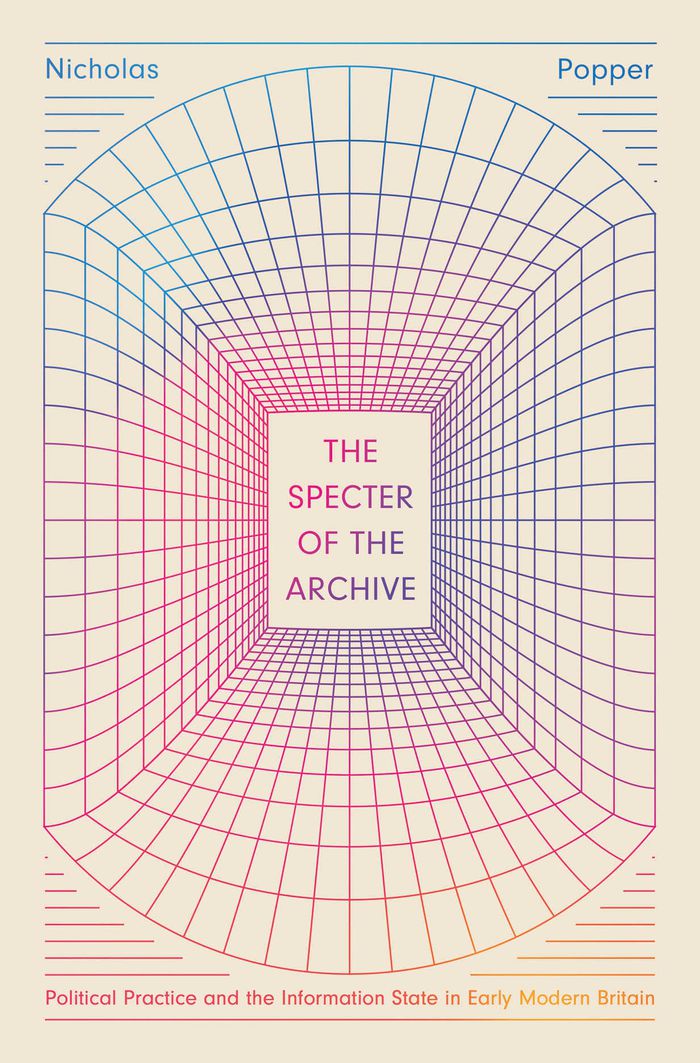
The specter of the archive: Political practice and the information state in early modern Britain
The specter of the archive: Political practice and the information state in early modern Britain
Actions:
Price:
$53.95
(available to order)
Summary:
In ''The Specter of the Archive'', Nicholas Popper shows that earlier eras had to grapple with the same problem—how to deal with too much information at their fingertips. He reveals that early modern Britain was a society newly drowning in paper, a light and durable technology whose spread allowed statesmen to record drafts, memoranda, and other ephemera that might(...)
$53.95
(available to order)
Summary:
In ''The Specter of the Archive'', Nicholas Popper shows that earlier eras had to grapple with the same problem—how to deal with too much information at their fingertips. He reveals that early modern Britain was a society newly drowning in paper, a light and durable technology whose spread allowed statesmen to record drafts, memoranda, and other ephemera that might(...)
Title:
The specter of the archive: Political practice and the information state in early modern Britain
Actions:
Price:
$53.95
(available to order)
Summary:
In ''The Specter of the Archive'', Nicholas Popper shows that earlier eras had to grapple with the same problem—how to deal with too much information at their fingertips. He reveals that early modern Britain was a society newly drowning in paper, a light and durable technology whose spread allowed statesmen to record drafts, memoranda, and other ephemera that might otherwise have been lost, and also made it possible for ordinary people to collect political texts. As original paperwork and copies alike flooded the government, information management became the core of politics. Focusing on two of the primary political archives of early modern England, the Tower of London Record Office and the State Paper Office, Popper traces the circulation of their materials through the government and the broader public sphere.
The specter of the archive: Political practice and the information state in early modern Britain
Actions:
Price:
$53.95
(available to order)
Summary:
In ''The Specter of the Archive'', Nicholas Popper shows that earlier eras had to grapple with the same problem—how to deal with too much information at their fingertips. He reveals that early modern Britain was a society newly drowning in paper, a light and durable technology whose spread allowed statesmen to record drafts, memoranda, and other ephemera that might otherwise have been lost, and also made it possible for ordinary people to collect political texts. As original paperwork and copies alike flooded the government, information management became the core of politics. Focusing on two of the primary political archives of early modern England, the Tower of London Record Office and the State Paper Office, Popper traces the circulation of their materials through the government and the broader public sphere.
Form:
books
books
Publication:
January 2024
January 2024
Subject:
Archive, library and the digital
Archive, library and the digital
Form:
books
books

Actions:
Price:
$33.00
(available in store)
Summary:
How does media architecture distribute suspicion and trust? What is a collage of media architecture? How is media architecture vectored? How can media architecture address privilege? These questions and conceptual provocations aim to challenge the binary of techno-optimism and technological agoraphobia, offering a platform for developing new, critically and contextually(...)
$33.00
(available in store)
Summary:
How does media architecture distribute suspicion and trust? What is a collage of media architecture? How is media architecture vectored? How can media architecture address privilege? These questions and conceptual provocations aim to challenge the binary of techno-optimism and technological agoraphobia, offering a platform for developing new, critically and contextually(...)
Subject:
Archive, library and the digital
Archive, library and the digital
Publication:
November 2023
November 2023
Title:
Provocations on media architecture
Actions:
Price:
$33.00
(available in store)
Summary:
How does media architecture distribute suspicion and trust? What is a collage of media architecture? How is media architecture vectored? How can media architecture address privilege? These questions and conceptual provocations aim to challenge the binary of techno-optimism and technological agoraphobia, offering a platform for developing new, critically and contextually rooted theories that media architecture might grab hold of. Intentionally open-ended, ''Provocations on Media Architecture'' brings together 21 thought leaders across architecture, visual arts, design, curation, academia and public policy to address these ideas and themes. Authors respond with images and brief texts incorporating the perspective of their own creative and scholarly practice. Entries range from descriptions of relevant artworks and design projects to reflections spawned from first-person encounters with media architecture in situ, scholarly analyses and AI-assisted theory.
Provocations on media architecture
Actions:
Price:
$33.00
(available in store)
Summary:
How does media architecture distribute suspicion and trust? What is a collage of media architecture? How is media architecture vectored? How can media architecture address privilege? These questions and conceptual provocations aim to challenge the binary of techno-optimism and technological agoraphobia, offering a platform for developing new, critically and contextually rooted theories that media architecture might grab hold of. Intentionally open-ended, ''Provocations on Media Architecture'' brings together 21 thought leaders across architecture, visual arts, design, curation, academia and public policy to address these ideas and themes. Authors respond with images and brief texts incorporating the perspective of their own creative and scholarly practice. Entries range from descriptions of relevant artworks and design projects to reflections spawned from first-person encounters with media architecture in situ, scholarly analyses and AI-assisted theory.
Form:
books
books
Publication:
November 2023
November 2023
Subject:
Archive, library and the digital
Archive, library and the digital
Form:
books
books

Actions:
Price:
$54.95
(available to order)
Summary:
Avec la transformation numérique des processus documentaires, les professionnels de l'information et des bibliothèques sont confrontés de manière croissante à la gestion des données numériques, qu'elles soient structurées ou non. L'auteure évoque les diverses facettes du monde de la donnée et montre ses enjeux et ses opportunités pour les pratiques professionnelles en bibliothèque.
$54.95
(available to order)
Summary:
Avec la transformation numérique des processus documentaires, les professionnels de l'information et des bibliothèques sont confrontés de manière croissante à la gestion des données numériques, qu'elles soient structurées ou non. L'auteure évoque les diverses facettes du monde de la donnée et montre ses enjeux et ses opportunités pour les pratiques professionnelles en bibliothèque.
Title:
Les bibliothèques face au monde des données
Actions:
Price:
$54.95
(available to order)
Summary:
Avec la transformation numérique des processus documentaires, les professionnels de l'information et des bibliothèques sont confrontés de manière croissante à la gestion des données numériques, qu'elles soient structurées ou non. L'auteure évoque les diverses facettes du monde de la donnée et montre ses enjeux et ses opportunités pour les pratiques professionnelles en bibliothèque.
Les bibliothèques face au monde des données
Actions:
Price:
$54.95
(available to order)
Summary:
Avec la transformation numérique des processus documentaires, les professionnels de l'information et des bibliothèques sont confrontés de manière croissante à la gestion des données numériques, qu'elles soient structurées ou non. L'auteure évoque les diverses facettes du monde de la donnée et montre ses enjeux et ses opportunités pour les pratiques professionnelles en bibliothèque.
Form:
books
books
Publication:
July 2023
July 2023
Subject:
Archive, library and the digital
Archive, library and the digital
Form:
books
books

Actions:
Price:
$30.00
(available to order)
Summary:
Le présent ouvrage fournit des clés de compréhension en présentant les types de transparence et les enjeux propres à l’environnement numérique. Il ouvre la discussion sur le niveau idéal de transparence à atteindre, l’efficacité des mesures prises en la matière et la nécessité d’étendre le débat aux différentes approches relatives à l’ouverture administrative. Ce livre(...)
$30.00
(available to order)
Summary:
Le présent ouvrage fournit des clés de compréhension en présentant les types de transparence et les enjeux propres à l’environnement numérique. Il ouvre la discussion sur le niveau idéal de transparence à atteindre, l’efficacité des mesures prises en la matière et la nécessité d’étendre le débat aux différentes approches relatives à l’ouverture administrative. Ce livre(...)
Subject:
Archive, library and the digital
Archive, library and the digital
Publication:
November 2023
November 2023
Title:
La transparence dans l'espace numérique
Actions:
Price:
$30.00
(available to order)
Summary:
Le présent ouvrage fournit des clés de compréhension en présentant les types de transparence et les enjeux propres à l’environnement numérique. Il ouvre la discussion sur le niveau idéal de transparence à atteindre, l’efficacité des mesures prises en la matière et la nécessité d’étendre le débat aux différentes approches relatives à l’ouverture administrative. Ce livre s’adresse aux étudiants et étudiantes ainsi qu’aux chercheuses et chercheurs intéressés par cette thématique, de même qu’aux gestionnaires publics confrontés à la question de la transparence administrative dans leurs activités quotidiennes.
La transparence dans l'espace numérique
Actions:
Price:
$30.00
(available to order)
Summary:
Le présent ouvrage fournit des clés de compréhension en présentant les types de transparence et les enjeux propres à l’environnement numérique. Il ouvre la discussion sur le niveau idéal de transparence à atteindre, l’efficacité des mesures prises en la matière et la nécessité d’étendre le débat aux différentes approches relatives à l’ouverture administrative. Ce livre s’adresse aux étudiants et étudiantes ainsi qu’aux chercheuses et chercheurs intéressés par cette thématique, de même qu’aux gestionnaires publics confrontés à la question de la transparence administrative dans leurs activités quotidiennes.
Form:
books
books
Publication:
November 2023
November 2023
Subject:
Archive, library and the digital
Archive, library and the digital
Form:
books
books
Title:
Humanities in the time of AI
Humanities in the time of AI
Actions:
Price:
$13.99
(available to order)
Summary:
If humanistic research consists of the generation of consensus positions, simple expression, summarized texts, or passable translations, then we have arrived at the place where AI is able to accomplish these different missions to a convincing degree. However, Laurent Dubreuil argues, such tasks do not, in any way, constitute the humanities. On the contrary, he posits, a(...)
$13.99
(available to order)
Summary:
If humanistic research consists of the generation of consensus positions, simple expression, summarized texts, or passable translations, then we have arrived at the place where AI is able to accomplish these different missions to a convincing degree. However, Laurent Dubreuil argues, such tasks do not, in any way, constitute the humanities. On the contrary, he posits, a(...)
Title:
Humanities in the time of AI
Actions:
Price:
$13.99
(available to order)
Summary:
If humanistic research consists of the generation of consensus positions, simple expression, summarized texts, or passable translations, then we have arrived at the place where AI is able to accomplish these different missions to a convincing degree. However, Laurent Dubreuil argues, such tasks do not, in any way, constitute the humanities. On the contrary, he posits, a maximalist take on scholarship would not focus on generation but on creation, as a subject and as an object. Dubreuil seizes the opportunity of what AI reveals about the meaning of humanistic inquiry to offer a path for the renewal of the humanities on transhistorical, transcultural, and transdisciplinary grounds.
Humanities in the time of AI
Actions:
Price:
$13.99
(available to order)
Summary:
If humanistic research consists of the generation of consensus positions, simple expression, summarized texts, or passable translations, then we have arrived at the place where AI is able to accomplish these different missions to a convincing degree. However, Laurent Dubreuil argues, such tasks do not, in any way, constitute the humanities. On the contrary, he posits, a maximalist take on scholarship would not focus on generation but on creation, as a subject and as an object. Dubreuil seizes the opportunity of what AI reveals about the meaning of humanistic inquiry to offer a path for the renewal of the humanities on transhistorical, transcultural, and transdisciplinary grounds.
Form:
books
books
Publication:
April 2025
April 2025
Subject:
Archive, library and the digital
Archive, library and the digital
Form:
books
books
Actions:
Price:
$54.00
(available in store)
Summary:
"Archiving machines" advances our understanding of memory, information, and data by charting the struggle between the computing technologies that archive data and the cultures of information that have led to platforms that assert control over its use. Amelia Acker examines the origins of data archives and the computing processes of storage, exchange, and transmission.(...)
$54.00
(available in store)
Summary:
"Archiving machines" advances our understanding of memory, information, and data by charting the struggle between the computing technologies that archive data and the cultures of information that have led to platforms that assert control over its use. Amelia Acker examines the origins of data archives and the computing processes of storage, exchange, and transmission.(...)
Title:
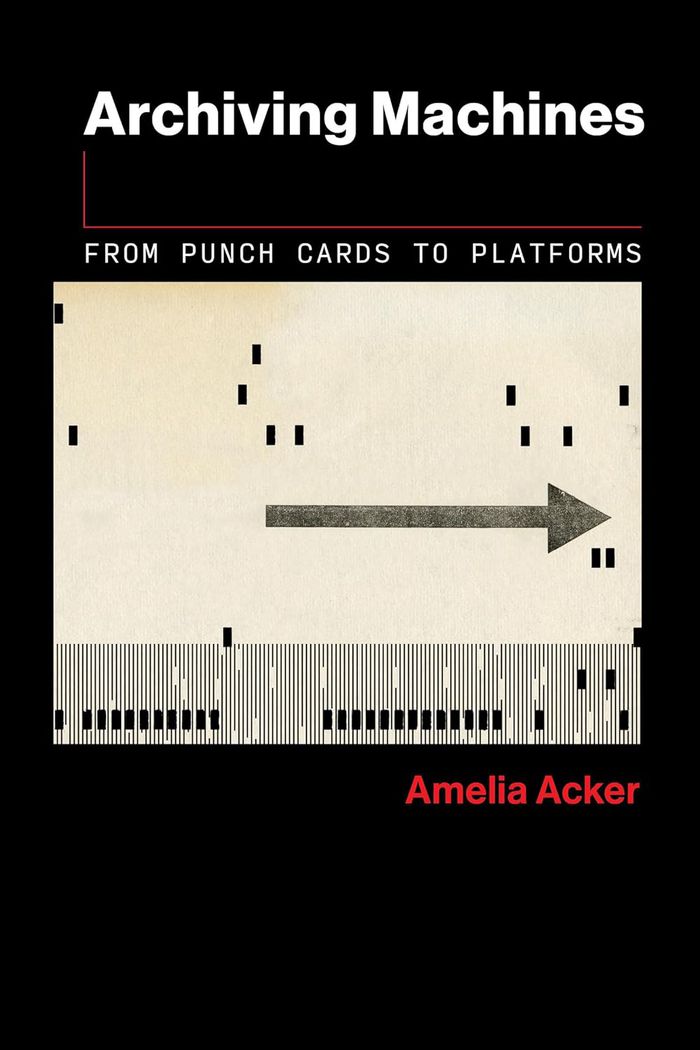
Archiving machines: From punch cards to platforms
Actions:
Price:
$54.00
(available in store)
Summary:
"Archiving machines" advances our understanding of memory, information, and data by charting the struggle between the computing technologies that archive data and the cultures of information that have led to platforms that assert control over its use. Amelia Acker examines the origins of data archives and the computing processes of storage, exchange, and transmission. Each chapter introduces data archiving processes that relate to the evolution of data sovereignty we experience today: from magnetic tape and timesharing computer models from the 1950s, to the establishment of data banks and the rise of database processing and managed data silos in the 1970s, to file structures and virtual containers in cloud-based information services over the past 40 years.
Archiving machines: From punch cards to platforms
Actions:
Price:
$54.00
(available in store)
Summary:
"Archiving machines" advances our understanding of memory, information, and data by charting the struggle between the computing technologies that archive data and the cultures of information that have led to platforms that assert control over its use. Amelia Acker examines the origins of data archives and the computing processes of storage, exchange, and transmission. Each chapter introduces data archiving processes that relate to the evolution of data sovereignty we experience today: from magnetic tape and timesharing computer models from the 1950s, to the establishment of data banks and the rise of database processing and managed data silos in the 1970s, to file structures and virtual containers in cloud-based information services over the past 40 years.
Form:
books
books
Publication:
November 2025
November 2025
Subject:
Archive, library and the digital
Archive, library and the digital
Form:
books
books

Actions:
Price:
$44.95
(available to order)
Summary:
As cultural heritage institutions across the nation grapple with the realization that their collecting histories have captured an incomplete picture of history, curators and archivists like Dorothy Berry have been drawn into complicated conversations. "The house archives built and other thoughts on Black archival possibilities" brings together years of those conversations(...)
$44.95
(available to order)
Summary:
As cultural heritage institutions across the nation grapple with the realization that their collecting histories have captured an incomplete picture of history, curators and archivists like Dorothy Berry have been drawn into complicated conversations. "The house archives built and other thoughts on Black archival possibilities" brings together years of those conversations(...)
Title:
The house archives built and other thoughts on Black archival possibilities
Actions:
Price:
$44.95
(available to order)
Summary:
As cultural heritage institutions across the nation grapple with the realization that their collecting histories have captured an incomplete picture of history, curators and archivists like Dorothy Berry have been drawn into complicated conversations. "The house archives built and other thoughts on Black archival possibilities" brings together years of those conversations from their origins in conference halls, webinars, and reading rooms to open them up to the public. The labor and theory that upholds archives has been obscured, but our understandings of history and ourselves rest on those invisible foundations. This book clarifies those foundations while offering new possibilities for imagining archival futures in and outside of institutional holdings.
The house archives built and other thoughts on Black archival possibilities
Actions:
Price:
$44.95
(available to order)
Summary:
As cultural heritage institutions across the nation grapple with the realization that their collecting histories have captured an incomplete picture of history, curators and archivists like Dorothy Berry have been drawn into complicated conversations. "The house archives built and other thoughts on Black archival possibilities" brings together years of those conversations from their origins in conference halls, webinars, and reading rooms to open them up to the public. The labor and theory that upholds archives has been obscured, but our understandings of history and ourselves rest on those invisible foundations. This book clarifies those foundations while offering new possibilities for imagining archival futures in and outside of institutional holdings.
Form:
books
books
Publication:
October 2025
October 2025
Subject:
Archive, library and the digital
Archive, library and the digital
Form:
books
books
Actions:
Price:
$33.95
(available to order)
Summary:
Today our world is under the watchful and tireless eye of computer vision, with cameras and monitors tracing our every move. Furthermore, generative AI is now able to render a synthetic world indistinguishable from reality for us to explore. Trevor Paglen goes in search of the ways and means of understanding this new visual universe. Instead of asking what these(...)
$33.95
(available to order)
Summary:
Today our world is under the watchful and tireless eye of computer vision, with cameras and monitors tracing our every move. Furthermore, generative AI is now able to render a synthetic world indistinguishable from reality for us to explore. Trevor Paglen goes in search of the ways and means of understanding this new visual universe. Instead of asking what these(...)
Title:
How to see like a machine: Images after AI
Actions:
Price:
$33.95
(available to order)
Summary:
Today our world is under the watchful and tireless eye of computer vision, with cameras and monitors tracing our every move. Furthermore, generative AI is now able to render a synthetic world indistinguishable from reality for us to explore. Trevor Paglen goes in search of the ways and means of understanding this new visual universe. Instead of asking what these technologies “say” about the world, he teaches us to ask what they “do” and where such images come from. Exploring the esoteric worlds of psyops, UFO imagery, magicians, and public relation gurus, Paglen shows that this apparently alien realm is more human, but much stranger, than we imagine.
How to see like a machine: Images after AI
Actions:
Price:
$33.95
(available to order)
Summary:
Today our world is under the watchful and tireless eye of computer vision, with cameras and monitors tracing our every move. Furthermore, generative AI is now able to render a synthetic world indistinguishable from reality for us to explore. Trevor Paglen goes in search of the ways and means of understanding this new visual universe. Instead of asking what these technologies “say” about the world, he teaches us to ask what they “do” and where such images come from. Exploring the esoteric worlds of psyops, UFO imagery, magicians, and public relation gurus, Paglen shows that this apparently alien realm is more human, but much stranger, than we imagine.
Form:
books
books
Publication:
May 2026
May 2026
Subject:
Archive, library and the digital
Archive, library and the digital


