


6624 Results
Form:
books
books
Price:
$41.50
(available to order)
Summary:
What would it mean today to think or to imagine, to design or to construct, in relation not to "things made" but to "things in the making"? This question, first posed by the philosopher William James, was the point of departure for "The Pragmatist Imagination". The volume brings together position statements, theoretical speculations, and critical commentary by 33 leading(...)
$41.50
(available to order)
Summary:
What would it mean today to think or to imagine, to design or to construct, in relation not to "things made" but to "things in the making"? This question, first posed by the philosopher William James, was the point of departure for "The Pragmatist Imagination". The volume brings together position statements, theoretical speculations, and critical commentary by 33 leading(...)
Subject:
Contemporary Art Monographs
Contemporary Art Monographs
Publication:
November 2001, New York
November 2001, New York
Title:
The pragmatist imagination : thinking about things in the making
Actions:
Price:
$41.50
(available to order)
Summary:
What would it mean today to think or to imagine, to design or to construct, in relation not to "things made" but to "things in the making"? This question, first posed by the philosopher William James, was the point of departure for "The Pragmatist Imagination". The volume brings together position statements, theoretical speculations, and critical commentary by 33 leading thinkers and makers from over a dozen disciplines. Based on the proceedings of an international workshop held at Columbia University under the auspices of the Buell Center for the Study of American Architecture in spring 2000, a preamble to the much-ballyhooed conference at the Museum of Modern Art in November, 2000, the contributions traverse a set of burning questions about the future, ranging from the relationship between art and experience to the impact of new technologies on human consciousness, from transformations in everyday life to problems of public space, and from the destiny of the nation-state to emergent forms of transnationalism. The authors include Stanley Aronowitz, Marshall Berman, Casey Nelson Blake, Sandra Buckley, Teresa Caldeira, Jean-Louis Cohen, Jonathan Crary, Rosalyn Deutsche, Kenneth Frampton, Gerald E. Frug, Peter Galison, Elizabeth Grosz, Andreas Huyssen, Isaac Joseph, David Lapoujade, Reinhold Martin, Brian Massumi, Mary McLeod, Paul Miller a.k.a. DJ Spooky, Chantal Mouffe, Joan Ockman, John Rajchman, Martha Rosler, Hashim Sarkis, Saskia Sassen, Sandhya Shukla, Richard Shusterman, Abdoumaliq Simone, Anders Stephanson, Bernard Tschumi, Nadia Urbinati, Mabel Wilson, and Gwendolyn Wright. The book includes an introduction by John Rajchman and an afterword by Casey Nelson Blake.
The pragmatist imagination : thinking about things in the making
Actions:
Price:
$41.50
(available to order)
Summary:
What would it mean today to think or to imagine, to design or to construct, in relation not to "things made" but to "things in the making"? This question, first posed by the philosopher William James, was the point of departure for "The Pragmatist Imagination". The volume brings together position statements, theoretical speculations, and critical commentary by 33 leading thinkers and makers from over a dozen disciplines. Based on the proceedings of an international workshop held at Columbia University under the auspices of the Buell Center for the Study of American Architecture in spring 2000, a preamble to the much-ballyhooed conference at the Museum of Modern Art in November, 2000, the contributions traverse a set of burning questions about the future, ranging from the relationship between art and experience to the impact of new technologies on human consciousness, from transformations in everyday life to problems of public space, and from the destiny of the nation-state to emergent forms of transnationalism. The authors include Stanley Aronowitz, Marshall Berman, Casey Nelson Blake, Sandra Buckley, Teresa Caldeira, Jean-Louis Cohen, Jonathan Crary, Rosalyn Deutsche, Kenneth Frampton, Gerald E. Frug, Peter Galison, Elizabeth Grosz, Andreas Huyssen, Isaac Joseph, David Lapoujade, Reinhold Martin, Brian Massumi, Mary McLeod, Paul Miller a.k.a. DJ Spooky, Chantal Mouffe, Joan Ockman, John Rajchman, Martha Rosler, Hashim Sarkis, Saskia Sassen, Sandhya Shukla, Richard Shusterman, Abdoumaliq Simone, Anders Stephanson, Bernard Tschumi, Nadia Urbinati, Mabel Wilson, and Gwendolyn Wright. The book includes an introduction by John Rajchman and an afterword by Casey Nelson Blake.
Form:
books
books
Publication:
November 2001, New York
November 2001, New York
Subject:
Contemporary Art Monographs
Contemporary Art Monographs
Form:
books
books

Price:
$46.95
(available to order)
Summary:
In "Tower and Office", Spanish architects Inaki Abalos and Juan Herreros look at the role and impact of advanced building technologies in American architecture since World War II. The war, they claim, marked the end of the first cycle of modernism, challenging the belief that technological progress alone could produce a perpetually better future. At the same time, the war(...)
$46.95
(available to order)
Summary:
In "Tower and Office", Spanish architects Inaki Abalos and Juan Herreros look at the role and impact of advanced building technologies in American architecture since World War II. The war, they claim, marked the end of the first cycle of modernism, challenging the belief that technological progress alone could produce a perpetually better future. At the same time, the war(...)
Publication:
October 2005, Cambridge
October 2005, Cambridge
Title:
Tower and office : from Modernist theory to contemporary practice
Actions:
Price:
$46.95
(available to order)
Summary:
In "Tower and Office", Spanish architects Inaki Abalos and Juan Herreros look at the role and impact of advanced building technologies in American architecture since World War II. The war, they claim, marked the end of the first cycle of modernism, challenging the belief that technological progress alone could produce a perpetually better future. At the same time, the war was the source of powerful new structural models and construction methods. The authors examine the ways these technologies have been inflected over the last half century by more subjective and integrated processes of spatial organization. In the first part of the book, Abalos and Herreros focus on the work of Le Corbusier, revealing the degree of complexity achieved in his interpretation of the modern skyscraper. In the second part, they look at the intersection of technical and cultural determinants in the design of high-rise structures since World War II. Among the issues they consider are the evolution of the load-bearing frame, the impact of high-tech systems on tall buildings, and the transparent building skin. In the third part, they address developments in office design and planning, tracing an evolution from the repetitive and homogeneous office skyscraper to the present-day mixed-use structure. Overall they demonstrate how the objective technical analysis associated with modernist architectural theory has given way in recent building practice to a variety of flexible, pragmatic, and environmental approaches. These, they suggest, have opened the way to new urban and architectural forms.
Tower and office : from Modernist theory to contemporary practice
Actions:
Price:
$46.95
(available to order)
Summary:
In "Tower and Office", Spanish architects Inaki Abalos and Juan Herreros look at the role and impact of advanced building technologies in American architecture since World War II. The war, they claim, marked the end of the first cycle of modernism, challenging the belief that technological progress alone could produce a perpetually better future. At the same time, the war was the source of powerful new structural models and construction methods. The authors examine the ways these technologies have been inflected over the last half century by more subjective and integrated processes of spatial organization. In the first part of the book, Abalos and Herreros focus on the work of Le Corbusier, revealing the degree of complexity achieved in his interpretation of the modern skyscraper. In the second part, they look at the intersection of technical and cultural determinants in the design of high-rise structures since World War II. Among the issues they consider are the evolution of the load-bearing frame, the impact of high-tech systems on tall buildings, and the transparent building skin. In the third part, they address developments in office design and planning, tracing an evolution from the repetitive and homogeneous office skyscraper to the present-day mixed-use structure. Overall they demonstrate how the objective technical analysis associated with modernist architectural theory has given way in recent building practice to a variety of flexible, pragmatic, and environmental approaches. These, they suggest, have opened the way to new urban and architectural forms.
Form:
books
books
Publication:
October 2005, Cambridge
October 2005, Cambridge
Form:
books
books
Title:
Robert Adams : turning back
Robert Adams : turning back
Actions:
Price:
$56.95
(available to order)
Summary:
"Turning back: a photographic journal of re-exploration" is published to coincide with the bicentennial of the Lewis and Clark expedition. The narrative begins at the Pacific ocean and moves eastward through what was formerly one of the world’s great rain forests. Photographs at the center of the book report on the forest’s destruction. Elsewhere they trace a search for(...)
$56.95
(available to order)
Summary:
"Turning back: a photographic journal of re-exploration" is published to coincide with the bicentennial of the Lewis and Clark expedition. The narrative begins at the Pacific ocean and moves eastward through what was formerly one of the world’s great rain forests. Photographs at the center of the book report on the forest’s destruction. Elsewhere they trace a search for(...)
Title:
Robert Adams : turning back
Actions:
Price:
$56.95
(available to order)
Summary:
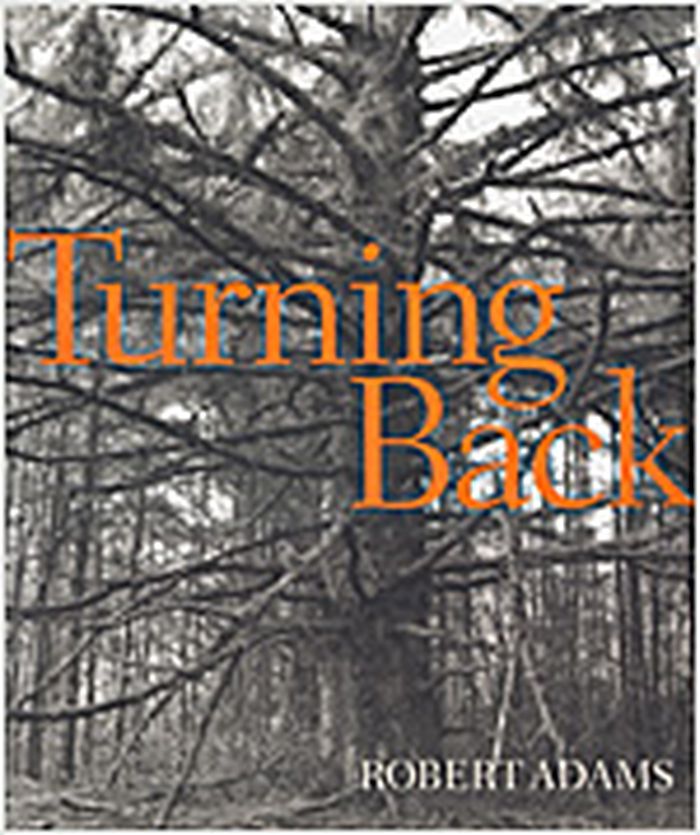
"Turning back: a photographic journal of re-exploration" is published to coincide with the bicentennial of the Lewis and Clark expedition. The narrative begins at the Pacific ocean and moves eastward through what was formerly one of the world’s great rain forests. Photographs at the center of the book report on the forest’s destruction. Elsewhere they trace a search for hope. Two hundred years ago, Lewis and Clark reported finding in the American Northwest a vast forest of ancient evergreens. In "Turning back", Robert Adams looks again at the region’s trees, discovering evidence both of America’s failure and of a continuing promise. President Jefferson’s primary charge to Lewis and Clark was to prepare the way for American commerce. Today, historians still speculate about why, upon his return, Lewis lapsed into depression and apparently committed suicide. "Going east," Adams suggests, "was more difficult than going west." So then, what is the future? "Turning back" documents two kinds of predictive evidence. On the one hand we observe the results of greed so unrestrained that they are indistinguishable from those of nihilism. On the other we see what still lives, whether by our design or neglect, or Providence; in these 164 pictures the tone is celebratory, as in a prayer book. From coastal landscapes populated with tourists to timber clear-cutting and small family farms in eastern Oregon, here we reflect on what was lost, what is retained, and what we value both regionally and as a people with a common history.
Robert Adams : turning back
Actions:
Price:
$56.95
(available to order)
Summary:
"Turning back: a photographic journal of re-exploration" is published to coincide with the bicentennial of the Lewis and Clark expedition. The narrative begins at the Pacific ocean and moves eastward through what was formerly one of the world’s great rain forests. Photographs at the center of the book report on the forest’s destruction. Elsewhere they trace a search for hope. Two hundred years ago, Lewis and Clark reported finding in the American Northwest a vast forest of ancient evergreens. In "Turning back", Robert Adams looks again at the region’s trees, discovering evidence both of America’s failure and of a continuing promise. President Jefferson’s primary charge to Lewis and Clark was to prepare the way for American commerce. Today, historians still speculate about why, upon his return, Lewis lapsed into depression and apparently committed suicide. "Going east," Adams suggests, "was more difficult than going west." So then, what is the future? "Turning back" documents two kinds of predictive evidence. On the one hand we observe the results of greed so unrestrained that they are indistinguishable from those of nihilism. On the other we see what still lives, whether by our design or neglect, or Providence; in these 164 pictures the tone is celebratory, as in a prayer book. From coastal landscapes populated with tourists to timber clear-cutting and small family farms in eastern Oregon, here we reflect on what was lost, what is retained, and what we value both regionally and as a people with a common history.
Form:
books
books
Publication:
May 2005, New York
May 2005, New York
Subject:
Photography monographs
Photography monographs
Form:
books
books
Title:
The Maze : Donovan Wylie
The Maze : Donovan Wylie
Actions:
Price:
$58.95
(available to order)
Summary:
For nearly thirty years, the Maze prison, ten miles outside Belfast, played a unique role in the Northern Ireland troubles. Built in 1976 to house political prisoners, segregation was so fierce it lead to scenes of violent protests, hunger strikes, mass escapes, and deaths of both prisoners and prison staff. At its peak capacity in the 1980s the Maze housed more than(...)
$58.95
(available to order)
Summary:
For nearly thirty years, the Maze prison, ten miles outside Belfast, played a unique role in the Northern Ireland troubles. Built in 1976 to house political prisoners, segregation was so fierce it lead to scenes of violent protests, hunger strikes, mass escapes, and deaths of both prisoners and prison staff. At its peak capacity in the 1980s the Maze housed more than(...)
Title:
The Maze : Donovan Wylie
Actions:
Price:
$58.95
(available to order)
Summary:
For nearly thirty years, the Maze prison, ten miles outside Belfast, played a unique role in the Northern Ireland troubles. Built in 1976 to house political prisoners, segregation was so fierce it lead to scenes of violent protests, hunger strikes, mass escapes, and deaths of both prisoners and prison staff. At its peak capacity in the 1980s the Maze housed more than 1,700 prisoners, but in September 2000, under the terms of the Good Friday agreement, the prison was closed and the last four prisoners were transferred to other prisons in Northern Ireland. Now, a handful of prison officers staff the empty complex while the future of the site is debated. The prison’s current state of limbo and the unanswered questions regarding its fate seem to reflect Northern Ireland’s unsteady progress in grappling with its recent history. Earlier this year, the Northern Ireland Prison Service gave Donovan Wylie exclusive and unprecedented permission to photograph throughout the entire prison complex without supervision. The result is a book which documents the physical structure and at the same time, through the quantity and style of the photographs, to give the viewer some experience of the psychological impact of being inside the Maze prison. With a text by Louise Purbrick, Senior Lecturer in History and Design at Brighton University, and a timeline history of the prison and its prisoners as they relate to the history of the Troubles, this book records and preserves a unique physical structure that has played an important role in our recent history.
The Maze : Donovan Wylie
Actions:
Price:
$58.95
(available to order)
Summary:
For nearly thirty years, the Maze prison, ten miles outside Belfast, played a unique role in the Northern Ireland troubles. Built in 1976 to house political prisoners, segregation was so fierce it lead to scenes of violent protests, hunger strikes, mass escapes, and deaths of both prisoners and prison staff. At its peak capacity in the 1980s the Maze housed more than 1,700 prisoners, but in September 2000, under the terms of the Good Friday agreement, the prison was closed and the last four prisoners were transferred to other prisons in Northern Ireland. Now, a handful of prison officers staff the empty complex while the future of the site is debated. The prison’s current state of limbo and the unanswered questions regarding its fate seem to reflect Northern Ireland’s unsteady progress in grappling with its recent history. Earlier this year, the Northern Ireland Prison Service gave Donovan Wylie exclusive and unprecedented permission to photograph throughout the entire prison complex without supervision. The result is a book which documents the physical structure and at the same time, through the quantity and style of the photographs, to give the viewer some experience of the psychological impact of being inside the Maze prison. With a text by Louise Purbrick, Senior Lecturer in History and Design at Brighton University, and a timeline history of the prison and its prisoners as they relate to the history of the Troubles, this book records and preserves a unique physical structure that has played an important role in our recent history.
Form:
books
books
Publication:
August 2004, London
August 2004, London
Subject:
Photography monographs
Photography monographs
Form:
books
books
Title:
Massive change
Massive change
Actions:
Price:
$39.95
(available to order)
Summary:
"Massive Change" is a modern illustrated primer on the new inventions, technologies, and events that are affecting the human race worldwide. The book is a part of a broader research project by Bruce Mau Design intended to provoke debate and discussion about the future of design culture, broadly defined as the “familiar objects and techniques that are transforming our(...)
$39.95
(available to order)
Summary:
"Massive Change" is a modern illustrated primer on the new inventions, technologies, and events that are affecting the human race worldwide. The book is a part of a broader research project by Bruce Mau Design intended to provoke debate and discussion about the future of design culture, broadly defined as the “familiar objects and techniques that are transforming our(...)
Subject:
Graphic Designers, Monographs
Graphic Designers, Monographs
Publication:
November 2004, New York
November 2004, New York
Title:
Massive change
Actions:
Price:
$39.95
(available to order)
Summary:
"Massive Change" is a modern illustrated primer on the new inventions, technologies, and events that are affecting the human race worldwide. The book is a part of a broader research project by Bruce Mau Design intended to provoke debate and discussion about the future of design culture, broadly defined as the “familiar objects and techniques that are transforming our lives.” In essays, interviews, and provocative imagery aimed at a broad audience, "Massive Change" explores the changing force of design in the contemporary world, and in doing so expands the definition of design to include the built environment, transportation technologies, revolutionary materials, energy and information systems, and living organisms. The book is divided into 11 heavily illustrated sections covering major areas of change in contemporary society — such as urbanism and architecture, the military, health and living, and wealth and politics. Each section intersperses intriguing documentary images with a general introductory essay, extended captions, and interviews with leading thinkers, including engineers, designers, philosophers, scientists, architects, artists, and writers. Concluding the book is a graphic timeline of significant inventions and world events from 10,000 B.C. to the present. "Massive Change" is a well designed, intelligent, visually provocative exploration of the myriad subjects percolating through popular culture: those we read about in magazines and on Web sites but rarely understand in any meaningful way. It poses the question: “Now that the human race can do almost anything, what will we do next?” Accompanies the internationally touring exhibition produced by Bruce Mau and his Institute without Borders.
Massive change
Actions:
Price:
$39.95
(available to order)
Summary:
"Massive Change" is a modern illustrated primer on the new inventions, technologies, and events that are affecting the human race worldwide. The book is a part of a broader research project by Bruce Mau Design intended to provoke debate and discussion about the future of design culture, broadly defined as the “familiar objects and techniques that are transforming our lives.” In essays, interviews, and provocative imagery aimed at a broad audience, "Massive Change" explores the changing force of design in the contemporary world, and in doing so expands the definition of design to include the built environment, transportation technologies, revolutionary materials, energy and information systems, and living organisms. The book is divided into 11 heavily illustrated sections covering major areas of change in contemporary society — such as urbanism and architecture, the military, health and living, and wealth and politics. Each section intersperses intriguing documentary images with a general introductory essay, extended captions, and interviews with leading thinkers, including engineers, designers, philosophers, scientists, architects, artists, and writers. Concluding the book is a graphic timeline of significant inventions and world events from 10,000 B.C. to the present. "Massive Change" is a well designed, intelligent, visually provocative exploration of the myriad subjects percolating through popular culture: those we read about in magazines and on Web sites but rarely understand in any meaningful way. It poses the question: “Now that the human race can do almost anything, what will we do next?” Accompanies the internationally touring exhibition produced by Bruce Mau and his Institute without Borders.
Form:
books
books
Publication:
November 2004, New York
November 2004, New York
Subject:
Graphic Designers, Monographs
Graphic Designers, Monographs
Form:
books
books
Title:
Our world to change!
Our world to change!
Actions:
Price:
$20.00
(available to order)
Summary:
What are the central global issues humanity is facing today? How dire is the future really going to be? And what are possible ways to turn this world into a better one? These are the questions that the book "Our world to change!" adresses. This publication does not only explain figures related to economics, finance, ecology, nutrition and immigration, but also presents(...)
$20.00
(available to order)
Summary:
What are the central global issues humanity is facing today? How dire is the future really going to be? And what are possible ways to turn this world into a better one? These are the questions that the book "Our world to change!" adresses. This publication does not only explain figures related to economics, finance, ecology, nutrition and immigration, but also presents(...)
Title:
Our world to change!
Actions:
Price:
$20.00
(available to order)
Summary:
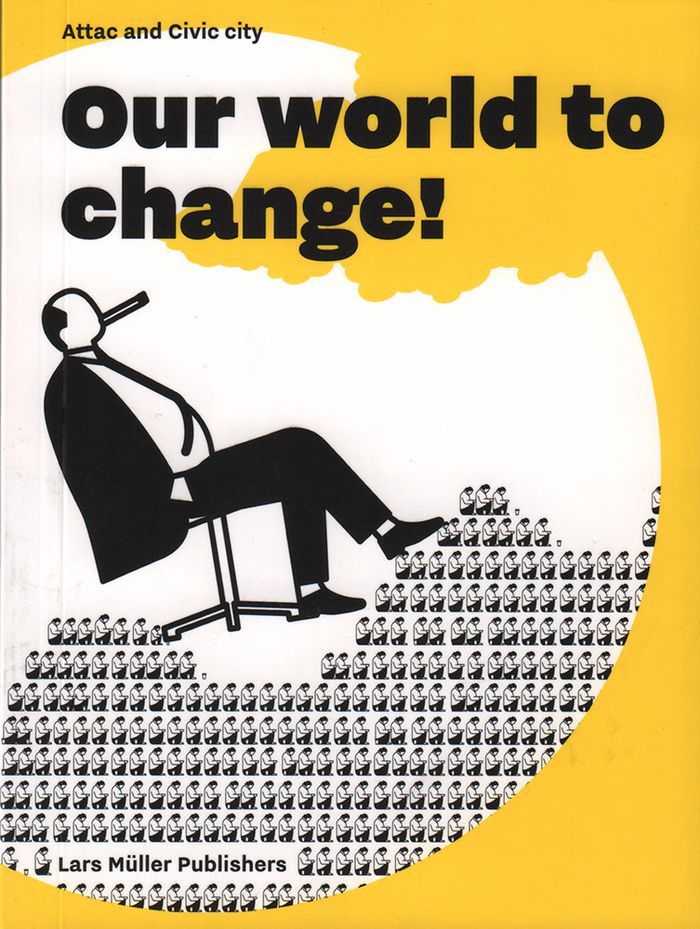
What are the central global issues humanity is facing today? How dire is the future really going to be? And what are possible ways to turn this world into a better one? These are the questions that the book "Our world to change!" adresses. This publication does not only explain figures related to economics, finance, ecology, nutrition and immigration, but also presents suggestions and alternatives from specialists in these fields – a book that every informed citizen should keep under their pillow. The overall goal of "Our world to change!" ! is to visualize the state of our world and possible ways to change it. For this mission the Intégral Ruedi Baur graphic design studio teamed up with the globalization-critical organization Attac, which provided the necessary data. By visualizing facts that concern each and everyone of us, "Our world to change!" ! makes pressing topics visible. This is necessary since issues like inequality and climate change are often viewed as complex, abstract topics.Our World to Change! is a formal homage to the sociologist Otto Neurath and the graphic designer Gerd Arntz, who created the Isotype – an international education system by typographical images – in the 1920s. Graphic designer Ruedi Baur, who also co-founded the institute for critical design research Civic city together with Vera Baur, revived Otto Neuraths iconic Isotype figures to visualize the state of the world today. While these figurines were already part of last years' art biennial Manifesta 11, controversially themed "What people do for money", in "Our world to change!" they take a more radical stance in critizising global inequality.
Our world to change!
Actions:
Price:
$20.00
(available to order)
Summary:
What are the central global issues humanity is facing today? How dire is the future really going to be? And what are possible ways to turn this world into a better one? These are the questions that the book "Our world to change!" adresses. This publication does not only explain figures related to economics, finance, ecology, nutrition and immigration, but also presents suggestions and alternatives from specialists in these fields – a book that every informed citizen should keep under their pillow. The overall goal of "Our world to change!" ! is to visualize the state of our world and possible ways to change it. For this mission the Intégral Ruedi Baur graphic design studio teamed up with the globalization-critical organization Attac, which provided the necessary data. By visualizing facts that concern each and everyone of us, "Our world to change!" ! makes pressing topics visible. This is necessary since issues like inequality and climate change are often viewed as complex, abstract topics.Our World to Change! is a formal homage to the sociologist Otto Neurath and the graphic designer Gerd Arntz, who created the Isotype – an international education system by typographical images – in the 1920s. Graphic designer Ruedi Baur, who also co-founded the institute for critical design research Civic city together with Vera Baur, revived Otto Neuraths iconic Isotype figures to visualize the state of the world today. While these figurines were already part of last years' art biennial Manifesta 11, controversially themed "What people do for money", in "Our world to change!" they take a more radical stance in critizising global inequality.
Form:
books
books
Publication:
January 2017
January 2017
Subject:
Graphic Design and Typography
Graphic Design and Typography
Form:
books
books
Title:
In the swarm
In the swarm
Actions:
Price:
$18.95
(available to order)
Summary:
Digital communication and social media have taken over our lives. In this contrarian reflection on digitized life, Byung-Chul Han counters the cheerleaders for Twitter revolutions and Facebook activism by arguing that digital communication is in fact responsible for the disintegration of community and public space and is slowly eroding any possibility for real political(...)
$18.95
(available to order)
Summary:
Digital communication and social media have taken over our lives. In this contrarian reflection on digitized life, Byung-Chul Han counters the cheerleaders for Twitter revolutions and Facebook activism by arguing that digital communication is in fact responsible for the disintegration of community and public space and is slowly eroding any possibility for real political(...)
Title:
In the swarm
Actions:
Price:
$18.95
(available to order)
Summary:
Digital communication and social media have taken over our lives. In this contrarian reflection on digitized life, Byung-Chul Han counters the cheerleaders for Twitter revolutions and Facebook activism by arguing that digital communication is in fact responsible for the disintegration of community and public space and is slowly eroding any possibility for real political action and meaningful political discourse. In the predigital, analog era, by the time an angry letter to the editor had been composed, mailed, and received, the immediate agitation had passed. Today, digital communication enables instantaneous, impulsive reaction, meant to express and stir up outrage on the spot. “The shitstorm,” writes Han, ”represents an authentic phenomenon of digital communication.” Meanwhile, the public, the senders and receivers of these communications have become a digital swarm—not a mass, or a crowd, or Negri and Hardt’s antiquated notion of a “multitude,” but a set of isolated individuals incapable of forming a “we,” incapable of calling dominant power relations into question, incapable of formulating a future because of an obsession with the present. The digital swarm is a fragmented entity that can focus on individual persons only in order to make them an object of scandal. Han, one of the most widely read philosophers in Europe today, describes a society in which information has overrun thought, in which the same algorithms are employed by Facebook, the stock market, and the intelligence services. Democracy is under threat because digital communication has made freedom and control indistinguishable. Big Brother has been succeeded by Big Data.
In the swarm
Actions:
Price:
$18.95
(available to order)
Summary:
Digital communication and social media have taken over our lives. In this contrarian reflection on digitized life, Byung-Chul Han counters the cheerleaders for Twitter revolutions and Facebook activism by arguing that digital communication is in fact responsible for the disintegration of community and public space and is slowly eroding any possibility for real political action and meaningful political discourse. In the predigital, analog era, by the time an angry letter to the editor had been composed, mailed, and received, the immediate agitation had passed. Today, digital communication enables instantaneous, impulsive reaction, meant to express and stir up outrage on the spot. “The shitstorm,” writes Han, ”represents an authentic phenomenon of digital communication.” Meanwhile, the public, the senders and receivers of these communications have become a digital swarm—not a mass, or a crowd, or Negri and Hardt’s antiquated notion of a “multitude,” but a set of isolated individuals incapable of forming a “we,” incapable of calling dominant power relations into question, incapable of formulating a future because of an obsession with the present. The digital swarm is a fragmented entity that can focus on individual persons only in order to make them an object of scandal. Han, one of the most widely read philosophers in Europe today, describes a society in which information has overrun thought, in which the same algorithms are employed by Facebook, the stock market, and the intelligence services. Democracy is under threat because digital communication has made freedom and control indistinguishable. Big Brother has been succeeded by Big Data.
Form:
books
books
Publication:
April 2017
April 2017
Subject:
Archive, library and the digital
Archive, library and the digital
Form:
books
books
Title:
Nozone x: forecast
Nozone x: forecast
Actions:
Price:
$27.95
(available to order)
Summary:
Conspiracy theories, pending Ice Ages, potential revolutions, viral epidemics, and other doomsday prophecies: wherever you look–from the cover of Time magazine to the weird weather outside your window–the message seems universal: the Earth our children inherit will certainly be nothing like the one we currently inhabit. UN reports and newspaper articles are illustrated(...)
$27.95
(available to order)
Summary:
Conspiracy theories, pending Ice Ages, potential revolutions, viral epidemics, and other doomsday prophecies: wherever you look–from the cover of Time magazine to the weird weather outside your window–the message seems universal: the Earth our children inherit will certainly be nothing like the one we currently inhabit. UN reports and newspaper articles are illustrated(...)
Subject:
Graphic Design and Typography
Graphic Design and Typography
Publication:
September 2008, New York
September 2008, New York
Title:
Nozone x: forecast
Actions:
Price:
$27.95
(available to order)
Summary:
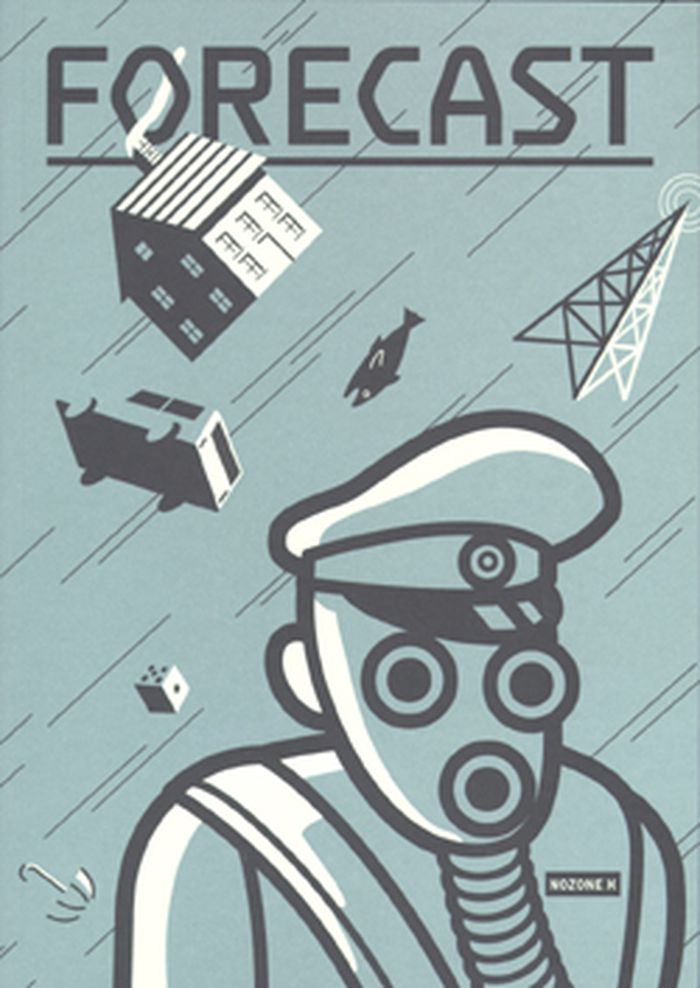
Conspiracy theories, pending Ice Ages, potential revolutions, viral epidemics, and other doomsday prophecies: wherever you look–from the cover of Time magazine to the weird weather outside your window–the message seems universal: the Earth our children inherit will certainly be nothing like the one we currently inhabit. UN reports and newspaper articles are illustrated with dry charts and graphs predicting technological, economic, and ecological transformations that are already dramatically altering the way we live. Forecast revisualizes these abstractions about everything from our environment to our waistlines, from the stock market to the Middle East through the eyes of cartoonists and graphic designers who have made comics with a conscience: Ward Sutton imagines a nation divided into a red and a blue zone; Paula Scher maps out the Northern Hemisphere of 2100; Elizabeth Amon interviews New Yorker journalist Elizabeth Kolbert on global warming; and Tom Tomorrow looks back on the legacy of Bush-Cheney. Ultimately, Forecast is an optimistic book: using humor, it encourages all of us to take responsibility for predictions of the future and to take action to affect change. Forecast is the latest installment of Nozone. Featured in the Cooper Hewitt's Design Triennial, Nozone is a decade-old political graphic design and comics zine, edited around a theme. Nicholas Blechman is principal of Knickerbocker Design in New York City and art director of the New York Times Book Review. He is the editor of Empire and co-author of Evil, both published by Princeton Architectural Press. Blechman is publisher of the award-winning political underground magazine Nozone.
Nozone x: forecast
Actions:
Price:
$27.95
(available to order)
Summary:
Conspiracy theories, pending Ice Ages, potential revolutions, viral epidemics, and other doomsday prophecies: wherever you look–from the cover of Time magazine to the weird weather outside your window–the message seems universal: the Earth our children inherit will certainly be nothing like the one we currently inhabit. UN reports and newspaper articles are illustrated with dry charts and graphs predicting technological, economic, and ecological transformations that are already dramatically altering the way we live. Forecast revisualizes these abstractions about everything from our environment to our waistlines, from the stock market to the Middle East through the eyes of cartoonists and graphic designers who have made comics with a conscience: Ward Sutton imagines a nation divided into a red and a blue zone; Paula Scher maps out the Northern Hemisphere of 2100; Elizabeth Amon interviews New Yorker journalist Elizabeth Kolbert on global warming; and Tom Tomorrow looks back on the legacy of Bush-Cheney. Ultimately, Forecast is an optimistic book: using humor, it encourages all of us to take responsibility for predictions of the future and to take action to affect change. Forecast is the latest installment of Nozone. Featured in the Cooper Hewitt's Design Triennial, Nozone is a decade-old political graphic design and comics zine, edited around a theme. Nicholas Blechman is principal of Knickerbocker Design in New York City and art director of the New York Times Book Review. He is the editor of Empire and co-author of Evil, both published by Princeton Architectural Press. Blechman is publisher of the award-winning political underground magazine Nozone.
Form:
books
books
Publication:
September 2008, New York
September 2008, New York
Subject:
Graphic Design and Typography
Graphic Design and Typography
Form:
books
books
Actions:
Price:
$44.95
(available to order)
Summary:
The Nature of Landscape offers an inspiring, personal account of a quest into the meaning and background of the term ‘landscape’. The author, a landscape planner and designer currently teaching at Eindhoven University of Technology, researches the origins of landscape in our civilization and describes different points of view that have helped shape our opinions on(...)
$44.95
(available to order)
Summary:
The Nature of Landscape offers an inspiring, personal account of a quest into the meaning and background of the term ‘landscape’. The author, a landscape planner and designer currently teaching at Eindhoven University of Technology, researches the origins of landscape in our civilization and describes different points of view that have helped shape our opinions on(...)
Title:
The nature of landscape : a personal quest
Actions:
Price:
$44.95
(available to order)
Summary:
The Nature of Landscape offers an inspiring, personal account of a quest into the meaning and background of the term ‘landscape’. The author, a landscape planner and designer currently teaching at Eindhoven University of Technology, researches the origins of landscape in our civilization and describes different points of view that have helped shape our opinions on landscape. For the author, our notion of landscape is focused around the terms 'nature versus culture' and 'native versus foreign'. These counterparts make up his 'mindscape diamond', a modified matrix that not only explains trends in landscape perception and design, but also helps to define developments in land use, architecture, urban planning and environmental art. On a more metaphorical level, the author's abundantly illustrated quest is symbolized by a number of personal impressions, such as the discovery of a stone circle in the desert, a lesson in the peculiarities of the Russian language, a journey along the industrial heritage of the German Ruhrgebiet and a visit to a town where ‘Bavaria comes to Washington’. Offering an unexpected reading experience, these and other descriptions demonstrate how varied ‘landscape’ can be. In a worldwide overview of 30 landscape related artworks and 30 park designs, the author discusses landscape attitudes past and present. In a final chapter, he brings together recent developments in society, architecture and art to make a forecast of landscape trends in the near future. Themes such as man-made nature and reinvented heritage conclude this unusual book on the essence of landscape.
The nature of landscape : a personal quest
Actions:
Price:
$44.95
(available to order)
Summary:
The Nature of Landscape offers an inspiring, personal account of a quest into the meaning and background of the term ‘landscape’. The author, a landscape planner and designer currently teaching at Eindhoven University of Technology, researches the origins of landscape in our civilization and describes different points of view that have helped shape our opinions on landscape. For the author, our notion of landscape is focused around the terms 'nature versus culture' and 'native versus foreign'. These counterparts make up his 'mindscape diamond', a modified matrix that not only explains trends in landscape perception and design, but also helps to define developments in land use, architecture, urban planning and environmental art. On a more metaphorical level, the author's abundantly illustrated quest is symbolized by a number of personal impressions, such as the discovery of a stone circle in the desert, a lesson in the peculiarities of the Russian language, a journey along the industrial heritage of the German Ruhrgebiet and a visit to a town where ‘Bavaria comes to Washington’. Offering an unexpected reading experience, these and other descriptions demonstrate how varied ‘landscape’ can be. In a worldwide overview of 30 landscape related artworks and 30 park designs, the author discusses landscape attitudes past and present. In a final chapter, he brings together recent developments in society, architecture and art to make a forecast of landscape trends in the near future. Themes such as man-made nature and reinvented heritage conclude this unusual book on the essence of landscape.
Form:
books
books
Publication:
March 2001, Rotterdam
March 2001, Rotterdam
Subject:
Landscape Theory
Landscape Theory
Form:
books
books
Title:
Moving archives
Moving archives
Actions:
Price:
$85.00
(available to order)
Summary:
The image of the dusty, undisturbed archive has been swept away in response to growing interest across disciplines in the materials they house and the desire to find and make meaning through an engagement with those materials. Archival studies scholars and archivists are developing related theoretical frameworks and practices that recognize that the archives are anything(...)
$85.00
(available to order)
Summary:
The image of the dusty, undisturbed archive has been swept away in response to growing interest across disciplines in the materials they house and the desire to find and make meaning through an engagement with those materials. Archival studies scholars and archivists are developing related theoretical frameworks and practices that recognize that the archives are anything(...)
Title:
Moving archives
Actions:
Price:
$85.00
(available to order)
Summary:
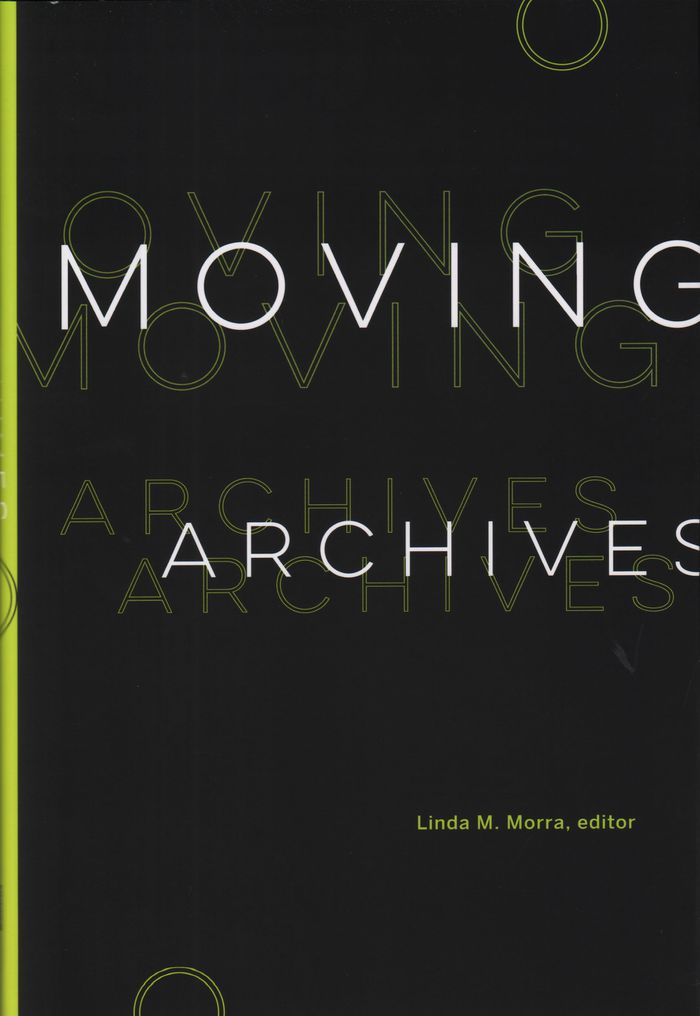
The image of the dusty, undisturbed archive has been swept away in response to growing interest across disciplines in the materials they house and the desire to find and make meaning through an engagement with those materials. Archival studies scholars and archivists are developing related theoretical frameworks and practices that recognize that the archives are anything but static. Archival deposits are proliferating, and the architects, practitioners, and scholars engaged with them are scarcely able to keep abreast of them. Archives, archival theory, and archival practice are on the move. But what of the archives that were once safely housed and have since been lost, or are under threat? What of the urgency that underscores the appeals made on behalf of these archives? As scholars in this volume argue, archives—their materialization, their preservation, and the research produced about them—are moving in a different way: they are involved in an emotionally engaged and charged process, one that acts equally upon archival subjects and those engaged with them. So too do archives at once represent members of various communities and the fields of study drawn to them. "Moving Archives" grounds itself in the critical trajectory related to what Sara Ahmed calls “affective economies” to offer fresh insights about the process of archiving and approaching literary materials. These economies are not necessarily determined by ethical impulses, although many scholars have called out for such impulses to underwrite current archival practices; rather, they form the crucial affective contexts for the legitimization of archival caches in the present moment and for future use.
Moving archives
Actions:
Price:
$85.00
(available to order)
Summary:
The image of the dusty, undisturbed archive has been swept away in response to growing interest across disciplines in the materials they house and the desire to find and make meaning through an engagement with those materials. Archival studies scholars and archivists are developing related theoretical frameworks and practices that recognize that the archives are anything but static. Archival deposits are proliferating, and the architects, practitioners, and scholars engaged with them are scarcely able to keep abreast of them. Archives, archival theory, and archival practice are on the move. But what of the archives that were once safely housed and have since been lost, or are under threat? What of the urgency that underscores the appeals made on behalf of these archives? As scholars in this volume argue, archives—their materialization, their preservation, and the research produced about them—are moving in a different way: they are involved in an emotionally engaged and charged process, one that acts equally upon archival subjects and those engaged with them. So too do archives at once represent members of various communities and the fields of study drawn to them. "Moving Archives" grounds itself in the critical trajectory related to what Sara Ahmed calls “affective economies” to offer fresh insights about the process of archiving and approaching literary materials. These economies are not necessarily determined by ethical impulses, although many scholars have called out for such impulses to underwrite current archival practices; rather, they form the crucial affective contexts for the legitimization of archival caches in the present moment and for future use.
Form:
books
books
Publication:
January 2020
January 2020
Subject:
Archive, library and the digital
Archive, library and the digital


